The Fall of Normalization: Why Saudi Arabia Just Froze Out Israel
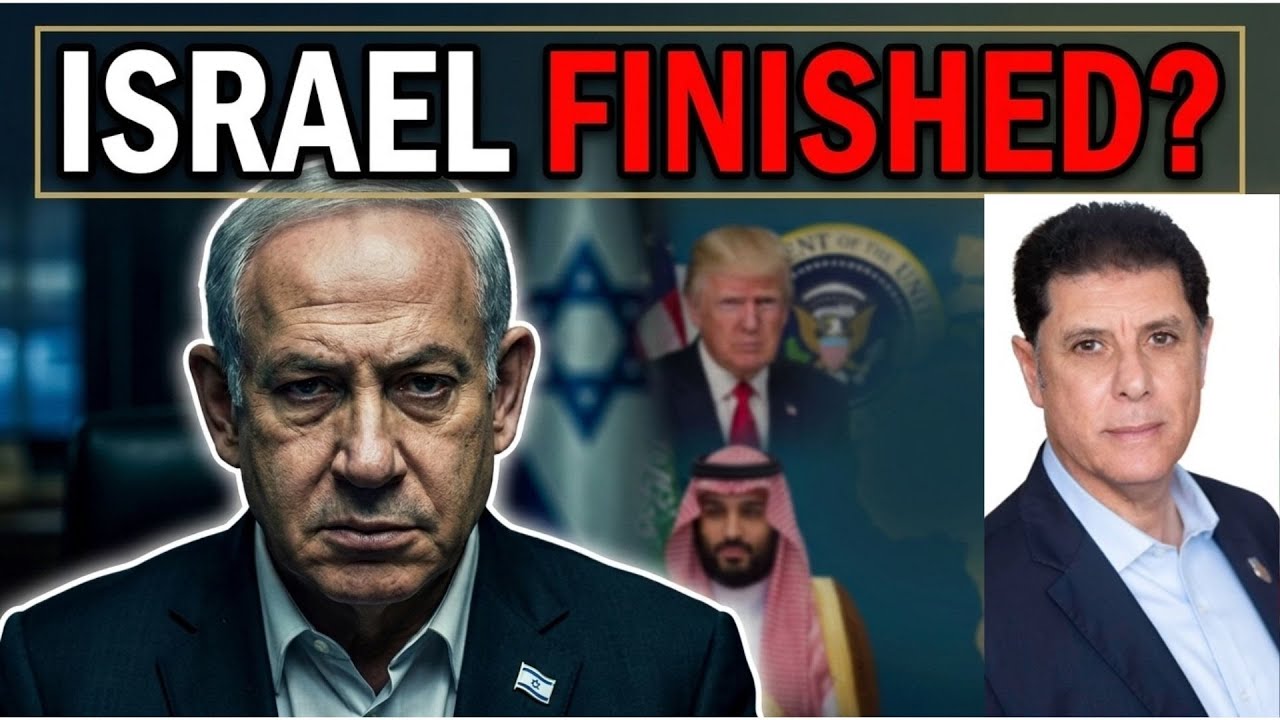
David Oualaalou argues that a secret $300 billion US-Iran deal has fractured Saudi-Israeli normalization talks, leaving Israel isolated. He claims Iran's Revolutionary Guard will dominate the region's politics and economy, while the US pivot away from the Middle East creates space for a new multipolar order led by Iran and Saudi Arabia.
Chapters
Hello everybody and welcome to Geopolitical Trends, where truth matters. The US, as you know, signed a deal, uh, some considered it a secret deal with Iran, handed them about $300 billion, as I mentioned before, and left Israel completely exposed. Now you have Saudi Arabia, the Kingdom of Saudi Arabia, issued a brutal ultimatum to Tel Aviv. Either you stop— because they're still bombing Lebanon— either you stop or you are finished, destroyed, done with. And this is how now this war against Iran has forced now Israel to be alone. So basically, moving forward, we might see How is now— here is how now I believe Israel now was just forced now into a solo war. Can it handle it? We shall see. In this live stream, I'm going to be providing you my own assessment about how I see the Saudi statement at this time, given that I wrote a book about Saudis and I did talk about the behind closed doors relationship between Israel and Saudi Arabia. Don't be surprised, I'm going to share some really, really, uh, interesting information about this. And I'm going to keep this short this time around, guys, here. So, so what we just witnessed, we just witnessed basically the biggest diplomatic plot now twist of this century. I, I mean, I feel comfortable saying this metaphorically. So why? Because you have Saudi Arabia now officially turned its back on normalization with Israel and confronted Tel Aviv now to sort of protect a newly enriched Iran. So the US has officially retreated, as you know, because that signature when Donald Trump digitally signed, that's the terms of surrender, if I may use the term. And that's exactly what the US has officially retreated. And West Asia, also known as Middle East, will never be the same. So the Saudis do not want to be left out. That is the reason why you have the Saudi Foreign Minister, uh, Prince Faisal bin Farhan. I, I have a picture of him here, right here. That's Prince Farhan. He is like issuing a sharp warning to Israel regarding its military strategy. As far as targeting Iran, uh, and Lebanon, I'm sorry. And at the same time, aimed rapidly shifting geopolitical landscape following the, the, the MOU, the Memorandum of Understanding, uh, between, uh, uh, alternative US-Iran peace agreement, if we may use the term. Remember, it's not official, that was digitally signed The two parties, Iran and the US, supposed to meet face to face, but guess what just Iran, uh, did? They said deal is off, is over.
Why?
Because Israel breached it by targeting Lebanon. So, so here is the thing, uh, uh, when you think about this changes within the geopolitical landscape so vis-à-vis what the Saudis just have done, because a lot of people now are just saying, whoa, this is like— we didn't expect this. Why would the Saudis do this? There are reasons for the Saudis to embark on this now, not later on. And this is where, if, if you, if you watch some other videos, I'm sure some will be doing this, assuming they have a background for this. What you're going to notice is that the Saudis' direct criticism of Israeli military actions is an open— it's not a secret anymore. So, but before we jump into conclusions, I'm going to share one event that took place in 2020. I was aware of it, and this has to do with the secret trip to Saudi Arabia, okay, by Bibi Netanyahu himself. Which was an announced visit. And, and he didn't go to Riyadh, he went to the futuristic Red Sea megacity of NEOM. And it was in November 2022. It's beside that. What's important about it? Two things: who attended the meeting and what was the discussion about. And I'm going to share this briefly with you here. The meeting was attended, in addition to the Prime Minister and his entourage, It was the head of the Mossad. This is, uh, Yossi Cohen. That's the head of the Mossad back then. He attended the meeting with the Crown Prince, MBS. Of course, that was MBS there. That's how Bibi got to know MBS, because MBS was really just a novice, you know, has no, no background in international relations or what have you. He just moved from back of the line for succession to the front line. So that's a story for another day. We, we can get into that if you guys would like me to do that sometime in the future. And who attended the meeting also? It was none other than the former Secretary of State Mike Pompeo. Put the two and two together and think, why would those specific type of people will attend that? So then you think about the discussion. What was involved in the discussion? I had a chance to read The unclassified version of it— so let me just be clear about this one— the talks largely focused on Iran, and the other topic was the normalization of relations between Saudi Arabia and Israel, because Israel has already, uh, established diplomatic relations with four Arab countries: Egypt, United Arab Emirates, Jordan, and Morocco. The, the, the, the Israelis wants the Saudis. Donald Trump was pushing very hard for this, and all this was part of that Abraham Accord, which was established ties with the United Arab Emirates and Bahrain. This is why the Gulf States, no matter what they say, don't ever rule out the possibility that they are coordinating with Israel behind closed doors. But let's put this in perspective in understanding what is really the, the, the core issues of why all of a sudden the Saudi, uh, prime, uh, foreign minister rather is, is coming with the statements that if Israel doesn't stop, it might be, uh, demolished. That's exactly what basically he's— the message is. But you have to think about the core of the confrontation. Why the Saudis will come out of this? Well, here's the criticism on part of the Saudis of the Israeli military strategy. That's why the Saudi foreign minister warned that if Israel continues this military, their military operations, because they are about to destabilize the region and it will be counterproductive to Israel's own security goals, which is becoming more and more clear. Second thing is you have this shift towards de-escalation. What, what do I mean by this? The Saudis got a taste of what is like to be targeted by Iran. Like I argued in my both books, on the Saudi book and the Iran book, I had to bring that, that theme on, on, on both books. This way to make a point of it. What I mentioned back then is that Saudis stand no chance against Iran. Iran will walk over Saudi Arabia in about 2 weeks, 3 weeks max, because we all know how it is. And look now what the— this is why the Saudis are moving towards de-escalation, because they felt the retaliatory strikes on its energy sectors earlier this year. So, and that is why Saudis are coordinating sort of in a haste with the regional neighbors like Qatar, United Arab Emirates, uh, for a diplomatic support to conclude the conflict between the US and Iran. Because the longer it, it drags, the more vulnerable those countries will become. Qatar, United Arab Emirates, Bahrain, Kuwait, and Saudi Arabia. And the third one, elements of this, is that the condemnation of aggression issued by the Saudis towards the Israelis. This is why Riyadh has previously condemned what is characterized as a blatant Israeli violation of international law. Remember when they targeted the, uh, uh, the group of Hamas, I think, representative in Qatar or in Doha? Yeah, and that is why the Saudis now are demanding that the international community step up, uh, to halt the regional escalations. Well, wait a minute, Saudis, where were you when, for example, Israel now is targeting Lebanon? Where were you when Gaza was attacked? And where were you when it was unjustified to launch an attack against Iran? Let's just be fair. And in response to the Saudi statements today, Israel now is deciding that it will block a Saudi ministerial visit to the West Bank. That shows you where things are headed, because the Saudis did— the Israelis, rather, didn't like what the Saudis are doing. But put all this within the broader geopolitical context. And it will make more sense to you because when you think about the friction between the Saudis and the Israelis, it is unfolding during a really crucial and critical and turbulent time in the history of West Asia or the Middle East diplomacy. You look at a deal, the surrender deal I call it, that the US did, turning over $300 billion to Iran Uh, not even discussing the nuclear, uh, aspects, not even discussing the missile, ballistic missiles and so forth. Uh, all this makes more sense as to the, the shift within the geopolitical landscape. So the US-Iran deal in itself, and I'm not going to get in details, we already did a live stream on this yesterday. So to those who missed it, just go back and, and, and, and look at that, uh, video, uh, I did the live stream. So you look at the Trump administration has moved now forward, even though some in Washington, some hawks in Washington and in West Asia are saying, oh, those are controversial 14-point agreements proposed by Iran. Well, guess what? We agree to those terms. And as a matter of fact, CNN just this morning acknowledged publicly that Iran won the war. And that is why this deal, US and Iran to end hostilities. And this development reportedly leaves now the PM of, of Israel, Bibi Netanyahu, sort of, uh, uh, in a, in a very delicate position. Strategic war, we're talking about being isolated to the point you have two top officials in the US government the president and the vice president. And I'm going to share clip— clips with you towards the end to prove it to you that both of them are saying, listen, Israel, if you don't get your act together, you're going to end up alone facing Iran. And we did the survey for the community. 79% of you said that Israel won't, won't stand a chance with that one. Yeah. And here is the other really sticking point within this geopolitical context, and that is Israel is— was not a party to this US-Iran deal. In other words, the US didn't care to consult with Israel, and this is why Israel now is saying we will maintain our military presence in southern Lebanon to target Hezbollah, threatening the stability of the fragile peace agreement. Remember, one of the clauses in that deal is that Israel has to halt its operations in Lebanon, and Iran will hold the US responsible for that. And that's exactly what just happened. So, and the fourth point into this is the stalled, uh, normalization between these Saudis and the Israelis. It will be bad news for Saudi Arabia if openly and publicly established diplomatic relations with, uh, uh, with, with Israel. So this is why the Saudi-Israeli normalization now, uh, seems, uh, unlikely. Saudi officials have reiterated that diplomatic recognition remains strictly contingent on the establishment of the Palestinian state. Will that happen? I have my doubt. I have my doubt. Uh, some, some Arab countries tends to talk too much. There's no action when it matters. You know, just remember two things. Gaza— where were the Muslim world? You know, let's be honest about it. If they saying this Muslim, uh, uh, uh, support and so forth, Where were the Muslim world? And second, the attacks on Iran were unjustified. So what was the Muslim world saying? They couldn't stand Iran. Still a Muslim country. They are Persians, they are not Arabs, but it's still a Muslim country. So where is this unity in Islam? It's all words. And I'm here to tell you based on facts, based on my understanding of the history, of the culture, of the language, is that religion is only being used to justify whatever. That's how governments in the Arab and the Muslim world are using Islam, or religion in this case. And this is, again, when you think about this, the, the geopolitical context of all this, it takes us automatically to the strategic defeat of the United States. Because this strategic defeat includes two or three key points I want you to be aware of. One of them is the massive economic concessions that the US gave to Iran. One of them has to do with their reconstruction funds, $300 billion. So because the framework of this deal outlined a plan to work with regional partners to establish $300 billion fund for Iran's economic developments and reconstructions. No ifs and buts, because it was stated on paper right there. Second one is the unfreezing assets. The US has agreed to unfreeze potentially tens of billions of dollars in Iranian assets that were locked under global sanctions.
Yeah.
And that is where you start to think about, uh, especially why I'm, I'm, why I wanted to mention this, because there is a conversation right now in Washington among policymakers, which by the way, they are damn corrupted because now they gonna be exposed for how much they supporting AIPAC. Because now, Dave, we have the representative here from Texas, which by the way doesn't represent me, uh, the, the idiot, uh, Ted Cruz, he's saying we shouldn't give in to Iran and all this stuff.
Why?
Because his campaigns are funded by AIPAC. So I'm gonna see a lot of US representatives doing the same. But here is what I want to mention briefly, especially for my American viewers, that you are familiar with the dynamics of Congress between Republicans and Democrats. As of now, Donald Trump owns this failed, uh, conflict, the war with Iran. And this is where the Democrats will have to be very careful.
Why?
It's because if they go against Donald Trump regarding the MOU and the war resumed, guess what? They're gonna be co-owned to the next war. And this case, Trump disaster will become the Democrats disaster as well. That's why I believe they have to be very careful. I usually don't talk about domestic politics, that I, I don't take interest in that because I know how corrupted. Otherwise I will be addressing it for American people to wake up. But I blame also the American citizens who are not willing to educate themselves and see the reality for what it is, how corrupted our system, and yet they still voting for corrupted officials. No, you don't blame Donald Trump, you blame people who voted for him to put him in the White House. Simple as that. In any event, well, let's continue with our— I don't deal with domestic stuff. So the other thing has to do with now the lifting of oil blockades. Why is this important? Because you have to remember Saudis are thinking from this perspective: Iran is a major oil producer, Iran is an OPEC member. And Iran now is permitted to immediately resume exporting its oil globally, and providing it— this will provide it with a major financial lifeline, uh, for, for the, for the, uh, Iran government and the people for that matter. And despite all this, the Saudis are seeing this slightly different. Yeah, we are lashing at Israel, but also thinking in terms of Well, wait a minute, the whole reason for why this war started has not even been addressed. And you know what that is? Is the unresolved nuclear commitments. Iran insists that the nuclear talks will be till some other time, and that's exactly what the US agreed upon. At the same time, Iran is pledging its standard pledge never to acquire nuclear weapons The highly controversial issue of uranium enrichment capability was deferred to a 60-day negotiations window. Another word, we'll decide on it when the right time comes. Iranians are smart. They wanted to see first of all how the 60 days gonna go because they don't trust America and they are not gonna trust what Israel might end up doing. And the second one is the lopsided terms. And here is the important thing. You all remember when Donald Trump pulled the US out of the JCPOA unilaterally, even though that one was sanctioned by the United Nations Security Council member plus one, which was Germany, and it was agreed upon. And the US— the, the, the, the Donald Trump went ahead and unilaterally pulled the US out of that. You know, of course it was idiotic to do so. And this is where it's important to understand the love side, the term to this domestic critics right here in the US. And even you have some regional hawks in West Asia, in the Middle East, mainly in Tel Aviv. And you want— you will even have some inside Iran, don't be surprised, and Saudi Arabia and United Arab Emirates and others. Both of them are arguing that the MOU is more generous to, to Iran than the 2015 JCPOA, the Joint Comprehensive Plan of Action. Well, hold on a second, wasn't it Trump who was criticizing his predecessor, uh, not, not, uh, he was criticizing Obama for saying you've been too generous to Iran, and he's doing the same if not more. And that shows you that you can't trust American politicians. So, because with all— when the dust settles, you know what we're going to end up with? We're going to end up with Donald Trump failing to permanently dismantle Iran nuclear infrastructure or address its proxy networks as he pledged to do, conducting the war. And this, just briefly, allow me to share one thing with you. And the thing is, what was the war against Iran is all about? Do you think was about enrichment? It wasn't. Yeah, it was about missile technology. It wasn't. This one was about ensuring that the US will never establish diplomatic relations with Iran. This might shock you and surprise you. This is exactly the thinking inside Tel Aviv. No, no, no, no, no, no, no. We can't allow the US to get closer to Iran. We want Iran to get closer to us first, then the US. And this is where history comes in. And what do I mean by this? I have to take you way back to how the relationship was between Iran and Israel. Believe it or not, they were close like this. It was a relationship sometimes in the past. Just go through the history, read that. I, I mentioned some stuff in my, uh, in my Iran book. I, I detailed some of this stuff, but you have to understand this reality to make sense to you. And this is why now you're seeing what Donald Trump is doing is worse than what Obama did. And second, you have now Donald Trump, which I will share the clip with you. I want you to hear it. With your own ears. He's saying now, no, no, no, no, no, no, Iran should have the right to missiles like every other country. That's a hint. That is a hint. So, and the other context within this geopolitical landscape is that the regional isolation of allies, mainly Israel. I'm not going to talk much about the United Arab Emirates, Kuwait, Bahrain. They're not isolated. You know why? Because tomorrow when they wake up, they're going to wake up next to Iran. In other words, Iran will always be their neighbors no matter what. So it's up to them to decide what kind of relationship they want to have with Iran. The, the, the, the, the, the entity that is end up holding the end of the stick is Israel. Israel is left out now, and that is why Trump negotiated and signed the digitally, uh, the MOU deal without the inclusion of Israel, leaving Tel Aviv tactically isolated. I do believe, based on my knowledge, Israel will stand no chance against Iran, only in one condition: if they end up using the nukes, which we all know what the consequences of that will be. And this is why you are seeing the Lebanese front, the friction in Lebanon, because the agreement mandates— this is what important to understand— the agreement mandates an end to military operations on all fronts, including Lebanon, because Bibi and Netanyahu insist on continuing strike against Hezbollah. So Israel now is framed as the primary spoiler of the US-backed peace. And even with this, I'm gonna have to ask, I wonder if the US will go all the way, uh, in, in, in, in, in saying to Israel, you're on your own, we're done. I doubt it. I have my doubts because remember, President of the United States does not have the ultimate power. Power lies with Congress. There are ways Congress can manipulate all this. And this one, again, this is exactly what I shared with you, is the back door that explains the, the urgency behind Saudi Arabia's warning. Riyadh, Saudi Arabia, is adjusting to a reality on the landscape, on the ground. Where the US now has opted for economic de-escalation with Iran. That leaves Israel to face the security fallout alone if it refuses to halt its military campaign. So I'm going to play a clip for, for you. I want you to hear it yourself. Take a listen, please. Oh, I didn't upload it yet, sorry. There we go. Yeah, take a listen.
Is the president of the United States— anybody in Israel who thinks their biggest problem is the president of the United States needs to wake up and smell the reality of the situation that country is in. What I will say, and this does bother me, is that you have seen people within Bibi's cabinet who have come out and attacked the deal and in some ways very personally attacked the President of the United States. And I guess my message to them would be twofold. Number one, Donald J. Trump is the only head of state in the entire world who is sympathetic to the nation of Israel at this moment in time. And he happens to be the head of state of the world's superpower. If I was in the cabinet of the Israeli government, I might not be attacking the only powerful ally that I have anywhere left in the entire world. And the second message I would give to some of those cabinet members— Bibi, to his credit, has not gone down this path— but to some of these cabinet members in Israel who are attacking the president of the United States, the other thing that I would say is that over the last 3 months, 2/3 of the defensive weapons that have protected your homeland have been built by American hands and paid for by American tax dollars. The problem for Israel is not Donald J. Trump.
Okay, and that's to me very major shift. It's because a lot of people in America here are waking up to this reality is why are we under the control of Tel Aviv? Why are we sending our tax dollars? Why we are taking away from the American people and giving it to the Israeli people in Israel. As I always mention, free healthcare, free education, and what have you. So, so this should give you an idea as to where things are moving forward. If the truth matters to you, hit like, subscribe, and tap that bell. No spin, no agenda, just the stories they don't want you to know. Don't watch from the sideline. Be part of the movement. Your support keeps the truth alive. Thank you indeed, and much appreciate your support. So now we have to think about one key question within this big picture. Uh, of course we know about the, uh, and I will talk to you about this, the, uh, the, uh, secret trip, but I want to talk to you about the IRGC. The Iranian Revolutionary Guard Corps. Why is this important? Because as geopolitical analyst, I'm going to have to think in terms of what lies ahead. The first thing that has to come to my mind is, with what happened, with what we saw since the beginning of the war, and the role of the IRGC, I am leaning to ask the question: will the IRGC be a partner in governing Iran after the war? In other words, will they have a seat at the table? It's legitimate question to ask. So, so, because the IRGC, in my opinion, the way how things went and where I see it moving forward, will not just be— yeah, will not just be a partner in governing Iran after the war. It has effectively now consolidated its role as the dominant political and economic power within the state. I'm not saying it is a bad thing, that is not what I'm saying. All I'm saying is it's going to now change the trajectory from what we were accustomed to. For us who know a little bit about Iran, and, and, and, and as I mentioned in my, uh, in my Iran book, I detailed a lot about the IRGC role in a whole system of Iran's government, and, and it's no small matter. But now I'm forced to ask this question. So, because the IRGC's trajectory post-war is going to be defined by really, uh, different factors, several, one of, uh, several factors of importance, and I'm going to share just two or three with you. So one of them is, has to do with the alliance with the new Supreme Leader, Mojtaba Khamenei. That is very crucial to understand. I have a picture of Mojtaba right here. Now, have to understand, following the death of his father, his son now, Mojtaba Khamenei, assumed the role of a supreme leader. And, and this is not just my opinion, it is the opinion also of some well-established intelligence analysts that he is not like his father. And we all know this. He's taking a hard stance because his father held absolute independent authority. Mujtaba Khamenei rules essentially as a co-partner with the IRGC. And that is why I know some in the West will be describing him as, oh, he's having a whole grip on power. No, no, no, no, no. The whole power establishment in itself relies entirely on the military and security backing of the guard, of the IRGC. That is, that is why it's important. That's why I found myself asking that legitimate question, the role of the IRGC post-war. The second thing is the formal backing of the peace process. IRGC has always historically taking a hard line when it comes down to the West, because the West has not treated Iran, uh, rightly. So it has publicly issued— I mean, in, I mean, in IRGC, it has publicly issued statements pledging full support for Mojtaba Khamenei and civilian officials during the 60-day negotiations window. Which mandated by the agreements between the US and Iran. This is what they have disclosed. So however, IRGC simultaneously warned that they remain fully prepared to resume hybrid warfare across land, sea, and air if the United States violates the term. That's to me a good standing It's almost like, sure, the US will negotiate with you, but we still have our finger on the, uh, finger on the trigger. The other aspect has to do with the economic preservation via sanctions relief. This is very crucial, and I hope the IRGC will not go the same route the military establishment in Egypt, which became so damn corrupted using our tax dollars, by the way, because we give Egypt, uh, I think $2 billion, $2.1 billion a year, or $1.8 billion, somewhere like that. And that money doesn't go to the Egyptian people, it goes to the military establishment. Hosni Mubarak— when I wrote my, my, uh, my, uh, book about US foreign policy, I disclosed when he died there was so much money in a Swiss bank, taxpayers' dollars. The military establishment in Egypt is so corrupted But I am concerned that if the IRGC go that route, it just has to be careful. So the IRGC operates as a massive economic conglomerate inside Iran. It's not a secret. Iranians know this because the IRGC control vast constructions, energy, and financial networks, which makes it very influential. And this is why when you think about the Islamabad memorandum, uh, provisions which include unfreezing tens of billions in assets. You also think about the lifting of the oil blockade. You also think about the proposed $300 billion private development fund. All this will have to go directly through the state apparatuses that the IRGC controls. That is where my fear— I hope they use the fund wisely for the sake of the Iranian people, but if they fall into the corruption and following the same path as Egypt, it's not going to end well for them. And this financial lifeline preserves now the very system that they have an immense economic interest in maintaining. Makes more sense. So IRGC also is going to maintain its ties with, with Hezbollah, with Ansarullah, with groups in Iraq. That's, that's, uh, especially when it comes down to, uh, because despite, despite the US-Israeli military strikes, the IRGC external force— and I'm referring here to the Quds Force— Quds Force is no small matter. Because Quds Force has maintained its decentralized network. So it was headed before by Qassem Soleimani, who was assassinated by the US, uh, then he was replaced by, uh, I forgot his name, Ali, my apologies, I forgot his name. And that is again when you have to think in terms of the IRGC is going to maintain that. IRGC already have its established sells its neighboring countries like Iraq. So why? Because that was the work of Qassem Soleimani that he did for almost 3 decades. Iran invested for 3 or 4 decades into this group. Yeah, do you think they're going to just walk away from it? No. That is why Iran wanted to include and included into the agreement the halt of Israeli attacks on Lebanon. Simple as that. The Houthis or Ansarullah They can, they can defend themselves. And notice Israel is not attacking Houthis anymore, so that's for a reason. Or the US warships getting closer to Bab el-Mandeb. No, we are, we are very concerned about that one because we're saying to ourselves, we can't do that because we know what's going to happen. You are not going to get closer to Yemen, uh, uh, uh, shores and so forth. So now, because when you think about it, instead of the traditional military, uh, the way you and I know military, once war is over, they're going to return to the barracks, uh, after war. No, no, no, no. IRGC functions has deep roots inside the structure of the Iranian government. So, and that's exactly why I devoted an entire chapter Yeah, about 30, if I am not mistaken, about 35 pages in, in describing the structure of the Iranian government. You know, it's not all about just the, uh, ayatollah, the top, uh, uh, uh, religious— no, no, no, no, there is more into it than, than what meet the eyes. And this is why IRGC always remains successfully insulated from, some sort of domestic uprising or foreign interventions, because it remains, it remains because he wants to ensure that it remains the ultimate broker in Iran's political dynamics and future. And this is one of the role of it. One another question that I found myself asking, and that's the whole reason for why I wanted to do this live stream for you, providing you this analysis about the statements. From the Saudis, but put the big picture. And that big picture is, what can we expect? When I say we, I'm referring to the world for that matter. What can we expect moving forward? Once again, it's one of those logical questions to ask. The first thing that came to mind is a realignment of West Asia, AKA Middle East. It's a foregone conclusion. And to those who said otherwise, they must not be right in the head. Simple as that. It's because you have to think in terms— Iran came up in a much stronger position than when it went to the war. He proved it. This is why I, I, I use the term surrender deal. That was exactly that picture I shared with you, or the clip, yesterday, uh, uh, when Donald Trump signed in Versailles, uh, and put that picture of 1919 and 1926. Both of them was about the surrender after the war. So, and this is why in this case the realignment of the region is gonna remain the same as far as Iran, uh, from Iran's perspective, because the US deal did not dismantle Hezbollah, the US deal did not destroy Ansarullah, And the US deal did not destroy Arab militias groups. They're still intact. The other one, as part of this dynamics, is the Saudi-Israeli normalization, which is frozen. Saudi now will not recognize Israel without a clear binding path to sovereign Palestinian state. Basically, the Saudis wants to save face also. Saudi is not going to do this because they care for the Palestinians. Don't be fooled. Don't be fooled. Saudis have different calculations in all this. And always remember the survival of the monarchy. And the third element into this new structure is the US pivot away from the region. Remember, one of the— one of the, uh, requests from Iran is the US moves all its forces from neighboring countries to Iran. Well, guess whose neighboring countries in Iran? Look at that on the map here: Iraq, Kuwait, Bahrain, Qatar, United Arab Emirates, and Oman, and Saudi Arabia, of course. And that is where the difference is. The US now will reduce its military footprints in the region to focus resources on countering China in the Asia Pacific. Good luck with that. But don't underestimate that. And I'm gonna do a live for you about a specific developments in the Philippines pertaining to the US military. Yeah, it's concerning to me. So just don't, don't underestimate that one. And when you think about the economic and security shocks that this deal sign, which is in favor of Iran. The first thing is the financial boom. Tehran now will receive massive influx of cash that's going to be used for rebuilding and of course to ease the economic sanctions. Remember, they've been under sanctions for almost 38 years, and the IRGC is going to control the financial flow. There is no other, other way around that. But the good aspects of all this, it has to do with the oil market stabilization, because for us, the, the, uh, the SPR, the Strategic Petroleum Reserves here in the US, is dwindling. We've, we've gone so— we've gone through, to my knowledge, about 330 to 340 million barrels. That's a lot. That was the whole reason also why Donald Trump end up signing the deal, surrender deal. So, so, so, and with all this, you— when, uh, let me put the map for you so you, you can understand. Uh, uh, when you put all this in perspective, you're going to realize that Israel is left alone. And with the question with it comes, will Israel act alone? And that is what many are thinking about. So isolated by the US-Iran deal, Israel may launch independent preemptive strikes against Iran nuclear sites. In this case, Iran's not going to hold back, and he will not hold back. Iran's going to launch because Iran still has massive amount of missiles. So of course, uh, Israel is going to use some cyber cover cyber warfare. Because remember, you have, uh, you have, uh, what's the neighboring country to Iran? Uh, uh, Kaz— not Kazakhstan. Uh, geez, I draw a blank. Uh, what is the neighboring country to Iran on the east? Uh, that Israel has been infiltrating Iran from that country. Uh, sorry guys, I drew a blank. My apologies. If anybody know the country, please type it, uh, in, in the, uh, chat box. I would greatly appreciate it. Uh, jeez, uh, I couldn't think of it. It's not coming to me. Sorry. Anyway, uh, the cyber— the COVID cyber warfare That will be also part of what Israel could embark on to, uh, uh, just create more tensions, uh, in, in this. Then comes the global diplomatic shift, and this is very crucial. Why? Because you have Russia and China gaining ground. It used to be— I listened to, uh, an interview of the Russian President Vladimir Putin. And to those who say, oh, Russia will not play any role, they're mistaken, because both Beijing, uh, Beijing and Moscow will expand their economic partnership with the newly legitimized, sanction-free Iran. That's even going to extend even more. To those who say, what, what about the nuclear proliferation? Because the IAEA was not fair. IAEA, as a matter of fact, as I always say on the record, I don't trust them and never trust them and never will. Those the one who will leak in the name of scientists to Israel backdoor. IAEA, in my opinion, is the US backdoor. Simple as that. So the IAEA is going to say, well, we want to conduct regular inspections. No, you won't. You've done what you've done. But you haven't been fair into providing an objective assessment that Iran was not pursuing nuclear weapons. So the only concern with this now is that other countries, including Saudi Arabia, might accelerate their own civilian or military nuclear programs to counter Iran. Oh, oh, you got it, is Azerbaijan. Thank you very much for doing that. Thank you very much. That's Azerbaijan. I, I couldn't remember, I drew a blank on it. Thank you very much. So Israel basically is going to use Azerbaijan, Baku, because Baku is the back door to access Iran through Mossad and so forth. Thank you for that. Uh, so the idea of this, uh, nuclear proliferation, you have two countries mainly, Turkey and, uh, and Saudi Arabia. Even though we do have nuclear weapons in some Turkey under the US, uh, control. Uh, Turkey's been thinking about it, Saudi Arabia has been thinking about it. Saudi Arabia, as a matter of fact, reached out to the US asking, uh, to help with nuclear civilian, uh, nuclear reactors. Well, at the same time, what makes it right for Saudi Arabia but not for Iran? You know what I mean? That, that just, uh— and the last key point before I'll do my conclusion and share the clips with you is that we have now the multipolar, uh, system emerging, the peace within it that is somehow fragile. Because what you have to contest with now moving forward, after we saw the surrender of the United States, the failed war of the US and Israel against Iran, we are going to be looking for global powers now navigating a fragmented West Asia or Middle East, where the US is no longer the sole security guarantor. As a matter of fact, the Gulf states have already drawn plans for some security coordination that bypass the US because it was proof, it was proof that when some of those facilities were attacked in the Gulf states, the US couldn't stop it. Israel also has to think now twice about antagonizing Iran because its Iron Dome was useless in defending the Israeli citizens against the barrage of missiles. And I remember way back I wrote in one of those books, and the government told me, no, you don't want to mention this. And I said, why not? Uh, well, we just— no, no, it's the truth. And I did, and I kid you not, guys, years ago when I wrote, and I wrote that if ever Iran attacked by Israel, Iran will launch a barrage of missiles over Tel Aviv, and Iran stand— and Israel will stand no chance in defending against that because the Iron Dome will be overwhelmed. And of course, government was saying, well, that's— and I said, it's not classified, you know, don't, don't give me that nonsense stuff. Oh, it's highly classified. No, it's not. It's public knowledge if you know where to look for. I, I, I, I respect my— I respect the law. I know where to draw the line. But for something, I was convinced about it. And this is why Iran— uh, Israel, I'm sorry— has now to think twice about doing whatever it's doing. So, and I'm going to share one excerpt from my, uh, my Saudi book. And here is what I wrote back then: Current developments in the Middle East affect the political and economic future of the desert kingdom. Will Saudi Arabia still be perceived as a regional leader after Iran's growing political, economic, military, and ideological expansions in the region. That's what I wrote back then, and this is exactly why Saudis are saying what they're saying. This is not about Israel, it is about the Saudis' role inside West Asia, because that will diminish their role if and when Iran, because Iran already came up ahead. There is no way out of that. It's a fact, it's reality. We signed the surrender deal, so there's no other way around that one. So here is my conclusion for you before I play some clips for you as promised. So, uh, so far you're going to have to look at it this way: as the United States steps back now And Iran IRGC consolidates absolute power. So what we are going to see, we're going to see West Asia or Middle East entering into really, really different era. Some call it dangerous, some call it highly unpredictable, some call it, you know, very, very, very, very, very tricky. If I may use the term. And with Saudi Arabia now normalization, uh, with Israel facing the Axis of Resistance completely alone, and the threat of Israel being isolated, it's because Israel now— a war with Israel, with, with Iran by Israel alone will be devastating far beyond what you can imagine, and Israel will suffer massively. So, and this is why the threat of an isolated devastating war is higher than ever before, especially for Israel. So here is what I want to leave you with, just a question if you like to share your feedback in the comment section: did the United States, in your opinion, just made a historic mistake Or is this the only way to prevent a catastrophic global war? Let me repeat, in your opinion, did the United States just make a historic mistake, or is this the only way to prevent a catastrophic global war? So just let me, let me know your thoughts in the comment section. I will greatly, greatly appreciate. So, all right, let me play the clips for you as promised. Uh, because I— and by the way, I did find the clip that I was supposed to play for you yesterday, couldn't find it. So, so we're going to start with the first one, and the first one has to do with what just happened. It's not a laughing matter. It's because Iran now is saying to the US, you know what, we don't need to meet face to face. And you know why? Like I always say, in international relations, context matters. That photo of the US delegations, the Iran delegations— Iran is saying, we don't need to meet anymore since we signed digitally, that will be enough. A smart, brilliant move on part of, uh, Iran. Second thing, Iran is holding the US accountable for any Israeli misbehavior towards Lebanon. And that's exactly what just happened. Take a lesson here, please. United States because of Israel's violation of the Memorandum of Understanding. Iran now suspends all talks with the United States because of Israel's violation of the Memorandum of Understanding. They just struck Lebanon contrary to the peace agreement, and now Iran says we're out. Either Trump fixes this or there's no deal. Yeah, yeah, straightforward, straightforward. Next clip, and this is the one that I couldn't find yesterday.
I—
so I dig through my stuff and I found it. I— because that's what I do, guys. I did— I do the research and all that, and I spend hours doing all this. So, so here is the— here is the, uh, here's the clip which I found very interesting at this time. For Donald Trump to be saying this. So take a listen, please. Iran's right to have ballistic missiles? No, I want— I'm saying that if other countries have them, it's a little bit unfair for them not to have some. A ballistic missile is not the same thing as what we're talking about when we talk nuclear. Subscribe for more. Well, hold on, Mr. President. If they have the right to have missiles like others, how about the nuclear weapons when other countries have them? Including you, meaning us, the US in this case. So, so even Donald Trump can flip-flop within the same sentence. So nonetheless, I wanted to share that with you because he's defending Iran's right to ballistic missiles. Just imagine what that's gonna— how it's going to be perceived in Tel Aviv. So, and he made another comment, this time on something different. Take a listen here. Very interesting, and I didn't expect this one, I admit. Implying he's open to the possibility of Iran enriching uranium. His argument is other nations do it, so why can't Iran? This is a remarkable change for Trump. He goes from saying unconditional surrender to signing a memorandum of understanding to saying no nuclear, all the way to now this. Subscribe Yeah, it's, it's, it's, it's very, very fascinating dynamics here. And the last one I want to share with you is a clip from here in the US, uh, about the CNN having an interview with representatives in Congress. And listen what to what he is saying. CNN is admitting that Iran won the war with the US. It's a multi-billion dollar payoff to Iran in exchange for nothing, right? Iran says, as you pointed out, they're not going to get a nuclear weapon. They already made that concession. They're reopening the strait. It was open before the war. They are agreeing to sit down to nuclear talks. They were willing to sit down in nuclear talks before the war began. So the agreement is basically just We lift oil sanctions and Iran does nothing.
That's it.
That's a humiliation. Now, I'm somebody that wants this war to end basically on any terms, but this is just proof positive that the war got America nothing.
Iran won.
Trump surrendered. And that's essentially what this deal represents. And that's exactly what I said before. The way I look at this is a surrender deal. This is not an agreement. It's a surrender deal. Uh, there is one particular story. I don't have a clip for it, but, uh, uh, remember yesterday I mentioned to you about the ex-spy, Israeli spy, talking about Epstein stuff, whatever? Uh, I found something pertaining to Jamal Khashoggi. And, uh, to understand this reason why the Saudis went ahead— MBS himself, that the one that gave the order for that because some communication was included within that file. So, so I'm gonna figure out a way how to address that for you without touching on the sensitive sides, and we just go from there. So I hope you enjoyed this one here, guys, and I'm very, very glad you were able to join me into this. Well, first let me say thank you to, uh, AxiMoros, uh, much appreciate your kind support for the channel. I'm very, very grateful. You wrote, Doc, I really appreciate your research and report. Also, can you make mention of the minimum funds required for your trip to Asia? Not sure if $5K. Thank you and God bless you. I certainly will. I certainly will. And I'm very, very grateful for your support. I take this opportunity also to show something here. This is from Abdullah Wahid Hazim. He's in the chat box. Much appreciate your kind words. It is what you wrote. Good day, good day, doctor. Waiting eagerly. Thanks for your service. You're most welcome. Sometimes a kind word, guys, can go a long, long way. So I'm very, very grateful. And speaking of what, uh, of what, uh, Axiomora stated, uh, I'm gonna share the link with you for supporting the upcoming trip to Asia. Uh, just FYI, uh, I do intend to, uh, head out to that part of the world towards, uh, towards mid-August and through September if, if I get the funds for it. And the funds for that, I intend to, uh, uh, go for $10,000. So far we are close to $5,000. Uh, if, if I am for the locations I intend to go to, uh, that fund will not be enough. And, and, and you know me, it's not about me staying in a 5-star hotel, or I don't do that kind of stuff. I, uh, to those who know me, you will know, I— it's not me, uh, uh, because it's responsibility and it's your trust. So I'm not going there for tourism. If I want to go on tourism, I go on my own dime. This is to report to you the truth and put the end once for all to some rumors that's been stated over the years in Western media here. So, so that's the, the intentions for why I need that, that specific fund, uh, to make it to that part of the world. So, uh, for those who wants to support the channel, here is the link for it. Uh, uh, no, this is for my books. I'm sorry, this one is for my books that I wrote about, uh, Saudi Arabia, which I detail part of what I talked to you about today. I also addressed Iran, uh, in detail, especially with the structure of the government, uh, the Russia book, uh, of course the US foreign policy. And I am currently— FYI, I am currently working on my— completing my China book. It will be an interesting read, uh, about that one. So, uh, the last link I will share with you is for my channel, should you decide to support the channel. Like I always say, and I'm not bragging here, uh, the, the, the, the top-notch quality information you are receiving here, uh, now you can find it elsewhere, good luck, more power to you, but you know how much I put into this. And this is not things on the top of my head. I spend hours looking for this information, confirming it, and articulate it for you in a way that will make more sense. So I'm very, very grateful for your support. I thank the community for your, uh, civil discourse. You're in the chat here, and I look forward to seeing you next time. Enjoy your weekend, be safe, and see you on Monday. Till next time, as always, remember, geopolitics impact your daily life in more ways than one.
Bye-bye.
More from David


Beyond the Single Actor: Why the Gulf Isn't Choosing Between the US and China


Iran, Iraq's Militias, and the Houthis Are Coordinating! This Changes Everything




Who Controls the Next Decade's Resources? Latin America and Africa's Geopolitical Crossroads

The Chokepoint Trap: How Washington's Stupidity Triggered a Cascade That Now Controls the World

Trump Spooked as IRGC Unveiled dual-use SLV, Deployed Ghadir Mini-Subs & Hinted at Tactical Nukes!
