The Geopolitical Game: How Container Ship Exposes Egypt’s Dual Allegiances & Hypocrisy!
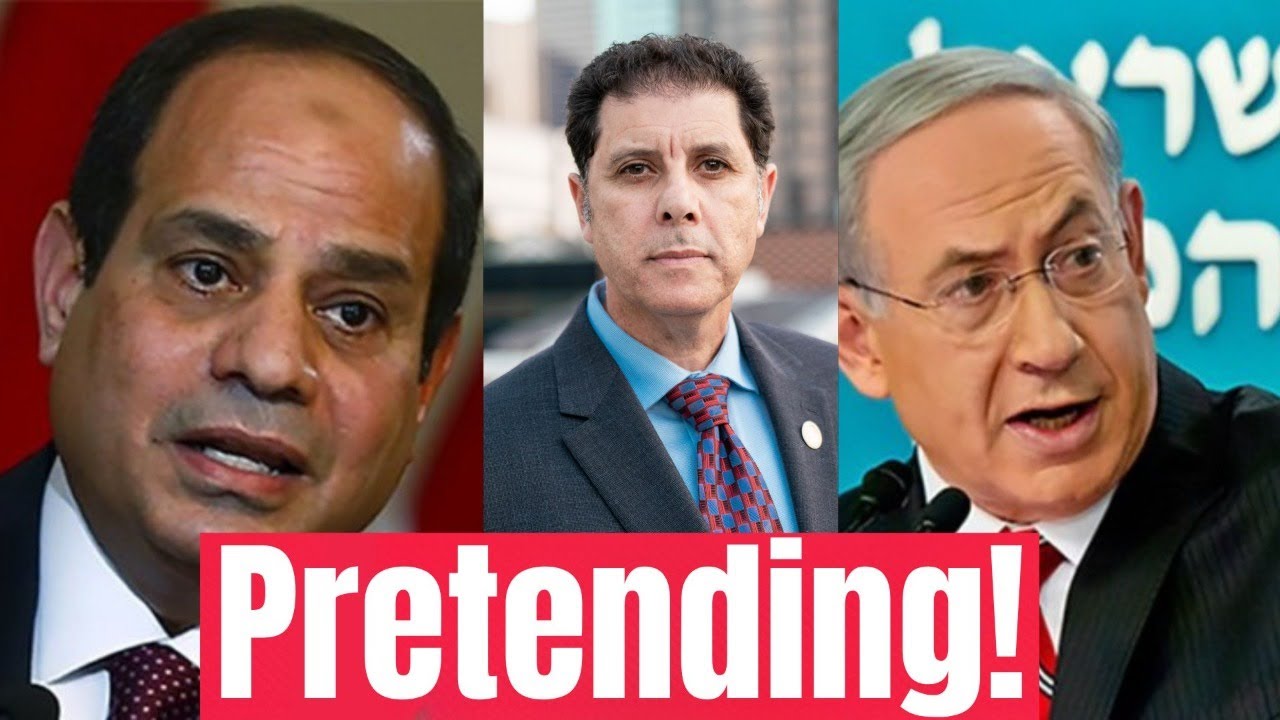
David Oualaalou examines Egypt's contradictions in the Gaza conflict using shipping data showing an Egyptian-owned vessel made 25 trips from Port Said to Israel's Ashdod port during the war. He questions whether Egypt's public support for Palestine masks a covert deal with Israel, and traces the country's geopolitical position through history and the Suez Canal.
Chapters
All right, hello everybody and welcome to Geopolitical Trends, where truth matters. Very, very excited to be with you on this February 12th. Hope you guys had a, a good weekend, peaceful weekend. You just chill out and relax a little bit. So, uh, I am ready to go. I didn't do much except preparing for this, this past weekend. But also just had to chill out a little bit, take a break. Sometimes it's good. That me time is very, very important. Very, very, very important. So anyway, I am very, very excited to be here, uh, because I got an interesting topic for you that I was gonna provide you a framework and insights. Then I'll detail more about it on the other location, and I will provide you all the links and all that as we move forward. As a matter of fact, I already put the link in the description for this video. So if you go back to the description, you'll see the link there, but I will put it up for you. Let me see first who's here, because I like to always say hi to all of you, no exception. So Willie Holman, as always, from West Memphis, good to see you. Who's Cyrus? Great, good to see you. Uh, let me— good morning, Dr. David, how is life? Very busy. As always. By the way, guys, Osiris is the one that I always say there is someone who buys me coffee every day. That's Osiris the Great. So every day since I launched the, uh, uh, Buy Me Coffee platform, and Osiris has been a great avid supporter like many other of you guys out there, and I am very grateful to you for that. So thank you very much, Osiris. Alim, good to see you. Boon, good to see you as always. Greetings from— well, that's an interesting— from active deindustrialization, the land of act— I guess which one is that, right? You guys know, right? Uh, Gina, good to see you from Scotland. Wow, so nice of you to join us here in this conversation here, Gina. Good to have you here. Uh, John Smithens, good to see you as always. Uh, Roy, good to see you from Illinois. Coach Oualaalou, oh, thank you so much for your Super Sticker. Hi, Dr. David, thank you so much. Coach Oualaalou has been, uh, has been with me here since the beginning, an avid supporter. Thank you so much for your support. Uh, Albert Beck, good to see you from Canada. I haven't seen you for a while. Hope all is well. Uh, Jorge Moreja, from California. Good to see you as always. Hong, good to see you as always. All right guys, Phil, here you are. Good to see you as always. Muslim Revert, good to see you. Uh, Mark Up, hello to you as well. So, uh, oh, Boon, here is Boon. Let me say thank you to you, man. Happy to that you mentioned Machiavelli sometimes ago. Yes, I did. Because the reason why I mentioned Machiavelli, because Bon sent me some particular comments and talked about Machiavelli pertaining to what's going on in his conversation he had with some people in Poland, uh, and, and that's one of also was coincided with what I was gonna do about Machiavelli. So very, very interesting. Uh, Omar, good to see you. G Barnes, good to see you. Uh, Franny, as always, good to see you here. So, all right guys, let's get in into our topic here today. What I am gonna be covering here, uh, first of all, I'm gonna start with the questions because it's worth for you guys to know why it's very important. And by the way, the reason I decided to address this, because you guys voted for it. I gave you two choices between the Nord Stream 2 investigation, which was closed officially without knowing who the culprit is, and the topic of Egypt. And most of you guys wanted to have the Egypt conversation, so— and, and rightly so, because there's a lot you need to know. So, so the first question we need to ask is, was there a deal between Israel and Egypt to undermine Palestine? I am not talking about the peace treaty that Egypt signed with Israel. That's not what I'm talking about. I'm talking about recently since the conflict started on October 7th. Was there a deal behind closed doors or not? Second one, was Egypt giving lip service not only to the Palestinians but to the whole Arab Muslim world? Yeah, we stand with Palestine and all that. Like I said last time, guys, most Arab countries— and again, I'm not bashing Arab countries, whatever, I just state the fact. They do more talking than they do acting, because in action that matters. You know, like the saying goes, watch what a man does, not what he says. Everybody can talk. It's in action that matters. And the third question we need to consider: is there a much bigger issue than all what meets the eyes? And those are worth— those are legitimate questions that we need to consider as I'm going to provide you some insights. Uh, let me put— by the way, let me put the link for you for, uh, where I'm going to be as far as next topic. Here it is right here, and I'm going to share it with you on the chat box. Let me, let me get it for you here, guys, and this way you can have this one, and then I will see you on the, uh On that, I don't know where I put it. Oh, here it is. Okay, copy link, and I'm gonna put it for you guys in the description so you'll see it over there. And I will meet you in, in, uh, probably in about 30 minutes or so because I'm still gonna be here providing you some insights. All right, but before I'll do this, guys, let's, let's do a tour around the world. It's very, very interesting, to see, uh, what's going on that is not being reported openly or aggressively. Uh, remember, I look for information elsewhere because I read foreign languages, things that are not reported here. And this is the reason why I do this tour around the world with you guys, for you guys. Here's the first one. Can anybody tell me which uniform, which country is that, just out of the top of your head? Let me remove this banner here. All right, which uniform is that? Well, you will be able to tell. Let me see if you guys can guess. Boone, you will know this one. Germany, you got it, you got it. So, uh, that's, that's the German, uh, chief of staff. Uh, his name is Carsten Brügger. Uh, what did he say? He's— listen carefully, guys. What did he say? He said that we must prepare for war. What does it sound to you? Who's been saying this on this side of the Atlantic here? So interesting that now the, the German, uh, chief of staff, uh, Carsten Brüwer, said that his country should be ready for a war within 5 years. And this was during his statements to the German newspaper Welt am Sonntag. Bruhn noted that preparing for war is a phased process. In other words, it has to go through phases. He said, and I quote— I had to get the right quote here— we don't have time indefinitely because for the first time since the end of the Cold War A potential war is being imposed on us from outside, end of quote. You all see, and this is again why I always say to you guys, you always have to understand and start to learn how to read between the lines. What he's reflecting is, he's reflecting the narrative that is emanating from Washington and also emanating from Brussels regarding NATO. That's what is reflecting. Because here is the question that I'm going to ask you, and please be honest about it: would you trust Germany being rearmed? Another word, if Germany rebuild its military, would you trust that? Just put yes or no in the chat box, please, because we all know the history of Germany. You know, I will say the same thing about which other country we can ask the same question about. Can you name that country? Let me see your answer. Absolutely not, Franny. Uh, Gunner, no. Hamed CV, good to see you, Hamed, by the way. You say no. Uh, uh, Athin Wu, you got it for the second part question, is Japan. We will be saying the same thing for Japan. Are we going to trust the Japanese? So the same thing for, uh, Germany. Are we going to trust Germany being rearming? And this is why you are now noticing these tensions that exist in Europe, because Germany wants to undermine Poland. They don't want to see Poland building up its army. That's why I found it very interesting, these statements by the Joint Chief of Staff. Uh, next question has to do with this one here, which by the way, not a question, I'm sorry. The, uh, headline. I shared this with you in the— on the community. Now you all know who this is, right? Let me see again in the chat box if you guys can type in that. Is— yeah, she, she became synonymous now with lying, basically. Uh, uh, Yeah, can you guys tell who she is? No, no, this is Georgina. She's the head of the IMF, International Monetary Fund. Well, listen carefully to the report that just been released. The International Monetary Fund revealed on Sunday, yesterday, that West Asia— you all know where West Asia is— economies will slow in 2024 due to oil production cuts and of course the war in Gaza. Okay, even as the global economy outlook is strong, which to me it's like, what was she smoking, you know? Come on. Yeah, here is what I found very interesting. She refrained from stating what the real cause of why this slow economy in 2024 is due to, you know, why West Asia economies or Middle East economies, that is why the economy is there is going to be. And as a matter of fact, it's not in that region, is around the world. It's because the Red Sea, and you all know what's going on in the Red Sea with the HI Group. She refrained to say this. Now there is one thing I need you to know regarding the Red Sea. There are only two countries that are allowed to transit. Their ships are allowed to transit. Which countries are those? Only two countries that HI Group said no problem for those two countries. Oh, you got it. Pong Yong Su, good to see you. You got it, Phil, you got it. Those two countries. Of course, when I mentioned this one, uh, uh, when I posted this for you guys in the community and I said, why she refrained from stating the Red Sea, uh, uh, controlled by the Houthi group? Of course, I'm— it was my mistake. I should have elaborated more. But anyway, that is what I wanted to share with you. So, so Georgieva, her name is Georgieva, by the way, she's the head of the IMF. Uh, where's her picture? Let me make sure that you guys at least— excuse me— be aware of who she is. Yeah, uh, to me it's— she's cherry-picking the information to push the narrative, you know. And this is what I'm saying. If she's stating that the economy in Gaza is going to drop by 80%, well, how come she's not saying that this morning Israel has been downgraded the, the, uh, Moody's has downgraded the Israeli credit rating and sinking their currency, the shekel. So, and, and, and to me was like, okay, what are you adv— advocating for this but not advocating for that? In other words, why the statement is not being neutral? And this is what I found very— IMF, of course you can trust the IMF. Uh, here is my next one. We all know the outcome of the Pakistani elections. Yes, Imran Khan's party takes the lead. No, which is the Independence, by the way, now mostly backed by the former Prime Minister Imran Khan. Uh, party, uh, has now sort of been at the forefront. This is what the Pakistani people want. So here is what happened, and this is according to a reporter writing Islamabad. His name is Shahir Ahmed, which was reporting on behalf of Al Jazeera. He said that, and I quote, the results showed that independents won 101 out of 264 seats, most of whom are supported by the, uh, Harakat Insaf, which is the party that is banned That's the Imran Khan's party banned. And, and that just shows you where things are. So who you going to trust now? And we all know what led to that outcome of the, uh, this one here. I'm not going to talk about it here on this. I'll talk about it in the next, uh, uh, platform. The same thing with this one here. Very interesting dynamics. This is, by the way, HI Group. I'll talk about it in the next one when we go over there. All right, let's go to our, uh, conversation now about— just to give you a background for those who might not know, what just been revealed is that the navigation, the nav for ships, you know, there are— there's a tracking mechanism and data and all that stuff the transponder and so forth. Now the navigation data revealed, revealed that Egypt— one of the ships in Egypt has been making about 25 trips to Israeli port of Ashdod, all loaded with goods for the Israelis. And this happened during and still going on, actually stopped now because they said they stopped as of February 8th because he was revealed. Well, it's problematic to begin with, and this is my point in all this. What I want to highlight to you in this conversation is the double standard. We're not talking about Israeli, we're talking about Egypt, a Muslim country that says we stand with the Palestinians. It's nonsense. So what this data showed, it showed that the significant increase in the number of, uh, uh, trips, uh, to the Israeli port. Very, very, very, very troubling. So, and this is where you have now this guy here on the right. This is President Sisi of Egypt, and of course this is the Prime Minister of, of Israel. And this is where you have now this issue of, well, wait a minute, Why is this— is, uh, Egypt is maintaining the agreement regarding goods with Israel despite what's going on? As a matter of fact, last night Egypt now threatened— yeah, they threatened to stop the peace treaty with Israel. Well, Mike, my word on it is nothing but a hype and a facade. Why? Because Egyptian government now is exposed. It's no different what Jordan was doing till it was exposed that not only they had American forces on, on their territory, but also they were giving lip service because they allowed their airspace for, uh, the US and the UK to attack the Houthi group. Saudis are back and forth. Do we normalize with Israelis or we don't? Now they're saying we will normalize only if Israel will allow, uh, the, the establishment of the Palestinian state with the 1967 borders, which is again nothing but hype because you and I know Israel is not going to agree to that. In addition to what the Saudi is saying, that Jerusalem would be the capital for Palestine, you and I know it's not the truth, it ain't going to happen. So, but before I delve deeper, let me share some geography with you, a little bit of history Then we're gonna go into a brief analysis here, and I'll take the conversation to the other location. All right, let me share the link with you here, guys. And where is it? Right here. Here we go. And by the way, I give credit to the World Atlas. That's where I get the map from here that I share with you on the screen. Egypt, the land— okay, I'm gonna ask you a question, guys. Let me, let me get the screen for you first. Excuse me. And by the way, last time someone asked me, uh, when I put the link for, uh, the, the Rumble, I have to put it out of the screen. I can't do that because that's how it shows on— I can move that, uh, when it shows up in the screen, it shows up there. So I'm sorry, it's just not working for me here. So This is why I advise those individuals to go to the description for the video, and there is the link over there. So, all right, what are we looking at? We're looking at Egypt. Egypt is a transcontinental country. Means what? It stretches on 3 different locations that stretches from the northeast corner of Africa to the southwest corner of Asia. The Sinai Peninsula of Egypt acts as the land bridge between these two continents. Egypt is located in the northern and eastern hemisphere of the Earth. It has land borders with Sudan to the south, Libya to the west, Israel and the Gaza Strip to the northeast, and to the north Egypt has a coastline on the Mediterranean Sea, while the Red Sea and Gulf of Aqaba border it to the east. Now here's my question for you: anytime you hear Egypt, what comes to your mind? There's supposed to be two things that comes to your mind. Let me just see what, what you guys can think of. Two major things. I just want to— Cleopatra, that, that's true. Cleopatra VII, that's one. Uh, channel, that's one. Suez Canal, that's one too. I'm looking for two other ones. Pyramids, that's one. What is the second one? And the second one has to do with economics. Very, very, very important. As a matter of fact, there is now tensions with the countries where that water goes to. Yes, the Suez Canal and pyramids, you got it, you got it. Who, who? You got it, the Nile. Because you cannot— this is what's going— check out the issues between, uh, uh, Sudan, Eritrea, and Egypt, where the tensions are. And it has to do with access to the Nile, because the Nile River is very crucial. It's called the Nile Delta region, the whole of it. So one of Egypt's most significant geographical features is the Nile Delta, and the delta itself stretches from the northern part of Cairo to the Mediterranean Sea. Why? Because the importance of it— because it has been throughout history that this part of the, of the, of the country historically has been fertile and was the cradle of many, many ancient Egyptian civilizations. So the Nile in itself, often regarded as the world's longest river, fans out into the myriad of, uh, sort of, uh, all the way into the Delta, creating a lush green landscape in contrast to the surrounding desert. This is what's important, uh, about Egypt that I want you guys to pay close attention and, and know about. So when you look at, uh, the Nile, you see where it goes. I'm pointing at it with my— you can see at the top it says Nile Delta. So always stretches all the way down This is down Aswan. This is the border here, and you go all the way down Sudan and so forth. This is why it's very important to understand this part of geography of, of Egypt. Now let us look a little bit at the history of Egypt, which I'm not gonna— remember guys, when I share history with you, I'm just doing very, very brief aspects of it because cover all this, it's gonna take us forever. So Now let's talk about, uh, uh, uh, Egypt, uh, history. So I'm gonna start with one first thing, and first of all, first thing is a question for you, you know. Oh, let me, let me, let me say thank you. To me, that's the rule. I, I, I don't care if others get upset because I have to interfere with the conversation. I say thank you to Gina, and also thank you so much for your Super Sticker, truly appreciate it. And Gina is joining us from Scotland, by the way, guys. So thank you so much, Gina, truly appreciate it. And I also want to say— no, not this one here— I want to say thank you to, uh, Tara, uh, Taharqa. Thank you so much. The ancient name for Egypt is Kemet. Indeed, I am gonna address it in the— you, you, you, you, you kind of were ahead of me here, so which is good to know. So thank you so much for your super stickers. So it is my question for you guys, and then just think about it, you know. Was Cleopatra an Egyptian? Yes or no? Now again, if you look at the history, you're going to find out a few different references. So this is just a conversation for us. In your opinion, was Cleopatra an Egyptian? Let me see your answer quickly here. Y.A., you say no. Uh, Assam Tala, you say no. Nafisa, you say no. Well, you guys got it right. Yeah, she wasn't, even though she was in Egypt. Okay, because here is the thing: along with King Tut, or Tut, T-U-T, perhaps no other figure is more famously associated with ancient Egypt than, uh, than what's her name, Cleopatra, the 7th. Okay, there, this is where the records comes in. While she was born in Alexandria, Cleopatra was actually part of a long line of Greek Macedonians originated, descended from Ptolemy. So, and this is where, uh, uh, uh, one of Alexander the Great's most trusted lieutenants Ptolemy. So that's why I found very, very, very interesting about, uh, this one here. So, so let's get, uh, there is a picture I need to share with you. Let me show you a picture just here for you guys to see. Or maybe we don't, uh, I had some pictures for you guys to see. Yeah, I don't know what it is. Let's move on. So now, when you think about the, the, uh, the, the, uh, Ptolemaic Dynasty, which ruled Egypt from about 320 or 323 or so to 30 BC— excuse me— most of its leaders at that time remained largely Greek. In their culture and sensibilities. This is where that, that conversation about Cleopatra— where is she, Greek or Egyptian? So, so in fact, this is why Cleopatra was famous for being one of the first members of the, uh, uh, Ptolemaic dynasty to actually speak the Egyptian language. So, so with both the Egyptian and the, uh, Hittites facing threats from other people back in 15— I'm sorry, in about 1259 BC. Uh, Ramses II— and I remember this when I, uh, because when I took a course in history way back, Ramses in Arabic language is pronounced Ramses II. So Ramses II and Hittite King Hattusili III, both of them negotiated an agreement of sort. Why? Because it was some sort of a peace treaty. And the whole reason for it— this agreement ended, first of all, the hostility, hostilities between the two countries, and decreed that the two kingdoms— remember, the Egyptians and the Hittites kingdoms— would sort of help each other in the event of an invasion by a foreign or third party. So, so the Egyptian-Hittite Treaty is now recognized as one of the earliest serving peace accords, and a copy can even be seen above the entrance of the United Nations Security Council chamber in New York if you ever go there. I never saw it. I've never been there. So, but I used to, when I used to live up north, sometimes I go to New York and just pass near the UN, but I've never been inside. So I, I never saw it. So I don't, but, but it is. If, uh, and I checked the record, so it is, it is there. So let me share a picture, uh, with you at least, uh, to show you something from ancient Egypt. Which you're all going to recognize anyway. Yeah, this is a famous one. Let me see if there is another one. No, that's the only one they have still. So this is what I wanted just to share with you briefly here because, as I said earlier, the history of Egypt is so long. It's so long. Uh, I mean, and I can— I don't know, do you guys want me to keep a little bit more on this? Let me just take you back to, uh, 3500 BC. I'll just take you to that time. So, and this one was like the— this past time dates for the Egyptians, uh, at that time, the Egyptian civilization. Because during this era, what did they were known for? The sort of— even the painting that now you see depicts sort of the, uh, the, the, the rulers of that time, like the pharaohs. That's one of the, the, the, uh, uh, reflection of the old civilization of the Egyptian, uh, at that time. Then you think about, uh, let me, let me just see briefly here the Pharaoh's era, because it's very important to understand, uh, and you see this a lot through the Egyptian art, which depicts a lot of time the Pharaohs as being trim and status quo, status quo. You know, but this was most likely not the case, you know, because the Egyptian diet of beer, wine, bread, and honey was high in sugar. Why? Because studies show that it may have done a number on a royal waistline, meaning becoming fat. That's, that's the— but again, this is just a reflection of, uh, of what was going on. Now here is another question for you, and I'm gonna share, uh, let me ask you this question: who built the pyramids? Because some historical records indicate something else. Who, in your opinion, built the pyramids? Let me see what you guys come up with. It's because the life of the pyramids builder certainly wasn't easy if they are to go with those images. So in your opinion, because we all know when you think about Giza, I mean, all that structure and all that stuff. And again, we're not getting into— I just wanted to get your opinion. Uh, okay, so you say slaves. Okay, uh, where was the other answer? I just saw it. Uh, others saying not the slaves. Uh, Gina, you say not humans. Okay, you got a point there. Uh, yeah. It's very, very interesting to understand at least this part. So the life of pyramid builders certainly wasn't easy, as I mentioned, because why? Archaeologists have found that the skeletons of workers commonly show signs of arthritis and other ailments. But evidence— see, and I'm no archaeologist, guys, this is based on the record that I found, I share it with you as is. Suggests that the massive tombs were built not by slaves but by paid labor. And these ancient construction workers were a mix of skilled artisans and temporary hands, and some appear to have taken great pride in their craft. So that's why I asked you the question, just for you to know. And this is nothing, guys, just for us to learn a little bit here. So then you got, of course, King Tut, famous. I saw the, the tomb in, uh, when I was in Paris at the Louvre. There is one section there for King Tut, uh, not Tuft. There's Tuft, but there's Tut, T-U-T. Surprisingly, little is known about the life of the boy pharaoh Tutankhamun. That's the full name, Tutankhamun. But some historians believe they know how he died. Scans of the young king's body show that he was embalmed without his heart or his chest wall. This drastic departure from traditional Egyptian burial practices— because you all know how they, uh, bury their their kings and all that stuff, suggests that he may have suffered a horrific injury prior to his death. So according to a handful of, uh, Egyptologists, one of the most likely causes for this wound would have been a bite from, uh, uh, Hypotamus or Hippopotamus. Evidence indicates that the Egyptians hunted the beast for sport, and statues found in King Tut's tomb even depict him in the act of throwing a harpoon. If the boy pharaoh was indeed fond of stalking dangerous game, then his death might have been the result of a hunt gone wrong. So, so let me show just some pictures quickly here before on into what I need to talk about briefly here. Okay, let me— not this one, right? Uh, not, not this one here. Okay, let me All right, here's the— some, some pictures, and I'm just going to show you some pictures, guys, here quickly, then we'll move on into what we need to do. This is the, the Egyptian cobra snake. Very, very— if you read up on how dangerous the venom from, from this creature here. So, uh, ancient— this is like the painting. And by the way, I give a credit to the Gary Images. That's where those are from, and I'll have the link for you guys where I will post this from the, the history, uh, and the author who, uh, who worked on all this, because you got to give credit where credit is due. So this is a video shows you Ramses II sets out to become the great Egyptian pharaoh. It's just, it depicts how the lifestyle used to be standing over 40 feet tall. This is a reporter. Uh, this is the, the young, uh, Tut. This is a picture. That's his image of the death mask of King Tutankhamun, ancient in Egypt's most famous. And let me— King Tut. And that's about it, guys. Just some, uh, some other images there. So, but I will put the link for you for you guys to see, uh, what's going on. All right, let me get in to talk briefly about what this navigation, uh, data showed. And by the way, I got a, a satellite image, uh, and I'll share it with you right here. It's just a picture, of course it might not mean a thing to you, but, uh, to me it's— this one here is the site revealed the trajectory of the route of the Egyptian ship from the port of Said, Port Said, to the port of Ashdod. Uh, the one on my left, that's Port Said, and all the way the trajectory all the way to the port Ashdod in, in, uh, in, in Israel. So, so, and the ship, by the way, is this one right here that was carrying, uh, carrying the, uh, um, it's called the Pan Gigi. So as I mentioned, there were 25 trips that this one took, uh, the goods to Egypt— to Israel, I'm sorry. And that's where, uh, this one here— the ship is owned by an Egyptian, uh, Ban Marine Shipping Group, which was established in 1978. So, uh, headquartered in Alexandria. I don't care for all this, guys. What we're gonna care about here is the idea of how Egypt is behind closed doors, has maintained, uh, its, uh, has maintained its, uh, conversation with Israel. This is Sisi and, uh, uh, Netanyahu, and in, in the middle, guys, that's the translator there, uh, how they maintained the secrecy behind the scenes. So this is why I'm saying No matter what you hear emanating from Arab countries' capitals, uh, be it Amman or Riyadh or Cairo or, or Beirut, whatever, whatever, I don't care what, what country that is, it's nothing but hype, you know. I even now, I had to look now, I'm gonna check on the statement of Anwar Ibrahim from Malaysia. So yeah, he's saying that, well, we need to support the Palestinians and all that stuff. Well, wait a minute, talking versus acting is two different— on the opposite side of the spectrum. Which is which? So, so here is Egypt now keeps sending merchandise, goods in return for money. And this is what they're saying, well, we've been— because here is what I found very problematic. Egypt about 3 weeks ago or 4, they were saying, well, we have been hammered economically because of what's going on in Red Sea and all that stuff. Which was nothing but a lie. Yes, they might be hampered economically a little bit because of the Suez Canal, whatever, but at the same time you are maintaining a transit, 25 trips of goods from Egypt to Israel. So what are you talking about? And this is what I'm saying, the double standards when it comes down to— we're not just blaming Egypt here, we're talking about in general term So, because we don't know what's going on with the— what's taking place, and I'll elaborate on what I can talk about in the other, uh, part over, uh, on the other side. So one thing I need you to understand is how Egypt and Israel came to be together. It's peace treaty. So Because the first trip of a Syrian president— what was his name, by the way?— of an Egyptian Syrian president was the first ever to visit, uh, Israel at that time. And do you guys know what year was that? Let me just see the chat box here. And of course, he got, uh, assassinated later. Oh, the Iranian Putin, thank you so much for your super sticker. The Transformers built the pyramids. Transformers, I see your point. Thank you so much for your super sticker, truly appreciate it. All right, let me see your answer, guys. Who was the first president to visit Israel at that time? Uh, Sadat, that is correct. Anwar Sadat. What year was it? Do you guys remember? Uh, no, no, not, not 1967. No, later on. And I, uh, yeah, Anwar Sadat, that is correct. And I'm seeing, uh, Anwar Sadat. What year was it? What year was the trip? Because that really changed the— 1979. It was 1977, to be exact. Uh, 1977. I remember, yeah, I was a kid back then. I remember I saw the images of the, uh, when he was, uh, he was taken down during the parade. This is why after that most of the parades In military one, they start not to have weapons like, like their, uh, their, uh, loaded, their, their ammo, their, uh, rifles or, or, or mess, whatever that is, rockets. But nothing, nothing, nothing, nothing is, uh, uh, sort of, uh, uh, with ammo, live ammo. Because that's what happened. The guy who was holding the— I remember— it was the, uh, .50 cal if I'm not mistaken. He turned and just fired at everybody, including Sadat, was there. So 1977. And this is why it's important for you to understand the historical record. But this wasn't about the treaty with Egypt. There are some behind-the-scenes issues that took place, and this is what I intend to cover in the next location, because I'm going to stop right here because I'm going to get in into some other stuff that I don't want to share over here. So let me put the link for you guys once again, and we're gonna go over to the next location, and I will see you in about literally 5, 5 or 10 minutes. Uh, copy the link, and I'm gonna put it in the description, in the chat box for you guys. It's right there, and, uh, I will see you in about literally 5 or 7 minutes or so. So see you guys soon, okay? As always, remember, geopolitics impact your daily life in more ways than one. See you soon, guys. Bye.
More from David


Beyond the Single Actor: Why the Gulf Isn't Choosing Between the US and China


Iran, Iraq's Militias, and the Houthis Are Coordinating! This Changes Everything




Who Controls the Next Decade's Resources? Latin America and Africa's Geopolitical Crossroads

The Chokepoint Trap: How Washington's Stupidity Triggered a Cascade That Now Controls the World

Trump Spooked as IRGC Unveiled dual-use SLV, Deployed Ghadir Mini-Subs & Hinted at Tactical Nukes!
