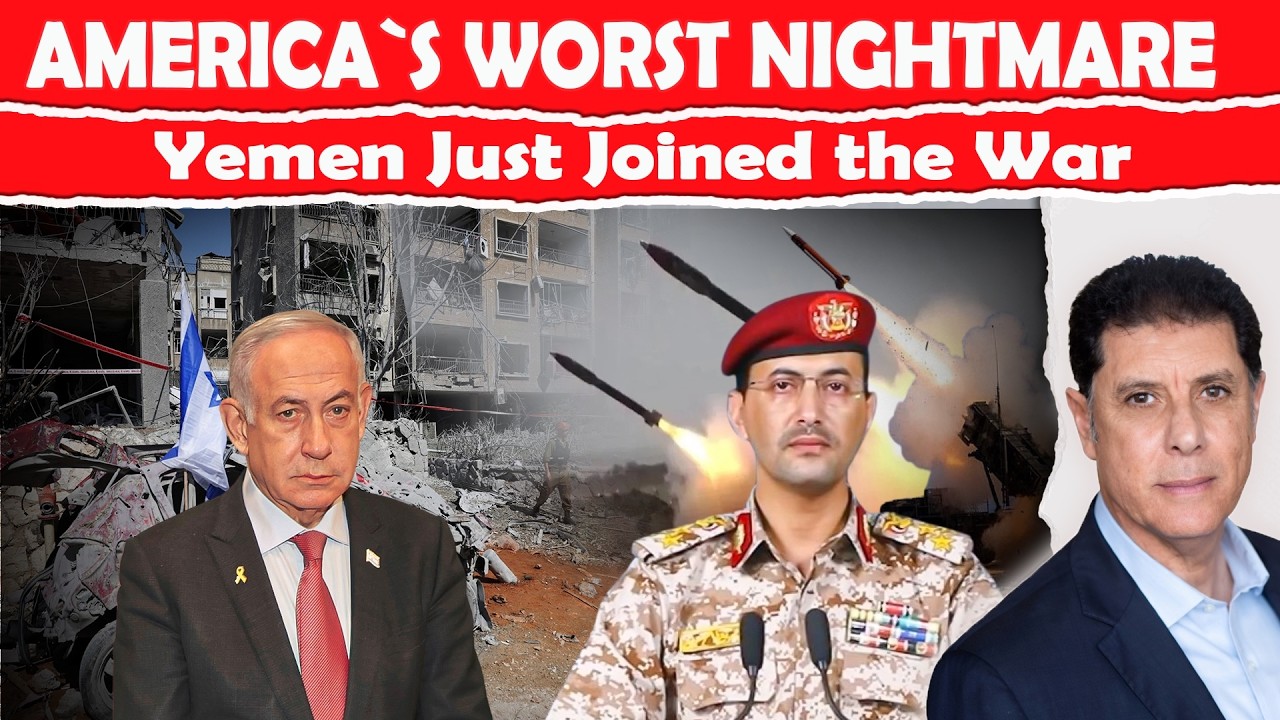
In this Geopolitical Trends video, the host warns viewers that the Houthi movement (Ansarullah), an Iranian‑backed militia that controls much of northern Yemen, has escalated the Israel‑Iran conflict by launching a missile barrage at southern Israel on March 28, 2026. The presenter explains the Houthis’ origins, their growing missile and drone capabilities, and their strategic control of ports and the Bab‑el‑Mandeb Strait, a chokepoint through which about a quarter of global container trade passes. The analysis details how the strike creates a two‑front dilemma for the United States, which is already engaged in strikes against Iran, and how a potential Houthi blockade of the strait would cripple Israel’s imports and push up global energy and shipping costs. The video highlights the broader risk of the war expanding across multiple theaters, threatening both the Red Sea and the Strait of Hormuz, and underscores the economic stakes for everyday consumers. The host concludes by asking viewers whether the U.S. should directly confront the Houthis to protect global trade or stay focused on the larger Iran‑Israel conflict.
Chapters
Hello everyone and welcome to Geopolitical Trends, where truth matters. Before you change the channel, I need you to hear this. The war that is happening right now in the Middle East, thousands of miles away, it's already reaching into your life. The prices you pay at the gas pump this week Connected. The package that's taking longer to arrive, it's connected. The groceries that keep getting more expensive, it's connected. And tonight it just got worse. A well-determined group from one of the poorest countries on Earth just fired missiles at Israel and put their finger on the trigger of a waterway that moves billions of dollars worth of goods every single day. This isn't just breaking news. This is a story about your money, your family, and a world that is one wrong decision away from a crisis none of us are ready for. In this video, I will break it down for you. And I will break down for you one of the most important developments in the ongoing Middle East or West Asia conflict. The Houthis, or Ansarullah, entering the war. Who are they? Why does it matter? And could this make the war even bigger? So let's start first of who are the Houthis. First, a quick background. The Houthis, or Ansarullah, are an Iranian-backed group that has control of Yemen's capital, Sana'a, and much of northern Yemen since 2014. They are one of the key members of Iran's so-called Axis of Resistance. The Houthis, which is a network of armed groups across the Middle East, that takes its directions from Tehran. Think of them as a heavily armed, organized, well-trained group that has spent years building missile technologies, drone capacity, and sea-based weapons. Unlike other groups in the region, the Houthis, or Ansarullah, controls real territory, ports, airports, and population centers, which makes them harder to dislodge and gives them more tools to threaten global shipping whenever they want to. How did the Houthis enter the war? On March 28th, 2026 of this year, exactly one month after the US and Israel launched its war. Houthis launched barrage of missiles at southern Israel. It was their first strike since the wider war began. Houthis' military spokesperson, Brigadier General Yahya Sareea, announced the attack on satellite TV, saying missiles targeted, and I quote, sensitive Israeli military sites, end of quote., and those strikes will continue until the aggression against all fronts of the resistance ceases. Israel's military said it intercepted one of the incoming missiles, but the message was clear: the Houthis were no longer on the sideline. How does this change the equation for the United States? Key question: For the U.S., the Houthis entering the conflict creates a serious two-front problem. The U.S. is already deeply committed to strikes against Iran, which, by the way, on behalf of Israel. As a matter of fact, this whole war is being conducted on behalf of Israel. Now, if the Houthis move to block the Bab-el-Mandeb Strait, which I believe they will, a narrow 20 miles The US military will need to split its attention and resources. Recall last year the US was unable to lift the blockade on the Red Sea that the Houthis imposed and ended up having to leave the Red Sea altogether. About a quarter of all global container trade passes through that strait, which is the Bab el-Mandeb, on its way to to and from the Suez Canal. The Houthis' Deputy Information Minister said directly, and I quote, "Closing the Bab-el-Mandeb Strait is among our options," end of quote. Meanwhile, 3,500 additional U.S. sailors and Marines have just arrived in the region on an amphibious assault ship, a sign that Washington knows the stakes are rising. How does this change the equation for Israel? That's an interesting angle. For Israel, the Houthis are a familiar, if not difficult, threat. Between 2023 and 2025, the Houthis fired nearly 100 missiles and more than 300 drones at Israel. But this is no longer just about missiles. About 30% of Israel's import pass through Bab-el-Mandeb Waterway. If the Houthis succeed in blocking that strait, which they could, it would cut off a critical economic artery for Israel at a time when the country is already stretched thin fighting Iran. Israel has struck back at Houthi infrastructure, including the Sana'a airport and the port of Hodeida back then. But history shows that strikes alone have not stopped Ansarullah. The next question becomes, is, will the war widen? Well, this is a question everyone is asking, and the honest answer is it already has. The conflict that began on February 28th with the US and Israel striking conducting an unjustified war against Iran has grown now to include Iranian counterstrikes across the Gulf, attacks on a US basis, and now you have the Houthi missiles aimed at Israel with no immediate diplomatic breakthrough in sight. As both the US and Iran hardened their positions, many fear the war will spiral out of control. The real danger, in my opinion, of Houthi involvement is more of economics. A senior Yemeni analyst at the International Crisis Group put it plainly, and I quote, "If we see more pressure on the Iranians or there are any escalation, the Houthis will jump into harshly. The impact will not be limited to energy markets. Disrupting the Red Sea after the Strait of Hormuz is already nearly closed will put two of the world's most critical waterways under threat at the same time. So the bottom line is that Ansarullah, or the Houthis, entering this war forces now the US and Israel to fight on multiple fronts, puts more pressure on global trade and energy prices, and gives Iran more leverage at the negotiating table if that ever happens. Whether this conflict stays contained or grows into something far larger may depend on the decision made in Washington, in Tel Aviv, and yes, in Tehran in the coming days and weeks. I want to hear from you. Do you think, in your opinion, the United States should take direct military action against the Houthis to protect global trade and shipping, or should America stay focused on the bigger war with Iran? Make sure to leave me your thoughts in the comments section below. And if you find this video helpful, please subscribe and hit the like button. And remember, Geopolitics impacts your daily life in more ways than one. Till next time, thank you.