The Inevitable Collapse of Western Economic Order! Conversation w/Dr. Yan Liang!
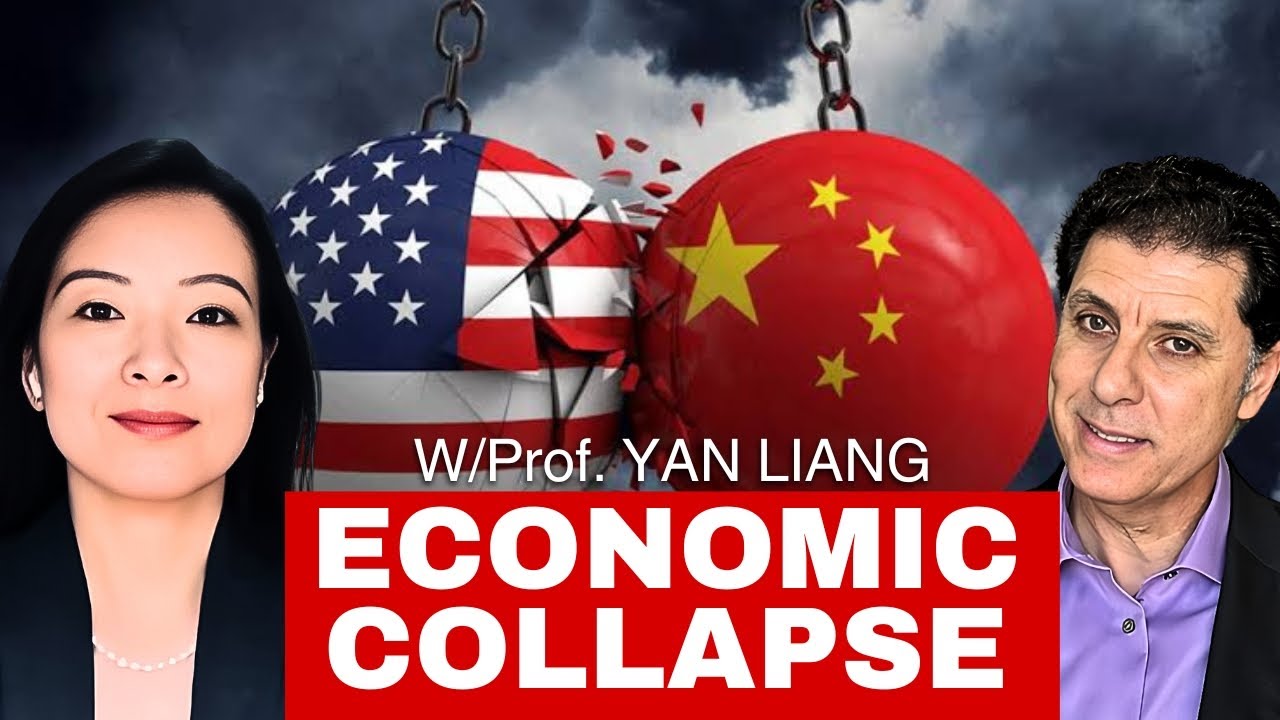
In this extensive Geopolitical Trends interview, host David Oualaalou talks with Professor Yan Liang, a leading economist specializing in Modern Monetary Theory (MMT), international economics, and the political economy of China. The conversation weaves together historical parallels, current policy analysis, and future forecasts. Liang explains how the United States’ containment tactics against Japan in the 1980s—voluntary export restraints, the Plaza Accord, and pressure to abandon high‑tech sectors—are being replicated against China through tariffs on EVs, batteries, solar panels, and a broader “small‑yard, high‑fence” strategy. She argues China will not capitulate, instead doubling down on semiconductor and integrated‑circuit funds. The dialogue then shifts to Europe’s ambiguous stance: while some leaders (Scholz, Macron) seek strategic autonomy and maintain deep trade ties with China, others follow U.S. pressure, revealing a split between economic interests and geopolitical alignment. Liang highlights the rise of alternative economic blocs—BRICS, ASEAN, RCEP—and their growing share of global GDP, pointing to a gradual rebalancing of the Bretton Woods order. The discussion moves to de‑dollarization: rising gold reserves, local‑currency trade, and new payment infrastructures such as China’s CIPS, BRICS Pay, and contingent reserve arrangements, which aim to reduce reliance on the dollar. Liang then demystifies MMT, stressing that sovereign currency issuers cannot “run out” of money, but real‑resource constraints limit spending, and that the theory offers a framework to finance public goods without the false scarcity narrative. She critiques U.S. fiscal policy, noting the ballooning $35 trillion debt, the regressive transfer of interest payments to the wealthy, and the hollowing‑out of manufacturing in favor of financial sector growth. By contrast, China’s manufacturing output now exceeds the combined output of the next nine countries, while its export‑to‑GDP ratio is falling, disproving overcapacity claims. The interview concludes with forecasts: the U.S. faces structural decline in industrial capacity and climate policy, whereas China continues to expand its economic influence, especially through infrastructure projects in the Global South. Liang also recommends further reading on MMT and a documentary on monetary policy.
Chapters
All right, hello everybody and welcome to Geopolitical Trends, where truth matters. Very excited to be with you as always, but of course I am very excited because of the guest I have for you today, uh, which was kind enough of her to really carve out time for us. This is for all for you guys because the guest that I have here today for you The information you're gonna learn about, you ain't gonna find it elsewhere. And you all know me by now, I don't sugarcoat things. I'm a straight shooter. So I'm not gonna waste too much time. I'll, uh, I'll— I just want to give you a heads up on two things, by the way, guys. Next week, uh, I'm gonna— I already reached out to Larry Johnson, so I'm gonna have to wait till his return. Uh, and also on the 1st, which is two days from today, actually on Saturday, tomorrow, or Sunday, that is, I'm gonna have the conversation with Carl Zah. So make sure to tune into that and we just go from there. So I'm gonna waste— I'm not gonna waste too much time here. So I'm gonna bring in my guest, Dr. Yan Liang, and we just go from there. Hello, Professor.
Hello, David.
How are you?
I'm doing well, thank you. And how about you?
I'm all right. Very, very excited to have you, and I mean it when I say that. So Uh, because we got a lot to cover. And by the way, guys, to those who do not know who Professor Yanglian is, I'm gonna give you a brief, brief description. I put the full bio in the description, in addition to the link to her Twitter, which I follow her on Twitter. And I am gonna put a link for you of her last, uh, interview with Warwick, that Warwick Powell. You all remember him, he was here on the show. So So who is Professor Yan Liang? She, she is a Peter C. and Bonnie S. Kramer Chair Professor of Economics at Willamette University, which is in Oregon, by the way, guys. She's also a research associate at the Levy Economics Institute and a research scholar of the Global Institute for Sustainable Prosperity. Professor Yang specializes in modern monetary theory, MMT, uh, also in economic developments, international economics, and the political economy of China. Professor Yang publishes many, many articles, and she's well known and has contributed to the body of knowledge. So you guys are in for a treat, and I mean it. Again, so Professor, I'm gonna get into it right away because I don't want to waste too much time here. So I'd like you, for us, please, to provide us from an economic perspective, how would you compare what took place in Japan back in the '80s vis-à-vis what's going on right now with China when it comes down to the US economic pressures that it did?
Yeah, well, first of all, thank you, David, for the invitation, also for that very generous and kind introduction. Um, so straight to your point, in terms of the, the the sort of the US's response to Japan's rise back in the '80s and now China, it's in some ways very similar. I think this idea of containment, right, that the worry back then with Japan is going to overtake the US economy when Japan was booming with the enormous manufacturing prowess that it was able to, in a way, compete away, you know, some of the U.S. manufacturing sectors, especially the automobile industries. And so that really triggered a lot of sort of concern, right, from the United States. And so the responses have always been pressure Japan to reevaluate the yen, the Japanese yen, and also to restrain their own exports, right? So in the name of voluntary restraint export restraint. That was the sort of trade policy that the United States basically pressured the Japanese manufacturers, right, to have only certain amounts of export of vehicles to the United States. So with both the pressures on the trade front, the so-called voluntary export restraints, and also when it comes to the currencies, as we know, in 1985, the United States was Allies were imposing the Plaza Accord on Japan, which basically resulted in the Japanese currency's revaluation. And so that undercuts Japan's export competitiveness. Also, I think, you know, the United States also pressure basically Japan to give up some of the cutting-edge industries, right? Semiconductor industries, for example. Japan basically exited that, the development of the chips manufacturing and development. So all of these are, you know, the strategies that the United States took against Japan back then. And today we're seeing very similar responses, you know, from the United States, you know, from the trade war that was erected by Trump back in 2018 to now, you know, Biden basically doubled down, inherited the trade tariffs, but also doubled down on some of the containment strategies, right? The so-called small yard, high fence. And now we're seeing the yard is getting bigger, the fence is getting higher. So with a lot of sort of technological containment. And then the latest move, as we know, is that Biden is going to impose 100% of the tariffs on the Chinese EVs, batteries, and even medical PPEs and syringes and all of these. And again, strategy is to protect the US industries away from China's competition and also trying to cut China off to these high-tech chips. So yeah, very similar moves, but I don't think that the response of China would be very different from Japan. So China definitely would not give up the development of these essential technologies, core technologies. China actually is doubling down, as we know, that The government just announced the third, the so-called big funds, the integrated circuit industrial investment funds. So definitely China will mobilize all the resources and, you know, you know, push that kind of technological leapfrogging.
Yeah, and this is, guys, the reason why I wanted to start this conversation with Professor Yang regarding the link between geopolitics and economics. This is why I always say nothing happens in a vacuum. And once you understand the ins and outs, especially from someone like Professor Yang, it will make more sense to you to understand why the US is embarking on those economic policies toward China, similar fashion we did against Japan. Now here is the thing, Professor Yang, and correct me please if I'm wrong, uh, the way I see it, that is the difference between how China is gonna move forward in comparison to what Japan did. Japan caved in. I don't see China cave in. Will I be wrong in this, in this assessment?
No, I think absolutely, uh, because Japan in many ways really rely on the United States sort of security protection, right? It is an ally, uh, with the United States, but China was not, right? China is not. Um, China does see the importance of self-sufficiency in some of these core technologies. And China also sees the relationships with the United States, of course, the US trying to encapsulate that into sort of the great power rivalry. Right. Competition is the main sort of theme. China, on the other hand, really wanted to foster sort of the mutual respect and also peaceful coexistence. Right. The Chinese, the the principles when it comes to international relations. But at the same time, you know, as Chinese is saying, you know, we don't want to be the offenders, but we will definitely defend our own interest when it comes to it, right? China is not afraid of fighting, but it will not, you know, initiate that kind of fight. So I think that is the mantra that I think the Chinese leadership is following, which is, you know, with all these external pressure, what it would do is again to galvanize, right, the Chinese government and also, you know, state enterprises, entrepreneurs, and the people to really kind of rise up against that kind of challenge. So I think, yes, it will be different in terms of the reactions from China.
Very interesting. And given how China doesn't want to be offender because that reflects part of their culture and how the history of China, it was never into this. I think part of the problem in the West is the misinterpreting that as a sign of weakness. And this is what I think when I used to work in Washington. I was over in Washington for years and years. And I always used to argue, do not misinterpret a country's behavior by being nice as being weak. Do not miss— so, but again, my, my advice fell on deaf ears anyway. So, so let's move on into the current issues between the US and China regarding the trade. And for this one, Professor Yang, I want to get your, uh, input as to how do you categorize the trips by key leaders in Europe— I'm talking about the last trip of Olaf Scholz, the Chancellor of Germany, I'm talking about Emmanuel Macron of France, I'm talking of President Xi's trip to Europe in which got a deal between China and Hungary and China and Serbia, and those were mainly has to do with investments and ventures— are the Europeans in general or collective West, Europe for that matter, pivoting towards the East, towards China, because they are seeing where the trend is headed, especially when it comes down to the EV technology, uh, the Chinese now building their own chips and all that. Is that where you see it going?
Yeah. Um, so before I address that question, I want to just very quickly piggyback, uh, on this big, bigger picture in terms of the great power rivalry and all of that. So I think you, you might have already read it, right, in the I think it's Foreign Policy Affairs, where Pottikner and also Gallifrey put out this piece about what it means by the endgame when it comes to this rivalry. And they are looking for the ultimate sort of victory, which amounts to a regime change in China. And that then again, inviting many of the responses, including Rush Doshi and many others. And I think that's a very interesting take when it comes to this fantasy, this kind of craziness. Mentality at Washington that the people believe that they can somehow not only contain China's growth, but also sort of engineer a regime change in China. So I think that is really the mentality right now, unfortunately, for not a small group of people, I would say. So, yes. So that piece, I think, is very interesting to see what is in the thinking. Now, going back to this question about Europe, I think it's very interesting. I was actually in an interview yesterday with CGTN America, which is the Chinese government sort of media, and they they did ask exactly the same kind of question, which is, you know, the United States now waged this very high tariff rates on China's, you know, new, you know, the new trios, right? The EV, the battery, and also solar panels. Would the Europeans also follow up and do the same thing? And I think this is a very interesting question. Definitely, I think, you know, in some ways Europe does see the competition from China, right? EV, the automobiles, it's definitely the main industry with a lot of political power in Europe. And so They are continuing to sort of probe in China subsidies. And I think they are going to actually, I think by June sometime that they mentioned that they're going to start to release sort of the tariff policies, right? Whether or not they will impose somewhere between 10% to 30% on China's EV imports into Europe. But I think ultimately, you know, there are many different positions. I think the positionalities of Europe is different, right? So I think they really need to think about their own interest, right, their own strategic autonomy, instead of always following what the United States does. So Europe is different in many different ways. And so for one, Europe has a lot more exposure to international trade and investment, right? For Europe, their extra EU trade is about 40% of the GDP, and the foreign direct investment outside of EU is about 90% of the GDP, which is considerably larger than the United States. And so I think that European economies are much more externally oriented than the United States. So they should not do the same thing as the United States, which is to erect all these protectionist mechanisms to sort of shield themselves away from the foreign competition and also the foreign opportunities. I don't think that it is in the interest of the European countries to do that. And European countries also, you know, in a way, there's no stake between Europe and China, right? These two don't really have sort of any kinds of rivalry or any sort of almost sort of— I think from the United States' point of view, the rise of China is to dethrone the United States' hegemonic power. Europeans don't see themselves that way, right? I don't think that they have really sort of the kinds of competition that the United States sees. And not to mention, I think, you know, China has been promoting the multipolar world, which I think Europeans, especially the French, right, really can see themselves as one of the polars. And so I think in many different ways, Europe has very different geopolitical interests, very different economic interests than the United States. So I think they should much, you know, have much more sensible policies in terms of cooperating with China, right? They are worried about, for example, overreliance on China. But I think the way to overcome the overdependence is to foster more interdependence rather than decoupling or de-risking, which is, you know, the United States has been, you know, moving towards. And last point, I think on this is also very important to think about is A lot of the recent policies in the United States, of course, are, I would say, politically motivated, right? We know the election is coming up in November. We know that Biden really needs to get the votes in some of the swing states, Pennsylvania, Michigan, and so on. So even though, you know, China's EV imports, it's only about 1% of the total imports to the United States, right? That is a bare minimum. There is only, you know, very few Chinese EVs on the streets in the United States. And yet they come up with this policy. Policy to sort of preemptively protect US industries. It's very much politically motivated. And again, I don't think Europe is under that kind of pressure. And so I think they, they really need to think about their strategic interest and have their own autonomous policy rather than following the US's lead.
Yeah, but, but it's still, Professor Yang, Europe strikes me as very weak in the fact that they are following the US policies. I'll give you just a quick example. And please correct me if I'm wrong regarding the sanctions that have been imposed on Russia. We all know Europe gets a lot of energy on a cheaper end from the Russians. So now they are embarking on the same approach differently regarding China. And as far as the, the, the trade and the tariffs and so forth. And to me, that gives me a sort of signal as to Europeans can't take stand on their own. Because if they were strong enough, politically speaking, or independent for that matter, they would have said to the US, no, we're gonna maintain what we want to maintain with Chinese, whether you have a problem with them or not, ain't our problem. But I don't see them doing that because most of the European leaders are so weak. I'll give you just a quick example here about what, uh, Giorgia Meloni, the Prime Minister of Italy, did when under pressure, pulled out of the BRI all of a sudden.
Yeah, I think Europe is in this very, uh, I would say in many countries for that matter. I think Japan is the same, Australia, you know, they, they have this very bifurcated relationships, right? They rely on the United States for the security protection, for the lack of better words, but at the same time, you know, they are benefiting with an open, you know, trading, investment, and cooperation with China. So they're really maneuver between the two, and I think where we do start to see more and more, I think, European countries, especially France and also Hungary and some of the other countries that are thinking more clearly about what is in the best interest. Right. You do hear Macron, for example, yesterday or the day before, have announced we're not going to fight this war against Russia. This is not our war. And you also hear that France was saying Europeans should not be dragged down to the war that don't belong to themselves, meaning Taiwan and so on. I agree with you. There are certain constraints on these European countries that sometimes they can't just stand up and say no to the United States. But then at the same time, I think that in many different aspects, you're seeing that they're exercising some kind of strategic autonomy. You know, for example, in the vote in the United Nations, right, 143 countries, including many European countries, you know, voted for Palestine as the 194th country's country members. At the United Nations. So I do see in some very delicate positions where Europeans are trying to at least craft policies that are in their own interests, as opposed to always pressure by the United States to choose a different direction. And as to China, I think definitely China is not demonstrating any sort of being weak in some ways. I think China is very strategic in terms of the responses. Right. When it comes to trade barriers and whatnot, China did retaliate, especially in some of the sectors, as you know, many agriculture sectors especially. Right. This is exactly the point where the politicians fear, right, when it comes to electoral votes. So China's reactions are very much sort of targeted in some ways. Tit for tat, it's really produced a lose-lose situation. So I don't think really China wanted to do that kind of retaliation to undermine its own interests. Right. So there are these concerns about when Biden puts over 300 Chinese firms on that blacklist, would China do the same thing with foreign-invested enterprises in China? And no, China will target a few, especially military-related companies. But by and large, China welcomes foreign investments because that is considered beneficial for the economy. But when it comes to some of the red lines, the bottom lines, China definitely would not cave in, right? You see, immediately after, you know, Lai Ching-te's presidential speech, you know, China had 2 days of massive military exercise. So I think, again, I think China's strategy is, you know, we will pick and choose which ways to respond and how to respond, but it's not going to simply, you know, always following the United States' aggression, right, and responding every single way, because I think that would distract China from really what should be focused on.
Yeah, well, I must tell you, Professor, it's, uh, uh, I've always had this major concern as to looking over the horizon as to where I see the next conflicts coming. And, you know, uh, Southeast, South China Sea and, and Asia writ large, it's where my concern, especially when I hear that NATO's opening an office in Tokyo. What the heck is NATO's going to Tokyo for? Or even for Japan to be saying, well, we're going to need to defend Taiwan. You know, you are 2,000 miles away from— what would you care for that? Why wouldn't you worry about your own concerns? But anyway, that's, that's, that's another conversation for another day. So let's, uh, before we shift, please, I want just to let my viewers know, they are very— by the way, Professor, they are very engaging intellectually. So, so you guys prepare a question or two for Professor Yang, okay, towards the end, and I'll, uh, I'll, I'll I'll put the questions for her later on. So, uh, let's move on to— I'd like to get your, uh, take about, uh, uh, group economic blocks, the likes of BRICS, the likes of ASEAN, the likes of RCEP. And my question to you, Professor, is, do you see those kind of blocks, especially ASEAN and BRICS, making a dent into the global economic order? Moving forward?
Right. So I think that is a great question. And that goes back to, again, the very different vision that China and the Global South has compared to the United States. Right. So I think the comparison cannot be starker when you think about when the United States met with Japan and South Korea. All they talk about is security. All they talk about is how to contain China or deter China. Whereas when China meets with Japan and South Korea, they're talking about how we can have more regional cooperation in terms of trade, investment, economics, and so on. So I think that is exactly the point, right? The ASEAN economies with China and South Korea and Japan, they're building the RCEP, the Regional Comprehensive Economic Partnership. And this is mostly motivated by economic cooperation and collaboration. And same with BRICS, right, that China did $450 billion of trade with these BRICS countries back in 2022. And they're having all, you know, many of possible economic corporations, including, you know, local currency trade. So to your question, I think it's inevitable that I think there is a rise of the Global South, right? They have been ignored long enough, right? We're talking about 80 years anniversary of the Bretton Woods system. And yes, we understand, you know, the Global South are growing. Um, when you look at, for example, from the numbers, right, the BRICS countries, when it comes to a PPP measure, the purchasing power parity measure, right, they are accounting for 32% of global GDP. The United States with the G7, they're accounting for 30%. So we have this increasing body in terms of economic weight. Um, and yet, you know, in many of the, uh, international governance body, the IMF, for example, the BRICS countries have about 14% of the vote. The G7 have 59%, right? So it's basically, you know, you have this voice from the Global South that is very much undersized compared to the economic weight. So, you know, these countries would definitely want to get together and change the current world system. So there is a great desire that what these countries want are peace, are development, are effective strategies fighting against climate change and transition to green energies. Whereas the United States is moving away from that kind of direction, talking about geopolitical fragmentation, talking about support for all these regional proxy wars and also very different also take on in terms of energy policies and whatnot. I mean, Biden did some good work on that, but we can talk about the exact implementation and some of the failures there. So, yes, I think it's slowly changing. It's a slow process because after all, the United States still has really strong military might and also the king dollar. Right. I think those are still the most important, I think, devices, the United States can continue to maintain its hegemonic power. But I can see, you know, with these kinds of economic cooperation and really the focus on economic development and getting more voices out in various, you know, international platforms, I do see that ASEAN countries, you know, BRICS countries, expanded BRICS countries, are going to strive for more balance in that sort of new economic order.
Mhm. But even with that, I am very concerned about on both entities you got countries that I personally would not trust. That takes me back to your earlier, uh, uh, uh, uh, statement about, uh, uh, China meeting with the South Korea and Japan, uh, to push into the economic aspects, not the security. And by the way, guys, here is a question for you, and I would like you just to leave the answer in the chat box. Do you believe, should China trust South Korea and Japan? Because yeah, yes or no, just leave that answer there. Because here is my concern, Professor Rian. I am seeing a pattern. I'm a student of history and I always look at the historical patterns. The same argument I can make about the ASEAN with the Philippines being a part. We all remember when Marcos Jr. came to power, where was his first trip? It was to China, but he— the intentions weren't right. He deceived the Chinese because the moment he came back, signed the deal with the Secretary of Defense, US Secretary of Defense, to grant the US 4— actually, there were 9 bases. A lot of people do not know. They stated only 5, but there were 9 originally. 4 of them were classified or not disclosed. And I bet you, as a former military myself, those will be holding some types of nuclear aspects of itself. But my point is that here is Philippines that flipped. I see the same arguments can be made in BRICS with India. So, and this is where my big concern, and I don't know how they're gonna move forward. Uh, uh, in your opinion, do you think that BRICS and ASEAN will go beyond that and achieve that kind of cohesiveness that's needed for an economic bloc to be successful?
Yeah, I think that's an excellent question. And we all know there's no permanent friends, right? There's permanent interest, interest, you know, uh, all these countries are not aligned and there's no alignment. There's always a lot of times it's case by case, issue by issue, that whether countries can cooperate. But I do see, again, they're all mutual interests or common interests or mutual benefits. I think even with India, with China, I think that's the same thing. And I think many countries now have this very flexible, pragmatic approach to, in terms of engagements on certain issues. For example, India would not be afraid of standing up and opposing the United States when it comes to, for example, trade with Russia. Right. But yes, I do agree that many of these diversions in interest do exist, but that does not, I think, in a way completely rule out some of the corporations, right? For example, this idea of promoting de-dollarization, which I think is actually more accurate, is sort of a currency multipolarity. I think many countries see that as a common interest, right? That, you know, if you have a dollar system that puts many countries in a very vulnerable position, right, you're basically hijacked by some of the US monetary and fiscal policy. And you don't get the kinds of financing autonomy in this dollar-dominant world. So I think, you know, in some ways we cannot be naive to think that these countries would always speak the same language and, you know, and having exactly the same kind of actions to every single issue on the table. But I do think in some economic front, in some sort of development issues, I do think that the countries can come together and work together, even though sometimes this might in some ways, you know, either contradict to some of their engagements with other countries. But I do see, again, issue by issue, case by case, I do see the potential of cooperation. So that trust, I think, can only be built, right, and rebuilt through this kind of piecemeal, the step-by-step kind of formation. I mean, it, you know, that's the reality.
But I do, I still believe, Professor Yang, I still believe there will be some policies, mainly economic one or financial for that matter, that could be undermined from within. I'll give you just a quick example about the India trade with Russia when they were getting the oil from Russia very cheap. But paying in rupees, well, uh, what will Russia do with the rupees? Because the currency doesn't have any value on the global market per se. And the Indians end up taking the oil and selling it to the Europeans for 5 or 6 times the price. You know, of course it's their country, they can do whatever. But to me, that's where my big concern— this is why I'm like, uh, for now saying, uh, still as of now those economic blocks have not made sort of a big dent. And leads me to ask the question, could it be down the road that those two economic blocks overtake the EU, in your opinion?
Right, I don't see the particular problem with, you know, Russia and, and India trading in their local currencies. Um, I think actually, as a matter of fact, you know, once Russia accumulated the rupees, they have to purchase, they have to import from India, right? Otherwise, like you said, there's no use of this currency. Yeah, so I think it actually, in a way, it helps with, you know, boosting two-way trade between, between the countries. And I think that is actually the good thing instead of, you know, accumulating dollars, right? And, and strengthen the role of the dollars. And I mean, definitely there are all these divergence of interest for sure, and even values of political system. We will have you know, what have you. But again, the fact that the BRICS have been existing and now expanding, and there are over 20 more countries applying to join, I think that is a testament to the potential of these kinds of country blocs where they have similar desires, priorities, and needs, right, for development. And so the same thing with, you know, China and Brazil, for example. You know, Brazil definitely has some complaints about, you know, how China is exporting, you know, so much to Brazil and so on and so forth. But again, that does not prevent the two from cooperating when it comes to, you know, joint investments, when it comes to promoting the New Development Bank. Right now it's headed by the former president of Brazil and trying to increase local current ruleset. Yes, try to increase local currency lending, you know, by 30% by 2030. So I think again, countries would definitely have complaints, they would have divergences in interest in certain areas, but I still think that does not rule out cooperation in some other, you know, matters, right? Especially when it comes to, for example, climate change, right? I think a lot of developing countries see the need to work together, and you hear countries like, you know, Europeans or the United States are complaining about, you know, China's overcapacity. Do developing countries worry about China's competition? Of course they do, Right. But would they completely shut out China and not cooperate with China? No. Right. That they see areas of cooperation, but definitely they also see the places where they need to protect their national interest. And I think that's just the way it goes.
Yeah, except for the US. Well, except for the US, Professor. The US doesn't see it that way. They don't want the Chinese to move up the ladder per se. And to me, it was like, well, wait a minute, isn't what we did after World War II? Maybe the time has come now for another power to rise and just let it be. I don't see— I mean, as one who worked in DC, I was very familiar with the conversation that we don't want, we will not let that happen. Well, yes, there is nothing we can do about it. Life goes on and Chinese are moving forward whether we like it or not. That's a fact to me, the way I look at it.
Right, right. Exactly.
Yeah, go ahead, go ahead.
No, I just wanted to say that Warwick and I, we sometimes chat in WeChat. And so definitely that term displacement anxiety came up a lot. So this idea, I have been the number one in the world and no contestants, and now I definitely don't want to lose that position. So yes, definitely. I think all these responses in some ways, some of them more rational than others, seem to be again based on this idea that the United States needs to maintain its hegemonic power. But unfortunately, I think many of the US's internal policies are really deviating from that objective. Right. This whole financial capture. Right. When you look at China now is the manufacturing powerhouse in the world, whereas the United States, right, again, is not just by military might and also by the currency. But how long can that scheme run? I think that is really the question. And it's very interesting. As I mentioned earlier, these foreign policy debates that came out when it comes to the engagement or containment or regime change in China, there are people who actually ask the same kinds of questions, right? That we always— we, meaning the United States— has so much confidence in the ability to defeat China. But when it comes to really, can we really make the Congress or make the US military-industrial complex to turn out one submarine a year, right? Can we actually have the manufacturing capacity, industrial capacity to actually do that, right? Given that the US now, you know, the manufacturing sector has been so suppressed, you know, because of the oversized financial sector, financial interests. And so I think there's a lot of questions about if the United States really wanted to maintain that supremacy, right, in the global stage, what kind of policies it needs to implement, right? They talk a lot about compete from the position of strength, but I think a lot of the US's policies and strategies are undermining their strength. And so that, I think, it's really important.
And that, that tells me right there, Professor, we don't have any strategy and we haven't had any good foreign or economic policies for the last 30 or 40 years, at least I've been tracking some, some of those stuff. So I want to steer the conversation towards the financial aspect, and especially when you mentioned a lot of people, uh, as far as the 80th anniversary of the Bretton Woods. So, uh, what I want to get your insights about, it has to do with the, the gold vis-à-vis the, the, the, the speed by which countries are de-dollarizing. Now there are those who say, and I disagree with those because I wrote an article back in 2016 or '17, if I'm not mistaken, it was on South China Morning Post, that's where it was posted. And I argued back then that China is not, and I repeat this just for the record, China is not after having its currency replacing the US dollar as the global. And I was like, they're saying, oh no, no, no, no, no, no, no, Dr. O, You're wrong. They want that. I said they don't. What they want, what the Chinese want, was the currency to be used in the bilateral trade or even within multilateral level among groups. How do— what do you make out of, Professor Yang, what do you make out of now the increase in gold reserves among countries across the Global South vis-à-vis the speed by which now countries are de-dollarizing?
Yeah, so I think this is a very complex issue. So we need to kind of unpack a little bit. First of all, I agree with you. I think the goal is not to replace one hegemonic currency with another hegemonic currency. And you're absolutely right on that. I think eventually what we would like to have, it's a real international reserve currency that serves the purposes of international clearing, right? Very much like Keynes. Joey Mannequin's idea of the bank war, where countries do not accumulate those currencies, but they use that international reserve currency for clearing payments and also as a real sort of international liquidity sort of reserve currency, right? When it comes to when there is a crisis, when there is need for liquidity, you know, this kind of currency will be utilized as that for that purpose. So yes, I do I think that countries are trying to de-dollarize. And because I think we don't need to talk in length, I think your audience probably is familiar with all these perils, all these woes with dollar being the hegemonic currency. And so there is definitely the desire to move away from that sort of dollar-centric, dollar-dominant system. So in terms of diversification, increasing gold holdings is one of the strategies. But I think that still is not— in and of itself is not sufficient. Because when you purchase all the gold, you drive up the gold prices, and you have all these resources basically sit there idle, right? Because you can't really use the gold for anything, right? So I think that is still a tremendous waste of your resources. But more importantly, I think the difficulty here is that when you think about the global financial system, what you want to have is where it provides sufficient development financing, right, that allows you to finance your Sustainable Development Goals, that allow you to fight climate change. By increasing gold reserves, that doesn't really achieve that purpose. The other reason that you need to have an international, functional international, you know, financial system is also you want to build that safety net. Meaning that if your country is under currency attack, if your country is undergoing capital flight, you have enough liquidity to prevent your currency from collapsing. And again, I think if you have many countries that are in that scenario and they're all selling gold, that would simply collapse the gold price, and it's not going to really help countries to get the liquidity that they need. So I still think that increasing diversification, right, moving away from dollar reserves, to gold reserves, to euro reserves, to yen reserves, to SDR reserves. I think all these are right steps, but I don't think in and of itself, this is going to do the trick. So what we really need to do is to reform the current Bretton Woods system, to have the IMF that— yeah, to have the IMF that represents more of the Global South's interests and voices. Or, you know, some people are very pessimistic about the IMF or the World Bank reform because, again, they're basically controlled by the G7. So the idea is that we need to have a parallel system, which I think, you know, China, BRICS, and, you know, other countries, the Global South countries, are working towards that, right? To have a parallel system. If it's not a complete replacement of the current system, then at least as to wait as a rebalancing kind of act. And so I think that is important. And so going back to this idea of local currency trade, local currency investment and financing, I think that is really the strategy. But unfortunately, I think again, this is going to be a long and painful process, and many countries don't necessarily understand the way to get this done. You still see that right now the dollars is accounting for a larger and larger share of international lending, largely because a lot of developing countries are now seeking finance from international capital market, right? They're borrowing from BlackRock, they're borrowing from, you know, Bank of America, and this lending is mostly, you know, done in the dollar terms. And so we're seeing some kinds of regression actually in that de-dollarization process. But you're right, we do see, you know, other aspects like increasing gold reserves, and the share of the US dollar in the global official foreign exchange reserves has gone down. So I think those are some progress.
Another example was the idea now that officially the transactions, economic ones, that is between Russia and China have bypassed now the dollar and bypassing the SWIFT system altogether. So Thanks to me, that's the, uh, it's, it's, uh, going into the right direction given how, for example, when China dumps the U.S., uh, bonds, uh, they converted right away into gold. I ain't gonna waste it on whatever. So the last, uh, the last, I think the last amount I was aware of was about $53 billion that the Chinese just dumped and converted right away to gold. So the To me, that tells me right there they want to move into that direction. And most other countries are kind of assuming they can afford that kind of transition, like you mentioned, will make perfect sense. Now, this leads me to ask the question is, what will G7 do?
Well, I think, you know, as a matter of fact, in terms of diversifying away from the dollar system, I think even with G7 countries, especially European countries, Germany, France, I think they are actually not necessarily opposing having a system where euro plays a more role than the dollar, or for Japan, for that matter. Right. That they also, as a matter of fact, Japanese government has been buying gold. India, for example, they're also— well, this is not part of G7, but the point is that I think despite some of the sort of geopolitical alignments, many of these countries for their own economic interests, they are diversifying, right? Because whenever the dollar interest rate is up, whenever dollar appreciates, this could create problems for, you know, these countries like Japan, for example. You know, the yen has been really sliding in terms of the value against the US dollar. So I think in many ways it's in the interest of these various countries to reduce the reliance on the dollar. But going back to point of what it takes to do this. So again, it's not sufficient that you simply use more gold as your exchange reserves than the dollars, because the reason that you use these kinds of reserves is to be able to meet your liquidity needs, to pay for your imports, net imports, for example. Or when your currency is losing value, you can use the reserves to protect your currency interest. So it goes way beyond in terms of changing the composition of your foreign exchange reserves, because again, countries don't use gold to settle their payment, right? And so they're using currencies. So at the end of the day, you still need to convert the gold into certain currencies to do that. So that means, you know, I still think that what it takes is for countries to set up the, you know, inter-country, international payment system that is different than the US's CHIPS system, right? Which is what China is doing, that China has been developing the cross-border interbank clearing system, the CIPS, right? And China is increasing the cross-border transaction using the Chinese yuan, right? The latest number that I saw, March 2024, dollar now is only 41% of China's cross-border transaction payments, and yuan is over 50%. So China is doing it, right, using more and more yuan to settle its cross-border transactions. And at the same time, I think China is also teamed up with other countries building these kinds of payment systems and also the sort of the safety net, right? So just one, a few simple examples that China is part of the Ching Mai Chiang Mai initiatives, right, where these ASEAN countries are setting up, you know, this liquidity, uh, a best stop, right, where they can come on $240 billion if they need some emergency liquidity. Uh, with the BRICS, China is building the BRICS Pay, right, with all these other countries. So this BRICS Pay is going to be able to clear trade and investments in the local currencies, bypass the dollar altogether. And there's also the contingent reserve arrangements within BRICS, which is basically, you know, if Brazil is having a currency, you know, need, if Brazil has a need to defend Israel, it could draw on the CRA, right, from the BRICS, right, the arrangement.. So I think all of these are very important as the infrastructure that you have to build to move away from the dollar system. That goes way beyond just the foreign exchange reserves, but the clearing system, the payment system, as well as the liquidity, the lender of last resort function. So all of these, I think, are very important to actually move away from the dollar-centric system.
Well, it says— and, and frankly, if I'm gonna say frankly, it's about time because we have weaponized the dollar beyond, you know, you can't just be slapping sanctions here and there. And then let alone that, when you slap sanctions on the country, it's the people that end up paying the price, not those high— the elites or whatever that— they don't care, they're already stashing money elsewhere, which is not— plus, we can't do that. You can in, in a position of so-called leadership, you, you act rationally. You have to think in this term. So this is why I believe— and again, I think ahead— I believe the upcoming BRICS summit in Kazan, which will be in October of this year, I believe we're going to be hearing something about some financial announcements of sort. I, I bet on it. So I just have been thinking about this one here. Now speaking of that, Professor Yang, uh, there is something that, uh, I'm one of those, I'll admit it, I do not know a lot about. It's called the MMT, and I know it's a part of your specialty. MMT guy stands for Modern Monetary Theory. You will hear a lot about this term. And so now we have professor who specializes in that. If you will be kind, please, and just give us an idea what, what is MMT, how useful is that when it comes down to the global economy, and, and what's the impact?
Yeah, very good. So I think in a nutshell, what MMT does is it, it provides an actual description of the nature of money, um, and also more importantly is how government finances its own spending, right? How monetary operation and fiscal operation is actually done in the real world. So this is basically what the MMT is about in sort of a nutshell. In other words, one, I think, immediate application in mind is that when you think about a lot of times in the United States or in the world that we say we can't afford this, right? Meaning the government cannot afford providing healthcare to all the people. The government does not have financing to engineer green transition. The government does not have the money to provide jobs to everyone who is looking for a job. And that is what MMT tries to tackle, which is we need to make the distinction between what money is, right? And that is a public monopoly, right? You cannot issue a dollar. I cannot issue a dollar, right? Only the government. And the government sanctioned the banks, right, can create the currency. And so as a public monopoly of the dollar, the US government will never run out of the dollars. So stop saying we can't afford this, we cannot pay the national debt. As long as it's in dollar, the US would never run out of dollar. Now that does not mean that the US government can just simply print dollar or, you know, create dollar as much as it wants. There is a process where any spending by the Treasury needs to be approved by the Congress. Right. There is the vote. There is the money. And more importantly, there's also the so-called real resources constraints. Right. Which is that it's not that we cannot finance a Green New Deal in the United States, but rather, do we have the necessary resources to do that? Because if we don't have the resources, prices. This will create inflation. And so that I think it's important to sort of have this MMT. There's many different aspects of MMT, but I think what we care the most is how we can utilize public money for public causes. Right. So for the developing world, it's the same thing. Right. Why do countries have to borrow dollars and put themselves in this sort of straitjacket of debt defaults, or they have to to use so much of their national resources to pay for foreign creditors when a lot of the times they are able to use the domestic finance, domestic resources to support their growth and development. So I think that is very important. One of the things that we hear these days a lot is the global economy is engulfed in debt, $314 trillion of debt. So the problem with this kind of statement to say that have so much debt, that's going to, you know, this whole world is going to collapse or what have you, is that we need to draw the distinction between debt that is incurred in their own domestic currency and held primarily by domestic residents. Think of the example of Japan or the United States, right? Japan case, their debt is over 200% of GDP. The United States is over 100% of GDP. There's no danger for these countries to default voluntarily. We can talk about the political stupidness, but there's no political— there's no sort of economic rationale for these countries to run out of Japanese yen or run out of the US dollar to pay their debt. Whereas the developing countries, when they're owing only about 30% of their— sorry, they're owing foreign debt that is about 30% of the GDP. You see this problem with a lot of these low-income countries, which is, you know, a lot of their fiscal revenues, their export revenues are going outside of the country to pay private creditors, whereas the domestic spending on education, on public health is dwindling. And so that really undercuts their prospect. So I think we need to distinguish those two different scenarios. Green New Deal, when you incur debt in your own currency and used it properly. Right. I'm not talking about the US should just issue dollar and pay for $877 billion military spending. Right. What I'm saying is that we could use the money, the public money to finance Green New Deal, whereas for the developing world, again, we need to reform the dollar system. We also need to think about how this developing countries can use their own domestic resources to support their initiatives and objectives instead of being hijacked, right, by the international credit and capital markets.
Very interesting. Now, uh, just to follow up, but this is a question from me about this one because I'm very always curious about this. What you just said about the MMT, does it have any link to the money velocity? Are they linked?
Not exactly. I think the money velocity idea is you know, how too much money can create inflation. But again, from the MMT perspective, first of all, money— okay, that's a longer story, but just bear with me quickly. Yeah, one thing is that a lot of times we're seeing the symptoms as the, as the cause, right? So when you see, oh, there's a lot of money and there's inflation, then you think, oh, money leads to inflation. Um, but if you have a lower, slower down of the money velocity, that might reduce inflation and and all that stuff, right? This is basically Milton Friedman, this monetarism kind of idea. Inflation is everywhere, a monetary phenomenon. But what MMT says is that a lot of times, especially when we think about the current inflation, right, that's starting 2022, that we see this inflation that in the United States, in many parts of the world now, a lot of research actually show this kind of inflation is coming from the supply side, right? There are people call it greedflation, there are people call it supply side inflation, there are people said this is profit-led inflation, what have you. It's basically, you know, when the pandemic hit, when the Russian war hit, right, there's a lot of supply chain disruption. And so that created inflation and that propagated because, you know, companies, monopolies, especially food companies, oil companies, they see the chance to increase a markup, to charge higher prices than otherwise warranted, then you'd start to see this price increasing, right? Inflation. And so that has nothing to do with government spends too much, or, you know, we're having, you know, too low interest rates, what have you. So it's not really a monetary phenomenon. So the MMT story is that inflation is a conflict, uh, it's based on conflict, right? The conflict of claims. On the economic resources and output. That's what creates inflation. And so that is a distinction of what constitutes inflation and how to fight it. So the MMT is really much in opposition to this idea of we should just hike the interest rate to fight inflation, try to sacrifice employment to fight inflation. None of these approaches works, right? Not to mention the great damages that it has done to you know, low-income, middle-income families.
Um, yeah, for, for sure, for sure, for sure. Uh, before I'll turn it over to see if there are any questions, I still want to give you the last word, Professor, as to where do you see things moving forward? Where do you see the global economy moving forward? I know I put on a thumbnail, I put the word the collapse in the description. I even talked about the Western economic structure. Now, some might say, well, I was too extreme, but to me, I don't shy away from speaking the truth because that's where I see it headed. Am I wrong in that assessment?
Well, I do think that they— again, like I said earlier, that the US's policies, right, and the lack of strategy— thank you for pointing that out— I think in many ways really undercut the US's its own economic prospects, right? So we're talking about this oversized financial interest and the oversized, you know, financial sector that is really hollowing out the US in many different ways, right? When it comes to, you know, the middle class, when it comes to industrial capacity, and when it comes to education, healthcare, you name it. I think a lot of times this is really— it's breaking apart, I think, the very basis of the US's prosperity and its strength. I mean, I teach a class called Financialization. So we're seeing why the US auto industry, despite all the protections and subsidies, the help from the government, is still going downhill. Right. When you look at the US, it's very unique. It's really moving towards the opposite direction than the rest of the world. The rest of the world is trying to electrify. They're trying to move move towards more fuel efficiency cars. The US, they're producing more and more SUVs, light trucks, all these things that are gas guzzlers, right? Definitely the auto industries have their own profit motives. And you also have all these fossil fuel industries lobbyists. And so all of these, I think, is moving the US to a completely different direction. Not to mention, if Biden could not resume the second term, that we see a lot more backlash in terms of the climate fighting initiatives. So that really worries me. And again, we see a lot of backwards policies when it comes to— just take Boeing as an example. That's one of the case studies that I taught with my students, right? That you're seeing that they're giving the Boeing president, the CEO, $33 million package, despite the fact that he's going to stay for just one more year, then he's going to get another $40-some million, a golden parachute to get out of the door. Whereas at the same time, you're seeing the news that they're hiring air attendants and paying them $27,000. I mean, this is just insane. So this is how much we hollow out. And the US has been spending, what, $4 trillion in the last 10, 20 years to do stock buybacks instead of really investing in technologies, production capacity, the R&D, training the workers, and so on and so forth. You know, this is the wealthiest country in the world. 60% Americans paycheck to paycheck. 1 in 8 households is still in hunger. So I think there's so many things wrong, right, with the direction the government is taking now. Thinking about even, you know, the Biden signature 3 industrial policies— Infrastructure Act, you know, Inflation Reduction Act, and CHIPS and Science Act— you still see a lot of incompetence in what they do, right? $7.5 billion of spending only built 8 charging stations. 30% of public charging stations is not functioning. And some of these companies, the electric companies, they are spending $200 million. I forgot the name. I think Electrifying America or something like that, spending $200 million to get out of the auditing from the US government. So you see all these really backwards kinds of policies and also implementations. So I think that really is what, in some ways, I think that's the problem with the US economy. So collapse or not, I don't think it's going to collapse. But at the same time, I really think that this is going to undercut the US's economic prowess. And so without that, And also, all this recent, what has transpired in Gaza, for example, really in ways erode the US's— I mean, this whole image about protecting the free world, right? That this sort of value, I think, now is really laughable, right? We all see what's happening with the US Congress and their response to ICC. And so all of this, I think, morally corrupted and economically is being undercut. So it's going nowhere. Europeans, I think they still have some chance, but again, depends on how they really or not, whether or not they can craft their policies. If they're only looking at the United States and they're also doing a lot of the things that are, again, self-restrained, austerity, for example. And so I do see a lot of problems happening at the G7. But what worries me is, you know, when the economy is not doing well, what they're going to do when it comes to military power, when it comes to economic sanctions, when it comes to, you know, using, weaponizing, you know, the currency and so on and so forth. I think that does, you know, really sort of keep me very concerned. That's, I think, the reason why the US has to go around the world and talk about security, talk about, you know, deterrence, right, instead of talking about the economy. So talking about climate change, right?
Yeah, which is the opposite of what China's doing. I just— exactly, I just listened yesterday to— listened, but I read, of course I don't speak Chinese, but I read the translation of President Xi's speech to the Arab Summit there that took place in Beijing. Very, very fascinating, very interesting. It's just the idea of where the focus is. And on the venture, economic ventures and so forth, they're moving forward with all that stuff. Very, very insightful of you.
Yeah, yeah. If I can just add one last—
Sure.
—data point or points on what you just said. You know, again, when you look at the priorities, the US's military spending, right, is more than the next 10 countries combined. And for China, its manufacturing production is the next 9 countries combined. Mind. So you can see why one is— yes, you can clearly see the different priorities. But of course, now the West is pointing at China and talking about overcapacity. But when you really look at China's production, right, its export to the gross production is only about 20%, and that has been going down. Sorry, it's, it's not even 20%. 20% is at the highest, uh, back in 2005 and 2006, and now it's less than 15%. So it's been going down. China's export to its gross production ratio. So in other words, if China made $100 back in 2006 and 2007, $20 would be exported out to the country. Now it's less than 15%. So in other words, this whole overcapacity, this idea that China is going to flood the market, it's completely bogus, right? China is actually having a lot of consumption domestically. Internally to consume these products. But of course, China will export the neutrals, the batteries, the wind turbines, the batteries and the EVs. And that's a good thing for the rest of the world for climate transition. Right. So I don't think this overcapacity issue really stands on any solid ground. But nonetheless, I think this has been sort of a new sort of smear campaign, right, about how, you know, China is being irresponsible stakeholder. Um, that I think, you know, just the last point that I think it's important to note.
Well, no, it's spot on, Professor, is because, you know, Western— and I don't shy away from saying all the Western mainstream media, whatever, whomever does the articles and the reports, white papers and so forth about China, they never disclose that, for example, the vast middle class in China that moved from poverty into that middle class status, that's where that consumption comes in. So when we hear Janet Yellen saying, well, overcapacity, and the Europeans saying the overcapacity, it's nonsense because they're not disclosing the truth that the segments of the Chinese society that moved from what, over 700 million people moved from poverty that— yeah, let's say right there. But we don't hear the other side. And this is usually why I do what I do here. I decided to devote my time to this, and I'm very grateful to have you, one who is specialized in this field, to provide us with the insights that we're not gonna hear elsewhere. So I'm very, very grateful to you for that. So I'm gonna take a question or two, and I don't want to hold you up longer. I know she's, she's busy, and we were just kind for, uh, grateful to have you here, Professor. So first, let me say thank you to Jane on for your Super Sticker. Truly appreciate it. And I am going to go to the question. I think I marked one here with the blue, uh, did you know, Professor, we have over like 1,000 people watching live here? Wow. Yeah, yeah, yeah. So here's a question from Muslim Revert. He's one of my followers, avid supporters for the channel. So question here: the recent sanction against Chinese EVs in the US How will that impact the Chinese economy?
I guess— Yeah, so I— Yeah, go ahead. Yeah, as I just mentioned, I think, you know, again, the Chinese exports of EVs to the United States is very much the minimum. It's about 1% of the total Chinese exports of the EVs. So it's not going to do any sort of damages to China's EV production or exports for that matter. And I think the only, I think, sort of the concern here is that if the Europeans will follow suit and impose very high tariffs, because I think the Chinese trade with the EU, it's a lot more significant when it comes to the EVs. Right. And so I think that is only that kind of short-term concern. Now, going to long term, whether or not China wants to sell EVs in the US market. I think, again, there are many different factors. I think here one way China definitely would do is try to bypass the tariffs by investing, for example, in Mexico, right, to enjoy the kind of USMCA, the sort of the intra-regional free trade agreements between Mexico and the United States to bypass that kind of trade barriers. At the same time, I think also, you know, we should not ignore the fact that, you know, there's still a lot of markets outside of the United States, right? So EU is one of them, but the Global South market is also vast. When you look at the numbers, I think the advanced economies, when it comes to auto sales, it's about 45 million. Today, and that is pretty much unchanged since 1990. So it has been a mature market with about 45 million car sales, whereas the developing countries is growing very fast, right? It used to be about 10 million back in 1990. Now the market is projected to grow to about 80 million cars. So that means there's still, you know, vast markets where China can team up with other countries to promote more EV production and adoption. And I think that would be great. Now, when it comes to other tariffs now is being imposed, I think when it comes to solar panels, again, China does not export a lot of solar panels to the United States anymore since 2012 when they imposed the tariff and so on and so forth. Yeah, the punitive tariffs. It's interesting that now, again, the White House is going to increase tariffs on 4 other Asian economies, Thailand, Cambodia, and others, because they think that a lot of times these exports from these countries are actually Chinese exports rerouted to those countries and enter the United States. But again, I think all of these would not do any good to the US economy. They have been protecting the solar industry. Look at how much they are able to produce now, right? And they have been producing, they have been protecting the EVs, the auto industries. And but again, look at the dwindling share of the Big Three autos, right? Going from 70% back in the '90s to now 44%. So again, all these are just going to slow down the US's climate change transition and not really helping to revitalize its industries, unfortunately. Unfortunately. But I think on the other hand, you know, China definitely has to wait if it wants to, you know, sell EVs in the US. There are ways they can bypass some of these barriers. And actually, if, you know, Trump is elected, he actually talked about welcoming China's investments because they, you know, the jobs and all this other stuff. So I think it remains to be seen in the medium-long term, but in the short term, there will be very minimum impact on China's EV industry. Very interesting.
Let me just make one quick correction here for me. I mentioned that we had over 1,000. Actually, we had over 3,000 people live watching this, Professor. I just wanted to let you know. I just looked at the, uh, the analytics, uh, inside the, the YouTube here. It's over 3,000 people watching this live.
So, so we're very popular.
You have to do something right. Yeah, but here is why, Professor, because, do you know When I bring in a guest here, bring in something to learn from, you know. I don't do stuff for— and I've been around long enough. We build the community here. This is what I'm saying. They are very— the, the members of the community are very intellectually engaged, very. You won't believe— I read the— I read their comments in there entirely. Sometimes I spend about an hour and a half to 2 hours to read. When I have 80,000 people, uh, view the— I read the comment. Because that's how I learn also. They're very, very engaging.
Very— must be doing such a wonderful job. I mean, this— I have been on many podcasts, and I think this is definitely the highest, you know, live audience that I've ever been on. So thank you for the invitation again. Of course.
And we're gonna— we're gonna hold you up to it, Professor. We're gonna bring you back here. So I'll—
I'll please— please do.
Yeah, we'll do that, because there is a lot that I would like to— people to understand, for example, the economic ventures that China is doing in Asia with countries the like of Cambodia, Vietnam, now talking about the bridge or canal. Some said— I even thought of it as the Panama Canal in Asia, whatever— how that's going to impact the economy in the region. And that's something we would love to hear from you as an economist who have a better understanding of this. I'll take one more question here, guys, uh, for Professor Yang. Question is, how will the ballooning national debt affect the US economy? Will American taxpayers ever actually have to pay back the $35 trillion in national debt?
That's from South Mike, right? So the first question is, um, in terms of the national debt's impact, um, first of all, I think The biggest impact that I'm seeing is that it creates a lot of regressive income transfer from the government to the super rich in the United States. And here's why. The US now, the Treasury, right, with the $35 trillion of debt, they're paying close to $600 billion of interest payments every year. So guess where the money goes, right? I know I don't have a huge portfolio that would earn me a lot of those interest incomes, but I know some people do. So that is a very large regressive income transfer to the economy. But of course, at the aggregate level, this does help to stimulate the economy. So many people are puzzled, right, why the United States is growing so well. You know, that 2.5% real growth rate last year, 1.6% growth rate this first quarter. Well, because there's a huge fiscal, fiscal stimulus, right? 5.7% of deficit to GDP. -to-P ratio. That is tremendous stimulating to the economy. But unfortunately, as I said, you know, not everyone is benefiting from this fiscal stimulus, right? The super rich is, right, as a class. And then the second question, would the US ever need to be paid? No, in a way that, you know, many people are worried about the US debt, but you can see this from 1910, 1920, 1930, 1950, '60, '70. I mean, that kind of concern never stops, right? Every day people will say, oh, the US is going to bankrupt, we're going to have so much debt. But guess what? You know, look at the United Kingdom. They have debt over 300 years. They never need to pay back. So the government operates different than you and I, right? We have to pay our debt, right? But the government doesn't. They simply have their loan outstanding, the debt outstanding. The only thing that they need to keep to get this going is they do have the taxing capacity that they may not exercise that. In fact, you know, Trump has been giving tax cuts to the super rich and corporations, right? And we're not paying more taxes. I mean, at least the rich are not paying more. So if there's any political motivated tax hikes, it's not being backed by economic logic. It's not that we have to pay back the debt. Right. But it's politically driven because you simply want to give more money to the rich. And so I think that is really the case. So I think in a way, what we really take from the MMT is we should not have these kinds of traps that are being promoted by Washington to say we cannot afford this and we cannot afford that. So what we should ask is, you know, where did you get all of a sudden $5 trillion when it comes to pandemic relief? Where all of a sudden you get all the money that you can afford? But now when we say we need healthcare for all, we need free education. Now you're telling me we don't have enough. You know, we don't have money. But what about the military spending? Right. I mean, so that I think is really the question to be asked, not how much debt we have, but rather, you know, how the government chooses to spend its money.
Interesting. Let me share this statement with you, uh, Professor, because this is for you. That's from Army with Harmony, one of my avid supporters for the channel here.
Yeah, great. So I just want— if you are interested, I would strongly recommend just one documentary that is now open. It's called Fighting the Money, and I think, you know, you would gain a lot from It's a very entertaining documentary and it has very precious clips where the producer goes on to interview the economic advisor to the president. And you would be appalled by how little they know and how ignorant. It's almost laughable that all these economic advisors don't really understand economics. They just can't answer the question why the US government How the government can create dollars and yet they have to borrow dollars. They are never able to answer that question. So I would strongly recommend that. It's called Finding the Money. You know, you would not, you know, regret, you know, about 90 minutes or 60 minutes of documentary.
I'm gonna send it to them in the chat box so they can check it out, and I'm gonna check it out myself. So I promised no, but I have to to take one more question, if that's okay with you. My last.
Absolutely, go for it. My last.
This is from Hong Wong, another avid supporter for the channel. Question: I heard that the CPC, uh, has placed sanctions on Lockheed Martin. They did. As a matter of fact, uh, check out if you didn't see the video I did two days ago. It's about the, the sanctions against the 12, uh, US defense contractors, uh, Lockheed Martin, Boeing, and Raytheon, as well as the key players. How will the US administration react to this since they own the US government?
Yeah, so definitely I think, you know, this is what motivates a lot more, you know, putting the Chinese companies on the blacklist type of moves on the US administration. I think again, the, you know, in some ways I think, you know, this sort of blacklisting is overloaded, right? They try to achieve so many different objectives using this one tool, right? To blacklist the Chinese companies anywhere between they are threatening our national security because they have too much high tech to— they're trading with Russia and supplying dual-use technologies, what have you. So I think that has been the strategies that definitely they are I think it's, it's very interesting what is behind the door. I think there are definitely companies that are trying to soften the, the sort of the very militant stance of the U.S. government because they still want to do, do, you know, do business with China, especially some of the tech firms. So for these military industries, I think it might be different because they may not be able to sell their weaponry to China, but they definitely want to do businesses when it comes to certain supplies and so on. So I think a lot of the US corporations are kind of caught between those two. On the one hand, they have high exposure to China's market. They want to continue to do business and profits from China. But then on the other hand, they do want the kinds of protection that they have been enjoying from the US government. And so I think it's very interesting. It really depends on which company, which industry, you know, that they're looking at. But this specific military ones, I definitely think that they wanted to sway the US government to, on the one hand, you know, exercise some pressure, but at the same time, you know, trying to negotiate and to get more access to the Chinese market.
Wow, wow, wow, very, very, very insightful. I can't thank you enough, Professor Yang. Uh, by the way, where does— where can my, uh, the members of the community find your work?
Definitely, I do publications, but I don't really put a lot of my academic publications on Twitter. But maybe that's a place where I should. But I do engage sometimes on X or Twitter. And I also, like I said, I sometimes do interviews quite a bit actually with the Chinese media because they're just so much— I think China's mayor in the media that I think we need to kind of get the record straight. So yes, Twitter, I think Twitter will be a good place, and I'm happy to engage with your audience. And also, thank you, thank you, thank you. I can't say thank you enough because I think the questions are so thought-provoking, and also this platform is great, and I look forward to continuing the collaborations and hopefully hearing back from your audience. And I think just a lot more that we could do as this community. And I again really thank you for all the wonderful work. And you mentioned some of the guests on your show. I definitely need to check out, um, some of the discussions you have there, and I'm sure I'll learn a lot too. So yeah, thank you.
We look forward to having you again. And guys, by the way, I will put the link to, uh, uh, and I highly recommend for you guys to follow Professor Yang on, on X. So I'm gonna put it for you in the description. I follow her there. Just go there and just click follow and, and follow her there. She will put some stuff there, academic stuff. Usually in Twitter or X, you won't want to put the academic because it's heavy. But this is where we're gonna be having interviews, and I will reach out to her. She's busy, you know, it's kind of whenever she has the time. She was kind enough, by the way, to respond to my email within about 48 hours. So that tells me a lot, because it was some issues with some other that I reached out to and they never responded, and I kind of dropped the ball. I don't— I don't chase after people, Professor. That's just my nature. I don't— I don't care who they are. Uh, one of them was kind enough, uh, Professor, uh, Ji— I don't— I, I don't pronounce Chinese letters— she is in England, and her publicist reached out to me within 48 hours. His name is Paul. He said, sorry, Professor, uh, could not reach out to you till next month, whatever. So anyway, uh, we will be— we— yeah, go ahead.
Yeah. Oh no, I, I think who you mentioned is Jing Kuo Yu, and she's great. It would be great to have her on your, on your show at some point.
Actually, I like to have both of you. I like to have both of you.
Oh, that would be fantastic.
And we do a panel conversation.
Like her work.
Yeah. And I read her stuff as as well. And I would love to have—
we do still have a lot more, you know. I think we haven't even managed to talk about BRI, you know. Oh yes, we definitely need to, um, you know, uh, keep in touch.
And yeah, well, I am planning on heading out to Asia. China will be part of the trip, but I am dealing with visa issues right now. But it'll work out because that's the procedure we have to go through. But I do plan on it. As a matter of fact, just to share this with you, because, uh, I have transparency on this channel here, it's the supporters of the channel that are supporting the trip.
Wonderful. Yeah, I'm not getting money.
I'm not getting it from Washington too, because you know how it is. They'll support it. I still have my contacts in DC, but they want to have a report that will fit the narrative, and I'm not willing to do that. I'm going to—
Absolutely. So when I share that with—
when I share that with the audience, they say, sure, we'll be happy to assist with this. And they are the one, so I intend to do it. Uh, there is no specific date yet, but, uh, I intend to visit, uh, that part of the world. And it will be— it will be interesting to see where China is because I talk about China. I am in a process of writing a book about China. It makes perfect sense to be on the ground to see with my own own eyes. So, so, well, Professor, I can't thank you enough. And please wait for me after I say bye to my audience here, and I'll chat with you privately.
So let me— sure.
All right, guys, I hope you found this very informative. Once again, this is the type of information you're not gonna get anywhere else, uh, and, and we are grateful to Professor Yang for carving out time out of her business because I know she just finished the semester. But still, you know, when you become a scholar, a lot of people do not understand, doesn't mean you end the semester and you're just chilling out. It is always works to be done. So anyway, guys, uh, appreciate you being here. Uh, uh, if you want to support the channel, as always, there's the links of it. And remember to join me for my conversation with Khalza. I'm gonna be talking about, asking him about one particular period of the Chinese history that has to do with the Tang Dynasty. Because we were talking yesterday about the summit between China and the Arab world. A lot of people in the West do not understand the link, the historical link between China and the Arab world. So, so I'll be asking Carlza tomorrow or the next day about this period of history since he deals with history. I look forward to seeing you again, guys. As always, remember geopolitics impact your daily life in more ways than one. Till next time, guys. Bye-bye.
More from David


Beyond the Single Actor: Why the Gulf Isn't Choosing Between the US and China


Iran, Iraq's Militias, and the Houthis Are Coordinating! This Changes Everything




Who Controls the Next Decade's Resources? Latin America and Africa's Geopolitical Crossroads

The Chokepoint Trap: How Washington's Stupidity Triggered a Cascade That Now Controls the World

Trump Spooked as IRGC Unveiled dual-use SLV, Deployed Ghadir Mini-Subs & Hinted at Tactical Nukes!
