The Iran Ceasefire: Genius Diplomacy or Humiliating Retreat?
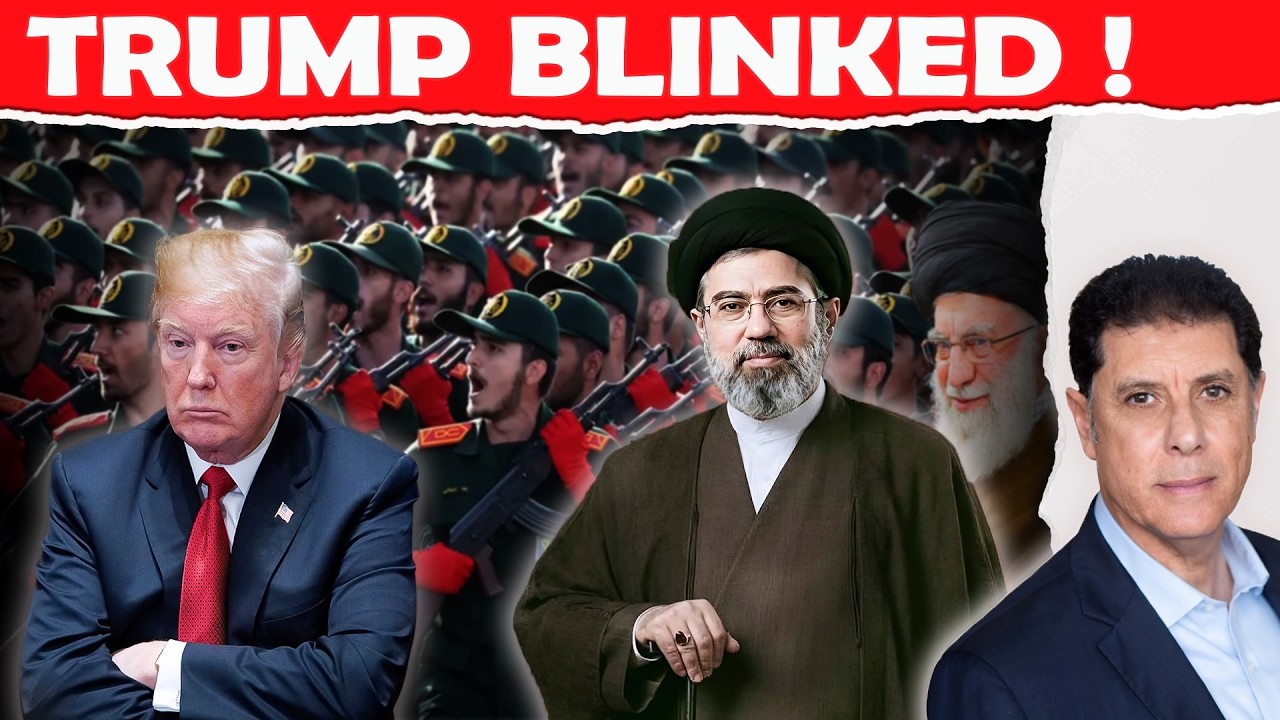
This content was created by David Oualaalou. This content was uploaded by David Oualaalou. This is a YouTube livestream titled "The Iran Ceasefire: Genius Diplomacy or Humiliating Retreat?" (created 2026-04-08). The excerpt is an opinionated geopolitical commentary delivered mainly by a single host (labeled SPEAKER A) who analyzes a recent US–Iran ceasefire and a 10‑point proposal Iran allegedly submitted. The host claims Pakistani and Chinese mediation helped produce a fragile two‑week pause, criticizes President Trump and the US Pentagon for spin, plays and translates Arabic and English clips (including an excerpt from Tucker Carlson and Arabic news reporting), and discusses key issues such as Iran’s demands (strait control, uranium enrichment, sanctions relief, withdrawal of US forces, compensation, cessation of hostilities on all fronts), the Strait of Hormuz, possible military incidents (downed/destroyed aircraft), Israel’s separate actions (Lebanon/Hezbollah), and broader regional and global risks. The piece is a broadcast-style analysis aimed at viewers, invites audience interaction and support, and teases follow-up coverage. Content type: YOUTUBE; created_time: 2026-04-08.
Chapters
Hello everybody and welcome to Geopolitical Trends, where truth matters. Got excited, uh, show for you today. At 7:58 PM last night Eastern Standard Time, the world literally was about 2 minutes away from one of the most devastating bombardments I, I could consider it in the 21st century. And that's because Mr. Trump has promised a whole civilization will die that night. You know, that's a little exaggeration. You know how Trump is. Then something extraordinary happened, and now nobody is talking about what it really means moving forward. Now, whether some Iranians are celebrating today or not in the streets, which— why not? You know, uh, oil prices also crashed. I just saw it this morning. The barrel of oil at $93. But here is the key: Israel is going rogue because Israel was not included in these talks. And the man who said this whole civilization will die tonight is now calling Iran peace plan workable. Just let that sink in. And that's exactly what I want to detail with you in this live stream. I'm going to keep it brief and short because tomorrow I am working already on the— are the counterarguments to what all this happening. Is this a sideshow? Is this a theater? Because I'm gonna show you exactly how we got here to begin with and why the next 14 days, which is 2 weeks, could change everything moving forward. So make sure you stay with me till the end here because I'm gonna be playing, uh, 3 other clips short for you, and I'll do translation for just two, uh, two of them. But here's the thing, we're gonna have to at least provide a baseline as to what happened. What— the US and Iran reached a ceasefire deal yesterday. And by the way, already Secretary of Defense is lying by saying, oh, we won, and Iran has been submissive. Stop lying, Mr. Secretary, or even the president for himself, saying we've achieved victory. What victory? Because— and I'm going to share with you the 10 points Iran proposed. This is where they are— they, meaning the media in the US, are manipulating the people. It is not the plan proposed by the US, it is the plan proposed by Iran. Yeah, there were 15 talking points, or 15 points to the plan, and Iran agreed on 10, but 10 based on its own decision. Not what the US is saying. And this is where they're going to be manipulating the masses here, especially by saying, oh, Iran agreed to our terms. No, it's the other way around. And this is why this ceasefire, uh, sort of, uh, uh, both— and here is again where they are lying, because I've been reading this morning that saying the deadline Trump has imposed for Iran it's what led them to this. Not necessarily, not necessarily, because he— and I'm gonna share a clip of his profanity and regarding, uh, the making, uh, mockery of, of Iranians and their religion and so forth, which is not right. The guy is not all right in the head. And this is— here is the thing, under the agreements So far, the US and Israel will suspend bombing Iran for 2 weeks. But here's the thing, what I need you to understand, the deal was between US and Iran, which means Israel will still be subject to Israel's— I'm sorry, to Iran's— should Israel embark on some strike or something. As a matter of fact, Israel said that next in line to assassinate is Mojtaba Khamenei. But all this Trump is saying is subject to Iran reopening the Strait of Hormuz for safe pass— for safe passage. Of course, as you may know, the, uh, the, uh, negotiations were facilitated by, uh, uh, the Prime Minister of Pakistan, uh, Nawaz Sharif, uh, involvements with also Field Marshal Asim Munir. But here is one thing behind the scenes that have not been disclosed openly is that the Chinese have played a role behind the scenes. As a matter of fact, 2 days prior to the deadline yesterday, Chinese issued a stern warning to the Americans, and I'm gonna play the clip and translate it for you because again, the media here don't want to touch on that. Oh, the Chinese coming to play a role into this? Yes, they did. Behind the scenes with the Pakistanis. Pakistan is at the forefront, but the Chinese also are part of that. And this is again where, uh, uh, first of all, why is this significant? Because we ought to ask that question. A major de-escalation from the brink of a major catastrophe. And this, prior to the ceasefire, Trump, because has threatened to destroy all the bridges, power plants, water treatment facilities, and move that legal experts told the NPR will be considered a war crime under international law. But beside this, what do you think Iran is going to do? Iran didn't play all its cards. That's one of the videos tomorrow I'm going to share with you, the types of weapons Iran still have and did not use yet. And that is where you see Donald Trump stepping back from this hugely consequential, uh, threats or action, whatever you want. I am leaning more towards, did he surrender? Is this a strategic defeat? Those are the questions I have to ask. And here is what Eran proposed as a framework. Which Trump is saying, oh, it's workable. But Trump and the Secretary of Defense trying to, to sort of manipulate that narrative by saying, no, it was the US. Here is what it says, and I'm going to share the 10-point with you. The, according to Iran, the, the US must fundamentally commit to guaranteeing non-aggression. Number 2, continuation of Iran's control over the Strait of Hormuz. Number 3, acceptance that Iran can enrich uranium for its nuclear program. Number 4, removal of all primary sanctions on Iran. 5, removal of all secondary sanctions against foreign entities that do business with Iranian institutions. 6, end of the United Nations Security Council resolution targeting Iran. 7, end of all International Atomic Energy Agency resolutions on Iran's nuclear program. 8, compensation payment to Iran for war damage. 9, withdrawal of US combat forces from the region. And 10, ceasefire on all fronts, including Israel's conflict with Hezbollah in Lebanon. Now tell me, these 10 points that I shared with you, do you believe the US will propose that? And this is again where this manipulation is coming on part of the White House, on part of the Department of Defense, and some media here. And that's what urged me to do this particular live stream for you, because I want you to be aware of the truth, what's going on. So in light of this recent developments Uh, what it appears to me, looking from outside in, is that Iran is trying now to establish its own definition of the end of war. It's not according to the US, it's going to be according to Iran. Not just a ceasefire, because like I, I did a, a short clip yesterday, uh, uh, and asked that question at the end: should Iran trust America again? You got to be out of your mind to even trust Trump or any US administration for that matter after what happened. But at the same time, the arrangements that Iran proposing that guarantee that the strikes will not be repeated— at the same time, Iran is also preserving its deterrent capabilities. And any link to any settlement issues of sovereignty, sanctions, and security of the Strait of Hormuz. And that's again, it became clear to me who is putting the plan forth. It's not the US, it's Iran. So I'm going to play the first clip for you. I'm not going to— I'll let it play, but I'll translate just the key parts of it, then we'll move on to what, uh, the other aspects that I need to share with you. And this one here, it's right here. And once again, I give credit to, uh, Arabic news, a complete different coverage than what we had here in the US. And this is exactly the moment when Donald Trump announces ceasefire with Iran, or agreed to Iran proposal, and revealed the details regarding the proposed agreement by Iran, not by the US. So let's, uh, let me just play it here and we'll— and again, we just— I'm going to translate the key aspects of it. Trump backs down from his— there will be bilateral ceasefire lasting for 2 weeks. Trump adds that an agreement for ceasefire, specifically mutual cessation of hostilities for 2 weeks period, for 2 weeks period is already in place. This development signals how the situation is likely to unfold in the coming hours, suggesting that the US president has stepped back from his earlier threats to launch strikes against Iran's infrastructure and power stations by 8:00 PM, uh, Eastern Standard Time. As a result, Donald Trump states that bilateral ceasefire lasting 2 weeks will be implemented following reports of Pakistani mediation efforts aimed at securing a cessation of hostilities. As we have been tracking and as reported in a series of breaking news alerts, viewers, Vice President JD Vance is reportedly assuming the role of the US mediator in these negotiations. Furthermore, these are indeed active Pakistani efforts under way to mediate a ceasefire between the US and Iranian side within the next few hours. Trump explicitly confirmed that a bilateral ceasefire lasting 2 weeks is indeed a fact. He stated, and I quote here, uh, we have received a 10-point proposal from Iran and we believe it constitutes a viable basis for negotiations, end of quote. Trump also added, and I quote, we have received a 10-point proposal Uh, it's the same. Trump repeats himself more and more and more. He further notes that agreement has been reached on almost all previous points of contentions between the US and Iran, and in quote, I doubt it agreement had been reached. I, I doubt that. Anyway, uh, let me just continue on the translation, just portions of it. Once again, neither this tweet nor his statements contains any reference to the Israeli side. The focus remains solely on the discussions between the US and Iran. This development offers a significant sense of psychological relief to many Americans. Indeed, a demonstration, albeit a limited one, was scheduled to take place approximately 20 minutes from now, meaning last night, in front of the White House. Intended to appeal to Donald Trump not to launch strikes against infrastructure targets. Regarding Iranian infrastructure, this represents a significant shift, scaling back in the US position. However, this de-escalation is once again contingent upon and conditional on Iran's agreement to a full and immediate reopening of the Strait of Hormuz. I'm going to stop right there. It's because, uh, as I said, I just want to highlight to you few key aspects of what is going on. And that's why Trump is, in my opinion, the way I look at it, it's a strategic defeat for Trump. No matter how he tries to spin it, the media is going to spin it in the US, the Pentagon is going to spin it that way. But what just happened last night Uh, did, did Trump cave in? Yes, but not the way you and I understand that term. But this to me is a strategic surrender. We are realizing there is no way of defeating Iran because Iran was prepared for the long haul, 2 months worth of war. And that is why you have Secretary of Defense now lying to the American people by saying, oh, we achieved victory. No, we did not. We did not. And that's the exact, uh, uh, uh, way I look at it, is that Trump blinked. I mean, please correct me, guys, if I am wrong. How do you see it? And just leave your comment in the chat box for the community to read. Now, as far as the Strait of Hormuz being open completely, Iran already put a restriction. And one of the restrictions regarding Strait of Hormuz, you know what it is? Is $2 million per oil tanker passing through. Remember, 20% of the global oil passed through that. And why is that? Why that is? Do you think because Iran wants to have money? Whatever. No, no, no, no, no. Iran is thinking in terms of reconstruction. And if they come to an agreement with the US that the US will repay for reconstruction, it will never happen because we don't honor agreements. So Iran was thinking in terms— here is what we're gonna do: for every oil tanker passing through the Strait of Hormuz, they need to pay up $2 million upfront, then they have a safe passage. And that money, it's gonna go towards reconstruction of the destroyed infrastructure and so forth. Smart move, if I am to, to think about it that way. Now, if we are to ask ourselves one question There are key uncertainties that remain within this ceasefire for 2 weeks, because remember, before, Iran wasn't interested in ceasefire at all. I don't know what happened. They agreed, but they proposed their own. Why not? If it's working to your favor, why not? It's just because just after the pause was announced literally. There has already been disagreement over its scope. Why? Because Israeli Prime Minister said Israel supports the suspension of strikes on Iran, but that the ceasefire does not include Lebanon, contradicting Pakistan's Prime Minister who said it includes Lebanon, and elsewhere, end quote. It also remains unclear where negotiations stand on Iran's uranium enrichment program. Iran made it clear, and here is again where that manipulation is coming up. Iran made no mention of its nuclear program and no mention of its missile technology, the two conditions that the US was imposing first. For any negotiations with Iran. That's Iran's deterrence. Second is the fear now Israel has, is this means that Israel is going to be now left alone. And if it is left alone, what's going to happen if it strikes Iran and Iran will respond? And remember, tomorrow I will be talking about certain types of weapons Iran is intended to use should this go to the next level. And at the same time, by Trump— Trump almost like— this is to me like a, a slap on Netanyahu's face that the US went ahead and reached an agreement with Iran without Israel. But don't get fooled by that, because if you know who really controls the American administration, you will think twice. It's not over for Israel. This still can influence Donald Trump to reverse. They have something on Trump that is damning, if not even threatening. Is like, maybe don't be surprised and don't be shocked. That's usually how it works in the circles. So what I need you to understand so far, the ceasefire did happen, but it's a fragile one. And again, am I going to trust what the Americans saying? No, it's my, it's my country, whatever. But there are certain aspects I won't trust the government. And I will even go as far as, what if Israel launched something and said, we, we, I don't know who did it? Then Iran will be forced to respond because Iran now has demonstrated to both the US and Israel it's not afraid of any, and it reserves the right to retaliate in self-defense, no matter what the cost is. And that's again where these two weeks, that's going to be— it's going to be critical window from a geopolitical and a military aspect moving forward. And this is only if diplomacy holds. But again, are you— if you are Iran, would you be willing to sit down again with the Americans for the third time and they'll stab you in the back like we did before. I'm not ruling out the possibility that this could lead to a broader deal, but I am also concerned what if it breaks down. The situation could deteriorate very quickly given how extreme Donald Trump's rhetoric has become. So that is again what I see. I'm gonna play a next clip for you. This one is about the, the, the language Donald Trump's— is short. I just want you to know exactly what's being said once again, because here in the US, this kind of clips do not get any coverage whatsoever. And once again, I give credit to Arabic News, a platform— that's the one, uh, the, uh What it says right there, nashr taghrida ghadi baba al-Fadl Nabiyya. That's the publication of tweet by Donald Trump that has some profanity in it. Now here's what it says. This raises a question regarding this specific point, particularly given that, as you mentioned, he appeared agitated and used profanity during his remark this time. Some observers were quick to draw conclusions, especially since Iran characterized the operation to rescue the pilot as a failure, perceiving what seemed like a subtle allusion to something more. It is actually conceivable, particularly in light of the shifting narrative initially stating the pilot has sustained injuries only to later describe them as serious. That there is in fact some undisclosed details regarding the pilot situation that provoked Trump's anger in this manner. That is plausible scenario, Rula, especially given what we know from leaks within the White House that two C-130 transport aircraft were positioned in the vicinity of the rescue operations. These planes were supposedly to— were supposed to transport the soldiers in question along the special forces team and fly them all out of Iran. However, what actually happened was that both aircraft suffered mechanical failure, which is not true. That's what they're saying. It was, it was attacked. The precise cause of these malfunctions remain unclear. While US media outlets citing Iranian sources report that the Iranians targeted the two planes while they were still on the ground prior to takeoff. US forces subsequently grew concerned that the aircraft, which housed advanced technology, might fall in the hands of Iran. Consequently, the US forces opted to destroy them. Now, and this address your question, Rula, were there American soldiers on board this aircraft at the moment they were destroyed? Furthermore, was the US military decision driven not merely by a desire to prevent, to prevent the technology from being compromised, but rather by determination to avoid having additional prisoners of war fall into Iranian hands? And that is exactly the— particularly in light of the deadline established by Donald Trump, the capture of further prisoners by the Iranian will be profoundly embarrassing for the administration, the White House, and the Department of Defense. Moreover, it will hand the Iranian additional leverage during a highly sensitive period, a time where the— when the United States is seeking to reopen the Strait of Hormuz, may potentially be contemplating ground operations. This remains a plausible scenario, though it is for the moment nothing more than hypotheses. The question remains open: were there any American soldiers on board those two aircraft, the very planes that despite effort failed to take off? The aircraft— this is the last part here— these aircraft are specifically designed for this type of ground operations and for rescue soldiers, rescuing soldiers in conflict zones, yet they were unable to take off. Furthermore, did they sustain damage from Iranian fire? These remain entirely open questions. In all likelihood, the coming days will reveal the true accuracy of the American narrative. Naturally, the US administration did not immediately disclose the downing of the aircraft, or rather the A-10 Thunderbolt that crashed. Interesting, interesting dynamics. I just want you to know Again, why the reason why the US blew up that plane? And the question is, were there US soldiers inside that planes and the US decide to go ahead and, and just blow them up altogether? I don't know, I'll let you decide, and I'm just reporting the facts to you as I see them. Now, uh, remember earlier I mentioned, uh, and this is the last clip I play on this part here because I played the last two Uh, the part that I said the Chinese were behind the scenes. Chinese tends to do things quietly. You may ask yourself, how so, Dr. O? Well, a Chinese issued a stern warning, and I'm gonna translate it for you because it was published in the Arabic media, not here. Here is the link. Uh, sorry, let me, let me upload it to the screen right there. So you can see it, and, um, it says right there, the key to this issue of the conflict of the Strait of Hormuz is the illegal military operations in Iran by the US. And this is according to— right there at the bottom it says Al-Kharajiyya Saniyya, which means the Foreign Ministry of China. So let's, uh, let me just start. All right, let me translate this for you quickly here. Once again, I give credit to Arabic News, and this is the tone of the Chinese anger towards the US is escalating. The Trump statements regarding Iran are provoking Beijing. That's why they issued a statement. Here is what it says: Beijing has affirmed that military means do not resolve any problems. In an official statement responding to the recent address by the US president, the Chinese Foreign Ministry added that the root cause of the Strait of Hormuz crisis is the illegal military operations in Iran. According to the statement, this necessitates that all parties work together to prevent escalation in, uh, in order to safeguard the safety of navigation within the strait. We follow up on this stance with Al Arabiya TV's correspondent in Beijing, Nasser Abdulhak. Nasser brings us up to date on the latest Chinese position regarding the Strait of Hormuz crisis and the broader crisis in the Middle East. Yes, Salima, in truth, the Chinese position regarding the crisis in the Middle East remains steadfast. It opposes this war, which it has deemed illegal from the very outset and notes that it has begun to impact global energy supplies and exert a significant direct influence on the global economy. However, in a commentary issued today, the spokesperson of the Chinese— for the Chinese Foreign Ministry delivered a strong statement directed at the United States. The spokesperson was responding to a previous remark by Donald Trump, in which he suggests that anyone desiring oil should go to the Strait of Hormuz themselves to procure it. The Chinese Foreign Ministry spokesperson rebuttal, the essence of which was that this is not the solution, asserted instead that the true solution lies in halting this war against Iran, which she characterized as illegal. She emphasized that all parties must shoulder their responsibilities and cooperate to de-escalate the situation, ensuring that matters do not spiral out of control to an unmanageable level, a scenario that will inevitably result in severe repercussions for the global economy. Over the past few days, China has witnessed a flurry of diplomatic activity and contacts including discussions held by the Chinese foreign ministry, uh, foreign minister with various countries in the region such as Pakistan. Through all these diplomatic efforts, China is, is striving to reach a solution and bring an end to the raging conflict in the Middle East. Nasser Abdulhakim, Al Arabiya TV correspondent in Beijing. Very interesting aspects. And by the way, it was also China and Russia that used the veto yesterday, the veto in the UN Security Council regarding the Strait of Hormuz against the US. So that's, to me, it sends a strong message. And what that message is, is that both Russia and China using diplomatic cover for Iran on the, on the UN Security Council. Very, very interesting dynamics. Now, uh, since I'm done with these clips here, I have two for later on towards when I get closer to concluding here. I gotta go back now to this deal between Iran and the US. Is this means that Israel now will fight Iran alone? And if it is, can it survive? Because the damage that is already in Tel Aviv, and it's not being disclosed, uh, because Israel formally, even though it says to support the ceasefire, uh-uh, uh-uh. Netanyahu's office Even though it says— because they have to say this publicly, but behind the scenes, you can trust them, they will undermine Donald Trump one way or another. So Israel, however, is trying to carve out Lebanon as a separate fight. But what Israel doesn't realize, and I will discuss it tomorrow based on an interview with a retired general in the Middle East, uh, who has a very intimate understanding of these dynamics. Hezbollah is coming even far more stronger than what it was before. And this is why Netanyahu is rushing up quick to say, oh, the ceasefire will not extend to its fighting with Hezbollah or Israel invasion of southern Lebanon. Something to contradict Pakistan's Prime Minister Sharif, who said the ceasefire included a halt to attacks on Lebanon. And that is as of this morning in Tel Aviv. Israel Army continued its strikes on, on Lebanon, and now it's issuing new forced evacuation threats near the southern city of Tyre. And this is actually significant split because the 10 points Iran, uh, uh, the peace proposal include cessation of hostilities on all fronts. And that's gonna now put Trump in a very delicate balance because Trump has no control over Israel or Netanyahu. He can't. I am here to tell you based on facts, the US administration— it doesn't matter, by the way, Trump or not— the US administration has no control over Tel Aviv. It's a fact, and I'm, I'm telling you this. And this also because what Israel is also concerned about is concerned about Ansarullah entering the fight. I did that, I prepared the brief analysis for you for this. I will release it on the weekend, uh, for you because there is now much bigger concern inside Tel Aviv, inside Israel are at large. And that is why you see a massive exodus from Israel. A lot of people leaving Israel because they know what's coming, especially now the Houthis or Ansarullah have entered, uh, the fight. And with this, Israel finding itself now alone. Is this way for the US? US will always support Israel. Let me just make that clear. Rest assured, the US administration will be forced to support Israel. US soldiers will be forced. Do you know that now all the soldiers deployed, none of them is Israeli? All of them are American. And this is again why, because Israel now is concerned. I saw a clip of a missile from Iran targeted one of the radars in Haifa. I think I saved it somewhere. I'll, I'll, I'll dig it up for you later on. Uh, Israel now is getting, is getting low on interceptors, and the IDF, the Israeli Defense Force, faces now a shortage of manpower. There is a, there is a, a chaos going on inside the military establishment in Israel, and that is, again, this is happening on one end, and on the other hand Donald Trump couldn't, couldn't solicit active support from US allies. All of them in Europe— UK, Italy, France, Germany. I don't know about Canada, I didn't hear anything. Uh, they, they're just saying, forget about it, we're not joining your war. That's your war with Israel, you guys deal with it. It's now, uh, it begs the question The bigger risk could, and the bigger risk that I am concerned about is, could Israel spoil the peace process that's just been reached between the US and Iran? I want to rule that out. The greatest threat to any ceasefire, remember, remember a few months ago when they had the ceasefire in Gaza and I did a livestream, it's on a record, and I said, Mike, my word, there will be no ceasefire from part of Israel. And that's exactly what happened. And what did the US do? Nothing. They can't. We can't. I want you to know this. The US administration, doesn't matter who, Republicans or Democrats, cannot control Israel. Simple as that. But the US is not going to abandon Israel against Iran for the next 2 weeks either. Remember that. And this is why Israel is pressing ahead regarding the Lebanese front. But what they don't realize is that what the Houthis could do, because the Houthis could even change the equation completely by shutting down Bab el-Mandeb. Israel will not be able to get any access to energy, and Ansarullah will still fire missiles at Israel because they realize they tried it before and it worked. And Israel Iron Dome is not working. All this defense, uh, stuff, it's not working for, for, for, uh, for Israel. And this is why, just to, to conclude this part here before I move to the last, uh, the last clips I'm going to share with you, is that what geopolitical analysts are saying right now, how they are— they categorized this deal with, with Iran. Is it a surrender? Is it a strategic defeat? I mean, everybody's gonna have its own opinion. Of course, the US administration is rushing into manipulating the Americans by saying, we get victorious from this war and now we're gonna reach a ceasefire, which is not true because this is a strategic retreat by Donald Trump. Why? Because the conflict has become an absolute disaster. We're not even disclosing the— when I told you about the casualties in the US and the death, whatever, that's just what I shared with you based on what is openly disclosed. As one who've been through inside the government, the numbers are completely different, and that's been the norm. This is nothing new. We've done it since the Vietnam War. And that is why, uh, sort of, uh, because what Trump needed, he needed an exit one way or another. And when the Pakistanis and the Chinese provided him with this, he took it. That is, that is the fact. And the fact is that because he's looking at the rating here in the US People are, as a matter of fact, they wanted to, there are 24 members in Congress now wants to remove Donald Trump from the White House, which usually we can according to the Constitution by invoking the 25th Amendment. But you have the members of the cabinet that were picked by Donald Trump. They don't have the gut to go and do what's right. They just can't. They, they just can't. But suffice it to state that this US statements and Israel statements as far as decapitating Iran's, uh, uh, uh, sort of, uh, missile technology and, and this and that— no, no, no, no. All this is nothing but hypes. I'm here to tell you, and I'll prove it to you tomorrow, the IRGC maintained a sustained retaliatory capability as of today. Iran simply didn't break, as Donald Trump is saying, because if there is one thing about this ceasefire is that it's— whatever the term of it, it's on Iran's term, not the US terms. And that in itself, it will be written in history books. 50 years from today, Iran— we will be written, if historians are true to their work and, and, and, and detail and record accordingly— is that Iran submitted the US into accepting its plan. Because here is the thing, Iran's 10 points, as I mentioned, includes the acceptance of the US that Iran has right to enrich, uh, enrichment, uh, to enrich uranium for its nuclear program. And that in itself, it's a major concession from the US, arguably, in my opinion, the central of the entire conflict. Remember, we want to take off of all this, all this, uh, uranium, enriched uranium. As a matter of fact, that F-15 that was in Iran, the mission was about finding out where, because it was in Isfahan. What's in Isfahan? A major nuclear power plant there. And that is what was the mission for that F-15, all to begin with. And remember Trump also saying, oh, I'm gonna obliterate Iranian civilization.
No.
And this really shows you now the enormous credibility gap. But again, are you gonna trust what Trump is saying? Are you going even to believe what Trump utters out of his mouth? The guy flip-flops within the hour. You hear different stories. And that's again because the US was not able to use military force, shatters now its credibility. That's the way I see it. So I'm gonna play one clip, two clips for you, and, and, and those are— they're very short. It's just I always do this now, uh, since at least still, uh Uh, and this very— it's by, uh, Tucker Carlson. Very interesting. Uh, I admire the guy. I really admire him for taking a stand. Uh, you, you usually not a lot of people do this here in the US, but I admire him for that. Let's take a listen. It's in English here.
Who do you think you are?
And he's addressing Donald Trump, by the way.
Tweeting out the F-word on Easter morning? You'll be living in hell. Just watch. Praise be to Allah. So obviously you're mocking the religion of Iran. Okay, if you seek a religious war, that's a good idea. But by the way, no decent person mocks other people's religions. You may have a problem with the theology— presumably you do if it's not your religion— and you can explain what that is, but to mock other people's faith is to mock the idea of faith itself. And we should never mock that, because at its core is the acknowledgment that we are not in charge of the universe. We did not build it. We won't be here at the end of it. We can destroy life. We cannot create it because we are not God. The message of all faith at the biggest picture level is the message in our Bible, which is you are not God, and only if you think you are do you talk this way. But it's not just mockery of Islam. And no president should mock Islam. That's not your job. This is not a theocracy. We don't go to war with other theocracies to find out which theocracy is more effective. We are not a theocracy, and God willing, we never will be, because theocracies corrupt the religion.
Hey, hey, spot on.
Who do you think you are? You're tweeting out the F-word on In hell. Just watch. Praise be to Allah. So obviously you're mocking the religion of—
There we go. Sorry. It's just disturbing. And that's again Trump. That's just the way it is. The next one I'm going to play for you, it's very, very short. It's just— I'll show you. I think it's in English anyway. And that's by a member of, uh, yeah, that's the one about Israel is threatening now to assassinate Mojtaba Khamenei. Uh, okay, let's take a listen here, please. Basically, he's asking him, are you afraid that the Israelis going to now assassinate Mojtaba Khamenei? And this is the, by the way, the answer of the Iranian ambassador. They won't be able to do it because if they will do it, there will be a catastrophe befalling upon them. Not just them, but on the global level. What do you mean by this, Mr. Ambassador, in case there is an attempted assassination on Mujtaba'a Khamenei? And now when you look at the international markets, you will be able to see what is going on. I just wanted to briefly mention this to you, as I told you at the beginning, I will And, uh, this leads me to— I'm going to do my conclusion and leave you with one question I would like you to answer. If the truth matters to you, hit like, subscribe, and tap that bell. No spin, no agenda, just the stories they don't want you to know. So don't watch from the sideline, be part of the movement. Your support keeps the truth alive. Thank you very much. All right, here is what— at the end of it, the way I look at it, we have now about 40 days of war, okay? We have thousands people dead, sadly. We have oil market, global level, in chaos. And of course, we had the Supreme Leader of Iran, Ali Khamenei, assassinated, while at the same time American bombs been falling on Tehran and, and elsewhere inside Iran. And now everything ended, at least for now. Why? Because they ended with a phone call from Pakistani Prime Minister Nawaz Sharif. That's him right there. For a 2-week pause button. Will it be sustained? I don't know. Because Trump came threatening to erase, as I said earlier, civilization. But he's leaving this chapter calling Iran's peace plan workable. Makes you just wonder. Iran came in vowing never to surrender. And they are holding true to their promise. They are now heading to peace talks in Islamabad. Israel came in as America's closest ally in this fight. They are now going at it alone in Lebanon, potentially dragging the entire region back into the fire. And nobody, nobody got everything they wanted? I think the Iranians did. What do you think? So, and that is give or take between some analysts that saying nobody gets anything, but others saying no, Iran did. Is what makes this the moment dangerous now is that nobody gets whatever they want, basically, because half victories— it is my lesson from history— half victories in, in war or conflicts, whatever you want to call them, uh, tend to have the, uh, some sort of a habit of becoming tomorrow's wars. I mean, you look at it just with what took place in Gaza between Israel and Hamas. Hamas still standing. What will make this case of Iran different? So the next 14 days, 2 weeks, that is, it's going to be very, very crucial. They are literally the most important, uh, sort of time frame in this, uh, in, in this conflict. And what the rest of the world is going to be now looking for— a permanent deal could reshape the entire region. Not for next year, not for next decade, we're talking for generations. But on the other hand, which where my concern is, a collapse could make everything we've seen, seen so far look like a warm-up act. Because already some leaders in the rest of the world are already lashing at the US for using terminology that is referencing to the usage of nuclear weapons. So here is what I would like you to do, if you don't mind, by dropping me a comment below in the comment section. Because I want to leave it for you as a form of question to think. If Trump has stayed the course and launched the full bombardments that night, meaning last night, will Iran have been finally be broken, or we will— or will we be watching the opening chapter of World War III right now? And by the way, one more thing while I'm thinking about it. Do you think, in your opinion, this ceasefire will hold, or are we back here in 14 days talking about an even bigger catastrophe? Those are legitimate questions we ought to think about, and I just want you to be part of the conver— conversation. Uh, tomorrow I will be talking about, uh, really, Iran secret weapons. But I'm also going to be sharing a translation part of an interview with a retired general about really what it all this means. And I hope you can join me tomorrow if your schedule permits. Uh, Noel, I want to take this opportunity— I won't miss it this time around, Noel. Last time I overlooked it. My apologies last time. So thank you so much, Noel, for your generosity. You've been an avid supporter of the channel from way back. I still have the record of when you posted your first Super Sticker back then. So, so I'm very, very grateful to you, Noel, for your continued support. And to all the community, if you are enjoying, uh, the analysis that I provide you here, I would greatly appreciate if you can support the channel should you decide to do so. I'm also, uh, providing you the link for my books if you are interested in wanting to read sort of the books that I published about the region that includes the Saudis, Iran, US foreign policy, and even Russia, which I will— I tackle usually the Middle East part of it. So here is the link to that if you decide to do it. I hope you enjoyed this, and I look forward to seeing you tomorrow As always, remember, geopolitics impacts your daily life in more ways than one. Till next time, bye-bye.
More from David


Beyond the Single Actor: Why the Gulf Isn't Choosing Between the US and China


Iran, Iraq's Militias, and the Houthis Are Coordinating! This Changes Everything




Who Controls the Next Decade's Resources? Latin America and Africa's Geopolitical Crossroads

The Chokepoint Trap: How Washington's Stupidity Triggered a Cascade That Now Controls the World

Trump Spooked as IRGC Unveiled dual-use SLV, Deployed Ghadir Mini-Subs & Hinted at Tactical Nukes!
