The Leak That May Have Destroyed a Secret Military Operation — Iran Uranium Crisis.
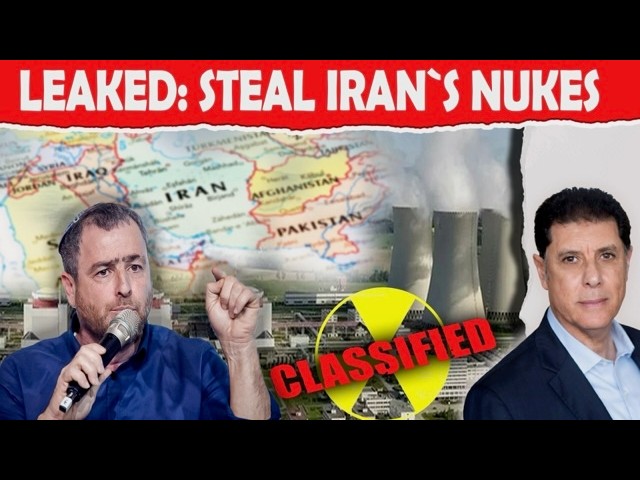
A host analyzes an Israeli Channel 14 interview that allegedly revealed a classified US-Israeli plan to seize roughly 1,000 pounds of highly enriched uranium from a site near Isfahan, Iran. He details the military units involved, calls it a suicide operation due to Iran's fortified facilities, and maps the catastrophic risks: Iranian retaliation, closure of the Strait of Hormuz, and disruption of global oil flows.
Chapters
Hello everybody and welcome to Geopolitical Trends, where truth matters. You have a live TV broadcast just accidentally exposed one of the most classified military operations regarding the US, uh, uh, Israel-Iran war. And this classified military op pertained to the secret US-Israeli commando planning to raid to physically steal Iran's nuclear uranium. And within hours, the Israeli Parliament erupted after this exposure. Defense officials called it reckless trafficking in national security. And Iran, on its hand— on, on its end, puts its forces on full alert. What was supposed to be a covert or covert rather, mission may now be a dead-on-arrival. And the fallout, well, that could drag the entire region, West Asia that is, into the most dangerous escalation the region has ever seen. That is exactly what is going on with this particular, uh, uh, fallout from this, uh, exposure. So, so in this live stream, I'm going to be providing you my insights about it. I'm going to share with you, some info pertaining to the, at least for us in the US, the military units that deal with this kind of, uh, operations or missions. And I'm very familiar with some, especially the ones from JSOC, and, and just share my own insights and analysis about it. And, and we conclude with that. So, so here is now what happened. And by the way, let us just also take a step back and consider information such as this will be at the hand of an anchor? It's worth asking. Nonetheless, we're going to proceed with just the way I'm going to present it to you, and you reach your own conclusion. And this is why this reports indicate that a secret plan to seize enriched uranium from Iran was recently discussed on an Israeli Channel 14 and in which this broadcaster, his name is Shimon Ricklin, and, uh, which aired on May 18th, 2 days ago, and now is causing significant political uproar in Israel because it's been exposed and due to the accusation that the sensitive operation details were leaked without military censor approval. So So what's going on with this? And I'm going to be providing you, since now it's open, and I'll share the link with you also. The plan reportedly focuses on seizing this uranium from a site specifically near Esfahan. I think I have a picture of the Esfahan site. Maybe not. No, I don't. Sorry, I thought I had the picture of Esfahan. Yeah, sorry. I, uh, didn't upload the picture. Anyway, uh, near Isfahan, which is in central Iran, and the operational scope for it, it involves the potential joint, uh, military, uh, uh, operations between, uh, uh, the US and Israel, okay, to physically remove Iran stockpile of highly enriched uranium. So it's going to be a joint— was supposed to be But when you put this within the context of the leak, uh, and this is where during the broadcast, the, uh, on Channel 14 anchor Shimon Ricklin, uh, who is by the way an Israeli journalist, he's an archaeologist, and is also known in the world of, of TV for a prominent role on the Israeli right side or right wing rather. I remember reading one picture, one statement, and I'm going to share it with you. I'll let you read it yourself. Take a look here. So you read it yourself there. And that's why makes you just wonder about, uh, and any event within the context of this leak, that's where they discussed the specific strategy, strategy details regarding Iran uranium stockpile. So, and this is where you have the opposition lawmakers have since called for an emergency session of the Knesset, uh, Foreign Affairs and Defense Committee to investigate this security breach. So I'm gonna play a clip for you, okay? And, uh, I'll let you— it's in Hebrew, and I did translate a part of that, uh, particular Uh, let me get to the clip here first. Just bear with me here, guys. There we go. Share screen. Okay, let me, uh, that's not the one here. So right here, this is the clip. So let's take a listen, please. Okay, what's important about that? The important aspect of it has to do with, uh, uh, with the, the clip in itself and, and the translation that I read, that I did there when it was written in, in Hebrew. It says, pay attention to the stunned face of Professor Danny Orbach, a military historian, from Reiklin's words, how he tries to imply to the clown that he is saying things that are forbidden for publications. And the idiot not only does not remain silent but continues to giggle like the last of the clowns. That's basically what it says right there. So Besides all this, you have to think about the leak that comes during regional tensions as of today, even this morning, because it comes through truly at a time of extremely, extremely volatile, volatile situations in West Asia. First of all, you think about the stalled diplomacy. Negotiations between the US and Iran are an impasse. Okay, and that's why Donald Trump keeps saying, well, if Iran— I'm warning Iran that must agree to the deal or face severe consequences. I know you all know how Donald Trump talks. So second thing is the military readiness. Israel and US forces are reportedly preparing for potential resumption of strikes against Iran. And the third element, that this disclosure comes during this volatile time in, in the region is the Iranian warning. In response to those reports, Iranian officials now have warned that they will escalate enrichment to 90%, of course weapon grade, and if their territory is attacked. And as a matter of fact, yesterday Iran put its forces at a full alert. Now here is what I need you to keep in mind. As we discuss this and, uh, moving forward. You have to think that some will think in terms— and I couldn't agree more, I will have to be logical in that thinking, or realistic rather— is that some would suggest that this operation could be a deceptive plan. It could be a psyop, or psychological warfare. Because here is the thing, the IAEA, the International Atomic Energy Agency, has confirmed that Iran's most highly enriched uranium is indeed stored in underground facilities in Isfahan, which in my opinion, it's a breach from the IAEA. They are not supposed to disclose this kind of information. And that is why I've said this on many occasions, I do not, never did, never will trust the IAEA. I'm here to tell you, the IAEA is the back door for the US to get in into whatever. And it was the IAEA, based on some reports, that has provided the names of the scientists to a third party. I'll let you reach your conclusion as to who the third party is. So the IAEA itself, I can, I, I can trust it. But the fact that this reporting could be deceptive, yes, there is a possibility. And that is why I'm just sharing the information with you and you reach your own conclusion. If I am to put my military hat on, the first question I will ask is that how the heck an anchor get a hold of very highly sensitive information. This info is compartmentalized, and as one who works in the intelligence business, I'm telling you, there are layers of the, the classification, the, the secrecy, and so forth. And info like this, how he got a hold of it? On the other hand, like we see here in the US, there are some media anchors, whatever, they get info from leaks from within either members of the intel community or from the Foreign Relations Committee or the subintelligence committee in Congress. There's always a way of, uh, of, of getting the info. So the leak in itself, which is an unprecedented security breach, now threw the Israeli political and defense establishments into chaos. Yeah, this is what it's going to be. It's because we're talking about a secret a joint mission or operation to physically extract— another word, steal— the enriched uranium from deep inside Iran. Very, very disturbing. And the fact that the anchor, uh, uh, Recklin, this, this guy right here, the fact that he disclosed even the location of the city of Esfahan, uh, where the enriched uranium, is being stored, or some say allegedly being stored, it gives me a pause and concern. And this is where you have to understand, from the, from the Israeli perspective, the military one, of course they want to ride ahead as of this morning and condemn, uh, the— and I'm going to share the link with you where I read that one— condemned the report as, and I put this in quote, reckless trafficking international security, and saying that the suspected— he suspected the information has come from a senior government official, in quote. That's what I'm saying. We are not going to dismiss this as being a psyop as much as it is a fact, because leaks do happen. Oh, we have them right here in, in, in, in the US. So let me put the link for you in the chat box. So you know where the information came from. You can read it later on. Now, what is the underlying plan? What was involved in this? And this, by the way, wasn't fabricated out of thin air. No, it wasn't. The US military, as a matter of fact, which I'm— I was aware of in a formal— in, uh, I'm sorry, in informal setting, because I'm not a part of the government. US government, uh, the idea that the, uh, US military has given the President Donald Trump a plan to seize about 1,000 pounds of highly enriched uranium, and that will involve flying in excavation equipment and building a runway for cargo plane to take the radioactive material out. And this is, by the way, according to two people familiar with the matter, the matter inside the government. So the complex plan was briefed to, to Donald Trump after he asked for a proposal, as well its significant operational risks involved as well. So, and this is where this operation, this It was supposed to be, not anymore now. And you, you never know, Israel and US might still can go with it, but that will be suicide. Basically, those, uh, uh, uh, special op units going in, they're not coming back out. It's a suicide mission, basically. That's all it is. So the concept under discussion will involve those special forces operators from both sides, Israel and, uh, and I'm going to share with you, uh, uh, based on my knowledge in the military from our side. I, I, I don't know about the Israeli ones because I never worked with them, uh, for me to know or speak, uh, uh, confidently about that. Uh, working in close coordination with the nuclear scientists, those— the nuclear scientists' role will be capable of identifying, securing, and potentially, uh, neutralizing the highly enriched uranium under controlled conditions. Now, for us in the US, and I'm going to do this briefly for you to be aware and informed, for us in the US, we do have some units. The only thing is, in the US, we have the, the, the US military, and we have the governmental federal agencies. They work, uh, uh, uh, because we don't have a single— it's like, for example, the SD-6. You know, you take the SEAL Team 6, or, or, or you take Delta, or you take, uh, uh, the, uh, Green Beret, what have you. Specific unit. Those are single units. In this case, we have the, a combination between US military and the federal, and those units dedicated solely to raiding rogue nations to steal uranium. I was aware of a case, and, and again, what I'm saying, what I'm sharing with you is not classified. Let me just put this on the record because it's very important. Back in the day— when I say back in the day, as far as Afghanistan, it was a conversation about while we are there, you might want to consider taking care of Pakistan's nuclear enriched uranium. It was just a conversation. I'm not saying there was a formal plan for that because there would be no reason to do that, first. And second, If you think about how we end up in Abbottabad by violating the airspace of Pakistan, so why would you rule out that possibility of having a US unit take care of the enriched uranium in Pakistan? But that was back then. So, and usually how it works in the US, these operations are typically interagency efforts combining special ops, okay, and specialized radio, uh, radiological experts, because you have to have those. So the first one that you should think of is the JSOC. JSOC stands for the Joint Special Operations Command, uh, something pertaining to that. Usually JSOC that has— will have within it the elite units, the likes of Army Rangers, the likes of Delta, Those will conduct the initial force entry, okay, the site breaches and the area security. That's what you have. Then you have, for example, there is one specific unit command called the 20th CBRNE. CBRNE stands for, uh, chemical, biological, radiological, nuclear and Explosives Command, known as CBRNE. So, and this pertains, uh, belong to the Army. This is the US Army specialized unit that deals with this, uh, but it is under the command of the Nuclear Disablement Team, known as NDT, which are specifically trained to disable nuclear materials and oversee their safe handling. Then the last one you have, it's known as NMS— I'm sorry, NNSE, which falls on part of the DOD— DOE, Department of Energy. This is the outside of direct combat, and that is where you have the NNSE. Which stands for the National Nuclear Security Administration. It falls under the Department of Energy. That one handles the extraction and securing of highly enriched uranium. So historically, these missions, uh, like the one that took place in 1994— I'm going to use some history here for you— back in 1994, I don't know if you're familiar with what's called Project Sapphire in Kazakhstan, and because we did an opera— an op there back then. So those are highly coordinated operations executed with the cooperation of host countries. But there is another element that plays into this, and that element is the involvement of the IAEA, the International Atomic Energy Agency. That is why I'm saying The IAEA is our back door to get into whatever. So, and that is— I just wanted to provide you some insights about this before I continue with my own, uh, uh, my own analysis about this one here. So now, why is this alarming? Because you have several layers that's going to raise concerns. First of all, you have to think about the military feasibility Because something like this is deeply questionable. That's why once again you fall back to that idea of, is this part of a psyop? You decide. Because this will be, from a military perspective, we're talking about a suicide mission here, let alone in Iran. Yes, Iran has been, uh, sort of breached, uh, from an intelligence perspective. You have double agents there, you have spies, you have you know. But when you use military units with the airplanes, whatever, how can you hide that? How can you conceal that? That will be— yeah, that's why I'm saying it will be a suicide, because this will be one of the most, if not largest, most complicated special ops, in my opinion. And the mission also, should this move forward, will demand an airlift of hundreds of even thousands of troops specially trained to remove nuclear material from behind enemy lines. Then you need to have the heavy equipment. You're almost like you're gonna get in into another sovereign nation. Do you think they're gonna let you? Let alone where the conditions are with Iran right now between the US and, and, and, and Iran. And this is why I believe if we are to follow the, the logical reasoning about it, that the leak have already compromised now the operation, because Iranian officials warned of their full readiness to protect nuclear sites. That is why they're saying any US attempt, or Israel for that matter, to obtain, uh, uh, uranium will be provocative. And of course they're going to have to do what they're going to have to do to defend or protect that enriched uranium. You know, even hypothetically, even if we are to think in terms of these operations being staged, uh, uh, uh, for political optics, because you know how the conditions are, especially for Donald Trump and even for Netanyahu, you know, you know, Tehran response underscores how public discussions of seizure can really harden the, the, the, the defenses of Iran, the, the rendering discreet the negotiation options and, and so forth. All that will cease to exist. And the interesting aspects of this, what I found out, it's not just the leak from the anchor. That's why I'm saying we got to be very careful about this. What I found very interesting, and I did find it, is that Netanyahu himself has hinted publicly to this operation without saying it. You know how sometimes you say things without saying them? That's what I found very interesting. And that's why I'm saying, could this information has been passed to this anchor? And my logical answer is yes, given— and I'm aware of the relationship that exists between Netanyahu's office and certain prominent anchors inside Israel.
Favors.
I leak info, you give me a good coverage. So this is why the controversy now that is going on in Israel came days after Netanyahu himself openly hinted at the possibility of physically seizing Iranian nuclear material. And I have the link and I'm going to share it with you because here is what he described word for word when he was interviewed about it, you know what he said? I quote, 'It's a feasible operation,' end of quote. He also added, and I quote, 'It is possible to enter and obtain the uranium,' end of quote. And when Netanyahu was asked, he meant the Israeli or the American forces, Netanyahu declined to elaborate but added that Trump has told him, and I quote here, I want to go in there. I want to go in there. And I found the link, and the link wasn't from the US or Israel. Of course they are not gonna allow this. I'm gonna put it in chat box for you and you can read it later on. Number 4, you think in terms of the war exemption is on the table. As this leak now came out, Israel and the US were carrying out their most intense preparations yet to renew attacks on Iran. And believe it or not, it's not over yet. Of course, as of yesterday, Donald Trump decided to wait. Well, it's because there are other developments, not just because of the call from the Gulf States— United Arab Emirates, Qatar, and Saudi Arabia. No, no, no, no, no, no, no. There is something else just happened also. The Saudis now are talking to Iran, and Netanyahu is freaked out about it. The US is confused about it. That is the reason also why. But the preparation on part of the US and Israel is still going on, because options include launching a more intense bombing campaign. Uh, conquering, for example, Iran's key oil, uh, export hub like Khark Island. But to take over Khark Island, you need a minimum of about 15,000 troops there. You can't do it with 1,000 or 2,000 or 5,000. And second, you're going to need to stay longer. And do you think Iran did not have a scenario in mind for this outcome? We will be mistaken, because this will require you putting— meaning you Israel and the US— put in commandos or special ops on the ground to extract this nuclear material. So, so far the situation is very, very, in my opinion, deeply concerning, and is concerning on multiple, uh, levels, like all at once, simultaneously. You have a potential major military operations was apparently compromised, that is now by this TV anchor. You have the operation itself will be one of the most dangerous special op mission. It's a suicide mission. Let's just, uh, not sugarcoat it, David. Then you have uranium stockpiles of roughly 440 kilograms is enough for about 10 10 nuclear warheads. Yeah, that is the estimation that it's been, uh, reached. And all of this unfolding while the US and Iran ceasefire talks are already stalling over the uranium question. And this is why you'll think the leak makes the negotia— the negotiated solution even now harder. But it makes also the military confrontation more likely. And one more thing, the operational window for any covert missions narrower, because now Iran put all its forces on a high alert and they're going to have to be watching. So it's a situation where the, the exposure of a plan may be as consequential as the plan itself. That is the reality. If the truth matters to you, hit like, subscribe, and tap that bell. No spin, no agenda, just the stories they don't want you to know. Don't watch from the sideline, be part of the movement. Your support keeps the truth alive. Thank you. Now the next question I have to ask, and this is the reason why I do these live streams and analysis for you, because I want you to be uh, uh, of course informed, but I want you to have a better understanding of really what is sort of the implications of any action taken given the circumstances. And in this case, the first thing that came to my mind last night, believe it or not, before I went to bed, is what will be the security implications on the region if the US and Israel carried out this mission. And even I went even further and asked the question, which I will share with you here: could some Gulf states assist US and Israel in this endeavor? So, so the first thing you're going to have to think about, the security implications, the first thing that should come to your mind is the massive Iranian retaliation will be the prime, the primary risk for operation like this. Like I mentioned before on many occasions since I started doing the coverage for the US-Israel-Iran war, Iran has already demonstrated its willingness to strike broadly across the region in response to US and Israeli operations. And they are not bluffing. They didn't bluff before, they are not bluffing today, and they are not going to be just bluffing in the future. Because Iran's war strategy has already widened the arena of conflict by extending it beyond military, uh, might into the political and economic realm. Do you know how much money now United Arab Emirates is losing because they can't ship their oil? So is the Saudis, so is the Qataris, Bahrain and Kuwait and Oman and Jordan and what have you. And this is again when you think about the targeting of the US embassies and military installations in United Arab Emirates, in Saudi Arabia, in Qatar, in Kuwait, in Bahrain, in Iraq, in Oman, and Jordan. All this gives you an idea. So you think about a ground commando raid deep inside Iran to physically seize and remove the, the, the strategic assets— uranium, enriched uranium in this case— will almost certainly trigger a response sort of on a scale exceeding anything we've seen before or seen this far. That will be the first security implication. Second thing will be the Strait of Hormuz. You, you have to always consider the importance of the Strait of Hormuz, and Iran has a firm grip on the Strait of Hormuz, will become even more fragile, meaning the talks about it, because Strait of Hormuz is already in crisis.
And the—
like we all know, and I'm not going to repeat myself here, that the IRGC issued the warning forbidding passages, uh, of, of ships and I showed you the clip yesterday of the Thailand ship. They ignored the warning and wanted to— they end up being attacked. So, and just think about it, before the war started, until the US and Israel war began, we were having about 25% of the world's seaborne oil trade and 20% of global LNG, liquefied natural gas, passes through the, the, uh, the strait. So shipping firms have suspended now operationally entirely, entirely. Nobody's taking any chances whatsoever. That will be another risk. The third one will be the Gulf Energy Infrastructure, which now faces exposure because the Iranian strike, like I discussed yesterday regarding the targeting of the nuclear, uh, power plants in United Arab Emirates. That was enough message to make Donald Trump think twice, not necessarily Israelis, because Israelis are not going to be the one in front. It will be the Americans. Remember who controls Washington. You know, Donald Trump is just following orders from Tel Aviv, simple as that. So Iranian strikes targeted the oil facility already in United Arab Emirates, Saudi Arabia, in Shabah oil field and in Bahrain refinery and desalination infrastructure. And think about it, an uranium raid by US and Israel will remove any remaining Iranian restraint on escalation. Mark my word on it, because what I've learned so far is that Iranians do not bluff. They don't bluff. They don't bluff. And that is why when you think about Israeli strikes on Iran's South Pars gas field have already triggered the retaliation against LNG and refinery infrastructure in Qatar, in Saudi Arabia, and Kuwait, with significant damage, which by the way the media is not reporting, significant damage to Qatar's, uh, uh, Ras el-Fen complex. And that's why he reduced Qatar's, uh, global LNG output. So, so a full escalation will, will, will ensue after the raid could permanently, uh, uh, uh, if the US and Israel conduct that. And this full escalation on part of Iran will cripple, literally cripple, Gulf energy export infrastructure once for all. The other element we need to consider is the operational complexity is extreme, is extreme, militarily speaking. You can't just walk in and take the Esfahan, uh, enriched uranium. You got to be out of your mind. There are channels There are entrances which are buried down the, the mountains, so you have to dig deep into those, and you can't do that while under fire. Do you think Iran's gonna let you? And this is why the operation will require demolition experts to look for sort of traps. You're gonna require pilots and aircraft to transport troops and equipment, you know. Then you need to have expert civilians to verify the material on site. Then you have to close the air support. You have to have a closed air support from the region, and probably you have to have drones, you have to have missile defenses to bring all this into excavation equipment. Okay, such as the earth movers. The US will likely need to secure a local airfield or create makeshift airstrip. All this is not feasible, no matter what they say, because Iran is not, uh, your average country. And the last element to this is the leak, whatever it was intentional or not. This leak has already hardened Iran's position because Iranian officials warned now of their full, full readiness to protect the nuclear sites. And that is why they are stating on the record any US and Israeli attempt to obtain uranium as provocative. They're going to see it as provocation. So, so the, the public discussions of the seizures of, uh, uh, uranium can really, really, really, uh, change the dynamics. That's why I'm saying this is very, very important to understand where it's, where it's going forward. Then the next question we have to consider is what the Gulf states will do. Could they assist in this endeavor? Well, it's worth, it's worth asking because I am seeing some, uh, trend on certain countries. Like I told you earlier, Saudis just turned and said, you know what, we're gonna talk to Iran. We don't want to be attacked, we're gonna talk to them. Tel Aviv is now confused. US is confused because Saudis already turned down the US request to use its airspace. They said, hell no, you're not coming. So I'm gonna mention 3 countries. Let's start with, uh, because one thing you need to know is that the Gulf States are decidedly not a, uh, some sort of, uh, uh, monolithic on this. They are not monolith on this one. No, no, no, no, no. Their positions have real operational consequences. That is why you seeing the split now happening. The so-called GCC, they're not on the same line anymore, especially when you consider what United Arab Emirates is doing against the will of others. So I'm going to start with United Arab Emirates. United Arab Emirates will most likely be the country to assist the US and Israel in this endeavor. Why is this? Because UAE has deepened its partnership with Israel in recent years. And will likely expand cooperation in defense, security, intelligence sharing in response to Tehran. Because remember, Israel secretly deployed an Iron Dome system with troops to the United Arab Emirates early in the war, but it was useless anyway against the— even Iron Dome for Israel itself is useless given what Iran has been launching, because it's not about that. It is about— it's the first time the system was used outside Israel or the US. Did it intercept some Iranian missiles? Yes, it did, but it's not 100%. This is why United Arab Emirates was resting foreigners who were doing some recording on their phones. As a matter of fact, one British guy was arrested and the embassy had to intervene. I don't know what the outcome of it, because they didn't want the world to see the images of the damage caused by the, uh, uh, Iranian missiles that Iron Dome stood no chance against that. And that is the important— and the other reason will be is that the United Arab Emirates has conducted secret operations against Iran. This is why the refinery, I believe, on Lavan Island in the Persian Gulf was attacked. That was United Arab Emirates in conjunction with some others. So, and this is why the US went ahead and made it public. US officials welcomed United Arab Emirates participation in the fight. That's the only country they were able to pull. So the, uh, in this case of this, it will, uh, it will most likely support, uh, US and Israel, uh, through intelligence and so forth, uh, to have the uranium extraction operation. The next country is Saudi Arabia. Saudi Arabia will be willing, but it's unpredictable. And that unpredictability was justified just yesterday when Saudi Arabia said, no, we're not doing this, we're going to be talking to Iran, because Saudi Arabia's position is more complicated. The reversal of Saudi Arabia's earlier pre-war policy, now restricting the use of its airspace and bases for attack against Iran, it suggests one thing and one thing only: is that Saudi leadership now assess the threat environment as severe enough to justify a deeper integration into the US operational planning. They don't want to be part of that, and that is why MBS has been described as eager to reestablish some sort of, uh, uh, uh, uh, dialogue with Iran or what have you. That's once again, when you realize the Saudis are denying the US use of its airspace for Operation Project Freedom, that should give you an idea. But don't rule out that the US will violate that. It's because the Saudis have no balls to shut down a US aircraft. They can't. They don't have the, the means to do that. Nonetheless, just the standing of it surprised Washington. Of course, the Saudis denied the report, so— because the Saudis are also doing exactly what Donald Trump— transactional, what he does. Saudi calculation is transactional, straightforward. It weighs what it gets in return against the risk of a deeper Iranian retaliation on its oil infrastructure. The other country is Qatar. Qatar, Bahrain, Kuwait, Oman— those are the one— those are reluctant. So of course some of them will follow Saudi Arabia. Lead by advocating for de-escalation. So, but you have Bahrain and Kuwait have historically followed Saudi Arabia policy preference. That's why they, meaning Bahrain and Kuwait, are also calling for de-escalation. No, the Gulf states have no, you know, no matter what you hear or read, they just don't have, uh, they don't have the, the strength And they can, because it's all about the survival of their monarchies. That's all they care about. They care less for the safety or security of their people. So, and of course, they wanted to have their, their oil refineries intact because that's a source of revenue for the lavish lifestyle, even though in Islam you're not supposed to live that kind of life. But oh well, that's their country, they can decide whatever they want. So now you have Qatar in particular has now, uh, uh, uh, because it's been serving as a, uh, sort of diplomatic backdoor, if I may use the term. And that is why he will be reluctant, very extremely reluctant to be seen as supporting a military seizure of Iranian nuclear material. And this is, again, if you are to summarize this, that will be the core dilemma for the Gulf States. The core dilemma will be the expansion of the operational activity across those countries. There will be no exception. So, so, and, and Iran understand this reality. If attacked, all they need to do is retaliate at all the locations in the Gulf States. It's because their justification, meaning Iran's justification, will be Well, you're still hosting American bases. That's where the attacks were launched from. So, because what, what if you think about what the military planners right now will be describing this dynamics, they will be describing it as some sort of an escalation by proximity. Look at the map. Let me put up the map for you once again. Look at the map. That's how they're going to be looking at it, because where you have the use of shared bases and airspace gradually draws additional actors into the conflict even without formal policy decision. That is the key to understanding Iran's strategy. All Gulf states are concerned, all of them, no exception, are concerned that a prolonged conflict will set back, if not derail outright, their economic diversification programs. And that depends on expanding industries beyond the energy sector. That is where their future concern and so forth is the survival, survival. So the bottom line to it is that the United Arab Emirates will be the only one likely to provide, uh, the, the basin, to provide intelligence support Saudi Arabia might allow airspace access under the right conditions, but it's wary of being somewhat directly implicated. You have Qatar and Kuwait will resist the involvement, but every, every Gulf state hosting US assets or airspace used for the mission risks becoming an Iranian target. And Iran has already shown it will strike Gulf infrastructure without hesitation when it feels— if it feels cornered, basically. Because you think about it, a uranium raid will be the most escalatory single act of this war, and the regional fallout could dwarf everything That has happened since the beginning of the war, and that is the reality, that going and taking, uh, uh, this uranium from, uh, inside Iran, uh, it wouldn't be a smart idea at all. So, and this is why, even as of today, the US still has its military, uh, readiness and preparations and all that stuff. We're still working on all that, surprising enough, surprising enough. So those are the US military cargo flights continue to flow into the region. So very, very concerning. So, so here's my conclusion, because I'm going to conclude this and I'll play two clips for you, uh, before I sign off here. So the world you have now, not just the world we think about, the region, but the world for that matter, uh, is standing at a nuclear crossroads, if I'm use the term. So yeah, you have a, a covert mission already compromised by a live TV leak, whether it was intentional or otherwise. You have a fragile ceasefire hanging by a thread, which we've been saying this for the last week and a half to two weeks. Then you have Gulf States, those ones, right, uh, Where is it? Right there. Then you have Gulf states that are being forced to choose sides in a war that's already on their doorsteps. That is them. So whether the US and Israel proceed with this, uh, uranium raid, uh, or negotiate a deal, or stumble into a full-scale, uh, regional catastrophe, uh, might be decided in the next coming days. Not, not in years. That will be in the next few days, whether they're going to send the, uh, the special ops on their suicide mission, because they won't be coming back. So here's the question I want to leave you with before I'll play the clips for you. And once again, I truly appreciate you, uh, uh, uh, sharing your, uh, perspective and answering these questions as part of an intellectual exchange, no more, no less, for the community. This is not about me. We all learn from each other, and I read your comments, all of them. I might not respond to all, but I do read them because there is always something to learn. We are here to learn from each other. So, so here's the question that I would like you to, uh, uh, drop your thoughts below, uh, about it. If the US and Israel carry out this raid and Iran retaliates by permanently closing the Strait of Hormuz, crippling the 20% of the world oil supply, was seizing the uranium worth sort of the global consequences, or did the mission create a bigger threat than the one it was trying to eliminate? So let me repeat this one quickly here. If the US and Israel carry out this raid, and Iran retaliates by permanently closing the Strait of Hormuz, crippling the 20% of the world oil supply. Was, or is, or will be seizing that uranium worth the global consequences? Or did, or will the mission create a bigger threat than the one it was trying to eliminate? So make sure you drop me your thoughts. Drop me the, the thoughts in the comment section. I will greatly appreciate it. Let me play a clip, uh, for you here. Uh, I only have two for you today, and, uh, want you to take a listen here. Uh, this is from George Galloway, which, by the way, just to let you guys know, I did send him— extend him an invitation. Never received, uh, never received the, uh, response, so I moved on. All right, let's, uh, let's play this one here. Let's take a listen.
Visit ever made anywhere. It was the most humiliating visit ever made anywhere by any American president in history. They went home empty-handed. Nothing on Taiwan, nothing on Iran. Nothing on China's relationship with Russia and to the Ukraine war. Nothing on tariffs. So what did Donald Trump do? As he slunk like a thief in the night out of Beijing, he went home and threatened genocide against the people of Iran. How else do you describe a statement on Truth Social this afternoon that the clock is ticking for the people of Iran. They, they, the Iranians, 93 million of them, had better act quick or there will be nothing left of them. Which part of that war crime threat did the international legal system fail to pick up.
It was indeed— he's spot on. And this is where you see the, uh, the international system's double standards. But we all know how it is. So you look at it just with the elections yesterday in Kentucky of Thomas Massie, that the AIPAC spent $32 million to unseat him. This is when you realize how stupid voters here in the US, in Kentucky and everywhere— that's stupidity of American voters. Yeah, and I say it, I don't shy away from it. They are not willing to learn, they are not willing to educate themselves, and that is why they end up voting the way they vote.
No.
Look at who they voted for. And now, you know, because Thomas Massie— I've been reading about him— honorable man, honorable person, refused, refused to bow to the pressures. They unseat him. So anyway, uh, that's all I have for you guys. I hope you enjoyed this one here. And, uh, I will be working on another story for you for either tomorrow or after tomorrow. Uh, just want to say once again, thank you very much for your support for the, uh, upcoming, uh, trip to Asia. Let me put a link for you here. Should you decide, uh, to support this upcoming trip, I will be very, very grateful to you. So far we are at about 47%, uh, we still have a lot of long way to go, but you know, one, uh, one step at a time, and I'm very, very grateful for your support. For those who wants to support the, uh, the channel, here is the link for it. I would greatly appreciate it, as always. And the last, uh, uh, link I'll share with you is for my books. If you are interested in, uh, getting a copy, uh, of, uh, some of my books there, you, you, you can check it out. So All right, I look forward to seeing you next time. As always, remember, geopolitics impacts your daily life in more ways than one. Till next time, bye-bye.
More from David


Beyond the Single Actor: Why the Gulf Isn't Choosing Between the US and China


Iran, Iraq's Militias, and the Houthis Are Coordinating! This Changes Everything




Who Controls the Next Decade's Resources? Latin America and Africa's Geopolitical Crossroads

The Chokepoint Trap: How Washington's Stupidity Triggered a Cascade That Now Controls the World

Trump Spooked as IRGC Unveiled dual-use SLV, Deployed Ghadir Mini-Subs & Hinted at Tactical Nukes!
