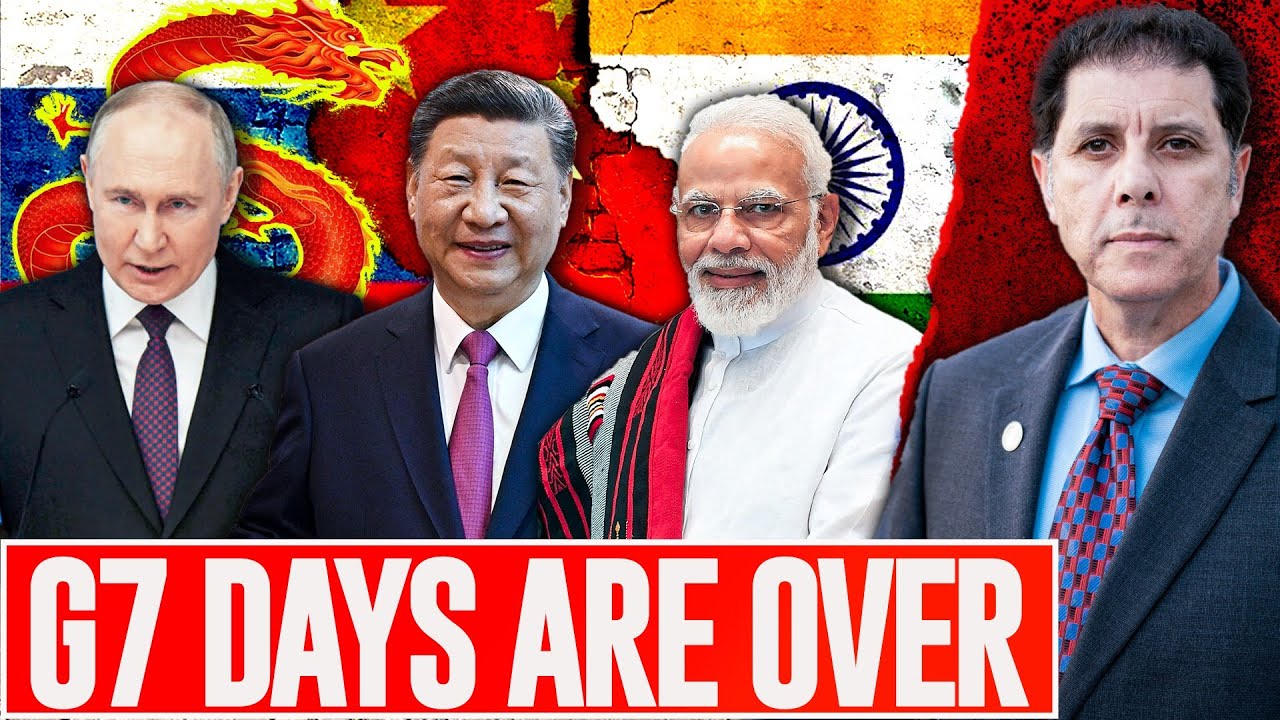
In this video, the host provides a comprehensive analysis of the 16th BRICS Summit held in Kazan, Russia, evaluating whether the bloc is moving from rhetoric to concrete action and its potential to overtake the G7. The discussion covers the summit’s geopolitical positioning toward multipolarity, criticism of Western sanctions, and the appeal to the Global South. It examines financial initiatives such as expanding the use of local currencies, developing alternative cross‑border payment systems, the prospect of a BRICS currency, and the strengthening of the New Development Bank. The video outlines the cautious approach to expanding BRICS membership, highlighting both the strategic benefits and cohesion challenges. Energy security and sustainability are addressed, noting Russia’s attempts to bypass sanctions through deeper energy ties with China and India. The host cites a Goldman Sachs forecast that BRICS could surpass the G7 in GDP by 2050, emphasizing the importance of implementation for the bloc’s long‑term influence. The conclusion poses the question of what comes next for BRICS, stressing that the summit marks a shift toward action but that real outcomes remain uncertain.
Chapters
Hello everyone and welcome to Geopolitical Trends, where truth matters. Are the days of G7 numbered as BRICS grows? In this video, I will provide you with my analysis about the possibility of BRICS overtaking G7 moving forward and place it for you within the context of the shifting global order. The BRICS 16 summit, held in Kazan, Russia, just concluded with significant developments that many view as a shift from more rhetoric to tangible action. BRICS has often been seen as a powerful coalition with the potential to challenge Western-dominated global institutions, but The question remains: has BRICS moved beyond slogans to concrete results? Or was this summit just another routine diplomatic gathering? The 16th BRICS Summit answered that question with a blend of both continuity and change. At its core, the summit focused on expanding the group's influence in geopolitics, reshaping global trade and finance, and of course addressing some of the key issues concerning its members and the broader developing world. In this analysis, I will dive into the main outcomes of the summit, highlighting the critical discussions on geopolitics, cross-border payments, and the broader vision for the future of BRICS. BRICS and the Geopolitical Relevance. One of the most anticipated aspects of the BRICS summit was how the bloc would respond to growing global geopolitical tensions. At a time when the world is increasingly polarized, BRICS nations represent a counterbalance to Western-led alliances such as NATO and the G7. The Kazan Declaration, a major outcome of the summit, emphasized this positioning, reaffirming BRICS's commitment to promoting multipolarity, a global order in which multiple nations and alliances have influence, as opposed to a world dominated by a single power. The BRICS nations' stance on multipolarity has become especially important in the context of Russia's conflict with Ukraine and the rising tensions between the United States and China. In the summit's discussions, the leaders called for diplomatic solutions to global conflicts and criticized unilateral sanctions, clearly taking aim at Western policies. This stance resonated with the broader Global South, as many developing nations feel sidelined in global decision-making processes dominated by the West. By pushing for a more inclusive international system, BRICS is positioning itself as a voice for the developing world, advocating for the much-needed reform of institutions the like of the United Nations and the International Monetary Fund . The summit also addressed the need for increased representation of developing nations in global governance, a longstanding demand of BRICS members. Economic cooperation and cross-border payments. It is a key because it was another major outcome of the BRICS summit, which was the focus on financial and economic cooperation, particularly in the area of cross-border payments. One of the central goals of BRICS has been to reduce the bloc's reliance on the US dollar and Western-dominated financial system, which can subject member nations to economic vulnerabilities, especially during times of conflict or sanctions. In this summit, the conversation around creating alternative payment systems gained momentum. The BRICS members discussed expanding the role of their their respective national currencies in cross-border trade. For example, they explored mechanisms to promote the use of local currencies in bilateral and multilateral transactions, thereby reducing the influence of the US dollar. This part of a, a broader strategy to enhance financial sovereignty and ensure economic resilience in the face of global economic uncertainty. The development of a BRICS currency, while still in the discussion phase, was another significant point. Though the creation of a unified currency among BRICS nations remains a long-term goal, the 16th summit highlighted the progress being made in developing new financial infrastructure, one that could eventually pave the way for more integrated economic ties. Additionally, the summit underscored the role of the New Development Bank, or NDB, also known as the BRICS Bank, which was set up to provide financial support for infrastructure and sustainable development projects within BRICS nations and beyond. The leaders agreed to increase the bank's capital and expand its lending portfolio, which will likely boost investments in key areas like renewable energy, infrastructure, and digital connectivity. Expansion and Inclusion of New Members. A critical topic that dominated discussions during the summit was the expansion of the BRICS bloc. While BRICS began as a coalition of 5 major economies, a club of sorts, there has been growing interest from other developing nations to join the group. The Kazan summit marked a pivotal moment in this regard. As several countries, particularly from Africa, Asia, and Latin America, have expressed their desire to join BRICS. The leaders of BRICS nations, however, approached the idea of expansion with caution, as they ought to be, emphasizing the need for a clear framework for admitting new members. The inclusion of new members could strengthen BRICS' influence globally, particularly as the bloc seeks to position itself as a leading voice for the Global South. But there are also concerns about maintaining unity and coherence within the group, especially considering the diverse political and economic systems of potential new members. Expansion, if it's managed well, could enable BRICS to serve as a larger platform for addressing the needs of developing countries, promoting cooperation on global challenges like food security and digital transformation, As the group expands its influence, its ability to challenge Western-centric global systems could become more pronounced, potentially reshaping the global geopolitical and economic landscape. For the energy and sustainability, there is an area where energy security was another key issue discussed during the summit. The BRICS nations, particularly China, India, and Russia, play significant roles in global energy markets, both as consumers and producers. As the world transitions to more sustainable energy sources, the BRICS countries face the dual challenge of balancing their economic growth with, with their commitment to reducing carbon emission. Russia, as one of the world's leading energy producers, used the summit as an opportunity to bolster its energy ties with fellow BRICS members. Given the current sanctions on Russia due to the West's creation of the Ukraine conflict, Closer energy cooperation with BRICS nations, particularly China and India, offers Moscow a way to circumvent Western restrictions and ensure energy market stability. Moving Beyond Slogans. The 16th BRICS summit in Kazan marked a shift, in my opinion, from grand declarations to tangible actions, particularly in the areas of geopolitical strategy, financial cooperation, and energy security. While the group's vision of a multipolar world remains central to its mission, the discussions on cross-border payments, reducing reliance on the US dollar, and expanding the bloc's membership are signs that BRICS is beginning to move beyond slogans. Goldman Sachs forecasts, for example, indicate that by 2050, if not sooner, BRICS will have overtaken G7 in terms of GDP, even without its newly added members. Whether or not these projections pan out is yet to be determined, However, with BRICS intent on adding even more members, the group is likely to eclipse the G7 GDP in the coming years. The Kazan Declaration outlined key areas for future cooperation and emphasized the importance of concrete actions to address global challenges. By focusing on economic resilience, financial sovereignty, and enhanced cooperation in key industries, BRICS is positioning itself as a serious player on the global stage, capable of influencing both regional and global developments. Here is my conclusion for you in form of a question: What's next for BRICS? As the BRICS nations look to The future, their ability to translate the summit's outcomes into real-world results will determine the bloc's long-term success. The 16th summit set the stage for deeper cooperation, but the real test lies in how these initiatives are implemented. Expanding trade in local currencies, fostering energy cooperation, Integrating new members could strengthen BRICS' global influence, but these moves also come with risks and challenges. For now, the Kazan summit has signaled a shift towards action. Whether BRICS can sustain this momentum remains to be seen, but one thing is sure: the bloc is no longer content with being a passive observer in global affairs. It seeks to play a central role in shaping the future of the global economy and geopolitics, offering an alternative to the established Western order. The outcomes of the summit are just the beginning, in my opinion, of what could be a new era for BRICS. Please hit the like button and don't forget to subscribe. As always, remember, geopolitics impact your daily life in more ways than one. Till next time, thank you.