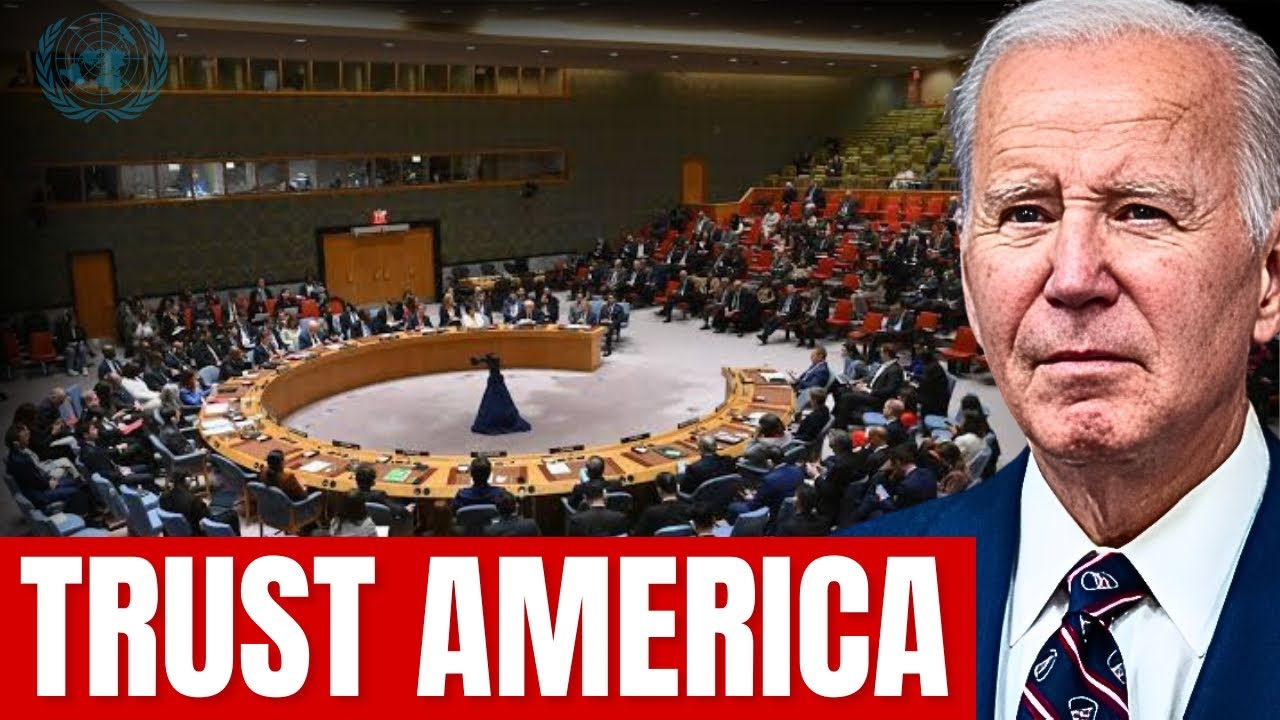
This content was created by David Oualaalou. This content was uploaded by David Oualaalou. This is a YouTube livestream/talk titled "The U.S. Insults Africa!" (published 2024-09-23). The host (labelled SPEAKER A, who greets and interacts with a live chat) leads a critical commentary on the U.S. proposal to create two permanent African seats on the UN Security Council without veto power. The video includes played clips featuring U.S. Ambassador Linda Thomas‑Greenfield and an African Union representative arguing Africa should have veto-equipped permanent seats, and the host provides historical background on the UN Security Council, lists past UN sanctions (many affecting African states), and discusses geopolitical dynamics involving Kenya (William Ruto), the Sahel (Burkina Faso, Mali, Niger), China, Western influence, and African corruption. The format is a live opinion/analysis show with viewer Q&A and on‑screen clip excerpts.
Chapters
All right, hello everybody and welcome to Geopolitical Trends, where truth matters. Very excited to be with you on this September 23rd, so one more week for the end of the month. So, uh, again, an interesting topic for you guys. Uh, I came across the, uh, statements by the US— by the US ambassador to the UN uh, uh, Greenfield, someone I kind of, uh, she had blood on her hands, by the way. So I'll get into all this anyway. This one was about the US asking now, we'd like to see two African permanent members on the UN Security Council. Joke, because that's what it is. It's a joke and it's an insult to Africans. So I'm going to detail for you exactly what this is all about and put it in the big picture as to really for the need to abolish the UN Security Council altogether. The UN altogether needs to be out anyway, but we'll get into that. First, let me say hi to some of you here. Muslim Revert, Hanging G, Alisa, good to see you. Lucas, Cornelius Fraser, good to see you. Uh, UTU Super, Marlin Carr, good to see you. Peng Yu as a new member for the channel, good to see you, Peng Yu. Um, Blank Stairs, good to see you. And let me go down here, see who is, uh, Coach Ahoy, Thunderbolt Design, good evening, my beloved Geopolitical Trends. Buddy and Dr. O, good evening to you as well. Uh, uh, Timeline Dunkley, Phil as always, AF Gordon Carleon, good to see you and salam to you as well. Marciandorier, Francis Tango, uh, hey Francis, before I forget, you asked me about something specific a month ago and I gave you my word that I will do that, so I'm gonna do that next month and you will know what it is. So, so, because I didn't forget. Alex Tarokin, good to see you. And Taiwan Steel, as always, good to see you. All right guys, uh, Amber Spirit, good to see you here. All right, let's get into our topic here. But before I'll delve into all this, I want to remind you of two things. Uh, the end of this week, uh, I will— I didn't set up, uh, the time yet with Carl Zah, because that's when we do the monthly conversation. So I'm going to reach out to him today or tomorrow set up the day for whatever works for him. And remember to join me for the community conversation, which most likely I will do on Saturday, uh, or Sunday. I'll see how things go, either the 28th or 29th. I'll let you know. But just remember those two things before, because that will be the last one I will do for the month here before I head out to Asia next week. Yes. Finally, it's here. So, well, and, and, and I can thank you all for your kind support. So, all right, let's get into our topic here, and let me ask you, or start with the key questions we need to ask. Uh, the first question is, why the sudden interest on part of the United States? Since when the US cared about Africa? Let's just say it straightforward, you know. I've, I've been following US policies towards Africa which had never been cohesive or sort of we had a good strategy towards Africa. Because Africa, in my opinion, and I'm no offense to Africa, but Africa was always the forgotten continent. This is when it comes down to policymaking. That's my reference to, even though you and I know that the whole life started in Africa. Yeah, the whole existence, if I am, at least based on what I read. So now the question is, why the sudden interest? Second question is, what are the US intentions? US doesn't do this for the goodness of its heart, because the question becomes, is who's going to trust the Americans now? We can't be trusted. You know, it pains me to say this about my country, but I say about the government, not the, not the people. You know, there are good American people out there, Take my word for it, I'm an American. So, and, and like every other race, there are good people out there. It's the damn government. So, so, so it becomes a question, what are the US intentions on? And the third question, which to me I've been asking that question for a while now, should the UN Security Council be abolished?
Simple.
So what do you guys think? Just please type in, in the chat box, yes or no. So before I delve deeper into all this one here— by the way, no more tea, I feel better, so back to normal. All right, let's get into our topic here. So I'm going to start with a clip that I need to share with you, uh, uh, and, and it's long, but I'm not going to play it in its entirety. I'll just play about the few first a minute or two, and, and we just go from there. So, because you need to, uh, hear this particular clip here. Share screen. Okay, and this is from the, uh, a former, uh, African Union ambassador. Very, very, very interesting. So, so if you will be kind and like, because I can hear once I play it, if you will be kind and just give me a thumbs up that you can hear, uh, uh, when once it starts playing.
Does the US want Africa to have permanent seats on the UN Security Council but without veto power? Let's get to the bottom line. It's one of the most debated questions in the history of the United Nations. Why do only 5 countries have veto power over all decisions at the Security Council? For almost, almost 80 years, they've been at the food chain: China, France, Russia, UK, and of course the United States. The world has changed since then, but the UN Security Council has not. Decades ago, the P5, or the Permanent Five as they're called, decided to allow countries to join as rotating non-permanent members. With no veto. After all, the Security Council is the most powerful body at the UN, with the ability to impose sanctions and to authorize the use of force against countries. And now Washington is talking about creating permanent seats for two African nations, but get this, with no veto power. Why? And why now? Today we're We're talking with Adikana Chihome Komoros for the African Union. I want to start with a film clip of the U.S. Ambassador to the United Nations, Linda Thomas-Greenfield. Let's listen.
As it stands, there are currently 3 non-permanent seats on the Security Council allocated to African countries on a rotating basis for 2 years. The problem is these elected seats don't enable African countries to deliver the full benefit of their knowledge and voices. To the work of the Council to consistently lead on the challenges that affect all of us and disproportionately affect Africa. That is why, in addition to non-permanent memberships for African countries, the United States supports creating two permanent seats for Africa on the Council. It's what our African partners seek, and we believe this is what is just.
Ambassador Chi Hambore, let me ask you, on a scale of 1 to 10, how enthusiastic are you about the proposal that the ambassador has just made?
I think it's a step in the right direction. However, keeping in mind that this issue has been on the table ongoing for, like you said, 80 years, if we are going to write the wrong, why can't we just right this wrong once and for all? If Africa is going to become a member of the UN Security Council, a permanent member, they must have the full rights just like the other 5 members, which means they must have veto power. Inviting Africa to the table and then asking them to remain mute It's an insult not only to the African leaders, but it is an insult to 1.4 billion people. We appreciate what Ambassador Greenfield, um, is saying. We appreciate the efforts she has made. But if she is going to complete this journey, this journey that has been going on for far too long, a journey that clearly exemplifies the continued disrespect of the African continent. Ambassador Greenfield must push for us to take this issue to the finish line. Africa must have two permanent seats at the UN Security Council with full veto power. Nothing less is acceptable. And I do believe that the United Nations, understanding how long this issue has been going on, How long the disrespect of the African continent has been going on. It is shameful that United Nations would want to continue to blatantly disrespect the Africans by inviting them to the table but then saying, sorry, you can't eat. You can only watch us play our games. You can watch us enjoy the 10-course meal. What a joke. What an insult. And I do hope that the African leaders are not going to accept it. Africa must be at the table as a permanent member of the UN Security Council, and the two seats must have veto power, plain and simple, period.
All right guys, I know it's long. I am gonna provide you the link if you want to listen to the entire video. It's about, I think, 17 or 24 minutes, somewhere around that time. So anyway, I just want you to hear at least for what the former African Union ambassador had to say, and she was spot on. I mean, if you hear the last parts of the clip, you will, you will understand why. But this now, as I said, leads us to the key question: is why all of a sudden the US is interested in this? Well, of course, this comes on the heels of two main things that I need you to understand. One of them has to do with the upcoming elections in February 2025 of the African Union commissioner. So, well, the African Union, you need to understand also its background. So the African Union, which is nothing but a— I think I have a picture here for you guys. If I, uh, yeah, there's, there's an old picture of, of, of the whole African Union here. Uh, African Union, uh, as I said, intergovernmental organization which was established, by the way, in 2002. And what was the purpose of it? The purpose of it was to promote, uh, basically that's what they saying, unity and solidarity of African state. But how can you say that when you have member states that they are working against Africa? You know, I can tell you for a fact, I know I, I used to travel to certain parts in like Ivory Coast, Djibouti, certain other areas Kenya, Kenya is the worst. No offense to Kenyan people, Kenyan government. So because if you only know the background story of why the US has always focused on Kenya, Kenya's be— became sort of the, the, the bridge. If we want to sort of alter things inside Africa, you go through Kenya. But, but we'll get into that in, in, in a moment. So, so the whole idea of the African Union. As I said, it's supposed to promote solidarity, uh, uh, among African states, also to spur economic development, and of course to promote international cooperation. Well, here is the thing. Before the African Union, known as the AU, is the one that replaced the Organization of African Unity— it used to be as OAU Organization of African Unity, which by the way, the OAU, or the Organization of African Unity, was established back in 1963. That was way, way back. So, and this is why the upcoming elections in 2025 in February, which is going to be during the 38th Summit in Addis Ababa— I've been in Addis Ababa traveling on my way back to the United States. I think when I was in Djibouti, I had to make stop in, in, in, in Addis Ababa, then fly back home. So this one's coming on, uh, the 38th, uh, uh, uh, summit, which is gonna be in Addis Ababa— is the capital of Ethiopia, as you know— in February 2025. And that is one of the reasons why the US wanted to show its good graces, that we care for Africa. No, we don't. Let's just be honest about it. There, there's no honesty in Washington. We all know the truth, how it is. You know, if the damn politicians were honest, things will be different, not only here in the United States but around the world. So, but you need to understand this part of the dynamics as to what's going on. The second part of this, or the second element, has to do with this guy. Does anybody know who this guy is? Can you type in, in a chat box? You should be familiar with this guy. I did a video about his country. So let me just see in the chat box, guys, because I like you to be part of the conversation here, and you all know how we do that things here in our community. So, all right, let me see, any of you can, uh, uh, uh, uh, Miss Kana, Miss K, you got it. Robert Marley, you got it. It's William Ruto. Why is this important? It's because this guy was invited as of May of this year for state dinner, it was our way of settling sort of the dots on the letter, as we say. In other words, we bring him over to Washington to give him the marching orders because we realize that's the weak link into what's going to be going on in Africa. And there is a third element that I need you to be aware of, and it has to do with, uh, the Sahel region. You all know that those three countries— Burkina Faso, Mali, and Niger— decided to form an alliance after they left the ECOWAS. So what the US is hedging its bet on is that if they can create this kind of diversion of sort by giving the impression that there are now two African nations on the UN Security Council they will have no veto power. So what's the point? That's, to me, it's an insult, like what the, uh, the EU ambassador stated. She was spot on. She was spot on. And, and she stated that in the video, that, uh, and I'm gonna put the link for you. That's what, uh, uh, Arikanah Shimburi stated. It's an insult. I couldn't agree more with her about this one. So, and for, uh, uh, for this, the incompetent US ambassador to the UN, which by the way had blood on her hand, you know, saying that, well, we're gonna invite the African nations to give a voice to Africa, but we are not gonna give them the veto power. So what's the point? It's almost like inviting you for lunch or dinner, but I'm telling you, just sit at the table don't eat, just watch. How insulting that is. That's an insult to Africans, straightforward. There is no other way of looking at it. And shame on her, by the way, for vetoing the ceasefire in Gaza. I know she's following orders, but damn, you gotta take stand when it matters. When it matters, it matters, that vote. But she couldn't do it for the sake of political career. So what kind of respect will I have for a human or an individual like this? I respect her as a human being, of course. She's another human being like you and I. But that's beside the point. When you hold a position of power, a position of responsibility, that comes with certain duties that you have to do. And when it mattered, it— she failed miserably. And, and that's the way I see it personally. So, so the idea for her to be saying, well, we're gonna give a seat to— no, no, No, no, no, no, no, no, no. You care less for Africa. You are seeing— you meaning US government in this case— seeing the transition that is taking place in Africa. Did you guys know that the Burkina Faso's president Ibrahim Traoré, you know, did you know that he keeps only a minimum salary? And by the time he nationalized this to go get him back from the UK, all of a sudden France now is trying to destabilize the country from behind the scenes. So same thing with, with our incompetent president going to Angola. What for? What for? You can't even walk straight. No offense to elderly, but come on, man. Come on, man. We can't be— we, you know, that, that, that to me gets under my skin because of the hypocrisy, the hypocrisy of it. You know, since when we cared for Africa? We only exploit Africa. And not just the US, the Germans did it, the Dutch did it, the British did it, the French, the Spaniard, the Portuguese, you name it. You know why? Because Africa is so rich in natural resources. And now you're looking at those countries in the Sahel wanted to take stand and stand on their feet. And instead of us encouraging that supporting that. A win-win for everybody. And this is why we don't want China in Africa. That's the reason why. Because China's coming with investments, you know. Whether you like China or not is irrelevant. It's what are they doing for African nations, you know. Tell me when we, the American government, that is, built any major infrastructure for Africa except for weapons. And you will know when I give you the history of the UN Security Council, especially when it comes down to sanctions, you will see how many countries in Africa were sanctioned through the UN Security Council. And, and we're going to get into that, uh, shortly here. So, so now to give this, uh, uh, sort of, uh, a seat for the UN Security Council with no, with no veto power It's, it's, it's like an insult. And that's why, uh, sort of, uh, Thomas, uh, what's her name, Linda Thomas-Greenfield, saying, well, we just want to follow up on what President Biden, the incompetent Biden, has promised. Heck with that. How is that going to translate to the life of the average African citizen, that we are exploiting their resources to our benefit? And I did mention this before, guys, France. France used, used to get uranium from Niger, right? How much do we sell it on an international market? $200 a pound. How much they were paying the locals? About $8, $8 to $10, give or take. At least some research that I looked into. So, and, and a whole light, the city of light in Paris and all that, where is that electricity is coming from? Is the uranium that is coming from Niger. So, so, uh, this is why when the US saying, well, we're gonna support the expansion of the UN Security No, no, no, no, no, no, no, no. There is something behind the scene that they are pushing for that one. So, and however, Greenfield went ahead and said, well, we're gonna oppose giving them the veto power. Well, then what's the point? You want them just like to serve you, in this case meaning the US, in this case. How can you do that? You know, that, that, I, I don't know. But, but this is a much bigger problem than just the US and Africa. This is the big problem of the entire entity itself. Because to me, what it means with all this, the setup is dysfunctional. And that's why I'm, I'm in vote of this ban, this, you know, banning Just as a matter of fact, I did read one statement way back by Lavrov, the foreign minister of, of Russia, uh, suggesting this idea. Because you— how can you have only 5 permanent members deciding for the rest of the world? That just to me it's not right. And I bet you, I bet you, if they were to be to vote today, so those countries, some of the members, mainly China and Russia will vote for abolishing the UN Security Council. This is with the assumption that France will do the same, which I don't expect them. UK will do the same, which I don't expect it. And the US, of course, it will not do it. And that's to me where part of that dysfunction is. So, and this leads me to address to you guys, because I need you to give you a brief history of, of, of the UN Security Council. But before I'll do that, I have two main statements, uh, pertaining to the UN Security Council. One of them comes from this idiot. Yeah, I call him idiot. You guys know who this guy is? This is the president of Finland. That's, uh, Alexander, uh, what's his name? Yeah, Alexander Stubb. Vitaly, so what did he say? He's an idiot. He's really an idiot. So this is when you start to realize Western leaders— speaking of Finland, I am gonna be considering probably my next trip after Asia is done. I might be heading out to that part of the world. I'll converse with you about all this because there are some major dynamics, shall we say, that is taking place based on my conversation with some elements And I even thinking about being on the ground evaluating with my own eyes to see and report that to you. We'll, we'll, we'll talk about that one in due time. So, because I do see, uh, Scandinavians is going to be a major front moving forward as far as conflict. So, so here is what this incompetent president saying. He said that the UN Security Council reform Yeah, interesting. The UN Security Council reform should include expanding its membership. Did you see the timing? Expanding its membership, eliminating the veto power of any state, and expelling any member involved in illegal wars such as Russia's invasion of Ukraine. End of quote. Interesting. He didn't say about the US being in Syria, okay? He didn't say about the US providing weapons to Taiwan to incite conflict. He didn't say some other conflicts also. So funny, so funny. So, and it just shows you right there the incompetency of these leaders while talking big, but it's hollow. It is hollow. So the same thing, statements also came from another incompetent— excuse me— Linda Thomas-Greenfield. Yeah, incompetent idiot. So she said, and I quote, we use our veto to promote interest of US government. So, so we've had some serious issues with the use of veto because we use the veto on issues, all of us, that are important to us. Nonsense, nonsense. So, but here is the history I need to share with you, just brief history about the UN Security and I'm going to start with, uh, straightforward one. One, I'm going to provide you a date and I want you to tell me what is a reference to 1939. What is a major event that took place in 1939? You all should know, guys. Just type in, in the chat box, please. One word. Yeah, World War II. That is correct, Muslim revert. Yeah, 1939, the outbreak of World War II. So, and of course, this one directly led to what? The dissolution of, uh, the League of Nations. Remember, the League of Nations was established, and by 1941, who was the American president at that time? In conjunction with the Prime Minister of UK, Winston Churchill, conceiving that the League of Nations needs to be replaced? It was none other than— which American president was at that time? 1941, guys, thank history. Oh, Roosevelt! Karakolak, you got it, you got it! It was Roosevelt. So what happened? They were already talking about the notion of we need to replace the League of Nations. Right? So what happened between these two, Roosevelt and Churchill? They envisioned that this global alliance, so which will be led by, as Roosevelt called them, the Four Policemen. That's why if you look at the history, guys, if you look at the historical record, you will see this reference of the Four Policemen. Where are they, or who are they? The United States UK, Soviet Union, and China at that time. Why is this? The chief members of the Allied Forces in the war at that time. And so, so the idea evolved as war was raged on, and in June 1945, which is just over one month from the victory of the European D-Day, The United Nations Charter was signed 1945. So the Charter took effect in October, that's when it was, on that year 1945, just over a month after— what major event happened '42 for the, uh, for those four to declare victory? What is a major event that happened that led to that victory, with one particular country in mind? Let me see if you, if you guys know. Yeah, one particular country that led— oh, Keith Stone, you got it, you got it, Keith, you got it! It was Japan, the surrender of Japan, formal surrender on the deck of the USS Missouri, or Missouri rather, finally bringing the war to an end. So, and this is where, of course, that becomes the beginning of the UN Security Council. But the idea that I need you to understand, because it's very, very important, and the reason I'm saying this, because I, when I did my, my own studies about during my master's degree, you know, because I use my master's was a focus on international security. And one of them has to do with truly understanding the whole idea of the international relations and the unipolar world and so forth. So one of the focus that I had to do is understanding the dynamics of the UN Security Council because it will play or has played and continue to a degree play a major role when it comes down to a global affairs. This is why it's important I decided to do this brief history about the— briefly here, of course— about the UN Security Council. But, but there are controversies surrounding that. The Security Council as a whole is made up of 15 members, member states. So, and this of course includes the 5 permanent, uh, France, and the 4 policemen, UK, China, uh, Russia, and the US. So This is why it's known as P5, Permanent Five. So it was until the Russian Federation was reorganized as the Soviet Union legal successor in 1991. So the— here's the point. My point is all— it's not about this. My point is about the remaining 10 seats, and those are held by elected representatives of their respective regions. For about 2-year term. So what do you have? You have African states holds 3 seats, okay? You have the Asia-Pacific holds 2 seats in addition to China. You have Eastern Europe holds 1 seat in addition to Russia. You have Latin America and the Caribbean holds 2 seats. And you have Western Europe And other states category holds 2 seats, plus the US, the UK, and France. So this is what I need you to understand. So the idea of the Security Council, uh, in itself can take action to maintain, according to its, its statement, to maintain and restore international peace and security under Chapter 7, which is to me, it's nothing but a bravado. If they could restore peace, how come they didn't do that in Yugoslavia? How come they didn't do that in certain parts in Africa? So, so that's to me where the dysfunction is, because you can't be saying, well, we're gonna do this one here for, uh, for, uh, for, for these countries, and at the same time you are doing something different. That just doesn't make sense, at least in my opinion. So, and this is where you have, for example, uh, when they say we're gonna have to maintain international peace but also impose sanctions. And all this is under their Chapter 7. So, so here's the thing, I'm gonna just give you a quick example historically here for you to put things in perspective. Sanctions issued by the UN Security Council under Article 41. There is one specific clause in Article 41, and I'll provide you the link, guys, if you decide to read. As I said, this was part of my academic background when I did my master's, because you have to learn— I had to learn about this stuff when you do international security program. You have to learn about this dynamic. So, so under Article 41 This is part of where the sanctions of the UN Security Council comes in. So, so here's the thing, I'm going to take you back to 1966, the year when I was born. So '66, the Security Council has established about 31 sanctions regimes. Yeah, this body right here, right there. I want to share picture that the UN Security Council issued about 30, uh, uh of those. Okay, and here is— I'm gonna, I'm gonna state the countries for you to know. 31 sanctions regimes. So first one starts in, in the islands of Rhodesia, then you have South Africa, the former Yugoslavia twice, Haiti twice, Angola, Liberia 3 times, Eritrea Ethiopia, Rwanda, Sierra Leone, Côte d'Ivoire, or Ivory Coast, Iran, Somalia, Eritrea. Daesh, you all know what Daesh is, right? The group, the, the, the that was in the Middle East, uh, the other group that did 9/11, right? So, so to speak. Iraq twice, Democratic Republic of Congo, Sudan, Lebanon, Democratic Republic of Korea, the, the PRK, Libya twice, the group in, in Afghanistan, the T one starts with a T, Guinea or Guinea-Bissau, Central African Republic, Yemen, South Sudan, and Mali. What is the common denominator in all this, guys? Did you notice how many African nations were sanctioned by the UN? So, and this is again to highlight to you the importance of understanding why all of a sudden the US wants to give Africa two seats. We don't know, by the way, we don't know which two African nations yet. So he just said he will give Africa two seats. So, but the problem in Africa, there are countries that are a puppet of the US. To my knowledge, they are about the treasury or finance minister of some countries travels to the United States twice a year. Why do you think they go to the US for? You're smart enough to read between the line. This is why, till Africa get rid of corruption altogether, nothing will change. Africa will need leaders like Ibrahim Traoré. Of Burkina Faso. You give guy credit. Whatever, whatever way he came to power for was to serve his country. And now ask anybody in Burkina Faso, will they want to see him replaced? They're gonna tell you no.
Why?
Because he's working for his country, the investments he's doing for his country. But some nations, not all, I shall not, I shall not generalize, Some in Africa still corrupted. So I'll start with Kenya, I start with Nigeria, and, and it's the reality. Because for Kenya, if you look at its history, this is a picture of, uh, of, uh, what's his name, Daniel Arap Moi. I remember him way back, you know. Of course, the old There were some irregularities in the elections in 1991 or 1993, if I recall correctly. So, and of course, the power had to be centered because of the corruption aspects of it. Now you have this guy here, William Ruto. So, and my point, when I'm pointing out Kenya here, there are other countries in Africa that still are corrupted, including, for example, Egypt. You know, do you think Egypt is not corrupted? You know, you'll be mistaken to think otherwise. So, and this is my point, guys, just for you to understand the big picture as to why all of a sudden the US, oh, we care for Africa, we want them to have seats at the UN Security Council. No, it's because we are seeing the changes that's coming up to Africa economically, strategically, with the presence of China inside. With the presence of Russia and the expansion of economic infrastructure. And we don't want to see that. And especially after the Sahel region have kicked the, the French and the British and even the Americans. You know, when you look at, uh, when you look at the map now, uh, as far as the, uh, presence of Western, tell me, in, in this part of the world, where do you see the the presence of the West in the Sahel region? I don't think so. And the US just left permanently Niger. Yeah, yeah. But you do see the presence of Americans in Kenya. You see certain project— certain presence in Djibouti, uh, Ivory Coast. There's some because I've been there. So, and that is my point, guys. Guys, you need to understand that when you hear the US already promoting or, or supporting— no, no, no, no, no, there is a catch to that. US will not do it for the sake of doing it, because if it were the case, we would have done other things in other parts of the world. We would have not promoted the conflict in Ukraine. We would not insinuate or intensify the tensions in the South China Sea. We will not support NATO bombing in Yugoslavia back then. We would not turn the Middle East upside down, especially Iraq. We would not steal oil from Syria. We would not turn Libya upside down. So is the truth. That is the reason why, you know, when I heard, uh, Linda Thomas, you know, one with the blood on her hand, especially when it vetoed the ceasefire in Gaza. That's it. That's it. Why should I even trust whatever you say? And shame on her. Yeah, I don't care if she's just following orders. No, no, shame, shame. You know, we as a human being, all of us, we have what we call free will. You know, there are those who say, well, God this— put God aside respectfully. To whomever might be religious. Put God aside, you know, and think about the free will, your own decision, your own stand, you know. It's like here, guys, do I force you to come and sit down and listen to what I have to say? And even if I do, shouldn't you take stand on whether you want to sit down here and listen to what I have to say or say No, Dr. O, I don't want to listen to you. And you know what? It's your choice. You took stand. That's the way I look at it. She couldn't take stand when it matters. And by the way, that doesn't apply just in politics. I look at it in sport as well, and especially with one particular incident that I remember about two key players, three key players in tennis, you know, Rafael Nadal, right? And Roger Federer from Switzerland and Novak Djokovic. Remember the Australian Open during COVID time, you know? And Novak said, no, I'm not playing, because they want him to be jabbed. And he said no. And they turn— so if it were the other two players, Nadal and Roger, if they were leaders they would have took stand in support of something, but they cared more about their careers. So same parallel I see with, uh, Linda, uh, uh, Greenfield. She couldn't extend when it matters. And as to the African Union, you know, there are some countries that they are so corrupted, and of course by having them at the UN Security Council We will pressure them. This is all about votes, because here is the way I see it: abolish the UN Security Council and turn the UN into a single entity with majority vote, whatever issue that is. Yeah, even China, even Russia, you get that veto power out. No one has veto power. That's how it should be. Put it to vote. If we are to say democracy, put it to vote and majority rules. Otherwise, get rid of the UN altogether. And like I always say, UN is toothless, doesn't have any, uh, whatsoever. So, so the bottom line— and I'm gonna wrap this up, guys, and I'll answer some of your questions— the bottom line is this, the bottom line is this: This call by the US has a specific agenda to it, you know. Of course, those that's going to be advocating for it in Africa, those are the ones that are in the pockets of the US. It's because it's clear that the US said, we want you to be a permanent member but with no veto power. What's the point? What's the point? You rather maintain your dignity than be under the thumb of someone else. And that's what the Sahel region had shown. It showed Africa, it showed African leaders that time is of the essence to take stand now, because Africa has potentials. Africa has always had potentials. Is the damn massive corruption that existed but also the contribution of our policies in the country, because we wanted to keep them down. We never want them to increase. Because if you are to think about without vote, 1.4 billion people in Africa with no veto power, so, well, I may as well say the same about India. If you are to think that way, then give India the veto power. Of course, India might not use it wisely. Because there's also structural fragmentation within the, the government inside India. Society is another issue because there are issues in, in the, uh, India society like any other society. It's just my point to highlight to you, if you want to give this voice to Africa, you know, you're gonna have to think about India also. You're gonna have to think about Brazil, you know. And this is why, to keep it out of 5 permanent, that's not right. It's unjust. Get rid of it and make it a popular vote based on a vote. That's it. Whatever issue, whatever issue that is will have to be in the vote setting. No more, no less. It's because if we are to say, well, it's because, uh, we want to reform this and expel this and expel that. No, no, no, no. Doesn't work that way. Doesn't work that way. And, uh, I'm gonna be keeping an eye on the upcoming elections for the AU, the African Union, uh, but, but the way I see it is no. Till Africa get rid of those regimes, like for example in Kenya, like in, uh, in Nigeria, they need to clean house. In Egypt even. Well, Egypt is corrupted, so, so, but the government, not the people. Till they do that, I don't see any change going on. And this will remain nothing but a consumption of ink, no more, no less. All right guys, let me, let me answer some of your questions here, and I'll sign off because I gotta work on some other stuff for you. But also is my last week before I head out to Asia. To those who have been supporting the channel. It is greatly, greatly appreciated. And, uh, as a matter of fact, uh, yeah, I'm gonna do something, uh, uh, speaking of the members on the channel, by the way, make sure to, uh, uh, I did put some link to one of my books if you want to get it there. So, all right, let me answer some of your questions, guys. Uh, Leon— or Lion, I'm sorry— Lion Champion: the EU is corrupt. That is correct, I agree with you, I agree with you. I used to travel to Africa when I was working inside the government, and, and, you know, we dictate the terms to certain countries, especially Kenya. So, so they just— the idea of it, so All right, Timeline Dunkley. Dr. O, why don't China— why don't China make a Security Council with other countries around the world? Yeah, that means you have to create another entity, you know. And again, if you're gonna replace this with that, then what's the— what will be the point? Yeah, it could, because I will say the same arguments. Why can't China now and China and Russia together push for another BRICS? Because of India, you know. But it's not going to work, it creates confusion. So yeah, they could do that, but I just don't see— and I don't think so China wants to get into this, the weeds of all this. Well, this is why I'm seeing China's moving a different direction altogether, altogether. So, so I, I have one professor in mind, he's at the University of Fudan in, in Shanghai. I intend to reach out to him. He's the He teaches international, uh, relations, if I'm not mistaken. And, uh, uh, if, if I can— I'm trying to locate his personal email. His name is, uh, yeah, let me put it in the screen for you guys. And, uh, Chong Tian, uh, maybe I pronounced it correctly, but here, let me Let me put it for you guys at the banner. I'll share it on the screen. So right there, that's his name.
He's—
he teaches international relations. So I really like to have a conversation with him, uh, about, uh, for you guys, uh, about the, the current state of affairs regarding global order. So, so I'll, I'll— we'll see, we'll see once we get to that. Uh, so that's why, uh, uh, Timeline Dunkley— I don't see that one. China will do that one. All right, another question. Uh, let me see. Uh, Juan Horn, good to see you as always. Dr. O, uh, do you think the US is trying to buy power and influence with this move? Well, obviously it's almost a settled bribe, if I may use the term. Yeah, that's our way of— because remember You know what's going on right now? And, and even with Niger, Mali, and the Sahel regions, what happened recently with them? They turned down the IMF. They say, we are not interested, thank you. You know, it's because they know where things are headed. So the US is trying to pave the way, because if you maintain that fragmentation, you know, you will be able to influence policies. But you're gonna do that with the weak leaders, you know. The US can do this with the leaders now of Burkina Faso, of Mali, of Niger. No, they won't be able to do that. So, so, so the answer to your question is yes, we're trying to influence the outcome by corrupting them. Basically, that's what it is. Uh, okay, let me see another question from you. Uh, uh, Dia, good to see you. What do you think about the political situation in Tunisia? Yeah, it's— I've been sort of perplexed as to really the tensions that exist within with Kais Saïed, the president. I don't claim to know the really the depth of what's going on, except now that I know the Tunisian society is as fragmented as it can be, especially when it comes down to its political system. So I hope they can fix it because I don't see the reason why. Uh, I mean, we did have, by the way, we did have a presence, military one, in Tunisia. So I was aware of, uh, I used to know the head of the, the, the base, the commander at that time, way back. So yeah, I wish they can resolve their issues because especially now that the EU is turning on Tunisia. Why? Because Tunisia pivoted towards China. You can just see where this is going. So, so I hope they, they can resolve whatever differences they have, uh, uh, uh, immediately. Uh, uh, Hank, Hank NG, you're right. I heard about those two professors. As a matter of fact, The other one, I just sent him a request, and I'm gonna show you guys the, uh, the link, uh, request for interview. Uh, yeah, is Professor, uh, Chung.
Copy.
Yeah, that's the one I sent, uh, uh, an email to yesterday., and I'm hoping he will respond. Uh, this is the one I sent the email to. Okay, let me show you the banner here, right here. Yeah, that's the same professor I sent the email to, and I'm hoping it will respond. So, so, and I heard the good things about University of Fujian, and I am even thinking about submitting my resume to their HR department. Let me just go from there. Robert Marley, you're right, what a childish world they have made. Indeed, where things are headed, and I am even thinking, guys, we're gonna need to get our heads together. Yeah, you involved, you as well, because you have something to say. We're all gonna need at some point soon get our heads together and think about how we can promote certain aspects of peace. You know, talking is good, sharing knowledge is good, but we're gonna have to come up with some concrete ideas. You know, we are not politicians, we are not officials, uh, and, and don't think that we can't influence the trajectory. We can. It's just we have to get our heads together, and, and, and I'm thinking about ways of how we're going to do this moving forward. So I agree with you, uh, uh, Marty—
Robert.
All right, let me see another question, guys. Uh, uh, let me see here. Oh, I agree with you, Khadija. I agree. We humans possess some level of intelligence. I don't care whether you have PhD or not, it's irrelevant. It's the level of intelligence. We all of us have something. Where the difference is, some of us have tapped into that energy inside and others don't. That's the only difference. So, and just imagine if we all get our heads together thinking about a problem and how we can address it and propose certain solutions to tackle that. Don't tell me all of us in this community, we have no ideas. I refuse to believe that. I refuse it. All right, let me take one more question, guys, before I, I, I, uh, sign off here. Francis Tango, as always, my dear supporter, and I promised you I will do something you asked me last month for tea and coffee and maybe also pastry for the holidays. Dr. O, also do greeting wherever you go. Thank you so much, Francis Tango. I do have to be careful with pastry, you know, but, but the other stuff I'm, I'm fine with. So thank you so much, Francis. As always, your kind words and support means a lot to me, and I shall remember that for the rest of my life. To all of you guys, no exception, to all of you. So I want to say thank you to Superfly. Only take it if your veto are also revoked.
Yeah.
Thank you so much for your super sticker, truly appreciate it. Much appreciate your support, and I'm very grateful. I want you, I want you to know, all of you guys, Ping One, you, good to see you all as a channel member. And, uh, uh, uh, Ping, you make sure you get a copy of my, uh, of my book I posted for the channel members because it's, it's the right things to do, guys, you all know. So thank you all. So, all right, let me see one last question here before I sign off and I'm go, uh, work on another topic. By the way, guys, uh, uh, if you can type in, please hit the like button, by the way. And one of you mentioned to me that, uh, YouTube has unsubscribed him or her. You know, YouTube, if you're listening, please, no need for this kind of stuff. You know, that's really, it's really no need for it. So I'm sending you my positive energy. No need for that. It would be kindly appreciated. So, but here's the thing, guys, for tomorrow I'd like to do a topic for you tomorrow or Wednesday, and, and, uh, I have one in mind, but I am open to your suggestions. So in the comment, just put whatever you think you will, uh, want to learn about, and I'll see if I can— if, if a topic that requires more research, I won't do it. Because I don't cut corners. I want to do it the right way. So, but I have one about, uh, Germany in mind, if you want to hear about what's going on in Germany. I don't know if you heard the recent elections, local ones, where it's going. That's to me an indication of what lies ahead. Yeah. All right, let me see here. Uh, Ramples01, you are right, you are right. I mean, go no further than listen and listen to Robert Mugabe. You all remember him, right? Listen to his last speech at the UN. Yeah. Oh, Koreka, I agree with you. I tip my hat to Novak. I wish he can listen to this. And even if he would like to come on the channel, I know he doesn't talk geopolitics, but I'll talk his topics. I tip my hat to the guy because respect is earned. He earned my respect forever. He doesn't know who I am, you know, and I am not some celebrity, you know, but the fact that it is known that someone in this world have great respect for him because he took stand when it matters. That's why kind of, uh, uh, Roger Federer and Nadal, they're useless in my opinion. Useless. They couldn't take stand when it matters. So yeah, Novak is the man. Novak is the man. So, uh, Khadija, I like that. I like your statements. Lines are drawn, the soul knows which side you should be on. Wow, wow, spot on, spot on. I'm not a religious guy, by the way, just to let you know, but I do believe certain ways. I do believe. Rample's question: this woman at the UN, can she vote against the wishes of her government? No, she can't. She's too weak. Too weak. She couldn't do it when it matters. Remember the vote for ceasefire in Gaza a few months ago? It was the only country that vetoed that resolution. The rest of the world went for it. It was only the US. Even the UK, the UK, which by the way, the UK abstained. Even the UK didn't take stand, which is pathetic anyway. We know where the UK is. UK is down the drains, is done for. UK, just a matter of time. But for the US, for the ambassador, she couldn't take a stand. Yeah, she could have challenged the president because that's what a right ambassador does. If I were ambassador, I'm gonna say no, this is not right, or resign. I did this in my academic career when the university president of the university approached me saying 'When, Dr. O, you know, you're gonna have to just stand there and read the slides to the students.' I said, 'No, I ain't gonna do that.' It's because I saw the potentials on the students. They just never been presented with an opportunity. And I, I kind of try to explore their minds by opening it to the prospects down the road for their own good. Challenge their own intellectual capability. And they admire me for that, and they admire themselves because they realize the potentials they have. And the university didn't like it because my name starts to circulate on campus. It was just my first semester there. Within a month and a half, all the students on campus were like, hey guys, if you really want to learn something, go take this course with this guy, Dr. O. The president of the university didn't like it, and I told him straightforward, I will not compromise on the welfare of my students or I'm resigning. You either let me teach the way I teach or I'm resigning. And he thought I was bluffing because in a right mind I couldn't compromise the welfare of my students. I couldn't and I would not. So if it is just a job, you can have it. I don't want it. I will look elsewhere. And took stand on it because it mattered at that time. Yeah, I could have stayed comfortably, okay, collect paycheck. You become a, a sort of, uh, associate professor, you become a full professor, all that. I don't believe in that stuff anyway. I believe in what you can do for the students. Because your students looking at you as a role model. If you deceive them, if you cut corners with them, if you cheat them, what kind of man, what kind of woman are you calling yourself a professor, educator? Couldn't do it, and I won't do it no matter what the cost is. So, so yeah, Shikulov taking stand, but she's weak. She's too weak. All right, let me see one more. Yeah, please guys, hit the like button because that's the only way we're gonna push against YouTube for that. You know, they, they have the means to limit and whatever. So far it's fine. But when you hit that like button, it goes further. Jimmy Jonga, you're right, Sisi is on a payroll. We made the arrangements for him for the coup in coordination with Saudi Arabia, by the way. And I know a lot about that because I wrote my Saudi book and I detailed into that. So So that, that's a great question here from you. Which country in Southern Africa is not a puppet or corrupt? Uh, yeah, you could think of South Africa itself. Let me see, let me bring you guys the map here and, and, uh, I'll take a look quickly here. Yeah, yeah, Zimbabwe. You know, you know, uh, Angola— no, Angola is, uh, not— no, this is why Biden is going there. There is a specific reason, because remember, Angola used to be a member of OPEC.
Member—
he left in 2024, January, I believe. Okay guys, I'm gonna sign off here and I'm gonna go work on my, uh, the topics for you guys.
For—
I might put a survey for you for the topics. And, and we'll decide together because I like you to be part of this decision as well. So as always, remember, geopolitics impact your daily life. Till next time, guys. Bye-bye.
More from David


Beyond the Single Actor: Why the Gulf Isn't Choosing Between the US and China


Iran, Iraq's Militias, and the Houthis Are Coordinating! This Changes Everything




Who Controls the Next Decade's Resources? Latin America and Africa's Geopolitical Crossroads

The Chokepoint Trap: How Washington's Stupidity Triggered a Cascade That Now Controls the World

Trump Spooked as IRGC Unveiled dual-use SLV, Deployed Ghadir Mini-Subs & Hinted at Tactical Nukes!
