The US is Burning Through Tomahawks Faster Than It Can Build Them And China Is Taking Notes
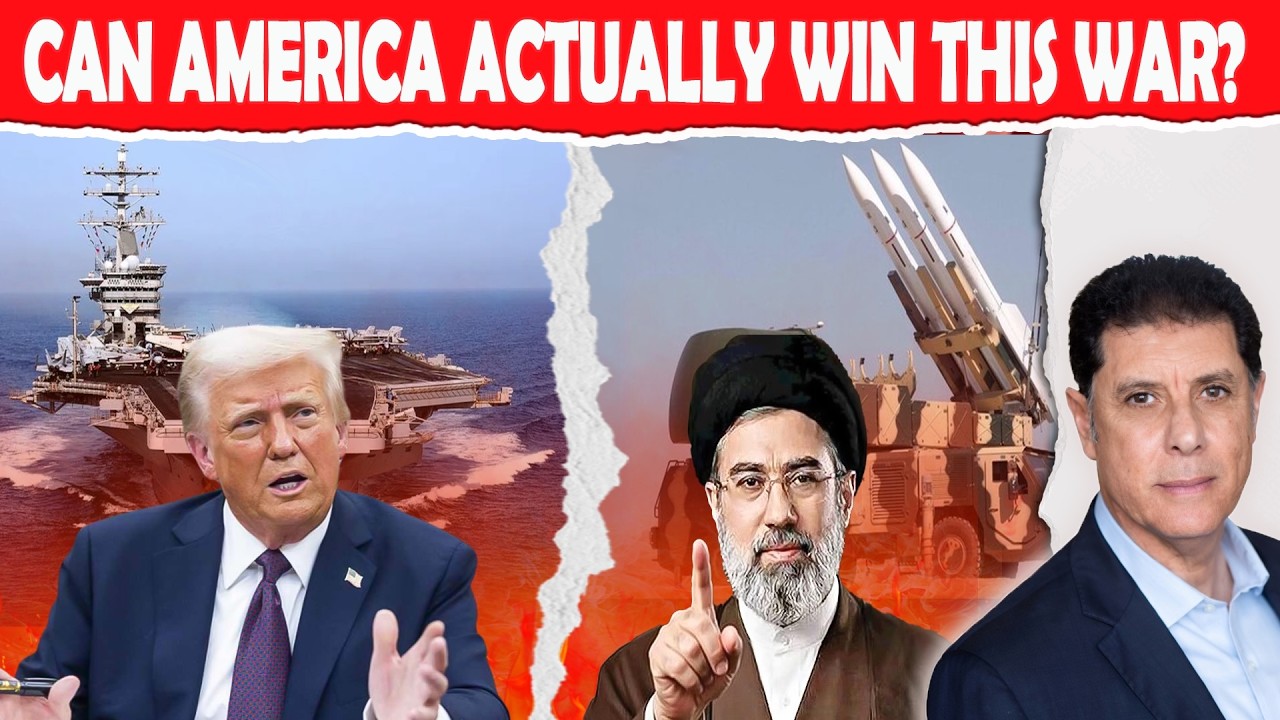
David Oualaalou analyzes U.S. carrier deployments in the Middle East and Iran's missile capacity, arguing the U.S. is burning through Tomahawks faster than it can build them while depleting crew morale. Iran manufactures 5-30 missiles daily and can field hundreds within weeks. China is watching the Pacific Gap, where weakened U.S. rotations create a strategic opening.
Chapters
All right, hello everybody and welcome to Geopolitical Trends, where truth matters. 3 of America's most powerful warships are now sitting in Middle East right now, and I'm going to show you the pictures of those 3 aircraft carriers. And the, the man in charge of the entire Navy just admitted on the record that he is so scared— of course, in a figurative sense, but scared not of Iran, but of what happens the next day. Because while America is sort of burning through missiles faster than it can build them, someone else in the Far East, China, is sitting back watching, taking notes, and waiting. And this is the story that the Pentagon is not telling the American people. And just as I am getting ready for this, it was a breaking news, which I will do a live stream for you about it tomorrow. Iranian sources revealed that now they are targeting American frigate with two missiles and forced it to retreat. This is the harsh reality that is going on right now. And let me share a clip with you right away of what do I mean by when I mentioned about China sitting at the back watching. Take a listen here, please, and it's in English. I don't need to do a translation for you here. All right, let's take a listen here, please.
Geopolitical tension as a major— the world enters a new phase of geopolitical tension as a major maritime choke point becomes the center of a rapidly escalating confrontation between the United States, Iran, and China. The Strait of Hormuz, through which nearly a fifth of global oil once flowed freely, has now become a contested military and economic pressure point —triggering fears of wider regional destabilization and global market shock. The crisis intensified after the United States moved to enforce a sweeping naval blockade targeting Iranian ports and restricting maritime movement through the strait. The decision came in the aftermath of failed peace negotiations held in Islamabad. Were attempts to broker a ceasefire between Washington and Tehran collapsed without agreement. The announcement of the blockade immediately—
All right, I'm gonna stop right there because I have a lot to cover as I move forward, but I just wanted to highlight to you an idea that, uh, uh, sort of, uh, the— you remember the secret weapon we talked about last time? And I asked you, uh, in a survey question, which by the way As of today, we have, we have about over 3,000 participants. When I asked you, do you believe Iran's secret weapon is real, 82% of you said yes, 8% of you said no, and 10% said don't know. Well, the reality now is settling. Iran's military, even though, uh, has been attacked, uh, the Supreme Leader of Iran, uh, the late Ali Khamenei, has been assassinated. Its currency, it's in a free fall as we speak. I looked at the market yesterday. By every metrics, Iran should be like— to those who think in terms of, oh, if this happened, then the outcome should be— that means Iran should be surrendering right now. But that is not the case. It is not. And the reason why, because it reveals something deeply uncomfortable about the limits of the American power, something 3 aircraft carriers now and a naval blockade simply cannot fix. And this is exactly what I want to do for you in this live stream. But tomorrow I am going to talk about what just happened earlier before I came in here, about the breaking news. I know one of you, somebody in the community— not the community, I think it just been here When he asked the question about whether, uh, these live streams are recorded, they are not. They are not. I just schedule, sort of plan my schedule ahead of time as I'm flying from one location to the next. And by the way, it's not about falling behind in the news, it's about the accuracy of the information. So I don't rush into doing whatever someone else is doing. I don't care for what they do. What I care about is the accuracy of the information, and if I have to wait a day or two, that's what it's going to be. Same what I'm going to be doing tomorrow for you. Now, when you think about for nearly half century— so I'm going to take you back a few years ago— the duration of the, uh, the conflict or the intermittent tensions between the United States and Iran, or the West, collective West and Iran that took power after the 1979. And what was the key important? It was the Strait of Hormuz, because it was one of the terms that comes to the forefront at the height of the tensions starting from 1979 moving forward. For the recent war that started on February 28th, or rather the current one, one has not yet ended and it doesn't look like it's going to end. We probably looking at the second phase of this war. The Strait of Hormuz has now entered a new phase, and it has become now the most prominent element in the war that is Iran is sort of in control of. And Iran is also able to challenge the US and Israel regarding this war. And again, I'm not going to take you back to the start of the war. Suffice it to say that on April 13th That's when the US launched the counter blockade of the strait, targeting all ships seeking, uh, uh, sort of to reach the Iranian port. But it might work on some but not everything. So now here is what I need you to understand, and the way I structured this live stream here, I provide you my own analysis and I play some clips from within. Then towards the end, I'll share with you, uh, some other clips pertaining to this particular topic as we speak. So, so the US has been issuing some sort of, uh, new Iran sanctions nearly every week since the beginning of 2026, you know, and mainly targeting the oil, uh, uh, network or trade network, that is the arm procurement, that's part of it, uh, the, the, the banking sector and so forth. But as of May 1st, which is only 3 days ago, the State Department, which by the way, you don't hear about the Secretary of State playing a role into this. That tells you right there it was never about diplomacy, let alone Marco Rubio is useless anyway. Uh, that tells you it was about the war in itself. And this is again where you have to think about— put this naval blockade within its context. So the Central Command announced that this blockade of all maritime traffic entering and existing Iran port starting from April 13th. But that's not true, because first of all, you have to know the logistics of where the US assets are. And I'm going to show you some satellite imagery that position for you where the US aircraft carry— they are not close to the Strait of Hormuz. And today, when the US frigate tried to get closer 2 missiles were fired by Iran and he had to go back. And this is again, some will say, what, the US has leverage, has significant staying power? No, it does not. It does not when you consider, uh, it might have that with the financial aspect, with the SWIFT, with the dollar clearing and so forth, which by the way, we found out that India might end up, uh, not might end up, but has been the mole inside the, the, uh, inside the, the BRICS. That's why they block that one. So the US might, might say, well, we have this leverage. Yes, you might say that we have the largest naval force in the region, but what are they doing? Iran's still firing missiles as we speak. To those who say, oh, we, we shut down the Iranian, uh, Navy— no, we did not. Iran still has about 50% of its missiles. And that's based on facts. This is not about— and that's exactly what is going on right now. The US is running out of time. That's the harsh reality. And Iran has not even deployed its secret missile, its secret weapon yet. We don't know what it is. And that means in a simple language, the 3 main aircraft carriers, the US Abraham Lincoln, Okay, the US George H.W. Bush. Okay, and the US Gerald Ford, rather. All of them within range. That's why they're not getting closer. So when they said that the US has leverage, I don't know what they're talking about here. And here is what I'm going to be playing for you. The, uh, the, uh, I'm going to be playing for you a clip about, and I'll do the translation for you about it. It's very, very short. I just want you to see what, what is going on. So, all right, let me share the screen and I'll do a translate because it's in, in Arabic here. All right, let me share this one here and we'll, uh, let me start it from the beginning and I'll do the translation for you. So basically what it says is that the US aircraft carrier Gerald Ford has departed the Middle East following its participation in operations against Iran, according to US official. The official clarified that the Ford is currently positioned within the area of responsibility of the US European Command. Not the Middle East, European Command, noting that the number of US naval vessels remaining in the Middle East stands at 20, including two aircraft carriers, the US Abraham Lincoln and the US George H.W. Bush. And once again, it's just to highlight to you where this particular, uh, uh, uh, uh, aspect is. So far you have the, uh, the two aircraft carriers the Abraham Lincoln, which is still in the area, and the George H.W., which is still in the area. But when I say the area, we're not talking about the Strait of Hormuz. They can't get closer. I'm going to show you a satellite image right here. Take a look. See this point here? That's where one of the aircraft carriers is. That should give you an idea right there. So it's not in a straight of almost, as some have, have, uh, have claimed. And that is exactly why I wanted to— I'm going to show you another imagery, uh, right here from airspace. Take a look. There is this one here, and there is another one, uh, that I have, uh, on the Gulf. Let me share the screen with you. And you can see the locations of those. And this based on the Chinese satellite, which as you know is as accurate as it gets. It's off by like 1 meter or so, which is nothing in comparison. Take a look. This is the position of— look where the Strait of Hormuz is and look where these aircraft carriers are. So to those who say, oh, uh, this is, uh, uh, uh They are near the Strait of Hormuz. No, they're not. Let me just put that on record. And by the way, the image you see that pinpoints the exact location of the carrier, uh, uh, or the carrier's exact location when the images were captured. That is exactly— so what are we looking at? We're looking at a 420 miles or 678 kilometers from the closest point to the Iranian coastline along the Gulf of Oman. Okay, we're not talking, we're not talking the Strait of Hormuz, we're talking the closest to the Gulf of Oman, 678 kilometers. So, so that should give you an idea about how, uh, how it works. And with this, I'm gonna play a clip and do a translation. It's very short. Within the context of what Iran is doing as they prepare their missiles. They knew something was coming because they couldn't trust the Americans regarding the ceasefire. We never intended to do something about really honoring that. Okay, sorry, let me back it up a little bit and then, and I'll, uh, I'll let, I'll let it play, play out, and I'll do the translation for you. All right, here's what it says. Iran's hell has returned. Missiles and drones are being refurbished, and Iranian commanders are issuing threats against the US and Israel. This is unfolding amidst the current truce, a pause in hostilities that remains in effect at a time when some had anticipated that Tehran was preparing to surrender. Yeah, that's wishful thinking. Instead, it has become evident that Iran is exploiting this lull to rearm and prepare for renewed warfare. The Iranian news outlet Noor News quoted Majid Musavi, the commander of the Aerospace Force of the IRGC, as stating that Iran is upgrading and resupplying its missiles and drone launch platforms at a pace exceeding what that observed prior to the conflict. While the veracity of Mousavi's specific claim remain unconfirmed, if accurate, this development would constitute a significant blow to Washington. The US has established the elimination of Iran missile capabilities as a primary objective of the war. Yet, according to Mousavi's statements, It appears this goal has gone unfulfilled. Has Iran then emerged from this conflict stronger than before, or are these merely rhetorical assertions intended for domestic audience? You'll be the judge of this, uh, uh, wonderful community. You decide for that. I don't think so that Iran is bluffing on this. It's because they are building They are building the missiles as we speak. As a matter of fact, uh, they are, to my knowledge, between 10 and 30 missiles a day. So do the math. And even if you go with the minimum, the minimum of let's say 2 missiles a day, or max of 5, do the math for how much they can produce a month. And that confirms what I did with, uh, what I shared with you A few days ago when I was in one of those locations, I think when I was in Helsinki, somewhere, somewhere in Europe, when I showed you a clip, I remember about the production of Iran and, and, and targeting of the US missile, uh, US naval assets with 120 missiles. Makes perfect sense to me that their production is far than we, that, that the US is willing to admit. And that is a harsh reality, uh, because what Iran has done now It has hardened. Iran has been hardened by decades of sanctions. So, and that is why when you look at where things are, no, the US will stand no chance. So for those who say, well, Iran has no, no leverage anymore, no, you don't understand. Meaning those individuals, they don't understand that we're, we're not talking just missiles. We could even be talking about a different leverage from a different kind— geography. Because Iran sits astride the Strait of Hormuz. Straightforward. That is why the US now, it's not— whatever, whatever Donald Trump says, of course you can't take the guy at face value for what he said. But no matter what he says, Iran has a firm control of the Strait of Hormuz. And the US, Donald Trump cannot get an aircraft carrier or an aircraft carrier to get closer. I don't care whether it's US Abraham Lincoln or, or George H.W. or, or GR-4 carriers, whatever. Those are big one. No, no, no, no, no, no. Because Iran still in a possession to fire, still in a possession to target whatever. And that is exactly my point into all this. Iran is using the geography on one, on one end, but is also working on its, uh, developments of other types of weapons and so forth. So when you think about the US Navy current deployment, the largest US Navy concentration in the region since the Iraq War, which is true, so you think about the assets deployed, that includes the Carrier Strike Group 3, USS Abraham Lincoln, the Carrier Strike Group 12, which is the USS Gerald Ford, and the supporting F-35C, the F-18, and what have the cruise missiles, other aircraft. You know the rest, you know the rest. And all this, it's not, it's not making Iran blink. No, Iran still standing. But the US is not getting closer. So what you have now with the US adding additional naval assets, up to, to my knowledge, up between 20 and 25 additional naval assets, roughly 41% of US ships actively deployed at sea in the region, and you have about 16,500 sailors and Marines on board of those. You have the two guided missile destroyers, the, the ones I showed you last time, the Frank E. Patterson, which by the way, the Iran fired at it and he had to turn around and leave the Strait of Hormuz. Same what happened with Michael Murphy, uh, uh, uh, US, uh, USS Michael Murphy. Same, same argument. Iran fired the missiles as warning shots they turned around and left. So this leads us to the key question of why I'm doing this live stream here, and the question is: who has now the longer breath? In other words, who will be able to sustain this for a long, long haul? Well, if you look at it on the papers, the US can sustain economic pressure indefinitely on paper, because remember 2 days ago, and I just saw it this morning, I was reading some stuff, the one of the airline in the US filed for bankruptcy, the Spirit Airline. They filed for bankruptcy because they couldn't afford the, the, the, the rise in the oil cost, energy cost. Average Americans now are struggling. California is over $6 a gallon. Just this morning I saw, I was driving, is about $3.99, almost $4, which is unheard of for us in state of Texas. We are an oil state. And that's the whole idea. If on paper the US might appear to be, yeah, we are holding, we are imposing sanctions on Iran that would not have any expiration. The dollar is still the US world reserve currency. The Navy still can maintain blockades. Yeah, but all this doesn't— that's on paper. In practice, it's arranged against political will on both sides. So, but so far Iran has shown it has the stamina to take this long haul. We're talking about the next year or two. Of course Iran doesn't want that. Who wants to do that? Who wants to subject the, the population into some hardships like that? But if, if, if, if, if that comes to the, uh, to the reality of it, Iran is prepared for that, and they have prepared for a long time for this particular scenario. Of course Iran understand that it's betting that its economy which is built now on self-reliance under decades of sanctions. It can endure the pain. If it endures it over almost, almost 4 decades, what's another decade with it? But look where Iran is— strong. Tell me if there is any force, not just in, in the Middle East, but beside the US, that is now having— will there be any? And even the US is going to find out. But Iran also has other alternatives, has the, uh, global oil prices, which by the way, Iran yesterday made the decision to cut down its oil production. So, and that in itself, in my opinion, will force the US to blink because here in America people vote with their pockets. When you see the energy prices, can you imagine a gallon of gas here in the US will reach $10, you're starting seeing riots in the street. Even though some of us Americans are, are, are sleeping behind the wheel, they have no idea what's going on because they've been fed the government narrative. And that is, again, the US thinking was, well, if we do this at the beginning, we will have some untested leadership, the new leadership. If we kill Ali Khamenei, the late, maybe the new one will not have an understanding. Turns out to be even different from what the late Ali Khamenei was. His son, Mojtaba, is completely different, and he doesn't care for what the US thinks or negotiations or whatever. If you want to negotiate, you negotiate in good faith. But he's been around long enough to know, and especially now that the US and Israel targeted him, he survived. Is going to have a hard stance now against Iran and against the US and Israel. And that is why the next step for— based on my thinking, and again, this is my own thinking— that Mousavi is going to sort of lift any limits on the nuclear, uh, uh, uh, exchange. So Iran is going to move forward with this, in my opinion. So let me, let me share something, another clip with you here that deals with what I'm referring to here. I think it's in English. Let me, let me take a listen. Yeah, it's in English. Let me, let me just play it for you and you can take a listen. And again, I, I looked from different sources as to what is the veracity and accuracy of this, uh, uh, uh, statements coming out of the IRGC or some entities within the Iranian government, and I, I find it accurate. Because I checked from different source. It's not just one. So, but like we always do here, I'll share with you and let you decide for yourself. So take a listen, please.
During this ceasefire, Iran's missile production is not fixed. It shifts depending on whether the country is at peace, under attack, or fully mobilized for war. Under normal conditions, Iran produces around 5 to 10 missiles per day, which translates to roughly 150 to 300 missiles per month. But during full wartime mobilization, when factories operate 24/7 in multiple shifts, That number can rise sharply to 15 to 16 missiles per day. So over the last 25 days, Iran could have produced roughly 125 to 250 missiles at a normal rate, or up to 375 to 400 missiles at maximum capacity. How many missiles—
All right, you heard it yourself. What do you think? Can Iran produce that amount of missiles on a monthly basis? Once again, the figures that I shared with you earlier is in the— on the conservative side. I said, what if they just go with 5 missiles a day, or even 2 a day? So, so please share your, uh, your input in the chat box with, with the community here. I would greatly, greatly appreciate it. So now let's, uh, let me shift into talking about, uh, the US assets there, which is there but not there. They are far out. What the government in Washington, uh, Donald Trump administration and Hegseth and all the Secretary of Defense and all that, trying to convince the Americans that we are in control of the Strait of Hormuz. We're not. It's a lie what Donald Trump is saying. It's a lie what Pete Hegseth is saying. We are not in control of the Strait of Hormuz. Iran is. This is why when they're getting closer And when you look at the Gulf of Aden, we're talking about 100 miles out. We're not close. Even, even with— when you hear where we have the aircraft carriers there, they are not there. They are far out, 678 kilometers. So Donald Trump needs to stop lying to the American people. So if we talk about US Abraham Lincoln, which is operating in the northern Arabian Sea, yeah, it is playing a role into the blockade, but it's nowhere near the Strait of Hormuz. Gerald Ford, which is transited to sort of the southbound of the Suez Canal, it did that on April 16th on its way. Returning to the Red Sea. But what you have now is that the Houthis just announced something the last 48 hours. I am still searching and reading through the material to verify the accuracy of their statement. And makes me wonder why the US pushed the aircraft carriers far out, because they are not within range of the Houthis missiles. Because— and one, one other problem that for the US Gerald Ford is with its current deployments now, it exceeds 300 days on the sea, the longest since the Cold War. Just imagine what that's going to do to the morale of the sailors. Then you have the George H.W. Bush, this one right here. Then you have the Abraham Lincoln, then you have the Tripoli, are all operating in the Arabian Sea. It's not in the— in the Gulf, in the— near the Persian Gulf. So I just want to make clear this because I need you to understand and to sort of counter-argue against the lies of the US government. And when you think about all these deployments and you go back to 2003 during the Iraq War, You know, the US now has triple carriers, not just one. So, and when you combine all this, all of this, 27 squadrons, more than 200 aircraft, roughly 41% of the US ships actively deployed at sea worldwide, not just in the region, and currently concentrated in, in, in the region of the, the, the Persian Gulf. That's not a good sign. We think it's a— we're sort of flexing our military power and muscles and so forth. No, no, no, that's not a sign of strength. That's not a sign of strength. If the truth matters to you, hit like, subscribe, and tap that bell. No spin, no agenda, just the stories they don't want you to know. Don't watch from the sideline. Be part of the movement. Your support keeps the truth alive. Thank you. Indeed. Uh, now I'm gonna be talking about the logistics. And by the way, uh, it was one of the members of the community by the screen name Quantum Bank— Bank is the one who suggested, Dr. Oualaalou, nobody's talking about the logistics, which is a good point. I, it's a good point to understand sort of, uh, uh, how far and, and where this US Navy assets are, because nobody's been talking about that. Logistics makes a major, uh, play a major role in any conflict. And with this comes the key question, and the key question is, is this logistical reality of the US naval asset sustainable? Simple language, a simple question is, can we sustain this for long term? And the short answer is no. No. You think about the stress fractures are already visible, and I'm gonna share a few with you. For example, you take the Gerald Ford, and I'm gonna be referring back and forth to the pictures here because it makes up the point here. Break your record. No one wanted to break More than 300 days at sea. Even the commander himself warned months ago that what this means is that you don't expect the sailors to sort of be in a good morale. And if you have your soldiers in a bad morale, that is not good, not good at all. Because you think about the maintenance, you think about so many other aspects. The other question that is worth mentioning, at least the readiness of the US Navy has been consumed. And, and this is a reality when you consider what the top, uh, officer said on the record. Admiral Darryl Claude stated, and I quote, It's mathematical certainty that if you consume a fixed resources, then your ability to bring that to bear on another problem set is diminished by the amount you subtracted it. So it will be silly for me to say anything other than I am concerned readiness is being consumed, end of quote. He's spot on, and most likely he was referring to the Far East, the Pacific theater. And this brings me to the third point, which is the Pacific Gap that we are witnessing. That's the strategic— now, strategic wound on part of the US that China is watching and just assessing from a distance. Remember, to those who had a chance to read The Art of War by Sun Tzu, you know, observe your enemy, just watch your enemy, that's all you need to do. And now when you think about Chinese, the way the calculation are made, strategically speaking, not in their numbers, is that the Chinese thinking in terms, well, if they have only 11 large carriers and fixed rotational schedules for maintenance and training Deploying across multiple theaters will impact the readiness. That is the thing. And with this comes the idea of the Abraham Lincoln redeployment, because let me bring it up here, right here. Redeployment of the Abraham Lincoln from South China Sea to Central Command means what? It means accepting a risk in another theater. This is how the Chinese are thinking strategically and makes more sense. Then you think about the munition which we are running through there like there is no tomorrow, and we have nothing to replace it with. And those are sort of the key points that you— we need to bear in mind as we discuss this one. So if the US can sustain for months but not yours, that tells you something right there. The ceasefire that is already fragile anyway, which even I'm starting to sense that the US might have asked for ceasefire because it wasn't the Iran, to my knowledge, uh, is actually in the US Navy operational interests. It allows time to rearm. Conduct limited maintenance or rotate some assets. But in the longer haul, no, no, because there is no deal that's been reached. And I don't see any deal that's going to be reached given what Donald Trump just announced this morning, that he's gonna liberate— that's the word he used— he's gonna liberate the Strait of Hormuz. Good luck, Don. And again, uh, we rely more on show of force. 3 aircraft carriers, impressive show of force. No, but at the same time, that's also a sign the US is running so close to sustainable ceiling. This is not a strength. No, it's not. That is where the problem is. So what I'm going to share with you now is a clip about what Iran has revealed recently, and it's in, it's, it's in English. So, uh, let me share the screen. And again, Iran's been working on this, and this one, as I said, Iran reveals fresh missile power, and that's where panics now is growing in Washington as US forces are now being redeployed there, it makes you just wonder what's going to be happening next. So take a listen, please.
Tension is building across— a fresh wave of tension is building across the Middle East as new warnings from Iran signal that any renewed conflict could escalate far beyond previous levels. Senior figures within Iran's military establishment are making it clear that the country's strategic capabilities remain intact despite months of pressure, strikes, and competing claims about the extent of damage to its arsenal. At the center of this rising concern is a strong message delivered by a senior commander of the Islamic Revolutionary Guard Corps, Mohammad Reza Naqdi. His remarks reflect a broader posture from Tehran, one that blends deterrence with defiance. According to him, Iran's ability to produce and deploy advanced weapons has not only survived but continues actively. He stated, I can assure you, if they decide to restart the war, the missiles that we launch, we will be able to launch ones whose serial number and date—
and that's again, uh, and, and I will do tomorrow, uh, because I'm going to have to— I'm, I'm still waiting on certain info and all that. I'll do a live stream for you for tomorrow because I'm going to be talking about, uh, sort of the limits of this military escalation in the Strait of Hormuz on part of the US. And because that's what Donald Trump just announced this morning, you know, he announced what's so-called Project Freedom. What freedom are we talking about here? Donald Trump is, is, is, is out of it, is out of it anyway. And, uh, the next one I want to share with you is this clip here. Okay, uh, I don't know if that's the one I just shared or something else. No, it's something else.
Uh, let's take a listen. Iran is once again putting the Strait of Hormuz at the center of global attention, and this time the message is being framed in the harshest possible simple language. At a moment when the wider regional crisis already looks unstable, Iranian military-linked messaging is now signaling that the waterway may become the next major pressure point in the standoff with the United States. The tone is severe, the timing is deliberate, and the target of the warning is unmistakable. It is not just a slogan designed to dominate headlines. It is part of broader effort by Tehran to project resolve, raise the political cost of US pressure, and remind Washington that any attempt to tighten control over the Strait of Hormuz could trigger a much wider confrontation. In simple terms, Iran is trying to send one clear signal: if pressure continues, the response may not stay limited to speeches and warnings.
And this is very crucial for two reasons. You have China-Russia statements, and you have North Korea statements also that play within all this. And this is exactly why I didn't want to combine all this. I'll do this separately tomorrow, uh, when I talk about, uh, uh, Donald Trump's statements, uh, sort of, we will free ships stuck in the Strait of Hormuz, but also to show you what Iran has also the capabilities And one of the things that came to my attention, which I will talk about tomorrow, not today, is the Iran Ghadir class submarine. You got a picture of it. It's very small. It's very, very, very lethal when you understand how it operates. And I will talk about this tomorrow. I don't want to get ahead of myself regarding this one. So, all right, what I'm gonna— I'm almost done here, so I'm gonna play some clips for you like I always do. And do my own conclusion and unwrap this up. So the first one, uh, I want to show you is about Iran's— is, is, uh, not exposing, but rather sharing publicly through its agencies and support, uh, what they want to show is they want to show their hidden naval cave base. It's hidden. I mean, when I saw it Couldn't believe it. Then I said, well, why should I be surprised? They've done it before, and this one is no different. So let's take a listen. It's in English. I don't need to do a translation for you. And let's take a listen here.
Iran's latest military reveal is sending a clear signal across one of the world's most sensitive waterways. In fresh footage that has drawn global attention, Iran has once again showcased what it says is a hidden underground naval facility carved into its southern coastal area, a hardened site apparently built to shelter fast attack craft, missile boats, and mine-laying vessels close to the Persian Gulf and the Strait of Hormuz. The message from Tehran is simple. Even under pressure, even under surveillance, and even under the shadow of US naval power, Iran wants to show that its maritime network remains active, concealed, and ready. This is not the first time Iran has shown underground military infrastructure, but this particular display matters because of where it is positioned in the broader regional picture.
Yeah, I just want you to see that with your own eyes and give credit to Global Lens. That's one clip from their, uh, from their platform. There's the next one I want to share with you, is another confirmation of the destruction of the US bases that was destroyed by Iran. You know, remember how, uh, the Pentagon was trying to hide this from the American people? Didn't even want to disclose this, and the briefing stayed very, very mum about it. Not anymore. It's because information was coming out. And, and it became clear that the, uh, the Pentagon and the order of Trump is trying to hide something. Let's take a listen here. And successful in destroying many of the US military bases in the Middle East as well as major military aircraft.
Take a look. Multi-million dollar aircraft like this Boeing E-3 Sentry, which gave the US a huge amount of visibility over the Gulf. It's out of production, and in today's money, it's worth nearly half a billion dollars. Critical communications equipment. Look at these giant golf balls. They're known as radomes, and they protect satellite dishes vital for data transmission. In this base alone, Iran destroyed all but one of the radomes less than a month into the war. And crucially, radar systems. Highly sophisticated, expensive, difficult to replace, and critical to air defense.
So That tells you, once again, it gives you an idea of what the Pentagon was trying to hide. You can't hide the truth forever. It kind of— it will eventually come out. That's— and it's just the way it is. That's how life goes. The next one I want to share with you has to do with North Korea. And again, there is a reason why I do certain clips. I don't do random. I have reasons for why I do what I do. Because when you consider what the US, Donald Trump, just stated this morning, and you consider the statements that were last week by the Chinese, by the Russians, and the North Koreans. So I just want to put this in perspective for you to see, and of course you'll decide for yourself. Let me share this one here.
Probably doesn't want you to fully realize the true power of this missile. This is North Korea's Hwasong-17, one of the largest intercontinental ballistic missiles in the world. It's so massive that it needs a special 22-wheel transporter just to carry it. And its range? Over 15,000 kilometers, meaning it can easily reach any city in the United States. During its first test in 2022, it stayed in the air for about 67 minutes and reached an altitude of 6,000 248 kilometers, many times higher than the International Space Station. And the most dangerous part, it doesn't carry just one warhead, but multiple nuclear warheads at once. One missile, multiple targets.
And by the way, this one, this missile that you just saw, which I, I kept a picture of it right here, can reach anywhere in the United States. Doesn't matter where. It can reach anywhere within the US. So that is the reason why Donald Trump dare to threaten, uh, Kim Jong-un or even issue any weird statements or what have you, because they know what the consequences is. And Iran now demonstrated the capability of taking on the Americans despite whatever. I mean, we all remember when Iran launched the Khorramshahr-4. Imagine what Iran will do if they, uh, uh, develop— if they launched, uh, let's say the ICBMs they have, which I believe they do. They just never disclosed it, and rightly so. And last clip I want to share with you, and this one on a completely different, uh, uh, uh, uh, note here. It has to do with corruption in the West. Why should you be surprised at that, right? Corruption runs massive in the West. What a shame. And yet we say, uh, Justin Trudeau's wealth when he left office, he was worth $10 million Canadian, even though his salary was only $330,000 Canadian per annum. And that $10 million was thought extraordinary. He's now worth $387 million, and it seems like he only left office Yesterday. That's the world that we're living in. That's the world that we have to change. Yeah. Corruption with Dictator Trudeau. And I give credit to George Callaway, uh, for those clips from his platform. So by the way, I did extend an invitation to Mr. Callaway. Uh, maybe didn't see it, but he's always welcome here if, if he get a chance to, to, to appear on this channel. So So let me just share my conclusion with you, and I'm going to wrap this up. So what so far I have witnessed right now is not, uh, some sort of, uh, simply, uh, or a simple conflict between just US and Iran. No, no, no, no, no, no. This is really a stress test for the US, not Iran, for the US power, if the whatever power left, you know. And the results now are making— because what we are witnessing, what we are seeing and making people— not only when I say people, politicians in Washington— uncomfortable, but also people aware of maybe we just hype, no more, no less. As a matter of fact, we now ordered 5,000 troops to be out of Germany because we didn't like what the Germans said about how Iran is humiliating America. Well, it is true. It is true. So you have the 3 aircraft carriers, you have the 41% of the entire deployed US fleet. You have this blockade that is going on, and yet on paper only, on paper looks like everything is overwhelmingly dominant, and it's not. But because beneath, under that, beneath that, what is show of force, because that's what we are showing, beneath that there are some like cracks that are so visible to anyone who is paying attention to this development, what's going on. At least like what we have been doing on this channel. That's why I do it almost every day, for you, to keep you informed and aware of the developments. So because what Iran demonstrated is that missiles have been fired faster than they can be replaced, at least on part of Iran. You know, the flagship carrier of, of the USS C no longer the way it used to be. And you have a Pacific theater that is now growing quieter by the day. China's taking notice of this. Big, big, big move on part of the Chinese calculating all this. Yeah, but so far Iran is still standing because the whole hope was, oh, we're gonna just go regime change and Iran will surrender. We found that That's just whoever told Trump was lying to him. And of course it was the Mossad intelligence provided to the US intelligence who the director of CIA end up telling Donald Trump. But that information wasn't American, by the way. It was Israeli. The American intelligence assessments, and I had a chance to read, not the classified side, of course, because I don't have access to that. Uh, uh, I had to read the, the, the, the version inside the government and so forth. It's what it says is that Iran is no threat to America. Iran has no intentions of targeting America. That was the US assessment. And that's when the Israelis' assessment, intelligence assessment came in quickly. Even within Israel itself, you got a butting heads between the Mossad and the Aman. Aman is the military intelligence. And that is exactly when, so, so far you have the ceasefire holding. Barely fragile, if we may. Uh, Pakistanis are doing their best, you know, uh, but I don't know how long it's gonna last. I was gonna— and this is where we are. That's what I want to leave you with. But I want to leave you with one question, by the way, just for you to share your comments. If you have the US top naval admiral publicly admitted that American readiness is being consumed Okay, and that every asset spent in the Middle East is an asset China doesn't have to face in the Pacific. So here's the question that I want to— nobody's Washington— in Washington wants to answer out loud because the answer is uncomfortable. Is defeating Iran worth handing China a window of opportunity in the Pacific? And if you were in the Oval Office right now, what would you do differently? And again, this is not about Americans. No, no, no, this is about an intellectual discussion you and I are having. I don't ask this on behalf of my own country. No, no, no, no, no. I criticize my own country for doing the wrong thing. So that was the whole reason for why I left. Because when I start speaking out, this is going at this direction that I'm no longer comfortable with and I don't want to be part of. So that's the reason why I ask. So, so please drop me your answer in the chat box. I will greatly, greatly appreciate it. And as I said, I will be working on the, uh, the, the key, uh, development that just happened this morning. I'll do it for you tomorrow. Once I confirm certain info and so forth. And please, to those who say, well, I'm behind the news, whatever, please refrain from that nonsense statements. So I have no tolerance for that. I have my reasons and I don't chase behind the titles so I can be the first on YouTube to do the event, whatever. That's not me. And if you're looking for that, go somewhere else. So I don't hold back. So thank you, community, for being here, and, uh, I look forward to seeing you, uh, next time. As always, remember, geopolitics impacts your daily life in more ways than one. Till next time, bye-bye.
More from David


Beyond the Single Actor: Why the Gulf Isn't Choosing Between the US and China


Iran, Iraq's Militias, and the Houthis Are Coordinating! This Changes Everything




Who Controls the Next Decade's Resources? Latin America and Africa's Geopolitical Crossroads

The Chokepoint Trap: How Washington's Stupidity Triggered a Cascade That Now Controls the World

Trump Spooked as IRGC Unveiled dual-use SLV, Deployed Ghadir Mini-Subs & Hinted at Tactical Nukes!
