The US Redrawing West Asia thru Israel! Will it Succeed? Geopolitical Trends
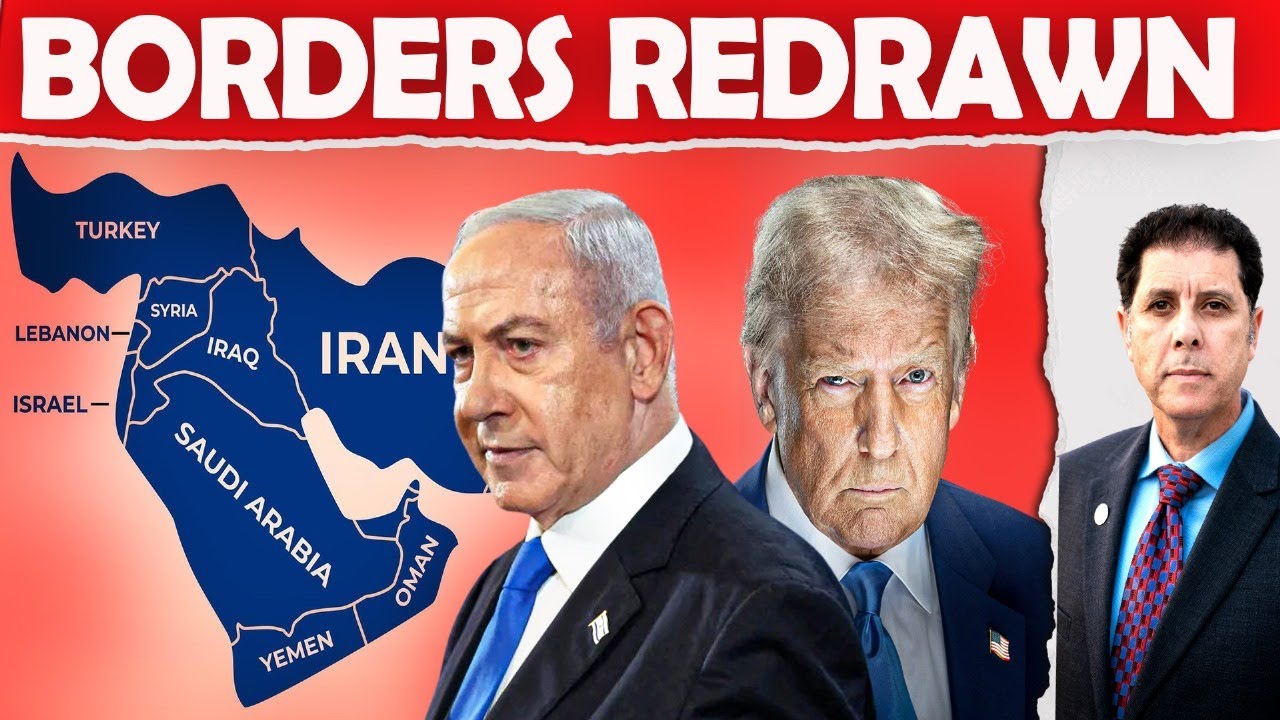
In this hour‑long livestream, Dr. David Oualaalou (host of Geopolitical Trends) argues that the United States is attempting to reshape the political map of West Asia (the Middle East) by using Israel as the central anchor of a new regional security architecture. He frames the effort as a modern‑day echo of the Cold‑War‑era Nixon Doctrine: the US would reduce its direct military footprint while empowering Israel and, to a lesser extent, Gulf states to contain Iran. Oualaalou walks through (1) a geographic and historical primer on West Asia, (2) the recent Abraham/normalisation accords and the idea of an “Israel‑NATO”, (3) a series of current headlines (new US bunker‑buster development, a Jordanian medical‑certificate black‑market, Airbus software‑update fallout, and US‑Venezuela tensions) that illustrate broader strategic pressures, and (4) the steep decline in US global and regional credibility (favorability dropping from ~60 % to ~46 % in the MENA region, and from 22 % to –5 % worldwide). He cites a former US War College professor, Sharifa Zohoor, to reinforce his view that the plan is “tectonic” but fundamentally flawed because Arab states cannot co‑operate (the “Arabs agree not to agree” maxim), Iran’s proxy networks will resist, and US credibility is too eroded to secure the necessary transactional alliances. The host concludes that the US‑Israel‑led NATO‑style alliance is unlikely to materialise, will probably destabilise the region further, and that the US will remain a transactional, unreliable partner in the Middle East.
Chapters
Hello everybody and welcome to Geopolitical Trends, where truth matters. I'm your host, Dr. Oualaalou, excited to be with you as always. Uh, by the way, just off the bat— right off the bat, rather— uh, this week I'm gonna be providing you with more analysis on a host of topics. Uh, and I figured it's about time as we come closer to end the year So this way you have an understanding at least what might lie ahead based on the analysis I'm going to be providing you. And I will do a, a video towards the end of the year for what do I see over the horizon for, for 2026 geopolitically speaking. In addition to another thing that I'm going to do, which is only be— is going only to be for the YouTube members and the Buy Me a Coffee members. I gotta do something for the members strictly for that. So I will, uh, I will post on it, and I'm working on some, some, some aspects of it, and, and we'll just go from there. So, so today I will be talking about, uh, my analysis is going to center on the idea of how the US is quietly trying to redraw the border lines in West Asia or Middle East, that is using Israel for that. And why is that not going to succeed? It's not going to work. And the complexities of the region will, will, will prove to be a major challenge for the US, given the decline, the precipitous decline of the United States on a global level. So this is what I'm going to be providing you my analysis on. So first, let me say hi to our wonderful community as always, then I'll jump in into the topic and go from there. Leanne, good to see you. Say It Like It Is, as always. Willie Hormon, as always. Jerome Lazar, good to see you. Good afternoon to you. American Citizen, good to see you. Truth Seeker, here you are. Khadija, salaam to you as well. Uh, uh, Ilar, hello to— hi, Ilar. Good to see you. Hello to you as well. Uh, uh, uh, Kurt Buzz, good to see you. Dr. Dave, that's a— it's a joke here in America when you call somebody Dave. So, uh, uh, Saleh, good to see you, Saleh. Uh, who else? Taiwan Steel. Okay, who else here? The Ramposawan, here you are. I was wondering where you're at. Alastair looking good to see you, and YTT good to see you as well. So, so let me do some housekeeping items here for you, then I'll do headlines and I'll jump into the first leg of the first part rather of the analysis, and I'll do geography and history, then I'll jump into the second part of the analysis and I'll conclude with that. So, so as I said, I'm gonna be doing some analysis for you regarding a host of issues. For example, Today we're going to be talking about the US, uh, uh, uh, sort of trying to redraw West Asia's borders through using Israel. Will it succeed? I have my doubt, but, uh, I'm going to be providing you the analysis about the next topic I'm going to be talking about, which is an analysis that I will do for you either tomorrow or after tomorrow, will be about what are America's weaknesses that threatens It's already a global decline. So you need to understand all these dynamics, as I said, as we coming closer to the end of the year. And, and, and because this will pave the way for what lies ahead in 2026. Uh, the other topic I'm going to do has to do with the Gulf States. Are the Gulf States really considering their strategic alliance with the US? Some say yes, some say no. I'll do my analysis about it for you. And the other topic I'm going to do is regarding, uh, the possibility once again of a US-Iran war. And if it is— and this, by the way, was released by the IC, the intelligence community assessments, except some analysts within the, the, the IC suggesting that the war It's not going to be on behalf of the US, but rather on behalf of Israel. It's nothing new, but it's worth delving deeper into this, into this. So this is what I'm going to be addressing for you at least this week. So, all right, let's do some headlines here, and I'm going to jump into the analysis. So I'm going to start with this one here. This is a GBU-57 bunker buster, or bunker bomb, that is. Here is what's going on. The US is now developing a new bunker buster bomb, and the rational question for you is, why now? We all know, to a degree, is that at the dawn of June 22nd of this year, you know what happened? That's when the American B-2 Spirit stealth bombers unleashed the barrage of the GBU-57 bunker buster bombs on Iran for those nuclear facilities. And here is why the US now is developing this new— why is because when the US dropped the other bombs, it didn't do nothing, nothing. Yeah, it created a dent and so forth, but it didn't destroy the, the entire facility as the White House claimed, except that the IC, the, the, the US intelligence, uh, community assessments did not align with the official narrative announced by Washington following the strikes. So, and remember, those bombs, uh, weigh about 13,000 kilo— kilograms. So, but apparently the mountain fortification appeared to be impervious to final destruction. This is why the US is moving forward with building the new, uh, Bastion Box. So a second headline has to do with something going on in Jordan, the country of Jordan, and this one has to do with renting the medical degree. Yeah, the certificate. Isn't that crazy? So renting out medical certificates in Jordan is a hidden market that undermines now the confidence in its health sector. So, and this was disclosed on some, uh, messaging apps, uh, that ordinary advisements— advertisements rather— are posted daily. And it says, and I quote, general medicine certificate for rent, price by agreements, end of quote. So isn't that crazy? So, but behind this post, uh, sort of makes you just wonder, is this active? Which is very, very concerning if it is the case. So I know, I know some, uh, I was aware of some even professors claiming to have a PhD when they never did. Which is an academic fraud and, and, and a lie and so forth. So, and I think this should be, uh, not only fined but maybe jailed for that. You can't claim credentials that you don't have. So that's, that's the way I see it. So, and the third one has to do with Airbus. I don't know if you know what happened on the 30th of, you know, just yesterday, uh, basically, uh, on 29th and the 30th. So Airbus, so around about 400 flights were expect— were, uh, affected in India. And not only just India, but you have other thousands of Airbus planes had more globally were, were grounded. And this was a mandatory because of a mandatory software updates for all the Airbus A320. But here is what happened. This incident was triggered by some sort of, uh, JetBlue flight that experienced an uncommanded pitch-down maneuver. So in other words, this is a software command that forced the plane to sort of pitch down in its maneuver. So, and that is why this upgrade was needed, because it was discovered that an intense solar radiation could interfere with the onboard flight control computer. So, so this is again about Airbus. It's been questioned about the, uh, about the, the, the plane in itself, but it remains to be seen what's going to be happening. So, and of course, the last one has to do with which I will do an update analysis for you regarding the US and Venezuela. Except that the way I see it, hypothetically, if the US to go in, that way, Vietnam, uh, Venezuela will become another Vietnam for the US. Simple as that. So, but I'm gonna do an analysis for you some other time. So, so let's move on into our topic. And our topic, as I mentioned earlier, is that is the United States pursuing a regional security architecture in the West Asia or Middle East that is centered on Israel, uh, sort of as an anchor partner. And this will be done through the leveraging the normalization agreements known also as the Abraham or Abraham Accords, and of course the military restructuring to counter, as they argued, to counter Iran's influence. So, but what they have not disclosed, meaning some analysts in the West have not disclosed, is the role that Syria, uh, uh, Israel is playing right now in Syria, Lebanon, and to a degree, uh, Iraq. So, but this is not just with this region, with these countries, but rather the broader Middle East or West Asia. And this strategy, in my opinion, mirrors the Cold War era. So, uh, the approach— that's not the same style, but the approach to it. Why? By delegating military leadership to regional allies while reducing the direct American involvement in, in the region. Well, of course, because US credibility, global credibility, is collapsing or has collapsed already. So, and the arguments in Washington is, no, no, no, no, no, we just pivoting towards Asia. Yeah, it's all good, but we also what happened with Japan, we all seeing what's happening right now with the Philippines. South Korea starts to make some noise regarding what's going on with Japan statements that provoked China. So, so when the US is saying no, because we are pivoting Asia, No, no, no, it's the US global credibility that is collapsing. And of course, you add to this the drop in the American favorability in the region that dropped from 59% to almost 46% recently. So, you know, and of course, that's even within traditional allies in the region. So, and when you think about also In addition to this, Israeli military posturing and actions in some contested territories, uh, uh, some sort of almost risk of destabilizing, uh, the fragile tensions, uh, transitional rather, in Syria, because there are now fights between certain groups in Syria and Israel. As a matter of fact, the Israeli forces had to flee, and I just read up on it 2 days ago. So Been— well, you consider also what's taking place in Lebanon, that is, Syria. Israel is the win in, uh, and all this potentially re-empowering, uh, sort of, uh, Israel to destabilize this. But their arguments, meaning both in Tel Aviv and Washington, the argument is that we want to weaken Iran. What this Iran has to do with all this? So, and this is why this US, this US, uh, uh, uh, uh, redrawing of the borders, you know, the success of it depends mainly on whether transactional partnerships can replace eroded trust, because that's what's at the heart of it. So, and whether, of course, Israeli actions stabilize or inflame Uh, which I go with the latter, uh, the regional tensions, uh, and that's where the outcome remains sort of fundamentally uncertain as to what lies ahead. This is why I decided to do those analysis for you at least this week, to prepare you at least to understand how the 2025 will end geopolitically speaking, and what should we expect in 2026. So based on a recent reporting, so there is the question that touches on the real geopolitical developments taking place in, in the region, West Asia or Middle East, that is. And this is through the framing, uh, as definitive by using the term redrawing, which involve interpretive judgments. So there is a lot to unpack here. So I'm going to go, as I said, I'll do the first part, we'll do the geography and, and history and move to the second part. So, so Israel has gradually now developed some sort of key relationship in recent years through the Abraham Accords. Abraham Accords was meant to be for that, you know. When you think about normalizing with the United Arab Emirates, with Bahrain, Morocco, Oman, Sudan, alongside earlier peace treaties with Egypt and Jordan. And of course, the Saudis behind closed doors are already in talks with the Israelis. So, so, and this is why, uh, when you think about where Israel has moved into the US Central Command, uh, in, in the Middle East, this is all by design. So, and this is where you think about the restructuring, uh, viewed as a culmination of the efforts to push Arab states towards publicly normalizing relations with Israel. So it's, it's very, very interesting to understand this dynamic. So, so basically what you're going to be looking at, and I'm going to just sort of make an analogy of it, what you're going to be looking at, you're going to be looking at an Israeli NATO. So Like, remember when I had my conversation with Anna Tengen, Warwick Pao, and Carl Zah, and we all talked about the mini NATO in Asia? You're looking at the same scenario in West Asia or Middle East, that is. So, and this is what this framing of Israel in NATO, its framing typically refers to the proposal for a formal military alliance. This is what's at the heart of it. So, so of course they have you believe— when I say they, I am referring to think tanks, Western think tanks, mainly in Washington, some in Tel Aviv, some in Brussels, uh, uh, mainly will have you believe that, oh, because of the threat of Iran. Why? Because their arguments that the threat of Iran appears to unite those nations like Jordan, Syria, Lebanon, and maybe Yemen, uh, to part of it. However, there is no formal military cooperation or joint defense program has been established. And this is again, when you think about the icy relationship between Saudi Arabia and Israel, they say icy, but it's not icy. There are talks behind closed doors. Between Riyadh and Tel Aviv. Why do you think the prince was here and MBS was in Washington? Didn't he just love to visit America? No, he came also to take the marching orders. Yeah, despite the all the money the Saudis have in America and the gold that they have, we know— they know we are holding them. So because we can freeze that stuff. But the Saudis cannot risk it. The monarchy cannot risk it. Their survival depends on the US. So, so when think tanks issue the issue statement as the icy relationship between Saudi Arabia and Israel, it's not icy. It's not. So, so when you think also about the bilateral, uh, security that, that Israel has developed with the Gulf states, United Arab Emirates, Qatar, and Bahrain, Kuwait to a degree. So this is where you start to think in terms of Middle East NATO or Israel NATO. So, so the Gulf Arab officials, of course, uh, they're gonna tell you, oh, we are hesitating about this, we don't believe in this, you know. For example, Saudi Arabia will say, we are rejecting the idea of Arab NATO. No. You know, there will be no Arab NATO to begin with. Arabs gonna— there's a saying in the Arab culture, to those who speak Arabic, you'll understand what I'm referring to: Arabs agree not to agree. There will never be unity. Look at just what's going on in Gaza. Did the Arab world came together? No. You look at the Muslim countries themselves, allowing their airspace to be used to target the Palestinians or Iran for that matter. No, that's why it will be nothing but just bravado, no more, no less. Suffice it to say, uh, this is why when you think about what Washington is actually doing, there is a clear US interest in regional security coordination, particularly when it comes down to a shared concern vis-à-vis or about Iran, as they will have you believe. And that is why when you have Israeli repositioning within the American military command structure, is very, very significant. You know, you're talking about another nation coming and becoming part of the US Central Command. No other nation does that except the US— except Israel will do it to the US. And that tells you straightforward, the US have no control over its own foreign policies, especially in the Middle East. It's Israel that dictates those terms. So, and this is why when you think about a formal, formal NATO-like military alliance with Israel as anchor remains more some sort of an aspiration than reality. But that's just what they are saying. The same arguments I can make about Asia. If you ask me 15 years ago about the possibility of mini NATO in Asia, I will tell you it's unlikely, but depends if the conditions are right. And now you have the right conditions in Asia by having Japan provoking China. Those are right conditions. The same arguments can be made about the Middle East. Is the right conditions for Israel, the aspirations for it Why? Because Israel will want to have the US fight its wars against Iran and even Turkey for that matter. But of course it won't be no war between US and Turkey, but just to give you an idea. And this is why when you have the Gulf Arab states appearing to be cautious, that's just for show. So it's because they have to be locked in into an anti-Iran alliance. And of course, allowing their territories to be used for operations against Iran, which we already saw a hint of it during June attacks on Iran, what the airspace of those Arab countries was used for. So, and of course, the concern for those Arab or Gulf states is the domestic political consideration and the populist uprising regarding that. So, and that leads us to the key question of what specific aspects of this regional— if we are to think about regional realignment, so what will be the most of it? So let's do a little bit of geography, or some geography rather, not a little bit, but, uh, then I'll do a little bit of history and, and we'll just go from there. Okay, let me share screen with you, and I'll give, of course, credit to World Atlas. That's usually where I do the map from. There we go. So there's a lot, a lot of people do not know, they don't understand. When they hear Middle East, they automatically, they think about Arab countries right away, and that is not the case. Why? It's because when you think about the Middle East or West Asia, first of all, you have what are the— what is the Middle East and what countries are part of it, you know, because terminology matters. So when you think about West Asia, which I'm going to show some other maps just quickly here for you too, I'll keep that one in, but I'll use this one also. I have that, I have 3 maps for you, so When you think about the countries that you are looking at, at the map, mostly commonly identified as defining West Asia or Middle East, and that includes the Arabian Peninsula, the Levant, Iraq, Iran, Turkey, and Egypt. But there are some really several common conceptions of which countries the term Middle East encompasses. Virtually every use of the terms that include what you are looking at the map. If we are to think about, uh, let me move this map out and we use this one here. Yeah, this— they're about the same basically, so, so I'll keep this one here for you. When you think about Arabian Peninsula, what are we talking about here? We're talking about Saudi Arabia, Kuwait, Yemen, Amman, Bahrain, Qatar, and United Arab Emirates. When we think about the Levant, the Levant, what are we talking about? We're talking about Syria, Lebanon, Israel, Jordan, the West Bank, and the Gaza Strip. Then you think about the idea of Iran, Iraq, Turkey, or Türkiye, and Egypt are typically but not always included This is why you hear sometimes Middle East includes Egypt, but also Africa includes Egypt. The same with Morocco, Tunisia, and, and, and North Africa, basically. Then you have one particular country, and this particular country— I'm gonna see if I can see it on a map for you here. Oh, you won't see it here, it's not, it's not on this map here. Let me see this one also, if we can show here. Uh, no, it's not here. Oh, it is, it is, guys. Look at the west part of Syria. You see this little tiny here? Cyprus. Now, and I, I did the research for my books when I had to address the Middle East and so forth, and I had to delve into these aspects. Now Cyprus, which has strong historical connections with the coastal areas of Eastern Mediterranean Sea, is sometimes considered a part of the Middle East. So this is what's surprising about this, and this is why when you think about also North Africa, the Middle East is often also closely associated with North Africa. When you think about North Africa, what are the countries you're talking about? We're talking about here, we're talking about Morocco, Algeria, Tunisia, Libya. So why? Because they are first of all Muslims, second, largely the speaking population, they speak Arabic, and of course they share cultural and historical ties to the Arabic-speaking people in the Arabian Peninsula and the Levant. And the term can therefore cover North Africa, and in many cases the term Middle East and North Africa, known as MENA, M-E-N-A, is used to, to sort of clarify this confusion. This is what I need you to understand, uh, especially for either the Department of Defense or the IC, the intelligence community, we've always used the term MENA. We don't refer to North Africa, you know, just put MENA, we know we're talking about Middle East, North Africa. So that's just for you to know as part of that. So, and, and when you think about geographically speaking, Middle East is geographically and culturally a region located primarily in Western Asia. That is where that term comes in again, West Asia. When you look at Far East, what's over there. So a Far East— oh no, Far East, just the east of Middle East, but also in parts of North Africa and Southern Europe. So here is the interesting aspects of it. You have some, uh, you have some literature that also include, uh, uh, uh, even Pakistan and Afghanistan, they will consider to be in, in South Asia, right? There are parts sometimes can be in— because especially in the case of Pakistan and Afghanistan, because they share borders. In the case of Pakistan, they share borders with Iran. So this is why sometimes you might hear in some, or you might read in some literature, that they mention Pakistan as Middle Eastern. It's in reference to that. It's not common, but you can, you can come across it sometimes. And when we think about the history, so I'm gonna tackle the history of, uh,, uh, of, of West Asia or Middle East. Some historical literature refer to the Middle East, often referred to as the cradle of civilization. I'm gonna ask you a question. Do you agree with this, uh, assessment or statement? In your opinion, do you believe, based on what you know historically speaking, is the Middle East considered the cradle of civilization? Yes or no? And I will appreciate you if you can answer in the chat box. And we are just exchanging ideas here because I've heard the same in some literature, that Africa is also considered greater civilization. And I'm gonna provide you my insights regarding Middle East, and you decide for yourself. Saleh, you say na'am, which means yes. Khadijah, you say yes. Uh, Arlene's Chamber, you say yes. Kurt Boss, you say no. Al Stalokin, there are few cradles around the world. I see what you mean, you got a point there. Uh, Wam, yeah, you say yes. Shamsi, Shamsi Wahab, you say no. Uh, I'm sorry, I can't pronounce this in, in, uh, in Chinese here. You say no because also I see the point there, because when you think about also, uh, when you think about the Chinese civilization, you know it can be considered a cradle of civilization for that part of the world. Uh, uh, uh, FKK, you say, I don't know. That, that's a good answer too. Yeah, it depends, it depends. But suffice it to say, since we are talking about Middle East, we'll go with the argument that is considered as the cradle of civilization. And here is what you have to understand regarding a brief look at the region's history. Which clearly explains why this is true. Once again, I'm sharing with you the historical facts as I know them based on my own research. So, and, and, and the reason I am comfortable with sharing this with you, because when I wrote my first book about the Middle East— this is my first book about Middle East— I had to do I have to do— I had to dig deeper into the history of it to understand it so I can provide the readers with a clear understanding of this part of the world. So where do we start? We start with the part of the world known as the Mesopotamia region, which was around Tigris and Euphrates rivers, which are in modern-day Arab, you know. Why is this important? Because this region was a home to many of humanity's earliest accomplishments. Then you have Neolithic humans who have been in the region, and that's when this Neo— uh, uh, uh, Neolithic humans some sort of made their first transitions from nomadic lifestyle to agricultural lifestyle, also by inventing wheels, basic agriculture, and the beginning of the written word roughly some about 12,000 years ago. Because if there is one thing I know for a fact is that when I learned, of course, the Arabic language, the MSA Modern Standard Arabic. That's what MSA stands for. And in, in, in the military, used to have the, the DLI, the Defense Language Institute, uh, and, and I've knew, I've knew this throughout the, the, the historical record that I've researched and read, that the grammatical rule, grammar in Arabic language, it was established in modern-day Iraq. That's why Iraq, or Iraq, has been the source for the knowledge regarding literature and Arabic language. So this goes back some 12,000 years ago when the beginning of the written word started in that part of the world. Then you have the ancient Sumer, a Sumerian in Arabic language, which was the first— here it is again where you differ with some But according to historical record, the Sumer were the first civilization on Earth, and it has produced one of the oldest known pieces of literature, Sumerian. And I read about it back then in my, in my years in college and so forth. So, and you have the known pieces of literature, and you have also the epic of the Gilgamesh. It's known in history, if you look at, which was about, it's over 4,000 years ago, or 4,000 years old. That's how old that is. So this region we're talking about, uh, let me put it up in the map here. The region this we're talking about was Asia, Middle East. That is, this region was home to the ancient also Akkadians. It was also home to the Babylonians and the Assyrian empires. This is what's important to understand the developments of this. So, so, uh, while farther west of the Middle Eastern region, talking the west, what happened back then is so the unifications and rise of the ancient Egypt. Of course, there is always that argument still till today among some historians whether you classify Egypt as part of Middle East or as part of Africa. There is a debate going on, and the way I saw it in literature, I saw it both ways— sometimes referred to as Middle Eastern, sometimes referred to as an African country. So it depends. So, and this rise and unification of ancient Egypt— so, so what you have after that, You have several Persian, uh, empires originated in modern-day Iran, which also rose to dominance at that time in the region, Middle East or West Asia, that is. Then you have, of course, the Roman and their successor states in the East. And which one I'm referring to here? I'm referring to the Byzantine Empire, right? After— and eventually the they controlled, uh, uh, which Byzantine controlled the region from the Mediterranean coast up all the way to the Euphrates River. That's how far. So Middle East or West Asia is also the origin point of many of the religions and belief systems which help define modern civilization today, or civilizations in plural. Because they were more than one. So, so the region was home to the ancient kingdoms of so many others. Even the, uh, the, uh, the Kingdom of Israel was, was, uh, was fostered in this part. That's where the Judaism religion came from. So, uh, to Christians, for Jesus, he was born in Nazareth. So, and this is which is located now in modern, uh, northern region of the southern part of Lebanon. So, and you have of course the early Christianity, which traces its origin back to the Middle East or West Asia. So, and the region was also the birthplace of the religion of Islam. So why? Because the Prophet Muhammad, uh, was born in Mecca, known as Mecca, which is nowadays is the capital of Saudi Arabia, Riyadh. Which was around 570, because the Prophet died in 632, if my memory serves me well. So then you have several other beliefs that exist in the region which traces their roots to the, to the Middle East. So, and what are we talking about here? We're talking about the pantheon and the ancient Egyptian gods. They all traces back to the Middle East. And of course you have the deities and the ancient Sumer. So, and we cannot forget the two main, uh, the Zoroastrian and the, uh, the Manicheans of ancient, of classical Persia. This is, this is a just a snapshot of a brief description of the Middle East history. Liking this video so far? Don't just be a watcher. Go ahead and hit the like, share, and subscribe button. And don't forget to tap the bell so you will not miss any of my videos or livestreams. This way, you will be supporting a channel that stands for the truth and objective reporting. The choice is yours. Thanks for your support. Indeed, much appreciate you. Please make sure to subscribe. All right, let's talk about what's going on right now. Given the ongoing dynamics that exist right now in Syria— there, there's turmoil in Syria, by the way, it's just not been reported— in Syria, Lebanon, in Iraq, and even, uh, uh, with, with, with certain tensions now that emerging in Hadramaut in Yemen. So With all this, you ask the logical question, and the logical question is, is Israel furthering America's long-term interest in the region? Straightforward. So, so the relationship between Israel's action in Syria, in Lebanon, in Iraq, and broader US interest is very complex and involves some sort of both alignment on one hand tensions on another. So, so when you think about where the interests converge, when they overlap per se, so you have the Israeli on one hand and the Americans on the other. Both of them shared some sort of concern, and their concern is always going to be centered around Iran. You got it right, because you always have to have an enemy. Remember, real or perceived. You see the same example with three other— two other countries— Russia— three now— Russia, China, and Venezuela. You know, for Russia it's always the enemy. For China, NATO is saying now China represents a threat to the NATO security and all that stuff. Then you have Venezuela— oh, it's threat to American narcotic and all that stuff. So Iran is for the Middle East. See what I'm getting at? The enemy is always real or perceived. That's what is projected in the region. And this is why those interests converge, uh, because of this shared concern between Israel and the US over regional, uh, uh, dominance of Iran. So, and particularly their argument is because of the proxies of Iran in Iraq, Lebanon, Palestine, Syria, and Yemen. So of course they have to add the arguments for the ballistic missiles, the nuclear program. So the fall of Assad regime and now the, the emergence of the former terrorist Zulani, who is now in charge. So, uh, of course, uh, what's going on in Yemen and so forth, all this, when you think about the strategic logic of all this. It reflects one particular aspect, which is, like I mentioned earlier, the revival of the Cold War strategy and thinking. That is exactly what's going on. So the US approach mirrors exactly what happened when— if you know history about America a little bit— what, uh, what's his name, uh, uh, the slick Willy lawyer, uh, Nixon. What Nixon did, remember, if you know about Nixon Doctrine, the twin pillar policy, with Washington seeking to minimize direct military entanglement by empowering regional partners like Israel in this case to lead the security, uh, uh, uh, uh, dimension of it. While at the same time Washington reduces its entanglement or its own footprint. And this particularly the US argued, oh, because we have to pivot to Asia. So, which by the way, it will be more difficult for the US to manage. Asia today is not Asia of 40 years ago, and I'm referring to China here. When you think about this strategy or approach, there is the complication comes to the forefront. What complications are we talking about? When you think about Israel's dominant military posturing, that in itself presents a dilemma for Washington, particularly regarding, for example, the Kurdish dynamics and the risk of the Israeli actions could destabilize Syria internally and triggers a conflict with other regional actors like Turkey. Of course Israel would want that, because what Israel wants— he wants the US to get involved in a war on its behalf, especially against Iran. So Israel continued airstrikes on the Syrian military infrastructure as of today. As a matter of fact, I'm, I'm going to do a live for you about this topic. As of today. So, and the reason why, because this could play out in dangerous ways, which Israel counting on the US intervention. That is what they're thinking in Tel Aviv. So, so if Israel military strikes, okay, or even, even if I go further, as far as a diplomatic failure to push Damascus back towards Iran or cause Syria's regional outreach to falter completely. So, because what you're going to be seeing in this case, which Iran's going to step in and strengthen or support the proxy groups in other locations, the likes in Lebanon, uh, and, and even in Syria, and even in Iraq and Yemen. So why is— because for, for Iran is also strategic calculations, because if it doesn't do that, it will undermine its ability to influence what's going on. So, so this is where you think about Israel and NATO. This is what I can— so because what Israel is doing now is occupying additional Syrian territory since the fall of Assad regime, which again, it's not disclosed openly. Syria— Israel has taken some You know, and Zelensky, he has no— there is no way. He, he said when he took power, when we installed him there, he said, I would like to negotiate with Israelis about the Golan Heights. Good luck. And as a matter of fact, it's just a matter of time for Zelensky before he's taken out. The same arguments I can make about the Ukrainian president comedian. It's just a matter of time. So, and this is why you have to— this is why you're having now the US sending the envoy to Syria. It's for this reason. So then you have the broader picture, and what is the broader picture? Is the core US interests. So sort of a more stable, independent regional state system free from Iran's hegemony. Did you see? They always have to inject Iran into the narrative so they will have you believe that is the reason or the cause. And this in itself could be some sort of advance or undermined by Israeli action, depending on whether this action are to stabilize on one hand or degrade the stability in Syria, Lebanon, because this will generate backlash that will re-empower certain entities in the region. And that is why nobody knows for sure now, because the, the, the outcome remains some sort of uncertain. So, so will the US succeed in this endeavor considering the current global its current global negative standing? Yeah, it's worth asking the question, and, and there is no, no other way of looking at this. So the evidence suggests that the US sort of faces real obstacles to executing sort of this Middle East strategy given its deteriorated global standing, meaning the US So, so you think about the scale of the reputational decline, it's very, very substantial when you consider what's going on. So when you think the reason, but think about the US standing around the world, that's the important aspect you need to understand. So belief in the US as a positive force has fallen in 26 countries out of 29. And that drops from almost 60% just the end of last year to about 46% about the early— in early 2025. So you drop from almost 60 to 46, 26 countries out of 29. So for the first time, for the first time, by the way, China now ranks ahead of the US when it comes to playing a positive global role. That should give you an idea why you are seeing what you're seeing as far as tensions in the region, Middle East, that is, or West Asia, regarding Syria, Lebanon, uh, Iraq, and, and of course certain other places there. And of course, what's going on in Far East. So the US, the US net global perception, not just in the Middle East, global, fell from about 22%, okay, in 2024 to -5% this year, at the beginning of the year. And the year is not over yet. So, and that in itself, that in itself is placing it in a bad, bad position to begin with. Think about it, from 22 to -5 within a span of one year. And this you can contribute it to the ill-conceived foreign policies that the US is embarking on. The decline is particularly acute among traditional allies. So even Germany, which is another sort of— I don't know what the term to use for Germany because I don't understand, I don't understand the rationale of their leaders. I have no— I really, I couldn't find the word to describe this. But even Germany, trust in American positive influence fell from 76% to 30%. In the Nether— in, in the Netherlands, it fell from 72% to 20%. In Canada, our neighbor to the north, it fell from 82% to 19%. And I'm going to send you a link. There is a, a group that I follow their analysis called the International Crisis Group. I'm going to send you a link that to that, and you can read it when you have time in the— I'll put it in chat box for you and you can read it later on. And all this gives you an idea. So when you think about all this, you'll ask yourself how this constrains Middle East strategy for the US to succeed. So, and this matters also to the region, West Asia, and of course it matters to the US approach to West Asia. Why? Because it undermines its diplomatic leverage and alliance building necessary to execute the strategy. Of course, you're gonna have the vassal states, the weak states, the likes of Jordan, the likes of Saudi Arabia, Yemen, and, uh, uh, I'm sorry, not Yemen, United Arab Emirates, Qatar, you know, they're all gonna— Egypt— they're all gonna go with the US, of course. So when you have, when you have Gulf states view the US as unreliable, whether in real or just perceived, remain to be seen. It's usually actions tells you the story. But however, when these Gulf states view the US as unreliable, uh, sort of partner, the broader coalition is needed for that is to— argument from the US is to isolate Iran. Once again, they have to inject interject Iran into the conversation. But also those Gulf states, when they're seeing the decline of American credibility, all this complicates the negotiations. When you see what's going on in Gaza that haven't been resolved because we never wanted to resolve it, make no mistake about that, really. But shame is not just on, on my government, on, on the US government. I don't even feel it's my government because My government doesn't represent me. If we have a government like this, I mean, I speak for myself. Other Americans, if I have American viewers here, you can decide for yourself. But for me, they don't represent me. And that's when you think the big picture of all this is that regional actors— there's more than one— may end up hedging their bets to reduce their dependency on the American security guarantees. So, or figure out some other ways. Of course, in the case of Saudi Arabia, they couldn't because the survival of the monarchy depends on America. That's why the, the prince was here. So, so far, while the US retains some sort of structural advantages in power and influence to a degree, its moral authority and attractiveness are eroding and going down. And what does it mean? It suggests that while the US may remain an essential partner to some in the region, it's increasingly transactional rather than trusted. So you can, you can think of it that way. That means for American credibility And that again takes us to the idea of thinking in terms of where this is all going. So you have to think in terms of, uh, uh, the idea of, nah, it might not work, it might not work, because where the US is going specifically Let me— I need to see one particular aspect for you. And, uh, I had a chance to read, uh, uh, last week, I was— I, I had a chance to read, uh, uh, a particular analysis by a former, uh, US professor, War College professor. It was very, very interesting to think in terms of how she sees this particular development, and I couldn't help it by, uh, realizing she got a point. She really got a point in this particular aspects here. So I'm going to share, uh, my own reaction, uh, to those particular, uh, analysis that this professor provided. And of course, as part of this conversation here, to put it in perspective for you, and I couldn't agree more with her assessment, uh, the professor is, uh, is called Sharifa Zohoor. She used to teach at the US War College. She was a professor there. And I know War College is in Carlisle, Pennsylvania. I used to live in Pennsylvania, so I'm very familiar with it. So, and this goes in line with really what I'm talking about, the idea that, uh, this particular shift that the US wants to do, it's considered tectonic. So because what the US and Israel aiming at, redrawing this particular map of the region, it will be under the US leadership but with Israeli empowerment. You can see where this is going. So, and that is why the US is aiming at some sort of NATO style in the region, in Middle East. It's the same argument, or West Asia. The same arguments can be made about the Far East. So, and this is again, uh, the redrawing of this region's map is going to be a little bit challenged. So, and one of— when you think about, uh, the realities of the geopolitical landscape So is that these transformations in the region are not products of yesterday or the day before or last year. So it's just what you notice right now is that they are accelerating, they going faster, especially during the second term of Donald Trump, because Donald Trump's first term started some of this Abraham Accord, remember when it started? During the Trump, and the Trump has its own agenda, you know, with the Israelis. So, and this is why, again, so this— and I was in Washington some 20 years ago, so you kind of— we started to see back then the seeds of this were planted back then. That's why I was some sort of opposed to the Iraq invasion because I knew it's gonna— I argued it's gonna change the fundamental structure of the Middle East as we know it. And if we think we're gonna succeed, we are mistaken because we never understood the complexities of the historical aspects of the Middle East. So that is why you're seeing the acceleration of this right now under Donald Trump. So why? Because Donald Trump wants to make sure Israel is the cornerstone of this new alliance, per se, you know. And of course, with the Arabs, all you need to do is coerce them, uh, and engage them in this project one way or another. Threaten to freeze their assets and see what they're going to do. It's just the way it works. That's how it's always been, been. So, and this strategy, according to this professor, and I couldn't agree more with her assessments, is that, is, is, is driven partly by Israeli and partly by the political changes within the United States. So, and one of the reasons for that, for the US, uh, front, is the isolation that we are going through. You know, uh, we are, we are sanctioning most of the countries. We are putting more tariffs. We are, it's just like we are chaotic, let alone bullying other countries. That's from our domestic side. From the Israeli side, Israelis is always hoping and is aiming for, and it will not stop aiming at that objective to get the US fight its war against Iran. That is the key objective for them. So, and this is why what the US is trying to do, the US wants to almost like outsource this, uh, the region, or, or, or the management of it, if I may use the term. So manage the affairs of the region to external players. So, and why? Because the US is unable, because that era is gone. The world has changed. The US cannot be all over the world anymore. So because And I did a video about a year and a half ago, if I recall, a year and a half to 2 years, in which I argued the US cannot fight two-front wars. And that's exactly what this professor confirmed also, is that the US inability to manage more than two major conflicts at the same time. I put it plainly: wars. We cannot fight two wars. We couldn't even fight one. We had problems in Afghanistan. We had problems in Iraq. We had problems against Ansarullah or Houthis. So, so what the US is trying to do on both ends, using the carrots and the sticks, as we all know, you know, that policy. So although what the US doing this, Israelis is continuing what's going— its aggressions in Gaza, what's going on in Gaza. And not only in Gaza. You add Lebanon now to the picture, and you add Syria to the picture. So at the same time, wanted to push the Abraham Accord for other countries to normalize relations with Israel. So, so, and this is why when you start hearing— because you're gonna hear this term now, especially starting at the beginning of next year— the East NATO, East or Eastern NATO. That's the term you're going to be hearing, which is going to be led by Israel. So however, and, and I, I've, I've already said this, and it's on a record, and even the professor confirmed this for me once again. I've always said it's not going to succeed, it's not going to work, because Arabs cannot get together cannot get along together. Arabs agree not to agree. That's a saying's been for years and years and years and decades. So, and this is why you have to understand that, uh, uh, uh, but there is one aspect which I really found very interesting. If you are a realist, you know, in, in, in IR theory, international relations, you have the two school of thoughts, realism and liberalism. So if you are a realist, so you will say to yourself, you're going to realize that the interest of Israel and the interest of the US are very divergent. Within this reality, the Arab states know this reality very well. Will they play on it? Or we did just ignore it. I don't know for now, because Washington is continuing to promote the idea to advance its own interests. So that's the way I see it playing out now. And I'm, I'm, I'm almost done here, guys. I have only one last aspect of it. See if you have any question. So most of the analysis that I looked at And I read up extensively before I did this analysis for you. And I argued this in my first book. I remember there is one— I don't remember the page exactly. I wish I could have— I argued this in this book. The arguments that I made back then is that this is unlikely to succeed, especially when you consider regional actors. In Syria, in Iraq, in Lebanon, Iran, and so forth, Turkey to a degree. So, so, uh, there's the limited alternative security provisions. So, and this is why the America cannot be trusted anymore. So this, this idea of NATO, you know, the, the region is going to be looking at it like, oh, are we going to become another Ukraine? That's how they're gonna return, because the real question is whether Washington can execute this strategy through transactional relationships and force, like what they're doing in Venezuela right now, rather than through the broader alliance building and trust that typically anchors a long-term regional dominance. And I don't see the US succeeding in this. So, and frankly, we don't need it. We have enough problems here to deal with. So, all right, I'm gonna stop right here. Oh, I gotta say thank you to American Citizen for your super sticker. Thank you so much. Uh, 71 years old Israeli archaeologist killed in southern Lebanon with Golani Brigade one year ago. Greater Israel project has been ongoing. Why are H Group so silent? And is the Sudan part of the Greater Israel? Uh, the answer to your question, American citizen, the last part is yes. There has been talks to woo Sudan into— that's why you see what's going on in Sudan has also have to do with supporting the same. You have the— in Ethiopia, you have the Jews, in Ethiopia, you know, or Eritrea also. You gotta— but especially in Sudan, you see this particular problem that is going on. Why? Because Israel wants to move into this direction, and that is what the US is pushing for. That is the reason once again why I wanted to do this analysis for you. So, uh, as to the, uh, the, uh, the 71-year-old Israeli archaeologist I'm not aware of this. I'm gonna go and look into it and see what led to his death in southern Lebanon. I know that Israel has been conducting some ops in southern Lebanon and even in Beirut, some of them. So, and inside Syria, that tells you right there what the aim is at. So once again, thank you so much, American Citizen, for your generosity and your support for the channel. I'm very grateful. FU, once again, I appreciate your continued support for the channel. I am very, very grateful to you, and, and I can't thank you enough for your continued support. Uh, should you guys, uh, want to support the channel, uh, here is where you go. You go to, uh, there's the link. I'm gonna put it for you in the chat box if you decide to support the channel. You know, I don't have an official sponsor per se. It's, it's all based on your support. That's usually what I do. And for those who might be interested in, uh, okay, let me remove this. Uh, if, if you want to get a copy of, uh, one of my books, especially the one about the Middle East, you can check out the link on the screen right there. So, so if you are interested Uh, as I said, just to wrap this up, uh, I'm going to be doing more analysis for you this week, then I'll pick up the regular, uh, topics for next week. And I will be working on a, a special edition for the channel, uh, uh, members and the Buy Me a Coffee members. I have members there as well, so it's only fair and right, uh, to do something special for just the members. So I hope you can join me for that. But again, uh, It's— I'm gonna let you know when I'm gonna do that. So I hope you guys enjoyed this, and I look forward to seeing you next time. As always, remember, geopolitics impacts your daily life in more ways than one. Till next time, bye-bye.
More from David


Beyond the Single Actor: Why the Gulf Isn't Choosing Between the US and China


Iran, Iraq's Militias, and the Houthis Are Coordinating! This Changes Everything




Who Controls the Next Decade's Resources? Latin America and Africa's Geopolitical Crossroads

The Chokepoint Trap: How Washington's Stupidity Triggered a Cascade That Now Controls the World

Trump Spooked as IRGC Unveiled dual-use SLV, Deployed Ghadir Mini-Subs & Hinted at Tactical Nukes!
