The US Started a War And the Philippines Is Paying the Price! W/Anna Malindog!
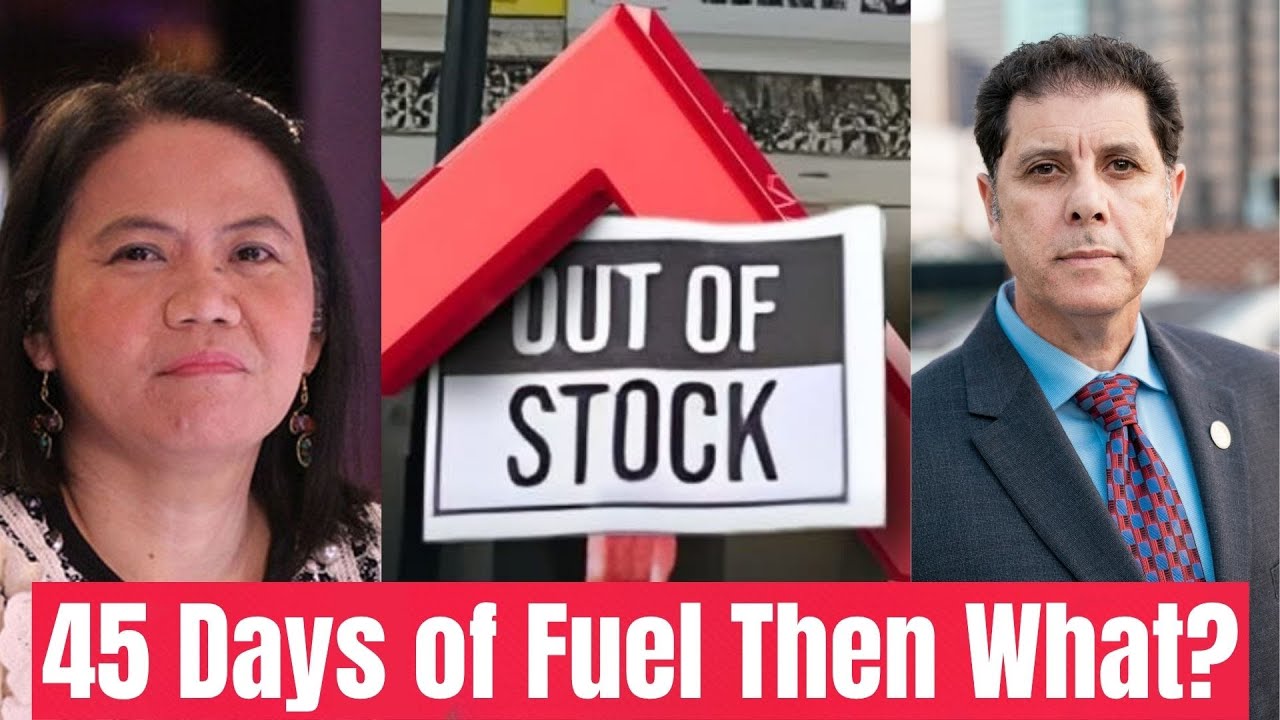
This content was created by David Oualaalou. This content was uploaded by David Oualaalou. This is a YouTube interview/show episode titled "The US Started a War And the Philippines Is Paying the Price! W/Anna Malindog!" (uploaded April 6, 2026). It is an English-language livestream-style geopolitical discussion hosted by David Oualaalou with guest Professor Anna Malindag (Malindog), a PhD candidate and researcher. The conversation covers the US–Israel military action against Iran, its illegality and geopolitical consequences, energy shocks from disruptions in the Strait of Hormuz, Russia supplying oil to the Philippines, economic and currency impacts on Asian countries (especially the Philippines), criticism of the Marcos Jr. administration’s response, and broader shifts toward a multipolar world (China/Russia/Global South).
Chapters
Hello everyone and welcome to Geopolitical Trends, where truth matters. Excited to be with you as always. I'm even more excited today because I have a dear friend of mine. She carves out enough time for us here, for the community, to come and share with us her knowledge and her understanding of what's going on. Let me bring my dear friend, Professor Anna Malindag. Hi Anna!
Hi David Oualaalou! Dr. David, thank you so much again for being here. I'm so happy and excited because I think it's been a long time time.
I know why you've been busy. You've been busy, and, and how hectic of schedule you have. So I'm very grateful on behalf of the community, by the way. I say thank you for carving out time for us here. To those who do not know who Anna is, uh, uh, Professor Anna Malindog is a PhD candidate in economics at the Institute of South-South Cooperation and Development at Peking University, one of the most prestigious universities in China. She is a researcher, she is a writer, she writes for the Manila Times. And by the way, I have a link for you for her latest article. And she is also a consultant, currently serving as the vice president and director at the Asian Century Philippines Strategic Studies Institute. So very, very excited to have you here, Anna. So we're gonna get on, uh, right away and start talking about really what's going on before we delve deeper into the Philippines and Asia. I would like to have your assessment as to how do you see this US-Israeli legal war against Iran.
Um, that's a— thank you for that. Um, um, Dr. David Oualaalou, first and foremost, I think we have to emphasize that, um, the illegal— this, this war that actually it started by the United States alongside Israel is actually illegal in many ways, precisely because It's— it cannot be called a self-defense because there was not— there was no imminent threat against the mainland United States. So in a way, it's illegal, it's a violation of the UN Charter, it's unprovoked. And, and it was weird because it happened during the time that there was a negotiation between Iran and the United States. So I think this is the context. And there was no United Nations Security Council authorization that, you know, that, you know, that they can attack Iran in that sense. So it's like a preemptive war. And well, of course, Trump is saying that it's self-defense, but there was no basis for it. And I know that many officials in the United States already have said that, you know, there was no plan. There's not even an exit plan at the moment, and the war is dragging on. And I am not sure when would it end. No decisive— you know, we don't know because even until now it's still continuing. So for me, um, this is very, um sad reality because the war is impacting not only the Middle East but even countries in different parts of the world, especially Asian countries, because Asian economies like my country, the Philippines, is very much dependent on import of oil and related— and oil and other energy-related products from the Middle East. So in a way, it's impacting Asian economies. And also, one of the crucial impact, I think, is the— how do you call that— is the closure, initial closure of the Strait of Hormuz, which is now, you know, facilitating some kind of energy crisis and energy shocks in different parts of Asia and even across the world. Especially my country was the first— my country was the first one to declare what you call state of energy emergency across the world. Yeah, because we are really affected because we're 100% import dependent. So in a way, the initial closure of Strait of Hormuz. And even now, like, you know, it— well, there are tankers that is being allowed to pass, but even then it has to have the permission of Iran. Because I think, Dr. David, Iran has an upper hand when you talk about this area, and they have an upper hand and they control that area. And I've seen footages even that, you know, if there's no permission coming from Iran, it's be targeted. And even the United States um, fleet— fleets were targeted and it backed off. And if you really look at— yeah, so it's creating some kind of, um, disruption in terms of oil passage and oil flows from that part of the world to especially to Asian economy. And yeah, and that's why there's a lot of crisis going on at the moment, and we're facing like even Pakistan, India, Southeast Asian countries, and, and countries like that. And also When you really talk about the military aspect of it, I think one important fact which I don't think President Trump would admit is that, you know, the United States is not in control of this war at the moment. It's not in control, and I think Iran has an upper hand. There is such a thing as asymmetric kind of warfare because Iran relies more on missiles and drones, and in some ways, you know, and it's it's capitalizing on its upper hand on geography because, you know, if you look at the geography of Iran, it's very favorable to it in, in the context of this war. And I think in terms of geopolitics, what is really evident is this war that was, you know, started by the United States, of course, alongside Israel. Basically, from my reading, Dr. David, there are several things that I can see. First is It is US efforts to maintain strategic dominance in the Middle East, by which it's boomer— it's, it's, it's now counter— it's, it's like not happening. Because I think many countries in the, in, in, in the Gulf state or in the Middle East can see that, you know, the presence of American forces in that region is a disadvantage for them, given that initially Iran targeted all military bases of the United States in neighboring countries. So that's one. But I think one of the reasons why actually the United States made that action is to have a strategic dominance in that part of the world, in the Middle East. Second, I think, is on the part of Israel, is to neutralize a regional power, which is Iran. But I think it's not happening, and I think Iran really is It was a surprise for many, even for myself, that Iran can sustain, and I think it will sustain itself, of course, with the help of other major powers like Russia and China. It's very evident. And the other one is, I think it's the broader competition among major powers, very much evident in this war. Because sometimes I think, uh, Dr. David, that it's not just— it's not necessarily between Iran and the United States Israel access. You have the— you have other— you, you know, it's sometimes if you really look at it, it's like, um, a war also between China, Russia on one side, alongside Iran, as against Israel and U.S. Because the support of the two major powers is very, um, support is there, you can see it, but not necessarily in, in the same manner with, you know, with the United States when, when you talk about Israel. So However, when you talk about backlash though, Dr. David, among global south countries, especially again, especially when you talk about the United States and Israel, I think there is a rise of an enlightenment among global south countries that, you know, that, you know, they don't want too much to be associated with the United States at this time. I think they see the decision of Trump to be very chaotic and irrational. As far as this war is concerned. And I think the anti-Western alignment is also emerging, and it's more evident now. And I think there is such a thing as alignment when you talk about China, Russia, and the Global South. You can see that alignment. Yeah, it's, it's almost there, and it's like emerging and, and apparent already. And I think there is an acceleration of what you call multipolar world. Especially after the end of— if, especially if the war will end, hopefully anytime soon, and there will be a political solution. But I am not sure about that. I think, you know, it's still raging to a greater extent. But I think after this Middle East war, yeah, I think, um, I'm so— you are from, um, you're, uh, you're from— you're an American, but I think from my perspective, I can see that You know, the rise of China is not anymore just a perception. I think it's solidified already after this crisis. And I think the decline of the United States, well, it's a reality. It will be, you know, I think hastened more in terms of processes. The United States is not only— it's not only about military aspect. I think the United States also is losing a lot of money, billions and billions of money in this war. And it seems like the allies of the United European states are not even, are not even 100% on, on its side. Because from what I know, like for example Spain and even some European states said already that they don't want to use their, your, their, their airspace for any kind of attack against Iran by the United States. So you can see that maybe in a matter of time, 5 to 10 years from now, there will really be a shift in the global order because of Middle East crisis. So that's my observation. And I am not sure really if Trump is right saying that it's winning, that the United States is winning, because I don't really see it. I think it's Iran in, in, in many ways that has control over this war at this time.
Yeah, well, you, you are absolutely correct. As a matter of fact, uh, this last point you mentioned about Trump saying he's winning, uh, just for the community, I will be doing a live stream at 12:15. I will be talking about the intelligence report that just been released last night. And, uh, this Donald Trump is humiliated by his own intel experts in inside Washington. And that's exactly to your point, Anna, that what the Trump administration is saying versus what the reality on ground are the opposite. And we are now— and I have it on good authority— we are spending $2 billion a day.
Oh my God, $2 billion! Dollars a day.
$2 billion. I have it on good authority. And, and still, I still have my contacts inside Washington. So, uh, just to highlight to you, but you brought up some good points, especially the, the geopolitical aspects of it. As one who spent time on the ground in the Middle East, uh, for years and years and years, we used to deal with those countries, the Saudis, the Qataris, the Emiratis, and, and so forth, the Jordanians, and, and what have you. And, and yet the shift, that geopolitical landscape is shifting, but not to the US likings or any other, uh, player the likes of Israel and the UK. And by the way, the UK is participant to this war. I've always said since the beginning of this war, Anna, you know what I said? I said the end of the US and Israel dominance in the region is going, is going to be at the hand of Iran. And that's exactly what is happening.
I think that is what is happening, Dr. David.
Yeah, so you brought up some good points regarding the energy aspects of this, and thank you for, by the way, providing that assessment. And this leads me now to really shift the conversation into addressing, uh, first Asia in general term, but specifically on Philippines. I'm one that's been following the Philippines for years and years uh, uh, understanding the developments. But what gets to me, uh, what, what gets me more concerned is that not only the corruption that exists inside the Marcos government, it's the suffering of the average Filipino person.
Yes.
And now when we add this energy crisis, uh, it just adds more. First, before I'll turn it over to you, I want just to highlight to the viewers that it was Russia that sent oil to the Philippines, not the United States.
No, no.
Yeah, we should note this one here. So if Philippines is an ally of the US, where is the US? Yes, didn't send the oil tankers to the Philippines to help them with the energy crisis. So I want— I would like you to just comment on how do you see this, that Russia, not the US, that is sending now oil to Manila. So where is the US in this so-called allies of the Philippines?
That's a very important question because now it's crunch time for the Philippines. But before I talk about the Philippines, just a very quick assessment of what is happening in Asian economies. The crunch right now, an energy crunch, and also the economic challenges in my country is not— is also reflective of the whole Asian— of the whole Asia. I think many Asian economies are facing what you call energy crisis and also economic crunch, given what is happening in the Middle East. And of course, it's a consequence— it's a consequence, of course, of the closure of the Strait of Hormuz for several days or several weeks now, though now it's open to certain friendly allies or friendly to Iran. But even then, the impact of energy crisis in many countries in Asia is very evident. And what are these? Like, for example, inflation, rising prices of oil and energy-related products. And of course, there's a competition and there's closure of some gas stations. And these are evident not only in the Philippines but across Asia, though One thing that I would say that one exceptional country that is quite more stable, I think, among countries in the world, not only in Asia but across the world, is actually China. I know that very well because I live in China at the moment because I'm still finishing my PhD. And I think it's precisely because of they have diversified sources of energy, though they are very— of course, oil consumption is huge still, they have coal. But I think the good thing about China is they have diversified source of energy, they have what you call green energy, they have lots of solar panels, they have hydro. So in a way, they are secured in that sense. And still, even with the closure of the Strait of Hormuz, I think China still have an access to that area when it comes to a supply of energy or supply of oil. So, but as a whole, Asian, and generally speaking, Asian economies are suffering from this Middle East war. Now, going to my country specifically, um, yes, it's surprisingly, it's Russia who actually delivered supply to the Philippines. But one thing though that I have to take note, it was purchased by a corporation, an oil corporation called Petron. But I would assume that, you know, there was some kind of, um, some— maybe I assume that the, the current administration to a certain extent diplomatically talk to Russia for us to have a supply. But it's very surprising, you know, because we're supposed to be an ally of the United States, and it should be the United States who should be helping us, because now we're, uh, we're the frontline state of the United States in the Indo-Pacific region. But it is— it was actually the adversity, quote unquote, of the United States, Russia, who is actually helping us with our supply. It's not only the first supply, from what I know, Dr. David, there's another supply coming from Russia to second batch. So this is the situation right now. So, and also, but this is, I think, more a private negotiation because it's, it's an oil company, Petron, who's receiving and paying for it. And, but I would assume that the diplomatic corps of my country had kind of negotiation with the Foreign Affairs or the Embassy of Russia in the Philippines. So that is Crazy to think about. The United States actually asked us to buy oil from, from your side, and to buy oil from the United States would be very expensive for us because it's very far from Asia, you know. Yeah, so that's why I said if that's the case, then we will spend more. And one thing that is— that would be to our disadvantage, Dr. David, precisely because if you look at our currency right now, it depreciated. Historically speaking, it's already around If you round it off, it's 61 pesos to a dollar, and that's historically low for my country. And we all know that when you talk about trade, even with oil, you need to have— we use dollars, the currency, to buy oil. Though right now Iran is saying that, you know, in the Strait of Hormuz, if you would have transaction, they would want it to be in RMB. So even that, by the way, in terms of the war, I think there will be a shift in terms of currency to be used in currency. I think it will not anymore be in dollar because even Russia made the pronouncement that if in any case there's a transaction, it should be RMB that should be used, not anymore.
And you are right, you are right, Anna. That announcement was made yesterday by the Russian President Vladimir Putin.
Yeah, so you know, even in terms of geopolitics, it's not only the geopolitical, you know, an emergence of a multipolar even in terms of currency. And I think it will come to a point that it's not anymore dollar as the currency of the international trade, but it will be RMB in a matter of time. Yeah, so this is accelerating already at the moment. But when you talk about my country, Dr. David, since you mentioned how we're suffering, I think we are the first country that actually declared state of national energy emergency under EO 110, which is actually because of the fact that I think we're very worried about supply and energy stability in the country. So we declared that, we're the first country. And if you really look at my country right now, um, there is, um, we have 45 days, as you have said, 45 days of supply. And I don't know if the, if the current administration will be able to, um, get more supply before 45, before this 45-day supply would end. That is a question. That's a big question. But currently, at the moment, we are experiencing huge price hike when you talk about oil and diesel, gasoline, and other oil-related products. And we know in economics that if this product's oil prices will rise up, everything will rise in terms of food. So there is inflation, food inflation, and there is a rise in electricity bills. And also transportation costs. So what is happening in the country is we are also in a crunch time. So many of our offices, already private offices or public offices, are already shifting to work from home. Even some schools already shifted that they don't need to go to school, but they need to have, you know, work from home or study from home, precisely because transportation cost is expensive. And then, but the income of the Filipinos are not it does not increase in, in many ways. So the, the income is squeezed and the purchasing power of Filipinos are shrinking. That is reality now, as in really reality, because even us, even my family, I already made pronouncement and, and I told my husband, don't ever use our car anymore. You walk, it's just near, because really the price of oil is too high. That you don't know what will happen to your country, and you don't know if you will have enough money in a matter of time. So that is the idea. So the Filipino people really are suffering. And, and, and the problem, Dr. David, is like this: we are import-dependent not only of oil, but we're import-dependent of even basic commodities and food, like rice, like, like, like salt, like even fish. We're an archipelagic state, but still we're import fish, to be frank with you. So these are And, and, and one thing that is very sad for my country is like this: before the Middle East crisis or war, our economy is already struggling and we're already suffering, and there's a lot of problem in the country— massive corruption in government that impacts the investment climate of my country. So in a way, it impacts the economy as a whole. And then suddenly you have the Middle East crisis, the energy shocks, so it's compounded, you know. It's like double-edged for us. So maybe other countries are suffering, but I think on our side it's like a double-edged sword for us because it's compounded already. And look, um, our debt and the, the, the, the GDP debt ratio is beyond 60, and if it's beyond 60, it's around 63, 64. It's already a red line for, for any country. So that's one. And also our debt, imagine in 2 months' time from 17 trillion pesos, now it's around 18+ trillion pesos because our economy is financed by borrowing money. So there is a possibility that if this war continues, we will be at a default, or my country will default in terms of finance, in terms of fiscal stability, you know. So that is a big question. And also that is, that's also right to ask You have mentioned earlier what, what is really the, the current Marcos administration plan. Is there such a plan or there's none, or what, what's really happening? Because in, in the domestic level, Dr. David, if you really look at my country, they're, they're all about politics.
Yeah, yeah, because where is Marcos? Where is Marcos? We don't hear, we don't see anything. This is where you need the government to step in to help that average Filipino person. I've ever read— I've read articles from, from inside Manila that, that the average Filipino person now is struggling to make just the basics.
Yes, the basic, the basic, like basic food, especially basic necessities just to live every day. And even, um, there are a lot of sectors that are affected because of the energy crisis that I don't know if our government under Marcos Jr. administration really has a plan what to do. Because like, for example, one, the transport workers, you know, their income, 500— 400 to 500 pesos every day are, you know, already cut from the— it's supposed to be they have this income every day, but now it's cut. So their income is not much, but you know, you have already that much cut from their daily income, so they're suffering from it. Fisher folks, they cannot go out in the sea to fish because the diesel price is very high. So what you gonna do with it? Well, Marcos Jr. said they, they provided subsidies, 5,000 to 10,000, but subsidies are Band-Aid. It lasts only for a few weeks. After a few weeks, you don't have anything anymore because, you know, with this crisis, it's— subsidy is, is something okay for 1 to 3 days, but you need to have a solution or some kind of a plan. To address the crisis and medium and long-term plan or short-term plan, but even then they can't make decisions. Um, there is a deregulation law, oil deregulation law in my country that prevents the state or the government from controlling the price of oil. So in a way, the oligarchs and also the oil companies are also trying to take advantage of this crisis and they're raising the price of oil and oil-related products. Despite the fact that, that, you know, there's still some space not to do it. So we're suffering as Filipinos because we cannot control, and the state cannot control because of this law that I don't even understand why it cannot be amended when in fact Marcos Jr. can actually declare state of emergency and can actually dictate Congress, you know, to revise or to amend whatever is in this law. But he's not doing it. We cannot— we don't even know where is Mr. Marcos Jr., you know. There was even speculation right now that everyone in social media Filipino are asking, where is the president? Because we did not see him yesterday or today, and we are speculating that he is maybe in the hospital or something. So I mean, this is a crunch time for the Philippines, but we feel that we don't have a leader really who's efficient and effective to address these problems. And this is the time that, you know, governance must work. But there's none so far. So a little bit difficult situation and a bleak kind of reality that we have in the Philippines, though I would admit, as I have said earlier, that it's not only the Philippines facing this crisis. But for us, I think it's a double-edged sword given that we have a very corrupt and ineffective and inefficient government under Marcos Jr. That is really the truth. I'm not making this up. If you ask many Filipinos, they will say the same thing, I think.
Yeah, well, no, no, no, you are, you are stating the truth. It's because I also found out that, uh, uh, on April 6th, which is today, today there have been sort of now the pushback that's coming from the administration. You know what they're saying? Oh, this is just rumors about Marcos Jr.'s health. When I got it, when I got it on a good authority that he has health issues because they don't want the, the Filipinos to know the truth. Because he was hospitalized for what is called the diverticulated cyst. That happened in late January, and they stayed mum about it. And later on, when it became evident, you know what his members of the administration did? They came forward and said, oh, he recovered and now he's returning to work. What if he recovered and returned to work? Why did you lie to the Filipino people by not disclosing the health conditions of the president? Because that's public knowledge. The people have the right to know about it. This is why they were dismissing, oh, this is nothing but unverified rumors, whatever. I know for a fact that the drug issues in the Marcos, uh, and again, it was a case right here in the US, in LA, a person died from overdose that is related to the higher-ups inside the Marcos Jr. family. We're not talking government, we're talking family circles. So the idea that, uh, uh, and, and that's to me bring up the point what you mentioned, Anna, the idea of Where is a president in a crisis like this that now an average person in Philippines wondering, do I have anything to eat tonight or not? Yeah, and you were right about your point when you mentioned earlier by telling your husband, why do you need to drive? You were right about this to say— I'm gonna share a clip here with the community just to see. Uh, take a look, everybody, here. Let me just share it right there. I'm gonna expand this one here for you to see. This is in Philippines.
Ah, yes, yes, this is.
And look at it, people are walking. Yes, I just wanted to share this one with the community for you to see. And you are absolutely correct because that is where the problem— and now what I'm noticing happening in Philippines now, you have price gouging now. Yes, yes, they're taking advantage of this. And what is the government doing about this one? So I'm gonna share a short, very, very short clip and let you comment on it later on right here. Let me share it here. Let me play it quickly here.
Hmm. You're the country's energy supply.
The Marcos Jr. administration insists there is no domestic oil crisis yet, even as fuel retailers are raising pump prices again by double digits. Alvin El Chico has tonight's top story. Is it a crisis or merely a disruption? While Malacañang insists the Philippines is not yet in an oil crisis, it is moving swiftly to form a crisis management committee. Communications Undersecretary Claire Castro says that while supply remains stable, the volatility of global prices has forced the president's hand. The crisis management committee will focus specifically on securing the nation's energy needs.— All right, I'm gonna stop it right there, Anna, because I like to have your take into what she was saying. And by the way, 400 gas stations in Philippines were shut down.
Actually, it's 500 almost already. From the time that— yeah, it's around 500 already, I think, across the country that shut down because there's no supply of oil. A supply of, you know, gas, oil, and energy.
Now, what was, what was that secretary saying?
I know, yeah, that is the, I know, the, the USEC Castro saying that, you know, there's no energy crisis in the Philippines, everything is stable. Yes. And also that, you know, it's so funny, it's a lie. And also, that's the craziest part, because they're trying to They're lying to the Filipino people when, you know, how can you lie with the— when, when all of us are experiencing it, as in personally experiencing that there is really a crisis in energy? And, and, and they're saying that, you know, um, that the, the president has already, um, uh, would create a crisis management group and even before the crisis starts. But until now, where is that crisis management group? What they're really doing. Because if there is such a thing, then maybe some of our suffering will not anymore be that much. But still, you know, if you ask every single Filipino on the street, you will— the same answer they will give you, that the prices of oil is high, that inflation is too much, they're in a crunch, that their income is not enough, and they don't know even if they will be able to eat 3 times a day, given that we don't know until when the Middle East crisis will, you know, it will end, if it will end when, we don't know. There's so much uncertainties at the moment. So, and also there is like, you know, the problem with the Marcos Jr. government is like this: from the very start, it, it seems like it— it's not only it seems, it's really detached from the reality on the ground. You know, what they say is not reflective of what is happening on the ground and what the Filipino people feels. This is really the problem with, with Marcos Jr. administration. And the second problem is inconsistency in terms of policy and mix— it's like mixed signals. They will say like, we have a crisis management, but the crisis is still ongoing. So where is your crisis management out there? You know, this is— and then Marcos, like, for example, another issue is, okay, with the energy insecurity that we have, energy crisis, Marcos Jr. said, um, we are now open to talks with China on oil and gas exploration in the disputed waters of the South China Sea for our energy security in a matter of time, or in the future. And then suddenly, out of the blue, he kind of pronounced and made an official statement saying that in the South China Sea, we're naming this, this, this, this, this features because where this is for our sovereignty claims in the Kalayan group of islands. The timing is crazy. You're going to talk with China, yet you're doing this. So the policy is inconsistent, and sometimes it's very confusing, you know. So this is really the problem with the Marcos Junior administration. Now, if you ask me if there's— if it's really— I mean, if you ask me if there is an energy crisis in the country, there is, definitely. When you say that the economy is struggling, it is struggling. My God, it is. And, and the other one, when you say like Filipino people are suffering, yes, the clip that you showed is already an overview of this. Many of us, I mean, even my own family, I'm not kidding, Dr. David, I already told everyone, don't use the air condition. It's too hot in the Philippines, you know, right now it's summertime, you need air condition. But if you use air condition too much, electricity already is very expensive. And also, yeah, it's really— and the problem also, the government cannot even control these things. Precisely why? Why? Because every basic commodities and supposed to be services of that is affordable to Filipinos are all privatized. So the government doesn't have a hold in terms of controlling the price increase of electricity, of transportation, of fuel, and all of these things. Even food. Imagine, even food we import, but our currency is very low at this time. And even our national budget for 2026 are financed by borrowing money from multilateral institutions. And you have massive corruption in government until now that I— no solution, nothing. There was the— there was so many investigation in the Senate and even the, um, the one, the commission that create was created by the— by Marcos Jr. Nothing happened. No one is accountable. No one have, you know, no charges filed really to the big fishes perpetrators. When you talk about massive corruption in government, nothing. So it's compound— the problems are compounded in, in every way. And at the end of the day, who's the one suffering? It's the Filipino people, regular Filipino people. Yet Yeah, people like Castro, the, the spokesperson, the presidential spokesperson, is denying it, and as if we're stupid people that we don't understand and we don't feel it. That makes me angry, really, because, you know, to deny what is the reality and to deny that the suffering of the Filipino people and the, the crumbling economy that we have, you're as if assuming that people like me are stupid not to see it and don't understand it. You know, that is— that's the one that we're angry about, because instead of facing the problem, instead of Marcos Jr. being president and really leader at this very moment, no, uh, they deny. They, they say many things when in fact the reality is not— it's not like that. And also, even then, the question that you have raised earlier, where is Marcos Jr. really? Because to be very frank, he's not even present. We don't even know where he is, if he's in the hospital or if he's bedridden, because the health issue of the president is also an issue right now. Many people are clamoring, please tell us exactly what's going on with the president. When you talk about medical and health, no one— they, they don't even have a response about these things because at this crunch time we need a leader, and it seems that we don't have a leader. We don't have a president, and of course we have the vice president. If in any case the president is unable to function as a vice president. But of course, there's an opposition against the vice president. They don't want that vice president to assume leadership. So it's a very difficult position that we have in, in the Philippines. Yet the, the most— the, the one thing that I get angry and very frustrating is denying the reality that we have. And it seems that this administration of Marcos Jr. is very much detached from the real life of Filipinos on the ground. That is the problem also. So they don't know how to address the problem because they don't understand the suffering and what is happening on the ground. They're so detached from reality and they're so detached from us regular Filipinos.
It's no different than our— it's no different than our president. Yeah, laughing stock for the world, and yet he's saying we're winning the war and we do. This is why I decided to do the— usually I don't get involved in the Intelligence matters and so forth, because you're going to have to get involved into the sensitivity of stuff. But I figured, no, no, no, no, no, the community needs to know about this one, how even there are still good people inside the government that they saying, no, Mr. President, you are lying to the American people, and we are not winning the war, we're losing, as a matter of fact. So, so, yeah, I see, I see your point, Anna, about Marcos Jr., uh, uh, or, or his cronies inside the government not telling the truth to the average Filipino person. And the average Filipino person deserves that right to know what's going on.
Yes, definitely. And it's constitutional, David. It's in the constitution of my country. And, and you know what, in the United States, I've read and I've seen reports that even military generals are already saying that no to Trump, or not, not anymore complying with Trump, um, directives. In my country, I'm waiting for that to happen, you know, that, you know, you know, some, some people in government would really see that, you know, would, would stand with the Filipino people. Because, you know, at the end of the day, the loyalty of, of certain, of Filipinos, even government officials, even our armed forces, should not be on with— it should not be directed to one person. That's right. It should be there. It should— they should be loyal to the flag and to the country and to the Filipino people. That's supposed to be the case. But even that, I'm waiting. Why is it that no one in this government, among government officials, or even our military, couldn't— can see it? You know, because the problem, David, is like this. We Marcos Jr. still has 2 years, more than 2 years, or roughly 2 years in office. Now my country is really in a, really in a shithole, if I can say that. And then 2 years from now, I don't know anymore if we still have the Philippines. We still have what you call Philippines in, in that sense, because 2 years is a long time. I mean, every day something happened, and even corruption government is not even resolved. And they're also focused on politics, impeaching the vice president. That's their focus, when in fact the priority should be the economy, how to resolve the energy crisis, and how to redress, to address the suffering of the Filipino people given the compounded problems when you talk about the economy and the Middle East crisis. That's my perspective.
You know, I'm, I'm starting to feel that the— it's not I'm starting, I've always known about it from way back, even during my trips to Asia. When I was still inside the government, I used to go to, for example, Cambodia and Thailand and some other places. And, and, and, and for the Philippines has always been that big question mark. Are the Filipino people being fooled by their own government because they have to take orders from Washington? And I, yeah, I became convinced from way back. I have an, an, and please to the community, if I'm wrong please say so. In my assessment, of 4 locations— Tokyo, Seoul, Manila, and Canberra— all those 4, the decisions, political one and otherwise, regarding these countries are not made in these countries. The decisions are made in Washington.
I would agree with you.
You know, my big concern now with this Of course, the economic and energy impacts in the Philippines is going to be very, very serious. I'm seeing even much bigger problem. And you know what that problem is, uh, uh, Professor Anna, is the idea of whether the Philippines has learned anything from this ongoing war in Iran by seeing what happens to the likes of United Arab Emirates, Saudi Arabia, Qatar, Bahrain, Kuwait, Jordan. They've been attacked Because they have US military bases on their territory launching missiles at Iran. And I'm seeing the same scenario should ever be a conflict in Asia. Philippines is going to become a target.
Yes, definitely.
There is no ifs and buts. It will become a target. And this is where, like you mentioned earlier, where is the president? Marcos, in this case, what lies ahead for the country? And those are, those are, uh, necessary questions that deserve answers for that average person in Philippines who does not have a voice, who does not have power, but yes, the right to have a decent living inside Manila or whatever other parts of the country. Yes, I'm already seeing now the, the, the social tensions that is this energy crisis is creating in other countries like Bangladesh, like India. Yeah, like even Indonesia had now 4 of— 3 of its soldiers were killed in the Middle East. Just wonder now how this is going to move forward. And yet, in my opinion, Manila still waiting to take orders from Washington. That is the sad part.
I think so, because, you know, Dr. David, when you talk about military and defense, they're still strong. And even they're still pushing for the balikatan exercises, the military exercises between the United States and, and, and the Philippines with other allies like Japan in, in the Philippines, given the crisis, when in fact you should tone it down. You know, for— if, if I'm on, if I'm on, on top of, of our government, I will tone it down precisely because You know, Iran— I, I even explained this— like, Iran, of course, it's aware of what you call military and defense structure of the United States across the world. The Philippines is identified to be part of it precisely because you have the EDCA bases, the military bases of the United States presence in my country. So when you talk about retaliatory actions coming from Iran, and if in any case the war will, will have a spillover effect And it's not just contained within the— within the Middle East. The Philippines definitely will be used by the United States either as a launching pad or for any kind of forward— as a forward military state base, because we have 9 EDCA bases. These are U.S. military bases. So that's even the case. So for me, why do you emphasize more this alliance and even trying, and our Defense Secretary was even, you know, trying to project that, you know, the Philippines has now other defense agreement with NATO countries. I said this is not the right choices, or this is not the right policy at this time given the Middle East war. On the other hand, in terms of lessons, I think the good thing, Dr. David, is my countrymen and women are now learning and have this kind of eye-opener of what's, what happened and what is happening in the Middle East. That, you know, Iran targeted US military bases that in the region of US military bases in the region that is being hosted by other Middle East countries. So you can see that if you look at the Philippines, Filipinos are now realizing that if in any case a military escalation will happen in the Indo-Pacific region, by whatever reason, maybe over Taiwan or whatever, South China Sea, or even Korean Peninsula, because these are the three flashpoints in the Asia-Pacific region, definitely these EDCA sites or US military bases would be magnet for retaliation because definitely this can be converted by the United States as forward bases that they can launch, they can use for refueling and other military purposes. So now Filipinos are aware and has this, you know, realization. That's why there are a lot of discussion that, you know, an opposition to the EDCA sites and the presence, strong presence of military forces in the Philippines, and even this very strong tied kind of military alliance with the United States that is now in many ways have compromised what you call strategic autonomy and independence of my country and even sovereignty. Because it's not only that, Dr. David, there was even a new announcement announcement that the Philippines— that the United States will some kind of put up, um, ammunition factory, or, or the Philippines will be an ammunition hub for the United States in the region. So meaning we will be like, uh, there will be factories about ammunition, like bullets or guns or whatever. I said, you know what, if your country is being eyed to put up ammunition hub or put factory. It's not because of economy. There's a reason to it. Maybe, you know, it's one of that is maybe for future wars. So I said, why in the hell the government of Marcos Jr. is allowing this? Yeah, we're a military ally of the United States, but I think we have also the right to say no to certain things that will compromise the survival of our country. But it seems that the It seems that Marcos Jr. is not learning lessons from the Middle East crisis, and our defense secretary is not even looking at what is happening in the Middle East and how the lessons there can be applied to our country and for our survival, not only now but even in the future. So I— but I think one good thing is there's a shift in perspective among many Filipinos now. Many Filipinos are aware of, of the ramification and the negative impact of the EDCA sites as military bases, even though our, uh, our, um, many in the Armed Forces of the Philippines and even defense, um, personnel or defense officials saying that, you know, EDCA sites are not US military bases, that, um, that we own, and because they are in our territory, we control them, which is not true in many ways. Americans, I mean, come on, you know this, that the Americans will not will not allow that the Filipinos will control their own bases in our country. That is, that is crazy to believe that kind of, you know, propaganda coming from the defense sector of the Philippines. So they have this propaganda, but still Filipinos are now more aware, and I think, um, it's, it's, it's spread out. And I think there is a clamor to hopefully, if in any case there will be a next administration, to have a more balanced foreign policy, more neutral foreign policy, to improve relations with China. So this kind of issues are emerging at the moment, and I think a little— it's not dramatic shift in terms of perspective and perception among Filipinos, but I think it's happening little by little, and I am happy about it because I can see it, um, in social media, among my friends, when I discuss with some Filipinos about these matters and this issues when you talk about geopolitics and foreign policy. So it's there, but I think it's not, um, it's, it's gradually happening, not in a dramatic sense, but at least it's happening. And there's such a thing as enlightenment among Filipinos now. Yeah.
Uh, there is a— just something came to mind, and I'd like to have your opinion quickly on this one here, uh, before we conclude this conversation. Uh, is there an area inside Philippines called, uh— and pardon me if I mispronounce it Sabah.
Sabah. Sabah.
Yeah, to my knowledge, and if I recall way back in time, it was some conversation about this location has some oil in it. Yes, yes, it was back in the US. Some US oil companies were thinking about this. I, I just crossed my mind because I remember one of the trips to either Cambodia or Thailand, and we were talking with some inside the embassy And this, this name came up and it stuck in my head like, well, I never heard of this, but is there oil in this company, in this location?
That Sabah is, is historically— yeah, Sabah is historically part of the Philippines. Okay. But now it's controlled and under Malaysia. It's controlled by Malaysia. And it's— okay, Malaysia is saying that based on UN processes.
Okay, I just wanted to clarify this too.
That is a very, um, very important issue for the Philippines because, yeah, yeah, yeah, we're, we're still believe that we, we believe that ours, but of course we have, we will have conflict with Malaysia in the—
it can be worked out, they can work. I just crossed my mind, I want to go back to— I beg your pardon? In Sabah there's oil and gas, I think that's why That's why the US was keeping an eye. And I'm telling you this based on years and years back then when that conversation came up. I didn't know the details of it at that time, but it just stuck in my head, the word Sabah. And I was like, hmm, I wonder why. Earlier you mentioned about the transactions being done in the renminbi or the yuan, Chinese yuan. How is that going to impact now? The financial global market, in your opinion, given that, given that now on the, uh, when we look at the Strait of Hormuz, Iranians are allowing the Chinese, the Russians, the Spaniards, because Spain, and even now you have Germany, yeah, he's calling on the EU to do the same as Spain did. No, my question to you is the idea of how do you see this from the global financial aspects moving forward?
I think, um, there would be, um, well, the currency— I mean, in terms of dominance of the United— of the US dollar, it will not be anymore. I think there will be a shift in currency, and that will be RMB. And I think in terms of control of the United States on many financial institutions, even multilateral agency, I think it will decrease to a greater extent. And I think China will have an upper hand in, in this sense. But you know, Dr. David, when it comes to currency exchange, I think it's favorable for many Global South countries because if you look at the exchange rate, exchange rate like an RMB to a peso, I think it's, it, uh, I think more favorable to us because, um, one RMB is equivalent to, now it's 9 1, 1 RMB is equivalent to 9 pesos, or before it's 8, but because of the crisis becomes 9, 9 pesos. So if you look at it, and then if you look at US dollar, 1 US dollar is equivalent to around, um, 61 already round off. So if you look at the comparison, I think if RMB will be the— in a matter of time will be the international currency. I think it would favor more Global South countries. I don't know in that sense, but that's the way I see it. It's cheaper, I think. And I think also, you know, from what I know, and correct me if I'm wrong, Dr. David, but the power of the United States actually is dependent on the dollar, and the dollar being the international currency. Now, if there will be a shift in terms of international currency, it's more RMB or the yuan. I think, um, the immediate collapse of the United States is evident, or what happened. Yeah, it will happen. It will be hastened more, um, drastically speaking, I think. Yeah, I think that's my perception, because I think the power of the United States and the control of the United States of the world global control, fiscal control, is dependent on the dollar. It's precisely because the dollar is the international currency. Now, if it will be replaced— and now it's already happening. Yeah, yeah, yeah. I think that the decline of the United States and its dominance even in the financial sector will also be drastic.
And China will, of course, will have, um, will emerge as, you know, as, as a matter of fact, as a matter of fact, this, uh, what I'm going to be talking about today regarding the Intel report, it's, it's about the Chinese and the Russians have now some sort of really a good window into the US as far as how you can really destroy the US if you you want to. And that's, uh, because that's the entire report disclosed. They're really, uh, a gloomy and grim picture, the reality that Donald Trump has been lying to the American people.
So yeah, and Donald Trump has still has 2 years to go. I know, 2 years to go.
Well, there are now calls inside to, to force him to resign. It's unlikely will happen. The only way this will happen if Article 25 of the Constitution is triggered. Uh, this is why he surrounded himself with yes, yes sir people, people with no dignity and leadership when it matters. This is why you have those generals being fired. You know the reason they're being fired? Because their assessments, when it came up, especially General Randy George, he's, he's been around. That guy's been around and he understands about ground operations.
Said, yeah, there is a proposal for a ground invasion.
Yeah, he sent, he sent his assessments and he said this is a no-go, and that's why they dismissed him. And the other 9 generals also have the same assessments that it's not going to work. Basically what Donald Trump is doing, he's sending American troops to their death, to their graves. That's basically what Donald Trump is doing. And I shame a president like this. Yeah, shame on him. Why doesn't he send his own son to fight? Because we are— because here is Anna, we are looking at a president who dodged the military himself.
Yes, actually, yes. And also, Dr. David, from what I know from the reports that I've read and, and, and watched in CNN, even in Western media, it— and even the alternative media, um, there are already casualties when you talk about deaths of US soldiers in, in, in, in the war.
That's true, that is true. It's not been reported because no reports much. Here is the thing, and I'm going to share it with you, it's not classified. It's, uh, uh, yesterday morning a decision came from the White House asking one particular company here in the US, is called a lab that deals with satellites. They got the order to these satellites, to this company, to stop, to stop producing those satellite images.
Huh?
Yes, yesterday. And this company, this company is a private, it's not a government affiliated private. We do have one that is government, it's called the Recon, uh, Reconnaissance Office, that deals with just satellite stuff. But there's this company, and there is another company that is providing deadly accurate images. You know where that company is? Is in Shanghai.
Oh, I see.
Yes. Yeah, but the US cannot control that. That's a foreign company, and they providing deadly accurate— why do you think the Iranians are able to target specifically US bases. And this is why—
yeah, that's why, you know, it's very accurate, especially in targeting, um, I'm targeting, um, um, let us say bases and even infrastructure.
That is true.
Yeah, I was amazed, Dr. David, when I was, um, reading reports, like how come that they can target, you know, and the— and even like Even like the, the Dome of Israel is not—
that became a joke. That became a joke. It's been— yes, anything. Yeah, yeah, yeah, that's absolutely correct.
So I'm like, I, I, I— but you know what, um, I, I, I feel also not— I feel bad also for the American people because for me there's always a distinction between the American government and the, you know, the deep state, and of course the American people, because even the American people are being lied to by Trump and people around him. In the same manner that I feel bad for my country, that we are— in many ways it's very similar. The context of the United States and the Philippines is quite similar in politics, and even about this, you know, lying for— lying to the Filipino people about the realities of things.
Yeah, on your side, yeah, lying here is the norm with the government, is the truth.
Oh my God, it's the same with us. Lying is like the norm, and, and to tell the truth is like, um, is an exception. And also, if you tell the truth, you're the enemy of the state.
True, that's true. Before I let you go, I want to ask you one question just came to mind. I, I just really crossed my mind. What's going on with Duterte? What is his conditions? What is his— do you know anything?
Yes, yes. Um, um, the, um, well, if you ask me, because Duterte in general— if you ask me about the vice president, she is facing impeachment, I think. Yeah, another impeachment. Well, impeachment at this time, I think hearing is ongoing on the Committee on Justice in the House of Representatives. The possibility of her being impeached, I think, in the House of Representatives is there, and it's a little high because the House is controlled by Marcos Jr.'s camp. They have the numbers, as they said. And if in any case that happens, it will proceed to the Senate. There will be a Senate trial on the impeachment. But I think as far as the vice president is concerned, she said that her lawyers are ready, she's ready to to face it, if there would be a trial in the Senate. And I think in the Senate it's a different ball game, precisely because we have 24 senators with different interests, different political backgrounds. And I think, um, to come up with a two-thirds vote is something challenging for the Marcos camp. But even then, I wouldn't— I would not underestimate the power of the government, I think, because they have the money, they have the apparatus of the government apparatus on their side. And that's the case, that's the, um, well, the situation of the vice president is not easy. It's very challenging. Aside from the impeachment, there's a lot of cases that she's facing. And I think there is already a harassment against the, the brother, which is, from what I've read from the news, it seems like his house, the, the brother of Sara, the, the elder brother, which is a member of the House of Representatives, is under surveillance or under search. Something to that effect. So that's why it— that's also another thing that they're facing, a political harassment. On the other hand, when you talk about the former president, I think generally the health is okay, but, um, the confirmation of charges against him took place several weeks ago, and I think there will be a ruling on that maybe around May. But this April 2022 is very important for the former president Precisely because the ICC, the International Criminal Court, will rule on the petition, the petition filed by the defense. On this, defense is the, is the side of the former president, saying that there is no jurisdiction, that a petition that's stating that the arrest and, and the ICC has no jurisdiction over the Philippines. So that will be April 22nd. Hopefully the former president will have a favorable ruling on— and the ruling will be on his side. Because if that's the case, then the 81-year-old former president will be able to go home and also will be able to spend his time with his family because he's already 81. And I think he has also medical and health problems. So hopefully the ICC will rule in favor of the former president, but of course we don't know. And this whole ICC thing, as we already discussed before, Dr. David, as you know, is very political. And this is not really about justice or human rights. This is really politics. And this is even domestic politics.
That's true. Shame on them what they have done with this. Doesn't matter whether it's beside— it's what's, what's, what's right, what's need to be done right, and they have not done that. Some. Yes, I'll give you the last word, Anna. And please, if you will be kind, just if you can conclude it with addressing the Filipino people in Filipino language. Those— I have a lot of viewers from Philippines, they watch the channel.
Popular in my country, you know.
I was told, I was told. And, and I get a lot of comments from people in the Philippines. I really care about the Philippines, like every other country, that when I'm seeing what my country is causing for them, uh, it's, it's a— it's really, it really saddens me to see this. So, so what, what lies ahead, uh, for the Philippines in light of these challenging times? And your final word for the Filipino people.
Yeah, thank you so much, Dr. David, and thank you to the community for giving me this space and the opportunity to discuss the really critical issue that impacts the world and impacts my country, the Philippines. And I think what lies ahead, you know, for the Philippines, it's— to be very frank and honest, and I hope our— my Filipino compatriots will understand why I have to say this, but really, to be frank, it's, it's not, it's not a happy future that I see, uh, or in the horizon for the Philippines. If in any case the same people in government will be— will stay in government, and if we will not change the leaders that we have in the country, and we will still be putting people, politicians, or corrupt in government. Really, I mean, this is a— if, if this will continue, the, the current situation, the current politics in the Philippines will continue, the Philippine future will be very, very— it will be bleak to a great— that is reality. And sometimes many of Filipinos would even say that, you know, it's hard to see hope if the same trend will continue in the country. And also, the economy is not okay and it's suffering. So I want to be very— well, I am the kind of person who always sees the brighter side of things and also always have hope. But to be very honest, Dr. David Oualaalou, to the audience. Sometimes I also see that, you know, sometimes I feel like it's very hard to, to see a brighter side of the Philippines given the situation. But of course we need to be hopeful. And of course, we— I always say to my, to my fellow Filipinos that we only have one country, and that's the Philippines. Yes, we can live in other countries, but it's not the same. You know, if you're in your own country. So we need to work hard for our country. We need to change the politics. We need to change many things and, and address the root causes of the problem. And one of that would be, there's a vacuum of leadership in my country, to be very frank. We need to produce good leaders. We need to produce good government officials. Now we have limited number of these good people in government. So I think that's one challenge, and I hope The Filipino people will open their minds and will work together for the country. And there's really a need to change the country in every possible way, and people should focus for, you know, the vision of having a better Philippines in the future. It's not easy, it will take time, but I think there should be commitment and that sense of nationalism should be there, solid, burning. And I think this is important. Especially for younger generation, because now I'm already like 40 plus. I think the younger generation should see the reality of the country and should also, as early as now, have a good vision for the country, because I will get older and older in a matter of time. But yeah, now I'm, I'm trying my best to help in my own capacity, but I think the Filipino people should unite and should focus on, on the vision of a better Philippines, not on politics too much. And, you know, this crazy quarreling of politicians. And really, Dr. David, I just want to emphasize, there is a vacuum of leadership in my country, and we need to, to, you know, we need to have new breed of leadership, a new breed of leaders, younger ones, more competent, intelligent, smart workaholic and no interest and not corrupt. These are the kind of leaders that we need. And sadly to say, we, we don't have that much. There's this vacuum, and I hope the young generation, and even within my generation— we're still not old, we're only 40s— would rise up to the call that the nation, you know, to— would rise up to that challenge of, of trying to do something to change the country for the better. It's really my hope, and I really hope that I see it within my lifetime, that, you know, my country will be better. You know, yeah, if I until 70, 80, I hope to see it even at that time.
Yeah. What would you tell a Filipino person in a Filipino language?
Maraming salamat po sa lahat at sana po ay ishare niyo po itong ano yung episode na sa conversation namin pag-usap namin ni Dr. David Oualaalou, at sana mga Pilipino, makapako Pilipino, mahalimpunatin ang Pilipinas, walat tayong ibang bansak kung diyan Pilipinas lang, mahirap man ang mga nangayari, napakahirap mahalino Pilipinas under a Marcos Jr. government, but still at the end of the day, ito ay ating responsibility, at kaylangan natin panghawakan ng pagiging Pilipino, at wag tayong bibitao, laban lang po, laban lang po. Indeed.
And I'm gonna do— I do one question for you, and this is from a supporter. Do you think— this is for you— do you think Sarah is capable of solving the pressing issues in the Philippines, for example, lack of domestic jobs?
Yeah, that's a very good question, and it's a very hard question to answer. Okay, but I would— it's But I would answer this question in this manner. You know, Sara, as a person, I think she has her strength. She's intelligent, she's smart, and one example that you could see in terms of her capability as a politician and as a leader is Davao City. I think that's an exemplification if you want to see if she has capability to lead a country. You know, that's one. She made Double City, um, very progressive in, in every way. And if you look at Double City during her time, it's debt-free, and there's a lot of things— peace and order and all this. So in a way, Double City is like a case study if you want to look at Sarah, if she's capable. However, one thing that you have to remember: a president is only good as far as the people around him or her. It means Sara cannot do it alone. She needs to have competent, smart, nationalistic, and, and, and not corrupt people around her if in any case she becomes president in 2028. We don't know that, but I think every leader would need a very competent team that will help her and would align the vision towards a better Philippines. But If only Sarah— I don't think she can do it alone. I believe in that. Every leader needs this group of people behind him or her to rally and to work for whatever vision that leader would have for the country. So that is my answer.
That is true. Uh, I just want to say, uh, thank you to this avid supporter of the channel. Uh, AFU is very supportive of the channel. Thank you so much, AFU, for Your generosity is always— anytime I do live streams, uh, if you always put a Super Sticker. And he wrote, don't worry, Imelda Marcos has plenty of shoes to give everyone for walking when the gas is gone.
That's a good one.
I know it is a good one. So thank you so much. If you— there's another Super Sticker from you.
Yeah, yeah.
U.S. was never an ally to the Philippines. Filipino have been fooled.
I would agree.
He's spot on. He's spot on. He's right. That's exactly what happened exactly now in, in the Gulf of States, in, in the Gulf. So, so thank you, AFU, for, uh, your generosity. Professor Anna, I can't thank you enough for carving out time for us here, uh, to really provide us your insights. And I look forward to seeing you next time. And on behalf of the community, I say thank you so much.
Look forward to Dr. David, thank you to everyone. God bless and have a good day. Thank you.
Thank you very much. Appreciate it. So, uh, to the community, just remember to join me later on, 12:15. I'll be talking about the, uh, the, uh, recent report by the IC, the intelligence community, right here, that contradicts exactly what Trump has been saying. We, we all know that Trump maybe is inherently a liar. But again, that's beside the point. I will be addressing for you some details regarding this assessment that has made the, uh, the, uh, declassified version of it. So, so I'll be sharing with you. As always, remember, geopolitics impacts your daily life in more ways than one. Till next time, bye-bye.
More from David


Beyond the Single Actor: Why the Gulf Isn't Choosing Between the US and China


Iran, Iraq's Militias, and the Houthis Are Coordinating! This Changes Everything




Who Controls the Next Decade's Resources? Latin America and Africa's Geopolitical Crossroads

The Chokepoint Trap: How Washington's Stupidity Triggered a Cascade That Now Controls the World

Trump Spooked as IRGC Unveiled dual-use SLV, Deployed Ghadir Mini-Subs & Hinted at Tactical Nukes!
