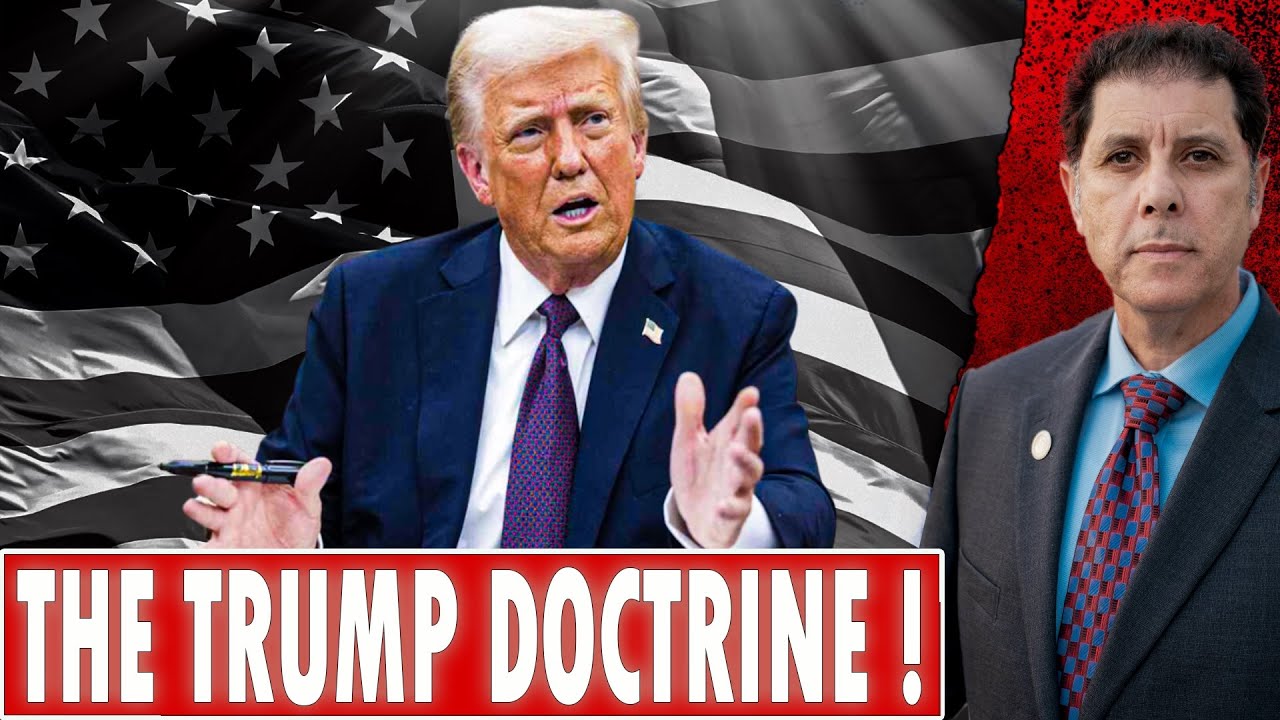
In this video, the host of Geopolitical Trends delivers an analytical commentary on the perceived decline of United States hegemony, attributing much of the shift to President Donald Trump’s "America First" foreign policy. The discussion begins with a brief Trump quote emphasizing withdrawal from multilateral agreements, border security, and tariffs. The host then defines American hegemony since 1945, noting its peak after 1991, and argues that recent geopolitical and economic developments signal its waning. Trump’s foreign policy is framed as a departure from traditional U.S. diplomacy, characterized by unilateral withdrawals (Paris Agreement, WHO, GCPUA), transactional diplomacy, and trade protectionism, especially the U.S.-China trade war. The host debates whether this constitutes isolationism or a strategic realignment, noting continued military presence and aggressive stances toward nations like Denmark, Iran, and China. Consequences outlined include erosion of alliances, the rise of China and BRICS economies, fragmented global trade, and a damaged U.S. credibility. The video concludes with three recommended pathways for the United States in a multipolar world: rebuilding alliances through consistent policies, re‑engaging in multilateral institutions, and pursuing strategic competition focused on innovation and diplomatic agility. The overall tone is critical of Trump’s policies but cautiously optimistic that the U.S. can adapt and retain influence if it embraces a collaborative, multilateral approach.
Hello everyone and welcome to Geopolitical Trends, where truth matters.
3 days ago I took the oath of office and we began the Golden Age of America. Withdrew from the one-sided Paris Climate Accord and very, very importantly, a national emergency on our border immediately halted all entry of illegal border crossers. And I'm also going to ask Saudi Arabia and OPEC to bring down the cost of oil. You got to bring it down. My message to every business in the world is very simple. Come make your product in America, but if you don't make your product in America, then very simply you will have to pay a tariff. America will once again become a merit-based country.
What will the end of the American century look like? Will the US transition in a peaceful manner, or will it go down fighting? In this video, I am going to provide you my analysis about what can we expect from Trump's foreign policy initiatives. But before I move on, the analysis you are hearing on this platform is unique to this channel, so if you are learning and enjoying these free episodes, please hit the subscribe button in order to share this analysis with people from around the world so they, like you, can hear the truth. And thank you for your support. Now let's dive in. The era of American hegemony, which dominated global affairs since 1945 and reached its peak after 1991, is coming to an end. In the historical record, of global politics. The concept of hegemony refers to the predominant influence of one nation over others. For much of the 20th and early 21st centuries, the United States held this position, shaping international norms, economies, and security structures. However, Recent geopolitical and economic developments suggest that this era of unchallenged American dominance is coming to a close. Central to this shift is the foreign policy approach of President Donald Trump, whose actions have sparked debates about the future trajectory of the United States' role in the world. It does not, however, prevent me from saying that the same about his predecessors who have contributed much worse to the global security and economy. But since my analysis is relevant to today's geopolitical landscape, I tend to focus my narrative on the current president President Trump. Trump's Foreign Policy: A Departure from Tradition. Donald Trump's past and present tenure mark a significant departure from traditional US foreign policy, if ever there was one. His America First doctrine emphasized national interest, as limited as it may be, often at the expense of longstanding alliances and multilateral agreements. This approach was characterized by three factors: 1. Unilateral actions. The withdrawal, for example, from the GCPUA, the Paris Agreement, and the World Health Organization are a case in point. 2. Transactional diplomacy. Trump views international relations through a transactional lenses, focusing on immediate benefits rather than long-term strategic partnerships. And 3, trade protectionism, imposing tariffs on allies and adversaries alike. Trump aimed to protect American industries— that's why he has you believe— but often strained diplomatic ties. His trade war with China, for example, disrupted the global supply chain and introduced volatility into international markets. You all recall. Isolationism or Strategic Realignment? While some critics label Trump's approach as isolationist, this characterization may oversimplify the nuances of his policies. Trump's policies and actions did not signify a complete retreat from global affairs, but a rather redefinition of engagement's terms. He maintains a robust military presence abroad and pursued aggressive policies against nations like Denmark, Iran, and China, to name a few. As a result, Trump's strategy can be seen as a strategic realignment prioritizing direct national interests over collective global responsibilities. Consequences of Global Hegemony. When it comes to Trump's foreign policy, there are many profound implications for America's hegemonic status. One, erosion of alliances. By undermining traditional alliances and questioning mutual defense commitments, trust between the US and its allies diminished.— it already is. This erosion has led some nations to explore alternative partnerships, potentially weakening the cohesive power structure that underpinned US dominance. 2. Rise of China. China's rapid economic growth and the emergence of other economies are reducing the US share of global GDP. The BRICS nations and regional blocs are challenging Western-centric economic system by creating alternatives. Then comes trade wars and protectionism. US-China trade tensions and the domestic protectionist policies risk fragmenting globally economic network, potentially contributing to a decline in US influence. Number 3: Global perception. America's unpredictable policy shifts have led to perceptions of unreliability, causing allies and adversaries to question its credibility, which in my opinion has been shattered beyond belief. This unpredictability has already diminished America's ability to lead and shape international agendas. The path forward: Navigating a Multipolar World. As the United States grapples with the potential decline of its hegemonic status, several strategies could help navigate this transition if it, if it's done properly. Number 1: Rebuilding alliances. Restoring trust with traditional allies Through consistent and transparent policies can strengthen collective security and economic prosperity. 2. Engaging in Multilateralism. Rejoining international agreements and actively participating in global institutions can reaffirm the US's commitment to collaborative problem-solving. 3. Strategic Competition: Recognizing the realities of a multipolar world, the US can engage in a healthy competition with emerging powers, focusing on innovation, economic resilience, and diplomatic agility. Here is my conclusion for you. The era of uncontested American hegemony appears to be waning, influenced significantly by the ill-conceived and failed foreign policy decisions. After all, this is the result of having amateurs making decisions in Washington that impacts our nation. While this shift presents challenges, it also offers opportunities for the United States to redefine its role in a changing global landscape. Only if it plays its cards right by embracing strategic realignment, fostering alliances, and committing to multilateral engagements, America can continue to play a pivotal role in shaping the future of international relations. As we move forward, it is essential to critically assess these developments and place them within the context of reality. And that reality is the world is changing and the United States needs and must change with it. In essence, American hegemony is not ending abruptly but is evolving into a more contested collaborative global landscape. If you like this video, please hit the like button and don't forget to subscribe. As always, remember, geopolitics impacts your daily life in more ways than one. Till next time, thank you.