Threatening Nigeria: Is Trump Out of his Mind? Geopolitical Trends
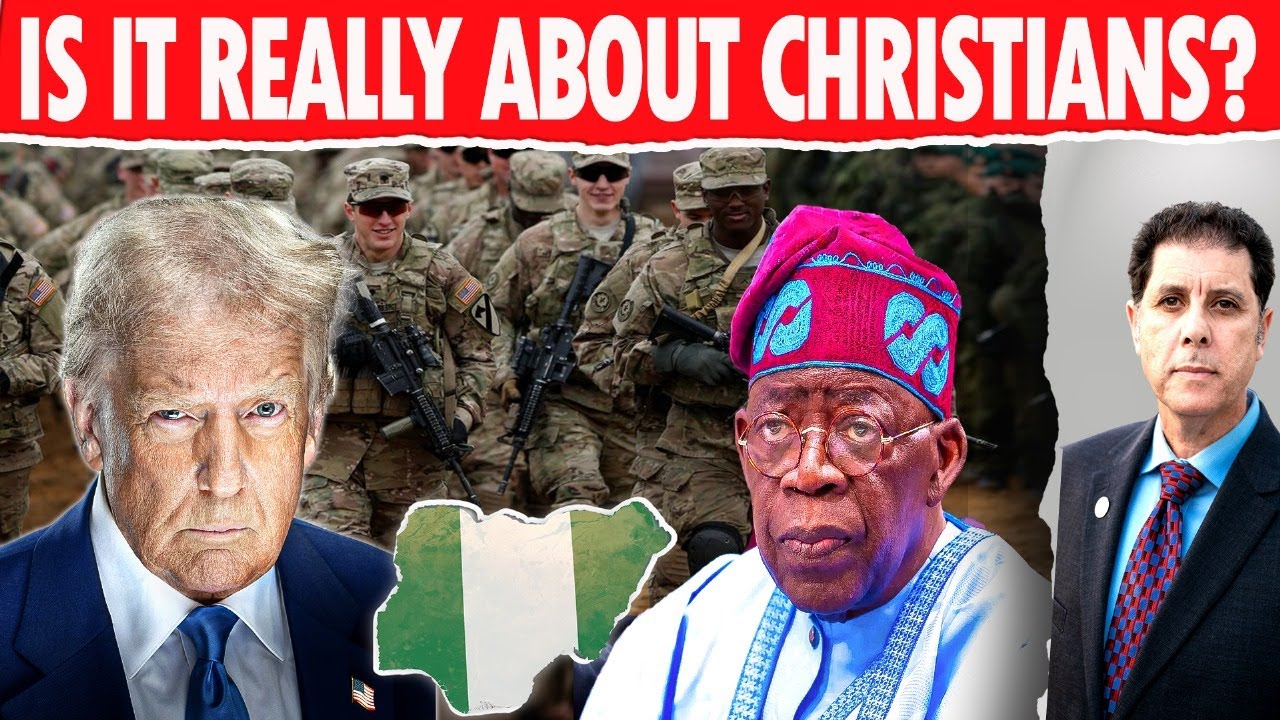
In this extensive livestream, host Dr. David Oualaalou examines President Donald Trump's recent threat to send US military forces to Nigeria under the pretext of protecting Christians. He argues that the threat is largely rhetorical and serves broader US strategic interests in Africa rather than genuine humanitarian concern. Oualaalou provides a deep dive into Nigeria’s geography, colonial history, post‑independence political turbulence, and current challenges such as Boko Haram, corruption allegations against President Bola Tinubu, and economic volatility. He situates the US threat within the larger great‑power competition among the United States, China, and Russia for influence, resources, and strategic positioning in Africa, especially the Sahel region where new security alliances (e.g., Alliance of Sahel States) resist Western intervention. The host contrasts the Nigerian case with other regions (India, Iraq, Syria) where similar religious‑persecution narratives have not prompted US action, highlighting inconsistencies in US foreign policy. He also outlines Africa’s rapid economic growth, resource wealth, and increasing geopolitical autonomy, arguing that Africa is moving toward a multipolar role and will not easily succumb to external military pressure. Throughout, Oualaalou intersperses personal community acknowledgments, updates on upcoming content, and calls for audience support, while maintaining a critical, analytical tone toward Western narratives and emphasizing the need to view the Nigeria threat as part of a broader geopolitical game.
Chapters
Hello everybody and welcome to Geopolitical Trends, where truth matters. I'm your host, Dr. Oualaalou. Excited to be with you. Hope you had a relaxing weekend and you are gearing up for the new week. So I have an interesting topic for you, uh, it's— I'm going to be talking about the threat, uh, posed by President Trump as far as sending in the military into Nigeria in defense of the Christians? Is it really about defending the Christians? And if we are to do this, why haven't we— why haven't we— why didn't we do that for Iraq, for Syria, for India, and other places? So this is what I'm going to be providing you my analysis about, because there is more than what meets the eye. As far as what this threat of the, uh, deployment of military is all about. But before I'll do this, uh, I want to say hi to our wonderful community. As a matter of fact, guys, before I'll do this, I want to take this opportunity to truly say thank you to all of you for your kind words and the condolences you presented as I shared with you the 36th anniversary of the death of the passing of my mother. So I read all your comments on a weekend I was very touched by that, and I want you to know how much it meant to me. It meant a lot to me. So I just want you to know this. So let me say hi to our wonderful community here. Imbizer here, that is good to see you. And of course, yeah, the world will not trust what the Americans are saying anymore. Advent, it's the same thing. He doesn't— Donald Trump doesn't care about Christians. You're absolutely correct. Uh, Mr. Amhara is good. It's you said it's about remaking Africa, and I'm gonna be touching on this. Just make sure you guys stay till the end of this stream because there are some really— some key points I'm gonna be addressing, especially I think the fourth— the third or fourth points regarding this. Winnie Holman, as always, good to see you. Uh, uh, who else is here? Leanne, good to see you. Uh, Farah, uh, Good to see you, and hello to you as well. KC Wong, good to see you. And how is Muhammad? Good to see you. Uh, okay guys, let's get into our conversation here. Uh, I have, uh, by the way, some housekeeping for you. Uh, I am still gonna be coordinating with my next, uh, speaker or guest, that is Dr. Yan Yan. Uh, so we'll be confirming for you the date and the time for my upcoming interview with her. So second thing, I have two topics I am working on right now. One of them has to do with Iran and the other one has to do with AfD party in Germany, especially after the death of some of its members, which was very surprising. So I'm going to be doing a video for you as I am waiting for some confirmation of certain information regarding this. All right, let's do some headlines today because there are some really interesting aspects that's going on. This is Nicolas Sarkozy, the former French president. Well, guess what? Uh, a court, a court in Paris— so it's the Paris Appeals Court— as of today has ordered the release of the former French president Nicolas Sarkozy. Who just spent only 20 days in jail. He's supposed to be jailed for 5 years, I think, or 7 years. He only spent 20 days. And now they're saying, uh, uh, of course, following, uh, the conviction, uh, in the Libyan financing of his 2007 presidential campaign. So, so makes you just wonder about this favoritism in the system. In France. Of course, it's their country, they can criticize, they can do whatever. But it just shows you that in Western so-called democracies, you know, there are a set of laws for the elites and there is a set of laws for everyone else. So, so what the court in Paris is saying, oh, the former president will be released on the condition that he will be subject to judicial supervision, whatever that means. That shows you right there the double standards of the system in the collective West. I'm not saying all countries do this, but suffice it to say this is a big blow to the, really, the, the justice system. So the second event, uh, the second headline rather, this one is in, uh in India. Yeah, makes you just wonder. It was a car bomb explosion just took place in India that killed about 8 people according to the report. So I'm, I'm just wondering, uh, I'm wondering whether the Prime Minister Modi got the message or he even understands the message of this bombing. I doubt it. I have my doubts. Uh, uh, respectfully to the Prime Minister, but it doesn't strike me as someone who will have that kind of grasp in understanding. But suffice it to say, this took place right with what's going on in India. Y'all remember I had the, a conversation with Jayant Bhandari, and we detailed that the corruption that exists now into the, uh, uh, so-called India's democracy by preventing millions of Indians not to allow— to be allowed to vote their— to, to cast their votes rather in the election. So, so 8 people were killed in an explosion near the historic Red Fort in a densely populated area in the capital in New Delhi. So makes you just wonder. Uh, the next headline has to do with this individual Zulani, you know, the former terrorist that is, uh, he's the interim president of Syria. I know everybody using the term president. He's not president, he's an interim president. He was posted in position, he wasn't elected in the position. That is the reason why I am using the term an interim, uh, president. So, but suffice it to say that he was in the Central Command yesterday and today is meeting with Donald Trump. In the White House. So makes you just wonder, so is he coming to take the marching orders, which most likely the case, because you all know, uh, who Zulani is. As a matter of fact, they are saying that the, the, uh, the, the terrorist group ISIS now were trying to take him out because he went too far with the West. I won't be surprised. In due time, they will take him out because The reason why he was placed in the position is to serve both the US and Israeli interests. So, but just to let you know, there is a meeting today in the White House. So for, you know, whoever thought a former terrorist would be walking into the White House. So, and the last thing has to do with Germany. As I mentioned, that the German now chancellor, uh, just 6 months after taking power in Germany, Frederick Merz's now ruling coalition faces challenges including internal disputes, faltering policies, declining public support, which of course negatively impacts the economy of the country. But this is not only about that, it is also about the death of 11 members of the AfD party. Makes you just wonder, you know, how all of a sudden 11 members of the opposition will be neutralized. So, so I intend to do a video for you. I am waiting to confirm certain information and get back to you on this. So let's get into our topic. Yeah, this is the picture for that, the AfD party. So, so let's talk about really what Donald Trump has in mind regarding the deployment or the threat of using force, uh, in, in, in Nigeria to protect the Christians. So, so apparently, as you know, the Trump administration has threatened now military intervention in Nigeria. It's, it's gonna remain— I'm telling you upfront, it's gonna remain nothing more than a threat. Where the problem is, is the pretext under which This threat have been, uh, sort of, uh, uh, uh, proposed the protection of Christians. Once again, if I am to argue this, and I said, how, how come you are— you, Trump, in this case, not protecting the Christians in India who've been prosecuted by and suppressed by the Modi government? The same apply to Muslims. I don't know about the Sikhs, whether the Sikh minority in India are also sort of suppressed by the Hindus or not. I can't confirm that one, but I can confirm about the Christians and the Muslims in India. So why Trump is not doing the same? The same apply to Syria, the same apply to Lebanon, the same apply to Iraq, in Egypt, you know, all of a sudden you go into Nigeria. So Donald Trump is saying that I wanted to protect the Christian facing prosecution But at the same time, as geopolitical analyst, I am seeing a different arguments here. The move, in my opinion, reflects much deeper concerns for the US geopolitically, especially when it comes down to China and Russia, which I will detail everything for you as I move forward. So now here is the thing, the idea that this Christian persecution, which is a concern. I'm not denying that is not the case. The majority of the violent victims are not Christians, they are Muslims, especially in Nigeria's Muslim-majority north. And I'll tell you one figure there who used to head Boko Haram terrorist groups, and you will understand the link. So this potential military action threats— this is nothing but threats for now— could have some major ramification and could threaten also the regional stability and could accelerate, in my opinion, African nation pivot away from Western engagements altogether. So, because you all remember, particularly in the Sahel region you know, the countries that have already established collective defense alliances explicitly designed to resist external military interference. So you think about it that way, and, and you put the two and two together and figure out, oh, there might be something else. So, so let's do, uh, geography, and I'm going to do history about Nigeria, not the United States. Uh, at some other live stream, I will do the history for the United States, but for now, I want to do the geography and the history of, uh, of Nigeria, because you need to understand, uh, certain aspects about this particular, uh, country, Nigeria. So there is— and I give credit to World Atlas for this particular map here. So Nigeria, which is situated in West Africa borders the Republic of Benin to the west, Chad and Cameroon to the east, and Niger to the north. To the south, the coastline extends approximately about 853 kilometers, the equivalency of about 530 miles, along the Gulf of Guinea and the Atlantic Ocean. It is very, very strategically located when you think about it. So when you see, uh, the full map here, so this is where the Atlantic Ocean— Lagos, one of the biggest city. Abuja, this is the capital. Uh, and, and of course when you look up the north here, this is where Niger— Nigeria, Niger— in the north. Here is Burkina Faso and Chad. Here you have all two sides, and you have Cameroon right here on this side here. So and Benin and Togo on the west side. So it's very, very strategic locations, to say the least, for that. So as to Nigeria's history, it's an important one to understand. So the— when you think about the history of Nigeria, uh, its history spans from way early human settlements, because remember Uh, you, you, if, if you want to do the research yourself, you will find that life really started in Africa. So that's why I like where the origin of life started, in Africa, according to some records. As a matter of fact, the, the research that I conducted, most of them confirmed these statements that life started in Africa. So, so the first early human settlements the likes of Nook culture. Nook is N-O-K. It's well known to those who know a little better the history of Nigeria, or Africa for that matter. And this goes back to about 1500 BC, before common, uh, time there, to its colonial era, and of course the independence. So, and I'm not going to ask you because I want to ask you why you're this Nigeria became fully independent. We'll get into that. So the region was home to various powerful pre-colonial kingdoms that existed. And of course, after the British colonization in the 19th century— because remember, in the 19th century, starting from mid-18th all the way to the 20th, or late in 19th, the major powers in Western colonialism really poured in into Africa. So, so what happened at that time when the British got in into Nigeria in the 19th century, the Northern and the Southern Protectorates were amalgamated in 1914. Why? Because they formed together Nigeria as we know it today. Then came the post-independence, which where the country has navigated the period of military rules a civil war from 1967 all the way to 1970, and of course the transition to what it is today, this so-called— even though I disagree with the term civilian democracy, but I will use the term civilian rule. You know, this democracy word is used so loosely, we just throw it any, any way we feel like it. To serve an agenda. So, so the three phases of Nigeria's history divided into early history, colonial period, and the independence. So in the early history and the pre-colonial, you have to think about Nok culture, and this was the earliest civil known in the historical record civilization in the area and dating back to 1500 BC. Known for its iron smelting and terracotta sculptures. This is why you see, to those who travel to Africa, you see some sculptures of African elongated heads and so forth. That's part of that era as well. Then you have, during the same period, which is the early history, uh, of, of Nigeria, you have the diverse kingdoms that existed because over centuries Various sophisticated states and empires flourished in this part of Africa, and that include the Haasa kingdoms. And, and if you know the Haasa, you know a little bit about its history, you will understand why Boko Haram operates in an area where the Haasa language is spoken. So you have the Haasa kingdoms which were located in the north of Nigeria. This is why Boko Haram is headquartered in the north of Nigeria. Then you have the Benin and the Oyo— it's O-Y-O, it's called the Oyo— empires in the south. This is where you have that division between the north and the south. Then you have the, the Anuri Kingdom, N-R-I, the Anuri Kingdom, which was in the south east of Nigeria. And of course, it was still the, uh, introduction of the religion of Islam, which was introduced to the region through the Kanem, uh, Bornu, and Haasa kingdoms. And this began in the 11th century. That's when it happened. Then came the colonial period. Now, the European arrival— and here is my question for you Which European colonial was first to get into Nigeria, modern-day Nigeria? If you know the answer, type it in a chat box. Which country was it, if you happen to know? A European, uh, a Western colonialist at that time. Remember, back then, just remember about the countries that were playing a major role on the global stage back then. So in your opinion, the first European arrival— let me see in the chat box if you happen to know. Oh, oh, Alistair O'Kenney, you got it, you got it! They were the Portuguese. Indeed, they were the Portuguese, the first European to arrive in 1472. That's when they arrived. And of course With their arrival, this led to an increase in trade, uh, because remember the map of Nigeria, and I'm gonna put the map back here for you just quickly. And remember this part here below Lagos, the coastline. So why is this important? Is because that is when, when the Portuguese came in, the trade along the coast and including the, uh, uh, transatlantic slave trade that took place back then. This is what's important about this particular aspect. Then after that came the British. So the British rule, which the British, by the way, gradually expanded their control, uh, uh, uh, and the first thing they did, you know what it was? Once again, look, look at the map here and look at one of the biggest city Lagos. That is the reason why the Brits took over control, took control of Lagos right away. And this was in 1861, and eventually uniting the Northern Nigeria Protectorate and the Southern Nigeria Protectorate together in 1914. So, uh, and that's what some have argued, historically speaking, It was this year, 1914, that marked the birth of modern-day Nigeria. Remember, I said the birth, not the independence. The birth of Nigeria. And there, the British— what the British end up doing is they maintain the indirect rule. You know, they've been doing this in America, they've been doing Latin America, in Southeast Asia, and so forth. They— it's no different than in Africa. So what the British, uh, did is they administered the territory using a system of indirect rule, and that's incorporating the traditional rulers as a form of local government. This is why you still hear until today Australia, it still has to fall under the British monarch, which is ludicrous. Canada still has to fall under the British monarch. Certain Caribbean islands still have to fall under the British monarch. That's ridiculous. 21st century and you still have to have that. So then after this came the independence and pre- and post-colonial era. And that's the question for you: what year did Nigeria become fully independent? And independent from whom? So let's see if you know the year when it became independent. I know it takes a while for this to show up here in the chat box, but, uh, all right, it's not a— I got them. Oh, say it like it is, you got it, 1960. That is exactly— and they got the independence from Britain, of course. It was so officially, uh, the exact date for the historical record is October 1st, 1960. So, and of course, right after that one, a civil war started, and that's where tensions emerged, uh, among or between the diverse ethnic groups, led to the Biafran war. And that's a civil war that lasted from 1967 to 1970. This is very important for you to understand. So, and that's where you had the introduction of the military and the civilian rule. So what Nigeria experienced was the, uh, several military coups, periods of military dictatorships from 1966 all the way to 1999. And before the restoration of the stable, uh, uh, uh, so-called democratically elected civilian government in 1999. And that paves the way for the contemporary 1999, uh, Nigeria. After that, that's where modern Nigeria faces ongoing challenges, including security issues, kidnapping, the like of what Boko Haram did recently, uh, not recently, a few years ago. The insurgency, of course, economic volatility, uh, due to oil prices. And of course, we can ignore the big elephant in a room, which is the issue of corruption in Nigeria. And it's not only Nigeria, most of the world. We have corruption right here in Washington. You won't believe how massive corruption in America is. It just, it is settled. That's all. So when I say corruption in Nigeria, I'm not just criticizing Nigeria here. I am presenting the facts here. So, so, and that is where, uh, but one thing I need you to understand, because we can't just focus on a negative aspect. Despite all this, so Nigeria became, grew over time to become Africa's largest economy. And of course, they have contributed on a global stage to, for example, to art, to music, and even to film industries, believe it or not. So it's not bloomin' ummy about Africa, just Nigeria, corruption, and so forth. There is more than meets the eye. Liking this video so far? Don't just be a watcher. Go ahead and hit the like, share, and subscribe button. And don't forget to tap the bell so you will not miss any of my videos or live streams. This way you will be supporting a channel that stands for the truth and objective reporting. The choice is yours. Thanks for your support. Indeed, thank you for your support. Truly appreciate you for that. And if this is your first time, please subscribe. I would greatly appreciate it. All right, now the elephant in the room, the big question: is the United States taking a military action in Nigeria in defense of the Christian prosecutions? Of course, Trump threatens, as I said, with potential military action, and this based on his argument because of the escalation of the prosecu— which is a claim, by the way— of the persecution of the Christians, uh, in, in, inside Nigeria. So, so the recent developments that take place, uh, if, if we are to look at the facts as they are today, the US is not currently taking any military action whatsoever. And even the plans inside the Pentagon, based on my own conversation with some key individuals, it was just bypassing arguments from Donald Trump. Because Donald Trump gave the order to the Pentagon to start drawing a plan for this. And the Pentagon, the people in the Pentagon, they're just shaking their heads. They know. So, so when Donald Trump ordered the Pentagon to prepare for a possible military action in Nigeria, you know, that just— of course they're gonna have to show that we are doing this and so forth. And all this makes you just wonder, is it really about defending the Christians? So, and, and this is exactly what Donald Trump said, and I'm gonna share a clip with you because I need you to just see this one here. Uh, bear with me here, I'm gonna upload it, upload it quickly here. Yeah, I should have opened it earlier, but I forgot. Sorry. All right, let me share the clip with you and I'll, uh, I'll make my own comments on, on, on this one here. So share screen, there we go. Okay, let's take a listen. President Donald Trump is threatening to send military forces into Nigeria unless the government stops what he called the killings of Christians by terrorists. Trump posted the message on Truth Social saying the USA will immediately stop all aid and assistance to Nigeria and may very well go into that now disgraced country guns blazing to completely wipe out the Islamic terrorists, he says, who are committing these horrible atrocities. Trump says he's instructed the Department of War to prepare for possible action and says If we attack, it will be fast, vicious, and sweet. While Nigeria's President Bola Tinubu— okay, you remember the same statement he said about the Ansarullah or Houthis? We're going to go quick, decimate all the Houthis, and we come out. And you all know what happened. You know, we had to remove the aircraft carrier away from the region. All the way up north because we were concerned they might end up— they, Houthis in that case, or Ansarullah, might end up bombing it. So it's the same arguments here that I would say. That's why I wanted to share that, uh, short clip, and, and we will continue it later on as we move forward. So the situation inside Nigeria is more nuanced than what Trump, uh, sort of argument suggests. So yes, some of the Christians have been targeted by violence in Nigeria. So, but the majority of the victims of the armed groups inside Nigeria are Muslims, not Christians, because Muslims are the majority in North, uh, in, uh, in, uh, North Nigeria, and that's where Boko Haram is. So both the Christians and the Muslims have been victims of attack by those radical Islamists. So, and it's no different than what it is in India as of today. I mean, if you only know what the government of Modi is doing to the Christians and to the Muslims— I've seen some horrible— I'm not gonna play them here because they are so violent— horrible videos of what the, uh, the Hindus are doing to the Muslims. It was one particular video that I never forgot. A clip that I saw of this Muslim woman. She got attacked viciously by the Hindu, uh, those, those, uh, those idiots that just attacking her for being a Muslim. So that's my same arguments I'm making here. So if both the Christians and the Muslims are attacking Nigeria, how, how this case may differ from that in India? And why aren't we saying, well, we're gonna send the troops to India to protect the Christians. So, but at the same time, you have to understand what's driving this violence, uh, uh, uh, by the various factors that including religiously motivated attacks. You're looking at ethnicities or ethnic tensions. You're looking at disputes over lands. And of course, you're looking at disputes over water resources. And this is why you have even the president of Nigeria, Tinubu, another corrupted, massively corrupted individual, uh, that is pushing back, uh, against what, uh, uh, what, what Donald Trump is saying. So, and we will get into Tinubu's corruption as far as, uh, uh, because you need to know, simple as that. So, so what Tinubu is stating is that the characterization of Nigeria is religiously— as religiously intolerant does not reflect the reality. This is what he's saying, is that Nigeria has constitutional guarantee to protect citizens of all faith. You decide for that. So, and this leads me to really understand one of a particular group by the name of Boko Haram. I don't know if you have heard it. I remember, uh, uh, uh, the— when I was in Washington, DC, of course we used to— do you remember when you are dealing with intelligence matters, you're going to have to know who's who. And I recall the, uh, the picture of, uh, Abdul Bakr al-Sheikh. This is from the intelligence community, by the way, picture. So, uh, I will not— that's the picture that is at the time., that was, uh, uh, uh, circulated. So, so when you think about Boko Haram in itself, what is Boko Haram? Boko Haram is a small Nigerian Islamist group that was launched, has launched one of the deadliest insurgencies in Africa in 2002. What happened in 2002? Because what happened the year before 2002? 9/11, of course. And the new radical sects emerged in Miduguri. And where is Miduguri? Miduguri is in northeastern Nigeria. Let me see if I have— I thought I had— yes, I think I have a map here. Miduguri, right here in the northeast, way at the top. All the north regions is controlled by Boko Haram. Of course, the government always say we have control over it. But they don't. So, and this is led by a charismatic preacher. His name was Muhammad Yusuf at that time. So what Muhammad Yusuf did, he preached against anything he deemed an un-Islamic or having a Western influence. So the local gave the— this is how the name Kebab out The locals gave the group the nickname of Boko Haram, which means too many forbidden things. That's what the name Boko Haram means, which means in, in the opinion of this preacher was at the time that Western education is forbidden, for example. It's no different than what the Taliban is doing in Afghanistan. And in 2009 the group launched coordinated attack on police across northern Nigeria, and Midoguri saw the fiercest fighting between the government, Nigeria, and the radical groups. So, and it was the start of the insurgency that will devastate the region. I have a, a link for you that you could read up should you want to educate yourself about this particular group. You can read it later on if you decide to do so. And I'm not going to get into the all history of, of the Boko Haram, the origin and early phase. Suffice it to say, you think from 2002 to 2009, that was the origin, uh, established under Muhammad Yusuf. And of course, he moved all the way to 2015. 2015, that's when Shekau Who took over, and I have a picture of this individual. As a matter of fact, it was this guy here, but there is a picture here. And this picture here, that's the same person, by the way. This one here, this is when he was pledging allegiance to the terrorist group, uh, the, the ISIL at the time, or ISIS. It still exists, just in a different name. So this is what I need you to understand, this dynamic. So But from 2015, uh, with the pledge in their allegiance, the group renamed itself the Islamic State West African Province, or ISWAP. And in 2016, a significant internal split occurred due to disagreements over ideology and leadership. And that is where ISIS, ISIL, went ahead and announced Abu Musab al-Barnawi, which was Muhammad Yusuf's son, as the new leader. And the rest is history, as, as we always say. By the way, uh, Abu Bakr, uh, Sheikho died in May 2021 during a fighting with the other group. So All right, let's get back to our conversation now. Oh, I did promise you to talk about Tinubu because you need to know how corrupted is Tinubu. Bola Ahmed Tinubu faces accusation of corruption which include a past drug trafficking settlements with the US, allegations with the US. It was also another charge of allegation of certificate forgery, and the certificate pertained to his degree, academia that is. And the third one, the third concern, had to do with his wealth and business dealings, like for example the lucrative contract given to a company co-owned by his son. While of course Mr. Tinubu denied the allegation and has been cleared in some cases, The accusation and other controversies, such as the timing and impact of his economic policies and his administration's actions against an anti-corruption agency, fueled public perception of corruption. Because what Tinubu did, went ahead and canceled an entire anti-corruption agency. He removed it altogether. Why would you do that if you have nothing to worry about? That gives you an idea right there. And this is where you have to go back to 1990 when drug trafficking settlement— because in 1990, the US authorities alleged at that time, this is what they alleged, that money in Tinubu's account account was from drug trafficking. Of course, they had to provide evidence, and I'm not saying that there were evidence for that. And what the US even government says, are you gonna trust it? So let's be fair because we gotta be fair. So, so he was not charged on that, but also because he reached a settlement and forfeited about $460,000 to resolve the case. On the other hand, makes you wonder, if you have not been involved, what would you settle a case for? The certificate of forgery, this pertains to after his inauguration, allegations emerged about errors in his college certificate. He's not the only one to do this because you remember I did a video in which I challenged the, the, the title of doctor for the Taiwanese governor back then, uh, Tsai. You know, there are those who say, well, she has a PhD. I looked at the record for the LSE, the London School of Economics, where she claimed to have won, and I saw there was filing there, but it was not accredited. So as one who went through the PhD process, there are certain processes you have to go through before you are granted that degree. So Sai never got that one, and yet claimed— because Sai went ahead and filed lawsuit against any journalist who brought this to the forefront. The same argument is made about Tinubu, uh, for his, uh, uh, uh, forgery of the college certificate. And the third one has to do with the business contract stuff. So a company co-owned by his son was awarded $13 billion government highway contract, raising concerns over nepotism. So in addition to that, he was involved in a longstanding legal battle with a former partner who accused him of misappropriating funds from the Alpha Bera Consulting, which was a lucrative tax consulting firm. He allegedly had a control interest and through proxies. So, and the biggest of them all has to do with economic policies. You all remember when, uh, when, uh, Burkina Faso kicked France out? What did Tinubu do? What did he do back then? He threatened to invade using ECOWAS to go into Burkina Faso and Niger and even Mali, you know. And why was he doing this? On behalf of France, not on behalf of Nigeria. Later on, he retreated his comment. It shows you right there the idea of what is, uh— so when you think about the public perception, the public perception is very negative about Tinubu. Because he is— the public perception is that he is very corrupted. So that's the record stated for itself for that, and I will provide you the link where all this information is. So let us go back to our really why Trump stated this threat or threatened to send the troops to Nigeria. You know, is this has to do truly with just the, uh, uh, uh, protection of the Christians, or this is related to geopolitical rivalry between the US and China and Russia? As geopolitical analyst, I argued on many occasions that Africa will become the geopolitical ring among powers where they're going to fight over dominance. The US is realizing it's holding the end of the stick regarding its presence in Africa. Remember, we just been kicked out— when I say just been, meaning few months ago— kicked out of Niger. Burkina Faso doesn't want to deal with us, doesn't want France back. So Mali has no interest. We lost control in Sahel region. So there is a significant geopolitical dimension to what's going on in this situation here. With Donald Trump's statement. Of course, Mr. Trump is framing, uh, uh, the argument that its military threats, uh, its military intervention, it has to do with, uh, sort of, uh, the threats to human— to, uh, the Christians will be under the guise of humanitarian terms. No, I don't think so. I don't think so. Once again, as geopolitical analyst, I'm seeing it pointing towards a broader strategic competition for influence, not only in Nigeria but Africa writ large. That is exactly what's at the heart of it. Has nothing to do with protecting the Christians. Donald Trump care less for Christians, whether in the US or elsewhere. So the strategic competition That is what's at the heart of it. So, and why is this? Because Nigeria, with its large economy— it is large economy— its large population, and of course its geographical size— never underestimate the role Nigeria plays into the significant influence into the African continent, no matter how you look at it. So because it's making it a key player, really Nigeria would be a key player among other countries, a key player in this US-China strategic competition. So, and remember, I didn't mention Russia here because what I'm talking about exactly here has to do with the strategic economic interests. Russia is mainly on the military security dimensions, and I will talk about it as I move forward. So Nigeria has indicated it will not choose the United States' side in this competition, but instead seeks to benefit from strong ties with Beijing and Washington. Remember, if, if I am to reverse this— not to reverse it, no— remember what is stated What Nigeria stated is strong ties with Beijing and Washington. It didn't say strong ties with Washington and Beijing. That gives you an idea who comes at the forefront, who is first, meaning China is of great interest to Nigeria than the United States. And this is where you see this geopolitical angle. And that was the whole reason for why I wanted to do this for you, to provide you the big picture, because that's what an analysis is all about. You have to understand this US suggestion of this military rhetoric, it's nothing but a bravado. We've said the same. Look how it end up for us in Afghanistan, in Iraq, in the Red Sea, even now in Venezuela. The Russians have now sent the hypersonic missiles. They are right there. Near Venezuela's border, just in case. So when you hear American president, president, all this bravado, and it's, it's nothing but rhetoric. So it's because this rhetoric, in his opinion, may serve as a proxy for countering China's influence. So, and, and the military threats, usually in his opinion, or intervention in this case could also destabilize the region where the Chinese investments are concentrated. Remember the big picture. So, and potentially halting infrastructure projects and limiting Nigeria's economic independence. This is what's at the heart of it. Nigeria is particularly vulnerable and also valuable because of its vast natural resources, including oil and rare earth minerals, and its status as Africa's largest economy. And this is also when you have to think in terms of, uh, of the arms competition. So this rivalry extends also to the military partnerships. Since 2015, Russia has supplied Nigeria with 13 combat helicopters, 2 transport helicopters, and numerous anti-tank missiles, positioning Russia as the second largest arms supplier after China. Remember, China on the economic front, Russia on the military dimensions, and the, the US holding the end of the stick. So, and this is where Russia has made gains by sort of stepping in into the vacuum, uh, uh, that the West left after being kicked out of the Sahel region. So because now you think about Russia, you think immediately, uh, armaments and security. You think of China, immediately you think about investments and infrastructure. So, and this is where Nigeria will have to play some sort of a balanced diplomacy, maintaining relations with the US, with the EU, with Russia, with China, without being fully tied to any single power. So of course, with the US providing military, uh, uh, uh, in the hope, uh, uh, because it, it wants to woo Nigeria away from these two players, Russia and China. So will it succeed? I don't think so. So while— and again, the religious persecution exists, I'm not denying that, and it's stated concern, I am not denying that. But the idea that you say, well, I'm going to send the military because I wanted to stop the prosecution of the, the, uh, the, the Christians. That appears to occur within a much larger context of great power competition for influence, resources, and strategic positioning in Africa. Like I said earlier, if we are to see this argument, what about India? What about Iraq? What about Syria? What about Egypt, where the Christians have been attacked? Muslims have been attacked mainly in India and continue to be. You know, there is now for India numerous human rights organizations and international bodies reports an increase in the prosecution of the Christians in India, primarily, primarily driven by the Hindu nationalist groups, you know. And this includes the rise of violence, discrimination, and harassment, often under the guise of preventing forced conversion. This is what Modi's government is stating: we're doing this because we want to prevent forced conversion. Nobody's forcing anybody to convert. Whatsoever. So you think about groups like, uh, the United Christian Forum, you know, known as UCF, you know, indicates a significant surge in verified attacks on Christians with over 800 incidents recorded in 2024. And these incidents ranging from physical assaults and property damage, like the burning of churches. That's what's going on in India, to intimidation and threats. So why Trump is not going to protect the, the Christians in India? Why you allow Indian government to even do this much attacks on Christians and the Muslims for that matter? I'm gonna have in this channel, just to let you know, I'm gonna be— I reached out to the head of the Kalinistan movement. Yeah, I'm gonna have him on this channel and we're gonna have to hear his arguments as far as the independence of Kalinistan, because it's worth listening to. I know you might have heard about Kalinistan struggle for independence. I reached out to the head of the Kalinistan, and I'm going to have him on the channel. I'm waiting for his response, and we go from there. So, so when you think about the big picture, the response from the African nations regarding these statements by Donald Trump— I'm gonna be sending the military. So, but when you think about Africa, not all Africa is kind of against this particular intervention by, by Donald Trump, or even the statement, you think about specifically the Sahel region. So to the US military threat. So because when you think about this, we're talking about concerns of sovereignty, we're talking about concerns of regional stability, we're talking about concerns of geopolitical maneuvering. So, and when you think, and I'm gonna bring back up the map of the Sahel region And by the way, here's where, uh, uh, Nigeria is, southern of Niger. This whole region now it's concerned because they know why they need to be concerned. And our presence in— hypothetically, if we are to go, which we are not— it has nothing to do with Nigeria, has to do with this entire region. That is one of the key aspects I need you to understand. So when you think about the regional sovereignty, especially for the Sahel, So any, any US military action will face critical obstacles. Why? Because neighboring Western African countries would likely not allow their territory to be used for the US operations, you know. So that means what? This one will have to contradict the wishes of the Nigerian government should they allow and accept the— because remember, it was the Nigerian government, it was Tinubu, who forced— wanted to force the ECOWAS into the Sahel region to bring them back to the negotiating table to allow Western powers. Why? Because Tinubu is working on behalf of Western imperialists. Simple as that. So remember the withdrawal of the US forces from, uh, from Niger in August 2025. And that is exactly why the US is thinking in terms— because the whole Sahel region— once again, let's look it up here— the whole Sahel region It's an anti-Western sort of sentiment. They have that, and rightly so, because the Sahel region has developed some sort of a strong anti-interventionist stance against any Western, uh, as a matter of fact, in September, in September 2023, you remember when Burkina Faso, Mali, and Niger established the Alliance of the Sahel States? Which is a collective defense arrangement, and that one stipulated that any violation of sovereignty or territory integrity of any member shall be considered an aggression against all members, the equivalency of Article 5 in NATO, and that in itself triggering the duty of an armed resistance This is why the US is not gonna go. France cannot go. Britain cannot go. Germany cannot go. And what makes it even more interesting to understand that, but this alliance is that this alliance combined with the growing Russian military presence in the region, and that in itself creates some sort of a framework that actively opposing any Western presence or intervention in the region. And when you think, like I mentioned, the stability, the broader region stability, so any potential US intervention will risk destabilize the, the region. And I don't think so the countries there will allow it anyway. It's not going to happen because the importance And this is the point I mentioned to you earlier that I want you to listen to it, uh, uh, uh, because of the Sahel nations geopolitical pivot. That is the key word. The Sahel states— look at the map— all of them, Sahel state, has already moved away from Western influence. With no exception. Okay, and in recent years, the Sahel has witnessed a dramatic erosion of Western European influence in Mali, in Niger, and Burkina Faso. And this is where the pro-Russian sentiments and cooperation have increased while the US military footprints had contracted, meaning been reduced. So, so this is where that concern that if the US intervene, this could accelerate the trend of the military threat, uh, uh, threat. It's because anytime you have the presence of US forces, the, the, the outcome doesn't— it doesn't end well for that particular location. Look at Ukraine. So, and because there are also precedent problems that appeared before, and this pertains to the sovereignty. This is why African nations in the Sahel are likely to view US action as a threat to regional sovereignty and stability. This is why they are taking stand on this, that they're not going to waver from this. So because the, the, the, what, what Donald Trump is stating about the threat of, uh, intervening in Nigeria. US military rhetoric in general terms masks some deeper strategic competition in Africa. It also creates the concern of the sovereignty for the regional, uh, nations there, and of course the potential backfiring effect that could strengthen even more Russia's presence in the part of the world. And for the Sahel, while I have, while I have you here, I thought of the one country here is Burkina Faso. Uh, I just, uh, uh, found out, uh, that Burkina Faso, uh, here is what happened with when, when France was kicked out. You all remember when France was kicked out, what did France do at that time? France went ahead and declared declared, uh, uh, Burkina Faso as a red zone. A red zone means, uh, sorry, let me move the picture out. A red zone means it's not safe for flying. So Air France canceled the flights to Burkina Faso. So, so there were no flights currently operating in Burkina Faso from Air France. So the airline, Air France that is, had planned a resumption in mid-September of 2025 because they reached out to Burkina Faso asking permission to come back to Burkina Faso. Burkina Faso said no thank you, we're not interested, because Burkina Faso went ahead and purchased a plane, paying cash for it. They didn't get a loan from the IMF. And resumed their own because there were other countries were flying. So basically Air France lost all the profits for that segment of the flights to Burkina Faso. And remember, if you— on my last trip to Morocco, I had to go with Air France because Air France controls the flights to Africa, including from North Africa all the way down. You know, you don't have American Airlines flying to Morocco. Do you know that? There's none. So, and this is why you have the, uh, uh, uh, where Air France suspended the flights to Ouagadougou, which is capital of Burkina Faso, along with Bamako in Mali and Niamey in Niger. And that was sort of right after they were kicked out. So, and in, in 2023 by saying, oh, this has to do with safety and airspace closures following the military coup. So, so, but here is what Ibrahim Traore said. He said, yeah, if you want to return, we want you to do the following: issue a public statement acknowledging the improved security situation. Well, as of today Air France didn't do it because they know, they know that they were on the wrong, meaning Air France, that is. So, but there is also that geopolitical context of all this. The suspension of flights and the ongoing diplomatic tensions have also led to other actions, such as, for example, Burkina Faso ending a double taxation treaty with France. Yeah, why will Burkina Faso people pay double tax, one in Burkina Faso and one to France? It's ludicrous, because that extends from the era of colonialism. And taxes is another, which by the way, for my American viewers, I will be doing a video for you about the United States tax system and how corrupted it is. That's why an average American is burnt out. And if you look at in history what happened when you keep taxing the citizens beyond their ability to afford it, and the result, what it could lead to— this is why I wanted to do, uh, uh, this leads me to ask another question from a geopolitical perspective, but because that's what I usually talk about here, and I need you to have the, the understanding of really this big picture, is that with all this you have to think about what is Africa's economic and geopolitical prospects in the 21st century. It's a question that is worth asking because it is an important for us to understand. So Because you think about Africa's economic geopolitical prospects in the 21st century, it will be tremendous. Africa's economic are, are sort of prospects, that is, because there is significant potential alongside serious challenges. I'm not denying there are challenges, this, but they can be worked out. But the key aspect to it, to this, is that the continent Africa writ large is asserting its autonomy from— in this multipolar order, doesn't depend on the Western powers anymore. Because you think about the near growth in Africa, Africa's economy is projected to grow from 3.3%, which was the stats in 2024, to about 4% this year, and this reaching 4+% in 2026. And when you think about this, with 21 countries in Africa expected to achieve a growth exceeding 5% in this year, by the end of this year, and I'm gonna provide you a link for this, and the link came from an, a U.S. entity Whoever thought that they will disclose this information? But you can dispute the facts. So I put the link for you in the description— in the chat box, I'm sorry. So, so when you think about East Africa, think about this. Look at the picture once again. Uh, sorry, look at the picture. Think about East Africa. With East Africa leads with projected almost 6% growth— the stat that I found is 5.9, almost 6%. West Africa maintains 43% growth driven by new oil and gas production in Senegal and Niger, while Southern Africa will grow at about 2.2%, still a major one for Africa. This is— we're talking about near term. If you think long-term structural position, and this is part of what you think about when you do geopolitical analysis, you have to think short term, long term, or medium term and long term. So when you think about long term So Africa currently, uh, sort of represents only 3% of world economy, but is expected to reach 5% within few years. So, and the— this increase, according to economists, will be driven less by productivity gains and more by demographic expansion. Africa has one of the advantages, its demographics. This is not the case like in India. No, no, no, no, no, don't compare. India has massive, uh, population, but it's a population that is living in poverty. Africa and India does not have similar resources Africa does. So this is where the difference is. And the key elephant to all this, the, the big elephant, I'm sorry, in the room is the massive untapped resource resources. So here's the thing: Africa hosts about 30% of global mineral reserves and could capture over 10% of the projected $16 trillion in revenue from key green minerals by 2030. So the African Continental Free Trade Area could increase exports by about $560 billion and boost continental income by about $450 billion by 2035. We're looking at a decade from now. Africa also could mobilize an additional $1.4 trillion in domestic resources through efficiency gains in tax and also non-tax revenue alone. This is what you need to understand. And I have a one story that I know. For example, Morocco and Nigeria agreed on building a pipeline to bring gas into Europe via Morocco. Smart move on part of Morocco, because you're gonna have to think in terms where you can reroute. Because if Morocco does that Morocco is going to get the fee of trans— uh, uh, uh, of transit, the exact thing Ukraine was getting from Russia for the, uh, the— or from Europe, uh, for the, uh, the gas coming out of Russia to Europe. So, and if you think about Nigeria, of course what has to come to your mind is oil. Nigeria has proven oil reserves, approximately 37 to 37.5 billion barrels of oil, placing it the 10th globally and 2nd in Africa, I think after Angola, if I'm not mistaken, because Angola is a member of the OPEC. So, so the country's oil reserves, Nigeria that is, are primarily located in the Niger Delta region. Let's go back to that map. Here is Nigeria, the Niger Delta. So with significant portions of this potential reserve still untapped in its deep offshore areas. So you think about this way, just think about it. Total combined reserve for Nigeria as of January 2024. The combined reserve is about 37.5 billion barrels. Crude oil reserves about 31.5 billion barrels. Condensate reserves is about 5.9 billion barrels. And gas reserves is about 209 trillion cubic feet. Now the stats I share with you, put them, uh, when you think of putting the dots together, why the US all of a sudden threatening intervention in Nigeria? The same argument can be made about Venezuela. But if you notice, Donald Trump didn't say anything about Christians being prosecuted in India, because what does India have to offer? So, so, and I'm not denying Africa also has some major challenges. Africa has about 450 million people living in poverty, extreme poverty, because they've been exploited by Western countries for decades. You know, you have some countries inside Africa about 15 of them according to my research, with double-digit inflation and interest payments, by the way, to the IMF, which consumes about 27.5% of government revenue across Africa because they got a loan from the IMF and World Bank. What do you expect? And this is an increase of 19% from from 2019, meaning they are paying the interest on the loans. So you think about once again the big picture of that geopolitical prospects, not only for the Sahel but for the whole continent. So the global balance of power is shifting. We all know this, it's not nothing new to you by now. And Africa is no longer Africa is no longer a passive observer, but rather an increasingly becoming an active sort of architect in its own geopolitical and economic trajectory and future. They don't have to be waiting on the West to chart the path for them. They can do it themselves. And with vast resource wealth, rapidly expanding markets and more assertive diplomatic posturing. So that makes Africa now, in my opinion, indispensable to the global order moving forward. Maybe the next thing they're going to go about is developing their own nuclear capabilities, so you will never have these threats from France or Germany or UK or the US. So on the other hand, you're going to have to think about the great power competition that, that is now going on. And that is exactly the whole objective of why Donald Trump is doing— because under Trump, sort of, because remember his first term, wasn't he the one who used the term shithole about Africa? All of a sudden you wanted to go to Africa to invest. You know, how do you think African— uh, will African ever, ever forget what you said? You call them that way and you want to do business with them? Just doesn't add up, doesn't make sense. If at least he was honest about it, you know. But suffice it to say that whatever that vacuum is, so there are other key players that are now expanding their presence, they expanding their economic ventures there. They expanding their diplomatic engagement, deepening their foothold on the continent's, uh, uh, resources in conjunction with the law, not taking advantage of the countries but working with them. You think about it, China, China's reduction of financial commitments to Africa. So why? It's because they renegotiated the, uh, the, the loans the African have acquired. The same thing, Africans also allowed to get investments from other locations, doesn't have to be just China. For example, they want to head with Saudi Arabia, they want to head with United Arab Emirates, they want to head with Turkey. So why is this? Is also to show you that other countries, the likes of this Saudi Arabia and other Emirates, Turkey and others, they have an appetite for getting into Africa. That is exactly the reason why. And this will position Africa in this new multipolar, uh, uh, order. So you think about South Africa's, uh, uh, uh, uh, championship of the G20 in 20— in 2025, the installation of Neo-African union leadership, and the African women heading the Commonwealth Secretariat and World Trade Organization. So what does it tell you? It tells you that Africa is playing more role, a significant force now in the global affairs, unlike a decade ago what it was. So African, uh, nations— this is with the assumption that they work on corruption, they work on improving infrastructure, they work on improving the condition of the African citizens and use the resources to share the wealth with everybody. But all this, that means African nations now are increasing leverage. The leverage of what? Their resources, and of course their geopolitical importance. And all this for one reason also: to dictate the terms of engagement than just accepting imposed arrangements on them, like what France was doing for Niger with getting uranium, selling it at $200, I think, €200 a pound, and giving Niger about €10 a pound for that. To my— don't quote me on these figures because that was something like that. The bottom line, they were taking advantage of the resources. And this is where Africa has that, that, that, uh, that ability. And the other thing is the sovereignty imperative, very crucial. Africa's development potential depends on transformative domestic governance, in, uh, competent and effective, uh, institutions, enhanced security, of course, And of course, economic and human development, uh, progress. All this are key that will fall under, uh, the domestic policies, uh, space that they're gonna involve in. They're gonna have to think in those terms. Yeah, they can seek assistance and help and consultation from other countries, but they end up having to make their own decisions for this. So the bottom line is that Africa is in a pivotal moment in the history of the world. It possesses the natural resources, it has the demographic youth, it has the strategic importance to become a transformative economic force in the 21st century. But also this require some strategy domestically made. And here is my conclusion for you: Western influence has significantly diminished in the Sahel region. Look at the countries like Mali, Burkina Faso, Niger, expelling or forcing the withdrawal of Western military forces, including France and the US. And of course, this retreat is driven by local governments. So because they wanted to assert their own sovereignty. So, and of course, the, uh, some groups, the likes of, of, uh, you know, I, I was aware of certain groups that were financed by Western entities. We'll leave it at that. That's a conversation for another day. It's just you have to understand, uh, this particular dynamics that took place, uh, in, in, in, in Africa. It's of great, great importance. So, and this is why, uh, uh, even you look at, even not only from military, political, uh, uh, economics and so forth, even cultural. You think about Burkina Faso as an example. Now Burkina Faso and Mali have moved to abandon the French as an official language because they wanted to distance themselves from the colonial legacy. I know in North Africa, in two countries, Morocco and Algeria, they are moving with English language in school instead of the French. So, and, and frankly, it's about time. So, all right, that's all I have to share with you. Oh, I take this opportunity because I want to say thank you to a particular individual. Uh, his name is, uh, hold on, I got it right here because I had to, had to keep that one. His name is Howie. Howie became a monthly supporter on, on Buy Me a Coffee in support of my work, and here is what he wrote, and I wanted to share this with you. Thank you for your dedicated work. In a world with so much noise, your commitment to truth and clarity is a beacon. Your effort make a real difference. End of quote. Thank you so much, Aoi, for becoming a member in support of the channel. And for you, you— I know some of you have been with me for, for a long time now. You all know the type of information that I provide you here. So should you decide to support the channel, here is the link for you. Of course, you don't go out of your way to do this because I will not be content with something like that. If you can afford to support the channel, then by no means, if you decide to do so. But if you can't, I truly understand. And please, please do not go out of your way to do that. And I mean it. So I'm, I'm, I'm aware of your generosity. You guys sent me to China twice, and I'm gonna make an announcement soon whether I'm gonna go for the third time, and we'll figure out the time frame and all that. But so far, it's because of the generosity of some of you in the community. There are also some, uh, uh, anonymous donors who came in to the last minute and were so generous in their support for my trip to China. So, uh, that's what I'm saying, we are in this together, you know. I don't have an official sponsor for this, you know. And if anybody who's watching this and would like to sponsor this channel or the other channel as well, we'll be happy to talk and, and put that, because there's one thing I will not allow for anyone to dictate to me what to say and not to say. That I have no— I will not allow. So that's just how I operate. So I'll take this opportunity to say thank you to, uh, uh, to SS11078. Thank you so much for your super sticker. You wrote, Nigerian Army seem armed Fulani terrorist groups, uh, you mean Fulani, to villages where violence occurred and fired on civilians who try to defend themselves. I won't be surprised. And thank you for sharing this with the community. I would not be surprised. You know, I was aware when I was traveling to Africa, and I went to, uh, different locations in Africa when I was still in Washington. I was aware of the groups that were funded, uh, by Washington. Just, uh, with my last location in Djibouti, which by the way There is something the Djibouti government has that belongs to me. It needs to be returned. So yes, if anybody from Djibouti was watching this, the government of Djibouti has something that belongs to me. So it is not right for them to hold that. So, and I am going to intend— I intend to reach out to the Djibouti embassy in Washington, DC. So, uh, another super sticker. Once again, thank you so much. Fulani agenda to Islamize the country. They want to dip the Quran into the Atlantic Ocean. Explain why God always mute when mass, mass killing happens. I, I see what you mean. So I appreciate you sharing your, uh, uh, super sticker, uh, for your generosity and sharing your perspective with the community here. So All right, uh, I will be, as I said, I will be working on some stories for you, uh, especially two ones about, uh, about Iran and about AFD, the, the members of the opposition party who win, who were neutralized suddenly. Makes you just wonder, is there something going on in Europe? So I will be, and I'm waiting to confirm few things before I'll do the video for you. As always, remember, geopolitics impacts your daily life in more ways than one. Till next time, bye-bye.
More from David


Beyond the Single Actor: Why the Gulf Isn't Choosing Between the US and China


Iran, Iraq's Militias, and the Houthis Are Coordinating! This Changes Everything




Who Controls the Next Decade's Resources? Latin America and Africa's Geopolitical Crossroads

The Chokepoint Trap: How Washington's Stupidity Triggered a Cascade That Now Controls the World

Trump Spooked as IRGC Unveiled dual-use SLV, Deployed Ghadir Mini-Subs & Hinted at Tactical Nukes!
