TikTok Ban| Chips| AI Hype| CBDC! Conversation with/Richard Turrin!!
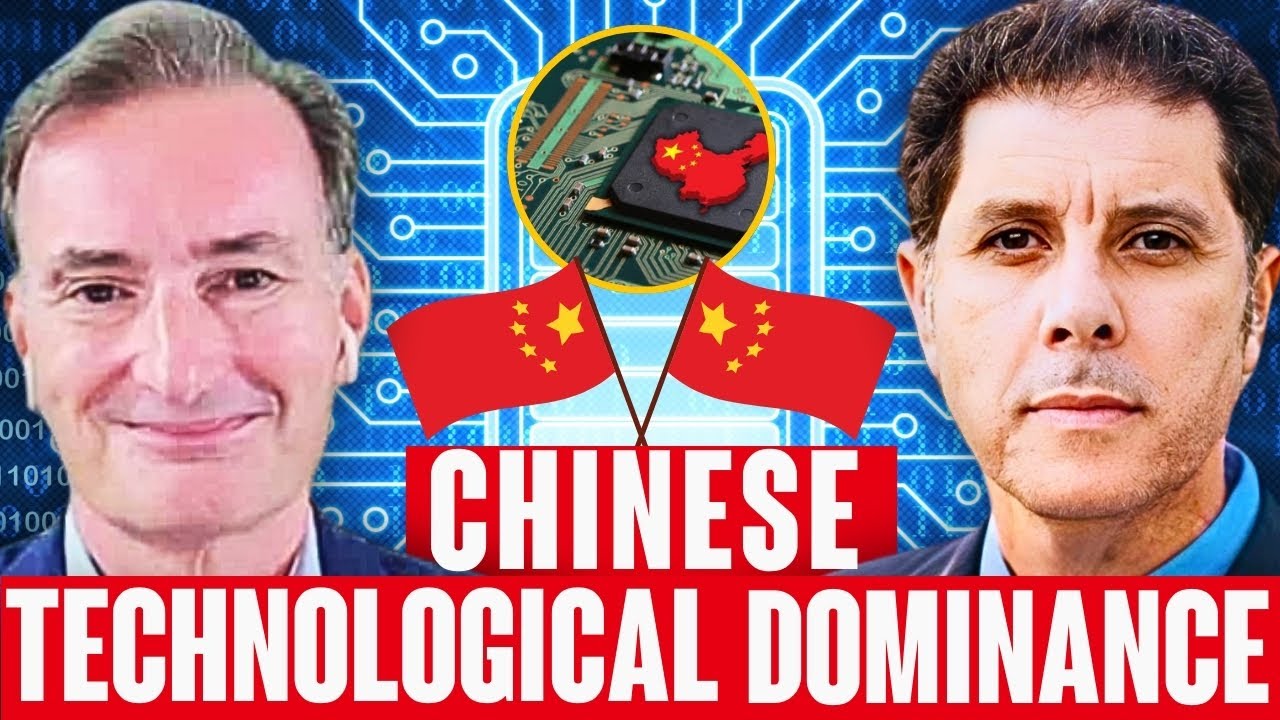
In this live YouTube interview, host David Oualaalou converses with fintech author and former investment banker Richard Turrin, who has lived in Shanghai for 14 years. The discussion covers four major geopolitical‑economic topics. First, they examine U.S. chip export sanctions on China, arguing that the bans are self‑damaging because China accounts for roughly half of global chip demand and is rapidly developing its own high‑end chips such as Huawei’s Ascend 910B, undermining U.S. semiconductor revenue. Second, they critique the recent U.S. push to ban TikTok, highlighting generational media consumption, data‑broker ecosystems, and the political motive of controlling narratives rather than genuine security concerns. Third, they explore the AI hype surrounding generative models, especially in consumer‑facing payment chatbots, warning about over‑promising, liability gaps, and the massive energy and water consumption of AI models, while noting emerging regulatory efforts in China and Europe versus the lagging U.S. framework. Fourth, they dissect central bank digital currencies (CBDCs), clarifying that CBDCs are state‑issued digital dollars, not cryptocurrencies, and discussing their potential to lower domestic payment costs, enable cross‑border settlements without SWIFT, and accelerate de‑dollarisation, especially among BRICS and other emerging markets. Throughout, Turrin emphasizes the interconnectedness of the U.S. and Chinese economies, the strategic missteps of Washington’s short‑sighted policies, and the long‑term technological race shaping geopolitics. The interview concludes with audience Q&A on topics such as Western‑BRICS monetary integration, U.S. market access in China, and AI’s energy footprint, and provides links to Turrin’s LinkedIn, Substack, and Twitter.
Chapters
Hi everybody and welcome to Geopolitical Trends, where truth matters. As promised you, I'm gonna have an interesting, uh, discussion with a great guest of mine. I consider him a friend. Usually that's not a term I use very loosely, uh, and so he is here, he's waiting for me to bring him on to the studio, and we're gonna get in into the conversation. So here it is, Rick Richard— Rick Turin. Welcome. Okay, it disappeared, but he'll show up here. So let me show you a picture of our guest today. Rick, here he is, and he's just probably just logging back in, and, uh, would wait for him to show up here. So let me see who's here. By the way, Johannes Christian, good to see you from Indonesia. Alamseen, Ontario, Canada, as always. Phil, good to see you as always. Hound One, good to see you. All right, here is my guest right here, Richard Turan. Good to see you, Rick.
Hi there, David. I apologize to everybody out there. Look, no, this is great. It's all me. My finger touched the trackpad to put the browser go back one page and I lost everything. So I apologize to you and to all the audience out there. David, you are a dear friend, and it's wonderful to be back here. And I'm delighted to talk to everybody whom I've already met and whom I've shared comments with on YouTube, and for those new people who I haven't met. So, um, it's great to be here. And for those who don't know, I'm coming to you live from Shanghai, China, where I've lived for the past 14 years. And I was a banker for 18 years, so please don't call me a communist. I was about as hardcore an investment banker as you can get, capitalist. But I have been in China for 14 years, and I do have perhaps a different perspective on things than most.
Well, it's not perhaps, Rick. You do have a different perspective because you are on the ground. And this is why you are someone I trust. This is why when I, uh, talk to my audience here about having you, and we're going to be addressing the topics that they need to have a grasp and understanding. Our government here is not disclosing the truth, as you know, and this is what I thought of you right away, and I wanted to address some really, really key topics. But before I do this, let me just, uh, do a brief, brief intro about you guys, about Rick here for you guys. Rick Turner is the international best-selling author of Cashless, and I have a picture right here of it. Oh, not this one. Here it is right here, guys, and, uh, which is a China Digital Currency Revolution and Innovation Lab Excellence. And get this, guys, he is number 4 ranked globally, right? In other words, in the world when it comes down to fintech as an influencer on the— and he was, uh, sort of, uh, categorized by Analytica, which is a major entity that does the ranking. And he is also an award-winning executive, previously heading fintech teams at IBM, following a 20-year career in investment banking. So you're looking at someone who does have an understanding, the ins and outs of how the financial world— how the financial world works. And by the way, I do have the full link to his bio and his website and all the links on LinkedIn in the description, so you guys can check that out later on. We're gonna get in, in the topic because I don't want to waste too much time because there is a lot to cover with Rick. So I'd like to start first, Rick, if I may, with now the issue of the US sanctions on the chips regarding China, which have backfired, that now China is developing its own chip industry. How do you see it?
Yeah, look, um, this is a very important issue because it's in the news almost daily. And what we see is that the US is prohibiting the sale of high-tech chips to China. And the level of what the US considers a high-tech chip is reducing in the sense that they're making, they're making even rather mediocre-grade chips now, unsalable into China. But we really have to think about this as sort of shooting ourselves in our own foot. And, you know, let's take a couple of looks at why. And first thing we have to understand is that China represents the depending on who calculates it, around half of the global chip purchases in the world. So if you want to make an electronic component, you build it in China. So that's why they, they buy so many. It's the market. And, uh, the best quote I got from this is on Jensen Huang, who is the CEO of NVIDIA, which is of course famous for selling chips and the high-end AI chips right now. And he said very clearly, if we are deprived of the Chinese market, we don't have a contingency for that. There is no other China. There is only one China.
One China.
And there's potential for enormous damage. In other words, basically, if you shut down or limit access to the world's largest microchip market by US high-tech semiconductor production firms, it's going to hurt. And, you know, that's the balance that the U.S. government is trying to make right now, which is not hurting the firms, the U.S. chip companies, and to withhold chip technology from China. And the reality is it's not working. And the reason it's not working is because China is innovating and China is going to build these chips. So, um, So what we see is this massive loss of revenue into the US chip companies. And, um, according to some studies, the, the revenue drop can be as much as 30, 35, 37% of, of revenue into the US chip companies. So what you're doing is you're hindering innovation from these chip companies and You know, you're really— you're cutting off from them, off from their market. You are hindering their innovation. And what you're doing is you're actually slowing down the US chip manufacturers' production or innovation and production. And it's a major issue right now. So is it— so people are going to say, oh, well, it's good and it's worth it if we're cutting off China from high-end chips because we don't want them to have that. You can't because they make them already. And that's the problem. They may, you know, so China right now makes a chip, um, that's called the, uh, I have to, I have it here and I have to get the name right because I'll get it. It's called the Huawei Ascend 910B. And by all accounts This chip is every bit the equivalent, if not faster, than NVIDIA's top-selling A100 GPU. Okay, now depends on what benchmarks you use, but the concept that we're going to cut chip sales off to China and they won't have chips is simply wrong. They make them already, and they make them on machines that have been produced in the West and that have been sold into China. So, um, it's a major, major problem. And the key thing you have to remember is that the name on that ship was the Huawei Ascend, okay, manufactured by, um, SMIC Semiconductor Manufacturing in China, but it's a Huawei product. And remember, we tried to sanction, ban, and block Huawei about 5 years ago, and it hasn't worked very well, and chips are going to go the same way. So, um, that's really, um, a rather long sentence. I'll let you get— you get it— get in here now. But, um, the concept that you're going to stop China from innovating and that they are not going to make their own chips is an absurdity. And it was shown with Huawei, and it's going to be shown again with, with high conductor, uh, high-tech semiconductors.
Yeah, well, that's why, uh, just to follow up on this, Rick, that's why I found it very ludicrous of the U.S. Secretary of Commerce, uh, Gina, uh, uh, Raimondo. She was in China, and, and here is what happened, just to share this with our viewers. When she was there, you know what China did? They launched the smartphone, a Huawei smartphone that has the P160, and that one has the new chip that China produced. And what bothered me the most, what bothered me the most about her statement is that she said, we're gonna do everything in our power to prevent China from acquiring the, the chips. Well, wait a minute, if we are to say we use capitalism and we depend on competition How come you saying something like this?
Yeah, Ramondo's a very interesting character. Her great quote from some years back was that the United States should do everything in its power to interrupt, delay, or otherwise stop China's technical advancement. And this was even before the chip bans. And if a Chinese official said that we, China, are going to do everything in our power to stop or delay U.S. technological innovation, it would be World War III. Yeah, but it was very interesting. That statement was taken as, okay, no problem, you know, it's, it's, it's normal that one country tries to inhibit another's growth. I, I, I don't know what to say, but she— yeah, she's a real piece of work. And Yes, but the key part about that Huawei chip in the P60 phone was that it was a— what's called a 7-nanometer scale chip, and it was a chip that China wasn't supposed to be able to make. Because again, the US is fighting yesterday's war. We're looking— and this is, I think, a good analogy for you— we're— we continue to think of China as a nation that can't innovate, is slow at innovating, that only copies. And we're using sanctions as a weapon as though China will not be able to innovate its way out. And time and time again, we're seeing that China is extremely innovative, and it has been for more than 10, 15 years now. I wrote a book on innovation and how innovative China is, you know? And it's really funny. So we're fighting yesterday's wars by considering that China is going to be blocked or long-term unable to either build chips or to counter the US ban of technology, and it's just going to innovate itself around these, these problems. Yes, it's not going to happen overnight, but what you're doing is you are building the world's largest new competitor. While US chips were number one in the world, or remain number one in the world, and had no major competitors, you wait 5 years, they're going to have China as a new competitor born out of US chip sanctions.
Yeah, well, this is the short-sightedness of Washington, as we know. Washington didn't understand the reality that China has other alternative or options in its arsenal. Yeah, ranging from the chips to, uh, AI to the petrol you want to the quantum computing, you name it. So it's just shortsightedness on part of, of our incompetent politicians, no exception across the board.
So yes, they're not fighting yesterday's war. They are still fighting a war with a China that they think only copies, and that's why they think that these sanctions and bans will be effective And China, give them 2 or 3 years, they go right through them. And I agree with you, it is disastrous that the US's political class still continues to think like this. They're paying the big bucks to know better, but we're not getting that kind of leadership right now. And I find that unfortunate.
Yeah. Well, for those who are just joining us here, I am here having a conversation with my friend Rick. Turan is the fintech, uh, one of the top in the world. So you are joining us here for this conversation. Now, there are 3 key topics, Rick, I would like to have your insights about. The first one is a TikTok ban that just happened. Second one has to do with the AI hype pertaining to the payments and so forth. And the third one, given your financial background and understanding of how fintech works and so forth, I would like your insights about the US CBDC, the central bank digital currency. So let's start with the TikTok. And I had a chance to look at your article, which by the way I'm gonna put for you guys in the description, on Substack. Uh, Rick writes on Substack, uh, uh, regularly there. So I'd like to know your, your, your intake, your input, your assessments How on earth would politicians decide all of a sudden, well, we're going to have to ban TikTok? What is the story behind all that?
I don't know. This is reaching a level of insanity that is incomprehensible to me and frankly, very, very sad. Because what you see is that the TikTok ban, which is the bill which was passed in the in the House, but now goes to the Senate. We hope, we can only hope that the Senate has more level heads than the House did. But what we see with this is the birth of America's Great Firewall. Now, anybody out there who follows China knows that China has something that's called the China Great Firewall, meaning a block for internet companies like Google and Facebook into China. And what you see now is the US trying to actually impose a similar American Great Firewall for Chinese-owned products into— internet products into the US. Now, look, let's look at the two principal reasons why, and let's look at why these motives don't make any sense. Okay. Number one, yeah, we want to keep data safe. In other words, we want the data of US citizens not to go to China and not to be reviewed by Chinese security agencies. That's essentially what it comes down to. Okay, so let's break that one down. Number one, TikTok, yes, has to its credit put all servers for for TikTok US in the United States. They're run by Oracle, and they are— which is an Oracle, the American company— and they hold the data in the US. But the reality is every click that you make everywhere on the internet is sold, and it's sold by people who are called data brokers. So data brokers sell your Facebook clicks, they sell your your location for where you are for cell phone towers. They even sell— what's interesting— satellite radio. Satellite radio actually pings and tells the satellite radio company where your car is at when you're— or wherever you listen to your satellite radio, and they sell that location data. So there's basically nothing, no part of your digital life that isn't already for sale through data brokers. And what's interesting is that this data is bought regularly by the NSA and the CIA. That of American citizens. And that's a real problem. We'll leave that for another day. But the point is, what data does TikTok have on you that China cannot already buy in the commercial market through data brokers? And the answer is none, because they have all of your activities. They have everything down to I wouldn't say direct credit card purchase levels, but they can get it. But with— if you buy a couple of datasets and put them together, they can get your payments. They can certainly get access to what you're buying on Amazon. All of, all of these different data bits of data are all, all are already publicly available for sale, or I should say, for sale publicly through data brokers. So The concept that you're not going to give China data on people— well, they already have data on people. They already have all of your open public Facebook profiles. So what really is China gaining if— let's just imagine that TikTok, which it is not, but if TikTok was a direct pipeline into China's security agencies What would they gain that they don't have already? And the answer is nothing, because it's all, it's all for sale and it's all available, and most of it we put up free. So it's really hard to see exactly, uh, where that is. Now, the other big issue for TikTok is that it's claimed that TikTok is spreading Chinese propaganda. And that is also hard to visualize because anybody who's been on TikTok knows that if you like videos about cats, you get cat videos. If you like videos about China collapse, you'll get China collapse videos. So it's hard to see where these, um, videos that are deemed propaganda from Chinese. Okay, you can say that Chinese, uh, CGTN, China Global Television Network, is a propaganda outfit. Fine, that's China's state-run broadcast. Well, how do you compare that with Voice of America, which is America's— in fact, they have Voice of America Asia Edition, which is specifically for the Asian market. So how do you compare these state broadcasting as one is being propaganda or that's social media. But the reality is, if you don't like this stuff, you're not going to watch it, and the algorithm isn't going to send it to you. It's really that basic. So, um, it's very hard, um, to justify that somebody says, okay, TikTok sends out state propaganda. Very hard to back that up. And anybody who uses the app knows that the app simply gives you what you want. Of course, if you're predisposed to watch what might be considered China state propaganda. It'll just give it to you, fine. But you know, it's, it's, it gives you what you want.
Yeah, it's the same thing we have here with the, our Google search and all that stuff. They'll, you know, you log in here to the internet and they'll start to see what you are sort of surfing on the internet. All of a sudden you start getting ads regarding that product or whatever that is. So it's not different. I think, Rick, and correct me if I'm wrong, I think this is a political move because politicians didn't want to be exposed. Because TikTok, you know, now that you have young generation— because it is the young generation now that they are seeing the images in Gaza, they're seeing them through TikTok, not CNN, not Fox News, not MSNBC. And this is, I think, where the issue is.
I really love that you brought up this generational issue because just this morning I saw a beautiful graph and it said it had the percentage of people who get their news from TikTok or get some portion of their news. And in the 18 to 20-something group, it was 35% or something like that, or 40%. I don't remember exactly. But then what was really interesting is when you got to the 65 and over, it got to the max. It peaked at was 2% or something like that, you know. So it's really interesting because TikTok is a generational gap, and what you see is that our elected officials in the U.S. tend to be older. Um, you know, look, let's face it, there's no saying that it's an old white men's club is not exactly controversial. And they don't get how important that TikTok is for many young people. And you are correct that you see things on TikTok that you do not see on the news. And I think you must have seen some of these videos of Russian or Ukrainian soldiers, the actual videos from the drones where these poor young souls are blown up. You know, you don't see that stuff on the news, but you do see it, and it breaks your heart when you watch. You can't help but watch these videos and have it break your heart, or the videos from Gaza. And I agree with you, this stuff which is considered propaganda or bad for business, or, you know, it's sensitive, it is, but it has a place. And whether TikTok is the right place for it or not is a, is a debate, but The issue of whether TikTok should be banned for showing it is wrong, and it is part of our video news stream now, like it or not. And banning it or blocking it or forcing its sale is really a terrible way for the US to respond to this.
Yeah, well, that's how usually our politicians don't even think. Strategically anyway. That's usually their short-sightedness. No, uh, let me get into another topic here that I know you know quite a deal or quite a lot about, and this one has to do with the hype about the AI vis-à-vis the payments system.
Sure.
What can you— can you just help us understand, first of all, the basics of it, Rick, because sure, a lot of us, I'm included, I don't know the basics of it.
Sure, we are about, um, a year, year and a half into an AI revolution. And first of all, let me make it clear, I worked in AI. I used to sell AI for IBM when they had what was called the Watson product, and I would call the Watson product AI from 5, 6 years ago, pretty dumb by comparison to what's available now in the AI market. But I think we all know that the company called OpenAI, with its product ChatGPT, fundamentally changed the world with the launch of what's called generative AI or gen AI products. And what we've seen in that time is a tremendous amount of hype about how AI is going to change the world, and it will. I don't— and I like AI, and I think that in the long term it will do great things for humanity. Now let's draw the line there. But— and now comes the but, all right— and the but is AI is tremendously overhyped right now. We are taking a technology that is relatively new And we are assuming that this technology is ready to take on very sophisticated tasks, particularly tasks that are customer-facing, that are facing clients. And we look at it as clients of banks, clients of airlines, clients of institutions where you need trust. Okay, so, um, I think so. The question really comes is, okay, if you're going to have this AI revolution, you being large corporate entities in the United States and elsewhere, and you're going to put AI out there for us, the consumer, to use, the real question comes up is who pays when AI gets it wrong? And I think that this is something we should all watch now. There was a case in Canada which was very small money, very, very tiny, but it's important for people to watch and understand what happened. In this case, a customer service robot, chatbot we call them, right, was told a client of Air Canada that he could buy certain tickets and get a refund on them for the price after purchase. And the chatbot was wrong. In fact, you had to negotiate whatever discount before the purchase. There was a lawsuit between Air Canada and the client who said, Air Canada, you have to give me this money. Your chatbot said you have to give me the money. And Air Canada said very two interesting things. First, it said, of course, we're not giving you the money. And even though it was, you know, only a thousand, less than a thousand US, it was not a huge amount of money. But the second thing is, what was very interesting is that Air Canada said our chatbot is a separate entity from Air Canada and does not represent the airline. Now anybody who hears that should be afraid. So Air Canada is not a fly-by-night outfit. But what was interesting is they tried to make the case and lost that their chatbot was not— they were not responsible for their chatbot. And this is going to be the critical issue for us going forward. We know that generative AI technology makes mistakes. It does something called hallucinate. And yes, we can reduce the amount of hallucination. But we can assume that sometime in our future, one of these chatbots is going to make a mistake. And when it makes a mistake, who owns it? And that's going to be a really big thing to overcome. So I love AI. I think it's overhyped right now. I think that it can do wonderful things for all of us. But in the interim, We are going to be beta testers for this, and I think that's fundamentally a mistake. We are being asked to use technology that isn't quite ready for market yet, and nobody is telling us clearly, hey, if this chatbot makes a mistake, the company will pay. Oh, we'll take care of you, we'll make a mistake. And the first really good example we have, the company immediately says— Air Canada said It's not our bot. It's an independent entity. We're not responsible for it. And if your bank did that, you should be very afraid. So I think this is a big cultural issue that we have to confront. And there are no laws on this yet. There's minimum laws about how to control this technology.
Well, I had a conversation with someone last time. And, uh, there was some concerns in Washington, uh, that, uh, the AI was asking for the nuclear code. And it was like, what? Why would the AI be asking for the nuclear codes? So they got so concerned over something like this, which to me personally, which I, I do not know a lot about this domain here, but at least, uh, one thing I can think of is just Still a lot of research needs to be done into this domain to ensure the efficacy and the effectiveness of deploying this technology. I do believe that Elon Musk is already concerned about it.
Yes. And what we see already is we see strict AI laws in China. So look, yeah, if you make a video in China by AI, a deepfake video or some other video that depicts real human beings or whatever, you have to label the video as being made by AI. Same with voice, same with any written content. In other words, if the product is AI-generated, you have to tell people it's AI-generated, which is very basic and very, very simplistic. Now we see Europe with AI laws. Just yesterday, Europe passed the AI Act, which basically offers people protection from some of the bad the AI can do. Obviously not all of it, but fundamentally a good law. And what we see is the US, which is the inventor of AI technology, still coming from behind and having not yet implemented any safeguards for AI. And that's why I call that all of us Guinea pigs, the people who are going to be using these AI products, particularly in a customer-facing role where the AI represents your bank, your airline, God knows. The point is you are going to be a guinea pig or a beta tester, and you're going to be that beta tester without any real legal protection. So it's going to be messier. And slower than most predict. Now, not to say that I don't like AI, not to say that I don't think it's revolutionary, not that I don't think it's going to be great, but we're being sold an AI future like it's coming in 6 months' time. And I think that we really should be looking at 2, 3, 4-year horizon for this to take place because that's a more safe and more reasonable, um, amount of time for this all to happen. Yeah.
Now, just out of curiosity, the application of AI, that's once it develops to that level, in your opinion, is that going to be across the board? In other words, all countries around the world can benefit from it, or it will be selective to only the countries who can afford it?
Oh, that's the greatest question ever, David. And that's, you know, that's the That's the big issue we've got right now. You know, and this is part of, you know, we talked about chip bans between the US and China, and, you know, that's all part of it. We want it, we want to own it, we want more of it before anybody else gets it, and you can have it. And that's the, and that's the fundamental issue right now. So you've got a technology that is build, build or sold, changing all mankind and being fundamentally good for all of humanity globally, no exceptions. And we've got a system right now that is basically taking AI and saying, we will deal— dish this out only to those countries who are wealthy and can afford it, and everybody else can go to hell. And that's essentially— now, somebody's gonna— now, so anybody listening may say, well, that's not entirely true because a country, a developing economy can log into ChatGPT or start an account there and use these systems. And that is true. You know, you are, if you're from a developing country, you are allowed to use US or other advanced economies' AI systems and you can pay for that use. And most developing countries don't have the money to pay for this stuff. So, you know, so access is not global yet, and our goal someday in this utopian AI future is to have access to AI for all. And in fact, there are people talking about making AI a public good, meaning that it is available to all. Right now we're in this beginning of what's called an AI race or competition. And it's, I want it and you can't have it. And that's where we are for now. And I don't think it'll— in 10 years, 15 years, we'll see it being different. But for now, it's all mine and you can't have it. And we don't want you to get it. It's the way it is. It's not pretty.
Very, very, very interesting. So, uh, all right, let's move on to our next one that I am very interested to know your insights about it. And this one has to do with the US CBDC, the Central Bank Digital Currency. And for this one, Rick, I would like to you— for you to just help us understand the dynamics of how this works from the financial perspective, of course, but also thinking about it in terms of the global currency, let's say the dollar, the yuan, and, and what have you. And if we are to think about the changes that's taking place on the geopolitical landscape— and what am I referring to here specifically has to do with the financial aspect, with the Petro-yuan— if we are to see that the dollar is becoming less and less circulating, which by now most countries are moving into that de-dollarization process. It's very speeding up. Where this fits in, where, how this, how would you, how would you explain all this intricate balance between all these pieces?
So I'm going to need your help here, David. There's, there's like about, there's about 4 sub-questions here. Let me start off with helping people understand what is a central bank digital currency, or CBDC. That's what you're going to hear me say for short. The first thing to understand, it is not cryptocurrency. First and most basic, CBDC is not Bitcoin, it is not Ether, it is not whatever cryptocurrency that you may be familiar with. It is a digital version of the United States dollar. It is issued by a central bank like the US Central Federal Reserve, or like the Bank of England, or the European Central Bank, or People's Bank of China. It is the digital representation of a banknote. Okay, it is a new way to digitize money that allows for transfer between me and you, in most cases for small use, without the intermediary of a bank standing between you and me. And for that, it's revolutionary and good. And yes, let me just make this comment. Most of the technology behind it comes directly from cryptocurrency. So thank you, whether you love or hate cryptocurrency, We all owe them a debt of gratitude for breakthrough technology that is now being used by central banks. Now, is— number one, is central bank digital currency going to spy on you? That's the number one thing that everybody in the United States talks about right now. Let's make it clear, it's been Trump campaign talks about this, uh, uh, RF, the independent Kennedy talks about this all the time. There are bans on, uh, use of central bank digital currency in a couple of states right now, which are legally ridiculous. But the, the, the understanding by most people right now is that central bank digital currency is fundamentally evil It's a tool of spying by the government. And, you know, that's going to be hard. I know that many people listening, I'm not going to convince you otherwise, but the reality is our friends in Europe, and Europe has a certain degree of freedom, they're not enslaving their people, they are building a central bank digital currency, and that central bank digital currency will preserve the privacy of payments for European citizens. Our friends the English are building a central bank digital currency. They are not known for enslaving their population. They too are using technology to build a privacy-preserving central bank digital currency. So I ask you, objectively, if our ally, the English, and the Europeans can build privacy-protecting versions of central bank digital currency, why can't the United States? And why is central bank digital currency only viewed as a surveillance tool for the state? So number one, anyone who is in the business of designing— I wrote a book on central bank digital currency— anybody who's who's doing the actual act of designing a central bank digital currency knows and has no desire to spy on your each and every transaction. And they are actually built with higher grades of privacy protection than your existing payment methods. Now, your existing digital payment method is a Visa or Mastercard. And the ironic thing is that they provide lower levels of privacy than central bank digital currency, a well-designed or reasonably designed central bank digital currency can do. So let's recap this real quickly. Central bank digital currency is not a cryptocurrency. It is not a tool of surveillance, and I know that people out there may not be convinced by that. I get it. It's something that people have heard so much that it's hard for them to give up on. And third, I know that governments are not well-loved these days, but most central bankers really are doing their best to use all of the latest technology, much of it from cryptocurrency, to design privacy-protecting central bank digital currencies. Now, do you need them? That's the real question. So you'll hear banks in the United States say, look, everything is fine, we have credit cards. And credit cards are a sufficient means of paying for things digitally. They work. And yes, we've all had them for years. We know about them. And the answer is that no, credit cards are not sufficient. And let me tell you why. Make it— I'll make it clear in two numbers. In the United States right now, the cost of payments 2 banks is 2.3% of the United States' GDP. Let me explain. Explain. Central bank digital currency, the goal is free or near-free payment between me and you. Right now, when you go to make payments between parties or banks, you pay for it. And you pay banks for that. And you're paying— we as American citizens are paying 2.3% of the US GDP for two banks for payments. One more number, ready? If you add up just credit cards alone, we are paying 1% of the United States GDP in credit card fees. Not interest, but actual— just the merchant fees and card fees that merchants and users pay to use the card. Now, this in a US where we're pleased with 0.2%, 0.1%, 0.3% GDP growth, right? And you're spending a full 1% of GDP on payments. It's nuts. Yeah, so we have a payment system that is tremendously expensive, tremendously inefficient, and it is essentially a gift to the banks of the United States. So payments as part of a public infrastructure program like bridges and roads makes a tremendous amount of states— sense. And many countries who are building CBDCs view it that way, and that's fundamentally a good thing. So now I'm going to pause here and let you interrupt, because otherwise I'm talking too long and I'm going to lose people. I know.
No, no, no, I'm just listening carefully because I have to think in terms of the last statement you mentioned about if we are to think of CBDC in terms of being good. I am also looking at the counter argument to that, which is for example, our tax dollars that's being just wasted by the government on issues like, let's say, Ukraine, for example. Or you look at the European, for example, how Germany now is de-industrializing by design, while at the same time thinking about building this CBDC when their economies is going down. And that's what I was just thinking about, Rick. Like, is there any connection there?
Um, there's, there's always a, there's always a connection because money— look, money, it's a very interesting question because money is connected to everything. So look, Germany deindustrialization is really a byproduct of the Ukraine conflict and the lack of cheap gas going into Germany, its industry. So, um, that's the deindustrialization. So you can't say central bank digital currency has a role immediately to play in that. Yeah, what, what you will see and what you have just seen is China's use of central bank digital currency in the energy markets. Now let me take a step back before I explain this. I have made the case that central bank digital currency modernizes an inefficient payment system that costs the US and costs Europe, you know, 1.5 or 2.3% for the US and 1.4% for the EU of GDP. Fine. So that's an internal payment question. So the next question is if central bank digital currency is good internally, Is it good for cross-border payments? And the answer is yes. And that's the next frontier. And the next frontier is to use central bank digital currencies between countries for them to make payments between themselves. And when that happens, those countries will not use what we call the SWIFT system. Swift is how payments go from the United States to Italy or from the UK to Japan. That's the network or hub that supports global payment, international payments. And central bank digital currency will allow these, these cross-border payments to happen. And it will allow them to happen without SWIFT and without sanctions that are on SWIFT. So right now, most of the transactions on SWIFT, some large percent or 60% plus, are dollar-value transactions because we use dollar on SWIFT to purchase energy products, particularly oil. And US dollar is the, the currency of favor for oil, oil and energy production globally. So what we saw coming out of China was for the first time we saw a $90 million oil contract being paid for in China, in Shanghai, in the energy markets, in central bank digital currency. And that central bank's digital currency was paid to— probably, we don't really know right now, it's not been advertised, but it's either the UAE, United Arab Emirates or the Saudis, one or the other, as the first digital payment for oil in RMB.
In Saudi Arabia, right?
It was Saudi Arabia. Okay, so, you know, there was both, but they've argued both, and, and it was inconclusive until— and it's been Saudi Arabia now. Great. So What I'm, what I'm trying to present to our listeners out there is that central bank digital currency is of course important domestically for making more efficient payments, and it will be important internationally for reducing the cost of payments even on energy markets. And it will have an impact because it will allow nations like China or— and I'm going to make a list of bad ones, I'm going to do this intentionally— Iran, Russia— no one likes Russia right now— Cuba. It'll allow nations who are under heavy sanctions, which are enforced via the SWIFT transfer system, to escape from these sanctions. Now, you can say that that's terrible, and I understand that point of view, but the reality is they— these nations are now going to have a digital channel by which they can make their purchases without the monitor— the use of the dollar, the monitoring of the dollar, the sanctions of the dollar, and most importantly, the cost of using the dollar. Because the cost of making payments using this US infrastructure is high. And by using this new digital CBDC architecture, the cost of payments and the speed is low and the speed of payments is much higher. So it's a strategic advantage for those countries that operate central bank digital currencies for cross-border payments. And you're going to see this coming in the next couple years. Yeah. And that's right, that the U.S. will not possess.
Yeah, this is what the assumption that this country is have the financial infrastructure to support this particular mechanism. Because I look at it like the example between India and Russia. Russia has been selling a lot of oil to India at a discounted price, right? And Russia is getting— being paid in rupees. Well, what is the value of the rupees on the international market? It's nothing. So Russia and that sort of losing its profits.
That's a look— that's an absolutely wonderful example. So the question really becomes, what can Russia do with these rupees right now? They sold the oil, India got the oil, Russia got rupees. So now what they're doing is they're looking at trade agreements between Russia and India to bring import more products. But it's true, in, you know, you— they can't take rupee and use it elsewhere., but what they— but in a, in a future, in a future that's not here now, but in a future where we have a hub and spoke system where central bank digital currencies are traded among nations cheap, efficiently, and quickly, we can imagine these rupees being put to work elsewhere for countries like Bangladesh, Sri Lanka, Maldives and other— they're small countries, I know, but they all have trade debts with— they have a surplus. They have— they want to actually acquire rupees. And I know they're small amounts. Somebody was saying, look, these numbers are tiny. The answer is yes, I understand that. But we can better spread Russia's rupees out if they were given a better market for doing so. But yes, that's always going to be the problem with emerging nations' currencies. We understand the US is a strong currency, rupee is a weak currency. It doesn't buy as much, and in the sense that you can't turn it into oil, you can't turn it— you can't take the rupee, and I'll use an amusing example, buy electronic computers or components from China with it. It's, you know, it's, it's not, uh, as useful a currency. That's— central bank digital currency will not solve all of these problems, but it will solve some of them by making it more fluid and more liquid.
Yeah. And this is with the assumption that, let's say, economic blocks like ASEAN, like BRICS, for example, this would be more useful for them to use among themselves instead of with the rest of the country?
Absolutely. Look, okay, there's something that people have to understand. Yeah, that the moving of money— money is a product, okay? You go to the store, you buy milk, eggs, and butter, right? They're all products. You pick the one you want. There is a cost to each of these products. Well, when you move— when you use dollars for your consumption in your— say you're an emerging market company and you use dollars, right? Well, when the Federal Reserve raised interest rates this past year, okay, that made the expense of using the dollar increase, which meant that food security for developing nations became more tenuous. They don't have extra money. The cost of using dollars to buy grain from Russia or the Ukraine, because both are still open on the grain markets for, for particularly North Africa, became more expensive. So what you see, particularly among BRICS nations— and it's BRICS Plus now, including a, the new group of nations including the United Arab Emirates and Saudi Arabia that joined in January. What you see is these countries trying to revalue their trade into local currencies, and the reason is they want a better deal. They want cheaper transfer, cheaper use of money so that they can buy life-sustaining products for themselves at a lower cost. And if that means using Russian rubles, which are sanctioned right now, BRICS nations are— and developing nations have food security problems. They are desperate to bring in food, and they're gonna, they're gonna use the ruble or whatever they can to feed their people. And this is the reality that, um, central bank digital currencies are going to bring in the, in the, in the future. Now, for somebody out there who says I this reality. I get it. The ability of the US to use sanctions to control or manage world affairs will be greatly diminished, and that's the reality that we're heading into. And you can say that you don't like central bank digital currencies because of that, and that's fine. But with 98% of the central banks on the planet researching, and the Asian region in particular being well advanced, you're going to look at— and by the way, just so we understand here, Brazil, okay, China already has its central bank digital currency in testing. Russia already has it in testing. India already has it in testing. Brazil. So all of the BRICS, the 5 BRICS nations, all have these central bank digital currencies, and they're not new. They're deeply in the testing phase already. Give them 2 or 3 years, you're going to see them, you're going to see them in use. So that would be the answer. Okay, and so let's— and yes, thank you, thank you. I'm sorry, I apologize for talking over you, but what's, what's the end game with this? Yeah, the end game is called de-dollarization. Oh yeah, which means the reduction of use of the dollar and You have to see it not in terms of— look, Brazil, you can, you can say what you want about Russia and China, but clearly Brazil and India are not enemies of the United States, all right? They're not Iran. These are American-friendly countries. They don't hate America, but they do want a better deal in transfers in trade. And if, if they are able to use the local native currency, the Brazilian real or the Indian rupee, with other nations to conduct trade that is more favorable for them, they're going to use it. And that's just indisputable. Now, anybody out there expecting a rapid decline like a cliff-level extinction event for the US dollar is, is deluded. That's not going to happen. What you will see, however, is a gradual fall-off of dollar use. And what you're going to see— and this is why it'll be very simple, you already see it today, very hotly argument argued by economists from one investment bank to another, it's great ING Bank, for example, their lead economist, because he writes about it all the time, he says de-dollarization is already underway, it's happening. You can see economists from the US Fed saying no de-dollarization is happening, it's, you know, everything is fine. So when you have a process that happens gradually, it'll be very easy to deny that it's even occurring.
Current.
Yeah. So, um, de-dollarization is real. Anybody predicting some sort of extinction, fall-off, massive, um, change, sudden change, probably not, not going to happen unless we do something really silly. And this is our biggest risk, which is U.S. defaulting on its debt by not approving spending, which of course is Act of Congress, which is where we are now. We're looking for another extension to the budget, right? And if they don't extend, the US Treasury's default, and that would be really bad. But barring some kind of self-inflicted wound like that, we can expect a slow reduction in dollar use over time. Okay, and that's where this is all taking us. That is where central bank digital currency is taking us. Now, some will argue that the US already has the dominant role to play in payments and it does not need a central bank digital currency. Others, myself included, say that the US without a central bank digital currency will be at a disadvantage and because its payments will cost more, add additional cost to using the dollar, and that will speed de-dollarization in some long-term future. Only time will tell which one of us is right, but basically all of the emerging markets are vocal about wanting to de-dollarize, and one of their very clear stated reasons is they talk about the expense of buying essential ingredients or essential foodstuffs for their nation using dollar. They'd like to do cross-border trade with other emerging markets, not in dollars, but in local currency. And that's where they will eventually go.
Wow. Very, very, very, very interesting. Hey guys, if you— I'm going to take 2 or 3 questions for Rick because I don't want to keep him too long here. If you can prepare your question, what I'm going to ask Rick, where can my viewers find your work, Rick?
Okay, it's really simple, folks. Number one, LinkedIn. I write every day on LinkedIn. And if you really love what I do, and you're not big on LinkedIn, I would recommend you looking me up on Substack. Just Rich Turin. My name is T-U-R-R-I-N. And you go to Substack and you'll find me there. I write every day on Substack. And if to be honest. My best work is there because I do the— it has the nicest layout and I put the best pictures. It's actually much nicer than my LinkedIn work. But I'm on LinkedIn, Substack, and Twitter. And, um, look, I encourage you particularly, uh, sign up for my Substack newsletter if you like this kind of message. Um, if you don't like it, just unsubscribe, but take the plunge and subscribe on my Substack.
Yeah, guys, I'm gonna put the link for you in the chat box for the Substack for Rick. It's right here, it's on the chat box. Check it out there. And I'm gonna also put it on the description, uh, in, in the video along with Rick's bio and also the book, his book there, and all the info you find them there. I just want you to hear it from Rick directly. So let me take a question or two. First of all, I want to say thank you to Stephen, Stephen Hayes, for your super sticker. Thank you so much. You wrote data center monopoly, Oracle, IBM, AWS, Amazon, Google, MS, Microsoft, like Cheney, Halliburton, or in Iraq serve oil field, go Halliburton, and to keep out the French and the Russian development with sanctions. You're absolutely correct. So I remember what Halliburton did in Iraq, so So thank you so much for your super sticker. Truly, truly appreciate it.
So let me, let me, let me just pick up on one thing that this gentleman said. He is correct in seeing the world as this bifurcated tech world where it's going to be US tech versus China tech and somebody else's tech. And the US is looking to rope people into this, this US tech monopoly and The battleground for all this is developing Africa. And there's nothing— China has fabulous tech that comes in at a fraction of the price of that of the US. And watch, much of Africa is going to be tilting toward China's tech, as they're already doing with 5G. But that's a great question. Sorry, David Oualaalou.
No, no worries. Let me see if there is another question. If you guys be kind and put Q so I know it's a question, not a statement, because I'm scrolling all the way. We got about 600 people live, Rick, watching this one here.
Hi everybody. So thank you for listening to David because I love his show and I love being invited here because he asks the hard questions that others will not.
Yeah, by the way guys, Rick does respond to comments. So when you put your comments on after the, the video and so forth, uh, be ready, Rick is gonna respond to your, uh— oh, it is another one from you, Stephen Hayes. Thank you again for your, uh, and you wrote because we, we are open here. You wrote, he's flat out lying or wrong. No, okay, EU, UK government have enslaved their citizens via taxation. Was same here for us in the US. So that's just, uh, because they didn't talk about Ukraine, immigration, NATO, and so forth. So I see your point, I see your point. Thank you so much for your super sticker. Uh, let me see if there is— I don't think there is a question here, right? So, but let me— I'm still scrolling all the way down. Usually my viewers do ask some questions sometimes, and so if not, then that's fine. Uh, no, here's a question from, uh, Farhad Razavi. Good to see you, Farhad, by the way. Those are— Rick, by the way, those are avid supporters of the channel. They're always here, so I'm very grateful. Uh, question: will Western system work with the emerging system by BRICS? That's a great question.
That is a wonderful question. And that's where I'm going to use this word again, bifurcation. We just— I just mentioned the tech bifurcation, and here we're looking at the bifurcation of the monetary system. So what we see is BRICS nations going one direction, and they're going to have a currency system among themselves, and Yes, there has to be some point, a jump-off or a nexus point with, with the Western system, but don't expect it to be easy. Let's face it, what we have here is a system that is intentionally designed to be, um, sanction-immune, and we have a SWIFT system which is intentionally designed to put sanctions on nations. So Um, there will be some tenuous points of connection between the two, but believe me, it's not going to be easy. And, you know, China doesn't want— and, you know, BRICS countries may not want the U.S., uh, participating directly on their currency system. And that's— that will be, you know, we have to see who designs it, what designs they come up with. Um, but, uh The idea is that basically if you, if the US wants to sanction nations and expects the BRICS nations to engage in the same level of sanctions, that's just not going to happen anymore.
Very, very, very interesting. Another question from Timeline Dunkley from New York. Question: Do you think will America be kicked out of Chinese market economics?
Absolutely not. Impossible. And here's, you know, this is— I apologize for what I'm going to say if it sounds radical. This is the greatest lie ever perpetuated. The United States and China are linked at the hip in so many ways. You cannot separate them. Chinese companies are investing all over the United States. They have historically, they were, they will continue to. They just tried, and ironically, where I think it was Michigan kicked them out because they wanted to build a battery plant there, which was a terrible decision. But anyway, the point is, um, U.S. capital markets, U.S. investment banks are all pouring money, still pouring money into China. Less now because yes, there's a market right? There's a, you know, stock market problem here, but they're still looking to China for growth. Now you say, why? Because China has a 1.4 billion population. They have the largest middle class numerically on the planet, and that middle class is growing. So if you want a country that has growth, you're— there's no other China. So you hear people talk about Vietnam is the new China. India is the new China numerically. Okay, India has at least the number of population that China does, but it has nowhere near the middle, middle class. So if you want to talk about the new China, there's nobody but the existing China for growth potential. And with that growth potential comes intertwined capital markets. So the concept that the US is going to decouple, um, unentangle itself from China is absurd at face, especially when you look at China, or China doing the opposite, because China has, what, $3 or $4 trillion in US securities right now. So, so, you know, you've got these yin and yang forever coupled together. And the more that they talk about disconnecting from one another, the more absurd it is because they're coupled. Now, one point, and I think that it's a fair one to make, yeah, people say, well, the United— we found this during COVID the United States didn't produce antibiotics, didn't produce critical medicines. Fine, you need to produce that stuff. I'm not saying that everything has to be continued as it was and everything should be bought from China. People who say things like that are prudent. That's nothing wrong with that. Um, but the concept that these two superpowers are somehow the world's number one and two economy in the planet are not interlinked— not gonna happen. There's usually— we're stuck with one another, and we have to do a better job of getting along. And that's the reality. Indeed.
I'll take one last question, Rick, if that's okay with you. Uh, I think question from Hong Wong. Question: How will the U.S. government persuade China to rebuy Boeing aircraft, and will China rebuy them? Also, how likely Micron and Dell re-enter the Chinese market?
You know, Boeing is a really great example that comes back from my last question. You want to see a high-growth market Look at— for— so look at specifically, look at the aircraft market. China has 1.4 billion people. They're more and more affluent. They're flying on airplanes. So you got to buy more airplanes. So look, Boeing has a whole bunch of problems. You guys know better than I do. Um, will Boeing ever recover the Chinese market? The answer is no. They're never going to be this big seller that they once were. And the one answer is that China has now building the Comac airplane company, China, over C-O-M-A-C. They have the C919, which is really a Boeing 737, Airbus 320 style airplane, and they're making it themselves. Is it perfect? No, but it's, it's developing. They've got a bunch of them now on China Easterns and other routes in China. And maybe not next year, but over the next 10 years, you're going to see more and more of these. But never forget, this is an airplane market that's still growing, so they're not going to stop buying Boeing and they're not going to stop buying Airbus. They can't. But what you're going to see is that, you know, Boeing and Airbus are— you know, I don't know where they are right now in a competitive market. You're going to see them flatten out for these short-haul airplanes, you're going to see more of the native Chinese airplanes hit. And with time, you're going to see them sold to Brazil, India. You're going to see them sold to foreign markets, and they're going to be a new competitor in the small— in the, in the smaller jet range. And that's going to happen. It's just a matter of time.
That's the way how it is. So let me say thank you here to Hosni. Thank you very much for your Super Sticker from the Euro That's a euro. Thank you so much, truly appreciate it. And I also want to say thank you to Clarita Love. Thank you so much for your Super Sticker, truly appreciate it. Rick, I did say it's the last question, but I have one more question.
Look, I'm delighted. I love your audience, um, and I'm happy to do one more.
They're very, very engaging. So from Q, uh, Q78 question: I heard that AI uses a lot of energy. How do you think it will be resolved?
When I— that is, but that is a wonderful— thank you for asking that question. It's wonderful. So the answer is it hasn't been resolved, and yes, it's a real problem. And I just wrote about this recently. So if you make an image, you go to one of these Google or other services and you make an image, it takes 3 images is equal to a full charging of your cell phone, roughly. If you have an average cell phone, right, and you plug it in and it takes a couple hours to charge it up, okay, the time of charging is irrelevant, but however many, uh, watts gets of energy gets put in there, right? Well, One cell phone charge is about 3 images, or if you ask a question, it's about 100 questions, which is a way of showing how— another way of putting that is to take a, like, a 10-watt bulb and let it burn for 10, 10 hours.
Wow.
So what we're trying to show with these comparisons is that AI uses a tremendous amount of electricity, and it uses a tremendous amount water. And when I said before that AI was beta testing, it's a new product, it's not fully cooked yet, one of the reasons is because its electric and water use are so great that in order to make AI ubiquitous in society— in other words, you're being sold this vision that AI is going to change everything and everywhere, and it's going to happen soon. And everybody's going to have access to this. Well, if you want to give access to everybody or to large segments of a population, even in a very wealthy country like the US or EU, the cost in electricity and water are tremendous. So, you know, we really have to be looking toward the next generations of chips to come along, which are— they're coming, but we're looking at a longer multi— you know, You're looking at a decade, 5 years, 10 years out before these chips— maybe we need some breakthrough that's going to make these chips energy efficient enough to push it out. Now, that's not to say that AI is bad. That's not to say that we shouldn't look forward to this future. But I'm trying to— in my prior discussion on AI, I was trying to get across with this idea that there's a tremendous amount of hype out there. And then technology isn't quite where the hype is. And you are so correct by talking about energy use. We are these beta testers, these guinea pigs for new technology. And that technology still is not bound by laws yet that protect us from that technology going wrong. So we've got a long road on the AI development curve. And that doesn't mean 100 years, we're talking about 10 years. It's going to be fast. Everything is faster now. It's not like the steam engine where it took 50 years, you know, but we're looking at a product that is coming along and we should look for major advances in the next decade, but it's not coming along tomorrow or next year as advertised. Okay, so it's gonna be a while for that.
So, well, thank you so much, Rick. I mean, now you got an idea about my audience here. They are very, very, very smart, and you can just tell by the nature of the questions they usually ask. So, so I can, on behalf of the audience here, I can't thank you enough for really carving out time for me here and for all of us here to learn from you. And I look forward to having you again. Please don't go away, Rick. I'm gonna, I'm gonna just sign off here. I'll talk to you later on, but don't go away. I'm gonna put you out and say bye to my audience here, so don't go away.
Okay, thanks for having me, David.
Of course, of course. Uh, uh, let me say thank you to Alim Sien. Well, thank you so much for your Super Sticker. Truly appreciate, uh, appreciate it. So, well, away, guys. I hope you enjoyed, uh, having Rick here. I'll have him back here on the show again. He's very informative, he's knowledgeable, someone I trust. And I hope you find this very informative because you can't find this information elsewhere, trust me. Uh, I'm not bragging here, I'm speaking facts. So, uh, just to remind you, for tomorrow I will be having a conversation with Carl Zah at about 2100 hours, the same time. So I look forward to seeing you tomorrow I might do a live in the morning, not sure yet. We'll just go from there. So I hope you find it, as always, informative. And remember, your politics impact your daily life in more ways than one. Till next time, guys. Bye-bye.
More from David


Beyond the Single Actor: Why the Gulf Isn't Choosing Between the US and China


Iran, Iraq's Militias, and the Houthis Are Coordinating! This Changes Everything




Who Controls the Next Decade's Resources? Latin America and Africa's Geopolitical Crossroads

The Chokepoint Trap: How Washington's Stupidity Triggered a Cascade That Now Controls the World

Trump Spooked as IRGC Unveiled dual-use SLV, Deployed Ghadir Mini-Subs & Hinted at Tactical Nukes!
