Trump Capsized? The Secret Leverage Iran Gained After the Shocking UAE Nuclear Strike!
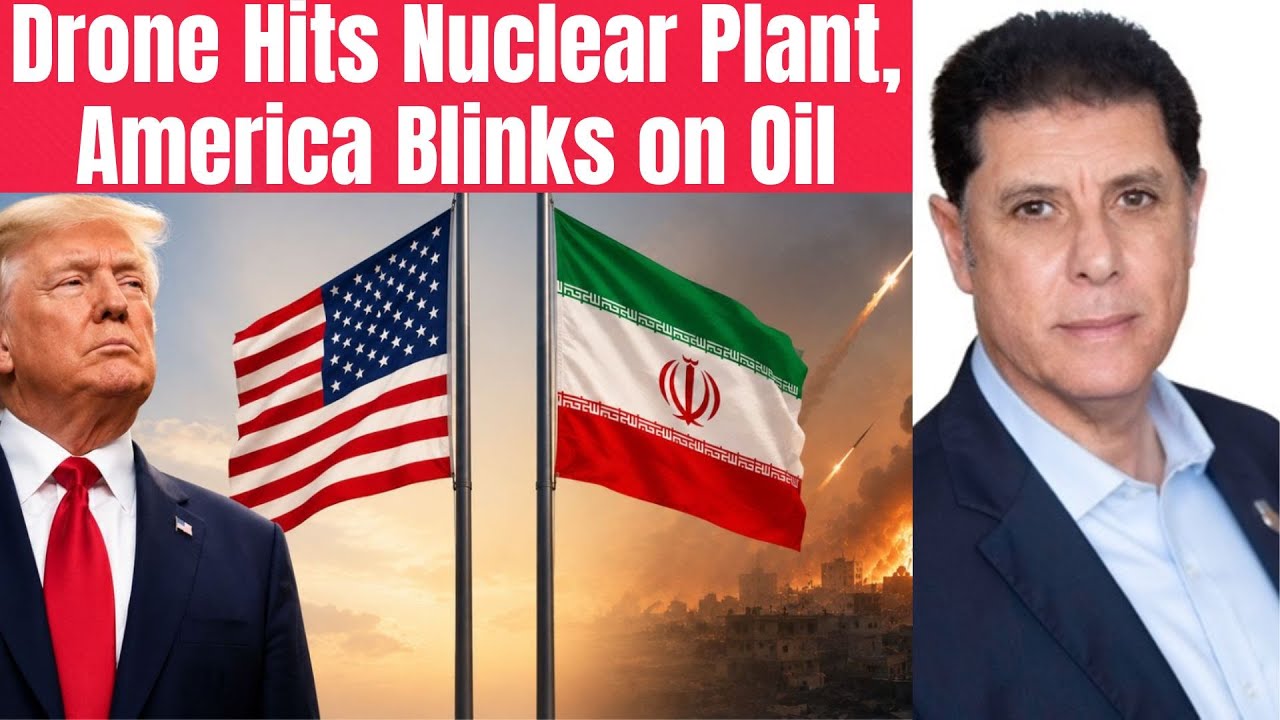
After a drone attack on the UAE's Barakah nuclear plant, Gulf monarchs pressured Trump to cancel a planned Iran strike. The U.S. then granted Iran a 30-day sanctions waiver, with negotiations underway on a 14-point deal that could reopen the Strait of Hormuz and lift sanctions permanently.
Chapters
Hello everybody and welcome to Geopolitical Trends, where truth matters. Only 3 days ago, Donald Trump had his finger on the button, sort of. A military strike on Iran, as a matter of fact, was scheduled for today. Then in the middle of the night, last night on Monday, The leaders of Saudi Arabia, Qatar, United Arab Emirates made urgent phone call begging Trump to stand down. So what did they know that we didn't? And why is America now secretly helping Iran sell the very oil it's been trying to cut off for years? And the answers involves with this, a drone attack on a nuclear power plant. In addition to that, you have now $111 a barrel of oil. And you have one more thing, which is one-page document that could now either end this war or light the entire Middle East on fire. This is exactly where things stands as of now. And that's why today I wanted to address for you, provide you my own insights about the attack on the nuclear power plant in United Arab Emirates and how that particular event has somehow hastened the decision by Donald Trump to sort of reverse course. Because it's reality, we can't ignore it. I mean, just think about it this way. Just imagine you waking up to find out that a nuclear power plant was attacked overnight. Likely no major damage was done, but again, makes you also wonder, was it a calculated strike? And that's the country that is attacked, it may be the same one now cutting a secret deal with the US. And that's not, uh, some sort of, uh, this is a, a movie screen plot or what have you. That's reality that is happening as we speak. Because now, at least for us in the US, gas prices are about 93 cents a gallon more just from yesterday. Overall, a surge for about 84% this year. The Strait of Hormuz, which carries about 20% of the world oils, is still shut down as we speak. Iran still has a firm control over it. And it is exactly what's happening, why it affects you everywhere, whatever you might be in, in this world. It impacts you one way or another. So here is, here is the harsh reality, is that the next question we'll find ourselves asking is what happens with the sanctions? Because this is a twist of a wartime irony. That's the way I look at it. The US moved as of last night to ease the sanctions on Iranian oil, not as a diplomatic concession, no, but to cool down surging domestic energy prices right here caused by the very war the US helped start. This is exactly where the harsh reality— and once again, when you consider about what happened with the nuclear, which I— nuclear power plants, which I will provide you more detail in a second here— did this attack on the United Arab Emirates nuclear facility hasten this decision by Trump? It's, it's legitimate question to ask. Because when you think about it, this— so far, the decision that's been made, it's only allowing for 30-day allowance for oil because you have now some sort of many, many ships stranded at sea. And all those are tied to the negotiations aimed at achieving a broader peace settlement in the region. And with this temporary waivers, because that's what it is, this is not a done deal permanently, it's a temporary waivers, have been now proposed and negotiated by the US Treasury Office of the Foreign Asset Control, known as OFAC, and was communicated to the Iranians through mediators, Pakistan in this case. But the details of this arrangement remain tight. No, no details about it. Because you think about the shifting diplomatic demands, you think about the ceasefire proposals, and you think about the, the broader permanent lifting of sanctions, which what Iran— because it remains a heavily debated topic that has not yet, yet been finalized. So the reality is what's been emphasized, because from Iran perspective, and my, my own assessment on it, the way I see it, it is viewed as a victory. And even some media inside Iran, uh, support this argument as well, like for example Tasnim, the news agency, because members of the Iranian negotiating delegations is the ongoing exchange of messages that is taking place. So what we are speaking about here, we're speaking about a phase that is, uh, that is characterized by an exchange of correspondence rather than a formal negotiations like you and I know how negotiations are supposed to be conducted. And that is again, uh, because the source inside Iran disclosed that the latest text received in Tehran from Washington as a response included, among other things, US approval for the lifting of sanctions and the American embargo related to Iranian oil. That's a major one. Equally important, you consider about the Iranian response appears to demonstrate an insistence on a complete lifting of sanctions. Even with this, Iranians are not content with it, particularly given that the embargo relief, uh, some sort of currently under discussion, is by nature temporary. So as a result, when you think of this, uh, speaking within the realm of the analysis, if I may use the term here, particularly with regard sort of the, the market the market situation, because this one is interpreted in Iran as a US attempt to alleviate the impasse currently facing the energy market. Iranians are reading this differently because you look at the market situation right now, which constitute the primary leverage that Iran believes it holds over the US. Particularly with regard to the Strait of Hormuz and the global energy crisis. Those are the key aspects that Iran has the upper hand, uh, uh, upon, because it also recognizes that the, this situation exerts some sort of a significant pressure both domestically within the United States and across the global market in general. This is why Iran still holding to, to the Strait of Hormuz, and it will, it will continue to do so till an agreement is reached with the United States. And this exactly in line with what is being emphasized by voices inside Iran, because what benefits Tehran and serves its interests. You know what it is? Is a complete lifting of sanctions against it. So Tehran is fully aware, really fully aware, that the sanctions imposed over the recent years, including those mandated by the presidency, the Treasury Department, Congress, and all other, are very, very complex. That ain't gonna be solved overnight. Therefore, their understanding, meaning in Iran, removal will require— because they understand the removal of the sanctions will require time, okay, and likely further sort of internal deliberations and so forth. And that is why Iran is playing this both sides here, and rightly so, as a strategy. So they're, they're the— they are engaging with the Americans. So, but Tehran also aimed to secure US approval and recognition specifically that the complete, once again, lifting of the sanctions be included within the agenda, the timeline, and the sequencing it has established for the negotiation process. That's the important thing. And this is again when you think about what Iran is, is trying to convey to the Americans. Because when it conveyed its response to the US side, a response subsequently confirmed by the Iranian foreign minister, uh, uh, Arab, Abbas Arachi, I'm sorry, indicates that Tehran primary priority at this stage aside from the issues of sanctions. You know what it is? Is ending the war. And of course, there is another dimension to that, and that is to secure guarantees that this scenario will never be repeated again. In other words, attacks on Iran. And that is why the spokesperson for the Iranian Foreign Ministry emphasized that Tehran continues to exchange messages with the US side. So he's doing it, of course, via Pakistan. But for us to think in terms of what drives Donald Trump to this decision, really, what's driving this? The root cause is Iran closure, of course, of the Strait of Hormuz, as you all know. But it also the idea of where this is going. That is what the part of the importance, uh, uh, about all this. And with this comes the issue of, as we all know, when you consider, uh, what, uh, the late Ali Khamenei warned about this regional war in case if it happens. And this is exactly the idea of that now US is realizing Iran is not going to be stopping any, anytime soon. They will fight till the end because they got nothing to lose now. And at least where this is going is because it was expedited by what took place in United Arab Emirates. So what exactly happened, which happened on Sunday, by the way, what had happened The Barakah— or Barakah, Barakah, I'm sorry— Barakah attack was a drone that was sent to, uh, uh, to this specific location. And I'm gonna provide you insights about this particular, uh, uh, uh, nuclear facility. So the drone that targeted the Barakah nuclear power plant in Ad-Dhafra region of the United Arab Emirates, and this is according to the Abu Dhabi media office itself, who confirms that the drones— that's the one that attacked it. And this drone, uh, that targeted the power plants, uh, sort of was a message from Iran, because the Abu Dhabi media office reports that the drone has targeted this nuclear facility, but also that a fire has broken out in an electrical generator outside the inner parameter of the Barakah nuclear power plant. No leaks happened, by the way. Environmentally is still fine because the— as of this morning, and I checked from different sources, the power plant is operational. There is no worry about this one. And by the way, just to let you know about— makes you just the double standard— why the United Arab Emirates will be allowed to enrich whatever he needs for electricity, but not Iran. And that's a separate conversation altogether. So, but let me at least provide you, uh, uh, uh, an idea about, uh, this particular nuclear power plant. It is about a $20 billion facility, uh, this one right here. It's about $20 billion facility. And, uh, this one uh, was— is located in Al Dhafra, which is the largest municipal region of the Emirate of Abu Dhabi, and is the United Arab Emirates' only nuclear power plant. And the construction for this, based on the resources that I looked into, and I will share the link with you, uh, it was started back in 2012, and its first reactor became commercially operational in 2021. That's when it started. The plant is located close to the borders with Saudi Arabia, about 225 kilometers or 140 miles west of United Arab Emirates capital city Abu Dhabi. And the facility itself, the, uh, this facility, the nuclear power plant, uh, sort of features 4 pressurized, uh, uh, water reactors, the most common type of a nuclear power reactor if you want to generate electricity. So the model used here is an advanced power reactor, uh, it's— there is some types. So this one is known as the, uh, re— uh, Power Reactor 1400, which is a pressurized water reactor design, uh, was developed by the way in South Korea because the South Koreans are the one who helped build this nuclear reactor. And each reactor of this type, the, the 1400 type, has the capacity to produce about 1,400 megawatt, which is enough to power roughly 1 million households. And again, this $20 billion project, uh, was built by the United Arab Emirates with the help of the South Korean and went online in 2020, but officially in 2021. Just want you to know. So the point, the message of this, by attacking this on the periphery of it, it didn't attack, uh, the, the drone wasn't, uh, aimed at really the, the sort of creating an environmental hazard, uh, environment there, uh, rather just to send the message. Let me, let me put, before I forget, let me put the link for you in the chat box so you can read the article. And this came aimed at the escalation spiral. Remember, Donald Trump was planning on launching an attack this morning— morning our time here— on Tuesday morning, because the attack sent tension soaring, of course. And Trump was expected to meet the national security advisers on Tuesday, this morning, to discuss the options for the military action. And that is why when the Emiratis were investigating the source of the strike, they came to the conclusion that we better reach out to the Saudis and the Qataris and ask the Americans to stand down. That is exactly what happened, why the US now had to back down. Did this because it's dramatic reversal when you consider just days ago Donald Trump was saying, you know, we're gonna, we're gonna launch something else, and they were working on it. You know, you— I shared the video with you, with you about, uh, the, uh, the, uh, Nightmare Bomber, the B-2, was, was airborne on Saturday in preparation for what was supposed to happen today. And that's why Donald Trump announced yesterday he has called off the planned military attack on Iran scheduled for Tuesday. Then why? Once again, just for you to know, because the heads of Qatar, Saudi Arabia, and United Arab Emirates urged him to hold off. Of course they urged him, not because they care for the security of their people They urged him because they're concerned about the toppling of their regimes. Yeah, they care less for the security of— yeah, don't, don't be fooled by that. Don't be fooled by that.
No.
Yes, they're gonna have you believe that because the Gulf leaders believe that a deal could be reached and it could be acceptable to the Americans. What about Iran? Will the deal be acceptable to Iran? Wait until I share a clip with you towards the end as to what those leaders in this Gulf were saying when the war started. And, and, and I'm gonna hold off on this one till I get closer to the end here. So, and, but here is the thing, the argument that goes between those Gulf states and the United States converge on one particular conclusion. And you know what that conclusion? No matter what type of deal is reached between the US and Iran, it— that deal will have to include that no nuclear weapons for Iran. And that is why I'm saying you have now voices inside Iran saying, forget about all this, move on with constructing the bomb. And end all this once for all. And that's exactly, uh, uh, why now Iran, with this gesture by the US, isn't fully satisfied with this. Despite the now the reported concession by the US, Iran continues to insist that any long-term agreement must include the full and permanent lifting of sanctions. It's because to Iranians, they can't trust the Americans. You can't trust the Americans government, not the people, the, the government. That is, to them, to Iranians, this will be insufficient. It's because the commit— there's no commitment that is from part of the US. That's why, because you have the wild card right now. The wild card is Israel that is playing behind the scenes. And that in itself, as now I read some report this morning, some analysts from, uh, uh, overseas are asking the question. I asked the question last night when I was thinking about it. Did the Baraka attack on this nuclear power plant hasten this decision by Donald Trump to lift the sanctions on Iran? And the answer is yes. The answer is yes, but perhaps not the way Iran intended for it to be, because now you have to think about it on the other side of the argument. The attack on the nuclear power plant raised some sort of the risk of a full-scale war that could resume. The possibility is there, is there. And that is why the Gulf states were alarmed, especially Saudi Arabia, Qatar, and United Arab Emirates, for the survival of the monarchy. And that is their concern, is what prompted them to reach out to the White House, Donald Trump, and ask him to stop the military strike, which gives you an idea that they are part of the plan. Instead of finding a permanent solutions and living peace beside them being Muslims in name only. So that is why you have to think about, uh, uh, uh, uh, this attack on a nuclear, uh, uh, power plant sends a strong message to the region that if a war— if Iran is attacked The first response from Iran is going to be in those countries, and rightly so, because the bases from which the, the, the attacks will be launched against Iran. So, so what could happen? What could happen now that this happened? What's next? In my opinion, the first thing that I see could happen is an MOU, a memorandum of understanding. And this will fall within line of— because you're going to have another days of negotiations, maybe the next weeks, two weeks, whatever. But the first thing is going to be an MOU to put things in perspective, because the framework being discussed in one page, and that one page include the 14-point memorandum of understanding that would declare an end to the war and kick off the 30-day period of detailed negotiations to open the Strait of Hormuz, maybe to limit Iran's nuclear program, and maybe the complete lifting of the US sanctions. I have my doubts. But I remain hopeful that this could lead to that. And of course, the negotiations will take again in, uh, place in both in Islamabad and in Geneva. Now you have to think about the other side of the equation. If negotiations collapse once again, what's going to happen? US forces will be able to restore the blockade or resume a military action. That is what the scenario Iran is prepared for, and for that reason they went ahead and activated— as of this morning I found out, and I will do a live stream for you later on once I confirm certain info— they activated certain types of missiles that have been— have not been used before. Makes you just wonder. And when you consider about if these negotiations collapse, because you have some key, several deep disagreements, uh, that haven't been resolved. For example, the nuclear enrichment. Iran will freeze domestic uranium, uh, enrichment, but the timeframe is fiercely contested. Remember, the US was asking 20 years. Iran initially countered that with 5. With a possible 5-year extension, because Iran has set a very firm red line. Once again, I find myself sharing this with you. I think Iran is making the strategic mistake getting into this 5-year, 10-year here and there, because 5 years, 10 years from now, we're going to do the same. I'm here to tell you, because that was the exact thing that happened after the JCPOA was signed, which was exactly the time when I wrote the book about Iran and I argued, I said, don't leave the door open for what-if scenario, because that what-if scenario, the deal was about 10 years between 2015 to 2025. And look what happened now. I'll say the same thing. Iran might be making again another strategic mistake. But suffice it to say, for now, the nuclear enrichment is one of those hurdles. Then you have the uranium stockpile. Iran will have to export nearly 1,000 pounds of highly enriched uranium. I just came across information last night, and I'm gonna do a live stream for you, and this one has to do with a military plan to extract uranium from Iran by both the US and Israel. And, and I'm not surprised because we do have a unit in, in, in the military here in the US that deals with these scenarios in case, uh, something like this, you need to go into a country. And the one that I was sort of just to share in general term, uh, uh, was a conversation about Pakistan nuclear power plant, nuclear sites, and all that stuff. And the unit was trained for that particular eventuality. That's why I'm not surprised Israelis and Americans are coordinating about this. And I'll do a live stream for you later on about this one. Now, the other thing has to do with the Strait of Hormuz. Iran is seeking sovereignty recognition over the Strait of Hormuz. Yeah. And has been setting a new protocol for vessels passing through. Of course, the US Gulf allies have pushed for unconditional reopening with no Iranian tolls or control. Good luck with that. Once again, because those countries are concerned about— if, if it weren't for oil, they won't exist. They will be just some nomads in the deserts. Over there. Simple as that. And the last point, that is, uh, the other point that is important is the sanction relief. And I insist, any long agreements must include the full and permanent lifting of sanctions, otherwise it's not going to work. Now here is where it gets very dicey with this particular attack on the nuclear power plant and how Israel remained the wild card. Israeli official admitted that Tel Aviv was preparing for an escalation as we speak, and of course they were taken by surprise and they weren't fully aware of Donald Trump was nearing an agreement with Iran. This is why Netanyahu's office rushed to deny he was caught off guard, because they're exposed. The Americans are not, uh, detailing everything with Israel. And this is why Netanyahu went ahead and instructed the IDF, the Israeli Defense Force, to prepare for all scenarios, including the extraction of uranium, enriched uranium in Iran. I always say good luck with that. And this is why, uh, Israel is preparing now to strike Iran nuclear facilities once again, which will mark— if they do that, it will mark a clear break with Donald Trump diplomatic effort. And in that case The US should say, you know what, Israel, you created this, you deal with it on your own. But it's unlikely because Tel Aviv controls Washington, not the other way around. I remain skeptical about all this. It's because, you know, I'm cautiously optimistic about it, but I'm, I'm, I'm a realist. I see things as they are. I see things as they are. The US did this not because they care for, uh, uh, reaching a deal or— no, no, no, no, no, no. It's because they had no other options. That is the reason why. The question is, is what will Israel do without the approval of the US? This is again where, uh, I, I see the next days will be very crucial, very crucial, as Trump now called off these strikes, uh, because at the Gulf States' request. That's, that's all it is. So the oil sanction waiver, sort of, uh, could it be just on the table as a carrot? Because Iran also has submitted its revised proposal through Pakistan, but you still have that issue of the nuclear enrichment gap. You have also the voices inside Iran now saying, let's move on forward with the bomb and be done with all this. Because once Iran has the bomb, do you think the US is going to attack, or Israel? I don't think so. And do you think Iran will not use it in self-defense? No, they will. Once again, think about North Korea as an example. And that is why Israel is going to be now the wild card that is going to undermine all this from behind the scenes. So the most likely near-term scenario, as one an Iranian reformist. I had to listen to what he had to say. Uh, it's kind of— he puts it in a sense that not a comprehensive agreement, but a continued attritional negotiations combined with the temporary ceasefires and crisis management, which basically means what You are not— you are neither in a full peace nor at a total war. It's realistic assessment, very realistic. So when you consider with all this that is happening, and again, I'm going to take you back prior to the assassination of the late Ali Khamenei, and you remember I did a video for you when he stated about the regional war and so forth. Well, because he did warn about this. He warned that any targeting of, of Iran or act of aggression against it, Iran will inevitably transform the conflict into regional war. He was right, because this warning was predicated on the logic that such an aggression would trigger retaliatory strike against the US military bases in the region. That was a foregone conclusion because most of which those bases are situated within the Gulf States. Let me put— oh, sorry, I left this one here. Let me put the, the map for you, and that puts it in perspective for you when you consider the locations of where those bases are. Yeah, all of them within the Gulf States. Where the presence of the US forces there in those countries, you know, Arab Emirates, Qatar, Bahrain, Kuwait, Oman, Qatar, and, uh, yeah, you know, Jordan to a degree, because there is a military, US military presence there. So from this standpoint of view, and prior to its actual outbreak, Iran characterized the anticipated conflict as one that will be regional in scope. That's what the late Ali Khamenei was warning about. And the Americans, of course, overlooked it because they could— they were thinking, we will repeat the scenario of Venezuela. Iran is no Venezuela, if I may add. And that's exactly, uh, where, as a result of— once the conflict arrived, once the conflict started, Uh, and now you— and the passage of the first month, or even 40 or 45 days, Iran asserted that this very bases, the one that I just showed you here where we have the US, those very bases had indeed been utilized in a demonstrably active manner against Iran. And Iran claimed that certain Gulf states had mobilized the entirety of their capabilities to facilitate the Israeli-American aggression directed at Iran. And this led to broader retaliatory strikes targeting specific Gulf states, action that perhaps extended beyond the mere targeting of US military bases, like what you saw, with the targeting of this nuclear power plant in United Arab Emirates, because Iran is, is driving home a message, and rightly so. So Iran, what Iran fundamentally did is that it escalated the cost, the cost rather, of this conflict, because it envisioned prior to this, remember Iran has been working on this scenario for decades, preparing for it. That's what I'm saying. Today they revealed the, uh, deployment of a special type of missile. They never talked about it before. And I'm, I'm gonna be working this afternoon on researching all this for you and do a live stream for you about it, because Iran calculated that you don't fight the Americans the way like a, a one-on-one in the sense of US military is much bigger than, than Iran. But Iran has other ways. And to Iran was a war of attrition. That war of attrition is exactly what's going to drain the US and Israel because it aims— Iran is aiming to leverage the passage of time because he recognized based on its own estimation that time does not favor either Israel or the United States. And like I discussed yesterday with, uh, my friend Warwick Powell, and, and he did address this particular point, especially with what's coming up in the next few months regarding the midterm in the US, with energy prices so high and the American economy on shaky ground. This is why Iran made the decision to drive up the cost. Yeah, and that cost wasn't just on, on, on US and Israel, but also upon the nations of the immediate region because they are taking part of the attacks against Iran. And of course, as a result, because of the energy crisis the global community end up being impacted. And this achieved through the actions involving the Strait of Hormuz. And also, if you know that the Gulf States, they do have a lot of petrochemical facilities, they also been hammered. So to Iran, Iran endeavors is to ensure that these targeted facilities are linked in one from, uh, one form or another, doesn't matter, to the United States. Because why? Because it's the US that is investing in those facilities, the corporate partnerships and other ties that the US have with, with the Gulf states. And this strategy serves both to escalate the cost of the conflict and at the same time to provide justification for this specific retaliatory strike. This is why I believe the attack on the nuclear power plant, in the eyes of Iran, is justified, because what the United Arab Emirates has been doing behind the scenes, along with Saudis also. And that is why— and by the way, I did find out Through some open intelligence sources, it's just you have to know where to look for. I did find out that Iran possesses documentary evidence demonstrating that this regional states, those countries, uh, let me put the map here. We're talking about the Gulf States: Qatar, United Arab Emirates, Oman, Bahrain, Kuwait, Uh, they didn't say anything. I didn't read anything about Jordan. What they found out is that these regional states, beyond merely hosting US bases, had in fact mobilized their own indigenous capabilities to a far greater extent in support of the aggression against Iran. So Iran has documentation for all this. Makes you just wonder what type of documentation they have. And this is exactly why the— I, I believe Donald Trump, once the attack took place against the, uh, against the nuclear power plant, the Gulf States realized, no, no, no, no, no, no, because we know Iran is not bluffing, we're not going to take chance. And that's how I see it, uh, playing out this time around, because now Iran made it clear. And by the way, if you think about why they want to hit and attack the, uh, the, the Baraka nuclear power plant but not Dimona, that's for a different time. Iran didn't forget about it. No, no, no, no, it's just for a different time. That is the reason why Israel is doing what it's doing, preparing for second round of, of, of firing or strikes, what have you. So here is my conclusion for you, and I'm gonna play some clips with you, so make sure you stay with me. I just want to wrap up this, at least part of the analysis for you. So of course, when we think about the impact of the Iran war, the US, the US-Israel-Iran war— funny how we don't say Israel anymore. We say the US-Iran war when in fact it is US-Israel-Iran war. So, but anyway, has put the entire world on edge because of the energy, of course, with oil prices soaring. Then now you have a nuclear power plant attacked which could open the door for more moving forward. Then you have that one-page that I mentioned the earlier deal standing between peace and conflict or catastrophe, whatever term you would like to use. And this is why Washington now is finding itself in a bizarre situation, because we finding itself that is helping Iran sell oil while simultaneously blocking its ports. It's just weird and odd. To say the least. So the way I see it rolling out moving forward, beside the MOU, if they ever agreed to that, is that the next month, next few weeks. And hopefully I will, uh, keep track of all this for you, uh, despite my— I might be out of the US, and I will— I'll keep you informed of the development of this. So the next few weeks will be likely determined, because they will determine this. It's time. That's part of it. It'll determine whether diplomacy wins, or you're gonna have West Asia erupt into something far more dangerous. It's reality. You can't ignore that. You can't ignore it. So here is the question I want to leave you with, uh, at least if you could, uh, please share your, uh, uh, feedback in the comment sections. Do you believe, or do you think Donald Trump's relief, uh, sanctions relief that is, was a smart diplomatic move, or did America just blink and hand Iran its biggest victory of the war? Let me repeat that. In your opinion, do you think Donald Trump's sanctions relief was a smart diplomatic move, or did the United States just blank and hand Iran its biggest victory of the war? So make sure you drop me, uh, your comments in the comment section. I would greatly appreciate it. Now let me, uh, uh, by the way I want to say thank you once again for taking part of the survey. Remember the survey question that I asked you, uh, in which I asked the question, uh, is the Iranian war silently draining America's ability to confront China? Of course there will be no war. I'm just thinking out loud, and I forgot to bring it up yesterday with with my friend Warik, uh, 93% of you said yes, 4% said no, and 3% say we don't know. And we had almost 2,000, uh, uh, uh, participants in this survey. So, so I want to say thank you for participating in that. Now let me play the first clip for you, and why I wanted to play this is to, uh, to highlight to you what the Gulf States are doing versus what the reality is. You know, hypocrisy, man. I, I just— what I, what I have a hard time sort of— just how can they call themselves Muslims and, and, and yet they are hypocrites? You know, I understand the national security, the the strategic, national strategic interests. I understand all that, and they have to look after themselves. But man, what you doing behind the scenes and you still call yourself a Muslim, it's, it's, it's disturbing to me. So, and this has nothing to do with Islam, by the way. Most religions do that. Let me just, uh, clarify that one. So, all right, let's listen. Take a listen at Jeffrey Sachs.
What he had to say: The day that Iran was bombed, the day that Iran was bombed brutally, the day that the Supreme Leader was assassinated, the day that 40 leaders were killed, the day that the granddaughter of the Supreme Leader was killed, what happened? Well, the first speaker from Bahrain The ambassador said, "We are here to condemn the unprovoked attack on us by Iran." Unprovoked after an Israeli-US aggression? I thought I must not be hearing right. Then came the French ambassador: "We are here to condemn Iran's attack on its neighboring states." Then came the Danish ambassador: "We are here to condemn Iran." Then came the British ambassador: "We are here to condemn Iran." Then came the Greek ambassador: "We are here to condemn Iran." Even George Orwell could not have made this up. This is the day that Iran was attacked. Only 3 countries condemned Israel and the United States for attacking: Russia, China, and I believe it was Somalia sitting in the seat for the African countries. Only 3. I had to think, what is going on here? I'll tell you what's going on. It's very interesting. Everyone that said that has an American military base on their soil. They are not sovereign countries. They dare not speak. They host the U.S. military, they host the CIA, they watch their backs.
Wow, spot on! I couldn't agree more with Jeff, with Professor Sachs, even though I disagree with him on some other, uh, uh, uh, uh, issues and so forth. But he's, he's dead on on this one, so I appreciate his insights regarding this. Uh, the next one I want to share with you is something that just happened, uh, yesterday, and this has to do with, uh, a drone. US— here, I'll let you take a look and take a listen. It's in English anyway. Yemeni Houthis shot down a US Air Force MQ-9A Block 5 extended-range drone over the Safer area of Marib governorate in western Yemen. Several Hellfire R9X missiles, also known as the Ninja bomb, were found in the wreckage. The missile is designed for targeted assassinations with minimal collateral damage. Using deployable blades instead of a traditional explosive warhead. An external fuel tank was also recovered from the crash site. And by the way, uh, he pronounced it's Ma'rib. To those who are familiar with Yemen, there is a region in Yemen called Ma'rib, so it's, it's one known. So the next one is the one I told you last time, and I said, let me confirm, uh, and I did confirm it. Regarding the attack on a, uh, a ship from Thailand. Yes, it was because it ignored the warnings from, from Iran and they went ahead and, and, and, and launched at it. So, all right, take a look here, please. All right, I just wanted to, because I did mention it last time and I said I will, uh, I will confirm that with you. So, uh, the stories that I'm going to be working on— and as I said, by the way, it was, uh, it was a— hold on a second, actually, I'm gonna, I'm gonna share it with you right now, even though I was supposed to keep it till tomorrow, uh, till tomorrow when I do the story about the Israel and the US special ops considering an op to extract the uranium from Iran, which is not going to succeed anyway. So, but I'm going to go ahead and share this clip with you here. This happened few days ago. There is a, a private trip by Netanyahu to— yes, you guessed it right— United Arab Emirates. So, so I'm going to do the translation for you because it's in Arabic. Then, uh, and then we just go from there. So let me start. Okay, what it says is, did Muhammad bin Zayed Palace embrace the children of Gaza, Lebanon, and Iran? Benjamin Netanyahu's office revealed that he paid a secret visit to the United Arab Emirates during the war with Iran and met with its president, Muhammad bin Zayed. Uh, the former spokesperson for from Netanyahu's office who resigned a month ago revealed his participation in the delegation. His name is Ziv Agmon, by the way, accompanied Netanyahu to the United Arab Emirates, confirming that the prime minister received a royal welcome and that Mohammed bin Zayed personally drove him from the airport to the palace. One could say that the prime minister received a royal welcome in Abu Dhabi. Bin Zayed, members of his family, and other prominent figures welcomed us. They were delighted to see the Prime Minister of Israel on their soil. The Sheikh showed the Prime Minister great hospitality, personally driving him in his private vehicle from the aircraft to the palace. The achievements realized during this remarkable visit will be spoken of for generations to come. Furthermore, Israeli and American media outlets revealed separate visits to the United Arab Emirates by Mossad chief David Barnea and Shin Bet chief David Zinni to coordinate positions regarding the conflicts with Iran. Mossad chief David Barnea reportedly made at least two secret visits to the United Arab Emirates last March and April for the purpose of strategic coordination in the campaign against Iran, serving as clear evidence of the deep partnership between Tel Aviv and Abu Dhabi. Similarly, David Zinni, the head of the domestic security agency Shin Bet, traveled to the United Arab Emirates in recent weeks for an unprecedented visit coinciding with the fragile ceasefire with Iran. The UAE, however, denied all such reports, asserting that its relationship with Israel is based on transparency. Our relations with Israel are public. They are not predi— they are not predicated on secrecy or clandestine arrangements. Any claim regarding undeclared visits or arrangements are entirely baseless unless officially issued by the competent authorities within the United Arab Emirates. These statements by the UAE Ministry of Foreign Affairs met with widespread backlash, with critics accusing the Bin Zayed regime of opening the country doors to Netanyahu, a child killer, and effectively turning the nations into a military base for the Israeli occupation. Everyone knows that the United Arab Emirates is a traitor. The UAE and the, uh, the Z-word entity differ in name only. As for policy, it is one of the same, neither secret nor anything of the sort. Everything is laid bare. The UAE is Israel and Israel is the UAE. Is there after this any room for doubt regarding the UAE? It strives to empower the entity by subjugating Muslims and the Arab and Islamic world and extending its hegemony all over them. Very, very disturbing to say the least. And this is once again Uh, why I get like, okay, they call in Muslims and pray and all that stuff, and yet hypocrisy is at the heart of every action we do. And that tells you it's never about the people, it is about the survival of those monarchies. Because if it weren't for oil, if it weren't for the support of US and Israel, we won't be talking about the Gulf States because they will be just nomads. Literally in the desert. That's, that's what it's going to be. So, uh, anyway, I will be working on story for you that, uh, as a matter of fact, it's an Israeli journalist, believe it or not, a journalist who exposed— he doesn't work for the government or media associated with the government— he exposed Netanyahu and Donald Trump's plan to extract uranium from Iran. So I will do that live stream for you, and I am also going to be, uh, working on a story regarding how Morocco has become the largest arm importer in Africa. But also because we have to understand the big picture of all this, I feel you need to understand, uh, what is going on with that. So, all right, let me say thank you as always, uh, my way of, uh Uh, I want to say thank you to Sky Jed. Thank you for buying me cups of teas in support of my upcoming trip to Asia. And you wrote, and I quote, thank you for the concise and no BS analysis, much appreciated. You are most welcome, Sky Jed. Truly, truly appreciate your support for my upcoming trip to Asia. Uh, to those who wants to uh, support that trip, here is the link. And I'm gonna share with you where we are as far as the fundraising, because I like the transparency. This is where we are. We are about 47%, uh, we still have a way to go, but it's okay. I'm not planning on leaving next month. I'm thinking about the probably, probably August, August time, towards mid-August or so. So I hope we can, uh, reach that target goal for this because I have different locations to go to, uh, and I want to specifically one particular location because I want to report to you from that location and put an end to, uh, the, the, the lies that's been discussed about this particular location. So I'll let you know once if we achieve this, uh, funding goal, then I'll, I'll, I'll make it down there. Uh, for those who wants to support the channel, here is the link if you decide to support the channel. And thanks to those who've been buying me coffee in support of the channel, uh, I'm very, very grateful. And the last link is the one for my books if you decide to get a copy of my Iran book or Saudi or the Russians or American foreign policy in the Middle East. Uh, those are the link— that's the link for, uh, if, if, if you want to get, uh, a copy of those books. And I wish one day to meet you in person, and I will autograph it for you. So, uh, hope you enjoyed this, and I look forward to seeing you next time. As always, remember, geopolitics impacts your daily life in more ways than one. Till next time, bye-bye.
More from David


Beyond the Single Actor: Why the Gulf Isn't Choosing Between the US and China


Iran, Iraq's Militias, and the Houthis Are Coordinating! This Changes Everything




Who Controls the Next Decade's Resources? Latin America and Africa's Geopolitical Crossroads

The Chokepoint Trap: How Washington's Stupidity Triggered a Cascade That Now Controls the World

Trump Spooked as IRGC Unveiled dual-use SLV, Deployed Ghadir Mini-Subs & Hinted at Tactical Nukes!
