Trump-Putin Phone Call: Chasing an Elusive Peace?
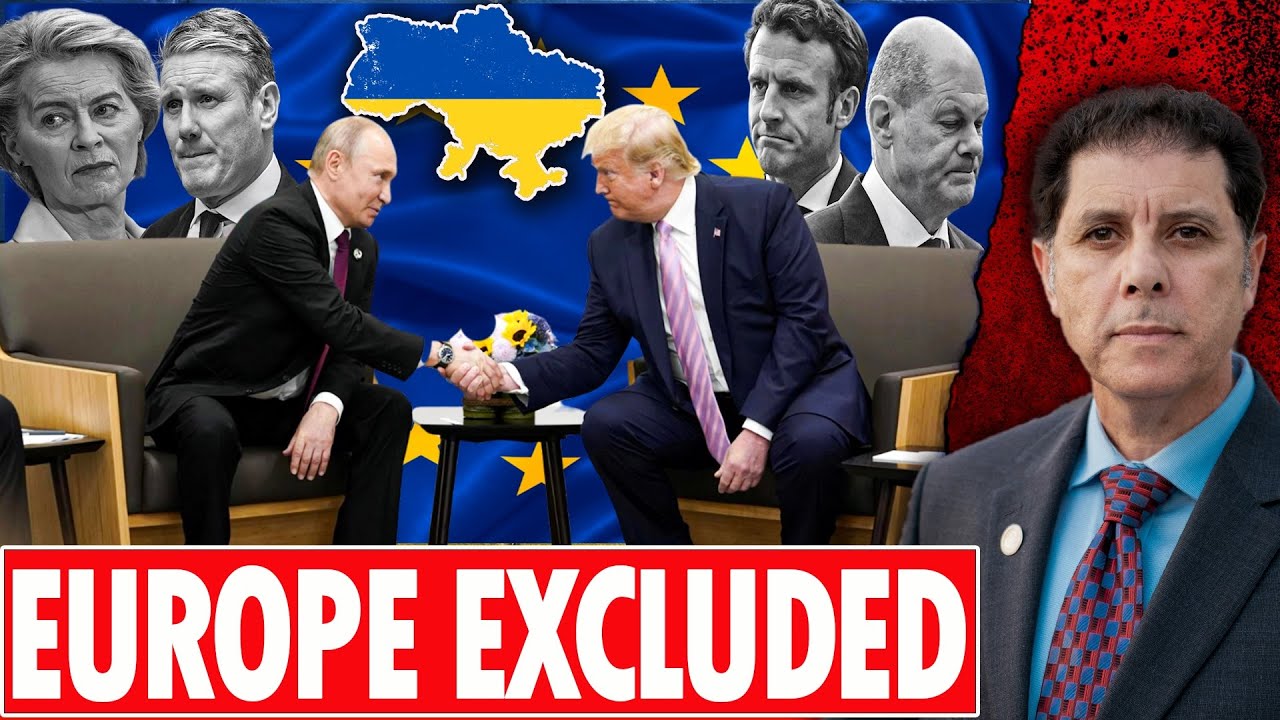
In this extensive video, the host introduces the recent Trump‑Putin phone call that discussed a 30‑day cease‑fire in Ukraine and then provides a rapid, chronological survey of U.S.–Soviet/Russian diplomatic history from Franklin D. Roosevelt through Donald Trump. He argues that every U.S. administration has treated Russia as a strategic adversary, shaping foreign policy around containment, proxy wars, and the military‑industrial complex. The narrative links past events—such as the 1933 recognition of the USSR, the Cold War crises, the SALT agreements, and post‑Cold‑War interventions—to the current dynamics involving Ukraine, NATO expansion, Saudi financing, and the emerging Russia‑China partnership. The host stresses that any peace settlement will be dictated by Russian terms, that Europe and Ukraine have limited leverage, and that U.S. policy is often contradictory, driven by domestic political cycles and financial incentives. He also promotes his own book and upcoming travel, urging viewers to subscribe and support the channel.
Chapters
All right, hello everybody and welcome to Geopolitical Trends, where truth matters. Excited to be with you as always. Got an interesting topic. Actually, I wanted to provide you my insights about the current development. As a matter of fact, the issue still ongoing, which has to do with the phone call between President Trump and President Putin. So I wanted to provide you my insights, but there is one thing I'm going to do different this time around, is I'm going to share with you the history of the US-Russia or US-Soviet Union relations going all the way back to FDR. And I'm gonna do it very, very briefly, so I'll be detailing and put things in perspective for you. But first, let me quickly say hi to our wonderful community. Uh, YT, good to see you. Mara Page, good to see you. Truth Seeker, Willie Hallman, Tom Sires, Francis Tango, Matt Becky, good to see you. And thank you for, for your message, Matt. Uh, Ramples01, good to see you. All right guys, let's get into this. I'm not gonna do today— I'm not gonna do the, the, the, uh, headlines and so forth just because I had to do a lot of read-up quick, uh, this morning here, believe it or not. Then, uh, then I'm gonna just get into the topic right here. So, all right, now the question is that many will be asking as the world Yeah, the rest of the world now is waiting, uh, to hear about the outcome of the— this much anticipated phone call between, uh, Trump and Putin. So it will be very, very interesting to see the dynamics. And again, I provide you my insights, and I would like to also, uh, hear from you what you think about the outcome of this, uh, phone call. So, but before I do this, please, if this is your first time here in our community. I would greatly appreciate if you could subscribe because the analysis you are hearing, it's unique to this channel. So if you want to show your support, just please make sure to subscribe and share this, uh, channel with others so they, like you, uh, have an opportunity to hear the truth. And I'm very, very grateful for your support. So here is the link in the chat box and you can share it with, uh, other people. All right, as I mentioned, um, President Trump and Russian President Vladimir Putin have already sort of gotten on the call this morning. I think it was around 10:30, if I'm not mistaken. So, and what was the reason about is also to discuss the 30-day ceasefire in Ukraine. Of course, the, uh And I have a lot of pictures I'm going to be sharing with you. Uh, of course, the comedian Z, uh, already is saying, well, you can't trust the Russians. Well, wait a minute, wait a minute, wait a minute. Aren't you the one that already went back on Minsk, the treaty that was sent, and the Europeans sort of went into it with good faith? Only, as a matter of fact, some Europeans knew that the Minsk accord was nothing but an opportunity for Ukraine. Yeah, so there is no— so when Z is saying, Zelensky is saying, oh, I can't trust the Russians, wait a minute, look at— look, look in the mirror, man. And by the way, the comedian Zelensky is right now in Finland. So apparently what it appears to me is that Finland is dragging itself into a deep hole. You never hear about Finland getting involved, even though it shares a long border, about 1,400 miles, something like that, uh, for— with the, with the Russians. They never had an issue. Now all of a sudden, once they became in NATO, we pulled them into all this. And this is what this, uh, call between Trump and Putin is all about, you know, because as I said, Kiev or Ukraine has already agreed to the proposal, but Zelensky is lying, you know, straightforward. Why should we be surprised at that? We shouldn't, because what he's saying is that the Russian president Vladimir Putin is dodging a ceasefire. Now, is the idea that, like we said at the beginning, the Ukraine conflict will end on the Russian terms, not the Ukrainians, not the Americans, not the Europeans. There is another point that I need you guys to know, is that if Trump thinks he's gonna impose the ceasefire or impose peace on Russians, he's miscalculating. Because Russians, this is why they are moving forward in Kursk. Would now decimate, decimating the, the, the Ukrainian soldiers in that part of the country. So, and the idea of, uh, the idea that, uh, uh, even Ukrainians, Ukrainians, uh, uh, remain skeptical. Yeah, Ukrainian people remain skeptical about this so-called ceasefire, not because they don't has to do with the put— uh, uh, Russian President Vladimir Putin. No, no, no, no, it has to do with the nature of the conflict because they couldn't trust their own president, meaning, uh, uh, Kamyazynsky, which by the way you all know how he came to power. So now what I wanted to really address into this is that this peace proposal that is on the table right now has already been discussed between the Ukrainian side and the American side. Where was it discussed? Does anybody know which country this was discussed? And I just want you guys be part of the conversation. It was just recently. Let me see if you guys, uh, in which country that hosted the talks. Taiwan still. Saudi Arabia, indeed. Why is this important now to understand? Because I'm preparing an analysis for you guys. I'm going to do it in a recorded video for you. Why is this important? Because now you're going to have to understand that Europe plays no role into this new setting of global order. Rather, it is emerging from West Asia. Through Saudi Arabia who wants to play a role into this. And by the way, the Saudis wanted to have this preeminence on the global stage by bribing their way through that. How so, you may ask? Is by investing in the United States for about $1 trillion. So that's the bribe, because I look at it as a bribe. I mean, come on guys, let's be honest. Are you gonna tell me that the Saudi is gonna play a role on the global stage. Because if it weren't for oil, we wouldn't be talking about Saudi Arabia to begin with. But my point is that those talks that have already been held in Saudi Arabia between the Ukrainian and the American delegations, which was last week, sort of wanted to address these proposals for the ceasefire. Well, of course, what makes them think, meaning the Russians, meaning the Ukrainians and the Americans, what makes them think that the Russians is going to agree to whatever? It's been discussed once again, this 30-day ceasefire. The Russians haven't agreed to it yet. Why? Because they're moving forward in Kirkuk. As a matter of fact, they're gonna be taking over soon. I just read, uh, something this morning about it. So, and the Russians also, of course, now the Russians and the Americans wants to discuss this deal, but it's gonna have to end on the Russian terms, not the American terms. Of course, the US, Donald Trump, wanted to approach this one from the perspective of, see, I am the one who brought peace to the Ukrainian conflict and so forth. Well, hold on a second, aren't you also the one who said, oh, I'm going to end the conflict in one day? Because Trump is not— Trump doesn't have a clue about global affairs, geopolitics, and so forth. And I am going to talk about it when I address all the presidents of the United States relationship with the Soviet Union and recently the Russian Federation. So, but I want you— what I want you to understand is that even, even now our State Department is stating that now they are throwing everything on the Russian camp, meaning that now they wanted to say that is the Russian that is now not willing to agree to peace. No, no, no, no, no, no. You miss— you, you, Minanci, you State Department, you, you, uh, you manipulating the masses. Because here is what the State Department's spokesperson said, said, and I quote, uh, her name is Tammy Bruce, said, and I quote, the ball is now in Russia's court to accept a US-proposed ceasefire that Ukraine agreed to. Well, wait a minute. What makes you think that Russians will agree? Because Russians now seeing the big picture into all this. The only condition that I see the Russians will agree to it is that if its conditions, meaning Russia's conditions, which are limited to specific one, for example, that there will be no Ukraine, uh, admission to NATO forever. That's one. Second, that the territories acquired by Russia is not going to go back to Ukraine. That's a foregone conclusion. Third, that there will be no peacekeeping troops on Ukrainian soil, which means if there are to be peacekeeping, where are they going to come from? What do you guys think? We're going to send our troops? I don't think so. And we can't even fight. Let's just be straightforward about it. Even 30 or 40 years ago, things were slightly different. Even in my time when I was in the military, things were a little bit different than what it is now. Now we got a force that is not even ready to fight. So, but suffice it to say that now this, uh, when Ukraine is saying, well, I am ready for this ceasefire because you are losing, you know, that which has been the case for for a while, but still it's going to have to be on Russia's terms, not the Ukrainian terms. And that is very, very important for you guys to understand. So, so even Donald Trump is going to be pushing now with this sort of ideas and exchange of talks with the Russian President Vladimir Putin. You know, Putin is going to listen to what Donald Trump is going to say, but Do you think Putin is stupid? No, he knows how the Americans work. He knows how the personality of Donald Trump is, you know, they're not gonna fall for that. This, the way it's gonna work is if Ukraine and the US, Europe is nonsense, you know, because Europe is useless into all this. As a matter of fact, even Ukraine is useless into this. Where the deal is going to be is between the US and Russia. And the US will tell Ukraine, you either take it or leave it. And if you leave it, we're going to cut off all the aid. What I mean, without the US aid, Ukraine would have been done for. You all know this, it's nothing new about this one here. So Europe, Europe is useless into all this because even though now Europe is saying, well, we're going to have to allocate more funding into defense, whatever you stand no chance against the Russians. Simple as that. And despite what they are saying now, Europeans that is, are now, well, because Russia will invade Europe. Now, come on, come on. Is this how you think of how stupid people are? Majority know that Russia has no interest into all this. So this is where the difference is. What it's going to be is that the, uh, the— even though Ukraine might end up taking part of that deal per se, as far as the talks between the US and Russia, but overall it's going to be Russia and the United States, no third party ever. That's the way I see it. And the way you're going to know this is that if the Russians agree to this 30-day ceasefire. But again, you have to think about what happened before the 30 days, because the Russians thinking is going to be, if we give 30 days, that means the Ukrainians could recuperate. That means more weapons will be flown in because we are— we, the Americans, talking with Russians, but behind closed doors, we still providing some support of sort. Because remember what I said yesterday, the military-industrial complex require from the US government about between $40 and $60 $1 billion a year. How this is going to happen is through conflicts. This is why you're seeing what you're seeing right now in the Red Sea regarding the Houthis. So, but here is what I wanted to, uh, say to you about all this, is to put this in perspective from a historical aspect of it. So I'm gonna be going way back to the beginning of uh, almost World War II. But, uh, this, guys, if you ever get a chance to, uh, get a copy of my book here, The Dynamics of Russia's Geopolitics: Remaking the Global Order, uh, the way you can get this, you can get it on, uh, uh, what is it, it's on Buy Me a Coffee. I have, uh, I have some, uh, the, the books are listed there. I'm, I'm trying to locate it for you guys here. Uh, that's books right there. Yeah, if you get a chance, go to this website, uh, and, uh, you can, uh, let me, let me just put it for you in the chat box, guys, for those who might be interested. And I'm going to put it in chat box. I know some of you already got a copy, some in the community, they got a copy of that one. But, but in any event, uh, this is what I intend to, uh, share with you, part of that history from— so, so I'm gonna go back and I have pictures. Uh, we'll start with the first, uh, one here. It's, uh, this is Donald Trump and Putin, of course, and they are considering now the talks. I'm waiting to hear the talks about the, uh a readout from the White House because I haven't seen one yet. So, uh, we'll, we'll see how this is going to move. So, because it will be interesting to understand, so what they're going to say. No, Mr. Trump tends to inflate certain things out. Why? I told the Russians to do this. No, come on, you didn't tell Russian a squat because Russians not going to care for what Donald Trump says. Russians going to care about if the deal is upheld according to their term. This is how it's going to work. I have this interesting picture here, and I give credit to Natalia Shulga. What's interesting about this picture, guys? You all know who that person is, right, that Putin is holding to? Can you tell me who that is? Remember, it's caricature here, but you guys would know. Let me see what, uh, yeah, if you can tell me who the other person is. Who is the— yes, a truth seeker in this. That is President Xi Jinping. Yeah, that's interesting. What's interesting about this picture, it highlights to you the idea that Why is this important? To highlight to you the idea that the Russians understand what the US is trying to do is to create that wedge between Russians and the Chinese. It's not going to work this time because we did this back in 1970s, early '70s, because when the Russians and the Chinese were getting closer at that time, we wanted to create the wedge. That is what we were trying to do. And of course, like I said earlier, European, the Europes are useless into these talks right now. The Ukrainians are useless in this, uh, comedians, it's useless in this, in, in this talk. So what it's gonna be is the Americans and the Russians. That's it. That's how it's gonna go. So now let's start with this first one here, and I'm gonna take you back into history because I'm gonna provide you some chronological history here starting from 1933. Why 1933? What happened between the United States and the Soviet Union in 1933? I don't know if anybody would know what does 1933 represent in the US-Soviet relations. I'm just gonna see if, uh, again, I found it very interesting to understand a little bit of history here because it's very crucial, guys. So, okay, let me see, 1933. Okay, uh, it's not here, so I'm gonna move on, guys. 1933— no, okay, no worries, no worries. 1933 marks the full diplomatic relations between the United States and USSR. So, and this is why, uh, sort of even when I wrote my book, I made the historical reference, reference from this point forward regarding the US and, uh, Soviet Union relations. So It's very, very interesting to understand this. Of course, I'm gonna start it with FDR. That is the— and I have pictures of each one of them. All right, let's start with FDR right here. So, but my point in this is to understand how every administration always was suspicious of the Russians. Why? Or the Soviets. Because they wanted always to maintain an enemy. Real or perceived. So for FDR, uh, was which, which was the 32nd president of the United States, uh, during his time, the US, uh, uh, Russia rela— relations, uh, which is according to historians, were hostile at that time. So why is this? Because the hostility stems from or resulted from the decisions of the Soviet leaders at that time when they pulled Russia out of World War I, although tensions existed between the two countries. The United States and USSR during its famine— you all remember the Russian famine, right? And where the United States provided the relief in the early 1920s. That is why it's important. So this is why you have to understand how far back things go. So all this occurred while the United States and the Soviet Union, or USSR at that time, lacked diplomatic relations, because it was until 1933 when the relationship became officially sort of recognized. The United States recognized USSR. So after FDR, who came after FDR? It was Harry Truman. Why is this important? Harry Truman as the 50— uh, as the 33rd president, if I recall. That is correct. The issue with Truman— Truman crafted the foreign policy that is mainly geared towards the Soviet Union. Why? Because remember the time that Harry Truman took office, it was between 1945 and 1952. What this era marked— it marked the beginning of the Cold War, because the Cold War was emerging. This is why it's important to understand this era of Truman. Of course, it was under Truman that's where we went ahead with the Manhattan Project, which you all know what it is. So, and this is where America's position on the Soviet Union became the core American foreign policy for decades regarding Soviet Union. Is that during this era? So, and this is why, if you remember, and I did say this one day, I think about few months ago, I remember. So I said that if you understand how the military-industrial complex in the US controlled the foreign policy of the US, because it started in the early '50s and And what happened in the '50s, that was the decision was made for us to get involved in conflict but not win a war or a conflict, whatever you want to call them. It's just the fact that you drag a conflict forever, that's what spurs the generation of those between $40 and $50, $60 billion a year that the military-industrial complex always wanted. And go back to 1953. What was the first major war that happened in 1953? Does anybody know? You can guys, uh, type it in the chat. Let's say just in the '50s. So there were 5 major conflicts that the US was involved in. We start the— Matt Becky, you got it— the Korean War in the '50s. What came after it? What was after that? '60s. Multi-tam-tam. Korea War. That's correct. That is correct. The 19— the Korean War. Uh, what was after the 1950s? The Vietnam. That is correct. Then what came in the '70s? That is correct. Vietnam. That was Vietnam '60s, '70s. Then the, uh, the, uh, the Afghanistan. You all remember the presence of the Soviet Union in, in Afghanistan. Now the West is saying the Russians— the Soviets invaded. They did not. I disclosed that in a book based on the research that I did. The Soviets were invited by the government in Kabul at that time. Why? Because they were communists. There were no invasion because even Donald Trump saying what they invited, and I challenged that in the book that, uh, Donald Trump, you have no clue what you're saying. Go read up the history in understanding. And this is why it's important to understand this era of the '50s. So, and this is why America's possession in the '50s on the Soviet Union became the core, as I mentioned, of the core of the American foreign policy. So And of course, tensions between USSR and the, uh, the United States had existed even before Truman became president. And those tensions, which started after the end of World War II, emerged as Moscow and Washington at the time both wanted to shape the post-war Cold War, uh, uh, global order. That was which was according to what? According to the ideological orientation and strategic interest. You're seeing the same conversions of the issues. This is why I said earlier, if there is any deal reached regarding the Ukraine conflict, is going to be between the United States and the Russians. Europe is useless, Ukraine is useless. And the way it's going to work, if I am to guess here, thinking of using history as my guide is that the US will cut a deal with the Russians and the Russians will cut a deal with the Americans. That is how it's going to work. So, and this is where, for instance, to go back to this ideological orientation and strategic interests back during the Truman era, look no further than Poland, because Poland became one of the major flashpoints between the United States and USSR. Uh, third one, it comes, uh, who comes after him was none other than Dwight Eisenhower. Dwight Eisenhower, which was the 34th president, 1953 through 1961. Eisenhower faced 3 major events, and I'm gonna test your knowledge here, guys. 1953 What happened in 1953? And I'm going to help you out here. A major event in West Asia or the Middle East, 1953. And once again, guys, my point is just to get you involved in the conversation because we are all learning here. So 1953. Oh, oh, oh, Matt Becky, you got it! It was Iran. Dr. Mohammad Mosaddegh. So what happened during that time? There's three major events. The first one was the ousting of the popular Iranian leader Dr. Mohammad Mosaddegh. Then in 1956, what happened in 1956? It was France, Britain, and Israel attacked Egypt after the latter decided to do what? Does anybody know what happened in 1956? What did Egypt decide to do? Uh, you got it, the Suez Canal. You got it, it was the Suez Canal. So the Egyptians decided to nationalize the Suez Canal. And in 1958, what happened at that? President Eisenhower ordered US troops into Beirut. Why? To protect the Lebanese Christian-led government at that time. And what stands out about this US relations with the Soviet under Eisenhower administration was the exchange of verbal threat. Yeah, verbal threat between the Soviet Union premier at that time, Nikita Khrushchev, and President Eisenhower. Over what? Over one particular country. Can anybody tell me where? It's in the Western Hemisphere. It's our neighbor. Does anybody know one particular country in the Western Hemisphere? Uh, oh, HOT Channel, you got it! Alistar, you got it! It's Cuba. That is what's important to understand. So because another thing for the strategic interest, Cuba became now the central focus during the Cold War between the United States and USSR. And of course, in an effort to undermine the Soviet ideology and expansion at that time, what did Eisenhower do? He authorized the Central Intelligence Agency to conduct clandestine operations against communism around the world, two of which— two of these operations, and I disclosed this in the book. And by the way, I had to have the US government approval of the book, and I was like, don't tell me you want me to redact this one. I'm not, because it's a public domain. So they toppled two governments, one in Iran, of course, 1953, and one in Guatemala in 1954. The one in 1953, it was another agency involved into that. So, and that's from Britain, so we leave it at that. So now, one of Eisenhower's top political goals was to improve relations with the Soviet following the death of Stalin, because in 19— in 1953, that's when he died. So for example, 1955 President Eisenhower met with the leaders of France, Britain, and USSR in Geneva, Switzerland. That's when— that's where they met. What was the purpose of that meeting? It was to propose a new policy, Dupt. It was what's called Open Sky, if you are familiar with it. And Open Sky basically will allow each— allow both countries, the Russians, the Soviet Union, and the United States to do what? To conduct air inspection of each other's military installations or programs. This is where the Spy-2— see that plane over there, right there, the black one? That's the Spy-2. That's U-2, used to fly over, uh, because it goes up to— I had a chance, privilege, not a chance, privilege to meet the captain who was flying that, uh, the, the U-2, uh, spy plane. So I met him in Washington, DC at some point. So, so, and that is where, uh, one thing that highlighted the relationship. So the next one comes— who came after Eisenhower? It was none other than Kennedy, JFK. Now Kennedy, 35th president, remember the era, 1961, to 1963, uh, uh, JFK policy was dominated by what? American confrontation with the Soviet Union. So once again, which took a form of a proxy context during the Cold War. This is what I'm saying, you have to understand this history to understand what's going on right now. Proxy wars have always been one of the, the, the key policies that we always engaged in from behind the scenes. So this is what you are now witnessing in West Asia or the Middle East. And the thing is, if you get Iran involved now, all hell will break loose because Iran is not your average country, militarily speaking, because Iran is not Iraq, is not Yemen, is not Saudi Arabia, is not Jordan. Those countries, by the way, are, are useless anyway. Because when you consider Qatar, United Arab Emirates, Saudi Arabia, and Jordan, Egypt to some degree, all of them are allowing their territories to be used by the Americans. Simple as that. I was familiar with this because I used to travel to those countries, and I was familiar with this, uh, the presence there. So, so JFK, what marks his policy or, or, uh, towards the Soviets at that time? Well, it's like his predecessor, JFK, adopted the policy of what? Containment. This is something, by the way, I, when I was in Washington, I argued against containment because against the Chinese, because we were told at that time, well, we're going to want to contain China. And I was like, what are you talking about? Remember, China is not the Soviet Union. Go back to the '50s and you will learn we might have been able to do on a limited basis against the Soviets, but you won't be able to do it against the, the Chinese for one simple reason, because the Chinese economy is far different than that of the Soviets. So suffice it to say for now that during the JFK era, the one of the policies that JFK adopted was the containment, you know, and which sought to do what? It sought to stop the spread of communism at that time. Most historians, according to historical record, agree that the Cold War dominated Kennedy's presidency. So, and of course, the US failed attempt in 1961 to overthrow Fidel Castro of Cuba, which known as the Bay of Pigs. That was butchered operations, I tell you. So, and that one worsened the relations with the Soviet Union. Why? Because Cuba was a client of the Soviet Union. And that's when tensions escalated in 1962, when Kennedy learned that the Soviets had deployed ballistic missiles to Cuba, an event that became known as the Cuban, the Cuban Missile Crisis. So yeah, here's the interesting thing which, uh, uh, a lot of people do not know. At the time when I wrote, uh, my Russia book, and I wanted to disclose that in the book at that time just to make sure people understand, because it was very, very important. What's important is that as of 2019, I wrote back then that the Cuban Missile Crisis is the closest the United States and USSR have come to a nuclear war, given that the public— what the public know. The historical record indicates that it took 13 days of tense negotiations between Moscow and Washington to defuse the situation, and at last Moscow decided to withdraw its missiles from the island. You all remember Nikita Khrushchev at the United Nations during the General Assembly, using his shoes and tapping on the, on, on the, uh, on, on the desk where he was like criticizing the Americans for that. Now after him came LBJ, uh, the Lyndon B. Johnson, which he's from— he's from Texas, he's a Texan. Of course, I'm gonna get a picture for you guys here, right here. LBJ was another— I don't know, he wasn't well versed into global affairs. Now, of course, for a host of issues marked LBJ's, uh, or Johnson's presidency. Chief among them was what was when known during his time. Remember, he was in office between 1963-1968. What happened at that time? What was one of the major events at that time? 1963, 1968. Uh, Uh, Vietnam. You got it, HO Channel, you got it, you got it. It was Vietnam. Oh, by the way, who's putting this one here? You guys conflicting. Now this is a different channel, guys. This is the Geopolitical Trends. Anyway, so anyway, what happened? Oh, let me move this one here. What happened at that time? So As I said, 1963, 1968, one of the issues that marked his presidency was the Vietnam War. Of course, historians agree that the war led to Johnson not winning a second term. That's why he didn't win the war. Because why? We couldn't defeat the Vietnamese. Actually, Vietnam defeated the Americans. It's a fact. Most Americans when I used to teach at the university, and I'll bring up this issue, and I said, do you guys know that we didn't win the war in Vietnam? They're like, what, Dr. O? I said, yeah, we didn't. And, and I saw this shocked look on their faces. So, so we didn't win the war, the Vietnamese did. So, and this is why, uh, uh, Johnson was a stubborn— had a stubborn personality, and that stubbornness led him at all cost to make decisions simply to keep from losing the war. And he was dishonest with the American people about how the war was going. It's the same arguments I can make about what happened in Afghanistan, the same arguments I could make about Iraq, because I was there. This is why, if you know General McChrystal, he was the head of the special ops, and I was there at that time when he was uh, was not, uh, promoted to a 4-star general. It's because Obama didn't like the report that General McChrystal disclosed, that we are not winning the war in Afghanistan. So this is, uh, history repeats itself. American presidents tends to be dishonest. So Jimmy Carter was, give or take, was at least a decent person. So, so Johnson was dishonest with the American people about the war. When, and especially when the number of US casualties started to climb despite the presence of about half a million American troops in South Vietnam. Yeah, let that sink in. Half a million American troops in Vietnam couldn't defeat them. Yeah, couldn't. And the 500,000 troops were in South Vietnam, and the conflict showed no sign of abating. As a result, LBJ was forced to disengage from Vietnam, only to see, to see the negotiations to take off after he left office. And one key aspect, guys, one key international event profoundly impacted LBJ's tenure was the— of course, here in America we use the term USSR invasion, uh, actually, which was actually descending the troops. To Czechoslovakia in August 1968. So the, the Russian, the USSR sort of marching into Czechoslovakia, that operation was called Operation Danube. So which was, by the way, a joint venture between Warsaw Pact, which was Warsaw, you all remember Warsaw, the counterweight to NATO at that time. That included the USSR, Poland, Bulgaria, East Germany, and Hungary. So, and of course, the military tensions there raised concerns between, or tensions between, the Soviet Union and the United States. So, uh, after LBJ came none other than this sneaky guy, Richard Nixon, a crook. He's known in American history as a crook, because he was. Richard Nixon, 1969-1974, the 37th president of the US. What is the major event that marked his presidency? Does anybody know? You guys should know. Yeah, he was, he was crooked. He was crooked. So now, Nixon, uh, M, you got it, Watergate. Watergate, that was one of the, the scandal that was like the dark stain on, on, on, on the white pages of— that's what I wrote back then, the same sentence. Here is what I wrote: the Watergate scandal was the dark stain on the white pages of Nixon presidency, uh, presidential history. So, uh, so however, Nixon's sort of diplomatic effort supported by his top aide And eventually, who became the Secretary of State? None other than the Butcher Kissinger at that time. Because you all know what Kissinger did in two countries, Vietnam and Laos. History doesn't forget. I don't care what you say, you know, history comes full circle. This is why you always think about— politicians should think about, uh, down the road. 20, 40, 50 years down the road. So, so Henry Kissinger's presence with Nixon also defined the US relations with other major powers, including the USSR at that time, because was— it was during the '70s, the 1970s. Now, now the Nixon administration focused its energy, political energy on four particular countries: Soviet Union, China, the Middle East as a region, or West Asia, and one other country is Pakistan. Makes you just wonder why Pakistan. Well, and of course other major arm limitation agreements between the United States and the Soviet Union, but why Pakistan? It's because it was at that time working on its nuclear. This is why the Pakistanis conducted the nuclear testing, uh, just under the nose of the US intelligence community, because we had no clue that the Pakistanis were working on it. And of course, at that time was Abdul Qadir Khan, and Abdul Qadir Khan got the information about the nukes in Netherlands. That's where he stole the information from So, and that's why he's known in Pakistan as the father of Pakistani nuclear program. So, uh, who came after Nixon was none other than Gerald Ford, the 38th president. Gerald Ford, 1974-1977. So now President Ford started his presidency with the, uh, US-Soviet relations on shaky ground. However, one major event that happened in 1973— does anybody know? This one is in the Middle East or West Asia. It was a major war, 1973. Oh, by the way, uh, Kebbar, you're absolutely correct. It was also the, uh, the, the Kargil war in, in Pakistan. That's another event. Thank you for sharing that. So, uh, so Matt Bakke, Arab-Israeli, that is correct. And what was that one? It was Yom Kippur. You all remember, uh, that one, because, uh, during the time of, uh, Gerald Ford, that's what was the major event that took place, uh, at that time. So Uh, let me see, I have a picture here that I want. So yeah, 1973, Yom Kippur, and that was sort of in West Asia or Middle East, had nearly led to, led to a massive military involvement of both superpowers, the Soviet Union and the United States. So here is what's interesting. Interesting is that Ford at that time wanted to follow on Nixon's footsteps regarding US relations with the Soviet Union. So what, and what Ford end up doing is that he suggested a strategy that he, the, that he approved under, which was approved under Nixon, which was what approach to the Soviet Union and other global issues, including relations with China. Yeah, but also it was another event also regarding the support for South Vietnam. This is why you have to understand what Ford end up doing. It's a continuation of the previous administration. Why is this important for you guys to understand? Because that's how US administrations operates. Remember Donald Trump said, I don't want wars, I want bring all the troops, and yet you go ahead and launch an air raid against the Houthis. So what is that going to lead to? See what I'm saying? Most, most presidents, uh, and, and I'm going to share this with you guys as one of— I know a little bit about— usually anytime a president leaves office, he leaves a special file in the Oval Office, in the desk. We call it the black folder. Now what's in the black folder? And I'm What I'm sharing with you is not classified. You can find the information if you know where to look, uh, uh, for it. So what is included in that is usually the key issues that the next administration needs to pursue. That's usually what's in that black folder or red folder, one of those. And those usually only the president, to the last moment before he, uh, leaves office, put that in the desk for the next president. And as soon as the next president goes in, it opened the drawer and see that one. So now historians agree that Ford wanted to forge much better relations with the USSR at that time. And to that end, the US and the Soviet Union, interesting enough, that reached a deal in 1974. And where was it? It was in, in one particular location, Vladivostok. And that accord was pertaining to the Strategic Arm Limitation talks. I remember reading about it when I was a kid. I used to read about SALT, SALT I and SALT II, Strategic Arm Limitation talks. That was the, the SALT I, the agreement that was reached in Vladivostok, 1972, uh, '74, I'm sorry. And this one This deal, uh, uh, which was, by the way, the Nixon and the Kissinger previous administration negotiated with the Soviets in 1972. However, negotiations between the two parties failed to yield consensus due to key differences on both sides over limits on Soviet bombers and American cruise missiles respectively. This brings me to today. This is why the Russians will not agree to whatever the Americans are saying, because it has to be on the terms of the Russians. And the Russians are saying there will be no missile systems in Poland or closer to Russia's, uh, uh, sphere of influence. Uh, Ukraine will never ever join NATO because the moment it does, you're going to see the movement of some advanced weapons. This is what we're going to be witnessing now in Sweden and Finland. And my, my word, Russians not going to tolerate that. So after that came— after Nixon came Jimmy Carter. So, which by the way passed away, uh, Jimmy Carter, 1978, '77 to 1981. He was the 39th president. Now what do you think about, uh, uh, uh, Jimmy Carter according to historians? That he lacked both national and international experience when he assumed the US presidency. Because in 1976, that's when he assumed the presidency, the election of Carter, which was a Democrat, by the way, brought a new emphasis on US foreign policy based on Carter's own, his own untested ideology. And what do they mean by this? Carter was a believer, was a believer rather, that the rule of law should govern international affairs. It doesn't work that way. This is why in the field of international relations you have to know about two main school of thoughts. One is liberalism, the other one is realism or idealism, which is now what we are witnessing in Europe. Europe is going into that direction of idealism. So there is liberalism and there is realism. I remember when I was teaching the graduate program, the master's degree for, uh, for international relations, I will have to focus the conversation on those two school of thoughts because those very important and what define what international relations are all about. So Carter, because he was untested when it comes down to global affairs, and he wanted to use some sort of this rule of law as the, the method or a tool by which to govern international law— it doesn't work that way, or in international affairs rather. So historians, however, credit— you give credit where credit is due— historians credit Carter for initiating talks between Egypt and Israel, and which led— it's led to a major agreement. Where was that agreement signed? Does anybody know? It's one known, of course, between Egypt and Israel. Where was it signed? Yeah, I'm waiting to see, guys. It takes, it takes a little bit of while to show up here. Yeah, where was— oh, YT, you got it, it was Camp David. Now, uh, Tom, you got it. Yeah, you guys got it, DC. Francis Tango DC, which Camp David is the outskirts of DC and around Maryland part, but it's, it's outskirts of DC. Now here is one thing I need you to understand about Camp David, uh, agreements, which still holds till today, is that the aid we decide to give Egypt at that time, we used to give them about $2.7 billion, our, our tax dollars, which I never accepted or agreed to that. Of course, I can influence the US government to say, but just to highlight to you, where our tax dollars, the $2.7 or $2.8 billion given to Egypt every year from that time till today, except we changed the number now to $1.2, uh, I think $1.2, $1.6. Don't quote me on this one because I don't remember exactly. And that was the, the price for agreeing to peace with Israel. And of course, who was at that time in power was none other than Anwar Sadat. And what happened to Anwar Sadat when he went back to Egypt? He was assassinated during the military parades. This is why now in Arab countries, on everywhere, when there's a parade, all those weapons will be disarmed. There is no live ammo in that one. So, but suffice it to say that the reason why Egypt didn't step in when Gaza happened is because the treaty that they signed regarding Camp David and the money they receive. And that money, by the way, it goes to the corrupted leaders of Egypt, starting from at that time Anwar Sadat all the way to Hosni Mubarak, who died, by the way. And I, when I wrote my Saudi book, I disclosed how much money it was discovered in his bank account, almost $28 billion. How the heck will guy generate money like that? That was the aid we were given, because who controls the economy in Egypt is not the government, is the military. So I need you guys to understand. Now, there are two other main events contributed, uh, in my opinion, to Carter's inability— his inability to win reelection. That's why he was a one-term president. And those two were were the, a, the presence of the Soviets in Afghanistan, and the second one is the Iran hostage crisis. You all remember, because what did Carter attempted to do? He attempted to rescue the hostage, uh, in Iran, which failed, by the way. And that failure dealt a serious, serious blow to Carter's ability to save American lives, and of course paved the way for Ronald Reagan. That's why Ronald Reagan won the elections, uh, after the hostages were held for 444 days. Of course, the Reagan administration negotiated with the Iranians behind the scenes. And that leads me to Ronald Reagan. Ronald Reagan was 1981 to 1989 because he served to terms, if you know, uh, was the 40th president. So Reagan, major event happened during his time. Of course, one of them was in 1982 with Israel. Does anybody know what happened in 1982 with Israel? Major event that's going to pull the US into the Middle East. 1982. Let me see if you guys, uh, know what that is. And it's happening right now. There's tensions right now again. We got nuclear bombs. No, no, no, no, no, another war. It was a conflict. Oh, Lebanon. Mad Becky was Lebanon, but not the barracks, not the barracks. It was the invasion of Israel into Lebanon in 1982. And of course, right after it, it was the bombing that killed in Beirut 240 American soldiers in 1983. That's why I said it came after itself. Why? Because we didn't understand the dynamics of the Lebanese society, that they are the Druze, the Shiites, the Sunnis, the Maronites, the Alawites, you name it, the Christians and all that. We, we never understood the history of the Middle East. We are poor readers of history. Let's just be honest. So when, when Israel invaded Lebanon in 1982, it was the, the, the Americans went over there claiming that they wanted to protect the, the, the Christian-led governments. They end up being bombed. That's where the Barak, the Barak bombing happened when the US lost 241 service members. And of course it was Hezbollah that ended up driving Israel out of Southern Lebanon. And we are witnessing, uh, we witnessed the same in 2006. The second scandal during Reagan was the Iran-Contra scandal that broke out in 1986. And another event was none other than John Hinckley, who tried to assassinate Ronald Reagan himself in 1988. So however, Reagan administration at that time realized one important objective, and that he wanted to end the Cold War. So, and that paved the way for the next president, who was at that time the vice president and a former CIA director. It's none other than George H.W. Bush, or George Walker W. Bush. George H. I always get them confused. And by the way, they, they are here in, in, in Dallas. There, that's where they live. But the, uh, the young one, not the old one. The old one died. George died. So, so 1989 to 1993, uh, the, uh, George H.W. was the 41st president. So, and of course, historians agree that when Iraq went to Kuwait in 1991, it was— that's what shaped George H.W. Bush, uh, foreign policy towards the Middle East. That's what he was known for, the Coalition of the Willing. So historian— pardon me— historians also credit the elder Bush for his steady approach to global affairs. Now, when you are— when you serve as a vice president, when you serve as a CIA director, you do acquire some understanding of how things work. So, and especially when it comes down to the Soviet Union. So, so Reagan has been credited for the fall of the Soviet Union, uh, that's when the USSR disintegration occurred during the Bush administration. I need you guys just to understand that reality. Then after him came, uh, who came after him? None other than Slick Willy. That's what we call him here in America, Slick Willy. So, of course, beside his major controversy with Monica Lewinsky, you all know that. I was one day, by the way, guys, I'm gonna share this with you. I was during his term, I was in Paris And I, uh, and I want to— there is a mall, a big mall in Paris, La Galerie. It's called La Galerie. And if you know La Galerie, the, the, the investors of that La Galerie, it's not average people. They have head of states, they are multi-millionaires or whatever. So, and at that day it was a book signing for none other than this Monica Lewinsky. And the guy at the door asked me, I said, are you gonna attend the ceremony for the book signing for Monica Lewinsky. I said, I said to him, are you out of your mind? What will I give a damn about this Slick Willie or this Monica Lewinsky? I remember that vividly. But on the political side, what marks William, or Bill Clinton— Bill is a short word for William, so just for you guys to know— is the 42nd president. So And that is why majority agree, historians agree, that Bill Clinton was not— yeah, was not well-versed in foreign affairs because his political experience was limited to being a governor of Arkansas. That's about it. So, and now you have this collapse of the Soviet Union, the uncertainties that resulted, uh, in the post-Cold War era. Created a major challenge and policy crisis that Clinton wasn't prepared for. Yeah, he was not. So, and again, as I said, guys, I'm gonna just do this briefly here. So, uh, after him came, uh, George Walker Bush the son, 2001 to 2009, the 43rd president. Of course, during his era ushered in an era of— for the US-Russian relations and introduced new challenges. However, there was a major event during his presidency. Does anybody know what it is? You guys know, during Bush, Bush the son. Iran? No, not Iran. Iraq. No, before that. Of course Iraq came after, but before that, it was one major event that changed the course of history. Uh, no, Massyandorkseh, Iraq came after. I'm talking about— oh, oh, Ram Pulsar 1, you got it. 9/11. It was 9/11. 9/11 that changed the course of history. So, and of course, those, uh, and that's where sort of, we embarked, uh, uh, on, uh, the war on terror, as you know, and all that stuff. But for me, I'm not focusing on that. I'm focusing on the US-Soviet or US-Russian relations at that time. So, and here is the interesting thing, that Putin at that time expressed sympathy and support for the United States because Putin came to power at that time. So he also suggested the need for cooperation in dealing with terrorism. And that's when Bush decided on establishing the bases in Afghanistan and Central Asia, and that became a concern for the Russians at that time. I remember because I went to Afghanistan in 2002, uh, uh, that was my first time there. Then I went subsequently after that, uh, and I was involved between 2002 to 13, 14, somewhere around that time. So, uh, but the problem was for the US to establish bases in Central Asia, and that became crucial at that time because it was another event that we were considering. When I went to Afghanistan, I remember I mentioned this war here is not going to be winnable. First of all, we don't understand that the history of Afghanistan No major power has even defeated or controlled Afghanistan. What makes us think that we're gonna do it? What makes us think? Because we fly in F-18s and all that? No, it didn't work. It just didn't work. That's why they call Afghanistan the graveyard of, of empires. Even— here's the thing, guys— even Alexander the Great couldn't do it. Couldn't do it. And the reason also why it started to become clear to me why we went— why we went to Afghanistan had nothing to do with Afghanistan. It had to do with Central Asia. I wish I had a map for you guys to show you, but I, I don't have a map of Central Asia. Uh, my apologies. Yeah, I wish I had a map of Central Asia, but I don't. Anyway, life goes on. Uh, let me see one more thing here. No. No, no, life goes on. Uh, what was I going to say? Central Asia. Why? Because we started to be concerned about what if the Chinese gonna expand an economic corridor that extends using landmass. That's where the BRI came in. The concern was from before. So if we are to undermine that ahead of time, So the Russians were also calculating, if we allow the Americans in Central Asia, that's closer to home. That was why that call for the establishment of bases in Afghanistan and Central Asia came about. So, and this is why it became— now, the fall of the Soviet Union changed the geopolitical calculus for everyone, I argued back then. So gone when the, the world had like a multipolar system, because in 2002 the United States stood alone as the world only superpower dominating, because we dominated in one way, on one, in one aspect, we dominated also in the financial aspect. But now things are changing, have been changing for the last few years. So, and, and, and I couldn't agree more that Both analysts, geopolitical analysts that is, and historians both agree that 9/11 came at a crucial time for Putin. So because he came to power in 2000. So, and interesting enough that he was trying to improve relations with, with this, with the US. So, well, of course, the relationship between Bush, the son And Putin started sort of, uh, on shaky ground. It was a rocky, uh, it was a rough start. So it was only till the dialogue came to a halt because of a spy scandals. I was aware of— I'll share with you some that I am aware of. At that time, he was a retired Army, uh, reserve colonel. His name was George Trofimov. He was arrested in the US on charges of selling military secrets to the Soviet Union during the Cold War. It's how far back. So, and of course, on our end, it was an FBI agent by none other than Robert Hansen who was arrested on charges of selling secrets to Moscow. Over 15 years period. Uh, uh, Hansen is in the max security right now in Colorado. So I think he passed away, if I'm not mistaken. So, so, and this is why the spy scandal was really, really, uh, shook the relationship between the US. But usually, just FYI, in the world of intelligence, that's usually how it works— behind closed doors. And you make a swap for the spies, that is. But those people, that's it, their career is over. So, but there was another issue or intention, tensions that exist, and this one has to do with the United States' intention to build a missile defense shield and withdraw, withdrew from the 1972 anti-ballistic missile Treaty. So this is what also marked, uh, tensions in the United States during this era. After Bush came none other than Obama. Now Obama served two terms, of course, but you also need to understand that the dark history and the dark side of what Obama did. So I'm not going to get into that because that's the— requires a separate, uh, video live by itself, and if I do it, I do it on the other location. So, and I'm aware of some things, and I might do it for you guys. So, uh, now Obama, the 44th president, served from 2009 to 2017. So, and this one, during his time, relations between the US and Russia were at a low point. Why? It's because the Russia's, uh, conflict at that time in Georgia. Which we pushed for it in 2008. Because here is the thing, beside Georgia and Russia, the conflicts involved the Russian-backed self-proclaimed Republic of South Ossetia. South Ossetia is similar what we have right now in Ukraine. South Ossetia had the Russian-speaking people, uh, minority there. They don't want it to be, uh, harassed. They don't want it to be oppressed. They wanted to be aligned with Russia. The same thing happened in, in, in Kursk, Donetsk, Luhansk, and Zaporizhzhia. All of them have the minority Russian speaker. Even in Kiev, you have the minority speakers, Russian speakers. So what the, what the Georgian at that time, it used to be a president by the name of Mikhail Saakashvili. If you know a little bit about Mikhail Saakashvili, was educated in the United States. He was a lawyer by trade. We groomed him for that position, so we put him in power. Saakashvili was pushing our own agenda. So what we told Saakashvili is, oh, just go and fight the Russians, send troops to South Ossetia and Abkhazia, and we will support you. The moment he did that, the Russians sent their troops. So, and here is what happened. Georgia sent its troops to South Ossetia. That decision prompted the Russians to engage the Georgian military. So, and this is where sort of by the morning of August 10, Russian troops occupied the bulk of South Ossetia and reached even the border with the rest of Georgia, and they were shelling areas across border with Georgia. So, so, and, and, uh, what I, what happened, guys, just for you to know, NATO and the US told Saakashvili at that time, oh, just go, we will support you. The moment the first shot was fired, uh, Mikhail Saakashvili reached out back to NATO saying, hey guys, are you coming to help me? He reached out to America, and what we told him is, are you out of your mind? You want us to fight a nuclear Russia? He never learned his lesson. So that's what happened in, in, uh, Abkhazia and South Ossetia. And for one reason also, you have to understand that Georgia's breakaway Abkhazia region, uh, uh, uh, because they are on Georgia's Black Sea coast, those are very, very important important. And the last one I'm going to address here is Donald Trump's first term. You have to understand this. Donald Trump's first term as a 45th president who came back in 2017— and remember, I wrote this book during his time in presidency— so as I wrote at the time of this writing, many observers have concluded that President Putin Trump— I'm sorry— cannot fathom global affairs dynamics. You know, I still stand by my— as I said, you give credit where credit is due, but you do criticize when criticism is warranted. And this criticism is not about being negative, is about making points and highlighting for you guys, for you to understand the dynamics. So this is what makes this channel different than others. I don't just get into this name-calling and this nonsense stuff. You provide substance. So, and I've always said Donald Trump is not well suited to understand geopolitics and global affairs, let alone what he surround his people, uh, the people around him is our yes ma'am, yes sir type. You know, there's nobody's going to come forward because he's an alpha, alpha male type. His personality is a little bit— so he's somebody that you have to get to his face, and that's the way you deal with people like that. I've dealt with some before. You try to be nice first, and they miss— mistaken you or misinterpret your being nice for being weak. But once you put them in their place, they'll understand. So, so Donald Trump's lack of foreign policy acumen and inept attitude have raised serious concern domestically and globally. So, and at that time, it was a leaked cable. You know, in diplomatic and intelligence, they use cables, what they call cable. That's how they transmit information. And where the leak came from? The United Kingdom's ambassador to Washington. So he's the one who leaked the information. His name is Kim Darroch, stated, and I quote, This is a— this is a— it was secret at that time. We don't really believe his administration is going to become substantially more normal, less dysfunctional, less unpredictable, less faction, uh, less faction-driven, and less diplomatically clumsy and inept. End of quote. Yeah, that's how they assessed Donald Trump to be at that time. Now we are seeing. So, and to me, I'll put him to test on one thing. If any, any of his people are listening to this video, you tell the president, tell Trump, if he really wants to show leadership as far as us not going into wars and all that stuff, pull the US out of NATO, okay? And stop bombing the Houthi and stop sending $16 billion to Israel regarding Gaza, and stop doing the things that foment only tensions, and stop this language of threat against Iran. That's how I see it, because that's when you see leadership is not about barking loud, is about flexing muscles, is about understanding how you shape the trajectory for stability and peace. That's all it is. So, and reality is, uh, uh, Donald Trump is not, is not, uh, uh, equipped for all that. And that was the whole reason why I wanted to do this, uh, historical snapshot of the history of the US administrations regarding the former Soviet Union and now the current Russian Federation. So, because what I argued back then is that I emphasized, I must emphasize the urgency, yeah, with which, for example, one needs to evaluate where relationship between US and Russia is headed as the geopolitical events on the global stage unfold. So it makes sense to me, it makes sense to assess what this relationship consists of. The same thing for our relationship with the Saudis. It was just transactional. The reason, as I said, and I'm going to be preparing a video for you, why you are hearing about Saudis, because Saudis wanted to be, uh, uh, uh, on the spotlight, on the, on the global stage, that we did this and did that. But they had to bribe their way through a trillion-dollar investments in the United States. So I argue regarding the US-China, US-Russian relations, there is no telling what this relationship may look like pending the outcome of the next administrations. And here we are. So I, I must mention to you guys, I must mention this, that the US-Russia relations, when you think in those terms of, uh, of how Donald Trump is going to manage the relationship with the, uh, the, the Russians. So I must mention that US-Russian relations for the past few decades have struggled to maintain some sort of an equilibrium. And it becomes a question: whose fault is it? Because we have to ask, is it the Russians? Is it the Americans' foreign policy? You know, these questions are hard to decipher in, in an hour conversation or in few pages, you know. So however, one needs to delve deeper to assess the foundation on which the US-Russian relations have been established. So that, that's the only way I see it. So because how this relationship was built in the last decades is what we are seeing right now. Most observers, most geopolitical analysts are— agree, I'm one of those— that the US-Russian relations are now at their lowest point. Since the Cold War. Of course, we have to think about what we did to them in Ukraine in the past administration. A deep mistrust that is now new. The Russians don't trust the Americans despite the phone calls and all that stuff. They know better. You know, it's almost like another Cold War, like, you know, so the, the, the mistrust because this is, is sort of, uh, is, is threatens to thrust now this relationship into an intensifying— yeah, very, very, very problematic, very intensifying geopolitical, uh, that's just how I see it. Very intensifying geopolitical competition. Now we're going to be seeing it in West Asia, we're going to be seeing it— when we already seen it in Latin America, in Europe, in Africa. Neither the US nor Russia is likely to waver from its current policies on a range of issues. And I still stand by my point So, so the disconnect, in my opinion, the disconnect lies in Washington refusing to reflect. Yeah, refusing to reflect on its policies, the failed policies, that is. So when you have the likes of, uh, Lil Marco, you have the likes of, uh, what's his name, Tony, when you have the, you know, amateur, you know, are you going to compare those two Sergey Lavrov? Are you going to compare those to Mr. Wang Yi? I don't think so. I don't think so, in my opinion. So, and this is why I'm saying what I'm saying. So, because Washington will have to reflect on its policies towards Russia and how those policies are perceived on the other end. You know, said differently, the political illusion in Washington is that Moscow will eventually get accustomed to the United States dictating the terms. Washington therefore expects Moscow to reluctantly accommodate NATO's expansion to Russia's doorstep, which is delusional in my opinion. I've been saying this for over, over a decade. Yeah, similarly, Russia has to promote sort of the idea that the United States is up to no good, the same way Chinese are doing right now. They know and has had intentions when it supported, for example, Ukraine, Georgia, uh, which are Russia's neighbors. So the Russians are not stupid. So this political cat and mouse cat-and-mouse game. Yeah, both Russians and the Americans continue to outmaneuver each other with no end in sight. So the management of US-Russia relations, I argued back then, requires a strategy, a well-thought-out plan, tactful diplomacy, and a policy that goes beyond photo ops and exchange of niceties. That, that, that's why, that's, that's why I don't see, I don't see how this is going to move forward till we recognize, you know, that our foreign policy isn't an ambig— it's not only ambiguous but contradictory. Look what Trump is doing now. Look what Biden did before. Look what the one before him did. You know, look what the sub-US administrations have been doing. We say one thing and do another. We promise things and we do not deliver. We sign treaties but do not observe the legality of this, of these treaties. Like the example, the Iran nuclear deal in 2015, signed in 2015, which this current president, you know, unilaterally decided to withdraw. So when the United States behave this way I even go back, I go even further and mention the INF Treaty when the United States decided to withdraw from the INF Treaty. So because now this is gonna pave the way, the Russians have already— I just saw a report this morning from the Pentagon that NATO stand no chance against the arsenic missile, the Russian missile defense. Uh, I don't know if I have a picture. Let me get it for you. Orsnik missile. You know, NATO stand no chance against this missile. Now the Pentagon is disclosing that, which means what? If the Pentagon is disclosing that, that means we don't have anything against it, meaning we, the United States. So despite what you hear So I'm gonna get you a picture here, guys. Bear with me. Yeah, arsenic. So I got you a picture here, so I'm gonna put it for you. And I give credit this to the Russian MoD, Ministry of Defense, because that's where the picture is from. So Save. Here is the picture for you guys. Yeah, we stand no chance against this one. Orsenic. Okay, where is the picture? All right, you know, sometimes computer doesn't want to work. There we go. Take a look, guys. Yeah, we stand no chance because here is the thing: both countries after, uh, uh, 2019, Russians and the Americans have again declared their mistrust— this— their mistrust for each other. And that's, to me, where I see the problem, uh, it's going on. So it's, it's a— it's gonna have to— we're gonna have to figure out, uh, really how to work together for the sake, you know, the sake of global peace for humanity. For this. Yeah, even I go back to what the famous Cold War diplomat George Kennan wrote back in his New York Times article back in 1990, warning about the danger of NATO's expansion eastward, that it would be a fateful error that will inflame the nationalistic, anti-Western, and militaristic tendencies in Russian opinion. And here we are. And of course, restoring the atmosphere of the Cold War to the East-West relations. And of course, Russia reacted. I'm not surprised. I'm not surprised at the rapprochement that happened back then. Now it's a strong friendship between the Russians and the Chinese. We created that. So what makes us think we want to, we will be able to draw a wedge between the Russians and Chinese. Good luck with that. So because it serves both their interest, meaning the Russians and the Chinese in this case. So that's, that's how I see it working. So, and, and for us to understand, both Russians and the, the, the Chinese understood this because it's going to serve this rapprochement, this friendship between them two is going to serve key objective. For example, It's going to keep the US away from the Pacific realm. In addition to that, it's going to undermine US global leadership, which is already waning down. So, so, you know, I've always argued if, if that friendship, if that rapprochement, if that even if you call it partnership, turns into a strategic alliance, between Russia and China, it's over for us. Because this strategic alliance I'm talking about with military dimensions, that it's gonna impact the global balance of power and therefore international order as we know it. I don't care what anyone else says because that's the fact. And when you consider what's going on right now against the Houthis, And the threat against Iran, you know, that's why, that's why I did the video for you that about, you know, is it a deal or is it a war? What about Trump, what he wants? It's because he doesn't understand that in something like this, other major global powers, it's gonna intervene one way or another. And the moment you have more players, the moment the, the, the, the conflict expands beyond its borders. Borders. And just, guys, for a moment, take a step and consider if Russia and China gets involved— and you might want to add North Korea to that— where this is going to lead to. Anyway, let me summarize my points about this call between, uh, I hope you guys didn't mind this, uh, historical, uh, snapshots about the US administrations going back to the 1940s because I wanted to provide you a full picture to put it in perspective so you have a better understanding. I know it's lengthy a little bit, I know it's— but I know also you are here because you want to learn something, you know. I know some people get— here is the thing, and you are— I'm a part of the community, I share with you what I read, and I'm sure you guys see it. Those who complain about why you take too long saying thank you 'Or you take too long in this before you get to the point,' whatever. I feel sorry they don't see the big picture, but I also welcome them in our community. We can't just— I don't get frustrated quickly, you know. You have to develop patience. And it's like when I was with my students, both at the graduate level and undergraduate level, you know, when students don't act the right way or whatever, whatever, you have to be patient. With your students. And I am that way. I'm that way here in the community, except if somebody crosses the line and disrespect either me or the community. That I have no tolerance for, and I don't care who that person is. So, but this is why I wanted to share with you this history, to put it in perspective for you to have an understanding. Because here is the thing, guys, there is nothing better than well-informed individual. And consider yourself— and I am not bragging about all this Like I always say, what you are hearing in this channel is unique to this channel. What I share with you is what I do in my personal present— in my private presentations that I do for entities. So that is what I share with them because they hire me, they pay me for this. So That's what I do, and I want you guys to get the best because that's what this channel is, is all about. So anyway, this is, uh, what was I going to share? Yeah, so I appreciate you being here. I appreciate your patience. I appreciate your contribution. I appreciate you keeping the, uh, the chat box is civil conversation. You know, I'm very, very grateful. Now, I saw someone earlier Simo, I don't know if you're still here or not. Simo, I, I, I know this individual, so, and he's in a different locations, far, far away, and it was kind of him to join us here. So good to see you, Simo. I saw it quickly here, uh, I don't know if you left or you're still here. We appreciate you being here. Let me, let me see if I can quickly There's a lot of history there. So yeah, I, I can see it here. So, but anyway, I did see you, Simo. Good to see you. And, uh, to all of you guys, once again, I need you to put this in perspective, uh, as far as, uh, what this call means, how it's going to end up, and whether the Russians going to agree or not.— I don't think so— is going to be on Russia's terms. That's the bottom line that I need you to understand. I— no matter what, what, what Donald Trump says, no matter what whoever else, because Russia is in position to defend itself and its people. So there is no— I don't know how else to say it, but all you hear this, uh, because we wanted to have a proxy war, that is why I shared with you the history of the previous administrations because you need to understand, uh, those dynamics and how it moves. So that is what this is about. So once again, I want to say thank you to all. And let me just quickly here see if there is any, any question at the top. No, there's none. So anyway, I, I am going to be looking for another, uh, key topic for you that I need you have to have an understanding. And please, just guys, and I'm going to share it in a video, in a survey rather. If you like me to do this kind of historical snapshots, I'll be happy to do. My books, what I wrote, and the research that I conducted, I did, I did a lot, I did a lot of, a lot of research. I did a lot of research, so I have in my possession a lot of information. I'll be happy to share it with you guys. Uh, Hanging G, I saw you here earlier and I want to say thank you for buying me, uh, uh, for supporting the Asia trip. So I'm very, very grateful to you for your continued support. This is not your first time you do this. So, so to those who wants to support my upcoming Asia trip, which I am planning on going towards the end of summer, I, uh, here is the link where you can donate for this trip should you want to support it. You are under no obligation. So far we are at this point, give or take, by an additional $50, so it's about $900. I didn't update this one yet, but we still have a long way to go. We have a few more months and, and we'll see. By June I should see where things are, if it is feasible financially to do it. If it is, then I'll go. If it's not Uh, we'll see, we'll see how things go. So once again, thank you so much for your support, and I'm greatly appreciative of that. As always, remember, geopolitics impacts your daily life in more ways than one. Till next time, guys. Bye-bye.
More from David


Beyond the Single Actor: Why the Gulf Isn't Choosing Between the US and China


Iran, Iraq's Militias, and the Houthis Are Coordinating! This Changes Everything




Who Controls the Next Decade's Resources? Latin America and Africa's Geopolitical Crossroads

The Chokepoint Trap: How Washington's Stupidity Triggered a Cascade That Now Controls the World

Trump Spooked as IRGC Unveiled dual-use SLV, Deployed Ghadir Mini-Subs & Hinted at Tactical Nukes!
