Trump Reaching a Dead End with the Houthis? Geopolitical Trends
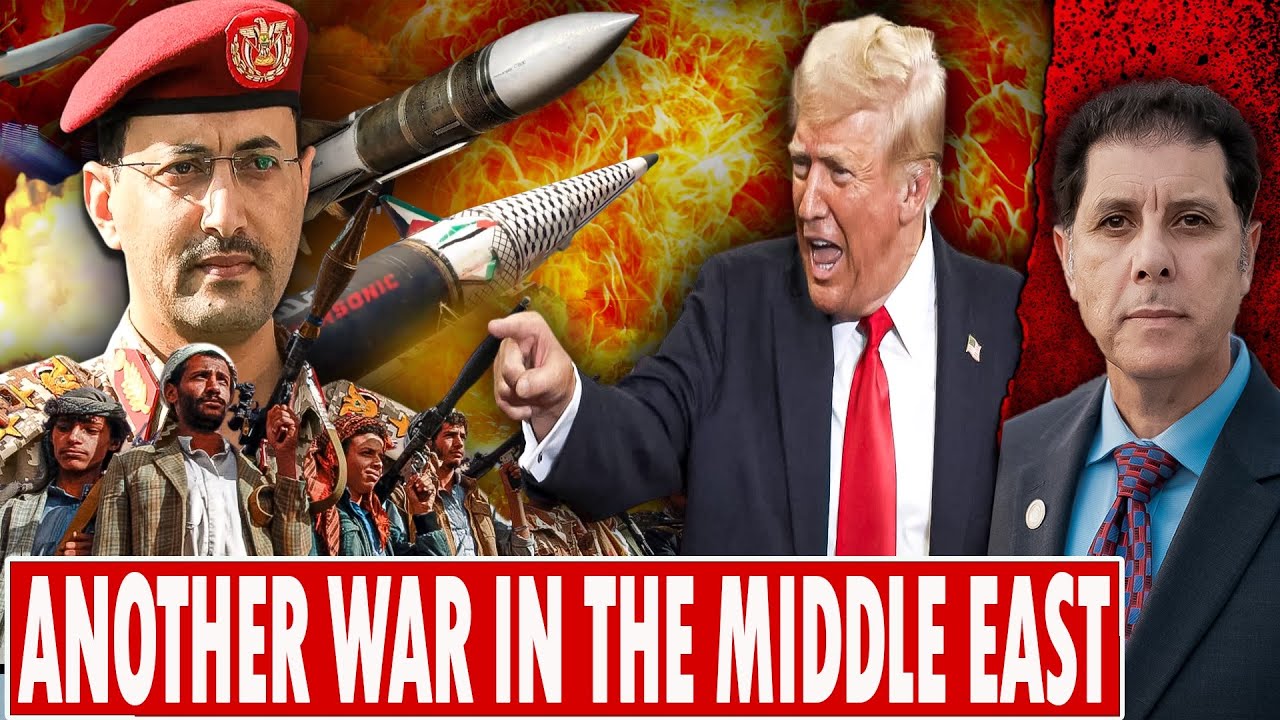
This content was created by David Oualaalou. This content was uploaded by David Oualaalou. This is a YouTube livestream titled "Trump Reaching a Dead End with the Houthis? Geopolitical Trends" (published April 29, 2025). The excerpt is a political/geopolitical commentary by a primary host (SPEAKER A) with brief interjections from a secondary speaker (SPEAKER B) and live-chat participants (names like Grizzly, Hanging G, etc.). The host reviews recent events and media reports about U.S. strikes on Houthi/Ansarullah-held areas in Yemen, the effectiveness of U.S. raids (claims about destroyed launch sites, drone losses such as MQ-9s, and an F-18 crash), and the broader regional implications — including pressure on Israel to agree to a ceasefire, AFRICOM comments about Burkina Faso/President Ibrahim Traoré, and criticism of U.S. strategy under President Trump. The piece is analysis/opinion-oriented, aimed at a general audience and referencing Arabic- and English-language reporting and on-the-ground context. Metadata: YouTube content, created 2025-04-29, title as above, thumbnail URL provided.
Chapters
All right, hello everybody and welcome to Geopolitical Trends, where truth matters. Excited to be with you as always. I have an interesting topic for you. This is regarding whether the United States is getting into another war in the Middle East, or another— in, in other words, whether the US has dragged itself into another war in the Middle East. It never ends, right? So But this one is slightly different. The outcome, it's going to be different here. So this is what I'm going to be providing you, my own analysis regarding where things are headed vis-à-vis the Houthis, whether the US miscalculated and so forth. And we'll just go from there as to how this might evolve moving forward. All right, let's see who is here in our community today. Say hi to everybody like we always do. Grizzly, good to see you. That's an interesting screen name. Hanging G, as always, good to see you. Willie Harmon, Liang, uh, I Am Valentina, good to see you. Uh, oh, Hanging G, you mentioned about the F-18. Yes, I'm gonna be talking about it. Uh, Truth Seeker, Uh, uh, as always, who else is here? Let me see. Uh, Abdul Farwan, good to see you. I haven't seen you for a while, so good to see you. Athin Wu, as always. YT, good to see you. And who else? Francis Tango, as always. Adam Morocco, good to see you as well. Here's some— all right guys, let's, let's talk about, uh, first of all, I want to just do a quick two headlines for you. That you need to— I don't have a picture for this one, but this one has to do with what happened in Spain and Portugal yesterday. I think they went out of, uh, the blackout across the cities, uh, cities in Spain and Portugal. Now here is the thing, uh, one thing that we need to understand, yes, the power has been restored, but there are no answers as to really how this happened, what caused it. So it makes you just wonder. So that's something I, I don't know what they're gonna be, uh, arguing as to what the causes for that is. A second thing I want to share with you, which I am going probably to do a video for you because you need to know— most of the Western media are sidelining this particular topic. And this one has to do with Burkina Faso. Yeah, it's all the way in Africa. Sometimes you need to understand what others— what other parts of the world that is experiencing certain aspects of all this. So now, uh, this one pertains to the statement by this general here. This is Michael Langley. He is the head of the AFRICOM. The African Command Center. So basically what, uh, uh, General Langley said is that, uh, uh, uh, Traoré, Ibrahim Traoré, is a threat to its people. As a matter of fact, he, he issues like, uh, he issued a threat against President Ibrahim Traoré. So because that's what he said, and I quote, uh, the president of Burkina Faso, Ibrahim Traoré, is a threat to his people, end of quote. This is what General Langley said. So he's using— because here is again what Langley said, which you realize it's a lie, and there is more than meets the eye. Uh, General Langley is saying that he is— he meaning Ibrahim Trowery— is using the country's gold reserves for personal protection rather than for the benefit of its people, end of quote. It's a lie. It is a lie. I've been reading about what's going on in Burkina Faso, and you won't believe the policies Ibrahim Traoré has embarked on to push his country forward, because they don't need the Europeans, they don't need the Westerners, they don't need the imperialists anymore. And this is why, uh, as a matter of fact, General Langley apologized for what he said. And, and, and it just didn't make any sense whatsoever for him to be saying what he's saying. And, uh, and this is why I'm gonna do a video for you guys, because you need to understand exactly the dynamics that is going on in that part of the world. So, uh, let me see one thing here that I think I read somewhere, uh, somewhere. Yeah, it was the chairman of the Armed Service Committee that's saying that, may I respectfully and humbly ask what your plans with American government plan for Burkina Faso are? I and a million of Africans and non-Africans are shocked to learn your lines of questions and assumptions which prompted General Michael Langley, commanding AFRICOM, to make such careless yet imperialistic comment that is outright fabrication of lies about Burkina Faso and its president Ibrahim Traoré. So very, very interesting. I'm going to share the link with you guys so you can read up on it if you decide to do that. Then, uh, I'll, I'll, uh, make a decision this afternoon whether to do it tomorrow or the following day. All right, let's get into our topic here, and we're going to be talking about Literally, the question that looms large, whether Mr. Trump has reached a dead end with the Houthis. Because like I said at the beginning of the campaign, when we start raiding and all that, and there is a record for that, just go check out the video that I talked about this. And I said, this is gonna end in two ways. Either we're gonna have to withdraw, which will be bad news to begin with. Or we're gonna have to enter into some sort of negotiations behind closed doors through third party, which mainly is going to be Qatar, maybe Oman, maybe, uh, I don't know the exact country that will be involved in something like this, uh, uh, to settle this in. And this is why Mr. Trump miscalculated, thinking now that is getting worse for him. Why? He's going to be going to the Middle East or West Asia. That will be bad news if the president of the United States visiting Middle East while the missiles are being fired. So, and this is again, we're looking after now 6 to 7 weeks after this intensive US raids and on the areas that is controlled by the Houthis or Ansarullah, that is, to know where You know, the group continues— Houthis, that is— continues to assert that its operations in the Red Sea and against Israel also will not stop. And this is again why the media is cherry-picking about what the— this is the missiles, by the way, of the Houthis, by the way, just wanted to share that with you— why the media is not reporting the facts as they are. So So here is what I'm going to do. I'm going to share a clip with you from, uh, from Al Jazeera. I'll do the translation for you. For— it's a long one, but I'm not going to do the whole video. It's about 45 minutes. I'm going to do the first 2 minutes that they are crucial. We listen to one comment by the representative of Al Jazeera in Washington, and I'll translate this for you. Then I'll go into my analysis. So let me share the screen with you here, guys. Then we'll, uh, and I'll do the translation for you as we listen to it. All right, let me make the screen bigger here. All right, take a listen, guys. This is after 6 weeks of the intensive attacks on the regions that are controlled by the Houthis. This is why the Houthis have confirmed that their operations against both the, the US, uh, uh, uh, assets in the Red Sea, or, uh, aircraft and so forth, and the Israelis— both the, the attack, the attack, the attack on both locations will not stop according to the Houthis. And this will only stop if the Israelis stop their war against Gazans. And within this context, the the spokesperson of the, uh, uh, the Ansarullah, Yahya Sareeh, General, uh, Major General Yahya Sareeh, indicated that they targeting two locations in Israel.
One in the Nakab with a ballistic, ballistic, and two other locations was in Tel Aviv.
Another location, the targeting location in Tel Aviv and another one in Ascalon, or Ascalon.
Here is the key that I need you guys to understand.
He also, a bit according to the, uh, broadcasters here, that Yahya Sariya also indicated that the targeting of certain assets of the aircraft carrier Harry Truman in the north of the Red Sea And that's put the question for us: did the fall of the F-18 into the sea— you know, we're gonna, we're gonna detail a little bit about this, but just makes you just wonder. And this is one thing I need to draw your attention to. And Yahya Sari confirmed that the, the operations achieved their objectives. And this, of course, came in reaction to the aggression by the United States on, on the, the aggression on, uh, by the United States on Yemen on a daily basis. Because literally, so far, guys, you need to know that we conducted almost, almost 800 raids. What have we achieved?
Nothing.
So, and, and we'll get into this once I continue this one here. Uh, basically, Yahya Sariya confirmed that the group will not stop its operations and will retaliate with sort of a similar way that the United States. If the United States increases its targeting, so the Houthis will do the same. That's just, it's almost tit for tat. That's basically, and this is an air raid by the United States last night on the, it says right there, which misconducted two raids on the, uh, port, which is— this is an oil port in Al-Hodeida. Hodeida, it's a province, a big one. And this is the port that Washington is considered one of the main source of fueling for the group, or Ansarullah. And this fueling is what helps the group conduct its operations and so forth. Now, this is very crucial, guys, for you to really pay close attention. And I'm— luckily it's written in Arabic, but I will also do my best to translate this to you. This is now the statement by the Central Command And listen to what the Central Command are saying. The Central Command, or, or the, uh, the, uh, the broadcasters—
let me—
basically it stated that the Central Command is stating that they have destroyed the central commands for the Houthis. This— they destroyed the, uh, the launching pads. For the missiles and so forth. And also they destroyed the depot where the weapons is stored. This is what the Central Command is saying, which led to the decrease of the launching of the, uh, missiles, the ballistic missiles in Yemen, to about 87%. And also the drones by about 65%, which you and I know it's a lie, but this is what the Central Command is saying. However, here is again what the CNN is saying in contradiction to what the Central Command is saying. Take a listen. Basically what CNN is saying, according to two sources, is that for the last 6 weeks that the US raids have not diminished or impacted the capabilities of the Houthis, nor did it destroy the infrastructure, meaning for the command of the, of the group. Yeah, this is a very crucial word, meaning that it does not impact. And another US official disclosed to Al Jazeera that the Houthis were able to, to down many of the drones which you all know. As a matter of fact, they just downed another one, and for the MQ-9. So, and this was during the last one that was conducted, a recon. One of them was recon and another one I think was for an attack. Yeah, yeah, either doing an attack, conducting an attack, or doing a recon, uh, flight. The US official indicated to Al Jazeera that the Houthis are using the surface-to-air missiles, which those are, by the way, Iranian-produced. That's how they are downing the MQ-9, because MQ-9 flies very, very high. And now this particular official is now disclosing that there is a conversation inside the halls, inside Washington basically, as to what are the options. And I'll let you listen to the last part before Okay, and this conversation basically is about whether to increase the intensity of the raids or stop completely. So, so I'm gonna do one more few minutes here, then I'll move into my own analysis because I need you to listen to the, uh, uh, comment by the correspondent in Washington. Yeah, she's saying basically, welcome to our guest, and we're going to start with our correspondent in Washington. Oh, I'm sorry, I'm not showing you the video there. Sorry. Basically the question, guys, which is a logical question, uh, what is now— where does the US stand regarding what's going on right now in comparison to when it's started the raids? Because remember, that was Mr. Trump that said— you all remember when he was running for— I said, I will end the Ukrainian war in a phone call, and I will end this Red Sea blockade in no time. So that was the question by the correspondent, which is a logical question to ask. So let's listen to what the correspondent, uh, is saying. I think he made a mistake. He meant to say the 7th or 6th weeks, not the 3rd, but, but okay, slip of the tongue, no problem. Now here is the thing that I need you guys to pay close attention to, and this is the correspondent saying, uh, reporting on what the officials are saying. So basically, the Central Command, which the one that is under the— its authority that these raids are being conducted because the region is Middle East. Middle East falls under the Central Command. So, and this is now that they're saying that, oh, the operations have destroyed so many, the infrastructure, the leadership of the Houthis, and also the launching systems. This is what he is saying. However, when we ask them about how can we assess what you guys are saying that is true, they refuse to answer because evidence does not support what they are saying, which is a good point. Except that now they don't want to talk about— it's almost providing evidence that what have you achieved so far, except that the Central Command or the representatives who talk to the correspondent in Washington saying that, oh, we have killed over 600 individuals pertaining to the Houthis, that includes the leadership. Which is, you know, it's— you're not gonna trust what's coming out of the Pentagon and so forth. So, and what they're saying, basically, the objective of all this is to restore free navigation in the Red Sea, which of course we have failed to do so. Thus far. Now, uh, he is stating that according to these individuals, now they are disclosing that we are assessing and evaluating thus far all the raids and all that stuff, what have we achieved? And we are at a crosspoint, almost similar, uh, our crosspoint where we have to decide whether to increase the intensity of the attacks on, on, on the Now, one of the, uh, individuals who, this, who talks to the correspondent saying one of the objectives is to target the high-level leadership of the Houthis. Now, here is one thing I need you to understand, the structure of the Houthis. It's not like this open, clear, uh, because who controls the country? The Houthis control Yemen, but they have tens of thousands of individuals that are part of the military, the People's Military if you want to call, use the term. They don't have the way you and I understand the structures of how it is. This is why we couldn't, we couldn't, we don't know who to target. We have no idea where that layers of the command is. And that's exactly what this US representatives told the correspondent that now the objective is to target the high-ranking leadership of the Houthis, because those the one that holds the key to all this. Now, there is that assessment that is provided by the, the, the US But of course, there is also the evidence that the, what the Houthis have provided as far as the targeting, you know, which I can see that argument because if you go back 4 weeks, 4 or 5 weeks ago, when the USS Harry Truman made the decision to move to north of the Red Sea, the Pentagon issued a statement that, oh, that's due to maintenance and is supposed to go back to the United States. To return to the United States. Well, guess what? Harry Truman never returned to the United States. As a matter of fact, we added the second aircraft carrier, and it shows you right there that the raids have not achieved their objective. We got a few more seconds on this one here, guys, and I'm gonna, uh, move on to the analysis. Let's, let's continue here quickly. And this has to do with the success of the Houthis for downing the MQ-9, because that's evidence, you see. So when the US is saying we have destroyed the launcher, the, uh, the launch pads for the missiles, we have destroyed the leadership, we killed over 600. So you killed over 600 civilians, majority of them. You have targeted— meaning the US targeted the residential locations, not the militaries, because we couldn't. We don't know where the, the, the weapon storages are and where the launching pads for the missiles and the ballistic missiles and so forth. So this is where the difference is. I got a few more seconds here. Now what he's saying about how each, how each drone which cost over almost $30 million each, you know, were able to— Houthis were able to down them. As a matter of fact, I did see a report that indicated that so far, just on the drone part, we have caused— the Houthis have caused the damage of over $200 million. And in a total of all US raids since March 15th, across over a billion dollar. And what have we have to show for? So you all, you all know what it means. You all know what it means. So let's, uh, let's finish this here quickly. And the reason I wanted to do this, guys, for you, because this stuff does not get reported here in the US. Okay, I'm gonna stop right here, guys, because I have a lot to cover on my own. Regarding the analysis here. And this sort of spun on the idea that what the Houthis— you compare what the Houthis have achieved with far less versus what the US have lost with so much. Of course, when this started, you know, it's no-brainer. We have so much weapons and all that stuff. And of course, the balance of power was tilted towards the Americans. Their favorite per se. But this didn't intimidate the Houthis. And that's the mistake we make. This is the so-called arrogance. We are thinking that our might will gonna defy all the logics that those people will not take stand. We were wrong. You will think we will learn from history. Look just what happened in Vietnam. Look what happened in Laos, Cambodia. Afghanistan, Iraq, even Yemen back in 2015 and '16, Somalia. And you will think we will learn from all this. And this is why I am starting to lean more towards asking that question, are we being sucked in into yet another war in West Asia or Middle East? Because Houthis or Ansarullah, that is, are as ferocious fighters as you can even imagine. And that's the mistake we made. So, and this is why you have to think in terms of where this is going, how it's gonna end. And that's usually highlight to you, like I argued in my— and I'll be sharing with you, by the way, guys, uh, some excerpts from, uh, uh, some of my books, because I addressed especially the first book. I remember addressing this one. I argued back then, and here's what I wrote. The failure of the United States foreign policy in the Middle East is attributed to an ambiguous policy, an ill-defined strategy. Iran understood early on that a chaotic Middle East not only entangles the US and drain— drains its resources, but also provides Iran with the opportunity to further its aspiration in the region. And that is exactly what happened during the invasion of Iraq, where the United States failed to understand that supporting a Shia government at that time in Baghdad under the poor leadership of the former Prime Minister Nouri al-Maliki created the back door for Iran to manage Iraq's internal affairs. That was exactly what I wrote back then. And the reason I'm saying this, because I had a chance to deal with the high-ranking individuals in Iraq at that time who were advising Prime Minister Maliki. But I was, of course, uh, helping our side by understanding the cultural differences. And I made it— I made my case back then. You are dealing with a fraudulent individual here. Nouri Maliki was as corrupted as he gets. So my point in all this is that the United States doesn't have a well-defined cohesive strategies. And this now is displayed by the ill-conceived strategy that Mr. Trump was thinking, oh, I'm just gonna go and sort of lift the blockade on the Red Sea. Well, yeah, good luck. Now we have in our aircraft carriers there and so forth. What have we achieved?
Nothing.
And that is exactly where my points. And this is why you have to understand, uh, when we go and bomb the fuel, the port in Hodeida. Israelis have done this so many times and they couldn't defeat the Houthis. What makes us think that we will? The same argument I have made about Afghanistan. You look at how many Western powers tried to invade Afghanistan, they never succeeded. Even you go as far back in history Alexander the Great couldn't do it. So what makes think— what makes the British think that they could do it? What makes the— even the Soviet Union back then, even though the case for the Soviet was very different, the Soviet was there at the invitation of the government. This is what is not understood, and I disclosed this in my, uh, in my Russia book. This is what even Mr. Trump does not understand when he used the term the Russians— the Soviets have invaded Afghanistan. You have to understand the history because the government in Afghanistan was the one that invited the Soviet Union at that time because they were communists and they wanted to have the support. So, but in any event, they couldn't do it. And we, when we went in after 9/11, we thinking, oh, we're gonna just take over Afghanistan. Yeah, good luck with that. We all saw what the outcome is. And this is exactly when you see the US conducting these raids and all that?
What for?
And that's what leads now the US into sort of— there are no other options. You can bomb whatever you want. You're just bombing the civilians. As a matter of fact, there are now members of Congress that questioning the policy of the United States in targeting civilian locations. So that becomes almost the question, what makes us different than Israel that's doing in Gaza? And all the Houthis were asking, all the Houthis were asking is for Israel to stop its attacks on Gaza and allow food and so forth. And now, which once again it's not disclosed, the US is trying to pressure Israel to agree to a ceasefire because if the ceasefire is achieved, the Houthis will stop attacking. So, and Houthis made it clear. I, I, I tip my hat to them, guys, for the courage they have. Most Muslim countries are spineless. They are pathetic. I don't shy away from saying any of them, no exception. Of course, Yemen and Iran, the rest of them. And I know someone last time made a comment about, oh, Dr. O, you were wrong about Egypt, and Egypt is strong, whatever. Where is this strength? It's almost like when you say when leadership matters, then you show it when it matters. This is now when it matters because what's go— what has been going on in Gaza. So where are the Muslim and the Arab world leaders that is into that? You know, Houthis now is taking a stand. And this is exactly where you have to think in terms of how, uh, because the US has failed now miserably. I disclosed this at the beginning of the raids in March 15th, that Mike Manward is gonna have only two options. Either you negotiate with the Houthis for some sort of settlement of sort, which is gonna have to be done through a third party usually because we won't be able to do, uh, the— I mean, just imagine, guys, a representative of the US is sitting with the Houthis to negotiate. The optics of it. And like I always say, In the world of international relations, optics matters. Optics matter. And this is again— and that's why the strikes have failed miserably. No matter what the Pentagon is saying, we destroy this and that, it's a lie. It's a lie. And this is why— and the way you know it, you know how you know this one? The ability— because when you go into uh, uh, uh, sunny like this, you go into phases. We are still in phase 1, which means we couldn't move to the phase 2, whatever that phase 2 is. And that shows you're right. We couldn't even move, uh, from phase 1 to phase 2 because we didn't expect the outcome. And that is exactly where the problems— and this is now where you have a conversation inside Washington quietly. What are the alternative now? Because you only have two alternative, two scenarios, that is, either you hold and stop all the military raids, okay, which means you have to accept some sort of you couldn't defeat a group, the Houthis. You know, this is not Iran, this is not a, a well-structured military and so forth. But it's— they are ferocious. I tell you as one who spent time in Yemen, you know, wonderful people, don't get me wrong. You know, they'll take the shirt out of their back. They treated me so kindly because they look at me as a human being, no more, no less. And I, to me, I made it clear, you know, I am looking at you as another human being. You know, what government does versus what people are, two different things. But I also know how, how ferocious are when it comes down to fighting, because we couldn't defeat them back then. The Saudis couldn't do it, you know, the Emiratis couldn't do it, even though 6 other Arab countries joined the Saudis to fight against the Houthis because they were bribed with money. What a shame. And look at now, what are they doing for what's going on in Gaza? Only Houthis have to stand. So, and this is why when you have to think about this, the optics of it, the Houthis have succeeded while at the same time the failure of the US is being exposed. So, so this is again what you need to understand about the reality of what's going on. Liking this video so far? Don't just be a watcher. Go ahead and hit the like, share, and subscribe button. And don't forget to tap the bell so you will not miss any of my videos or livestreams. This way, you will be supporting a channel that stands for the truth and objective reporting. The choice is yours. Thanks for your support. Now, you're gonna have to think about Is it fair? Which is a fair question. I'm sure you guys asking, and I'm gonna ask you because I need you to be— I need you— I need to know what you're thinking. In your opinion, did Donald Trump reach a dead end? Yes or no? Yes or no? Well, yeah, just yes or no. In your opinion, based on what you have learned so far, and I've did so many videos for you guys, in your opinion, did Donald Trump reached a dead end regarding the Houthis? Let me see your answer, guys, because I need to, uh, uh, YT, you say yes. Truth Seeker, you say yes. Faruk, you say yes. AF Gordon Carleon, you say yes. Masian Dorsey, yes. Amanda, yes. Uh, uh, Ed Powell That's my son trying to call, and I'm gonna have to tell him to wait. I'm doing live stream here. Uh, pardon me, guys, just quickly. Uh, he'll understand. Uh, Barbara, you say yes. Manny84, you say yes. Carla Mick, you say yes. Bamboo You know, you guys get the point. You get the point. And that's exactly where we are. We reached the dead end, you know, because now what we have set, the objective of we're going to lift the blockade and we're going to kick the Houthis out, those were unrealistic objectives because the Houthis still hold the blockade on the Red Sea. Ask any American company or or any Israeli company or any other company in the world that can use its ships in support of the Israelis that can cross the Red Sea. So no. And this is once again because at the beginning, and that's what most Americans do not understand, and again, I have nothing against Mr. Trump. I don't care for Mr. Trump. He has his life, I have mine, whatever. But I knew a little about when it comes down to politics and how people can be manipulated. He is good at that. He manipulated the masses. The masses fall for it. Of course, the previous administration wasn't any better. You know, as a matter of fact, it was even worse. And that's where I always feel comfortable saying, you know, both Republicans and Democrats, two faces of the same coin. That's the reality of it. But, but the bottom line is this, this is where the concept of this military might is going to succeed, it's wrong. No, because here is the example, the evidence. We were unable to defeat the Houthis. But Houthi, remember, remember, Houthis are group. Houthis are not a country. In other words, are not a state the way you and I understand. Can you imagine if they have access to all those resources So sky is the limit. So, and this now leads me to address one particular aspect that happened regarding the, the fall of the, uh, F-18s. So I— you think about, uh, of course this one received much more attention in the Middle East, West Asia, Arab world, and so forth. Than it did in the West. Of course, you know why, mainly in the US, you know why. When an F-18 crashed while aboard an aircraft carrier, and, and not any other aircraft carrier, it was this one right here, and I confirmed it. Let me show you the picture right here. Harry Truman. Yeah, in the Red Sea. So that just makes you just wonder. Now, I didn't read one report that suggested that the F-18, uh, uh, sort of, uh, the aircraft carrier wanted to maneuver and maneuvered very hard to avoid some sort of firing, uh, uh, from the Houthis. And of course, the aircraft was closer to the edge and it fell. You decide. I, I am just gonna share with you what I digged into, but let you reach your own conclusion. So to avoid shocking the American people and the Arab allies, because the American recognitions are being made gradually. So here is the thing: the fear in the United States of the collapse of its weapons This is where the concern is. So, and as a matter of fact, I'm gonna share with you where I saw this one here in its original language, and I'll provide the translation just as we look at it. Uh, no, not this one. Share screen, share screen.
Here we go.
Sorry, guys. Now, and I want to show you two things. To those who understand Arabic, you will, but I'll translate to you. So, uh, what you need to understand, first of all, I need to show you the date of when this happened. Look at these dates. Why? I'm gonna highlight it right there. I don't know if it shows on— yeah, that's April 29th. What is today's date? April 20— 9th. Okay, and this is where I need you to— I'm gonna show you one particular— this is where I get the picture right here. This is the fear of what's going on for— this is about the US F-18, uh, jet that crashed from the aircraft carrier Truman. Okay, and, uh, I'm just gonna go all the way down to another Right here, this is very, very important to understand what's in this, and I translate it for you. This is for the first time an F-18 fighter jet has been— now you can either use the term shutdown or just fail while taking off from an American carrier. You know, this is according to that, uh, uh, uh, narrative in Arabic. This is disturbing and surprising message indicating how serious this outcome is. And as a matter of fact, the Houthis have confirmed that they are— what's coming, it's even more disturbing. This is one, yeah, this is in Arabic, "Tama' isqa," the shutdown of an F-18 over the Red Sea. The Americans will acknowledge this, however, in a lie. In other words, they will admit to it, but it's gonna be differently. So, and this is just an example. This one is talking about, we have not read in the military history the fall of an aircraft, the military, the fighter jets from an aircraft carrier in the sea. You know, because of the advancements in technology and so forth back then. How this could happen in 2025 when we have this technological advancements and so forth? And that's exactly what I wanted to share with you, to, to make my point. So now you think about all this. I had a chance to read up some analysis by a retired general, from Lebanon. His name is Elias Hanna. I don't know if you guys— you probably will not know who he is. And you know, when you go through the military, you will know who will come to the US to train. I used to get involved in training foreigner stuff that they deal with countries and all. So you can remember who's who. And, uh, the general, he's retired, Elias Hanna, uh, he was in the United States. As a matter of fact, he's a retired general in the Lebanese Army and a graduate of the US Air Force War College and Staff College with distinction. So he's a very, very distinguished individual. So I've been following him. I read sometimes his assessments and I couldn't agree more, couldn't agree more, except that there is one aspect of it is that for the loss on the Americans is tremendous, not in materialistic aspect, is in the image and the credibility. So because now what you have, the image of the US is already suffering more than what it already is. That's like our credibility that has been shattered beyond. And because given the scale of the military campaign that we have been conducted, But we have not achieved anything. And of course, what Mr. Trump was saying, you all remember, and I quote here, Trump said, "We will withdraw from all world's wars," end of quote. Where is it? You know, the same guy who said, "I'm gonna end Ukraine war in a phone call or in 24 hours." Good luck with that. And this is why, uh, sort of where you start to realize even the cost, how much is costing us taxpayers for something that have nothing to do with our welfare as the whole country. My country right here is entering into recession. It's gonna be very bad. I'm not the bearer of bad news, but I can't sugarcoat it. If only Americans understand what lies ahead and what's coming. Thinking that Mr. Trump is going to save the country. No, it's nonsense. It's nonsense. Because you look at now the results of this, and we're going to have once again be humiliated in ending this saga that we got ourselves into. So it's because to the Houthis, the objective has been achieved. It's more of a, a strategic and political one. Than it is materialistic. Yeah, this is what it is. And when the American president saying, well, we're gonna have to restore peace through strength, and the sort of, you announce that this deterrence is what's gonna be now open up the doors of navigations in the Red Sea. Nonsense. Have we, have we achieved that? Because it has not been achieved. So that tells you right there. So, and of course, we couldn't target the exact pinpoint location, this part, despite our satellites and all that, we couldn't pinpoint exactly where the leadership of the Houthis are. It's because it is structured differently than the common way we do it here in the West. The high ranking, it doesn't work that way. It doesn't work that way. And this is again where you have to think about this transformation that is taking place in the region. And we don't seem to understand or learn from history because the Middle East, or West Asia that is, has always been going through major political transformations. It's just a matter of how you play it out. And this is why that transformation has compelled regional and major powers alike. That includes Iran, China, Russia, Saudi Arabia, Turkey, uh, United Kingdom, you, you, you name it. They force everybody now to go back to the drawing board, uh, sort of to determine what kind of strategies we should pursue for one objective and one objective only: to secure excuse me, to secure our respective interests in the region. Yeah, because now you take a step back and you ask yourself, for the Houthis, for the Americans, we are sucked in now. We have no way out. The only way out is either to withdraw or you enter into negotiations. It's a win-win for the Houthis, no matter how you slice it. The Houthis have already, have already informed their population what lies ahead is very hard. The destruction that the Americans going to cause will continue, but also we take stand. This is once again, you, you tip your hat to the Houthis instead of all the Arab and Muslim leaders. No, I, I just don't do well with hypocrisy. That's, that's just not my thing. It's not my thing. So all Arabs is doing are talking. They have been talking for the last 2 years about Gaza. What have they done? It's because the way you look at it, guys, and, and don't get me wrong, we all— I don't know whether you have kids or not, but what you are seeing, the images, that could be yours. That could be your kid one day. Who wants that? And if you could have compassion or you have some human capacity to feel and understand the pains of others, then there is something wrong. You have to look inward and start to reconsider your priorities in life. Life is not just about you. And this is the problem with the Arab and Muslim leaders. They just, you know, they're pathetic. That's my opinion. And that's the way I look at it. And because here is the thing, the Houthis were able to succeed on both fronts because now you have the failure of Washington to achieve his objectives against the Houthis. You have also the pressure the Houthis are posing on Israel. So it's because this is why now the US behind closed doors is trying to convince Netanyahu to allow the delivery of aid and of course a ceasefire, because that's all the Houthis were asking about, for the sake of Gazans. Yeah, you know, where are the Saudis? Where are the Jordanians? Where are the Egyptians? So all of them, no exception, even Iraq. I'm starting to see now the policies of the Sudanese, the Prime Minister of Iraq. It's another no-no. The guy is playing both sides, dragging Iran— yeah, dragging Iraq into some uncharted territories. So, and this is why you have to understand this within the optics of global affairs, international relations, and even the geopolitical landscape. Mr. Trump's upcoming trip to the region, you know, they wanted to have one way or another some sort of a de-escalation. They are not achieving that with the Houthis because what the Houthis said is, we will escalate if you escalate. Another word, we are ready for whatever. So because, think about it, guys, the optics, American president— doesn't matter, it's, it's pathetic anyway— American presidents arriving to the region while at the same time the Houthis are launching missiles. Just think about it. Think about the optics of that. And this is where you have to, uh, uh, uh, understand what the Houthis are asking versus whether the US can deliver on that or not. So, and all they are asking— once again, I need to reiterate this because no Arab country ever stepped forward and asked for similar, uh, uh, uh, uh, conditions that the Houthis are, which is nothing but ceasefire for Gaza. Tell me if there's any Arab country that condemned what's going on in guys. Oh, we're gonna have to work on ceasefire, we're gonna have to work on this. You know how it is, you know how it is. And that is exactly, uh, when you have the US targeting this 700, 800 targets, uh, with over 300 airstrikes, whatever. What had we achieved? What have we achieved?
No.
And they're lying about— they meaning in Washington Oh, we have forced them out into confusion. We destroyed this and destroyed that. No, it's a lie. You haven't destroyed anything. This is the hard reality of it. That's to me where that difference is. So I was going to share one particular— no, that was just the Sari, Yahya Sariya statements, and I already disclosed that to you earlier, guys. So because he did this, and I quote here because I, I saved this for you guys to know, he said, and I quote, we carried out two drone operations against two targets in Java and Ashkelon. And again, not— and those, by the way, they used a Palestine-2 missile, and they used, uh, which is a hyperballistic missile. Uh, let me see if I have a picture of it. No, I don't. I used to have a picture. It's the ballistic missile, not this one. I don't think so. Is this one here? So, and this is where that difference is. And when you think about, like I argued in my, in my first book about the Middle East or West Asia, that is, you know, I, because it became clear to me as to the confusion of the American system. You know, here's what I wrote back then: Washington must quit squabbling and focus on what lies ahead, post-nuclear Iran. The US also needs to heed how China and Russia intend to behave in the region given this inevitable geopolitical shift. It's almost like I was seeing what's coming over the horizon. You know, American policymakers assume that a direct conflict with China is unlikely, However, the possibility for such conflict exists if A, China's economy continues its healthy growth, B, the United States engages in another war in the Middle East that could interrupt China's access to energy sources there, and C, China embarks on assertive foreign policy in the Middle East in addition to the one in East Asia. With a high degree of certainty, the national security interests of both the US and China will collide. That was my argument back then, and only to see that things are emerging right in front of my eyes. And that is the reason why I wanted to share this with you, for you guys to know. So let me say thank you to some super sticker individuals. By the way, I will greatly appreciate your support for my upcoming trip to Asia. Uh, you know, I'm— I have a, uh, I have about 4 months to go, so I will greatly appreciate if you can support this trip, if you want to. It's your— it's your decision, no more, no less. So I'm very, very grateful either way. This is if you want to support the channel. I will be very grateful to you for that. Let me just say thank you to Francis Tango. Let me start with you. Hi, Dr. O. May parade in Moscow, ceasefire or not. You're absolutely correct. That's, that's a big one that's coming in May. Yeah, absolutely correct. Thank you, Francis. Uh, Stephen Hayes, greatly appreciate you. You know, Mark Carney campaigned on Canada sovereignty, 100% decoupling from US. And your option on defense, foreign policy is what? Monroe Doctrine? Empire Strikes Back? Nothing. So thank you very much, David. I am yet to see what between Mark Carney and Paul Vieira. Paul Vieira became clear to me that it's no-no for what he's saying and what he plans to do regarding the support for Palestine inside Canada. That's just another, you know, I don't know what— I don't know what became wrong with Canada, man. When I was growing up, Canada used to be the ultimate. Not anymore. So, Arimov, thank you so much for your super sticker. You wrote, everywhere you find Islam is find war and chaos. There is some truth to that. I, I, I won't shy away from saying it. You know, I spend a lot of time around sort of the Muslim world and worked and traveled. And so you kind of know, you know, it's kind of very, very— and this is why when you start to think about the population that is so misled, brainwashed, they don't even take step to take step back and question things. You know, nothing wrong with questioning, but when you can't question religion, that's become a problem. So, so I see your point, and thank you so much, Armo. Uh, you got another sticker here. Truly appreciate you. Islam colonized Arab, uh, Arab, aside everyone except Jews. Jews will not submit to Islamofascist. Jews will live free on their indigenous Jewish land. Yeah, well, they have their own religions, they have their own philosophies, and so forth. You know, I was raised in, born near an area of Jewish community. Believe it or not. And I never had any. I still remember when I was a kid, I remember the synagogue and all that stuff, even though I'm not Jewish. So, but, you know, and I have Jewish friends. It's once again, you always separate. It's like what I say about the Arab and Muslim world. When I say Arab and Muslim world, I'm referring to the leaders, not the people. People are wonderful. I saw it with my own eyes in Afghanistan. I saw it in Yemen. I saw it in Iraq. I saw it even in some parts in Africa, you know, wonderful human being. I saw in Thailand, I ran to some people, uh, uh, they were Muslims there and so forth, you know, nice people. No, it's the government. Same thing for us here, no difference. So anyway, guys, I hope you all enjoyed this. I'm gonna be working on the topic for Ibrahim Traore. I'll make a decision on that soon because I need to confirm some information. But suffice it to say that it was disturbing what what the general has said. So anyway, I look forward to seeing you next time. As always, remember, geopolitics impact your daily life in more ways than one. Till next time, guys, bye-bye.
More from David


Beyond the Single Actor: Why the Gulf Isn't Choosing Between the US and China


Iran, Iraq's Militias, and the Houthis Are Coordinating! This Changes Everything




Who Controls the Next Decade's Resources? Latin America and Africa's Geopolitical Crossroads

The Chokepoint Trap: How Washington's Stupidity Triggered a Cascade That Now Controls the World

Trump Spooked as IRGC Unveiled dual-use SLV, Deployed Ghadir Mini-Subs & Hinted at Tactical Nukes!
