Ukraine & Europe left out as the US & Russia Agreed to End the War!
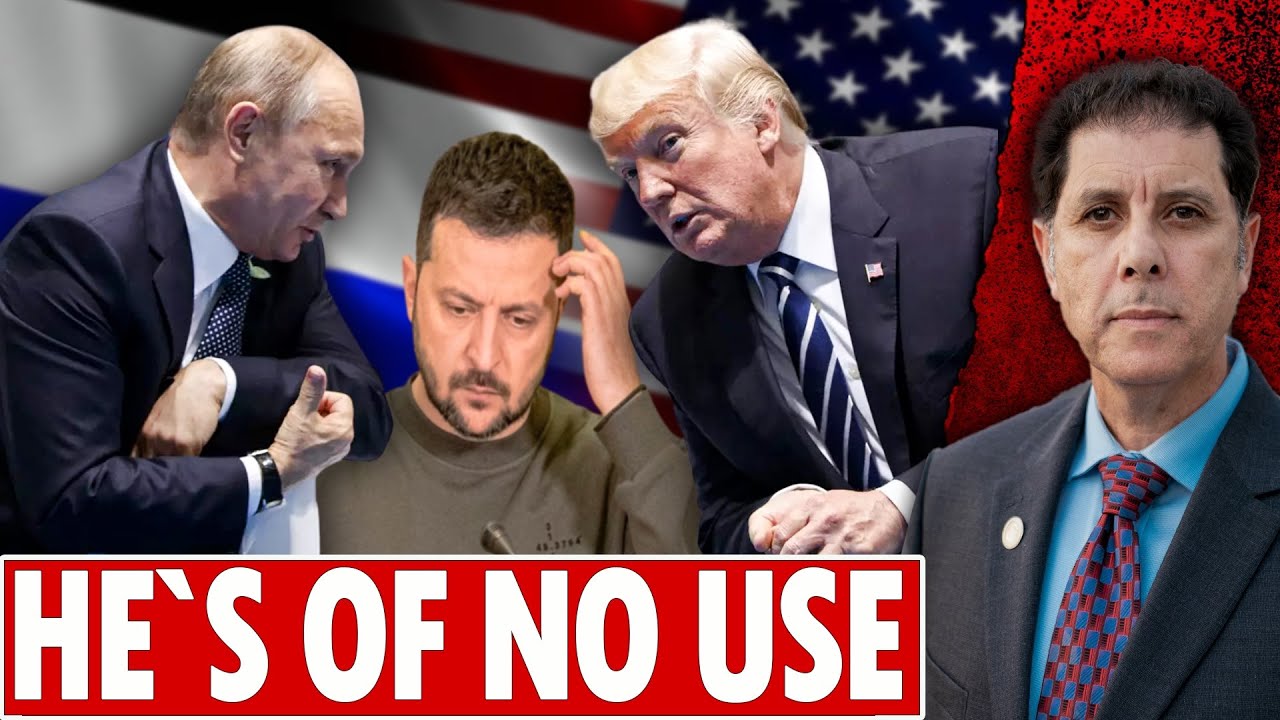
In this livestream, the host (Speaker A) provides a commentary‑driven breakdown of the newly‑initiated US‑Russia negotiations on ending the Ukraine war, which are being held in Riyadh and deliberately exclude Ukraine and European nations from the negotiating table. The discussion interweaves live audience interaction, excerpts from a press conference featuring US officials Marco Rubio and Michael Waltz, and the host’s own analysis drawn from his book on Saudi‑U.S. relations. Key points include: (1) the geopolitical significance of Saudi Arabia hosting the talks; (2) the claim that former President Donald Trump is portrayed as the sole world leader capable of brokering peace, contrasted with the rejected Chinese peace proposal; (3) the marginalisation of Ukraine and Europe, framed as evidence of Western weakness and NATO fragmentation; (4) speculation on the strategic motives behind Saudi involvement, especially oil, OPEC dynamics, and potential quid‑pro‑quo with the U.S.; (5) criticism of U.S. and European sanctions policy and the suggestion that sanctions are used to pressure Europe; (6) broader commentary on global security, including references to Gaza, Taiwan, Turkey’s drone sales, and the shifting balance of power involving China, Russia, and the West; (7) a series of historical anecdotes about Saudi‑U.S. ties, gold reserves, and past geopolitical maneuvers. Throughout, the host adopts a confrontational, skeptical tone, positioning himself as a truth‑seeker exposing hidden agendas while urging viewers to subscribe, support his channel, and consult his book for deeper insight.
Chapters
All right, hello everybody and welcome to Geopolitical Trends, where truth matters. Let me make sure the sound is working correctly. Please give me a thumbs up. I want to make sure after what happened yesterday, so I just want to make sure before I move an inch. It would be kind of you, just give me a thumbs up to make sure. All right, let me see here. All right, I guess— thank you, Phil, appreciate it. So it's working good, so good to hear. I just couldn't believe what happened yesterday, but anyway, it was my mistake. So anyway, very excited to be with you, got an interesting topic for you guys. I'll be talking about the the, uh, the launching of the Ukraine-Russia negotiations under the auspices of the US. As a matter of fact, the negotiations will only be between the US and Russia. So Ukraine is out of the, out of the picture. Europe is out of the picture. Tells you what? That in itself tells you the story. So, and we'll get into all those details, but first let me say hi to our wonderful community. I'd like to always, uh, say, uh, uh, Tom Soya Wire, good to see you. Willie Homan, as always. Liang Truth Seeker. Francis Tango, we missed you last time, Francis. Uh, Wong KC, good to see you. Hang in G, as always, good to have you here. And by the way, guys, I always say, make sure to read the comments that Hang in G posted on all the videos. Very, very informative. And thank you for that, Hang in G. Appreciate you for that. Phil, as always, good to see you. Matt Becky, I haven't seen you for a while. I, I noticed you were here last time, I just didn't get a chance to, uh, to say hi. So good to see you. Taiwan Steel, as always, uh, uh, who else is here? Marco W, good to see you. AF Gordon Carleon, good to see you as always from San Francisco. Lori Edeburn, good to see you. And who is— Jay, is Ukraine being out of the picture? That is correct. That is a good, good observation. Is Ukraine being out of the picture similar to Palestine being left out? That is correct. But also, this is also a hint to Taiwan to start to think. So, and, and I'm going to be addressing this one as well. Harry Lucal, good to see you as always, an avid supporter of the channel. Good to see you, Aria Penta. Good to see you. And that's, that's, that's about it. So let's get into our topic here. So as I said, uh, Ukraine and Europe are left out of the picture as the US and Russia agreed now to end the war. So the talks are starting as we speak in Riyadh in Saudi Arabia, which is another question in itself. As to what's in it for Saudi Arabia. So, so I'm going to share the questions with you and I'll dive into the analysis and I'll share some excerpts from my book that I wrote about Saudis. Funny, it has something to do with how the US now is behaving and how the Saudis are reading that. So, so let's look at first of all the questions. The first question is, what is the geopolitical angle of all this? Is there one? And of course it is. Second thing is the impact on the global security landscape. This is not about just Ukraine, this is not about Eastern Europe, this is not about just Europe, this is about global security. So third question is, what would Saudi Arabia get out of it? Because they end up hosting it. You remember, it was between United Arab Emirates and Saudi Arabia, and the final push was made towards the Saudis. I am sure, knowing what I know, I am sure the Saudis lobbied behind the scenes to host because it's like I always say, in international relations, context matters. The picture of the Saudis hosting, hosting— they are not part of, uh, to the talks. They are hosting the talks between Russia and, uh, uh, US regarding Ukraine. And the last question: is Europe exposed? Exposed for what? For its weakness. Like I always say, and you can quote me on this if you like, Europe is like a child that never grows up and is always in constant need of discipline and direction. Make no bones about it, that's how I feel about Europe. It, it has no backbone whatsoever. So, all right, let's talk about this one. Will it be fair to say that is a done deal? That Ukraine and Europe will not take a seat at the negotiating table. What do you guys think? Meaning, in the future phases, because this is not over, this is just the beginning. So I have to ask you the key question: in your opinion, knowing what you know, do you believe that Ukraine and Europe will not be at the sitting at the negotiating table at any phase of the talks between US and Russia? Yes or no? Just see if you can share that on the chat box. I will greatly appreciate it. Uh, Karakulak, you say no, they're not going to be there. Truth Seeker, you say yes, they will be. Did I read it right, Truth Seeker? Uh, Ralph Legonde, you say Europe is done for. Effy Golden, Carleon, you say no. Seymour Pereira, you say yes. Francis Tango, no idea, because Europe, you, you don't know what Europe, uh, Rampal, so one, maybe Ukraine, uh, yes, they will be there, uh, yeah, it's, it's one of those, that's why I wanted to ask or solicit your inputs because I need you also to contribute with the conversation and also share your thoughts how you see it moving forward. So, and again, you think about it in terms of What is the European— so to me was like already, already, uh, an insult to the Europeans. Ukraine is, is useless anyway. We all know this. But for Europe that is pushing that narrative, now it's been exposed as weak as it can get. Because why? An American president said, yeah, I'm not sitting at the table. Russians won't even care Europe sits or not. They moving on. This is the reality of it, and that is why I need you to understand this big picture before we delve deeper into all this. So I had a chance to read an article by Chris Bok, yeah, and David Brennan, uh, and so I'm reacting to their article first. But I also read something else from Europe, and Europe is saying something completely different. That has nothing to do with the truth. And, and, and that's what I'm gonna be sharing with you. But before I delve deeper, please make sure to subscribe, uh, to my channel here, because the analysis you are hearing here, it's unique to this channel. And I'm saying it, I'm proud of it. So, and I'm not bragging about it, it just is the truth, you all know. So, so if you are learning and enjoying these free episodes, I will greatly appreciate if you can hit the, uh, uh, subscription or the subscribe button there. So, and you can also share, uh, this channel with other people from around the world so they can, like you, hear the truth because it matters. So, and thank you for your support. So now let me— I have some pictures I'm going to be sharing with you as, as we talk. Of course, the talks between, uh, Narco Rubio and Sergey Lavrov Prime Minister, Mr. Lavrov, Secretary of State, Marco Rubio. So they've been held, they are held in today. I think they done right now is about, uh, uh, about 2100 hours in Riyadh. So, so the, the talks have already concluded. And, uh, and this one is to pave the way first of all for the two presidents to meet the, uh, Russian president and the American president. But at the same time, there will be some stages into all this. And basically what the State Department's— US, that is— is disclosing is that the objective of the, the talks, why the negotiations, is to end the conflict. Yeah, well, here is the thing, that once again the State Department is cherry-picking the information. And here is what it says, and I quote, according to the article. So the State Department said that the talks were aimed to discuss ending the 3-year war conflict, which began with Russia's full-scale invasion of its neighbors. Well, first of all, how that happened to begin? What triggers that, the military operations for the Russians to go ahead and, and, and launch the operation in 2022? And this is where I get very sort of, uh, not agitated, but it's— I, I don't like hypocrisy because they are manipulating the masses. They're only disclosing one part of the, of the fact, but not the full picture. So this is to me where, uh, the cross-border, uh, from, uh, Russia was done because of a reaction to what NATO and the US did. So, so why aren't they disclosing that so people can have a, a better understanding of the reality? But again, we all know how it is. So, so the, uh, the thing is the team, uh, for— and I give credit here to Evelyn, uh, Hoxton. That's, that's the picture of the individual from Reuters, if I'm not mistaken. So, uh, the team, US team, was led by Secretary of State Marco Rubio, Middle East Envoy Steve Whitaker. He's the guy on the left right here, the first one on, on my left here. There is Whitaker, there is Marco Rubio, and the third one is the National Security Advisor Waltz, Michael Waltz. The Russian negotiating, negotiating delegation included the Foreign Minister Sergey Lavrov. You have the Kremlin foreign policy advisor Yuri Ushakov and, uh, uh, Kirill or Kirill Dmitriev. He's the head of the Russian Sovereign Wealth Fund. Makes you wonder why an individual of the Sovereign Fund sitting at the meeting like that. That tells me right there, it tells me the Saudis have got something in return for hosting the talks. So So let me first of all play a clip for you, and I want— I'm not going to play it in its entirety because it's a little bit long. Then, uh, I'm gonna put a link for you and you guys can take a look, take a listen at it later on. But for now, I'm just gonna play, uh, uh, the clip with some segments, uh, that I found very, very interesting. I listened to it, and as a matter of fact, I give credit to Garland Nixon. He's the one who sent me this one on email. Garland and I, we communicate, uh, uh, via email. So, so take a listen, guys.
Any agreements for any follow-up conversations?
Well, I would start by saying we've agreed on four principles that I think are important. The first is that we are going to work We're going to appoint our teams respectively to work very quickly to reestablish the functionality of our respective missions in Washington and in Moscow. For us to be able to continue to move down this road, we need to have diplomatic facilities that are operating and functioning normally. The second point is that we're going to appoint a high-level team from our end to help negotiate and walk— work through the end of the conflict in Ukraine in a way that's enduring and acceptable to all the parties engaged. The third point is to begin to work at a high level as well, to begin to discuss and think about and examine both the geopolitical and economic cooperation that could result from an end to the conflict in Ukraine. Obviously, we'd have to see that conflict come to a successful and enduring end in order for that to be possible. And the last thing we agreed to is that while our teams are going to be working on all of this, the four of us who were here today, the the 5 of us that were here today, we are going to remain engaged in this process to make sure that it's moving along in a productive way.
All right, I want to move it to, uh, the timestamp 4:23 because there's something very interesting that I need you to, uh, know about. So 4— let me see here because I, I, I timestamped it 4:23. Then, then I'll explain just one little thing there.
Only leader in the world who can make this happen in closed rooms over a period of time. What's important to understand is two things. The first is the only leader in the world who can make this happen, who can even bring people together to begin to talk about it in a serious way, is President Trump. He's the only one in the world that can do that right now.
So I'm gonna stop it right there, guys, quickly here, then, then I'll get back into talking, uh, or, or get back to the, uh, clip again. Again, the only person in the world who can do it. Well, hold on a second. What happened when China proposed the peace talks between Russia and Ukraine? And what did the US do at that time? What did the Europe, uh, do at that time? They rejected it. So for Narkorov, you to be saying, oh, Trump is the only one in the world who can do that, I don't think so. I don't think so. Yes, he is forceful. His approach versus that of the Chinese are completely on the opposite end. But at the same time, tell me if I'm wrong, was it Trump who was able to broke the diplomatic, uh, uh, or, or broker the deal between Iran and Saudi Arabia? No, it was China that did. Of course, for us, we never wanted that deal to even happen to begin with. Because we always wanted to maintain Iran and the, uh, and Saudi Arabia, uh, butting heads because it's to our benefits. So when Narco Rubio saying, oh, the Trump is the only one, I respectfully have to disagree with that one. So let me again just to, uh, continue with the— it is— we just listen few more.
Uh, the second thing I would say is that in order for a conflict to end Everyone involved in that conflict has to be okay with it, has to be— it has to be acceptable to them. But we have to understand that it's been 3.5 years since there's been any sort of regularized contact between the United States and Russia, and in some cases between any of the participants in this conflict and Russia. So the goal of today's meeting was to follow up on the phone call the President had a week ago and begin to establish those lines of communication. The work remains. Today is the first step of a long and difficult journey, but an important one. And President Trump is committed to bringing an end to this conflict, and as he said when he campaigned for president, and he wants it to be end in a way that's fair. He wants it to end in a way that's sustainable and enduring, not that leads to another conflict in 2 to 3 years. That's not going to be easy to achieve, but he's the only one in the world that can begin that process. Donald Trump is the only leader in the world that could initiate that process, and today was the first step in that process.
Is sanctions relief going to be involved in any of this normalizing or trying to more level set the relationship between the US and Russia? Did the Russians bring up sanctions relief in the meeting today?
Well, sanctions are all the result of this conflict. There are sanctions that were imposed as a result of this conflict. And so I would say to you that in order to bring an end to any conflict, there has to be concessions made by all sides. We're not going to predetermine what those are. We're certainly not going to negotiate this today or in a press conference for that matter. But, um, and there are other parties that have sanctions. The European Union is going to have to be at the table at some point because they have sanctions as well that have been imposed.
Now, did you notice what he's saying is that the Europeans will have to be at the table because they have sanctions, uh, imposing sanctions also? But it didn't mention that the European will have to be at the table to negotiate the peace regarding the conflict. Two opposite, sort of two messages from two different angles. And that's usually a hint to the Europeans that they are done for as far as what they can say or even get involved. Ukraine is nonexistent to begin with. And this is why the argument has always been about, you know, how far can they push? That's why I put it this way. You know, he doesn't matter. The comedian Z, doesn't matter what he says or what he's now saying. I'm gonna be refusing what the Americans and the, and the Russians agree upon. You have no say, man. Come on, let's get real. That's like a dead man walking. Soon, don't be surprised, guys, if you hear one day that, uh, uh, all of a sudden Zelensky perished.
Why?
The plane fell or, or, or, or crashed, or something gets— he got sick, whatever. You all know how this works. You know, he shouldn't be under no illusion that he's gonna be walking free later on once the dust settles. Ask the— or look at into history and see what happened before. And this is where that idea of when we think about, well, how far can we go as far as the Europeans? Europeans can do squat about it. None whatsoever. Even the Brits, even the Brits, which the Brits are under the thumb of the US, you know, what can they do? Nothing. You know, this Prime Minister Steinmeier will have to, to toe the line. There's no ifs and buts. That's just how it works. Now the guy is saying he wants to send— because as a matter of fact, today he is in Paris He went to Paris. Why? Because now they want to sort of, uh, provide this united front on Europe. You all remember there's no united front. NATO is as fragmented as it gets, and European Union is as fragmented as it gets, no matter what you hear. And you have, uh, Stammer saying, oh, I'm gonna be sending troops to Ukraine. What for? They'll get decimated. By the Russians, you know, and send them and see what the— I don't know whether the British people is going to take stand or not, because British people are also like lost, like their cousins here in America and Canada for that matter. So, and that leaves the, uh, the liar Ursula livid as to why she was not, uh, consulted or invited No, she's not going to be invited. She's not going to be consulted. It doesn't matter to Trump or Putin. Europeans are being— even Putin said it. There is some— and I'm paraphrasing here— said that Europeans will have to bow to their master, meaning the Americans. Yeah, that's what he said. So when you have the, the French, the Germans, the and the EU and others saying, what we gonna do? No, no, no, no, no. It's nothing but hypes. Now, these talks in Saudi Arabia really exposed how weak Europe is. And it's not new. We all know. You guys been around long enough to know, especially for my viewers in Europe. You live there. Harry Lookel, you are there. You know, Hangin' G, you are there. So you guys can see with your own eyes. Boom, you are there. So you guys can see all this. This is now, uh, it's, it's a done deal. So what's going to be happening later is that now they're going to move into phases. They're going to create— as a matter of fact, uh, Marco Rubio said that they're going to now push for the teams to be established, okay? Because that is how they're going to move forward into this one here. Let's, uh, let's just, uh finish playing this one here quickly.
And so, but I guess the point here is the goal is, and we agreed on what the goal is, the goal is to bring an end to this conflict in a way that's fair, enduring, sustainable, and acceptable to all parties involved. What that looks like, well, that's what this, what the ongoing engagement is going to be all about.
I'm sorry, once again, I have to push back. I have to push back. We want, what do we want this to look like? The Russians have already proposed their security concerns back in 2022, the 10-point plan. And I remember I read it, 10. They are just asking for NATO should not be expanded all the way to Russia's doorsteps, which is like any logical leader in that position of Russia will say the same thing, unless that leader is incompetent, the likes of what Europeans are, or even our former president or the one before him and the one before and before and before. So, so to me it was like when Marco Rubio saying, oh, we'll just— we're gonna see how— no, no, no, no, no, no. Because you all remember Marco Rubio has only two enemies on sight: China and Russia. Go back and check his record during the Foreign Affairs Committee hearings in, in, in, in the Senate. Always about that one. And this is why I'm saying, if Taiwan could learn anything, because narco Rubio is pushing Taiwan over the cliff. They are pushing Taiwan over the cliff regarding the tensions with, with, with China. So if Taiwan leaders, so-called the, the governor, whatever, I don't call him president because to me he's not, you know, the representative in, in Taiwan should be smart enough to learn from what's going on in Ukraine, because if they think that the Americans going to come to their aid, they are mistaken. That is, to me, the lesson that those individuals need to learn from that. All right, let me finish this one here.
The Ukrainians and the Europeans have suggested they feel very sidelined about how the process has played out so far. How do you intend to address their concerns? Will they be incorporated in future meetings in a multilateral way?
Well, the comment I would have on that is that for 3.5 years while this conflict has raged, or 3 years while it's raged, no one else has been able to bring something together like what we saw today because Donald Trump is the only leader.
Once again, once again, it's not nobody. Chinese provided the peace plan. We refused it. We refused it. So, and of course we pushed Europeans to toe the line by refusing it. So basically he's wishy-washy with his wording. And that's to me, that's not a, to me, that's where you shoot yourself in the foot as far as your credibility.
In the world it can. So no one is being sidelined here, but President Trump is in a position that he campaigned on to initiate a process that could bring about an end to this conflict. And from that could emerge some very positive things for the United States, for Europe, for Ukraine, for the world. But first, it begins by the end of this conflict. And so the only thing President Trump's trying to do is bring about peace. It's what he campaigned on. It's something the world should be thanking President Trump for doing. He was able— he's been able to achieve what for 3, 2.5, 3 years no one else has been able to achieve, which is to bring— to begin this process, a serious process. Obviously, a lot of work remains before we have a result. But President Trump's the only one that can do it.
Look, it's, it's common sense. If you're going to bring both sides together, you have to talk to both sides. Um, and we'll continue to remind everyone, literally, uh, within minutes of President Trump hanging up with President Putin, he called, uh, and spoke with President Zelensky. So shuttle diplomacy has happened throughout history. It's happened all over the world. We are absolutely talking to both sides. The Secretary of State just met with President Zelensky days ago, along with the Vice President. 7 cabinet members in Europe at the same time, really showing the importance of engaging our allies. President Trump spoke with President Macron just yesterday. Prime Minister Starmer is coming to Washington next week. So I think we'll— the facts will continue to push back on this notion that, uh, our allies haven't been consulted. They're being—
no, no, they have not been when it comes down to what matters. You know, for something like this, this is what we call the window dressing. Diplomatically speaking, you're gonna have to give them something so they won't lose face. Basically, that's all it is. But as far as the content As far as the substance, and the substance and the contents are for the Europeans to be sitting at the negotiating table, ain't happening. And that tells the story right there. So the National Security Advisor can— Waltz can say whatever he say about how we consult with our Europeans. Of course he's gonna have to say that to maintain that line of the— regarding the transatlantic relations, because a lot of people are saying now What is left of these transatlantic relations? What is left of this NATO that is so fragmented and so weak now that the Russians exposed the weakness of NATO? You know, that's, that just— there is no— I, I just don't see why he is playing with words regarding, uh, Europe.
And, uh, they, they are being consulted literally almost on a daily basis and will continue to do so.
Did you set a date for the two presidents to meet at this meeting?
When can we expect that meeting?
We did not. We did not set that date. But the two presidents talked about meeting and expect to meet.
Can you take us a little bit in the room today? What was the interaction like? How would you characterize the discussions?
It was positive, upbeat, constructive. Everybody there to get to the right outcome, solution-based. Uh, this is, uh, this is Werikoff. He's President Trump's envoy to the Middle East. So you have to know about his background to understand why he appoints somebody like that. And I'm not going to get into the details of it. So suffice it to say that Werikoff had also some deals in real estate before and so forth, and, you know, working out regarding Gaza and all that. So you know, I mean, to me it was always been the idea of, uh, and, and I've, I disclosed this in my book and I'm going to share with you the excerpt later on, is that if it weren't for oil, we wouldn't even be talking about the Middle East. Middle East will be like Africa, you know. And I'm not saying it in a negative way, it's just because Africa, you remember, has always been ignored by major powers till now China start to invest. All of a sudden we are now focusing on on Africa by giving money through the IMF, which we all know what it means, is because the natural resources. So I'll say the same about West Asia or Middle East. If there was no oil, we won't be talking about the region because they will be just, uh, nomads and all riding their camels and so forth. That's all it's going to be. All right, let's finish up this here quickly. We discussed it afterwards. We couldn't have imagined a better result after this, after this session. It was very, very solid.
Will you be traveling to Russia again, Mr. Rookoff?
I'm not sure, but we'll make that determination in the next couple of weeks.
The Europeans— Kirsten Andersson, the UK Prime Minister, has said the U.S. needs to back any sort of European solution to the war. Is this something that you are willing to do?
Well, I think that's something that we'll continue to discuss. We have certainly, again, as a first principle, a European-led security guarantee. We have— the president, many of us as members of prior members of Congress ourselves have called for the Europeans to continue to contribute to our common defense, to continue to share the burden of NATO defense. We'll continue to point out that while things have improved starting with President Trump's first term, the fact that a third of our NATO allies still do not contribute the minimum of 2% of their GDP to defense, a decade after that we all collectively made that agreement, isn't acceptable. We have the NATO summit coming up this June, and we would expect— with the type of conflict, the type of warfare and destruction we've seen in Europe, sadly, the last several years, that we have 100% at the minimum and in fact are—
Let me just stop this. When he said the massive destruction, sadly, what about the destruction in Gaza? Is that sort of— is that any different? You know, the humans too. I mean, shouldn't we be fair in our assessments when we deal with global security matters? You know, the massive destructions that took place. So, and again, I am not just trying to pinpoint only the negative side, but I'm trying to pinpoint that the, uh, the, the lack of the balance, objectivity when it comes down to issuing statement. Because here's the thing, when those knuckleheads talk, those words tend sometimes to turn into a policy. That is where my big concern about. And, and again, this is how it's always— because for us, when I say us, I'm referring to the government in Washington, we always wanted to maintain that so-called the exceptionalism. Well, there is no exceptionalism. We're done with that era. That era is over. And this is why I couldn't buy what they are saying, because only Trump, the only one who can do that. Why did you refuse what the Chinese proposed? And once again, and I don't like to beat the dead horse here by repeating, I read the plan that China proposed, makes perfect sense to me within, within the boundaries of international law, within the logic of what is expected of a sovereign state, and within the right of every independent country. And yet the first thing we did, rejected that. Why? Because it was coming from an outside player, let alone China. And this is where, to me, what is problematic with, with the statements. So, all right, let's continue that.
So, you know, look, this is a, this is a common effort. This isn't just about what the United States is going to continue to contribute, uh, and what we are going to continue to ask of the American taxpayer. We all have to make those tough decisions. We all have to contribute to our common defense. And we expect that this to be a two-way street for our European allies. And the fact that both the United Kingdom, France, and others are talking about contributing more forcefully to Ukraine's security, we think is a good thing.
Did you walk away from this meeting convinced the Russians want peace? You said it might take some time to—
I mean, I don't view diplomacy that way. I think diplomacy ultimately is based on actions. It's based on commitments that are kept. So I think they— I came away today convinced that they are willing to begin to engage in a serious process to determine how and how quickly and through what mechanism can an end be brought to this war. Whether we can ultimately reach that outcome will obviously depend on every side in this conflict's willingness to agree to certain things. So I think it's important to have this meeting because we haven't really had much engagement with the Russians for almost 3 years, and it sets the table for future conversations. How that turns out will be up to the parties and their willingness not just to make commitments but to live by them. That'll be tested in the weeks to come. But, but I can tell you again, as I reiterate, President Trump has made it— he made it very clear during the campaign he thought this conflict needed to end. He's the only leader in the world that could have started a process that we saw here today, and this process is going to continue.
And, um, all right, I'm going to stop this because, uh, uh, it is becoming ridiculous when the, the secretary is repeating the, the key points. And the key points is the idea of you have to only depend on Mr. Trump as the only leader in the world. And that's to me usually I know how to read between the lines. For somebody like in his position, he's gonna have to toe the line because here is the thing: Narco is a warmonger and he is a Russian hawk, you know. And now he's gonna have to toe the line because his boss Donald Trump is not gonna let him just whatever because Trump is thinking differently. So, so Narco Rubio is gonna have to walk a fine line. You know, I bet, I bet you this, for Narco, for Donald Trump, we let Marco Rubio express this kind of views towards the, towards China, but not towards Russia. That's, that's, that's just the way I see it. So just to piggyback on this, uh, uh, last point about, uh, what the Europeans are saying, and again, I have a, and I'm going to share the link with you that is from Europe. I, I, I got one here, so I'm gonna put it in the chat box for you guys to read it later on, should you decide to do so. This is from France 24, or France 24. That's their equivalency of CNN, something like that. So, but anyway, what they are saying is that— here is how it starts, and I quote— Washington noted European nations will have to have a seat at the negotiating table at some point after the first high-level official Washington-Moscow talks since the 2022 invasion of Ukraine, end of quote. So this is what— how this started. Why did this start that way? Is to mislead the readers that Washington already noted that the Europeans will have to sit, when in reality Washington indicated that There will be just direct talks with the Russians, end of story. You know, like what the National Security Advisor said is that the Europeans will be, will be, will be advised or consulted regarding the sanctions because we force them to go ahead and put the sanctions in, all right, that end up harming their own economy. And like I always say, guys, watch where the economy of England is. Especially now, there is now massive, uh, uh, uh, uh, gold, uh, uh, sort of, uh, uh, flat out that is leaving England. The Central Bank of England is not disclosing the truth to the British people as to how much gold has left England. Why is that? The same argument I will make about our Fort Knox here in America, that he said we have 5,000 tons of of gold bar? Where are they? We never saw any audit of Fort Knox since 1974. Are we gonna trust what the government's saying? Speaking of that, guys, by the way, we will be addressing this on the other channel on Thursday about really the, the, the, uh, the, uh, the flight of gold out of England. What does it mean and how the US is also hiding this kind of information. So just to go back to my point, when the Europeans saying no, no, no, no, some European leaders are alarmed by Trump, but we will— Washington is recognizing that we will be sitting at the table. I don't think so. I don't think so. Let me just, uh, uh, uh, say it straightforward, because here is the thing. If we think that the Russians is going to give some serious concessions regarding, uh, the return of the land that they took? I don't think so. Mr. Lavrov already made it clear, under no circumstances Russia will turn over back those four, uh, the Donbass, uh, Luhansk and Donbas, and the two others. I always forget the name, Russian name. There is no way they're gonna turn that, let alone now that President Trump told Zelensky, you you need to turn over access to your natural resources, which is about $12 trillion of natural resources. What do you think? And here is the thing, guys, what they don't disclose is that most of these natural resources, where are they located? In the eastern part of Ukraine, not the west, which means closer to Russia. So this is what I found it very, very interesting. And this is why, uh, comedian Zelensky Uh, he's like saying, and I quote, President Zelensky is slamming, uh, slammed his nation's exclusion from the Riyadh gathering, which lasted for more than 4 hours. What do you expect? You know, you know, he's kind of useless at this point. Biden used him, European used him. It's useless at this point because what they got out of this $300 or over $300 billion. And by the way, he is saying— the comedian is saying, oh, we only received $175. So where is the rest? So, and that's what I'm saying, uh, he's, uh, you know, he's done. He's done for. I just don't see any, any role whatsoever. What I found very interesting about his statements also He said that, and I'm paraphrasing here, that any talks that is aiming at ending the war should be fair and involve European countries, including Turkey, which offered to host negotiations. And once again, this is where I see the double standard. You can just see, what about when China offered the, the, the, the peace plan? So, and why would you want to have Turkey involved into all this to begin with? Well, you guys, you know why. Because Turkish-made Bayraktar drones have been sold to Ukraine. As a matter of fact, Russia in 2022 made a complaint to Turkey about selling the drones to Ukraine that is using against the Russian soldiers. Turkey, yeah, you will think that's a— it's a NATO member, of course, but at the same time claims to have good relations with Russia, and they're going behind the back and selling. What it's all about? Interest. That's why I always say so. And this is why, uh, uh, the, uh, comedian Z wanted Turkey to be involved because he wanted to ensure the flow of drones to Ukraine. That is why, uh, so, so what's going to be happening next? Just to let you know, both secretaries— Secretary of the State and the Foreign Minister of Russia, Mr. Lavrov— they're going to now, uh, appoint respective high-level teams to begin the work on a path to ending the conflict on Ukraine because If you are to think about this, it's gonna take some time. Will it be a ceasefire? The possibility is there. I just don't see it. What I will see is I will see it as a frozen conflict. That's the only way I say I see it, because Russia is not going to turn back the territory. So, and if Ukraine thinks that the only way to stop the war is to get back, no, the Russians won't care. The bottom line is that the war is going to end on Russia's terms, not Ukraine, not Europe. What's in it for the United States is— that's the one I am gonna keep an eye open. It's when Donald Trump meets with Putin, and I bet you it will be some arrangements. You give me this, I'll give you that. That's the only way I say it, I see it, because Given what's going on in the geopolitical landscape, on the global one, that is, that's the only way I see it. Uh, uh, uh, Donald Trump already aims now at the natural resources in Ukraine. Like I said, most of them are in the eastern part. Could they work out a deal that said, yeah, you keep that territory, but I also want a share of the, uh, underground, uh, resources? The Russians might say, okay, we are out with that. But also Russians are going to put conditions as far as the security, because there will be no NATO admission ever. This is why some, uh, uh, countries in the region were under the— this, uh, illusion that they're going to be welcomed to, uh, NATO and Russia will be okay with it. No, no, they, they just— it's not going to work that way. So, and the last question we need to address is what's in it for Saudi Arabia? So why Saudi Arabia will end up doing this? Well, you all know what President Trump said about OPEC needing to drop prices down because we run into a problem now. And what is the problem we're running into is that we no longer— or the Europeans no longer take the natural gas from the US, they taking it from Canada, which is a big problem. Especially for LNG, liquefied natural gas, which we do have a lot of that, and that is a major issue. So to the Saudis, we're saying, sure, we will host that if we can get something out of it, you know. And, and, and, and that's the only way I see it, because given the tensions that existed during the Biden administration between the Saudi government and the US. Despite what you see as far as the meeting, whatever, all that is nothing but a facade. Things run very, very deep, like I argue in my Saudi book way back, which still applies to today's geopolitical conditions in the region. It is what I wrote: when the Middle East region is mentioned in a conversation nowadays, It has become a cliché that US-Saudi relations habitually come to mind. How could it not be when the two countries have over decades shaped internal dynamics of the region through either energy, mainly oil, or policy support of one group or a country over another? This is what the Chinese were able to break through. That diplomatic relations between Saudi Arabia and Iran because it cut off the US. So, and we didn't want the Chinese to do it regarding the Ukraine-Russia conflict. I continue in my book saying, or writing rather, this relationship goes back to 1930s during the era of oil discovery that changed the trajectory of the US-Saudi relation, an era that witnessed a sea of change that served and continued to serve the strategic and security interests of both countries. Was this relationship destined to endure the test of time? Was it destined to last forever? Many defense, security, business leaders, energy, and global affairs analysts are asking these questions in light of the current geopolitical shift in the greater Middle East. These questions also highlight The core issue of which I believe the US-Saudi relations was and is still based on oil in return for security. That is what was at the heart of it. So, and if you think the idea that, because I've always argued that it is time now for the Saudis to reflect, to take some inward looking into themselves for some self-reflection and reassessments of where the kingdom is headed. Yeah, because at some point that oil is going to cease to exist. And if you ask me— and I was in Saudi Arabia, I spent a lot of time there when I was working in Washington— you know, you think of what do they produce, what do they, they produce? Not much, not much, nothing. If you— if it weren't for oil, we wouldn't be talking about Saudi Arabia. So, and this is why this debate regarding the self-reflection occurs within the context of the US-Saudi relations. So, because especially after what took place after the royal succession, the elevation of MBS— you all know how it works— he, he was way back in line and jumped to the front. And when MBS became next in line to the throne has already created tensions within the royal family. And with that in mind, I wonder what the future of US-Saudi relations may look like in the upcoming years. So, because here is the thing, and I'm going to ask you guys a question, to those who know a little bit the history of Saudi Arabia: what happened to the Saudis in 1975? Do you think the same outcome will happen with MBS. You all know what happened in 1975, right? Does anybody know? I'm, I'm trying to see, uh, what's going on here. No, no, no, no, not BRICS. No, no, it has to do with the royal family in Saudi Arabia. Who was killed in 1975? Who was killed in 1975? Oh, you got it, you got it, you got it right. Vijay, Vijay, you got it. King Faisal. It was his nephew who killed him. Why is that? Because it was the tension over succession. I see the same scenario that's going on with MBS. So do you think that the royal family is happy about that? No, it's not. Let alone one key issue, and the key issue is that Mohammed bin Nayef, the one who was supposed to be next in line, who was arrested and put in his house, like locked into his house. Mohammed bin Nayef used to have a good relationship with the CIA. MBS does not. Why? Because it was the CIA that listened in to the conversation of MBS giving the order to track Jamal Khashoggi. And when the news came out, MBS didn't like that. So that is where the difference is. So now he is there, but it will be just a matter of time, at least the way I see it, you know, because the royal families will not forget this kind of stuff. Because you have to understand the dynamics, and that's exactly what I disclosed in the Saudi book. So the one thing that is certain is that the 20th century, you know, really what's factual at the turn of the 20th century, what happened at the time is that the United States engagement in the region was very minimal. Yeah, a lot of people do not know it was minimal. In fact, Historical records indicate that it was— which country that had more presence in the region at the turn of 20th century? If you can type that in, in the chat box, which country had a major presence in the region, West Asia or Middle East, at the turn of the 20th century? Oh, Flat Earth, you got it. It was the Brits. It was indeed. Z, you got it. T, you got it. England, you guys got it. That's what it was. So the US, the US is a newcomer. So, and because Britain at that time was considered to be a good, a great power. So, except now it's, it's disintegrated, you know, UK is done for. So, uh, and, and that one It was the UK that took the lead at that time. So during this era, meaning the turn of the 20th century, uh, British leaders ordered British soldiers, yeah, to land in the southern city of Basra in Iraq. Why is that? It was to defend the oil supply from aggression from Persia at the time, meaning modern-day Iran. That's what was the justification of it. So, and of course, as you know, during this period, uh, the United States sort of kind of pursued an aggressive policy with regard to oil production in the region. So, because at the time the US was kind of— wasn't thinking about being the dominant force. So, because during that era, specifically in that era because it changed later on. But during that era, the United States' interests were focused mainly on Latin America and the Pacific, believe it or not. So this is why I'm always saying, when you think about what's, what's in it for the Saudis in all this, you have to put it within the context of the US-Saudi relations, that it ought to be viewed from within the context of the West Asia or Middle East evolving political and economic changes that's taking place. Otherwise, you know, it will be hard to understand what's moving forward, uh, what's going on moving forward. So then came 9/11, of course we all know, and this is where you realize even with 9/11, which we all know who was involved, right? Even with that, The US-Saudi relationship survived. So however, the families of the 3,000 American— dead Americans who died a painful and horrible death have not received justice on behalf of their deceased loved ones. Why? Because our esteemed Congress swept under the rug the investigation. So this is why Americans not everybody, but the majority are confused and perplexed about the tweeting, what's going on. That when, when, when an American president, you know, have no clue about, uh, how the Saudis have played Donald Trump, could it be doing the same thing again? Because here's the thing, why didn't you go and meet with the Russian president in Indonesia? In Singapore, you know, let's, let's just— or go to, uh, on some yacht and go to some international water. This way you don't give any favoritism whatsoever to any country. Yeah, they have the means to make it happen. You, you just block a circle in, in the international water that it will be no boats, nothing. You provide air cover and that's it. You meet for a few hours and that's it. But it was in Saudi Arabia. So, and this is why you need to understand why when China brokered a deal between Iran and Saudi Arabia, we were pissed. We were pissed because the tension that we fermented between Iran, majority Shiite, and Saudi Arabia, majority Sunnis, That was sort of to push the limits between these two countries. This way, the Saudis will call on us to send our soldiers in return for billions of dollars. So the morality of what we stand for in so-called our democracy has succumbed now to the reality of dark money, of power, and of course of corruption. And this is why it leads us to turn a blind eye on the Al Saud culture of bribery, its abysmal atrocities against the citizens. So, and of course the financial support that the Saudis provided for fundamentalist or Islamic the groups that have been directly linked to international acts of terror. You know, I, and I disclosed this in a book. And by the way, uh, my book had to be cleared by the US government, so I wasn't saying something that is classified. This is like public information if you know where to look for it. So, and, and, and this is why, if you ever get a chance to read a book by a former CIA officer, his name was Robert Baer. So he's a retired CIA, and in his book— I read the book, I remember— Sleeping— the title is Sleeping with the Devil: How Washington Sold Our Soul for the Saudi Crew. Very, very interesting, and I couldn't agree more. So, and this leads me to— and I conclude with all this one here, guys— the relationship between the US and, and Saudi Arabia will survive. It's because we have officials in Washington who put self-interest, ego, and self-worth before the welfare of the United States. And that's why they managed to become corrupted politicians who are ethically feeble and intellectually handicapped, to speak true. But it is, at least for me, my responsibility, my duty, to inform and educate the masses not only here in the US but around the world, that the US-Saudi relationship will not last forever, as the Saudi society and the political landscape of the region are changing by the hour, and more and more Saudi Arabia finds itself lagging behind while thinking it is leading. So it is fair to say that the alarm clock is set off for a wake-up call to truly place this relationship under the microscope of reality, which is leading to the conclusion that even long-lasting relationships will eventually come to an end sooner or later. That's just how it happens. So Yeah, this is what I need you to understand. For those, by the way, guys who are interested, you can, you can get a copy of my book. Let me— yeah, here is a link here. You can get a copy here. It's like some $10 or whatever that was. I don't even remember. $7. So, uh, I have a lot of— by the way, I have a lot of publishers now reaching out to me. About this book. I think they want to turn it into a movie, whatever, because of how I describe that. Anyway, I don't care for that stuff. So, uh, but any event, this is what I need you guys to understand, the reality of why, first of all, the meeting took place in Saudi Arabia. What's in it for Saudi Arabia? It's because he wants to play on both sides. Of course, you're gonna have to please the American, but also kind of deal with the Russians regarding OPEC Plus. Because OPEC has no intention of cutting production. And now, as I mentioned, with the, the, the, the, uh, the flow of gold out of the UK— and as a matter of fact, I have a link, I'm going to share it with you because I need to show you, uh, where I, I get this one from. Yeah, even here in the US, you know, I'm gonna, I'm gonna share the screen with you guys because I need you to see it. I know, and I, as I mentioned earlier, we're gonna be talking about this one, Elizabeth and I, on the other channel on Thursday. Yeah, take a look at this one here, guys. Here's what it says, and I'm gonna read it for you guys. And this is from the US Homeland Security Defense. So the US government claims it has almost 5,000 tons of gold But Fort Knox, US gold reserve, has not been audited since 1974, almost 50 years ago. No one has seen any of it. It's time for Elon and Doge to conduct a full audit of every single ounce of gold. It's our money. Indeed, I couldn't agree more. And it's the fact that it's our right, our right to know what is going on. The same thing happens with England, uh, and England has already defaulted on gold. Yeah, and nobody's talking about it. Yeah, no Western media will, will, will address that. This is why I'm saying, like I mentioned in my last, uh, uh, uh, uh, recorded video, uh, from London to Washington and Berlin to Paris and, uh, Sydney to whatever else, to Ottawa, you know, all the governments are coordinating the narrative. That's all it is. This is why Europe now feels holding the end of the stick, because we cut them off. So they will have no— their citizens now are wondering, why the heck are we paying this high electric bills? The, the, the inflation is going up. Why is poverty going up in England? Why France is going down economically? Why Germany, the businesses are shutting down? You know, all this doesn't happen in a vacuum. And that is the reason why I wanted also to share this with you, to provide you something. I'm very familiar with the Saudis, and, uh, uh, I want you to have an idea of what's going on because you're going to be hearing a lot. Oh, Karakulak, I saw this one, I saw this one. Thank you for putting this. Yeah, what happened to Iraq gold? Yeah, what happened to it? Same with Venezuela, same with even India. Why the British will not return the gold to its rightful owners? And this is why I can warn enough Africa to be vigilant. I can warn enough, we already And I'm telling you this based on my own information. We already have a plan in place in Washington regarding Africa. They better get it together, meaning African leaders. They just ended their, uh, the African Union Summit, you know, which I won't even trust them because some of them are getting kickbacks behind the scenes. So because Africa has a lot, this is why we are saying— seeing now the US military is going to be sort of increasing its footprint in Africa, and their argument is to challenge China's presence. That is the reason why. That is the reason why. So anyway, guys, hope you enjoyed listening to what I have to share with you. I am going to have to thank first of all Amit. Thank you so much for your Super Sticker, truly appreciate your support. Hey, Dr. O, why is Erdogan so interested in Ukraine? So he can keep selling first of all the drones And second is the access to natural resources, which will be useful to Turkey regarding the EVs, because Turkey is doing, uh, building, I think, batteries. And they do have some cars, electric stuff, whatever. And you will need to have access to natural resources, the rare earth stuff and all that. Ukraine has a lot. When I say Ukraine, that depends now on where. So that is why Turkey is interested. Into that. So, so thank you so much for your, uh, uh, uh, super sticker. Truly appreciate you for that. So, uh, thank you, which I, I can't thank you enough for your support. And I know you've been with me here since the beginning. I'm very grateful to you for that. So you said our President Trump is going to jump out of the frying pan into the fire. Trump is for Trump. Let me just put that for the record. And I've said it so many times, Trump is for Trump. Trump is not for— you know, he's gonna have to think about what's in it for him. So, and, uh, and any— when it comes down to foreign policy, you can't be dealing with it like you're dealing with the real estate. You're talking about— we're talking about strategic interests here. We're talking about long term. This is the consequences. What you're seeing now with the Ukraine conflict is the consequences of the policies of NATO that they haven't think long term. They keep pushing. As a matter of fact, NATO grew bigger after the fall of the Soviet Union, which doesn't make any sense if the alliance was created as a defense against the Soviet Union. Why would you still be in existence if the thread does not exist anymore? Instead, it grew bigger. So, and Jesse tells you the story right there. So, so thank you so much for your support, greatly appreciate you. And for those who wants to support the channel or support my Asia trip mainly, uh, here is the link if you want to really support this coming trip. As I mentioned to you, at the end of the month I will disclose the figure, the, the, the dollar amount that I'm gonna need for this trip given the locations that I have in mind. And I think I have about 5 locations, uh, different, different— not in one country, but different countries, if, if this possible. So then we'll go from there. So, but thank you so much for your, uh, support for the channel. I'm very, very grateful, and I look forward to seeing you next time. As always, remember, geopolitics impacts your daily life in more ways than one. Till next time, guys.
Bye-bye.
More from David


Beyond the Single Actor: Why the Gulf Isn't Choosing Between the US and China


Iran, Iraq's Militias, and the Houthis Are Coordinating! This Changes Everything




Who Controls the Next Decade's Resources? Latin America and Africa's Geopolitical Crossroads

The Chokepoint Trap: How Washington's Stupidity Triggered a Cascade That Now Controls the World

Trump Spooked as IRGC Unveiled dual-use SLV, Deployed Ghadir Mini-Subs & Hinted at Tactical Nukes!
