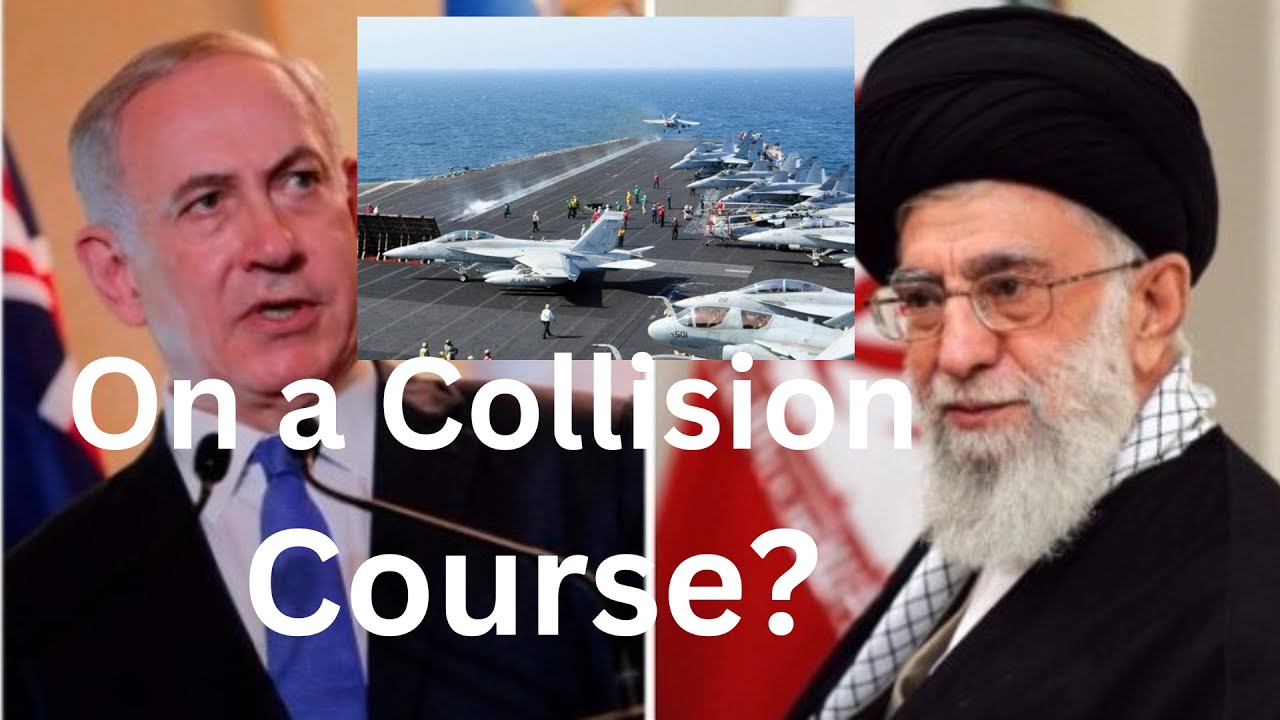
David Oualaalou examines a declassified Pentagon plan called Support Sentry from 2018-2019, linking it to the U.S. withdrawal from the Iran nuclear deal and joint U.S.-Israel exercises. He traces alleged Israeli strikes on Iran, expanding Russian-Iranian ties, and warns the moves risk destabilizing the Middle East.
Chapters
Hello everybody and welcome to Geopolitical Trends. My name is David Oualaalou. So good to be with you as always. The Pentagon has developed a secret contingency plan for a possible war with Iran. Is this another war in the Middle East, or is another war in the Middle East brewing? Is this what the world needs right now? In this video, I am going to provide you insights about what this secret plan is all about. You won't believe what the US is planning for Iran and Middle East at large. Talk about dangerous times. Make sure to stick around till the end so you know when I put the conclusion as to what this is all about. So before I'll delve deeper into all this, first of all, like always, I'd like to extend my sincere thanks to the channel's members and also to the supporters and subscribers, you included. But if this is your first time landing on this channel, please make sure to subscribe and smash that notification button so you will be notified every time I upload a new video. And thank you all for your support. So let's dive in into this. The plan, as a matter of fact, now is declassified because it was classified, and the plan is not new. This plan was in place since 2018, 2018, 2019. Why 2018? You all remember when the United States pulls out of JCPOA, the Joint Comprehensive Plan of Action. This is regarding the Iran nuclear deal. So, so here's the thing. So according to the guide released for the fiscal year, financial fiscal year of 2019, The board was contingency. It was a contingency plan which was drawn up by the Pentagon in anticipation of a potential crisis, potential crisis with Iran. And this has to do, as I said earlier, because of the US withdrawal from JCPOA. It is very scary, dangerous, and frankly, it's concerning. So the US military has set aside a budget. We call them usually in the military jargon the black ops, black operations budget. So the budget to spend on a covert contingency operations related to a war plan with Iran. And the contingency plan, this contingency plan dubbed, and I put this in quote, Support Sentry. Was included in the Pentagon confidential budget guide for emergency and special programs. Another word of saying black ops, that's what it was. So as a matter of fact, the, uh, spokesperson for the U.S. Central Command— and Central Command, which is headquartered in Tampa, Florida, that's the one that deals with the Middle East— and the spokesperson, Major John Moore, declined to comment, of course, on the plan. Well, it's class— was classified at the time, uh, saying that, and I quote, let me get you the quote, guys, only that Iran remains the main source of instability in the region and poses a threat to the US and its partners. We are constantly monitoring the sources of the threat in coordination with our regional partners and will not hesitate to defend the US national interest in the region. End of quote. You can just see the problem with that. And here is the, the great mistake that I believe some politicians in Washington are making. They are thinking in terms that comparing Iran to Iraq. Iran is no match for any other force in the Middle East. Mark my word on it. I was on the ground in the Middle East. I saw with my own eyes. I wrote a book about Iran called Volatile State. I disclosed what Iran's capabilities are. Iran is wired when it comes out to the intelligence services in the Middle East. So, and this is where a plan like this, it's playing with fire. So the contingency plan, for example, isn't, for example, that's part of supporting Israel's aggressive stance towards Iran. And this was sort of quoted by none other than US Ambassador to Israel. His name is Tom Nides. When he said last week, and I quote, Israel can and should do whatever it needs to deal with Iran, and we support it, end of quote. You can just see that's fueling more tensions because here's the thing. If Israel attacks sort of the main facilities for Iran, it will become a serious problem. And the reason is simple, because Iran has medium and long-range missiles that can reach Tel Aviv. I tell you this based on facts. So, so US officials believe that, and as a matter of fact, now the US cannot hide that they acknowledge that the recent drone attacks at a military plant in Iran in central city of Esfahan were carried out by Israel, and that Israel was behind it in the attack on January 30th, just last about a month or so. But here is what's interesting. The attack on Esfahan was on January, January 30th. The US and Israel military held the joint military exercises on same month, January 23rd. So they conducted the joint military exercises and Israel end up attacking Iran on the 30th, only 7— a week later. So, and this joint military, by the way, between the US and Israel was the largest in their history. It's called— it has a name. All the military exercises, the tradition here for military jargon, we always give it a name. So this one was named, and I put it in quotes, "Jenifer Oak." It's a very interesting name. So, in which, get this, guys, 400 Americans and 1,500 Israeli soldiers participated, as well as more than 180 warplanes, and more than 180,000 pounds of live ammo were used. I will provide you the link to all this so you can see for your own eyes. So please make sure if you like this video so far to hit the like button and subscribe if you have not done so. And thank you for your support. So, so the logical question becomes is what's at the heart of all this? What is at the heart of this issue? Well, here's the thing. You get the US, British, the French, the German foreign ministers, all of them just last week on February 18th expressed concerns over the deepening cooperation between Russia and Iran. That is what's at the heart of all this. It's not about the nuclear program for Iran and so forth. I'm certain that even though I disclosed about it on the book, but when the US withdrew, I said right there, the US has no intentions of going back to the JCPOA agreement. So I'm not surprised, as I said, as I argued this in my book. And I said that Russia and Russia sort of will maintain economic and military sort of ties with Iran with a long-term objective. And this is exactly what concerns the West and scares the West, let alone our global leadership in the Middle East is declining faster and faster. That is what's at the heart of it. And here is my brief conclusion for you, because I like to keep this short, concise, and to the point. So as the sun rises on the horizon of a troubled region of the Middle East, I wonder whether the West will awaken one day soon and say, well, good morning, Iran, because Iran is flexing its military and economic muscles in the region, given how the US leadership is waning and weakening faster than you can imagine. So, uh, make sure to leave me some comments. I am thinking of extending this conversation in a live stream this upcoming weekend. Let me know what you think. So as always, remember, geopolitics impacts your daily life in more ways than one. Till next time, guys. Bye-bye.