Unraveling the Anger of Generation Z in Morocco! Geopolitical Trends
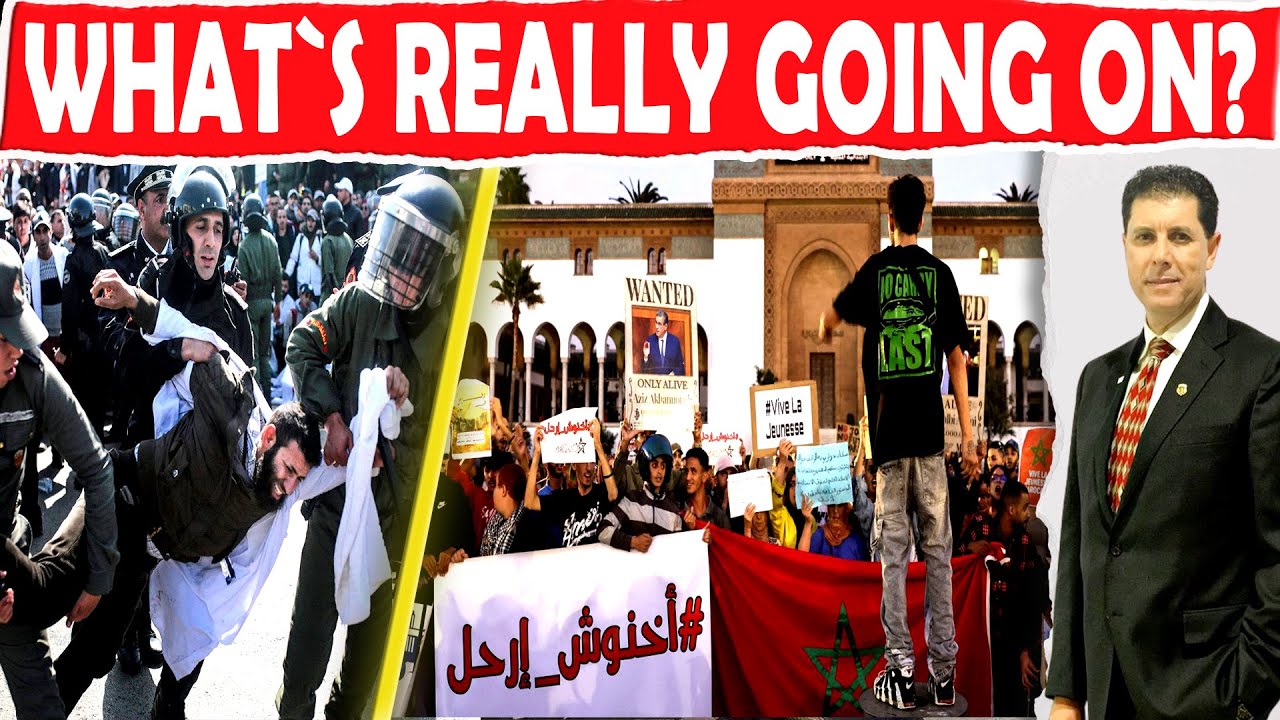
This content was created by David Oualaalou. This content was uploaded by David Oualaalou. This is a YouTube livestream titled "Unraveling the Anger of Generation Z in Morocco! Geopolitical Trends" (uploaded/recorded 2025-10-14) featuring Dr. Oualaalou broadcasting live from Rabat, Morocco. The excerpt is a first-person, on-the-ground commentary and guided walk (Mohammed V boulevard, Parliament, Old Town/souk, street-food areas) rather than an interview or multi-party discussion. Dr. Oualaalou explains recent youth demonstrations (often referenced as Generation Z / "212"), outlines the three core grievances driving protests—justice, healthcare (including deaths in Agadir), and education/joblessness—comments on the King’s parliamentary speech, criticizes perceived government favoritism (mentions Prime Minister/businessman Aziz Akhnouch), raises concerns about social-media/Discord-driven organization and possible infiltration, and urges structural reforms and investment in infrastructure and jobs. The stream also contains local color (cats, street vendors, food, tourist notes) and references to Morocco’s 2023 earthquake response. Language: English. Content type: YOUTUBE livestream-style commentary.
Chapters
Truth matters. I'm your host, Dr. Oualaalou. Very, very excited to be with you, coming live to you from Rabat in Morocco. I know some of you were asking where have I been. I just hopped on a plane and came down. I'm sure you were aware of what was going on about 2 weeks ago. Tension still persists here. However, what the media is saying versus what it is are two opposite sides to the story. So what I'm gonna do, I'm gonna walk you through the main boulevard. As you see, I'm gonna switch the, uh, the screen and you're gonna see, uh, the main boulevard. This is, uh, Mohammed V. It goes all the way up to the top right there, the main mosque. So, so what I'm gonna do is I'm gonna walk you through all the way here through the Parliament. I'll tell you something about it. We will go all the way to the end, and I'll take you to the traditional— down, this is the Old Town in Rabat, sort of the souk as it's known. So, but please, please give me a thumbs up to make sure you can hear me. I will greatly appreciate it. So let me just see a thumbs up here if you could. I would greatly appreciate that. Oh, thank you. Let me see who that is because I want to say thank you first. I have to put my reading glasses on. Ryan, thank you very much. Thanks, Jeffrey, truly appreciate you for that. So, so I'm gonna put my shades on because it's still sunny out, as you may notice, and we're just gonna go ahead and walk all the way to the end of the main boulevard, and I'm gonna be providing you information that you need to know. So As you, as you know, there were some demonstrations here. The country was kind of rattled by that unexpected. Usually Morocco is calm, but you know, there are some demonstrations, have been. I remember last time I was here 3 years ago, there were some demonstrations. They were allowed to demonstrate peacefully and so forth. This one here was different, and I don't know if I should use the past or keep using the present because it is not over. However, it's not in the same way as you may think. You look at the, the pigeons here, so that's usually— you do not see, for example, yes, there are security dispersed here, which is normal. But as far as normalcy for life, it's normal, it's coming back to normal. There is no issues out there, so First, I want to show you here on my left, that's the Parliament. This is where the King of Morocco— oh, there's the sun here, so you won't be able to see. I'm gonna go ahead and cross the street so you will be able to see. And as a matter of fact, the King of Morocco came over and gave a speech here. The reason it was because on October 10th, that's when the parliament's— the yearly overture or opening of the parliament. And usually the king will have to come over and give a speech. Not that he has to, it's just a constitutional aspect of it. So it is well known here. It just coincided with what was going on in the country. So look at the pigeons here. Usually people come over and feed them, the kids. And run with that. So, so I'm gonna cross over near the Parliament so you can at least get an idea of where it is and what it is. Then I'll provide you some insights into exactly what took place here on Friday when the King came over. So they don't allow— of course you can, you can get in, it's normal, but This is the Parliament. This is where usually the legislative conversation is taking place in here. So what happened here on Friday, the King came over and sort of officially started the calendar year for the Parliament. So at the same time, he addressed what was going on in the country. So this is just a clear picture for you here before I'll cross back the streets. So, and for you to see, so. So this is the— so I'm gonna cross over, then we'll continue this way right here. So now let's talk about what really took place and what happened and why. So there are 3 main topics or 3 main issues that usually happen. Uh, one of them has to do with the youth generation. So you have 3 key topics, that's justice, health, and education. Those are crucial and they are legitimate questions, they are legitimate concerns. So for example, you're gonna say to yourself, why justice is involved in this? Is because there is discrepancies in the legal aspects of how an average Moroccan, when he, his case or her case, go to court, it can be dragged forever. So versus someone who has money, has the funding, they can do that and sort of kind of expose itself into society. This is one of the issues why you have seen some— I don't know if you witnessed what was going on on that or not. That's how sometimes it's, it's, it's, it's what's, it's what's going on. For the discussions. Usually that's, that's, that's what it is, asking some questions there and so forth. So, so the idea is, uh, as I said, some have been asking questions as to what was going on. The discrepancies that exist within society, it's what created those problems. The question that many ought to ask is, was there any involvements from outside? Were there any other elements that were involved into this? Some Some have said yes, others said no. I don't have a confirmation to all this. Suffice it to say that the issues that this youth movement, which called, by the way, Generation Z 212. Why that number 212? 212 is the Moroccan phone call. If you want to call into Morocco, you have to dial 212. There are more pigeons here. I'm going to show you this one here. So those just people come over and feed them here. That's what they give them so they can— they can— it's, it's for kids, for just for them to see all this what's going on. Yeah, I see the families, they come over and feed the pigeons. They are not gonna stop in my hand because I don't have any, uh, uh, this is the Central Bank of Morocco. This is where all the, the financial decisions and so forth are decided upon. So, so I'm gonna cross the street and we're gonna keep going to Medina on the other side. So, so let me cross the street here. So just to let you know, uh, this is exactly what they— so the issue of health, how this all happened It all happened because there were 8 women passed away in the south part of the country in an area called Agadir, or city called Agadir. Why? Because they were living in rural areas and there were no doctor there. And this is one of the issues that raised concern among the population here. Now, is this legitimate? Yes, of course. It just makes sense. You have birth and 8 women passed away because there is no presence of a doctor. So that's something the government decide to address. However, that doesn't mean that everything is bad. And this is where the media comes in into portraying that, oh, everything is bad. It is not. Because what you are seeing here, everybody's driving, everybody's walking around, no issues there whatsoever. So, so still, thanks normal, people go to school, university. Uh, I, I am not close by one here, so that's just the norm there. So however, this issue of healthcare, it's because of— and I will talk to someone that I know, one of my, my, uh, I know of someone with the knowledge of what's going on. So what happened is when people go to the the hospital, the Moroccan people, when they go hospital, the person who's standing at the door, they tends to shove them. They get like physical with them and it's not appropriate to do so. Somebody come into the hospital, you don't push them at the door. You know, you kind of be kind or whatever and that creates frustration among people, so. The third element has to do with education. No, we're waiting to cross the street here because it's a red light, as you notice over there. So now, education is crucial. And once again, rightly so. I'm not saying that what they were asking about is sort of out of the way. There were three main issues, you know, justice, health, and education. Those are legitimate. But the concern with education is much, much even concerning to me as an outsider looking in. Why is this? Because when you consider Generation Z, which is between the ages of 13 and 28, this is the majority that is, you know, Generation Z armed with social media and so forth. And that is one of the things they were able to do is they were able to manipulate and sort of played cat and mouse with the security services here. So, and that in itself exposes a serious issue, serious issue for the security entities here that they weren't aware of what was going on. That's the only issue. Other than that, there are no problems whatsoever, just something that can be worked out, uh, sort of, uh, it's just the way they do it. They— suffice it to say, for education, you know, and this is again, I read an article by, uh, by a professor here at the university. There is a university up called University Mohammed V. It's well known here in Rabat, and the, uh, the institution in itself is, is well known, has a good reputation. And the professor provided, uh, let me see what you guys are writing here. Uh, I don't know if, uh, any of you put a comment over there. So let me see, did you put a comment? Can you guys hear me right? Just give me a thumbs up again once to make sure. Ah, let me see. And I know a little bit internet is slow, but it's working. So, all right, perfect. Thank you, thank you, thank you, thank you. Uh, as I said, this Professor— uh, this is another area where there are coffee shops here. I'm gonna show you, you know, just people sitting, enjoying their coffee. And, and, uh, a lot of families bring their kids over and just to sit around here. So, so that's just coffee shops here. So people hang out. It's like in France or some other European countries, they come over and hang out here. So, so, and once again, if I'm gonna turn the camera on the other side, if you look over here, this is where that— where I started, the one I started all the way at the end with the, the minaret, the tower for the mosque. That's all the way at the end, and that is the main boulevard. It's Mohammed V. That's, uh, there are some coffee shops right here at the top, as you see. So, and people just hang out here at the coffee shops. So everybody just sitting, drinking coffee. So this is where the difference is. So the idea of the education part is that the, uh, you got a majority, the young generation They want to go to school and graduate, but they don't have jobs. And that kind of creates frustrations. I mean, of course, in every country, not just here, in every country, there is a— it's just the way it works. And this is where that organization of the government comes in. Unfortunately, and I'm not laughing out of laughing, I'm laughing out of concern. Unfortunately, recently, based on what I read, the analysis that I read and so forth, that the individuals inside those kind of— inside the government that they hold certain ministerial positions are not even qualified. And I'll give you a quick example. The Minister of Health here in this country. The Minister of Health does not have any qualifications. Except that he worked— he owns some big pharmaceutical company, and he used to work with or for the wife of the prime minister, or the prime minister here, the one who takes care of the government. And his name is Aziz Akhnouch. And this is why everybody is so pissed. It's because this guy— and I'm not saying about corruption, whatever, ain't my business— all I'm saying is he goes and starts appointing the people he knows. That's favoritism, and that creates a problem within society. The disparity starts to be very, very big. And this is one of the issues I believe the government ought to address because there is no more debate, you know, especially with social media. You all know how it is. Everybody is rushing into YouTube, everybody's rushing into social media with how many followers they have, whatever. But there is no more debate. Does this mean that there are no shrewd people in Morocco? No, there are. Does this mean that there are no shrewd politicians? No, there are. It's just they don't have a voice, they don't have influence. And the other element to this is that the people who sort of surround the power are not providing the right advice. Why? Because they get into power and they end up being corrupted. That is part of where the problem— and, and this, by the way, it just didn't happen 2 weeks or 3 weeks or 4 weeks. This is the accumulation of so many years over time. That's just part of how it has been, to the point where young generations right now, they are sort of concern, and they went ahead and start to express themselves. The only problem with that is when certain demonstrations turned violent. Now, once you start destroying property and this and that, then you have no right-left whatsoever. So to me, it was like, no, you don't do that. You don't go and destroy property because, you know, you're allowed to demonstrate, but you can destroy property, and that's the mistake they made. So what happened is that you have elements inside the movement itself. There are pros and cons element. Some of them don't even know what they are marching for. Some of them don't even understand the source of the issues, and that can be very dangerous for the stability of a country. So, and this is where again, I see the, the, uh, some entities outside will take advantage of this by fueling more tensions into the country. Like I told you, you look at people, they're just walking, there are no issues here. Everybody is just driving, walking. No, no. Oh, thank you, thank you very much. It's a Moroccan guy just saying enjoy. You know, they're just, uh, no issues here. But when you don't have because the people that end up taking power, they end up sort of abusing it because an average person here might not be able to fend for himself, his legal rights, his whatever. And that is where the frustration is coming from. I'm crossing over to the Old Town and we're gonna walk around, we're gonna walk around the, what they call the souk. Souk, or flea market. So as you notice, there's a lot of traffic here. So I'm not gonna point this direction on the left because the sun, but if you notice over there, look at that, too much traffic. So they have— that's what they have here. Okay, you cross over. And I'm gonna show you one more time the boulevard from here because it's a long one. It's worth watching, you know, or seeing, or knowing about. Right there, it's a long, long one. See, that's— that goes all the way to the end, to the mosque over there. So then you have, of course, this direction over here, and you have this one here. So what we're gonna go We're gonna go to the Medina. This is the old town. This one here is where everybody hangs out after 5 o'clock. So there are restaurants around and a lot of business here. So this is what you see. All of, uh, there's a supermarket over here and there are— this is basically where people come over at night. Starting at 6 o'clock. So they come over, they buy some food here. There are the carts, they can get you around and you can move around and so forth. So I'm gonna walk you all the way to the souk so you get a chance to see it and, uh, and, and go back up this way. And that's it, I'll conclude there. But suffice it to say, to say, uh, those are the core issues, but As far as how the Moroccans themselves feel about their, for example, for the king, no, they have a respect for the king. As a matter of fact, that's why they postponed. Those are the carts, you can ride them here. They'll take you around town for about 24 hours and so forth. So all of them are here, they kind of lined up. So that's for tourism. Uh, say, combienza? Uh, how much? $100? $100? That's a lot. Oh, 100 dirhams. Okay, so it will take you for 1 hour for 100 dirhams, equivalency to $10. Basically, that's what it is. So, so you just go around. And, uh, a lot of shops here. People sit in the coffee shops. So I'm gonna take you all the way to the Old Town so you can see. As I mentioned earlier, people here sort of have a respect for the, the king, and that's why on Friday, uh, the youth movement, the Generation Z to 12, decided to hold the demonstrations out of respect for the king. So, but there is one thing I need to explain to you is that there is a disconnect within. The king is doing his best based on the information provided to him. Is the people that do the work, like I always say, the advisors, the— they are not exposing the truth or telling him the truth. And that is part of me part where the disconnection is, in my opinion. So, so here is the market here. This is the flea market. We're gonna enter into this one here. There's some restaurants here. People will come over and eat. And, uh, so I'm gonna just raise this for you to see, uh, how many— that's almost like some other parts of the So we're going to walk around here, walk around the other side, and I'll conclude. And this is usually the time of the day where everybody comes out here, foreigners and locals. They come and eat. There's this one that do the— they do the pomegranate here. Uh, that's, that's one known here. That's like what I used to have in China. They'll do that. It's well known. Morocco has a good— it's known for fruits. So this is the pomegranates they're doing on. Uh, this is like the dry fruits they have here. So you can just see. Hello! So see, they are— they waving here. They are— people know everybody's, you know, they living the life. They don't worry. It's not they don't worry, they are concerned about the direction of the country. But again, the government will have to sort of clean house, as I always say. It's like, uh, because it's much needed. The one thing Morocco is known about is cats. Look at the cats. So the cats just hang out here. Nobody will bother this cat, so she just sitting there and people move by and they won't bother her at all. So kitty cat just sitting there enjoying the day. That's, that's normal here. So there's one area here where they have so many cats, but, but that's normal here. So I gotta talk to you about what happened 2 years ago in this country. And what happened 2 years ago? It was a major earthquake that took place in an area called Haouz, which is in the south. That's about 6.8 on the Richter scale. It was a major one that happened. And you know what happened then? You know what happened then? All Moroccans came together to help the— I'm gonna disclose this because truth matters. The government, some entities have failed to provide assistance to the local who suffered major destruction. As a matter of fact, there are some places there they have not received a decent housing yet. But the Moroccan people, they came together and they helped them out. Everybody who has them ever. I remember someone told me a story, so, and someone I trust. About this woman, old lady, after what she saw, she took a ring out of her finger and gave it to the authorities by saying, "That's all I have. If you can sell it and get the money and help those people." That shows you the country is united. It's not just the frustration of what happened with, for example, the justice system that needs to have a major overhaul. I have heard about cases that the lawyer sits on them for 20 years, 23 years. That's not right. That is not right. You know, you people with no money here, they can't receive justice here. So, and that's not right. Justice is supposed to be for all, no exception whatsoever. Now, this souk here goes all the way to the end. It's a long one. I'll be happy. Oh, oh, you okay? There is a young person passing here. Uh, I can walk over here a little bit, then I'll come back and go the other side for you to see. So that's what I'm saying. It's, uh, as far as the people, they are united. They are sort of in support of the king and so forth. It's the corrupted officials inside the government And by the way, it's no different than what we have in the United States. Look how corrupted Congress is. Even the president of the United States, which I believe he's corrupted. Anyway, there's another cat here, guys. So they just hang out here. It's normal, you know. And people like the cats here. They don't, they don't like bothering them at all. So So as I said, you know, like in our country, Congress is as corrupted as it gets. So that's the— but suffice it to say, like I always say, and I remember mentioning this few years ago, the challenge that I believe Morocco will face has to do with the young generation. They have to provide jobs for this young generation. Otherwise, the next 5 years, the next 10 years, Look at the old street. I'm going to show you some old streets here. That's almost like what's in Spain. They are narrow, or some places in Italy, they are very narrow streets. Those are old town. They've been built here for a long, long, long time, but they still stand here. So that's that. As I said, the idea of, uh, the young generation has to be not tended to. And their frustration is with, for example, why will the government go and build stadium which they cost— for soccer, they cost so much money at the expense of, let's say, a hospital, let's say university. It's legitimate concern. You know, we gotta be fair and we gotta be right. There is nothing that they are demanding that is not. The question, like I always said, is when certain demonstrations turned violence, That's where they crossed the line. I'm not a, you know, violence has no place into all this. Once you start going and destroying properties, then you have no rights whatsoever. Whatsoever. That's usually, and that is part of where the problem is. So I'm going to raise this for you to see all the way out there. I'm not going to go over there. So, but this one goes for a long, long way. All the way to the other mosque. If you see, if you notice, this is almost different than, uh, in some other Arab countries. That's what they have. So, so we'll go back out here. I'll make a left, then we'll go back to where we started at first. So that's all they sell here is the traditional clothing here, if you notice. So those are just traditional and Morocco is cheap, it's not that expensive. So for example, for me, when I convert the US dollar, $1 is about 9 dirhams, almost 10, almost 10. So it's almost like $1 for $10, the equivalency. So like I said earlier, the idea of when the earthquake happened, all Moroccans came together. So, and that demonstrates at least to a degree the unity of the country. What's different about this particular demonstration is because usually they have demonstrations here, peaceful ones. I told you, 3, I think 3 or 4 years ago, I witnessed one here. It was peaceful. It was no issue. And I even recorded it and all that. It was no issue there. This time around, be kind of dispersed from the south all the way to the north in some other cities where usually they are not known for demonstrations. And that tells you the story of whether they are influenced from outside. For me, if you ask my opinion, this is where they make Moroccan ground beef. I believe. Can I show this one? Okay, I like to ask permission first, so I had to ask him his permission before I show. No, don't worry, I'm not going to show you. Don't worry, I just want to— I just want to show this one. This is ground beef and they make it right here. This is a sausage, but it's beef sausage, it's not pork. They don't eat pork here in Morocco. Thank you very much. Uh, same like in China, people here, they don't like their faces on a camera. Not all, not all, but some. So, so this is where the difference is. There's security passing by here, that's normal here. Sorry. And, uh, now if you go here, this is another long street. This is where the old town, the old city. It's known for— they sell all the, all stuff you can think of. So, and it goes all the way, all the way at the end. So, so we're going to go the other direction. That's usually where we're going to go. So that's— once again, I'm going to raise this up for you to see. It's very safe. It's very peaceful. I walk at night here, no issues. Nobody will bother you. Don't bother anybody, nobody will bother you. But they are— it's safe. It's safe here. And everybody's going about their lives. There's another cat just stretching right here. Look at that. And nobody bothers them. They just hang out around here. So that's normal here. As I said, nobody— there are foreigners right here, they come over and eat. This is where they have the street food if you want to eat some street food. So this is where, where most of the tourists will come through this area on the other side and walk out to the main boulevard and end on the other side of the street. So a lot of foreigners come over here through, because you can't, you can't come to Rabat without visiting the street foods and all that stuff. So I'm gonna show you some, then we'll cross on the other side. Uh, so once again, this is another ground beef. A guy makes ground beef. This they make, uh, yeah. Is that okay if I show you? Is that okay? I have to ask permission here first. So, so they making all the— they prepare this during the day, I think. So there's the salads here and eggs, and I don't know what this is. This probably potatoes of sort. And, uh, this is sardine, the fish. Yeah, this one here, they make like some sort of, some sort of a burger and so forth. So that's usually— they have the stands here that— that's, uh, they even have shawarma here, but it is not known in Morocco. Shawarma is not made for Moroccans. So, so they make like the beef and sausage and so forth. Chicken here. The one that I want to show you is this unique. I was here this morning, I grabbed a bite to eat, it was so nice. Look at this one here, guys. I, I tried it earlier, it's the equivalency of, uh, a brisket back for us in Texas. That's, uh, yeah, this is, uh, this is the big, uh, whatever they call down So that's a lot of people come over here and eat and eat down here. So I'll get you closer here so for you to see. So I had it this morning, it was so good. It was very, very good. So if you ever come to Rabat, make sure to come to this place and, and eat this one. So it's very, very good and I like it. I'll come back here tomorrow. I'm gonna come back here tomorrow. Other than that, there are some clothes here and, and basically that's it. So now still the old town, old part of town. As I said, they have like the tiny streets. Once again, they make more street foods, all of them right here. They're cooking all this one here. Let me show you. All this stuff because this is the time when people come out here. Hello, how are you? So this is where they make, uh, this is where they make Moroccan waffles. They're known as waffles here. They make the stuff. Yeah, I'm gonna ask this guy to make me. Yeah, no, that's not the one. It's not the one I was going to ask him for. But sorry. How are you? How are you? I'm all right, thank you. They make pomegranate juice. There are more cats right here, so they hanging out. So a lot of cats, a lot of cats here. So, but that's normal here, so it's very normal. So we're gonna go out and, uh, and as I said, just to wrap this up, I don't know where we are. Let me see, uh, as far as the time, uh, yeah, we still, we still have some time, I guess. Let me see, I have to put my reading glasses so I can see because it's too, uh, now we are 36 minutes. Okay. I'll finish. So we're coming out now to the main, uh, the main street. I guess the, uh, that's almost reminded me like when I was in China and showed you Fujian. So, so I'm gonna turn around and show you the arc of— this is how you get into the old town. And suffice it to say, based on what I read and know, is that this wall extends all the way to to the other side, and it goes on both directions all the way. And that's how the city used to be protected back in the day. We're talking about back then. So, so, uh, where things are now, nobody knows. Uh, the people still, the young generation we talked about, they're still a little upset even though they did respect the king by saying, "We're not gonna demonstrate on a weekend, on Friday," because on Friday that's when he opened the parliament session. But they said, "Doesn't mean we are done." That's what I'm saying. I wanted to provide you an update about this. It was unusual for this to happen this way. And again, if I am to think over the horizon, I am seeing the signs that if If this is not dealt with soon, meaning not by force, we're not talking about force here, we're talking about understanding what the issues are and address them, then things will get very, very bad 5 years, 10 years from now. 'Cause that's usually, and I'm using history as my guide, most of the countries that end up, look at Nepal. Nepal made a major mistake. Morocco did not. What Nepali's government did is that they shut down the internet. Morocco didn't do that. They let— except that the young generation, Generation Z, because remember, that's the generation that is, uh, grew up with, uh, was born into social media and so forth. So they end up using the Discord platform. I have a— I have an account in Discord for the channel. I'm sure you are aware of it. We used to talk about it once a while. And apparently it caught off guard the security services here. That's the only issue that I— I remember when I advise governments, because that's what I do usually on my other time, that's one issue that I address with governments. So without going into details about this one here, so, but I do advise them about understanding because what happened in Morocco are signs for what lies ahead if they are not addressed. And I am sure the government or the king for this matter, because personally I don't know about the prime minister. He's a billionaire. He's not literally working on behalf of the average Moroccans. That's to me a reality. I can't sugarcoat it and I will not sugarcoat it because it's the truth. When conflict, when there is a conflict of interest, when you start putting your own interest at the expense of society, that's a recipe for disaster. So I'm gonna close. I'm gonna cross this street here and we'll go the other side. And once again, if you notice, uh, you know, it's just busy as always, people going about their lives. And so to those who say there is, uh, this and that, no. That's why I wanted to do this live for you, so you can see with your own eyes here So there are no issues there. There's nothing. So, uh, tomorrow I might, I might swing by a university or a high school just to see. And people are going to school. This is the main boulevard here. Once again, it goes all the way to the end. That's what you see over there. So, and that is where, uh Where it stands now, and I'm going to conclude with this and see if you have any question. I will be happy to answer it for you. Where it stands, thanks, nobody knows. So far, there are no issues there, no. But you have the security dispersed in different corners and so forth. Whether there is an ongoing negotiations between the government and the groups, I don't know. Because the group itself has been infiltrated based on what I read and the conversation that I had with people in the know. Apparently, they're taking advantage of the Generation Z group. So they've been infiltrated. You all remember, and it's no secret, you all know it. You remember January 6th? Did you know that's the day The US government sent some elements inside to incite violence. That's from within. So I'm not surprised here. So, so let's hope they'll come to some agreement and that agreement will consist of building infrastructure because that's what's needed. You have to restructure education because very, very important. And the reason for that, because you have a majority of society, the young, that is between the age of 18 and 30. So that's a large segment of society. So this is one of the key aspects that needs to be addressed. And the third element has to do with the health issues. Health— health care, I'm sorry. Health care. That means the building of new hospitals, especially in rural areas outside, because now there is this— there is a major discrepancy in wealth here. You can see it when you come. By the way, guys, there's a BYD right here in Morocco. BYD. Somebody got a BYD here. There is a Moroccan guy, I learned that he's He's— he created some sort of— figure out something about batteries for electric vehicles. Very, very, very smart dude. And I think they're gonna open up some factory here for batteries and so forth. So, and that will be good. That will create more jobs for people here. And they have to create jobs for the young generation. Otherwise, it will be problem. Dramatic because Morocco— Morocco has one thing that goes for it. And you know what that is? It has a vibrant young generation. Look at Germany now. Germany is aging. Look at Italy. Look at Spain. Look at Portugal, Japan, Australia, even in the United States. For us in the U.S., it's because of immigration. Morocco doesn't have that problem. There are a lot of young people here, but the young people, you have to create opportunities for them. Young people cannot go to school, finish school, and not have jobs. That is where the challenge is. So instead of, you know, I know Morocco is preparing for World Cup in 2030 and so forth. All that is good, but at the same time, not at the expense of the infrastructure, not at the expense of economy, not at the expense of the priorities. Let me just put it that way, sir. And I am sure they'll work something out. They'll figure something. There is no doubt about it. And they'll put— the country will put this behind and move forward because it's very important for the safety and the stability and the security of the country. That Morocco prosper. So there are some elements that I was told, I was informed about that came from other countries getting involved here. I don't know. I don't know. I don't have a confirmation for that. So I'm just sharing with you the conversation that I had with some trusted sources, but I will not For me personally, I will not confirm it 100% because I don't have the facts. And for me, I always have to do the research before I'll confirm anything else. But again, when you look at how this is moving, you know, you have Nepal, you have Madagascar, and now you have Morocco. So makes you just wonder how all of a sudden this kind of tensions emerged. Whether they are legitimate or not, it's beside the point. Point. And in my opinion, those are legitimate concerns and legitimate questions that ought to be asked. And I am sure, and I am sure, I am sure, I am sure, the King of Morocco will also understand the reality of this and he will address it. You know, the Moroccan people really have respect for the king. It's not like you hear the signs of we don't want the King anymore, whatever. No, none of that. They really respect the monarchy as an institution. That's what I'm referring to here. The question is in those people that have been assigned to certain posts within the cabinet, and that is where the issue is. So how they gonna clean that up? I do not know because I don't live here, I don't work for the government here, You know, it's just, I have my own concern in my own country back home in the United States with the corrupted Congress and a president that is a little bit off. You know, just have no idea. I just found out he imposed now 100% tariffs on China. How ludicrous. And what is it gonna do? What is it gonna do to the United States? As far as the purchasing power, you know. An average citizen in the United States is going to have now a hard time buying basic items. So this is where the issue is going to be. And I don't know how they're going to resolve that because for us in America, the system is rotten. Let me just say it straightforward. Forward, you know. I told you when I was in China, I, I explained where the country is. I was on that speed train. I went over on certain aspects of, uh, and all this is nothing but a reflection of where the economy is of China, that is, when I was there. The same thing I noticed here, but what I noticed here is that the need for— they need to have infrastructure structure here. They need to issue some sort of— they need to issue, for example, the idea of the financial structure. And all this is creating problems. Otherwise, if the problem is not resolved, it's going to create more issues. And that is where the problem is. You have the issues with the higher-ups in the government, not the monarchy, not this, not that, in my opinion. Oh, I forgot to show you the clock. This is a major, a major, uh, look, I guess this post, this is where you mail your stuff, and it's known for that clock that it's been there for, what, I don't know how long, but them, cuz you are now back to the main, uh, main boulevard that goes all the way to the mosque and stretches all the way to the, uh, old Medina. That's what it is. So, so, all right, I am going to stop right here. I hope you got an idea. At least, uh, I'm here on the ground That's one of the reasons also why I decided to come down here. I just hopped on a plane and came down. So, uh, I didn't sort of— it coincided with exactly the event that took place. So, so I end up coming down here and just, uh, I have to pay attention to— thank you— you have to this way here. It's very different how they do this stuff. So it's very different. And so I wanted to— want you to have an idea at least of what is at the heart of these particular tensions that took place in this country. Let's hope it doesn't sort of— but again, I have a concern. I have a concern looking from outside in. If the issues are not resolved, it will only get worse. So that's the only— I don't advise the Moroccan government, you know, I just— even though I do advise governments to a degree, that depends again. But for this one here, they're going to have to figure it out. And because if they don't, the issues will become even worse. All right, I'm gonna see if you have, uh, let me get my reading glasses and see if you have any question. If you have any question, I will answer it for you. So I know the, the questions goes back, what is clip, what is Kleptocrats. Kleptocrats is— I don't know how to explain it. I understand it, but I don't know the words for how to explain it. The kleptocrats, it's sort of a part of society of the individuals that they deal with sort of the business aspects of it, but at the same time they get their hands into politics. So they get like both worlds. They have power, but they have the business side, which is exactly the case of this prime minister. He's a billionaire. He owns so many companies, which is fine if that's a business, but don't use your position or the government for that justification. That is where the difference is. What is the other one? Mr. Putin is an incompatible— no, kleptocratic bureaucrat. So, okay, the questions don't stay on, they go on. So let me see if there is another one quickly here. I am not hiding in Mumbai. Who's hiding in Mumbai? So Sumatra, Venezuela. Did you guys know that a woman from Venezuela won the Nobel Peace Prize, not Donald Trump? So that was very interesting. So, you know, anyway, guys, I'm going to sign off. I hope you enjoyed this. I will be going back home soon and we'll resume our analysis from, from the US. I didn't disclose where I was going because I wanted to keep it a surprise. Not a secret, but just a surprise for you. Till I got here. I know I didn't do any livestream right away. It just, it wasn't the right environment for it. So, and I kind of was respectful of that. I had to, because if I would have stepped out a few days ago during, at the height of these demonstrations, it would not be good. Not that nothing's gonna happen. It just, to me, it was out of respect. For what's going on. So, so, all right, let me see. You should be watching Trump now. No, I won't watch Trump. Trump is, is a mess. He's in Egypt right now to sign the issue of Gaza, I think, for the peace between Israel and the Hamas. But I, I won't trust— I won't trust Bibi anyway. So The PM. Okay, let me see. It's just read as a residence of any future. So, uh, Bangladesh, by the way, I just saw that they met with Pakistan. So India might end up holding the end of the stick. Why no cars? Uh, checkmate. We need solid state rechargeable. So All right, guys, I'm gonna sign off here. I hope you enjoyed it, and I look forward to seeing you next time. As always, remember, geopolitics impacts your daily life in more ways than one. Till next time. So this is it. Back— I'll be back home next week, so you can, uh, we can resume our activities when I get there. All right, guys, let me, let me see you before I take off. Here we go. I hope you enjoyed it, and, uh, just leave me a comment if you have any question, and, uh, we just go from there. All right guys, as always, remember, geopolitics impacts your daily life in more ways than one. Till next time, bye-bye.
More from David


Beyond the Single Actor: Why the Gulf Isn't Choosing Between the US and China


Iran, Iraq's Militias, and the Houthis Are Coordinating! This Changes Everything




Who Controls the Next Decade's Resources? Latin America and Africa's Geopolitical Crossroads

The Chokepoint Trap: How Washington's Stupidity Triggered a Cascade That Now Controls the World

Trump Spooked as IRGC Unveiled dual-use SLV, Deployed Ghadir Mini-Subs & Hinted at Tactical Nukes!
