Update: Evidence Pointing to India’s Involvement in Assassination!
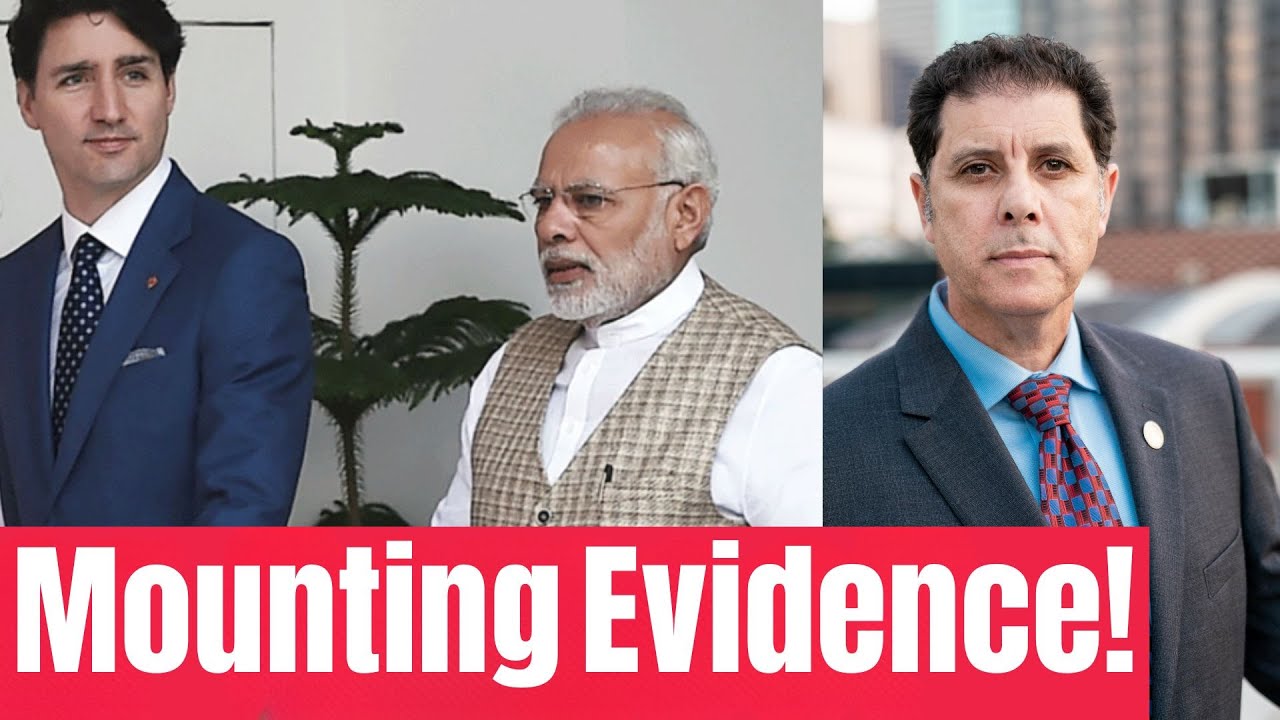
In this Geopolitical Trends video, the host provides a concise update on the recent Canadian claim that intelligence—both signals (SIGINT) and human (HUMINT)—links India’s intelligence services to the June 2023 killing of Canadian Sikh activist Hardeep Singh Nijjar. He explains how Canada allegedly gathered the evidence by surveilling Indian diplomats in Canada, outlines the typical intelligence‑collection toolkit (electronic interception, human surveillance, microwave listening), and notes that the information reportedly originated from U.S. partners within the Five Eyes alliance. The host draws on his personal experience in U.S. intelligence to discuss the structure of India’s intelligence community (RAW for external affairs, Intelligence Bureau for domestic matters), its historical evolution, and its past operational focus on Pakistan and Kashmir. He questions India’s capability to conduct a foreign‑soil assassination, references past Indian intelligence failures (e.g., 2008 Mumbai attacks), and situates the incident within broader regional dynamics, including India‑Pakistan rivalry, Afghanistan’s role as a new battleground, and a possible U.S. strategic pivot toward Vietnam. The video also touches on how intelligence leaks are used for strategic messaging, the role of media outlets and journalists, and the diplomatic fallout, emphasizing that Canada is unlikely to disclose the full evidence due to its sensitivity. The host concludes by urging viewers to consider the geopolitical puzzle and remain objective.
Chapters
Hello everyone and welcome to Geopolitical Trends. So excited to be here with you. I wanted to give you an update, as I mentioned in my response to some of your comments. Uh, some of you asked if I could do an update about, uh, what's taking place now between Canada and India regarding the assassination of, uh, the Canadian citizen of Sikh descent or Indian descent, uh, uh, Mr. Nijjar. So who was gone down back in June 20th. Anyway, so I'm gonna get into it right there because I only have a short time here, but I didn't want to miss this opportunity because I promised you I will do an update to it soon. But apparently that more and more now, more evidence is coming forward, as to the nature of the evidence, we might never see that. And that's normal when it comes down to the work, uh, that intelligence services are involved in. This is not just in Canada, it's around the world. As a matter of fact, I'm gonna even give you, uh, a brief, uh, history about even Indian intelligence services just for you to have an understanding. So, so basically, uh, what Canada's saying as of the last 24, 48 hours is, is that it has evidence from both SIGINT and HUMINT. SIGINT means signal intelligence, and HUMINT means human intelligence. That's through surveillance, and both of them is considered surveillance. One of them can be the human factor, and the other one can be the electronic, uh, factor, or signal— I'm sorry, signal, uh, aspects of it. So And what Canada is saying is that the involvement of India, it was apparent to them. So because the killing, as you may know, for those who might not know the background, uh, that, uh, the Sikh leader, uh, who was living in Canada, who was a Canadian citizen, uh, Nijjar, uh, Hardeep Singh Nijjar, that's his full name. So that's why he was gunned down, because he was calling for, uh, the independence of the Sikh, the Sikh having their own independent state within India, something of course New Delhi is not going to allow at any cost, in my, in my, in my opinion. So, but I'm not here to talk about that. I'm here to talk about the evidence that Canada is saying that it has. And as I said, how did Canada, uh, gather this information? Well, it was through the surveillance of Indian diplomats in Canada. And by the way, it's not just Canada that does that. Most countries do this on foreign diplomats residing in that particular country. So spying on each other, it's a part of the business. That's just how it's been. I mean, we were spying on, for example, Angela Merkel's cell phone. We were reading all the texts and listening to the conversations. Uh, we did the same. And this is why in my opinion, why China decided to go ahead and have its own internet. Even for the GPS, which you all know through the satellite in Spain, China has its own Beidou, I believe that's the name of it. So just to not give an opportunity for the West, Western entities, mainly the US, because we are far ahead when it comes down to surveillance. So, so this is how basically what led the Prime Minister, uh, uh, uh, dictator Trudeau, to come forward during the Parliament session and disclose this. So, so, however, he did mention that he will not authorize the release of the information. Why is this? Or the method, rather, not the information. Why? Because you're looking at other countries involved. You know, in my understanding of how the intelligence works, as one who works in the intelligence field, back in Washington, DC for, for, for many, many, many years. If you look at about the Five Eyes, which is the 5 countries that have shared intelligence and so forth, you have Canada, the United States, the UK, Australia, and New Zealand. So if the information will have to come from one of those countries in that region, it will be Australia more so than New Zealand. That's just my opinion, by the way. Second thing, the US will have more capabilities because we are even spying on Australia and New Zealand and the UK and the rest of it. So that's just how it is. But this is to me, and by the way, this evidence that the UK, Canada is talking about was received from the United States. This is what makes it very interesting aspects. So I have a picture here for you to, you know, it might not have to do anything with it, but just to put things in perspective. So what the Canadian Prime Minister is saying is that the intelligence that he was in possession of that prompted him to move forward and state publicly that India was involved in the assassination. So the next question you need to ask yourself is, does India have the capabilities to really conduct an operation at that, at that scale? Because remember, certain intelligence agencies try to— what's the word?— to engulf or make it big deal that they do have the capabilities when they don't. And I'm not saying that India doesn't. All I'm saying is a question for you to consider. Does India have the capabilities of mounting something like this? When if you go back to 2008, you remember the terrorist attack that took place in Bombay. So if India's intelligence is that far ahead or that capable, how come they couldn't thwart that particular operation that took place back then? And this is again just food for thought. We're not pointing fingers here. So, and again, to me, what led me to do this update for you is just to highlight to you two things: that there is evidence there that India is involved And this evidence was, uh, sort of, uh, uh, uh, generated through surveillance of communications, uh, of Indian authorities and the country's diplomats inside Canada. Now, this collection of the information, it's on both ends— communications, phones, satellites, you, you got the idea. The other is human, through surveillance, by having someone keep an eye on the movements of the diplomats. Now, as you may know, in the world of the intelligence, there's something called the microwave, which you can listen to conversations from far, far distance. I recall I had a— I watched a recording, which doesn't exist anymore, by the way, a recording of an MI6 agent in England meeting with someone from Ukraine prior to the conflict. And how the whole conflict was guided by the Western intelligence agencies. So, so this is what's interesting to understand about this one. Now, of course, the media, depending again on which— if you have the CBC or CBS in Australia, uh, of course they will have their own contacts inside the intelligence services. If you get the CBS in Canada, uh, they will have the same. We have it the same here. We with the Washington Post, like, uh, uh, Seymour Hersh, for example, as a journalist. He has his own sources inside the intelligence community. And what you need to understand about the role of the intelligence communities is sometimes they leak information intentionally. That means to divert the attentions of the public or the conversation altogether. So, so here is what's interesting, uh, that was a claim by the Washington Post that the Prime Minister, Dictator Trudeau, did approach— now listen carefully— did approach Canada's intelligence allies. Who are we referring to? To the Five Eyes, or the Four Eyes in addition to Canada, several weeks ago. Okay. And asked them to condemn the murder, but the other countries refused. They rejected Trudeau's request. So, and this is exactly what's confirmed by none other than US Ambassador to Canada. His name is, I think, David Cohen, if I'm not mistaken. I have a picture of him here. This is the US Ambassador to Canada. So, and he did sort of confirm this but stopped short because he wasn't authorized to go further. He said, and I quote, I will say this was a matter of shared intelligence. In information, end of quote. So, so the, the way you're gonna look at this, uh, between especially the United States and Canada, there is a lot of shared information between the two. Uh, Canada— I don't see Canada doing anything without the US approval, you know, no matter what you hear, no matter what you read, because Canada won't be able to, uh, uh, sort of, uh take care of itself by itself. You know, as one who lived in Canada, you know, and I'm very familiar with the Canadian system, uh, so, but I'm also one who worked inside the US government and understand what's going on when it comes down to the realm of the intelligence aspects of itself. And this is why even the Canadian— even the US ambassador to Canada, when he said, and I quote, there was a lot of communication between the US and Canada about this, and I think that's as far as I am comfortable going, end of quote, because he won't be authorized. But also to tell you that it was the US that dictates the terms to Canada, not the other way around. So, and one thing I want you to, to get about this brief update here is that the confirmation now that India's involvement in the assassination was gathered from both the humans and electronic sources, or, or, or SIGINT, as we call it. So, uh, now the other question we need to ask ourselves is, what will New Delhi do now? What will India do? Will it sort of cooperate in an investigation? Because doesn't matter even if your agents are involved, you still have to, uh, go by certain standards. I don't know, I can't speculate on this. I don't know what New Delhi is going to do, whether they're going to cooperate or we're going to stonewall any investigation. Because one thing for sure is that all this didn't happen in a vacuum. It did not. This is the same thing I'm seeing, and again To elaborate even further, to think outside the box, is the US getting back at India? Well, if it is, why would I be surprised if India was mistaken that, well, I'm gonna side with the West, well, the West is gonna turn on you. That's how we have been conducting business for the last 57 years. What makes India think, well, I'm gonna side with the West and this is why, India went ahead and agreed, for example, to the establishment of the naval, the US naval hubs inside India. They agreed to join the Quad, you know. All this, if India think that, or that the US or the West for that matter is going to welcome India with open arms, it's mistaken. So And that's why I always argued India cannot be playing both sides. And even some of you guys have put those comments before, and you were spot on. I can go back and check some comments that was 2, 3, 4 months ago, and some of you have argued this point. India can't be put in, uh, uh, uh, uh, or stand on both, on both sides of the fence. At some time it's gonna fall, and this is exactly what happening. And this is why, if I am to think, and like one of our viewers in the community here shared this, a very, very good point, could this be why we are seeing now another pivot of the US towards Vietnam? Is it because the US is realizing India might not be reliable, so we're going to have to count on another Asian country, Vietnam, to counter China? I don't know, what do you think? It's because it's worth thinking, it's worth considering, you know. And if Vietnam— if we are to say Vietnam will go along with it, how could Vietnam forget what has been done to it and all of a sudden move with what the US is asking? Or could Vietnam be playing both sides again, the same way India did and does and still doing? You know, that's— I, I can't answer those questions right now because those would require a lot of research in understanding the dynamics. But to me, I'm just trying to see the, the pieces of the puzzle where they fit, because all of a sudden, uh, you know, India dumping the US dollar, Canada accusing the assassination, US moves towards Vietnam, Indonesia dumping the US dollar. All these movements are not happening in a vacuum. So, but there is one thing we need to understand, uh, it's about even the structure of the intelligence services in India, which I believe it will be worth your time, uh, to really at least understand a little bit about how it is structured. And I did, uh, uh, just, uh, uh, gather the brief, brief, uh, descriptions and, uh, a little bit of historical from their records. Again, I remember I used to work in Washington back at the time. You know, I have access to all intelligence services around the world, and because that's just part of the, of the job and so forth. So, so India is no different than other agencies because, for example, and again, I'm not comparing, just giving you an example here. For us in the United States, when you hear the term the intelligence community, Well, we're not talking about just the Central Intelligence Agency. We're talking about the community. And within that community, you're looking at about 12 to 14 to even 16 agencies, all of them under one umbrella. This is why we have the, the, the, the office of the Director of the National Intelligence basically overseeing all. Other countries have the same. It's no different. In Canada, there are many agencies within the main hub, the umbrella, whatever. Well, India is no different. India has a number of, uh, of, uh, intelligence agencies, of which best known one of them that is known as RAW, which is the— stands for the Research and Analysis Wing. It's known as RAW. If you see short term RAW, it's a reference to the Research and Analysis Wing. So, and this one, this RAW is India's intelligence service for the external affairs. That means it does not deal with the domestic affairs. That's just what they say on a paper, you know. It's like for us, the CIA doesn't operate on the US grounds domestically. Well, we all know the reality of it. It's not a mystery. It does sometimes, and same thing. So Then there is in India, beside the RAW, or the Research and Analysis Wing, there is the Intelligence Bureau. So now the Intelligence Bureau, think of them like CIA and FBI. The Intelligence Bureau is the FBI, the RAW is the CIA. So the Intelligence Bureau is the domestic intelligence agency which is responsible for the counterintelligence, counterterrorism and overall internal security. So, but you need to understand the history overall, or the whole intelligence structure in India. And it's all started back in 1968, uh, with, with the Intelligence Bureau at that time, which is responsible, as I mentioned, for India's internal intelligence, but it also handled the external Intelligence Affairs. However, after India's miserable performance in 1962, the border war with China— yes, it was a, it was a poor performance because they didn't anticipate this. And this is usually where you assess the success of an intelligence or the failure. We had it the same when the Berlin, the Berlin Wall fail. The US had no clue. The agency, the CIA, didn't have no clue at that time. You know, we had no clue when the demonstrations took place in Cairo that toppled Hosni Mubarak. All our intelligence failed in predicting or seeing that coming. So why? Because we were depending too much on the satellites. We didn't have any humans on the ground. That's why you can have all the satellites over the world If you don't have human intelligence on the ground, yeah, the satellites can only give you images if you don't understand what's going on. So, so, so this is where after 1962 it became clear to Indian government the need for a separate external intelligence agency, uh, uh, that needed to be created to deal with external, uh, uh, the external issues and so forth. So, so, and this is what part of where intelligence can fail, uh, and, and the 1962 war, it prevented this one. And this is according, by the way, to, uh, a major general by the name, uh, VK Singh, who wrote a book. I remember taking a look at the book back then. It's called The External India's External Intelligence Secrets of Research an analysis wing. So, so India's external intelligence agency, the RAW, that is, has long faced allegation of meddling in its neighbor's affairs. Because remember, it was founded in 1968, and it was primary to counter China's influence at that time. Over time, it has shifted its focus Guess to whom? Can anybody guess to which country Raw has focused its attention? Let me see in the chat box if anybody can guess on which country it turns its focus on. Yeah, it's, uh, and then interesting because after the 1962 conflict, Vietnam— no, good try, good try, Dark Side, good try, good try. No, you're absolutely correct, Cosmo Ray, it turned it over to Pakistan. And how do you think that happened? It didn't happen in a vacuum. We had something to do with it also. So, and specifically it was towards, uh, understanding first of all and countering the ISI. ISI is the equivalency of CIA, uh, in Pakistan, which stands for the Inner Services Intelligence. So, and this because it has been cover— it has been engaged in covert operations, uh, both of them they've been engaged against each other over 3 decades. You know, still to a degree. Yeah, and that's what we understand, that we do have pressure points on both countries. We can unleash each other's— each on each other. So it's just the world of intelligence, it's very, very dark, very complicated. So, so the ongoing disputes in Kashmir, which by the way I intend to do a live stream on it, and I am waiting for, certain key information without going into detail right now, uh, to finalize my own analysis. I mean, I understand the issue, I've been around that part of the world, but when I present, I have to break it down in a simple, uh, understanding for you all so you can have a better understanding. So the whole this issue about the ISI and the RAW was about Kashmir. Because we all know the tensions in Kashmir. So, and of course, we can't forget how the Brits created all that problem. There are some that they can go as far as saying that even India wasn't even a country by itself. Now, I can't, I, I, I can't confirm that kind of statements, uh, it just because it's very It was someone who shared part of a history regarding this issue, and it was very, uh, yeah, if I may share this, and I'm not going to disclose the names because if I don't get the consent of the— I can't disclose the name. So, but what I can share is this, and I quote, there is no India Before British India and before 1947, compare the map of British India versus map of India just after independence in 1947 versus the map of current India. How many countries and princely states did India illegally annexed using military invasion? The quote continues: 1947 annexation of Kashmir, 1948 annexation of Hyderabad, 1948 annexation of, uh, Junagadh, 1949 annexation of Manipur, 1949 annexation of Tripura, 1951 annexation of South Tibet, 1951, Nagaland. Please play by sit. So, 1999.9% of Nagara wanted independence from India. In 1961, annexation of Goa. 1962, annexation of Kalapani. Nepal, 1962, aggression against China. 1971, annexation of Turkmenistan. Pakistan, 1972, annexation of Timbuktu. Bangladesh, 1975, annexation of Sikkim, the whole country. 1983, which was aborted, attempted invasion of Mauritius. 1990, failed attempted annexation of Bhutan. 2006 annexation of Duars, uh, Duars in Bhutan. 2013 annexation of Moray, Myanmar. Fake, an expansionist country with no common ethnicity, skin color, language, history, and sovereignty. End of Whoa. And once again, and I'm not saying we all have to think objectively to understand this dynamics. This is why I asked to go back to my original question. Now that evidence is there, and as I said, I don't think so Canada is going to disclose the detail of it. Why? Because it's too sensitive, the method by which it was collected. So, but if they have evidence, at the same time, you have to be fair to India, you know, prove, show the evidence. That's like, to me, in a democracy, if we say, well, you are innocent till proven guilty. So that applies. So just to be fair, because we have to be objective on both ends of the spectrum. So Canada saying that they have evidence, You know, I, I checked different sources and all to me confirmed there is the presence of two, second and human. And was, as one who works in Washington, I understand what it means, but I also understand there is no way they're gonna disclose this information. So it will always be a question mark. And that's why I asked, what will India do now? Will it cooperate in the investigation? Or will it stonewall any, uh, investigate or any attempt by Canada to investigate this matter? Because no matter how you look at it, uh, the, the deceased or the targeted individual is a Canadian citizen. Yes, he's of a, of a Sikh descent and so forth, and, uh, beside the point, he is a Canadian citizen and the operation took place on a, on a Canadian soil. Makes you also question Canadian intelligence capabilities. If they couldn't thwart this, then that's to me a failure. So, so just to go back to my point about India and ISI, so that's why for the last 3 or 4 decades that disputes continue in Kashmir, which that one by itself continues to fuel main clashes between the two. So however, Afghanistan now is sort of emerging as the new battleground. And why is this, you may think? As one who spent time in Afghanistan, and I'm very familiar with especially what's going on on the border between Pakistan and Afghanistan, so Islamabad sees this very, very, very concerning with India's diplomatic growing interest in Afghanistan. To them, it's very, very concerning. Why? Because the ISI was the one that is handling the group in Afghanistan, without mentioning the group because YouTube usually censors this one. So you know which group I'm referring to here. And why is India interested in this? Because that's where the— that's when I believe This is putting my intelligence hat on. I believe that India wants to have the RAW, the Research and Analysis Wing, start conducting operations inside Afghanistan, but with the objective to destabilize Pakistan. I could be wrong, but as one again who spent time in Afghanistan and understand the dynamics of how the ISI works and so forth. That's where I see things moving. Now, the question we need to ask is, do we have anything to do with this? We do, to a degree. So, and this is what, what you're going to be noticing is that you're going to be seeing an acceleration in the training of certain groups. So And it's no surprise. I mean, our intelligence services were the one who trained and funded the mujahideen back then. So what makes you think that either India or Pakistan would not do the same? So, because you have to understand the complexities of the border of Afghanistan with Pakistan. So, and to Pakistan, this is why the issue of Kashmir is to to both Pakistan and India, the issue of Kashmir is, is, uh, is, is— I don't know, I don't know how even to describe it. It's ticking bomb, the way I look at it. So, and this is why, uh, if you recall, in 2008, uh, the, the attack on the Indian embassy in Kabul took place. So, and that was in support by the ISI. So, so it's a very complicated dynamics. Uh, I do know for the Kashmir issue, uh, I intend to do it, uh, and I know I'm gonna get a lot of, a lot of hate, uh, comments and all that stuff, but I, I forgive those people. I don't take things personally. I, I forgive them, but, but I don't shy away from speaking the truth. So, and I gotta remain objective no matter what the cost is, and I will always be objective. So, so this is what I wanted to update you guys on. I, I know I'm going to keep this very short, concise, as I mentioned at the beginning. So, so just for you to realize, there is now evidence suggesting that India was involved. The other question is, does India have the really the capabilities to go to a foreign soil and conduct an op like that? So But if you have evidence, electronic surveillance, which means you were listening, that's part of what the electronic surveillance is all about. Yeah, it behoves now the Canadian government to present that, put that evidence on the table for the whole world to see. But on the other hand, I don't see them doing this because it's going to compromise the other 5 members and the methodology by which the collection. And this is exactly what's going on, for example, in Japan. We are listening to all conversations that the Japanese government or even citizens are doing. So, and not just Japan, other countries as well. So in any event, I just wanted to do an update for you. Hope you guys find it very informative, and I look forward to seeing you next time. As always, remember to Your politics impacts your daily life in more ways than one. Till next time, bye-bye.
More from David


Beyond the Single Actor: Why the Gulf Isn't Choosing Between the US and China


Iran, Iraq's Militias, and the Houthis Are Coordinating! This Changes Everything




Who Controls the Next Decade's Resources? Latin America and Africa's Geopolitical Crossroads

The Chokepoint Trap: How Washington's Stupidity Triggered a Cascade That Now Controls the World

Trump Spooked as IRGC Unveiled dual-use SLV, Deployed Ghadir Mini-Subs & Hinted at Tactical Nukes!
