US-China Electronic Warfare Ended with the US Loss!
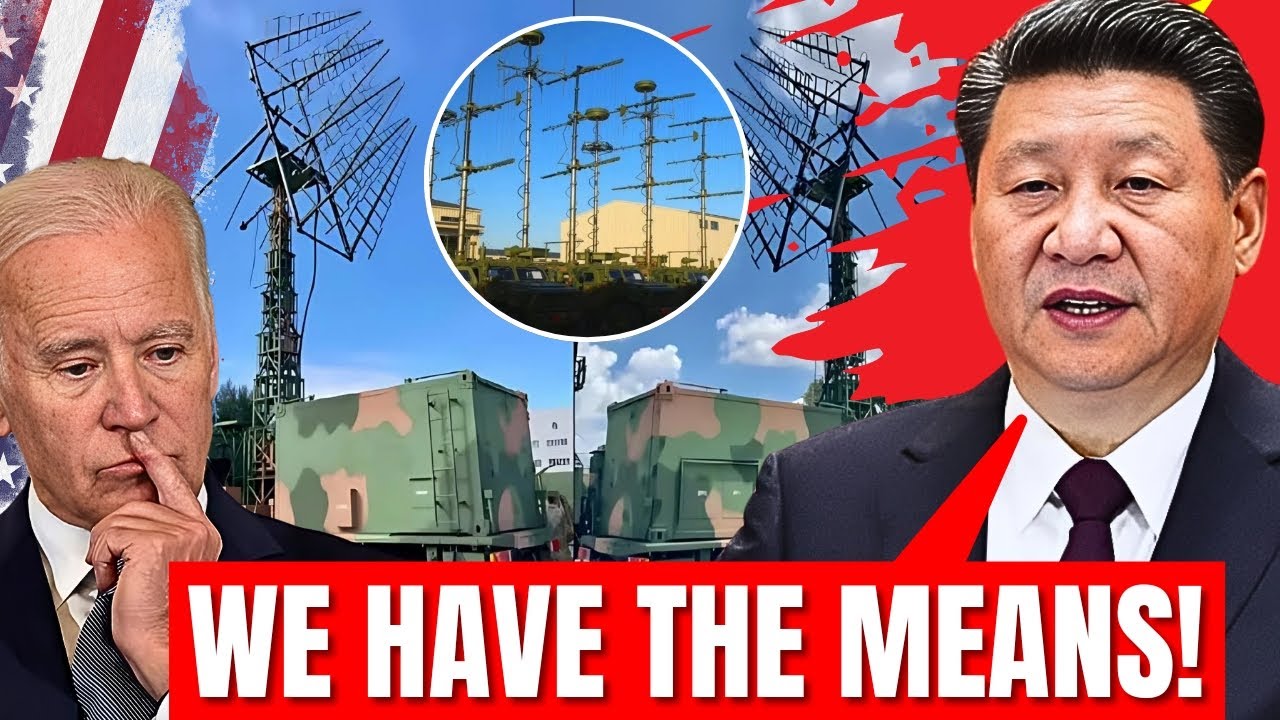
In a live stream titled “US-China Electronic Warfare Ended with the US Loss!”, former SIGINT officer Dr. O (David Oualaalou) opens by introducing his military background and engaging with his community. He then presents a detailed, self‑claimed analysis of a recent electronic‑warfare confrontation in the South China Sea, arguing that the United States suffered a significant defeat. He describes how the U.S. deployed a P‑8A anti‑submarine aircraft to drop high‑tech surveillance equipment on the seabed, which was quickly detected, recovered, and reverse‑engineered by the People’s Liberation Army (PLA). He contrasts this with earlier U.S. expectations of technological superiority, noting that Chinese electronic‑warfare platforms (Y‑9, H‑15, Shandong carrier group) responded swiftly, causing a 12‑hour communications blackout in the Philippines and a loss of GPS and other signals. Dr. O argues this event signals a broader strategic shift, warning that the U.S. is ill‑prepared for future conflicts with China and that regional allies (Philippines, Japan, South Korea, Australia, New Zealand) may be used as pawns. He provides a historical overview of the South China Sea’s geography, resource wealth, and territorial claims, citing Ming‑Dynasty shipwrecks and modern legal disputes. The stream also includes updates on Dr. O’s planned Asia trip (budget, fundraising, logistics), upcoming interviews, and a Q&A session where he addresses community questions about Russian‑Chinese cooperation, funding scams, and broader geopolitical opinions. Throughout, he emphasizes transparency, community support, and the importance of “truth matters.”
Chapters
All right, hello everybody and welcome to Geopolitical Trends, where truth matters. Very, very, very excited to be with you, and I mean it when I say it. So, so truly, I mean it. I'm so, so excited, not only because of the topic I'm going to be addressing, uh, I'm a little bit familiar with the SIGINT. I used to work in the military. I'm going to disclose it, nothing classified about it. I'm not in a government anymore, I used to be in 98 Golf. So to those who knows military jargon, you know what I'm referring to here. And part of it has to do with the SIGINT, signal intelligence, that is. So, so anyway, I'm very, very, very excited to be with you here, guys. And of course, we come into a weekend just to sort of, uh, have some downtime and me time, per se. Uh, but, but in any event, I am so excited. Let's get into our topic here. But before I do this, of course, I like to say hi to the community as always, and to me it's one of the highlights of live streams. I mean it, when you say hi to everybody. So, Timeline Dunkley, oh, I gotta silence this one here, uh, because I was having that one too on, on the phone to make sure, uh, that I am, uh, I mean it, what you say hi to. There we go. So I don't need to— anyway, uh, Timeline Dunkley, good to see you. You wrote, this is going to be a good segment. It will, it will, because of what I'm gonna be disclosing to you. And I'll provide you something now. To me, it was even surprising that I, I found out some articles about whatever, but they are not addressing the key stuff that I'm gonna be sharing with you here. Uh, R3 Placement, good to see you. ET Bush, good to see you. Uh, who else? Lorenzo, uh, Casida, good to see you. Ellen Go, Ellen Go, I'm sorry, truth seeker as always. Uh, Hank NG, good to see you as always. And Hank, by the way guys, is someone I, I, I came to know through his postings in the comments. I highly recommend that you guys read his contribution to the conversation here, very, very, very insightful. And an avid supporter of the channel. So thank you very much, Hank, truly appreciate you. Timeline Dunkley, as always. Hamed City, Simple88, Sifami, uh, Paul Martin, good to see you. Matt Becky, hi, uh, hi to you as well. Yan Hocor, good to see you as always. John Smith, uh, uh, Alci Tarokin, good to see you. Masian Dorsier, as always. UTU Z Super, we missed you last time, by the way. David King, same with you, I missed you last time. Uh, Daniel Samuel and Peter Lay, good to see you. And Dominique Chen, good to see you. One Horn, as always, good to see you. And Jinga, Francis Tango, Serafim of the Desert, good to see you. All right guys, let's get into our topic here because as I said, there is a lot to cover and I'm gonna be going through a lot of detail here. But before I'll do this, I need to some housekeeping items that I just need to clarify with you guys. Be on the lookout for my video that I'm going to be releasing for you tomorrow. It's a brief analysis that I've always done. I already released it to the member on the channel because that's the right thing to do. You do something for the members, and it's just my way of saying thank you. They get to see the video before it goes public, but tomorrow I'm releasing it at about 0800 hours. So So please, please, please take a look at that video and, and just tell me your feedback because I, I'm here to learn from you as well. Second thing is I will be— I already scheduled my next interview on the 22nd with none other than John Pang. For you, to those who do not know who John is, you'll get to know him, but he was a former advisor to the Malaysian government. So an interesting topic. John and I, we shared the stage on, uh, panel, rather, uh, during the conversation for the Multipolar Peace Initiative. So, uh, second thing is I am working on hosting a panel discussion towards the end of this month. So I am working on some, uh, uh, figuring out the, the, the, the timelines for the two guests that I'm going to have— very, very intellectual individuals and people I know and trust. So I look forward to that conversation. I will let you know. And And the last thing I want to share with you, please stay to the end because I'm going to be giving you an update about the Asia trip. Now that I sat down for the last few days to figure out what everything is, you need to know where things are because some of you have been donating money for that trip strictly, and I intended to use that money for that trip only, as promised, because that's, that's how it is. But nonetheless, I need to disclose some stuff for you, so please stay to the end. All right, let's, let's start with the, the, the two. Oh, here is Robo. I'm not gonna— when I do live stream by myself, guys, I am gonna interrupt myself and, and say thank you because that is the right thing to do. Uh, Robo 1776, I like that number, 1776. You all know what it means, right, guys? Can you type in, in the chat box what that date referred to? 1776. So thank you so much, uh, Robo. And you wrote, looking forward to this show. I have years and years of experience in EW, electronic warfare that is, and, and CEW and signal intel. So you knew what I referred to when I said 98 Golf. That's what I was in the military. And as a matter of fact, this, uh, that certificate there That was from, uh, CWAC. I'm sure you know what it means, all about electronic training that I did at the Air Force right here in Texas. Uh, so thank you so much, Robot, really appreciate you, man, and thanks for being here. Uh, Francis Tango, as always, I hope you have a good conversation with John. Indeed, and, and, and I— that's why when I extended the invitation, he got back to me right away, guys, and this is why No offense to the others that they don't— maybe they don't see. Like Jerry Gray, my email went to his spam box, but he saw it, caught up on it, and emailed me right away. But those that I have to send 2 or 3 emails, I don't do that. So I look forward to that conversation with John as well. So thank you, Francis, and appreciate your kind support, Francis. It really means a lot to me. So, all right, let's, uh, ask the questions here that I have for this particular conversation here. And I'm going to share it with you. Uh, and I'm assuming I didn't say anything about the sound, so that means you guys can hear me clearly here. And thanks to the person, by the way, who told me about to reduce the exposure. I didn't understand what it— I had to call Elizabeth and ask her, please come over and help me out with this. And she did. So she explained all that stuff to me. So anyway, what are the questions? So what happened in South China Sea? That we didn't hear about? Second thing is, why the media staying silent about it? Is this to sort of, uh, keep under the wrap the exposure of the failure of the United States regarding SIGINT or, or, or, or electronic warfare? So yeah, you, you'll be the judge on this. All I'm gonna be doing here, sharing with you my own information, okay, based on some articles that I read from overseas, not from here, then you reach your own conclusion. I have my own assessments to why this is what's kept under wrap here in the US. So, uh, third question is, how did the US do? Well, you will be surprised. And the fourth question is, how significant is this development? Because this exactly what just happened in South China Sea, it's an indication of what lies ahead moving forward. And now the US is going back to the drawing board at the Pentagon and rethinking all this. But there is a reason for all this, which I intend to share with you all this. So, all right, let's get in into— okay, what did I ask you guys a question earlier? Uh, okay, no— oh, oh, Peter Lay, you give thumbs up, that means the sound is good. Thank you, Peter. Joe, I appreciate you, man. All right, let's get into our, uh, conversations here. So what happened in South China Sea? And by the way, I am also going to be reacting to an article written by Stepan. Now, Stepan, this article is from overseas. I'm going to provide you the link, uh, to all this. And I looked into the source of the link, and it is part of coming from China, which is their, uh, deals with this particular aspect of information here. So I read the article in its entirety. I read other articles to collaborate the information. I collaborated, except that here in the US, the articles that I read— and I did read specifically one from the US Navy, and I'm going to provide you the link— did talk about what took place but didn't address really what was the endgame for the US. And this is what I intend to address with you. So, so So in South China Sea, of course, things went quietly. No gunshots were fired, okay? Nothing, because all was happening electronically. That is, you know, and this one, because this is where the world— like I mentioned in the title— the entire world is focused on what's going on in Ukraine. Of course, we are pushing the narrative for that and the propaganda for that. So this way people will not pay attention to what's going on. Well, this is exactly what happened, but this didn't, didn't just happen yesterday. This was going over a period of time, going as far back as June 30th. Now you see why all of a sudden— and I did a video for you guys about this— all of a sudden you're seeing the Philippines is being pushed to the forefront regarding the tensions with China. That didn't happen in a vacuum. And it is my word, it is my opinion here that Philippines was forced to do that. They didn't do it out of, uh, just the whim of their, of, of, of their own. No, no, no, no, no. I think it was pre-planned. And the reason it was pre-planned, because we will have an opportunity in that chaos to drop this, the, the, the electronic equipments that we needed to drop. In the South China Sea. That is exactly what happened. That's why it took all this time, okay? And this why you didn't hear much. It was except one particular, uh, uh, message was from Weibo account. You guys familiar with Weibo, right? W-E-I-B-O. It was a, a meaningful tweet from that, and it says, and I'm gonna set share it with you the way it was written. It says, 'Thick smoke deep in the blue sea. Good night.' End of quote. Loaded with messages. That's to me— this is part of how the, the psyops work and all the stuff in the military. This is of a— this message is of a military nature. This is not diplomacy, and it wasn't intended to be for diplomacy. Once again, it says, and I quote the message, thick smoke deep in the blue sea, good night, end of quote. So, and this why it was— and by the way, this came from someone in China's Southern Theater Command, and I, I am familiar with all the 5 commands of, of the, of the, the, the China military theaters, that is. And, and I have a As a matter of fact, why won't I do it right now for you guys? This way we're talking about it. Uh, yeah, right here, right here, guys. Those are the, the theater commands for China: Eastern Command, Southern Command, Western Command, and so forth. You got the idea. So this particular, uh, this particular, uh, uh, tweet or message, whatever you want to call it, it came from the Southern Command. Well, of course, because it's closer to, uh, the South China Sea, that is. Well, this is why the, the, uh, the PLA Navy— meaning the Chinese Liberation Army Navy— that is, this is why they kind of unveiled or lifted the veil on these strategies regarding the technologies that China had. And this was for a reason. Why? Because he wanted to counter US warfare aircraft in the South China Sea. And we did deploy As a matter of fact, I even looked at the pictures. For us, uh, the, the US, we used the PA, which is an electronic signal plane. To those who are in signal intelligence, you will know what a plane like this will have inside. This is with all the, the, the, the, the whistles of listening devices and so forth. That was, that was for me part of, of what the 98 Golf was all about my MOS in the military back then. So, so this is what happened with this one. And what happened after this one here is that it became very clear that there is now a warfare going on between the US and China. We thought that we have the upper hand. Turns out not to be the case. Which only— I, I'm not laughing out of laughing, I am laughing out of we underestimated the Chinese, and it's not gonna bode well for us moving forward, let alone the other countries— North Korea, I'm sorry, uh, South Korea, Japan, Philippines, Australia, and New Zealand to a degree. So, so, but before I'll, I'll, I'll dig deeper into this, it behooves us to know a little bit about geography of the South China Sea, but most importantly is the history of it, which gets to be sort of misinterpreted if you read certain aspects, which I am going to share with you both sides of the, of the, of the, uh, historical records, and you decide yourself. So we start with geography first, and I'll give of course credit to World Atlas uh, for the picture is not as clear because that's the only one I could find. Nonetheless, you, you guys will have an idea at least what are we talking about here. So this is all the South China Sea, a part of it. So this whole idea of the, uh, let me see if I have a better picture, which I doubt it, but I used to keep some for the South China Sea. That— no, this one is Malacca. No, it won't work. That's the Strait of Malacca. Uh, the other one I kept was the Indo-Pacific map. Uh, yeah, yeah, yeah, it won't highlight definitely clearly as to, uh, where this particular aspect— but you all know where South China Sea is. But suffice it to mention that, uh, where is South China Sea? Because you ask average, average citizen, doesn't matter what part of the world, some might say, oh, it's just an open sea. Well, it's more than that. It is like sort of, uh, it is part of the Pacific Ocean, partially. Here's the key: partially enclosed by islands, archipelagos, and peninsulas from the open ocean. That is the key to all this, you know. Its trails, of course, begin from the Karimata Strait, which is way near, way up, I think, in of the Malacca. Part which connects the South Sea— South China Sea connected to Java Sea— and Malacca Strait stretching from Malay Peninsula to the islands of Sumatra in Indonesia. This is what makes it very crucial. And when you put this within the context of what just happened regarding this electronic warfare, you will understand why. So, so, and this one, it flows all the way to the Taiwan Strait, which separates the main island from the mainland China— which separates the island, meaning Taiwan, from the mainland, uh, in, in, in China. So, and by the way, there is possibility I might make stop in Taiwan. I haven't decided yet. So, so the sea is located to the South China Sea, west of Philippines, north of Bangka Belitung Islands of Borneo and east of Vietnam and Cambodia. 9 major rivers flow into the sea. And, and again, I am not going to go too much into all this. Suffice it to say, for example, when you mention as far as where things are regarding the South China Sea, the historical background, it depends what you read. This is why I wanted to do this briefly here for you. Of course, some of the historical record contemporary, uh, refer back to the 20th century, mainly from 1946. However, if you look at some other history, historical record, you're gonna have to go way back to the Ming Dynasty, and I found archaeological record images of it And again, it's your decision to decide whether this makes sense to you or not. I'll share the information and you reach your conclusion. So, so early parts of the 20th century, the islands within all that area, of course, was— nobody claimed, uh, uh, uh, authority over that or sovereignty over that. However, by the end of the Second World War, 1946, China started to establish its settlements in, in the islands there. So of course other countries later on evolved into getting into this argument, which started between 1955, 1956. And mainly here is where I see the difference of those, uh, historical record. Some of them are mentioning, and, and I'm going to share them as they are, uh, uh, uh, mentioned here. Brunei Indonesia, Malaysia, Philippines, Taiwan, and Vietnam in addition to China. Well, of course, when you say Taiwan, are you referring to the whole People's Republic of China, the PRC? Of course. But just the record to separate this. So because the idea of Taiwan making these claims about— well, it's the mainland China that is making the claim. And again, I am providing you both sides of the argument because This is how we do it here in this community, guys. We don't lean one way or another. Objective assessment, objective analysis, and bias— that's what matters. So, and, uh, of course China works out its differences with other countries including Vietnam, Malaysia, and, and even, uh, uh, sort of Cambodia. Yeah, and they did. And this is where that difference is. Now, regarding— it's too long, I'm going to just provide you the link to this because I need to move on with this. However, I need to provide the historical aspects of it, and I got like some, uh, let me open the link here because those are from Academic Record, uh, one of them, uh, an article that was written by, by, uh, Sean, uh, Mersky. Now, of course I respect the guy's opinion, and I read the whole thing, and kind of there are some contentious points. It was only when I checked the source of where he works, it turns out to be that he works for none other than, uh, let me get you the name of it here, Hoover Institute. Do you guys familiar with Hoover Institute in Washington? So yeah, I'll let you do the research for yourself. But nonetheless, he provided some sort of logical arguments to at the beginning of the article, and I have some pictures here that I need to share with you. One of them is this one right here. So, so the argument, or, or, uh, based on his article, is say— say— says, and I quote, a small outcropping of sand occasionally breaks the vast expanse of the South China Sea. These islands are modest, even diminutive, but they form the core of fierce territorial disputes among 6 primary claimants. This is where one of them— I have a hard time understanding the logic of this— Brunei, China, Malaysia, the Philippines, Taiwan, and Vietnam. Okay, now to me, straightforward. Okay, what is Taiwan doing there? Is Taiwan sovereign state? It is not. So Who's gonna be taking the lead on this claim? Is it Taiwan or is it the mainland China? That to me was kind of misleading gently the audience to that. These claimants also clash over the rights and duties in the nearby waters as well as the seabed beneath it or under it. Now the idea that, uh, the author, of course, highlighted the old century contested history but didn't disclose exactly what it was. This is why I had to go and dig into the historical record and pull up something from way back that contradicts what he's saying here, just to provide the argument for you, both sides. You, you, you reach your own, you reach your own conclusion. So Now here is what it says. As readers can see, and I quote here, as readers can see in the map above, the map you're looking at, guys, yeah, that map you're looking at, the islands of the South China Sea can largely be grouped into two main island chains. One is the Paracel Islands, which are clustered in the northwest corner of of the sea, and the other one is the Spratly Islands in the southeast corner. So, and this is the, the, the, the articles goes into the period after World War II and so forth, and I'm gonna put the link for you and you guys can read it. I want to get into another, another link that highlighted something with the same thing. It is almost the same map, guys. It says the line of a 70-year-old map that threatens to set off a war in East Asia. Let me see if I, I get another map of this. No, I don't. I, I have only this one here, guys. And let me remove this one here. So anyway, this one here, this article which was written by Steve Moorman— and by the way, both articles were published back in— what, the first one in 1950— I'm sorry, 2015, and this one was published 2016. What happened during that time? That's where we finished. If you had a chance to read the Pentagon report to the Pentagon— to the Congress about the Indo- Pacific strategy. It was around the same time. So, so now the article started with, and I quote, tensions are escalating in the South China Sea. And on July, UN tribunal will deliver a long-awaited verdict on Beijing, uh, claims, sweeping claims. That's what it says here, sweeping claims to the vital waterways. Each year, more than $5 trillion of trade passes through the sea, which contains rich fishing ground and large, mostly untapped reserves of oil and natural gas. End of quote. So you need to read between the lines why we are creating what we're creating in South China Sea. Because the oil, because the natural gas, and because also we wanted to make sure that hypothetically, if a conflict broke up with China, We will choke the Chinese. Ain't gonna work. You know why ain't gonna work? You know why? Recently, just about 3 or 4 days ago, it's gonna come on the news. Mark my word on this. China, Russia, and North Korea decided all 3 to build a port. Just think about it. Think of the locations of where North Korea is, access to the water. Think of China, think of Russia, and think about the strategic reason for port. That's to me where the key is. And when you read something like this— and this is why I wanted to share with you both sides— and I'm gonna do the last, uh, link which has to do with way back, way back. So, so remember South China Sea now When you hear South China Sea, you need to think of two things: oil and natural gas. Okay, let me share the last link, uh, before I'll dive in back into my own analysis here. And this one, I am going to go back, and I'll provide you the link to all these guys, to the Ming Dynasty. And I have found a record of images edges. Okay, now once again, you decide. This is a picture from the Ming Dynasty's era. Those are in the ocean floor back then. So those are the Ming Dynasty shipwrecks which resurfaced off the coast of South China Sea. And this one, by the way, this article was written by Trinity told you, I don't know who that is. But when I went back to the dates, I found that it's recent, 2023, and I'm gonna provide you the link, uh, to all this. So, so what it says, and I quote, in the depth of the South China Sea— didn't see, it didn't say Paracel Islands, or pardon me, or Spratly— South China Sea, a groundbreaking discovery has captured the attention of archaeologists and historians alike. Two ancient shipwrecks dating back to the illustration Ming Dynasty have emerged from the ocean floor, revealing a treasure trove of relics and insights into China's rich maritime history. Found approximately at a depth of 1,500 meters or 4,900 feet on the continental slope, this discovery marks the first large ancient shipwreck site ever discovered in the deep sea by China. They are also key evidence for Chinese overseas trade and cultural ties, particularly in the continent of the Maritime Silk. It is a ship, uh, uh, uh, the shipwreck number 2. Those are sort of fallen— those are woods that they found in the ocean floor. I even found another, uh, uh, uh, evidence of that is the permanent surveying base point. And by the way, this one, uh, I gotta give credit to the picture to China Daily. That picture belongs to them, so I give credit to them. As a matter of fact, for all three pictures there. So my point in all this, if we are to go back to the history of of how it was back then, we will see some, uh, uh, way, way, way back. All of a sudden we find then, oh, this is our own opportunity now to create some, some, some aspects of it. Because here is the thing, uh, if, if archaeological records suggest or indicate that there is something there, that gives you about the historical time frame. And the archaeological evidence, of course, tells you who it belongs to. Simple as that. I'm not an archaeologist, but that's how I interpret it. So, and this one, by the way, this picture here, I'd like to share this quickly before I move on. This one here, guys, this is number 2 shipwreck, which situated around 20 kilometers away, contains numerous meticulously arranged processed wooden logs along with a smaller collection of ceramics. Based on the recovered pearl— uh, uh, artifacts— I'm sorry, artifacts— experts believe that the number 1 shipwreck, which is the picture I showed you earlier, is likely from the reign of Emperor Zhengde between 1505 and 1521, while number 2 shipwreck dates back to the era of Emperor Hongxi between 1488 and 1505. Both rulers were from the Ming Dynasty, so this discovery has the potential to be considered a world-class— yeah, world-class archaeological breakthrough in deep sea exploration, but also reflection of how it was back then. So anyway, I just wanted to— I was fascinated when I found out this one hit, and I said, there is no way the community will not appreciate this one. This is why I wanted to share this with you. So, so let's get into our, uh, the electronic warfare that took place between the United States and China. So of course, and once again, I am reacting to that article, but also I have checked elsewhere to confirm the information. So, so the whole warfare, uh, exchange between the United States And, and China started also, as I said, you go back to June 30th, but emerged more during the last confrontation— not confrontation, but the scrimmage that existed between China and Philippines, because Philippines broke its promise not to bring construction material against the agreement. So China had to react, and rightly so. But here is what happened with that one. So what happened is that in North Philippines, just few weeks ago, there was complete silence over the skies. Electronic signals were cut off, satellite phones, the GPS, because those are under the US, uh, the GPS navigation, television signals, and all that. This is exactly what, when I checked on the other article, confirmed this one here. So basically, what does it mean? It meant, or what it meant back then, is that everything that is reliant on electronic communication seems to lose its ability overnight, just like that. So it was a 12-hour blackout. If there is anybody from the Philippines in this chat room here I will greatly appreciate if you can confirm this one. It's like some of you confirmed about what I said about the UK collapsing economy, and I'll share something with you later on. It was blackout, and this one shocks all the people inside Philippines. Did we hear about it? Nah. Was the news got out of it, about it? No, no. And all this, as I mentioned, started when the Philippines and China had this, uh, confrontation in the Rinai, uh, reef. And I have a picture, a satellite picture of the Rinai. Uh, let me pick it up for you here, right here, guys, where the star is. I'm pointing at it. That's where the Rinai reef is, okay? So the Philippines felt sort of agitated by the Chinese legitimate action. This is where the difference is. Philippines broke its agreement not to bring construction material, but rather to bring, uh, sort of the water, food, whatever they have for their own soldiers in, in, in those parts. So why are you bringing construction stuff? That was one of the arguments for that. So, so what happened after that one? Of course, for us, the US, what were we doing? We were pushing Philippines forward because we said to the Philippines, we'll back you. Yeah, like we were doing in Ukraine, we back you. And the reason for what? Why? Because we wanted to seize the opportunity. And you all remember when it was the, uh, military exercises of about 29 countries, which usually was useless anyway. Because the argument at that time was that, oh, this is to show unity against China and we all stand together and all that. All this was nothing but hypes because we wanted to create this front, okay, so everybody looks here while at the same time we are doing what we doing here and nobody's going to be looking at. And what we'll be looking at Because we wanted to take this opportunity to lay the new developed anti-submarine devices on the seabed. That is what we wanted to do, which is part of the electronic warfare. And basically, what does it do? It spies on the movements on the Chinese— for this case, we wanted to target the Chinese, uh, uh, submarines, the movement of the Chinese submarines. Because what does China have as far as submarines? Nuclear ones. So, and further restricting China's strategic space, that is what was the objective of it. Because usually the way it works, if, if a country finds out that, oh, it is being tracked by another one, you're gonna withdraw from there. You don't want to become the target. Because you're already being a target. You kind of time to figure out, go back to the drawing board and come up with a new strategy. And this is exactly what happened with this one here. So however, something we didn't count on, you know what we didn't count on, is the fast and quick reaction of the Chinese. The article used the term swift and decisive, which I agree. 100%. So what happened when the US, uh, P-8, uh, 8A, which is a recon, uh, here, let me share the picture right there. When this plane here, which we usually, uh, uh, this one has some— pardon me— has some equipments inside that deals with tracking, tracking a submarine movement. Those are anti— because the P-8A is an anti-submarine patrol aircraft. And what this plane did, it dropped this high-tech equipment, which is monitoring one that is in the South China Sea. And of course, we didn't count on this, that the Chinese will detect this in no time. So what China end up doing, they quickly deployed and launched a recovery operation. Which means what? To get a hold of those devices. And the moment the Chinese did that, we panicked. Why did we panic? Is because now the Chinese are in possession of this equipment. This is the same thing just happened last week in Ukraine when the Russians end up taking over a particular, uh, uh, system, the US system. This is purely US. They end up taking over it, they taking it apart. I, I wish I could have put the picture for you to show you one, uh, one, uh, uh, individuals inside the Russian military looking at that device and he's just gonna reverse engineer it. This is exactly what the Chinese did, and we panicked because now it's too late, you know. And this one here, losing this equipment, what does it mean? Yeah, it's laughable because of the stupidity of how we think. We still think that, oh, China never developed this kind of technology, whatever. And by the way, one of you guys put a comment, uh, for me. I said, Dr. O, why is China staying quiet about it? It has to stay quiet about it. It's a strategic move. You don't declare something like this. 'Oh, we beat the Americans in warfare.' No, no, no, no, no, no. Chinese don't do that anyway. That's part of the culture. Did we ever hear about what China found in, in the dark side of the moon? No, they're not gonna disclose that kind of stuff. It's a smart move, it's strategic. The same thing with this, because now all the effort, all the money, all the energy that's been put in developing that system, the Chinese got it. Do you blame them? No, we do the same for other countries. So, and now the advanced technology, of course, that's it, it fell in the hand of the PLA. And so, and this now why there is a panic inside Washington, and the panic prompt the US to leave with the tail behind, between its legs. I'll say it, there is no other way of say— of saying it. So because what happened, the Chinese end up deploying the Shandong carrier strike group, and I think I have a picture of it. Yeah, right here, Shandong aircraft carrier. They end up deploying that because Chinese weren't gonna mess around with this. They know what's at stake, and they also know this is their opportunity, now or never, to take over this kind of equipment. And this is where was that standoff between the US and the Chinese. However, the situation was unfavorable to the US right off the bat. And we were thinking, well, if we deploy, for example, uh, an aircraft carrier to join the fleet to sort of interfere with the Chinese— no, no, it didn't work. Why? Because the Chinese counterattack that by rapidly deploying, uh, the, the Y-9 electronic warfare aircraft. And I have a picture of it here. This is the Chinese, uh, Yeah, right here. I have two. One is this one, and I have one that is considered the Y-9DZ. This is a surveillance one, a very, very advanced system on it. As a matter of fact, this picture, if I am not mistaken, this one was taken by the Japanese Navy. Who's the one who snapped the picture of this? Because they were concerned. And that's what happened when the Chinese, uh, deployed this. The, the, uh, both the Y-9 and the, the H-15, those are, uh, recon, uh, electronic planes and a ship. The ship was this one right here, guys, the H-15A. This is a recon ship. And it has all the advanced— you see those, uh, domes here? Those are advanced satellites. That's usually what it is. Most of the electronic warfare depends on those. That's part of what happened. So now the US went ahead and said, well, we will deploy our RC-135 electronic recon and all that. No, no, no, to paralyze the Chinese, uh, command system. No, it didn't work. It didn't work because the Chinese did not retreat. Of course, it's the neighborhood, so— and when they deployed the Y-9 electronic warfare and the 815A electronic recon ship, the US realized, no, no, no, we can't, we can't counter this. We didn't expect this. We did not expect it. We thought that by the time we drop those, uh, surveillance equipments, uh, in, in, into, uh, seabed, the Chinese were quick to that. And here is why, which we know, we knew, and yet we still so stupid. When I say we, I'm referring to the Pentagon idiots. We're still so stupid to go ahead with it. We know that the Chinese developed one of the advanced sonars systems. They don't talk much about it, and yet we went ahead and deployed the, the planes, the recon planes, and dropped those equipment. How stupid it was of us to do, thinking that, oh, the Chinese won't have this kind of capabilities. They do, they do, because the mindset in Washington still— oh, we're still looking at China of 30 years ago. It's not the case. This is one of the reasons also, guys, why I wanted to go to Asia. When I say Asia, I'm referring to other countries including China as well. Yes, I intend to go to China as well. So it's just to highlight, because that is the reason why I wanted to go. I see it with my own eyes, the developments, the infrastructure, where it is, where the country has become, and compare it to what we have here with crumbling bridges sewage pipeline, you name it, potholes, broken tax system, broken government, you name it. Because when you show evidence, there is no other way but to accept the truth. That's the whole reason for why I want to go. You know, this is not about putting my country down or elevating China. I don't do this kind of nonsense stuff. I, I never was that type. I'm always objective. You give credit where credit is due, and this is one example right here in this warfare exchange between China and the US that we assumed that China still operating like it was 30 years ago. They proved us wrong, completely wrong. If we are thinking we're gonna paralyze the command system We were wrong. And that is where now the Philippines— yeah, the Philippines, will it be a wake-up call for the Philippines to realize that it's been used? Will Japan wake up? They're gonna realize they're gonna be used. Will South Korea wake up and they're gonna realize they're gonna be used? The same Australia, the same to New Zealand. And this why it was— and I look at it and I use this terminology— crisis for the US, because it highlights we can fight and we can win. You know, you know, I give you example, Afghanistan, Iraq are a case in point. Now you're dealing with China. So it's the, it's the fact All I am saying, guys, are the facts. That's it. This is why it's a crisis. So, especially here is what makes it even more concerning for us. You know what makes it more concerning, guys, is when during that exchange between China and the US regarding the electronic warfare We lost some signals from GPS, which is very bad, very, very, very, very bad. And that highlights how advanced systems in China are now. And I don't think so they will go about and gloating about it. No, no, no, no, no. China's culture, they don't do— it's not part of their makeup. It's not part of their structure. They don't go and brag about stuff like this. Those are critical elements for the survival of the nation, and any competent advisor will tell the president, whomever that is, you don't want to disclose this kind of stuff. And rightly so, rightly so. For us, we gloat about our Patriot missile systems And look, the Russians took them out in no time, in no time. Because here is the thing, guys, and I wasn't a Navy guy, I was an Army guy, but in the naval warfare, if you lose the communication and navigation capabilities, which is throughout GPS, the Global Positioning System, this is basically losing your sight and your hearing. You won't be able to see, you won't be able to hear. This is what happened a few years ago when I wrote an article. You can find it. As a matter of fact, I'm gonna give you the link. It's one of those articles there. Let me just show it here, uh, when I wrote about it. Right here, guys, all my articles are there. And at that time, I had to submit the articles to Washington for approval. Because that's just the norm for me. That still applies anyway. And I had something about there, about, uh, some, uh, 15 or 16 people, double agents, that China got a hold of. And Washington told me, wait, Mr. O, you can't disclose this. I say, hold on a second, why not? Because this is a public domain. It's in public domain, and here is the source where I got it. I gotta plug in my computer here. Well, well, no, no, no, no. I say, guys, come on, let's not play that game. All I'm saying is are the facts, meaning what? The capabilities of the Chinese intelligence service was superior to that of the US. If they were— usually in any country, as one who worked inside Washington I used to deal with the intelligence community. Anytime you uncover a double agent, that's it. It shows your abilities. You are way here, and the other country whom the double agents were, uh, uncovered right here. So the level— that's exactly what happened. The same arguments can be made about this one here, because now it highlights our inability Because the Chinese have an upgrade level of equipment that deal with electronic warfare. That's what's at the heart of it. So, and what happened after this? With all this, what happened? We end up having to withdraw. Yeah, we withdraw, which means what? It's a loss. We lost. And consider this, guys, this is nothing but electronic warfare, and look what the outcome is. So now consider a military exchange with live fires, either through Navy, either Air Force, whatever. I'll let you reach that conclusion yourself. But to me, this is a sign that it does not bode well for the US. So the idea of contemplating A war with China will be ridiculous, will be suicide, and it will be detrimental for us here. Yeah, it's going to be to some parts in China as well. But what most Americans do not know is the advancement systems that China— and I'm former military, I had to keep up with all this, part of my academic background also. When you deal with geopolitics, you deal with understanding where things are, the capabilities of countries. Because any geopolitical developments will also have to rely on the military capabilities, like the economic advancements as well. And a way back few years ago, when I found out that Chinese developed a special type of missile that can, from the Pacific, in the middle of the Pacific, they don't need to be close to the US, can target Hawaii. They don't need to come all the way down here. And right there, it gives me an idea what we're dealing with now. It's some advanced level. We better think twice about fomenting more tensions in that part of the world, which we are doing. But we're finding weak states, the like of Japan, the like of South Korea, Philippines, Australia, and soon New Zealand, that we can use, push them forward. As to the political party in Taiwan, well, you all know the story. I don't need to talk about something that is, in my opinion, is irrelevant. So that's how I see it. So this is part of what happened. So what happened, we end up leaving with the tail between our legs. That's the truth, that's the fact. This is why it was never disclosed. So there's a whole time of about— what was it, uh, 10 hours, 12 hours, whatever— that Philippines, uh, uh, was plunged into darkness. It's as the article mentioned, uh, communication paralysis, end of, in quote, you know. And now information is coming out. That's why I wanted to address this for you guys, and of course because you want me to do so. That's why I always ask your opinion into these matters, because I, I need to know. So, and to me, like, as an analyst, I am looking at it as, uh, this one now sets the tone for what comes next. And what comes next is very, very, very interesting, because you have to take two things into consideration. One is the recent joint naval drills between Russia and China, which just, uh, concluded on Monday or Tuesday. So, and I'll provide you a link for all that stuff, guys. You have to consider that. The second thing is that Russia has decided to share knowledge with Chinese as to how to counter US weapons, because if there is one thing beside their advanced missiles and all that the Russians have, you know what it is? Is the jamming systems. Very, very, very, very advanced, sophisticated. They end up sharing that information with the Chinese. So that's why it's important. So the idea of understanding the drills that took place— let me, let me show you a picture here. I don't know if I have it. I think I didn't. This is part of that warfare between, uh, uh, yeah, I don't have the picture. And by the way, I have another picture when President Xi visited the, uh, Southern, uh, Command Theater. That's during his visit there. Oh yeah, I know, I have the picture. You know, this is the recent one here, and I give credit to, uh, uh, Xinhua. I hope I pronounce it correctly. Uh, it's X-I-N-H-U-A. That picture belongs to them. So those are the recent, uh, naval drills between Russia and, uh, China, and it tells you the story right there. Of course, right after this stuff, I after we lost the, uh, the electro— electronic warfare. And as a former SEAGANT myself, this is bad news, bad news. And I can even go as far as even space, as to what the Chinese are developing up there. And soon enough, they will be able to blind the US from up there, because from up there is what you do all the guided missile systems and so forth, because we still under that impression we dealing with China of 3 or 4 years ago. No, no, no, no, no, no, no, this is different. This is very, very different. So, and I will provide you all the links and everything, uh, regarding these aspects here. So, all right guys, I am gonna, uh, entertain some questions from you. I want to say thank you to the channel supporters as always. But I need to talk to you about, uh, the Asia trip. Uh, let, let me get in into my, uh, one particular, uh, system here that I have to disclose the number to you because you need to see. Uh, as I start planning, uh, it became clear to me, uh, I'm— I don't know, we're still gonna, you know, like I mentioned at the beginning, my target amount is about $10,000. So far we are at about $3,890. Let me share the screen with you for you to see, guys. And, and there is a reason for why I'm saying this. It's because when I travel— uh, share screen. All right, Buy Me a Coffee right here. If you notice this one here, all time earnings all time. So far, that's what the amount is. I've been starting to calculate everything regarding the, uh, the, the, uh, the airfare, the hotels, the, uh, even the videographer that's gonna go with me. Yes, I'm gonna have to hire a videographer because if I am to do all this, I gotta do it in quality. Otherwise, what's the point? And if I am to do all this, it requires me time. And I looked at the locations, at least where I need to go, and there is some costs involved. And this amount so far will only cover me for one week getting there. One week just to get there between airfare and a hotel. So, and again, for me it's not about the 5-star hotel. I care less for that stuff, and I ain't gonna do that because that's not right of me to do so. But I just wanted to disclose this to you as I started the planning, because I am hoping to get in there by the end of, uh, September, if not sooner. So between now and— I'm going to keep you updated on all these amounts every time, uh, on a weekly basis to know where everything is. So, but nonetheless, I am very, uh, grateful to all of you for those who've been supporting the channel. To those who support channel also through PayPal. But for now, I am focusing on this Asia trip because that's the priority where it's going to be. So, so I'm very grateful to you guys. All right, let's answer some questions here, uh, then, uh, remember to join me on— and again, I am working on a panel, and I'm also gonna coordinate with Carl Zaha, and I might even bring back Jerry Gray if he's available. I will have both Jerry and Carl if that works out for them. Uh, the panel is also different, that's for two other individuals. And also my upcoming interview with John Apang on Tuesday. So, all right, let me, uh, let me take a question or two from you guys. Donald, you wrote— let me share this with you. Donald, you wrote, Dr. O, I believe your good vibes will provide for your needs for the trip. Don't be surprised that your Asia trip will be a complete success. Thank you so much, and I look forward to that. And I mean it, because to me, it's— that's what I want to do now. You know, I, I almost give up my teaching here in the US. I have no interest. And, uh, uh, one of you guys— and I don't know if the person will want me to disclose his name for this or not— he already provided me with the name of, uh, 3 interesting universities inside China that I am already gonna be— one of them I already sent them my resume, and the other I'm gonna be contacting. Because teaching is a passion of mine, but also teaching is a responsibility. And if I can help educate the next generation of leaders, why not? And this is not about my status, my ego, my— I care less for that stuff. I care less for that. So thank you very much, Donald. Truly appreciate your kind words. All right, let me see a question from you guys, uh, if you have any. Uh, yeah, I will take one from here. Donald, your question, uh, is it true that Russia decides to purchase warship from China? I heard about this one. I did hear about that, couldn't confirm it yet. It depends again what type of warships, because the Chinese developed— I am aware of the development of these advanced sonar systems, which means what? US submarines cannot hide. So I won't be surprised at all, at all, that, that, that will happen. So Army with Harmony, another question. The Russians developed the jamming technology. Oh, they were advanced in it, to my knowledge. When I was in school, in military, with the seconds and all that stuff, we were aware. But back then— so they do have— I'm aware of how advanced their jamming systems are. We do have some capabilities too. I'm not denying this. It just— when you compare it to what the Russians have, uh, we have some other things that the Russians don't have. Remember, with this kind of technologies, each country will want to always have the edge over another. So this is why now for us, we didn't— didn't we not know that the Chinese developed some advanced systems for them to know that we have dropped something in the sea there? That, that, that, that's one of the things that, uh, Yeah, that, that's the way I see it. Uh, Michael, Michael Tong, you say Dr. O disclosing so much inconvenient truth in South China Sea that I'm afraid he could be silenced from media platform. It is no— ah, I'm not worried about it because I always believe truth matters and truth will always prevail. So what, what's the worst you can have? Down the— what for? Yeah, but thank you very much for expressing that. And, and it is, it does exist. Our system is, uh— I'm gonna do one day a video about America. I'm not— I'm sure they're not gonna like it, and I'm gonna, uh, demonetize it and all that stuff so we can talk freely. So, uh, it's just sad. It's sad. But is, is that the whole idea of where we are? And to me, it matters. Because you're giving me your time, guys. Your time matters to me, and it better be used wisely and not wasted. So if I am not here to share something of value to you, what's the point? What is the point? That, that's a responsibility. This is not about— this is why someone put a comment, some idiots: well, Dr. O, you start to talk about this and that, there are other geopolitical channels out there. I I'm no longer listening to you. Uh, more power to you, man. Go listen to others. Go, because nowadays everybody call himself or herself geopolitical analyst. More power to them. I have nothing against anybody. So you decide where you want to look, where you want to consume information. So I just wrote my comment back to the person. I said, good luck. That's it. It's not worth it. You do me a favor by not being here in our community because we don't— you don't belong here. So, uh, question from Taiwan, still good to see you as always. Have heard, uh, have you heard of the Indian Bragmos sold to the Philippines? That's correct, but it exploded. It's not a laughing matter because I hope there will be no death into that. Anytime there are fatalities, it's, uh, fatalities, it's, it's sad. Human loss is always sad. I don't care what, it's always sad. But I did hear that, so makes you just wonder why the Philippines is going to buy from India. So if we are backing the Philippines, why aren't we giving them? So it shows you right there. But I did hear about it, I did hear about that. Uh, Athene Wu, good to see you as always. Question: yesterday Ursula von der Leyen, the liar, I always add that one, uh, got her second term. Yes, I heard that, which is pathetic. Pathetic as Europeans are. That tells you right there the establishment is from within. This is why the, uh, what's her name, the Slovak prime minister resigned her post because she's taking possession in Parliament. They are grooming her for that. The whole European Parliament is a, it's a farce. And makes you just wonder how the Europeans are just watching. I mean, the same for us here. I shouldn't be just— I'm saying it at the same time reflecting on my own country here. Look how disillusioned people here with this democracy and with these elections and with this nonsense. When the system is failing its people, yeah. Yeah, I heard that, and I kind of just shook my head, shook my head, baby, because she's useless anyway. She is useless. Oh, Osiris, good to see you. Osiris, guys, have been— he's one of avid supporters of the channel. That is Osiris, and I'm gonna disclose this. I'm assuming it's okay, Osiris. Osiris is the one who's been buying me coffee every day. David Oualaalou, from way back. I just want you guys to know, you cannot— in life, you never, never ever forget those who've been kind to you, and you pay it forward. This is not about you just taking, it is about you also giving. This is what a right thing to do in life, what a good person will do in life. You can't just take. I mean, I look at it just in my society here, everybody is about taking, government included. So that's why I have no problem helping other countries who are in need, but to give money to corrupted systems, I have a problem with that. So thank you very much, Osiris. You wrote, uh, you go to China, I am guarantee that you will say, wow, amazing China. I, I look forward to that because, because now I will see it with my own eyes. And I am also thinking of about other locations depending on the finances. Speaking of the finances, guys, I'm not sharing with you because you are part of the community. There is no— transparency is a key. Way back when I started this, uh, this funding here for Asia trip, someone reached out to me and said, Dr. O, I'll give you $10,000. And I took the guy at face value, right? I established contact with him via email. We got on a phone call. Of course, to what he didn't know is that he didn't know my background. He didn't know that I have means by which to find out. And I found out the guy was nothing but a fraud. And I say, shame on you, man. Shame. Don't give me that money, I'll take it from my community, $1 at a time. And I traced the calls for the guy. Shame. So I'm aware of, uh, of, of this. But as far as going to China, yes, I want to see with my own eyes. And, uh, and, and I'm, I'm— the only thing now I need to figure out is how to do a live stream from China since they don't allow YouTube or they don't have YouTube. I have to figure all this stuff out, and, uh, so it would be a little challenge, but hey, that's part of life. So, uh, Ellis LSP, you are right, good geopolitical analysis for us. Thank you very much, thank you very much. All right, let me see one last question, guys, and I am gonna go work on few things, uh, work on setting up the upcoming interviews and all that stuff. So I want to do all this for you. Uh, uh, uh, Fancine— I can't pronounce the first one. Dr. O, is Georgia safe place to live on a case of NATO-Russia opens conflict. Yes, it is, especially after, uh, what happened back then when Mikhail Saakashvili was there and we screw him up, say, oh, you can fight the Russians, we will come and defend you. Russia sent military, took over Abkhazia and South Ossetia. It was over. I think he's safe. I think he's safe. You know, uh, Eastern Europeans are You know, this hype about Russia is gonna attack Europe, it's not. It's a, it's a lie. It's a lie. Russians have no interest in that, really no interest whatsoever. Uh, oh, Free Lunch for Children, thank you very much for, uh, sharing this. The R in Chinese pronounces as Y and Q sounds like CH. Thank you so much. Thank you very much. I have a lot to learn. I have a lot to learn, I admit it. So, and who's to know, what if I end up teaching in China? I'll be forced to learn the language. I have no— Taiwan, still I confirm this. I am not going to say it, but I confirm it. Yeah, you guys see this, I confirm it. I worked in Washington, DC, so I was aware of certain things. All right, let me see. Uh, uh, Robo, oh, you put another super sticker, man. Thank you very much. Question: Xi's recent meeting to Vietnam means anything? Big time, big time. I will bring in a guest. That's why I don't want to get ahead of— sometimes I don't talk about certain things, guys, is because I want to wait for the right time. So I'm going to be bringing someone, uh, who's closer into that area there, and he's advising a government, without going into details, and provide you some insight. But yes, it is a big deal. This is why the economy of Vietnam is moving up, the economy of Cambodia is moving up, and we are concerned about it. You know, heck, we were trying to conduct a coup back in 2015. In, uh, in Cambodia. So, all right, let me see one more here. Uh, all right, I'm scrolling just to see in case I miss something. No, I got— I think I got all of them here. Oh, Hong Wong, I want to say thank you for your super sticker. And once again, I'm gonna give shout out again to Robo, okay, Francis Tango, as always, Hong Wong, Robo here, and Tam Putra. Tam Putra, thank you so much. Dr. O, you should ask Jerry if you could borrow one of his home, uh, uh, not used, uh You'll be surprised if I tell you this because I already told him. Should I decide to teach in China, whatever, but depends again on the location, I might consider buying it. Why not? You're buying an asset, so what's wrong? Except that you have to understand the laws inside China as to a foreigner, what you are allowed to buy and not buy, whatever. It's their country, I gotta be respectful of it. That's, that's usually how I operate. When you go to a foreign country, you respect their laws and you adhere to those laws. You know, that, that's, that's to me the norm. And, uh, yeah, I will, but depends. And I intend to meet with him because you know why? Meet with him physically, you know why? Because Francis Tango got me a Super Sticker last time for coffee with Jerry, and I intend to honor that. So we'll figure out the, the distances and all that stuff, and I will, I will do that. System. All right guys, I hope you find this very, very informative, and I look forward to— by the way, remember, tomorrow I will be releasing a video for you. Make sure to check it out. Please hit the like button on this video and just share it with others. I will be very grateful. As always, remember, geopolitics impacts your daily life in more ways than one. Till next time guys, bye-bye.
More from David


Beyond the Single Actor: Why the Gulf Isn't Choosing Between the US and China


Iran, Iraq's Militias, and the Houthis Are Coordinating! This Changes Everything




Who Controls the Next Decade's Resources? Latin America and Africa's Geopolitical Crossroads

The Chokepoint Trap: How Washington's Stupidity Triggered a Cascade That Now Controls the World

Trump Spooked as IRGC Unveiled dual-use SLV, Deployed Ghadir Mini-Subs & Hinted at Tactical Nukes!
