US Very Concerned as China-Russia Strengthen Their Military Ties!
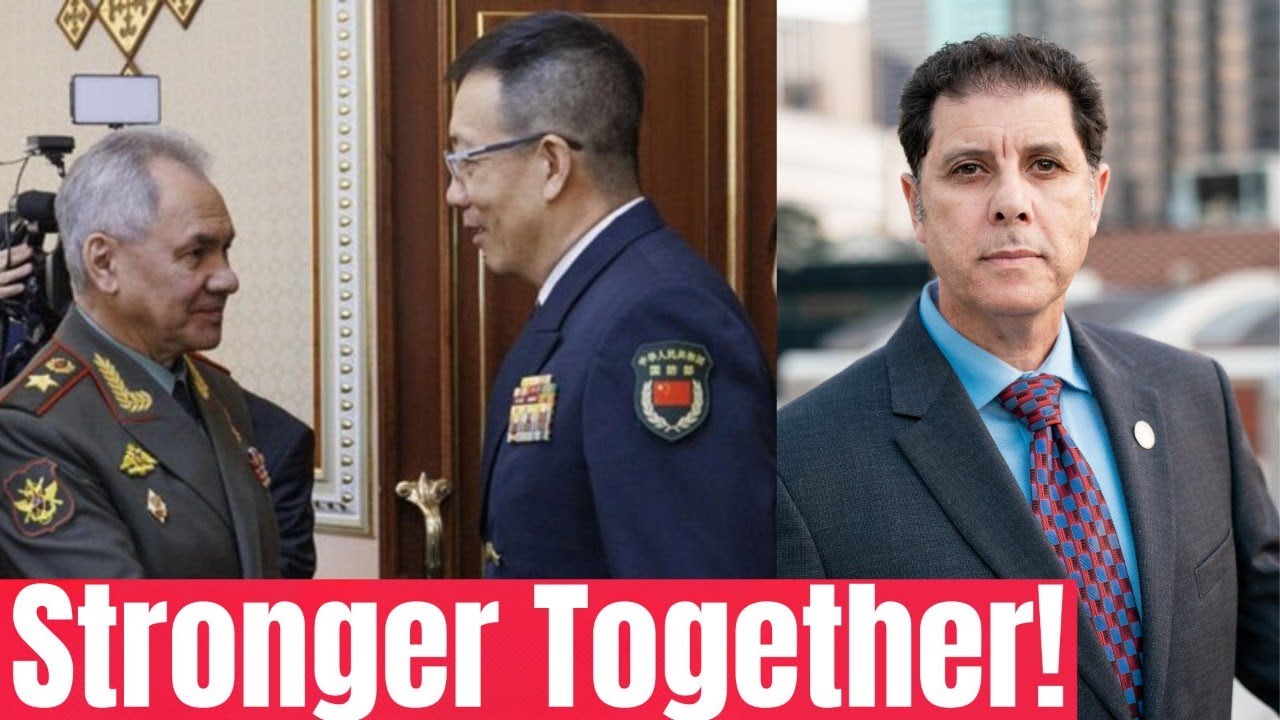
This content was created by David Oualaalou. This content was uploaded by David Oualaalou. This is a YouTube video titled "US Very Concerned as China-Russia Strengthen Their Military Ties!" (created 2024-04-30T18:39:10Z). Based on the title and metadata, it appears to be a news or political commentary piece discussing U.S. concerns about growing military cooperation between China and Russia. Thumbnail URL is provided, but no transcript or speaker information is included in the excerpt.
Chapters
Hello everybody and welcome to Geopolitical Trends. Very excited to be with you. I got an interesting topic. It's, as I mentioned last time, uh, I decided to do this separately, uh, because yesterday some of you have asked if I could combine the two topics. No. So I decided now because you need to know a lot of stuff pertaining to not only the meeting but the, uh, sort of the message that that meeting was sending, and the meeting between the Russian and the Chinese defense minister in SCO. So I'm gonna— during their defense minister summit. So anyway, uh, this is what I'm gonna get into. Let me first say hi, as always. Uh, Peanut Brain, good to see you as always. How is the US barking? Very interesting. Well, I use the term, that's metaphorically, you know, it's a metaphor. You know, of course it's not barking, it's voicing its concern. But sometimes in wording, you just have to, in, in, in a subtle way, that's usually how you send the message. So that's why I use the term barking. Uh, Michael, good to see you. Jade, good to see you. Hurry up, Dr. O, I need to listen to this. You're my number one. Let me share it with everybody. You're my number one news fact-checking channel. Well, thank you very much. Thank you very much. Uh, good to see you. David Oualaalou, Hamad City, as always. Taiwan Still, Willie Homan, uh, Army with Harmony, Yan Hocor, good to see you. Masian Dorcier, uh, Ram Batar, good to see you and hello to you as well. Truth Seeker, good to see you. Saeed Razali, I'm sorry, good to see you. Uh, Orel Vato and John Smith from New Zealand, good to see you. Ateen Wu, always. Francis Tango, Bob Coke, good to see you all, guys. Cam35, good to see you all here. So, all right, let's, let's talk about our topic here because it's very interesting. And, uh, I did more read up on it yesterday, and I'll provide you the links and all that. But again, the whole reason why I do— you know by this now— I do certain topics because I want to provide you the big picture. Of course, you fill in the gap yourself based on your, on your interpretation, uh, your understanding, and your own conclusion. So what I share with you, it's my own opinions. Now, if you find them useful and informative and you might reach the same conclusion, be it. If not, you know, your, your, your conclusion is very, very important. So, uh, here is the topic we're gonna be talking about today. So, well, of course, the idea of, uh the meeting which came between, uh, uh, the defense ministers of China and Russia during the, uh, uh, ASEAN— ASEAN— the SCO defense ministers meeting that took place. And of course, this comes over as the US is voicing its displeasure over China's support of Russia. Well, who will— who cares what the US think?, you know, expressing pleasure, uh, uh, displeasure or not. Who cares? It's because the rest of the world will be saying— some countries, not all— will be saying the same, expressing their own displeasure over the US support of Ukraine. That just doesn't— and this is again where that failure of, of how our strategists in Washington are losing a grip on the reality. I like— they are divorced from the reality of it's not. So here are the key questions that we ought to ask, because again, you, you cannot— and you cannot discuss a topic without understanding at least some key questions that provide you the basic framework. So one is, uh, what are the long-term strategic objectives of this summit? But again, of the meeting. But it's not about just the meeting, it's about the objective of this partnership, this cooperation, this rapprochement, this whatever term you want to use. I will not just use the term alliance yet, and I'm gonna discuss this. So, so it will be what are the long-term strategic objectives, because you have to think strategically here. Second, will— and here is the question— will an alliance endure? This is with the assumption that an alliance emerges. And by the way, the alliance will not be limited to only those two countries, and I'll share with you as I move forward. And that begs the third question: could other countries join that alliance if it emerges? And the fourth question is, how may this impact the global balance of power? You have to think about the changes in the global balance of power because it will be, uh, it will be arrogant of us to be thinking— us meaning the, the West, or maybe the US, I'll speak for my country here— it will be arrogant of us to be thinking that we, the American military might, will be able to overtake or dominate or challenge those countries if combined. I mean, I mean, uh, the facts speak for themselves. We, we couldn't even win a, a conflict. I won't even call it a war. Iraq or, or Afghanistan or Yemen. What— look what's going on right now in the Red Sea. So, and that's why, uh, we ought to ask that last question, okay? How may this impact the, the global balance of power? It's very, very, very important. So let me do a headline for you because there, there are some key information you need to know. Again, uh, I do this for a reason because I know if it's not covered Uh, uh, this is by the way an image of, uh, the two, and I'm gonna talk details as I move forward. So here is the first one. It's very interesting. KFC, which by the way I cannot stress enough, do not— yeah, do not eat that kind of food. Again, it's your decision. But my advice to you, here is what's happening in Malaysia. About 600 KFC restaurants in Malaysia are sort of shutting down. Yeah, very, very interesting. And this is according to, uh, uh, according to, uh, Singapore Street Times. That's the, the, uh, publication that reported that one. So So it says the American restaurant chain Kentucky, uh, KFC, Kentucky Fried Chicken, uh, uh, has temporarily closed its 108 outlets in Malaysia, uh, against the backdrop of a boycott launched in response to the Israeli attack on Gaza. Well, it's not just the KFC itself, you have other ones as well, which by the way, especially for the McDonald's and the KFC, once again my advice to you stay away from that food if you only know what's in it. Your health is very important, you know. Be aware of what you are consuming. So I find this very, very interesting that it's coming from Asia because now it's gonna sort of, uh, uh, uh, a lot, a lot of countries are going into the same direction. So, and according to Singapore newspaper Street Time, that is, uh, that Kentucky had KFC— that is, has stopped its business in Malaysia. And the newspaper quoted restaurant workers that KFC branches have been almost empty of customers for a week. So that, that just says the story right there. So, uh, next one has to do with the UK. Anybody from the UK, please confirm if this is not, not, not right, which usually I'll check the information before I'll share it with you. Uh, this picture is from, uh, uh, UK. And by the way, I'll give credit to the European News Agency for the picture because it's the right thing to do. So, so what's, what's going on? The cost of living in, in Britain, it's going even beyond, as the Brits now is getting more anxious. Are they— can they afford to have a, a I've read, I've read some analysis outside the US suggesting, and please correct me if I'm wrong, that Britain, the UK, it's going down the path of poverty. So, well, of course they're saying that, uh, oh, no more inflation. It's a lie. UK still has the highest inflation in Europe. No, some local shops in, in London now stopped offering prices for some goods about 2 years ago. Why? Starting to understand that they cannot afford it, so they either had to pass on the cost to consumers, which consumers cannot afford to buy. And this is why now you're starting to see, uh, the spread of small shops and vegetable sellers like what you are looking at, uh, as a wider customer base. So the cost of living in Britain has been going up, going up for almost the worst in 40 years, and yet Britain is in denial. After 2 years of, uh, relentless like price hikes, much of the rest of the country— when I say country, I'm referring to the main government in London— that they are remaining in denial about it. Inflation is declining, saying, which is a lie. But still higher in Britain than any other similar country. And the same arguments can apply to us here. So, uh-oh, my screen went black. Okay, I can't see. I don't know if you guys can— well, I hope you can hear me, but it just went black. I can't see. So anyway, I'm gonna keep talking till this screen comes back. This is unusual, very interesting. There we go, it's back. Cancel. Okay, no. All right, it's still here. So, uh, next one, next one, quickly here. Israeli media now inside Israel fear, uh, of an arrest warrant that will be based on facts, not rumors. So, well, as you may heard that the ICC, the International Criminal Court, not the ICJ, ICC, which by the way both the US and Israel are not a member You know, however, Washington's powers to influence, uh, and, and constrained it because that's what Israel is asking the US to do. Well, why is this? It's because Britain is one of the most influence into the party. Why? Because of its the head of the ICC. Do you guys know who the head of the ICC? He's British, by the way. Let me just see if you can type in his name. Uh, I'll, I'll— so let me see if you can type in his name. Yeah, and, uh, I was aware of one of his cases, uh, and yet because the US supported it behind the scenes. Yes, OMC, you're absolutely correct. His name is Karim Khan. Yeah, Karim Khan, he's the head. Here is what the problem is. The problem is that Karim Khan has previously visited Israel according to, to some sources, which means for him to be appointed— and I'm not judging here, I'm just saying the facts as they are. And the last thing I will share with you, which by the way will be very— I'm just mention it because I'm going to do a video for you. Uh, uh, president— Chinese president, President Xi is heading out to Europe soon. So I'm gonna reach out to my own people in Europe this afternoon to find out some facts as to the purpose of the trip and the locations. I already got a heads up as to the locations, uh, including France where my family lives. I'm gonna find out a few things, but what's interesting is about a third country he's gonna go to. I find it very, very, very interesting. So, so I'm gonna be preparing a video for you once I confirm some information and, and just go from there. So, all right, let's get into our analysis about the meeting between the two defense ministers of Russia and China. So, and by the way, this one is a— my, my analysis will be based on a reaction to an article that I read. It was written by Don Jacobson. Kapsun, uh, and I'm going to provide you the link for it and so forth. So what you looking at? You're looking at the picture of the, uh, defense— the Russian defense minister on your left, that's Mr. Sergey Shoigu, which by the way, do you guys know that he has no military background but seems to be doing well, doing fine? So, and, uh, uh, meeting with his counterpart, uh, of the, uh, the Minister of the National Defense of the PRC, or People's Republic of China. His name is Dong Jun. I hope I pronounce it correctly. Dong Jun, it's a D-O-N-G-J-U-N. Dong Jun, you know. And this was on the sideline, of course, of the SCO, or Shanghai Cooperation Organization's Defense Minister, that was just held 2 days ago in Astana, Kazakhstan. Very, very interesting. Uh, and by the way, I give credit to the picture to the Russian Defense Ministry Press Service. So, so, well, here is the whole— it's not about just the meeting in itself, it's this symbol of what it represents. That is what you need to get out of just that picture by itself. Of course, before I delve deeper, it behooves us to know a little bit about SCO. A lot of people do not know about SCO, how it came to be, and who's in it. So I'm going to provide you a brief history. This is an old picture, by the way. This goes back to the meeting in 2015, if I'm not mistaken. And actually, it is '15 because I can see in the back right there. Uh, I'm gonna provide you a brief history. So here is what's interesting, guys. I looked at one information coming out of the Council of Foreign Relations here in the US about SCO, completely slightly different from really the, the accurate information coming from overseas. So I'm gonna provide you the one from overseas, and I will provide you the link in the description. So the SCO, or Shanghai Cooperation Organization, is a permanent intergovernmental international organization established on June 15, 2001. In Shanghai, PRC. That's where it was. And the members at that time were the Republic of Kazakhstan, the PRC, or the People's Republic of China, Greek Republic, the Russian Federation, and the Republic of Tajikistan. The Republic of Uzbekistan joined it later on. So in 2002, the charter for the SCO was signed at the meeting of the Council of Head of States in Saint Petersburg, which entered into force on September 2003. It is a, it is a statute that stipulates the goals, principles, structure, and major areas of activities of the organization. Now, here is a quick question for you guys, and again, just to have you part of the conversation. What do you think is the official language of the SCO? Can anybody tell me? Can you please type in, in a chat box, what is the official language of the SCO? I just want to, uh, uh, get your take into this, and I'm not going to answer it. Uh, I'll keep going till I see some. It takes a while to show up here. And move on while I'm waiting for your answer. So currently there are about, uh, uh, 9 members So you have India, uh, Iran, the Republic of India, the Islamic Republic of Iran, the Republic of Kazakhstan, the, the People's Republic of China, the Greek Republic or Greekistan, the Islamic Republic of Pakistan, the Russian Federation, the Republic of Tajikistan, and the Republic of Uzbekistan. Those are the important 9 members Uh, all right, let me see what you guys wrote down as well. Uh, Mind Over Matter, you put Cantonese. Uh, Athen Wu, you put Russians. Uh, let me see one more. Uh, The Wacky Monkey, you said Chinese. Francis Tango, Chinese. OMC, English. Oh no, they won't take English. No way, no way. Uh, the official language, guys, is both the Russians and the Chinese. Very interesting combination, isn't it? Yeah, so the two. Now you have 3 observers in that, in that body. The 3 observers are the Islamic Republic of Afghanistan, the Republic of Belarus, okay? Then you have Mongolia, believe it or not. Then you have 14 partners. Those are not official members. And the 14s include Azerbaijan, Armenia, Bahrain, United Arab— uh, the, uh, Egypt, the Kingdom of Cambodia, the State of Qatar, the State of Kuwait, the Republic of Maldives, the Republic of the Union of Myanmar, the Federal Democratic Republic of Nepal, the United Arab Emirates, the Kingdom of Saudi Arabia, the Republic of Turkey, uh, the Democratic Republic of— the Democratic Socialist Republic of Sri Lanka. Very, very interesting. Those are just observers, uh, uh, as, uh, yeah, not, not observers, rather dialogue partners. So, so why is this important, guys? Why is it important to understand the history of it? It shows you that also— I, I'll, I'll make the same argument, the same like BRICS. ACU can have a major influence if it gets its act together as well. But again, you can have members that are not contributing to the efforts of the team. Now you can pick whatever country you can think of. I have some in mind as to— it might not be for the convenience of it, you invite them, but you also have to think strategically here. So as I said, the same arguments for ASEAN, the same arguments for BRICS. All right, let's get into our analysis about the, uh, the meeting between the defense ministers and what it means within the bigger picture here. So like I always tell you guys, uh, one, the first thing I always look at after a summit or a meeting or whatever that is, it's the press release or the official statements. Well, here is the official statements that came out of the meeting. So, we— it's in quote— we are determined to implement all agreements reached at the highest level, the Russian defense chief said, end of quote. What is the key word there? The key word is determined. We are determined to implement. That goes against the backdrop of what Tony Blinken went to China recently thinking he can intimidate the Chinese by threatening or even issuing so-called third warning, which, which is a joke. Anyway, to me, a statement like this confirms that no matter what the West says, no matter how vociferously, uh, speak so loud No matter how much concern it voices or its barking ain't gonna cut it because the world has changed and the West, including my country, better change with it. There is no going back. Like I put for you guys in the community tab yesterday, the outcome of the research by the RAND Corporation, which by the way was commissioned by the Pentagon. It confirmed what I've been talking about forever, that the end of the US is near and it might never recover like what happened to some previous empires. This is where I see the concern, but statement like this, it tells you exactly where things are moving. So Now here is the thing. On the key global issues, both countries so far, Russia and China, you know, they sort of have an agreement on how they perceive, how they read, how they interpret the world, uh, uh, current status, the, the global dynamics, that is, no. Only the fundamental issues of the current world order and pressing international problems. This is what they have agreed upon in their statements. So to me, it's a very interesting statements again, because this does not include just the political aspects, it include the economic aspects and the military dimension of it. And of course, the summit was for the defense ministers it behooves us to think the big picture. What happened the week before? Who went to Iran, visited Iran? There is one country that visited Iran. Let me just see in a— by the way, I did a recorded video for you about it. You're gonna— I'm gonna release it soon. Who visited? Which country sent its delegation to Iran about a week and a half ago? Let me just see, because it's very important to understand those dynamics. And this is the whole reason why I wanted to do this. Oh, David K, you got it. Uh, Tom Shuang, you got it. Chanel, you got it. Boycott John Smith, you guys got it. You know, why is this important? Why is this important? It is important to highlight to you, first of all, that North Korea did it openly, publicly. Usually those kinds of visits used to go quietly, okay? Second is the highest delegations, even though they was not disclosed as to what was discussed. I, I can guarantee you the military dimension in the conversation between North Korea and Iran is part of it. And now you go back to our topic here between the meeting between the Russian defense minister and the, uh, PRC defense ministers. And if they are to say— and I go back to the quote— on the fundamental issues of the current world order and pressing international problems. Do you see, do you see what I'm seeing on the horizon here, or over the horizon? Like I asked the question at the beginning, will this alliance endure? Which countries will join? Now just take a step back and consider this possibility. The four countries decided to sign an agreement by which they're going to join forces. The four countries are Iran, North Korea, Russia, and China. Sky is the limit. And I'm going to detail also for you an article that came out from the Foreign Policy, uh, uh, Council here in the US, starting to argue for something like this, which, by the way, personally And I'm not bragging here, I talked about this few years ago in my Russia book, and I'm going to share it with you also. So now here is what the, uh, what, what Shoigu, the defense minister of Russia, said, and I quote, Russia and China are consistently working to build comprehensive partnership and strategic cooperation in a world where 'New hotbeds of tensions are emerging, and things are getting worse in the existing ones. This is the result of the West's geopolitical escapades and selfish neocolonial activities,' end of quote. It's, it's really spot on. It's spot-on description. For what Shoigu expressed. Why? Because it's reflective of exactly what is going on. On his part, China's Dong, the defense minister— they don't call them defense minister, they call, uh, his title I believe is the Minister of National Defense of the PRC— on his part Dong said, and I quote, it is particularly important that the relationships between our armed forces maintain a high dynamics and respond to the trends of the time, end of quote. Once again, the, the, the message is right there. You can read between the lines. China, I'm sure most of you know China deliver messages in a subtle way. For us in the West, it's the cultural aspect of it. We tend to not only inflate but try to, uh, uh, uh, thumb our chest. Hey, I'm stating this, I'm stating that, and, and, and just make it this massive big whatever, when in reality you don't need to. China does it differently. Russia does it differently. They tend to do things in a subtle way. And to me, the message that, uh, uh, uh, the, the Chinese, uh, officials said expresses that. That is what's important to understand. So now when you think about the military dimensions, you have to also consider other aspects. And this, you think about it as a geopolitical analyst, you have to think in terms of What makes a country to move up in its military structure? Because without one particular aspect, there is no way. What is that aspect, guys? Can you think just on the top of your head? Can you think what would lead— what will lead a country to go ahead and move into its military structure or apparatus or strength or buildup, whatever? After one aspect is sort of, uh, the foundation is, is, is set? Can you think of one specific aspect of it? Let me just see. I just want to engage you into this conversation here. So, because we saw it in the US, uh, on a threat— no, so, so, mind over— no, so, so, go back to World War II. How did the US evolve? What led it to be— oh, Chanel, you got it! It's the economy. We did it after World War II. Now it's China's turn, and China's been working on it. Russia, of course, was the Soviet Union back then. Its economy back there, remember, there's massive economy was at that time in, in, in, in, uh, in Soviet Union, which pushed it into the military. China did it slightly different. China built the foundation economically on which to stand, then expanding the military to preserve and protect that economic infrastructure. Spot on, guys, spot on. And again, I don't have my doubts in your ability now to truly understand how to, sort of decipher the messages that comes through high-ranking officials, diplomats, the one with the wisdom and pragmatism. You know, I'm not talking about Tony here. So now, why is the economy important? It's because you need to understand also the idea of where China and, uh, Russia are economically, uh, these days. So I got an article, which by the way, I thought I had the picture of it, but I'm going to share it with you, uh, and I'm going to put the link for you guys later on. If the picture— yeah, I'll show you this one here. Let me just share it. Uh, I looked at the stats. I want even as far as 2016, if I recall, because when I was doing the research back then, uh, to find that's where things are. So, so let me share this picture with you here. Okay, full screen. So, and by the way, uh, uh, uh, I give credit here to, uh, uh, Titiana Miel from Reuters. That's the picture belong to, uh, Reuters there. So you give credit, it's very important, guys. That's as once you enter into academia, you will understand the, the, the, uh, the purpose of a citation or giving credits and so forth. So anyway, this is what I wanted to share with you, but the point is not about that. The point is where the economic transactions between the two countries are. That is what's important. Well, if you go back to, uh, 2017, if I'm not mistaken, and please correct me if I'm wrong, back then it was about 70— I think 78 billion You know, fast forward to 2009, 2023. Yeah, in December, December, it reached $218 billion. I just looked at stats about 2 weeks ago. The number that I saw was $280 billion in bilateral trade between China and Russia. And that is compelling evidence as to why the countries now, both Russia and China, are moving into the direction of the military. Again, we cannot— I repeat, we cannot jump into using the term an alliance yet because there's a lot involved. But I am not, I am not ruling that possibility down the road when I don't know, but the possibility is there, especially if Iran and North Korea join in. Because what are we going to be looking at? We're going to be looking at a counter-NATO entity here. And NATO, by the way, will stand no chance against those four, given the military hardware. As a matter of fact, I just, uh, uh, got a word yesterday that, uh, uh, the US— not the US, NATO. Well, of course NATO is the US. NATO now is pulling out the US Abrams tanks from Ukraine. They taking them out. And do you know what they saying the reason? Oh, we don't want it to fall in the hands of the Russians. That's a lie. That is a flat— that is a fat lie, flat-out lie. You know what the reason is? Is because they don't want— they, NATO, the US— don't want the images of the Abrams tanks being destroyed by the Russians. Otherwise, other countries will not buy Abrams anymore because it's been proven that the Russian tanks outperform those of the West, including the Leopard, the Germans, and the Abrams tanks. That is the reason why. So of course, I don't know if they're gonna disclose this information publicly. I don't know. I'm sharing it with you because that's what I, that's what I do. I'll share with you the information, uh, for the sake of understanding the big picture that is not being reported. So that is the whole idea for why You need to understand the, the, the statements from the two defense ministers when they said, both of them in their joint statements, the relationship between the two countries is important for strategic stability on the planet. This is what the Chinese official said, and I put it in quote once again. Just sort of contemplate over that or think about it. He said, and I quote, 'It is important for strategic stability on the planet.' Once again, as an analyst, I am going beyond just the wording here. I am thinking about his reference to the idea that we are getting closer to a nuclear exchange here. That is why I use the term stability, strategic stability on the planet, because if we get— if we cross that threshold, there is no place that will be safe. And this is where it's very, very important to understand within the context of why the State Department said what it says prior to Tony going over to China, which, by the way, Do you guys— one of you, I, I'm sorry, I forget the name who because I couldn't remember, but I read it. Uh, one of you mentioned that, uh, he said, Dr. O, do you remember when Tony went to China last year? And I remember that, of course. What was in the room? There were a lot of flowers, a lot of— that's usually symbolic. What was in a room this time around? Nothing. Yeah, sort of. It says right there. It says right there. So, but when you hear statements by, you know, the incompetent Tony saying, 'In my discussion today in China, I reiterated our serious concern about PRC providing components that are powering Russia's war of aggression, brutal war of aggression against Ukraine,' end of quote. No, no, no, no, no, no, no, no, that's just— uh, that's for domestic consumption. And this is what I'm saying, look at these statements by Tony Blinken and look at the statements that I shared with you earlier from both Shoigu and, and, and, uh, the defense, uh, the Chinese Defense Official Dong completely done the opposite. There is no need for this. On part of the Russians, on part of the Chinese. So, and this is where I, uh, I get into another article by Foreign Affairs, by the way, which Foreign Affairs here in the US, if you know how it works, the way it works is you have analysts inside those think tanks. Those are funded by the government. So the art— the articles that they are publishing And I do read them, so I'm not gonna stop reading them. Some of them, I'm not advocating for it, but I need to read to see the, the how flawed the articles are. And if I feel com— you know, sort of to make a video for you about it, to expose them, be it. That's what I will do. Well, I came across one here, very, very important. And what it argued by those two individuals, one of them is It's called Andrea Taylor. She's the director of the Transatlantic Security Program at the Center for Neo-American Security, and her colleague, the center's chief executive, Richard Fontaine. And this is what they said, something I'm not surprised. Yeah, they said that the collaboration, the collaboration among four countries those ones right here. The collaboration among this is only the tip of the iceberg. So, so the article said, and I quote, Russia's support from China, Iran, and North Korea has strengthened its position in its fight against Ukraine, undermining Western attempt to isolate it and hurting Kyiv, two U.S. researchers say. Yeah, you can just see where the narrative is headed. And this is why it's important to read the other aspects of it. This is why sometimes, uh, uh, uh, and I made a decision on this, uh, even, even for us here, when I bring guests, whatever, you know, I don't have to have a guest that agrees with me. Yeah, you can disagree with me. That's like what I did with yesterday by sending an email to what's his name Gordon Johnson. I send him an extended invitation. Of course, he's welcome here, but we will debate and argue, and, you know, politely, respectfully, civilly, and so forth, because we wanted to put the dots on the letter. Now, whether he's gonna respond to my email or not, it's his decision, not mine, and I don't hold it against him, so at all. I won't do that. It's just, uh, I wanna challenge certain notions that, uh, that just don't make sense. To, to me, that's the whole idea of it, why I wanted to do that one. So, and, uh, I think I had something that I saw. Not here. Let me see. Yeah, I'm going to share it with you here. All right, check out this. And I got it through my, my, uh, my Twitter feed because I have like about, what, 6,000, I think, 6,000 followers, whatever. So, so I do get a lot and I read the stuff. So just follow me on Twitter, by the way, guys. Just, I'm @D Oualaalou, just so you can go there. And, and here's what it says, check this out. And I'm going to read it for you guys. In the same, China expert Gordon Chang, who has been predicting the collapse of China for the last 30 years— China expert talk dark side of Chinese auto industry: spying, slave labor, killing the US car market. So, and, uh, and this is why I'd like to, uh, bring in Mr. Gordon here, Mr. Chang, and we'll have a civil conversation and can put the dots on the letter within the context of the changing global order. It's because if we are to see— and again, you go back to the statements by the defense ministers— the global stability, you know, which country is creating tensions here? Which country is fomenting more conflicts? So, because truth matters, You know, and again, to make it even more compelling for you, you know, I'm gonna share, uh, one aspect with you from my book pertaining to this aspect that we're talking about today. That's what I discussed back then, uh, and when I, uh, I analyzed a certain— where do I see the Sino-Russian relationship moving forward? And back then I argued that the importance of analyzing the Sino-Russian partnership, because it will have to be centered— this relationship will have to be centered around the strategic challenge. Why? Because it will develop into a strategic alliance moving forward. Of course, it will challenge the United States. There is no, no, no, no other, no other, no other outcome to that. So that in turn, that challenge to the US, that in turn will have serious consequences for the US in Central Asia and the Pacific theater. So of course some argue that, oh, Mr. O, the bad blood between Russia and China will prevent them from coming together. You know, I am not denying that it was And I even argued in the book that this assertion is true given the history between the two powers. However, coming together as one force makes perfect strategic sense for both Moscow and Beijing, and what it will be is a direct global military challenge to the United States when you add— even without adding, but can you imagine Add in North Korea, add in Iran to the mix, and this challenge will be coming from the north, from the east, and from the west. That, that's just a— and again, I kind of argued this back when I was doing the research, 2017, when I start writing of it. It takes me about a year and a half almost to write, or almost two, to write all this stuff. But because you have to check and recheck the information to make sure it's, you know, my name is on it, you know, my credibility is in line here. I can't just write whatever. But again, when I see, uh, think tanks in Washington are talking, oh, if the four countries, uh, the, uh, North Korea, Iran, Russia, and China get together, this is nothing, it's just the tip of the iceberg. Well, they are right, it's just the tip of the iceberg. It's because it will change the fundamental setting within the global order. Why? For a simple reason. It's because they're gonna be pushing— they, those countries, Russia, China, and North Korea and Iran, but especially the other two— they will be pushing for, uh, the economic fairness, the justice, the, the, the adherence to the law. I mean, we all are hearing right now that the US contemplating, uh, sanctioning the ICC. Wait a minute, wait a minute, wait a minute. What happened to the adherence to international law? He can't do that. You can't just be cherry-picking the laws that suits you and ignore the rest. You're either in or out. And this is why when those, uh, uh, sort of the think tanks saying that Oh, this is not— it's just the tip of the iceberg. They're right, because it will fundamentally change the dynamics of global order. And given our failure in foreign policy, we will know where the south from the north. We will be lost. This is how I see it playing out moving forward. And this is why I wanted to do this separately, because if I would have talked about it yesterday, I won't have enough time. Because you need to understand the parameter, the geopolitical parameter in which this kind of statements, in which this kind of meetings, you put them under the lenses of the global reality for you to understand where this is headed. And we all know where it's going. I mean, if the Pentagon, uh, commissioned a research by the RAND Corporation, which by the way The RAND Corporation, FYI, as one who is very familiar with what they do, the RAND Corporation is the backdoor of the government but also gets funding from the Department of Defense to send its analyst to a conflict zone to write a report about the need for adding more military aid. You know, I dealt with some of them back when they used to visit Afghanistan and Iraq And he said, well, we need more, uh, military assistance here so we can defeat this. And I was like, what are you talking about, man? You ain't gonna defeat anybody here. You don't understand what are you getting into. Those people have no fear of that. You think you're gonna scare them with a flying over, a flyover of an F-18 or F-35? That ain't gonna scare them. They don't fear that. I mean, look, just know what's taking place in the Red Sea. And the question to you: did we defeat the H group there? No. And shame, by the way, on the Tony Blinken meeting with the Gulf States Arab. I put it for you guys in the, uh, in the, uh, community tab, the image. They're just cowards, simple as that. We're talking about where we're gonna have to think about, uh, sanctions and all that. Come on, you guys can— you can move a fly off the wall. Let me, let me see if I can share. Yeah, I have the picture here, right here for you. I'm gonna share it with you, you know. And by the way, when Tony Blinken was there, you know what he said? Let me, let me share the picture first. Yeah, right there. Yeah, you know what he said? He said that the Gulf states have to coordinate against Iran. Well, hold on a second. If you are this mighty power, couldn't you take Iran on your own? The reason is we can't. Because we know we won't be able to defeat Iran. That is the reason, because we don't know what Iran has. You know what Iran, uh, uh, sort of when they launched those rockets, what the missiles were to— those are nothing, nothing in comparison to what they truly have. So what Tony Blinken is pushing is pushing Arabs over the cliffs, but at the same time Arab leaders are useless anyway. They are useless. I mean, true meaning of cowards. Shame. And if you know anything about the Arab culture, if you only know anything about the Arab culture, Arab culture is a very sort of, uh, takes pride in what it does, whatever. And when I say they, I'm not referring to the people, it's those leaders. Shame on those. It's just the fact that Tony Blinken is pushing the Arabs to confront Iran. We need— you need to— no, no, no, no, no. Why don't you do it if you think? It's because we are realizing, we have been realizing that we are losing our influence, not only in West Asia, but around the world. And this is exactly what that research that was commissioned by the Pentagon allowing the, uh, the RAND Corporation, uh, to say. And, and the one who wrote the article is— his name is David Ignatius, very, very, uh, uh, savvy guy. He's pragmatic in his writing. I read some of his books and all that, uh, revealed in depth the study which was conducted by the RAND Corporation for research, which was commissioned by the Pentagon it confirmed that the US is on its way. They put the word maybe on its way. No, no, no, no, no, there is no maybe. It is on its way, heading down, down, uh, towards the slope from which only few, few empires recovered. I give you just the example of Britain. I give you example of France, Spain, Portugal, The Dutch, the Belgians, you got the idea. So, and this is where I want you to understand, just to, uh, wrap this up before I'll, uh, I'll answer a few questions here, uh, I want you to understand the optics of a meeting at that level. Yes, I know it was just the defense ministers meeting, whatever, but also is the statements emanating from those two meaning the Chinese and the Russians defense ministers. Very, very important, very, very crucial. And you put this within the context, as I mentioned, North Korea sending a delegation, you know, Tony Blinken going to China, which I don't even know why he went to China for. I, I, I, I— it's beyond me because he was embarrassing. It was very embarrassing. We think that, uh, Uh, there are those who say, uh, uh, some have said, uh, well, looks embarrassing as far as the presidency standing waiting. No, it's embarrassing for Tony, not presidency. I don't think so. It was embarrassing for presidency. It was for Tony. Couldn't show up on time. You know, the timing. You have to be on time. It says a lot right there. So, and that's why presidency said, when is this guy He didn't say, when is Tony, when is this guy leaving? And one of the aides told President Xi, yeah, this afternoon, sir. And also, to put it within the context of Xi's upcoming trip to Europe, he's not coming to the US, he's not going to Germany, he's not going to the UK. So very, very interesting. So I'm, I'm gonna make some phone calls this afternoon I need to, uh, find out a few things. Then if, if, if, if I confirm the info, even though I'll get it, but I need to confirm it, then I'll do a live stream for you about it. So, all right guys, I'm gonna answer a few questions. That's all I have to share. I like to share whatever of substance and get off the air. So, uh, once again, I want to say thank you to all for being here. Is he going to France? Yes, he is. Was one of the countries. Uh, can Europe and the US survive without PRC? No, Taiwan still— that's a good question. Uh, what is it? I kind of— I just looked at it as I'm gonna scroll down. Why not answer it? Uh, no, because this is why the, the administration here in the US threw, uh, uh, uh, Tony Blinken under the bus by saying, oh, we're not gonna move forward with the sanctioning the, the Chinese bank. They got concerned that China's retaliation will— we're already seeing the problems here. I mean, add to that what's going on at the universities, especially right here in Texas, which is a shame on, on the governor here, who's, by the way, a member of the World Economic Forum. I, I have no respect for the guy. They all— they are all— America is done for. No, let's not just sugarcoat it or say it nicely. It's done for. Shame on you, are tackling faculties for peacefully demonstrating. They believe in something. So what we have— we said what we will say if we would have seen the images elsewhere. We're gonna scream bloody loud about human rights violations and so forth. When we are witnessing right here. And that's, guys, that's a signs. Those are the signs of the end. It's getting here, it's getting closer. There is no going back. So that— so yeah, it will not be good. It's already not good for Europe. Why do you think Elon Musk was in China? And by the way, he got the green light from China regarding Tesla. He's seeing what's going on. There are those who say, well, he's going to go to India. No, he ain't going to India. There is no way to go India. For what? No, he's not. He's not. So, so the answer Taiwan still is no, they won't survive because you see prices are already going up. Look what's going on in Britain. Look what's going on in Germany, in France itself. You know, most Europe, most of Europe. So that is one of the, uh, uh, the, the problems that— the reason why we didn't go forward with the sanctions, and we won't. You sanction something that's very minor per se, but also this is why countries are expediting the dollarization process. So, uh, okay, David K, question: is the conducting regime changing Spain because of the Spanish prime minister, uh, talked about? Uh, sort of. He, he changed his mind about leaving, I think. But yes, it has to do something with that. And I think, uh, uh, because of Europe now is, is as divided as it can be And the, uh, I think Ireland is moving forward with it. Even, even, uh, I even saw the foreign minister of New Zealand. Yeah, this might surprise you. The foreign minister of New Zealand, he's saying now that, uh, the, uh, the two-state solutions has to move forward. That is what he's saying. Now, New Zealand, well, it depends, uh, you know, I'll let you decide on that. Where do you see New Zealand moving forward? So, so that is the whole, uh, reason for that. All right, let me see another question here. Uh, the, the Wacky Monkey, let me share it here with everybody. And by the way, guys, thank you all for your support. Thanks to those who buys me coffee and tea. And send PayPal support for that. It is greatly appreciated. So why did SCO allow India to join when India is also in Quad to counter China, not to be mentioned? I, I wish I can answer that one. I really wish the same. I, I wish I can. Now it's kind of, uh, I did read somewhere but I couldn't confirm it that India was thinking about leaving the SCO. I don't know, it was just rumor. I couldn't confirm it, I didn't talk about it. If something I can confirm, I would not elaborate more because I can't speculate. Now I can give my analysis about something, but that's something I have to do my own due diligence research on it before I share my opinion with you about that, uh, for that one. And, and yeah, I question that, I question that one. So, uh, uh, uh, even now I just saw the statement by the so-called foreign minister of Taiwan saying that he praises now Philippines, US, and, and, and, and Japan. Yeah, Japan, Philippines, and the US, uh, uh, uh, sort of, uh, cooperation in, in countering China. Philippines, when we know where ASEAN stands, is the same arguments can be made about SCO. I think, in my opinion, and again, this is just my own opinion, This should be a mechanism in every organization, and again, they have to decide on it, that if you don't play ball— in other words, if you don't play with the team— and I'm not saying you compromise on everything, that is not what I'm saying, but those matters are of strategic importance. So if India in this case will be playing both sides, we all know what it does to the organization as a whole. I am witnessing it already in BRICS. To the point that I got a word that the next target from the West is going to be the BRICS. Why? Because the West is getting very, very, very concerned about the long list of countries that want to join the BRICS. That is where the problem is, and I can see that moving forward. So, all right, I'll do one more question here and I'm gonna sign off. Uh, because I have, uh, I think an appointment at 2 o'clock. Uh, question, Joanna's Dharma question: if Trump got elected, would he make it worse? Yes. Yeah, Trump is for Trump. Now he flipped. Now he's in support. What Trump did, he tricked the supporters back then, few months ago, by giving them what they want to hear. American politics, it's all about I want to tell you what you want to hear. This is why there are some of us here in the US wouldn't want to be involved with Washington because we're not willing— and I speak for myself, I can't speak for others— I'm not willing to just flip-flops because of— flip-flop, that is— because I want to tell you what you want to hear. I don't— we have it right here in our community. I can't tell you just what you want to hear. And when I say something, I know not all of you will agree with me, and that's fine. That is fine, and I respect your opinion as long as your response, whatever that is, is respectful. And we got no— I got no issue with that whatsoever. As a matter of fact, I welcome your challenges. I welcome your counterarguments. I welcome your contribution to the conversation because I'm here also to learn from you. It goes both ways. It goes both directions. So Trump is just another face of the same coin. America is done for, sadly. It's my country, but, uh, no. Uh, last question. Fight Back: Did you see the WEF meeting in Riyadh? That's not on a full scale. Yeah. Saudi, again, are you going to trust the Saudis? I wish you get a chance to read my Saudi book. I don't think so they will allow it there anyway. No. Yeah, it's just another facade, you know. Most Arab countries, I— Yemen is different. I was there, I dealt with the locals. They mean what they say. Now I give them credit, and I have great admiration and respect for them, because as poor as they are, they welcome you with open arms. They're very, very, very, uh, uh, uh, they do it. So last question, Army with Harmony: do you think the powers that be will give up power without— no, it will be, it will be some sort of a fight of sorts. Now, to what extent that fight is going to go, how large it's going to be, who's going to be involved. I, I don't know at this point, but I am seeing signs. And this is why I'm seeing signs through, through the statements by, like, what the two defense ministers about the concern about the strategic stability on the planet. That's to me where I read between the lines, because we are not going to go down quietly. You know, I mean Trump himself. Yeah, he already announced that he will sanction countries that will not use the dollar. So, you know, I, I've always knew Trump is not a politician. He's not qualified for that. So he's not qualified for that. Anyway, guys, uh, I want to thank you for your kind support. I truly appreciate you. And I look forward to doing the video about the upcoming trip of President Xi once I make this phone call this afternoon and confirm a few things, and I will let you know. As always, remember, geopolitics impact your daily life in more ways than one. Till next time, guys, bye-bye.
More from David


Beyond the Single Actor: Why the Gulf Isn't Choosing Between the US and China


Iran, Iraq's Militias, and the Houthis Are Coordinating! This Changes Everything




Who Controls the Next Decade's Resources? Latin America and Africa's Geopolitical Crossroads

The Chokepoint Trap: How Washington's Stupidity Triggered a Cascade That Now Controls the World

Trump Spooked as IRGC Unveiled dual-use SLV, Deployed Ghadir Mini-Subs & Hinted at Tactical Nukes!
