Was Rodrigo Duterte Kidnapped? | Geopolitical Trends
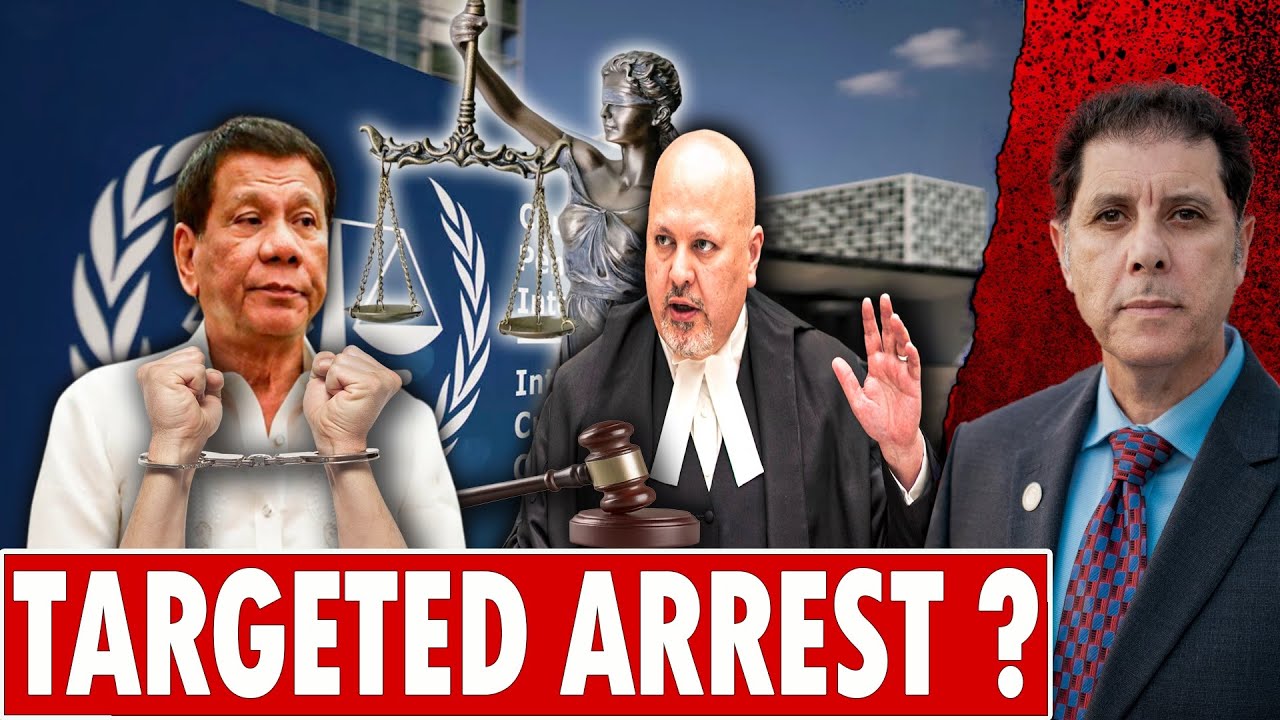
In this live Geopolitical Trends episode, host David Oualaalou and guest Professor Anna Malindog discuss the recent arrest and transfer of former Philippine President Rodrigo Duterte to the International Criminal Court (ICC). The conversation begins with Oualaalou’s pre‑recorded monologue, framing Duterte’s ICC indictment for alleged crimes against humanity (primarily his anti‑drug campaign) as politically motivated and orchestrated by the current Marcos Jr. administration. They argue the arrest amounts to a state kidnapping that violated due‑process rights, citing the lack of a proper warrant, the massive SWAT deployment, denial of basic needs, and the use of a private jet paid for by the Philippine government. The hosts present live chat reactions showing widespread anger and protests across the Philippines, describing the public mood as “angry, sad, and demanding Duterte’s return.” Professor Malindog expands on the legal nuances, explaining the limited authority of Interpol’s red notice, the role of the Marcos Jr. president as commander‑in‑chief, and the questionable cooperation with the ICC despite public statements to the contrary. She highlights petitions filed in the Philippine Supreme Court, but deems any potential rulings moot because Duterte is already detained in The Hague. The discussion then shifts to broader geopolitical implications: the Marcos administration’s alignment with the United States, its stance on the South China Sea, and the suggestion that the ICC action may be part of a larger strategy to curb Duterte’s political influence and secure U.S. backing against China. Both participants criticize the ICC’s selective enforcement, contrasting Duterte’s case with the lack of action against Israeli leaders. The episode concludes with a call for Filipino citizens to defend national sovereignty, urging mass protests and political accountability, while the host promotes upcoming coverage of U.S. airstrikes in Yemen.
Chapters
All right, hello everybody and welcome to Geopolitical Trends, where truth matters. Very excited to be with you today, uh, because of my, uh, guest, Professor Anna Malindog, whom I'm waiting for. She will be here shortly, so, but I figured I'm just gonna start, uh, and once she gets in here, we'll get into our conversation. So a very interesting topic we're gonna be addressing, and this has to do with the arrest of the, uh, former president of Philippines. It's, uh, Rodrigo Duterte right here. That's his picture. So he has already been flown in, and it's the first day of the trial already started. So, uh, we kind of, uh, we're gonna be discussing once Anna, uh, Professor Anna gets here. So we'll start on addressing to this, but I figured I'll just give you some, uh, info before I'll start on all this. Tomorrow for my community, uh, tomorrow I will be addressing for you the developments in Yemen, that the US went ahead and launched raids, yeah, air raids on Yemen. So that's kind of very, very disturbing as to why the US will, will do this. And, uh, so I'm going to be providing you my own analysis. I've spent time in Yemen, spent time in the larger Middle East, uh, so I kind of, uh, know quite a deal about that part of the world. So, uh, for those who might have been joining us for the first time, I would greatly appreciate if you could subscribe to the channel. So I'm gonna put the, the link to the channel in the, in the chat box. So please make sure to subscribe and share the channel with others. So other people like you will have the opportunity to hear the truth. So, so what I was going to say, uh, while waiting for Professor Anna, uh, as far as, uh, uh, Duterte, uh, so why, why the arrest, uh, happens and so forth. Well, it's because of what happened back then with your— during his, uh, presidency when he— because of what they charging him, the ICC, the International Criminal Court, is charging him with crimes against humanity. Well, I'm gonna have to take step back regarding that. I'm not a lawyer, so just to put this up front, I'm not a lawyer, but common sense to me suggests there is more than meet the eyes here. So, so here is what happened, uh, because when Duterte was in power he kind of embarked on a war on drugs. Well, isn't this something you want to do if you are in power to clean up your country? I'm sure most of the Filipino people will support such endeavor. Yeah, maybe the way how he went about it, but at the same time, you kind of, you know what drug does to a society. Look no further than our example here. In the United States. And we've been on this war on drugs for a long, long, long time, and nothing has happened. So that just makes you just wonder, is this, uh, uh, the ICC decision was kind of politically motivated? That is the way I see, uh, so I could be wrong, but again, that's, that's how I, uh Okay, so Anna just, uh, just, uh, text me here. So I'm gonna just keep talking till she gets here in about, uh, probably 20 minutes or so. So, so that's okay, we can wait for it. I know, uh, so that's what I was gonna say, uh, to you guys, is the idea that this is what he wanted to do for his country. So that's what people elected him for. So he was— excuse me— uh, uh, Rodrigo Duterte, just for those who might not know, as far as his background, he wasn't this, uh, well-groomed politician, whatever. He just spoke sort of plainly. So this is why he connected with his people in the Philippines. He wasn't this sort of has to dress in a suit and tie. Yeah, of course he does protocol for that and all that, but he just was there to get something done. And one of the things he embarked on was to clean up his country out of drugs. So that is where I see the challenge for why the ICC now credibility is going to be— is already shattered. So, so for, uh, once again, uh, accusing him of, of committing crime against humanity, that's kind of a stretch when we are seeing other leaders in other parts of the world doing worse than that. So I like, like the Prime Minister of Israel. So let's just be honest, straightforward about it. So So, and by the way, to those who might not know, let me, let me share a map with you if you allow me. I'm gonna put it up on the screen for you, just for you to see, uh, for those who might— to those who are familiar with Philippines. So here's the map right there. So Duterte was born in the city of Masin. Uh, so to those who are born there, who were, who are from Philippines, you will know where that is. Uh, back in 1945, that's when he was, uh, born. So here's the interesting aspects of, uh, Masin. I don't know if you can see it here or not on the map. Uh, yeah, I don't know. Can anybody in the chat box who is from the Philippines to point out to the big city near Masin. So this way people will have, uh, will have an understanding of where that is. Um, what was I gonna say? He came from a prominent political family. This is what's interesting about, uh, Duterte. Yeah, I'm trying to see where the city of Masin, but I couldn't, I couldn't see it. So he earned a bachelor degree in political science, believe it or not, back in 1968. Yeah, let me just— I'm texting with Anna, so no worries. No, she was kind enough to allocate time for us because it's nighttime and She's a busy, busy lady, and so we are very, very grateful to her. So yeah, to those who do not know, that Duterte, uh, uh, Rodrigo has a law degree as well. So even though he is educated and so forth, still speaks plainly. And this is one thing that the Filipino people connected with and resonate with. So, so it became clear to me that the— this, this arrest is politically motivated. And the reason for that, it's because the government of Marcos Jr. is the one who facilitated the arrest. That tells you the story right there. And once Anna gets here, she's going to explain in detail really how that is. So my big concern as one I who've been really keeping an eye on the developments in the Philippines, and I've said this many, many times It pains me to see, uh, where Philippines is today, and it concerns me a great deal as to what lies ahead for that country. I am looking over the horizon regarding what lies ahead for the Philippines, and I am very concerned. It's because if the Marcos government did this, what's going to do next? Martial law? What do you guys think? Yeah, please just answer yes or no. In your opinion, do you believe that Marcos Jr. will go as far as implementing martial law or imposing martial law? Yes or no? Just, just answer that in the chat box, and I'm gonna share with, with the community here. And thank you all for being here, by the way, guys. Uh, Felisa Uh, uh, Girth, you say yes. Femida, you say yes. Uh, Cal, you say yes. Uh, Koyoko, you say yes. Ka Michaels, you say yes. DW, you say Marcos will declare martial law for sure. Mick, you say yes. Fernando, you say, uh, yes. Gloria, you say no. Uh, um, Havoc, actually we are already in martial law but silently. Very, very interesting. Len Jorge say yes. Joey Wagner say yes. Uh, no, you say that's for sure, it's right here, let me say it. That's for sure, sadly. Yeah, indeed. So you guys get the point, you get the point. And, and that's personally for me what concerns me the most. So, and here is the always thing that I've always been saying You know, you think about the welfare of a nation, it is far better in economic developments than it is in this kind of fomenting tensions or, or, or division within society. Make no, no mistake about it, we have something to do with what's going on in the Philippines behind the scenes. You know, I worked in Washington, you know, I've been around long enough to know how these things work. And because this And guys, for you to understand where things are headed, this is why geopolitics matter. When I share my motto with you at the end of every video, I always say, uh, as always, geopolitics impacts your daily life in more ways than one. I mean that when I say that, because what you need to understand is what lies ahead, and Philippines is going to be dragged into the nightmare that's going to be happening down the road. And what do I mean by this? Is the tensions with China using Philippines for that. That is where my concern is. Average Filipino person will not care for tensions, will not care for military tensions and so forth. What will he or she care about is to make ends meet and be economically prosperous or improving the economic conditions. That is where the difference is. And I've been seeing, I've been seeing where this is headed for the last few years. Of course, you all know the history between Philippines and the United States because we're back with the treaty and so forth. But it's very disturbing as to what I see lie ahead. I even go back just to the last administration and for how Marcos Jr. gave everything to the, uh, US Defense Department for whatever they want, whatever they needed. So, so it concerns me. So the, uh, the, uh, Philippines Defense, uh, Minister, um, let me get his name, uh, and I did write about him a little bit. The, um, hold on a second. Uh, And I had his, uh, okay, defense. Yeah, uh, uh, Gibo Teodoro. Or Gilbert Teodoro, that's, that's his name. And, uh, sort of what he's been doing with the Americans, it's, it's not, it's not to the benefit of the Filipino people. And I give credit, by the way, of that picture to the Associated Press. So once again, this is again what concerns me the most about all of a sudden the arrest. And I'm going to share clip with you once Anna, uh, Professor Anna gets here. So this way, uh, I'll have her, uh, react to that, uh, uh, clip. So, so it behooves us to understand the big picture of the arrest, the timing of it, but also you have to understand what took place behind the scenes. So to those who think that we don't have influence over ICC, you are mistaken. Even though we are not a signatory to it. So, but we do have an influence over that one. So I just, uh, read a recent, uh, article, and I'm going to share it with you guys, uh, regarding the— yeah, I'm going to put it in the chat box for you guys. You can read up on it later on and to understand where things are headed regarding the influence of, of the US. So, so that will be very interesting to see now, because you all remember when ICC issued the warrant against the Defense Minister of Israel, Yaav Gallant, and the Prime Minister Netanyahu, our esteemed and corrupted Congress went ahead and condemned the ICC action in the strongest term. So to me, it will become, why would you condemn something like this for the atrocities that we saw happening? And if you compare that to what Duterte did, Duterte didn't just tackle whomever. Duterte wanted to clean up his house, his country. So he didn't embark on just targeting whomever. It was specific. Drug dealers. Why? Because that's what people voted for him. They didn't want drug in their country and so forth. And rightly so, you know. I mean, I can see, I live here and I see what drug is doing to the population here. As a matter of fact, many do not know, at least I speak for my country here, many do not know what the US government in itself get involved regarding drugs and and so forth. And I'll take you back to 1970s when drugs were introduced in Southern California. Who introduced the drugs? Does anybody know? To those who are familiar with American history here, so in the chat box, if you can type in that. Hi, Francis Tango, good to see you. So, uh, who introduced drugs in Southern California? It was for a reason and by design. It was by design. Francis Tango, you're right, it was the Central Intelligence Agency. So, so that's what it was. You got it. That was— that's why what happened. But there is also a reason for why the government wanted to introduce that. This is why when we embark on the war on drugs all these years and billions of dollars, the flow of drugs still coming in. So, so what Duterte did for his country, wanted to end it, and he did embark on that. So, so I'm sure if the Filipino people didn't want that, they would have protested. And that's again what, what, what really worries me is, is where things are headed with the Marcos, with the Marcos government, as to how they're gonna drag the Philippines into a deep hole. So, because that is one, and I'm gonna give you a heads up, guys, that is what we are thinking about the next conflict, where it's going to be. It's in South China Sea. This is why you are seeing we pushing Philippines to the front to— for the tensions with China regarding South China Sea. Makes me just wonder why other countries decided to resolve their differences with the Chinese in a peaceful manner. Vietnam, Indonesia, uh, and Malaysia, and so all, all in South China Sea, no issue, except the Philippines. Is for a reason, because even the US, we are now working— when I say we, I'm referring to the government, so we see US government— we are working now in ensuring the divisions between ASEAN and, and between ASEAN and China. So, and again, if I am to ask an average citizen in the Philippines, how is your living conditions today in comparison to when Duterte was in power? And again, I am not defending Duterte, or I am again, I'm against Marcos, whatever. I'm not a Filipino person, I'm not a Filipino citizen. So, but I am an observer and see where things are headed. And I know people from the Philippines, including Professor Anna, wonderful human being. So, I mean, the love and care she has for her country, it's immeasurable. And that is why, for me personally, it behooves me to just at least help with sharing knowledge, what I know, with the masses in a simple term so they have an understanding of where things are headed. And where things are headed, it's very concerning. So, and now all of a sudden you start— because here is one thing I'm gonna tell you guys, and usually I don't want to say this till Anna gets here, but, but I'm gonna say it anyway. There is a role of the Marcos government regarding this arrest of Duterte. So, and, and I'll wait till Professor Anna comes over here, and I'll— she'll, she'll share something, uh, uh, with you guys. I don't want to get ahead of myself. So, and now this is why, uh, you know, I saw someone— oh, oh, Keanu, Keanu Kabatu, you wrote the drug is back. Is that means that there's more drug circulations in Philippines now in comparison to during the Duterte era? I'm sorry. Yeah, so that means that's— yeah, it's very concerning. So Isabella, Jean, you say yes, so there is more drug circulation, and, and that is problematic. That is problematic because of where, uh, how is that going to— because usually when drugs are introduced and the government is aware of that, there is reason to keep the, the masses very, very, very distracted, far away from whatever. So, so, but also if we consider Marcos himself as far as the corruption, then it makes more sense. It makes more sense. So And all you need to understand, uh, is that for the Marcos is the concern about the assets right here in the United States. That is one of the key concern, uh, where I'm gonna check just to see, make sure. Okay, we're still on track. And, um, and this is why the policies that the Marcos administration is embarking on are sort of, uh, uh, uh, uh, uh, specific to, to a specific outcome. So, so what I see coming forward, moving forward, is that at some point the Filipino people is going to snap. And what I mean by that is you're going to see a major change in, in society. So you all know what it means, because if you look at the history of the Philippines, go way back, go way back. So Filipino people are very, very nice, but also they can take stand. And when they take stand, they're not going to fear. Fear will not be an option because that's how much they care for their country. So now I am not talking about the ones that they are easily brainwashed, like some of my fellow citizens here. They are always this category of people that will be included in this, but I'm talking in general term, in general term. So, uh, and again, I, I go back to when Marcos was elected. His first trip was to China And really, I had hopes. I had hopes for the Philippines at that time because my argument was, if he is going to China first, that means he's going to seek economic ventures with the Chinese, which will improve the living conditions of the Filipino people. Then the moment he came back, Marcos Jr., from his China trip, he signed a deal with the Americans. And right there I knew he was— he wanted just to give lip service to the Chinese. And, and turns out to be right. He was a— he was sort of a liar. He was sort of— we gave him an ultimatum: either you do this or you're not going to have access to your assets. Simple as that. And that was the outcome. So So when we're going to be thinking about the, this arrest of, uh, of, uh, of the former president, because he already made the appearance via video link, and I'm going to share one picture with you, and I give a, a credit to the picture to Peter Dijon from AP. So this is President, uh, Rodrigo Duterte when he was, uh, during his first appearance via link at the ICC, International Criminal Court, in the Netherlands. So, uh, you know, for him to, uh, to be dealt with in this manner, uh, for— let the Filipino people decide for that if he did commit crimes. So So of course he was, uh, uh, just to give you an idea, guys, for the procedure, uh, he was, uh, reined in and he was, uh, uh, read on the charges, uh, of the crimes of a murder as a crime against humanity. Well, if you are to compare this compared to what's going on in Gaza Come on, where is this fair justice that we are talking about if we are to say, uh, we, we live in a fair justice? No, we don't, because it's not right. So we're charging him against a crime against humanity. He was cleaning the streets of drug dealers. You know, I mean, if you have— if you have your kid, you have your family there, you have kids, would you want to see your kids be exposed to all that? No. So, and families don't have the same power as the government does. So that is where the difference is. And for Just, just for, for the ICC to be saying, well, we're gonna just charge him against— with the crimes against humanity. No, that's not— that, that just doesn't make sense. That just doesn't make sense. So, and, and to me, this is where I see the role of the government, the current government that played a role into this, because the flight originated from Manila on this past few days. So shame, shame on the Marcos government. I am sure the lawyers— there is one lawyer by the name Salvador Medialdea who was physically present in court Tuesday, and she argued that she, when she was in the court, that Duterte was subjected to extrajudicial rendition, which amounts to what in legal jargon, guys? That's kidnapping. So, oh, Professor Anna is here, so let me bring her in right away. Hello, Professor Anna. Can you hear me?
Hello? Yes, I can hear you. Can you hear me?
Perfect. Yes, I do. I do. So first of all, thank you so much for really carving out time for us here, because I know it's nighttime for you and I hope community didn't mind waiting for you. If once they know you coming, they will be waiting for you.
I'm sorry. I just arrived from another city to another city. So I was traveling actually.
Oh my gosh, well, I can't thank you enough, and I really, I appreciate you for that. For those who do not know who Professor Anna Mandog is, I'm going to just share with you a brief, brief, uh, uh, in intro here. Um, let me get to it here. So, so Professor Anna Mandog is a PhD candidate at the Institute of South-South Cooperation and Development at Peking University in Beijing, that is China. She is also economist writer for the Manila Times, and in addition to being a Deputy Secretary General for the Association for Philippines-China Understanding. So she is a busy lady, so we are very, very happy to have you here. So Yeah, really, I don't know how you, how you keep up with all this, Professor Anna. You know, I, I understand from experience, going through PhD process is tedious. So, and, and that's why it is very good. Yes. And that's why we don't take it for granted. We are very, very grateful to have you here. So anyway, we're gonna be talking. I would like to have your input. First of all, I'd like to start my, my basic question is, what is the mood in the Philippines now that the former president Rodrigo Duterte has been arrested by the ICC, or even I use the term kidnapped by the ICC. So what is the mood in the country, in the Philippines?
Oh well, the, the whole Philippines is very angry, I think, and I think many Filipinos are on the streets right now. They are clamoring that the former president Um, should be home. And they— I mean, of course, the current administration should facilitate something for the former president to be brought back to the Philippines. And, you know, this is really the clamor: bring him back to the Philippines. That's actually the clamor of many, many Filipinos at the moment. So the whole country is not— of course, the whole country is very sad. All Filipinos are quite angry and, and, and rallies and demonstrations are happening all across the Philippines at the moment. So it's quite a difficult situation for the whole country. I think I would say that there is such a thing as political upheaval, or what you call political instability in the Philippines at the moment. And you can see these are organic, David. This is not organized or anything. This is really organic. People got so angry and they just go to the streets in different parts of the Philippines, in different big cities and even small cities. Even in my own hometown, they're organizing many things like motorcade and all that just to express their sadness and I think their opposition to what happened to the former president Rodrigo Duterte, precisely because the old man Well, the old man is really loved by many, if not majority of Filipinos. It— yeah, all across the Philippines. So it's really there. You can see it. You can— many people are crying, uh, you know, when they're— they attend the rally, they listen, and many of them are crying, you know. They cry. I think it's because it's really hard, David. Even I, it's— I, I, I was so emotional When the first pre-trial hearing, I watched it, you know, and I saw him speaking and he was asked to introduce his name and his voice was cracking. And I think he had— I don't know if he had difficulty in speaking or he was so nervous, he was so sad, but I can sense and I saw and I listened carefully. His voice was cracking, he cannot really speak. And every— it was a heartbreaking for me. And I was even in a meeting at the time. I was in a meeting and I was looking at my phone, attending to a meeting, and everyone was looking at me and they're like, why are you crying? I said, I'm sorry, I need to be excused. Just give me like, you know, 10 minutes. I just need to be excused because it's really heartbreaking to see a former president who have done a lot of good things for the Philippines, for the country. Especially during COVID-19. Let's not forget he was the president during the pandemic, and he has done so much for the country during that time. A former president, for many Filipinos he's a hero, is being trialed in a foreign land by foreigners, by a foreign court. It's so difficult to accept, really. That is my bottom line, actually. For me, it's my bottom line. I can't even accept until now that he's there detained. He's alone. He— because the detention cell, I think no one is allowed to go. There is a schedule when you can visit, but he is really alone there. And he is 80 years old, for God's sake. 80 years old. Yeah, he's very weak. Well, according to the vice president, he's kind of okay, but he's 80 years old, and I think physically he's also is already weak with medical conditions. So for humanitarian thing, I don't even understand why Marcos Jr. allowed it. He knows that the old— it's an old man, you know. But of course, yeah, he is so crazy. It's all about politics, you know, for him.
Yeah. And, and we are gonna get into that talking about the Marcos administration. I, I think just, uh, I'm gonna play a clip here quickly for our audience. But I want to say something quickly here before— I think the sadness of the people, it also stems from the injustice that is occurring. That's my belief, but again, I could be wrong. Let's play this clip here. I will share it with the community here, and take a listen, guys.
Mr. Duterte was arrested in compliance with our commitments to Interpol. The former president of the Philippines, Rodrigo Duterte, arrested after being accused of crimes against humanity. Duterte was being investigated by the International Criminal Court over his brutal anti-drug crackdown that took place while he was in office and that cost the lives of more than 6,000 people. Independent monitors place that figure much higher.
The legal basis for my being here—
footage shared by his daughter appeared to show Duterte questioning his detainment.
What is the law and what is the crime that I committed? And, and he is right. He is right in questioning, uh, that, that decision. Because first of all, for people, as I mentioned to you at the beginning, uh, for his bio, he has a law degree. He earned his law degree in 1972, so he understands some basics of the legality of this. And this is what one of the issues why I said I wanted to share the clip for you to hear, that it was Marcos Jr.'s administration that paved the way for that. And that in itself tells you the story that you need to know, because it's very, very concerning as to how this go about. And this leads me to my question, Anna. In your opinion, is the arrest illegal?
Okay, let me, let me, let me explain it in layman's terms so that our audience— yeah, our audience would understand more. Because if you put it in more legalistic framework or words, it would be difficult. But first and foremost, I would just rebat what Marcos Jr. have said, that the whole— the Philippine government cooperated, it's precisely because of its obligation to the Interpol in the very first place. If you really look and check the Interpol, and you know, you know this, David, a red notice is not actually considered, or it is not equivalent to an international warrant of arrest. It is not. Everyone in this world knows that, that, you know. And also, the Interpol, it's just, you know, it's showing a red notice, but The one who would arrest an accused, or the one who's— who would, uh, who would arrest what you call the person of interest, is not necessarily the Interpol. It's actually the local authorities or local enforcement, uh, local enforcement or, uh, agencies, or the police for that matter. And the police will not do anything if there's no, what, command or order coming from up. And who's the up? It's actually Marcos Jr., because he's the commander-in-chief of both the Armed Forces of the Philippines and the PNP, or the police, the Philippine National Police, if he would say, oh, don't act on it, read notice, it's nothing, don't do anything, then the police will not do anything. It's really about— it's really from the top, you know. And so I don't understand, this is a smoke screen that he's saying that, you know, we just comply with our obligation as a member of the Interpol. I don't think so, I really don't. And I don't believe in these things because you Anyone in the Philippines can go to Interpol and ask them. And actually, the Interpol already made announcement and pronounced a statement saying that it was not us, but it was actually the local authorities who arrested former President Duterte. Just to be clear, so he is lying again. This president is a liar in every possible way. That is his problem from the beginning. Actually, it's not now that he lies. He lied, he lied so many times. That is a basic problem of Marcos Jr. is he's like a pathological liar. It becomes part of his system. He's good at these things, but now it's more exposed to the public, to the international community, and even to the Filipino people. Now, uh, David, going back to your question, saying like, um, is it as far as we are concerned, is it because of course this is a debate at the moment. There are a lot of lawyers and a lot of, um, people in from different parts of the world is studying this case because it's a very controversial case at the moment. So many people would say it is not a kidnapping case, but as far as we are concerned, and even I think as far as the vice president is concerned because she was actually interviewed about this, um, it, it's like a state kidnapping and, and it was illegal in some, in many ways as far as we are concerned. I would, I would, I listed some of the points that I want to raise specifically with this issue. The first thing is the arrest of the former president— take note, it was a former president, a head of state who have done so much for the country— was really degrading, really degrading, David. He does— I mean, okay, fine, given there was an arrest warrant, but come on, put it in a right context, do it in a proper way. But there was no such thing. It was degrading for a former president what they have done. They apprehended him, he was still in the inside the plane, and he was shown by one person something, uh, it's like it was not a warrant of arrest but something like a paper saying that, you know, he will be arrested. And it was on the phone, and he was asking, um, what, do you have a document? Are you a lawyer? Because, you know, I am a lawyer. He was a prosecutor for so many years in Davao City. So he was asking, but they cannot even produce a document because initially, David, there was no warrant of arrest. The warrant of arrest coming from the, uh, from the ICC came late in the afternoon. I was there because I was monitoring the whole thing and we were broadcasting, um, with Daddy Rock and another friend, a Maharlika. So we were there so we can monitor everything. So At the initial stage, there was no warrant of arrest, so they apprehended him. He went down from the plane, but he—
the—
as there's so many police, imagine, David, arresting just one person. It's one person. Um, they actually mobilized 7,000 policemen in full gear SWAT team. How can— that's too much to arrest former president, do you really think the old guy can run away? Of course not. I mean, and he was only with his daughter, I think, and, um, his common-law wife, and those are— and one bodyguard, I think, and the former executive secretary. So there was a very small entourage. So, and they needed 7,000 full gear battle, uh, SWAT team, including SWAT team, to arrest a former president. That was really degrading. As if he was a criminal and already, um, you know, judged, uh, or convicted of something. It was really degrading for a former president. It's a shame for, for Marcos Jr.'s administration to even do that, that kind of courtesy to a former head of state of the country, of the Philippines. Second is the, the one that transported President Duterte to The Hague from the Philippines was a private jet, but it was actually the Office of the President who paid for everything. But I don't think it was a state or owned by our— by the Philippine state. I think it was a private jet that was arranged early on. So everything was orchestrated, really was planned, because that jet or that plane was already in the Bilyamore Air Base where he was detained for some time, for the long— for the whole day. And that plane, from what I know, because they sent me so many pictures of this even before he was going to be transported. And I said, oh my God, this is not even probably a state-owned aircraft. This is a private aircraft. And it was according to the news today and yesterday that it was the Office of the President who actually paid for it. But Marcos Jr. lied in his press conference around midnight. He said to the Filipino public that uh, the, the Philippine government did not cooperate with the ICC when in fact he was the one who paid for it. My office of— his office, favorite, you know. So there was really lying is everywhere when you talk about Marcos Jr. Second is he denied access to legal relief and remedies in the Philippines. He was denied. He was just And that's it. Even a pizza. When he, when he was already in Villamor Air Base, um, he was hungry because he did not eat lunch yet. You know, he arrived at around roughly 10, 10, 10 AM, and then he didn't have lunch yet. So he kind of asked food. So there was a pizza delivery. They did not allow— initially they did not allow the pizza delivery to be brought to the president. So he was like, I'm hungry, I want to eat pizza, which is—
yeah, which is a basic need when you do— for any— that's a basic right for detainee, whatever, alleged detainee, whatever. You cannot deprive a detainee out of health, food, water, and provide basic living conditions, whatever that might be. So, so it became clear, and correct me if I'm wrong, yeah, will I be fair in saying that this is a targeted arrest?
Yes, I think it's a targeted arrest. It was a well-planned arrest and it was orchestrated. Um, and I think it was really orchestrated because lately I, I was traveling, I, I saw the news and it was like, um, the, the Secretary of Defense The, the Secretary of the Interior and Local Government and the NSA, National Security Advisor, were in— were, were actually in charge of how they're gonna plan and how they're gonna execute the arrest. And it was a betrayal precisely because, um, the National Security Advisor of, of Marcos Jr. was actually one of the cabinet secretaries of the former president and was actually close to him during his time as president. So it was like shocking for me to read the news and was act— and actually it was the Secretary of Interior and Local Government at the moment, that who actually said all of these things in an interview in local media in the Philippines. I was like, my God, the betrayal is just too much to witness for me. And these are his people, you know, during his time as president. And then the other one is, and then he was transported to UAE. In Dubai. But take note, David, Dubai or UAE is not a state party to the ICC.
That's correct.
Yeah, it was not— it, it— the country is not a party to the International Criminal Court, I think. No, UAE, United Arab—
you're not Arab Emirates.
Yeah, yeah, it's not, I think. So they kind of, um, landed there and had 5 hours in transit. So I was like thinking, if— why in Dubai in the very first place when in fact there's a lot of ICC member states and they can possibly talk to— yeah, but yeah, they can actually talk to, to other member states and the other member states can actually cooperate with this kind of, you know, quote-unquote arrest by the ICC. But I think from what I can sense, they really They really kind of pushed that time for the former president to be out of the country last Tuesday. They really was pushing it because they probably, they were thinking that a temporary restraining order from the Supreme Court will come out. So if that's the case, then you cannot bring the former president anywhere but in the country. So I think It was very deliberate from my observation that they really want the former president out of the country at that time and at that moment. Because I received some information that supposedly the plane should leave the Philippines or in Manila around 1 AM or roughly around 1 AM or after midnight. But out of the blue, the plane left very early around 7 o'clock or 8 o'clock in the evening. I was monitoring the whole time, so I was like, wow. They really are— these people really pushed him out of the country. That it was crazy for me to witness that. That was crazy. He was not given a due process. Imagine the old guy, the old man is 80 years old, he, he has medical condition. He was not given, um, David Oualaalou, a matter of time frame to even pack up a suitcase put all his clothes, socks, you know, all of these basic things, basic things like, and the medicines and the meds because he needs to do. And I think his, I think the reason also why he was, um, really in a hurry to go to Manila is for him to go to the hospital precisely because his sugar was very high. So it has to go down because it will affect his health. So that's what, that's even the problem. He was not able to go to the hospital to check on his sugar. So I think they just did it somewhere in the Netherlands already. But even medicine, he was not able to pack. He was just, you know, when he arrived from Hong Kong, that kind of clothes, you know, what he was wearing is the whole thing that he was wearing all throughout the day. I think he had a chance when he was already in the plane to change. So that's really the degrading way of treating a former president, you know, who is well loved by the Filipinos. But I think in terms of legal matters, in terms of procedural standards. First and foremost, there was lack of transparency, really, and lack of communication. Because 3 days before, there was already rumors, David, that there would be an arrest ready, pending, upon the arrival of the former president in Manila from Hong Kong, because he was in Hong Kong for a family vacation. So we were like crazy, like, oh my God, is it from the ICC, or what, what kind of arrest? So on my side, to be very frank with you, I was monitoring the ICC or the International Criminal Court website if there's already some kind of information if there would be an arrest, you know, and something to that effect. Then I was monitoring as well the Interpol. So I'm like, uh-huh, but nothing. Friday, nothing. Saturday, nothing. Sunday, nothing. Monday, nothing. And then Tuesday happened. But I saw the information that, you know, there was an arrest of a former president on the ICC website, latter part of Tuesday afternoon. So there was a lot of communication. And even during the weekend, David Oualaalou, the Department of Foreign Affairs of the Philippine government said that there was no communication at all from the ICC that there will be an arrest. Of an arrest warrant coming from the ICC. Second, the undersecretary, one of the undersecretaries, I think, of the Department of Justice, said that there was no such thing, an ICC arrest. And then I think the Solicitor General, or the State Lawyer of the Philippines, also said, Minardo Guevara, that there was no such thing. There's no arrest, no communication from the ICC whatsoever. So everyone was— everyone have this confidence that it was not an ICC arrest. Or so if we're saying like, okay, if it's a local court, it's fine, there are, you know, remedies, there's a due process. So maybe there was a warrant of arrest, but you can bail depending on the case because he don't know, there was no announcement. So that was really— there's what— there was a blackout of information and lack of transparency in this regard, which is crazy because In many ways, I think it's a violation of due process and the basic right of the accused to be informed ahead of time so that he can prepare. I think that that's basic in every case, even maybe international or local cases, legal cases. So that's one thing. And then the other one is the fundamental rights of the accused was not respected. I was explaining it earlier, uh, and violated. There again, there was no due process. And the former president David was hijacked, or what you call state kidnapping or abduction in that regard. He did not have legal aid in a very timely and sufficient manner. He was not informed of the charges against him. He was informed late, already in the afternoon, when only 3 to 4 hours that he will be flown, he will be put in that plane and fly to to The Hague. But initially, no, there's no such thing. And he was subjected to inhuman treatment. Come on, a pizza for lunch, and then he was— he wants to sleep because he was, I think, sleepy. He slept in somewhere. There was no preparation at all. He was treated just, just like an ordinary Filipino. Well, it's okay, but come on, you have to give due respect to a former head of state, I think. Even minimally speaking, but it was not given to him. And so, and most importantly, David, I think the whole arrest, the whole ICC arrest was politically motivated. It's really politically motivated. I think the ICC, as I have said in my interviews, it was— the ICC has been weaponized against the Dutertes by the Marcos administration and of course by the Marcoses in many ways, including the Romualdeses, because it's now Marcos-Romualdes on one side and Duterte on the other side. These are the political fields in the Philippines. So I think the ICC was really weaponized and it was planned. I don't believe that it was not planned. It was orchestrated long ago. It was planned and they executed it last Tuesday.
Well, actually, you— actually, you were right, because knowing as when I spent my time in DC. I mean, I'll share this with the community, nothing classified about it. It's just usually this kind of things will have to be prepared ahead of time. We're talking about a year, a year and a half, almost 2 years ahead of time. So, so you were right about what you said, that this has been planned, because if you consider what Wall Street Journal disclosed back then about how the Marcos— I'll let you share that one if you want to.
Yeah, yeah, please. Um, if you can flash, um, there was an article actually from the, uh, World Street Journal saying that— we'll read this to just, just for to be exact, you know. Um, Duterte and the Marcos family's long-saddled with allegations of financial and rights abuses. More than a year ago, a senior ICC official said the Marcos Jr. government had quietly communicated with the court, referring to the International Criminal Court, that Philippine authorities would act on an international warrant for Duterte should one be issued. Uh, the message shared by a senior Filipino official contradicted public statements by the president, referring to Marcos Jr., at that— at the time that he opposed the ICC investigation. So it means that he— it was really orchestrated, and it was not just now, it was like 2 years ago, as you have said.
And, you know, yeah, well, usually how these things work is that the— because we do have a pressure, we the government as pressure on the ICC. And the best example I can give the community for you guys to understand, look at just now what it's been, what is being done, or it's been currently, uh, uh, happening to Duterte, and compare this to what is happening to the Prime Minister of Israel. Now, why am I saying this? Because Netanyahu It's going to be— I got a word that he's gonna be traveling to Hungary next month. Makes— we all know the what, what happened in Gaza, right? What is still happening in Gaza. And yet, well, we wonder if the ICC will be credible enough to arrest Netanyahu for war crimes. So I think where the difference is with, with Duterte Duterte was cleaning his own country out of drug dealers. So with Netanyahu is different. Netanyahu, that was strictly forward crime. So that's the way I see it. So, so let me ask you this question, uh, uh, uh, Professor Anna. Now that we know, we know that the arrest is illegal, we know that the government of Marcos is the one that has coordinated this on its own. Well, you know, how this is now gonna affect the mood in the country moving forward? In other words, in a plain simple question, are we gonna be seeing a massive protest in the Philippines against the Marcos government for initiating this political hit on, uh, Duterte?
Yes, I think it's, it's already happening, David. It's been happening since Tuesday night. It's really happening already Tuesday night. Um, people are on the streets and clamoring again. The clamor is to bring back the old man, the former president Rodrigo Duterte, to the Philippines. And also the clamor is, of course, because this is a betrayal, you know, the It's like this: Marcos Jr. betrayed his own words, saying that, you know, we will not cooperate with the ICC, that I will protect the sovereignty of the Philippines, and blah blah blah. But actually, he did the opposite, right? So right now, Filipinos are very angry about this because it's a betrayal of our independence. And you actually surrendered a Filipino bona fide citizen and a former head of state at that to an external external force or external court, when in fact our courts, the— our judiciary is functioning. Of course, of course, our Supreme Court is there and there are a lot of justices there. They're functioning. And also we have local courts, we have regional courts. We are not a failed state. Usually ICC would take jurisdiction in any country for that matter if the country is a failed state. And if a failed state, meaning the government is not working and the judiciary, the courts, are not working. But that is not the case of the Philippines, unless Marcos Jr. would admit that his administration is not doing well and he is failing, because I think in some ways it is a failed state. But when you talk about the judiciary of my country, I think it's working as far as I'm concerned, as far as Filipinos concerned. So why would you not give him the chance to be tried. If, if really there are cases against him, or, you know, legal cases against him, then file cases in the courts in the Philippines and let him be tried in the Philippines because he is a Filipino and our courts are functioning. Why would you allow an external body to trial a former president at that? Why? That is even the question, because really a betrayal of our sovereignty and even a betrayal of our independence as a sovereign state. We are a sovereign state. We, we don't follow the dictates of supposedly of external forces. But why in the hell the— our own president, who's supposed to uphold our sovereignty and even who's supposed to hold our independence and our— of the sovereign— of, of us being a sovereign people and a sovereign country and a nation, was the one who even surrendered it to a foreign entity, and that's the International Criminal Court, who cannot even apprehend Netanyahu, who's actually blatantly have committed— had committed, um, genocide against the Palestinians in Gaza, just because Netanyahu is backed up by the United States. But they apprehended and they issued a warrant of arrest and even, you know, do this investigation with our former president, who were who was— he was just doing his job, trying to maintain peace and order in the country and to combat and to, you know, fight with the criminals, the drug lords. You know what, David, this is very sad for the Philippines because that warrant of arrest, of that ICC warrant of arrest, is a signification, or it's an emblem, it's like a symbol, it's like a— it's a bad omen. You know why? Because it means the drug lords in the Philippines won. They won because Duterte was their enemy, because he was really focused in trying to drive away the drug lords in our country and, you know, to tell them that you don't have a place in a society like the Philippines, in our society, and you cannot touch on Filipinos and make them like drug addicts the whole time of their lives. But now with the ICC arrest, to be very frank with you and to be very frank with all Filipinos and the world. It seems that the drug lord won in the Philippines because they let someone who was really serious in combating drug addiction, um, fighting the drug lords and the drug problems, illegal drug problems in the country, arrested by a foreign entity. And that's very, very sad, David. For a Filipino like me who understands these things, I'm quite really sad, and sometimes I just don't understand Why in the hell this happened? To be very frank with you, it's just because of politics. Marcos Jr. wants to stay in power probably beyond his term, and you know, the only political force at the moment in the Philippines who can actually prevent that would be, uh, well, former president who's very, very popular, but it's much more of her daughter, his daughter, I think, rather which is the Vice President Sara Duterte, who's facing an impending impeachment trial as well in the Senate this July, this coming July, I think, if I'm not mistaken. July 2, it will start. So that is the situation, David, and it's a very sad situation.
Yeah, yeah, that is what I became— I became convinced way back that what the Marcos Jr. administration is trying to do to the vice president is also to the whole Duterte family. If I am not— if I'm reading this correctly, is they want to sort of wipe them out from the political map per se, so they will never ever have any opportunity to, uh, uh, uh, be involved in, in politics. Now let me ask you— yeah, let me ask you this question, Anna, if I may. Do you think now the Supreme Court inside the Philippines will take a stand and say, wait a minute, wait a minute, wait a minute. For first of all, to challenge the Marcos administration by saying what you allowed and embarked on violates the law of this sovereign state of the Philippines. So could the Supreme Court initiate some sort of a ruling by, uh, by, uh, by challenging the ICC, which I am sure Karim Khan, the head of the ICC, was also pressured to do so.
Okay, I, I can be heard? No, it's, it's—
yeah, yeah, yeah, I can hear you. Right.
Um, yeah. Um, first and foremost, before I answer that question, one thing that I can tell you, David The Filipinos are on the streets all across different cities, all across the country. Last night there was a big, big rally, huge rally, and I don't think this will stop. I don't think. And there's also a clamor for President Marcos Jr. or Marcos Jr. to step down. You know why? It's precisely because of this. It is not necessarily this— all of these things is not— it's not all about Duterte's birthday. It's not really. It's actually about the fact that as the, as the president of the country, any president for that matter, your basic job, fundamental to your duty and, and obligation and a job as the head of state and president, is to uphold the sovereignty and the independence. That is basic. And uphold the constitution. But what Marcos Jr. did was the opposite. And I think important for that is the case of President— for a former President Duterte and the Dutertes. But for me, the primary thing is a president should never allow or surrender the sovereignty of a country, of his country or her country. That should never So that is, that is basic to me. And then of course the secondary is the, you know, the Duterte side. On the other hand, your question about the Supreme Court, I am not sure what the Supreme Court would do, and I don't know about the justices what they're gonna do about this. There were already petitions filed by the side of the Duterte, um, to the core. I mean, I think there, there are already petitions filed by the side of Duterte, but I am not sure how they're gonna act on it. And even, David, if even, even if the, even if the Supreme Court would have a favorable ruling on this petition filed in favor of the former president, that's, that's moot and academic already because the former president is already in The Hague and detained in the International Criminal Court detention center. And I think, uh, well, they— other people may argue, but I think the court already had, um, jurisdiction acquired. I think the ICC or the court, um, already acquired jurisdiction over the former president because, see what, there was already a pre-trial. And on the, on the, on the other hand, he is already detained. And I think the next pre-trial will be in September of this year. So even if the Supreme Court will do something or issue a resolution whatsoever, whatever, I think that's moot and academic already. That TRO, the restraining order, the temporary restraining order, was actually something that the former president was waiting for before he boarded into that, to that plane, but it was not out before he was transported to Dubai and then eventually to The Hague. That one was relevant. If it came out before, well, if it came out that time, I think that was good, that would be good, but did not happen like that. So now I don't know, but for me it's moot and academic, really. I don't think so, uh, that's too late, that's really too late. And I don't even think that the Supreme Court will, you know, be more favorable to the former president. I really don't know. But for me, I'm very realistic. When you talk about politics, and I know the politics of my country, how backward it is, how rotten it is, I'm realistic about these things, and I see it for what it is. I don't have any illusions or fantasy about these things. So for me, I don't really have that high hopes that the Supreme Court will do something. And even then, even if they do something, that's too late already. Everything is moot and academic, whatever kind of resolution they would issue, uh, this in the coming days. But that's my, that's my, um, and that's my point of view.
Yeah, indeed. I'm gonna share, uh, two comments here from, uh, some of my viewers in the community. Uh, I'm gonna share it here on the screen. Uh, it says, and it's right spot on, it says the timing of this arrest is certainly not based on justice but is politically motivated. Uh, Yao Yang 1580, thank you very much for sharing this one. And I have one more here I want to share it with the community. It is another one from, uh, Yaplik Hong. Uh, what a shame act by the current Filipino government. So regarding the arrests That's— I couldn't agree more. And, and even, even, uh, we are far away from Philippines here, and we could tell there is some injustice into something like this. It's, it's not right. So now this leads me to, to pave the way into one other side of the conversation that might be related to this. Do you think all this maneuvers are has to do also with the measures that Philippines is being pushed to take against China. Will I be right in this assessment? That the possibility of the Filipino government is trying now to impose— because they're saying that the Chinese wants to impose air defense zone in the South China Sea.
In the South China Sea. Well, that's always the case for— I mean, this administration of Marcos Jr. is always like that. He would always say like, the Chinese are going to invade the Philippines, it will do this and do that militarily, we need to prepare, blah blah blah, and we need our big brother the United States. But actually, that's not really the case. You know, it's simple for the Chinese, really. I am not kidding. I kind of understand them to some extent how they think. The Chinese are like this. If you do so, if you don't do anything that is not good, that is bad, you don't do anything at all against them, you know, or that is bad, they will not do anything to you. They will not do anything, really. That's how they are. Now, if you do something bad against them, one, in whatever way, maybe military, economic, or what, at this time, at this point that they are really a strong country strong in every sense. They have a strong military, they have a strong economy to some extent, they have strong people, and they're strong in every possible way. And they have a strong navy and all that. They will respond, they will react according— based on what you did to them. That's how they are. So it's, it's like a two-way thing. It's— if you want a good reaction from the Chinese, then you know, do something good, talk to them, do trade with them, they are willing to do that. But if you do something bad to them, they will also react and they will retaliate. That's how it is. And for any kind of situation that is— so with this China thing, I think the Chinese are very consistent. I'm not saying that I, I agree with them whatsoever, I own this, I am on their side or what. No, no, it's not. It's just a simple analysis. It's very simple. Common sense, actually. It's common sense. Also, just observing how they, how they are consistent with their statement from before until now. It's very consistent. They want to manage the conflict in a full way. They want to negotiate. They really want to negotiate. And they want to obey within the so-called DOC, or the Declaration of the Parties, uh, Declaration of of the South— it's like an ASEAN DOC 2012, I think. Yeah, and everyone in ASEAN plus China, some, to certain extent, agreed to it, but it's not a binding mechanism or it's a binding document. But in a way, everyone agreed, so they want to abide by that, that, you know, it's status quo in the South China Sea. They want to push for the code of conduct so that everyone is aware how you're gonna you know, behave yourself in as a state in the South China Sea so that you will have a peaceful situation in there. So that's really the case, that's really the Chinese stand. And other claimant states— Malaysia, Vietnam, Brunei, even the island of Taiwan, which is part of China— and all of other, except the Philippines under Marcos, are quite okay. It's just us. Why? Because that is the bargaining chip Marcos Jr. saying to America that, you know, we will be your pawn and we will be your proxy here in Asia-Pacific against the Chinese. That's really his strategy to get the backing of the United States, both geopolitically speaking and domestically. But because we cannot deny the fact that the United States really exerts influence Heavily, heavy influence, especially on the foreign policy of the Philippines, especially under the Marcos Jr. administration. So all of this talk and saying that, you know, the Chinese will invade, the Chinese will put some kind of military assets in this and that, the South China Sea, it's all about talks. But actually, the Chinese is just waiting. Now, if you put a Typhoon missile system in your country like what Marcos Jr. did, of course the Chinese will do something also to target that Typhoon missile system. That is really the case of the matter. So what I'm saying is it's really about the very confrontational, belligerent foreign policy of the Marcos administration that actually is crazy, because even in that sense, having military bases, American military bases in the Philippine soil is already one way of saying that he surrendered the sovereignty of the country, precisely because we don't have any control, even him, um, over that, um, military 9 EDCA bases that is now in the Philippines. We don't have control over that, and you know that, David. We don't, because that is considered as American territory or U.S. territory, right?
Yeah. And that was, and that was also confirmed by the Defense Secretary of Philippines, Gilberto Teodoro. I believe he's the one who's been arguing in a sense of, uh, regarding the South China Sea and so forth. I just wanted to bring this up to the conversation to see if there is some link of the big picture. That is the whole reason why I brought this one up.
So, and no, I think, uh, David, when you talk about this geopolitical issue and at the same time Um, if there is some kind of link to the ICC arrest of the former president. Yeah, you know what, I believe it's— I believe in this, and I'm not new to this. I was not born yesterday, David, and this is my area, this is my field, to be very honest. Now, I don't believe that a Marcos Jr. government can do it on its own. No, to, to push the ICC to issue an arrest, I don't think so. He's not powerful. I mean, he is not powerful compared to other head of states across the world, I think. Yeah, he is not, he's not. But I believe that there is a hand at the back or behind that actually pushed this to happen. It's, it's really— there was really, um, some kind of invisible hand that actually helped Marcos Jr. and his administration pushed for the ICC to issue a warrant of arrest against our former president. Now, is it under a Trump administration? I don't think so, because Trump is new, I, I would presume. I'm not sure, I'm not sure, but I would believe since the, uh, the, the, the earlier, the, the newspaper that published an article said 2 years ago, it was 2 years ago, Steve, that, you know, the communication about you know, say, Mark— his administration, Marcos Jr., saying like, if the ICC would issue a warrant of arrest for the former president, we will cooperate. And that was 2 years ago. That was secret communication 2 years ago. And until now, the process, the orchestration was there. So I think, yeah, that the U.S. government, probably under the Biden administration, maybe has, you know, had a hand on this, but it was just carried over because there was an election and Trump now is in power. I am not sure about President Trump, but I'm pretty much sure that there was a hand, an invisible hand behind all of these things.
Yeah, well, it's like I said earlier, these things, as one who works in DC, these things, no, I know it takes about a year and a half to 2 years in planning. So that's why I'm not surprised at this. Wisdom. So, well, before I let you go, uh, Professor Anna— and by the way, once I sign off, please wait, I want to have a private conversation with you— uh, I want to give you the last word as to where do you see this is going, what lies ahead in your opinion, what the Filipino people is going to do.
Well, the Filipino people are already moving, David. They're on the streets, they're clamoring for the former president to be back to the country, but I think the ultimate clamor is for Marcos Jr. to be more— to be accountable. And I think many Filipinos want him to step down, really, to step down because he failed as a president. He failed in upholding our independence and sovereignty. So he needs to step down if he has some kind of shame, to be very frank. If I am on his shoes, I will, because that's so shameful. I mean, come on, how are you gonna face the world with all of these things? And it's all out now in public, everything. There are evidences of his lying constantly, and even lying to the Filipino public that I will not surrender the sovereignty of the country and I will uphold our independence and blah blah blah. But he never did, and he did the other way. So the opposite. So the opposite. So it means, you know, you don't have credibility, you lose integrity, and you don't deserve to be in the off— in that office. Because there's two different things, David. There's the office and there's the person. But I think the most important is the office of the president, because that is sacred for anyone. The person can be replaced, but the office is consistent. It's there. So if he If he has some kind of respect for that office, he should step down and spare the whole country from political upheaval that is going to come, that is now happening, because it's really happening already all across the Philippines. And if you look at the social media, there's a lot of footages going on, and every day there are demonstrations on the streets. So that is the— and for me, for my compatriots, Filipino compatriots is like this. We need to, you know, what I'm saying is we need to some kind of, you know, preserve or, or do something about this because this is not anymore a joke, you know. It's all, it's, it's already about our, our, you know, our, so our being sovereign nation. Being a sovereign nation, it's not something that is negotiable. It's non-negotiable, actually. And, you know, we fought for this for the longest time. We were colonized by what? By the Spaniards. We were called— for hundreds of years. We were colonized by the Americans for hundreds of years. We were colonized by Japan for hundreds of years. Then again, a semi-colonial state after the Spanish, after the Second World War. And then we came with You know, until now, at least to a greater extent, we are like a sovereign state functioning, but it depends really on who's in power and who's the president. But come on, give me a break. In the 21st century, I think it's about the duty of every citizen of the Philippines to protect the sovereignty and even the independence of the country. And the only one who can do that would be the Filipino people.
Why?
Because in a democracy, David, as you know, because in the United States, in your country, You claim, of course, to be a liberal democracy. And, and, and the supreme— who's the supreme in a democracy? It's the people.
People.
Yeah, the supreme is, is the people. So in our own context, we claim to be a democracy, then probably the Filipinos should show to the world that we are the— we are supreme, we are the sovereign, and not these politicians who are in power right now, who's not even taking care— they don't even think of the welfare of the Filipino, and they don't even take care of how we are being viewed in the international community as a country. Everyone is looking at the Philippines right now, and everyone can't believe why in the hell the Philippines surrendered sovereignty to an external force. It's a shame, to be very frank. It's a shame. So to my Filipino compatriots. It's in your hands, really. I'm doing my part. I think you should have done your part, or you should do your part. Every one of us has something to contribute to make our country better. It's not— it's not just one person. Every single Filipino can do something if we really want to have a better Philippines and a more sovereign Philippines from this day on. I think, David, one thing that I want to share before we close is what the former president Rodrigo Duterte told to, um, said to the vice president when, when she met him in the detention cell of the ICC. And there's one message I think that the president, the former president, said: I never surrendered my country. I think he was referring to any external power or to any country for that matter, or external forces for that matter, or entity. So that is the message. So if you can get what the message is all about, it's up— it's in our hands as sovereign people of the Philippines. Again, he said, I never surrendered my country. So each and every one of us should never surrender our country to any external power and to any external, whoever superpower that may be. We cannot allow that to happen. Again, our being a sovereign nation is not—
indeed, indeed. Well, I can't hear. There we go. Well, on that, on that note, uh, we can thank you. Please, when we, uh, when you sign off. Just wait for me, we'll talk privately. So, but, uh, on that note, I want to say thank you so much for carving out time for us here. The community says thank you, uh, uh, for sharing your knowledge with us all. And of course, I look forward to having our next conversation about phone policy because that's an issue that I'd like to address at some point. So, so once again, Professor Anna, on behalf of the entire community, We say thank you so much. So you take care. So wait for me later. All right, to all of you guys, remember to join me tomorrow. I will be addressing the recent US attacks in Yemen, and I provide you some analysis about the geopolitical landscape with this escalation that is ordered by the Trump administration, which makes me wonder why. So remember to hit the like button and subscribe to the channel if this is your first time. And I look forward to seeing you soon. As always, remember, geopolitics impacts your daily life in more ways than one. Till next time, guys. Bye-bye.
More from David


Beyond the Single Actor: Why the Gulf Isn't Choosing Between the US and China


Iran, Iraq's Militias, and the Houthis Are Coordinating! This Changes Everything




Who Controls the Next Decade's Resources? Latin America and Africa's Geopolitical Crossroads

The Chokepoint Trap: How Washington's Stupidity Triggered a Cascade That Now Controls the World

Trump Spooked as IRGC Unveiled dual-use SLV, Deployed Ghadir Mini-Subs & Hinted at Tactical Nukes!
