What Concerns China about the Rapprochement of NATO & Japan?
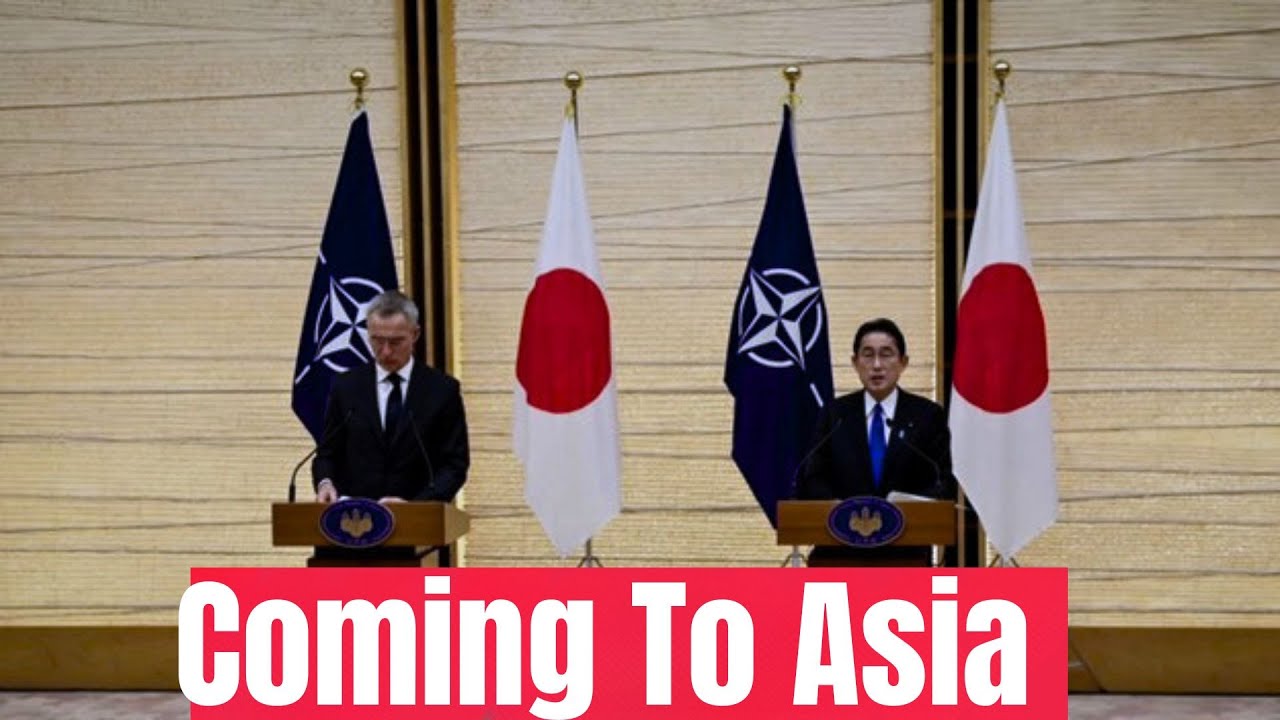
In this extensive video, the host (David Oualaalou) examines the growing partnership between NATO and Japan and its implications for China. He begins by distinguishing between "concern" (a strategic, measured interest) and "worry" (emotional, fear‑based) to frame China's possible reactions. He outlines three historical phases of Sino‑Japanese relations—pre‑normalization (1949‑1972), post‑normalization (1972‑1980s), and the post‑Cold‑War era—highlighting how legacy issues, war‑time atrocities, and shifting power balances shape current tensions. The discussion moves to the concrete development of a NATO liaison office in Tokyo, questioning its stated non‑military purpose, the timing of its establishment, and the broader pattern of NATO’s eastward expansion (1994, 1997, 2014). The host argues that NATO’s presence signals a strategic shift from a Euro‑centric alliance to a global security actor, potentially encircling China. He connects this to regional flashpoints: the Russia‑Japan Kuril dispute, the Quad, AUKUS, and recent moves by the Philippines, South Korea, and Australia. The video also contrasts the terms "Asia‑Pacific" and "Indo‑Pacific," explaining their differing geographic and strategic connotations. Throughout, the host emphasizes that China’s response—whether diplomatic protest, strategic alignment with Russia, or decisive military‑political action—will be crucial for its credibility. Viewer comments and questions are addressed, reinforcing the view that NATO’s expansion could precipitate further conflicts, such as in Taiwan, if unchecked. The host concludes by urging careful, peace‑oriented strategies and invites audience interaction.
Chapters
Hello everybody and welcome to Geopolitical Trends. So good to be with you as always. I got a great show for you today because the issue of Japan and NATO rapprochement is no small matter. So we're gonna delve deeper into this, but before I'll do, uh Before I'll, uh, get into this, like always, I like to extend my sincere thanks to the channel's members and supporters and subscribers, you. And if this is your first time landing on this channel, please make sure to subscribe so you can support this channel for us to grow. So anyway, I thank you all for your continued support. So today's topic, as I said, I'm going to be talking about— not talking, but provide you my assessments about NATO's approachment rapprochement rather with Japan as it grows. What does it mean for China? Now, is China concerned or is China worried? And I'm gonna tell you the difference between the two just for us to, uh, move forward with this. Second question you're gonna need to ask about is where is the geopolitical and economic shift within this? How this is gonna— let me, let me show you a picture here, guys, because you need to see Um, oh, where are my glasses? Right here. All right, here it is, right here. So, uh, just for you two guys to understand where this is going as far as the economic and geopolitical, uh, the geopolitical aspect will address it separately, of course, but the economic one, you need to think about it from this perspective. And none other than exactly what just happened now for the, uh, Vladivostok port that's gonna be opening soon. When I say soon, I'm talking about a week and a half or so. China is actually— Russia is so excited about this. And I will tell you again the link of how this all linked. The other one you're going to think about is the timing of it. So, so Why now? And the second is, who will do NATO's bidding in that part of the world? Those are like key questions you need to understand. And of course, we're gonna delve deeper into this. But, uh, and like I always do, I like to do the tour around the world for you guys because there are some information that's usually— it gets reported but very, very limited. So let's start with Azerbaijan and Armenia. Yeah, here is the meeting here, this meeting in Moscow, by which basically what's going to be happening is that, uh, Azerbaijan and Armenia are on the cusp— yeah, here it is, guys— on the cusp of a historic, uh, uh, events after the two countries announced their readiness to mutually recognize the territorial integrity and sovereignty of each other. And this will be put the final agreement regarding, regarding the border area of Nagorno-Karabakh conflict. That is why it's so crucial. What's also crucial about it is that it was Russia that is brokering the deal, not the West. So, uh, that's the first one. Second one has to do with this fella here. You all know who he is, right? The, uh, the weak, uh, German chancellor. So, uh, I mean, nothing— no offense to Olaf Scholz, I have nothing against the guy, just you call a spade a spade, and he's so weak politically speaking. So what he wants to do now, he wants to talk to Russia. Yeah, at a time— and here is the thing, Germans— and I had a chance to talk to Germans, actually I talked to them right here in the location I'm in There were some Germans here and I asked them, we talked. Germans, as my friend, are outraged about the country's oil and gas, uh, uh, broiler ban because the government now is going to ban the gas to a degree. Okay. And the question becomes, is Olaf Scholz finally waking up? But I think the damage is already done. It's done. He will go, he will go down in history as the weakest German chancellor ever. That is, that is again my opinion, okay? I don't speak on behalf of anyone else. So the other thing that I need you to be aware of, it has to do with this, which is very alarming for me personally, knowing the history. This is in Kosovo. Tensions in northern Kosovo are sort of, uh, going up, you know. Serbia orders its army now, you Yeah, Serbia, the government of Serbia ordered its army, uh, units to approach the border. Okay, that means they are on standby. And so, uh, now Pristina, the capital, accusing Belgrade of escalation. There is a lot of tension because we all know the history of 1997, 1998 when NATO gets involved, and we all know how that turned out. So is somebody fueling the tensions again? So, and my last one is right here. This is a very interesting aspect. This one has to do with a so-called neutral country. Yeah, this neutral country is Switzerland. Well, believe it or not, an investigation, an investigation, uh, investigative team that is revealed the involvement of Switzerland with aircraft in Afghanistan and armored vehicles in Brazil. You know, the question we need to ask is, didn't, didn't Switzerland abandon its neutrality? Because that's all it means. You know, when you start getting involved in weapons, that means you're no neutral. You don't have any neutrality anymore. So that era is gone. So even Switzerland, where we think it's, uh, neutral, but it's not. So anyway, let's get into the topic. I'm not going to do the health section today, guys, because this topic has a lot in it, the one we're going to be talking about, and I need to cover some really basic stuff for you to understand and to put it within the picture, the big picture. It falls also within my area of research, and I'm going to be sharing with you something, uh, based on my own research for my current book that I am currently working on the China book. So, so what's at the heart of all this? So at the heart of it is that, uh, the rapprochement between NATO, between NATO and Japan is getting like stronger by the day. You know, I'm not talking about just, uh, uh, uh, what's the word I'm talking about, bilateral relation, whatever, except when you start to sort of have a strategic planning because the next— the next question is going to be, okay, what's next? And this is where that, that idea of Japan saying— what Japan is saying already, denying, you know, any plan to join NATO. We're not talking about joining NATO. That's not what we're talking about here. So just to clear up things, but the fact that this could pave the way for that This is where the concern of China is. And yet there are those that they say, well, should China be concerned or should be worried? Okay, I put the term concerned, then I put the term worried because I want to highlight to you the importance of it. Now when I say worried, I'm not referring to being afraid. Let me just share with you the difference, uh, uh, uh, uh, uh, scholarly, that is, between concerned and worried. I'm sure you do know, just that, just my, my, my, uh, my scholarship thinking coming forward to say you need to make the difference for your viewers. So here it is, the difference between concerned and worried is that concerned is showing concern, you're just concerned about something, okay, while worried is thinking about either unpleasant things that happened in the past, okay, that's one, or that might happen in the future. And basically you become unhappy of sort. I don't believe in the aspect of fear, and this is where China comes in, you know. Is China concerned? Is China worried? You know, and we're gonna get into this as we move forward because I don't want to get ahead of myself or so. So basically, the, uh, Japan is already, as I said earlier, they are denying that there is no, no, uh, no joining military, no joining NATO whatsoever. So, so the question becomes is what does China fear, you know, if we are to use the term fear, even though I don't think so we should, because China's not going to fear that, you know, and the idea of the other question that what are Nehru's motives for opening liaison office in Tokyo, in Japan, that is. So it's a question worth asking. So, but before getting into the heart of all this, it behooves us to understand the Sino-Japanese relations, you know, and again, I'm talking about part of my research that I'm doing for my current book And I'm going to share it with you even though it's too early for that, but I'm going to go ahead. So, so when you think about the scholarly research of the Sino-Japanese relations since 1945, you're going to have to categorize it or divide it into about, based on the literature that I read and researched, into 3 categories. Okay, you got the first one. And by the way, each category or each period is dominated by its own theme. So, so let's start with the pre-normalization period, and this one starts from 1949 to 1972. Okay, this one was— this period, that is, was marked by lack of diplomatic relations. No, however, what can you say about an informal, informal diplomacy between two countries? Yeah, despite that, there were ways the two sides, the China and Japan, maintained somehow some sort of a channel of communications. As a matter of fact, uh, it is my belief that the, uh, the current Chinese defense minister— I forgot the last name— uh, is opening a channel of communication behind closed doors with his counterpart in Japan to ensure the communication. But this is what was back then. So the relationship during that area had to adjust to the Cold War environment. Why? Because both sides, Japan and China, were somehow— what's the word I'm looking for— constrained. They were constrained by the foreign policies and the demand of the superpowers at that time. Remember, the world was divided into East and West, you know, each one is pulling in its orbits. The Soviet Union at the time, the United States, the Chinese, the, the, the Sino-Japanese relations fell into this, uh, uh, uh, aspect here. Then you get the second period. Second period is the post-normalization period, which one starts from 1972 to about 1980s. Okay, why is this important for you to know, especially towards the beginning of the '80s moving forward, the whole decade of '80s? Why? Because he brought about the, the boom of the Japanese economy, you know, that's one. And second, the China-Japan relations sustained also because of that economic developments of the Japanese, but also Chinese reform and opening up policies. Remember, China opened up in 1972 after Nixon visit. So during the '80s, of course, during that time, you start to see changes within, coming up within the Chinese society, moving from an agricultural— this is one thing that is now bothers the West. I must say it straightforward because some in the West having a hard time accepting that within 30 years, 30, 35 years, China was able to move from an agricultural society into an industrial one. That is what's at the heart of it as well. This is why we're seeing this dimension, uh, of the, uh, of the tensions. Then you got the third period, and the third period, this one here, of course, is going to be marked by the end— or it was marked by the end of the Cold War. You have not just that, you have the end of the Cold War, you have the rise of China, and you have the relative decline of Japan. You know, all those three elements End of Cold War, rise of China, decline of Japan, all of them ushered in the third period of the Sino-Japanese relations, you know. And this is, again, you have to think about it from a scholar— scholarly aspects of it, because in the research, this is usually— you have to understand how the historical aspect moved during this period, and, and that's just part of how the research is done. So And this is where that rivalry emerged, okay? This rivalry, it's political, it's economic, and yes, it's military. And now this is why you're seeing it's becoming a recurring theme, uh, you know, you see it in the, in, in the research, in the literature about the relationship between Japan and China. You know, I'm seeing it because I'm in the process of, uh, doing the research on it. So, but here is the reality which we can't deny. The legacy, the legacy of Japan's aggression in China during the war and the questions over Japan's willingness to acknowledge its war responsibility have provoked— yes, I will use the term— have provoked emotional and recurring controversies. This is why I remember in one of the videos, uh, I did way back, I remember, and I asked, I wonder if Japan will ever acknowledge its atrocities it committed, you know, like Germany. Germany did, did acknowledge that it was horrible during the, the, the, uh, World War II and so forth. And they acknowledge that, you know, you're not going to blame, you know, the people right now of today That's just as long as the government acknowledged that. We have the same issue here in the US. Do we acknowledge, for example, how the Indians were treated, you know, or the, let's say, the slavery for that matter, or the, the, the discrimination that might exist in certain aspects of our society? You know, does the government will come forward and said, yes, we, we made a mistake, we sort of, we acknowledge in this and that. This is what I'm talking about here. So, and this is why, uh, the history, you know, all this will lead you to think in terms of the history, uh, uh, historical problem, if I may use the term, when it comes down to China, uh, and Japan relations. Uh, Dr. Ken Hammond, you know, this dear friend of mine, Dr. Ken Hammond, will talk sort of clearly about this one because And that's something that he and I will agree on as far as, you know, Japan never took the initiative to say, you know what, we made the mistakes, you know, we are apologizing and we mean it. And so I wonder why. And this is what, at least in the scholarly research, you'll find that this historic, the study of the history, the history of the relationship between Japan and China is a very, very and some sort of very important to understand the development of a whole Asia, but also it will help you to understand what are the obstacles to, for example, finding some reconciliation. So that's to me where part of the problem that lies there. So, uh, let me first check one more thing here to see in case everything is working. I'm assuming you guys can hear me by now. If there was any issue, some of you will, will say something. So let's, let's now delve deeper, and I'm gonna tackle another aspect of the history but from a different angle. But so as it stands now, the, the Prime Minister of Japan, Fumio Kishida, confirmed on the record that his country does not plan to become a member of NATO. Well, of course NATO is North Atlantic Treaty Organization. What the heck NATO is going to Asia for? Why would they expand? Because if you start having the conversation like this, it would make you think, you know, this is— I'm putting my geopolitical analyst hat on here— you start to think, could next be South Korea? Could next be Philippines? You know, then what will become of NATO? That become a global, you know, because that's to me where they are leaning towards now, moving away from Europe and into becoming a global. Because the question that I asked, I remember one time I tweeted something about it, it's on Twitter, on the record there. And I said, I do believe that with the actions that NATO is taking, it's becoming a global security threat. It was the argument, and I'm going to share this with you. Usually the government here, the United States government, would not release that kind of information, and it's not classified, by the way. It's just if you know where to look for. There were some high-ranking officers inside the government that's saying NATO, it's making a big mistake by keep expanding eastward. Because remember, after the fall of the Soviet Union, NATO expanded 3 times Uh, the end of the Soviet Union was 1991. In 1994, we expanded. 1997 and 2014, of course. So, so at the same time, NATO acknowledged that the— this alliance between the organization and Japan, uh, it's not going to be for military purpose. Then what's NATO doing there? Diplomacy. NATO doesn't get involved in diplomacy. Heck, they are not even equipped for that. You all remember when Russia presented the, the, the, the security, uh, uh, uh, uh, what's the word I'm looking for, concerns prior to the conflict starting. NATO never responded. You know, that's what they're saying. You know, should we trust NATO? I don't think so. So, and, uh, and this according to the Japanese ambassador in Washington. His argument is this, is that the task— let me, let me put this in quotes because that's his word here. He said, and I quote, the task of the prospective office will be to facilitate consultations in the region, end of quote. Okay, if you are, you know, average Joe, average Jane, will ask the question, what kind of consultations? You're going to need to have a military alliance representation here? Those are, those are, those are logical questions and simple questions that we need to ask. So, and this is why I do believe we go back to our beginning as far as China being concerned or being worried. This is where I, I said to myself that China will have to be more concerned because the move is of great concern not only to the region and the countries around, but to the global security. And again, notice I didn't say worried, I said concerned. So, and this is why it becomes the question, really, why all of a sudden, the timing of it? Of course, Japan justifying this by saying that this office in Tokyo you know, aims at to cooperate with NATO in its capacity. In its capacity, meaning Japan's capacity as the chairman of the G7, you know, because we need a chairman, you know, part of, uh, it, it just doesn't add up. It doesn't make sense. You have a military alliance and you want to, uh, work about just having a representation. What sort of representation are you going to have there? So, you know, and the— because Japan, as I said, is the chairman, uh, of the group of, uh, G7, it's saying that it seeks to establish security and peace in the Pacific region. Uh, again, the wording of it, to me, it leaves me with a big question mark because I know what this kind of wording means, especially when it comes down to international relations. You know, and I'm gonna, by the way, as I move forward, I'm gonna provide you two sides to when you hear the, the, uh, what they call it, the Indo-Pacific or Asia-Pacific, and I'm going to provide you both sides of the argument to that. So now Japan argues that because of this establishment of so-called security and peace, because it will serve Japan's interest Ah, you could have— you, Japan, could have entered into arrangements with regional countries and figure things out. Why bring in someone from outside? That's like you having issues in your house. Hypothetically, this is just a hypothetical, you know, you have issues at home, you know, are you going to bring an outsider to come resolve your issues at home? No, you won't. Common sense. Because you are the one familiar with the nature of the problems. It's the same thing. So the next question we're going to need to ask with all this level, because this political ties, we're only gonna— even though Japan is saying it excludes military level, I don't buy it personally, you know, because the question I will ask is What guarantees do we have? Japan is already part of the Quad and India and the US, okay, and Australia, that is. So what guarantees do we have? China will be asking the same question. What guarantees do we have? And this logical question to ask. So, uh, here is where I'm going to share— let me, let me pull some info here that is very, very important. For you to know. And the reason being is because, uh, understanding this dynamics, because the, the, the geopolitical landscape is shifting not only in that part of the world but on global level, you know. And when you are saying, you Japan in this case, saying no, no, no, no, no, it's going to be just a representation of NATO here for security and peace, Well, okay, first of all, you already have an issue with the— let me, let me pull a map for you so you will know what I'm referring to here. You already have an issue with, uh, with Russia regarding those islands right here. You're all familiar with this, guys, right? Japan and Russia have been disputing the sovereignty of those four islands for over 60 years. No, Of course, Russia called them the Southern Kurils, while Japan calls them the Northern Territories. The islands are, are Konashir, Iturup, Shikotan, and the Habonai Islands. And this is where this disputes between the two, it prevent them from— prevent them, Russia and Japan, from signing the treaty. So it's, it's been going on, still going on, and Here is what Japan does not see, the long term, by embarking on this thing with NATO, okay? Because I can just see it, the writing on the wall, because of this island issue with, with Russia. But at the same time, NATO sort of presence start to grow. The alliance between China and Russia will make perfect sense, and they can tackle both issues at the same time. Remember, Japan never apologized or even recognized its atrocities that it committed in China. Okay, that's one. Second, the shifting, the shifting security architecture in the region is not going to bode well for countries like Philippines, like Japan, like Australia, like, uh, South Korea. This is how I, this is how I read it, because that's, that's what I'm seeing. That's this, those are the signs that I'm seeing. So, and this takes me back again to the understanding of how the relationship between China and Japan is, is of significant importance. To whom? To China. No, to Japan? No, it's to the international system. Because like I always say, if there is a military conflict in that region, it's going to go outside the border of, of Asia. It will become global, mark my word on it. I hope it never happens. Of course we don't want that. We want to live in peace, live and let live. But the idea of the relationship just between these two Japan and, and, and China are, as I said, significant, has significant importance on the international system. That's how important that is, you know, first on the international system and second to the politics of East Asia, because you can't ignore that. Any, any disruption to that relationship is going to impact other countries. We already seeing, for example, what Philippines did with allowing for other bases for the US. How is that shaping now the, the conversation in the region? We all seen with South Korea making the agreement about the nuclear submarines location there for the US. We all see what's going on with AUKUS and Australia, you know. Then the next, thank you, going to be the Solomon Islands. You all remember that issue there. So all this is going to have an impact on the politics of East Asia, you know, and because the two most, uh, sort of powerful actors, Japan and China in this case, uh, their relationship ought to be stable because they are crucial for the stability of Asia as a whole, Asia-Pacific, the whole thing. That's how I see it. And of course, not to mention Northeast Asia as well. That is where. But the thing is that, again, using history as my guide, historically speaking, war, war and the tensions between Japan and China, they were never necessarily the norm back then. They weren't really. If you look at history way back, they weren't, you know. It was till the Sino-Japanese Chinese War of 1894-1895, where things took a dive for the worse, you know. And that's when China and Japan, of course, as you know, historically clashed. And clashed only 3 times: in the 7th, in the 13th, and the 16th century. This is why it's important to understand the history, because it gives us perspective into understanding why China will be concerned about something like this. Because are we opening the door to Japan to rearm? Because that's, to me, what— that's what I'm seeing. If we are to pave the way, we all remember, so, and the idea of after those, that, that period of confrontations and so forth, when Bo— after, later on, we're talking about the 19th century here, when both Japan and China, you know, entered into some sort of, uh, not they agreed with, but just entered into the European international order during the 19th century at the time, because Britain, the British Empire, you know, and this one changed, changed to a degree the pattern between those two countries. No, of course we can ignore when Japan colonized Taiwan in 1895. You can't ignore that, you know, after defeating China and starting, uh, in, in 1931 launched an invasion of China on massive scale. This is why, remember what I said earlier, the sentiments of it historically, because Chinese is not going to forget. And how could you? How could you? Can't. And you will think Japan will do the right thing, but at least taking a step forward and say, hey, we apologize, we did this, we did that, we want to recognize our mistakes. You know, I always believe strength— strength is when you acknowledge your mistakes and be humble about it. That's it. I made a mistake. You know, no need for the ego stuff and all that. That's just how how people think. So, and here is the thing, you know, after this, because you look at now, you go back about what, half century or so, this is how, uh, those years of war and conflict, in my opinion, have set the tone for the relationship between Japan and China. Yes, they do have communication. Yes, they do have ambassadors and so forth, but still, uh, uh, the relations between the two will hardly be called friendly. I, I don't see that. I don't see that, you know, because my thinking is that both countries, Japan and China, are trapped in almost endless cycle of friction. Friction and friendship. You got friction on one end, but you get the friendship on the other. But friendship because, uh, Japanese access to the market for— in China. The, uh, friction is because the issue of how Japan, for example, recently declared that he will come to support of Taiwan. And the historical aspects of it, that's another, uh, uh, dimension to that. And this is why that relationship is punctured in you know. I do recall that one time I, when I was teaching the graduate level, a graduate program for international relations, and one of the courses you have to teach in the master's degree is usually realism and liberalism, especially when it comes down to foreign policy. So you think about, you put the Japanese and Chinese relationship under the microscope of realists, for example. Well, what you're going to find, you're going to find that realist scholars, for example, will perhaps argue that this kind of, uh, what's the word I'm looking for, it's kind of a dynamics. When I see dynamics, the friendship and the confrontation are inevitable in the context of, guess what, because things have changed. That's why when there is a shift into the global order you're gonna have to consider other aspects of it. So realist scholars look at it from this perspective, that these dynamics are inevitable in the context of rising China. And why is this, you may ask? Again, look at just history. After World War II, a rising United States. No, now it's China's turn. So rising China, why? Because rising powers have always breed, breed intense security in the international system, and China really is no exception. The only thing that you might see is there is an extra factor, there is an additional element into the Sino-Japanese relations which gives both states— it gives China and Japan that extra edge, if I may use the term. And that factor is that numerous war crimes were committed by the Japanese and have left a painful mark in the Chinese psyche. Like I said earlier, China is not going to forget that. Maybe the young generation might not know, but their parents or their grandparents is going to explain to them. History doesn't get forgotten. That way. And this is why you see in that emotional reaction, that anti-Japanese outburst sometimes, you know. And yet there is this strong diplomatic reactions, uh, when it comes down to something like this. It's because China didn't forget. And, and common sense, you ask, why the heck NATO is going to Japan? What for? You know, to me those are logical questions. Now you're going to have to think about the issue of Japan, as I mentioned earlier, and Russia, because you have to take that into consideration as well. And, and I'm not going to get into that because that's a topic by itself, uh, because we got to focus about what Japan is saying about How this NATO office in Tokyo is going to have limited communication. It will be limited to communication, that's it, you know. And will not be, based on what Japanese Prime Minister is saying, saying rather, will not be a place to sort of coordinate any military activities at all, you know. How can we trust NATO? Look what NATO did with when it comes down after the fall of the Soviet Union, you know. China is not stupid. China is smart. They're gonna be thinking about it that way, and rightly so, you know, because having that relationship is gonna— mark my word on it— it's gonna include military dimension somehow. And that's all it's gonna start to move forward with that. So the next question I'm going to ask you is this: does China have the right to object to this, uh, to this expansion, or voice its concern, or express its anguish about it? You know, leave me a response in the chat box here because I'd like to read your answer. Does China have the right, okay, to sort of, uh, uh, what's the word I'm looking for, to complain about this expansion of NATO into Japan. It's because if they believe, they Chinese, if they believe that this relationship is going to exceed the protocol of liaison office but enter into some military dimensions, they have— they— then, pardon me, then in that case China has a valid argument, even though, even though Japan keeps repeating that it's not aimed at military and it will not destabilize the region. That's what they're saying. So, like, again, once again, why is China's concern— what is China's main concern, in your opinion? What do you think? Let me, let me move into— well, before I do this, let me, let me finish this part here and then move into differentiating between Indo-Pacific and Asia-Pacific and why you hear two different terms here. So for, for, for, for China now, or Beijing, What will be the plan as a reaction? Meaning, what will China do? You know, will China react forcefully to that? Because if it does— if it says it will and it doesn't, then it becomes just bluffing. Bluffing usually will lose your credibility, and I'm talking based on facts, you know. So, so what I see, I see personally NATO's orientation in the region will constitute an interference into the affairs of Asia. Asia has its own problem, like every other region of the world, but they can manage their own problems internally between them. You know, countries, uh, might disagree with each other, then they can sort it out. They can sit down and have a conversation and sort it out. Why do they need to have an outside player comes over and settle the issue for them. No, because the idea of this sort of— I'm, I'm trying to put myself in China's shoes and thinking that way, because the way I will be thinking if I were a Chinese official or diplomat, whatever, there hypothetically I will be thinking in terms of, okay, if NATO's coming all the way here, which will constitute an interference, interference in a regional, because you're talking about now the whole Asia. Yeah. And that in a way that will basically to me will make more sense. It will provoke confrontation at some point. And the confrontation will not be just between countries, it would be also between economic blocks in it. Because I'm looking at examples, and I'm going to give you examples. Taiwan, Kosovo, Ukraine are a case in point how they all started as far as the tensions. How was it created? That's the way I see it. So, and this is where I see the, the concern that I have personally about— they're gonna have to, uh, I just don't see the justification of having a liaison office. Yes, NATO does this sometimes. Why? You do it with the countries that they are member of the organization in Europe. So because the conclusion that I will reach is basically that NATO, uh, seeks to expand its influence in Asia. That's the only way I can read it. No. And that means what? That means turning the alliance into a global and international institution instead of its European nature, as it was intended to be. That's why they call it North Atlantic, uh, uh, Treaty Organization. After all, does NATO— what is the justification of NATO now? You know, what is the mission of NATO? You know, if it was created to defeat the Soviet Union, Soviet Union ceased to exist. So why NATO still exists and keeps expanding? What for? And now you're going all over— you, NATO, going all the way to Asia. And because to me, I'll start to thinking in terms, are they not ruling out that Japan could one day become In the distant future, future unofficial member of NATO. Yeah, this is where I see what this rapprochement between NATO and Japan means. Because you do Japan, then next you do South Korea, then you do Philippines, then you do Australia. You already have AUKUS there. And the question also that you need to ask is, what is the aim of all this? Oh, Is it just to target China? Is it to contain China? You know, like I said earlier, realist scholars will think in terms of the rise of China that will push for the security architecture as part of— we're part of the problem— on part of NATO. This is what I see, and the whole reason for it is to prevent influence. So let me, let me share with you, uh, where's my reading glasses? Let me share the difference between Indo-Pacific and Asia-Pacific. I am sure you've heard it, you've heard it both ways. I've, I've seen it in the, in, in, in the literature. I've, I've used both, I won't deny it. It just, it depends how I'm approaching personally. I speak for me. How I'm approaching the topic and if I am focusing on a specific geographical area. So, uh, I think I have a map for you guys. Maybe, maybe not. Uh, yes, I do. There it is. There is the thing. Yeah, right there. So when you think about— when you think about, uh, when you think about Asia— I mean, I'm sorry, Indo-Pacific or Asia-Pacific. So let's start, and I'm going to say it parallel, like Asia-Pacific, Indo-Pacific. So in Asia-Pacific, we say the term Asia-Pacific is associated with the part of Asia that lies in the Pacific Ocean. You— when you say Indo-Pacific, is the Indo-Pacific as an integrated region that combines the Indian Ocean, the Pacific Ocean and the landmass that surrounds them. That's one. Two, in Asia-Pacific, it is proposed idea and is supported by Asia-Pacific powers as they sought a term to describe their common region. In Indo-Pacific, it says it is an evolving concept, and most analysts see it as an idea that may, may shift power and influence from West to the East. Interesting, huh? Number 3: the Asia-Pacific has 3 major constituents— Northeast Asia, Southeast Asia, and Oceania, which is southwestern Pacific. The, uh, the Indo-Pacific's geographical expanse is undefined. However, It is said to range from the coast of East Africa across the Indian Ocean to the Western Pacific, including countries like Japan and Australia. Number 4, for the Asia-Pacific, it is an economic conception rather than a security-related notion. Since the late 1980s, the zone has been experiencing rapid economic growth and is popularly termed as the zone of emerging market. Into the Indian Ocean— in the India Pacific, rather, it is both a strategic as well as an economic domain comprising important sea lines of communication. It is associated with maritime security and cooperation. Number 5, Asia-Pacific Economic Cooperation Forum known as APEC is the only multilateral institution that effectively represents Asia Pacific. In the Indo-Pacific, it has a symbiotic link with the Quadra— or, you know, Quadra— I'm like, I can't speak that. I can speak— Quad Lateral Security Dialogue, which is Quad, an informal grouping of like-minded democracies in the region comprising of Australia, Japan, India, and the US. Number 6 is India is not part of Asia-Pacific region in the Indian, uh, Pacific. India is part of the Indo-Pacific. So, so this is where I see the challenge that certain, uh, when you hear the term used differently that way And, and, uh, uh, you hear it both, both ways, uh, Indo-Pacific and Asia-Pacific. That's, that's what I see. So this is where I feel, um, China's gonna have to think of a strategy to deal with this now. It's because that's coming closer to home. I'm almost seeing the same scenario as Russia. NATO keeps expanding to Russia's doorsteps, all the way to Ukraine, indirectly. So it is my belief, and again, this is just my opinion, if China doesn't respond firmly, then it will be perceived as just bluffing. Bluffing, as I said earlier, it will, uh, sort of, uh, will, uh, you you, you won't have any more credibility whatsoever. Plus, it will, it will be perceived— remember, in international relations, context matters. If China said, 'I will do A,' and it doesn't, it will be perceived as weak, and you don't want to do that. So what China needs to do, it needs to respond decisively and strongly, not only this, but to any dangerous move that may occur between NATO and Japan, because the history of Japan, it's an indication, you know. So I— this is where I see that a military alliance with Russia will make perfect sense, because they will be able to repel, to repeal any threats basically imposed not only on them but also by Tokyo and NATO together in case they end up taking that, that approach. I don't see them going all the way to that direction, but you just never know because you can't trust what they're saying. And this is the concern, uh, that they have— China has. So let me see. Osiris Great, I want to say thank you so much, sir, for your super sticker. You've been, you've been an avid supporter. I truly, truly appreciate it, and, and all of you as well. So thank you so much, truly appreciate it. Uh, so this is where I see, uh, where, uh, how things gonna turn out, uh, moving forward, because I'm already seeing signs. Like I said earlier, Philippines, it concerns me a great deal. Concerns me a great deal. Uh, uh, South Korea. South Korea is moving slowly because it's trying to assess and evaluate, is it worth it, is it not? So that's, that's what I see. So anyway, I hope you guys find this very informative because that's what I wanted to share with you. Let me take a look, see where you are joining me from, and I will answer one or two questions for you guys. So I'm going to go all the way to the top, just see where you are joining me from. If you feel like typing where you are, uh, uh, watching this, uh, live stream from, that would be great. If not, that's fine too. So, uh, okay, uh, from— oh, from— I don't know, ZA, Zambia? I don't know. If you would be kind and type it. So, uh, greetings to you as well, sir. Uh, it's 4 AM in Malaysia. Oh my gosh, and you are up watching this. So that, that says a lot, and I truly appreciate it. So I hope it was worth your time, because like I always say, guys, your time means a lot to me. I would never ever waste your time, no matter what. We never do that. Athene Wu, hi to you as well. So happy to see your live stream. Greetings from Europe. I think China is concerned but not worried. However, the Chinese people are worried. They haven't forgotten what Japan has done. Spot on, spot on. I couldn't agree more. Uh, Australia, uh, Carlam, uh, let me see this one. Carmel, greetings from Melbourne, Australia. Good to have you. Uh, let me see. Let me see who is joining me from here. So I'll go through this quick here just to see in case, because it takes a while to show up. Then I'll go back and check one or two questions and I will sign off on this. Excuse me. Okay. No, Russia, North Korea, and China together, that would be something. That was Cam who wrote that. Uh, all right, let me— okay, so I'm gonna just look at, uh, I, I don't see, uh, I don't see any here. So I'm gonna look for any question for you, one or two from you guys. So, uh, and thank you for keeping it civil as always. Truly appreciate you guys. Uh, Colin, Colin, you say— Colin Lee: Dr. David, if the eastward expansion of NATO triggers the Ukraine war, would you say the further eastward expansion of NATO into Asia would trigger the Taiwan War for certain. Yeah, it does make sense. It does make sense because that is where the concern of why China will have the concerns, because they kind of seeing the writing on the wall. It's, it's, you know, why Japan is going— why NATO is going all the way to Japan? What for? You know, North Atlantic Organization, they're supposed to be in Europe. And like I said earlier, where is the mission for it? So And now we're hearing about, you know, with the tensions regarding Taiwan, because it becomes clear to me that that's, uh, that the plan is already there. You deal with Ukraine and Ukraine is not gonna be over tomorrow, by the way, guys. It's gonna take time. Then the next one is already in plan, which is Taiwan. That's how they thinking. That's what they're thinking. So you're paving the way with countries like Japan, Australia, South Korea, and Philippines. This is what I said, who's going to be doing NATO's bidding? Yeah, so it's, it's, it's logical, it's logical. Okay, let me see a question. I just saw one here, where is it? Question from Athene Wu. I'll do this one here, guys, the last one here. Question: US is obviously using NATO as a tool maintain its global dominance. But I think is overstretching itself by coming to Asia. Do you think NATO will get— be forced to resolve some— to dissolve something someday? Uh, well, NATO, basically NATO is the US. Now, most of us Americans do not even know that is us, the United States, that funds NATO. You know, other countries, they don't have the means to do that. We're the one funding over 70 I think 76%. Don't quote me on this because it was around this number. I don't remember the exact one, but it's above 70% of NATO's budget comes from the US. You know, other countries couldn't even reach 2% or 2 points. Yeah, when you see movements like this, so why are we going and fomenting tensions in some far lands over there? What for? You know, and let alone the history of Japan. You know, we can't forget it. So because now you start to see the signs of— are we allowing Japan to rearm? Where that's going to leave us? And as I said, I know this for— based on my understanding, you know, a conflict in Asia is not going to stay contained in Asia. It's going to go outside. So it won't be pretty for all parties involved. So the whole world security will depend on a really, uh, I hope some, uh, cool hair, cool heads will prevail and thinking strategically and think in terms of peace. You know, we need peace, not, not conflict, not wars, not— we had enough of that, you know, live and let live. So, so anyway, guys, I hope you find this informative and I look forward to seeing you next time. As always, remember geopolitics impact your daily life in more ways than one. Till next time, guys. Bye-bye.
More from David


Beyond the Single Actor: Why the Gulf Isn't Choosing Between the US and China


Iran, Iraq's Militias, and the Houthis Are Coordinating! This Changes Everything




Who Controls the Next Decade's Resources? Latin America and Africa's Geopolitical Crossroads

The Chokepoint Trap: How Washington's Stupidity Triggered a Cascade That Now Controls the World

Trump Spooked as IRGC Unveiled dual-use SLV, Deployed Ghadir Mini-Subs & Hinted at Tactical Nukes!
