What: Outside Players Are Fueling the Civil War & Tragedy in Sudan?
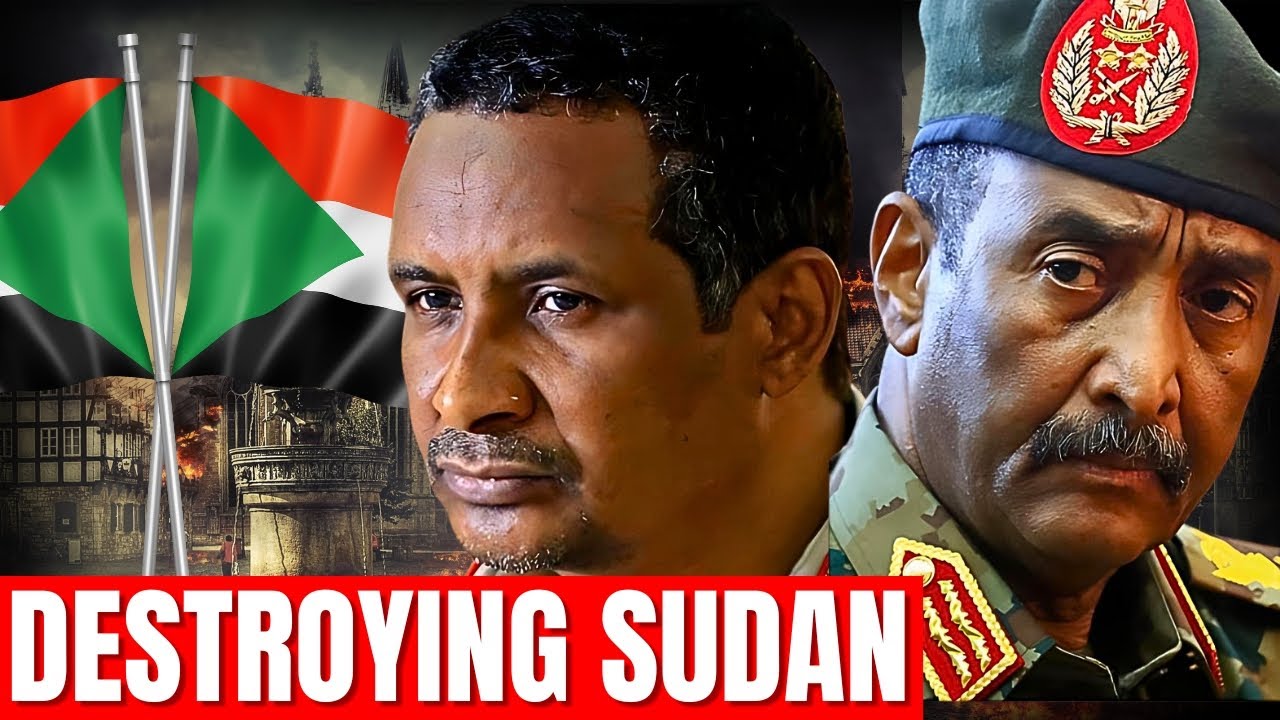
In this extensive livestream, the host (Speaker A) provides a deep‑dive into Sudan’s protracted conflict, tracing its roots from colonial rule, through a series of coups, civil wars, and the 30‑year rule of Omar al‑Bashir, to the present power struggle between General Abdel Fattah al‑Burhan (the de‑facto army leader) and Mohamed Hamdan Dagalo (the RSF commander, known as "Hamidati"). The speaker argues that the war’s escalation and the massive humanitarian disaster—over 15,000 deaths, 8‑9 million displaced, and acute famine affecting half a million—are being amplified by external actors. He identifies the United Arab Emirates and Russia backing the RSF, while Saudi Arabia and Egypt back Burhan, with China and the United States playing peripheral roles. The narrative critiques Western media for ignoring the crisis, frames the Gulf states’ involvement as driven by fear of Islamist resurgence, and highlights Sudan’s strategic value (Red Sea access, oil, gold, arable land). The host also touches on broader African resource competition, China’s infrastructure investments, and the hypocrisy of Muslim‑majority governments. Throughout, he urges the audience to question dominant narratives, consider the geopolitical stakes, and recognize the human cost.
Chapters
All right, hello everybody and welcome to Geopolitical Trends, where truth matters. Excited to be with you as always. Uh, got an interesting topic. I know this topic is not sort of covered by the media here. I don't care what the media covers or not covered. I care about what you guys can learn. That is the most important thing. Uh, I'm going to be talking about Sudan. Yes, there's a lot going on in Sudan. A lot of people do not know the background story of a country that is marred, has been marred by coups and tensions, ethnic tensions, and so forth. So today I'm gonna provide you, uh, some sort of insights into what's really going on, what's going on behind the scenes that, that the media is not disclosing, and also to put it in perspective for you, given that about, uh, give or take about 15 15, uh, yeah, about 15,000, uh, 15,000 people have, uh, have died so far in that, and about 8.2 million people have been displaced. Uh, so, so we don't hear much about all this because doesn't fit the narrative for Western media. So anyway, this is what I'm going to be getting into. Hope, by the way, you guys all enjoyed the conversation yesterday. Uh, I, I know that video kind of got a lot, a lot of attention, except for one comment. Believe it or not, I read all that. It was one stupid comment. And you know what was the comment about? It's about the guy said, why do you take so long talking about history and geography? Do you think we are idiots? First of all, this person should speak for himself. He shouldn't be using the, the term we He should be, or she should be using the term I. So it's just stupidity, stupidity. What do you do? You forgive. So you forgive anyway. Uh, but overall it was great comments. I read most of, as I said, I spent time reading all those. Was very, very, very interesting, guys. Thank you for all that. So, all right, let me, uh, uh, get in into our topic here. And, uh, just say hi to all of you as always. Hey, you're the community. I don't give a damn what others think that I take 10 minutes before I get into the topic. If they don't like it, they can go take a hike. Simple as that. So anyway, Willie Homan, good to see you as always. Thunderbolt Designs, I like that you put good evening everyone in this community. Thank you very much for that. Hiri Lukel, as always, from Amsterdam. Truth Seeker from Canada. Uh, Coach Ohoy, thank you so much for your super sticker, truly appreciate it, and avid supporter of the channel. John Smith, as always. Alice Talokin, good to see you. Joan Dharma, as always. And I keep your questions for, for the end, so remind me please towards the end. Joan Dharma, as I said. Hairless Ape, good to see you. Gayatri Adarsh, good to see you as well. Francis Tango, as always. Seth, as always. Abdurahman, Abdurahman Youssef, good to see you and, and nice to have you here. Lucio Delgado from Montreal. KL Karakulak, part-time tanker, uh, as always, guys, good to see you. All right, let's get into our topic here. By the way, some housekeeping love. Tomorrow, remember, make sure— make an effort to join me tomorrow for live because it's very, very interesting. Now, about China announcing— this is the key— announcing that it will back Iran from both politically and from the security perspective. Read between the lines. And this is where it's not a surprise to me. I talked about it a few years ago when I wrote my book about Iran, and I disclose this one, that China will step in when time calls for. So, so just if your schedule allow, make sure to join me tomorrow for live at, uh, 12:15, same time. That's when I do it. So, uh, as to interviews, I am working on having some guests here, uh, before I, uh, gonna be leaving the country soon. Uh, no, it's not to Asia yet. You know, you'll, you'll find out. All right guys, let's talk about our topic today. What we're going to be talking about, we're going to be talking about— and here is the thing, you need to think about these questions. This is about Sudan, but the questions we need to think about are those: how did the conflict start to begin with? A lot of people do not know the background story of it. So, and I'm gonna be talking about that one as part of the overall analysis. Second, which is to me the key, why foreign countries are fueling these tensions. Are there foreign countries fueling these tensions? And if so, the next question would be why. Nothing happens in vacuum when it comes down to geopolitics. Make it a rule, guys, make it a rule. And third one is What is the end game? So this is something, by the way, this topic is for your own knowledge to know, because a lot of people in the West are clueless as to even where Sudan is. I mean, you ask them, they have no idea. So it's just, it is what it is. So, so here's the thing, to think about it in terms of, are they, are there, uh, uh, uh, sort of, uh, uh, outside players fueling these tensions. It's common sense. We have to think about this one. Why? Because there is a tragedy already, uh, in, in, in Sudan. And as the civil war— because there is no other way of describing it— civil war enters now second year. So, and all this is between the two main factions. So those are now competing for power. And funny enough, that these two factions, they once were allies. That's how they toppled Omar al-Bashir, the guy who's been in power for almost 30 years, and he's indicted by the ICC, by the way, the International Court of Justice, or Criminal Court, that is, uh, the ICC, International Criminal Court, uh, that's where he's indicted for. So, and this is what I'm going to be talking about. So the civil war, as I mentioned, has entered now its second year. Like I mentioned earlier, 15,000 people have been killed in that conflict, and it's still going on. It is still going on. So, and also you have about 8.2 million people displaced. So we don't hear much about this one. And this because, in my— at least based on what I read, these displacements is the worst, is the worst crisis in the world. So, and that is sort of, uh, uh, uh, sad. It's very sad to even, uh, realize that this massive displacements that's going on and we're not even paying attention. Mainstream media is not paying attention to it. Why? Uh, it's a topic that doesn't, you know, this is not Ukraine, this is not Israel. And yet those are human beings as well. Doesn't matter. So anyway, this is what I'm gonna be getting into. And by the way, I read an article by an individual by the name David Oualaalou, which by the way, I extend an invitation. I'm aware of who he is. He's now the bureau chief for Africa. He has a good reputation. I, I checked his, his time when he was in Asia. I spent some time in Asia as well, and, uh, very, very interesting guy. And I extended an invitation for him to come on, on, on the show, so, because he usually covers politics, uh, business, uh, in, on different continents. So he, he moves around a lot., from, uh, even in Tokyo, the bureau chief there, uh, to Buenos Aires in Argentina and Santiago and so forth. So anyway, I read an article, uh, about this particular topic, Sudan, and I intend to react to some of his statements on, on this one here. So, well, uh, if we are to think about— before we do this, how about if we do a little geography and and a little history to, to put it in perspective for you guys to know at least what are we talking about here. So let's start with geography first, just to, uh, place it for you geographically. Let me share the screen with you, and here we go. And give credit to World Atlas as always. Here's All right, let me make this screen bigger for you guys. No, I didn't put my camera off. All of a sudden my image disappeared. It's funny. It's funny how this happens, but anyway, uh, Sudan. So when you think geographically, uh, where is it located? Well, Sudan is in Northeast Africa, so it's considered— of course it's an African country. So, uh, same like some other countries on the same horizontal line of the equator, whatever, it is located in the northern and eastern hemisphere of the Earth. So same like in Yemen, as always. So Sudan is bordered by 7 countries. Yeah, 7 countries. Egypt in the north, and it has bordered also with— it has also borders with Libya and Chad to the northwest and west respectively. To the south and southeast are South Sudan, which is an independent country. It was part of Sudan and became independent. Then you have Ethiopia and Ethiopia. Those are to the southeast. And, uh, and to the east you have Eritrea. So, and of course, the northeastern boundary is formed by the Red Sea. So as you look at the map, it is very, very strategically located. And I will tell you why you— these tensions exist and, uh, and, and what's been going on from way back. I've always argued that Africa as a whole, and, and I said this 3 or 4 years ago, I said, Mike, my word, that moving forward Africa is going to become like a geopolitical ring where, where major powers going to be competing for dominance or influence in it. Sudan is no exception to it. So let's do a little bit of history here, uh, and because it's very important to understand the timeline, to put it in perspective again. And why is this important? It is important because you need to understand that coups are nothing new to Sudan. They've been known. But I'm going to take you back to, uh, 1881, and this is again when the rain of the Ottoman Empire at that time, along with the Egyptian, came under attack. So basically, in 1881, it was a revolt, a revolt against the Ottoman Egyptian. Uh, between 1899 and 18— I'm sorry, between 1899 and 1955, Sudan passes into Who was the colonial there back then, guys? Can you guys guess? I want to ask you here, I want you to tell me, uh, which country took over between this time frame, between 1899 and 1955. Let me see if, if you can. Oh, oh, S, you got it! S, you got it! UK. Munir Ali, you got it. UK, the, uh, Karakulak, you got it, guys. Absolutely, it was the UK, but the UK did it in conjunction with the Egyptians because Egypt was controlled by the UK at the time, or British, that is. So then why, why is the time frame 1899 to 1955? Because what happened in 1956, major event in Sudan? Can you guys guess? Major event. Let me see here. Yeah, you guys would know. You would know. Major event for Sudan in 1956, because that, that changes the trajectory of the country moving forward to what it is today. So what happened back then? Uh, the British stole all of the Ottoman land. That's part of it. But yeah, oh, you got it, David King, you got it. Independence. It was— it marked the independence of Sudan at that time. So what happened at that time? Uh, right after about 2 years, it was a guy by the name General Ibrahim Abboud or Abud, if you speak Arabic, that's how it's pronounced. He's the one who led the military coup against the civilian government. So my point, my reason for mentioning this to you, go back to 1958. That's when the history of coups in Sudan started. So fast forward to— and I'm not going to detail in each period here, just, uh, to give you the highlight of, uh, for example, 1962. 1962 marks the civil war that begins in the south, and this was led by none other than Anyanya Movement. Now, if you know anything about Anyanya Movement, usually it's spelled differently. It's spelled A-N-Y-A dash N-Y-A, or you can see it as one word, Anyanya. That's how it's spelled. So Where was it at that time? It was a Southern Sudanese movement. Those are separatists at that time, and they formed an army during the First Sudanese Civil War. And that civil war started from when? Before independence started in 1955, all the way from 1955 to 1972. That's why Sudan, it is what it is till today, and it will remain that way. You know, Omar Bashir, when he took over, because he's a former military, controlled the country for 30 years despite the atrocities he did. He committed a lot. So, so what happened, a separatist movement at that time rose during the Second Sudanese Civil War. So there were so many And that's the second one was called Ananya II. So there was Ananya I and Ananya II. This one was after the second civil war. And by the way, the term Ananya means snake venom. That's the translation of the— this is the— Ananya, by the way, is a dialect. The Sudanese culture, and its translation is the snake venom. So, and this is in, in, uh, in, in, in Mardi language. Remember, when I say dialect, I'm referring to the local languages, and there are so many dialects. That is the term in itself. So, so to think about this history, uh, uh, you fast forward to, uh, 1964. Of course, as I said, he went all the way to 1972 And from 1972, under the treaty that was signed in Addis Ababa— that's when it was signed, peace agreement between the government and the Anyanya movement— this is when the southern part of Sudan became independent, or self-governing, I should say. Not independent, I take this back, it's not the right word. Self-governing. That does not mean it was independent. So because as you see later on when Darfur, uh, happened and all that, it became independent with the capital Darfur. So 1978, what happened in Sudan? Oil was discovered in Southern Sudan. Now are you guys putting the picture together? Why you seeing the tensions in Sudan? Oil was discovered. Of course, 1983 another civil war broke out in the south, invol— involving government forces at that time and the Sudanese People's Liberation, uh, uh, movement. It's known as SPLM, Sudanese People's Liberation Movement, and this was led by none other than John Garang. Interesting name, by the way. So 1983 also saw the imposition of the Islamic law was imposed because Sudan is a Muslim country. And remember, here is where the key is, guys. This is why history is important. Most of the Gulf states in, in, in West Asia or Middle East, whatever term you want to use, have always looked at Sudan because of the fear from Islamists. Yeah, that's how. So 1985, so the widespread popular and arrest of none other than— his name was Jafar al-Numeri. I remember him when I was a kid. I remember it was a brutal guy too, deposed in traditional military council— transitional, rather, military council. So same for him, through coup. And, uh, so what happened after that? 1989, the National Salvation Revolution takes over military coup. So 1993, that's marked the era of Omar al-Bashir is appointed as president. Of course, 1995, so the strike by the United States, uh, because why? Is because at that time the president, the Egyptian president Hosni Mubarak accuses Sudan of being involved in an attempt to assassinate him in Addis Ababa. So what end up doing? We end up the one striking Sudan on behalf of Egypt. Why? Because, uh, Hosni Mubarak was a puppet serving the US. That's why he stayed in power for 30 years. So 1998, the US launched missile attack Because I do remember the ones, uh, at that time. I remember by, uh, when, when President Clinton was in office. And of course, this one attack was against a pharmaceutical plant in Khartoum, or Khartoum, that is. So because the argument we made, and I remember this one vividly, the argument we made is that, oh, this pharmaceutical are manufacturing chemical weapon. Wasn't true. It wasn't true. It was a lie. We just justified the, the, the, the strike like the same way we did in Iraq. The invasion was based in on a lie, basically. So the 1998 new constitution was endorsed, uh, by voter referendum at that time. And, uh, in 1999, Omar Bashir dissolved the National Assembly. Well, because he wanted to control the power, like always. This is one thing about Arab and Muslim countries, and I'll say it, I don't shy away from it. Be— once they are in power, they want to stay there till they die. That's to me the optimum of corruption, you know. And you wish they will all serve their people at least. No, they don't. So Omar Bashir was no exception to that. Uh, one major, uh, particular event or time or era in this Sudanese history was in 1999. Why is that? Is because Sudan started to export oil. Sudan has oil under its, its, uh, its, uh, its soil, its territory. So So, and this, fast forward to 2004, this is when we started to hear about the, uh, what you call them, the, the, uh, atrocities in Darfur. You all remember the region in western, uh, region of Darfur, uh, uh, when the rebels, uh, got involved in a civil war there. So, and this is where led to the independence later on. I do remember the US administration at that time was saying human rights and all that. It's a lie. It's because what have we done? For example, if we are to talk about Sudan, I am reminded of what took place in, uh, in Rwanda. You all remember what took place in Rwanda, you know, the atrocities. What did we do? Nothing. We stood on the sideline and just watched. You know, sad, sad to see. Uh, some— now in Sudan, you have one group called the Janjaweed. Why is this important for you to understand? Because when you think about this guy here, Hamidati, he's one of the, uh, uh, Lieutenant General— not this guy here, is this one right here, Hamidati. He came from the Janjaweed. So, and what are the Janjaweed? Janjaweed were militia at that time, and that's the one that carried out systemic killing of non-Arab villagers in Darfur. That's why this guy, his hands are not clean. Well, we call it as is. So not that Borhan, the other guy, is even better. This guy is even as brutal, if not worse. Yeah, both cut from the same cloth. But again, you don't think of it that way. You think about it as to the history of the country itself. Uh, and this is why in 2004, at that time, the US Secretary of State, it was none other than the late Colin Powell, you all remember him, described Darfur killing as a sort of genocide. That's what they called it back then. So funny how, how we use the term when they are convenient, really, when they are convenient. So, and the rest is history. I'm not going to go through all this. I'll take you back to the arrest warrant of Omar Bashir in 2009 when the International Criminal Court, the ICC, uh, in The Hague issued the arrest warrant for President Bashir. Uh, the Darfur deal was 2010. That's when a deal was reached by— but a failure, uh, sort of, uh, to agree on specifics has now led at that time to more clashes, uh, till the South became independent in 2011. This is where South Sudan gained, uh, uh, sort of its independence. So, and, uh, and the fall of Bashir was in 2019. But in 2017, those two right here, they are now rivals. Those were allies, and those the one who toppled Omar Bashir. And now they are fighting for power. So, and this is where the new government, uh, uh, in Sudan in 2019, after deposing of Omar Bashir, uh, under the prime minister at the time of Abdallah Hamdok, uh, took over. But these two were saying, especially this one, uh, Borhan was saying, we will turn over the power to the civilian. But he flipped. He had no intention of turning power to the civilian. It just shows you, it shows you corruption. That's basically what it is. All right, let's get into our, uh, my own analysis that I'm going to share with you, uh, just to highlight to you again based on the article that I read by David Oualaalou, uh, which is, you know, spot on, and that's exactly what is going on in, uh, in, in Sudan. Now, when you think about the, the conflict like this that has displaced already about 10 million people and brought about 25 million people to acute hunger— yeah, hunger— and, and, and as the, the author described it, and I use his word here, and unleashed human rights atrocities. Yeah, because that's beyond what is going on. So you have to think in terms of what are the other powers behind the scenes. Now, some will say they are fueling the tensions, other will say no, it's all about strategic interests. Both of them are reasonable terminologies to use, in my opinion. But the one that I am looking at specifically, putting under my lenses, are the states from the Gulf especially two countries, Saudi Arabia and United Arab Emirates. Egypt, of course, has its own concern, but those are separate from these two. And the reason for those two, Saudi Arabia and, and United Arab Emirates, is because they are concerned about the survival of their monarchies and the fear of the rise of Islamists from within their own country, because they could topple them. That's what's at the heart of it. Sudan is known for this. I mean, if you look at the history of Islam, and you have to go and read up a little bit on it, and, and, and, and for you to understand the role of Sudan in the spreading of Islam, it played a major role back then. So, and this is where this shadow battle that's going on in Sudan, and a lot of Of course Western media is not, of course, addressing it, you know. And if— even if we don't address it from the political aspect, we should at least from the humanitarian aspect, which is no different than what's going on in Gaza right now. What are we focusing on? We focusing on the support that we have to provide Israel and so forth. What about the human, uh, catastrophe that is taking place, you know, which is not right, not right for the media to be very cherry-picking the information. And that's what I said to you guys yesterday. As my community here, our community here, it is my duty and responsibility to ensure that you guys get the accurate picture and the right information, but you reach your own conclusion. And that's to me one of this idea here. When we think about the, uh, the, the, the, uh, this complex web of the interactions of foreign countries involved in— even though we hear about the initiatives for peace, which, by the way, uh, Borhan, this guy— and I'm gonna describe a little bit who he is— uh, this guy just declared that the Saudi initiative has failed. But of course Saudis are looking at it for their own— the survival of the monarchy. Look what they doing with the Israelis, you know. Mark my word, Saudi government, not the Saudi people. Always remember, same with Jordan. And one of you guys put a comment, by the way, that Jordan, it's nothing but a buffer for Israel. Good point, good point on that. So, and this is when you think about, for example, even though Amnesty I do read up some of their reports, you know. I do know how sometimes— and I repeat this— sometimes they can cherry-pick the wording that can justify their sort of noble cause. I understand. But I also understand that sometimes if the agenda needs to be pushed one direction, the wording of the reports will have to fit the narrative. So on this one here, I had a chance to read it, and of course I let you be the judge. You know, all I am doing on my end, providing you my own analysis the way I see it, but you reach your own conclusion. So what International, uh, Amnesty International stated in its report, and I'll provide you the link and all that stuff later on, it says that it found that weapons and military equipment supplied by United Arab Emirates, Turkey, China, Russia has proliferated on the field, on the battlefield. Civilians were the main casualties. Of course Amnesty forget to mention the funding of the Saudis, the funding of even Qatar's involvements, and of course Egypt's role behind the scenes through their own intelligence services. So to me, this is where I got a problem with this kind of, uh, if you are to provide a report, provide it accurately and let us decide. Let us decide. So, so now when you think about this from another aspect, which has to do with the, let's say, talk, let's talk about food security for Sudan. So even an independent group of experts now concur and declare that the famine conditions in Sudan, which by the way impacting about half a million people, it's in— there is one camp called Zamzam Camp in north, in northern part of Darfur, about 500,000 people are, are starving there. So, uh, I can see why. I can see why. Why is because this guy Borhan is preventing trucks of humanitarian aid going there. This is where I have a hard time, guys. If this guy call himself a Muslim, look what he's doing to other Muslims. It's no different than what the Saudis did to Yemen. Yemeni people, you know, bombing them and calling themselves Muslims. It's, it's, it's, it's to me that's the pinnacle of hypocrisy, what a Muslim can do to another fellow Muslim. So where is that God's word of you take care of your neighbor or your brother, Muslim brother, whatever? You see what I'm saying, guys? You got my point? The hypocrisy— what they say versus what they do are two opposite ends. So, and this is where people now have been fleeing in Sudan, have been fleeing there, uh, from the besieged city of al-Fashir. Al-Fashir, because it was a refugee, uh, location one time. So because why? There is now, uh, continued bombardments of it. And this is, uh, even when you think about what they call them, Médecins Sans Frontières, uh, it's a French word for Doctors Without Borders, uh, Médecins Sans Frontières, uh, they reported last week that a hospital has been hit. What does it tell you? Do you see the comparison here between what's taking place in Gaza and what's taking place in Sudan? Why will they and target a hospital. It shows you, you know, the degradation of— there is no more humanity left in those criminals. That's what it is. And this is where, to me, my— if it were up to me, once you put them through a trial and give them a fair trial, you know what the punishment is. You don't wait, you put them in public domain because that's what they deserve. So, and this is why now no food, no medical supplies trucks were getting through because Burhan is blocking that. So now let me tell you who is Burhan, and I'm going to tell you who is Hamidati, and I'll do my own, uh, uh, uh, sort of continue on my own analysis for this one here and put the big picture for you. So let's start with this guy here. And again, I'm not doing a, a long one here, guys. I'm doing a short, uh, it's going to be very short here just to highlight to you, uh, who is he, how he came in into power. Well, General Abdel Fattah al-Burhan, uh, he's now considered the de facto leader of Sudan when, when you have a de facto— in other words, he just one acting as president because he wasn't elected. And, uh, but his history goes back to Darfur. So, uh, why? Because back in, uh, he wasn't known much. It was till 2019 when he had an active role in the country's military, uh, back then. So because, uh, he was posted as a commander in Darfur during the early years of 2000s. And why? Because it was the conflict back then when it started, in which he rose to become a regional commander by 2008. And what happened for him— what happened with him, rather, uh, with the former president Omar al-Bashir and other top Sudanese officials have been charged with just a crime against humanity by the ICC, International Criminal Court, uh, for what happened in Darfur. Borhan was not charged. Makes you just wonder. And neither was this guy, Muhammad Hamdan Hamidati. He's known as Hamidati, but his name is Muhammad Hamdan Delgado. So he's the head of the RSF, the Reaction Support Force, and he was an ally with Borjan. So, so over the years, over the years, Borjan— this, this guy here, or this individual— Borjan distanced himself from the atrocities committed there. Where the army backed the RSF, crushing the rebellion in a conflict that killed 300,000 people and displaced 2.7 million of Sudanese. Yeah, yeah. Did we hear much about it on, on Western media? No, no. As a matter of fact, where I check the sources here is from overseas. In a foreign language, and I'm going to provide you the link with the translation of it here. So, uh, back in 2019— here is the key— in 2019, uh, Borhan, this guy on, on the screen here, he traveled to Jordan and Egypt for further military training and had become chief of staff of the Sudanese Army, a position to which he was promoted in 2018. And by the way, when he traveled to Jordan and to Egypt, who do you think trained him there? Can you guys answer this question in the chat box? So he went to Jordan and to Egypt. Who do you think trained him there? Let me see your answer, guys. Karakulak, you got it. Muhammad Mazar, you guys got it. You got the idea. You got the idea. And, uh, so what, uh, what Burhan did, he coordinated with, with Hamidati to topple Omar Bashir, which took place in 2019. Ending Omar Bashir's 30 years in power. And also because Borhan, the guy on the screen, he was the Inspector General of the Army and Sudan's third most senior official. And now you all got the idea. This is what they do. It just makes you just wonder how those individuals end up being where they are. Now this guy here, Hamidati, is another character, this guy. So now Hamidati, uh, that's how he's known for— he became a lieutenant general. His name is Muhammad Hamdan Dagalo, that's how he's known. So what, what happened with him? So well, for him, the Sudan— the hopes for Sudan transition to civilian rule have sort of dissipated now after violence broke out between, uh, the military and the powerful paramilitary. Hamidati was the head of the paramilitary, uh, uh, force called Rapid Support Force, or RSF. So, and, and much of the influence of this paramilitary unit was contributed to Muhammad Hamdan Dagalo. So he, uh, they call him the Little Muhammad. So now he came to prominence as the deputy leader of Transitional Council, which was launched after former strongman Omar Bashir was overthrown in 2019. So, so Hamidati's RSF and the army staged a coup together in 2021 against the joint civilian military leadership. And a year later, or a year and a half later, Dagalo, which is Hamidati, seems unhappy about the military, making statements about how his ranks, uh, uh, or its ranks rather, the military ranks, are filled with loyalists who will hamper the process towards democracy. You see what's coming, right? This is what this guy is calling for. He's leaning towards democracy. If you only know the atrocities he committed— and I'm not here to judge him, that is not what we're doing, guys. We're providing the facts. So, so he's beginning his humble beginning started back in 1974 when he was born. By the way, he was born in a tribe called Mahariya in Sudan, which is a small community in Darfur. That's how far back it goes. So, uh, he had a little formal education. He wasn't educated. He used to, uh, have, uh, camel hurdles. That's what he used to do, trading in camels. Which, by the way, guys, it's a lucrative business in Sudan, in Saudi Arabia. It's a big deal in, in, in that part of the world. And, uh, he had about third grade, uh, uh, literature. That's about it. So he wasn't, he wasn't well educated, but he was very shrewd in understanding how things work. So, and this is what prompted him back then to take up arms in the Darfur conflict. And that's what paved the way for his services by the army, which means the unit of Borhan. And that's how the two— those two here became allies back then. Those two, Borhan on the left, Hamidati on the right. This is how it all started. So he joined the Janjaweed, uh, uh, which was at the time known as a conglomerate Arab tribe militia. And all this were drawn from the camel trading tribes, uh, they were active in Darfur. That's so far what's his background. I'm not gonna, uh, move into too much into his background. I'm gonna provide you the link, guys, you look about, at least to understand where all this comes from. So that's how it's all end up. So now let's think about uh, where this is going and why it is the way it is. Well, of course you have to think about the ruling of Omar al-Bashir for 30 years, but one of the key aspects of it, it has to do with Russia, believe it or not. This is Omar al-Bashir meeting with the Russian president. Why is this important, you may ask? Uh, very, very important. I wrote an article about it. I'm gonna dig up that article and post it for you. Why? Is because in 2017, the Russian president, uh, Vladimir Putin at that time, and Omar Bashir back then, they argued for the establishment of, uh, of a naval base. So as a matter of fact, they agreed, both leaders, both Omar Bashir and, uh, President Putin agreed in 2017 to a Red Sea base capable of stationing about 300 Russian service members and 4 ships in exchange for various kinds of military and regime security support from the Russians. And even I argued back then, my, my word on this, the US is not going to like this. When I traveled to— and I'm gonna put a map for you here, guys, you might not see it here much, but it is very, very, very, very tiny. Uh, when I traveled to Djibouti, very tiny place on the Horn of Africa, traveled to Djibouti, uh, at that time it was the arguments that the concern was is that the Russians are in talks about establishing a base. And why is this important? Because important to understand, guys, is because you look at— when you look at the map of, of, uh, Sudan, look at where the port of Sudan is. Look at the access to the Red Sea, which will give you access to the Indian Ocean. So, and this is why it's important, uh, at that time when Sudan enters into those talks with the Russians regarding the, the naval base. And this is also why it's important that United Arab Emirates are providing weapons to, uh, uh, in the conflicts in Sudan. So, and this is why when you think about, uh, the proxy on each side didn't line up neatly, uh, obviously. Why is because both of them deny their involvement, you know. But behind the Sudanese Armed Forces and its commander, um, Fatah Burhan, who stands behind him? Egypt and Saudi Arabia. This is again why it's important to understand those dynamics of geopolitical stuff. So here is the thing: you have United Arab Emirates and Russia backing the RSF, the Rapid Support Force, And you have Saudi Arabia and Egypt backing, uh, Burhan. So isn't that interesting? You may ask yourself what happened to the US. We are late to the game, believe it or not. Yeah, there's nothing. We tried to have the Secretary of State, the incompetent Secretary of State, go to have a conversation with Sudanese, but they didn't care. The only thing that happened was that Burhan, this guy, which I was aware of, this guy took a trip to Saudi Arabia in 2019 to meet with the Prince of Saudi Arabia, MBS, at that time. So this is why it's very, very important to understand. So when you have the Hamidati representing the, the, uh, the RSF, and you have Burhan representing the Sudanese states per se. But even with that, when you think about it from a humanitarian aspect, Burhan, he's the one who's blocking food, uh, aid to many locations, uh, uh, that are controlled by the RSF. Basically starving, uh, the population there. So, so he's using starvation, uh, to further his aim in solidifying the powers. This is all about the fight between these two. Yeah, the fight between these two— it's, uh, not this one, this one here— between these two is all about who has the most power. That's all it is, while the civilians are paying the price. Let alone what they doing to each other, Muslim to Muslim. This is why you can't trust, uh, the Muslim leaders. What are they? Hypocrites to the core. That, that's the way I look at it. And again, I look at— look what's going on in, in Sudan. Look what's going on in Gaza. Look what's— what have been going on in Yemen. And all by Muslims, caused by Muslims. So, so, so when they shifted the blame to the West— no, no, no, no, let's, let's first get to the roots of it. I'm not denying the West plays a role into this. The West plays a role in fomenting more all of this, most of it. I'm not denying this, and we can't deny this. So, and this is what I need you to understand about this particular, uh, crisis that exists, just to put it in perspective, because a lot of people in the West do not understand this dynamics. They have no clue. They don't even know why the fight is there to begin with. That's, that's the important aspect. The, the point that I wanted to make is, uh, this is again one of those conflicts that you can't blame the West, you know. Are you gonna blame the West on this? I, I don't see it, you know, not at least directly. What I see directly is the involvements of of, uh, of United Arab Emirates, Russia, Saudi Arabia, Egypt, and, uh, some other entities behind the scenes— intelligence services, that is. So, and I'm not denying that, uh, some of the intelligence services in the West will end up finding ways of how to influence the trajectory of all this. But again, at the end of the day, who's paying the price? Is the average Sudanese person. So both those kind of— both of those individuals, uh, Burhan and Hamidati, two faces of the same coin, as I always say, you know. So in my opinion, if we are to go with the rule of law, they should be held accountable. You know, you don't spare them. You know, as a matter of fact, I did read the latest report of the ICC, uh, putting Netanyahu at the top, by the way, uh, then followed by Omar Bashir, and I think one of those guys here. So, and Russian president, and I know it just— it's a double standard. We don't know how it is. So, so this is what I wanted to share with you guys. And, uh, this is where this political tussle in Sudan, uh, but again, is a reflection of its history. You know, like I always say, guys, if, if, if you always look at history, will give you an idea about how countries behave. Look at their past history, will give you an idea about their current status or current state of affairs and how they intend to proceed moving forward. So, so that's, that's, that's my point that I want you to get out of all this. And I am going to stop right here because that's all I have to share with you. If I don't have anything of substance, I stop talking. So that's my rule. So, uh, one thing I need you to get I need you to get anytime you hear this, this, uh, Sudan conflicts, whatever, think of this: the fear of some Muslim countries from the rise of Islamists within their own locations. Like Saudi Arabia and United Arab Emirates have always feared, yeah, they always feared the rise of Islamists. You know, the same thing in Egypt. You know, why do you think Mohamed Morsi was overthrown, you know. And who, who, who gave the green light to overthrowing Mohamed Morsi? Can you guys type in, in the chat box? You all remember when it was elections, right? And that's what people voted for, so he won the elections, you know. Who was behind supporting the coup to overthrow him? Just type in that in the chat box, please. I'd like to know your, your, your answers to this one here. Uh, let me see. Amanda, you said the US to a degree. Uh, Caracol, like US to a degree. Well, it's not to a degree, it is, but, but it was another country that I am looking for also. Yeah, yeah, you guys are right, it's the US, but there is another country. Yeah, coordinated its efforts with the US. If you can tell me which country is that. Qatar? No, Saudi Arabia. It was Saudi Arabia. So it was the US and Saudi Arabia gave the green light to, uh, uh, Sisi, who was a general at that time, to go ahead with the coup. So, and why? Well, we know the US, what it will do. But why the Saudis? Because they were afraid of the Muslim Brotherhood, because Mohamed Morsi was from Brotherhood. Not that they were planning on toppling the Saudis, but the monarchy in Saudi Arabia will not take a chance. This is why the religious scholars in Saudi Arabia— and I disclosed this in my book, which by the way I posted on Buy Me a Coffee if you guys want to, want to buy that book. It's like $8 or whatever that is. It's worth your time to read, should you ever decide to do that. If I, if I can find the picture right here. Now, that's why I disclose— is the fear of the Saudi monarchy of the rise of those Islamists, because they will topple them, because they know that in Islam— and again, correct me if I'm wrong— in Islam. They're not supposed to be this lavish lifestyle of monarchs and all that stuff. Islam never called for that, to my knowledge. Islam always called for modesty. You don't live this lavish lifestyle. And the Saudis were concerned that the Muslim Brotherhood might end up stirring the pot in Saudi Arabia, because remember, as I said, in Saudi, the, the government provide the people with stipend from since their birth till the end in return for an absolute loyalty and obedience, total obedience. So, and this is why, to take it back to Sudan, this is why you need to understand why United Arab Emirates and Saudi Arabia are involved, why Egypt is involved behind— oh, Turkey, why even for Russia. Russia, Russia has it for different region, a different reason. Russia has nothing to do with the religion. Russia has to do with the strategic location, because Sudan on the eastern part— just look at the map and you get the idea— access to water. Look what the, the Houthi group is doing around in the Red Sea, doing right now in the Red Sea. You know, that gives you an idea. So, so this is what I want you guys to get out of this one. So anytime you hear Sudan conflicts and all that. Think about it, think about it, because the fear in those countries that are supporting it, the fear of Islamists, because there are some of them accusing, uh, Borhan of being closer to Islamists. And Sudan has always been that way, it's a Muslim country. So, all right guys, I am going to answer some of your questions. And by the way, remember to join me tomorrow for, uh, I got an interesting live stream for you tomorrow about China declaring its support for Iran. And I will have a major announcement regarding that topic, something very important. And I know now why— I know now why the US has shipped some major, major weapons, including some type of submarines. I'll detail all this for you tomorrow. So I look forward to having that conversation, and just prepare your questions for tomorrow because I'm going to be spending quite a time, uh, about this, about, about talking about that topic. So, uh, once again, thank you for your kind support for the, the channel, for everything, for the trip to Asia, upcoming trip, you know. Uh, I'll take, uh, this opportunity to give a shout out to TC Quan just bought me tea this morning. Thank you very much, TC Quan. I truly appreciate your continued support on both platforms here. Uh, uh, of course, uh, Osiris Gray, Julian Boone, uh, there, there are so many of you guys. I am very, very grateful for your kind support, and it means a lot to me as we move forward here. So, all right, let me answer some of your question. First of all, I want to say thank you to Emilia, uh, uh, you wrote— thank you for your Super Sticker, Emilia, truly appreciate you. Uh, you wrote, they have to keep Africa from developed, uh, since it's the part of the world with positive birth rate. Keeping Africa down is key for them to keep the deindustrialized control over Africa is the key. Spot on. If you only, guys, know— if you only know— which, by the way, I think I forget to mention this. How could I forget this one? Uh, and I even highlighted in my conversation here, uh, one of them has to do with, uh, Sudan, uh, because Sudan has been, we all know, been floundering for decades. But here is the key: natural resources. So natural resources that other countries are, are, are dying for. We're talking about gold, we're talking about arable land, we're talking about oil, and we're talking about a long stretch of the Nile, which is about almost 750 kilometers along the Red Sea coastline. That's what I'm saying. It is more than what meets the eye, guys. This is why it's important. You are absolutely correct, Emilia. Uh, and now Africa is moving a different direction, and, and you started to see it. Of course, we already saw with the, uh— I thought I had the map here. Yeah, I still have it. The Sahel region. This is where Africa is moving forward, and, uh It's about time. Africans deserve to flourish like every other nation on Earth. They have the resources, they have the manpower, they have the geography. So it's just a matter of getting to work and, and don't count on the West. I mean, we look at it already. Look at the investments China has put in, in Africa and how the West has labeled that as a debt trap. Well, I'm sorry, that's kind of weak arguments. Because you call spade a spade. If it was a death trap, then those investments would have not been happening to begin with, would have not, would have not have happened to begin with. I mean, you go to Mombasa, you go to Nairobi, you go to certain locations, the airport you land on, it was built by the Chinese. The highway you drive on was built by the Chinese. What have we built for them? Come on, let's, let's just be honest. What France has done for Africa all those decades, you know, taking uranium, gold, uh, uh, lithium, cobalt, you name it, you know. What is for— I mean, uh, France's nuclear power are fueled from uranium from Africa. For France to be the fourth— yeah, fourth largest gold reserves in the world when France doesn't have any gold mine whatsoever, how the heck that happened? So, so that's my point. So that's the whole idea of it. So just to think in terms of the importance of Africa, how, how it is. And, and they have potentials. Do you still have corrupted leaders there? Yes, you do. The— but it's up to the Africans to deal with that. And, uh, and that's the way I see it. That is the only way I see it. Uh, for me, you all know where I stand on that, uh, corruption or any other deceiving act. That because especially when you become an official in possession of power, that's responsibility for you to look out after the constituents' interests. This is why in Europe or the whole Western world, the collective West, there's no leadership. There is no leadership. Deficiency in leadership. Straightforward. All right, let me see a question or two from you guys. Uh, uh, Venmo— when are you going to set up Venmo? I do— I think I do have Venmo somewhere. I, I didn't put it up on the— I'll, I'll take a look at it, and I appreciate you for your kind support. Really appreciate you. Uh, and by the way, uh, guys, if ever any— if you ever get any solicitation from someone on my name, on my behalf, no, no, no, no. I'm tracking two individuals now that are trying to go that route, so they better get their act together. That's all I can say. So I'm aware of two individuals trying to fish for ways, you know, you know, the things I would like to do to you are the things I can do. So, so guys, be careful, okay? We never ever ask you directly for money or through third party, ever. The way I ask you is right here in front of you. You know that link on Buy Me a Coffee, you know the link on PayPal. Those are the ones where I do this ones. I even put in Bitcoin because I do have one for those who might want to use that, but I hardly ever use it. The PayPal, I got some donations, private donations, substantial ones through PayPal, okay? And the other one is the channel for the support the channel. That's it, that's it. There is no other way of the wind. But as a matter of fact, for the Asia trip, I rather go through this particular link here. That's all. All right, let me see, uh, a question from you. It was question earlier and I told the person, please, please remind me at the end. Let me just see. Uh, I'm scrolling down here. Yes, right here, right here. Johans Dharma, question about my question about beginning of the show. Also, India is confusing me, working closely with Russia, rivalry with China, the Quad, and now protecting Bangladesh PM against USA. Yeah, yes, you know, India is flip-flopper. Politically speaking. And when I say India, like I always say, the government, not the people. Uh, people are fine. I worked with some people from India in Washington. They're fine. It's the government. So Modi is playing both sides here. And why is this all happening is also because of what just been announced in some Western capitals. There's a conversation now about establishing a location near India's border, also with China's border. And Japan is going to end up wanting to build a university of sort. So basically, the West is going to be using Japan to do that. But that is not about that. It is about ensuring a place where the West can have its military presence so it can pressure India one way or another. This is why you're seeing what you're seeing going on in Bangladesh, and this is what you're seeing what's going on right now between India and China. There is a conversation. As a matter of fact, a recent statement by Mr. Wang Yi just mentioned that it will be better for India to start to think twice before embarking on whatever, because the common sense will be Why the heck will India go into Quad 4? Yeah, I understand strategic interest and all that, but that's— to me, it's lack of strategy to begin with. So yeah, India is starting to be concerned. Are we going to see a revolution in India? No, no, because Modi now is in a weak position politically, domestically. So, uh, we will never do that to India. You know why? Because we will always use India one way or another. That's, that's how it's going to work. So, so I hope I answered that one, uh, for, for you. Uh, let me see. Uh, Army with Harmony question: what are the major weapons suppliers in the region? Which region are we talking about? So I, I don't know which one here, so I don't want to assume because I don't like to assume if I don't know. So if, if you're talking about, uh, uh, the Iran issue, I'm gonna save that answer for tomorrow. It's very, very important. All right, let me see one more question here. Uh, what are they fighting for? They're fighting for power. In other words, one of them, either, either Hamedati, okay, uh, either this guy, okay, or this guy wants to have absolute power, control the country basically. So both of them, that's what they're fighting for right now, it's power, control. So yeah, they're, they're just as corrupted as they can be. So that's what it's all about. At the same time Sudanese people are suffering. All right, one, one, one more question. Hang NG, good to see you. Uh, and you're right, the Sahel countries are rich in raw minerals, raw materials, minerals, gold, uranium. Niger, Mali, Sudan, Burkina Faso. You're absolutely correct. You're absolutely correct. Look at just France. With all that lights you see, the City of Lights in Paris, and if you ever go around Christmas time, you see how much light in France across the country. Where is that light coming from? It's generated from a nuclear power plant. Where is the uranium coming from? From Niger. Used to come from Niger. No more. Niger suspended now all the contract for, uh, for France, and rightly so. You know, we're giving them peanuts for what they, they are worth, and it's not right. You don't shortchange them like that. Pay them the market value and let them decide whether they want you in their country or not. Uh, so that's, that's the way I see it. All right, guys, I'm gonna sign off here. Uh, I look forward to seeing you tomorrow for this fascinating conversation, and, and I— because I have a lot of material on that one. Uh, again, what I wrote back then applies to what JustChina did, announced this one, and I will provide you the perfect paragraph where I stated that, that it's going to happen. And here it is. So, so I look forward to seeing you tomorrow. As always, remember, geopolitics impact your daily life in more ways than one. Till next time, guys. Bye-bye.
More from David


Beyond the Single Actor: Why the Gulf Isn't Choosing Between the US and China


Iran, Iraq's Militias, and the Houthis Are Coordinating! This Changes Everything




Who Controls the Next Decade's Resources? Latin America and Africa's Geopolitical Crossroads

The Chokepoint Trap: How Washington's Stupidity Triggered a Cascade That Now Controls the World

Trump Spooked as IRGC Unveiled dual-use SLV, Deployed Ghadir Mini-Subs & Hinted at Tactical Nukes!
