What Russia & Saudi Arabia Agreed to Will Shock the US!
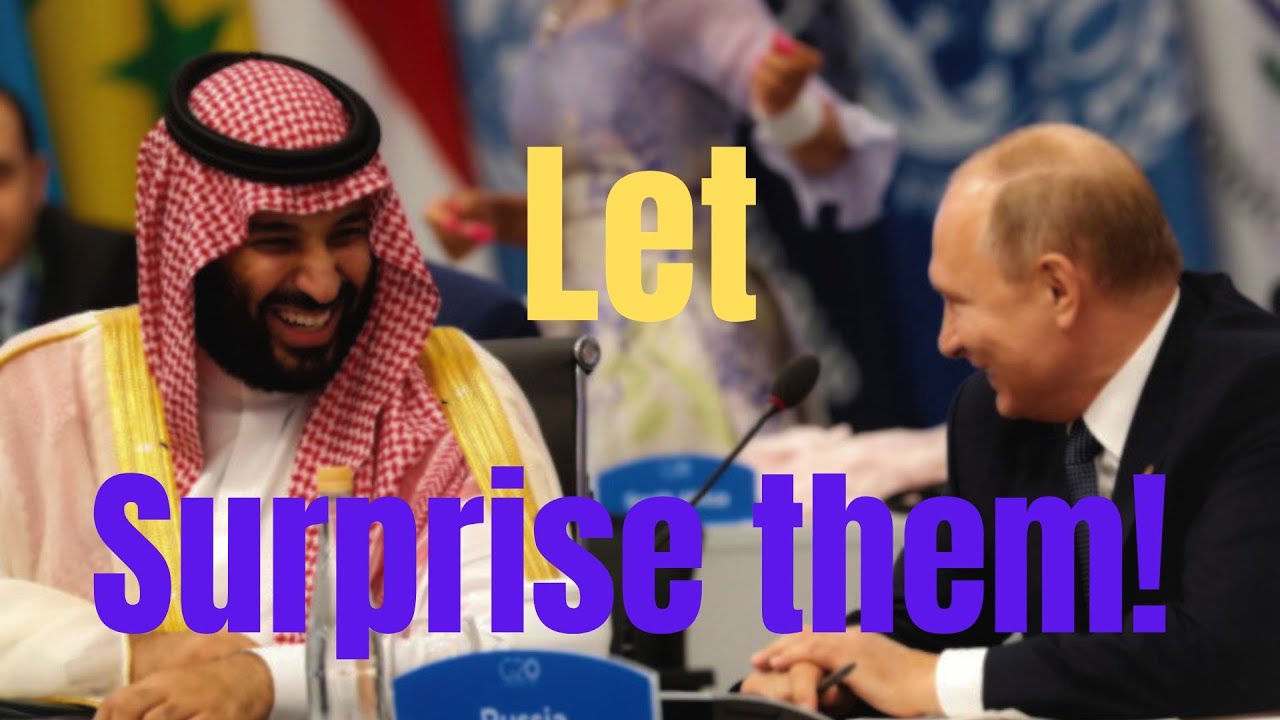
In this video, geopolitical analyst David Oualaalou examines the Biden administration’s recent threats to punish Saudi Arabia for its role in the OPEC+ decision to cut oil production by roughly 2 million barrels per day. He outlines the economic and political motivations behind the U.S. stance—rising gasoline prices, concerns about weakening sanctions on Russia, and domestic electoral pressures ahead of the 2022 midterms. Oualaalou reviews the range of punitive options being floated in Washington, such as slashing arms sales, withdrawing troops, and curbing diplomatic ties, and argues that many of these measures are largely rhetorical and difficult to implement. He then assesses Saudi Arabia’s likely response, citing statements from Saudi Foreign Minister Prince Al‑Jubeir that oil is a commodity, not a weapon, and emphasizing Saudi confidence derived from a long‑standing U.S. security‑for‑energy relationship. The analyst places the dispute within a broader geopolitical shift: Gulf states are deepening ties with Russia and China, exploring the petroyuan, and considering BRICS alignment, which could erode the petrodollar system. Historical parallels to the 1973 oil embargo are drawn to illustrate the potential for Saudi retaliation. Oualaalou concludes that the U.S.–Saudi partnership is under strain, with Saudi Arabia increasingly pivoting toward the East, and poses the question of whether a future Saudi oil embargo is plausible.
Chapters
Hello everyone and welcome to Geopolitical Trends. My name is David Oualaalou. So good to be with you here, guys. What is behind the US threats to punish Saudi Arabia for cutting oil production, which is about the equivalence of 2% of the global oil exports, about 2 million barrels a day? As I said last time, I recall, is going to start next month. So in today's video, I am going to provide you a brief analysis about what the US intends to do, what type of punishments are we talking about, and whether the Saudis will retaliate. But before I'll delve deeper, please make sure to subscribe and hit the like and the subscription button so you will be notified every time I upload a new video. Also, if you can watch this video in its entirety, because the conclusion matters, it will make more sense to you. So here's the issue. The OPEC+ decision, which you are aware of by now, to cut oil production, undoubtedly gave the United States, it was like a slap in the face. And there are those who say to tie this one to Saudi Arabia, Even the time when I used to go to the Middle East, we used to get this question, is Saudi Arabia America's gas station? That's an interesting question because some people were asking that. Anyway, recently the Biden administration has threatened to punish Saudi Arabia for agreeing to cut oil production by about million barrels a day. But here is the thing, just for you guys to know, the decision wasn't Saudi Arabia's alone, but rather it was jointly announced, which means other countries got involved, other countries that are part of the OPEC and OPEC+, including Russia and Venezuela. So the question becomes is why all of a sudden the United States is only targeting or wants to punish only Saudi Arabia, because we got to be fair. You know, that's to me how I look at it. You have to be fair in your judgment. Well, one thing is sure, the production, or the cut rather, in production will do, A, put the prices, oil prices high. As a matter of fact, the average price in the United States here, the regular gas, it's around $6.39 a gallon, which is almost near the high price that was back in June of $6.44 a gallon. So that way, whatever part of the world you are watching this video from, I'm sure you've noticed the oil prices going up at the gas station, and it will be for, for the, for the next few months at least. B, making it harder to cut Russia's oil revenues, and C, exposing the rift between the United States and Middle East producer more starkly, because this is what it means within the big picture, as I always say, the global context. So let me provide you my brief analysis here as to what lies ahead for the US-Saudi relations in light of this US threat? Well, of course, I worked in and visited Saudi Arabia officially representing the United States government on many, many occasions. I speak the language fluently. I grasp the depth of Saudi Arabia's social, cultural, and religious interactions, and from both abstract and practical perspective, I know how Saudi Arabia's internal politics work. To me, this firsthand experience is necessary, in my opinion, to offer the most relevant analysis of how Saudi Arabia interacts, responds, and manages its role within the current geopolitical landscape, not only of the Middle East, but the world writ large. And this is why I said earlier, will Saudi Arabia retaliate? It will be interesting. And that's what I'm going to provide you in this conclusion. That's why I hope you can watch this video in its entirety. So, and I have also written a book about Saudi Arabia, so I'm very, very familiar with it. I hope you get a chance to read it. It's an interesting read. Uh, and by the way, there are some sections in the book, they are redacted by order of the government. They said, well, it's too sensitive and so forth. So unfortunately I can't disclose those kind of things, but if you ever feel like reading it, you will find it very, very interesting. So here's the thing, let's, let's, let's dive into this because it's a very, very crucial, uh, topic. And, and this falls within my wheelhouse because I understand it a little bit. So here's the thing. Some already, some analysts already in the Middle East are looking at the US language. I am one of those as well, looking at the US language as a threat. No. And because it will be regarded as a hostile action by the Biden administration. You don't issue this threat that we're going to punish you. Whether we like Saudi Arabia or not is irrelevant. The idea that Saudi Arabia is a sovereign state, Who are we to dictate? Yes, we may not like their policies, but it's a sovereign state. They can do whatever they want. So I'm going to approach this from two angles. One is economic and the other one is political. So from the economic perspective, on one hand, the US is worried, is worried that the decision to cut production, oil production, that is, will make oil prices rise again. They are also thinking in terms of this oil production cut will dismantle— yes, I use the term dismantle— will dismantle Western sanctions against Russia. On the other hand, there is the domestic agenda here in the US. And what do I mean by this is that the US midterm elections are approaching next month. So rising oil prices will certainly endanger the Democratic Party's election. That is one of the domestic reasons for why. So given the ongoing energy crisis in Europe, you can just see why the United States is concerned that the unity in Europe against Russia might falter. And it looks like it is. Why? Because country after country, from the UK and France to Germany and Italy to Bulgaria and the Czech Republic, are experiencing protests. And the protests that we do not hear about, here in the West, and these protests are calling for their governments to reverse course, economically speaking, or the policies. You look at no different than what just happened in Italy. And again, guys, I always say you have to put this within a context and you have to look for the trends because the trends will be your indication for where things are headed. You take this within the context of Italy's election, recent election. And by the way, Italy now is receiving gas from Russia. Interesting, isn't it? Especially following the election of Giorgia Meloni. Well, Giorgia Meloni happens to advocate for maybe it's time to reconsider the EU policy. Of course, Giorgia Meloni is going to say, we stand united and all that. All that stuff is for the camera. You know, behind closed doors is a different conversation because Giorgia Meloni, as a head of a government, has to look after the interest of the Italian people. And this is exactly what's going on right now in France, in Germany, the UK. UK is going down. Its economy is going down the drain. So it is the important things to understand. Politically speaking, the United States has options, but those options could backfire. Let me explain how this could happen. We've already hearing some lawmakers here in the United States proposing multiple retaliatory measures that includes, for example, slashing arms sales to Saudi Arabia. You know, withdrawing US troops from Saudi Arabia. You know, this is what, what's his name, Democratic Senator Murphy. He is the chairman of the Senate Foreign Relations Committee, and it has to do with the Middle East group. And he said, and I quote, let me get his quote here so I quote him accurately. He said, and I quote, I think it's time for a comprehensive reassessment of the US-Saudi alliance, end of quote. This is nothing but a bravado. Here is why. Because when unemployment goes up in the United States, guess what we do? The United States government asks the Saudis to purchase US weapons for $60 billion, unemployment goes down. So all this rhetoric we're hearing that is emanating from Washington, it's just noise, as I call it, bravado, no more, no less. Here is the interesting thing. United Arab Emirates, United Arab Emirates just withdrew US troops and the Patriot missile defense system from their country. And speaking of United Arab Emirates, which I think I prepared some video for you about it, United Arab Emirates president is currently in Russia visiting. It's interesting, isn't it? So these measures are difficult to imagine or even let alone implement. That's why you have to always pay close attention what politicians say versus what it is, two separate things. No, it will be hard to implement. Because it will backfire. And because again, each, each measure may have serious consequences, because there are adverse potential factors that could threaten US interests in the Middle East. It might even make US security interests in the Middle East more vulnerable. And again, this is what I disclosed in this book, Beneath the Verbal Wall of the House of Saud. I detail all this in a simple language for you to understand, but it provides you the much bigger picture. So one thing is sure, and I want you to make sure of this, is that the Middle East has changed from what it was back in the 1980s in the last century. The security architecture of the Middle East It has changed dramatically, whether the US likes it or not. So what you have right now, even some officials inside the White House are issuing warnings that, for example, OPEC+ decision will be regarded as a hostile act. And I put this between quote, or in quote rather. Really? But here is the reason why. Once again, those statements do not come in a vacuum. There is always a motive and reason behind it because the US is concerned about two main issues. I am to put my geopolitical analyst hat. There are two main issues the US would be concerned about. One of them, it has to do with the gradual approach of the Gulf states, and those Gulf states considered partners to the United States, but their gradual approach to Russia. Like I said, just 2 days ago, the president of United Arab Emirates, Sheikh Mohammed bin Zayed, is in, in Moscow right now. So, and the second concern the United States has is that the replacement of the petrodollar with the petroyuan. Which will be a major blow to the US dollar, but also to the financial system here in the United States. So if we have to talk about the economic aspects and the political aspects, okay, what about Saudi Arabia's response in case the US carried out those threats? Because Saudis, I am sure they're not going to be sit idly. Saudi Arabia for now appears to stay very calm about the threats emanating from Washington. They understand how Washington works. It's more bravado and talk than action, no more, no less. And you have the Saudi Foreign Minister Al-Jubeir, who used to be, by the way, the former ambassador of Saudi Arabia in Washington, and I'm a little bit familiar with his background. He said in an interview with Fox, and I quote, let me get the quote here to make sure I quote him as accurately as I could here. And he said, and I quote, with all due respect, the reason for the high oil prices in the United States is that the shortage of oil refining facilities in the United States has continued for more than 20 years, end of quote. You guys remember what I said last time during the live stream? I think one time I said this, that if the United States would have built refineries way back, we won't be dealing with this issue because we do have a lot of oil. And he goes on, or he continues to say, and I quote, the United States has not has no new refineries are being built. End of quote. So what it looks like to me is that the foreign minister emphasized that Saudi Arabia did not politicize oil. And that's why he's saying, and I put this in quote, "Oil is not a weapon." Well, apparently, it looks like the US wants to punish that because he looks at it as a threat. So Joubert, he's a very shrewd politician. He's been around long enough in Washington when he was ambassador to understand how the political mindset in the United States. So he said, and I quote, "Oil is not a weapon. It is not a fighter jet. It is not a tank. You can't shoot it. You can't shoot with it." You can't do anything with it, end of quote. And he said that only Saudi Arabia sees oil as a commodity. We see it as a global economy. Interesting, isn't it? So the idea that Saudi Arabia are doing the, this cutting production to hurt the US or get involved in politics in any way is absolutely incorrect according to a Joubert statement. And he's right because Saudi Arabia, it was not the Saudis' decision alone. Yes, Saudi Arabia is a major oil producer, but it's not its decision alone. So here's the thing that I want you to understand. For so long, Saudi Arabia has long relied on the US military support through what we call Energy for Security. That was the deal that was cut way back in the 1930s of the last century. That's how long that relationship goes above, beyond the 70 years in time. So this, in my opinion, underscores the new confidence that Saudi Arabia has about it can shake this off, it can shake US pressures and act in line with its own commercial and diplomatic interest. This is why I said what I said last time. You look at the trend, the wealth is shifting from the West to the East. Saudis are thinking in terms of considering the Petro Yuan instead of Petro Dollar. If Saudis join the BRICS— Brazil, Russia, India, China, and South Africa— big consuming market, especially for energy, except for Russia because it's a major producer. But can you just imagine this? Two major oil producers in the world, Russia and Saudi Arabia, are part of the same club that has two major consuming markets, India and China. They don't need to sell oil to any other countries, but just these two. So, but like I always say, I am a student of history. So I find myself thinking now about what happened in 1973 of last century. Now you all know what happened, Saudi oil embargo. Could we see another one? So because Saudis, rest assured that they will retaliate. And this is why I am convinced that what the United States, what the Washington establishment or the White House or members of Congress or whomever was saying, it's nothing but bravado, no more, no less. The OPEC+ decision is a clear signal, in my opinion, to world markets and Washington that these countries are implementing their own policies and will not, and I repeat this, will not bow to the United States because that's how I see it. Makes perfect sense. And like I said, we tried to do this back in the 1970s of last century. Saudis end up cutting oil shipments altogether to the US. It was an oil embargo in the US, long lines. This is exactly what we are witnessing right now in Europe. It's just mainstream media is not disclosing that or showing the images of long lines of cars waiting for gas, be it in France, be it in the UK, be it in Ukraine. We're not showing that. Saudi is going to retaliate now. So let me provide you my conclusion here. So, and my conclusion is this, as one who spent time in the Middle East and understand those dynamics, especially how Saudis will respond to this threats from the US. So the shifting geopolitical landscape of the Middle East compels now the United States and Saudi Arabia to sort of reorient their focus as far as their relationship. Saudi Arabia has already begun that process by shifting away from the United States towards China for two main reasons. One is Saudi Arabia realizes that oil production in the United States is going up, resulting in less demand from the Americans. Second option is that the shift, the shift of wealth from the West to the East in the wake of China's economic preeminence presents huge economic opportunities for Saudi Arabia to consider and benefit from. This is why, why again, you have to put the trip of the United Arab Emirates president to Russia within this context. This is why you have to put the visit of the Chinese to Saudi Arabia within this context. Those are what I call the trends because those are signals of what lies ahead in that shift. So the alarm clock is set for a wake-up call to truly placed this relationship, Saudi Arabia and the US, under the microscope of reality, which is leading, in my opinion, to the conclusion that even long-lasting relationships will eventually come to an end sooner or later. That's how I see it. So here's my question for you for today: will Saudi Arabia impose an oil embargo if sanctioned by the United States? Let me repeat the question: will Saudi Arabia impose an oil embargo if sanctioned by the United States? Make sure to leave me some comments in, in the comment section. And as always, remember, geopolitics impacts your daily life in more ways than one. As always, till next time, bye-bye.
More from David


Beyond the Single Actor: Why the Gulf Isn't Choosing Between the US and China


Iran, Iraq's Militias, and the Houthis Are Coordinating! This Changes Everything




Who Controls the Next Decade's Resources? Latin America and Africa's Geopolitical Crossroads

The Chokepoint Trap: How Washington's Stupidity Triggered a Cascade That Now Controls the World

Trump Spooked as IRGC Unveiled dual-use SLV, Deployed Ghadir Mini-Subs & Hinted at Tactical Nukes!
