What the Fighting in DR Congo is About? Here's What You Need to Know!
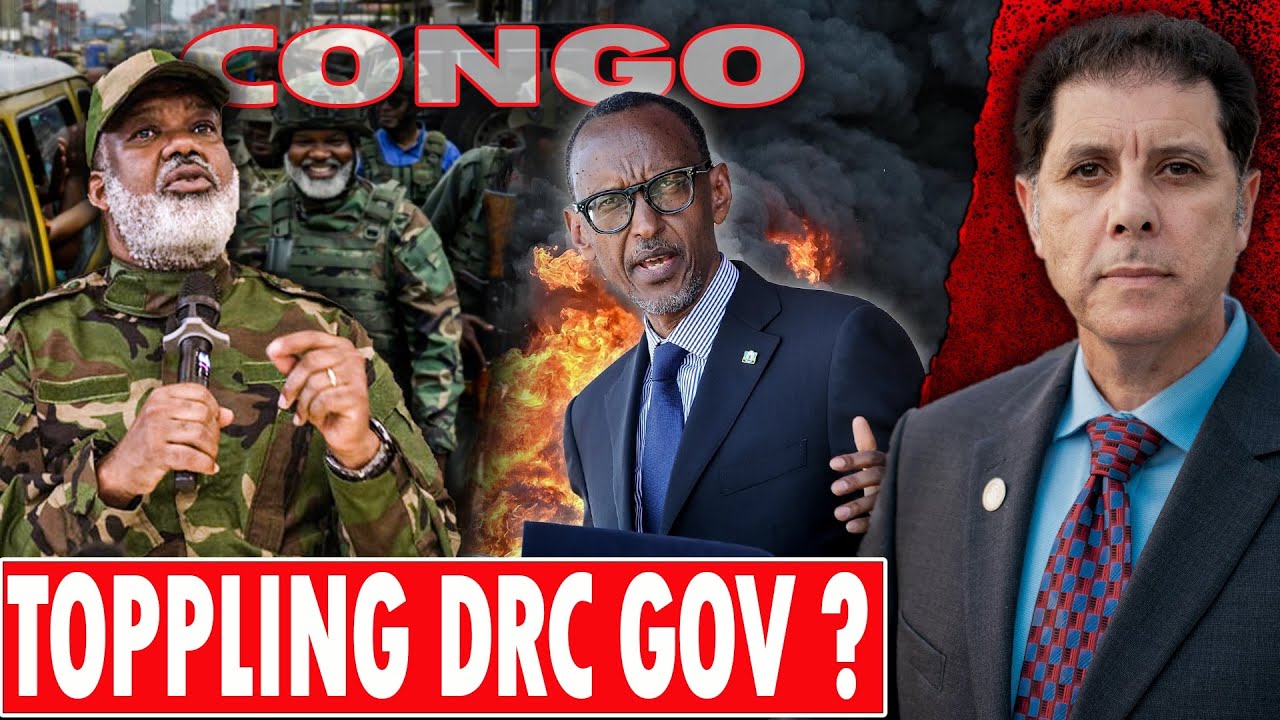
David Oualaalou breaks down the DRC conflict centered on M23 rebels seizing Goma, tracing it to the 1994 Rwandan genocide and Hutu militias fleeing into Congo. Rwanda allegedly backs M23, UN reports show Rwandan troops fighting alongside them, and the DRC's mineral wealth (coltan, cobalt, gold) fuels the fighting and draws in Western and Chinese interests.
Chapters
All right, hello everybody and welcome to Geopolitical Trends, where truth matters. Excited to be with you as always. Uh, my topics today, I will be talking about what's going on in the DRC. Uh, I know a lot of people do not even know where DRC is, the Democratic Republic of Congo in Africa. And to usually problems in Africa we don't tend to pay close attention to. Why? It's because there is that saying that goes, Africa is the forgotten continent. Well, it's not. I disagree with that statement that some analysts have used the term to describe it because Africa is poor and all that. But that is not about that. It's because it is poor by design, because the West, or the collective West that is, wanted to keep it that way. So, and I'll get into all this, but Uh, just wanted to give you a heads up as to what I'm going to be addressing today. So first, let me say hi quickly to our wonderful community. Willie Holman, good to see you from Memphis, Tennessee. Uh, Abdul, Phil, good to see you, Phil, from Ottawa. I will be talking about General Dallaire. I don't know if you know who he is, Phil. General Dallaire, who was in Rwanda back in the '90s. Taiwan Steel, good to see you. Uh, Tyrone Smith, good to see you from— oh my gosh, from Frisco, Texas! Good to see a fellow Texan here. Good to see you, uh, Tyrone. Uh, Jerome Lazaros, good to see you. Zan, as always. Francis Tango, good to see you. Hairless Ape, another one from Canada, good to see you. Uh, Emerson Bangura, good to see you, and hello to you as well. Peng Yu, good to see you, and much appreciate your support for buying me tea in support of my upcoming Asia trip. I'm very grateful. Karakulak, as always, uh, good to see you. Wong KC and Muhammad Mazharuddin, as always, good to see you guys. So all right, let's get into our topic. Before I'll do this, by the way, just to remind you, be on the lookout for a video I'm gonna release tomorrow. And also I will be having— I'm setting up an interview with Anna Malindog, Professor Anna Malindog, regarding what's going on in the Philippines. Yeah, major, major development. That is, I am having great concern about Philippines, and I'm starting to feel— I hope I am wrong, but it's almost going in a wrong direction like India. Yeah. As far as the massive corruption that exists in that country, meaning Philippines, and where it's going with its policy. So I'll be talking to Professor Malindog sometime next week. So all right, let's, uh, let's, uh, address our topic today. I'm gonna put the questions for you right here. There's a lot of, a lot of moving parts I need to cover. And, and again, this is for the knowledge. Once again, I know— I don't know whether there are those who are covering this on YouTube or not. I, I don't know. To me, just, uh, also one of our viewers asked me if I could, and I say certainly, once I, uh, uh, do the research and read up on it and all that, I will be happy to do it. So, so here's the question: what is at the heart of this conflict? What is going on in, uh, DRC? Second question: who's behind it? Don't tell me this is happening in a vacuum. Because nothing, nothing in geopolitics happens in a vacuum. And the reason I'm saying this, guys, because you have to understand also the natural resources both locations, the DRC and Rwanda, have under their, their ground. So, and given what took place in the Sahel region, I am convinced there are usually foreign elements are behind the scenes. Third question is, what are the regional security implications? Usually we talk about international security, and that is one— that is where, uh, the, my degree and a PhD came in. But I built on it from an international level, even though I had to address the regional, be it Asia, Europe, Africa, Latin America, or even North America itself. So in this one here, the question becomes is what are the regional security implications, because it will be one. And the last question is, what is the economic angle? And that is one, uh, those questions I need you guys to keep in mind to understand that the risk, the risk of, of, uh, of, uh, uh, this conflict in the, uh, DRC, uh, really could spread out of the border of, of DRC, which will involve the whole region for that matter. So, and because you all know what Africa just experienced with what's going on in the Sahel region, and I still have the— I think, oh, let me remove the banner here. Uh, I still have the, the map for the Sahel region. You all know what happened when, uh, Burkina Faso, Mali, and Niger kicked France out. So they kicked the US out. Actually, Niger had a, uh, asking the US to just pack and leave. So with the changes going on, you look now at the DRC, so you look in Rwanda, and, and this is where is, uh, DR Congo, Democratic Republic of Congo. So you have to consider, uh, these changes that is taking place, whether this conflict is gonna escalate and expand elsewhere. So, uh, before I'll delve deeper, please make sure to subscribe to the channel if this is your first time here. I'm gonna put the link for you in the chat box. I will greatly appreciate it if you could subscribe to the channel here. That will be, uh, that will be helpful as I want to reach more people around the world. So, so here's the link. I will greatly appreciate it if you could. And thank you, by the way. All right, I have some pictures that I'm going to be sharing with you, uh, in conjunction to what I'm going to be talking about. So this to put it in perspective for you. So, so when we think about the DRC, the Democratic Republic of Congo, because now the situation that is facing, which almost precarious, uh, uh, and, and it will have tremendous implications if this conflict is not contained ASAP. So, and because now when you think about the internal dynamics within the— that country, so, because I feel comfortable, comfortable but not in a good way of saying this, that is that the country is on the verge of a social breakdown completely. So because the next question we're gonna have to think about it is DRC now descending into becoming a failed state? And with it comes the idea of the regional war. So those are legitimate questions that we are to think about. So I had a chance to read an article, uh, by, uh, Damian Zayn, and I will put the link for you guys. I think he reports for the BBC, uh, and I read from all sources of, of, of information because I know some, some entities, mainly in the West, they tend to manipulate, uh, but I am— I will know how to read an article and decipher facts from fiction. And, and, and so I had chance to read this article, and I kind of— it's factual because in comparison to what I have, the information collaborated as far as what he presented. So, so I'm gonna be reacting to his article, and I will put the link, uh, for you guys in the, uh, uh, description. So, so when you think about the, uh, DRC, the first thing that comes to mind is that it is a mineral-rich country. That is the first thing that needs to come to your mind. And this is where you put your geopolitical analyst hat on and you start to say to yourself, all of a sudden this emerged in within a month and a half. That's because tensions existed for a long time, and I'm gonna share, uh, the history with you. As I move forward. But all of a sudden, moving to this level makes you just wonder, because when you consider the last conflict, the 1994 Rwanda genocide that took place, you know, you're looking about more than 30 years that the DRC has been dealing with conflicts in and out. So because why? You have numerous groups armed groups. That is, those are not just your average armed groups that are trying to compete for power, centralized authorities. So why? Because they wanted to control the vast fortune of this country. Now the next question you need to ask is, who is arming these groups? And this— don't tell me that in, in, in DRC they are producing weapons there, whatever. Everything is smuggled in, and they are what I call merchants of death, meaning those who are involved in the selling of weapons as a business. So Africa usually is a major hub for selling, uh, that stuff. There's that movie, I think, uh, I don't know if you guys, uh, uh, Blood Diamond or something like that, which highlights this idea of the selling of weapons into Africa because there is a reason we always— we, when I say we, I'm referring to collective West in general term— wanted to always keep Africa poor and down. It's by design. So the problem now with what's, what just happened, especially after, uh, the M23 group took over, uh, the city, is that now you got the instability that is now instability inside the DRC is kind of pulling other countries, uh, in, into it. And of course, those neighboring countries have always suffered devastating, uh, uh, outcome back in the 1990s when the two, uh, huge conflicts, because back then it was known as the two major Africa Wars, and that one resulted in the death of millions. So, so here is what happened in Goma, and I'm gonna be sharing some pictures with you. This is the head of the M23 group, and I'm gonna tell you, uh, what is that is. This is— his name is Nananga, uh, uh, Cornel. I, I got two pictures of his, was one in civilian clothing and one in his military fatigue. So his name is Cornel Nananga. By the way, they just issued an arrest warrant for him right now. So we'll see how this is going to, uh, move forward. So what happened in Goma? They took over. So, well, in Goma, the fighters of the M23 group sort of captured the entire city. Well, this city, Goma, is a major city when you consider that it has over a million people. And this city is located— I do have a map, uh, for, for this one. Is located in the eastern part right here of DRC. Now when you look at where Goma is versus where Rwanda is, Kigali, uh, the city of Kigali also is a major center. But when you think about Goma specifically, this is why it's very, very strategic, uh, importance to understand geography of this part of the world and why the conflict is gonna— if it's not contained sooner than later, it will create big problems. So, so when you look at, as I mentioned, I have the— pardon me, let me put it back up here. So when you look at, for example, uh, on the border with Rwanda and the shores of the Lake Kivu, this is why Goma is a vital trading and transport hub, very major when you consider Both countries, the DRC and Rwanda, do have some mineral resources. That mineral resources needs to be transported somewhere, and, and Goma comes to play a major role into all this. Yeah, and once again, as I mentioned, because it is a transport hub and also it is within reach to the mining towns which do supply metal and minerals, which is of course, as you know, is in a high demand. That is what the importance— a high demand. Because when you think about these minerals, you're looking at gold, you're looking at tin, you're looking at, uh, coltan. You know, those are major key components for mobile phones and other consumer electronics. This is why I'm saying, guys, make sure to keep your mind open into thinking who really, really will benefit from this. And mind you that China has already established good relations with both countries, and I'm gonna share this as I move forward. So now, what is M23? I don't know, I'm sure you've heard the term circulating now in the news. M23 are rebels, and this is according to Damien in his article, and I confirmed it because it's, it's accurate, is led by ethnic Tutsis. Okay, the Tutsis now are saying they need to take up arms to protect the rights of the minority group. The Tutsis are the minority group inside the DRC. So, and the group, the M23— why M23? M23 refers to the treaty that was signed and approved on March, on March 2023. That is without going into more detail. I provide you the link, you guys can read up on all that. So, so what they're stating is that several fighting have not respected that treaty that was signed on March 23rd, uh, uh, uh, of, of 2009. Because here is what happened right after that, that, that signing, a year or two later, because after the creation in 2012, according to the record here, the M23 rapidly gained the territory and seized Goma. We talking back in 2020, uh, back in 2012. All right, now by doing this, uh, the group has been met with some sort of, uh, uh, pushback against the international, uh, community because the international accused it of committing war crimes and human rights violations. You all hearing what I'm saying, all right? War crimes and human rights violation. So funny how when the West wants to use something, just throw out those words. I, I wonder if they are same as being said about what's taking place in Gaza. Let's just be, be straightforward about it. So, and here is what happened to M23 back then when those statements were issued. He was forced to withdraw from Goma and at the same time suffered— the group suffered some series of heavy, heavy defeat at the hand of Congolese army. And this— here is where the trick is— the Congolese army were supported with the UN forces. And that paved the way for M23 to be expelled from the country. So M23 fighters then agreed to be integrated into the army in return for promise that Tutsis would be protected, because remember, Tutsis are the minority. So, and this is why the question that many are asking is, is this, like I put in my, uh, Israel, Rwanda involved in this. This is Paul Kagame, and I, I'll, I'll explain later on. He's the current president of Rwanda, but I will explain his previous position so this way it will make more sense to you. Now the question, as I mentioned, in, in 2021 M23 took up arms again. Why? Because they said the promises to protect the minority Tutsis were broken. And this is again leads us to the key question: is Rwanda involved in the fighting? So the M23 leader— and I have his picture right here, uh, Cornel, Cornel, uh, uh, Nangoa. So Sultani, the, uh, the M23 leader, that is the Sultani, uh, Mkinga, is a Congolese Tutsi who previously fought in the Rwandan army because Rwanda Why, why the, the conflict in Rwanda back in the '90s, in the '90s, it was the, the, the Tutsi against the Hutus. So, so Rwanda has in the past consistently denied that it is supported the M23 group. That is what they're saying. The RC government as well as the UN— I'm sorry, as the, as well as the US and France have also identified Rwanda as backing the group. And last year, 2024, UN experts report said that 4,000 Rwandan troops were fighting alongside the M23. Why is this important? You need to understand who are issuing the statements— the US and France. Why is this important once again? What happened to France? Being kicked out of Africa, especially the Sahel rich region. What happened to the US? US wanted to ensure its presence in Africa to access resources, but with Niger asking US to be kicked out and be left, you can see why. Then when you take into the other side, and this is the way I analyze it, when you look at the other side of the argument you're looking at the presence of Russia and China. So you can see why Africa is going to turn into, or is already turning into, a geopolitical ring where the fight is going to be between this so-called collective West, which mainly is going to be France, US, uh, Germany to a degree, UK, and Russia and China on the other hand. So, and this is what's in— it's important to understand why is this important. But before this, you're going to have to understand what took place in Rwanda as far as the conflict, because you all know— you know what year did the Rwanda genocide took place? Does anybody know? If you will be kind and type it in the chat box, at what year the Rwanda conflict erupted. Oh, Zayan, you got it, 1994. Very crucial. And I remember, I remember, uh, Violet, you got it right. Uh, Lloyd Johnson, it was '94. Flatter, you guys closer, you're closer. And the way I remember, because I was wondering at that time, why the heck is Bill Clinton— because who was the president at that time— why is he standing on the sideline and watching the, the genocide taking place? It's no different than what we are witnessing today with Gaza. What is the US doing? Watching from the sideline. That is my point, guys. History tends to repeat itself. The question becomes, is do we learn from it or not? Well, apparently we didn't, at least for what's going on right now in Gaza vis-à-vis what took place in Rwanda. So, but the, the important understand, the important thing to understand is that the origin of the current fighting, the one right now in DRC, can be traced back to what took place in Rwanda in 1994. And, and I have a, I have a link, uh, that I will share with you because it's a historical aspects of it. Suffice it, I'm going to focus exactly because they have in chronological order from— you're looking at about, uh, if I am to go back to 1950s, but I don't want to bore you with all this too much. But suffice it to say that by 1994, Rwanda population stood at more than 7 million people comprising 3 ethnic groups: the Hutu, H-U-T-U, H-U-T-U, which made up roughly 85% of the population. Then you have the Tutsi, which made up about 14%. Then you have the Twa, T-W-A, which made up about 1%. You need to understand this background briefly to put things in perspective, but I'm gonna take you directly to April 6th, 1994, where more than 1 million people were estimated to have perished, and an estimated 150,000 to 250,000 women were also raped. Sad story, and I kind of read enough about what took place, and I had a chance to— and I'll even share it with you. When I graduated, when I received my PhD, the guest speaker was an individual from Rwanda who used to own a hotel. As a matter of fact, the ho— you all remember the movie, I don't know if you watched it, The Hotel Rwanda? That is based on true story. And he shared the story, and I had a chance to shake his hand and, and ask the questions, you know, was it exactly what the media portrayed did take place? I said, yes, it did. And I even sheltered people because they were just going around with machetes and just chopping off heads of kids and all that stuff. And women were raped. So it was, it was, it was heartbreaking to read up what was going on. So, and here is what happened exactly, and I'm gonna read it word for word, then I'll move on. On April 6, 1994, This is quote: The death, the death of the presidents of Burundi and Rwanda in a plane crash caused by a rocket attack ignited several weeks of intense and systematic massacres. The killings— more than 1 million people are estimated to have perished— shocked the international community and were clearly acts of genocide. According to the historical record here. An estimated 150,000 to 250,000 women were also raped. Members of the presidential guard started killing Tutsis, civilians, in a sector, in a section of Kigali. You all know where— let me show you the map here because it's, it's, uh, geography is important. Kigali, that's why I said earlier, it's very important to understand the historical significance of this city. Uh, which is Kigali, near the airport, less than half an hour after the plane crash. Roadblocks manned by Hutu militiamen, often assisted by gendarmerie— gendarmerie is a French word for paramilitary force— or military personnel were set up to identify Tutsis. Without understanding this background, Yana, so to those who say the conflict now that involved the Rwanda It's because the minority of Tutsis. I just want to put this out. It's a very incredible article, guys, from a historical perspective. I'm gonna— as a matter of fact, I'm gonna put it right now for you in the chat box. Should you ever decide to read it later on, you'll be well informed, and, and, and, and, you know, it will help you tremendously to have a better understanding of what's going on. So And of course, how this conflict ended, or the genocide ended, it ended with the advance of the force of Tutsi-led rebels commanded. Who was the commander of the Tutsi-led rebel at that time? It was none other than Paul Kagame, the current president. This is why he is very, very outspoken against the West. When I remember watching one of one of his interviews with either British media outlet or US. He didn't hold back. He let them have it because they were start to talk about democracy and human rights. He just lashed out at him. You know, you kind of admire the guy that doesn't hold back because the truth has to be spoken. Like I always say, to those of us at least, and I don't speak for, for everyone here in my country who served in the military. For those of us who served, you know the difference between right and wrong. You know the difference between a crime and an incident or an accident. You know when a genocide is committed versus a mass ethnic, whatever you want to call it. And you know also that you cannot stay silent because that's what cowardness is all about. To me, there is— it's black and white. When it comes to these issues like this, there is no in-between. And Paul Kagame, that's when he pushed back again. This is why you won't like— you won't hear Western media like to interview him, because he doesn't hold back. So, and this is what's important for you to understand at that time. So, fearing a reprisal at that time, an estimated 1 million Hutus then fled across to where is today DRC, or the Democratic Republic of Congo. So this of course stoked ethnic tensions as a marginalized Tutsi group in the east, and that is why part of where the conflict— now the US and France now saying, oh yeah, Rwanda is involved. Of course they're gonna say that because Rwanda is not bowing to the West. And like what Niger, Mali, and Burkina Faso did, they kicked France out. Rwanda is no different. So, and this is why after, uh, 30 years of conflict that took place, one of the Hutu group, which is the Democratic Forces for the Liberation of Rwanda known as FDLR, which includes some of those responsible for the Rwanda genocide, is still active in Eastern DRC, meaning they still active in the location right here in the east. That is why you need to understand, because this FD— FDLR, which is the Democratic Forces for the Liberation of Rwanda, it's been categorized as a genocidal militia, in quote. So why? Because it continues till today their existence in the DRC eastern part, and it threatens that territory. So to me, makes, makes common sense. If DRC does not want the conflict, why would you want to allow a group that can create tensions for you. Because Rwanda, it's not going to stop because they experienced what they experienced in 1994, and plus the minority, they're going to have to do what they're going to have to do. And this is why Rwanda is accusing the Congolese authorities of working with the FDLR. Of course, the DRC government denies that. I just want you guys to understand where the conflict is and why. This is why I believe, unlike what was mentioned in the article by Damien, which I couldn't agree more, is that Rwanda, it's not gonna back down. Rwanda is unlikely to stay out of this, of what's going on, uh, in, in Congo, unless it is satisfied that the FDLR is no longer a threat to itself or the Tutsi communities in Eastern DRC, meaning Democratic Republic of Congo. So, and this is what is very, very important to understand, why, why the capture of Goma has changed the equation for many. So very, very important to understand. Now, two things that I have to address to you. One has to do with the, uh, on to look on to, uh, countries Rwanda and the DRC. I'm gonna start with Rwanda for— not Rwanda, I'm sorry, uh, DRC first. And this one has to do with the rare earth minerals. Very important to understand. So all those tensions now that exist in Goma, right? Because as I mentioned earlier, geography— it is known, this region is known where Goma is, is known for massive rare earth minerals. It's very important to understand, and I'm going to share pictures with you. By the way, I give credit to Pascal Mettr, He is the, uh, it's his picture, but I like to give him credit for it. So, and he shared this picture with— check this out, guys. This is where rare earth minerals are, fields of rare earth minerals, you know. And, uh, this one here, look at this one here. This is the search for, uh, cobalt and copper. Once again, I give the credit to Pascal Mettre. Very, very important to understand these dynamics. Why? Here is why. The DRC, the Democratic Republic of Congo, in multiple UN reports have of course accused Rwanda of using the conflict as a way of looting Congolese minerals such as gold and coltan, which is used to make mobile phone and other electronic items such as cameras, and of course be used inside vehicles— cars, that is. So the way to understand this, in recent years, you remember the M23 group that I mentioned earlier seized several lucrative mining areas, and this is according to the report by the UN. Now I let you be the judge. Are you going to trust what the UN is saying or not? Your decision. I can't make that decision for you. What the UN report says as of last December, meaning just last year, is that around 120 tons of coltan was being sent by the M23 to Rwanda every 4 weeks. They also noted a huge rise in Rwanda's mineral exports in recent years, most of which is delivered to come from— is believed to come from the DRC. Of course, Rwanda has denied these accusations. The only thing I need to share with you is that why the— you have to understand the big picture, and the big picture has to do with China. Why is this again? You all remember when China hosted the African Summit, uh, in, in, in Beijing? Africa invited all this. The picture you see here is President Xi with President Félix Tshisekedi of, uh, of the, uh, uh, DRC. The same. I mean, he gave him a warm welcome and so forth. And but President Xi also did that for President Kagame. This is during the, uh, the, uh, uh, the Africa-China, uh, Africa Summit that, uh, the Chinese hosted. You know, this is Rwanda, uh, when he was invited. It was in March of last year. So, um, that's when President, uh, Kagame held the meeting with President Xi where they discussed— here is the key— different avenues of cooperation between the two nations. You know, you need to understand, and here is the, here's the, here's the key. Among the areas that those two countries discussed, meaning Rwanda and China, agreed to work closely to include encouraging Chinese firms to partner with Rwandan companies in manufacturing and other areas, because this will boost Made in Rwanda products. Now you need to understand the big picture. Those in the West— when I say those, I'm referring to those who make policies and decisions as They never want to see Africa elevate itself economically. The same argument I will make back in the '70s when in the West, mainly in the US, they never wanted to see China moving up economically or moving up the economic ladder. Well, now it's too late. There is no country on Earth now, and I feel comfortable saying this, and please correct me if I'm wrong. There is no country on Earth now that can compete with China in technology. It just turns out this morning I found out that Altman— you know Altman, the guy who was in charge of the OpenAI here in the US, you know, he stole the stuff, was never about to share it— and when Deepseek was given— as a matter of fact, President Xi welcomed Matt met personally, and I saw a clip of it, met personally with the founder of DeepSeq. What an honor! Here is a president of a country inviting someone who was creative enough to shake his hand in, in public photo for everybody to see. And DeepSeq told everybody to, around the world, here it is, use it. I used it to try on some really key sensitive issues, and guess what? The, the, the analysis that I get, or the, uh, rather the narrative that I got was spot on. It was not directed towards promoting this or advocating for that. It was objective. That's what I liked about it. And this is why I need you to understand the, the significance DRC has some rare earth minerals, it has some natural resources, so is Rwanda. But the West will not want to see this. And by the way, during the Congo— during the Rwanda genocide, it used to be a guy by the name— at that time he was, I think, major. I think he retired as lieutenant general. Uh, to my Canadian followers, Phil and Al Stallokin. I don't know if you know who this guy is. This is General Dallaire, Romeo, Romeo Dallaire. This is his picture back then. So, and this is his in the civilian clothing after he retired. To my knowledge, he ended up checking in in a psychiatric hospital in Canada. Why? He had a mental breakdown after what he witnessed in Rwanda. No matter how you, you can be made of steel, I don't care how much training you have received, we all have a breaking point. That's— we all share this. It doesn't matter where you came from, doesn't matter what your training is, you will reach your breaking point. General Dallaire reached his breaking point after he left Rwanda, and, and the memories start to— and I, I found out that he checked in into a psychiatric facility. Not that he became crazy, that's not the case. It's just the impact of what he witnessed. So this is what I need you just to understand about this conflict, because you're gonna be hearing a lot of stuff a lot of stuff. Because now it is my belief that the risk of this violence, uh, sweeping throughout the DRC, it's not going to be limited just to DRC. It, it could spread into the whole region, which will not be very, very pretty. When you look at the map here, guys, this is where the DRC— this is Uganda. And right on the side is, uh, Rwanda. So, and DRC, by the way, what was the name? What was its name before it changed the name? Does anybody know? I just want to see your knowledge. What was the name of it, the DRC today? What was named before He changed the name of the country. Uh, DW, you got it. Zaire. A lot of people pronounce it as Zaire. No, it's Zaire. That is correct. And of course, you all remember Muhammad Ali's famous fight in Zaire. So, so yeah, indeed, indeed, that's what it was. And that is what I need you guys to understand about this conflict. I will put the links for you later on and so forth. And, uh, you can, uh, read up the history aspects of it. So, uh, speaking of, uh, yeah, before I let you guys go, I want to say thank you to all the supporters. And, uh, Rafael, as always, man, I am very grateful for your support. I can't thank you enough. Uh, the dude responsible for the massacre. Yeah, yeah, the picture. And, and, and I, I can see your point. I can see your point. And, uh, because the West tends to just stand on the sideline and watch. Exact thing we are witnessing in Gaza. Let's just be straightforward about it because those kind of things can be, uh, uh, well, you have to find the right word. There is no such thing. You either, you know, you commit a crime or you didn't. There is not in between. So, so thank you once again. Thank you, Rafael. I appreciate you, uh, and I appreciate your support. For those who want to support the channel and my upcoming trip to Asia. Here is the link for it. I, I just want to give a shout out to one particular individual who wrote a comment for us. This is FG, uh, uh, uh, uh, Don Corleone 4010. You wrote, and I quote, as always, Dr. O, thank you for another great program and discussion. Americans will be missing out on your wisdom if you go to teach in China. 'But I personally, I am indebted to you for sharing that wisdom with us. Truth does matter and it has to be told.' End of quote. Thank you very much for your kind words. Very, very, very kindly, uh, to— and I know some of you guys write comments and I read them, uh, and I appreciate you for that. Uh, we are in this community together. That's the whole idea of it. This is not about me being here. Yes, I help with facilitating the conversation and so forth, But I am here as much to learn from you as you are to learn from me. It goes both ways, you know, and I never believed in, uh, those who assume that just because they acquired PhD, that's it, they stop learning. Learning never ends. You learn till the end of your time, till you, till you are ready to check out. That's my belief. And again, that's how I see it. So, so I'm very, very grateful for your support, and I look forward to seeing you next time. As always, remember, geopolitics impact your daily life in more ways than one. Till next time, guys. Bye-bye.
More from David


Beyond the Single Actor: Why the Gulf Isn't Choosing Between the US and China


Iran, Iraq's Militias, and the Houthis Are Coordinating! This Changes Everything




Who Controls the Next Decade's Resources? Latin America and Africa's Geopolitical Crossroads

The Chokepoint Trap: How Washington's Stupidity Triggered a Cascade That Now Controls the World

Trump Spooked as IRGC Unveiled dual-use SLV, Deployed Ghadir Mini-Subs & Hinted at Tactical Nukes!
