What: Trump Hints at Possible Confrontation w/Iran!
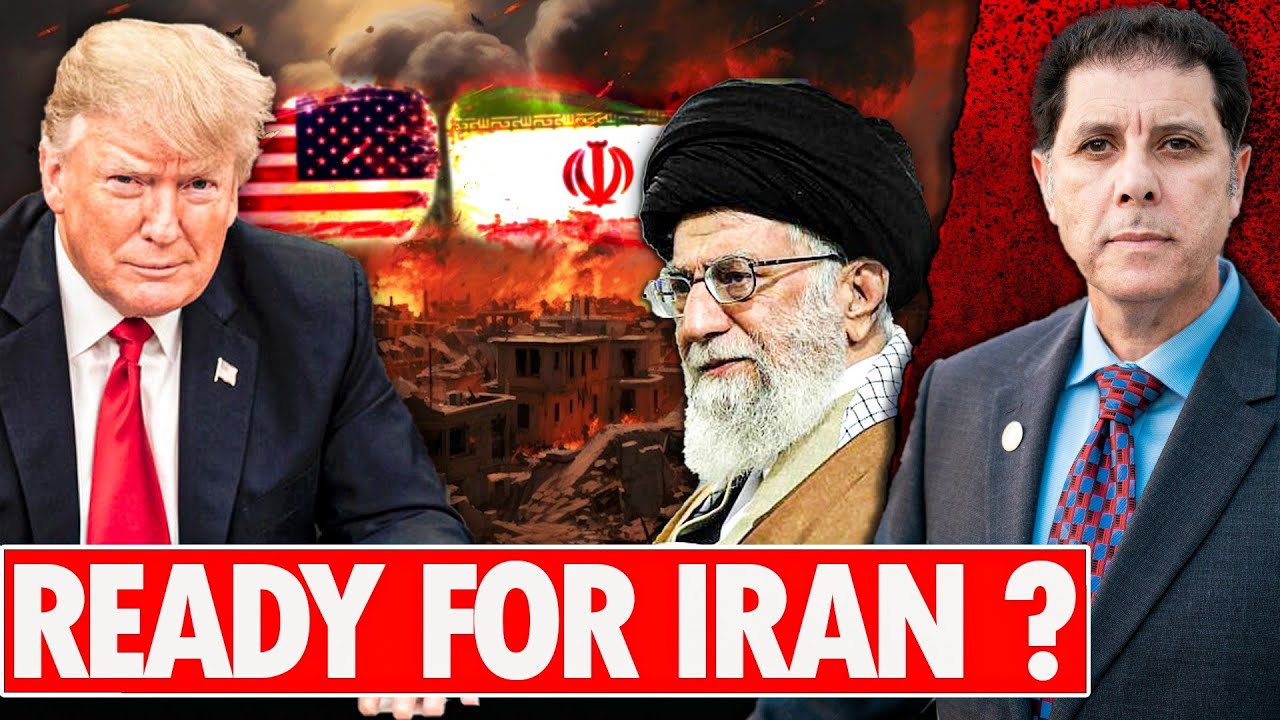
Dr. O analyzes Trump's hints at confrontation with Iran, examining the U.S. military presence in the Middle East (30 bases within missile range), Iran's nuclear capabilities, and how Russia, China, and Saudi Arabia might respond. He argues Trump's threats sound more like bravado than actual policy.
Chapters
All right, hello everybody and welcome to Geopolitical Trends, where truth matters. Excited to be with you as always. Got an interesting topic for you today, something I am very familiar with given that I wrote a book about Iran. And I've also heard the statements before from the president-elect, President Trump, when he was in office last time, uh, when he pulled out of the JCPOA, the Joint Comprehensive Plan of Action regarding Iran's nuclear program. So it's something in my wheelhouse, I'm very, very familiar with. So I'm going to be providing you my own analysis as to what all these statements mean and so forth, given the current conditions in West Asia or Middle East, that is. So I'm going to be looking forward to— I will be happy to answer some of your questions, uh, for some, uh, uh, super sticker questions. If you have any, and I'll be happy to answer this. But first, let me, as always, say hi to our community. Uh, Willie Holman, as always. Matt Backey, good to see you. Muslim Revert, good to see you. Truth Seeker. Hiri Lokal, hi Hiri. Uh, I'm gonna be sending you a message, uh, uh, Hiri. There's something I need you to know, so personally, privately, I'll send it for you. So, Karakula, good to see you. As-salamu alaykum, as always, to you. And, uh, Ken Lo from Vancouver, British Columbia. Uh, oh, thank you so much. I'm gonna share this with you guys. You wrote, uh, very appreciate your video. Good morning, Dr. O. Good morning to you. Thank you so much for your kind words, man. Uh, Thunderbolt, good to see you. And Timeline Dunkley, good to see you. And I read your comment last time, Timeline. It was very, very interesting. So, all right, let's get into Uh, uh, oh, before I forget, uh, be on the lookout tomorrow or Wednesday, I'm not sure yet, but within next 48 hours for— I did another analysis for you guys. This is very specific, uh, about something pertaining to the Gaza War, but to understand where energy is coming from to Israel to continue its war. It will be surprising to you to find out who is supplying energy. Now it's not the US. So just be on a lookout for that video in the next 24 hours, 24 to 48 hours. So, all right, let's start with the key questions, uh, as always, uh, because this one paved the way for us to think in terms of to see the big picture of all this. So now, is Mr. Trump serious about his comment? Is the same argument I can be make— I can make about Oh, I am going to— I, Trump, in this case, going to impose tariffs on China, going to impose tariffs on Canada, going to impose tariffs on the EU, Europe, European Union. I'm going to impose tariffs on Mexico. How much can you do? And is this in this context here? I am hinting at a war or possible conflict with Iran. Is he really serious about this? So Second question: can the US really fight Iran? Ah, of course, yeah, we all know the air power that the US has. Yes, we do have still some dominance of sort, but Iran of today is not Iran of 30 years ago. So third question: what changed? What changed for Mr. Trump to all of a sudden move into the direction of war? Isn't he the one who said, oh, I am the one to, to pull the US out of conflicts? And I'll give credit where credit is due, he did mention regarding Syria, we have no business in being in Syria. Yeah, good luck with that. So that's to me the contradiction. What changed? And the fourth question, how will his statement, meaning hinting at a possible conflict with Iran, be perceived not only in West Asia but around the world. So, and those are, uh, will fall within the analysis that I am going to provide you in this, uh, livestream here. So, all right, as I mentioned, uh, and I have some pictures, uh, by the way. I am going to— pardon me here because I got to figure out where my mouse is. Uh, some pictures that I need to also share with you as we move forward to put things in perspective for you. So, so So as we know, President-elect Donald Trump mentioned, stated during, uh, uh, I think in an interview or something like that, that, uh, there is a possibility of a confrontation with Iran when he takes office. Now, is this mean that Mr. Trump is desiring to go to a war? At the same time, he is— he has expressed his desire to end the war on Gaza. Well, to me it doesn't make sense. You want to end one war and start another one? Unless you have one objective and one objective only. And you know, you know what, guys, you know what that objective is? Is that the war has to be with Iran. So if you end the war in Gaza, meaning you have to allocate all the resources, especially for Israel, towards Iran, because Iran has always been The objective. And that's why Mr. Trump's statement was kind of contradictory. You want to start with Iran, but you want to end the war in Gaza. Where do you stand? Which one is which? Just doesn't, uh, uh, uh, it doesn't bode well for Mr. Trump's, uh, sort of, uh, uh, uh, his statements being perceived because Many analysts around the world, many statements around the world will be looking at a contradictory, you know, he's saying one thing and wants to do the opposite. So, and this is where Mr. Trump wants to go about, well, the prospect with the war, with the war with Iran is anything, and I put this in quotes, anything can happen, according to his statements. Well, what do you mean by anything can happen? Because if you're gonna go to a war with Iran, and Iran is not Iraq, Iran is not Syria, Iran is not Lebanon, Iran is not Yemen. And this is why I found it very, very, very problematic for statements like this, given what is going on in the region as we speak. Well, I did the analysis for you about the fall of the Assad regime. Of course, Iran is— Syria's client of Iran. Now, for Iran, the calculations will have to change. Even for us, because if we think we have the upper hand, we are mistaken, because this fall or removal of Assad might end up being nothing but a trap for the United States inside Syria. Now Think about it, guys. Think outside the box and you say to yourself, there is no way in 12 days— if the regime can sustain itself for over a decade plus, in matter of 12 days, unless some major arrangements has been made behind closed doors. And not about the US, we're talking about Russia, uh, Iran mainly, Turkey to a degree. Turkey is playing both sides. And they have their strategic reason as to why that is. So the next question we're going to ask ourselves is, and I'm going to ask you guys this question here, hypothetically, this is just a hypothetical, a war erupts between Iran and the US. Do you believe, in your opinion, just yes or no please, do you believe in your opinion Russia will step in, North Korea will step in, and possibly China? What do you guys think? If a war breaks out between the US and Iran, which I don't see that happening anyway, do you believe, in your opinion, Russia or, or, and/or North Korea and China will intervene on behalf of Iran? Let me just see your answer, guys, uh, in the chat box, because I like you to be part of this conversation here. Uh, here, look, you say yes, for sure. Thunderbolt, yes. Uh, Ken Law, you say yes. Uh, Kara Kulak, you say no. Interesting. Nigerian Warrior, you say yes. Carlamo, you say yes. Okay, there are, you know, I, I see your argument, guys. Multitan, you say yes. I can see the argument for that. And there are those who say, uh, the possibility of mainly Russia, and there is a reason for that. Let me first say thank you to Rafael Legonde. As always, Rafael, I can't thank you enough, man, for your kind support. You wrote, one thing I must say, a big difference between a war that breaks out in a war with a war— other, uh, sorry, one thing I must say, big difference between a war that breaks out with a war others are prepared for perfectly. I couldn't agree more with you. General Hudson did prepare for a war, for the war after the Alamo. He did not fight General Santa Anna. Good point. To those who do not know, this is regarding the, the Alamo, the war between the Spanish war at the time with the Americans. And yes, General Houston at that time prepared for the war but end up not fighting So good point, Rafael. I couldn't agree more. This is why, once again, thank you so much for your support. Uh, once again, this takes us back to the original question: is Trump, Mr. Trump, serious, or he just— this is bravado, no more, no less? And your answer to the question I asked you makes perfect sense to me. For him to realize, I might have to calculate this before I move an inch as far as dragging the US into a war. This is why I don't believe there will be a war between— it just, it's just the hypes, hypes as always, because we do understand at least to a degree the capabilities of Iran. But if you— if Mr. Trump saying, oh, I need to end the war in Gaza, then start a war in— with Iran, just doesn't make any sense at all. Now here is the key that I need you to understand, and we're gonna go with this scenario. And before I'll do this, guys, let me do a little bit of geography for you. And a little bit of history. Since I wrote the book, I did the history about it and all that stuff. So let me share geography for those who might not know, because I don't assume. It's one thing I've learned in my life— never assume. So I'm gonna just share the screen with you guys and we'll just go from there. And I give credit to World Atlas as always. So Now, uh, as I wrote in my, uh, in my Iran book, and I did geography as well on, on, on, on right here on my Iran book, I did both the history and Iran. As a matter of fact, I devoted an entire chapter, about 29 to 30 pages of history regarding Iran. Why? Because it's very, very important to understand. So geography, Iran is a mountainous country in West, Western Asia. Iran is situated both in the northern and eastern hemispheres of the Earth. Iran is bordered by Armenia and Azerbaijan, which I just did the video for you guys, uh, recently, in the northwest, Turkmenistan in the northeast, Afghanistan and Pakistan in the east, Iraq and Turkey in the west. So there are about, uh, uh, what, 7 countries? Yeah, 7 countries surrounding Iran. So Iran is bounded by the Caspian Sea in the north and by the Persian Gulf and the Gulf of Oman in the south. Very, very strategic location. Once you look at, uh, I'm going to scroll this down here just to see. This is the Gulf of Oman. This is the Strait of Hormuz. Which you all know, uh, if, if, if any conflicts with Iran, Iran, the first thing is going to do, shut down the Strait of Hormuz. Strait of Hormuz has about 1/4 of the global oil supply from the region goes to around the world. So, and this is why I don't think so China will let it happen because will allow it. China, uh, depends on, on the Iranian energy. Saudis will Saudis will not even want it because they will lose money. So, and any other— United Arab Emirates and so forth— all of them, they will risk losing big time. And this is why it's very important to understand the part of it, the geography of, uh, of Iran. I draw a blank for a second. So many things to to keep up with their son. All right, let's talk about a little bit of history. And because I need to also to understand that history, I'm not going to go into more depth. I'm going to share picture with you. I give credit to Jasmine Merdon from Getty Images. That's her picture. So, and I like to be— give credit where credit is due. So, so why is Iran important to understand vis-à-vis its history? It is important to understand its history because, uh, uh, uh, and I came across an article, I'm going to share it with you later on, put it in description for you. It was an article written by, by Kelly, uh, uh, uh, Sipinski. So, so the, uh, the Islamic Republic of Iran, this is the official name, uh, which was formerly known to the outsiders, and I'm going to ask you guys How was Iran known to the outside world back then? In one word, if any of you know. Matt Backe, you should know this one. If you guys can type in just one word, that's how Iran was known before. Oh, Mitzitam, you got it. Zayan, you got it. Yeah, you guys got it. Persia. Yacht, you got it. Persia, indeed. Well, believe it or not, don't be surprised, many in the West do not know. Do not know that the name for Iran was Persia. This is why this whole— Jorge Luis, indeed Persia. Uh, Fridnel Donante, uh, Karakulak, Persia. You guys got it, you guys got it. That's what it was, that's how it was known, uh, back then. So now what is important about Persia or Iran or whatever term you want to use for now? So it was one of the centers. Here's the key, of ancient human civilization, because it goes way back. So, so the name Iran itself comes from the word Aryanam, which meaning what? The land of Aryans. So, so, sited on the hinge between the Mediterranean world, Central Asia, and the Middle East or West Asia, Iran has taken several turns as a superpower empire. Yeah, because if you look at history of the Persian Empire, you will, you will learn more. And that's what I— when I did the chapter about history in my Iran book, I had to detail this one because it was very important to understand. And been overrun in turn by a number of invaders. So, so today Iran, or the Islamic Republic of Iran, is one of the more formidable powers, believe it or not. In the region, meaning West Asia or the Middle East. A lot of people do not know the old, old history. So of course, till what happened in 1979, and you all know what happened in 1979, not to insult your intelligence here, guys, it's just to have you part of the conversation. And again, I don't assume everybody know 1979, why that year is very crucial for Iran, or was crucial for Iran. Multi Tom, you got it. Iran Revolution, that Iran Revolution. Zan, you got it. Athin Wu, you got it. You got— you guys got it. Revolution. And that turns the trajectory of Iran in different direction. And here is the key that I need you to understand. Right after the revolution, when Ayatollah Ali Khomeini— not Khomeini, Khomeini— came back, the late, late Khomeini came back to Iran from exile in France. Of course, why did France granted him a, a, a, a, a stay in France? Because they were doing business with Iran and also have access to Iranian oil. That's one of the things. Automobile industry in France, especially, especially Peugeot, to my knowledge, were doing a lot in, in, in Iran. So anyway, when he came back, We impose sanctions, and we've been having sanctions on Iran for the last— since the revolution. And what did they do to Iran? Iran still stands. Yes, the economy is not where it needs to be if they will have access to supplies and so forth, but the key to this is we couldn't break them strong. And look now where they are as far as what they have developed and so forth. So this is, uh, and of course not everybody agree with the government in Iran. And again, we are not judging here, we're just providing the facts. There are those who agreed, but also there are those who disagree, like the, the, uh, uh, he, uh, the Shah, we put the Shah, we the one who put him in power. So he was our servant. And of course, that was the first thing Iran did after revolution, is to sort of take the, uh, uh, nationalize the, uh, the oil refineries, because we were taking advantage of both, uh, two countries. The UK and the US were taking advantage of that. So nonetheless, just to, uh, uh, understand and a little bit about where Iran is. So, uh, one thing I need you to understand is the makeup of the population of Iran. Approximately 89%, almost 90%, are Shia Muslim, while about 9 to 10% are Sunnis. Now, there are minorities including Jews, Iranian Jews living inside Iran, you know. There are Christians They are Baha'i, which is another form of religion. Zoroastrians, you know, they all live inside Iran. And to those who say— and I know someone, I know someone who is a professor of religions and went to Iran as a scholar, you know, he wasn't— they didn't arrest him, whatever, it's just that— and then we talked when he came back. I asked him questions. He said, no, I checked, the minorities are protected. So to those in the West who's saying, oh, they are supreme— no, it's not true. It's not true. The minorities are, are, uh, sort of, uh, uh, they are protected there. But one thing I need to share quickly with you here about the history before I move on to my own analysis: the, the earlier archaeological facts or findings, that is, from Persia, which was dated back to the poly— Ethic era, we're talking about 100,000 years ago. They found archaeological evidence. So by about 5,000 BCE, Persia hosted sophisticated agriculture and early cities. So, and of course, you fast forward to between 559 and 330 BCE Why is this important? Because there were powerful dynasties that have ruled Iran or Persia at the time, beginning with Achaemenid at the time, which was founded by— who did found the Achaemenid dynasty? Does anybody know? It was a well-known figure in history in the world. His name starts with the C. Let me see, guys, if you— you will know. Oh, Multitome, you got it! Cyrus the Great. Indeed, it was Cyrus the Great. So Alexander, uh, uh, Cyrus the Great. Indeed. So Alexander the Great conquered Persia in 300 BCE. Remember that time frame, 559 to 330, you know. Powerful dynasties have sort of conquered, but it was Alexander the Great that conquered that in 300 BCE, founding the Hellenistic era, which is between 300 and 250 BCE. And this one, this one was followed by none other than the indigenous Parthian dynasty. The Parthian dynasty was between 250 and 226 250 BCE and 226 CE. Then who came after them? The Sassanian, the Sassanian dynasty, which was between 226 and 651 CE. And the key, the key time where Iran turned, not upside down, but turned dramatically, was in 637. Why is this important? Because this is when the Muslim from the Arabian Peninsula invaded Iran and conquering the whole region at that time for the next 35 years from that day. So, and this is where, uh, because if you know anything about the who was around that era, the Seljuk Turks became evident, those the ones that conquered Iran little by little. And this is where they established a Sunni empire. So, so this is— you need to understand this background to understand the dynamics of Shia-Sunni thing or setting that is within society, but also how Iran evolved over time. So, so here is the thing: the Seljuq, believe it or not, and I disclose this in my book, the Seljuks sponsored Persian artists, scientists, and poets, including one figure in the Arab culture. Well, it will— when known, his name was Omar al-Khayyam. I remember reading in history about this guy way back, and I was like, what the heck? Yeah, so it's, uh, just to understand how influential It was. So when we give, uh, think about Iranians with a foot-long beard and these turbans and all that stuff, they're stupid. No, no, no, no, it's because we don't know. Then what happened in the year of 1219? One major event took place in 19. Uh, you might not know because it's not commonly known. It was none other than Uh, uh, Kangaskhan. Kangaskhan, yes, Mongolia back then, 1219. Kangaskhan and the Mongolian of the Mongols, that is, invaded Persia, wreaking havoc at that time across the country. And of course, there were casualties there, like every invasion you think about. Look at just what we did in Iraq. Or what's going on in Syria, what's going on in Yemen, uh, uh, Vietnam, Cambodia. You, you guys got it. Uh, Latin America with the death squad that we were supporting. So, so what happened back then? The Mongols and their, uh, Genghis Khan rule— they ruled that, that part of the world, Persia, that is. It was till— and till 1335 And this was followed by a chaos in parts of Iran. Then came 1381. This is when the Safavids dynasty brought Shia Islam to Persia. And the rest is very, very— it's a long history. And as I said, uh, to whomever— I know some of you guys got a, a copy of my book here, uh, If you have any question on that one, just, just reach out to me and I'll be happy to clarify, uh, uh, because I, as I said, I devoted an entire chapter, about 30 pages, just to this one here. So, and, and here is the important, and I, I'm going to share, uh, uh, uh, an excerpt from the book. And I wrote back then, I find it inconceivable to accept the argument that Saudi Arabia fears the Shia dominance of the Muslim world. So while the majority of Shia resides in Iran, a country of roughly at that time about, uh, uh, 80+ 90+ million inhabitants, it represents only a fraction along with other Shiites in other countries of the far larger Muslim population. Saudi Arabia does not want Arab rulers typically, uh, uh, do to reinforce their firm grip on power. They excite— here is what I'm talking about— why some Arab leaders— okay, this is very important— what happened is they excite the masses through religious narratives and use religion as a means to achieve their objective of total control. History recalls a time when countries like Libya, Algeria, Egypt, Tunisia, Sudan, Turkey, and others used, for example, the Arab-Israeli conflict to mask their own economic failure, corruption, and limited progress that was supposed to happen, among other issues. So, and this is why you have to understand this, this idea. Like I said earlier, it will be a daunting task, task to cover the, the 5,000-year history of the Persian Empire. Yeah, it is as old as that of China. That's why these old civilizations, you know, kind of, we don't, we don't know much, we don't read much about history, and that's why we would never understand those countries. Read out their history and you'll understand where they are coming from. So, so now to understand, as I said, that history, it is vital for a better understanding of modern-day Iraq. And this is why if you put the context of President-elect Donald Trump about considering fighting Persians or Iran— no, no, look at just history of how Persians fought back any, any invaders. It's no different than what the Russian Empire did back then. So, and that's why, uh, it's, it's so important for you guys to understand this part of history, and I'm glad I was able to share, however briefly that is, uh, uh, with you. So, all right, let's get back to our particular point where we're gonna be addressing this idea of where, uh, uh, this conflict could lead into if, uh, uh, President-elect Trump will move forward, which again, I think it's, in my opinion, I think it is nothing but hype no more because where Iran today is not what it was. I look at just one example, and I give credit to their news agency there. I look at just, for example, to the acceleration of their nuclear program. And do you think Iran will hesitate to target US locations in the region? And by the way, do you have any idea how many bases we have in West Asia? Does anybody know? Can you guess? Just give me a number. How many bases within reach of Iran's missiles are in West Asia or Middle East? All right, let me see your answer, guys. Just give me a number, just guess. Uh, Hanji, uh, 100. Uh, no, no, too much, too much. David King, you're closer, you're closer. It's about 30, 30 bases. I have a— I, I got an image, a satellite image, public one that is. So the locations here for where they are, okay? There is another one here, guys, with the number of troops. Now, give or take, there are some changes to the numbers here, like for example Iraq. And this one, we give credit to Statista, and this was based in 2020. However, the locations are still there. To those who might think, uh, do we have anything in Afghanistan? What do you guys think? Do we have any bases? It's not a laughing matter, I know. And I'm like, it's just the idea of what are we doing? Why do we have 30 bases in the region? So Let me see your answer. Jorge Ruiz, well, you're absolutely correct. I'll have to second that. So anyway, when you think about the, the locations with the population there, and look at most of the Muslim countries there— Bahrain, Qatar, United Arab Emirates, Oman, Kuwait, Jordan, Saudi Arabia, and, uh, to, to a degree Afghanistan and Iraq, but they're still there. And of course Syria. So, and this is where that challenge of when, uh, president-elect will think about with possibility of fighting with Iran, you're going to have to think twice because they are not going to hesitate in targeting those locations, you know. And here is the thing, guys, that out of all the 30 bases in, in the region countries like I mentioned, Qatar, Bahrain, Kuwait, Iraq, United Arab Emirates, Jordan, and Oman. Uh, so those— we're not even talking about the small outposts, you know. And, uh, the, the only thing they share in common is that all of them within range of the Iranian missile. And I just came across an important info yesterday Uh, uh, it was confirmed to me yesterday that US quietly reached an agreement with Qatar to keep operating— get this, guys— largest military base in West Asia in Qatar. Now why am I saying this? Because you remember when I shared with you in the community about how Qatar is talking to UK about ceasefire in Gaza and all that. The hypocrisy of the Muslim world, straightforward. I have nothing against Muslim world. Hypocrisy, you know, oh, we care for our brothers and sisters in Gaza, and yet they are going in the back door opening their bases to, uh, this is what I'm saying. If this war is to happen between Iran and, and, and the UN, mark my word, despite what those Arab countries are saying, we are not going to allow any operating base or any launching of missiles or whatever from our country, from our bases, from our, uh, land. It's nothing but it's for domestic consumption. Look at just what's going on in Jordan, for example, on the border, the presence of US military inside on the Jordanian border. Look at in Saudi Arabia, look at in Kuwait, in Qatar. So when you hear what Arab leaders are saying versus the real— no, no, no. This is why you have to think really hard in terms of this, uh, uh, what took the events in Syria Oh, there is something that— that is— something is fishy there. And it is the dynamics of it. It doesn't happen this way, doesn't happen this fast. I'm gonna go as far as telling you the possibility of the funding of the HTS, Hayat Tahrir al-Sham, the new group. Who do you think funding this country? I'm sorry, who's funding this group? Can you guys guess? Just give me a guess, and I'm gonna just share with you my opinion here. Remember, which country in your opinion providing funding for the HTS? And this is why, by the way, uh, there are certain topics, especially these two, Georgia and Syria, uh, on this platform, they will not be promoted. I know some of you been giving, sending me comments, Dr. O, can you cover this, can you cover that? I said I will, but, uh, I kind of got the word about what's, what's going on with this because they don't want the masses to know. So we don't know how it is, so let's not dwell on that or focus on that. All right, let me see what did you guys wrote about. Atinur, US and Turkey. Arab world, Muslim, uh, uh, hairless apes, US, Matt Becker, Qatar. Uh, no, this might— well, there— I'm not saying no completely, there are some degree to that, but for something like this, you have to look back at Saudi Arabia. Why is this important? Once again, use history as your guide. Go back to the, uh, uh, uh, Afghanistan during the mujahideen time. Who was funding the mujahideen? It was Saudi Arabia. Who was training the mujahideen? It was the US. It's the same scenario because HTS established military training academies. How would you do that? Zhaoyan, Pakistan? No, it won't be Pakistan. Pakistan now is moored into its own Because we created the tensions regarding Imran Khan when he refused to allow a US base for drones in his country, and we kind of turned that country upside down. So, so, and this is what I'm— I want to provide you the insights in terms of thinking outside the box, because it's to the benefit of the Saudis to do so, so they keep those groups outside Saudi Arabia. Remember, it's all about the survival of the monarchy. Turkey, on the other hand, has its own game, and it's going on game in providing artillery, providing weapons to those groups because it has a different objective altogether. I was talking about funding money. That's what it is. So, so, and this is why it's very, very important to understand. So when you hear about Qatar cutting a deal with the US to keep the largest base in the Middle East. It gives you an idea right there where things are. So, and where the contradiction of Mr. Trump regarding fighting with Iran— as I said, you— he's saying one thing about where we're going to end the war in Gaza, or saying we don't need to be in Syria. Okay, well, if you don't need to be in Syria, you want to end the war in Gaza, why would you want to start a new war with Iran? That just is beyond me. And the, the, the whole truth of it is that fighting Iran will not be a cakewalk because Iran will retaliate. Iran will— yeah, we might think that sometimes they're holding back. There is a reason for all this, guys. I am telling you here, at least based on what I know. I am telling you, because if we were to attack Iran, we would have done it back then when Rumsfeld used to be Secretary of Defense here in the US. I was in Washington at the time. We're pushing for certain things regarding how to deal with that, and we couldn't. We didn't want to because we knew the consequences will be— well, even between then, we're talking about 2006, 2007, 2003, 2004, 2005, Till today, Iran has moved very, very far regarding its arsenal. Yeah, we do have a lot of stuff, but we proved that we couldn't fight in Afghanistan, we couldn't fight in Iraq, even in Yemen we couldn't defeat these groups, let alone fighting a well-established army. And what makes it very interesting, as I mentioned earlier and I asked you the question and you guys provided that answer there, is that China, Russia, and North Korea, they will be there for Iran behind the scenes. Because especially for those two countries, Russia and China, for Russia is very crucial. It's because it's naval base in Syria. As a matter of fact, I, I learned that Russia is in talks with now the transition government in Damascus regarding the status of its bases. And most likely they will keep the bases there. They're the groups to attack, uh, uh, the Russian assets. So to Russia, it makes perfect sense if the United States entangled in another conflict with Iran, that, uh, Russia will provide Iran with very advanced systems. As a matter of fact, Iran already received some fighter jets, the MiG. And this is to China. On the other hand, China's regarding energy, but also China will want to ensure— hey, why not? Because that's, to me, if I were advising the Chinese, that's what I will say or do. Keep them busy over there, meaning the Americans, because we all know now where everything's moving towards. The, the, the Far East, the Pacific, uh, theater. How? We using now the Philippines, pushing it forward. And I got the word that, uh, they found some uranium now in the Philippines. What the heck is uranium doing in the Philippines, in a country that doesn't have uranium? So put the two and two together and figure it out, guys. So, and that's why I'm saying the idea of thinking in terms of where Iran's going to be, where the US statements by Donald Trump, it's not going to be, it's nothing but barhaj, no more, no less. So, uh, uh, all Mr. Trump is doing, uh, uh, Seymour, Seymour, you are right. It's not your tank. You are right, they do have the hypersonic technology. So I wish I would have saved one particular type of missiles that— and this is what I'm saying, the, the Russians won't hesitate to provide very advanced— they already got the S-400 systems, you know, those are very, very— you, as you know, they are very advanced. Turkey got them. Uh, there's the only two. So, uh, uh, I want— I would not use that term. Uh, no, sorry, not this one. I will not use that term. China is not coward. It's not. No, no, no, no, it's not. It's not coward. It's— they thinking strategically. They thinking strategically. It's almost like when you read Sun Tzu. You know, you can defeat your enemy from within without firing a shot. You know, I mean, I respect your opinion. Of course, here in our community, guys, you express your opinion. There's nothing wrong with that. So, uh, and then we can, we kind of have a civil conversation and so forth. So I'm glad you mentioned that one, uh, Multitop. Just to give you an idea about a country that I am digging deeper into understanding it. I was there, I kind of spoke with people on, on the ground. Uh, I do my own analysis, my own research and so forth. Uh, they are not coward in a sense of they are strategic. And this is something we are not able to figure out what the Chinese are thinking when we do certain moves, like for example, moving our aircraft carrier through South China Sea and the Chinese don't respond. By sort of being so aggressive, unlike what Russia did with the UK. You remember, guys, do you remember when the UK sent the, the HM, uh, destroyer through the Black Sea? What did the Russian do? Fired right close to the destroyer as a warning and sent the message, turn around and leave the area immediately, or next one is going to be on you. And what did the Brits do? They turned around and left. China doesn't go that way. Yeah, China might have a flyover, uh, something like that, but they won't go that risk because they understand strategically. So, so I'm glad you mentioned something like this just for us to, to, uh, explain, uh, and, and that's why I kind of— I just wanted to share this not only with you, uh, Mitchy Tom, but with everybody. And guys, please be respectful, you know, just because we might disagree, it doesn't mean we lash out, whatever. So we don't have that in this community. We don't have this in this community. So, uh, we beyond that. So now the one thing that brought me— what I'm thinking about, uh, you're gonna have to think about the Iran capabilities, the naval ones, and the air defenses and air weapons. Russia is in possession to weapon. So is China to provide the Chinese. I mean, think about it. If the Russian, if the Russians will send the so-called, let's say, 35, or they're not gonna send them the 57 because they don't have the know-how, the Iranians, that is, they have to be trained on all that stuff. That's why the MiG-1. The same argument I will make about China sending, for example, the J-20. China's not gonna send the J-20, which is its modern developed one, the equivalent of F-35s, to the Iranians yet. But the idea is there. And that's why I'm saying the possibility of those countries coming from behind support, it's there. Where North Korea's gonna be? North Korea's gonna be the wild card because North Korea has both the manpower and the missiles. So to North Korea, it's not a big deal if they send 100,000 people to the theater. Not an issue at all. So, and this is where we're gonna have to put this within the context of, is this statements by President-elect Trump is nothing but a bravado? Or is he serious about it? So that's the way I see it, guys, and that's what I, I, uh, wanted to share with you on this live stream here. So, uh, let me see if there's any, uh, uh, question. So no, I don't have any from you here on the, uh, Super Sticker question. Once again, I want to give my thanks to Rafael. I want to really appreciate your kind support. So Uh, for you guys, for those who are interested in, uh, uh, learning about the, uh, Iran book, you can, uh, you can get a copy. You can buy a copy of my book right there, Iran: A Volatile State, Iran in the Nuclear Age. Uh, it's still relevant till today even though I wrote it back then, but I always write my books for the future. So you'll, you'll find it very interesting should you be interested in reading about this one. I also want to share the link with you for those who wants to support channel. You all know, you've been there for me when that trip to China came, uh, came up. It was the community that supported that trip. I am thinking about going back to China. I'm gonna organize all my stuff and I'll let you know, uh, and give you the numbers that I need to for that trip because the funding from you guys— I have no outside elements or organization funding my trips, whatever— is the community. So should you decide to do this, and if I do It's going to be towards the other parts of China. I want to go to Tibet, I want to go to Xinjiang, I want to see things with my own eyes and provide you my own report from the ground as I see them. All right guys, I hope you enjoyed this brief analysis. Be on the lookout for my, uh, recorded video that I'm going to release soon, and I look forward to seeing you next time. As always, remember, geopolitics impacts your daily life in more ways than one. Till next time guys, bye-bye.
More from David


Beyond the Single Actor: Why the Gulf Isn't Choosing Between the US and China


Iran, Iraq's Militias, and the Houthis Are Coordinating! This Changes Everything




Who Controls the Next Decade's Resources? Latin America and Africa's Geopolitical Crossroads

The Chokepoint Trap: How Washington's Stupidity Triggered a Cascade That Now Controls the World

Trump Spooked as IRGC Unveiled dual-use SLV, Deployed Ghadir Mini-Subs & Hinted at Tactical Nukes!
