WHAT: Turkey Imposes 40% Tariffs on All China's EVs!
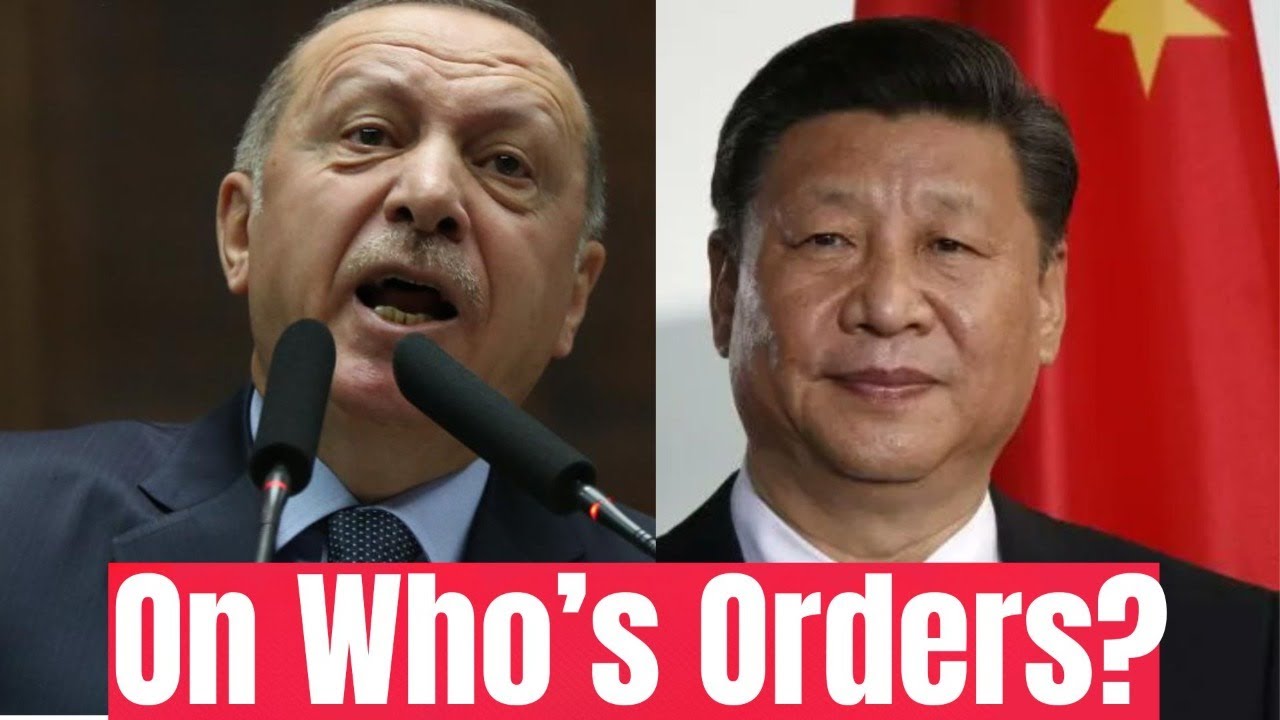
Turkey just slapped a 40% tariff on all Chinese electric vehicles. The move mirrors similar protections other countries have put in place against cheap EV imports from China.
Chapters
All right, hello everybody and welcome to Geopolitical Trends. Excited to be with you as always. Uh, today's topic, I'm going to be talking about the sudden decision of Turkey to impose 40%, yeah, 40% on the Chinese EVs. The Euro, by the way, they are debating between, I think, 15% and 25%. Turkey was about 40 now. So this is what I'm going to be providing you some insights about. Now, some said, you know, why would he care for Turkey? What— no, it's very important to understand why, because Turkey plays a role one way or another. But again, given the geopolitical lands— the realities of the geopolitical, uh, uh, uh, landscape that is going on right now, and where Turkey plays a role between both the East and the West, it behooves us to understand the ins and outs of what it all means. So let me first say hi to some of you guys. Oh, some of you already been here for a while. Thank you for tuning in. You know, Bankosi, uh, Turkey wants to join BRICS. I'm gonna be talking about this one soon. And, uh, uh, uh, Problem, China will impose 40% Turkey export. Yeah, China, just FYI guys, China has a lot of countermeasures, but China is thinking slowly, methodically, and strategically how it's going to, it's going to respond. And I am going to be disclosing some stuff to you because I read some analysis from Europe as to how they are perceiving this decision by Turkey. But it begs the question, it was Turkey pressured to embark on this? So I'll let you decide on that one. So, uh, all right, let me see who's here. Inspector, good to see you. Michael Marshall, good to see you. Steven Ruzek, good to see you. Uh, Mushi, good to see you. Uh, D Radia, good to see you. Jan Han Chen, good to see you. Uh, Saladin Baybar, Saladin Baybar. David Oualaalou, Ray Lee, E Walker, Ali Darbe, uh, good to see you as always. Yan LKL and Curry House Chicken, good to see you here. Hamed City and Peacock Laval, Truth Seeker and John Smith, Farhad Razavi and Taiwan Steel as always. All right guys, this is what I am going to be addressing today. Before I'll do this, I need to remind you, remember to join me, uh, on Thursday on the other channel. Me and Elizabeth will be talking there about some developments that's going on. Uh, second thing, on Friday I confirmed the interview with Mr. Michael Horn. He has a lot to say. I digged into his background, very fascinating, guys. Uh, again, it's something different. We want to do something different. And I'm always— I know you guys are flexible and open-minded to listen to other perspective on a different subject. So the— on the 17th, I will have the interview with Dr. Mike Krupa, and on the 19th, I'll have the, uh, interview with Mr. Jayant Bhandari. So he's, he's no stranger to the show, guys. So, all right, let's get into all this here today because there's a lot to cover. So For those who might not know, uh, what just took place, well, uh, Turkey joined the EU now in imposing an additional 40% on the Chinese electric vehicles. So, and again, I have 4 questions that I, uh, I, uh, sort of thought of and wanted to share them with you, of course. And we're gonna have to think about it, okay? Why now? Timing. Always, always, always. No decision when it comes on the government, how they behave, no decision is done in a vacuum. Uh, so that's one. Why now? Second, which is worth thinking— don't think of yourself like, oh, this can't be me. But no, you're always— when you think in a different direction than what everybody is, you are on the right path. Did the US and the EU pressure Turkey? As we all know, Turkey can be pressured. I know certain things during my time in DC that we were able to pressure Turkey on. So that's third. What about BRICS, given what Turkey is now aspiring to join BRICS? Because the Russian president expressed how Turkey is interested in joining BRICS. So, and I did voice this before, I don't think it will be a good idea for now. So we'll get into that. And the last question is, what will become of the Turkish-Chinese relations moving forward? Those are questions that are, uh, oh, I didn't even share it with you guys, uh, show right there. Sorry, uh, those are questions that are worth asking, and that's gonna provide us some insights into what's going on today. So the idea that, uh, Turkey now sort of has, uh— and, and I read some articles, by the way. There, there are two articles that I wanted to give credit to the authors. Uh, one of them is Asli Kandemir, which the article was written about a day or two ago. And the second article that I came across was from Europe. That's from Philip Blankshop. Or Blinken. So sorry if I mispronounce the name, uh, and I'm reacting to their, uh, uh, writing here, but in addition to providing my own analysis about it. So, so the idea that now Turkey has sort of toughened, uh, uh, its electric vehicle import regulations, you know, and why? Because this will appear to some outsider as a move, uh, that the Turkish government had to calculate, uh, given how the Chinese vehicle EVs are really taking over in Europe. But here is the thing: the car manufacturers in Europe wanting that, the governments are opposing it. There are two angles here, guys. Don't fall for the trap of what the articles are saying. Get to the bottom of it. The bottom is this, that the government's saying one thing, but the other companies that they are looking into expanding into this sector are saying it's okay. As a matter of fact, one of the strategy China has now is to build co-production with companies inside Europe, which means what? That means it will eliminate the tariffs. Because those are local companies. And we're gonna get into this one here. Uh, now I don't— I think I remember I did geography for you about Turkey and a little bit of history. But would you guys want me to do a little bit of history or geography? So just give me a thumbs up in the chat box because I don't want to repeat myself for you guys. But if you think— you, for those who might not know, just give me a thumbs up, either yeah or nah, if you want me to do a little bit of geography and a little bit of history. I'm not getting into the depth of history because it's too long. So I'm wait to see. Thumbs up, Time Dunkley, good to see you. Uh, 1159, that's an interesting screen name. Uh, uh, so you're saying thumbs up. Wonky C, you say no. Uh, Geo the Traveler say yes. Uh, yes, okay, Ty wants to see us, but we'll keep it brief. So let's, let's do briefly here, uh, let's get into the geography here. So, uh, let me open up this, uh, the map from the World Atlas, and we're gonna do it briefly here and get into the depth of what we're gonna be talking about. All right, here's the map here. Okay, this is Turkey. Let me make the screen big here for you guys. I don't know why it takes— here we go, screen name. Okay, now Turkey, transcontinental Euro-Asian country. Here's what's interesting, uh, in, in some record, the geographical record that I looked at, they never mention a Western Asian nation, Middle Eastern nation. There are some, and I saw more than one that's saying transcontinental Euro-Asian country. So, and the major part of the country lies in the Anatolia Plateau of Western Asia, while small part is located on the southern— on the southeastern European Balkan, uh, Balkan Peninsula. The Turkish Straits, Bosphorus, and the Dardanelles, and the Sea of Marmara separate the European part of Turkey called East Thrace from Anatolia. So Turkey is located in the northern and eastern hemisphere of the Earth. It is bordered by 7 countries: Greece and Bulgaria to the northwest, Georgia to the northeast, Armenia and Iran to the east, Iraq to the southeast, and Syria to the south. Nakhchivan, an exclave of Azerbaijan, also borders Turkey to the east. The country has coastlines on the Black Sea to the north, on the Black Sea to the North Asian Sea to the west, and the Mediterranean Sea to the south. So this is about a little bit of geography for Turkey. Now for the history aspects of it. And again, I'm going to just keep this brief, uh, because some of you have, uh, said so, and I kind of like to respect your opinion also. Uh, let me— I have a picture here that I need to share with you, uh, if I got it. Maybe I didn't. But anyway, let me, uh, share the picture with you here. Oh man, I thought I did have the picture. Okay, where is it? Turkey T3, I got it. So let me put it up the screen for you guys so you can see, and it's, it's worth, it's worth at least get an idea about the layout of, uh, especially, um Uh, Istanbul. Very, very interesting. Do you guys know, do you know that Istanbul is the only city, at least to my knowledge, that has a mosque, a church, and a synagogue in the same place, same locations? So, so here is the— what are we looking at here? It's, it's Istanbul, I believe. So, so now, at the crossroad of Europe and Asia, Turkey is fascinating country, and it is. But you're gonna have to think about the history. It was dominated by Greeks, Persians, and the Romans in turn throughout the classical era. It's known as classical. What is now Turkey, of course, which was once the seat of which empire? I'm asking you guys, which empire was Turkey the seat of? So almost like the headquarters, if I may use the term. Uh, uh, Constantinople, not Istanbul. That's correct, Constantinople. You're right. Uh, which, which one was it? Turkey was once the seat of which empire? When? Now in history? I just want to— Ottoman? No, before that. Mongolia? No, after, after that. Before Ottomans? Uh, Byzantine. You got it, Terry. Terry and Ramzi Abdurrahman, you guys got it. It was the, the seat of the Byzantine Roman— Roman— Byzantine Empire, I'm sorry. In the 11th century, however, Turkey nomads from— listen carefully, because a lot of people do not know where the ancestors of Turkish came from— Turkish nomads from Central Asia moved into the region, gradually conquering of Asia Minor. First it was the Seljuk, and then the Ottoman Turkish Empires came to power, exerting influence over much of the Eastern Mediterranean world and bringing Islam, or Islam, to Southeastern Europe. After the Ottoman Empire fell— in what year did the Ottoman Empire fail, guys? Once again, just to get you involved, And this should become now a basic information for you. What year did the Ottoman Empire fail? It was around the major events in the world. And, uh, before that, Dodger, before that, uh, Hushia, after that. Actually, one of you got it right here. 18. Ramzi Abdurrahman, you got it. It was 1918. Around, around the time of World War I, you know, Turkey transformed itself into the vibrant, modernizing, secular— that's what some people are struggling with, the term secular state— that it is today. So, and I'm not going to get into the structure of the government and on all that. Suffices, one thing I want to mention is the languages. The official language in Turkey is Turkish, which is the most widely spoken of the languages of the Turkic family. That's like the Slavic family. You have the Turkic family, part of the larger Altaic linguistic group. It is related to Central Asian languages such as Kazakhstan, Uzbekistan, and Turkmenistan. And I remember when I was in Uzbekistan, I could hear the sounds. There are certain sounds I didn't speak the language, of course, but I could tell, wow, it got some like Turkish influence of sorts. So Turkish was written— now, which, which script, linguistically speaking, was the language of Turkish written in? Does anybody know? Once again, which script, which linguistic script was the Turkish language written in? Let me just see again here. If, if you happen to know, guys, if you happen to know— oh, Matt Becky, you got it! It was in Arabic language, believe it or not. They used the Arabic script. It was until Atatürk reforms as part of the secularizing process. He had a new alphabet created that uses the Latin letters with a few modification, uh, for example, and I came across one, for example, letter C, you see a small tail at the bottom curving beneath it, and it's pronounced as for us in English is chi, like C-H, chi, uh, uh, uh, that's how it was, one, one example. Regarding religion, where Turkey is approximately 99.8%, uh, uh, Muslims. Uh, most Turks and Kurds are Sunnis. Of course, Kurdish is the largest minority group in Turkey. That is part of why it's very, very important to understand this aspect of it. So, and of course, like I said, I'm not going to get into the way back between— during the era of Suleiman the Magnificent, which was between 1520 and 1556, uh, which was, by the way, he was the grandson of Muhammad II. You know, maybe one day we'll get into this some, but I'm gonna provide you the link to both, uh, records here historically, and you guys can check it out and just go from there. So, all right, let's get into our analysis about this. And as I said, I'm gonna be reacting to some articles One of them is written by Aslı Kandemir. Uh, there are some key points there that is worth highlighting. And, uh, uh, this is one of the reasons why Turkey is saying, well, we have to impose the tariffs. Well, hold on a second, why didn't you impose tariffs 6 months ago? That's one question. Second, how come all of a sudden, as the Europeans getting closer in July to decide on the tariffs percentage, all of a sudden Turkey engage into this. And it begs the question, you know, and I don't shy away from asking questions outside the box. Was Turkey pressured by the US and the EU? What do you guys think? Please just leave me an answer, yes or no. Because to me, it defies logic all of a sudden, you know. That, that's to me. I understand about protecting the domestic markets and all that stuff. I understand all that argument. But all of a sudden, hold on a second, You know, does Turkey produce as many EVs as China does? You know, and, and that, that's to me is kind of a logical question. One of you guys by the screen name of Extracelestial7 wrote, and, and this is why I read the feedbacks, uh, uh, or the comments, read, he wrote, and I quote, unlike the EU, Turkey have no competing producers of EV. So this isn't aimed at protectionism, end of quote. Spot on, because to me that begs the question, all of a sudden you go in for 40%, you know. And again, what we need to think about, guys, is the deal that China cut with Hungary. Remember, they're going to be building production facilities in Hungary that deals with the batteries for the EV. Is China reacting through— I'm sorry, is Turkey reacting through that based on the EU? Because remember, EU wants to sink Hungary's economy. What a better way to do it through a third party? And again, I'm just thinking outside the box. I could be wrong, but doesn't, uh, prevent us from asking the questions. What if— and this is one of them— what if And that's the way it becomes clear to me, because if Turkey's production as far as EV was similar to that of China, yeah, I can see the logic for that. But even with that, China and Turkey, they can come to some sort of an agreement. And this is where I see, uh, the, the kind of like, ah, if you're saying you want to curb import and narrow the current gap. Okay, what gap are we talking about? Well, the gap we're talking about, it has to do with the account deficits inside Turkey. Why? Does anybody know what is tied to— can you guys guess what is tied to— is tied to a word starts with an I? What am I referring to here? All right guys, dig, dig, dig deeper into your brain. You got it. Tell me what it is. Starts with an I because Turkey is dealing with it big time. IMF, yeah, that's beside the point. Domestically, domestically, think domestically. Uh, F-16, that's externally with the US. I'm talking from an economic perspective domestically. Some European countries are dealing with it as well. Think, think, think, think. You know it. I know you know it. Oh, I speak Arabic, so that's what I mean. It means— that means inflation. David King, you got it. John Smith, you got it. You guys got it. That's what it is, because the inflation inside. Did you guys know that inflation in Turkey hits about 75%? So It becomes— it bears the question, this, this decision. But again, we are not criticizing Turkey. Turkey, a sovereign state, you can do whatever. But, but, but, but, but, to me is the idea of fairness. How come you didn't do this 6 months ago, a year ago? All of a sudden you're doing it as July is next month, where Hungary is going to take over the presidency of the EU Parliament regarding the policies. And Europe will be— European Parliament, that is, will be making the decision about the percentage of the tariffs. And let alone the outcome of the elections that just happened in Europe, the European Parliament, that is, when the far right took over. This is what I'm saying, you put the pieces together, guys. Let alone the domestic issues in Turkey with the inflation and the, and the currency doing that. So, so things are not where they might appear to be regarding where things are in, in, in, inside Turkey. So that's one of the key question we ought to consider. So the idea that, uh, the tariffs imposed, by the way, will be, uh, a minimum of about $7,000 according to the article, but also according to the presidential decision. In other words, Turkey's government decision saying, okay, we're gonna impose $7,000 per vehicle. So, okay, and the decision will enter into effect 30 days from 2 days ago. So in other words, in, uh, in July 10th or 11th, that's when the, the, this, the, uh, the policy will enter into effect. So now here is the thing. Turkey has raised— this is just for the record, and, and, and I checked on it based on what the, uh, the article stated, and is accurate, uh, Turkey has raised the custom duty on the Chinese vehicle back in 2023. So, and why? Why? Because Turkey wanted to support the domestic, uh, uh, uh, produced EVs, but they never reached the level where China is. And this is why some companies, not only in Turkey but in Europe, are willing to go with the Chinese regarding this. This is why I'm saying, if you get anything out of this, is this one: what the government is saying versus what the business community is saying are two opposites. Even for us here in the United States, you got the likes of the head of Apple and Tim Cook and, and Google and all those those guys going to China, okay, saying completely different narrative from what Tony Blinken says, from what Biden says, from what Janet Yellen said, from what the labor secretary, Redondo, whatever her name is. That, that's my point. Two opposite things. So, and here is where the key of all this, because now the government always remember, and this is not about just Turkey, Most of the government, sometimes they have to make you, if you happen to be from that country, look over here while something else is happening over here. You, you, you know that policy, that trick governments do? We do it and we are masters of it here. This is why most Americans have no clue what's going on and what's happening, because they're almost being brainwashed. That's how I look at it. So It's no different here. What Turkey is saying— Turkey is saying that we are taking these measures to tackle, uh, the, uh, the competition here, but also to deal with the inflation, which by the way, as of last month, reached about 75%. So now some say, well, that's not much in comparison, but it's still, still a lot. So, and this to them The government saying the justification is we want to tighten the monetary policy. Yeah, yeah, I don't buy that argument. I do not buy that argument. So, and this is why you're seeing this kind of tariffs imposed on those Chinese EVs. So another article that was by Philip Blinken saw And this one is tied more to the EU, and this is why I wanted to address this article. And I'll provide you the link for, for that, guys. And by the way, I got a picture, uh, uh, and I give him credit to Philip. That's his picture there, uh, Blankenshoppe. So why is this important? I wanted to highlight to you the link between Turkey's decision and the EU decision, and to me is no coincidence. So here is the thing. The European Parliament or Commission, whatever you want to call it, this week— this week, now, in other words, it's starting this week here— is it expected now to disclose the percentage of the tariff it intends to impose on the Chinese electric vehicle? You all know what the US administration decided to, to put the tariffs. Does anybody know the percentage the US intended to put on the Chinese EVs? If you can type in, in the chat box, please. Uh, Truth Seeker, you got it, 100%. Matt Becky M, you got it, 100%. That is correct. That is what the US intended to do. We even threatened Mexico if they ever open up the market for the Chinese EVs. You know, makes me just now wonder about this new president, Claudia. What? Because we hardly ever hear— at least so far I didn't find any— how she intends to manage. This is why I titled the, the video that I did for you as to how she's going to manage the relationship between the US and China. Because it's very delicate, interesting, and of strategic interest. So the Europeans will, will announce this, and to them, debasing it on the excessive subsidies, you know, and, uh, which most likely, in my humble opinion, that's gonna pave the way for a Chinese retaliation there is no way China will just sit idle and not do anything about it. So, and, and, and to me that just make more, uh, sort of perfect sense, because if Beijing doesn't react to this, it's bad news. Here is one thing, and I am sure, I am sure countries around the world understand this. It's just some of them have the means to do it and others don't. You have to push back against the West as hard as possible. Look just what Russia is going to be doing soon in, in Cuba. Uh, uh, somebody corrected me yesterday for pronunciation, thank you very much. In Cuba, what is going to be doing? So, and now we're gonna have to be thinking twice. Just imagine that the Chinese join in, the Russians, and say Sure, we can conduct some drills with you right here, 90 miles from the coast of the United States. And they're, you know, they could put it— and I'm laughing not out of laughter here, I'm laughing out of the stupidity for our administration to be saying to other countries, well, we can do it to you over there under international navigation, freedom of navigation. China and Russia can say the same. They are not on the US coastline. They are off by 12 nautical miles, so they could do it. And that's my point in all this, because the— when it comes down to this economics, China will have to retaliate to this. How they gonna retaliate? China didn't disclose yet. Mike, my word on it, they are working on a plan because there is no way they're not gonna be But here is the kicker to all this. When we think about Europe doing this, Turkey decision less than a month ago, and, and, and here is where it is. As an analyst, it became clear to me less than a month ago, Washington quadruples the duties on the Chinese EVs to 100%. So what am I referring to here? I am referring to the trend. Washington did it first. Europe following second, and now you get Turkey. See, guys, do you see where this is headed, right? That's how the trend goes. And that gives you an idea, at least for Europe— maybe Turkey to a point— but for Europe, still has to follow orders. It's the same thing for the UK. UK now had been this prime minister, uh, elections, whatever that— I'm not even paying attention because he's worthless. UK is done for, you know. And I do know we, we have viewers from, uh, the UK. Uh, please correct me if I'm wrong. UK government won't do anything without the approval of the US. I'm seeing the same for the EU. So less than a month when the US did, uh, made that decision or announced that publicly, 100% tariffs. So And of course, the two main companies that were targeted was the BYD and the Geely, G-E-E-L-Y, according to the article. So, and, uh, uh, it just, uh, and again, once you think about it, because it became clear, I was surprised when I came across that, and I said, no, my viewers needs to understand this ins and outs of A decision like this is not made in, in, in, in vacuum. So, and this came— this move by the Turkish also coincided with that of Europe as automakers are being challenged. They are arguing by the influx of the lower cost. This is the key, the lower cost EVs from China. But here is the truth which they are not disclosing openly, is that there is virtually no support for the tariffs inside Europe from the auto industry. This is what they are not disclosing. And that's one— again, once again, this is what I want you to get out of this video here: what the government says versus what the auto industry is saying regarding these EVs. It's because Chinese EVs are affordable and of a good quality. And again, like I mentioned in one video before, that I— the Europeans are enjoying the low prices. Same for us here in the US. I'm one of those. I won't hide it and I won't deny it. You know, I'd rather pay less price for an item that is produced elsewhere than pay the price here. You take something, uh, just for my, my car that I was working on, I had to go buy a part, and the parts for the cold air intake, okay, it's produced in China. You know, well, that one versus if I buy it made in the US, the one in the US cost about $400. That one that I bought was about $120. Well, the choice is clear, you know. I am not a millionaire. I am not this filthy rich to just— and even with that, why would you just waste money? It's the same argument we can make about this. Now they're saying the influx of the low cost where the customers wanted that— Europeans in, in that case. So this is why there is no support for the tariffs inside, even in Germany, which— Germany, by the way, was hammered. Now you got the executives out of BMW and Mercedes and Volkswagen, most of them are saying to the government, what are you doing? This is why BMW moved one of its productions to China, because the the industries inside Germany, it's shutting down, it's shutting down. So, so the German automakers, they are heavily dependent according to the article, and it is true, dependent on the sales in China. So, so you can just see China has options as far as retaliation. And here is a question for you: should China retaliate? Yes or no? All right, let me see. And if— till I see the answer, before I'll ask the second part of the question. Okay, Ibrahim, you saying no. Okay, and, and I respect the opinions because remember, remember guys, we are here to exchange ideas. So if someone different from your opinion, it ought to be respected. So, uh, so, uh, Jamie Dodger, you say yes. Ibrahim, you say no. Rample 01, yes. Chanel, yes. Sammy, yes. Uh, uh, Karakulak, no. What for? Okay, Muslim Revert, yes. Uh, Jane, yep, you said you should. Yeah. Okay, then here is the second question: how? What kind of retaliation would you— would you put it in terms of— here is, and I'm gonna provide you some options here to pick from— would we put it in terms of putting tariffs on the same equivalency, another word, on the autos, uh, the automaker industry that they are trying to sell their cars in China, put tariffs on that? Or do you put it on, for example, the parts? Or you just retaliate by stopping the shipment or the export from China to Europe. So, so China has options. This is what I'm trying to make a point here. This is what most of us in the US— I'm talking about the stupid, the incompetent politicians— are not willing to disclose to the average citizen because they have the means to afford whatever. I mean, I looked at a stat recently about how between 1973, I think, or '75 to now how the wealth in Congress just quadrupled. How the heck did they make all this money, you know, on $150,000 salary for a representative at the House of Representatives and $175,000 for a senator? Makes you just wonder. And that's why they're embarking on policies that have no, uh, uh, uh, they, they don't take into consideration how that's going to impact Average Joe and Average Jane. So, and this is what I'm saying, China has those options because if China limits or stops sending products here, even though China does access, does have access and needs the, the, the American market, it's big, you can't ignore that one, but still it has options, it has options to do. And this is the same arguments that I'm making regarding the, the, uh, uh, Turkey for the idea of what we're gonna impose, uh, for an additional 40%, uh, percent tariffs. So considering, uh, where Turkey's, you know, it's, it's kind of mind-boggling to me. And this comes against also against the background of the, the— like I always call her the liar Ursula, the European Commissioner, which by the way, she wasn't even elected, you know. Do you guys know what she wants now to become? Does anybody know? She's running after something very specific, and this is why she's cozying up to the US and following whatever policies. Does anybody know what possession, political one, that is she is aiming for, she wants so bad. Uh, NATO head, yes, Secretary General of NATO. That is what she wants now, next. So she's doing all this by pushing the narrative, oh, Russia is bad and all that stuff, because that's, that's how you make it to the top as, as a Secretary General. Remember, the Secretary General of NATO is always a European. Always. The commanding officer of NATO is always a 4-star US general. That's how it always— so that is what she wants. The same with the Prime Minister of Netherlands. He's aiming— I got a word behind the scenes that he is aiming. That's why he's cozying up to— when he was in the White House, all that show is for the US to approve, because it's the US that approve proves who the secretary is. This is why you're hearing, uh, the, the, the liar and incompetent Stoltenberg saying some nonsense. That's why, because he wants to keep, uh, uh, his job or the possession, whatever that is. Uh, so the European Commissioner, uh, the liar Ursula, has repeatedly said, and I quote here, Europe needs to act to prevent China from flooding the block market with subsidized EVs, end of quote. Well, tell me if there is any country in the world that doesn't subsidize its own industries. But it's the wording of it, guys, it's the wording. So, but the head of the automobile in Europe the head of the automobile research, his name is Ron Moschen, responded to this. And here is what it says according to the article, and I quote: if provoked, the reaction and repercussions could lead to a trade war, which would be devastating for a region that is still heavily dependent on the Chinese-dominated supply chains 'in order to achieve its lofty climate goals.' End of quote. Like I said earlier, guys, China has measures, has tools at its disposal. It's just they are very methodical, very slow, very patient. They're not going to rush because it's a reflection of the culture. That's how the Chinese culture is. They don't react emotionally so quick. They take time because they have to think through. And I always look at it with where they are today. I've been following the Chinese since the '80s, and again, I made the mistake. I'll admit it. I don't blame anybody but myself. I made the mistake by not learning the Chinese back in the early '90s— Chinese language. But it is what it is. So, so, uh, as I said, I've been following all this, and, uh, I've always came to the conclusion that Chinese culture is very patient. They don't, they don't, they don't react hastily. Very, very patient and methodical. So, and this is where this idea— now China is starting to voice that this AU— you all remember a few months ago, what was the The buzzword, the buzzword was excess capacity. It's laughable because that's the stupidity of how Western officials are framing the narrative. So when an average Joe, average Jane hear the word, or hears the word overcapacity, of course they are not going to understand what it all means. But the idea that overcapacity will automatically translate to 'Oh, somebody's producing too much.' It's just to plant that seed of doubts and all that. This is exactly why the Chinese now, it's gonna be rebuking this EU because EU wants to launch an investigation into the, what they call it, the anti-subsidy investigation. You all know what this is all about. It's because the economy of Europe is sinking. Like I put in the thumbnail, it's over. And they're trying to shift the blame. They would never want to admit because we followed the American policies blindly. That is what the truth is. And this is why urging corporations and lobbied individual EU countries, but not fully spelled out its response to terror is going to be. This is China. That's why China is moving methodically. You look at what the deal they cut with Hungary, the deal they cut with Serbia, and this is where this issue is— it's going to be. So, so as I mentioned earlier, the EU pre-disclosed notice comes a few weeks before July 4th. Why July 4th? Because that's the deadline for imposing provisional measures, and they could apply retroactively for the period of 90 days as far as the tariffs. So, and by the way, some— and based on the article, but also what I read outside— is that some analysts now arguing that what we'll be looking at Europe, the EU imposing the tariffs on Chinese, is going to be between 10 and 25%. But Turkey went ahead with 40%. The US went ahead with 100%. And again, nothing happens in a vacuum. It just— it tells you the story right there. On the other hand, Germany is warning. You got the top executive, not the government. The government is useless. So if I have any German viewers here, you know, I respect your country, but the government is useless. Is incompetent. It's time for the Germans, uh, same for us here in the US, that leadership has to go. So, so you got now executives from, uh, top producers, the Mercedes, the Volkswagens, the BMWs, warning against now imposing, uh, these import duties. So Because why? You guys know why? Because those, those car makers, the automakers, they generate up to 23% of profit, of their global profit comes from, uh, uh, uh, uh, the sales in China. So, so I just show it, uh, and Europe, among Europeans, I, I take two France. Okay, what France is saying— France is saying now, Macron saying, oh, we need to defend against China subsidized production. The German Chancellor, on the other hand, is saying that, well, I am not convinced about these tariffs. So you can just see right there who's— there is no solid. And you put this within the context of Turkey's decision all of a sudden. Then comes the big elephant in a room, and you know what the big elephant in a room is? Right here, BRICS. Yeah, Turkey wants now to join BRICS. And by the way, I just looked this, this morning, and I have the link, and I will provide you with that in the description. 59 countries showing interest to join BRICS in 2024. The 79— the 97 countries, those are for the BRICS Games. They are— they will be— Russia will be hosting BRICS Games. 97 countries have already confirmed their attendance. I'm talking about joining the club. 59 countries have, uh, sort of, uh, agreed to— wants to— I'm sorry, not agree, wants to join BRICS. Turkey is one of them. And that begs the question, if Turkey is behaving a certain way— because here is the thing, if Turkey ain't happy with NATO, why is Turkey staying in NATO? If Turkey ain't happy with Israel, why is still trading with Israel? Sending sort of construction material and all that. There is still trade between Turkey and— Turkey and Israel. Mind you, also China also still have some trade with Israel. You know, we gotta be fair. We can't, we can't cherry-pick here the information. No. Where the difference between the two— and I don't defend any— where the difference between the two is that China came forward and issued the statement as far as the establishment of a Palestinian state. Turkey is saying we need to provide more aid. And when I say Turkey, I am referring to entire Muslim world, which is useless anyway. This is why this idea of Turkey joining BRICS, given what just happened 2 days ago— and what happened 2 days ago, and I'm gonna You guys saw the posting I post for you in the community? Did anybody know what I'm talking about? Now, before— let me see here. I don't know if you had a chance to look at the, the community tab. Did you see what I posted there recently? Very, very, very important to understand. I'm going to do a video for you about it. Uh, Jane, you got it. Saudis ending petrodollar officially. You know why? Is because on the, I think the 9th or the 10th of this month, which was just what, 2 days ago, a day or two, Saudis decided not to renew their contract with the US. Which was better about 50 years ago, by which the petrodollar will be used. And all this is tied to Saudis ditching the dollar and moving into using the, the, uh, uh, the Chinese yuan, and in coordination with the, uh, uh, the production of oil and so forth. So all this, this exit of the, uh, of the dollar. Big deal, big deal. And I am going to do a video for you once I, uh, you know, check the info. I don't jump to— I don't do quick videos here and there. I, I don't care about who's first and who's not. That's irrelevant to me. I care about the quality of the information, so I have to check some information and we'll just go from there. So what, what the factor is now is that all the sales of the oil will be done in renminbi. So that is what the renminbi— they still— the Saudi is going to accept some euros, the Saudi is still going to accept the yen. Yeah, what they are not going to accept is the dollar. Now I am just wondering, are we going to be seeing some tensions in the southeastern part of Saudi Arabia? Because that's where the majority of the Shia is, and that's what most of the oil is. I've been in that part of the world. I'm very familiar. I wrote a book about Saudis, and I detailed these aspects of it. So when I do the, uh, when I do the live stream for you, I'm going to provide you some, uh, uh, uh, uh, what, snippets from the book as far as the analysis that tackles this specific aspects of it. So, you know, remember, that doesn't mean Saudis will still use the dollar but for something else, because remember, they bought— they buys weapons from the US. They're going to use the dollar for that, but for the oil is going differently. But you see where the, the value of— where is the most transactions? Not in weapons, it's in the dollar. Saudis also are concerned about what's coming. And what's coming is the idea that the financial aspect— I'm going to be doing a dedicated video. I was— a company reached out, they liked what we do here, guys. And, and that's why I thank you. I really thank you for, you know, watching through the dedicated videos, because that's That's my commitment to those companies that they reached out and asked if I could do a video for them about the, the, the financial aspects of it. And, and I said yes. It's because I also did the research. I end up buying into the company, investing in it, because I see what's coming. And I will provide you the detail and all that stuff. So, and this what I wanted to provide you, the insight tying all this within the big picture of BRICS now asking— I mean, Turkey is asking to join BRICS. Huh, now you're gonna have to be dealing with two countries, India, and if Turkey gets in. I still believe, and again, my personal opinion, if I'm wrong, I'm wrong. I still believe it's too early for Turkey because Turkey has to sort out what he wants to do. Does he want to be part of NATO or not? So here is part of NATO but going and buying the S-400 missile systems from Russia. It is part of NATO but going and buying other, uh, Russian systems. Even we threatened sanctions on Turkey. As a matter of fact, we cut off their pilots from the F-35, uh, joint, uh, the training program. And I was aware of it because I used to spend time in a base for the Joint Strike Force. Uh, and, and it just— but Turkey playing it both sides this way, it's gonna— and this is again thinking the big picture. This is always what I say about the credibility of BRICS, because this is a historical moment. It's now or never. For BRICS to make a dent into the global economy. That, that's just the way I see it. When you look at 30% of the population are in BRICS, even now I found out some stats. The GDP of BRICS now surpassed that of, uh, uh, G7. That's telling. The West, of course, You— they won't want you to know this. They won't want you to even hear about it, let alone seeing the figures with your own eyes and fact-check that information. So this is what I see the problem, uh, for, uh, and most of you saying no, uh, Turkey shouldn't join BRICS. Yeah, because to me it's the— you're gonna have to decide, okay, which side of the fence you I understand, I've always said this to you guys, strategic interest is, is, is of importance. But we all remember Erdoğan has been in power for a long time. So to those who argued at that time, whether you want to see Turkey under the democratic light or not, it's your prerogative. I do have, by the way, Turkey is on my list as far as the books I'm going to be writing about. I still have to do 3, 3 others. Currently is China, next one Turkey and Egypt. Those are the countries that I planned on doing in addition to what I did before— Iran, Saudi Arabia, and Russia. So this is what I see, uh, how I'm gonna move forward with this one. All right guys, I— that's all I have to share with you here. I am gonna stop here. Uh, uh, just to wrap up all this, where things are going now, uh, with the— I don't know. I don't know what the Chinese going to do, because to me personally, I understand in business it's all about profit. There is no, no emotions involved. But also, to go at it this way, that's like a slap in the face to the Chinese. You know, I'm not saying Turkey, uh, should not do tariffs, whatever, they can figure that out. But wouldn't it be better if a Turkish delegation goes to Beijing, or Beijing delegation comes to Turkey after they make arrangements, sit down like mature adults and have a conversation? And mark my word, they could have sort out this issue that way, especially from Turkey side. But again, I am leaning more towards thinking, could it be the influence from behind the scenes of the EU and the US? That's my own opinion. That's how I'm looking at it. And as far as BRICS, uh, even though the Russian president expressed that, it becomes the question of even the Russian president will have to think in terms of the strategic interest, because Turkey is pivotal. I am not denying this, given its geography. It's a very strategic, uh, strategic location, but they're gonna have to think in long term, long term. And this is why the Chinese now, they're going to be taking time to really figure out what kind of response they're going to have to. So, all right guys, I am going to, uh, uh, answer one or two questions because I have to go record one of the videos for this company that reached out. And before I'll do this, I want to say thank you to TC Kwan, as always, for buying me coffee. TC Kwan buys me more than one coffee already. Same with Osiris, same with Noel, same with Ron and Julie, same with the, uh, Boone, same with, uh, uh, Francis, I can't, I can't thank you enough, guys. I am, I am very— Bernard, I mean, I can't thank you enough, guys. I am very grateful. I want you to know I do not take it for granted. I don't expect it either. I want you to know, and I will pay it forward, because here's the thing, guys, I want you to know, no matter what you do in life, no matter what you get, You always pay it forward in your own way, one way or another. It might not be today, it might be tomorrow. So that's the bottom line, because you are grateful. I am sure you are grateful, and we all ought to be. But in life, we have to give back as well. So, all right, uh, here is the link if you want to support the channel. I will be very grateful. To you, and I am going to answer a question or two. Uh, Athene Wu, you said, do you think Ursula von der Leyen, the loyal dog, could be appointed or selected? Well, this should be— this should be, uh, this should be elected. In other words, let the people decide, not appointed. Why should the heck— nobody should be appointed. No one should be appointed, in my opinion. If we say democracy, no one should be appointed. Uh, I mean, the way we're doing it in our system is even flawed. The Electoral College decide on a president? No. What about the people's vote? One man, one vote. So that's the way I see it. So, so they shouldn't— she shouldn't, and no other should be. Let people decide. Let people decide. Uh, B, thank you so much for your super sticker, truly appreciate you. Uh, let me see another question from you guys. Uh, okay, where is, where is, uh, Francisco L, you said, what do you think about the crossfire at the uh, North and South Korea, which led to the death of one North Korean soldier. I'm not aware of it yet, believe it or not, I'm not. So I can't comment on something I do not know. I need to go and check it out, read up on it. It could be a setup before I know it, because I know how things work. Remember, I spent years and years in Washington, so it could be even a setup before I know it. So Uh, I'll check it out, and, and if it's worth your time, guys, I'll do a live stream for you about it. But all right, let me see one more question, uh, before I head out, because, uh, uh, Georgelia, good to see you as always. Question: will the US steal the Saudi gold that we are holding if the Saudi don't renew the OPEC contract? A very, very interesting question. This is one of the reasons why I wanted to do live stream. The possibility is there, is there. However, the Saudis are also smart enough not to cut off the dollar 100% because remember, they still buy weapons from the US. And those are worth— a lot of Americans do not know that when unemployment in America goes up, the Saudis write a check for $60 billion buying weapons. That helps lower the, the unemployment. So, but yes, they do have the gold, about $120 billion. I saw it with my own eyes. Of course, I couldn't take picture at that time because they weren't allowing cam, uh, uh, cameras or phone. They weren't this smartphone at that time. But anyway, I saw it with my own eyes. And the Saudis do think about this. What the Saudis thinking about is long term. They seeing now with the sanctions against Russia and the confiscation of the Russian assets, because ain't right what we are doing. Yeah, I mean, I'm sure you guys know, you all grow up learning that you don't take something that doesn't belong to you. That's normal. So we don't— shouldn't take assets that don't belong to us. So, so yeah, the Saudis will have that calculation in mind, but they know how to play the Americans. So they can just buy something even though if they might not need it. So, all right guys, I hope, uh, you guys enjoyed this, and I look forward to seeing you next time. As always, remember, geopolitics impact your daily life in more ways than one. Till next time, guys, bye-bye.
More from David


Beyond the Single Actor: Why the Gulf Isn't Choosing Between the US and China


Iran, Iraq's Militias, and the Houthis Are Coordinating! This Changes Everything




Who Controls the Next Decade's Resources? Latin America and Africa's Geopolitical Crossroads

The Chokepoint Trap: How Washington's Stupidity Triggered a Cascade That Now Controls the World

Trump Spooked as IRGC Unveiled dual-use SLV, Deployed Ghadir Mini-Subs & Hinted at Tactical Nukes!
