What: US Pressure Works! Japan, Philippines Unite in Pacific Defense...
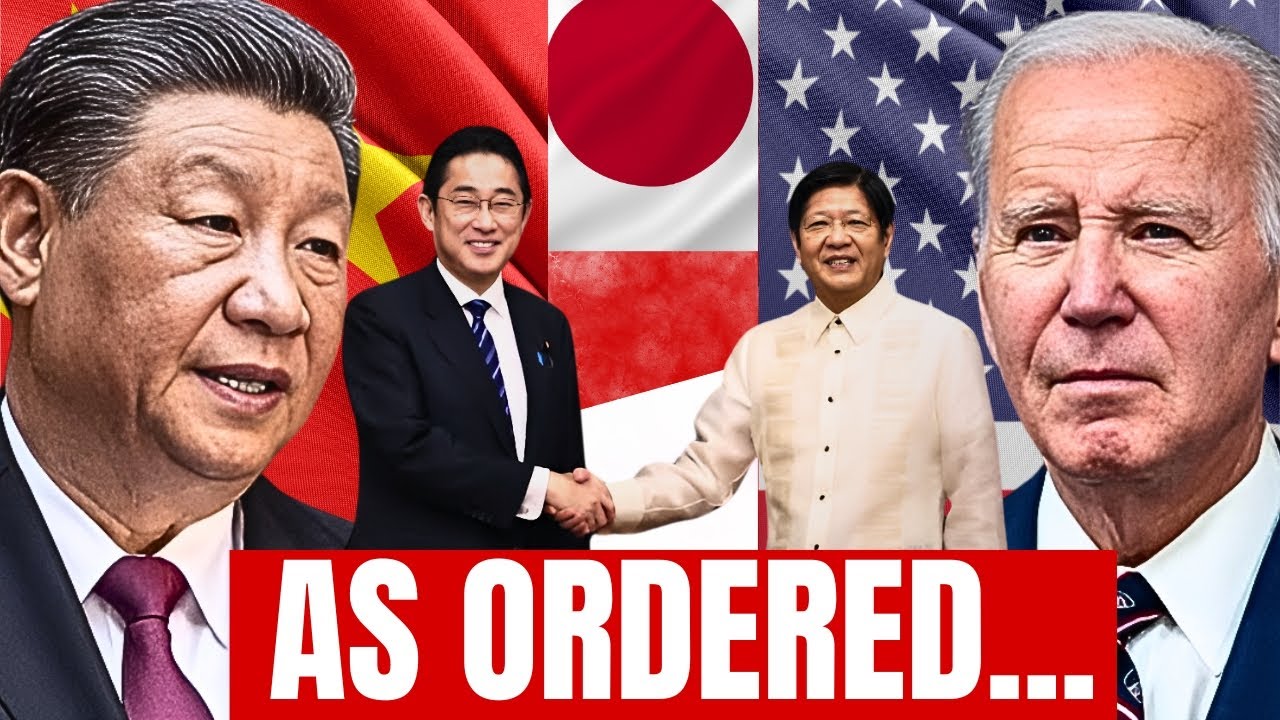
In a lengthy live‑stream, the host (self‑identified as a geopolitical analyst) examines the recent Japan‑Philippines Reciprocal Access Agreement (RAA), framing it as a product of U.S. pressure and part of a broader NATO strategy to expand into the Indo‑Pacific. He outlines a series of probing questions about who ordered the pact, whether it serves security or NATO expansion, how other Asian states will react, and how China will respond. The analysis weaves historical grievances—particularly Japan’s World War II occupation of the Philippines and the contested status of Okinawa/Ryukyu—into a narrative that the agreement is a strategic maneuver to contain China’s rise and limit Asia’s economic prosperity. The host critiques Western media for omitting Philippine breaches of prior agreements, accuses the U.S. of hollow security guarantees, and argues that NATO’s eastward move aims to create new military blocs and revive Cold‑War mentalities. He also discusses broader themes such as the shifting global economic center to Asia, perceived Western decline, and the need for Asian nations to reassess alliances. Throughout, he engages with chat participants, answers questions, and references his past writings for the South China Morning Post. The stream ends with a call for viewers to support the channel and a promise of future, more concise analyses.
Chapters
All right, hello everybody and welcome to Geopolitical Trends, where truth matters. Very excited to be with you on this glorious day of July 10th. Where time goes. Anyway, very, very, very excited to be with you. Uh, also the topic I'm going to be addressing to you today, uh, it's in conjunction with what's taking place in Washington, DC. That's the summit, the NATO summit., but also other, other developments around the world, uh, when you put this in perspective. And this one has to do with the recent agreements between Japan and Philippines, which was signed, I believe, on Monday, Monday, Tuesday, just 2 or 3 days ago. Uh, to me, it's a very, very interesting, the timing of it. So this is what I'm gonna be providing you, my own insights, my own assessments, my own analysis and put it or place it for you within the context of the geopolitical global order, the shift that we are witnessing, but also within also what NATO is aspiring to do by expanding into Asia. So this is what I'm gonna be detailing for you in this livestream. But first, let me go back. And by the way, I saw some, uh, some, uh, bots here, so I banned them. As you see, you can see this one is banned. Uh, yeah, if you have nothing of substance to contribute to the conversation, I will kick you out. No ifs and buts. So anyway, good to see you, Dave H. Uh, I see your question, we'll get to it later at the end. Uh, Abdul, good to see you and peace be with you as well. Timeline Dunkley, New York City. Wonky C, as always. Phil, here you are from Toronto, Canada. Uh, Sifumi, good to see you. And Marcian Dorsier, as always from Chicago. The Wacky Monkey, good to see you, and good morning to you as well, even though it's my afternoon now. So David King, as always. Tony N, good to see you, Tony. Tony, by the way, guys, I mean, you, you not know who Tony is, but I've been reading his comments, very, very informative. Thank you, Tony, for contributing to the conversation. I'm very grateful. Ab, good to see you. KL and YT, good morning to you. And I saw your name first when, when I logged in back then about an hour, uh, 30 minutes ago or so. So, uh, Al, good to see you as always. All right guys, let's get into our topic because there's a lot to cover, a lot. Yeah, because this goes beyond just, uh, this, this agreement, uh, because we're gonna have to think about it in terms of What does it mean moving forward? If you only know, which I'm sure you do, guys, if you only know the history of Japan— we're not talking about the atrocities and all that, that's beside the point— we're talking about the history of Japan inside Philippines. Yeah, and makes you just wonder. And this is why I sort of, uh, like, like I always say in my thumbnails, I don't do random. There's always a reason to why I use certain words. Some. So, so what we're going to be talking about, as I mentioned, is that the Philippines and Japan signed some sort of, uh, uh, what, what you want to call it, not a treaty but a defense pact. Uh, this one will allow— excuse me— will allow the deployment— pardon me. Uh, this will allow the deployments of the, uh, Japanese forces into, uh, Philippines, and vice versa for the Philippines to send some of its troops also to Japan. And all this for like live drills, whatever. But this goes beyond that. So the key questions we ought to ask about this, and I have them here for you guys as always because I do prepare those kind of questions, uh, to consider. First question: on whose order this agreement was signed? In other words, this didn't happen in a vacuum. It's not like Japan just starts all of a sudden caring about Philippines, okay? It's because some tensions that happened between China and Philippines. But remember what led to those tensions, okay? What Western media has not disclosed openly is that the Philippines broke its sort of agreement by not transporting construction materials. This is not about fishing, come on. So second question, so this one will be like, well, on whose orders? Because remember, it was just a visit to Washington by both leaders, uh, Fumio Kishida and Marcos Jr. Always remember. And before that, back in April, it was the South Korean president who came with Fumio Kishida at that time. So, so to me, as a geopolitical analyst, I'm gonna see the writing on the wall. This didn't happen in a vacuum, given that the US gave lip service to Philippines by saying, oh, we do have treaty of defending you by any means. No, that ain't gonna happen. Second question is, is it about security or expansion of NATO? Because remember again what's coming is that NATO is going to open up an office in Tokyo, right? And that's going to pave the way for more— in other words, more presence, more treaties, military treaties, that is— the easier will be for NATO. And when we say NATO, we say the US. And all this has to do with the US strategy towards the, uh, Indo-Pacific, or Asia-Pacific, that is. Third question: How will Asian nations or countries react or interpret this treaty or this pact? It's not a treaty, it's pact between Japan and Philippines. And the fourth question is, how will China proceed? Because all this, what you're seeing, is aimed at one thing and one thing only, and this has to do with China. And I'm going to be sharing with you And I'll provide you the link, uh, to my articles that I wrote back then at, uh, uh, on South China Sea— I'm sorry, uh, uh, South China Morning Post, uh, when I used to write back then. And I wrote some articles that's funny, that just reflects the realities today. So I'm gonna be sharing all this with you. And the last thing I'm gonna tackle in this conversation, which you should know, is is about Okinawa or Ryukyu, the independence call that's been going on. I went into the record and, and traced some articles going as far back as 2013, which at that time I was still in Washington, so I used to travel, and I crossed through Japan one time on my way from, uh, what was it, was in Afghanistan, but I had to make a stop in, uh, uh, in Nepal, and from Nepal into Japan. So it was around the same time that I was like, interesting that the Voices for Independence in RoKu now is coming up. So I'm going to be tackling that one as well. Now let's, let's, uh, and I'm going to be reacting to an article that I read recently by, uh, uh, Jim Gomez and Haruka Nuga, and those both, uh, authors are affiliated with Associated Press. So And, and again, I read on both sides of the aisle, if I may use the term, because I need to have a different perspective and form my own, my own, uh, analysis and my own conclusion. So, so what we're going to be talking about here today is the idea of how, uh, for example, this treaty— and I'm going to share some, I have a lot of pictures that I'm going to share with you, of course, from Yokishi that didn't go to Philippines. It was the defense minister, uh, and her name is, uh, I have a picture of hers here, here, right here. Oh, let me remove this one here first. All right, what's her name? Her name is— let me get it here so I get it right. Uh, her name is Yoko Yeah, Yuko— let me see here. Yeah, Yuko Kamikawa, that's her name. That's the Japan foreign minister. She's the one who went to, uh, to, uh, Manila, uh, met with, with Marcos Jr. So, so the— this picture here, I'm gonna share it with you. Uh, let me just get my bear in here. As far as right here, so this picture you're looking at, uh, which by the way we give, uh, we give credit to the Associated Press, uh, for this. So, uh, the picture, that's the Japan and the Philippines signed the, the defense, uh, treaty, or, or, or PAC rather, uh, and all this that will allow Japanese deployments for, uh, for Japanese forces deployment for joined live drills in the Southeast Asian nation, meaning in the Philippines. So, and, uh, of course, as I mentioned earlier, how can we forget the brutal Japanese occupation in World War II of the Philippines? And now they are— they, and I put this in quotes— Philippines and Japan are building this alliance. Makes you just wonder. And all this, as the article mentioned, all this has to do with— and I put this in quote— the assertive Chinese foreign policy, end of quote. Makes you just wonder, really. So, so when you have the, uh, minister here, the foreign minister of Japan, Yuko Kamikawa, uh, and her defense minister, he's from the right second, I think. Yeah, from the right, right there. His name is Minoru Kihara. So, and all of them, one of them, they went over to Manila, okay, and to sign this agreement. And this agreement called the RAA, which stands for the Reciprocal Access Agreement. It's all in the wording, and I'm gonna share some stuff with you that makes you just— makes your head spin because of the, uh, the, the, the manipulation that exists within all this. And by this, by this agreement, the Filipino forces will enter Japan for joint combat training. Okay, and this was signed by also the defense minister of the Philippines, and, uh, that's the one here, right here, and his name is, uh What's his name? His name is Gilberto Teodoro. That's the defense minister for the Philippines. So now here is where the— to me, that led me to start to think about, uh, this is not an initiative by Japan or the Philippines, uh, individually per se. This had to be worked out behind the scenes. Why? Is because the wording— and I let you be the judge of this, of this. I'm gonna share with you the wording as is, and you reach your own conclusion. Here is what the officials from both countries in joint statement between Philippines and Japan said, and I quote: expressed serious concern over the dangerous and escalatory, escalatory actions by China in Second Thomas Shoal. The scene of recent confrontation between Chinese and the Philippines forces in the South China Sea, end of quote. But again, why the article refrained from mentioning that the Philippines also didn't honor its agreement by not conducting or transporting construction materials into that region? And again, I let you decide your own. Uh, the article also highlighted that what But by the way, this is not just with the Philippines, the tensions regarding the Second Thomas Shoal. It has to do also with Vietnam, it has to do also with Malaysia, it has to do also with Brunei, and it has to do also— they added this even though I don't even understand the purpose of it. They added Taiwan. Why is Taiwan added to this since Taiwan is part of China? It just doesn't make any sense. But you can see where the manipulation is, and I'm not shying away from disclosing that. So, and the joint statements— and, and once again, just listen carefully— this joint statements continue, and it said, and I quote, uh, the joint statements, it's calling for the need for international community to speak out on the importance of maintaining and strengthening the free and open international order based on the rule of law in the disputed water. End of quote. Once again, you can see the language that will give you an idea of how the statements was crafted to serve a specific agenda. And this specific agenda has to do with the expansion of NATO. As an analyst, I see the writing on the wall for that. There is no ifs and buts, and I argued this few years ago. The tensions for, uh, uh, for NATO is to go east. Why? Because they wanted to slow down the economic prosperity of Asia. That's what's at the heart of it, mainly targeting or aiming at one specific country, is China. Straightforward. There is no ifs and buts because it's as clear as daylight, in my opinion. So, so this is why when you think about it in these terms, you think about what preceded this. When you go few months ago when the announcement was made in Brussels that, oh, the alliance is thinking about the— which is the relic of the past anyway, that's how NATO is— is thinking about opening an office in Tokyo. You know, you think about the AUKUS, you think about Quad, you think about other, uh, sort of, uh, even for Japan to go ahead and, and establish a small forward base near Taiwan. Why? Why are you going some 2,000 miles away from your shores to establish a, a place there, even though Japan is moving forward and stating we will come to Taiwan defense. Defense for what? And all this, guys, my point in highlighting this to you is for you to— and I am sure by now you acquired the understanding of how to read between the lines regarding statements like this, because that's what they aiming at. And this is why The Foreign Ministry of China responded by specific, well-measured terminology, and rightly so, because that's how you counter it. First of all, on the diplomatic level, then you move on into the next, maybe on a military aspects of it. And, and we'll get into this as we move forward. So the Foreign Ministry, uh, of China, uh, through its spokesperson Lin, Lin Yan, she said, and I quote, the Asia-Pacific region— notice they didn't say the Indo-Pacific— the Asia-Pacific region does not need military blocks, let alone small groupings that instigate block confrontations or a new Cold War, end of quote. Why the term Cold War was used is to highlight why this expansion is, is nothing but a revival of the Cold War mentality. That is the reason. So China was very measured in its wording regarding this one. And of course, the statement didn't forget to highlight the atrocities that Japan committed during World War II in Southeast Asian countries, including Philippines. Once again, you can look at it any way you want. Philippines, it's semi-sovereign state, even though I don't look at it that way. And it's sad, it's not a laughing matter. It is sad for the Filipino people that they are not benefiting from economic prosperity because this tension is gonna escalate if he moves this direction, and, and, and it's gonna It's almost— I see, I say time is here now for China to put the dots on the letters, as we say. In other words, enough of being Mr. Nice, because it is misinterpreted in the West. China's approach to this in this manner is reflective of its culture. It's not about its weakness. Unfortunately, the West is interpreting this as a sign of weakness. So maybe China needs to use the hammer. Sometimes that's the language that will— look what Russia is doing. Dare NATO to go into Ukraine now? Heck no. So what they're gonna do is they're gonna push, even though the statement yesterday from the incompetent, uh, uh, Uncle, Uncle Joe, for that matter, and I posted this for you guys in the community. The first word out of his mouth was, we are going to be supporting Ukraine. How do you support Ukraine? You can't defeat the Russians. NATO altogether can't. But NATO has to move into that direction to keep the narrative alive on that front, while at the same time expanding towards Asia. That is what this is all about. It's not about the security of the Philippines or Japan. That's nonsense. They have to put this under some sort of an umbrella, and that's what they want. So, and this is where, in my opinion, Japan should really, really think and reflect on its history of aggression. It's no, it's no secret. We all know what it was. Whether Japan apologized for or not, it's beside the point. It's beside the point. The fact that for even a country like Philippines that suffered tremendously at the hands of Japan, now all of a sudden is saying, sure, we'll sign a, a pact with you. And this is why to me it was like an order. So that's how I look at it. So I have a, I have a picture here of Marcos standing behind this one here. This is the Japanese foreign minister, Yuko Kamikawa, and the Philippines Defense Secretary Gilberto Teodoro, uh, signed the Reciprocal Access Agreement, or RAA, at the Malacanang Palace in Manila. And behind them is Marcos right here. You can just see the face. Uh, the guy knows he just has to, uh, toe the line. Uh, that's— he's too weak, politically speaking. He is too weak. But again, There is a reason for his behavior because of the assets of the family. Let's not sugarcoat it. That's what it amounts to. The assets of the Marcos family are in the US. Simple as that. So, so, and of course, if I am to go back to the history, I will take you back to really what happens with many Asian neighbors, uh, uh, uh, Japan, including the Philippines that came under this Japanese aggression till it was defeated in World War II. And how did we defeat Japan? You all know how, right? And yet, you know, I, I quite don't get it. I don't get it. So, so, and it's because, uh, we noticing that even the US gave the green light for Japan sort of to increase its defense budget because we banned Japan from having an army, or military, that is. So that was one of the, the, uh, the whole reason, the, the whole reason for why we said, yeah, you go ahead and do that. Uh, I have another picture here. Once again, uh, those are— and we give credit, by the way, these pictures to, uh, this is the Associated Press. I give a credit to Lisa Marie David. That, that's because it's the right thing to do, guys. Anytime, FYI, for your own knowledge, if you ever use another picture, whatever, you give credit to the individual. So, so you're looking at, uh, all of them there standing, uh, and I'm not gonna go through the names and all that stuff here, but suffice it to say that, uh When we look at this from a geopolitical perspective, you think about it in term, or geostrategic, that is, for Kishida, Fumio Kishida, that is, this move sort of expose or highlight the efforts that will be forced now with Philippines regarding the security alliance. And why is this? Because Kishida is saying, oh, this is but nothing more than just to bolster the Philippines military limited abilities. Well, hold on a second. If you're gonna do this, then why do we have a treaty with the Philippines? We, the United States, have treaty by which we will come to its defense by any means, even though you and I know we're not gonna be sending any American soldiers. We can't fight anyway. So, so, and all this is aimed at one particular objective, and that objective is to counter China. And this is why you're seeing those emergence of these alliances, the AUKUS and so forth, uh, in, into Asia Pacific, uh, to counter China. That's all it's aimed at. Meaning, how you're gonna counter it? By using states like South Korea, like Japan, like Australia, like Philippines. That's what, how we're gonna do it. Even New Zealand now, I feel I have to include them into this. Yes, it's not 100%, but it's getting there. So, so, and this one, all thinking about in the future. Why? Because the assumption is that a confrontation will ensue in that part of the world. I've been arguing this for a while, you know. You, you don't have to be genius to see this coming. Why? Because for a confrontation in Asia, it's what's going to maintain the relevancy of NATO. Another word, NATO, we need more confrontations because that was the whole reason beside the fighting communism why NATO was established to begin with. Well, if you say, you NATO in this case, that you established the alliance to fight communism, well, against the Soviet Union— Soviet Union still exists. So what are you doing now? What is your purpose? What is your objective except to foment more tensions around the world. And that's exactly what is happening now in Asia. I fear, I really fear for what lies ahead for Asia. Why? It's because, like I said, the wealth has shifted from the West to the East. The economies of certain countries, the likes of Vietnam, the likes of Cambodia, the likes of Malaysia, Indonesia, you name it, it's moving up. Of course, headed by China, because China is big. Its sheer size of the economy on the global scale cannot be minimized. No matter how you look at it, you cannot ignore the sheer size of the Chinese economy. Simple as that. And we are— we in the West, collective West— concerned about how this rise in economic prosperity This is why I said yesterday with my guest SL Kandan, why will India not go ahead and press that reset button with China to prosper economically? It's just common sense. But they won't do it because they can't. They don't have the political will and determination to do the same approach. The same approach, I would say, apply to Japan, not from then, not from the economic aspects, but rather from the political determination. They can't say no to the US. Why would you go and, and start to build this military blocks because you want to, uh, uh, fight the Chinese? What for? You know, and this is what I'm saying, maybe to China, time to use the hammer. Sometimes that's what's need to be done. And once again, I am talking about what lies ahead. I always think in terms of the next 10, 15, 20 years. And the next one that I see on the horizon, the issue of Taiwan. So, and this is why it's very important for us to understand that this kind of dynamics don't happen in a vacuum. So of course, we all know both countries, Japan and Philippines, are allies of the US. You know, and this was— you remember back in April, 3 of them were walking in White House. So, and this is when, uh, uh, Uncle Joe, the incompetent president, said, uh, the Ironclad commitment, yeah, to defend Japan and Philippines. You know, we couldn't even defend ourselves in Iraq and Afghanistan. And Yemen, and all that. And I was there, I argued, what are we doing here? My first time I went to Afghanistan back in 2002, you know, I, I did a lot of reading before I left, and I was like, this is not a winnable war, we won't win it. Oh, we can just bomb. I said, it is not about bombing or this or that. You have to understand the history of this part of the world. No major power was able to conquer. What makes you think that we will? And the same arguments I will make about this one here. So this commitment to defend Japan, it's nothing but hype, is bravado, simple as that, nothing else. So, and, uh, of course now the article even highlighting, well, now even Japan now has territorial disputes with China. Over the, uh, the islands in the East, uh, China Sea. All of a sudden, things are emerging. Yeah, but, but regarding the Philippines, which I read and confirm that it didn't honor its agreement when it started bringing construction material. So that's, to me, where the issue was. So, and, uh, Because here is what now the arguments that the Japanese and the Filipinos are ordered to utter or say is that the, the China's action in the Shoal Islands abstracted— I put this in quote— abstracted freedom of navigation and disrupted supply line, thus increasing tensions, end of quote. Measured words that are measured to sort of push towards that narrative of the confrontation. Well, we need to stand up to the Chinese, we need to do this, we need to do that. It's so funny, you don't hear these arguments coming out of Vietnam, you don't hear these arguments coming out of Burma or some other country. It's not that they are weak just because they are small, but it's not— that's how they resolve the issues. Look at just what happened between Indonesia and China and how certain issues have been resolved. Not through this chest thumping and all. No, no, no, no. It's through diplomatic means, by sitting down on an equal footing and with respect and negotiating. Something we are not willing to do because anytime we sit down, we think we are up here and the rest is here. That era is gone. The world has changed and we need to change with it. So, and here is now what the Philippines is asking because it's protesting the Chinese. They are demanding now $1 million for the damage and the return of the rifles. So here's a question for you guys: should China give them $1 million and return the rifles, or tell them to go take a hike? So let me see your, your, your answer in the chat box here, because I like to, to see your answer here. Yes or no, please. Yeah, because that's to me, uh, uh, the Wacky Monkey, never. Uh, Truth Seeker, no. Francis Tango, no. Uh, YT, take a hike. Uh, Ramperson01, no. And I see you guys, you put— and I agree with you on this, you know, because it's to me, if China does give the million dollar and the rifle, it'll set precedent. It will be bad. So you take stand on what you believe firmly. For the— for Philippines, this shouldn't be breaking or breaching the agreement to begin with. For Japan, they're gonna have to think about what are we getting involved into, given what's going on, for example, in Okinawa, in Ryukyu. And I am gonna tackle this one because I digged into this and found some, uh, I, I want even as back as, as far back as 2013, and I am gonna share some links with you and all that and, and disclose some information that It's been just gleaned over. So now I'll take you to a full article. Let me share a picture for you guys— with you rather, because I need you. And the other pictures, guys, from this Philippines and all that, this is just a, a protocol. Here is one meeting with the, the delegation here, the foreign minister and defense minister. This is nothing but a photo op, you guys. I want you to get this idea. This is nothing but for show, telling the master we are following orders to the T. So here's the picture that I want to share with you. So what is this flag, guys? Can anybody tell me before I'll disclose the information? What is this flag? Let me just test your knowledge here, if you happen to know. Oh, Simon Law. Simon Law, I read your, your statement. The Philippines, go take a hike and learn to say no to your evil warmongering master. Yeah, they can't. Unfortunately, they can't. Uh, Al, you got it. That is Rook U. Rook U, that's what it was. So, so I digged into the archives And I pulled up an article, was published back in July 5th, 2013. It was written by Martin Thackler, and I'm gonna provide you the link for it. And this is now where— and all the gist of it, I'm not gonna go through it— the gist of it is that you got now a lot of people were gathering at that time listening, uh, to an individual, uh, view about Okinawa, or Ryukyu, that is as inherently part of the homogeneous Japan. That's what they're saying. Arguing instead that Okinawans are a different ethnic group whose once independent tropical islands were forcibly seized by Japan in 1879. This is what happens back then. So, so, and now you are marked, sort of based on the article, uh, what was said, that you are marked if you spoke of independence, said one, one, one speaker at that time. His name was Kuban Higa. He was 71 years old back in 2013 when he said this. He's a retired journalist. The point is that the independence now may be the only real way to free ourselves from the American bases, end of quote. Very, very, very important, uh, information that I need you guys to understand, and I will provide you the link, uh, to these articles. And that's what I spent time yesterday reading through all this, uh, because again, to me, that's the whole purpose of this live stream stuff. If you don't learn from it, then what's the point? What's the point? I've been aware, and when I had my conversation last time with none other than Professor Hammond, Dr. Hammond, you all know who he is, and I did ask him this specific question about the Ryukyu, and he provided some historical facts about Ryukyu or Okinawa was never part of Japan. I almost compare it to the same similarity between Hawaii and the rest of the United States mainland, the US. So when the Queen of Hawaii was jailed at the time, the same arguments can be made. And Okinawans are sort of fed up, along with the issues that we are committing. You all know about the sex assault that just took place a week ago by a US service member. Yay, gay kind of man, come on. Come on. So it was another article that I came across, uh, was in November 2020, and it was written by Julian Ryal, R-Y-A-L-L. And we give credit to Julian for this, you know. And the same argument, I read it, and I'm going to provide you the link, guys, is that he goes back slightly into the history of it, goes back to 1470. When 1470— what happened in 1470? It was King Sho-in. King Sho-in was on the throne of the recently united Ryukyu Kingdom, overseeing the prosperous and progressive years of the Second Shō dynasty. Now, 550 years later, a direct descendant of the king has ambitions of similar bringing together the people of what is today Okinawa Prefecture and restoring the independence of Ryukyus, or Ryukyus. Very, very interesting article, and I'm going to share it with you guys because you need to read this kind of stuff. And, and I dig through the archive to get something like this. And all this to highlight to you, for example, what Japan is doing right now To me, it doesn't make any geopolitical sense. So I'm not saying you don't look after your own security. I'm not saying you don't prepare your force. I'm not saying you shouldn't, uh, you, you, you shouldn't prepare for a rainy day, meaning in a conflict, you know. But at the same time, you shouldn't be getting into fomenting more tensions in the region. And because all this, all this is because the prosperity economic prosperity of Asia, because Asia has become the, the, the, uh, the, the— what do you call it— the hub, the economic hub of the world. It's not the West, it's not Europe, it's not the US. Yes, for us here in the US, we still a big market, a large market, but ain't gonna cut it in the next 5, 10 years. Ain't gonna cut it. Mike, my word on this, 10 years from today America will be different. So what, what are we left with? More tensions, because that's all we sell. We don't produce anything, we consume everything. And where that everything's coming from? Asia. This is why now the Europeans gonna feel the pinch of when China impose certain restrictions on them, and rightly so. Because sometimes you can only be nice to a degree because it is misinterpreted. China's approach is misinterpreted in the West as weakness, and China needs to step in. This is not about advocating for confrontation. No, no, no, no, that's not what I'm saying. All I'm saying is you stand firm by any means to make your point. That's like you and I, if we are bullied by someone, what you gonna do? How many times you're gonna say, well, you need to stop this, please? You say please the first time, second time, third time, you're not gonna say it. And it happened to me with one, without going into the details because I am not proud of what I did, and I don't want to disclose this one here. So It's because I asked nicely twice and the guy thought that I was, uh, weak or whatever. Third time I didn't talk nice. You, you, you guys got the picture without me detailing. So now, uh, the idea of all this is tied to something specific, and something specific that I argued about few years ago when I used to write for the South China Morning Post. And I'm gonna provide you the link, guys, to the, uh, you, you, you have access to my articles there. I, I don't, I don't get paid for all that stuff and, and all that. I wrote because I wanted to raise awareness for everybody. So, so I'm gonna put it first of all in the, uh, chat box for you all to read later on, and second, I'm going to show it to you on the screen because I put a copy of it right here. So, and why am I— why, why do I want to share this with you? Is because what I wrote back then coincide now with what Japan and Philippines are doing under pressure from the United States. And back then I argued for all— which applies to today— for all the sort of the frantic, the chaotic, the social political engagement swirling right here, right now about our presidential elections or the integrity of it, or the rigged system, or the government corruption, or misinformation, or the broken tax system, or that favors, by the way, the wealthy over the common man. You know, some of us Americans are now overlooking an even bigger problem. And you know what that problem is? Have we inadvertently consigned the American dream to the proverbial dustbin? That is the question I asked back then, and it still applies to today. So, and when considering whether the century, this century, 21st, belongs to China, many Americans are left to wonder, has the US reached the end of its journey? It's a logical question. As an American, I have to ask that question. I can't shy away from that. If we are to learn what to do. Because that's what every American now has to ask the question: have we reached the end of our journey? Is our so-called democracy on its last breath? And look no further than what has become of the United States. What has become of us? A divided nation, dysfunctional Congress, government, corrupted Congress, fragmented intelligence community and even a tainted law enforcement system. It's the truth, you know. I'm not saying it to be despiteful, whatever. I'm saying it because I love my country and I care about— but the truth has to be said for us to understand what the problems are. If you get sick, how are you going to treat the disease if you don't understand the symptoms or what they are? So I understand, I understand the argument why the West, including my country here, worry much about China's ascent to global power, especially as a country that was once humiliated by so many foreign powers in its contemporary history, you know. And as I conducted my own research on China, because I'm in the process of writing a book about China, which will take time anyway, I increasingly realized that the country— meaning China, that is— does not seek global dominance as the West claims, nor will it display its power to take revenge on those who once humiliated it in the past. However, one thing is sure: China will not accept any more of slow strangulation by the US. I believe, I believe Beijing will resist and challenge, and rightly so, the West on all fronts, including militarily as well. Though for the military aspects, it's a scenario I really hope never emerges because it will be very concerning. And that is the whole idea of why You know, you, you kind of have to address this kind of issues to bring to the fore where the challenges, where the shortcomings from our end, and why countries like Japan, Philippines, Australia, whatever, are following blindly. Even India in this matter. India doesn't even know a right from left, politically speaking. I understand about the rights, whatever. You look at their recent, uh, the trip of Modi to to Russia. What did he gain out of it? What? Zero. Nothing. As a matter of fact, it was Putin, as my friend, uh, Warwick, uh, Dr. Warwick Powell, he shared with me, uh, some information regarding this, and it was spot on based on that article, you know, spot on. Modi didn't get anything. Why? Because Modi is flip-flopping. How much can you flip-flop? Because probably Putin was sitting and saying to himself, why should I trust Modi? He'll, he'll give me a lip service today and turn on me tomorrow. To me, that's, that's the whole idea of all this, is to think in terms of where do we see, uh, let me remove this. That's the link, by the way, guys, and I'll put it for you in the description so later on you can read those articles. And that's the whole idea, the Where the concern in the West now is about the prosperity, economic, that is taking place in Asia. We do not want to see that materialize to its full potentials. This is what this is all about. And Philippines, instead of thinking about how can we revive our economy, how can we render the livelihood of an average Filipino person increase his, his, uh, sort of, uh, uh, level of economic prosperity, you know, standard of living. The same applied to Japan, even though Japan is, is far better economically than the Philippines. But still, for Japan, an Asian society that is now— never thought that Japan will ever allow immigration, and now they are because society is aging beyond belief. And this is what this is all about. For NATO, aspiration to expand east by going global is aimed at reducing or limiting or minimizing the economic prosperity of Asia. I mean, tomorrow, by the way, guys, I will be talking on the other channel with Elizabeth about the, uh, the recent report by the World Bank. You know, I don't want to, I don't want to give in too much here. You'll be surprised. And even, even I am not even wondering why will the World Bank let information like that out. So you'll find out tomorrow. But this is what, uh, uh, uh, the whole idea of where things are. Philippines and Japan needs to think strategically. They have at some point, even though it's— I say it, it's too late, but they have at some point to stand and say no, this doesn't work for me. Duterte did it, Angela Merkel did it. They stood to the US and said no, we're not doing that, it's not going to favor, uh, my, my, uh, my people. Because that's what a true leader does. You don't think about your own legacy. You don't think about your own political career. You don't think about your own status and all that glorious nonsense. You think about the welfare of the average citizen who trusted you by voting for you. You look at now for the UK, this new PM, the mask came off. He just took a turn on Gaza. You can't trust the guy. He's a puppet. UK, UK as a whole— when I say as a whole, as a government, not the people. Always, guys, always, always it's about the government, not the people. But at the same time, the people are part of that, that end up voting for the guy. The same thing we have right here. This is why personally I'm done. I didn't vote for the guy anyway because I knew he wasn't qualified. So there is nobody to vote for. So why would I need to vote for? No, I don't. I don't follow the crowd. So this is why you are seeing the difference between the leaders that can take stand. And the guy now in Helsinki, the new president, just opened the door to the US and said, coming in, take over my country. Even Finnish people— I had, uh, I had someone in the community from Finland send the comment. I wish I would have kept it. I wish I would have kept it. Uh, and he said, yeah, we, we Finns are appr— how this new now government is doing to us. Because Scandinavians all, not just Finland, Finland, Denmark, Norway, Iceland, Iceland to a degree, but still they all gone, gone. Scandinavians used to stand for something, not anymore. So, and this is again where my big concern as geopolitical analyst— I'm seeing what's over the horizon, and I see Asia. And the question, as I mentioned earlier at the beginning, what will Asian countries do now? Because they're gonna have to unite. They're gonna have to figure out a way. They're gonna have to tell Philippines, get it together or out of ASEAN. No different than what BRICS needs to do for India— get it together or out. RCEP, the same thing, the Regional Economic Comprehensive Partnership. If there is any player, if somebody's not willing to play by the team's objectives, then you don't belong there. Someone else will do better. So, and this is how I see it, guys. So, all right. And Alex Talokin, yeah, information is knowledge. You're absolutely correct. And this is why for me I wanted to share with you. I'm gonna get you one day access to all my 100— or my over 143 articles, whatever. You can read them all for free. You just read them. That's it. Because that's what knowledge is all about. Anyway guys, I am done here. I'm gonna answer some of your questions, then I'll sign off. So I'll go work on the next stuff. I am preparing some recorded videos for you guys. Some really, really brief, concise analysis about some key issues. Like I said, I don't do the trends, I don't follow trends. I'll talk about what matters for you to understand long term. And by the way, guys, please hit the like button, and I will greatly appreciate if you can share the videos with others. Someone by the name Linda shared the comment with me that one of my videos, uh, that was my, uh, interview with Jayant Bhandari was, uh, seen inside China with Chinese language. I'm not aware of it. So, so I would appreciate you if you guys can share, uh, the word about the channel and, uh, please subscribe if this is your first time here. I would be very, very grateful. And it goes, it goes without saying, uh, to express my sincere thanks to the channel supporters and, uh, those who bought my books and all that, uh, for PayPal I thank you very much, guys, for those who still, uh, sending support for the channel. I'm very, very grateful. Uh, Buy Me a Coffee and the Asia trip, uh, I, I have to thank, uh, first of all, because just got it this morning, uh, someone— they don't say names, but I respect that. Uh, TC Quan, TC Quan, uh, the likes of TC Quan, the likes of Osiris, the likes of, of, uh, uh, Boon, the likes of, uh Jules, Leanne, the likes of Marcian, Dorsey, the likes of, you know, many of you guys. I am very grateful for your continued support. It means a lot to me. Army with Harmony and all of you. I can't remember the whole list, but I am very, very grateful. And one day I might just give a shout out. That's all we do, so why not? So, uh, to those who are interested in my books, there's the one here. Of course, I need to upload two more books, but Uh, one of them I can't do it now because of the legal, uh, binding contract which I have to honor. Uh, I sent an email and I'm waiting to hear back from them, and, and we go from there. The other two, it's already there, and the third one I'm waiting for, uh, also a confirmation. And once it's done, I'll upload them for you guys. All right, let me, let me go to check on your questions. If you have any questions. And once again, I'll put the link for the, uh, the link for the articles that I used to write for South China Morning Post. So, uh, question from Muslim Reverb: will Japan let Okinawa go ever? No, no, they won't. That's the sad part. And not Japan, is the US won't let it. Yeah, it's not Japan. Japan is— Japan will have to do the US bidding by any means. And look what happened to Shinzo Abe. Why do you think he was neutralized? Because he went against the establishment on some particular issues. They took him out. So, so I— maybe not in my lifetime, but, but as of now, when I say now, I'm talking about the next 5, 10 years. I don't see it happening unless there is an international support for it, and that support will have to come from that part of the world, not from the West. The West ain't gonna do it. So great question. Uh, all right, question from YA. Uh, does all this affect countries like Singapore, Malaysia, and Indonesia? Of course, of course. This is the expansion of NATO, just to guys let you know. The expansion of NATO ain't just aiming at China, it's aiming at ensuring it has its hand on most countries in the region because we wanted to limit the economic prosperity. That's what's at the heart of it. And you look at where Indonesia and Malaysia are, Singapore, Singapore is so small. Of course Singapore has to think in terms of survival, but even Singapore, it still can play a role here and there. Bali will be no comparison to the role that Indonesia will play, for example, or Malaysia, or even Philippines to a degree, or Japan, or Australia. So, so yeah, this is not aimed at just the South China Sea or blocking the trade route or just China. This is Asia because the global economic hub is now in Asia, not Europe. That is why I believe it's aimed at that. Uh, uh, yeah, Elon, Elon Musk, uh, that's interesting. Make video about Modi hugging Putin, that news broke the internet. Uh, yeah, I don't know what will I talk about, you know. I, I like to do videos for you guys that you learn from, uh, because I don't believe in Modi's ability You know, I have nothing against him as a human being because we— nobody should be judging someone else. We don't have that right and we shouldn't. Any person with clear conscience, you never do that. You never carry this negative emotions towards someone, hatred or dislike, whatever. None of that is necessary. But we can't shy away from stating the truth that Moody was never qualified for the PM position because he does not possess the depth nor the understanding of what geopolitics is all about. This is what I'm saying. His trip to Russia, what was it for? Who knows? So, so yeah, I'll, I'll consider that, but you know, you know me, I don't sugarcoat things. It is— I'll try, I'll see if there is an angle to it, I'll do it. Why not? Uh, Hong Wong, good to see you as always. Hong Wong is another avid supporter for the channel, and I am very, very grateful. Uh, question: Dr. O, will India be better off as an independent state, countries? Uh, I, I, I can't answer that one because I don't live in India. I don't understand the depth of the social interactions there. What I understand is that, uh, even some Indian— some one of you guys put a comment, mentioned to me that even Indian individuals inside India are not aware of how many states they have. I was even asked to invite the head of the Khalistan movement to the channel, and I'm gonna think about it because I was aware of the assassination attempt in 2019 or '20, uh, as a matter of fact, of 2022, after which the FBI director had to make a trip to India. So, so yeah, uh, what India will be better off, in my opinion, is to force to reset its relations with China. Fix it, fix it, because you will benefit economically. This is with the assumption, honestly, that's what India will do. Not to play, not to be— to give lip service, whatever. You do it honestly. And I don't know how much you can trust the Indian leadership. Not the people, I'm talking about leadership. So the short answer is no on this aspect. But if it's China-India works out, its differences with China in my benefit. There you are, Army with Harmony. As always, thank you so much for your support. Army with Harmony has been an avid supporter, and he does things behind the scenes, guys. You guys do not see. I tell you what, he behind the scenes supporting the channel right and left. I just want you to be aware of it. So some people prefer to stay behind the scenes and I'm one of those. I don't say much what I do, but that's— I'm very grateful. Thank you very much, uh, Army of Harmony. Truly appreciate you. Uh, Truth Seeker, question from you: do you think Philippines will suffer wanting to cut off the hands that feeds them? Well, I'll give you the example of Australia. Why do you think Australia now welcomed the visit of the Premier of China recently? Because they, they, they care about what the US said? No. We care about the economic incentives because businesses in Australia were suffering. The same thing for Philippines, and Philippines is not Australia. The economy of Australia is better than the one in Philippines. So Philippines needs to think. But again, how can you think when you have the likes of Marcos Jr.? Once again, another individual who does not possess the depth or understanding of what geopolitics is all about. Let alone he had a private— he had personal reasons to embark on these policies because of the family assets. That's where the difference is. So yeah, Philippines will suffer. Uh, to what degree China will move forward in doing what he's doing, I don't know. But China usually is sensible, uh, to, uh, be that way as well. So, uh, Alice Talocan, will MBS be neutralized too? You need to read my book. I, I want to elaborate on this here, and you will know why. So, great question. All right, guys. Oh, uh, Louis, a new member to the channel. Louis Gaster, thank you very much for becoming a channel member. Truly appreciate your support. So I'm very grateful to you all, guys. Uh, Emilia, can you please explain what those issues that Shinzo didn't consider? Yes, maybe another, because you need— it's, it's very, very complicated. I can just say a word or two, otherwise you won't get the full picture. Okay guys, let me— one last question. Let me see here, uh, if I see any. Uh, One Horn, uh, Dr. O, question: do, do you think President Trump, if, if he's elected, uh, that Trump broker a peace— will break a peace deal between Russia and Ukraine? No, no, no. The deal at this point, you know, what makes— but because here's the answer: what makes Trump's proposal better than what the Chinese proposed? Or what the Hungarian foreign minister, uh, Mr. Orbán, is suggesting. So yeah, and what makes— Ukraine of course will have no choice but to obey the US, but the Russia will do it? No, Russia doesn't care at this point. Yeah, the truth is not disclosed as to how decimated Ukraine is. So, uh, and Trump said, I'll end the war in one day. It's nonsense. Trump is a showman. Trump is another individual doesn't have an understanding of geopolitics. Yes, it's people around him that makes the policies and all that, but those are career politicians, whatever. But do you think they'll think about the welfare of even our nation? No, no. So my short answer is no, they won't be able to. Okay guys, I am going to sign off here. I want to say thank you for being here. And I look forward to seeing you tomorrow on the other channel, and maybe on Friday here. As always, remember, geopolitics impact your daily life in more ways than one. Till next time, guys. Bye-bye.
More from David


Beyond the Single Actor: Why the Gulf Isn't Choosing Between the US and China


Iran, Iraq's Militias, and the Houthis Are Coordinating! This Changes Everything




Who Controls the Next Decade's Resources? Latin America and Africa's Geopolitical Crossroads

The Chokepoint Trap: How Washington's Stupidity Triggered a Cascade That Now Controls the World

Trump Spooked as IRGC Unveiled dual-use SLV, Deployed Ghadir Mini-Subs & Hinted at Tactical Nukes!
