What’s Behind Mexico Imposing Tariffs on China? Geopolitical Trends
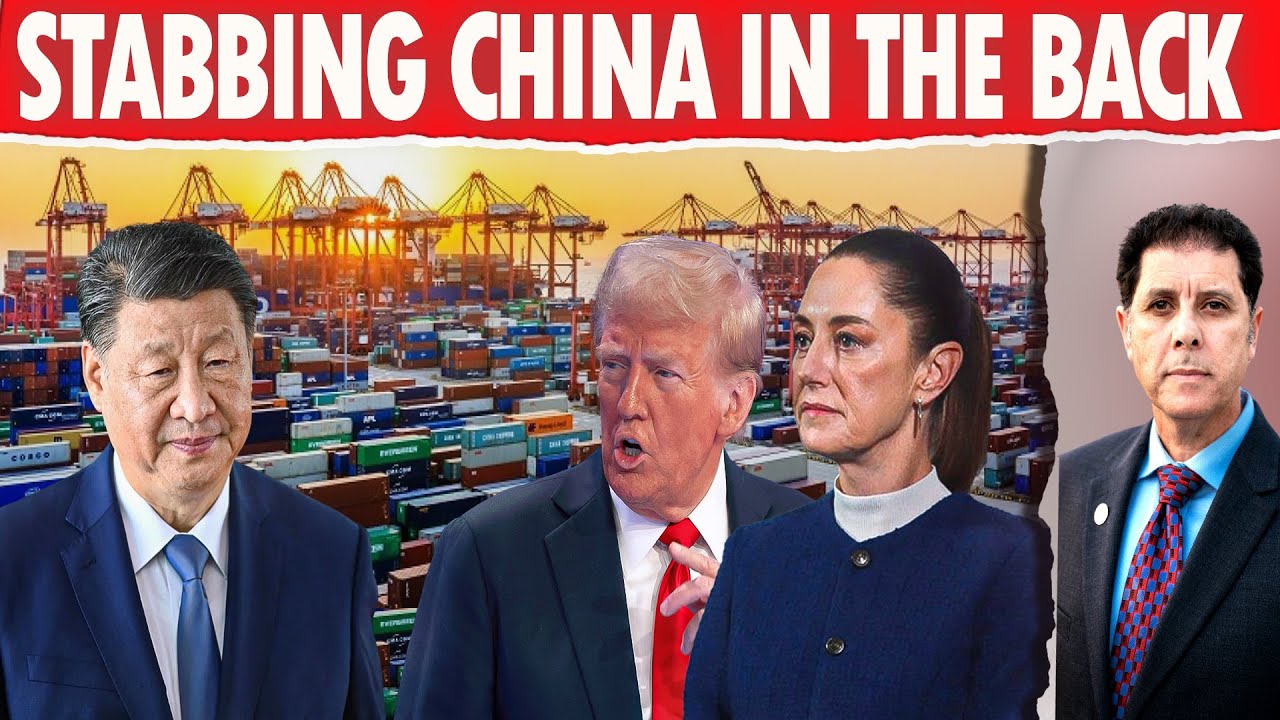
In this Geopolitical Trends video, the host examines Mexico’s newly approved tariffs on Chinese goods, exploring the multiple drivers behind the policy and its broader geopolitical and economic ramifications. He argues that the primary catalyst is U.S. pressure, with Mexico seeking to appease Washington ahead of the upcoming USMCA review, while also citing domestic protectionist motives to shield vulnerable manufacturing sectors such as auto parts, textiles, steel, and aluminum. The analysis delves into Mexico’s historical non‑interventionist stance (Estrada Doctrine) and how it is being overridden by external influence, raising questions about Mexican sovereignty. The host outlines the potential Chinese response—labeling the tariffs “protectionist,” possible WTO complaints, and a loss of trust that could curtail future Chinese investment. He further projects how the move may reshape regional trade dynamics, splitting Latin America into camps aligned with either the United States or China, and accelerating near‑shoring trends in North America. Interspersed throughout are brief updates on unrelated headlines (ICC vs. U.S. sanctions, Kim Yo‑jong’s phone, Australia’s anti‑hate‑speech law), community shout‑outs, sponsor gratitude, and a fundraising push for an upcoming Asia trip. The overall tone is conversational yet analytical, with a critical stance toward Mexico’s alignment with U.S. pressure and skepticism about the long‑term benefits of the tariff policy.
Chapters
Hello everybody and welcome to Geopolitical Trends, where truth matters. Excited to be with you as always. First of all, my apologies for being late. I just received some bad news. Uh, a dear friend of mine, his father passed away, and, and his father was like a father to me. So I just got a, a phone call that, uh So he passed away. So my— sorry for being late, so I just wanted to apologize for this. So anyway, I, uh, I have an exciting topic for you. I'm going to be talking about really what Mexico just did once again, stabbing China in the back. So makes you just wonder, uh, you, you have the likes of so many countries now all of a sudden taking this chance and stabbing China in the back regarding tariffs and so forth. So I'm going to be providing you my insights, my analysis as to what's leading to that, what are the consequences of this particular action by Mexico moving forward. Then I'll conclude with the overall assessments for the geopolitical and the economic trajectory for the whole, uh, relations between Mexico and China, but also Latin America and North America as well. So Uh, before I'll do this, I have, by the way, uh, one thing I'm gonna share with you. Uh, let me just reach out to my, uh, I got a gift from a particular sponsor here, so I'm gonna be sharing with you what's in this content here. I didn't open it yet, but it's— I saw on the, uh, on the label that it came from one particular sponsor, uh, that I've been been doing videos for. So I hope you stick with me till the end here, and I'm gonna open the box in front of you and see what's out there. So, all right, let me, uh, say hi, uh, to our wonderful community quickly. Just, just look at so many of you here. Samantha Elliott, good to see you here. Uh, Willie Hormann, as always. Uh, uh, uh, Faron de la Paix, Say It Like It Is, Al Stalkin, Good to see you, Kevin Baptist. Good to see you, sir. Rampal, so on, as always. So I'm gonna go ahead, guys, and jump it because there's a lot I need to cover in this particular topic. So what I'm going to be talking about today is what's behind Mexico's all of a sudden imposition of the tariffs on the China— on China. We're talking about up to 50% on, on the— that's to me a move that nobody saw it come in, in a sense of why all of a sudden the Mexican presidents will embark on this. I don't know, I don't know. We're gonna be detailing, uh, all this as I move forward. But some housekeeping items, uh, I will be talking, uh, tomorrow I'm gonna do a live for you. Something came up about Venezuela, so I am confirming some information and, and I'll be doing a live stream for you tomorrow. Also, next week I will be having Einar and Warwick They're gonna be here on the 22nd. I will let you know the exact timing for that. And also next week I'm gonna have Carl for our monthly conversation. I look forward to that conversation. So I have 2 or 3 headlines for you I'm gonna be sharing with you right now. The first one is the ICC. I didn't upload the picture yet, so So I'm going to upload the picture, I'm going to share it with you. There we go. ICC, the International Criminal Court, uh, basically, uh, they just now, uh, uh, pushed back against the US. Why? Because the US sanctions some members of the ICC, and the court is seeing the sanctions as a blatant attack on its independence, and rightly so. So this is why the court, uh, as of yesterday rejected the sanctions imposed by the US on two members of the court and considering it a flagrant attack on the independence of an international judicial body. The court, the ICC that is, added that, and I quote, such actions Targeting judges and prosecutors elected by states parties undermine the rule of law, and, and when judicial bodies are threatened for applying the law, it is the international legal system itself that is endangered. Uh, spot on. The US cannot be acting just because, willy-nilly, because it chooses to do so. Uh, second picture I have for you is, uh, or second headlines, I'm sorry. And this one has to do with Kim Jong-un's sister. Uh, let me pull up the picture. Once again, my apologies because I had to deal with that phone call for the death of my, uh, dear friend's father. So Uh, North Korea. So what are you looking at here? We're looking at, uh, which phone is the Kim Jong-un's sister decided to use. I know some will look at this and immediately jump to Apple. It is not. So Kim Yo-jong, she's the sister of North Korean leader, was seen holding a flagship phone, apparently a foldable phone. While an official delegation inspected a newly opened hospital, according to a report by the South China Morning Post. Uh, and I used to write for this, uh, particular, uh, uh, entity. So although the photos do not reveal the type of the flagship phone she's holding, the report indicates that it is a foldable Honor Magic V3. To those who are familiar with the phones, Honor Magic V3, which is made by a Chinese company called Honor, which cost about $1,300, uh, uh, that phone. That is what, uh, what she is holding there. So very, very, uh, interesting. And the last, uh, headline I'm gonna do here, uh, headline, headline, yes, uh, before I'll jump into my conclusion, has to do with Australia, yeah, and I'm going to be addressing this with Warwick next week when we talk. What happened in Australia? The Prime Minister now confirmed that the government in Canberra will implement nationwide anti-Semitism hate speech laws. Basically, Australia caved in. So the government says new legislation will make it easier to charge individuals who promote hate speech and violence. This is the same route the UK is doing, just to give you an idea where things are headed. So, all right, let's get into our— excuse me— our conversation here, uh, what's going on with Mexico here. So, and I'm— I decided to break down this analysis starting from the back end And the backhand is, the first question we ask is, is Mexico concerned that what is happening in Venezuela might happen to it as well? And that was the first question I asked myself when I had a chance to read, uh, this particular decision by the parliament in, in Mexico regarding the imposition, uh, of the tariffs on China. So Mexico at this point doesn't appear to be primarily concerned about directly following Venezuela path. However, there are some important, some sort of nuances, if I may use the term, to this particular aspect of it. And this has to do with Mexico's focus on non-intervention principles. And this is where Claudia Sheinbaum has invoked Mexico's longstanding Estrada Doctrine, to those who are familiar with Mexico's history, which basically emphasized non-interference with respect to self-determination. This in itself positioned Mexico as opposing what it views as imperialist tactics by a superpower neighbor. And that is less about fearing Venezuela's fate and more about protecting its own sovereignty, which I don't believe so, because if it is to be the case, then why Mexico will have to go and impose tariffs on China against its will? And that is why I wanted to start from the back end, and I'll get into the reasons why Mexico decided to do so. So now there is one particular concern, and we all know it. And that particular concern has to do with U.S. action. And that tells me right there, is Mexico no different than Germany, no different than France, no different than Europe, no different than Philippines, Korea, Japan, Australia? In other words, with no sovereignty, if I may use the term. So, and this is why the sort of, uh, when you think about, uh, Brazil When you think about Mexico, when you think about Colombia, all have expressed opposition to US airstrikes regarding Venezuela, that is. And Trump reported intentions to shape political outcome in South America. So Mexico sort of worries, this is where the worry is coming from because this seems to be directed at, uh, sort of at US military intervention in the region rather than so-called domestic economic collapse like what is going on sort of to a degree in Venezuela. So what Mexico is saying versus what it is are two opposite ends. And this is where you're gonna think in terms of the economic situations, uh, in Mexico will differ completely from those of, uh, Venezuela, of course. So leads us to ask the key fundamental question: what is behind Mexico imposing tariffs on China recently? So, which, by the way, the tariffs have just approved this month. But this, you have to understand the background, it stems from some sort of interconnected elements or factors or dimensions. So we start with the first one And this has to do with the US pressure and concerns. The primary driver appears to be US pressure. So when you have something like this and a country responded like that, then you said to yourself, does that country have any sovereignty? Because they could have— Claudia could have said no to the Americans. You know, we still can do business with you, but no, we are not going to go and impose tariffs on China. Unlike what the Europeans— Europeans have no guts. When I talk about Europeans, I'm talking about UK, Germany, France, you know, the EU, which by the way, there is a major developments going on right now in the European Parliament, which I will keep, uh, uh, my eyes on it and do a report for you as I move forward. So, and this leads, uh, sort of makes you just wonder about where the concern is coming from. So why will Mexico just cave in to US? Because the US is saying to Mexico, hey, we have concern about China using you, Mexico, as a back door to the American market. So, and especially when you consider the investments China is making in Mexico— factories— what about also Mexico is benefiting from that? Because when you consider about auto parts, for example, even companies like Tesla— Tesla doesn't produce its spare parts here in the U.S., they are in Mexico. They're moving also some into China. And this is where, where Trump has threatened to raise tariffs on Mexico multiple times. And that is what part of these concerns The second one that Mexico is stating is that we are— this is the president of Mexico, Claudia Sheinbaum. She is saying, well, we are concerned about domestic protection, domestic economic protection, David. So the tariff package that Mexico prepared, which will enter into effect January 1st, 2026— we're talking about a week and a half from now— This introduces some duties and tariffs ranging from 5% to 50% on 100— on 1,463 products from countries, uh, without trade agreements with Mexico. That includes the ones in China, and that in itself will be affecting 17 sectors including textile, footwear, steel, aluminum, auto parts, and, and many others. And their arguments, the government of Mexico's argument, oh, this is, uh, sort of will help stabilize the manufacturing base under pressure from cheaper Asian goods. Well, wait a minute, wait a minute, Mexico, aren't you the one getting the cheap products from China as well? So why all of a sudden you are turning and stabbing China in the back for that? Then there is the strategic trade dynamics that you also need to understand. There are two main reasons behind it, behind the move that Mexico decided to impose tariffs. One is that domestically Mexico is trying sort of to revive industries like furniture, textile and some sort of home appliances to a degree, which by the way have long faced more difficulties, not because of the Chinese, or it's because some other elements, for example competition, technology. China, uh, uh, Mexico doesn't have that, that sort of advancements technologically, supply chains and so forth. If we look at this from a domestic part, if we look at it from an international perspective, the tariffs align with North American concern about China's trade practices, especially when you consider USMCA, United States-Mexico-Canada Trade Agreement, which is going to enter into a review next year because it's going to be going under, uh, is going to undergo a review that comes next year. So basically what Mexico wanted to do is to sort of, uh, threw China under the bus in order to get a favor with the US regarding the review. Then come the big elephants in the room, and you know what the big elephants in the room is? The auto industry. You all know that, you know, this is why the US will not ever, ever allow Chinese cars to be here. You know why? Because Americans will go and buy Chinese car because they are affordable. When I was in China and I went to BYD dealership and the manager was kind enough to let me walk around, get in a car, check whatever I want, and I asked the prices, what am I looking at? He said, this particular car you're looking at about $13,000, this particular SUV you're looking at about $18,000. This particular model, which was an upper-scale, uh, uh, uh, uh, uh, uh, 4-seater sedan, so it was about $26,000. That has the, the, the, the, the, the bells and whistles of, of technology. An average car here now will cost you about $40,000. Then with the car loans and all that, this is one of the reasons. So Mexico's auto exports to China have surged. With Mexico becoming China's largest auto export market globally in the first half of 2025. Let that sink in. Mexico becoming China's largest auto export market globally in the first half of 2025, and Mexico importing about 280,000 vehicles from China. So this surge has prompted Mexico now to respond with tariffs alongside other major economies. But it's not about that, it's about the pressure from the US, because the US is concerned that if Americans find out how cheap the Chinese cars— and they are reliable, by the way— they won't be buying. And who wants to pay 50 grand for a regular car here? So this is when you have to look at, uh, basically what Mexico is, is trying to balance domestic industry's concerns with the broader US trade policy objectives ahead of the crucial trade negotiations next year. And this leads us to ask the other fundamental question: how this is going to shape now the future relations between Mexico and China? It is worth considering, it is worth addressing, because it's very, very crucial and important to address this particular aspect here. This tariff, these tariffs that are imposed now by Mexico, are unlikely, are likely to reshape Mexico-China relations in several significant ways, no matter how you look at it. Even including the diplomatic aspects of it. So if we are to think about diplomatically speaking, mark my word on this, is that Beijing is going to respond swiftly and has already responded swiftly and furiously to the tariffs, with the Commerce Ministry now in China, spokesperson denouncing the policy as— and I put it in quote here— protectionists. 'in quote.' And warning, the Chinese are warning now it might harm the China-Mexico trade relations. So, and that is why, in my opinion, China sort of retained now the options of retaliation. So whether it will be diplomatic maneuvering, like sort of through WTO, World Trade Organization, complaint or some other specific actions. We shall see. Then you have a fundamental shift that is going to be taken now between, uh, uh, relations between Mexico and, and China. It's a foregone conclusion. Mexico's relations with China now differs from other Latin American countries. Why? Because you're gonna consider Brazil exports agricultural commodities and minerals that complement Chinese goods. Mexico exports similar manufacturing goods that compete directly with China. And this means what? That more direct competition rather than complementary is gonna ensue. So the tariffs, essentially what China— what Mexico didn't think ahead of time, what the tariffs essentially is going to do, that's going to formalize, in my opinion, the sort of the competitive relations between the two and turn it into a policy. Is the same stupid mistake Japan made when they issued the statements regarding Taiwan, not thinking about the economic consequences moving forward. Because what China embarked on turned out to be a policy, no more just a threat. It's our policy now to send our naval to Senkaku Islands. Normal routine. It's our policy now to limit rare earth element, uh, uh, uh, export to Japan. It's our policy now to ban the import of the Japanese fish. See what I'm getting at? That's what Mexico didn't think about. So, so, and what Mexico also failed to understand is that China can withstand all this. You know, the US made the mistake, and you would think Mexico will learn from it. The US trying to bully Mexico, um, China regarding tariffs. China pushed back. Then Donald Trump was asking for a way out. You will think Mexico, when it doesn't have the same power the US does, they will think twice about it. So, so, and this is where sort of Mexico can think about this one here. Mexico's tariffs, by the way, were approved by Congress, and that's where the problem is. Why? It makes them— meaning those tariffs— much stricter and harder to remove without additional congressional actions, unlike the US. The US, you have the executive order which can be reversed quickly. So, but this also highlights to you something long-term, is that this, in my opinion, signals Mexico's long-term commitment to this policy. They're shooting themselves in the foot, and that is where the retaliation risks comes in, and we have to address that one. So, you know, as an analyst, it is clear to me, while Mexico aim to sort of bow to the US and placate to the US with these tariffs, Beijing is looking at it differently. Beijing is going to retaliate. The exact form of retaliations remain uncertain at this time. And if I am to think You know, China always leaves room for different approaches. In this case, China could consider diplomatic protests that will target, uh, some sort of, uh, targeted tariffs, uh, on Mexican goods. It could approach it cutting off certain exports to China, limiting the import of Mexican goods into China. They have ways of the wind. Ask Australians how it went for them, and now ask the Japanese how it's going for them. So, and that becomes the other concern, and it has to do with the economic interdependence, because we're gonna have to think— when you think about Mexico, you also have to think about Latin America, even though anytime you ask someone, they will say, well, yeah, when we think about Mexico, we think about North America. So despite tensions, the reality is that China accounts for 21.8%, almost 30— or, or I'm sorry, almost 21% of Mexico's import, making it Mexico's second largest source after U.S., while Mexico is only selling about 1.4% of its export to China. So China can cut off all that. Yeah, but that's not the issue. The issue is that China Global South project— you have to think about that. And this in itself could complicate future negotiations and make rapid escalations risky for Mexico. Will it be risky for China? Yeah, it might be to a degree, but China's economy is so big It would be like a dent. That's about it. So ultimately, these tariffs suggest, in my opinion, that Mexico is joining and pivoting towards North America, not South America, and for specific reason. This one has to do with manufacturing block. Why? Because the U.S. pressure wanted to reduce China's role in regional supply chains. So that is why the US had to warn and exert influence on Mexico, and the Mexican president, as weak as he can get, you know, of course had to bow to the pressure. That is where that particular difference is. Liking this video so far? Don't just be a watcher, go ahead and hit the like share, and subscribe button, and don't forget to tap the bell so you will not miss any of my videos or live streams. This way, you will be supporting a channel that stands for the truth and objective reporting. The choice is yours. Thanks for your support. Now, we have to think realistically, and this thinking will have to be about, can and will China ever trust Mexico moving forward? And to me, it's, it's, it's, it's worth asking, question that is worth asking. So because as it stands today, and once again looking from outside in, if I am to be looking at Beijing right now, the, the policymakers, what they might be thinking. The first thing that comes to my mind is that now China view Mexico as unreliable. Not less reliable, unreliable. So from Beijing's standpoint of view, Mexico has essentially chosen to prioritize its relations with the United States over maintaining balanced ties with China. This is part of what this geopolitical dimensions is all about. So, because the tariffs imposed by Mexico on China are largely in response to the U.S. pressure regarding China's investments in Mexico's manufacturing, especially, especially the auto sector. So, and that in itself, for me, it demonstrates that Mexico trade policy is being shaped not by Mexico's government but rather by Washington priorities. No different than what Australia just did, for now passing this law. No different than what Germany did before and now it's collapsing. No different than what France has did and now its economy is collapsing. The UK, economic collapsing. You get the idea. Australia, Japan, South Korea, Philippines. So because this, if you are to go with Washington's priority at the expense of Mexico's independent interests, that is where the problem. So in that case, China would likely view this as Mexico subordinating its own judgments to US pressure, which means in a different language is that anytime, anytime the US wants to pressure Mexico, Mexico will change its policy. So what gives China any comfort in entering into long-term projects with Mexico? They can't trust it. And that leads me to talk about the trust issue, because you have to understand how the Chinese operate. And if there is one thing I've learned over the years watching China since the early '90s from a diplomatic, from a political, from geopolitical aspect, is that the Chinese tends to value partners who maintain strategic autonomy and don't simply follow US directives. That doesn't mean China is pushing this country to be against the US. No, no, no, no. It's about the strategic autonomy, something the Europeans couldn't even achieve. Australia cannot achieve. It's Japan, South Korea, Philippines, and now you have Mexico. And this is where part of the problem— the trust element. So because this makes Mexico now appear to China as a country that has two sides, meaning it stands on both sides of the fence. Which other country comes to your mind right away that stands on both sides of the fence? Let me see in the chat box. You should know it because we always talk about that, and I just did a, a recent, uh, analysis for you. Which country that comes to mind that stands on both sides of the fence? And end up holding the end of the stick. Oh, Farhad Razavi, you got it. Manny, you got it. Liang, you got it. Lucian, you got it. India. And look how it turns out for India. Then we move into the long-term cooperation. So going forward, you always have to think strategically. China is likely to be now more cautious than ever about deepening any investments or even partnership with Mexico. So first of all, China has already responded by calling the tariffs protectionist, which is a strong word, but it has a message. So which means that China has the right, legally speaking, under WTO rules, to file a complaint. So But this also signaled that China is not going to just accept it, the tariffs, passively. So, but more importantly, in my opinion, it indicates now the reduced willingness to engage in any constructive dialogue or any new initiative with Mexico. China now will take a step back and just watch. And this is where it's gonna be now. It's not gonna bode well. I don't know who's advising those leaders, not in just Mexico but Europe, Australia, Philippines, South Korea, Japan. You got it, you got the idea. I don't know who's advising them. I mean, or even our, our president here, the guy has no clue. Because here is the thing, for China now Mexico has joined some sort of— I won't call it a blacklist, but it's a growing list of countries that's seen as insufficient, unreliable partners. The countries that basically accept US pressure. Because what it means, it means that these countries have no sovereignty. There is sovereignty on paper, but that's about it. When it matters, they couldn't make a decision. They couldn't take stand. So they couldn't have that so-called strategic independence, and this constrained the potential for any deeper economic or even political cooperation that might otherwise exist. So Mexico's tariff, basically— and I'm gonna do a conclusion here, uh, soon— uh, tariff decision are likely now have, like, have, to me, in my opinion, damaged the China trust in Mexico. Because now China cannot be looking at China— at Mexico as a long-term reliable partner. You can't. So, which is a fact. That's just a reality, how it is. And this leads me to my conclusion, because I'm gonna keep this one here short for you guys, uh, because I have other other stuff I need to share with you. Now, the big— what I wanted to keep this for conclusion is how is going now to be, uh, for example, with the Mexico tariffs, how this is going to now reshape the regional trade and even the geopolitical landscape moving forward. Remember, there is always a link between what's going on geopolitically impacting economic landscape and vice versa. Just think about it, when energy crisis hits, what happened to the geopolitical dimension of it, and vice versa. So, so because the way I look at it, uh, Mexico's tariffs on China could now reshape the regional trade and geopolitics in several ways. So I'm going to be sharing with you just 2 or 3, uh, uh, uh, aspects of this. The first one that comes to my mind is the restructuring or reconfiguration of what— the regional trade. Because you're gonna have now the likes of, uh, Brazil, the likes of Venezuela, also Argentina to the group, because Argentina is in a mess. So, so what I mean by this reconfiguration also is from the perspective of Mexico. Mexico appears, in my opinion, with doing— with, with embarking on this action to reinforce its alignments with the US policies, to strictly comply with US orders, with strictly maintaining the tariffs preference. So because you're gonna have to think in terms of Brazil and Argentina as an example. Those countries, in my opinion, might opt out for strategic hedging by maintaining ties with China without going all the way in one side. I will not trust Argentina. Brazil might be okay. So, and that, in my opinion, means that these diversions embarked by Mexico— what it suggests, in my opinion, it suggests that the region is now splitting splitting into different sort of strategic camps, or rather than having a cohesive policy, Latin America's in its entirety. So, and the other aspect that's going to impact Mexico has to do with the opportunities. So you look at Mexico and you look at Central America, are strategically positioned to benefit from nearshoring. And that in itself will capture some sort of growing share of the US manufacturing import previously that was sourced from China and ASEAN countries. But will it sustain itself? That is the question. So because this is where that difference is. So because remember the cost you have an affordable cost with the China labor market versus that of the US. So think about also the idea of how the tariffs that the US imposed on some other countries in, in Latin America, how that's going to— or even Mexico itself moving forward. So, so that is part of what is going to be. The other aspect has to do with China pivoting away from Mexico. Completely. So like I said, think about China's, uh, exports to Latin America writ large, which have— which has grown by about 7% this year. So it grown from 3%. Think about it. So China exports to Mexico specifically fell 3% in the first 9 months of 2025 with China. Now, why is— because China redirecting its export expansion effort towards which area? This might surprise you, toward ASEAN, towards Africa, and India to a degree. And this suggests that Mexico's strategic choice is already having market consequences. So, and that is where the diversion of Latin American strategies. So Latin American policymakers are now being advised sort of to sort of deepen their trade with the Chinese, not with Mexico, not with the US, not with Canada. So they also were advised to deepen their relations with European Union, even though I stand no chance for that. They also been advised to consider ASEAN, which makes more sense because they are recognizing the trade diversification that is going on in response to the geopolitical dimensions taking place on the landscape. So, and also because they are foreseeing that probably 2026 will continue on the same trajectory regarding the US-China trade tensions, which by the way, just for the community, I, I am already preparing a specific video for you regarding my outlook for 2026. You know, I didn't forget that. I will do one specifically for our community. So, so it is now crucial. All these dynamics will be crucial for the regional stability. Okay, remember, remember what's going on right now in Europe. Remember the video I did for you about France, which reflects what's going on in Europe? The video that I'm going to be doing for you soon, it has to do with the EU Parliament. You have now the farmers are being pissed. They want a disintegration of this illusion of the EU altogether. So, and this leads me to the geopolitical implications. This is one of my favorite aspects of talking about because I can just see it. Yeah, you know why? Because global trade is becoming more fragmented and more transactional. So, so in which means what? In this case, if I am to talk about Latin America as a regional bloc, Latin America will need to rethink its role. Yeah. In sort of in a global world that is no longer governed by just US. So, or even multilateralism in that I did mention about 2 years ago, I said one thing you need to keep in mind is that the new multipolar order is going to be managed by economic blocs, not as— not countries. And this is what Latin America will have to think about. This multilateralism won't mean a thing. It's because going to be depending more on the economic blocks. And which means what? They're gonna have to choose between where— which camp to align with. So because also they know that the engagements— because they're going to be now hedging their bets between either engaging Washington or engaging Beijing. And they will have no other options but to chart their own course. And that's gonna be through one particular aspect. And that aspect is diversification. This is why Mexico's tariffs signal something different. And they're gonna end up the same spot India is, and we all know how it turns out to be for India. So this is where the problem is. Now here's the thing, the real risk for the region is gonna— not gonna lie with the US or Mexico, it's gonna lie with China and with China's policies and specifically the type of response to these tariffs, especially for countries heavily dependent on commodities exports. So why? Because China can just slow down the demand, which could significantly depress regional growth and commodity prices. So if China retaliates or deliberately slows its engagements with Mexico, the ripple effect will extend beyond bilateral relations. This is one thing Mexico didn't think through. So in essence, Mexico's tariffs are accelerating now the fundamental restructuring where North America, US and Mexico and Canada, of course, is becoming more economically integrated and insulated from Asia. But that's going to be just on paper because the number is going to prove otherwise. The cost will prove otherwise. Are we going to be buying something here, for example, a bike that will cost $200 versus if it's made elsewhere and we pay for it $50, $60, $80, $100? So, so, and this is where you're gonna be seeing that South America is going to maintain stronger ties with China, and this in itself will create a fragmented Latin America. With diverging strategic trajectory and Mexico holding the end of the stick. This is how I see it. So that's all I have to share with you here. I'm going to be talking about some other stuff. Let, let me do this quickly here. Uh, Kevin Baptist, as always, I can't thank you enough for your support for the channel, for the content of this channel. So I, I want you to know, uh, to the whole community You know, there are so many of you who have been here with me for so long now. Are you benefiting from this analysis that I've been doing all this time? So I mean, think about it. If you are to go to the university and pay for a course, how much would it cost you? So it won't hurt to buy me a few cups of coffees in support of the channel, in support of the content. So Kevin is one of those individuals, and I'm very grateful to you, Kevin, for your continued support. So Mexico is collaborating with the hegemony instead of challenging it. If, if it won't respect your own— if won't respect your own sovereignty, then you signal to China you are not serious about international, or let alone your domestic policy. Shameful. Couldn't agree more. And I can tell you the other examples, Kevin: South Korea, Japan, Australia, Philippines, Germany, France, UK, Spain, to a degree. You got the idea, got the idea. And Mexico now is added too. I mean, if only, if only people remember, if only people remember, we threatened during Biden administration, we threatened Mexico with military intervention. Well, if Mexico is sovereign state, why would you threaten the country like that? That gives you an idea. Once again, thank you very much, Kevin, for your continued support. Truly appreciate you. For that. So, uh, I wanted to, uh, highlight one thing. I need to bring a picture for you. I didn't upload it earlier, so let me— just to let you know where, where we are regarding my upcoming trip to Asia. As I mentioned, I'm going to be talking, uh, to you about the— this upcoming trip. Uh, it's already— have some individuals already donated in support of my Asia trip coming up. So here is where we are as of today. So the objective is to raise $10,000. We have few more months. This is not for next month or two. We got a few more months. We'll be looking at about 8 to 9 months from now by the time I make it to China. But so far we are at about 4%. Should you decide— once again, should you decide to support my upcoming Asia trip. I'm going to put the link for you in the chat box right here, and I will be grateful to you for this. So I'm gonna— I already posted in the chat box for you. Once again, here is the link for it if you decide to support my upcoming Asia trip. There is also the support for my channel, the Geo Political Trends right here. Should you decide to support, uh, and I know some of you have already donated, uh, uh, for, uh, for the support of the channel, uh, and I decided I'm going to use that support for the trip to Asia. So let me put the link here. And because of that, I want to give a shout out to, uh, Essie Lee. For, uh, supporting the channel, uh, for letting me— they bought me about, uh, 20 cups of, of coffee, and I decided to use that funding in support of my upcoming Asia trip. So, so I would be grateful if you can support the channel should you decide to do so. Now, last thing I'm going to share with you, this one has to do with the gift I received yesterday, and I decided to open it in front of you for for the whole community to see. Here is the gift that I get. I'm not gonna wait till Christmas. And the reason why— this, it came from a sponsor that I did some analysis for, for that company. And the company is the gold standard, uh, uh, that's the one I've did some— we did some videos on both channels. So I can't thank them. It was so grateful for them to even think of, of, of, uh, of both channels in this, in this fashion and this manner. I'm very grateful, and I was very, very touched by this gesture. So for a company to go ahead and send an entire gift just to say thank you— so, and this is why I, you know, I don't do the sponsoring for just whomever, but Gold Standard, it's one of those companies I will, I will never ever hesitate to do an advertisement for them anytime. So, but specifically, I want to give a shout out to their media team: Kenneth, Lior, Danielle, Tasha, and Christine. And to all of the team at Gold Standard, I say Merry Christmas and Happy New Year to you, and happy holidays. Now let's open it up. So I'm going to open it in front of you. It's exciting. So, and it's not a small box, guys. It's literally not a small box. All right, let me open this one here. So here is the lid. So I want you to see. Wow, look at that! Uh, this is assorted lollipops, chocolate That's one. Oh, another one here. Truffles, you know. And by the way, guys, this is not a cheap chocolate. As one who knows a little bit about chocolate, it's not a cheap chocolate. Another Lily Puffs here. This is cinnamon. So, so that's the third box. And this is the fourth. Here is the fourth right here. Those are the milk, milk chocolate balls. So, and those I am not going to open right now. I decided to keep them for Christmas to have something to open. So, okay, but I have one more box. Check this out. So peanut brittle, those are crunchy nutty goodness. Oh my gosh, look at that. So, so yeah, once again, I really, I really, I'm, I'm gonna write something for them just to express my gratitude and sincere appreciation and thanks. For even thinking of, of the channel to really send the Christmas gift like this. So, so it's a wonderful company to work with. I look forward to doing more sponsoring videos for them. I do the analysis for them, and, and gold standard. It's— it, it tells me a lot right now about these gestures. Anyway, guys, that's all I have to share with you. I am going to be preparing a video for you for tomorrow because something is major going on in Latin America. Some development happened And funny, one of the members asked me a question about it, and I said, uh, it's gonna be a few more days before I can conclude convincingly or confirm convincingly or provide you my, my answers to that. So the answer has came. So I'm gonna be, be on the lookout for tomorrow, and I'll do the updates for you. So as always, remember, geopolitics impacts your daily life in more ways than one. Till next time, bye-bye.
More from David


Beyond the Single Actor: Why the Gulf Isn't Choosing Between the US and China


Iran, Iraq's Militias, and the Houthis Are Coordinating! This Changes Everything




Who Controls the Next Decade's Resources? Latin America and Africa's Geopolitical Crossroads

The Chokepoint Trap: How Washington's Stupidity Triggered a Cascade That Now Controls the World

Trump Spooked as IRGC Unveiled dual-use SLV, Deployed Ghadir Mini-Subs & Hinted at Tactical Nukes!
