When Sanctions Become Seizures: How America's Tanker Grab Could Reshape International Waters!
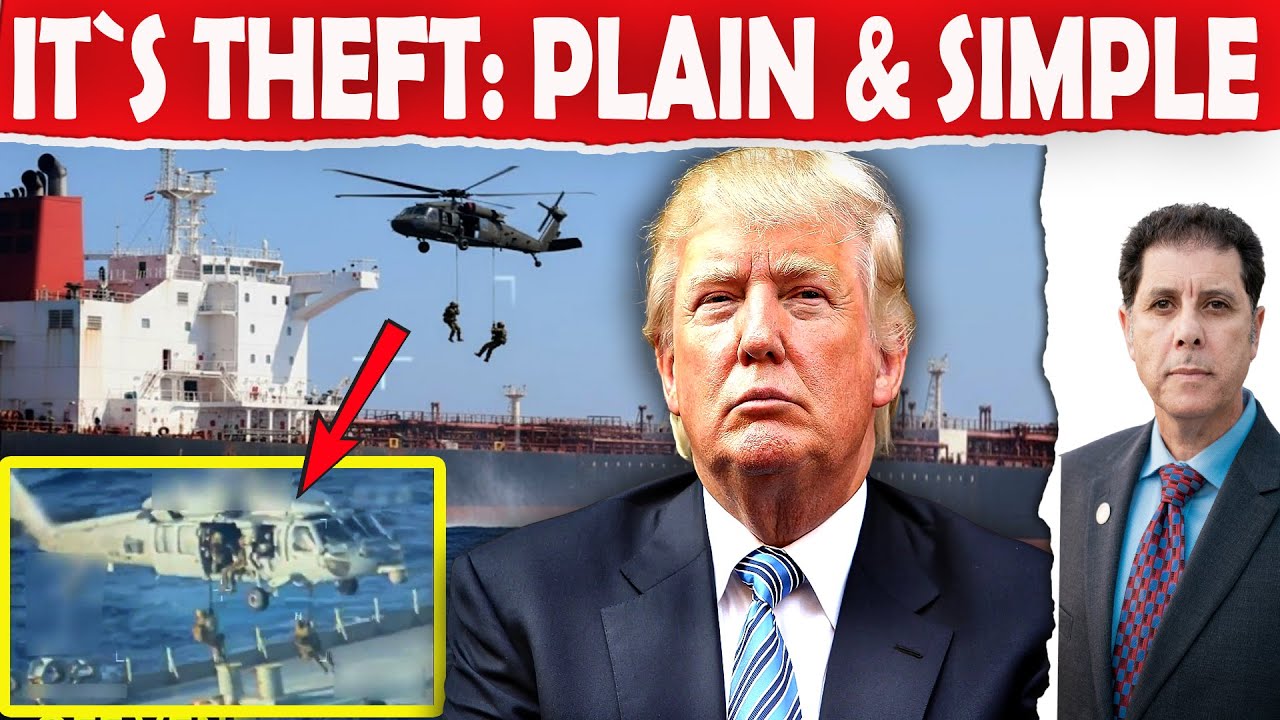
Dr. David Oualaalou analyzes the U.S. seizure of a Venezuelan oil tanker in international waters, examining whether it constitutes piracy or lawful sanctions enforcement. The seizure has drawn criticism from Venezuela, Russia, Iran, and some U.S. lawmakers, and risks escalating naval confrontations and setting a precedent for other powers to seize ships in international waters.
Chapters
Hello everybody and welcome to Geopolitical Trends, where truth matters. I'm your host, Dr. Oualaalou, excited to be with you as always. Uh, uh, my topic for today, I will be addressing the illegal, and some say it's legal, action by the United States in confiscating a Venezuelan oil tanker in international waters. That's what makes it even more complicated. So, so I'll be providing you my own analysis about this particular incident, the, the, the legal ramifications of it, the also the security aspects of it, uh, all this, put it into a cohesive analysis for you. And I will answer some questions for you towards the end, so make sure you have some questions prepared. But First, let me say hi to our wonderful community as always. Uh, oh, first of all, goes without saying, I'm going to have to share this. Uh, uh, Arch Crusader, thank you so much for your super sticker and good to see you. I haven't seen you for a while. I hope all is well. So, uh, uh, Dragon, Dragon Mike, good to see you here. Liang, as always. Arch Crusader, good to see you. Nathaniel, or Nate, good to see you. Liang, as always. Truth Seeker, good morning to you as well. And yes, indeed, our inquisitive community. Muhammad Nasser, good to see you, sir. Say It Like It Is, as always. Phil, good to see you. And yes, I did see about Machado. I will be mentioning something about her. Momo Jaguar from Gambia. Oh, unfortunately, I will not be talking about Africa today, so good to see you. Uh, Masian Dorsey, as always. Uh, TNN, uh, TNN Channel, good to see you. And, uh, Courage Sadiq, hello to you as well. Uh, Abdul, good to see you. Hong Luang, and who else? American Citizen, good to see you here. So, all right, let me— by the way, I have two housekeeping items for you. One is I'm making the announcements that I will be going to China next year. No dates yet been decided on. Uh, I will set up the, uh, funding campaign to those— because remember, all my trips to China was supported by the community. So I'm gonna set the link, uh, for the— to those who wants to support my upcoming trip to China. Except this time I am going to a specific region inside China to report to you, uh, because I want to debunk some lies that's been propagated in the West without going into more detail. So, so official announcements is I am planning on going to China next year. Second announcement is this coming Sunday, either this week, but most likely this coming, uh, uh, this coming Sunday, I mean, next week, I will be doing, uh, uh, uh, uh, an exclusive Q&A for the members of the YouTube channel, for channel and also for the Buy Me a Coffee members. So this is going to be just exclusively for the members. So I hope those who are a member in on, on either location, I hope you can join me, and I will post all for, for, for you as far as the time and the dates. Some housekeeping items quickly here, and we'll move on into the analysis because we got a lot to cover. I'm gonna start with this one right here. And this, uh, this might surprise you, that the Israeli people, yeah, all of them rejecting pardoning Netanyahu. But guess who is backing him? Is England, the UK. So London is blackmailing the ICC to protect Bibi Netanyahu. So this is when you have the all international newspapers and websites covering different positions on the Middle East and international political issues, that is, with the debate within Israel regarding demands for the pardon for the Prime Minister Bibi Netanyahu taking center stage. And this along with the revelation that came up about the pressure exerted by Britain on the ICC, the International Criminal Court, last year to prevent the ICC from issuing an arrest warrant against Bibi Netanyahu. So the recent poll which was conducted, uh, this is announced by the Jerusalem Post, uh, stated, and I quote here, the majority of Israelis oppose granting Netanyahu a presidential pardon, believing that his government is mirrored in corruption. Wow, that tells you right there, even within Israel there's a, there's a debate, uh, over that. So second one has to do with Japan and the United States. And this, why is this important? Because you have now both Tokyo and Washington issuing statements regarding that the Chinese actions harm regional peace. I mean, just, it's mind-boggling. So, so the image you are looking for, looking at rather, is US Air Force B-52 bomber below, and above it is the Japanese Air Force F-15. And this is during the joint exercises over the Sea of Japan. So what Tokyo just announced this morning, Tokyo time,, announced that the Japanese Defense Minister and the US Secretary of Defense agreed during a telephone call that Beijing's action do not help achieve regional peace following the Chinese fighter jets targeting Japanese fighter jets with their radar, uh, near Taiwan. And I did the video for you regarding the incident that took place. In which the Chinese fighter jets, the J-15, locked its radar on Japanese. But let's be honest and realistic about this. Who started this provocation to begin with? If the Japanese, especially with the sort of the less informed, ill-qualified, you know, let's say she's unqualified for the position, in my opinion, given lack of understanding the depth of geopolitical matters. If she didn't provoke China, we won't be where we are today. So I don't quite understand the message of Taiwan and, uh, and, uh, Japan— I'm sorry, the message from Tokyo and from Washington. And the last one, uh, item or headline I'm going to share with you, this is an image from, uh, This one is from inside Lockheed Martin for the F-35. So what is happening with now with China accelerating its modernization of its military capabilities and of course the collapse of the American manufacturing capabilities? It was reported, especially two main news outlets here in the US, New York Times, one of them, editorial board reveals in lengthy article, and I'm going to share it with you, uh, a deep crisis here in the heart of the US defense industry. And these challenges include a backlog of failed projects, stalled supply chain, and weak innovation at a time when deterrence credibility is eroding year after year. Makes you just wonder. And by the way, I will be doing an analysis for you regarding what is America's weakness that is now threatening its global, uh, sort of influence. Very, very interesting. So it's, it's, it's an interesting dynamics that are, uh, going on. So, all right, let's get on with our conversation today. And I will be talking about the act of the United States taking over a Venezuelan oil tanker in the international waters. Is it an act of piracy, or is it simply theft? Straightforward. Or there is the third option: is it legal? Yeah, they are. This is what I'm going to be providing you with, the idea of whether this, uh, uh, sort of an act is an act— is it legal? Under international law? Is it act of justice, or is it an international piracy, or even theft? Straightforward. And I'm also going to be sharing with you the ex— the ex— the, uh, opinion of legal experts to put it in perspective. And they are divided over this particular, uh, issue, especially when we ask the question, is the US violating international law. So just to give you an idea, what the US just did recently is that it seized a sanctioned oil tanker, uh, which is a move that has now pushed oil prices even higher. And of course, it's escalating tensions between Caracas and Washington. So, uh, what's interesting is that the US never disclosed the location exactly with the coordinates as to where this has happened. And this is why you have now so many governments around the world coming forward, starting with, of course, the Venezuelan government that called the move an act of international piracy and, in quote, blatant theft. So, and of course, it comes against the background of the US expanding its military operations in the region and been carrying out some airstrikes and so forth on suspected and alleged drug trafficking vessels since September, which by the way, some members in Congress have called the action illegal. So the Trump administration, by the way, did not identify sort of the vessel or disclose the precise location of the operation. And this leads us right away into the question of whether this act by Donald Trump is illegal, is sort of illegal action as U.S. sees Venezuelan tanker. And it's a complex question. Make no mistake about it. We can't just say quickly, oh yes, it is, or it is not. And this is why the whole idea and purpose of this analysis is to provide you both sides of the argument. And of course, I will welcome your contribution to the conversation in suggesting your ideas. How do you see it? So this is how we learn from each other. So, uh, before I'll do this, I'm gonna play a clip for you, then I'll make the— my comments, uh, regarding all this one here. So let me share the screen with you here. And okay, here it is. All right, let me make this bigger for you so you can take a listen at what it's been said.
This is the moment American forces stormed an oil tanker off the coast of Venezuela. The U.S. Attorney General, who shared the video on social media, says the vessel was used by Iran and Venezuela to support foreign terrorist networks.
I, I have to push back against that claim. Coming from the US government. Of course they're going to have to use the term terrorism to justify. This is no different than what we did for the war on terror. So just to let you know, I personally, I disagree with that statement.
It's the Trump administration's latest push to increase pressure on President Nicolás Maduro, who it accuses of leading a drug cartel.
We've just seized a tanker on the coast of Venezuela. Large tanker, very large. Largest one ever seized, actually.
The seizure marks a major escalation in a months-long campaign against what the US calls drug smuggling boats. This week, US fighter jets flew over the Gulf of Venezuela, the closest its warplanes have come to the country's airspace. U.S. forces have also bombed dozens of vessels in the Caribbean and Pacific since September, killing nearly 90 people, saying they were bringing drugs into the country. Washington has built up significant military presence off the coast of Venezuela, including warships, submarines, aircraft, and troops.
What they want is to steal our oil. To steal our gold, to steal our gas in our waters because they don't want to pay. And why won't they pay for it? Because they are thieves.
President Nicolas Maduro has denied the US accusations and remains defiant.
We say no to interventionalism. We say no to plans for destabilization and regime change. The US government should focus on governing its own country.
Venezuela has one of the world's largest oil reserves. It accuses the US of wanting to steal its resources by forcing regime change in Caracas. Trump's threat of military action is perhaps the most serious challenge to Maduro's 12-year presidency. Um Kulthum Sharif, Al Jazeera.
Okay, and we give credit for that video clip to Al Jazeera, of course. So, and this leads us directly into the legal arguments. So, as I said, I'm gonna be providing you both sides of the argument. So the US government maintained that this was a legitimate law enforcement action. And that's what the, what's her name, Pat Bondi, the Attorney General, stated that the oil tanker has been sanctioned for multiple years due to its involvement in an illicit oil shipment network supporting foreign terrorist organization. What if it was for many years? Why didn't do it few years ago? That just shows you some. Then comes the piracy claim. This is why you are hearing some legal scholars mentioning the term. So of course you have Venezuela and other countries argue that it violated the international law. The action by the United States. So this is the Venezuelan government, of course, called it the move as an act of international piracy. So, and blatant theft, because that's usually what it is going to amount to. So the core, the core legal challenge is about jurisdiction, not the action. We're not talking action yet, we're talking about the jurisdiction. So, and the US has no jurisdiction to enforce unilateral sanctions on a non-US person outside its territory. This is where the legal problems for the United States. And of course, the seizure of ships in international waters is extraterritorially enforced. US sanctions is a dangerous precedent. And a violation of international law. This is what makes it even more complicated. So the US is basically violating international law, whether, uh, uh, uh, intentionally or not, it's beside the point. And here is what the experts are saying. So the experts— when I say experts, I'm referring to the legal scholars here. So they're noting that the seizure or the seizing, uh, sanction, the items is common, but it is common inside a country's own territory. Because this action is unusual. Why? Because it happened in international waters. Because when you look at this, you're gonna bring a comparison to this, and the comparison has to do with Russia. Russia has hundreds of sanctioned tankers that are sailing today. But none of them has been boarded. So it becomes like selective, selectivity here. Are we just picking on the weak person? Because they know the Russians will retaliate against the Americans or any that will sort of come on board of their oil tankers. And this is what the legal experts are trying to highlight. Which means this suggests the action is legally contentious because enforcing such so-called sanctions through military seizure in international waters is extremely rare practice. You don't see that often. As a matter of fact, to my knowledge, I haven't seen it before. So the, the fundamental disagreement centers on whether the US can unilaterally enforce its sanctions through a sort of military force on foreign vessels in international waters. And that's an action that most countries historically haven't taken. That's what I'm saying. To my knowledge, if I missed something, maybe, but to my knowledge, I haven't seen something similar to this, similar to what the US just did in international water. That's what I'm referring to. And that's paved the way for us to ask once again the legitimate question: is the US violating international law? You know, I don't assume that just everybody's going to say yes or majority will say no. No, we're going to have to ask the question. And this is, in my opinion, a genuinely disputed question among legal scholars. And even some nations' high courts. So, because when you look at it, the argument that it violates international law is the strongest argument against the seizure, because it is based on jurisdiction and sovereignty principles. And under international law, here is what, what I know, under international law A coastal state, let's say, which basically when a state is closer to water, okay, cannot enforce its laws against a foreign vessel in international waters beyond the 12 nautical mile territorial sea. So every country has these 12 nautical miles that has been agreed upon. So the US argument that sanctions violations justify the seizure. Well, okay, if it is the case, why didn't you seize the Russians' oil tankers? Because they know the Russians will fire back and level whatever. This is exactly what Britain tried to do way back, I remember, a few years ago, trying to intimidate the Russians in the Black Sea. And what did the Russians do? They fired, you know, of course, within closer to HMS, uh, uh, uh, tank, uh, I think it was, uh, uh, destroyer. It was British, but they fire closer. And the Russians said, the next time we're gonna hit the vessel, so you better turn around and leave. And that's exactly what the Brits end up doing. That is why we are not doing, we are not boarding the oil tankers of the, the Russian ones. So, and that's the US argument, is that, as I said, sanctions violates, uh, justify seizure, is essentially claiming extraterritorial enforcement authority that most— this is where the problem is— most international legal scholars say isn't clearly established. Another word, there is no law on the books that justify the US action. And this is why you have Venezuela and other nations argue that this sets a dangerous precedent where any powerful country could seize foreign ships based on its own unilateral sanctions. I can see that logical arguments for that. So Then you have those who are arguing, oh no, it is legally justified. So the US will argue several things. For example, and this based on some scholars here in the US, the vessel may have entered US territorial waters or an exclusive economic zone at some point, which by the way, none of this happened because the vessel was seized in international water. So second, sanctions targeting proliferation of weapons or supporting terrorism can have a broader legal justification and the UN frameworks. And once again, did the US provide the proof that this particular vessel was indeed providing, uh, weapons to support arms groups and so forth? No. Third, if the ship or its operators have sufficient US nexus, meaning either banking, either corporate registration, or what have you, the US jurisdictions might apply. So the government frames this as enforcing the sanctions against entities supporting terrorism. You're going to be hearing this term a a lot to justify this action, not merely unilateral economic policy. So, but here is the honest assessments, and again, I had to read both sides, and I'm just sharing with you what I have learned. So the honest assessments, when you look at international law, okay, the one thing that I couldn't find explicitly is that in international law, on this particular case, is genuinely ambiguous, believe it or not. There's no clear consensus. So the US has significant power, of course, militarily, and regularly enforces broad sanctions regimes. Okay. But this particular action, seizing a foreign vessel in international water, based on sanctions alone sort of pushes the boundaries of what typically is accepted, uh, as a normal practice under international law. And once again, I'll bring the example of Russia. Russia operates sanctioned tankers without similar seizures, which suggests, in my opinion, either the United States is being selective, which most likely is the case in enforcement, or some other factors like, for example, geopolitical leverage, uh, or financial aspects might have differed. That's the only way I see it. Because here is the thing, most neutral, neutral legal scholars would likely say that the action about the US is at a minimum legally aggressive and contestable, even if it's not clearly illegal under all interpretations. And that is why I want you to hear both sides of the argument. And to me personally, when I do this analysis for you, I have to sort of present my own argument. And my own argument is Is the US, by doing this action here or embarking on this action, is the US setting a bad example and, uh, sort of, uh, uh, moving forward? And the answer is yes. There is legitimate concern about setting precedent, which what the US is doing, even if we think the US action was justified in this specific case, which is not in my opinion. And I am not a legal scholar, but I am just sort of opining on this based on my understanding of the international law as far as it applies to this case. So when you think about the precedent problem— so because here is the problem: if the US can seize a foreign vessel or vessels in international water based on its own sanctions regime, other powerful nations could claim the same thing. For example, China could do the same, Russia could do the same, uh, what other powerful countries you can think of? Those are the three men that matters. North Korea could do the same if he wants to, Iran could do the same if he wants to, Turkey could do the same if he wants to. So because I, I believe also in the case of China, they could make the claim Because China has imposed some restrictions on the exports of the rare earth elements from certain countries, right? Because of the tit for tat with the American tariffs and so forth. So in this case, China will be within its own legal right to go and sanction and sort of take over or board a vessel that carries some sort of rare earth elements. Of course, China's not going to do that because they're not going to violate the law and get into this, something like this. And this is where that problem is, because as I said, Russia could do the same. EU members could do the same. Any major, any major player on the global stage sort of will have the equivalent authority to intercept Yeah, they could interdict some sort of any vessel based on their own unilateral policies. This is what the US is not realizing, the problems that is creating. And of course, in a setting like this, this will create a world where naval powers determines who rules, apply on the open, uh, on the open seas or open ocean, that is. Rather than if you have it based on agreed international law. And that is where we have the issue now of this so-called selective enforcement issue, because that's exactly what the US did. As noted earlier, and I did mention it, Russia operates hundreds of sanctioned tankers that haven't been seized. So, so this raises, in my opinion, questions about whether the US is enforcing a principle consistently or selectively targeting adversaries because it has the capability to target them. I mean, are you going to see the US boarding a ship that belongs to China? I don't think so. Are you going to see them boarding a Russian ship? I don't think so. Or North Korean ship? I don't think so. Or even Iran ship? I don't think so. So if the legal justification is sound, why not apply it uniformly? Another word, apply it across the board. And this is where you start to realize this is more about selective enforcement because it undermines the appearance of, for example, acting under the law rather than power. And that's exactly what the US did. And this is why you have some who are categorizing this act as theft, plain and simple. And this also leads us to address the rule-based order, as the US claims. Undermining— what the US just did is undermining this so-called rule-based system, because as you know, the US always emphasize and support this rule-based international order. Well, action that appears to rely more on a raw power, in this case naval superiority, rather than on agreed, some sort of legal principles. Because what you can see is that this can erode that claim of rule-based international order and of course will encourage other nations to see international law as merely a tool of the powerful rather than a binding framework, which is what we are witnessing. And when you think of all this, you think of the counterarguments of all it. So some would say the US is justified in using available tools against adversaries that sort of concerns about precedent shouldn't paralyze legitimate enforcement. But that's precisely the tensions. Once you breach a boundary for good reasons, meaning in this case, observing international law, it becomes harder to object when orders to do so for reason you dislike, in this case if the US disliked something. So the president's concern is real and worth taking seriously, regardless of whether sort of, uh, we think this particular seizure is justified or not. We have to think about the ramifications, and that's exactly what's leading me into my next segment of this particular analysis. Liking this video so far? Don't just be a watcher. Go ahead and hit the like, share, and subscribe button, and don't forget to tap the bell so you will not miss any of my videos or live streams. This way, you will be supporting a channel that stands for the truth and objective reporting. The choice is yours. Thanks for your support. Now, what are the security ramifications of such action? And there are some key security ramifications of these seizures, in my opinion. So I'm gonna share 2 or 3 on top of my head here that I'm thinking about. One of them has to do with the escalation. And of course, when you— time you think about escalation, you think about retaliation. Those two go hand in hand. So you think about the escalation and you think about the retaliation risk. So if the US seizes Venezuelan or, for example, Iranian assets, those governments may retaliate against American interests. And rightly so, they will have the legitimate reasons to do so. So the US— Venezuela in this case, rather— could seize, for example, US company assets or property within its borders. Because remember, this whole notion about Venezuela, it has to do with oil. Because remember, it used to be American oil companies operating in Venezuela. Venezuela is a major oil producer. So what the Venezuelan government could do is just seize the assets of that particular American company that is operating. This is why the US wanted to sort of take control. It's for also for the oil companies in US. Or for example, in the case of Venezuela, you could do this, you know, take over the assets of a US company within its borders or target US facilities. Iran is another example. What Iran could do, it might increase, for example, support for some affiliated groups, you know, forces, or accelerate sensitive programs or whatever. And the action in itself, in either case, raises some sort of the stakes and could trigger the tit-for-tat responses, which, by the way, anytime you have that, if it gets prolonged, that's going to lead to destabilizing the region, destabilizing countries, destabilizing what have you. This is what— where my concern regarding what Japan did when it intruded into what the Chinese were doing regarding— I have— I'm bringing the picture for you— when the Chinese were conducting their drills and the Japanese intruded into this, because that is where my big concern. The idea similar to this, when you have this tit-for-tat escalate. So the other point that I can think of regarding the security implications is the encouragement or the escalation of naval confrontation. So more aggressive enforcement in international waters increases the risk, in my opinion, of accidental or even deliberate naval incidents. I mean, think about it. A confrontation between US Coast Guard or Navy vessels and those protecting a sanctioned ship, for example, could escalate into something more serious, especially given existing tensions between the US and Venezuela, the US and Iran. This is why we are very careful when we go near the Strait of Hormuz. We understand the ramification of something like that. This could also lead— looking at the big picture, this could also lead into undermining the strategic alliance. And what do I mean by this? So other nations, when you think about the US and its allies— usually I don't call them allies, I call them subservient states— may become nervous about American willingness to unilaterally seize foreign-flagged vessels. I mean, just think about if something happens to a Japanese ship because the US intervened in some way. And this could make shipping companies and nations reluctant to cooperate with the United States or regarding other security matters. Because why? Those countries will fear that their assets could be taken based on American interpretation of the law. That is where the problem is, because we are interpreting the law according to our whim. So, and this, in my opinion, this kind of, uh, undermining of the strategic alliance could potentially drive a wedge between the US and its sort of subservient states who question whether the US power is being exercised predictably. Because one element when it comes down to— this is why China is good, because you don't know what China is going to do, because you will never— because China has never been predictable. The US is. And this also lead the way into some other malaligned or some nefarious activities, like for example incentivizing circumvention. When you start to incentivize circumvention regarding, uh, uh, uh, because what you're going to be doing now instead of going with compliance, you know, this aggressive enforcement in my opinion can push other countries, adversaries or not, because it can push them now to develop work around that system using more obscure shipping routes, you know, employing shell companies or developing alternative payment systems outside the US reach. And this can make monitoring and intelligence gathering For the US, even harder beyond what you can even imagine. And that's, as a matter of fact, some countries are doing this right now. This is why this fear about the US losing the value of the dollar, the influence of the dollar, because we weaponize the dollar. Another element of this undermining of the alliance strategic has to do, or strategic alliance rather, has to do with the regional destabilization. In the case of Venezuela, if the Caribbean and Latin America— because in those two locations, the action of the US signals that the US is willing to project its military in a powerful way to enforce policy, okay? And this can fuel, and is already fueling, anti- American sentiment. Cosa? What do you expect? Because the other country is going to be seen as US imperialism. And given our history in Latin America, it's no wonder. And this will potentially drive those countries closer to other side, meaning in this case, they could go with China, they could go with Russia, they could go with whomever. And that in itself will have major implication on the broader or the overall strategic competition, because the action that the US did, it demonstrate that, of course, US dominance, naval dominance in one hand, but you are exposing your dominance against a weaker player. Venezuela will be no match. Once again, ask if the US will do this to China or to Russia. I doubt it. But suffice it to say, if this action demonstrates the US naval dominance, it will also reveal the vulnerabilities of the assets, which could accelerate, in my opinion, arms race Why? Because you have now those adversaries or weak countries, whatever, their assets being taken over. They're gonna have to protect the— these assets. One way to do it is to accelerate the arms race. Of course, you can also encourage security alternatives. And what do I mean by this? You will create a closer military partnership with powerful naval assets like the ones in Russia, like the ones in China, North Korea, Iran, and what have you. So the fundamental tension is that enforcement actions addressing immediate security threat can create long-term strategic complications. And this is again where the United States failed to understand and think long term. We don't think long term. We don't think about our actions till it's too late. You know, you all remember with the Red Sea, we said we're gonna move the aircraft carriers and all that stuff. We had no forth— uh, sort of foresights in thinking just by doing this we are putting ourselves in a vulnerable position globally speaking. This is not about fear. It is about the optics and the fact that we moved the aircraft carrier to the Red Sea only to move it up north because we were concerned that Ansarullah will target it because they were capable of doing so. And the optics of it became clear. So what the US basically is doing is bullying other nations, smaller ones. And this, uh, leads me to, uh, uh, talk about how regional and other powers see this US action. And I will conclude with that and answer any question if you have one, uh, later on. So, uh, the first thing that comes to mind is in a phone call between the Russian president and, uh, Venezuelan President Maduro. They talked on the phone, as a matter of fact, last night, to my knowledge. And what happened is that the Russian president Vladimir Putin spoke to Maduro by phone to reassure him, meaning the Russian president reassuring Maduro of Russia's support of his government. And that was happened right after the large oil tanker was seized off Venezuela's coast. That's an interesting aspect of it because like I always say, in international relations, optics matters. The other one has to do with the statement by the Venezuelan government, of course. So the Foreign Ministry condemned the action as blatant, and I quote, as blatant theft and an act of international piracy, end of quote. Because what this exposes, it exposes the US aggression that has always been about natural resources, about oil, about energy, the resources that belonged exclusively to the Venezuelan people. I mean, let's call a spade a spade. So Of course, what the Venezuelan can do, in my opinion, because this is where you're gonna be very smart in moving. You don't retaliate with naval stuff, whatever. No, no, no, you don't do that, especially when you know your capabilities vis-à-vis the others. What the Venezuelan government could do, it could appeal through international bodies because you exposed it in front of them, because the Venezuela could request, for example, a Security Council meeting. Because remember, the 15— we're not talking about the permanent— any member of the UN can sort of request a UN Security Council meeting regarding an incident. And if the Venezuelan did this, then they exposed the US that even the US itself is not observing and respecting international law. You have another comments came from Cuba, which is a key ally of Venezuela. As a matter of fact, from its, uh, foreign minister, uh, his name is Bruno Rodriguez, Rodriguez Paria. Bruno Rodriguez Paria. And he condemned the vile act of piracy, in quote. So saying that it contravenes free trade. This action by the US contravenes free trade, freedom of navigation, and international law. And we all know what the US is doing to Cuba. As a matter of fact, even members now in Congress are saying, haven't we had enough with the sanctions on Cuba? Maybe it's time to lift the sanctions. But of course, Marco Rubio is still pushing for it. If you only— which, by the way, some of his family members were involved in drug trafficking. So, and sort of, you think about it in terms of, in Cuba's case, because they depend on that energy coming from Venezuela. So, and of course, they make some living through selling, some sort of, uh, uh, uh, energy from Venezuela, they use it because this particular, uh, vessels were destined for Asia. Because you have now also China's concern about its oil, uh, uh, purchases that from Venezuela. The next one, you have Iran. The Iranian embassy in Caracas denounced the seizure as an act of piracy 'in the Caribbean Sea,' in quote. Of course, Iran has a history with the United States regarding this aspect, but they're also saying it, saying it as a breach of international law. They argue that the move seeks to achieve US goals by restoring to illegitimate measures, because this is what the US is resorting to. Those are illegal measures, illegal activities, illegal ways by which to deal with Venezuela. And of course, a violation of the national sovereignty. Then you have the Venezuelan— I'm sorry, the Colombian neighbor, which is a regional neighbor of Venezuela. So the Colombian president Gustavo Petro criticized Trump saying, and I quote, Trump is a very misinformed man about Colombia and that his interlocutors are completely deceiving him. And I can see that, I can see that regarding drug trafficking issues. And this suggests skepticism about the stated justification. I couldn't agree more with President Petro, especially when you have a president in our case, who does not fathom, uh, what international relations are all about. So of course he doesn't have that depth of— and so anybody can whisper into his ears and you can manipulate him, uh, uh, quickly. Then there is one particular entity from within Venezuela, and this has to do with the opposition. What I found very interesting You all remember that, what's her name, Corina Machado, that was supported by the US government, the CIA, and so forth, you know, which by the way, she fled Venezuela into Norway to receive the Nobel Peace Prize. So we all know. Here is what she's saying. And I was floored, but I'm not surprised. So she supports the global actions to cut off revenue to Maduro's government. Calling Trump's action decisive in weakening a regime that— and signaling that the world is really watching. I mean, you can just tell that these talking points have been presented to her, and of course it's no, no secret. What I found also interesting is the response right here in the US. There is a US domestic criticism to this action. You take, for example, the senator, he's a Democrat, his name is Chris Van Hollen. He said that the seizure cast doubts on the administration's stated reasons for military buildup. And this is what he said, and I quote, This shows that their whole cover story that this is about interdicting drugs is a big lie and is evidence that this is really about regime change. End of quote. So you have voices here inside the US, inside Congress, they are not on board with what the US is doing. So the core pattern, literally the core pattern, is that US and its servant states, I call them subservient states rather, and the opposition in Venezuela see it as justified, see this action as justified pressure on the Maduro regime. So on the other hand, Venezuela's supporters and allies, countries Cuba, Iran, uh, Russia, China, and so forth, and some— pardon me— others in Latin America see it as a legal aggression disguised as a drug enforcement. So, and the bigger elephant in a room, Russia and China. What about Russia and China? While Russia's response was straightforward, the Russian Foreign Minister, Mr. Lavrov, demanded that the US administration explain its reasoning for the seizure. This is what Lavrov is hoping for. He's hoping that the US provide justification for its action, you know, out of respect for other members of the world community. Because even Mr. Lavrov is questioning the legality of it, but also the seizure of the illegal, uh, volume of oil were actually on the tankers. What he meant by this, because the US said there is a massive amount of oil, Lavrov is questioning even that statement. So And of course, this is where you have some sort of, when you think about the security, maritime security, he's arguing that this has to be a collective effort, which means what? Opposing US unilateral actions. And that is where the call from the Russian president Vladimir Putin came in. Right after Lavrov's statement. Then you have China's position. China has remained largely silent publicly on the seizure because Chinese, they know when to say something and not to say something. Though the context is significant, you don't undermine that because Chinese refineries are the largest buyers of Iranian crude. And the tanker was previously documented sailing from Iran to South China. This was the old one in August. Remember, this is where most of Venezuelan oil came as far as shipment to China. So China will be indirectly impacted or affected by this disruption of the Venezuelan oil flow. But also hasn't made any public statements about it. And I don't think so they will. Because to China, you have to calculate sort of, is it worth politically speaking to make statement about it or not? To the Russians, it is. To the Iranian, it is. But to the Chinese, it is not. Why? Because China is dealing with much other bigger problems, especially now what you have with Japan. So, and that is where you have that strategic picture regarding these two players, the Chinese and the Russians, come into play. So now there are those analysts who say, well, the reason why they are especially staying quiet is because they can match the, the US naval assets. I disagree with that. Where I agree on one aspect is that most likely, especially in the case of China, they see what the US did as a demonstration of the US naval power and extraterrestrial reach within the region. So will they target Chinese interests? I don't think so. Where the challenge for those two countries, Russia and China, is that their power will not be matched sort of in the Caribbean because we don't have, they don't have any presence there. That is why they will only be limited to diplomatic statements at this point. Or for example, what you saw the Russian president calling Maduro, that's a diplomatic gesture, symbolic one. But if we are to reverse the regions, it will be a different outcome from China and Russia if this to be in the Far East. Look just what the Chinese and the Russians did regarding the air maneuvers, did it together, and how this rattled South Korea. Look what China did regarding Japan when it sort of disrupt its drills that they were doing in South China Sea. Near the Senkaku Islands. So, and this is why you have to evaluate, you know, the response from a particular country, not because they are afraid or they are scared or they just don't care. No, no, no, no, it's a calculated measure. So once again, if you are to reverse the reasons, it will be a different response from China. And that's usually what it shows you, the, the, uh, what you call it, the diplomatic strategy, you know. They're clever, the Chinese, in this case. There's time when you respond forcefully, and there's time when you don't. And that concludes— actually, uh, uh, that concludes my analysis here for you. So I am going to see if there is any question, and, uh, truly appreciate you keeping up the conversation civil in the chat box. We have a wonderful community, by the way. I, I tell you, I'm so glad to be part of it. So it's, it's all of us. It's all of us. So thank you for that. All right, let me see, uh Let me see if there's any question. Just put Q, uh, this way I know it's question. Once again, I want just to give a shout out to Arch Crusader for your Super Sticker. Truly appreciate you for that. So, all right, Marvin, that's a good one. Any quiz, doctor? I never liked doing quiz anyway. You know, I never did that when I was in college, when I was teaching. I never did a quiz for students. I don't like that kind of stuff. That's, uh, and I never liked it when I was a student either. To me, that's ridiculous. I never did, but I did, I did exams and I will announce it to the, uh, to the students ahead of time. And I will do a review for the students, not to give them the answers, but I do the review overall. Uh, and, and, and that's how I did it. So no quiz, no quiz. All right, let me see if there's question here. And once again, just to remind you, I will be doing the exclusive Q&A for the members, and I also is going to set the time next year for my upcoming trip to Asia once again. So I'm going to go to a specific region you truly want to hear me speaking from that particular region, because I intend to do live stream from that particular, uh, uh, okay, let me see here. I don't see any questions here, guys, so I'm gonna sign off. I hope you enjoyed this, and I look forward to seeing you next time. Enjoy your weekend, be safe. I might do a live stream for you tomorrow, I'm not sure yet. If not, I will see you next week. As always, remember, geopolitics impacts your daily life in more ways than one. Till next time, bye-bye.
More from David


Beyond the Single Actor: Why the Gulf Isn't Choosing Between the US and China


Iran, Iraq's Militias, and the Houthis Are Coordinating! This Changes Everything




Who Controls the Next Decade's Resources? Latin America and Africa's Geopolitical Crossroads

The Chokepoint Trap: How Washington's Stupidity Triggered a Cascade That Now Controls the World

Trump Spooked as IRGC Unveiled dual-use SLV, Deployed Ghadir Mini-Subs & Hinted at Tactical Nukes!
