Who Cares if Trump Skipped G20 Summit in South Africa! Geopolitical Trends
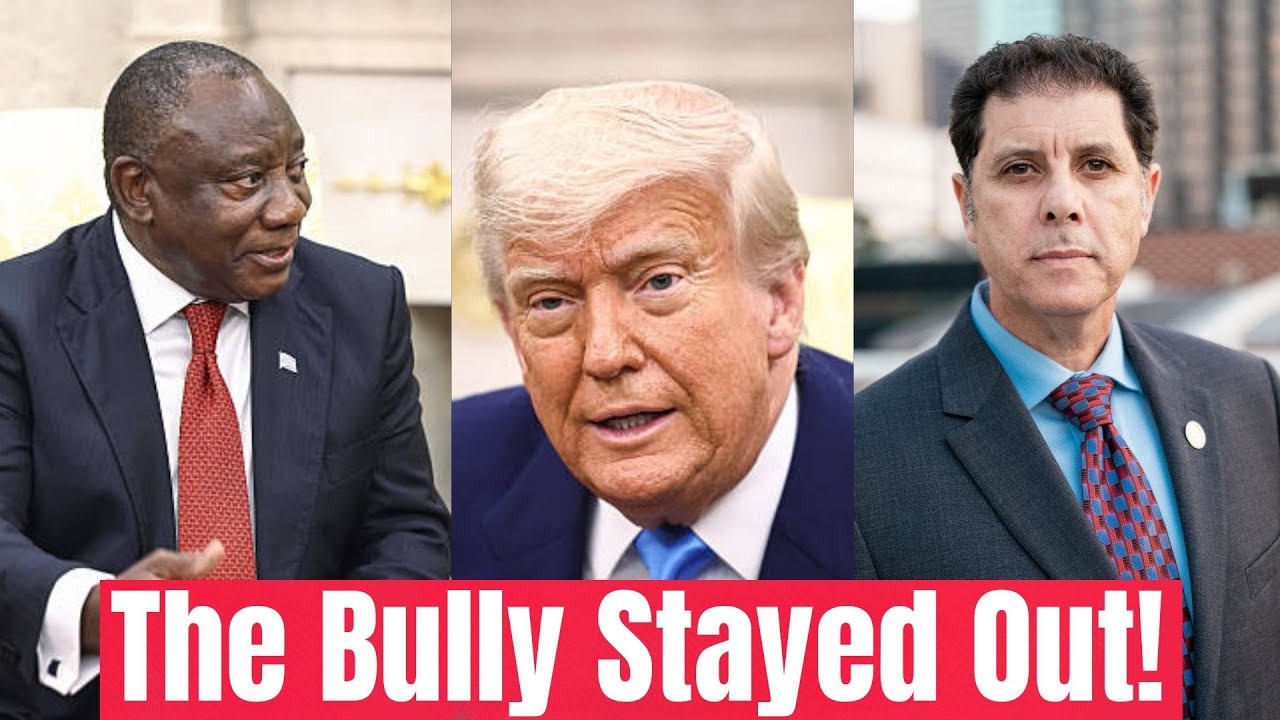
This content was created by David Oualaalou. This content was uploaded by David Oualaalou. This is a YouTube video titled "Who Cares if Trump Skipped G20 Summit in South Africa! Geopolitical Trends" (uploaded 2025-11-24T19:28:16Z). It appears to be a political commentary or news-analysis piece discussing former President Donald Trump’s absence from the G20 summit in South Africa and the broader geopolitical implications; no transcript or speaker information is provided in the excerpt.
Chapters
Hello everybody and welcome to Geopolitical Trends, where truth matters. I'm your host, Dr. Oualaalou. Very excited to be with you. I hope you had a, a relaxing, just peaceful weekend. You chilled out, just did nothing, and you are ready for to get up for a new week. By the way, the last week of November, so very, very, uh, excited. So anyway, I am going to be talking to you today about the G20, which G20 summit that just concluded in Johannesburg in South Africa. But it's not about the summit in itself, it's about not only the bully, uh, stayed out, didn't attend, but what it means from the bigger picture geopolitically and economically. And this is what I'm going to be addressing for you because I believe you need to know. So let me first say hi to our wonderful community. Let me see who is here. Uh, Seymour Facts, good to see you. Leanne, as always. Mary Burke, good to see you. Oh, that's an interesting one. Trump just didn't want the truth thrown up in his face. That is true, that is true. Dave H, good to see you. Uh, Eko Worm, good to see you. YYTT, good to see you, and good morning to you as well. Jerome Lazarus, good to see you. Say It Like It Is, Happy Monday to you too. Francis Tango, as always. Alim Sin, good to see you. Taiwan Steel, oh, you said you've been shadow banned. Oh, that's an interesting one. Uh, okay. Dad of the Eagle, good to see you. And Farhad Razavi, as always. Uh, who else is here? Let me see quickly here before I'll jump in into— if I miss someone. Matt Becky, as always. And this month, Monday, good to see you right here. Good evening to you too. All right, let me— before I'll delve deeper into all this, uh, oh, it says reload. Okay, we're reloaded. Yeah, all of a sudden my computer is just acting up. Anyway, uh, uh, before I do, I have some housekeeping items for you. Uh, first of all, once again, just For those who do not know, who just came in right now, what I'm going to be talking about today, I'm going to be talking about the G27, uh, G20 summit we just concluded in South Africa, and also we'll be sharing with you the declaration and, and, and, and so forth. But I have some housekeeping items, and this has to do with, uh, uh, some guests that I already lined up for you for this week. I know it's Thanksgiving Day for for my fellow American viewers or the viewership from here in the United States. So usually Thursday you don't do it, it's a holiday anyway. But, but I'm gonna be having Larry Johnson on the 26th, so it will be here. Also, uh, Einar Tengen and Warwick Powell will be here on the 25th, and Carl Zah will be here on the 28th. I will, I'll, I'll post in the community the exact timing for all this. It's already been confirmed. I just want to give you a heads up regarding this. So I'm gonna do some headlines for you and jump in into my analysis regarding this particular topic. Well, first I'm going to start with the news about the fighter jet, the Indian Tejas fighter jet that crashed at Dubai Air Show. Sadly, and I know it's, it's always sad news when a human life is lost. The pilot lost his life. So, uh, it's a— so an Indian-made fighter jet has gone down in flames at the Dubai Air Show, killing the pilot in the second known crash of the aircraft. This is like the second known aircraft crash for the fighter jet. So, so I'm gonna be playing the clip for you just to see the event in itself, and then we'll move on into our next one. Take a Take a listen here. All right, uh, it's, it's very, very sad. I'm not a pilot, I don't understand that, but I— the only thing I suspected is when he inverted the plane, uh, all the way. I think that's where the issue happened, I guess. I am not a pilot, I don't know. So just what do you guys think? If there's any pilots watching, a fighter jet pilots watching this show here, would you please share your knowledge with the community? So, so my— our condolences to the fighter jet's family. So nonetheless, another human being. So, uh, second thing has to do with India also, and I'm gonna Uh, you remember I did the video for you with Jayant Bhandari regarding when I said India caved in, India had to bow to its master. And I know I get some comments, I read them, oh, Dr. O, you don't know what you're talking about, we don't bow to anybody. Yes, it did. And now I have a confirmation for this one also. I knew it back then, that's why I did this, I did the video for you. So here's the thing, India's largest economic conglomerate holds now imports from of Russian oil. And this is like this largest conglomerate, it's called the Reliance Industries, which is owned by a billionaire Mukesh Ambani. So, and it officially announced the halt of the imports of Russian crude oil. And that's because of the pressure from the European Union, but also because from the US. And the US, as a matter of fact, the moment Indian government announced this, Washington welcomed the move while New Delhi is still under pressure from the White House, from Washington. So this is why the White House welcomed Reliance's decision saying, and I quote, "We welcome this shift and look forward to making effective progress in talks, in trade talks between the United States and India, end of quote. That mean we're gonna tell you the tariffs, we're gonna tell you how much you're gonna pay for the energy we're gonna be shipping to you. So this is again, I just wanted to confirm this for you. For those who have missed that video that I did with Jayant Bhandari, I'm gonna put the link for you in the chat box. If you ever wanted to watch it, please, uh, feel free to to do so. So there's a link, uh, for you, uh, in the chat box. And the last, uh, headline I have for you has to do with this individual here. Does anybody know who this is? Can you type in, in the chat box, the name of this individual if you happen to know who he is? So, and once again, I just want you to be part of the conversation. So, so let me see if, uh, who's going to guess on him, who's, who's going to guess who this individual is. I mean, I'm sure you would know. Let me just see here. I know it takes a while for the answer to show up. Uh, oh, Mac 9136, you got it. It's Brazilian, uh, uh, former President Bolsonaro. Jair Bolsonaro. Truth Seeker, you got it. Uh, Ramphel, so on, you got it. You guys got it. So anyway, Bolsonaro, uh, uh, has been arrested by the Brazilian police. So they arrested him on Saturday, and that's what after sort of his lawyer said that they have filed the petition on Friday to allow him to serve a 27-year sentence for plotting a coup under house arrest, citing his deteriorating health. In other words, they don't want him to be under house arrest. So that's— so it happened. It's been in the works. I was sort of read up briefly on the hearings in the high court in Brazil. So, so it's official, he's been arrested right now. So, all right, let's move on into our conversation about the G20. So here is the thing that I need you to understand, and I'm going to be sharing with you my own analysis, how I see this, by asking the key question: whether the world is slipping away from the G20 grasp because the United States seems to be heading that particular group. Not anymore, not anymore. So, so 15 years ago, if you are to think 15 years ago, the G20 was, was present as the world sort of governing committee, if you, if I may use the term. That was 15 years ago and have been successful back then in in leading some sort of coordinated responses to crisis, whatever that might be. So you think about the 2008 GFC, the Global Financial Crisis, the G20 responded to a degree. And at that time, the meeting of the world top economies from the United States to China and from the European Union to some other country as well, formed some sort of a rare framework for cross-division cooperation. That is the key word. So however, this landscape has changed. And because there are those in the media, and I'm going to share it with you, saying, oh, now there is a big, uh, sort of, uh, the G20 didn't live up to its standard because Donald Trump didn't attend. Well, who gives a damn about whether Donald Trump attends or not? Who cares? Even now, who cares about whether the United States attends anything or not? The world is moving on. And it's a reality Washington doesn't want to accept or admit. So as I said, this landscape of the G20 that was back 15, 20 years ago has changed radically. Because while the group represents about 85% of the global output and 75% of trade, is no longer— is the key word— is no longer able to produce political consensus. Why? Because the changing— the changes on the geopolitical landscape that is forcing a new trajectory and a new direction. And with So because you are looking at a new world order now, it's taking shape in which centers of power are distributed outside its umbrella. If we are to think of the US as the umbrella of this G20, no more, no more, because now you have various reports indicating the decline is not temporary. This decline is also reflecting a deep structural shift that exists in the structure of the international system, international order, international governance. And this is where you have the G20 moving from a forum of a consensus to an arena now for representing conflicts. That's the reality of it. As to whether Trump just snubbed G20, no, no, no, no, no, no, no, no. The media here in Washington and some places in the Western capitals like in Brussels, Berlin, Paris, London, and so forth, didn't have you, or Tokyo for that matter, didn't have you believe, didn't have you believe that, oh, just the US didn't want to go because, no, the reason why Donald Trump didn't want to go, one, is because he knows he's going to be faced, he won't be able to bully anyone else there. Second, the US will not be given that sort of, uh, aura it used to have now, because now you have other powers. And third one has to do with the presence of China in its modern, today's economic status. So basically, Trump was avoiding embarrassment because he knows he's going to be embarrassed if he would— if he would have gone. Because nobody's gonna— they're gonna be pushing back against what Donald Trump does. So that is the reason why. So this is why you have now international analysis. For those who are in the know as far as the geopolitical aspects of the world, they agree that now the G20 is no longer able to provide the political space required for a major agreement, and that the geopolitical tensions have turned summits from platforms for negotiations into arenas for displaying positions. You all remember the failure, uh, the New Delhi, the G20 that was in New Delhi, which was a complete failure because that summit in New Delhi was truly a model of decline, of failure. That's what it was. So the disappearance of the political environment that allowed for the successes like what we had back in 2008, 2010, and so forth— the global solutions now you're looking at, you know, this idea of the solution initiatives, it's what explains now how the 2025 The international summit, the international climate is no— can no longer tolerate some sort of forms of cooperation that we used to have before. And that's, of course, what characterized the post-financial crisis. And the first thing that comes to our— is going to hit us in our faces has to do with the US-China polarization. Straightforward, because this polarization has reached now a level that hinders any agreement. Why? Because China said, sure, you want to cooperate, we'll cooperate. You don't want to, we'll move on. This is exactly what Donald Trump didn't count on when he went ahead with the imposition of tariffs on China. He was thinking that China is going to bow, and he Donald Trump succeeded in doing this with India, but not with China. This is exactly where the challenge that is. So, and this is now what you're looking at. Of course, when, when we did that, this idea have polarization have reached a level regarding any agreement, not just China. You're looking at the Ukraine aspects or Ukraine-Russia conflict. Which I will be addressing this with Larry on the 26th. So, but also because what this is telling us— what does it tell? What this particular dynamics tells us? It tells us that— it tells us that now we come into really near a total paralysis within the group ability to pass any, any meaningful final financial or final statements per se. And this is, again, I'm referring back to the summit in India, and I did a video for you. It's, it's, it's on the record right there. And I argued, don't fall for what the final agreement and this proposal that they're going to be building, uh, some sort of an infrastructure from New Delhi, from India, all the way to Europe. And I, my question back then, I said, who's going to be paying for it? India? India cannot— can't afford it. The West is just giving India lip service because they know. And that's why that summit in India back then was a model of decline. And this coming from the German Institute for Geopolitical Studies, and I read it. So, and that's the one that notes— and this summit, by the way, the one I'm talking about, I got in India, took place in 2023, to those who've been familiar with it. Why? Because that summit failed to formulate a clear position vis-à-vis, for example, the war on Ukraine. Well, is G20 supposed to focus on the economic aspect or turn it, or turn the platform into pushing the agenda politically speaking? And this is where you realize that the G20 is moving to the direction where it is revealing now its inability to sort of manage the fundamental disagreements. So, and that is, and by the way, G20 that just concluded, they were able to adopt a declaration. Like I always say, always in summits and so forth, read the final statements, the Declaration of the Summit. They were able to address it, and they address it mainly regarding the global challenges that— and here's the interesting thing, they reached this over the objection of the United States. What does it tell you? It's a message right there. And that's by the time they reached that, the White House reacted by accusing— here's the thing— accusing South Africa of weaponizing its leadership of the group this year. We are using the terminology to justify the unjustifiable because it's unjustifiable. You decided, you United States in this case, decided not to attend What do you think? Should the forum just get paralyzed because you are not attending? Or they're gonna say, well, sorry, you're not attending, we're gonna move on. And that's exactly what happened. So the declaration, which was drafted, by the way, without input from the United States— and by the way, just to let you know how this draft works, they can be negotiated once they are punished. And that's exactly what the South African president, uh, Cecil Ramaphosa, uh, uh, spokesperson told the reporters. Yeah, at the same time, we cannot ignore what this reflect. It reflect the strain between Pretoria and of course Donald Trump administration. That's why he boycotting this. And I'm gonna tell you as I move forward here as to why the reasons he's stating. But for now, you need to understand that, uh, uh, what, what South Africa stated, because he was the chairperson for the summit, uh, they saying that there was an overwhelming consensus. There was only one incident that took place, and the incident came from this individual right here. You all know who this is. This is the, uh, I don't know what the word, but the president of Argentina, a chaotic president. So it came from this guy, Javier Milei. Why Javier Milei? Is the far-right president Javier Milei, because he's a close ally of Trump. So what did happen? He's the one who quit the negotiations right before The envoys of every country were about to adopt the draft next. In other words, at the final stage, but it was too late. So, so Argentina— here is what's been stated by the foreign minister. Argentina, quote, Argentina, though it cannot endorse the declaration, remains fully committed to the spirit of cooperation that has defined G20 summit, G20 since its inception, end of quote. So no, no, no, no. The idea is that Jafair was trying to sort of turn the summit into a failure because he was pressured by Donald Trump also, and it didn't succeed. So, and this is again leads us to ask that fundamental question: is the world slipping from the G20's grasp? As new powers are taking the lead? To me, it's a fundamental question and it's a question that touches on the real tension within global governance. And the answer is more nuanced. Yes or no? It depends again on whom you ask. The G20 maintains significant structural influence, but it's also— we cannot deny that it's facing genuine pressure from shifting economic power and geopolitical forces. And of course, the rise of alternative institutions. What am I referring to here? Two main ones: BRICS and ASEAN. So if we are to look at the structural reality of the G20, it's as clear as it can be. Go back to 2000. You think about, in 2000— since 2000, for example, the G7 share of global GDP measured by purchasing power parity has declined from 43% to 30%, while that of 5 original BRICS countries has increased from just over 21% to nearly 35%. I'm gonna send you a, a, a link for where I get this. You can read the article yourself later on if you choose to do so, because I like to provide you those sources of where the information is coming from. And I read this stuff because it's part of my daily reading. So, so when you think about also the nominal dollar— and I'm not going to turn this into economics, I'm going to focus on the geopolitical aspects When nominal dollar figures are used, the G7 continue to hold a significant edge at about 43% to 27.7%, but the gap is shrinking. Remember my conversation with Dr. Yan Yan about the in, uh, internationalization of the Chinese yuan, and more countries are moving into trading and swapping with yuan instead of the dollar. So this, it tells you as to this economic shift, okay, is reshaping who holds real leverage in global negotiations, geopolitically or otherwise. So of course we are not gonna ignore that the G20 still will some sort of influence. You know, it makes up about 85% of the global GDP and about 75% of the world trade. We're not denying this, but when you think about who is inside G20, you know, one country that comes to mind— which one? Does anybody can type in, in chat box which country comes to mind the moment the stats that I shared with you? G20 countries make up roughly 85% of the global GDP and about 75% of the world trade. And this due to one specific country. Which one is that, if you happen to know? If, if you know, type it in chat box, please. Oh, Matt Backe, you got it. It is China. ABC Mick, you got it. It's China indeed. I know, uh, Al-Amsin, it's China. You guys got it. Uh, uh, Athene Wu, China indeed. There are those here in the West that saying, oh no, no, no, no, this is because of India. No, I'm sorry, India will stand no chance in compar— in comparability economically and otherwise with China. So when we think about G20, we might consider Japan instead of India, in my opinion. That's just how I see it. But suffice it to say that this, with G20 positioning them as a key player in tackling global challenges, and even within the internal divisions that exist, this remain some sort of an unparalleled forum for coordinating responses because you have countries that don't want to cooperate. I'll start with my own country. And I'm not shy of saying that because it does. It doesn't want to cooperate because the US still thinking old mindset in a world that doesn't exist anymore. So this is why you're seeing G20 is splitting along developed versus emerging lines. That's one thing I need you to keep an eye on. So, and of course, when you consider the increasing tensions between global powers, which is moving forward, the rise in multipolarity, and of course you add to this a weakened UN system, which I've always said the UN is toothless. And when you add all this, you come to the conclusion that the G20, one of the few platforms where major economies can find common ground. That's the only way I see it. So because you think about it, the pivotal question is whether BRICS plus members of the G20 will seek to translate, okay, this sort of, uh, heft, if I may use the term, into some sort of a unified economic and geopolitical positions within the latter, meaning within BRICS. Another word, turning BRICS into another form of G20, but without the deadweight. To me, I've always said remove India out of BRICS. India has no place in BRICS. Yes, he was a founder, but still, just because you've been a founder, what are you contributing to do? That's to me the way I look at it, and I'm being straightforward, because it's a dead weight. Remove India out of, out of BRICS and only leave the countries that contributing something. So And this is where I am thinking, because you think about it this way, BRICS now is getting bigger, right? Think about it. If they coordinate, if they coordinate rigidly with the strategic vision, you know, if they do that, meaning BRICS, that means G20 will risk of becoming paralyzed rather than collaborative. And that's where these alternative institutions came in, or comes in, especially when you think about it for a BRICS, uh, uh, uh, uh, club, economic, that is. Get rid of the dead weight. That's the only way I can say it. Get rid of the dead weight and you'll be fine. So the alternatives are emerging. ASEAN, BRICS, and not only going to be playing a role into economics, but also will be playing a role onto geopolitical landscape. So BRICS has expanded and is positioning itself now as a counterweight to Western-dominated forums. My big concern is that you have members inside that will do the bidding for the United States inside the BRICS. And you know what I'm referring to here? I'm referring to India. I don't shy away about this because I know for a fact that India is going to be hindering the progress of BRICS in order to sort of serve the interests of the United States. And that BRICS will have to make a decision about this one here. Of course, that doesn't mean as of today that BRICS doesn't necessarily, uh, it doesn't mean, by the way, that G20 is losing its grip, grip on the world completely. No, because you have to think about the countries that inside. Rather, the world is becoming more multipolar. So, and when you have that multipolarity, you have competing forums existing simultaneously. So the real question isn't whether the G20 is slipping from power. No, no. But rather whether any single institution can command the authority it once did in an increasingly fragmented new global order. That is the key question we ought to ask ourselves. Liking this video so far? Don't just be a watcher. Go ahead and hit the like share, and subscribe button. And don't forget to tap the bell so you will not miss any of my videos or live streams. This way, you will be supporting a channel that stands for the truth and objective reporting. The choice is yours. Thanks for your support. Now let's get into why Donald Trump, uh, has skipped the G20 summit in Africa. So here's what he's saying. He's arguing that he denounced South Africa's leadership of the G20. What do you expect? You can't have the US controlling everything. You know, it's the chairmanship that turned over to the next country. As a matter of fact, Ramaphosa turned over the gavel for next year, uh, uh, championship. Who's going to be heading the next year? Is the United States. But Ramaphosa went ahead and gave the gavel to an empty chair, which is very, very— so that's bad for the US. Here is the one that's going to take the chairmanship and not even attending the summit. But beside the point. So this is what Trump saying, that he will not attend, citing alleged discrimination against South Africa minority white population, uh, uh, so white population, and inaccurately alleging genocide of white farmers. Are you gonna believe what Trump is saying? And even if we go with this argument, what makes this different than the genocide that's taking place in Gaza? Let's be honest about it. So, and this is what Trump said, and I quote, he said, quote, Afrikaners— which, by the way, I don't know if is that a word Afrikaners, anyway, are being killed and slaughtered and their land and farms are being illegally confiscated, end of quote. Which we all know, you and I know, that it's not true. And again, hypothetically, if this to be true, what about those that been killed and slaughtered? What about the— what's going on in Gaza? Other thing Trump stated is that the objection to the agenda Well, what do you expect? You want to dictate the terms? No. There is something called consensus. So Donald Trump or his administration opposed what it viewed as the summit focus on certain priorities. So Secretary of State Marco Rubio said he will not attend. Well, it is Marco Rubio himself that has pushing now for a war against Venezuela. And Marco is saying that South Africa is promoting DEI and climate change. You know, it's just, it's ridiculous. It's ridiculous, but it's also embarrassing. Embarrassing. So it is worth noting that human rights experts And South African officials have disputed Trump's claim about this white genocide or land confiscation. So beside all this, we think about the big picture, and as I told you, I'm going to focus more on the geopolitical aspects of it. Is the US skipping this G20 summit a reflection of how the world has moved on without the United States. And I wish it will be some media here in the US or London or Paris or Berlin or Madrid or whatever, they address this. None. Because to me, that's another fundamental question. Yeah, the US still holds some sort of structural power. But the world is moving on. The US economy still remain one of the largest by nominal GDP, but when you look at the massive debt we have, national debt over $38 trillion— yes, the dollar is still global reserve currency, yes, the American military capabilities are unmatched, But are they able to win a war? So, and to those who say, oh, the G20 Summit cannot function without the United States, I am sorry, I have to push back against that. So it might on the economic side, but not geopolitical one. So, because here is the thing, one summit's absence, if, if the US is absent from one summit or second or third, whatever, or even a boycott, it does not rewrite that fundamental reality. That is where the heart— what's at the heart of it. So, so Where the challenge is, the way I see it, is that the manner, the manner by which the skip of Donald Trump of the G20 summit revealed something real that is going on. That is to me where it is. So rather than declining to attend due to scheduling, for example, conflicts or minor disagreements, Trump administration actively rejected the summit stated priorities and the host country's leadership. And this, in my opinion, suggests a more sort of assertive, aggressive, if I may use the term, willingness to operate outside the consensus-based forum. This is what the United States doesn't want. It wants to have the last word and the only word. Unfortunately, the world has changed. And this is why it's either the United States trying to reassert its unilateral power or conversely some sort of a decline in interest in multilateral coordination. In whatever case, it's an ambiguous one. So, and that is the harsh reality that it exists. So, and then comes the real story of multipolar, uh, uh, polar system. So there are those again who said, oh, the world hasn't moved on from the US. I said, indeed, I agree, but not 100%. It's moving on gradually because the more of some sort of more a symptom of an already, what we're seeing is like a symptoms of already a shifting global order where unilateral American power is contested and challenged in ways that it hasn't happened decades ago. And that tells you the change right there. So, and that's what leads us to ask ourselves the key other question is sort of what is the geopolitical and economic trajectory of the G20? Is trying to project moving forward. So it's because we're not denying there are tensions exist between the structural influence and the deepening fragmentation that exists. And by the way, I'm starting to see the same trend within BRICS caused by India. That is where my big concern. So when you look at G20 as a whole, we're talking as a whole, the economic outlook is deteriorating no matter how you look at it, because G20 medium-term growth prospects have moderated to just 2.9%, the weakest since the global financial crisis. That should tell you something. And with that comes with the public debt rising to a record 102% of GDP. Global growth is projected to slow from 3.3% in 2028— that was, was in 2024— to 3.2% in 2025. And 2.9% in 2026. Of course, this is not— it's also a sort of, uh, uh, what's the word I'm looking for, exacerbated by the trade barriers and the policy coming out of Washington. So the US is particularly affected by this. Because GDP growth in the United States is projected to decline to 1.8% this year and 1.5% in 2026. Put this aside and think about the geopolitical divisions, which are even hardening the growth. So since Trump took office in 2025, in January 2025, the global environment has shifted sharply. And this is again, when you think about why Trump the bully didn't want to go, because he knew he's going to be facing a challenge. So because in my opinion, this to me, I'm signed to see, and I've been noticing the last 6, 7 years, the That's when I started to see certain signs that the G20 has become an arena of ideological rivalry and sort of competing development models that exist. That's what I'm starting— started to see it 6 or 7 years ago. And I said, nah, maybe, maybe not. But the last 5 years became as clear as it can be because with the widening divide within the group between BRICS and non-BRICS members or economies. That's once again my fear, is that BRICS has the potentials, but it would not live up to those potentials because you have country like India that will undermine its progress because it will be pressured by the United States. Let's not sugarcoat this, it's the fact. It's exactly what happened with the oil. Do you think India wanted to stop importing cheap oil from Russia? They were forced to. And that is why India wanted to take advantage by saying, oh, I want to be the, the spokesperson for Global South. I don't think so. And why the reason India said this few— two, two years ago? You know why they said this? Because they saw The trend of the Global South is gaining because it's gaining voice. So this is again where you see this kind of, uh, uh, uh, because the emerging economies are geopolitically inclined towards staying away from the United States involvement. It's because their priorities have gained a prominence at the G20 itself. But not to focus on what the US is saying, but rather shifting towards what the Global South wants. So, so that, that's the way I see it running, uh, moving forward. So, and this structural reform, the cracks in those structural reforms are starting to come to the surface. Think of it this way. In the last few years. The progress on many G20 agendas— items have slowed as widening geopolitical and economic divide have made it increasingly difficult for the group to reach consensus. And the trajectory, based on my reading, uh, and I'm going to send you a link, for you to read up on it should you decide to do this. And the reason for the trajectory that I'm seeing suggests that the G20 is becoming a less coordinated body for global stability and more of a venue where competing bloc clash. So Yes, it does retain economic heft. Nobody's deny— denying this, but its ability to generate abiding commitments and cooperation is declining. This is how I see it moving forward. And again, I am very concerned that BRICS might end up becoming insane because you have individual states that will hinder that progress. So when you think about— and I'm going to conclude with this, uh, just because that's all I have to share with you— and see if you have any answer. If you do have any question— I'm sorry, if you have any question, please prepare it and I will answer one or two for you. When I, when I take step back and look, look from outside in, I'm looking at G20 once the cornerstone of the international economic coordination. Make no mistake about it. Yeah, it was used to be G7 back then. So, but now you have G20 that is facing an unprecedented crisis of cohesion. When you have lack of cohesion, you run into a problem. That's my fear for BRICS. I'm starting to see the cracks of lack of cohesion within. And I'll give you a quick example here. When China proposed, how about bilateral trade, or a trade among us in a currency that will allow for that? And the Chinese proposed at that time yuan because of its economy can sustain that. And China and India objected to that. They said, no, no, no, we want trade in rupees. Well, your rupees stand no chance on the global, uh, basket, financial basket, or financial market. Who wants to trade in rupees? Even the Russians, we're wondering, are we gonna be just taking rupees that is useless? And once again, this lack of cohesion sort of will create a problem. And now you have emerging economies are gaining economic weight. And with that, BRICS nations now represent about 35% of global GDP by purchasing power. The group is also increasingly fractured along ideological and development lines. And of course, when you think about the US trying to sort of reverse the trend by reversing into unilateralism, stalling, or stalling the growth prospect. That's how they stall it, you know, because they want to stall, to stall the growth prospects. And competing geopolitical agendas have also transformed now G20 from a consensus building into an arena of rivalry. And I am going to have to mention to you this also with the public debt, slowing growth forecasts, and deepening North-South tensions. What are we left with? We left with an institution that is confronting a fundamental question, and that fundamental question is, can it survive as a multipolar world demands new forms of global coordination, or will it be just another casualty of a multipolar system? Time will tell. I hope sooner than later. So, uh, let me see if you have any questions. First of all, I want to say thank you to Francis Tango. Hi, Dr. O, keep up the good work. Thank you very much, Francis, truly appreciate you. So let me see if there's any question from you. Uh, who is this here? Uh, Canada, you put my country India as a garbage level today. It is sad to see where India is. I know some inside India that think that I'm always talking negative about India. No, I truly mean it when I say I really care for those average citizens, Indian citizens that deserves better, that require some sort of a response from the government that's supposed to work. We have the same problem here, it's just not to the extent level that India has. That is all. That's the reason why I address those. It's no different than what I do with the Philippines, for example. You know, Philippines, given the, the the corruption and the drugs and all that stuff that their president is involved in, deserve something better. Same for us here. Given the corruption that exists, we have a liar president, you know, we deserve something better, the citizens. That's all. So sorry that you had to say this about your country, but I truly understand where you're coming from. Uh, okay, Ramples, where did you put the question here? Let me see. Oh, here it is. Uh, Hong Ruan question: Is, is the G20 still relevant? Uh, yes, it is as of today, but not at the same level it used to be. You probably— what you will notice, uh, in the next few years— I will give it less than a decade I don't know the exact year, 3, 5, or 7, or 9, or whatever, but less than a decade, you're gonna see a major difference between G20 of today and G20 over the next few years. So, but as of today, yes, it still plays a role because of the presence of the likes of China. That is the only reason. That's, that's the only one I see. Uh, let me see another question, if there is another question here. I'm just scrolling here. Uh, no, I don't. So anyway, I'm gonna, uh— oh, there's one right here. Uh, question: why is Putin so patient with India? You know, I wish I have an answer for that, and, and, and I agree with your question. It's legitimate question. If I were advising the Russian president and I say, sir, you're going to have to put the dots on the i's, as we say. In other words, you give India options and a response within certain timeframe, and especially when it comes down to purchasing Russian oil, because the rupees is not worth much, or at least get paid in gold or some tangible asset. So why is he patient? I don't know. I mean, to me, I know that India is not going to be playing any role within really the heart of what geopolitics is all about, because India does not have what it takes to play that role. When I hear the media inside New Delhi saying, oh, we're going to become a great superpower, come on, stop kidding yourself and stop lying to yourself. So, so I wish I have an answer for that. So Uh, I don't know. So, but I do, uh, Dragon, I agree with you, Dragon. I agree with you in this. There is no doubt that, you know, Putin is a shrewd man. He's been around long enough to understand. He also understands the weaknesses of the Indian system, or Indian government, that is. He knows that India will bow to the US pressure. There is no doubt about this. I'm sure I agree with you, Dragon. You know, Putin understands this, and I'm gonna be asking Larry when he's here on the 26th. I'll bring this, this, this, uh, to the forefront. Uh, Francis Tango, I see one here. Question: I think Russia needs friends now, uh, even India as friends. But again, if you— you know, that's a good question, Francis, but I'm gonna break it down into an average daily life. Are you going to be a friend with someone who is a dead weight? You don't learn from, you don't benefit from, or if you need in time of— or if you need that friend in time of, of need, he or she will be there for you? I don't think so. You're going to be a friend with that. It's the same because India, in my opinion, is a dead weight. When you have a dead weight, it tends to slow you down. It tends to hold you back. So, and I am sure, I am sure Mr. Putin understands all this reality, you know. I'm not saying something that is new. He knows this. What is his long-term game? I don't know, but I know for a fact he understands. This is why you have to assess the relationship between Russia and China and between Russia and India, and you see the difference. You'll see the difference. That's, that, that's the way I see it. So, so it could be that just Putin is keeping India, uh, just in case, just in case. So, uh, say it like it is, you're right about these statements, in his back pocket. I won't be surprised. I know, you know, uh, that, that's the way I see it. In, in the world of geopolitics, you have to really— you can't react emotionally. You can't, because this is what Trump is doing. The guy is emotional. He just, let alone is a liar. It's embarrassing to me that we have a lying president. That's embarrassing. A president that's supposed to be the highest of the highest as far as the role model. But again, we all know how American system has become, and this is nothing new, not because he came to power. No, no, no, no, you have to go back some 30, some 35 to 40 years when things start to go into that. This is what I'm saying. I'm saying That's what you are going to be witnessing moving forward is this emergence of these other blocs like ASEAN, like BRICS, that's going to be play a vital role in reshaping the direction of the global geopolitical and economic trajectory. The question will become is will these groups be undermined from within? I mean, I am concerned now that next year ASEAN chairmanship is going to be turned over to Philippines. Do you guys know what the, uh, uh, Marcos Jr. said in Indonesia during last ASEAN summit about China? And this is what I'm thinking. You have to think, uh, ahead. This way you see where the trends are moving forward, and you kind of, uh, uh, uh, yeah, that I'm not denying that you could have think in terms of if you see somebody, in the case of India, being playing both sides or, or be standing on both sides of the fence, you might want to keep India closer. Like this saying goes, keep your enemy closer, keep your friend— keep your friends close and your enemy closer, possibly. So except that when I look at this and I look at China China doesn't do this kind of game with India because they know why waste the time and energy. Like I said last time, and I did a video, it's on the record, I said, Mike, my word, if India is honest about dealing with China, they would have put the issue of the border on the table and resolve it once for good, once for all. And if they do that then I know personally that India is honest in its dealing with China. It never happened and it will never happen, at least on part of India. China will be willing to have a talk regarding this. I know this for a fact because I asked some people in the know. So, and this is again where you see the— and again, I look for trends. That's why I call it geopolitical trends. I look for trends. I look what Marcos Jr., uh, Bongbong did in Indonesia during the ASEAN Summit and what India is doing on, on the side of BRICS. So this is why you are hearing about the resignation of Marcos Jr. in Philippines, and this is why you are hearing some voices about, uh, the dismissal of India from BRICS. I'm one of those that's calling for that. It's because I am concerned of what's coming, and I want, I want BRICS to avoid that. The same applies for Philippines. I want Filipino people to avoid falling into that hole. This is where the problem is. Uh, let me see quickly here if I know, uh, this question. I'm gonna have to save it for Larry. Larry will be a much better person to answer this. But let me see. What about Russia and Kargil? Dmitryev, I hear Putin using him to negotiate, uh, is a sign— is a sign Russia wants to be accepted by the West since Dmitryev has business ties to the West. Not necessarily, not necessarily. It might appear that way. It might play to the Western senses that you want to have somebody who is very familiar with the West, but not necessarily want it to be accepted because Russia has moved on, you know, in my opinion. So, and I will make sure to ask when Larry here on 26th, and I hope you join me and you put this question again, uh, when Larry's here. So, uh, okay, let me see here. Oh, oh, that's a good comment here. You know, 1.4 billion and thousands of gods, uh, and not easy to manage their survivals. You got a point there. And again, they do their tradition, they do whatever, but again, I am thinking about the bigger picture. I'm thinking about the future of the world. Has nothing to do with India or the US or whatever, or China or Japan or whatever. The world, humanity. So, okay, Ramposo One, where is your question? Dr. O, what about my question? I got you very good info. Okay, where is the question? Can you type it again, Rampal01, please? So I'm gonna wait for it to show it. Uh, James, it won't be surprised with something like this, uh, because they're gonna have to think about the EDCA, so Yeah, I won't be surprised there. You know, there are certain coordinated efforts, uh, or among certain institutions within the US government. So not everything comes from State Department. Or yeah, the answer is yes. I want— the possibility is there. I will not rule that out. Uh, okay, Ramposawan, I'm waiting to see if there is a Uh, G-Wig, that's a good comment. That is it. Xi better be grooming successors that will be for good for humanity and good faith characters. That is a good point. It's because I am starting to ask the question. I am sure President Xi Jinping is thinking about it because no leader stays forever. And to me, what President Xi has done for China, and, and to me, if, if he steps out step down, not step down because he's forced, but step down because he did what he did and now time to, uh, turn the gravel, uh, gavel to the next person. So, but he will have a say into all this. It will be good for his legacy because that's one thing President Xi Jinping is going to be remembered forever, is where he brought China from 2011 to now, where China is. So So if I were advising President Xi, I would say you might want to start to think about that. So, but I am sure he will, he will do things behind the scenes to groom the next person because want to keep the trajectory up. So, so, and, and second, Chinese system is different than ours. So for us is every 4 years, whatever. That's, that's where the difference is. All right, I'm gonna sign off here. And I don't see the question from Adam. See, maybe next time, or just put it in a comment. Please hit the like button, I will greatly appreciate it. And, and don't forget to subscribe if this is your first time, and, and just share the video with others. So I look forward to seeing you tomorrow on the 25th with the Anna Tengen and Warwick Powell. And on the 26th, I I will be here with Larry Johnson, and on the 28th we will have our monthly conversation with Carlza. So I hope you guys enjoyed this analysis, and I look forward to seeing you next time. As always, remember, geopolitics impacts your daily life in more ways than one. Till next time, bye-bye.
More from David


Beyond the Single Actor: Why the Gulf Isn't Choosing Between the US and China


Iran, Iraq's Militias, and the Houthis Are Coordinating! This Changes Everything




Who Controls the Next Decade's Resources? Latin America and Africa's Geopolitical Crossroads

The Chokepoint Trap: How Washington's Stupidity Triggered a Cascade That Now Controls the World

Trump Spooked as IRGC Unveiled dual-use SLV, Deployed Ghadir Mini-Subs & Hinted at Tactical Nukes!
