Who's Behind the Failed Coup Against Ibrahim Traoré? Geopolitical Trends!
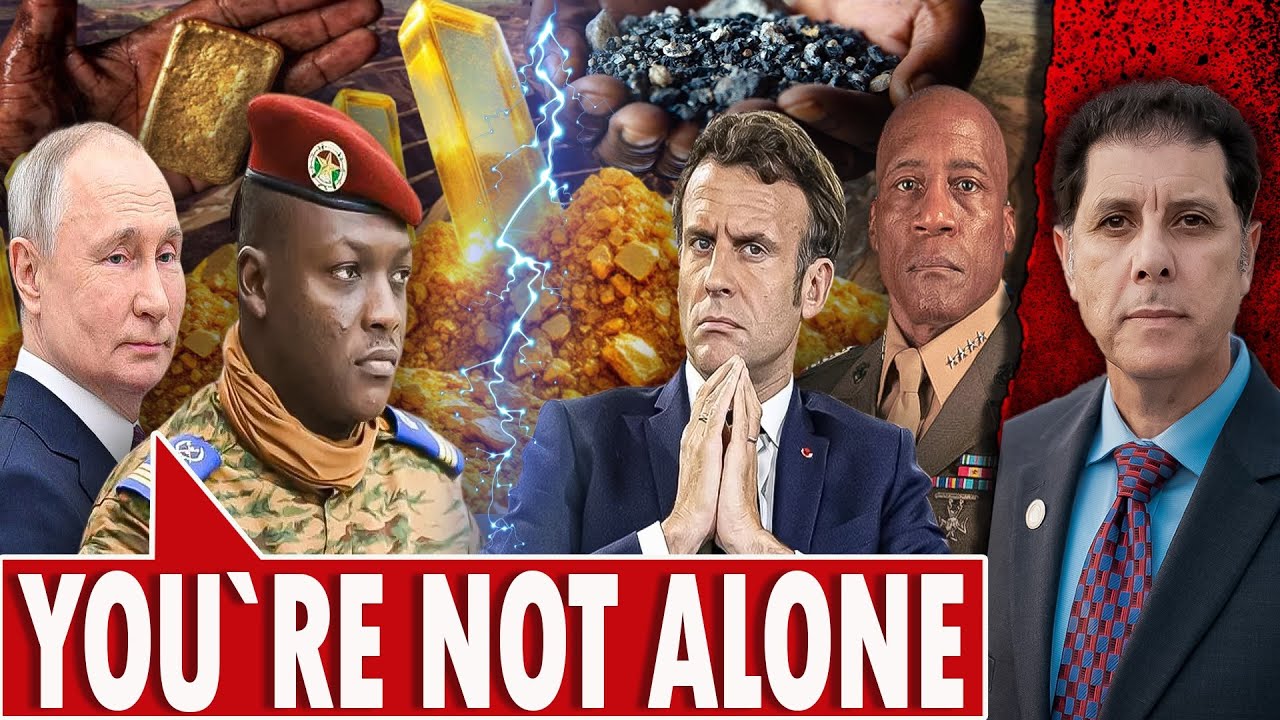
David Oualaalou analyzes the failed coup in Burkina Faso as part of a geopolitical struggle over Sahel resources. Ibrahim Traoré's government nationalized gold mines, planned domestic processing, and discussed a gold-backed currency to replace the French-controlled CFA franc. The U.S. and France have accused Traoré of hoarding gold while allegedly supporting a coup attempt.
Chapters
All right, hello everybody and welcome to Geopolitical Trends, where truth matters. Excited to be with you as always. Uh, have an interesting topic for you. I know it has been ongoing for the last, uh, 4 or 5 days or so. I was aware of it. I didn't want to address it right away till I get my facts together. And I'm going to be talking to you about the failed coup that took place in Burkina Faso. But I am not going to be detailing as to what took place and all that. I'm gonna be providing you the reasons why the coup took place in the first place and who might have been behind it. This is very— some sort of, uh, again, I am not surprised. I am surprised at the way how they went about it. And the reason why, and also because it reflects on past, but precedent, another word, events that took place in a similar setting that we are seeing today. So this is what I'm going to be providing you my analysis, uh, about. And of course, I will entertain, uh, if there's any question towards the end. But first, let me say hi quickly to our wonderful community, uh, Engineer CCTV, good to see you. Bangladesh, uh, wow, that's an interesting— Mr. Point Man, good to see you. Mr. White One, good to see you. Hanging G, as always. Uh, Bertrand Belzor, good to see you. Uh, Stop Censor 4, good to see you. Christian, uh, good to see you. Abdul Paul, good to see you. Liang, Willie Homan, uh, Samsam B. Vera, my apologies, couldn't pronounce this last one. Olaf Soditir, so good to see you. Uh, Athene Wu, Francis Tango, as always. Army with Harmony, good to see you. By the way, Army with Harmony, you need to check your junk mail. You know, I was informed about an email sent to you. You probably didn't see it in response to your initial email, uh, to the, uh You remember, guys, when I did the talk for the community conversation and we talked about, uh, the R&R that I was taking and all that? Some of you wanted to know, uh, you sent an email here, so make sure to check your junk mail because they responded to you. I was informed about it. So, uh, all right, guys, let's, uh, leave it. Timeline Dunkley, good to see you. Taiwan Steel, as always. And Dr. Freeman from Ghana. Good to see you as always. Uh, all right, let's, let's get in, guys, because we got a lot to cover. There are a lot of moving parts, and once again, I am going to be providing you a bird's eye view from the top, but put it in perspective as to, uh, what's leading— what led to this failed coup, which, by the way, this won't be the last time. Mike, my word on it. So But first, let's do some headlines here because there are some interesting, uh, dynamics that I need you to be aware of. Then, then we'll go, uh, into, uh, the analysis, uh, and dive in into that. I'm gonna start with the first one. Once again, I am not surprised because I talked about this the moment Mr. Trump launched the tariff war. This is a statement coming out of, uh, uh I'm sorry, I am getting the wrong— well, actually, I can talk about it first. So, coming out of Beijing, well, so here is what China is saying. China vow not to bow to Trump's trade pressure, which is exactly what I've been arguing from the beginning, that this time around, don't expect China to bow because they are in a strength, in a position of strength. So the ball is in the US court, not the Chinese. And this is what was coming out of Beijing because now they are open about it, calling Mr. Trump a bully, which we all know how it is. So China has criticized the US President Donald Trump trade war against it, stressing that it will not yield and calling on the international community to stand up to what it's called American bullying. They, they, they're right.
The—
here is the quote, and I quote, bowing down to a bully is like drinking poison to quench your thirst, and it only exacerbates the crisis. End of quote. Interesting how the Chinese used this particular sentence here. And was this— is through the Foreign Ministry which stated in a video they showed in English with the Chinese subtitle, uh, and that China described the United States as a paper tiger, in quote, noting that American imports and exports account for less than a fifth of global trade and that the United States does not represent the entire world. Uh, spot on. And you can just see the logic, the argument, you know, the erratic policies Mr. Trump embarks on have nothing to to do with the welfare of Americans. We not bring the jobs back or manufacturing as he claimed. It's because we don't have the infrastructure for that and we don't produce the brain power that's going to deal with the new, uh, era of the economic, uh, the technological economy because it's a digitized economy where we are moving, uh, towards. Uh, next headlines, it has to do with, uh, let me see what it is. Uh, this one right here, this is Zemzem camp in South Sudan. So the reason I brought this, uh, to your attention, because it was an article published by the Washington Post. Well, check out the headlines. It says, and I quote, America must must act to stop genocide in Sudan. Huh, it's laughable, it's laughable. Of course we have to stop in Sudan, but not stop in Gaza or some other places. So, and this is what in an editorial, uh, The Washington Post warned against a repeat of the United States failure to act in the face of mass atrocities has, has happened 50 years ago when the United States ignored the, the, uh, the, the atrocities committed by the Khmer Rouge in Cambodia. This is manipulation right open. So funny how they focused on what the Khmer Rouge did back in Cambodia but not talking about what's taking place today in Gaza. I mean, this is to me hypocrisy of the highest order. But again, my point for sharing this with you, for you to start pinpointing exactly where the manipulation in the narrative— because this is really a manipulation, basically. That's how I— so the newspaper called for the immediate and effective action by the United States to halt the ongoing humanitarian tragedy in Sudan, which is described as the worst in the world today. Well, I couldn't— I disagree with this assessment because the worst is what is going on in Gaza also. Come on, let's be fair and let's be right about presenting the facts. So once again, you guys be the judge. I'm just providing you the facts here. I understand how manipulation happens, especially when statements come in out of Washington. Uh, the last one I want to share with you has to do with North Korea. Now don't be surprised, by the way, if I am to tell you that with what's going on with Burkina Faso, which I will address, don't be surprised that you might have North Koreans involved behind the scenes. And I'll tell you why later on as I move forward. But this one is for a different reasons why I'm sharing, uh, this picture with you. What you're looking at, you are looking at the, uh, North Korea's, uh, uh, uh, Kim, Kim Jong-un of North Korea ordering the bolstering of North Korea's naval nuclear capabilities. Your keyword right there, naval nuclear capabilities. So because Kim Jong-un has ordered now the acceleration of the efforts to bolster the offensive capabilities of the Navy. There's a— yeah, you guys can hear this— a major thunderstorm. So in case we get cut off, that's what it is. There's a major storm passing through here. So, uh, anyway, this is why, uh, this is what the state media stated today. As a matter of fact, it was this morning, uh, and when I picked it up, because usually that's what I do in the morning, I go around the world looking more information that would be of use to you. And this is why the country conducted its first— North Korea, that is— and that's what you are looking at in that picture. They conducted its first missile launch from newly commissioned submarine. It's a major, major developments, you know. And this is why, uh, uh, and Kim, by the way, Kim Jong-un observed the test fire of the hypersonic missiles, strategic cruise missiles, anti-aircraft missiles, automatic cannon, and electronic jamming weapons from the destroyer. That's the picture over there, Choe Ho Yeon. I'm sorry if I mispronounced, uh, to those who speak Korean language. So, uh, and, and they added in the narrative or the report that this is the sea-to-sea tactical guided weapons in addition to what has been tested. My point in all this, you know, when North Korea show this kind of capabilities, we dare to threaten them. I mean, tell me when was the last time we threatened North Korea? Because we know what the outcome is going to be. And look at now, just like I told you yesterday about the Houthis and what was going on, We couldn't even defeat that. So anyway, this is what I wanted to share with you about, uh, headlines. So let's, let's get in into our conversation regarding what's going on in Burkina Faso, because there is a lot. Of course, here in the West, I surfed last night and this morning, articles are very, very limited in the West. They don't want to disclose the reasons why, but this is where my analysis is going to be coming in here, and I'm going to be sharing with you. Uh, and by the way, I had a chance to read an article by Paulo Aguiar of the Geopolitical Monitor. In a very interesting article, I disagree with some contents of it, uh, however, uh, overall it's worth, your time, uh, reading it if you feel like it. So I'm gonna put the link for you in the description, and you guys can, uh, check it out later on should you decide to read it. So, but here is the interesting thing. We put this within the context of why all of a sudden Europe is interested in engaging in, uh, in, in Africa. And the other question which the article addressed is Can Europe compete in Africa's new Great Game? Because remember, it was about a year ago when I talked about the possibility that what we're gonna be witnessing is a geopolitical fight in Africa over access to its resources by major powers. Because this coup, this failed coup that just took place in Burkina Faso, is a reflection of that fight, the geopolitical one, that is. So, so because when you consider Europe's engagement in Africa, how was it overall? What was it shaped by? It was shaped by basically just accessing the raw materials. Of course, Europe is not going to admit to that. What Europe is going to be saying is that, oh, we share values, we have democracy, the promotion of democracy. And human rights and so forth. You all know the, the, the, the, the narrative, how it goes. And this is where Europeans are lying about their presence in, in, in Africa, because they are saying that it's always been European policy has focused on the capacity building and humanitarian aid, according to the article. Of course, they have never disclosed the European military entanglement behind the scenes by supporting rebel groups or terrorist groups or extremist groups, whatever you want to call them. So, but now with the geopolitical tensions that's rising, of course, is changing the game. And this is exactly when you have to think about what's going on in Burkina Faso or the entire Sahel region which I am going to detail for you. So, uh, I was thinking about doing a little geography for you because it is worth understanding where everything is. So let me share a map with you, a map that I kept from a long time ago. I knew this is gonna come back up. So what you're looking at, at the Sahel region. So where is the Sahel and what is it? The Sahel region or a Sahel in Arabic and Sahel in English, how we pronounce it, is a wide stretch of land running completely across North and Central Africa as you're looking at the map. And this one sort of passes through 10 countries and it begins on the Atlantic Ocean or the Atlantic coast of Senegal and Mauritania and passes east through the central parts of Mali, Niger, Chad, and Sudan into northwestern Eritrea and, of course, ending at Eritrea's Red Sea coast. So you can look at that stretch right away all the way from left, which is Mauritania's coast, Senegal, all the way to Red Sea, Eritrea's Red Sea coast, that is. So, and of course, when you think about part of the Sahara, also reaches into the extreme northern part of Burkina Faso and Nigeria and the extreme south of Algeria because of the desert. So the Sahara Desert, that is. Nigeria is the most populous, of course, of the Sahelian countries with a population of more than 212 million people, which also makes it most populous country in Africa. So now there is one particular aspect that I need you to understand, uh, and this one has to do with the ethnic ethnicities, because you need to understand, uh, so this way makes sense to you. As to really what this is all about. Because without understanding, uh, this kind of ethnic makeup of, of all this, it's, it, it's just not going to make sense to you at all. So, so here's what I need you to understand about, uh, about the Sahel region. Sahel region in itself was a home to many, many kingdoms. So that's what a lot of people do not know. And of course, Sahel in itself is a home to several peoples and cultures. There are a variety of things that we just don't know much about. I have some pictures for you here, guys, just for you to look at, uh, for, for where, where this region is. So when you think about it, you have, for, for example, the most northerly ethnic group of the Sahel region are none other than Tuareg, which is the Tuareg. And I used to travel to, for example, I spent time in Ivory Coast, which by the way is the source where this failed coup is, is, is launched from, and I'll get into that soon. So the Tuareg, which is mainly people of the Berber origin, a Berber, you find them also in parts of Algeria, and you find them also in parts of Morocco, southern parts also. Now you have also the Sherian people which lived in northern Mali and northern Niger. So, and further to the west, uh, are the, the, uh, Soninke, which is the ethnic group that founded the Ghana Empire. This is what you need to understand. So Modern-day Sonink live near the Bakéu, which is on the Senegal River. You have to understand this dynamics because without understanding, it's just not gonna make sense to you guys. And this leads me to at least briefly address the history of the Sahel, but I'm gonna talk also about the history of Burkina Faso itself. South. So let's start with Burkina Faso, uh, and I'm going to share a picture if I have a picture here. Let me get a picture for you. Okay, where is, uh, yeah, I have this one here, but this is like a, a trowel. There was another picture that I had beside this one, but in any event If we consider thinking about the history of Burkina Faso, we're talking Burkina Faso specifically, and I'm not gonna go back to about 2600 BC, it's too far out. Suffice it to say, I can mention, for example, in 1700, Mossi kingdoms increased the sort of the regional economic and military power. But what I want to focus on is from 1898 forward. Briefly here, guys, you know, 1898, what happened back then? That was when the Franco and the British— yeah, the Franco-British Convention, that's what the one that created Burkina Faso today's borders. When you see Burkina Faso's border, uh, actually when you look at the map here you will be able to see the border. See, here is Burkina Faso, right here. Burkina Faso, small, south of— southwest of Mali. So those new borders, that's where defined, uh, basically in 1898. So fast forward to 1915 to 1917, Burkina Faso wasn't known as Burkina Faso, it was known as Volta Bani. So, and that was when the Volta-Bani War evolved, which war was anti-colonial rebellion in modern Burkina Faso and Mali. So, and this is where you had at that time about between 15,000 to 20,000 fighters. Those are rebels, you know, and that's what trying to fight the colonialists. So fast forward to 1919, that's when France creates the French Upper Volta, because that's what separated— which is separating the present territory of Burkina Faso and Mali. This is where you need to understand this geography. It makes perfect sense, uh, to understand this one here, guys. Because now you see in Burkina Faso, Mali and Niger wanted to form an alliance together because they trace back the history, 1919, when the France created that sort of the upper, the modern Burkina Faso and Mali. So now fast forward again to 1932. After the failed attempt to promote cotton as an export crop, the colony is dissolved and split between the French colony of Ivory Coast, French Sudan, and Niger. 1947, following the intense anti-colonial agitation after World War II, France reverses its previous decision and revives the colony of Upper Volta. Remember, that was the word given to Burkina Faso back then. So 1958, Upper Volta gained self-governance and joined the Franco-African Community. In 1960, Upper Volta became fully independent with Maurice Yamigot as president. And in 1966, military coup deposes Yamougué and suspended the constitution and brings in military government and under Lieutenant Colonel Sangoulé Lamazina. 1976, a new constitution establishes a 4-year transition period towards the civilian rule. And, uh, that's what happened at that time. 1978, Senghor Lamine Senghor is reelected. 1980, Said Zirbo, or Sayyid Zirbo, overthrew President, uh, Lamine Senghor in a bloodiest coup and set up military, uh, government. 1982, Zirbo is overthrown by Jean-Baptiste Oualaalou. Fast forward to 1984. See, this is specifically important. Why? It's because in 1984, when the Upper Volta was renamed to modern-day Burkina Faso, 1987, Sankara is killed in a coup. And I'm gonna talk about Thomas Sankara because it's very, very important to understand. And of course, the rest is history as to what happened in 2022, the two military coups in one year. And January coup led by Damiba seized power and deposed President Kaboré. And in September, he was ousted by Captain Ibrahim Traoré who said the second coup was necessary because Damiba was unable to deal with the Islamist insurgency, which is true, by the way. If you know the insurgency, what they were doing in North Burkina Faso and who was supporting them, this might shock you some. So that's the brief history that I wanted to share with you into this. So, so Let me share one, one thing with you while I'm talking about history regarding Thomas, Thomas Sankara, because you need to know about Thomas Sankara. And I think I have picture of him if I am not mistaken. Yes, right here, 1983. Ask any Burkinabe and they'll tell you that was a good person. Because he trying to do what's good for Burkinabé citizens. So why is this important to understand? Because some— Thomas Sankara, you know, sort of the equivalency— he's been given the equivalency of, uh, what is— who was the revolutionist in Latin America that was well known? Let me see if you guys can type in this in the chat box. It was well known in the history. Let me see, from Latin America. Oh, you got it, Multitome, you got it. Rivera, that was— he was compared to him because of what he wanted to do for his country. So long revered by some sort of youth and activist across Africa, not just in Burkina Faso. Sankara finally also achieved a measure of government recognition in his country. And you know why? Because we're celebrating the 30th, the 36th, I'm sorry, the 36th anniversary of his assassination in a military coup. And for years, for many, many years, the commemoration of the late president, that were organized by civil and political groups, not the government. And that was of course inspired by his revolutionary achievements and ideas. And of course, uh, you know, on October, uh, 2023, it was specifically October 15th, Burkina Faso's governing military regime, keen for more popular support made the anniversary an official event. So, and I'm not going to get into a lot because usually he was considered as a hero of the nation, uh, and he— some sort of, uh, what he was trying to do for his country, it's exactly what Ibrahim Traoré is doing today, which is leading to this attempt on his life, meaning, uh Ibrahim Traoré. So, so anyway, that's— I just want to provide you a quick, uh, uh, at least to understand what's going on. So, so now here is what's going on with the failed coup, and the local media just reported this about 4, 4 days ago or so because it was supposed to be a meeting scheduled at the, the headquarters of the general staff you know, and this one was supposed to include army officers. However, that meeting was postponed and later on was canceled. And this is where you have to understand the ins and outs of what was going on. So first, let me, uh, uh, I'm gonna be, uh, figuring— hold on a second here, guys. Uh, 1:33, and that will give you an idea as to Why?
1:33.
I'm looking at a timestamp here that I need to share with you.
You—
okay, take a listen here. I'm gonna just start with this, then we'll, we'll elaborate more as we move forward. Now you're going to recognize, of course, this liar here. So take a listen here, guys.
One of the poorest, yes, yet fastest growing demographically. The succession of military coups will make the region more unstable for years ahead. Russia is both influencing and benefiting from the crisis. And the region has become fertile ground to the rise of terrorism. This is of direct concern for Europe, for our security and our prosperity. So we need to show the same unity of purpose towards Africa as we have shown towards Ukraine. This is a must. We need to focus on cooperation with legitimate governments and regional organizations. We need to develop a mutually beneficial partnership which focuses on common issues for Europe and Africa. And this is why, together with HRVP Borrell, we will work on a new strategic approach to take forward at the new— at the next EU-AU summit.
Okay, okay, the keyword is we're gonna be working on a new strategic. That's what she was referring to between the EU and the African Union. African Union is the, uh, the entity that serves the European interest, by the way. So, and, uh, for this clip, guys, I give credit to the African News Channel. That's where I get it, and you give credit where credit is due. So, so now you're going to think about why the Burkina, uh, Burkinabé authorities have announced on Monday about the, the, the failed coup, uh, that they have thwarted that failed coup. Excuse me. Which involved several military personnel and former members of the armed forces. So of course the information was made public later on because today there is a massive demonstrations in support across Africa in support of Ibrahim Traoré. So you need to understand this, why the West is pissed off, the United States included, France and the rest of Europe, of course, because Europe, they just following, uh, uh, the what the United States does. And this is why all of a sudden you find in the United States is getting sort of agitated with what Burkina Faso, uh, leader Ibrahim Traoré in this case getting into the policies that they're gonna embark on. They are very, very interesting once you know exactly what this involves. So this, this is the Minister of Security, Mamadou Sana. He is the one who announced the, the, uh, the failed coup. And, uh, sort of, uh, uh, now they are looking for some deserted military personnel who have fled. So some of them were involved, like for example, I have some screenshots of certain 3 individuals. Those are part of an elite unit. Those were closer to the president's circles. They usually, you know, they don't say much, they don't whatever, but they were the one that were higher by certain entities to keep tab onto the movements of the troops, the movements of the president, the schedule, and so forth, to have an idea. And this is why, uh, some sort of the security ministry decided to make that public. So now, the meeting that took place on April 24th at the Presidential Palace. And I have a picture of this. I, uh, I looked it up to make sure is the right— is the right building, and, and, and it was. Assuming I have the picture here. No, I don't. Uh, yeah, I do, right there. Excuse me. Is the Presidential Palace. So what was important about this one? Is that the meeting that took place was under high security. They even had to bring in, uh, sniffer dogs. And of course, they had helicopters flying because it was a failed coup. That means what? That will be a second attempt and a third attempt and so forth. So this is not the last time. And that is why Ibrahim Traoré himself has called in for massive demonstrations today in support of the government. So, and of course, the objective of that, what is it? Is to condemn Western interference. This is all about Western interference, especially, especially after the recent accusation by none other than a four-star US general Michael Langley. And I am gonna share a clip with you that you need to take a listen to that, and I will elaborate more into that one. Okay, hold on a second, guys. Let me share screen with you, and we'll take a listen, and I'll elaborate on this one here.
In a moment that reverberated across continents, General Michael Langley, head of the U.S. Africa Command , delivered a stunning accusation before the U.S. Senate Armed Services Committee. Speaking with calm authority, he alleged that Captain Ibrahim Traoré, the transitional leader of Burkina Faso, was stockpiling his country's gold reserves to strengthen his personal grip on power.
You know, I wanted to stop that to tell you that is a lie. First of all, that's a complete lie, and you will know why as, as we move forward.
No hard evidence was provided, no data, no audit trail, but the damage was done. The accusation was now public record, and the implications were explosive.
Um, ask a few more questions here as we hopefully recess. Um, Africa is a mineral-rich, resource-rich continent, is that correct? Yes, Chairman.
Okay, and you, you can leave the microphone on. This wasn't just about gold, it was about a shifting world order and a new generation of African leaders no longer playing by the old rules. Why gold and why now? The timing of Langley's accusation was no coincidence. Weeks before the statement, Burkina Faso had shaken the global gold market by announcing that it would stop exporting raw gold. Instead, the government declared it would refine and process its own gold domestically, keeping the wealth within its borders. Even more radical was the idea that followed: a potential new African currency backed by physical gold was being discussed behind closed doors in Ouagadougou and in neighboring capitals like Bamako, in Niamey. This would mean severing ties with the CFA franc, a colonial-era currency still controlled by the French Treasury. To Western powers, this was not mere economic policy. It was a direct threat to financial dominance in West Africa.
Okay, what this— what you just heard, what does it remind you of? And And I'm going to ask you about one particular country that has similar approach. Can anybody name for me the country that almost started this same process? Let me just see in the chat box. And once again, guys, just to get you part into the conversation, uh, Kevin, Kevin Barker, you got it. Zipper, you got it. You guys got it, right? By the way, Shane, you got it. Jerry, Larry, Irene, you guys got it. It was exactly— that's what it was. It's because, first of all, you're gonna ask yourself, what the heck is a 4-star general getting involved in politics to begin with? You know, and this is one of the, you know, he's not qualified to talk about geopolitics. Even get involved in that. He's a military man. Now, for me, I'll give him credit in military affairs, but when you start getting yourself involved, and that tells you right there a reflection of what our foreign policy is all about, because our foreign policy is a militarized foreign policy. For him, meaning the guy who, uh, the, uh, General Langley General Langley, who lied because he, he lied. Usually that's one of the no-no rules. You can't lie. You know, he apologized later on, but it's too late. The damage has been done, you know. But also it tells you what the US thinking is. And by the way, Washington is working as we speak on a strategy regarding the Sahel region in conjunction with the French and some other players in Europe. And that includes NATO, of course. And this is what you need to understand, these dynamics as to why it's all important for you to understand, for example, why General Langley had to say what he said. You know, you know, Ibrahim Traoré is using gold to enrich himself and corruption. You know, shame on him saying that when we have corruption in our own country. So, but here is the thing, you need to understand that all three countries, Burkina Faso, Mali, and Niger, all of them for over a decade, you know, and I was aware of, I was in Ivory Coast, we were aware of what was going on. With the insurgency, which is the fights that those governments were dealing with the jihadists. Well, guess what? Those jihadists— who was financing those jihadists? Who was providing them the intelligence information? And you don't know what for. So, and this is why when you see all those three countries decided to take matters into their own hands by expelling the French forces, expelling the Americans as well. They don't want anybody, and they have replaced it with having the Russians in. Because here is the harsh reality that Western media will not even disclose, whether they know or not, but also the Russians didn't talk about it. The Russians have sent special commandos that will be with a sole mission of protecting Ibrahim Traoré. So they're already there. So, and this is why it's very, very important to understand this, uh, this dynamics going moving forward, that the three countries now vow to sort of form an alliance, vow to strengthen their alliance, meaning Burkina Faso, Mali, and Niger. And it's called the Sahel States. So this is again where you have to understand why the lies that is emanating from, uh, sort of, uh, uh, like what we hear— we heard about, uh, General Langley saying that— well, it's the gold? No no no no no no no no! It's because Burkina Faso since Ibrahim Traoré took over they have been working on nationalizing— as matter of fact they nationalized the gold mine which means what? They taking control of the operations that were previously held by foreign companies and I know one of them called Endeavour Mining This is what this is about. They don't want Burkina Faso to start processing its own gold and benefiting from it. So, and this include, of course, some other mining that were acquired by the state. So, so the government, the Burkina Faso that is, intends also to further expand the state control over the country's natural resources. Because if you know how rich Burkina Faso and Mali and Niger in rare earth minerals— France by itself, about 87% of its electricity depends on the uranium coming out of Burkina Faso that's used in the nuclear power plants in France. This is what this is about. When they say, when the general lied, which is shame on General David Oualaalou, that is wearing the uniform and lie publicly, even though he came later and apologized, it's too late. You have ruined your credibility. You know, get no respect for the guy. This is what this is about, the goal, first of all. Second thing, and by the way, Not only Burkina Faso, Mali and Niger are also pushing for greater control over their own resources and revising all that has been contracted with foreign companies. And this is why they are moving forward with creating, especially in Burkina Faso, creating a company called La Société de Participation Minière de Burkina Faso. So that's a French term for a company, uh, the Société de Participation Minière. It's a mining company that's going to be established, and I have a link for you guys, uh, that I'm gonna share with you should you decide to read, uh, the, uh, the article yourself. So Now, uh, the other issue has to do with the currency. Burkina Faso want to get rid of the French franc-dominated money, you know, the same argument that was made in Libya. So however, it is my fear and concern that the, the, the, the, uh The strategy or policies Ibrahim Traoré wants to implement in his country to move his country forward, they're going to be undermined by some African leaders themselves because they are in the pocket of the West. And I'm going to share with you some names, but of course you make your own decision for that. No, the currency, which is— makes it even, uh, makes it even, uh, very important for them to get rid of the French because the French still benefiting from using their own currency in Africa. And that's why Africa has never been sort of, when it was colonized, the colonizers have never wanted Africa to rise up, never. Keep them down, take the resources. So, and this is where it's not even extending to all this, because now in France there is one specific— and I'm gonna share, uh, one clip with you again about something else that you need, uh, and this one has to do with even flights. Who controls most of the flights in Africa? It's Air France. When I flew to Ivory Coast, it was on Air France. So let me share a particular, uh, clip with you, but before this, I need to do this one here. Liking this video so far? Don't just be a watcher, go ahead and hit the like, share, and subscribe button. And don't forget to tap the bell so you will not miss any of my videos or live streams. This way you will be supporting a channel that stands for the truth and objective reporting. The choice is yours. Thanks for your support. And it is indeed. That was the whole reason for why I'm doing what I'm doing, because I need you to know the truth. You reach your own conclusion. And that's where it is, as far as it extends for me. I'll provide you the knowledge, I'll provide you the information, I'll do the analysis, but you reach your own conclusion. Take a, uh, take a listen at this clip here. And by the way, this one wasn't— it was on TikTok, out of all. So take a listen. France are now begging Africans to patronize them. So they have lost $65 million after being chased by Sahel countries, that is Burkina Faso, Mali, and Niger. And they are now begging Africans, please patronize us, please patronize us. Okay, I just— I'm gonna correct the, the guy. It wasn't $65 million, it was €65 million. So, and there is some truth to that because Air France which is one of the largest airlines operating between Europe and Africa, suspended all its flights to Mali, Niger, and Burkina Faso. And of course, to them, it was because of the geopolitical crisis that exists. And when Ibrahim Traoré made it clear to Air France, no, no, no, you're not coming back here, we're done. What Air France ended up having to do is redirect its routes to Central Africa. When you reroute your directions, it's going to cost you. Look no further than what's taking place in the Red Sea with the, uh, with the tankers and so forth. This is going to cost them. The financial impact on Air France was very, very severe. And the €65 million is accurate because I looked into all Articles that confirm this one, and I'm going to post one for you guys once again should you decide to read it yourself. You will— €65 million. So, and this leads us to talk about moving forward, look, and, uh, looking at the what, what, what's, what's going on now moving forward. So first of all, you need to understand that in addition to talking about gold and and finance, Ibrahim Traoré also implement a new policy. And you know what that policy is? Is that education will be free for every Burkinabe citizen, from the primary school to university. That is a major step. Of course it's going to cost the government, but here is the thing. If I were— and again, I am not But if I were involved in education, I will put a rule into that free education. Because free, what does it mean? Will the students put their efforts? You know, I am not in favor of free things. But on the other hand, if Ibrahim Traore is moving this direction, then I am sure they might have put some conditions that if you fail 2 semesters in a row, you will be kicked out of the university. Because you can't be just holding a seat when someone else can put the time and effort. So, but it's the— like I always say, guys, optics. Look at the education cost in Western world, right here in the US. I used to teach at university. The cost is astronomical. The students end up with so much debt, let alone I don't even know what they learn because our institutions and not into education. Burkina Faso now is implementing this free education system, but also this is going to serve the country in a long term, because if the young generation gets involved in education, they're going to improve the conditions of their own country. So now, I mentioned earlier that this effort by Ibrahim Traoré could be undermined by entities inside Africa. The first one that comes to mind is none other than ECOWAS, which is the Economic Community of West African States, which by the way, Burkina Faso withdrew from that because ECOWAS is nothing but a conduit for the interests of the West. Of course ECOWAS is saying we are to promote economic integration rise or raise, I'm sorry, raise living standards and foster cooperation among member states. No, no, no, no, no, no, no. Because when you know the likes of— and I'm gonna start one by one— this is Ouattara, the head of Ivory Coast, who is in cahoots with the Americans and the French. When you think about Tinubu, who is in cahoots with the French, the guy is as corrupted as it gets. When you think about President Ruto of Kenya, as corrupt as it gets. So when you have individuals like that, you can also see where this is, is gonna move forward. But let me share another clip with you because it's very, very important. For you to understand, uh, as to why it is important here. Let me, let me get you exactly to the timestamp where you need to hear, and I'm going to let you once again decide for yourself. And again, this clip was not on, uh, uh, uh All right, let me share screen. Thanks for your patience, guys. Appreciate it. Uh, okay. All right, here it is. Share screen. Oh, not this one.
Move.
So here's the video, and right there.
Okay.
All right, take a listen, guys. There we go.
Between these two, this is Alassane Ouattara. He is the president of the Ivory Coast. In the Ivory Coast, they have been accused of a failed coup attempt against Ibrahim Traoré. This just happened last week, and this is General Langley. He called out Ibrahim Traoré by name. Some people say it was a smear campaign, and believe it or not, these two have teamed up. You can see Langley, he went to go visit the Ivory Coast to meet the president, and they're even taking a photo shoot together. You can see Langley sitting on the couch with the president. This is all very public. There's no secrets behind their relationship. Langley even got an award during this visit. Do you guys think these two are plotting something?
Okay, I just want you to be aware of what's going on as to what the US strategy is moving forward, because we— as I said, when I say we, I'm referring to the government in Washington— are moving with the strategy regarding not only Burkina Faso but the whole Sahel region. Why? Again, it's because access to resources. It's very important for us to have control over that part of Africa because that's where the resources lies and so forth. So, and we wanted to ensure a control of, of this aspect. Now you're going to have to think in terms of, uh, and as I said last time, I did, uh, I do remember, uh, uh, talking about, uh, a video that I did about a year ago. Yeah, a year ago regarding Burkina Faso. So I'm gonna share the link with you in the chat box and you can look it up or check it out later on. And I did it a year ago in which I argued the possibility of North Korea, because North Korea always works in conjunction, in coordination with the Russians to a degree, the possibility that they might show up in support of Burkina Faso. And even at that time, it was as shocking to the West as it can get, so, because nobody expected that. No, and that is the important aspect to understand about the changes that's taking place into the land, the geopolitical landscape in Africa, mainly in the Sahel region. One thing is sure is that Ivory Coast has played a major role in this failed coup attempt. So I, there's like that saying always, When countries stay silent, that silence in itself speaks volumes. So this is what you need to understand about what just happened in Burkina Faso. Suffice it to say, and I'm going to summarize this, guys, suffice it to say that Burkina Faso wanted to charter its own path, wanted to forge its own direction in life with its own policies, away from the West, not depending on the US, and the West doesn't seem to like that. So, but also this failed coup attempt, it shows you the desperate, the desperation on part of the West to maintain grip of power in, on Africa to access its resources and so forth. So, sort of, this is not going to be the last time. I would not be surprised. There will be other attempts differently, but I am sure also Burkina Faso is going to stay vigilant. Mali is going to stay vigilant. Niger is going to stay vigilant. And of course, all Africa now is going to be looking at these leaders— the— I won't call them leaders. As a matter of fact, this one here, this picture, guys, this is when Tinubu made the phone call to Ibrahim Traoré inviting him to resolve the issue. And Ibrahim Traoré was saying, what do you want? Because Ibrahim Traoré knew that you can't trust this guy. Tinubu is as corrupted as it gets, you know, as it gets, rather. So this is why you have countries like Nigeria, Kenya, Ivory Coast with those kind of leaders Corruption still, still runs deep inside Africa, and you have to understand the history of Africa. You know, I grew up during the time of Mobutu Sese Seko and Idi Amin and all, you know, the, the, uh, even, uh, what's his name, Thomas, uh, uh, Mubasa. You know, when you have, when you have situations like this, you kind of learn over time what to look for and how you say to yourself where this could go, which direction it could go, you know. And it's, it's very, very concerning, I would say the least, for me, and, and how this is going to move forward. So let's hope that Africans stand together, you know, the whole Africa, and, and get rid of the corrupted individuals there, because you got regimes that, you know, that's why I was always arguing against the admission of Nigeria into BRICS. Nigeria, the corruption runs so deep, so massive, till they figure out at least how to deal with that. And I'm not picking on Nigeria itself. There are other countries involved also in African corruption. Heck, we have it right here. Our own country. So anyway, this is what I wanted to share with you guys. So you need to understand, gold, finance, currency, and, uh, domestic policies are behind why certain entities in the West wanted to topple or take out Ibrahim Traoré. So, but so far he has the support of his people, he has the support of some Africans as well. And this is why I wanted to bring up this topic to you guys, because you need to know what's going on out there. So let me say thank you to Irene for your Super Sticker. Truly appreciate you for that. Salam, peace there, Professor. Missed your lives and missed the beautiful community. Please continue giving us the info and analysis that we students need. Well, I learn from you as well. I am very, very grateful for your kind support. It means a lot to me and to all community, to those who bought me coffee, to those who bought me tea on support of my— like Paul, the last person that I remember receiving a comment about, uh, buying me tea for my upcoming Asia trip. So, uh, you all know, guys, I don't have support, I don't have sponsors, I don't have that kind of stuff. I count on your support for, uh, for, for the channel here. It's you, should you decide to support it. So far you've been learning a lot from, from me here, and I'm, and I'm happy to share the knowledge. Uh, also, it takes a lot of energy, a lot of time, a lot of resources to look into this, and your support will be greatly appreciated. As always, remember, geopolitics impacts your daily life in more ways than one. Till next time, guys. Bye-bye.
More from David


Beyond the Single Actor: Why the Gulf Isn't Choosing Between the US and China


Iran, Iraq's Militias, and the Houthis Are Coordinating! This Changes Everything




Who Controls the Next Decade's Resources? Latin America and Africa's Geopolitical Crossroads

The Chokepoint Trap: How Washington's Stupidity Triggered a Cascade That Now Controls the World

Trump Spooked as IRGC Unveiled dual-use SLV, Deployed Ghadir Mini-Subs & Hinted at Tactical Nukes!
