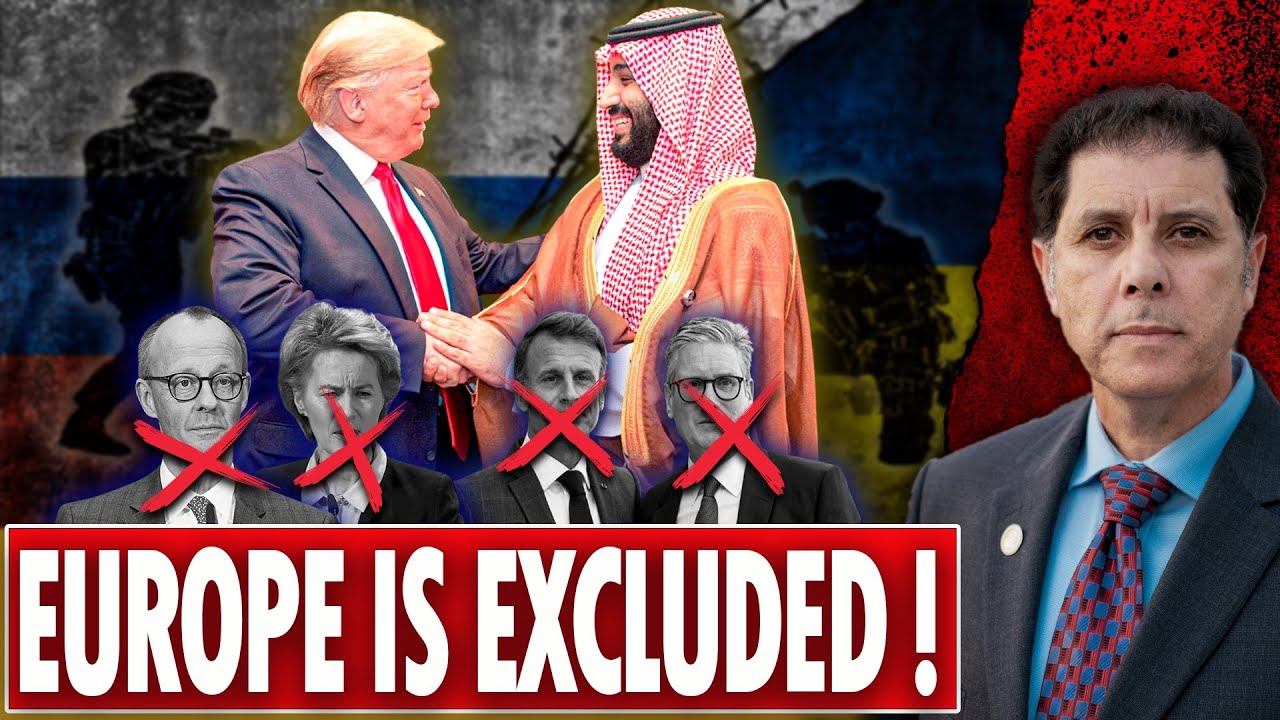
In this monologue, the host of Geopolitical Trends argues that a new world order is emerging from West Asia, particularly Saudi Arabia, which is increasingly positioning itself as a central global actor. The analysis begins with a brief historical overview of the post‑World War II Western‑centric order, then highlights recent strains in US‑Europe transatlantic relations, especially under the Trump administration, which have prompted Europe to reconsider its security posture. The core of the argument focuses on Crown Prince Mohammed bin Salman's Vision 2030, which seeks to diversify Saudi Arabia’s oil‑dependent economy and expand its diplomatic reach. The speaker cites Saudi mediation in the Russia‑Ukraine war, growing Sino‑Saudi trade (from $16 billion in 2022 to $170 billion in 2023), and cultural‑economic outreach as evidence of Saudi Arabia’s rising influence. The implications for Europe are explored, emphasizing the continent’s need for strategic autonomy, diversified energy sources, and a more independent foreign policy. The video concludes that the traditional Western‑centric order is giving way to a multipolar configuration where regional powers like Saudi Arabia play pivotal roles, urging nations to adapt with foresight.
Chapters
Hello everyone and welcome to Geopolitical Trends, where truth matters. Is New World Order is emerging from the Middle East or West Asia that excludes Europe? In this video, I am going to provide you with my brief analysis about this development and place it for you within its proper geopolitical context. But before I move on, the analysis you are listening to is unique to this channel, so if you are learning and enjoying these free episodes, please hit the subscribe button and share the channel with other people so they, like you, can hear the truth. And thank you for your support. Now let's dive in. Today we embark on an exploration of the evolving geopolitical landscape, focusing on West Asia or the Middle East's emerging role in a new world order. Recent developments have highlighted a significant shift, with traditional powers like Europe, finding themselves on the periphery, while nations such as Saudi Arabia take center stage. I will delve into the catalysts of this transformation, the strategic maneuvers redefining alliances, and the broader implications for global politics and economics. But first, let's start with the historical context. To comprehend the present dynamics, it is essential to revisit the historical framework that has long governed international relations. Post-World War II, the global order was predominantly shaped by Western powers, with Europe and the United States at the helm. Institutions like NATO, NATO and the European Union were established to promote collective security and economic cooperation, though far away nowadays from that mission. The Middle East, rich in resources yet fraught with conflict by design, often finds itself as a theater for proxy wars and external interventions. Shifting US-Europe Relations. In recent times, the foundations of US-Europe or transatlantic relations have experienced tremors. The Trump administration has advocated for recalibration of alliances, urging Europe to assume greater responsibility for its defense and signaling a potential reduction of US involvement in NATO. This pivot has compelled European nations to reassess their security strategies and consider increased defense spending. Middle East Strategic Resurgence. Amid this backdrop, the Middle East or West Asia, particularly Saudi Arabia, has embarked on a path of assertive diplomacy. And strategic realignments. Following his ascendancy to power, Crown Prince Mohammed bin Salman, or MBS, is steering Saudi Arabia from a regional player to a pivotal global actor. Let's hope. The kingdom's Vision 2030 initiative aims to diversify its economy, reducing dependence on oil by investing in technology, tourism, and renewable energy. This economic transformation is complemented by a proactive foreign policy, positioning Saudi Arabia as a mediator in regional conflicts and a bridge between East and the West. Saudi Arabia as a mediator. A notable example of Saudi Arabia's enhanced diplomatic role is its involvement in mediating the Russia-Ukraine conflict, a central role enjoyed by Saudi Arabia due to its massive investments in the United States and its strategic partnership with Putin in managing the global oil market. The Kingdom hosted high-level meetings in Riyadh and Jeddah, bringing together U.S., Russian, and Ukrainian officials. This initiative underscores Saudi Arabia's ambition to be recognized as a stabilizing force and a neutral ground for conflict resolution. Such endeavors not only elevates its international standing but also reflects a broader strategy to diversify its alliances and reduce reliance on traditional Western partners. Economic Diversification and Global Integration. Saudi Arabia's efforts extend beyond diplomacy. The Kingdom is actively seeking to integrate into the global economy by attracting foreign investments and fostering innovations. For example, economic engagements between China, Saudi Arabia form the backbone of Sino-Saudi relations. In 2023, their bilateral trade was estimated at $170 billion, a marginal drop from the US$16 billion recorded in 2022. Hosting international events and engaging in cultural exchanges further cements its role on the global stage, As argued in my Saudi book, Beneath the Veil: Fall of the House of Saud, Saudi Arabia could flatter itself into thinking that Russia favored the desert kingdom over Iran. However, such a reading overlooks Russia's increased cooperation with Iran. Implications for Europe. As West Asia Middle East asserts its influence, Europe faces a complex set of challenges. The traditional transatlantic alliance is under strain, prompting European nations to seek strategic autonomy. Can they? This involves bolstering defense capabilities, exploring independent foreign policies, and diversifying energy sources. The European Union's cohesion is tested as member states navigate these geopolitical shifts, balancing relations with both the United States and emerging powers in the Middle East and Asia. Global Geopolitical Reconfiguration. The rise of the Middle East or West Asia, particularly Saudi Arabia, signifies a broader reconfiguration of global power dynamics. The traditional Western-centric order is giving way to a multipolar world where regional powers play pivotal roles. This shift necessitates adaptive strategies from established powers and offers opportunities for new alliances and partnerships. This interplay between economic interests, security concerns, and cultural diplomacy will shape the contour of this emerging world order. Here is my conclusion for you. The emergence of a new world order emanating from West Asia or Middle East, with Saudi Arabia at its core, reflects the fluidity of global politics. As traditional alliances evolve and new partnerships form, nations must navigate this complex landscape with foresight and adaptability. If you like this video, please give it a thumbs up and don't forget to subscribe. As always, remember, geopolitics impacts your daily life in more ways than one. Till next time, thank you.