Why Iran’s Naval Mines Paralyze US Fleets & Markets!
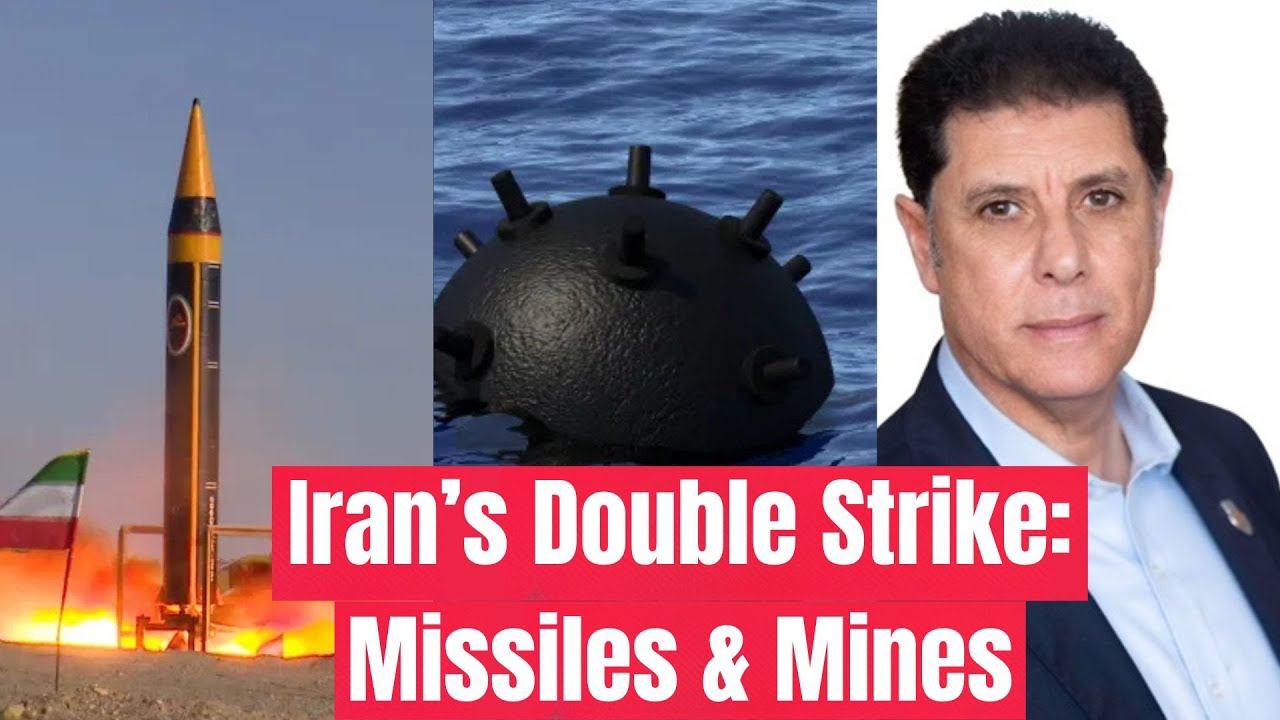
In a live‑stream titled “Why Iran’s Naval Mines Paralyze US Fleets & Markets!” (May 22 2026), host David Oualaalou (Speaker A) delivers a detailed geopolitical analysis of two converging Iranian threats: (1) the deployment of cheap, low‑cost naval mines in the Strait of Hormuz that have forced the U.S. Navy to reroute ships and threaten one‑fifth of global oil supply, and (2) the rapid re‑activation of missile launch facilities near Tabriz in north‑western Iran, as shown by recent satellite imagery. Oualaalou argues that the combination of mines (forcing adversaries to look down) and long‑range missiles (forcing them to look up) creates a 360‑degree pressure environment that can paralyze U.S. and Israeli freedom of maneuver, inflate global energy prices, and impose massive economic costs. He critiques U.S. and Israeli narratives that claim Iran’s missile capability has been degraded, pointing to evidence of resumed missile launches and the reopening of tunnel entrances at the Tabriz base. The host also discusses the psychological impact of mines, the strategic doctrine behind Iran’s “missile‑plus‑mine” approach, and the broader economic ramifications for oil, LNG, insurance and global markets. Throughout the stream, Oualaalou notes technical glitches that erased his visual assets, shares links to external analyses, and invites the audience to consider whether the United States and Israel have a coherent end‑game strategy for Iran or are merely reacting step‑by‑step while Iran plays a longer game. The broadcast ends with a call for viewer comments and a preview of a future guest (Carl Zah).
Chapters
Hello everybody and welcome to Geopolitical Trends, where truth matters. Right now, somewhere in the Strait of Hormuz, there is an object the size of a beach ball sitting silently on, on the ocean floor. And that object, it cost about $1,500 to make, and it has already forced the United States Navy to reroute its warships halted one-fifth of the world oil supply and sent global energy markets into spiral. Meanwhile, satellite images captured this week over Tabriz in, in Iran, in northwestern, uh, part of the country, shows something that the US military analyst will not— yes, and I repeat this— were not expect to see, and that is Iran is reloading. So the ceasefire, as we always said, it's on life support. And in the next few days, sort of how this is going to evolve is anyone's guess. One thing is sure is that you have two weapons. You have missiles and you have mines. One that flies at Mach 14 and one that sits still and waits for the right moment. And those two are the most dangerous combination in the world right now. So this is what I'm going to be providing you in this live stream. I'll do my own analysis. I'll share a clip with you But before I'll delve deeper, let me tell you something that happened with this. Whatever happened, my images and everything that I had prepared was wiped out. So I am yet to figure this out later on after I, I finished this live stream, because I didn't want you just to be sitting and waiting. But I have no idea as to why that is. Everything that I have Usually the images that I share with you, the satellite pictures, the— even my books, whatever, everything was wiped out. Even the logo of the channel was wiped out. Now I don't know how this happened. I'm not jumping to conclusions yet, but I will figure out. I just want you to know why there is a delay. Like, we always do live stream at 12:15, but this time— so, so anyway, let's move on with what is important because I got a lot to cover for you. What you have right now— and, and, and sorry guys, I don't have— I can't do the images for you to show. What you have right now is they have the Iranian sea mines, which is now a weapon that is continuing to baffle Washington and at the same time confronts the rest of the world for that matter. And this is, by the way, this is again the problem that, uh, uh, uh, uh, it was reported in London The US is not want to disclose much, and the Telegraph in London described as a serious strategic gap in the American military planning, which is resulting from a failure to properly assess the reality of the advanced mines planted by Iran. And all this started at the beginning of the war. So, and I'm going to share with you also as to Why now you have some analysts across the pond concluding that the United States, despite having the strongest navy in the world, may be unable to open the Strait of Hormuz without relying heavily on its European allies. I am referring to NATO right here. So, and I'm gonna put the link for you, uh, I think I came across a link, except that it's in a different language. So let me— I'll, uh, I'll get you a link that is in English, or I can translate this and post it for you later on. So, so what I'm gonna do in this live stream here, I'll do my analysis and I'm gonna share with you a clip, and I'll do the translation for you, because the clip, uh, from, uh, which is the Change channel— why is it important? It's because it shows you step by step as to the images of the satellites, as to the movements of certain trucks inside Iran, and the establishment or the redeployment of the missiles, which, by the way, Iran already made it clear they're going to be targeting Israel as well. So this is why it's important. So, so now, as of now, the United States and Israel, they were thinking, and of course propagating lies, basically, they were thinking that they won the war. No. And because they were saying, oh, the tunnels in Tabriz where the redeployment of these missile launchers are, they were saying that they were collapsed. Yeah. And that the missile sites, uh, were nothing but rubble.
Yeah.
And the Supreme Leader, the late Ali Khamenei, is dead. Then you have, just as of 2 days ago, satellite images came back, and what analysts saw stopped them cold. That is the harsh reality. Of course, Washington is minimizing this. Tel Aviv is kind of like being put on some sort of alert now. Because they know Iranians won't bluff, won't bluff, and they're gonna just fire if that comes to that. And that means what? It means that Iran isn't finished. It never was anyway. So because while the world was watching the skies for missiles and so forth, Tehran was doing something completely far more dangerous, if I use the term. Beneath the surface of the sea. Something so cheap, so simple, and so psychologically devastating that it has now baffled the most powerful navy on Earth. And this is, of course, in my opinion, it's not just to have a, a sort of a story of how a country on the edge of defeat is holding, is holding the entire global economy hostage? Well, first of all, the country is not on the edge of defeat. Iran's still standing no matter what they have you believe in Western capitals. And again, I am being objective and fair in my assessments here. So the next question, as a geopolitical analyst, I will ask is how strategically significant the deployment of these two the missiles now, or redeployment of the missiles and the mines. So to understand the significance of these two events, you must understand where things stands as of today, May 22nd, 2026. Because if you go back to February 28th, when the US and Israel launched the strikes against Iran aiming at regime change, Oh, which it didn't work. Aiming at dismantling Iran's nuclear program, aiming at dismantling Iran's ballistic missile program as well, putting a conditional ceasefire, which was declared on April 8th, mediated by Pakistan and China behind closed doors. And now you have in mid-May Trump declaring the ceasefire on a massive life support. And we mentioned this before, so I'm not going to be repeating myself here. I just want you to have a time frame chronologically to see how the events are moving. Because here is the thing, what Eran just did, in my assessment, is the powder— is the powder keg into which, you know, your two developments must be placed. You have to put it within a context. Iran is not taking any chances. It's preparing for whatever. And the US still has these strikes on the table, of course being pushed behind closed doors by Tel Aviv. So, so I'm gonna share a link with you that shows the satellite image. Unfortunately, I can't show pictures because I don't have anything— was wiped out. And, and so funny that yesterday, last night, I went ahead and posted the satellite images and all that, and all of a sudden it's gone. But anyway, life move on. You gotta always stay positive, you know. And this is what this satellite image so shows. It shows that Iran opens its missile gates again. And this is not simply another round of rocket fires. No, no, no, no, no, no. We talking about the strategic significance of it, that it has several layers. And I'm talking about long-range missiles of Mark 14 plus. So what the satellite image is, what I was going to share with you, but we don't— am I— I still gonna do it next time when I do live stream and reset everything. I'll share these pictures with you because I spend a lot of time getting this information for you. So I want you to be at least aware of it. What satellite images shows, uh, of Tabriz— Tabriz is the, the area in the northwestern part of Iran— is that it shows in the north, uh, of Tabriz, you have the missile base in northwestern Iran. That's what it is. And it was captured before and after February 28th strike. Shows some collapse of the tunnels, the entrances And he confirming the US-Israeli strikes penetrated hardened underground infrastructure. That's why the Pentagon has you believe. That's what Tel Aviv has you believe, you know. And I'm going to show you the clip, uh, when I do the translation and shows there were some damage to this. And I'm not denying this. It's what I'm denying is the fact that Washington and Tel Aviv are saying we crippled the missile program for Iran. That's the one I am going to push back against and challenge that one. So the fact that the current satellite images is now detecting renewed military activity in Tabriz is alarming, precisely because that base was supposed to have been, uh, destroyed, neutralized, because it signals one of two things. Either Iran rebuilt and reconstituted faster than US intelligence agencies anticipated, or your other option is that alternate tunnel systems were not fully identified and destroyed in the first wave. So either conclusion is deeply troubling for Washington and Tel Aviv, to say the least. And once again I have, uh, satellite images through a specific, uh, link that I get to usually, uh, does pertain to international security and, you know, defense and so forth.
So that's why.
Second thing is that you have to think in terms of Iran's missile arsenal was already degraded, even if we go with that, uh, uh, uh, uh, assumption. But it still persists as of today based on what the satellite images are showing. And that's exactly what many, uh, uh, defense analysts— because what the analysis is showing is that the number of Iranian missiles aimed at Israel since 2026 was far lower than during the 12-day war of 2025. This is what they're saying because they will— everything was destroyed. But the idea is not real because Israel and— Israel and the US are saying we have degraded Iran's capacity to launch missiles. And yet between February 28th and March 4th, you know, it was documented there's a record for it documented that 90 attempt strikes were launched against Israel. So if you talk about a degrading missile capacity, why is Iran still able to fire this much volume? Which means that the Tabriz location has resumed the strikes. That's what it is. Third option is that what does the opening the missile gates again really means? Because it's a, a question. Here's the thing: during the ceasefire period, any resumption of organized, uh, uh, missile, uh, salvos from Iranian territory will not be, uh, sort of a protest or a signal. That was the assumption. It will be a strategic declaration that the ceasefire is finished and Iran is returning to full wartime posture. And this is why you have now IDF on a, on a, on a, on, on some sort of alert, because they know what's coming. Yeah, because now you have the ballistic a missile storage and the launch sites are, are good to go. Good to go as of April 6th. And when you put— and this, by the way, was published inside Israel by the Times of Israel, which I read some of their communication, some of their— I'm sorry, some of their articles. Uh, they, they, they are fair. Let's, let me just put it that way. Then you have the Plan B Iran embarked on, and the Plan B has nothing to do with missiles. Once again, I wish I have the picture to show you because really I got a good pictures, uh, for those, for those mines, uh, on the sea, right? You can see them. So the Plan B is that Iran sea mines, and that is the weapon that is now baffling the US. That's why the US is staying far behind. Because this is arguably, in my assessment, the more asymmetrically dangerous of the two developments. And there is a reason for why that is, and I'm going to share that with you as part of my own analysis here before I share the clip with you. Think about the psyop, you know, as a former military, psyop is part of anything you do. But in this case with Iran, the psychological multiplier effect. Because here is the— what, what even military experts are saying. They are saying that the true threat of naval mines lie not in their explosive power. No, no, no, no, it lies in their psychological capacity to paralyze the US Navy and global trade without a single explosion. That is the key, because even a single mine— and once again, I, I find myself compelled to tell you this, uh, when I reset everything, I kept one picture that shows an explosion of one, not in this conflict, that was way back a few years ago, and I pull it out of the archives and I wanted to share with you. So Even a single mine is enough to compel operators to assume a wider threat. But, and think about what it's going to do to businesses, for example, for insurance, invalidating insurance and shutting down the use of waterways completely. Even though here is the, the important dynamic within all this is that as of this morning, Iran allowed about 33 33 ships to cross the Strait of Hormuz after coordinating with Iranian authorities. This is the important part of it. But Iran understands this perfectly. You do not need to sink any ship for that matter. No, no, no, no. All you need to do is plant the fear that a mine might be there. And you're gonna have to think twice about it. Second one is the scale of the global stakes. You know, I saw— I live in Texas, as you know, and, and we saw now the gas, the gallon crossed over $4.30 yesterday, then it dropped to $4.19 as of last night. I saw, I was driving, so I saw that. So the scale of these global stakes, first you think about Uh, the LNG, liquefied natural gas, one-fifth of the world LNG supplies have been shipped through the Strait of Hormuz before the war began. So just think about the shipping traffic has been largely blocked since February 28th, and that is what some analysts are calling, and I use their, uh, their expression, the dual blockade. Iran blocking shipping going out. The US naval block— uh, blockade preventing Iranian trade coming in. Every day this persists, by the way. It cost many countries billions of dollars. Those, those are lost economic activities, lost revenues, especially for the Gulf States and for Iran for that matter, and for the US. Everybody Everybody. The third point is why— the question is why mine— mines on those undersea and some of them floating around, why are they confounding Washington and Tel Aviv for that matter, but mainly Washington because it's the US that has its naval assets there? Because this kind of cheap, easily deployed contact and magnetic mines in Iran's inventory can be dropped over the stern of virtually any vessels, not just dedicated sort of mine layers. And, and, and even now we are thinking about if we need to deal with this, we have to deploy a special aircraft and special devices, which I had a picture of. And once again, when I get things done, uh, reset, I will show you that image. And to fly all this, not only costly, but where are you gonna put it? You have to get closer to the target area. Iran is not going to let you land, of course. And this is why it means that destroying Iran-designated mine-laying boats, as Trump claimed to have done— which, are you going to trust Trump? I mean, come on. Wait until the end when I share a clip with you to show you what Trump said about American people. You know, we should demand his resignation. He doesn't represent me, and he ain't my president, by the way. No. And I don't trust any, none of those corrupted politicians. So, because that's exactly what Donald Trump claimed, oh, we are destroying all the mines. No, you know, because that doesn't solve the issue, doesn't solve the problem. If Iran were able to lay a large number of mines, this is what experts, military experts, are warning, that this could take weeks if not months to clear. You know, even if Strait of Hormuz is open tomorrow, do you think everything's going to get back to normal? No, you will be looking probably at the second quarter of 2027 before things get back to normal. That's how long it's going to take. So what the US is saying, oh, we destroyed 16 identified Iranian malign vessels— once again, are you going to trust what the US is saying? No. But at the same time, we have the, the NGIA, that's the National Geospatial Intelligence Agency. That's what SCORDINATE does with the satellites. You have the Defense Department satellite imagery, and you have the geospatial analysis arm of the Department of Defense. Those have been specifically tasked for mine hunting duties. And you know what they're saying? They're saying that the mine threats remain very large un— alive. So even the US Navy is now redirecting ships to a route far away from the Strait because of this. That's why Washington now is confused. Number 4 is you have the mine and missile combination as a strategic doctrine, and here is where the synthesis That makes now both deployments of missiles with whatever range, by the way, those— some of those missiles that now are deployed can reach Europe, by the way, which I found that, and I had the image for it, and, and we'll, we'll share that next time. So you have the missiles and you have the mines together. It's so significant, the deployment, because the missiles are complementary pressure instruments. You have to think in terms of strategic. Missiles force the adversary to look up, right? Mines force him to look down. And together, what you do, you create a 360-degree threat environment in which no movement That is the key. No movement by air or by sea is assumed to be safe. This is now Iran's doctrinal use of both simultaneously is designed to— because you want to do two or three main things. One is to deny the US and Israel freedom of maneuver in the Persian Gulf, and of course they cannot approach Iran. 2, you have to impose some sort of economic pain on the global economy, generating diplomatic pressure on Washington to negotiate rather than resume strikes. And number 3 is to demonstrate that every military degraded Iranian— Iran retains the ability to make any victory it wants for the US and Israeli coalition enormously costly. Which they won't achieve it anyway. So when you combine all this, here is what you get. What you get is that the satellite imagery from Tabriz showing this renewed now military activity, because you have to interpret this from a geopolitical perspective and from a military aspect as an advanced warning indicator. This is how you need to read that particular signal of this deployment. Iran is not passively waiting for diplomacy to, to resume or what have you. No, no, no, no, no, no. They are still talking, but they are also preparing, which what you would expect any country to do for that matter, unless you trust the US blindly. And when I say US, I'm referring to the government Because the US is doing the same under the ceasefire, reconstituting whatever. Israel is doing the same under ceasefire to regroup. So when you have the, the twin instruments of the ballistic missiles and sea mine, this one represents, in my opinion, represents Iran's fundamental strategic, uh, uh, challenge of for the US. Of course they understand Iran will not match the US in air power and all that stuff. Yeah, yeah, yeah, they understand that. But it can make it very costly for the United States, meaning the war in terms of casualties, in terms of global oil prices, in terms of shipping insurance, in terms of diplomatic blowback, which we already have here in the US. And that is why Iran is succeeding so far, because when you consider what Iran has achieved, which by the way, once again, and I disclosed this for you about, um, uh, probably 3 and a half weeks ago, if you go back and look at, uh, one of the videos, I talked about this one, about how much Iran airstrikes have already damaged or destroyed at least 20— 228 structures or pieces of equipment that belongs to the US. And those were across the entire region, West Asia or the Middle East, because what Iran did is targeted the, uh, the, the, the hangars where we keep our planes and all that stuff. It targeted barracks where the soldiers live and so forth, fuel depots, aircraft key radars and communication equipment. As a matter of fact, it is a far— and I have the link that was released by the intelligence community. It's the declassified part of it, the civilian version, if I may, if I may share with you, that was leaked to the Washington Post. And I'm going to share with you. So basically, what the, uh, the, the, the far more destruction that has been caused that the US government has publicly trying to minimize. So what you need to understand is that the ceasefire didn't happen because Iran was defeated into submission, as they might have you believe. No, no, no, no, no, no. It's because the, uh, the US needed a pause. So is Israel, and so is Iran. Let me put the link for you. You can read it later on. Uh, and that's from the Washington Post, uh, and I know for a fact that some leaks gets to the Washington Post through the intelligence community. So suffice it to say, the activity now is so visible in Tabriz, and that is what it's combined with the unresolved mine threat in the Strait of Hormuz suggests that Iran is using that pause strategically, not to surrender of course, but to reload. So that is the most important thing the satellite imagery is telling us. The decisive hours and the days, we shall see what's going to be happening. So, and, uh, one of the images, by the way, uh, it was the Ukrainian sea mine exploded that I found in the archives and pulled it out, which goes back to the Baltic Sea. So, all right, let me share a clip with you and I'll do the translation for you because I did it and, and, uh, went through it, uh, to go through, uh, accuracy of it. And again, the only reason I am doing this is because it has imagery So you get, you get to see. Okay, let me pause it here before I start. And, uh, uh, let me, uh, just bear with me here, guys and gals as well. All right, and I'm not gonna play in its entirety. I'm just gonna play a little bit for you. So you'll have at least an understanding with the imagery for you to see. So in preparation for the decisive hour against the US and Israel, a reality made evident by Iranian activity captured in satellite imagery, specifically in Tabriz in northwestern Iran. So, uh, let us now turn our attention to the missile bases where this activity was observed. This base is situated approximately 11.5 kilometers north, or perhaps northwest, of Tabriz. It stands as one of the most critical and strategically significant bases for the Iranian side. As you can observe, the site is nestled, uh, is nestled, uh, amidst rugged, rocky terrain. This specific base has been struck at multiple points, uh, as we can see, by Israel Indeed, Israel has focused its effort entirely on striking this facility repeatedly. The support infrastructure, including the entrances and missile launch platforms, was struck during the 33-day war last year, as well as during the most recent conflict. You will notice that even the main entrance to this base was almost completely destroyed by Israel, as is clearly visible. However, Regarding the entrances, specifically one of the primary access points to this base which was previously struck, their status has now changed. If we look back briefly at the historical imagery, you will observe that the entrance appeared in this damaged state, rendering it unusable by the Iranian side until Israel carried out its strikes. Yet updated satellite imagery now clearly demonstrates that Iran has successfully reopened this access point. If we examine this specific gate, you will indeed observe that there are absolutely no impediments to the movement of any vehicles or missile launch platforms in entering or exiting the mountain facility before us. Similarly, regarding the other entrance which might not immediately appear ready for use, the presence of this vehicle along with other moving towards the base confirm that this access point has indeed be— become fully operational for the Iranian side. This is an exceptionally important base, particularly when discussing the Tabriz region. Why? For, for first It poses a significant threat and exerts immense pressure on Iraq, Turkey, Syria, and the Mediterranean. And most importantly of all, it is capable of striking Israel and has indeed threatened Israel. Numerous missiles have been directed towards specifically the two bases located here in the region currently under discussion. Furthermore, they pose a significant threat to Baku and Azerbaijan. More importantly, however, they also threaten Ukraine and Europe. Indeed, statistics regarding Iranian missiles' capabilities and ranges dating back to 2020 demonstrates that if these missiles were launched from central Iran, they will be capable of covering a distance of approximately 2,000 kilometers. These earlier statistics established that Iran possesses the capability to even threaten Europe, specifically covering Ukraine and several Eastern European nations should launches originate from central Iran. However, if launched from Tabriz, these missiles achieve even greater range. In fact, observing the Iranian side attack on the San Diego— oh, I'm sorry, on the Diego Garcia base revealed that Iran possesses missiles capable of covering a distance of over 4,000 kilometers, demonstrating that Iran is capable of striking the entirety of Europe, as illustrated here. This is precisely what renders the issue of reactivating the Tabriz base in particular a matter of grave concern for the region and for Israel in general. If this indicates anything, It suggests that Iran is attempting to regain control over or access to these bases, which have been rendered black— that means deactivated— as a result of being neutralized by Israel and the United States. Note that the majority of the bases were observed, specifically those now marked in black, are situated in western and northwestern Iran. Israel focused its efforts on neutralizing the threat emanating from these missile bases in these specific regions, effectively compelling Iran to launch its missiles from central Iran, a situation that persisted until the current truce came into effect. Now, however, Iran seeks to reactivate this capacity in order to exert pressure on Israel, and not merely on on the Arab Gulf states and the United States. This is driven by critically important reason. The United States has altered its tactics, having fully recognized that Iran, it possesses the capacity to strike US bases located in the Arabian Gulf, or Persian Gulf rather, uh, specifically targeting refueling aircraft. For instance, at Prince Sultan Air Base in Saudi Arabia, and AWACS aircraft and several refueling tankers sustained damage. Consequently, the majority of these refueling aircraft have now been relocated to Israel, specifically to Ben Gurion Airport and other bases. As a result, should the US president issue the order to strike, and once again, the bulk of this aircraft will launch from these locations as well as from the Mediterranean, specifically from various Greek islands and from Europe. They would be positioned to conduct mid-air refueling operations for fighter jets carrying out the required strikes. Consequently, the Iranian strategy centers on achieving tactical surprise, laying, laying in wait for this aircraft to return to their bases, at which point they will be struck by Iran's missile batteries. It is evident that this constitutes the primary, uh, uh, tactic for the Iranian side, aimed at neutralizing the offensive capabilities of both Israel and the United States against Iran. This is particularly significant given a recent Western report confirming that Iran, with Russia's assistance, has thoroughly analyzed US flight patterns over Iranian airspace. This analysis has facilitated their ability to execute stealth operations, maneuver effectively, and even strike US combat aircraft, as evidenced by the incidents involving the F-15 fighter jets. A recent video clip further illustrates this point regarding US refueling aircraft showing the KC-135 the KC-46 tankers, key assets for US aerial refueling operations, present at, uh, present at Ben Gurion Airport. Furthermore, satellite imagery confirms that these aircraft were currently dispersed across these three specific locations. Their presence is well known, fully documented, and by no means a secret. Consequently, Iran views bases such as Tabriz Air Base specifically as capable of posing a significant threat. From there, they could potentially strike northern Israel and target the Israeli military buildups currently supporting operations against Hezbollah. Furthermore, additional refueling, uh, tankers have been observed escorting fighter jets into the Middle East or West Asia. Apparently bound for Israel or one of the United States' regional allies, dropping them off before the tanker themselves return. Here we observe the flight path of yet another aircraft, one that was previously spotted flying over French airspace, as is visible here. Yes, a side note, French is allowing its airspace to be used for that. Sources have explicitly confirmed that these aircraft are F-16 fighter jets, which have now arrived in the region according to the same sources. Indeed, audio recording released by these sources indicate that at least 5 or possible 6 F-16s have reached the current, uh, location, the region. Such deployment typically constitute defensive measures. However, Preparing defensively in the context of clearly implies that the United States is in fact preparing to launch an offensive strike against Iran. The movement of strategic bombers also remain ongoing. For instance, in the early hours of this morning, a refueling tanker was observed flying over Lages Field in Portugal, specifically on Tarsíra Island. Conducting refueling operations. Subsequently, audio recording revealed that a B-2— B-52, I'm sorry— strategic bomber was involved in this refueling sequence. Consequently, all these maneuvers serve as a vital role in the broader process of operational readiness, uh, and positioning for a direct, uh, flight towards, uh, Iranian assets to launch strikes against targets located within the region. Furthermore, US Central Command today released a clear image of B-1B Lancer strategic bomber, confirming that it's present in the region, uh, specifically over the Mediterranean Sea. Consequently, the United States, including US Central Command and the US military, is indeed making full preparation to strike Iran once again on the military front. I'm gonna stop right there because, uh, and by the way, just to let you know, I did listen to the recording of the pilots communicating, and it was on the video there. I just have to go back, uh, to, uh, uh, get that one. But just to let you know, I did listen to that recording the, uh, anchor was talking about. So, so here is my conclusion for you because I came to the end here. It's different without images, without nothing. So, but it's okay. So what Iran has shown, in my, in my assessment, is it demonstrated and showed the world that you don't need to win a war outright to make winning it, uh, sort of impossibly expensive. No, all you need to do, you get a $1,500 mine, you know, and and a rebuilt missile tunnel in Tabriz may ultimately cost the global economy more than the war itself. Because the ceasefire as of today is fragile anyway. The Strait of Hormuz is tip wire. And the satellite image tells us Iran is far from finished. That is the harsh reality. Because what happens in the Strait of Hormuz does not stay in the Strait, by the way. It shows up in your gas prices, in your grocery bills, and the stability of the entire world order. I don't care what part of the world you live in, you are impacted by this one way or another. It's because now Donald Trump found himself stuck doing a war for someone else. That's the price you pay. So here is the question I want to leave you with, and I will greatly appreciate If you would like to leave a comment in the comment section, uh, uh, I want to share this question with you before I play some clips for you. And the question that I thought about, because my purpose for it is just to exchange ideas, no more, no less, because you are part of this community. So I like to, uh, and I care about learning about your opinion. Your opinion matters to me. So, uh, What I want you to think of this is this way: do you believe the United States and Israel have a clear endgame strategy for Iran, or are they just reacting to events one step at a time while Iran plays the longer game with mines, missiles, and time itself? Let me repeat this quickly here. Do you believe, in your opinion, do you believe the United States and Israel have a clear endgame strategy for Iran, or are they just reacting to, to events one step at a time while Iran plays the longer game with mines, missiles, and time itself? I would greatly appreciate your feedback on this one. Before I play clips, I want just to, uh, add something to this. And I remember I argued in one of my writings about 8 or 10 years ago, or even 12 years ago, way back. And I argued that American foreign policy is just reactionary. That means we react to event. We don't structure some substantive strategy that will lead us see the long vision because we never had that. As a matter of fact, the US ceased to have a foreign policy for the last 38 years, in my opinion. And I go back in history and found out, no, if you look at all the events, we just been a reaction, reacting to them. Beside the reacting, we create conflict. So the two goes parallel. So that is why I found that, uh, thought of that question for you to be of importance. So before I share the first clip, I want to let you know that Carl Zah will be here tomorrow at about 1900 hours 19:30. I got to confirm the time with him, uh, Central Standard Time, uh, for our, our conversation. I look forward— I haven't talked to Carl for a long time. I was overseas and he was traveling too and so forth. So, but anyway, tomorrow Carl will be here and hopefully I won't have any issue with the StreamYard. So I look forward to that. All right, let me share with you the first clip. And the first clip I want to share with you is about— you remember yesterday, I'm sorry, yesterday, no, the day before, I showed you a clip about Thomas Massie. He's the congressman from Kentucky who lost the elections, but it's a win for him in the long term. And I found it very interesting because what he's saying is the truth. And I know a lot of people in the US do not like to hear the truth. So I wanted to share this with you because I want you to take a listen. And it's in English here. Take a listen, please.
Why are we going to war with Iran? I think the most candid answer came from the Secretary of State, who told the press that Israel forced our hand and dragged us into this war again. And American families in my district want to know how this is going to help them pay for groceries. How does this make them any safer in their schools or in their neighborhoods? How does this help them pay for housing? Have we learned nothing from the laundry list of wars and regime change experiments we sparked across the Middle East that have racked up a total of at least $8 trillion of debt in Iraq, Libya, Syria, Afghanistan? A sustained war with Iran will not stabilize the region. It's already ignited the region. It will radicalize new generations of And it will send more swarms of refugees into Europe and the United States. Iran is not Venezuela. The Ayatollah was not a president. He was a religious leader. And the United States and Israel turned him into a martyr. And in the process of doing so, we've already expended billions of dollars. And more solemnly, 6 American families must now lay to rest their sons and daughters. And for what?
Very, very spot on. And as a matter of fact, I found another one that is important. And the reason I want to share this with you, uh, especially for my American viewers, uh, because the here in mainstream media is not going to allow this kind of, uh, information to be shared. Okay, uh, uh, sorry, I get the wrong one. This is the guy who won the elections and basically, uh, the one that was supported by AIPAC and Donald Trump. So I just wanted to show you, uh, that, uh, uh, even, even, uh, here in the US, they won't even want to, uh, sort of demonstrate or share that one with the American people. And the last one I want to share with you, which to me is disturbing, this is from a former special ops, and I, I'm, I'm aware of him, uh, I didn't serve with him, by the way, it just— I'm aware of him, I'm— I know who he is. So let me just share with you what he has to say. I think it was a ranger. Take a listen, please.
Our US president on camera says, and I don't think— no more than 7 days later, our US president on camera says, and I don't think about Americans' financial situation.
I don't think about anybody.
Excuse me? People are starving in this country. Gas is through the roof. You don't give thought to the Americans' financial situation?
One bit. When you're born with a silver spoon in your mouth the way Trump has been, he has no idea what it's like to fill up a gas tank. Oh, what is it like to go out to the grocery store and spend $360, 2 days worth of food or whatever it may be? When you come from that lineage, that bloodline, of course you don't care. We call him a businessman, but I mean, a businessman to me wouldn't be somebody with as much bankruptcies, not even bankruptcies, failed businesses. From casinos to steaks, this dude has failed at all. I wouldn't necessarily elect him, But I think America needs to get back to its roots of like-minded individuals who grew up the way the average American grows up. We stepped away from that.
No, they're spot on. But that's where the problem is. The problem is also American voters. They are so ignorant. And I'm not generalizing here. I'm just saying, stating the facts. It's because we are poor readers. We don't want to read because you exercise your brain and reading is too hard. I used to see it in college when I was teaching. That's part of the problem. So when people go vote, they have no idea. They're not willing to educate themselves about the candidates per se. But also, not just the voters, the system in itself is corrupted. Straightforward, you know, it's kind of a reality. I'm not saying something you don't know, especially for my American viewers. You already know that because you can see where things are. So, uh, I want to take this opportunity to say thank you to Fatima Santiago for buying me many, many cups of teas in support of my upcoming Asia trip. I am so, so grateful, uh, to Fatima for that. Thank you so much, Fatima. I also want to give a thanks to American Citizen X who, uh, bought me cups of coffees in cups of teas— I'm sorry— in support of the upcoming Asia trip. And of course, it goes without, uh, uh, uh, I, I can't even— I can't forget that— for the, the anonymous donor who donated substantially to the channel in support of, of the upcoming trip to, uh, to Asia. So I just, uh, want you to I want to make sure that, uh, they are recognized, and I'm so, so grateful, uh, for that one. Here is the link for those who wants to support the upcoming trip to Asia, should you decide to do so. Uh, my apologies, I don't have the, the, the funding thermometer because I lost everything, so I will reset one and, and upload it for you next time, uh, we talk. So anyway, I hope you enjoyed this, and, and so good to see some of you here. Uh, uh, Noel, good to see you as always. Very, uh, uh, DRA Latina, good to see you here. Uh, Dave, good to see you. Sang, good to see you. Uh, uh, Truth Seeker, uh, Liang, good to see you always. Um, so it's, it's, it's so nice to have a wonderful community. I'm so grateful. I mean it when I say this. Uh, I found this work rewarding. Literally, it's not about, uh, uh, I just found it rewarding. I enjoy doing this and sharing the knowledge with you. So, uh, hopefully I'll fix the issues, but, uh, make sure to join me tomorrow if your schedule permits for my conversation with Carlza, uh, at about 1900 hours, uh, Central Standard Time. And I will post it for the community. Okay, I wish you a good rest of the day, whatever part of the world you're in. And I look forward to seeing you next time. As always, remember, geopolitics impacts your daily life in more ways than one. Till next time, bye-bye.
More from David


Beyond the Single Actor: Why the Gulf Isn't Choosing Between the US and China


Iran, Iraq's Militias, and the Houthis Are Coordinating! This Changes Everything




Who Controls the Next Decade's Resources? Latin America and Africa's Geopolitical Crossroads

The Chokepoint Trap: How Washington's Stupidity Triggered a Cascade That Now Controls the World

Trump Spooked as IRGC Unveiled dual-use SLV, Deployed Ghadir Mini-Subs & Hinted at Tactical Nukes!
