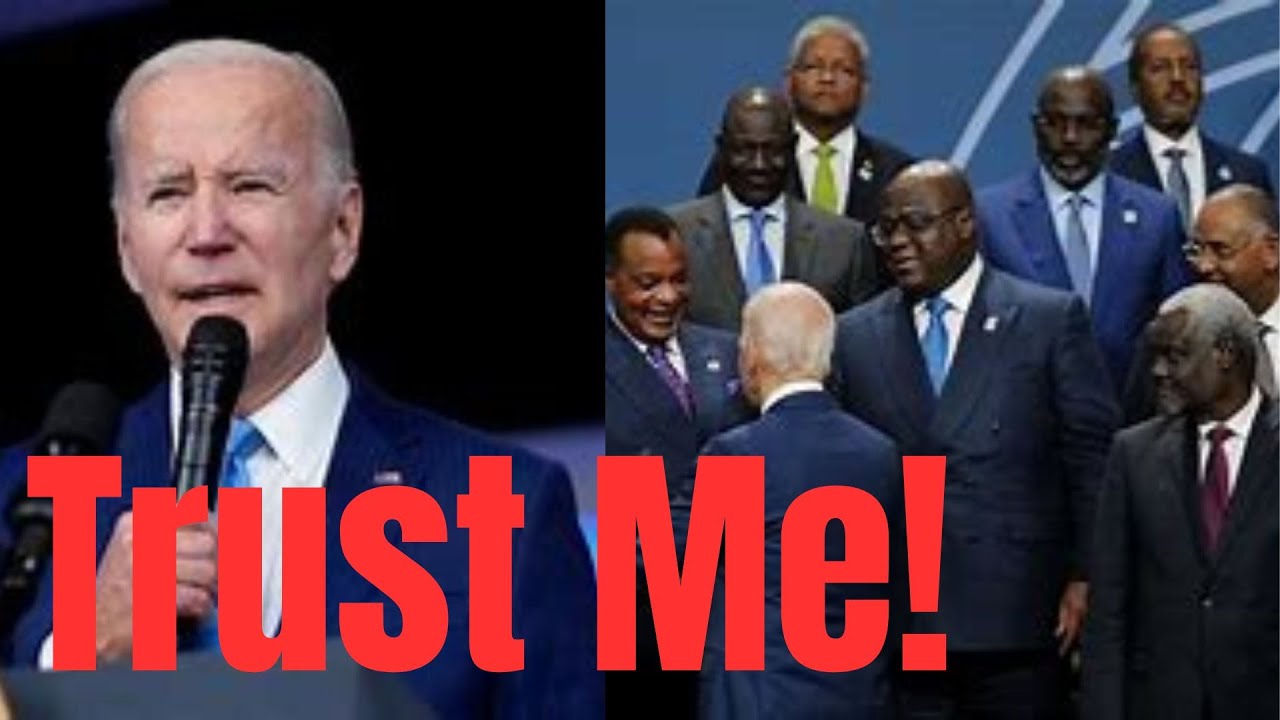
In this Geopolitical Trends video, host David Oualaalou examines the motivations behind the second U.S.–Africa Summit held in Washington, D.C., and the broader strategic contest for influence on the continent. He outlines the summit’s attendance—49 of 55 African heads of state were invited, while six nations (Mali, Sudan, Guinea, Burkina Faso, Eritrea, Somaliland) were excluded for reasons ranging from coup attempts to lack of diplomatic ties. Oualaalou argues that the summit is less about genuine partnership and more a reaction to Africa’s growing importance: a massive, youthful population (41% under 15), vast arable land, and abundant strategic minerals that will double in relevance by 2100. He contrasts the United States’ historically limited Africa policy with China’s long‑standing Forum on China‑Africa Cooperation and its massive trade (US$254 billion in 2021) and military presence, including a naval base in Djibouti and port projects on the Atlantic coast. Russia’s role is highlighted through arms sales, Wagner mercenaries, and mineral access, especially in Sudan, and its diplomatic support from many African states at the UN. The video details U.S. responses: AFRICOM’s establishment (headquartered in Germany after Morocco declined), a proposed $55 billion three‑year aid package, and attempts to counter Chinese and Russian influence. Oualaalou also stresses Africa’s internal challenges, particularly pervasive corruption that hampers development and complicates foreign engagement. He concludes by asking viewers whether U.S. policy is merely a counter‑China maneuver or a genuine effort to expand American interests in Africa, inviting audience commentary.
Chapters
Hello and welcome to Geopolitical Trends. My name is David Oualaalou. Why is Washington holding a US-Africa Summit for the second time? In this video, I am going to provide you some insights as to why that is and what to expect moving forward. But before I'll delve deeper, make sure to subscribe if you have not done so and smash that notification button so you will be notified every time I upload a new video. And I want to, uh, say say thank you to the new members who have joined the channel membership. Thank you for your support. So out of the 55 African heads of governments that they are currently in Washington, D.C., 49 have been invited to attend the second summit between U.S. and African leaders. Usually the meetings, or the summit that is, is hosted by the President of the United States in this case, of course, Biden, because the last one was hosted by the former President Barack Obama back in 2014. So, so the summit is between today and the 15th. So by the time you watch this video, most likely the summit will have concluded. No, and this is the second time, as I said, the gathering of African head of states, uh, meeting here in Washington, DC. What's interesting is that about 6 countries have not been invited, and the 6 countries are Mali, Sudan, Guinea, Burkina Faso, Eritrea, and Somaliland. So the United States government said that Mali, Sudan, Guinea, Burkina Faso were not invited to the global events because African Union suspended them over coup attempts. I don't know, you'll decide on that. On the other hand, Eritrea was snubbed on the ground of, uh, uh, having no diplomatic ties or relations with the United States. And as far as the Somaliland is not being recognized by the American government, so it's like, go figure. So, but anyway, I'm not here to talk about all this diplomatic stuff. I'm here to talk about the core as to why the meeting, the summit, is taking place, first of all, which will have no substance whatsoever. And the reason being because African leaders are not naive. They're gonna read between the lines. So, so here's the thing. US elites, you know, in the financial sector, whatever you want to call it, accuse China and Russia of targeting investments in Africa to gain competitive advantage over US. That's what they're saying, but you need to know the background story because this is what the US elites are not disclosing. So, so Africa is ever more important at the global level today than at any time before, and the reason being with the African continent larger than the US, China, Japan, India, and some parts of Europe combined. No, more than half of the— on the continents, uh, more than half of the world population— or arable, I'm sorry, more of the half of the world arable land is located in Africa, along with many of the planet's untapped mineral resources, including strategic minerals. This is why the US is having the summit, you know. And here's the thing, when you look at about— when you think about Africa, you have to think about it long term, 50 years down the road, you know. By 2100, like the end of this century, Africa's population could double again. You know, because by 2050, the expectation is that African population will be about 2.5 billion, you know. So, and here is the key important to this regarding demographics, you know, is that Africa has about 41% of its population under the age of 15. Just think about this when it comes down to labor. This is what something Germany now is struggling with because the German population is aging. Japan is aging. Portugal is aging. Spain is aging. France is aging. Canada is aging. Africa doesn't have this issue. So we don't have it here much in the US because of the immigration. So, so as I argued in some of my recent writings, is that both Beijing and Moscow have long recognized the political, military, and economic importance of Africa. And both countries, Russia and China, continue to seize opportunities to expand their influence across the continent. And this is why the US— like, US had no strategy towards Africa. It was none whatsoever. So you take the example now of China's growing economic and security influence in, in, in Africa, which has become a growing concern for the United States policymakers. I've argued before that, uh, uh, it's almost like, uh, Africa is going to become the geopolitical fighting ground between the key players around the world. And who are the 3 countries that matter on the world stage? You got only 3: Russia, China, and the United States. So here's the important thing. While the United States is holding this summit every 3 years, I think starting in 2014, China has been holding this Forum on China-Africa Cooperation every 3 years since 2000. So, which is widely seen as an important way to promote China's diplomatic and commercial interests. It just makes sense why African countries are responding to China's investments in Africa. So there are some who say that China has overtaken the US as Africa's largest trading partner. And it did since 2009. Why? It's because China has bilateral trading with Africans totaling more than $254 billion in 2021, which is up 35% from the year before, 2020. So, and I provide you a link, of course, to all this, you know. So despite what you hear, while the summit of the US African leaders revolve around US relations with the continent. No, China will be at the forefront of all discussions in the summit. This is why African leaders gonna be just shaking their heads, you know, they are not naive, you know. And this is why I see the Biden administration Africa strategy, which was released, by the way, I think in July or August, if I'm not mistaken. Notes that Africa's governments, institutions, and people will play a critical role in many global challenges. That's just nothing but a consumption of ink. If we would have had a policy in Africa, we would have had it 20, 30, 40 years ago. We ignored Africa altogether. So let's just say it straightforward. So this is why you are hearing now US officials have also expressed concern about China's military activities in Africa. You know, this is why in 2017 China completed its first overseas military base in Djibouti. I was in Djibouti physically, but I was there, I think, in 2009, 2010. I did see some preparations for the Chinese military or naval base there. It's a small— within the port of Djibouti. Along with Japan and the US. So we do have presence there. So China is also reportedly looking to build naval bases on Africa's Atlantic coast, on the other side, including Equatorial Guinea, where Chinese companies have built and modernized port facilities. You know, and this is why the sort of— you hear that Washington saying, well, the Pentagon is alarmed uh, which prompted now the Biden administration to identify outreach policies or foreign aid to Equatorial Guinea. Basically, they want to bribe them. That's what it is. What about Russia? Well, Russia has expanded also its presence in Africa, in Sudan mainly, so focusing generally on arms sales and military training. Through Russian paramilitary companies such as Wagner, the intelligence sharing, and access to minerals, particularly uranium and platinum. Yeah, Russia is involved in Africa. So the patterns, what you are noticing as an analyst, the patterns of many African countries— because here's the key why all of a sudden the US is concerned. Is this also has to do with the vote that took place in the UN few months ago regarding the war in Ukraine? Why? Because most African countries voted not to support the US, rather support Russia. This is why you see now Global South, which mainly in Africa supports Russia, while US-European military cooperation in Africa is decreasing. This is why France has been kicked out. So, so no matter how you look at it, Africa is of a strategic geopolitical and strategic importance. So, uh, you take for example even on a military aspect or a security, that is, you know, since the US, uh, Africa Command, or known as AFRICOM, was established in 2007, which by the way, headquartered not in Africa. As a matter of fact, Morocco was approached. At that time, I was still in Washington, D.C., so I had knowledge of what was going on. Morocco was approached to host the headquarters for AFRICOM, and Morocco said, no, no, no, no, no, we don't want it, thank you. So where the AFRICOM end up being is end up being in Germany. You know, operated from Germany, but AFRICOM is for Africa. So, so this is why the U.S. military presence in Africa, which is about, if I'm not mistaken, 5,000-7,000 troops over there in Djibouti and other places. So, and this is why Washington now is considering re-operate— sort of prioritizing the aid and allocating about $55 billion to Africa. So Africa is gonna, you know, think twice about it. But remember, Africa also has its own problems, especially when it comes down to corruption. You know, Africa is corrupted, let's just say it straightforward. And as a matter of fact, it is my opinion that if it weren't for corruption Africa will be far advanced, far ahead. It has the human resources or capital. It has the natural resources. It has the geography. It has access to water, you know, but it's the damn corruption of those leaders that even now I found out that the South African Ramaphosa of South Africa is embroiled now in some corruption scandal or so, you know. It's almost like those leaders are never satisfied with what they have. So here's the thing. The US now has sought to woo sometimes reluctant African partners and has expressed a willingness to allocate, as I said earlier, $55 billion to Africa over 3-year period. This is according to the White House, you know. But on the other hand, when you look at this, you're gonna realize that US companies cannot compete, for example, against China and other companies in certain industries, like, for example, infrastructure projects and the construction of roads and bridges. You know, Chinese companies are known to do a good job on this, but also have less expensive structures and benefit from their practical experience in Africa for decades because China has been operating for so long. So here's my question for you for today. From a policy perspective, do you believe US policy simply to counter China's influence in Africa, or is this policy a good strategy to expand US interests in the continent? Let me repeat this quickly here for you guys. From a policy perspective, Do you believe US policy simply to counter Chinese influence in Africa, or is this policy a good initiative or strategy to expand US interests in Africa? Make sure to let me know what you think. I would like to read your comments. And as always, remember, geopolitics impacts your daily life in more ways than one. Till next time, guys. Bye-bye.