Will Anti-China Drive Backfire in Taiwan Elections?
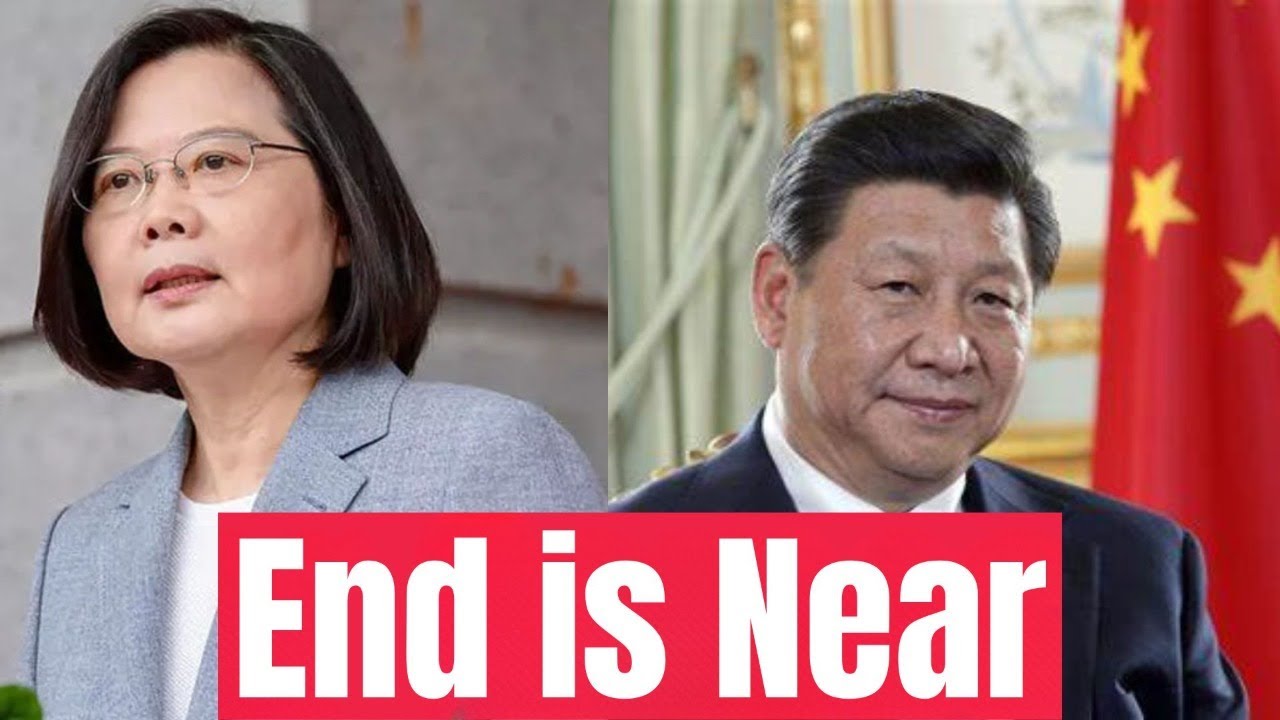
David Oualaalou examines whether anti-China messaging could backfire in Taiwan's elections. The video analyzes how aggressive rhetoric might affect voter behavior and campaign strategy as the election approaches.
Chapters
Hello everybody and welcome to Geopolitical Trends. I'm so excited to be with you on this Saturday, uh, October the 28th. My goodness, October is over, so all of a sudden we'll be celebrating Christmas soon, whoever celebrates Christmas. So anyway, so excited to be with you here. I got an interesting topic, uh, today for this conversation. We're going to be talking about updates regarding Taiwan. There are some events going on in Taiwan usually we don't hear much about. One that I am very familiar with, which I will discuss, uh, in, in, in this live stream, has to do with the trip of, uh, uh, a ranking, uh, official from the US government. But it was for a reason, and all this is tied to the upcoming elections. So we're gonna get into all this in detail and provide you a context especially when it comes down to the regional security aspects of it, because that is where the key focus is going to be on. So, but before I'll do this, like I always do, I like to extend my sincere thanks to channel supporters, members, subscribers, all of you. And if this is your first time here, please make sure to subscribe and hit that notification button so you will be notified every time I come on the air. So thank you all for being here on this Saturday. Uh, as I said, uh, Hung Tua, good to see you as always. Phil, here you are, good to see you. Uh, Alan MC, good to see you. Um, Aurel, good to see you. Ponin, Ponin too, good to see you as always. DSS, good to see you. Uh, very, very— Athene Wu, good to see you. Yeah, very, very excited to be with you guys. So, uh, there's one announcement I need to make, which is for, uh, the members and supporters. Uh, I will be doing a live, uh, exclusive Q&A for the members and supporters. So if you are a member or a supporter, or if you like to become a member or a supporter of the channel, uh, just make sure to join me tomorrow. I'm gonna do this once, but I'm gonna figure out something to do for the members, and I'll do something for the supporters as well. I'm also going to create, uh, an outlet some of you have been suggesting to me to do. For example, Buy Me a Coffee, if you want to support the channel, uh, which I will truly appreciate it. I already appreciate, uh, many, many of you. You guys send super stickers and so forth. Thank you so much for your continue support. But I'm gonna create, uh, when I decided not to do the Patreon after I found out the backdoor of the Patreon, uh, I'm not gonna do it. I'm not gonna do it. So I decided not to. So anyways, so make sure to join me tomorrow for the, uh, those for the members and supporters. It will be at noon, uh, Central Standard Time. No. All right, let's get into this because we got a lot to cover here. So now here's the, the, the, the straightforward question: what would the Taiwanese choose moving forward? It's a straightforward, you know. Second question: are the days for Tsai in general coming unnumbered? Because I'm seeing the signs things gonna go different, different directions. So, so this is what I intend to cover in this discussion, and of course I will welcome your— oh, Emmanuel, I want to say thank you. Emmanuel Beltran, thank you so much for your super sticker. I truly, truly appreciate it. Speaking of that, I need to give a shout out, by the way, to the new channel members and supporters. So I'll start with the two new channel members. Anna Meow, thank you so much, Anna, for your support. It means a lot. Second person is Jesus Aguilar. Thank you very much, uh, Jesus. I truly appreciate your support. Those are the two channel members, so make sure please to join me tomorrow for the live Q&A. The third person, channel supporters, is Charles Menaro. Thank you so much, Charles. Truly appreciate your support. And, uh, and to all of you, once again, I say thank you. All right, let's, let's talk about this, because here's the thing, the way I see it, the path moving forward, and, and it will be naive of us to think that the Taiwanese are not paying close attention to what's going on, especially with the Ukraine conflict and what it's going to be for the Taiwanese voters. You know, those are You know, they are part of the Han. I'm not going to get into the history because that's not what I'm going to do here. Uh, as a matter of fact, I'd be happy to do an exclusive one just for that, but I'm not going to do that today. Suffice it to say that the Taiwanese of all stripes, they're gonna now have to choose between what they want. Do they want war, or do they— or do they— or do they want peace? Choice is theirs. Because this is what, in my opinion, the upcoming election is going to be about. Because the Taiwanese people is going to be facing a stark choice when it comes down to this. And here is a question for you, because I'm gonna like challenge you, and because I want you to, to be part of the conversation here. When I put on the thumbnail, you all remember what I put in thumbnail? The end is near. What did I mean by that? Can anybody guess? And remember, think of the big picture and just leave the, the, the, uh, answer or comments if you feel like it on the, on the chat box there. So, so here's the thing, the upcoming presidential elections, it will be really whether Taiwanese wants peace or he wants the, uh, uh, a war. Straightforward, there is no ifs and buts. So, and the warning, here's the thing, the warning that was echoed by also a remark from the former president, Taiwanese president. His name is Ma Ying-jeou. I hope I pronounced it correctly. Made the— made the last, last week. As a matter of fact, he made the comment at an event. Listen carefully, guys. The event— the, uh, statement he made was because the event was hosted by an American think tank. You can read between the lines. That is why I said the trip of the US official to Taiwan was for specific reason around the same time this particular event was taking place. So the outcome of the January 2024 elections will determine whether there will be a war or peace with China. This is according to Ma Ying-ju. That's what I said. It's not him saying that. It's the narrative given to him to state the script. That is, this is how I read it. So Washington— and, and, and the way I, I get— the way I reach my conclusion is because what he said after that, what he said, and this is in quote, and Washington should do more to advocate Talk between the two sides. Talk about what? Taiwan is part of China. Taiwan is part of mainland. Yes, China, Beijing allowing the independent, uh, sort of, uh, uh, managing the internal affairs. And it's like for us, no different than another state in California, New York, here Texas, Hawaii, whatever. You know, the government in the local government does whatever Yes, there are certain regulations pertaining to the federal government. In our system, we have what we call the federal law supersedes that of the state. It's called the Supremacy Clause. Taiwan is no different. China, the mainland, or Beijing, said to let Taiwan— yeah, you can manage your affair as long as you stay under. And this is where that red line of the independence, which I think it would be a suicide for the likes of Tsai to do or embark on. But all this is not happening in vacuum because there is a push from behind the scenes to foment this direction. You all remember the trip of the former Speaker Nancy Pelosi to Taiwan. Why provoke? Because that's what it was. It was intended, it was intended to provoke China. Why, why would it do that? No, no. Now here's the thing, in Taiwan it's gonna have to— because to me it's clear, as clear as daylight, they're gonna have to choose. We already saw the outcome of the last parliamentary elections, I believe, or the— or the— I think the councils, something like that. And, and Sai had to step down from the leadership of the party. Why? Because it was a sign in the making. This, to me, the way I read it, it's no different than what— what's her name— the tyrant Jacinda Ardern did when she starts to see the signs of the New Zealanders at the time saying, enough of this nonsense. What she end up doing? She resigned before the end of her term. And also because she, Arden, learned from what happened to the Prime Minister of Finland, Sanna. You all remember she was pushed by NATO to repeat the narrative about how Russia is going to invade Finland and all this, that. And the Finnish people said, we've had it with this, because she was too young anyway. She wasn't qualified for the position. Nothing against her as a female, but she just not made up for this. This, that's not her background. So I'm seeing the same pattern that the Taiwanese people are suggesting through this vote that took place. And now the presidential one's going to come forward. They're going to have to make a choice because, mark my word, if ever Taiwan, which will be a suicide ever declared independence, that's a red line for China, non-negotiable. And I am certain Beijing will not be bluffing on this. That's the way I read it. And we all know China relations with the— with Taiwan, uh, uh, which is sort of make it clear that China will reunite, uh, Taiwan with the mainland by force if necessary. But at the same time, what do we mean by— or what did China mean by, by force if necessary? If those red lines are crossed. So far everything has been fine, China allowing Taiwan to, you know, uh, I remember having a conversation with Professor Hammond, you all remember, and he explained to a degree how Taiwan— it was, it is, has always been a part of China. I mean, when you look at just the map of it, where it is in comparison. So what I'm seeing, uh, interesting is that the statements coming out of some members of the administration inside Taiwan— what am I referring to here? I am referring to the Taiwanese foreign minister, Joseph Wu. Who wrote on Twitter, and I had to look at his Twitter there, wrote, and I quote, the dictatorial People's Republic of China— that they put this in bracket— is shamelessly trying to intervene in democratic Taiwan's national elections. Imagine what Beijing will do to others if they are successful this time. End of You can just see. And again, he's been given the script to repeat because the same narrative has been said in Europe about Russia's conflict with Ukraine. I'm seeing the parallels right here. It's not out of the Taiwanese, it's by outside forces. And this is where I'm seeing the idea that even Taiwan, even Tsai herself, she knows where the red line is. You know, she will— you will hear some bravado coming out of her saying that, well, we have a democratic government, but it has always stopped short. She has always stopped short. Of declaring formal independence. It's because she knows what the consequences will be. The question is, and it is question for you guys too, to, uh, uh, to consider: do you think Taiwanese assume that the US will come to their defense? What do you think? So just let me, let me take a look at some answers here. Do you think Taiwanese believe that the US will come to their defense? Yeah, yeah, I'm waiting. It, it takes a while to show up here. I'll, I'll get back to it, guys, soon. But this is one thing that, uh, uh, President S— first of all, why do, why do they call her president? You know, would you guys agree to that term? Let, let's just break it down because I have to think in terms of sovereignty. When you call a president That means it's a sovereign, which means it's an independent state. Well, Taiwan is not. So how come she's getting the title of a president instead of a governor, the equivalency for us here? Because you think about Texas, New York, California, Hawaii, Florida, all of them are, are, are, uh, states, but the governor is not the president. Yeah, it was the joke about the Californian governor in China saying the President of the Republic of California visiting China. So, and, and this is when I see, uh, the idea that, uh, uh, when Tsai, she, she put on statements, and I had to dig into this to find out, uh, she said that, uh, it, it is unnecessary for war or unnecessary for the status quo. Why? Because her country— this is according to what she said— because her country is already independent. Yeah, self-independent, because Benjín allow you to have a self-ruling on your own, not as a separate state. Those are two separate things, you know. And this is where she's trying— I think she's being manipulative, but also she's being, uh, geared towards saying what she is saying. No, uh, if you only know two things about Sai, that at least I digged into, uh, uh, her background, that it has Japanese background, which is nothing wrong with that. It's just the idea that, that, that is there. And the second thing has to do with, uh, Sai, uh, I, I had to look up her her PhD, which to me was not confirmed. And that is where the issue was— did she earn the PhD, uh, or, or not? Diane, I had the copy of the, of the thesis itself. I saved it in my, in my, uh in my record here, just in case. Uh, I don't know what it is. Anyway, I'll find— if I find it, I'll, I'll, I'll, I'll post it for you guys. Uh, why is that important? It's because usually anytime you are, uh, when you receive the PhD, at the front page you always have to mention the institutions, the day of when it was confer— uh, conferred the degree. You your name of course, but also the name of the mentor or the, the, uh, the, uh, what you call them, the advisors. In hers, it was none, which tells me that the degree has never been conferred and there is no record for it. As a matter of fact, one journalist a few years ago was digging into this and he ended up being sued She sued him because he digged into information, but that's beside the point here. So, uh, KL, thank you very much for your super sticker, truly appreciate it. So the question becomes for Tsai, thinking, well, if the elections there, the, uh, the council or the parliament that took place few months ago showed what the Taiwanese people want and she end up stepping down, could this rhetoric just nothing but to ferment more attention is based on what she's been ordered to do, because that's the only explanation to that. So when we look at the landscape, the political landscape in Taiwan as far as the upcoming elections, and I'm going to share with you who's running and so forth, so just for you to put this in perspective. So the ruling Democratic, uh, People's Party candidate known as DPP The candidate is the vice president, Lai Ching-te. So he is currently the favorite according to what they're saying here, with the 33% support. And this is according to weighted average of the polls. But here is the key that I need you to understand as one who conducted the PhD research, and I had to do the polling and all that. You have to learn how it works. There is always the margin of error in any poll, uh, plus or minus 1, plus or minus 2, plus or minus 5. We don't even know what the margin of error on this. So, and if they are saying according to the weighted average, no, you have to disclose what the margin of error so people can have a better read of how the poll was conducted. So that's just one to think about. And the poll, by the way, was conducted— was released this week, which means the past week, that's when it was released. Now, this vice president, Lee Ching-te, he's facing 3 challengers who favor closer tie with the mainland. One, the first one, is the New Taipei mayor. His name is Hu Youhui. Hope I pronounce it correctly, guys. No. Then you have the former Taipei, uh, uh, mayor, Ko Wen-je. They come— or they came, rather— at 23% and 20% respectively, which means, uh, Mr. Hu Youhui got 23% and, uh, Mr. Koh Wen Jie got 20%, respectively. Then you got another really key player, even though interesting enough I didn't see that coming. It makes me just wonder, and I'm still putting a question mark. It's the billionaire Terry Gou. So about— he's pulling at a 9%. Why is this important? Why am I sharing this with you? To highlight to you that 15% left is undecided. That 15% could tilt the balance one way or another. So despite the talks of forming a united front, which would pose a significant political threat to Lei, who is the vice president, prospect. The opposition camp have yet to agree on a way to decide whose name they want to put forward, and that's not going to be an easy thing to do. So, and by the way, the, uh, Foxconn— you all know the story of the Foxconn, you know, the largest private employer in China. Uh, and this is what Lei said, because now, remember, for him to do this, he has to push the anti-China narrative. That's why I put the title, Does Taiwan's Anti-China Drive Is Going to End Up Backfiring? So what I found very interesting is that his argument about when he said that Taiwan is no stranger to election interference from the other side of the Taiwan Strait. What I found ironic is he didn't mention that there is also interference from far lands across the waters, not just in China— let's say it straightforward— but from the United States, from other Western entities who already have declared their support for Taiwan in case there is a war What made them think that there is going to be a war to begin with? It shows you putting the horse before the cart. So when you hear statement, uh, by Lei that's saying, and I quote here, China should cherish Taiwanese companies like Foxconn, the largest private employer in China, rather than targeting them during an election season. End of quote. I don't find it ironic because to me this kind of narrative is very scripted for a reason. So, but here is where the— what's at the heart of this all. It's going to be the young voters, the younger generation, because those the ones that's gonna really push this, this direction or that direction. But it won't matter which direction, as far as which party, Taiwan's still part of China. That ain't gonna change no matter what, no matter how you slice it, no matter how you look at it. At the end of the day, Taiwan still part of China because Taiwan is not independent state. Otherwise, where is the representation, let's say, in the UN? Let's say the diplomatic representation with other countries? Officially. Yeah, you got some countries that recognizing Taiwan. Yeah, you can recognize whatever, that ain't gonna cut it. If there are not official diplomatic channels to indicate that you have a representation of foreign diplomats to suggest that you are a sovereign state, then you have none. So when you look at this young generation, how the— how it's gonna impact, end up impacting the young voters, because, uh, Taiwan presidential hopefuls, all of them, are increasingly now turning their attention to young voters. They can't ignore that, you know, because young voters are expected to play a major role in this presidential and parliamentary, uh, elections. Because the thing, the way you look at it, guys, is the idea of understanding how the outcome of this election. You all remember the same argument I made for you about New Zealand back then. I said I, I will not reach a conclusion yet till we see what the outcome of the elections. And here we are in New Zealand. The Labour Party has been, uh, rejected loudly by the New Zealanders. We have to wait and see what it's going to be. At the same time, to what degree China is going to be be this patient because China's being— I don't see China literally getting militarily to take— I mean, they'll take over Taiwan in no time, but again, optics of it will not look good for China, the mainland, as a, as a, as a major power, global power. It's going to be interpreted as, is this how you handle global affairs? That's not going to bode well. So that's why I don't see China let alone how would you expect China to be like— they use— you hear the term in the West, China is going to invade. That term invade, because that's the, that's the only term Western mindset is going to interpret, you know. But, but the logical of it, how do you anticipate or expect a country to invade itself? That just doesn't make sense. Can we go and invade Hawaii? Can we go and invade New York, California, Texas, Florida? No, they are part of the Federal Union, federal, part of the United States, same thing. Because how will it look? Even though for us some states wants to be independent, you know, in my home state here we care less for the federal government. I don't give a damn about that. Like I told you one time, I remember sharing this with you few decades ago, way back. You're talking about now 4 to almost 5 decades. Study was conducted in California, Southern California, southern part of California, southern part of California, New Mexico, a part of Arizona. And the research that was conducted back then is to find out if the locals in this region were asked if they wanted to be independent from the United States. And the answer was overwhelmingly yes. It sent red flags inside the Pentagon to the point that, that poll or that research was suppressed. Shows you that they wanted independence. Some other states here, they want to be independent from the West, but as of now, no, they are not independent. They can't call themselves independent. I, I would say the same argument, but we all remember, because here's the thing, that's why I don't see the military options unless The one condition that I see, and if China doesn't act on it, it will lose credibility. If Taiwan declares independence, which I am certain they won't, even for us, believe it or not, behind closed doors, we saying to Taiwanese, don't be stupid. And this is why I asked the question, and I'm going to look at the answer. Do you believe Taiwanese think that the United States is going to come to their defense. Let me just see. I'd like to see your feedback on this particular question, because it's very important. It's very important to understand how the perception is in Taiwan. It will be naive— not naive, what's the word I'm looking for? It will be perplexing If the Taiwanese are not seeing the images of what's going on in Ukraine, knowing that we created the tension there, do we have our soldiers on the ground? No, no, there is no way. So I see one of you, Nick Sun, you say no. Uh, I'm, I'm just trying to see. Yeah, I, I just don't see, I don't see, I don't see the Russian— no, here's that one, another one. No, they don't, they don't see that. Yeah, but some Taiwanese— and I had my conversation with some people there, from, from there rather, not there, from there, that who end up to live here, they go back and forth. Their argument is that there's no certainty. And I'm going to touch on the military briefly as I move forward into all this. So the idea to think that, uh, uh, uh, for, for China, yeah, China will act forcefully if Taiwan declares independence. That's the red line that's been declared. Uh, and, and, and what is island that— what is Taiwan of 23 million people? That's about it, you know. Even though in any statement like this You always see one particular, uh, uh, uh, connotation or short phrase always attached to this, and this one is, as the United States pledge to defend it, or to defend Taiwan, we pledge to defend whatever. What did we say to Ukraine? We stand behind you. Same thing. You all remember what took place in 2020, right? What happened in 2020? Can anybody tell me? Can you type it? Can you type it in the chat box? What happened in 2020? I'm not gonna give you a hint because I want to challenge you on this one here. And with all this within the context of, you know, thinking in terms of how people in Taiwan might be thinking, oh, the US is going to be defending us, we don't have to worry What happened in 2020? It was a major event in that whole region. I'm not going to say the exact location here. Uh, pandemic. Yeah, of course. Now, beside that, beside that, this one has to do with social, social tensions. Yeah, beside COVID, guys. This has to do with the social. Uh, I'll give you a hint: demonstrations. It started with demonstrations. Ah, you got it, you got it, you got it! David Oualaaloualou, Hong Kong. Now you ask— many of you now is answering that. There is a delay in this, but, but you guys get it. You guys get it. That is the reason why you have to think in terms— what was that outcome there? So, so the Taiwanese will be thinking in terms, well, how did the riots become— or demonstrations— who fomented that? Let's say it straightforward, you know, and why. That will be the same argument I will make for the Taiwanese who think, oh, the US is going to be our savior. Wrong. It won't be. And this is why Tsai keep pushing that narrative. This is also why she keeps repeating the narrative, and that's what end up to her winning with landslide victory at that time. At that time. Now Taiwanese are seeing, okay, from that time, from 2020 forward, they're seeing the more US officials go there, the more tensions rise between the mainland and, and, and the, and, and the island. Now let's make one thing clear, and I'm not gonna, uh, uh, suggest that everything looks cool here. No, it's not. So far, as the time— at the time of this, uh, uh, uh, live stream here, so far, based on the also the research that I conducted, DPP is on track to maintain power, or to retain power, that is. But there is no chance, there's no— I'm sorry, no guarantees, because we don't know yet how the young voters, who now is going to have to choose between war or peace, they all seeing where the status of China. If China cut off, which I don't see China doing that, because how can you do that to to your own people. That's why I'm saying I don't see the logic of it. But hypothetically, if this to go some really bad direction without getting into the military, if just from an economic perspective, China will cut off any supply to the island, what do you think is going to happen to Taiwan? We all know. Look no further than what's going on in Australia right now. No, now there is one particular thing you guys need to pay attention. As a geopolitical analyst, I have to look at the map. When I say map, meaning I put all the issues on the table. The outcome of this will also have to send a strong signal to Philippines. Because Philippines, that is where you have US forces there. And I'm going to tackle the military aspects onto this. So, and the reason why I'm saying, to go back to my point about DPP, yes, it will— it, it's the— it's— it is suggested that it may retain power. Why am I saying this? But not necessarily. It's because here's the thing: Ko Wen-je, the 64-year-old former Taipei mayor who has won over many young voters with plain talk on issues such as high housing costs rather than focusing on China threat This is what I'm saying. This young voters generation is going to play a major role, and you— I won't be surprised, Mike, my word on it. I won't be surprised that it will be the decisive force unless we do one thing. We, the United States, you all know what I mean, right? Another type Hong Kong protest. Riots, demonstrations, whatever term you want to use. But here's the thing, this gentleman Kuo Ming-je, because here's the argument, or here is what really the media is not openly disclosing for people to understand why young generation or young voters in Taiwan could make a difference. Taiwan is, yo, Taiwanese youth cannot afford now to buy homes, cannot find good jobs, do not have— do not dare to get married. This is according to the article, by the way. Uh, I found this article here, and, uh, I got to give the credit to, uh, Sarah Wu and Yimu Li. Those are the authors of these articles. But I did, based on also the research that I found, it collaborates the same information. But I decided to use their article, which I will post for you. But I give them the credit, Sarah Wu and Yimu Li. So their arguments is in line with what I found on the other side also. So, and this is what what literally Koen G told this Youth Forum in August. And the reason I see his arguments, because in this case, what, what, what, what, what is he signaling? He's signaling that if you want to move up your entity upward, if you want to prosper, if you want to, you have to be— you have to innovate. This is what— not about these threats, we're from China and, and we got to ratch up the military defense spending. Look at just for us, we are allocating millions of dollars in weapons to Taiwan. It's almost like we want to push them towards that, that, that path. And when I give you the comparison between China and Taiwan, you will see, militarily that is. So this is where I see, uh, why you could see the difference in this upcoming elections. And I bet you the young generation is the one that is going to make a difference in the outcome. Uh, both Lai and DPP, which China paints as secessionists because they are advocating for that. But I bet you this, they will not go as far as declaring independence because they know what the outcome would be. So, but they also, those two have framed the ballot as between, you got it, democracy and authoritarianism. They didn't frame it in peace or war. It's playing with words psychologically. To influence the thinking of the voters. So that's because the party, the DPP traditional rival, which is the, uh, KMT— KMT, as you know, favors close ties with Beijing. Why? Economic prosperity. That is the reason why. Yeah, this is why they are pushing for the narrative of war and peace. Taiwanese will have to choose between. So, all right, let me move to the military dimension of this, because even though I'm not going to detail the tactical aspects and the amphibious setting, how this is going to go and all that, suffice it it behooves us to understand at least where, uh, things are headed. Uh, let me see the answer. Yes, you guys got it. Hong Kong protest. No, and it doesn't help when we have our officials, uh, just showing up in, in, in, in Taiwan knowingly or intentionally, that we creating those tensions with, with China, even though we sit down with the Chinese then we go behind and do whatever in front of them. Now you see why I made the argument about yesterday when I talked about the, uh, Mr. Wang Yi, uh, visit to the United States. Will the US sit with China on an equal footing? So, so what we doing like this when Nancy Pelosi— I don't know who was advising her She gives a, she gives a hoot about Taiwan. Does anybody, by the way, does anybody know why she really went there? Do you guys know? I give you a chance to just, just guess if you can type in, in the chat box, and I'll get back to it to see. Oh, I see a super sticker here. I want to say thank you To Tal, thank you so much. Truly appreciate your support. Thanks again. Yeah, what, what was she really in Taiwan for? Oh, you got it, you got it. Investments. Because she has shares in one of the, the microchips, uh, entities in, in Taiwan. So she wasn't about caring for the Taiwanese. She was about to ensure that her investments does not get lost. So basically, it was about money, straightforward, you know. So at the same time you're doing this, but you fermenting these tensions, you creating tensions to the point that it could escalate to point of no return. You, we are over here, but if the Americans— some of us think, oh, we're surrounded by the sea, nothing is going to get to us. Let me tell you, if you happen to be an American watching this, I wrote an article in 2017 and I argue— it was on Huffington Post somewhere there— and I argued back then China was testing some specific missiles in the in the, uh, in the, uh, in the Pacific. And as a matter of fact, they got closer to Hawaii. And what I found out when I looked at the specs of that particular type is that it will be, uh, it will easily reach the homeland from way out there, specifically for that. So when you have politicians, they're just thinking about their own, putting a whole nation in jeopardy, like what we are saying with our incompetent president about what we're doing right now in the Middle East. It just defies logic, you know. Aren't those politicians supposed to serve the interests of the people? And one of the key things is peace. Haven't we had enough of these wars and conflict? Wars we don't even win. We don't even win those wars. Then we were involved in 5 major— you can use the term wars— Korean War, Vietnam, Gulf War I, Gulf War II, Afghanistan, and now Ukraine. Which one have we ever won? None. Zero. And the only one we won was World War II. And if it weren't for the Soviet Union back then, we would have not get involved. There are those who are misinterpreting history. When I was in Poland, I went to a cemetery to visit with people I know who were there and visiting their family, their dead, their deceased family members. And they told me, come here, David, I want to show you something. They took me to one section of the cemetery and I saw this massive amount of tombs, no names, just flag. Those were— they told me those were Russians, Soviets, who died right here fighting in World War II. And I was floored. I was floored to see that many, and yet he's not even mentioned. This is where I see the shortcomings of our politicians. They, they are— they just, uh, and, and, and if they think that a conflict with China nowadays is a cakewalk, they are mistaken. I'm not saying we should be scared of China. That is not what I'm saying. You guys know this, you know, I talk objectively. I don't talk emotionally. I talk objectively. What is rationale? The rationality of arguing specific issue. The way I see it is if a conflict erupts there, I ain't gonna be limited to that geographical area. We will have it right here at home. So what China has developed militarily, and I'm going to get into just to give you brief comparison and you reach your own conclusion, uh, for, for, for, for all this. So here's the thing, there are those, of course, in Washington Because remember, anything pertaining now to the Far East, especially China, you have to, uh, uh, uh, uh, target through the narrative so you can drill it in people's mind. Because it's human nature, if you hear things so many times, you tend to believe it. So, so the argument we're saying is that the world now, while it's been distracted— this is according to the arguments in Washington— Uh, uh, they said the argument that there are signs that China and the United States are preparing for something much more serious. What is it? So, armed conflicts over Taiwan? No, China is not preparing. China has always had its forces on the ready. The same thing we do, except now for us, we have no will to fight. I mean, we look at our woke mindset now that exists. It pains me to— as a former military, back then, I'm glad I'm out, I'm done with the government. But as one who worked in Washington as an analyst, a geopolitical analyst, international security analyst, I had to look at these issues from this perspective and say, yes, if there's the preparation from the Chinese side, is because they taking it serious and they're gonna fight till the end if this comes to, to, to hate, which I hope it doesn't. This is why when you look at— and here is how to, to think about it— when you look at certain countries Japan, Canada, the US, Germany, uh, I think France also. You look at their strategic vision for 2024, what they are all converged towards— Asia-Pacific region. All of them by design. Even our, the Pentagon review strategy that provides to the, to the, uh, uh, Congress because it's required, it's all about China's military capabilities. And yet you think about it, how many bases do we have around the world? How many bases China has? So, so here's the thing, reviewing the, uh, developments in the Asia-Pacific, uh, region, and it becomes the question of what can we learn from history. This is what I'm saying, the outcome of Taiwan elections, it's going to be reflected in Philippines. I don't see the Philippines first because Philippines is the weak link over there. But history speaks for itself, especially in that part of the region, when you are to say that what that region, uh, has witnessed over decades This, to me, it's another dangerous moment in history, and we have to be very careful. Because here's the reality of it also: when a nation prepares for war, it's most likely it will go into one. Because what else would they do that? In this case, I see it differently. And, uh, just to go back to my point about the Pentagon, uh, in 2021, and I remember reading that, and I'll put the link for you guys for the Department of Defense, uh, uh, report to Congress. And you know what it was titled? It was titled Military and Security Developments Involving the, the People's Republic of China. That was the title of it. The other one, it was the data that was used for that was based on 2020, which at that time it concluded that China has over 1,400,000 troops versus 88,000 for Taiwan. This is what the US saying. So what I'm gonna provide you is my own. I'm not gonna depend on that one. So, and let me get a link here because I wanted to, uh, share it with you so you'll see while at the same time I'm sharing this information here with you. Alright, let me get this full screen here. So what are you looking at here? Well, we're looking at the, uh, what I'm going to do here, guys, is I'm going to do a brief comparison between the two. Okay, of course it's all clear, but for the sake of transparency, you know, well, uh, and again, this is not from the Department of Defense report, you know. I, I know how they can, uh, play with, you know, I won't count on it because credibility Matters. Here's the thing: China can support its troops with 6,300 tanks and 7,000 artillery pieces. At the same time, Taiwan can only field 800 and 1,100 respectively. China can deploy 32 destroyers 48 frigates against 4 and 22 respectively for Taiwan. And I'm gonna get into the air as well. In submarines warfare. China is utterly dominant. Why? You got about 9 nuclear attack and 6 ballistic missile submarines. Taiwan doesn't have any of either and only has 2 diesel attack submarines versus 56 for China. The comparison in the air is also starkly lopsided. China fielding about 1,600 fighter aircraft versus 400 for Taiwan. China also has about 450 specialist bomber aircraft and 400 transport transport aircraft, while Taiwan only has 30 transport planes and no bombers. Which means what? Hypothetically, if there's war, the US will have to get involved. If the US gets involved, we don't know what the outcome is going to be. Plus, Americans are going to say, forget about it. So despite all this, I don't see, I don't see China going militarily. Again, to go back to my original argument, how can you invade your own? That just doesn't— defies logic. So I don't see that happening. Now, the amphibious type of, uh, warfare, it's gonna come to play because hypothetically this to take place, which again I don't see that happening, it's not going to be depending only on the sea or the land. It's going to be a conversion of, of many, you know. And the way the Taiwanese might be thinking, oh, the US is going to come to our defense. So, so here's the thing, the US military, yes, it's well-funded and so forth, uh, uh, has about 30 personnel in Taiwan. We did have special forces training. This is how we do it usually. But at the same time, the United States has about almost 80,000 soldiers stationed permanently in Japan and South Korea. Now, if you station your, your, your troops permanently, what does it mean? You have no sovereignty. Even though we say, oh, it's on a rotational basis, no, we taking over that country. Same thing we're doing in Germany, we taking over that country. We might even be doing it in Italy as well because there is a, a specific, uh, base in Italy and one in the Netherlands. Why Netherlands? Is because that's where we have our nuclear warheads. So, yeah, uh, Netherlands, Belgium, Turkey, and, uh, I forgot the other country. So, and this is why the US will always, will always maintain what we call the strategic ambiguity when it comes down to Taiwan. We will never— behind closed doors, we say, Taiwan, you got to be out of your mind to do that, to declare independence. And I don't see them doing that, but it's going to have to be up to the locals to decide in the upcoming elections. This is why Tsai had to step down from the leadership of her party because she's realizing it's getting nowhere. So there's the argument that Japan is going to come to the defense of Taiwan, which will be a big mistake. It will be a strategic mistake. It will be a strategic mistake of Japan to do that. And if they think just because we have our soldiers over there— no, no, because if it does, don't, don't forget what North Korea might do. Don't forget what North Korea might do. No. So, so this is how I see it. Uh, I need to share one thing with you guys before I forget, and this one has to do with Uh, I got a tweet here. Uh, I did mention it. I didn't mention it in detail, but I want to share it with you on the screen here. You will recognize this quickly here. Yeah, this is the passing of, uh, uh, Li Keqiang, who dies of a heart attack. Yes, he was a high-ranking in the Chinese government, uh, he was the ex-premier, uh, so way up there in the chain of command. So he passed away at, uh, 67. So it says it's young by standards of today. So, so I just wanted to share with you, but there is an interesting thing that I get on my Twitter feed here. Uh, that the idea is, uh, let, let me see here if I can, uh, post this one. Uh, as long as Chinese leaders— this is, uh, by the way, this I get from Wong. He shares stuff with me sometime and he's spot on. And he wrote, and I quote, as long as Chinese leaders are alive, the Western press villainizes them, but as soon as they pass away they are portrayed as victims of the current regime. Spot on, spot on. I couldn't agree more with this. I found it very, very interesting, so I wanted to share that with you. All right guys, I'm gonna take a question or two, uh, before I sign off here. I just wanted to remind you, tomorrow at noon I will be doing an exclusive Q&A for the channel members and supporters. I will also create, uh, uh, some sort of a platform where if you want to support the channel, uh, because as I told you, uh, this is not an average content that you can just find anywhere. I do my due diligence in the research. I have my background in academia, but also tactically speaking, theoretically speaking, as a former international security analyst in Washington, DC. I've kind of been in the different parts of the world, as much as in most continents, so I, I know what I'm talking about. But the content, the information that I bring to you, I am very, uh, happy with in the sense that it's gonna only increase your knowledge. And this is not about to brag or whatever, this is about being well informed. That's the way I see it. So I'm going to create that platform. If any of you wants to support channel, you can do it that way, uh, for the— if you— it's better for the channel supporters and members. And because for the members, I am going to create something where I will be meeting with you once a month, uh, just for us to get to know each other on a different level, some sort of one-on-one conversation per se. You can ask me whatever questions Uh, if I can't answer because it's sensitive or classified, I won't be able to do that. But that's what I intend to do with the members because you guys supporting this channel here, and it's only fair that I do something for you as well. Uh, I might even see down the road— I have to figure out the, uh, technical aspects of it, uh, maybe we'll do some for one of my books. You can upload it or something like that. I'll figure something out for you guys. Anyway, just to remind you, remember to join me tomorrow if you are available. So I'm gonna check all the way back up and see if there are any questions. Just put Q or sign it question and I will, uh, I will answer, I will, uh, take that on. And once again, thank you all for being here and thank you all to those who, uh, provided the Super Sticker. Thank you so much for your support. It's a great community we have here. I truly enjoy it. If you noticed, I've been doing a lot of live streams. It's because that, that's— it's important. It's important to keep the conversation going, uh, conversation of substance. I'm not here to just waste your time and waste mine. I would— you never have that from me. I promise you that. If I don't have something of substance to share with you I won't come on the air. Awesome. Tian, you wrote, uh, uh, dear Dr. O, I think the president of Taiwan, uh, uh, uh, the Taiwan is having vision problems, especially regarding the colorblind. That was why she kept crossing the red line. And thought it was the blue. That's very interesting. Uh, but, but you got a, you got a point there. You got a point there. Uh, the, the— yeah, I, I, I was never sort of, uh, uh, not in favor. It's not about favor or not. It's about whether the person is qualified, you know. Just to get a position because you, you, you, you speak loud, you you push the narrative. No, that doesn't qualify you for the possession. No, that, that's just not how I see it. You know, if you are qualified, you possess some sound judgments. And when it comes down to the, this, this issue, it's not— why we call it an issue in Taiwan? Misunderstanding, whatever you want to call that. No, to me, uh, if, if, if you are given the autonomy to run, the, the, the state, if I may use the term, or the island, whatever term you want to use, you know. Don't, don't misinterpret that. Don't misuse that power because it end up backfiring on you. And this is how I see, I see the, the policies of Sai that since she came on board, I've been watching. But of course, what took my interest is her PhD that in some circles doing calling herself, calling her doctor. And I was like, hold on a second, you know, I went to the, uh, uh, in, in England and I checked with the archives there. What I did find, it was a thesis there, but it was not confirmed. So under what authority you call somebody a doctor if you don't earn the doctoral degree? That's called academic fraud, straightforward. You know, and then it starts to become clear to me her policy she's embarking on. She's being fed the narrative from the West, mainly the United States, because we have a reason, uh, we have a, an objective to maintain the tensions over there. This is why I said Philippines, this is why I'm saying Australia, this is why I'm saying India, is why I'm saying maybe New Zealand, even with the election now. That doesn't mean— still, like, uh, my guest Robbie Barwick argued spot on— just because these guys won doesn't mean— we got to see by November 25th, and I'm going to keep an eye on that. Uh, it's in action, you know. People can talk, politicians tends to talk. In action that you will find out whether they are intending to take on what they have advocated for. It's not what you say, as the saying goes, it's what you do. Politicians, it applies to them as well. I'm looking, guys, to see if there is a question here. I'll, I'll answer it. Otherwise, make sure you guys prepare, uh, uh, your questions for tomorrow for the members and channel. Phil, question: India will defend Taiwan? It's laughable. Uh, well, what will India do? I mean, send the nukes? No, no, I don't see how India— India has a lot of internal problems it needs to— and by the way, guys, I couldn't confirm, I could not, so I'm not gonna do it. I couldn't confirm that they did indeed side with the West to sanction Russia. I looked. I'm gonna keep looking, but as of now, I don't intend to do that because it's not confirmed. And we're only gonna have to be fair and just. If it's not right, don't say it, like what Marcus Aurelius said. It is still echoed. Yeah. What I will do, however, is about the upcoming execution of the 8 Indian officers Uh, uh, and, and former naval, former naval officers in Qatar who were spying, uh, on behalf of Israel. They've been now tried, convicted, and they're going to be executed. So I'm going to do a live stream about what we're really looking for into that. All right, let me— I'm scrolling down. Oh, as, uh I want to say thank you, SK Lee. Thank you, SC Lee. Thank you so much for your Super Sticker. Truly appreciate it. Thank you so much, sir. Hi, Boon. Good to see you, Boon. Okay, and, uh, oh, here's the, uh, Where is— there's no question here. Uh, I know this is not real because I've been, I've been tracking this. Yeah, I've been tracking and I found out. So, but in, in, in fairness to transparency, I'm gonna put it here. You all know this is not real, but question: David, why do you only answer questions that support your possession? I respectfully disagree with you. I don't. If the question makes sense, I will answer it. If some questions that is has nothing with the reality, why will I waste my time and my viewers' time in taking up that, that question? You know, if there is some logical arguments in a question, I will be happy to answer it. But this nonsense stuff, I don't do it. So that is the reason. Second thing is I don't only answer only the questions that support my position. Well, my position is straightforward. In this case of Taiwan, you should have answered the question, why are you only supporting China? Well, I'm not. I'm supporting what is realistic and pragmatic, is that Taiwan is part of China historically. So what is new about that? So this is the reason why. But just in this, for the sake of transparency, I am showing you— I'm showing your questions here for all of us to see. So maybe you can think of better questions to ask. Well, uh, I mean, I know, I know, uh, it's a troll and all that, but still because transparency matters. Because I've been saying this, this is what prompts me to really disclose my qualifications as to what, what qualifies me to talk about geopolitics. Because there are some that they think I just start talking about this last year. So that's why I wanted to put this. But you're absolutely correct, you know, and, and I only did this one time because I know that troll, I've been tracking it. For quite a while. So here's a question, uh, from Louise Maana. Thank you. Uh, question: will the United States involve itself in a war on three fronts— Middle East, Taiwan, and Ukraine? No, no, we are not. We can't even afford one. However, we will get involved, and you know how? Is by pushing the locals to the forefront. We ain't gonna be in front line. This is what Japan doesn't understand. This is what South Korea doesn't understand. This is what Philippines doesn't understand. Even in Taiwan itself, to those that think that, oh, oh, the US is going to be fighting side by side, we don't. You look at history in World War II, if it weren't for Soviet Union, we would have not got in. We fought side by side with the, with the Soviets back then against the Germans. So no, the way we will get involved is by fomenting more tensions. We can print more money, which we will— it's already ruining our economy. We can send more weapons to intensify the tensions. And this is why, by the way, guys, one major event just took place. It just happened, and I just became aware of it, and I will do a live stream for you about it. Libya. Has expelled ambassadors of the US, UK, France, Italy. Yeah, for supporting genocide. So I intend to dig into this. So funny, before I left Washington, I was on my way to Libya because I was still in the government at that time, but I left and I was done with that. So short answer is no. We won't get physically, but we will ferment, uh, we will ferment this kind of tensions. All right guys, I hope you found this very informative, and I look forward to seeing the members and supporters tomorrow. And I will prepare something for the two topics that I'm going to be researching, then we'll do it next week. All right guys, hope you have— you enjoy your Sunday— your Saturday, not Sunday, Saturday. Sunday is tomorrow. So, and I look forward to seeing you next time. As always, remember, geopolitics impact your daily life in more ways than one. Till next time, bye-bye.
More from David


Beyond the Single Actor: Why the Gulf Isn't Choosing Between the US and China


Iran, Iraq's Militias, and the Houthis Are Coordinating! This Changes Everything




Who Controls the Next Decade's Resources? Latin America and Africa's Geopolitical Crossroads

The Chokepoint Trap: How Washington's Stupidity Triggered a Cascade That Now Controls the World

Trump Spooked as IRGC Unveiled dual-use SLV, Deployed Ghadir Mini-Subs & Hinted at Tactical Nukes!
