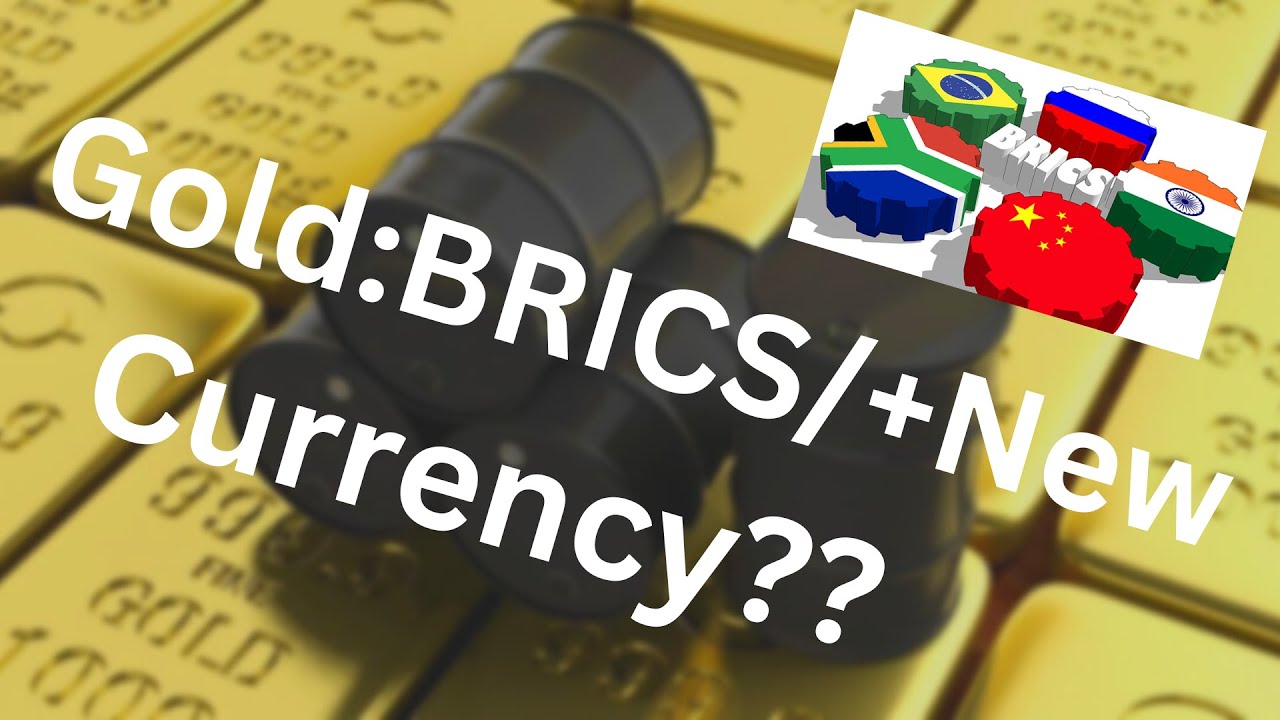
David Oualaalou breaks down how BRICS expansion could challenge the dollar's dominance. BRICS now represents 24% of global GDP versus the G7's 45%, and member nations are accumulating gold and building payment systems outside SWIFT. Russia plans to peg the ruble to gold while a network of 23 countries representing 60% of world GDP establishes alternatives to dollar-based finance.
Chapters
Hello everybody and welcome to Geopolitical Trends live stream. So excited to be here with you. Hope you guys, for those who celebrate Christmas, hope you had a, you had a wonderful Christmas, uh, and you are ready for the new year. So, so what we are going to be talking about in this live stream, we're going to be addressing the issue of gold, oil and what does it mean for the future of the global financial system. So basically, the way I'm gonna, uh, run this here, I'll just provide you some insights as to where I see the trajectory going. And, and just a disclaimer here, I am not a financial advisor, so that is not my area. So whatever I share with you, those are my personal opinions, and just for you to know what to expect moving forward. So then I will conclude with a few questions from you guys, and, and we'll just go from there like we did last time. So, uh, just to remind you, uh, I will be doing again another live stream by the end of next month in January. So that's usually when I will be doing live streams, at the end of every month. Uh, I also— I am still working on the webinar for the course that I am going to be offering, uh, that has to do with the governments and some stuff you truly want to know. So I'll keep you posted as we move forward into this. But, but before I launch into this, I do want to, uh, say thanks to, uh, our members. So I want to shout out for Secret Fountain of Youth, Thank you so much for your support. So I, I just noticed you became a member of the channel. I also wanted to say thank you to Koi Choi Hoy. I hope I pronounce it correctly. Thank you so much for your support and becoming a member. And also want to thank Joel, uh, you're already— thank you again for your support for becoming a member. I'll take also a shout out at the, uh, Tom P. Tommy Potra, thank you so much for your support. For those who have, you know, given super stickers and so forth, uh, thank you so much for your support because without you, you know, it will be no channel. Basically, that's the way it is, and I am very, very grateful to you. So, well, like we did last time, please just drop me a note on the, on the chat here. Let me know where you are joining me from. I always like to know a part of the country's, uh, sort of you guys joining me here. So it's always nice to know, uh, let me— because it's the writing is so small, I hardly ever can see because it's too small here. So let me just, uh, there we go. So this way I can move this direction here And we just, uh, perfect. All right, yeah, so this is what we're gonna be, uh, chatting about. So Athene Wu, hello Athene, how are you? I hope you're doing well. Athene Wu, by the way guys, has been with us since we started on the other channel, about a year and a half or almost 2 years. So I truly appreciate your support. I think it means a lot. So, uh, Roland, thank you very much. I wish you and your family as well, uh, Happy New Year to you as well. Uh, we have Yep Lickhorn from Kuala Lumpur. Good to have you. Nancy from Central Florida. Uh, what part of Florida? I used to go there a lot back when I was working for the government. So, uh, Ko Choi Hoi, thank you very much from Malaysia, you know. And, and by the way, Ko Choi Hoi is our channel member. We have Michael Cornett from England. I wonder what part of England. I'm very familiar again with England, especially with the soccer. I used to play soccer myself. So, uh, Muhammad El Hamouri from Casablanca, Morocco. Good to have you here. Morocco, by the way, did well on a World Cup. I, I was watching the games there. And Elizabeth, Rob from England, happy New Year to you too as well. Percy from Kenya, uh, Nancy near Tampa, so that's where Central Command is. Uh, the reason I knew about it because I was in Middle East as part of the Central Command going there. So GAVS from India, good to have you. Are you, are you from New Delhi? Uh, AFY Mahmud, hello to you as well from England. Uh, hello, hello, Happy New Year to you as well. So, oh, we got somebody from Taipei, Taiwan, Republic of China. Good to have you, Mal. Uh, how's things in Taiwan, by the way? So I do, I do foresee some stuff coming for Taiwan next year. I, I got some info from Washington regarding what the US preparing for that. So, ah, it's kind of— I'm, I'm keeping an eye on this. I'll, I'll, I'll, I'll keep you guys posted as we move forward. All right, let me jump into starting here talking about what we're going to be talking about today here. So, uh, BRICS, why BRICS is important, and why BRICS+ will be even more. And why is this? Because when you start to think about BRICS+, you're going to be thinking about in terms how that's going to impact G20 and G7. But what is at the heart of all this? Well, what is at the heart of all this is that The, uh, the BRICS countries, uh, just between them, they contributed about 40— if I am to remember, about $24.4 trillion, uh, dollars to the world economy. So which means basically representing about 24% of the total, uh, world global economy. That, that's just between those BRICS. When I say BRICS, I'm referring Brazil, Russia, India, China, and South Africa. In contrast with that, you look at G7, uh, countries, for example. Well, G7, who are they? You look at the US, Canada, England, Germany, Italy, Japan, and France. It used to be G8, uh, before 2014, but of course Russia was kicked out. When it annexed, uh, Crimea. So, but a lot of people in the West do not understand the history of Crimea as part of the Soviet Union back then, when it was given as a gift by Nikita Khrushchev back in 1953, if I'm not mistaken. So Crimea is part of Russia. But of course, with Ukraine and all that, that's why the G7, uh, decided— G8 at that time decided to kick Russia out, so became just G7. But we're not here to talk about that one. So G7 by itself produces about 45% of the total world GDP. But here is the thing that you guys need to keep in mind to understand the impact or the importance of why you have to put BRICS, you have to put gold, you have to put oil, and you have to put BRICS Plus within the global context, economically speaking. If you go back to 1990, okay, you think about BRICS— Brazil, Russia, India, China, and South Africa— well, at that time they produced only 11% of the world, uh, GDP, okay? And G7 represented about 66%. So, but like I said earlier, in 2021, just last year, BRICS represented about 24% of the world GDP, the, the, uh, the Gross Domestic Product. So, and this is why it's very important for you to put this within the context, the global context, that is. Why? Because between G7 and BRICS, uh, almost 11 out of 12 of them represents the largest, uh, world economies. Yeah, but to put this within the context of gold, once again, which what we are talking about here, and again, just for those who just joining us now, uh, just a disclaimer here, I am not a financial advisor, okay? I am just sharing with you my insights as to where I see the trajectory regarding the impact of gold moving forward and what it's going to do to the global financial system. And in this live here, I'm going to be providing some analysis as we move forward. So, so except for India, okay, all BRICS countries are significant producers of gold, believe it or not. You think about, for example, of South Africa. Well, why South Africa is part of BRICS? Yeah, is it because of its economy? No, because South Africa is considered the 8th largest gold producers in the world. So it makes perfect sense. So, so now you have on, on the western side, on the western world, shall we say, or the just G7, you look at only at 2 countries. Canada and the United States are the only major gold producers in, in the G7 countries, but they are not the same capacity like, uh, uh, South Africa or some other countries like Russia and so forth. So, so what, what are we looking at right now? 2023, you're gonna start— you're already starting to see, I'm sure you do, you're already starting to see the trends where are headed. So the new world monetary system is being set up as we speak, you know. And basically what he's going to do, he will completely kill the US dollar down the road. As you know, the US dollar is the world reserve currency. So, and why, why am I saying this? I'm saying this again based on the trends. Why? Because I'm looking at about 23 countries 23 countries around the world, which represent about 60% of the GDP— of the world GDP, that is— are setting up now a swap line to bypass the SWIFT system and the US dollar altogether. That is what I'm saying. You look at the trend, you look at why all of a sudden there is now an interest in the Western central banks by accumulating too much gold. This seeing what they— what is coming. So, and some of those countries includes, of course, Russia, China, India, Germany, France, the UK, among others. So this is not just in the Global South or some— no, even European countries are thinking in those terms. So And again, once, once the new system is in place, you know, our dollar, US dollar, won't be needed in these countries. And this is where that conversation about the new reserve currency will come into being. Do we know which one at this point? No, we don't. The only thing we are certain of is that whatever is going to come later on is going to be pegged to gold. Is going to be back to tangible assets. That is the key. So all those dollars in a foreign account will come home, which will annihilate our monetary system, because that's, that's basically what it is. Sadly, and I say it as an American, it pains me to say this, but I say it's my country. I'm sure you guys understand No matter what, your country comes first. But it pains me to say, most of my, of, of my countrymen, American people, have no clue as to what lies ahead. They are being brainwashed. You know, I don't shy away from saying it because that's what it is, because the system is corrupted. So this dynamics of understanding how now the emergence of this country is pushing with gold, it's going to impact the US dollar, let alone our country is sink into debt over $31 trillion. And we kind of— most of us, majority of us live on credits, you know. That's one thing I do not like, debt. You do not want to accumulate debt, you know. And within this context, even China you know, which is about a few months ago, announced that it will stop purchasing US debt. You know what it means, holding the US dollar in reserves. And basically what it's gonna be by China taking this action, what's gonna do to us in America here? What it's gonna do to us is that the Federal Reserve, okay, will be forced to print more dollars, more money beyond the $85 billion that is currently printed. And if you are an American watching this, you're gonna be asking yourself, like I am, why the heck are we sending our money to Ukraine for if we are printing money knowing what it's going to do to our currency? It's, it's common sense, it's logical to ask the questions. Yet those who do not like to hear the truth start to label somebody who speaks the truth as, oh, you're the enemy of the state, you hate America, you don't like this, you don't like that. It's nonsense. That's the weakest arguments I've ever heard. And that is exactly what's going on in the US. And yet most of us Americans are oblivious to all this. So, because here is the, the reality and the truth about the, the cycles and trends throughout history. You know, there is a reason why you learn from history. You know, world reserve currencies, from the guild to the pounds to the sterling to you name it, from way back, the, the Dutch, the Portuguese, the Spaniards, the French, the British, you know, world reserve currencies have always had a limited lifespan. And what we are witnessing now is that it's our turn is up. The dollar— I know a lot of people do not like to hear this, but it's the reality. So sort of to my— those critics in America, get on with it, you know. That is where I see the, the, the change. So, and what I found very, by the way, fascinating about the G7 or G8 back then, G7 now, uh, is that despite China's massive economy, okay, China was never received or had never received an invitation to join G7. According to G7, is due to human rights, whatever, human rights abuses and so forth, you know, which is nonsense. So here's the thing, once again, let's go back to the— why are we talking about all this? We're talking about putting, like I said in the title for this, what does gold, or what do gold, oil, BRICS, BRICS+ have in common? Because there is, there is a— what, what, what's the word I'm looking for? There is a link. These things don't— are not happening in a vacuum. So BRICS countries have increasingly taken steps to de-dollarize their economies and protect themselves from US sanctions. This is nothing new. Been doing it for years. It just never moved forward. I'm very familiar with the conversation that took place about, uh, 8 or 9 years ago in one of the meetings of the BRICS, and in which they discussed, it is time for us to set up, uh, some trade settlements outside the SWIFT system. That was back then, you know. It just, it has not been implemented. They are there because one thing about BRICS is, and I'm gonna get into talking about BRICS Plus, you know, one thing about BRICS is now that there's so much demand about joining BRICS, they're gonna have to figure out the infrastructure administratively speaking to ensure that the admission of those countries, uh, the, the process goes very, very, very smooth. So, so, but the discussion about, uh, sort of, uh, uh, establishing a trade system outside the SWIFT is nothing new. It has been common among BRICS countries. And as a matter of fact, the Russian President Putin, that is, made the remark just last June echoing these sentiments. And, and he said, and I— let me get you guys the quote exactly. You know, uh, referring to this about BRICS, Putin said, he said, when it comes down to BRICS developing reliable— when it comes down to an alternative system, I'm sorry, developing reliable alternative mechanisms for international settlements and exploring possibility of creating an international reserve currency based on the basket of BRICS currencies, end of quote. You can just read between the lines in that statement. And this is why you take, for example, Russia, you take China, even India to a degree, South Africa accumulating more gold. I take, I take interest in two countries, Russia and China, because I've been following this for a while. And I was aware of when Russia had to, uh, fly two planes from, uh, Caracas in, in, uh, Venezuela, full of, full of gold, back to Moscow. You know, a year and a half later or two years later, China did the same when it flew a plane from Switzerland full of gold. This leads me to share something with you. I had a chance to look at Saudi Arabia's gold in the US. I mean, I was just lucky, you know. That's a couple years ago, and I went to the vault in, in, in New York City, Federal Reserve, and I went downstairs to the basement and I saw the gold. What I was looking at, I was looking at $120 billion worth of, of, of, of gold bars, you know. Of course I knew it belonged to the Saudis, and I asked the manager to confirm it, and he did. The question now that I'm asking myself: can Saudi Arabia take its gold from the US given the tensions? This is why, again, when you think about the financial system on a global level— gold, oil, and so forth— you also have to think about the geopolitical link to that. This is why energy, economy, finance and geopolitics, they go hand in hand. If one thing happen on this aspect, it will impact the other and vice versa. So I am wondering, why am I saying this? I'm saying this because Saudi Arabia wants to join BRICS. Will the US release the gold that belongs to Saudi Arabia? It's almost like what Britain did to Venezuela by not releasing the gold that belongs to Venezuela, not the UK. So the UK government is basically holding something that doesn't belong to it. It's no different than the treasures that belongs to India that are being held now in the UK. And the UK is in another conversation because its economy is collapsing before our own eyes. The new PM, Sunak, you know, he found that's the reality. He's hit with the reality. The guy is a millionaire. He has no clue about the daily struggles of an average Brit. So that's why he was talking, oh, we're gonna fix the economy. It's nonsense. Plus, Sunak will not be able to do anything if he is not given the green lights. That's another conversation for another day. So to go back to our topic here, and this is why you are noticing now Russia, because you have to tie it to global, uh, energy. That's why Russia strengthened now the alliance, uh, with BRICS, or among BRICS, by selling oil to BRICS countries at a discount price outside the SWIFT. India is buying oil from Russia and paying for it in rupees and rubles. China is trading with Russia in, in, uh, in yuan and the ruble. You can just— they going outside, you know. And this is why what you're going to be noticing, especially now that the European Union, so-called the entity of unity, which there is no unity— you, you all saw the video that I did about that one. There's no unity in Europe. It's a lie. Straightforward. Let's not sugarcoat it. I am just floored as to what the heck is going on with the Western leadership. It's almost like there are no pragmatic leaders anymore. I had one of, uh, my viewers here made a comment I should be the next Secretary of State. It won't work because they're not gonna like what I'm gonna do. And basically what I would like to do is to travel around the world and amend the relations with the rest of the world so for all of us humans to live in peace. We all just passing through here. So what the heck are they doing to the masses here? That's why I said there is a deficiency of leadership in the Western world. There are no leaders. Those are just puppets, basically. That's all there is. So, so just to put this within the context, this is why you got now Saudi Arabia interested in joining BRICS. It's a strategic move, and I'm gonna tell you why as we move forward. Of course, with the now the deal between Russia and China regarding energy, Russia now took over by becoming the, uh, uh, the main supplier of energy to Saudi Arabia. It went up by about 55% from last year, you know. So it surpassed Saudi Arabia as a top supplier, you know. And as I said earlier, both countries, Russia and China, are conducting trade across borders, uh, uh, in, in both Chinese yuan and the Russian ruble. So let me now talk about BRICS+. Let me first check to see, because I can't see, the writing is so small here. So, uh, I'm see if anybody join us from some other country beside the ones that I already mentioned. Uh, Kagiso from Johannesburg, good to have you. Uh, Wong KC from Malaysia. Uh, yes, I did see those before. Okay, let's move on here. So, uh, now let's talk about BRICS+. I'm going to mention 3 countries at least to start with: Saudi Arabia, Algeria, Iran, and I'm add Turkey to this. But let's just start with Iran first. Why is important? So because first of all, Iran has applied already to join BRICS. Iran is also Russia's ally. Iran is also— is China's primary customer. Why? Because China gets oil from Iran, and also because Iran has massive oil deposits, significant. So, so you can just see why the admission of Iran into BRICS is going to only strengthen that organization. So you look at also Argentina. Argentina has also large deposits of oil, metal, and beef production. So between the two countries, Iran and Argentina, you know, are of a strategic— will be strategic partners once they join BRICS. Why? Because they're gonna create a commodity-based currency. This is where I see it going, you know, because remember what was the objective of BRICS couple years ago when they were talking about establishing a system outside the SWIFT? This is where it's headed, because especially now that Russia announced that it's gonna be pegging the ruble to gold. So the likelihood for BRICS countries to do the same— this is where I see it— which basically commodities, the commodities among BRICS will be backed by currency that would be significantly increased because the presence of gold, but also they are trading outside the SWIFT system. So what does it mean from a global perspective if you are to see country like Iran, country like Argentina, country like Saudi Arabia, Algeria, Indonesia joining BRICS? It's going to become, as we say, BRICS Plus. What that's going to do to G20? What that's going to do to G7? It's going to basically say goodbye Because that's what's going to happen. Of course, in Western media, we never admit to this reality. But again, you don't wait for Western media to tell you this. You look for trends yourself. You're smart enough to know. You don't wait for someone else to tell you. You're intelligent enough to know. Look no further than how the G20 summit that just took place in Indonesia what the outcome was. That should serve as an indication for you. Why? Because it's becoming irrelevant. That's what, that's what it is. So, and with the sure sign of BRICS+, it's on its way forward in the Global South cooperation. Because what is one thing that BRICS and BRICS+ is going to bring with it. It's going to bring the entire Global South, all of them moving away from the, uh, uh, US dollar-based transactions. So, and this is why I see, for example, the redeeming quality of the 10th G20 Summit that was held recently in Bali. You know, it's— I would say it was managed by an admirable Indonesian graciousness, shall we say, you know, because they sharply defined which way the geopolitical winds are blowing. You all remember when the West was pressing— I mean, pressuring rather Indonesia not to invite Russia, and Indonesia said no. We will invite Russia, and it's up to Russia to decide whether they want to come to attend the meeting or not. So this is, again, you don't need for Western media to provide you, provide you an analysis, because the analysis they're going to provide you is based on their narrative, what they want you to consume. Rather, you look at the trends yourself. As I said again, and I'm not saying it to be Mr. Nice because that's not me, you're smart enough to know. So what this all is going to do to the Global South effect, because it will be an effect in the Global South. And this is why you look at, for example, again I'm going back to G20, uh, meeting in Bali, but also you look at for the next host, India. Because that's where the next G20 is going to be. You know, they exercise— what did they have in common? They both exercise what we call trademark of Asian politeness and consensus building. You know, interesting enough is that both Jakarta and New Delhi worked extremely hard to find the wording Because any statement issued after summit, it has to do with the wording that will be acceptable to both Moscow and Beijing. So what would we call this? We call it Global South effect. That's the way I look at it. It tells you where, by the way, where India is going, because India has been pressured by the West not to purchase oil from Russia, and India said no. We will keep buying oil from Russia because it's their interest. What do you expect? And this begs the question: is the demise of G20 as we know it inevitable? You know, I, I do see the fracturing of alliances like G20, G7, the EU. They're not gonna withstand because the shift that is taking And these serious fractures that exist between Global North and Global South, it's so evident. And it was very evident in Bali, and no different than it was in, in Cambodia, in Phnom Penh during the ASEAN meeting as well. Because what happened there in Cambodia, the 10 members made it very clear that they will remain unwilling to follow the US or G7 in their collective demonization of Russia in many aspects, and China as well. So this is why I'm seeing the Southeast Asian nations are also not very, very excited about the US, uh, IPEF, which is the Indo-Pacific Economic Framework. Oh, let me say thank you to, uh, oh, Joel, you're already— that's our member. Thank you very much for your super sticker, and, and it means a lot. Your support means a lot, Joel. I want you to know this, and I'm saying from the bottom of my heart, it means a lot. Thank you so much. So basically, the IPEF, again, the Indo-Pacific Economic Framework, which the US is launching It's going to be irrelevant. This is no different than AUKUS. You all remember AUKUS, right? Australia, US, and UK. Australia— I'm sorry, Australia, AUKUS. Australia, US, and UK. Do we hear about AUKUS anymore? No, it's just window dressing. This is no different than that. It's going to be window dressing. That's the way I see it. So And all this because in Asia, most Asian nations are seeing that no, no, no, no, no, we're gonna be looking at trade as the way to prosper. Conflicts do not bring prosperity. Now this is why I made the comment to one of our viewers here when he mentioned about me being a Secretary of State, and I said, because you have to have peace. To coexist with others, to cooperate with others. We all benefit, you know. What makes me better than someone else in some other country? No, it shouldn't be. It should not be. Uh, Lover of the Russia, thank you very much for your super sticker. We truly appreciate it. That, that's an interesting screen name, Lover of in Russians. Uh, it's, you know, I, I really don't get it. I don't get it why these politicians don't think in terms of, you know, live and let live. How about cooperating, which we all can benefit from? You know, now that's why being a Secretary of State, they're not gonna let me do what I need to do to bring peace to this world, because that's what it needs to be. All right, let's talk about the countries that are now lining up to join BRICS because they want to join. So, so I will feel comfortable, and I'll say it, I feel comfortable saying that G20, the G20, you know, have already plunged into an irreversible path towards irrelevancy. It's becoming irrelevant. And more and more, you're gonna notice in 2023, just a few weeks from now, the patterns. Same with the EU. And this, by the way, it's not new. Even before the, the, the, uh, ASEAN meeting in, in, in Cambodia. It's nothing new. So, and by the way, it wasn't mentioned by, uh, uh, Russian Foreign Minister Sergey Lavrov, is that he said, he said that signaled that what come next. He noted that over a dozen countries, and I put this in quote, over a dozen countries have applied to join BRICS. So we're looking at Iran, Argentina, Algeria, You know, Indonesia, Turkey, Kazakhstan, Afghanistan, you know, those are significant. United Arab Emirates, Thailand, Kazakhstan, Nigeria, Senegal, Nicaragua. You all can see where this is headed. And this is the reason why I wanted to talk to you about— at least provide you some brief understanding of how you're gonna need to link the gold that is gonna become now moving forward into the— the transaction. Sorry, let me silence this. The transactions moving forward and the geopolitical changes taking place on the ground. No, like I said earlier, Algeria has already applied. What does Algeria have? Algeria is not a big economy, but Algeria has oil reserves. It's an OPEC member. I mean, just take a step back and imagine this: within BRICS, you get Iran, Saudi Arabia, Russia, and Algeria. Just 4. Among those 4, they almost have of the world oil production, it's just with those 4 countries. So you can just see why will be the importance of BRICS+. But the question is going to become for BRICS is, do they have the infrastructure to move this forward? Because if they don't, BRICS will become nothing but just a name that has no punch, it has no, no, uh, no weight on the global economy. And yet they could if they play their strategic cards the right way. You know, I'm not saying they're gonna just welcome everybody. You can't do that, of course, because it's like a business. If you grow too fast, too Too quick? No, it won't be sustainable. But they do have the means by which to really, really sort of expand and increase their presence on the global stage, economically speaking. And by doing that, that's shifting the financial system from where it was set up back in the Bretton Woods after World War II to recently, you know, that means the end of the dominance of the US dollar. It will be on its last leg, you know. As an American, yeah, that's not an easy thing for me to say because I do know what that's going to do to the economy here in the US. And I, I can't even entertain that idea of you're seeing more homeless people on the street. You're seeing people will not be able to afford their mortgages, were not able to pay their debts, whatever, car, uh, automobile mortgages and, and student loans and all that stuff, and services for the, uh, to pay the government workers and so forth. All those sectors will be impacted one way or another. But at the same time, I can't shy away from saying the truth and the reality for where I see it going. You know, there are those who criticize, like I said earlier, oh, you don't like America, you know. And again, they have no clue what I have done for this nation, and I don't brag about that stuff. That's my personal life and I keep that. I don't talk about, about that. It just saddens me that those that speak too much with no— they have no, no, no understanding. It's just they want to be loud. I'm sure you'll run to somebody who wants to be just loud for no reason. So that is the type of these individuals. So, so this is where I see things are going, uh, uh, moving forward. So the question becomes is when will, for example, country like Algeria that applied already, when will it join the BRICS? Well, of course you can submit applications, but there are steps, there's a process that goes on, and it's not— doesn't get over overnight. It's like the, the collapse of the US dollar. It's not going to happen tomorrow. Let's just be realistic. So what you need to be looking for is the next meeting of BRICS in South Africa in 2023. You're gonna see the hints or the indications right there as to how fast BRICS will be willing now to admit more countries. Because there is one thing for sure, mark my word on it, The Ukraine conflict has now precipitated the shift from the global dominance in US dollar to something else. Now, even if the Ukraine conflict is settled today, that direction of the change in the financial— global financial system is moving forward. There is no going back. That I feel comfortable saying. So, so becomes a question now, uh, just within next 2 months, 3 months, or even a year, what is going to be happening now with the value of the gold? So it makes more sense to see where the things are going. There are those some experts in this field suggesting that the value of gold could reach up to $4,000 an ounce, possibly, possibly. I am not a financial advisor, I am not a gold expert, but I can also see the trends and, and come up to it with my own conclusions. So, so this is where I see it going, uh, moving forward. So, so becomes now the question for, uh, uh, how the BRICS is going to move forward with this. You know, and when you consider, like I said earlier, many countries, about 16 or 17 based on some research that I found, you know, you look at just, uh, for Egypt, for example, even Egypt now wants to become part of, uh, so you look at Egypt, Saudi Arabia, Iran, Turkey, Indonesia, and Argentina, then Kazakhstan, then Afghanistan, Thailand, You know, all this gives you an idea why, uh, uh, most likely BRICS countries will be open. I think they will be open to adding new members and referring to them as, or launching what we call the BRICS+ economic group. It's, it's because, uh, uh, numbers matter. So this economic group will be quite strong, in my opinion, economically speaking. You know, because between all of them you're looking at about GDP of almost 30% larger than the US. Yes, 30%. So, and the next question you're going to be asking yourself is, okay, if we are to think of BRICS+ versus, let's say, G7, you know, it's, it's almost like a, like a fighting boxing match, you know, but Who's gonna knock who, you know? Because the one thing that BRICS+ will have to its advantage is its ability to de-dollarize the world financial system. Yeah, that is where I see it going. And again, uh, to me, just looking at the trajectory, at the trends, where are they headed? So So basically what it will be is you will be looking at— and I'm going to close with this here and look at some of your questions. So please just type in your question and put, put a question so I know it's question, not a statement. So basically my summary for you is this, you know, what are we going to be looking for just next year, just few days from today? You know, what we'll be looking at is at a greater role for gold. That's the way I see it. And gold tied to oil. And that will be not just for a month or two, you're looking at about a few years from now, you know, except that in the case of, of gold, that will be most likely, uh, what's the word I'm looking for, will have some sort of an advantage. And why is this? Is because the trajectory that is now moving into that direction, by now having a Russia, for example, backed, uh, uh, oil to gold, and you look at other countries increasing their gold reserves. That's why I asked the question earlier about what will Saudi Arabia do? Will they get their gold out of the US? I don't know. I really don't know. I didn't see any signs. The Saudis are— the only sign that I saw from Saudi Arabia is that they are moving east. That's why they want to join BRICS before it's too late. So that's basically where I see the trends moving forward. So let me, let me see if there are any questions on your end here, and I'll be happy to answer for you here. All right, uh, let me, let me go. I have to go back to the top just to see in case I missed something there. All right, let me see. Athene Wu said the conflict between Kosovo and Serbia is now heating up. Could it become the next war in Europe? Would NATO step in as they did with the former Yugoslavia? That's a good point, I think. And as a matter of fact, they just opened the border yesterday. You know, it's not going to escalate to that point, uh, because they— both entities saw— and whole Europe for that matter— they saw what happened last time, especially when, uh, NATO bombed the, the Chinese, uh, uh, uh, uh not embassy, it was a consulate, you know. And Chinese tends not to forget those kind of things. But NATO, yes, NATO created the problem there. But I don't see it moving into that direction. Otherwise, you will have seen an exchange of fire already, but it didn't happen. So that's why I don't foresee it's going to go that one. But yeah, it put a question mark. And the question mark that we need to— or the question that we need to ask Is this again was created by design as a distraction? That's, that's what, that's what I see it going. So, all right, let's see someone else here if there are any other question. All right, Solid, uh, you asked, you know, what do you think about the fusion energy breakthrough? It will come soon enough. To give the, uh, it will come enough to give the US energy dominance. And no, no, I won't go that far. I won't go that far. And thank you, by the way, you, you mentioned, appreciate your work. Thank you so much. No, I don't see that far because it's going to go through a process and so forth. But remember one thing, energy lobbyists in this country. Why do you think Europe is going through these problems of energy shortages? It's because the energy companies here in the US pressuring the US government so they can sell, uh, energy to Europe at 5 or 10 times the price. So cold fusion, if it's gonna be— I'm sorry, nuclear fusion, that is— if it's gonna be cheaper, you know, energy companies won't let it happen. That's like with electric vehicles and so forth. And it's a domain that I do not know a lot about, so I can't be talking too much about What I do know is that in the moon, on the moon surface, there's a lot of helium-3. Well, helium-3, who's going to access that? China is already there. And you can just see, because if you tap into helium, helium-3, you get massive access to energy. That's the way I see it. Uh, Nancy Hollow, good to see you, Nancy, and thank you for your super sticker. I appreciate it. Uh, you wrote, when the US dollar fails fails, will gold be confiscated like during the Depression? A great, great question. You know, Nancy, I won't be surprised knowing what the Federal Reserve is doing today. That's why I said earlier, most of us Americans are oblivious to what's going on. What am I talking about here? I'm talking about the pilot test the Federal Reserve are now using regarding the CBDC. The central bank digital currency, which basically means what? They can now— it's like spigot, they can turn it on and off. If the government doesn't like you, they can turn it off. So you won't be able— you have credit cards, but you can't use it because it's tied to this. So it might be the same with gold. And this is why I'm saying personally, and I speak for myself, I'd rather not keep my money in a bank and go get some real assets. It's because if the currency collapses, you know, uh, will become like Venezuela. You got so much money but it's worthless. So I won't be surprised, Nancy. Yeah, I won't be surprised what the government can do. So, all right, let me see if there is, uh, uh, oh, Joel, you got a question here. Uh, Doctor, if gold will prevail, what will be the system of the commerce in the world, as a consumer, do we need to pay as well with gold? I do not know. I can't speculate on something like this because the way I'm thinking about it, Joe, you're, you're looking at a change in the financial system. There will have to be some other mechanisms by which you and I You as a merchant and me as a consumer, we're gonna have to transact. Now, if gold becomes the commodity by which we transact, you know, you look at it like what Russia just said, that they will be willing to sell a barrel of oil for an ounce of gold. So it will become like, okay, you buying, uh, you buying this item here, well, what is it worth in gold? You know, half gram, whatever, ounce, whatever, I don't know. So that's, that's where I see it going. But again, this is not going to happen overnight because, Mike, my word on it, the US is not going to go quiet. I'm saying there could be a war over that. Yeah, that is where my big concern. So, so it's hard to tell at this point. We don't know. So, uh, let me see another question here from who else here. Uh, Muhammad, uh, alhamdulillah, you know, question: how about the meeting of President Lula and President Xi? I'm glad you brought this up, and the reason why I found it interesting— and I'm gonna do a video on the upcoming visit of President Xi to Russia. They just had a phone call yesterday. Yeah, of course it's not reported yet, you you know, I, I have my own sources. Uh, they just had a call by which, uh, the Russian president mentioned that President Xi will be visiting Moscow. And I can only speculate on this, what will be the really key topic on this. And the key topic won't be energy or gold, it will be military. That's where I see it going. So As far as, uh, let me go back here to your question before I forget. As far as Lula and Xi, yeah, because Brazil is a big market, but also because there is a concern with even Lula himself. There's now a conversation about— I don't know if you guys heard what, uh, what I call him evil Bill Gates said about the, the next pandemic that's going to start in Brazil. Why? Because Bolsonaro didn't shut down the country. Lula might be willing to do that, but if the meeting between President Xi and President Lula is going to be about expanding China's presence in Brazil— because one of the aspects for Lula is to sort of lift people from poverty, because there's a lot of poverty in Brazil. Brazil is not your rich, rich country. It does have resources, but that's the only way I see it. So, so once again, thank you, Joe, for your super sticker. I appreciate it. Your support means a lot. And thanks to all of you. So I truly, truly mean it. So, uh, let me see another question here if there is one. Uh, Uh, Junior K, uh, thank you, said thank you for your work. You are most welcome. So, question: do you think that China might finally make a move to take back Taiwan in 2023? No, no, it won't be a move in that way because remember, the recent domestic elections in Taiwan sent a message already. So China might not be in hasty, or in haste, or in a rush to send in military, because it won't make sense. Because remember, one thing China will not do— China will not want to create problems to a global system that made it rich. Because if there is a war, we're talking about a major disruptions, a global, let alone, let alone the consequences of a conflict between two nuclear powers. And I'm gonna do, by the way, I'm gonna do a video later on next week if I get to it, once I confirm some information. So, so I don't see Taiwan, I don't see China moving into that direction. But, uh, like I said, it will be very interesting to see, because if China does it, it will do it after the elections in 2024. That, that's the way I see it. All right, I'll do, uh, wait, what time is it now? Almost 1 o'clock. So I'll, I'll check one more questions and close this out because, uh, let me see if there is any final question or statements here. Uh, Joel, yes, BRICS+ now bearing the Uh, biting the dollars. Yes, you are right, because that is where things are headed. This is why I found it very important for you guys to know about where is this link between— sadly, here in the US, for us, you know, I know some of, uh, the— my videos that I do, Americans won't watch this because Americans wants— not all, I should not generalize— wants to see, uh, some nonsense stuff, some kitty cats playing and all. What do you do? You know, the level— there is no critical thinking. And I'm not putting down anybody here, it just— they don't think far enough. As we say, they, they look at the end of the nose, you know. So what you are mentioning, Joe, is absolutely correct because it's biting the dollar. And the sad part that most of them do not know, most of Americans, is when that happens they're gonna feel that impact quickly. That is what's sad about all this though. So anyway, uh, I'm gonna close this out. I wanted to say thank you for your support. Thank you for being here. I truly, truly enjoy coming on the air and share this with you. I know it's long, whatever, but hey, when I hear about time, when I hear about whatever, we hear about understanding, exchanging ideas, because I am here to learn from you as well. So it goes both ways. And thank you for your support, it means a lot. So I look forward to seeing you in the next live stream next year— so next month at the end. So as always, guys, remember, geopolitics impacts your daily life in more ways than one. Till next time, bye-bye.
More from David


Beyond the Single Actor: Why the Gulf Isn't Choosing Between the US and China


Iran, Iraq's Militias, and the Houthis Are Coordinating! This Changes Everything




Who Controls the Next Decade's Resources? Latin America and Africa's Geopolitical Crossroads

The Chokepoint Trap: How Washington's Stupidity Triggered a Cascade That Now Controls the World

Trump Spooked as IRGC Unveiled dual-use SLV, Deployed Ghadir Mini-Subs & Hinted at Tactical Nukes!
