Will Diplomacy Rescue the US & Iran from the Brink of War? Geopolitical Trends
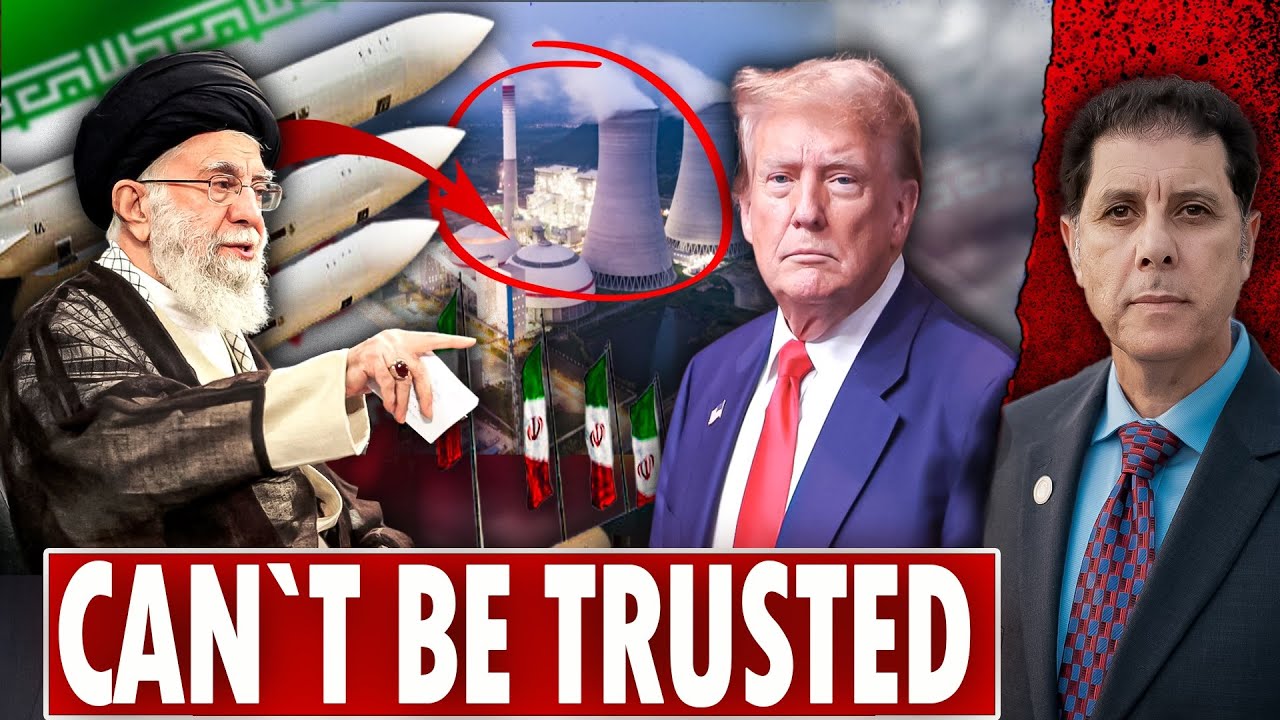
In this episode of Geopolitical Trends, the host welcomes his live chat community, offers brief news headlines, and then dives deep into the recent indirect talks between the United States and Iran that were held in Muscat, Oman. He first clarifies that the talks were not direct – the U.S. and Iranian delegations met in separate rooms and communicated only through Omani mediators, naming the Iranian foreign minister Abbas Iravani and the U.S. envoy Witterkopf. The host then provides a concise geography lesson on Oman’s location at the mouth of the Persian Gulf, its borders, and its strategic maritime position. He follows with a rapid historical overview of Oman’s Paleolithic roots, its rise as a maritime empire, the Omani‑Portuguese conflict, the 20th‑century modernization under Sultan Qaboos, the Dhofar rebellion, and the current ruler Haitham bin Tariq. Turning to the substance of the talks, he outlines the U.S. demand for a complete halt to Iran’s nuclear program and the Iranian insistence on lifting illegal sanctions, noting the contradictory language used by Washington that labels the talks “direct” while they are in fact indirect. He critiques Trump’s statements about Iran and the G20, and highlights the broader geopolitical context: the United States’ waning hegemony, the rise of a multipolar world, and the strategic importance of the Strait of Hormuz. The host then compares Iran’s possible nuclear trajectory to the experiences of North Korea, Pakistan, India, and Libya, arguing that the U.S. should be prepared to live with a nuclear‑armed Iran much as it does with Pakistan and India. He discusses the costs of a potential war – massive Iranian infrastructure damage, disruption of oil flows, and further acceleration of U.S. decline – and stresses that Iran is militarily capable and unlikely to seek war, but will defend its interests. Throughout, he intersperses community shout‑outs, promotes upcoming guests (Einar Tengen, Dr. Warwick Pao), and solicits support for an Asia trip fundraiser. The episode ends with a call to subscribe, a reminder that geopolitics affects daily life, and a sign‑off.
Chapters
All right, hello everybody and welcome to Geopolitical Trends, where truth matters. Excited to be with you as always. My apologies yesterday, couldn't make it, I had to attend to some personal matter. Anyway, I am here today. I have an interesting topic for you. This one has to do with the talks between the— let, let me make it clear— the indirect talks between the US and Iran. A lot of people think that it was a direct talk. It was not. Don't get misled by the headlines and so forth. So just make sure of that, and I'm going to tell you what happened, then, then we go from there. So first, let me say hi quickly to our wonderful community, uh, who is Timeline Dunkley, as always, Willie Holman, Good to see you, uh, Rafael. Oh my gosh, thank you so much for your Super Sticker, man. Truly, truly appreciate you. Uh, could Palestine be another Bangladesh? Very, very interesting. Uh, I, I know about the first one, the first part regarding the, uh, the US and UK, uh, threat to target India. You know, I was aware sort of through my research, of course.— that the Soviet Union, the way they responded to that by deploying the Vladivostok Fleet, and that one, that includes submarines and ships. So the interesting thing that they deploy them to two locations. One of them is the Indian Ocean and one of them is the Arabian Sea. So, and this is why when the USSR sort of threatened with deployment of the nuclear confrontation, the US and UK back down. Yeah, because they, they know, and this is one reality about the West. If you push back, they'll back down. So, so thank you. Thanks again, uh, for your super sticker, Rafael. Truly appreciate you. Second one, could Palestine be another Bangladesh? Uh, hard to tell, hard to tell at this point because you have to know the influence of India inside Pakistan— inside, I'm sorry, Bangladesh. And this is why Sheikha Hassina was as corrupted as it can get, and that's why she fled to India, not to any other location. Once again, Rafael, thank you so much for your super sticker. So, uh, who else is here? Oh, sorry, let me put this one up here. Taiwan Steel, good to see you. Hanging G, good to see you here from London, G, Great Britain. Good to see you as always. UTUZ, good to see you. AF Carleon, good to see you as always. Fight Back, good to see you. Alisa Lewis, as always. Peng Yu, as always. All right guys, let's get into this because I have a lot to cover regarding this, given I'm going to be bringing some history into all this regarding some other nuclear programs to put things in perspective for you. Excuse me, because you have to have the full picture of really what's going on. So some housekeeping item, remember to join me on actually tomorrow at 9 PM my time, which will be 10 AM the next day in Beijing. I will have none other than my dear friend Einar Tengen. So he's going to be here tomorrow, very, very interesting conversation, uh, given what's going on in the world of economics and geopolitics. So Aynur will be here. I am also going to be— I'm working on with my other friend Dr. Warwick Pao. I might have him here on towards the weekend, either Friday or Saturday. We have not locked in the dates yet, and I will keep you posted as we move forward. So let me do a quick headlines here. I only have two for you quickly here, then we move into our a conversation here. Well, the first one that I, uh, came across has to do with, of course, none other than Trump. But this one has to do with the, uh, sort of his diplomatic tensions with Pretoria, which is South Africa. Why? Because Donald Trump threatened to boycott the G20 Summit, which is scheduled in November. Well, who gives a damn whether the US attended G20 or not? And second, really ask yourself, guys, how relevant G20 is. I know there are some heavy hitters inside that G20, but think about it. So if the US threatened not to attend, so what? So I'm not sort of, I'm not surprised that if those G20 summit decide to move forward, Because here is the hard truth, is that the world has moved on. Whether it's going to move on with the US or without is irrelevant at this point. That's just the way I see it. So, uh, second headlines, it's from our neighbor to the north, which was shocking to me, to my fellow Canadian, uh, watchers here. Uh, what you're looking at is the picture of, uh, uh, he turns out to be another, uh, sort of I don't know what's the term, pathetic. This is the Conservative leader for in Canada, and that's the Conservative Party, that is the leader of the Conservative Party, Pierre Poilievre. Poilievre, I'm sorry, Pierre Poilievre. So here is what he did say. He pledged now Listen to this. He pledged as of this weekend, he pledged to deport foreigners who incite hatred, claiming that rallies organized by pro-Palestinian protesters contribute to the rise of anti-Semitism. I mean, just think about it, guys, especially for my fellow Canadian viewers. Pathetic. We used to say Canada was the best. For freedom of speech? None across the Western world. As a matter of fact, here is the hard truth. Here in the US, Donald Trump now is going to impose a new policy regarding citizenship that if you criticize Israel, you will not be granted citizenship.
Really?
Germany embarked on that, and now the US is going to do it. Makes you just wonder, so, where this is headed. Anyway, so, uh, let's get into our topic here regarding the US-Iran indirect talks, uh, that, uh, have, uh, took place on Saturday. Uh, I know I was gonna do it yesterday, but I just couldn't. So, uh, before I move on here, guys, please, if this is your first time on this channel, I would greatly appreciate if you could subscribe. I'm gonna put the link for you in the description because the analysis you are hearing, uh, is unique to this channel. So I would greatly appreciate if you could support the channel by subscribing and sharing it with others from around the world so they, like you, uh, have an opportunity to hear the truth. And thank you for your support. Now when we talk about the, the talks that just took place on, uh, on Saturday, And took place in Oman and especially in the capital, Muscat. Now those talks were indirect. Let me just make this clear for you guys. There was no direct conversation between the U.S. and Iran. So despite what you see on some YouTube stuff, whatever, I don't see that stuff anyway, but anytime you see a headline that says, direct talks. That's not true. And that's why I'm here to decipher facts from fiction, per se. So now, when you think about this talk— as a matter of fact, guys, why don't we do a little bit of geography and a little bit of history about Oman? A lot of people have no idea with their country where this country is located to begin with. So, so let me share a map with you, if you allow me here. Then I'll do a little bit of history and a little bit of geography, and we'll move on with what we need to do. So here's the map here for Oman. Now don't confuse Oman with Amman. Amman is the capital of Jordan. Oman is the— is the country of Oman, that is. So Oman is some sort of a sovereign nation, of course, located in the Arabian Peninsula of West Asia. Uh, and is of course located in the northern and eastern hemispheres of the Earth. Oman shares a northwestern border with United Arab Emirates, uh, a western border with Saudi Arabia and Yemen. Oman also shares a coastline, borders with the Arabian Sea in the south and east, along with the Gulf of Oman. In the northeast. Uh, Oman is strategically situated in the— at the mouth of the Persian Gulf, makes it very, very interesting, in the southern part of the Arabian Peninsula. And the country shares its maritime borders with Pakistan and Iran. So when you look at it right here, I'm scrolling this down here. Excuse me. So this is the Arabian Sea, and that's where Oman is. So if you look at a very, very strategic location regarding Oman. Okay, I'm gonna stop sharing this one here.
There we go.
Now let's do a really brief, brief history about, uh, about Oman, so you at least put it in perspective for you. Now, if you think about Oman, it goes way back to the Paleolithic era, which is through the archaeological evidence, uh, and also the evidence of the human habitation that's dated almost based on the archaeological, uh, evidence that goes back about 100,000 years. And this, as I said, archaeological evidence reveals that It was some sort of a civilization at that time around the 3000 BCE, which is Before Common Era, and it was known for one particular thing, is trade. That was known for that. So, and the region was also known for its irrigation system because agriculture was very, very important at that time. So, and the agriculture It wasn't because of the Omanis. It was established by none other than Persian, because the Persians were there. So, and that was the sort of crucial for sustaining this cultural civilization. So now Oman is known for its tribal system, which is known in the region of West Asia, in Iraq, Syria, you name it, Jordan, and so forth. So, uh, but once you start having the Arab migration, uh, from the South Arabian during the 2nd century CE. That's when you see the evolvement of the emergence of Amman. Of course, Amman emerged to the scene in the 7th century.
Why?
Because that's when it embraced Islam, leading to its rise as a dominant maritime power. And by the 18th century, the Omani Sultanate— it's known also in Arabic as Sultanate Oman, or the Omani Sultanate— has become a powerful empire. Believe it or not, it was back then. And this is where it was competing with none other than the Portuguese and the British. So, and where, where the competition took place in none other than the Persian Gulf and the Indian Ocean. Because when you think about the location of Oman, with access to both Persian Gulf and the Indian Ocean. So here is the, the key thing about history, is that the Omani naval forces expelled the Portuguese. They were able to defeat the Portuguese.
Yeah.
And they were able to defeat, to expel them from their eastern African possessions. And this is where Oman expanded all the way to none other than Zanzibar. And if you know where Zanzibar is, it's in Africa and other parts of the region. So at its peak, the Omani Empire influenced— the Omani Empire's influence sort of stretched all the way from the Strait of Hormuz all the way to the East African coast. That's how, uh, then you move forward to the 1970s. That's when— and I have some pictures for you guys that I need you to see, uh, I'm gonna be sharing with them. This is Qaboos, uh, he was the, the king, the sultan. They call him Sultan Qaboos. He died, uh, way back, uh, so in 1970, Qaboos ascended to the throne and initiated some sort of a period of modernization. So that's how he opened up the country and so forth. Now, one thing you need to know about a man— he has oil. So of course, the discovery of oils in Dhofar— there is a region in Oman called Dhofar, which was discovered in 1964, and that's provided significant economic boost, further driving the country towards modernization. Now, what happened in 1960s? The Dhofar Rebellion— rebellion took place in 1960s and 1970s, so, which was suppressed with the military support from various countries. This is a key for you to know, the influence of outside powers. And this was significant challenge to the Oman's territory integrity. So, and that's where Oman continued to navigate this kind of changes, uh, uh, moving forward along with the, uh, with the, uh, the developments of the country. I have a link for you, I'm going to share it with you guys, uh, uh, very, very well detailed. I'm not going to go through with all of it here. Uh, this is Haitham, uh, he is the current, uh, Haitham bin Tariq Al-Saeed, who succeeded to the throne on the death of his cousin Qaboos, because Qaboos did not have a son who can ascend to the throne. So his cousin Haytham, he's the one who took place, took over. This is Qaboos with Elizabeth. That's because Britain played a role in influencing Oman at that time. So that is the reason why I wanted to Just share this with you quickly here, and I'll provide you a link of this. Let me share it with you guys right now so you can— pardon me— read up on it later on should you decide to do so. All right, let's move on into our conversation here regarding, uh, the talks that took place between, uh, the indirect talks between the United States and Iran. So Now, first of all, let me, let me tell you something here. The location where the, the talks took place, the both parties were not in the same room. They were in different halls. Let me just make that clear. So because the talks were located in separate halls, that's one. Second, if it was any, any, any proposition or, or, or, or suggestions or whatever, it has to go through the representative of Oman who will disclose that to their side and vice versa. And it was, uh, the foreign minister of Iran, uh, uh, uh, Irakshi, Abbas Irakshi, who represent Iran, and it was the, uh, uh, Witterkopf, who represented the US side. I have a picture of both of them right here. So just, just for me to clear this up, because a lot of people will under the impression that the US has talked directly to Iran. No, it did not. So, so, so a man played the mediator in exchange for these possessions regarding the nuclear program. So, and here is the thing. What the Iranians have sort of made it clear, one of the things is, first of all, is that the lifting of the illegal sanctions, that's one. So the US, on the other hand, is saying, well, the talks are moving in the right direction because they're going to be meeting again next Saturday on the 19th. For the second round. But again, like I put on the thumbnail, are you going to trust the Americans? I mean, let's be honest about it. I'm talking about government, not the people. So now there is one incident that took place in which towards the end there were few minutes of direct talks between the two delegates or representatives with the presence of the Omani foreign minister before leaving the sort of the talks venue altogether. A minute or two here, it doesn't make any sense at all. But again, you think about all this in terms of what should we expect? Should we expect cooperation from Iran and vice versa? Most likely not the case. As I argued, and I'm gonna be sharing with you some excerpt, guys, to put things in perspective. It is what I argued back then in my book. I find it unrealistic for Washington to expect full cooperation from Iran as it contains it. Iran challenged the West and successfully overcame the sanctions imposed on it for over 30 years. So what makes US policymakers confident that a containment policy will achieve its objectives? The same argument I'll make about China. Some— eras— Iran and the Middle East, for that matter, never cease to surprise us. Whatever the outcome may be, given the challenges ahead and the inherent dangers should this policy fail to achieve its objectives, The United States should be prepared to live with a nuclear Iran as it does with Pakistan and India. The only difference is that a nuclear Iran will shadow the security architecture of the Middle East that never ceased to surprise us, forcing world powers to change their strategy, uh, on a short notice. This is what I argued before, and this is my point as to if Iran, you know, to me that if Iran would have moved forward with the nuclear stuff, we won't have these talks. It's the same argument that I've made regarding North Korea. You know, tell me if the US will dare to threaten North Korea. And I'm gonna get into North Korea soon because that's part of this conversation I'm gonna be— or the analysis rather that I'm gonna be sharing with you. So now, of course, both parties— I'm not saying just the Americans, but the, the Iranians also have argued that, uh, uh, the statements that the talks were sort of constructed. And took place in a— and I'm paraphrasing, I'm quoting here, uh, the talks were constructive and took place in a calm and respectful atmosphere, end of quote. So however, let's, let's be realistic, they didn't see any, any progress whatsoever. Of course it is expected, is the first round, but I bet you this because the Iranians already are suspicious of the intentions of the Americans because they have been fooled once. Like the saying goes, we have the saying here, fool me once, shame on you, fool me twice, shame on me. So Iranians will have to be careful with this. So, and that's to me where this idea of you have to be careful about how this is going to move You know, here is where I have to disclose the truth about the lies emanating from Washington. Here is what Washington said, and even President Trump himself saying that Washington has repeatedly described the talks as direct. First of all, the talks weren't direct. Even if they meant direct meaning in honest way, But they use the term very specifically to leave you confused, because direct here can mean two things: either direct face-to-face with the individual, or direct as far as being straightforward. So, uh, but in this case, they meant— meaning Washington meant that the talk were direct with Iran. And here is why. Because Iran came back and Iran insists that they are indirect, which means the talks. And that tells you right there, US wanted to present this idea that we have pressured Iran into direct talks. No, Iran, like I said before, and I know there were some videos out there from some YouTubers, they, they have no idea what they're talking about. This is why, again, As for our community, I have to protect the community from misleading information. Iran has never capitulated to the American pressure. However, Iran never said we will never enter into indirect negotiations. What Iran said under the terms of the Ali Khamenei, he said we will never enter into direct talks with the Americans, but they left the door open for indirect talks. And this is where this idea of the so-called positive and, and, and, uh, constructive talks, uh, in, in part— let me play a clip for you guys, uh, from what Donald Trump said regarding their talks and let you reach your own conclusion for this one here. Take a listen here, please.
Iran wants to deal with us, but they don't know how. They really don't know how. We had a meeting with them on Saturday.
I disagree with the president. Iran knows how to deal with the Americans. It's not they don't know how.
We have another meeting scheduled next Saturday. I said that's a long time. You know, that's a long time. So I think that might be tapping us along.
No, it is not tapping you along. It's because they don't trust you. That is the reason why.
Um, but Iran has to get rid of the concept of a nuclear weapon. They cannot have a nuclear weapon. He can't have a nuclear weapon. Nobody can have— we can't have anybody having nuclear weapons. You know, you can't have nuclear weapons.
Here is the problem with that. Who are you to dictate to countries who have a nuclear weapon or not? But here is the thing, guys. Can, can Trump say this about North Korea? You can't.
And I think they're tapping us along because they were so used to dealing with stupid people in this country. And I had Iran perfect. You had no attacks. You would have never had October 7th.
Uh, that's misleading information. Iran had nothing to do with October 7th and Hamas and so forth. That just— Trump doesn't just— doesn't know. He just flip-flopping, whatever, whatever. So that's not true.
In Israel, the attack by Hamas because Iran was broke. It was stone cold.
Iran is not broke, Mr. President. You don't know what you're talking about.
Oh, broke when I was president. And I don't want to do it. I want them to be a rich, great nation. The only thing is one thing simple. It's really simple. They can't have a nuclear weapon.. And they got to go fast because they're fairly close to having one. And they're not going to have one. And if we have to do something very harsh, we'll do it. And I'm not doing it for us. I'm doing it for the world.
I have to disagree with that. You're not doing it for the world. You're doing it for Israel. Let's be honest about it.
To radicalize people. And they cannot have a nuclear weapon. Does that include a potential strike?
All right, I'm gonna stop right there, guys. And then just, just to highlight to you once again the idea of what Mr. Trump is saying regarding— because to me it's, it's nonsense. And here is why nonsense. It's because you have to consider the changes that's taking place around the world. Geopolitically speaking. So with what the president is saying, as far as, oh, we are not going to have Iran, Allah, with nuclear— what you, you, you think about two things here. If Iran moved forward with the bomb, whether they have it or not, that's beside the point, but they just maybe they didn't want to come forward and disclose they have, uh, that's the same thing North Korea did. Did North Korea ever declare that we have a nuclear weapon? No, they didn't. But we know better. We know better to never, uh, uh, uh, uh, threaten North Korea because they will respond. So now here is the thing I need you to understand. There are those who argue, geopolitical analysts that argue that maybe a deal between US and Iran could be a good one. I'm not denying that the possibility is there, but again, I'm using history as my guide. What makes me think that the US can hold its end of the bargain? But there is more into that when you think about the shifting geopolitical landscape around the world, because you're going to have to think about where the US is and where Iran is, is going to be regarding this new multipolar order. So the thing is, if we are to ask ourselves And this is where my analysis comes in as far as thinking pragmatically. Will Iran be ready for war? My answer is yes. Will they want a war? My answer is no. So why? Because it doesn't make any sense to engage into a war with the United States. Why? It's not about fear. It's not about being scared of the US. It's about the shifting global order. The US is on decline. Give the US another decade and you'll see. Iran is thinking in these terms of why fight when the US is already in decline? It's going down on its own slightly, and it will. This hegemony that we are known for, it's diminishing. Look now what's going on with Asia, look what's going on with China. You know, you just think in these terms. So the other aspects of all this is that when this is about just Iran, I'll get into the US. On Iran side, Iran will have to ask itself, with the shifting geopolitical and multipolarity, what role will Iran play into that? And this is again where Iran has to sort of think very hard of its strategic moves. The war versus your role on the global geopolitical landscape. So that is one of the, the aspects of it, because here is the thing. If a war will ensue between the US and Iran, What's going to happen? You know, the infrastructure of Iran will be decimated. So, and again, if that is decimated, what role would you play on the new multipolar order? That, that, that's just the way I see it. That's just the way I see it. So Iran, while it's make it clear that they are ready for war should that happen, they prefer not to. And once again, not because they are scared of the Americans. They are not. And I'm going to share some clips with you about some types of missiles. They just been disclosed recently, as of 3 days ago, I think 3 or 4 days ago. This is from Iran side. Now you think about the American side. What does a war mean with Iran? It will be costly. I mean, you look at now how much we spent so far against the Houthis, over a billion dollars. Did we defeat the Houthis? No, and we will not. We will not. Second thing, what a war with Iran is gonna do to the American economy. Because remember, should the— should Iran start to be attacked, They're going to shut down the Strait of Hormuz. You're done with access to oil. That's one. And as you know, energy— if you want a, a vital economy, you have to have access to energy. So the other aspects of it from the American side is that you get engaged against a formidable enemy, Iran in this case, because Iran is not Iraq, Iran is not Afghanistan. Iran is a strong— has a strong military, you know. What that's going to do to you, meaning the Americans, is it will only precipitate and accelerate our decline, because we already saw the outcome in Afghanistan, we saw the outcome in Iraq. So, and that is why if that to happen, if that to happen, what is going to be for the rest of the world is going to be doing. They're going to be pivoting away from the US into the East. Simple as that. And I'm already seeing the signs for it. So even Europeans themselves are in talks with China. And by the way, the Chinese president is currently in Hanoi in Vietnam. He's going to go to Cambodia and after that to Malaysia. And I will be addressing this with my guest, Einar Tengen, tomorrow. So, and this is exactly where you see this reflection of the changing of the global order. This is why the US will have to think twice. So, and this is why these talks are talking about now the de-escalation of tensions. We have no, we have no guts for fighting. We can't fight. I've already talked about this so many times, you know, that suffice it to say for Iran. And again, I go back to that point. What would have happened if they went ahead and declared, you know what, we are in possession of a nuclear weapon? Or you compare, because when I wrote the Iran book, I wrote about 3 scenarios that Iran could pursue. They could pursue the same way like North Korea, like Pakistan, like India. Of course, the example of Libya, uh, won't work. And I'm gonna, I'm gonna, uh, detail a little bit of this one here, uh, about it. Let me share one another excerpt. I have about 4 excerpts that I'm going to share with you from my book. The other alternative of US foreign policy establishment has at its disposal is to learn to live with an armed nuclear Iran as it does with Pakistan, India, and North Korea. Under no circumstances am I simplifying this dangerous alternative. Rather, I am being pragmatic in questioning what else the US can do against Iran, which survived survived harsh sanctions for over 30 years. Despite the restrictions imposed upon it, it was able to influence the outcome. Furthermore, regardless of how much of a pariah it continues to be, because that's what we say, Iran continues to march forward towards expanding its sphere of influence in a region known for its shifting loyalties and allegiances. So let me share a clip with you here, guys, quickly, again to highlight to you, uh, something very, very important. I need you to see. What I'm gonna do is I'm gonna silence the sound, uh, or I can— I'll give credit to— this is for Crooks News. The sound belongs to them, so I just need to give credit where credit is due. Sorry, guys, take a little— take a little Take a look and take a listen.
All right.
Now here is what it says right there. Most advanced ballistic missiles and rockets inside an underground, uh, facility or complex. Okay, I just wanted to share this with you for you guys to see and get an idea of where things are moving forward. So, and this is why when we think about those indirect talks between Iran and the United States, uh, you have to think in terms of what are they trying to do here. So what What is the US objective? Well, the US already said that they will not allow Iran's nuclear program and all that, even though you and I know this is not about the US, like what Trump said, for the rest of the world. No, it's not about the world. It's about Israel. Simple as that. So, and this is where I am thinking in terms, you know, what would have, what would have happened if Iran would have pursued the path that India and Pakistan did? Because remember, especially for Pakistan, Pakistan end up having a nuclear weapon under the nose of the US intelligence community. They had no clue. This is why till today the US intelligence community is itching to know at least a sense of where the locations of the nukes are. But the ISI, the Inter-Service Intelligence in Pakistan, will never share that info with the Americans because they don't trust the Americans. That simple as is that. So, and this is why you think about in terms of what would have happened if Iran would have moved into that direction. So even though, as I argued back then, that, and I remember arguing that if Iran's nuclear program is reported to the UN Security Council, which it was, Then you start to think in terms of, uh, both academia and international security analysts were asking whether the case of Iran would be fairly approached, judged, and dealt with in an international system that is sort of marked by inconsistencies. That is where that the, the challenge is. The other argument was that This has to do with questions of legitimacy, specifically since Iran is a signatory member of the NPT. So, so that means what? It is within its rights to pursue civilian nuclear technology, which the US is trying to prevent it. So, and that is why I'm saying the international system approach to Pakistan and India when they tested nuclear weapons exposed the flaws inherited within the language of the NPT itself. So that is where I used to argue for the case of— and I did this so many times regarding my presentations about Iran, when I did the— because I did a presentation, I remember, for the military entity to address this particular aspect of of this. Uh, let me share another clip with you here. Uh, hold on a second here, let me share it on the screen with you. Once again, just show the disclosure of certain new attack systems. And we give credit to— now here is the tank, the deployment of, of, uh, of these weapons. Of course, that's because of the tensions, uh, with the— they are not taking any chances. They are preparing. And that is the one that Iran unveiled. Oh, oh, let me hold on a second. Right there, Iran unveiled new missile systems on 3 strategic islands in the Gulf. That's as of March 23, last month. So my point is, once again, is to highlight to you the idea of how this is going to move forward. So now we are to ask ourselves one particular question. If the US is really honest about these talks, which I don't believe, you know, I don't trust Washington anyway. So it's because we become so corrupted anyway. But here is the thing, because we have to think pragmatically here, we can't think emotionally here. So, and that's question for you guys, please answer yes or no. Depends on what you know. In your opinion, do you believe the US will sort of come up with some concessions regarding the talks? Another, in other words, will the US agree to give up on certain things? Yes or no? Let me see in the chat box what your answer is. Kara Kulek say no. Alistair Loughin, you say no. Uh, Zhaoyang, you say probably. Uh, Hanging G, you say no. Army with Harmony, you say yes. Truth Seeker, you say no. Dave H, you say yes. YT, not likely. Uh, Marcian Dossier, you say no. Rample Sawan, you say no. Ali, you say no. Uh, Kevin, you say I believe they won't have a choice. Nodika is saying no. Amjad, you say no. Matt Bakke, you say yes, but very little in order to get enrichment material out of Iran. Those are good points. You know, I will have to lean more towards no, because if concessions that the US is going to make, they will be sort of irrelevant to Iran. You know, will— because here is the thing, to put the US on the test of, uh, of, uh, truth, ask them if they will lift sanctions, complete sanctions, because we imposed unilateral sanctions. Most likely they won't. So, and this is where again you have to think about, and that was reported here in the US by Axios. As a matter of fact, he quoted a US official saying that that Trump is willing to make concessions in order to reach a peaceful settlement with Iran. I just don't trust the guy. How can you do this when you say, well, first of all, there will be no program whatsoever? Second thing, you're gonna move into talking about Iran missile technologies. So I just don't, don't buy it. I don't buy it. So this is why I am coming to the conclusion, guys, and this is my opinion, that this, these talks, the indirect talks that took place, is nothing but noise, no more, no less. There is nothing of substance. Yes, it might be the first round. We'll be seeing the second one this coming Saturday. We'll see. And I'm gonna keep up on this and, and keep you updated, uh, on, on this one here. So regarding, again, how things will move forward. But again, if we are to talk about what is the objective of the Americans, what is the objective of the Iranians— for the Iranians, the sole objective, the sole objective is the sort of the, uh, the secure— to secure its national interest, which is rightly so, makes perfect sense. It's because Iranians are thinking in terms, how about if we give diplomacy a chance to resolve the nuclear issue? But for the US to say you can't have any program whatsoever, even though Iran is part of the NPT, which means they have a right to nuclear technology, civilian use, that is. But again, we forced them into enriching uranium at a higher level. Because we broke the rule, we broke the contract. What do you expect? I still believe if Iran would have moved forward, we won't be having this conversation today, the same way North Korea did. So let me share once again an excerpt with you from my book in which I addressed the military aspects. A lot of people have no idea. Here is what I wrote back then. Before addressing Iran's military capabilities, one must shed light on its military historical strength. Doing so paints a clear picture of elements that assist Iran in sustaining the strength of its military apparatus. Of interest in this discussion is how, despite the changes in global geopolitics, mainly the end of the Cold War, Iran remained committed to disallowing the political changes on the global landscape to impact its military readiness. While many country— many countries, be they in the West or in the East, reorganized their military structure, number of troops, and so forth, Iran did not follow a similar path. The reason is that Iran's continued concern over and perceived threats from hostile nations, including the United States and the United Kingdom, convinced Iran military leadership to maintain military readiness and high troop numbers. That's exactly what I argued back then, and it turns out to be right. In the sense of why Iran sort of sticks to its strategy that you can't trust the West, you can't trust the British, you can't trust the Americans, you can't trust the collective West, all of them. And it turns out to be right. So now this leads me to talk about one historical one about Libya, because I argued in my Iran book What would have happened if Iran pursued the same path that Libya did? I don't know how many of you are familiar with the Libya, uh, here is a picture here. This is from the Libyan nuclear program. And the reason why I wanted to talk briefly about this, because I am very familiar with it. I, what's the word, I was aware of the talk behind closed doors regarding the, the dismantling of the Libya nuclear program. And that's all I can say about that. So, but here is the thing, here's what you need to understand. So how did Libya's program came about? Well, of course, during— because it started back in about the 1964, if you have to go back to that era. So, and it was right at the heart of the Cold War And of course, the regional competition for influence that took place at that time. So, and that's when the late Gaddafi sought to possess nuclear weapons to ensure his survival and enhance Libya status as a regional power in North Africa and West Asia. And he was, because remember, what was the reason for why we took Gaddafi out? Does anybody know? We're not talking about the nuclear program because the nuclear program was, was dealt with in 2003 and it ended in 2004. As I said, I was aware of the details of it. So, but what is the reason why we took out Gaddafi? Does anybody know? If you can type in, in the chat box in one word. If you could. Oh, oh, uh, uh, geez, you guys. Matt Becky, Matt Becky, you got it, the currency. Uh, who else? Someone else. Gold dinar, Al Stalokin. Uh, Francis Tango, that is correct. That Kevin, that is correct. Uh, Athene Wu, drop the dollar. You're absolutely correct, guys. And that was the reason why we end up having to taking them out, because Libya's oil, first of all, was a high quality. And all of Europe, all the jets in Europe depend on the oil from Libya because it's a high quality. But it was the gold, uh, uh, standard where Iran— I'm sorry, when Libya have argued for dumping the, the dollar and using the, the gold. Instead of creating a currency in Libya, Africa, in Africa. But Africans were corrupted still to some degree, some countries, not all. But that was the reason why the decision was made to take out Gaddafi at the time. But, but regarding Libya's nuclear program, you think about it because it started back in late '70s. That's when, before witnessing a significant milestone during that And that is why, as a matter of fact, the accomplishments that was achieved in the Libyan program was in support by Pakistan. So at that time, it was none other than, uh, Abdul Qadir Khan is considered the father of the Pakistani nuclear program. At the same time, when Pakistan and India did, uh, developed a nuclear, it was too late for the US to do anything whatsoever. And this is again what I'm saying regarding Libya— regarding Iran, I'm sorry. If Iran would have moved forward with this, we won't be having this conversation because the US will have to think twice. This is why they trying. Now don't get me wrong, I will not be surprised, I will not be surprised if to the last minute Iran could surprise the world by saying, "Dare you to attack us because we will deploy our nukes." I won't be surprised. And again, I've seen enough in my life regarding these kind of issues. And once again, I go to the example of North Korea. I just go to that example. Here is one of the ranges of North Korea. Take a look at that, guys. And we give credit here to CNS. That's their, uh, slide there. Look at this last one here, 13,000 kilometers. You all know what it means. So of course all the troops in South Korea and Japan will be wiped out, but this 13,000-kilometer, uh, uh, ballistic will reach the US. And this is why we have to think twice about threatening because the— have you ever seen the language that we use against Iran, we are using it against North Korea? No, we won't. We won't. And that's what I'm saying. The possibility is there. And again, I won't be surprised. I've seen some surprises in my life regarding the geopolitical changes and so forth. I won't be surprised to the last minute Iran might shock the world with something. For now, this is what it is. They're trying to go the diplomatic way. It is my belief that Iran does not want to play all its cards, does not want to show all its cards, and it's a smart move. Why should they do that? And again, they might surprise the world. We shall see. We shall see. So, all right guys, this is what I have to share with you. I'm going to share a link with you here, or I'm put— I'll put it in description for you, for you guys. So anyway, uh, remember guys to join me tomorrow at 9:00 PM for my conversation with Einar Tengen. Uh, I look forward to that conversation because Einar is somebody that I trust his judgment. He's been around long enough to know the ins and outs, uh, uh, of, of how things work. And I look forward to that conversation. The same thing I'm going to be doing with the— my other friend, the Dr. Warwick Powell, uh, in— on either Friday or Saturday. I haven't concluded the date yet, so I will do that. So, uh, regarding, uh, the support for the channel, I will greatly appreciate if you guys, uh, can support the upcoming trip to Asia. I am heading out there sometime after August, towards the end of August, uh, if we reach those, uh, the fund stuff. I didn't do the, the fund parameters. I'll do it next time here, guys. So I would greatly appreciate your support for that. All right, guys, I look forward to seeing you next time. As always, remember, geopolitics impacts your daily life in more ways than one. Till next time, guys. Bye-bye.
More from David


Beyond the Single Actor: Why the Gulf Isn't Choosing Between the US and China


Iran, Iraq's Militias, and the Houthis Are Coordinating! This Changes Everything




Who Controls the Next Decade's Resources? Latin America and Africa's Geopolitical Crossroads

The Chokepoint Trap: How Washington's Stupidity Triggered a Cascade That Now Controls the World

Trump Spooked as IRGC Unveiled dual-use SLV, Deployed Ghadir Mini-Subs & Hinted at Tactical Nukes!
