Will Iran Bomb Israel's Dimona Nuclear Reactor? Geopolitical Trends!
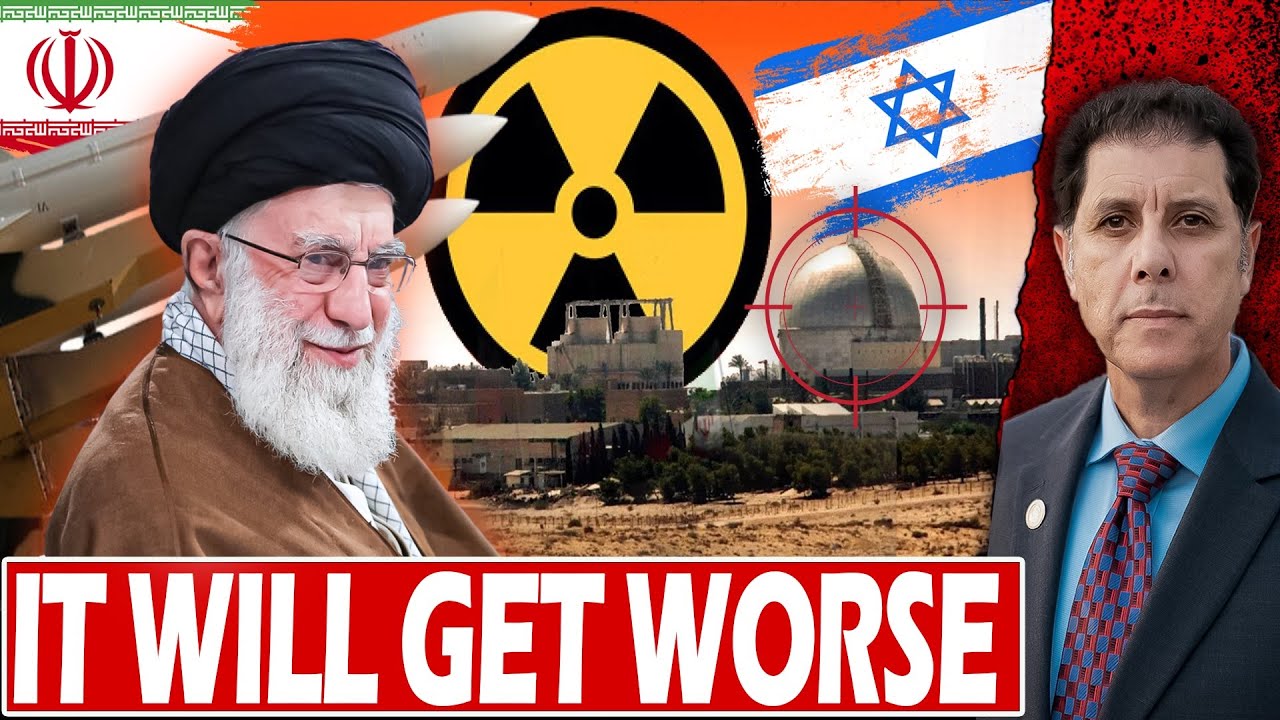
In this live stream, the host examines recent reports that Iran’s Islamic Revolutionary Guard Corps (IRGC) has announced a conditional decision to target Israel’s Dimona nuclear reactor and U.S. military installations in the region if the conflict escalates. The discussion weaves together historical context—detailing the secretive origins of the Dimona facility, the delayed U.S. intelligence discovery, and the role of consultant Henry Gomberg—alongside contemporary geopolitical dynamics, including Iran’s missile capabilities, the strategic calculus of striking U.S. bases versus deep‑strike attacks on Israel, and the potential involvement of Pakistan in supplying medium‑range missiles. The host critiques U.S. policy under former President Trump, argues that media blackouts obscure critical information about Israel’s interceptor costs and ammunition shortages, and highlights double‑standards in non‑proliferation enforcement, contrasting Israel’s nuclear opacity with Iran’s alleged compliance pressures. A clip from Reza Pahlavi urging regime change is presented, and the host speculates on possible Iranian withdrawal from the Nuclear Non‑Proliferation Treaty (NPT) and the broader risk of a regional war of attrition. Throughout, the presenter engages with live‑chat participants, acknowledges supporters, and promotes future content, while maintaining a tone that is analytical, skeptical, and cautionary about the escalation risks.
Chapters
All right, hello everybody and welcome to Geopolitical Trends, where truth matters. Excited to be with you as always. Uh, have an interesting aspect of the Iran-Israel war that I'm going to be talking about today, and this one has to do with the decision that has been made inside Iran, given that one condition will have to be met. And I will explain this as I move forward. And the decision was to attack the Dimona nuclear reactor plant, power plants in, in, in the Negev in Israel, in addition to the US installations in the region. So if my opinion, if Iran's government allowed this information to be released, that suggests to me they are not bluffing. And as you know, Iranian regime is not going to be bluffing, especially after what just happened. So anyway, this is what I'm going to be talking to you today about. But first, let's say hi to our wonderful community here. Uh, let me say quickly here, uh, Zaf Moaz— sorry, mispronounced that. Uh, thank you for being here. Uh, J1YKB, You know, I like your statement there. So very, very interesting. Trump did get bad info. Yeah, because it was provided by the, the director of the agency, the three-letter agency, who was even given the information by, by the Israeli intelligence. So, so, Lee, Lee Yang, good to see you. Noel, good to see you. And by the way, Noel, thank you so much for your super sticker. And thank you for buying me so many cups of coffee. So in support of the channel, so I'm very, very grateful to you, Noel, for your support. Willie Homan, good to see you. Halal Furry, good to see you. Army with Harmony, as always. Francis Tango, Tum Saya Wires, good to see you. John Smith, New Zealand, good to see you as always. Sam Karina, good to see you. Irene Z. Good to see you, Joseph Roy. Good to see you here. Uh, Doha under fire, I won't be surprised there. So Phil, as always. And who else? Cam35, good to see you. And Phil, as always. So all right guys, let's get into our conversation regarding, uh, the decision that, as I said, the reports from within Iran suggest that Tehran made the decision to target Israeli Dimona nuclear, uh, power plant. So I have a picture of it, and I'm going to be sharing with you a little bit of history about this facility, uh, because that's not new. It's been a while. It's been— it's been in existence for a long, long time. So the Dimona nuclear reactor— not power plant, reactor, that is. So, and that's what that decision has been made to do, both targeting the Dimona nuclear reactor and the other one has to do with US bases in the region. But there is a condition to that, and that condition, with the assumption that the US will go full-blown involvement into the conflict, which I don't think so it will, because it was never about that. This is what I need you guys to understand. What Trump did was nothing but a hollow— don't let the seeing the B-2 flyovers and all that show stuff. It's all for a show. Yeah, don't let that, you know, it just— that's how Trump has to do it. But he had to do it because he had no clue, he had no understanding of the conflict and what the consequences will be. But also he's been pushed into that decision. So, but in this conversation here, I am going to be focusing again Uh, uh, and it was great article, uh, by— and I'm going to put the link for you guys, let me share it with you— uh, an article by, uh, uh, by Lara Jakes, very, very interesting. And she writes about weapons and global conflict. So, so I will highly recommend, and I'm going to post it for you guys, uh, in the chat box so you can, uh, read, uh, the article later on if you choose to do so. So, and I posted on the link for you guys. So, so my— the point is, is, is that in the article, which I can agree, is the idea that this war that Israel has launched, which by the way it wasn't Israel now, is the US that is now being pulled into. And like I always say, use history as your guide. Does any of you know what happened in 1967? Regarding the Israelis dragging and pulling the Americans into a conflict. So, so do you know what happened back then, 1967? It was with an American aircraft carrier. And again, it's just for us to share knowledge here, guys. It's not, uh, uh, yes, Phil, 1967, not the war Yeah, USS Liberty. John, you got it. He was part of that, but I was referring exactly to the USS Liberty because it was the Israelis that attacked the USS Liberty. So it wasn't, it wasn't any other Arab country, whatever at that time there was. So my point is that when the Israelis moved forward with this so-called ending Iran's nuclear, to take out Iran's nuclear program, which, by the way, the bombing that the US conducted didn't do anything whatsoever. The nuclear material has already been moved out to another location. And again, Natanz, Esfahan, and Fordow are not the only locations. When you look at the map of where the sites are, there are so many that are only known They are the ones that you can— I was one time, and I share it with you guys, I was one time in Kurdistan and I went on a border, or, you know, literally I was overlooking Iran. The mountains is such a mountainous area. There is so, so mountainous to the point, uh, for us to be saying, oh, we are located the locations. No, we have not. And this is why When you think about why is this important, and the reason I sent you the article is for you to understand that while the experts and scientists or whomever, or even the Israelis themselves, are advocating to the point that, well, Iran is closer to making a bomb, you know, this is what Netanyahu has been saying for the last 20, 20-plus years. So of course it was none of that. You know, I remember all his speeches. Iran is about 3 months closer to making a bomb. Iran is about 90% of this and that. And it was nothing but to pull in the Americans into the conflict. But here is the thing: what now Israel gets involved in is going to expose it in the worst way you can even imagine. First of all, the reason why the Iranian mentioned about targeting the Dimona, nuclear reactor. It's because now you have— now Israel has its own secretive, secretive nuclear program. So one that it doesn't publicly acknowledge, but many, at least for us who were inside governments and had access to certain type of information, we were aware of the idea that their program is expanding, the nuclear one, that is. So, and when you think about the Daymona itself that Iran now is putting on its target list right here, you have to look at its history. And the Daymona, because Israel started the construction on this back in 1958, because remember when was Israel, uh, was declared as a state, the Does anybody know the year, the exact year? What year was Israel declared as a state? Bad Wolf, afternoon, good afternoon to you as well. So yeah, does anybody know the year, guys? 1947, '48, '46. So, but actually it was, uh, the Israelis when they were, uh, hold on a second, because it was the, uh, what's his name at that time, the president, uh, during that time, uh, not Ben-Gurion, not the Israeli, it was the American, uh, not Roosevelt, uh Harry Truman, I believe he is the one that within 11 minutes of the declaration of Israel in 1948, within 11 minutes, he recognized the State of Israel. So, so here's the thing, in 1958, that's when Israel started working on the construction of, of the Deimona site. But here's the kicker. It took the United States intelligence community 3 years to discover the site for what was named later on as the Dimona nuclear reactor. 3 years, meaning the Israelis didn't share the information with the Americans at the time. So, And, and the reason I am sharing this with you, because I'm gonna share a link with you of a declassified, uh, document. Because if this wasn't for one particular individual who had nothing to do with government— it was a professor, Henry Gomberg. Henry Gomberg was of the University of Michigan, and he was a nuclear physicist who visited Israel as a consultant to the Israeli Atomic Energy Commission. So, and during his conversations with officials and scientists, it made sense to him. He put two and two together and figured, oh, this one has to do with the construction, uh, of, of a nuclear project. This is what they are inviting me to consult them on, because he's a nuclear physicist. So And he reported his conclusion to the American ambassador at that time in Tel Aviv, who was none other than Ogden Reed, who was the US first ambassador, uh, to Israel at the time. So then after that, he reported it to the representative of the AEC, the, uh, Agency of Energy Commission, I believe, in Paris. And later on, it made its way And in early 1960s, the CIA distributed its finding to other government agencies. So in other words, the agency had no clue that Israeli were moving into this. And this put in perspective for us as to why the IRGC, the Iranian Revolutionary Guard, issued this statement, because here is what it says, and I put in quote, Iran's Revolutionary Guard Corps issued expulsion notices in Dimona, the site of Israel's major nuclear facility in the Negev desert, according to the Israeli media. So, and here is what it says, the order, the order goes like this, quote, the occupation must evacuate the Dimona reactor immediately. End of quote. So, and of course, this one is known also under the name of the Shimon Peres Negev Nuclear Research Center in Israel. So if you see this, or if you come across it in your reading, think of just in the short term the Dimona nuclear reactor. So, and this is one is located in the, uh, let me put the, uh, the picture once again. For you to see right there. And this one is located in the Negev Desert. That's where it is. So now, what makes this very, very important, at least from what the, the Iranians are saying? It's because this one will take a direct hit from the Iranian missiles. Because remember, if Iran's missile were able to enter into Tel Aviv When you consider Tel Aviv, that's the heart of Israel, and their air— its air defense systems weren't able to, uh, intercept that. Deimona is a different ball game. Different— is a different ball game because it's in a different location, wide open in the desert. Yes, it has some batteries for protection and so forth, but it's not going to cut it. And this what makes you think about the strategic thinking of the Iranian why we focus on this specific aspect. There are others who saying, well, wait a minute, it's an eye for an eye. You all know for certain locations in the Muslim world, an eye for an eye. So if Israel targeted nuclear facilities in Iran, then Iran will have the rights to target nuclear facilities in Israel. So, and this one is not limited to the Iranian— to the— I'm sorry, to the Israeli nuclear reactor, but extended also to US bases in the region. And here is again what makes it very interesting to understand this, because what the Iranians are saying, it is much easier to strike US bases in the region than striking deep inside Israel. So you can read between the lines what the Iranians are doing. They are sending, uh, uh, sort of subtle messages. Once again, let me read it to you. Here is what the senior Iranian official, uh, said on Saturday or Sunday morning here, that they will target the Israeli Dimona nuclear reactor if— this is the condition— if the war escalates, noting that targeting US bases in the region is easier than striking deep inside Israel, end of quote. So, and of course, for the US to enter into this conflict, it, it, it's, in my opinion, is a strategic mistake, you know. First of all, and, and we already mentioned this before, uh, why are we getting involved in a war that has nothing to do with us? With our own interest. You know, once again, did Iran come over and attack us here? No, it didn't. Did Iran went ahead and attacked our soldiers in the Middle East or West Asia? No, it didn't. So why are we getting involved? Because it is a strategic and grave mistake and danger. This is what it would mean, because if we fully entered into this conflict this war, Mike, my word on this, guys, and I wrote extensively on this part of the world. I spent the time on the ground. We were dealing with governments back then, and I was always convinced the only way for us to maintain our influence, at least back then, was to put our thumb on the leaders, especially in the Arab world. We couldn't do that with Iran. This is where that difference is. This is why you are noticing, and I will do a separate video for you guys about why, why the Muslim world or the Arab world, at least in that part of the world, are staying mum, they're staying quiet. No condemnation, no whatsoever. They, they are like being having a tape put on their mouth. Those are the pathetic Arab leaders in the region. Suffice it to say that I confirmed an information this morning about Pakistan. Pakistan is going to send medium-range missiles to Iran, which basically will be used against Israel. So now the question we need to ask is this, and I'm going to ask you guys, and I would like to have your feedback. Do you think— will Pakistan go even further by providing either nuclear weapon or small bomb or whatever you want to call it to Iran, or share the nuclear knowledge with Iran regarding the building of a bomb? Yes or no? So in your opinion, do you believe the Pakistanis will either share the nuclear knowledge with Iran or really just sell a nuclear weapon to Iran? Yes or no? Oh, Mahdi, you say no. Cam35, you say yes. Abdullah Faruk, you say no. Darth Vader, you say no. Keith Stone, you say maybe. Uh, Victoria, you say no. Oh well. Gothic, you say no. Irene Francis Tango, you say yes, I hope so. Multi Tom Tom, you say Pakistan is like India. Uh, I, I see your point on that, but at least on this one, they took stand. India is playing both sides, and I asked you guys the question in a survey. Most of you said they will support Israel against Iran, a Muslim country. Of course, India is not Muslim, is a Hindu state, but you can see what they are doing to their Muslim minorities inside India. So, uh, Bad Wolf, you say, I don't think so. Uh, Karakulak, you say not now. So you guys get the point, you get the idea. And again, it's just for us to think outside the box. That's the whole reason why I'm doing the series, those, uh, live streams regarding this Iran-Israel conflict and US, that is now, because it's part of the problem now. It's just to provide the different scenarios here. So And the idea of the US being involved, that means now the war will take, uh, will go beyond the borders of Iran. First of all, it will take on regional dimensions. Why regional dimensions? Because of strategic interests. Do you think that the Turks will be just standing and watching? Yeah, they might, but they have also an interest. Some pathetic Arab leaders, of course they can't do anything, but their concern will be about being targeted because the host American bases on their territory. Well, duh, if, if, if you are allowing your territory to be used to attack Iran, Iran will have the right and the justification to target those locations on your territory. Simple as that. The simple and safest way is to ask the Americans to pack and leave, but of course the pathetic Arab leaders can't do that. So, so, and this is where you have to understand the role of the media into all this, because the media is not allowing certain information to be known. So far, uh, I, I know someone inside Tel Aviv, so, okay, I haven't heard back from him, so makes me just wonder. So, and here is the thing, is because the attacks on, of, is of Iran on Israel inside Tel Aviv are very effective, except that the Israeli government is keeping a lid on that. And of course highlighting to its American counterpart to do the same, because Iran has been using some advanced missile systems than those it has used before. Yeah, and the question to me when they are mentioning about targeting Dimona That means they're going to be using their advanced systems. So, and the same will apply to the US locations in the region. So, because it will be— that's it, it's an all-out war. Iran will have the justification to do that. So what we need to understand, for example, now you are aware of that, uh, uh, uh, What I need you to understand is that the Israelis— and I came across this, guys, about 3 weeks ago, and I didn't want to say much about it because I wanted to confirm the information, and I did check— is that the Iranian government— and when I say governments, I am referring to the IRGC. IRGC is the one that maintains really the heart of certain sectors, including the intelligence divisions. And again, when I wrote the book about, about Iran, I had to detail all that, knowing the sectors that exist within the intelligence apparatus in Iran. So here is what the IRGC are saying, and they, they're saying that they do have a precise knowledge of the era— of the Israel's stockpile of interceptor missiles. And that in itself should give you an idea as to why Iran is using certain older model of its missiles first before they use their advanced systems. So, and the reason for that is because the launching of those missiles was designed, or the strikes that is, were designed to deplete Israel's stockpile of interceptor missiles. Because it's costing Israel about $248 million a day to deal with this right now. And this is why we need to understand the big picture here. And the big picture is this: Iran is not going to react tomorrow. Iran thinks long term. This almost reminds me of the Chinese, long term. So, and it's going to become a war of attrition. Because that's all Iran needs to do to the Americans and the Israelis in the region. So, and that's where the difference is. Now, the IRGC also made it clear regarding the announcement about the targeting of this Daymona nuclear reactor and what came after it right away was one particular statement. It says, and I quote, sending any military or radar equipment 'From any country to aid the Zionist regime will be a legitimate target for the armed forces.' End of quote. So it, it just, it, it put things in perspective for you to understand where this is headed. Liking this video so far? Don't just be a watcher. Go ahead and hit the like, share, and subscribe button. And don't forget to tap the bell so you will not miss any of my videos or live streams. This way you will be supporting a channel that stands for the truth and objective reporting. The choice is yours. Thanks for your support. Now, of course, as I said, there is, there is almost a media blackout under certain information, not all, Of course, we're doing this on YouTube, otherwise YouTube will shut it down altogether for everybody because everybody's covering this. But there is, there is a media blackout on certain sensitive information. For example, did we hear about sort of major portion of the radars and defensive capabilities of Israel have been sort of targeted? Did we hear about, for example, the shortages of the ammunition and equipment that Israel is facing? We haven't. And that is why you have to think about this from the big— from the, the, the, the larger, uh, or the bigger picture rather, into should the US— because the US now, it just did the bombing and left. That's it. And claim victory, of course. But none of that is real. None of that is true. The nuclear— Iran's nuclear civilian nuclear program still exists. There is no complete destruction. No, don't, don't, don't fall for whatever— I know there are some, uh, I saw some, some, uh, videos coming out of India, India highlighting the massive destruction of Iran's nuclear program. I was like, wait a minute, wait a minute, where are you coming up with this information from? You know, why this sensationalism for? You know, you can't be misleading, uh, the viewers that way. And, and again, it's their prerogative, it's their channel, they can do whatever they want with it. I, I don't care, except for us, our community. I have to make sure you are protected from being deceived by certain setting or a certain set of information. So, well, one of them is that. So, so the idea that the Iran's nuclear civilian program is still in existence. So, and once again, I am finding myself asking the key question: what will Iran do now? Are they going to accelerate the program, be done then, be done with? Are they going to purchase a nuclear device from somewhere? Because we all remember what Medvedev, the head of the Russian security, said, that there are many countries will be willing to provide Iran with the nuclear weapons. So read between the lines. He's not saying that Russia is going to do that. That's not the point. The point is the message, is the message. And in this case, should the US get involved on a larger scale, Iran will have no choice but to use that device. It is already a foregone conclusion, in my opinion, that what's going to be now targeted moving forward is Israel. So Israel basically dug a hole for itself. This is again where part of the problem, uh, that, uh, because there are reports, there are intelligence reports, uh, and again, I'm not sharing anything that is classified, you know, I can't. So, but there are information, at least some leaked information, if you— there is a reason sometimes why the government will leak information that suggests that Iran has already prepared missiles and other military equipment, didn't disclose what it was, to launch the strikes on US bases in the region. Once again, if and when the US decide to put troops on the ground. And this is why we're hearing a different conversation now with the regime change. And, and, and I remember sharing the clip with you. Let me see if I can share it with you guys, uh, about the, uh— and that was, uh, I saw it by, uh, Angelo Giuliano is the one who posted this, and I'm gonna share it with you guys regarding this regime change. A word from the son of the late Shah, which by the way, we've been working, uh, with him for a long time, preparing him for this. Take a listen.
For Ali Khamenei, step down, and if you do, you will receive a fair trial and due process of law. Which is more than you have ever given any Iranian. To other senior regime officials, those of you whose hands are soiled with the blood of the Iranian people, you too will have to face justice. But we will not repeat the mistakes in other failed transitions. To those of you who are loyal to the Iranian nation and not the Islamic Republic, there is a future for you in a democratic Iran if you join the people now. The choice is yours to make.
Sorry guys. Okay, let me add this one here. There we go. Yeah, so the idea that we start to think in terms of, uh, okay, have, have been— have we been work— or, you know, since when? Here's the question: since when we have been working on setting this up? You know, I was aware of it from way back. That the contact between the, the, the, the, the Shah's son, who was residing, a resident in California, and the US government, certain entities, mainly the intelligence, has been ongoing. Is this why Donald Trump all of a sudden now pushing for the word of regime change? It's not going to happen, in my opinion. That, that's just At least not now. Could happen later on, but we're not gonna, we're not gonna see this one moving forward. So, so to go back to the point about the Daymona, which will be a major, will be a major blow to Israel. Now, now there are one consideration Iran might have. And again, despite whatever, they still are pragmatic in thinking. It's a nuclear reactor. They're not going to release the radiation into that. I just don't see Iranians going that crazy. So, and that leaves us wondering how far will they go with this? But again, they're not going to be saying things just to say that because they're not bluffing. So And to make this point also tied to what I have argued back then when I wrote Iran's book, here is one particular point I wrote: Assuming the agreement is a mistake and the United States Congress votes down the deal or authorizes military strikes, which by the way Donald Trump did yesterday or the day before without congressional approval, Iran will have no choice but to do what Israel Pakistan, India, and North Korea did— develop nuclear weapons in secret. Then Iran will withdraw from being a signatory to the Nuclear Non-Proliferation Treaty, which is, which is signed in 1970, a withdrawal that would lead to uncertainty, instability, and shifting alliances, which is a foregone conclusion. But on the other hand, Now Iran has no justification whatsoever to keep abiding by the international norm and laws because we are breaking those laws. We are not adhering to the spirit of what those clauses are all about. So why should Iran be tied to that? So, and if we are to see this going that direction, the first sign you need to look for is when you hear Iran official declaration that they are withdrawing from NPT. As a matter of fact, back then, back then when, uh, where he used to be, what's his name, Ahmadinejad. Ahmadinejad at that time, and, and he got a point. Do I agree with all his statements? No, I don't. But he has some points in certain aspects, because what this conflict right now showing is the double standard and the hypocrisy of not only the US but Western entities. When I say Western entities, I'm referring to the international organizations like the IAEA. Since when IAEA did even an assessment of Israel's nuclear, uh, program? Never did. It's because Israel never declared that. So, so if you are to do this, you know, what are you pushing on Iran but not Israel? The same applies to North Korea when North Korea decided to move forward. And to their surprise, meaning the, uh, the North Koreans, when they did that, they never received any threat from the Americans. Because we know, we know what the North Koreans gonna do. They're not gonna ask, they're not gonna negotiate, they're not gonna— they will blow up whatever needs to be blown up. You all remember the meeting that took place between, uh, after Donald Trump went, and it was a building where the South Koreans and North Koreans met after that. And after that one, about a month later, that building was blown up. Uh, North Korea sent the missile and blew it up completely because the US— because South Korea decided to go ahead with the military exercises with the US on the Korean Peninsula. So North Korean didn't even ask or informed. They just went ahead and sent the missile and blew up the whole building. And it was Kim Jong-un's sister that did that. So the same argument I'm making now, the reason why North Korea developed the ICBM, because that ICBM will land over here if we ever threaten North Korea. Iran doesn't have that capability yet. But Iran will deal with the US bases in the region, and that's my point. So if you see one sign to look, to keep an eye on, is when you hear a public statement by Iranian government that, uh, they are withdrawing from the NPT. So, but the double standards exist. Like I said, Ahmadinejad back then, I remember his statement because I addressed that in my book, requested that the members of the P5+1— those are the 5 permanent members of the UN Security Council plus Germany, state on the record their possession vis-à-vis Israel's nuclear arsenal. A request that is, at the time, some say, well, it's irrelevant to what the West and Iran were trying to achieve, uh, through negotiations. Evidently, Mr. Ahmadinejad sort of didn't remember for a long time that Israel has already adhered to a policy of a nuclear opacity. In other words, a policy that neither confirms nor denies the existence of substantial nuclear arsenal. And it's not a secret, so we all know. And I'm not saying something that is not out there. If you know where to look, you might find some hints to that information. Uh, both North Korea and Israel have nuclear weapons. So, and the, uh, the number of warheads varies between, uh, the two. And I'm gonna just give a bulk number. I'm not gonna give the— between 111 and 90. So for both countries, by the way, for both countries. So, and this is exactly what I'm trying to, uh, share with you here. Once again, I'm gonna keep those live streams very short, to the point, but highlight to you that When Iran made the decision now that this Daymona nuclear reactor will be on the list of targets, in addition to US military installations in the region, be they in United Arab Emirates, Qatar, Oman, Saudi Arabia, even Iraq and Syria and so forth, that, that, that's, that's to me an indication as to They will be prepared and willing to go full-blown with this should the US gets involved. For now, for now, the US is limited into what it wants to do. And the reason for that, because Mr. Trump has no clue. Mr. Trump's been pushed into all this without— if you, if you saw his body language when he was giving that speech, whatever, it should give you an idea as to where things Even behind him, Marco Rubio standing there, he knew that is wrong. Deep down, he knew what we've done is wrong and it's not right. But again, that's the dirty side of politics. So this is where that difference is going to be. So I'll keep my eyes open on this as we move forward because I need you to be aware of these developments. Of course, I will be talking soon about the Strait of Hormuz. Now you need to understand the rationale behind Iran's announcements that it will shut down the Strait of Hormuz. You have to understand the real— and I'm going to be doing a separate video for that. I'll do also a separate video about the, uh, pathetic Arab leaders and their incompetency, their that is now exposed right on the surface. So all of them, no exception, all of them, no exception. That just shows you, because to me, leadership, it matters when it's tested. And again, we saw how those, uh, uh, Arab leaders are. So, but I'll do this in a separate, uh, uh, I can leave without saying thank you to Noel Danker for buying me some cups of coffee for supporting the channel. I also say thank you to Asma and Ramzi Abdurrahman. Thank you so much for your kind support. And to you guys, if you want to support the channel, here is the link. You all know I don't work for any entity. What I do is on my own, and that's my commitment to you. I, I, like you all know, and I'm not saying something you are not aware of, I, I was offered to teach this semester, uh, but I— no, I said no. So, uh, my commitment to you is, is that I will provide you the accurate information to the best of my abilities. I'll provide you a substantive, uh, analysis that has substance on it. This is not about just me showing up here, uh, because I want you to learn something. And of course, with something this magnitude it makes perfect sense for you to acquire the necessary knowledge to know where everything is headed. Because it doesn't matter what part of the world you're in, you know, should this go out of control, we all gonna be impacted. So, so I greatly appreciate your support for the channel. And as to my Asia trip, as I said, I am still planning on heading out there in due time. Uh, I would appreciate if you would be kind to support this upcoming trip to Asia. Uh, it's, it's the funding is not moving where it needs to be, but it's fine. Uh, I'll work with whatever we have when I get to that time. So far I'm planning on leaving towards the end of August or the first week of September. We'll see where the funding, the fundraising campaign is, and we'll just go from there. So, but I thank you all for your kind support, truly appreciate you, and I look forward to seeing you in another live stream tomorrow. So as always, remember, geopolitics impact your daily life in more ways than one. Till next time, guys. Bye-bye.
More from David


Beyond the Single Actor: Why the Gulf Isn't Choosing Between the US and China


Iran, Iraq's Militias, and the Houthis Are Coordinating! This Changes Everything




Who Controls the Next Decade's Resources? Latin America and Africa's Geopolitical Crossroads

The Chokepoint Trap: How Washington's Stupidity Triggered a Cascade That Now Controls the World

Trump Spooked as IRGC Unveiled dual-use SLV, Deployed Ghadir Mini-Subs & Hinted at Tactical Nukes!
