Will the US Succeed in Creating a Wedge between China & ASEAN? (w/Carl Zha) | Geopolitical Trends
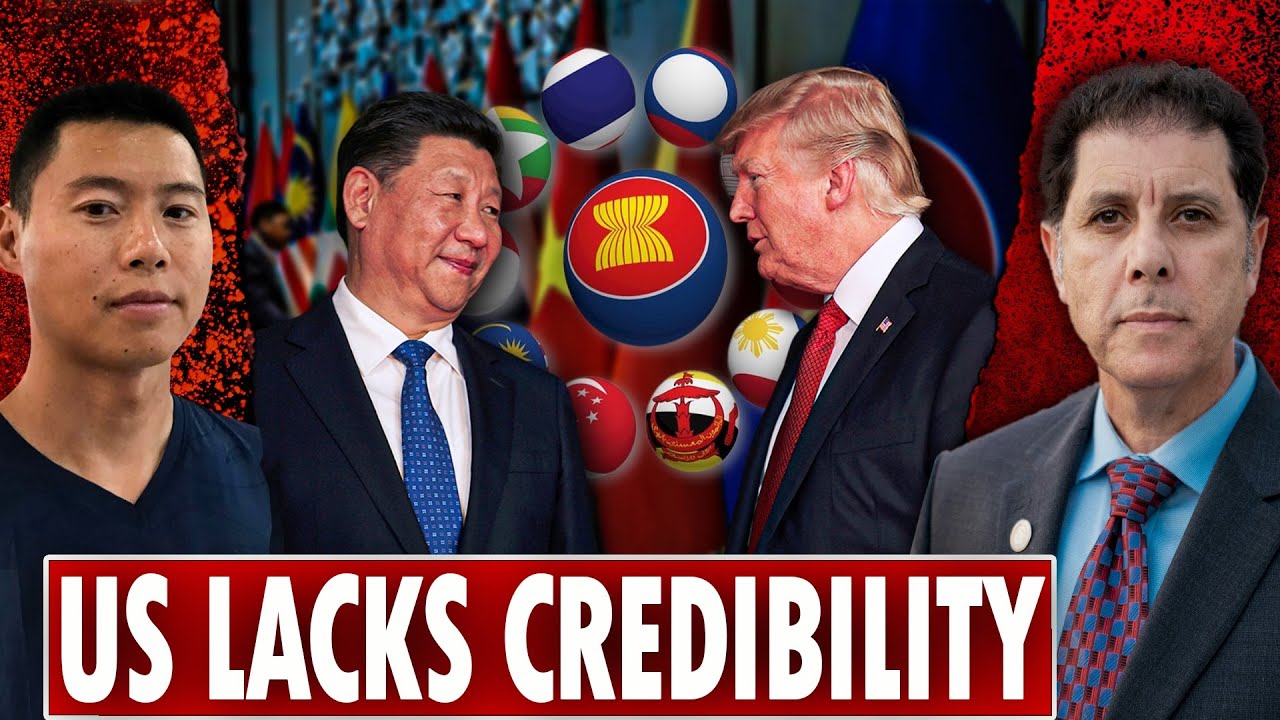
Carl Zha and David Oualaalou examine whether the U.S. can split China and ASEAN, focusing on the Philippines as a strategic lever and the South China Sea. China's economic reach through EVs, high-speed rail, and power plants outpaces U.S. containment efforts, while American tariffs on foreign cars will raise consumer prices without stopping Chinese competition.
Chapters
All right, hello everybody and welcome to Geopolitical Trends, where truth matters. Excited to be with you once again. I know we had our community conversation earlier, but now we're going to be having our monthly conversation with none other than Carl Zah. You all been waiting for Carl, so here is Carl. Hi Carl.
Hi David, how are you?
Good to see you, brother. Very, very excited because we got a lot, lot to cover here and, uh, like to pick your brain on a host of issues. So I'm going to start, Carl. We're going to get into it right away, guys, because there's a lot to cover. I want to start right away with the statements by the Secretary of Defense. Pete Haig said in Philippines regarding China, as of now, the thinking is they all— meaning all US allies in Asia— will have now to sort of, uh, uh, get together against China? Where do you— what, what the heck with this statement?
Well, I mean, actually what he said is nothing new. So he just reiterate what has been stated by the former Secretary of State Tony Blinken when he traveled to Philippines a year ago. I mean, they, they use even the same language, ironclad commitment. You know, US have ironclad commitment to the Philippines. Including South China Sea. Uh, you know, this has been— it really shows kind of continuity of the U.S. foreign policy, at least in regard to China. There's nothing has changed. Um, you know, they're going to continue to use Philippines as a linchpin of the U.S. strategy to antagonize China, to stir up tension in the region. And, you know, they're, they're going to try to weaponize the South China Sea dispute to insert U.S. military forces. Uh, you know, they already have access to the 9 Filipino bases and the U.S. Typhoon ballistic missiles, the medium-range ballistic missiles, which they deployed to the Philippines last year, ostensibly as part of the joint exercise, one of the largest exercises between U.S. and Philippines aimed toward China. And that, that those Typhoon missiles never left You know, US last year said they're going to take the missiles off the Philippines, and the Filipino government at the end of the year said, you know what, we're thinking about purchasing them. So really, they're just gonna— they're, they're staying. Those, those Typhoon missiles are, are staying, and, you know, they can cover to, uh, uh, you know, like half of southern China. So that, that's— that was their intended purpose, to serve as a threat to, to China. And, you know, as we talked many times before on this show, Philip— current Filipino President Bongbong Marcos, uh, is perfectly happy to, to, to go along with that because U.S. have a lot of leverage on him, especially on his family fortune. You know, his, his dad has stashed away something like 30— more than $30 billion of ill-gotten gains, all the corrupt money stashed in the U.S. banks, and that has been frozen by the U.S. government. So If Bongbong Marcos ever want to see any of that, you know, he has to do US bidding. And this actually led to political crisis inside the Philippines. Um, you know, one of the biggest thing that happened was the open split between Bongbong Marcos and his one-time allies, the Duterte family. Uh, you know, Duterte's— they, you know, when, when Bongbong Marcos ran for president, Duterte supported his bid because back then Bongbong Marcos was saying, singing a different tune. He said he will continue Duterte's legacy of continuing, uh, independent foreign policy. And he even made a show of visiting China as his first trip abroad. But right after his visit to Washington and talking with Joe Biden, you know, that everything got turned around 180. So this is why we're seeing the arrest of Duterte by ICC. You know, he— Duterte had a choice basically when he was traveling to Hong Kong, he was warned if he came back to the Philippines, he will be arrested and extradited. Uh, but Duterte decide, you know what, that's what I'm— I'm not going to go into exile, you know, then, then it looks like I'm at fault, I'm running away. No, I'm going to come back, I'm going to force you to make good on your threat, you know, have me arrested. Now this is a huge political, uh, uh tormoil in, in the Philippines because now you have thousands of Duterte supporters taking on the street to protest decision. And the, the Philippine government now is going after Duterte's daughter, the vice president, trying to get him— get her impeached. Uh, so this is a huge political crisis brewing in the Philippines, uh, you know, between the political faction that wants to preserve Duterte's legacy And, and, you know, but the, the faction represented by Bongbong Marcos, who wish to be the client state for the United States. And this is all brought, by the way, brought on by the US pressure. You know, if US wasn't involved in this, this, this would not have happened. And, and this is not good for the Philippines because, you know, when Duterte was in power he invited a lot of the Chinese investment into his country. Um, you know, Philippines has signed on many Belt and Road Initiative projects, but Bongbong Marcos recently, he froze all the, all the BRI project in, in, in the Philippines. So, so among the Southeast Asian countries, you know, China was heavily invested in, in almost every Southeast Asian country except Philippines at this moment because the freeze put on by Bongbong Marcos. And of course, that's not good for the Filipino economy. Um, you know, Philippines has 100 million people. A lot of, uh, there's a lot of youth under, uh, employment. And, and going forward, you know, they can't always just play a role to be like the service center for United States when US is actually developing AI that's going to act— that's going to actually going to replace those jobs. You know, like one of the, uh, uh, you know, one of the quote-unquote AI companies in, in US, founded by Alexander Wang, he, you know, he, he talks about his company, how his company is providing AI solutions to all the, uh, like the OpenAI, all the US big AI company. And then look at his business model. His business model is literally a digital sweatshop. He goes to Philippines Um, he have people, he recruit people and paying them like, like below even the Filipino, uh, standard of wage. You know, the people are getting paid like less than a dollar, less, less than a dollar. And they, they're all they do is they tag image and videos because AI is garbage in, garbage out. You have to provide AI with sort of information. And that— this is what they do. They go to the Philippines and they, they pay like less than minimum wage, uh, to have people sit there all day in front of video and images and tagging them to provide the information to feed back to the, to the other AI, um, AI services. So, so this was kind of the low-level, um, job that the Filipinos have been assigned to in kind of the US-led rule-based international order. And this is also the reason US is not happy with China, because that was supposed to be China's role. When United States multinationals went to China in the 1990s, 2000s, uh, they're, they're, they're— in their imagination, China was supposed to stay this, uh, pool of vast cheap labor that was supposed to produce, uh, low-value, uh, but labor-intensive goods for the US multinationals. And but, but China actually climbed the, the technological ladder. So now they're producing EVs, they're producing their own AI tools. And, and this is why United States was not happy about it. JD Vance actually gave a speech recently talking about this. He actually said, you know, we— globalization was a mistake because we thought we'll go to China and, and then those developed— developed— developing countries will continue to work on low-margin, labor-intensive stuff while we focus on research development and high-end, uh, manufacturing. But what happened is, you know, in case of China, is now they're eating our lunch. Right? So this— they're speaking out loud very honestly about what their intention is. They wanted the Global South to, to be like this permanent underclass to serve, to power the US Empire. Um, and, and, you know, that, that's right now— Philippines is playing that role. And that's where a lot of the US business elite, national security elite want to keep them there. And, and, you know, unfortunately some Filipino elite, like, uh, represented by the likes of Bongbong Marcos, are perfectly happy to play along because they get a, they get a, a, a cut, their own cut, you know, their own pound of flesh on the process. Um, so this is, whereas if you look at, um, you know, what China is doing in the region, um, you know, China investing in infrastructure. I'm, I'm, I said this many times, I'm in Bali, um, you know, here Huawei built the 5G and 4G networks here. They, they, the China built a power plant in north of Bali that's providing much of the electricity on the island. And I am using a Xiaomi phone, uh, you know, Chinese phone manufacturer made smartphone affordable to many people in the Global South. You know, it's, it's not just no longer just like at iPhone like a status symbol for a selected people, you know, because before only the, only the rich in Indonesia could afford, um, upper middle class, you know, could afford to buy iPhone as a status symbol. But, but nowadays, you know, iPhone themselves, Apple themselves are forced to cut price because of the Chinese competition. So it's good for the consumers. And, and this is what China provides. It provides alternative, it provides competition. To kind of the US monopoly of the high, um, high-end products, high-end manufacturing. And that's what they don't like. I mean, that this is the whole rationale for containment of China, which is, you know, why they're in the Philippines trying to stir up tension, trying to, um, talk about so-called the, the, you know, their, their US and its allies going to contain China. That That, that ship has sailed. Yeah, that ship has sailed. It's not— I mean, right now, really, Pete, uh, he's just talking about Philippines, United States, and Japan. That's like 3 countries out of all these East Asian countries, you know. Most of the Asian countries, they just want to do business. So they, they're perfectly happy of doing business with both U.S. and China and be— and serve as a bridge Uh, but you know, this is not what the US elite have in mind.
What I found very interesting that you never hear anything the US saying about North Korea based on what they are developing using AI. I just read a white paper regarding this development of this particular aspect. So you don't hear, you don't hear the US talking about North Korea because they know the North Korean is not going to bluff. I agree with you, Carl. I mean, the idea of— it is absurd. And that shows you now how much the elites in Washington, they can't think straight. They just cannot think straight.
The—
when you consider the strength of China, but on the other hand, you look at how Philippines is allowing itself to be used as a proxy, because that's what's going to be— Philippines will be pushed over the cliff Because the US is not gonna do what they want. This is my assessment, and I could be wrong, but the way I see it, and I've been arguing this, the US wanted to ramp up the tensions between the Philippines and China, okay? They're telling the Filipinos, just go ahead, challenge the Chinese in the South China Sea, even target their boats if you have to, whatever. We will defend you. We're not gonna defend Filipinos. I mean, you would think Filipinos will think of Ukraine as a case in point. But Bong Mo, as you said, he has his own agenda, and, and the Filipino people is going to end up having to do something about this one. So I want to go back to two points you mentioned earlier quickly here. One about the infrastructure, and yes, you're absolutely correct when you consider what China is doing, for example, in, in Thailand with the high-speed train. So, and also the developments in the Singapore ports To my knowledge, the Chinese are involved in this one here. So, but here is the kicker, and I'm going to share a screen with you guys for you all to see. Uh, let me just share it here, and I'll get your take on this quickly here, Carl, before we move on to other, uh, what you're looking at. You're looking at about, which wasn't reported, the top US executives including Tim Cook, Stephen Schwarzman, uh, Ken Griffin, and others looking to explore opportunities in China. This is what I found very, you know, hypocritical, that the media is not saying anything about all this when we know you cannot move forward without having access to the Chinese.
You— because it goes against the media narrative, right? They're, they're trying to paint China as an enemy, and then they saw China opening doors to like Elon Musk, Tim Cook, uh, and, and it, it, it does— it doesn't make sense. It, it But that China is not opposed to doing business with the West, with the US. China welcomes it. And whereas United States, what they do, you know, they have Meng Wanzhou, the CFO of Huawei, arrested, detained for a couple years. Um, you know, this is a, this is a difference. This is the United States, it's increasingly closing its borders, both literally and metaphorically. And China remain open, it's remain open for business because I, like I say, China's business is business, U.S. business is war. And, and right now U.S. is levering tariff against everyone, you know, Canada, Mexico, and China. Now Canada, Mexico, China, these are the three largest trading partner of the United States, and Trump is letting tariff against everyone and the Europeans too. And, and, and Trump just announced a tariff against all the foreign, all the foreign cars, 25% on any cars that's not made in America and 25% on any car parts that's not made in America, which means the car, the new car prices in United States is going to skyrocket because a lot of the Japanese, German, Korean car makers, even though if they have, even if they have factory in U.S. They still import a huge portion of their cars. Like Toyota, I believe 40% of the Toyotas, uh, sold in United States is made elsewhere outside of the U.S. And, and it's that the figure is even higher for, you know, uh, for, for Mercedes-Benz, for Volkswagen, Hyundai, uh, Kia. So all these people are going to get hit. And even Tesla, you know, because Tesla cars have components from China. So even Tesla is going to take a hit because now they're going to have to pay tariff on those Chinese components. And this is why Ford CEO Jim Farley was really against the tariff, because the— a lot of people don't know, a lot of the American cars nowadays are made with many Chinese components. Now they're gonna have to pay tariff on those Chinese components. And that, of course, eventually that's gonna— the, the price increase is gonna pass down to the consumer. So what that really means is, um, in the— when this tariff takes effect, you're gonna expect— you're gonna see a huge increase in new car prices. Um, you know, if you buy old car, used car, you might still be okay, but the new cars, you're gonna— you're gonna have to pay tariff, man. You, you, you, you, the consumer is paying the tariff, not China, not, not Japan. Uh, China don't This is actually— the auto tariff doesn't even affect China because China don't even sell any consumer cars in the United States right now. So they're actually going to be okay. It's the Japanese, Korean, and, and, and Germans going to pay the price, and even American cars. Uh, but Elon Musk Tesla will do— will probably do the, uh, fare the best because Tesla in US, they have a, a more US-based supply chain. So even though they do have to pay some tariff on Chinese components, but compared to their competitors, um, they, they will have, you know, they, they, um, they're less exposed, they're less exposed to their tariff. So what this means is even if, uh, there will be modest increase of Tesla price, um, you know, the Tesla, uh, the, the, the, the price increase will not be, you know, will be much, much smaller than the other car brands. So this is what the effect is. Trump is giving his buddy Elon Musk a huge gift, you know. He's given Tesla a huge gift by implementing this tariff. This is something nobody— I don't see anybody in mainstream media talking about this. This is essentially Trump is doing Elon Musk a huge favor. You know what, I'm gonna, I'm gonna put tariff on all your competitors, so You're going to sell more Tesla. That's what's going to happen. And so, I mean, that's how things work in the United States. As I said many times, it's oligarch. It's a government for the oligarchs, oligarchs for the oligarchs, by the oligarchs. That's true. I mean, that's how the US government is designed. It's just, you know, you just have a different rotation of a different set of oligarchs in power after the election. Currently it's Elon Musk and his other Silicon Valley tech bros that are in charge right now. They're going to be the ones who benefit the most from the Trump policies. That's true.
And, and here is the interesting thing, Carl. All this comes on the heels of the recent report, how many vehicles— since we're talking about automobile, automobiles here, or automotive The Chinese have produced about 11,200,000, somewhere around that figure. World— when you combine some countries, they won't even come close to that production. So it highlights to you where the— where things are headed. And you're absolutely correct. You're spot on on that.
Yeah. I mean, even like the non-Chinese brand, they produce in China more than 50— like 54% of Tesla is produced in the Shanghai Gigafactory. So even the Because China is the manufacturing center of the world right now. And, and what's really worrying for a lot of the people in the West is the Chinese brands themselves. Now, now instead of making product for the Western brands, um, where the Western multinational command most of the profit, now Chinese brand is gaining power, uh, you know, in, in like the transition to EVs. The newest, um So, so then I think the last month, the vehicle sales report in China, more than half of the new vehicles sold in China was EV, was electric vehicles. And, and those are among those electric vehicles, the legacy automakers, you know, the Japanese, the Germans, Americans, they don't even figure, you know, it's mostly Chinese domestic brands that's making those EVs. And, and, and, and, and China is the world's largest automotive market. They sell twice as many cars in China as they do in United States. That's how big the Chinese car market is. So all these, uh, right now, all these car, car, uh, uh, like especially the Japanese and German ones, they're gonna get hit. They're getting hit by a double whammy. They're losing out in the world's largest auto market, which is China, to the Chinese domestic competition. And now they're gonna get hit by Trump tariff in United States, you know, their number 2 export market. So, so like I said, US is now— it's, it's main, one of the main task of US is cannibalizing its own allies. You realize it cannot compete with China, So let's go after the Japanese and Europeans. That's cannibalizing their industry. And, and there's nothing those so-called US partners could do anything about it because, you know, they're, they're militarily occupied countries. There's still US troops in Japan. There's still US troops in Germany. I mean, the— South Korea, Philippines, South Korea, right? And, and the, and the European leaders, they just can't grow a spine. And I mean, like, the latest term is actually really weird because now, like, the whole Ukraine, uh, war, the Ukraine conflict was mainly fueled by United States. But now Trump is saying, okay, I'm washing my hands off this. And the European leaders, they're now saying they're gonna go alone without United States to, to, to support Ukraine. This is crazy. They can't, because They, they're just saying that to save their own face because they stake their own political career in supporting the US project. And now they feel like, oh, they can't do the 180 like the way Trump is doing. So now, now, you know, you have Canada saying they're going to form a, a, a partnership with Europe, you know, not with United States, but with— this is crazy talk. We, we know that's crazy. It's not realistic. It's not gonna happen. And, and, and, and, and at the same time, they're still like trying to go, you know, follow the US lines and toe the US lines on China, you know. Like, Europe, so far, it's a world apart from China. Europe face no security threat from China whatsoever, yet, yet they're, you know, still talking about, um, how they're gonna get involved in South China Sea. And, and this is ridiculous. I mean, this is I mean, Europeans— I feel sorry for, for the, for the European people, you know. They deserve better leaders. Their leadership have failed them, and, and all their leaders are basically have been groomed from a very young age in different Atlantic institutions to be the client spokesperson for United States. And, and, and even now, they're, um, with the change, regime change in U.S., they still can't change their tunes. They're still routing the same old neoliberal lines, which, you know, we, we know it's doomed to fail.
It's not gonna go. Now, speaking— you mentioned earlier about the, uh, just on this note, guys, I want to send you a link here regarding— and I read this article, it was incredible— about how the Chinese market, just to follow up on what Carl said, how the Chinese market now is set to outperform Wall Street, you know, as US so-called exceptionalism comes to a pause. That's what I found very, very interesting. As a matter of fact, I'm going to share quote if you allow me, guys. Uh, here, uh, here is what it says, uh, quote: US President Donald Trump's tariffs policy has fanned speculations of an economic slowdown in the world's largest economy. Meanwhile, in China, optimism around the country's artificial intelligence capabilities has intensified since the introduction of Deepseek R1 model earlier this year. The US has had a good period, and that's coming to an end because Trump's policies are very anti-economy. China has had a very bad period, but it looks as if it's starting to recover, end of quote. This one's coming from Richard Harris, the CEO of Port Shelter. So I'm going to, guys, send you this link here, then we'll move on into our, uh, second part of the conversation. To those who's just joining us here, you are watching my conversation with my friend Carl Z. Okay, where is this? Let me remove this picture here. And here we are. So, all right, Carl, I want to move into— yeah, go ahead, Carl. You want to say something?
Oh yeah, yeah, about the market. I mean, one reason is the US stocks has been going up like in a straight line, you know, as a result of the US government money printing for a while now. And the smart money is now trying to take some of their winnings off the table. They, you know, this is why you saw, saw last week more than $1 trillion have been wiped out from the US stock market. They are, you know, this money are not gone. They didn't evaporate into thin air. Yeah, it's this big players, all these fund managers. They're now selling those US stocks. They're moving the money elsewhere and they move the money to places offshore, like in Europe, emerging market and China. And the reason why they move their money to China is because, you know, the Chinese stock market has been actually depressed for, for a very long time. You know, they— people have been expressing surprise how cheap Chinese stock is compared to the American stocks because, you know, compared to the company earnings and revenue and the future outcasts, a lot of the Chinese— the Chinese stock market has been depressed for so long now they look very cheap. Um, and, and this is— and, and now people are finally paying attention to see what BYD is doing. You know, that's why, like, BYD, uh, a lot of the Chinese EV makers like BYD, Geely, um, XPeng, their stock has been going up. And, and one reason is when people finally realize China, uh, this, this transition EV transition in China is secular. It's not, it's not a fad. Um, and then they also realize, you know, you know, that's that— not only where that's where the trend is, but in comparison, where US market is in the bubble territory, the Chinese stock market is still cheap. This is why a lot of fund managers now shift— now they're shifting the funds from United States to China. I mean, it just makes sense from, from economic stand point of view, um, because BYD, they just, they're, they just surpassed Tesla in revenue. Um, I mean, that's pretty big. Uh, you know, Tesla is kind of like the, the number one premier brand of, of, uh, uh, number one premier brand in EV for United States and You know, BYD just surpassed that, whereas 10 years ago Elon Musk was on CNBC laughing about—
laughing.
I remember that.
You're right, Carl. I remember him laughing.
He was like, oh, you have— you seen their cars? You know, they make terrible cars. You better make sure they survive in China. Well, 10 years ago he wasn't wrong. The thing is, he wasn't wrong because I remember more than 10 years ago there was a famous dating show in China called Fei San Wu Zhao. Um, they will— there's a— I remember there was a scene where the female guest— so they have one guy, eligible bachelor, and he's, uh, all the women are, you know, they rate him, you know, that decide whether to, to date him or not. But like, I remember though, some of the women guests were making fun of guys who drive BYD because back then BYD was making cheap, affordable cars. And, you know, and, and they weren't known exactly for the quality. So more than 10 years ago, even the Chinese consumers were laughing with Elon Musk at BYD. But BYD, they really changed. I mean, that, um, this is why I have to give it to Warren Buffett, because even while those, uh, Elon Musk and, uh, all those Chinese, uh, game show, dating show contestants were laughing at BYD, Warren Buffett was already invested back then, you know, but particularly through his friend Charlie Munger. And then BYD really transformed in the last 10 years. They made the switch from being a, a major battery maker to making electric vehicles, and making electric vehicles that's, that's, that's, that's stylish, that's fancy, and affordable. And they, they, they're going after all ranges too. They have like They're producing like cheap, affordable entry cars like, uh, Seagull, which is selling for like $11,000 in China. And then they, they, uh, they also sell like Yangwang, which is, uh, like luxury SUVs loaded with features. I forgot what the price of Yangwang is. That's like $70,000 or something. So they now cover the whole range of the vehicle market. And, and they are expanding very rapidly. They're building factories in Europe, they're building a new factory in Indonesia. Now, the Chinese government recently vetoed their plan to open— to expand into Mexico because the Chinese government is worried that by building the BYD factory so close to United States you will make it easier for US to steal intellectual property of BYD. How time have changed. How time indeed. Indeed.
Well, I remember when I was in China, I went to a BYD dealership and they allow me inside, and the manager was kind. He allowed me to do recording. I did a recording for the community there and so forth. And I did ask about one particular vehicle there, and it was like he told me, this is the high end. And I said, what are we looking at cost-wise here? Well, he said, give or take, about $24,000 to $26,000, which to me was like, okay, if this is higher and that's affordable by everybody, I see what's unique about this. He said to me that this car can become self-driving if you need it to be. And when I sat inside, it was incredible for how the, the whistles and everything on it. So you're absolutely correct as far as The luxury cars for BYD has now— this is why we are not— the government here is not allowing that, because most Americans will end up buying that Chinese car.
Yeah, for sure, for sure. I mean, like, they— BYD just announced they're going to have LiDARs in all their cars, from their cheapest model to the, to the high end. The LiDAR is— they use lasers as sensors, uh, you know, to— so, so again, this is to, to to, to, for, for self-driving purposes. So, so the, the cars will be more self-aware of its surroundings, uh, you know, even in like incremental weathers and stuff. I mean, this is like, you only get those features if you buy like really expensive cars in United States, but the Chinese consumers are really spoiled right now. They're getting all these features in very cheap affordable cars, um, and, and, you know, they're, they're like the the, uh, the, you know, there's a lot of new cars coming out, new models also hitting the market. That's at like, in China they sell for $11,000, uh, but like when they make it, when they export to export market to like Australia, for example, it make like, it's often double in price, but it's still like $20,000, still very affordable. Better deal. So I mean, yeah, this is why US would never— US government would never want to see Chinese EV hitting their shores because everyone would just rush to buy them. I mean, no doubt.
For sure, for sure. This leads me to our key topic we're going to be addressing here, Carl, and this one has to do with when you would think in terms of Southeast Asia, in general term, Southeast Asia, and in my opinion, Southeast Asia, of course, you know this one, and I'm sure many agree that it has some enormous strategic values if we are to think in terms of the Chinese automobile as an example. So, so in your opinion, do you think that the US is trying to create a wedge between the United— between China and ASEAN or Asia, uh, ASEAN countries?
Oh, oh, for sure. You know, um, When ASEAN was first formed, you know, this was actually— US actually really pushing for this idea. When it was first formed, it was formed as like kind of the, uh, kind of the, um, counter to China, you know. So US idea is get all these Southeast Asian countries together, then they can form a, you know, to resist China. But, but, you know, that, that didn't really pan out, you know. ASEAN really became an economic regional forum for all the Southeast Asian countries. For example, there's reduced tariffs, so like the cars made in Thailand, they don't have to pay as much tariff if they want to sell in Indonesia. And people who can travel freely between ASEAN countries, like my wife, she's an Indonesian citizen, she can go to Vietnam, Thailand, you know, don't have to worry about getting visa, etc. So, so I, I'm very bullish on Southeast Asia because with the gravity, with the gravitational pull of the Chinese economy, the tide lifts all boats. Um, and, and, you know, well, okay, maybe with the exception of Philippines until they sort out of their political issues internally. But the rest of ASEAN, even, even country like Myanmar, which is still in deep political crisis right now, I think in the long term will be fine just by their physical proximity to China. Because, um, you know, one, one thing that U.S. has been, uh, you know, really driving hard for is the decoupling from China. It's forcing the companies to move their supply chain away from China. And this accelerated a trend of like labor-intensive industries leaving China to Southeast Asia. Now that, that trend was already, uh, started before US policy because the wage are rising in China for the last 30 years, is steadily climbing. So a lot of the low margin, um, like labor-intensive stuff like textile were already leaving China, to, to places like Vietnam, Indonesia, uh, you know, Cambodia, etc. But the, the recent U.S. push is pushing more company to go to these places, but it's not working as U.S. intended. Again, because, you know, for example, a lot of companies chose Vietnam for— because Vietnam is physically connected to China, because Vietnam has real links with China. Vietnam has ports that's close to China, so Vietnam can be seamlessly linked with the Chinese supply chain. So what, what really happened is they're expanding the Chinese supply chain to the rest of Southeast Asia, and this whole region economically is getting integrated. And, and, and this applies to not more than just Vietnam but also Indonesia Cambodia, Thailand, um, and, and, and, and, you know, when the US, for example, they're trying to, uh, build data centers, uh, in places like Malaysia, right, because they wanted, uh, to, to have, uh, to power the, the whole AI infrastructure. Well, guess what? Those, those data centers, they can also work with China. All these semiconductors that's been manufactured in Malaysia they can also supply China, Chinese market, uh, because in fact, that's— China is the closest largest market there is. So, so what, what end up happening is there is a manufacturing boom in Southeast Asia right now. Um, a lot of that is coming from the flow out of China, and that flow is both capital and skill, because China, uh, you know, a lot of Chinese companies, when they open factories in Vietnam and Indonesia, they're also doing technological transfer. So, and, and now there are— there's much more tighter economic integration in the region, you know. Like, a lot of the youngins in Indonesia now, they're learning Chinese, um, you know. Like, this is a country that used to ban Chinese education during, uh Suharto's reign, you know, until 1998, Chinese education was banned. But, but now the young, um, you know, I, I, uh, a lot of the younger Chinese Indonesians, um, that I have met, you know, they are all learning Chinese right now. Um, they're, they're all trying to pick up Chinese to leverage, uh, this, uh, amazing opportunity. And, and, you know, this is, uh, we have a Um, yeah, I'm, I'm really, really bullish on, uh, Southeast Asia right now. And, and, and China is, you know, I, I'm going back to EVs because this is what I, I'm, I'm looking— I'm in the market to look for a, a new car. And, you know, I have visited the dealership of BYD, uh, on Bali. And, you know, their, their staffs are very helpful and And there I— what I realized is, you know, I just need to wait one more year, then the, the factories, the, the BYD factory in Indonesia will open at the end of the year. And, you know, the prices will have probably come down because more Chinese companies are coming to Indonesia. You know, like before it was just Wuling and then Chery, BYD. Now Geely is coming to Indonesia, XPeng is coming to Indonesia. Uh, uh, like the Deepal is coming to Indonesia. Like, I just, I'm like, okay, I just need to wait one more year. All these Chinese models were gonna land in Indonesia, and many of them are going to be manufactured in Indonesia. BYD is already, um, constructing their factory. Geely, currently they ship their kit, their, their car kits to Indonesia and have a local partner to assemble them. In Indonesia, but, but they will probably also looking into do more in, uh, in how like, uh, many like manufacturing of car parts in Indonesia because that, you know, like I say, Indonesia do have tariffs to encourage, uh, domestic manufacturing. And this is— and, and China are looking to invest. And this is the difference between U.S. tariff and Indonesian tariff, by the way. So Indonesian tariff is to encourage the foreign companies, uh, in the past was Japanese and Korean, now Chinese companies, car company, to make their cars in Indonesia. In United States, um, which Chinese company is crazy enough to invest in United States right now in this current political climate when, you know, just next month in April is going to be the deadline for, uh, for TikTok for sale date. You know, if TikTok don't sell to an American-owned company, TikTok will have to close in United States. I mean, with this in mind, which Chinese company is crazy enough to put their money in US? You know, it can be taken away at any point. If you're successful, they're going to try to force you to sell it. So this is— and, and to put a factory down is a big investment. It's a long-term investment. You know, factory takes 3 to 4 years to, to get it up and running and turn a profit. And, and, and, and by, by then you're gonna have a different president in the United States and policy can change for sure. I mean, the, the one thing business really hate is uncertainty. And this is another reason there's a huge decline in the, in the U.S. stock market because the Trump tariff is creating a lot of uncertainty in U.S. right now. People don't know how he's going to implement these tariffs, you know, whether he is even going to implement this tariff. But, you know, business hate uncertainty. This is why people are taking their money off the table just to see where the dust settles. Um, and, and, and, and this is where, uh, China, you know, they have been very consistent. They, you know, this is People don't really, you know, people say, oh, China is, uh, authoritarian, whatever. But China has been, has provided a stable political environment for last 40 years. That's why all these foreign money are willing to come in and put down foreign direct investment. That's why Tesla is building their, their Gigafactory in Shanghai, because they know, you know, the Chinese government is not going to try to take them away. Is, you know, and they know that, that in 4, 5 years their factories in China will probably be okay. Uh, you know, right now a lot of other foreign automakers are losing out in China. It's not because what Chinese government did, is because they themselves had did not, you know, deploy all their billions of earnings in China into research and development, into, into the EV transition, which Chinese government had been pushing for a long time. And so they kind of just got complacent and, and, and, and, and just, you know, because they were making money head over heels in China, and they didn't— they kind of just missed the boat of the electric transition. And, and so this is on them. But anyone who— a lot of people who run business, they will tell you it's easier to open a business in China to open and operate a business in China than it is in United States. Because, you know, they have— they, they encounter less regulations in China operating a business than they would have in United States. And that says a lot.
Well, for sure. And, and now speaking of your vehicle, so now if you wait till the end of the year, Carl, you're gonna have choices. So, and you are absolutely correct about the prices going down. So you will have basically They— you choose. Yeah, it's, it's a buyer's market. It's gonna be a buyer's market.
So whereas the United States, end of the year, the price is gonna go up.
No, it's the reverse in the US. And, and the prices— I, I argued this literally when I saw the prices of BYD in China, and I asked, and I was like, you know, I called— I remember I called here to find— to ask one particular question, and I was told No, no, no, no, no. If you bring a Chinese car, you're gonna have to pay 100% tariffs on it. I was like, what? That means that the, the vehicle is going to end up costing me twice. What's the point? It's because they wanted to prevent that from happening, from having— because it's cheap and they don't want people to know about this one. I bet you, I bet you, Carl, if the Chinese vehicles are here, no one will purchase American models. Yeah, I bet you that. Yeah, I bet you that. So to go back to our point about ASEAN, because I want to really focus on this, given that Philippines is part of the ASEAN, do you see the Philippines as the weak link given what's going on and could create that opportunity for the US?
Well, I mean, that's why US is, uh, you know, really placing all its bets the Philippines right now. Philippines is really, like I say, it's US's linchpin strategy to stir up tensions in South China Sea. Um, you know, the, the official position on ASEAN on South China Sea is actually let's, let's put aside our dispute, our disagreement, and doing, doing, do, do joint exploration so we can all profit, right? There's a, there's a, um, there's an understanding among ASEAN to kind of table the dispute. But, but Philippines, they— because they just decide to be the pawn in, in U.S., uh, uh, you know, grand chessboard against China. And, and, you know, that, that's not good for the Philippines. You know, like, the Philippines are— they're getting economically left behind when, when, you know, Philippines have so much going for it. It has It has a lot of people. It has, you know, 100 million people, one of the largest, most populous country in the, in the ASEAN. Uh, but, you know, they haven't really caught up in, in terms of, um, climbing the economic ladder. Like, like Vietnam just surpassed Philip— uh, Philippines in terms of, uh, GDP per capita. This is Vietnam. Vietnam experienced a brutal war for many years, and, and, and, and they recovered from that. Philippines, you know, was at peace since World War II, um, and, and the Philippines has a large pool of like well-educated English-speaking labor force, yet, you know, like, it's, uh, it's, its infrastructure left a lot, a lot to be desired. I, I can say this because I used to fly out of, uh, Manila Airport during my transit, you know, because Manila— Philippines also strategically located, uh, it can be a regional hub. This is why a lot of airlines do use, you know, Manila Airport as its, uh, as its hub. But the problem, it's such a— the transit, the flight, anytime I have to do a transit in Manila, it's such a headache because the way the airport is designed Um, they like— I, I was flying from Bali to Japan. I have to make a stopover in Manila, so I— they make me get off the plane, and then in order to go to another terminal to catch my flight to Japan, I have to go through 5 security checks. 5 security checks. I didn't even— I just got off a plane. How I'm carrying a bomb or dangerous material, you know? And This doesn't make sense. And I realize why is because the way they designed the airport, um, they don't have like a— in many airports, you know, when you make transit flight, you are kind of stay in the terminal area. You, you are not going out, right? So, so you are already in the area that people can only access to if they go through security. So, so that's why you can just make— go from one terminal to another terminal, catch your flight. But in the Philippines, for the Manila Airport, for some, some weird reason, right, they have these terminals that's like open, you know, anybody can go into. And but so what they do is they put, um, security checkpoint at every terminal. So this is create a huge pain. I just got off the plane and to catch another plane, uh, I had to go through 5 security checkpoints. It's, it's, it's, it's a really pain in the butt. And, and, you know, like, I wish, you know, you know, you know, I think Philippines is in due for major infrastructure update. That's just, just my, my, my experience. Um, and, and, you know, look, look at Indonesia, right? Indonesia now they have high-speed rail, uh, they're going 350 kilometers per hour. You know, they're even ahead of United States in that regard.. And this is because they, they work with China. And, and, uh, but, but overall, I think my, my take on ASEAN is that the, the whole region is going, going, you know, up and up trajectory because they're in the neighborhood of China. And China will do its best not to take the bait by United States because China also don't want to start a war in its own neighborhood because you know, if a war happens in, in around Chinese coast, it's going to be the Chinese cities and its neighbors going to be devastated. This is a whole US plan. They plan to have a war but in other countries. And yeah, and, and this is, this is why, uh, the most of the Asian countries don't even want to get involved. They don't want to have to choose between United States and China, which is US— what US is making people do, you know, either, either, either, either us or the highway, you know, you're either with us or against us. But, but China is not forcing anybody to choose, you know. China is just like, hey, let's, let's just sit down and do business. Let's, let's, let's work out an area of common interest where both of us can, can profit. And, and this, this— I don't know if this is on your agenda to talk about— there's an interesting development. India now is singing a different tune. Yeah, many people have been saying India is the weakest link in the BRICS, right? And because India was part of the Quad, you know, which is specifically to contain China, and, and US have like didn't shy away of talking about using, weaponizing India against China. But recently, in Modi— first Modi and now the Indian Foreign Minister, Minister Jaishankar, has been making very conciliatory, uh, speeches about China. You know, Jaishankar just said, yeah, India and China will have some differences, you know, some differences will persist, but it's more important we work together. You know, there's more, uh, there's more benefit of both of us working together. And this is what Modi also— which is a big shift in tone. And, and I think one, one part is because the United States have been really going hard on India in the last couple years, right? There's a whole, um, whole— there's a blowup between India and Canada when you, you when Canada and US intelligence service blame India for, uh, sending assassins to, to assassinate Canadian citizens, assassinate US citizens. And, and, uh, and, and then basically US also brought a lot of pressure on India for India continue to have a trade relationship with Russia during the Ukraine conflict. And, and they, they have repeatedly hammered India on that issue of of purchasing Russian oil. And I think, you know, that now, now India is like, okay, well, I don't want to be your frontline soldier against China anymore. It's like, there's no— you know, I, I don't see much profit in this for me. So, so they're now making conciliatory, uh, speeches toward China. And one big major development is they are now talking to reopen the BYD deal in, in India because BYD originally planned to open a factory in India, but that, that, that plan got scuttled. Now it looks like that discussion is back. Now BYD is talk— is now— because for a long time India was banning Chinese investment, you know, into their economy because they're worried about the Chinese takeover, blah blah blah. But now that they're restarting the the BYD India talks. So, so now, you know, maybe India saw what's happening in ASEAN next door and they thought, okay, well, we can— maybe we can work with that. Yeah. So this is, uh, this is, this is pretty big because India is huge. India is the most populous country in the world now. Their population even surpassed China. And India is a big market. And, you know, a lot of the Chinese companies They have been trying to invest in India, but they were, they were being prevented by Indian, uh, government regulations to protect some of the Indian business monopoly, like, uh, like Modi's buddy, uh, the, the Ambani, uh, family monopoly. Yeah, yeah, yeah.
Which, by the way, by the way, he was put under the microscope here in Washington for investigation. That tells you the story right there.
Yeah, yeah. This is why I think India now is trying to move closer to China. So this is going to be very interesting to watch how that will play out. I mean, I'm sure there's still a lot of mutual distrust, but, um, you know, China never tried to make India enemy because like China's priority is always, you know, try to push United States out of East Asia, you know. Yeah, like India is, is not China's like it's not a priority for China to antagonize India, right? And, and, and so, so this, this is the two sides do have some common interest to work from if India wants to ease the tension, because that's what China wants too. Um, so that, that will, that would be a major development, you know, like, because even Mearsheimer sometimes talk about, oh, like India and China, that could be a potential flashpoint. And I'm like, dude, I respect you, Professor Mearsheimer, but I don't think that's gonna be possible because, you know, there's, there's a whole Himalayan, a huge mountain range in between the two nations. I mean, there's not going to be like a huge, uh, war breaking out when both sides, you know, they have these protocols of not using fire, using guns, not using firearms in the border conflict. So both sides try to contain their, their, uh, border dispute. So I think India— it will be very interesting to watch where the India-China relationship go from here in next year or two.
But it will be interesting consider also there were the two other issues. One of them has to do with the 5G, and second one has to do with the electric bus that the Chinese end up withdrawing because the Indians didn't— they were supposed to pay 50% upfront, something into that effect. The one I was very familiar with has to do with the 5G, because to the last minute, the, the Indian government was pressured to reject the 5G from the Chinese to the last minute. So it makes you just wonder.
Yeah, yeah, this is something that Washington works really hard to make sure, you know, the Chinese 5G do not become standard because You know, they can't— they don't have a back— the, the Five Eyes intelligence network, they don't have a backdoor to Huawei. That's a real problem because they were lying. If, uh, you know, this is why they were really against Huawei gaining the 5G contract in UK, in Germany, or, you know, how else? Because they're going to tap the phone of Angela Merkel, right? We have backdoor to the, the telecom, uh, uh, network. Um, so yeah, but this, this is what, what I, what I see happening, David, is I see United States is right now trying to build a wall all around it and, and it's some of its allies. But you know, now that alliance is kind of wobbly because of Trump, but at least trying to build a wall around United States. Um, while China and the rest of the world They're going to continue to trade with each other. They're going to continue to power ahead technologically, economically. And I was— on the other hand, I foresee more stagnation in the West.
Well, there is one thing I want to say on the record, Carl, is I don't trust the Indian government. I'll say it on the record. I have nothing against the Indian people. That's one thing, is the government. Because I, you know, I worked in Washington. I was aware of certain backdoor dealings that India was involved in. And even now, recently, the deal that India has signed with the US Navy for the ports that they will allow— they're saying it's only for refueling. No, no, no, no, no. It's more than that. It's because if there is a conflict in South China Sea, India is going to be dragged into this one way or another. That's why I don't trust them. No matter what the foreign minister or even Modi is saying, they just playing both sides, but it's gonna have to come to an end. Uh, let me just say thank you here to Tam Putra. Thank you very much for your super sticker. Sending my prayer and condolences to everyone in Myanmar and Thailand. Yeah, this has to do with the earthquake, guys. I don't know if you heard about it or not. It was a, uh, uh, it was on a 7.7, uh, Ryukong scale, which was devastating, very, very devastating.
So I will be in Bangkok actually, uh, next month, in, uh, early next month, so I, I can give my report from— yeah, that would be great.
I will, I will touch base with you on that. I am aware, I am aware that, uh, Hangin' G was an avid supporter of the channel. He told me that, uh, now the Chinese gonna be sending their own response teams, to Thailand. So that includes also Russia and India, but again, the Chinese have more, uh, knowledge regarding the infrastructure, regarding the cranes, regarding the tractors and all that stuff that's going to be working, uh, 24 hours to fix the problem. So, so I wish— it's sad, it's sad what happened.
So yeah, I want to— the epicenter is in Mandalay, is inside Myanmar. Mandalay is one of the historical capital of ancient Myanmar, and that a lot of historical site has been damaged. And Mandalay was also like, I think, the second or the third largest city in Myanmar. So, you know, a lot of people I'm sure were affected. Yeah, yeah.
Uh, I wanted to address one last thing before I let you go, go, Carl, uh, because I need— I like to hear your assessment on what's going on in West Asia or Middle East, especially with the US and Iran and the US and the Houthis. But we're gonna focus on one aspect, and this one has to do— let me share, guys, the screen with you so you can see what I'm referring to here. And this, uh, I got it on my Twitter feed, uh, on my Twitter feed rather, by the Asian, uh, commentator. It follows me on the Twitter. Uh, very interesting aspects into this. If you look at this one here, Oualaalou. Would you be in with those who are saying— there are two schools of thoughts, but we're going to focus on one— that says Iran should invite China to build a military base near the Strait of Hormuz? It is important to China. Why is this? Because China needs to begin using its military to protect its trade routes. Will that be a fair assessment? In your opinion?
Well, that will be a huge tectonic geopolitical shift. I mean, because currently US Navy is kind of like pride, pride on itself on kind of the big dog in the Persian Gulf, right? I mean, like, um, but, but, but not really, because we know, because the physical proximity of Iran to the Strait of Hormuz Oh yeah, no, US, you know, real hot kinetic situation, you know, there's not much US can do because Iran can just let launch land-based missiles and they can close easily close the Strait of Hormuz. Um, and that's interesting. I don't know what China's intentions are because one of the value, you know, quote unquote value the US provides is as a security guarantor in the Gulf region, uh, is particular to all the Gulf monarchies, right? I've talked about Saudi, UAE, Qatar, etc., and, and to, um, and Bahrain, and to make sure like, uh, US is like, okay, we, you are, we're here to protect you against Iran, we're here to make sure your government stays in place. You don't fall from like a popular revolt. And, and this is, this is a value— this is a value proposition brought by, by US Navy. Now, if— I don't know if it will happen— but if China have a naval presence in Persian Gulf, um, and, and, and, and, and when China is friendly with all these countries— China is friendly with both Saudi Arabia and Iran, um, it kind of makes the US military presence redundant. And that, that, that's, that's what I mean by a strategic tectonic shift, because, um, already economically the Gulf region is already tied to China. Majority of their export is to China, not to United States. You know, US nowadays actually import very little oil from the, from the Gulf, the US, whereas China is a big customer both for Iranian oil and the oil and gas from, uh, you know, from, from Saudi Arabia, UAE, etc. So if China somehow steps up as a security guarantor of the region, then basically there's no reason for U.S. Navy to be there anymore. So I, I'm pretty sure U.S. will do its utmost to prevent that from happening. Yeah, um, because that means U.S. will lose the Middle East. I mean, like, like the only, only outpost that they will have now, now will be just Israel. Um, you know, where right now they have, uh, they have their base in, um, Qatar. Yeah. And so, so, so if, if China moves in, then, um, you know, it's, uh, it's U.S. I, I, I don't think U.S. is ready to give up that role. So, um, this is why I don't— I'm not sure China is ready to kind of, uh, have an open confrontation with United States in the Persian Gulf region, because that, that would be an open confrontation. I don't think U.S. will willingly be pushed out of the Gulf, and, and they'll fight for it. So I don't know if China is at this point is ready to, you know, to, to, to, to take that challenge head on. But it is a very interesting proposal because, like I say, you would make the whole US military presence in over there completely redundant. Um, and, and, and, and then China— the, the added benefit for China is it doesn't have to worry about US choking off Chinese oil supply, you know, like, uh, even if not you, if even if just US causing a conflict with Iran, that could potentially shut down the Strait of moods, right? Um, but you know, you just remove the US factor, right? And that is— that itself will ensure the oil and gas will flow. So, uh, I, I don't see this happening anytime soon just because I think, uh, China still needs time to build its, uh, projection capability. Uh, they do have a base in Djibouti, but so far Djibouti is just a logistic, uh, supply base for, uh, for, for the Chinese Navy's anti-pirate operations, um, around the Red Sea. And they, you know, they, they, they don't have— China don't have any kind of— and also, it also have— it's not just China, it's also Iran. Iran will have to be willing to host a foreign military base in, in on its soil, and Iran is very protective of its sovereignty. Right? I mean, that's true. This, this— that the issue also came up when, uh, you know, um, when there was talk of maybe, uh, Russia have an air base in, in Iran. This, this was also one of the point that came up because Iran is very protective with sovereignty, so you might not be comfortable to have a foreign base on its soil. And then there's an issue of China's willingness to, to, um, take on this power projection responsibility all the way to, to the Gulf. I think it's a little bit too early personally. Um, I think China right now, it's a strategic focus of China, is still Southeast Asia. Like right now, um, Southeast China's strategic focus for, you know, for the last— as long as we can remember, from since 1949, has been trying to push U.S. Military presence out of East Asia. And, and, and so, so that will re— will remain the number one priority, you know, whether China is willing to, you know, take on another additional responsibility, that, that's remained to be seen.
Well, I have to concur with you on that. I don't see the Chinese doing that. Where the advantage will be— and by the way, I was in Djibouti, I was at that port, and I saw the Chinese, uh, When I was still in Washington, I had a, uh, some, uh, business to do there, but I saw the Chinese, and you're absolutely correct, it's for logistical purposes only. There is also Japanese presence in that base, the Djibouti one. So for us was a military presence, we had our all the hardware and so forth. Now in the case of China, hypothetically this moves forward, I am wondering if China will deploy its a really recent— for example, it's recent new submarine. I have a picture here. This is the recent one. The, uh, the— it's a very state-of-the-art. I read the specs of it. Very, very, very interesting. So if China were to go— this is a submarine also belong to China— if they are to go, which like I concur with you on that assessment, Carl, I don't see them doing that one because it'll change the dynamics the geopolitical landscape and the security architecture in the region. So that's— I just don't see that one happening. So, well, Carl, my friend, I can't thank you enough. I want to give you the last word before I let you go, uh, just basically with where the, the Philippines turmoil with now what's going on in Southeast Asia, especially with ASEAN countries moving forward towards economic prosperity with the Thailand and China ventures, with the Vietnam and China ventures, and where do you see all this is going?
Well, I see a greater prosperity for Southeast Asia and China. I mean, China's trajectory is still going up and up, um, and it's— I think that will be the same for Southeast Asia. The, you know, I'm, I'm looking forward to the new rail link upgrade between China and Vietnam because that their, their old— their, their current rail link is like more than 100 years old. It was built by the French Colonial Authority back in the 1900s to, to, uh, get to, to ex— to, to export opium, right, back then. Um, and, and so, and it's a narrow gauge rail that going through very mountainous, uh, terrain. So China now is going to be contracted to, to, to build a new rail link that's using standard gauge, which is the same gauge as the most of the Chinese railroads. So they don't have to change tracks when they go across the border, and you will link with the Chinese neighboring provinces. Um, and this will further the economic integration with China and Vietnam because now all the Chinese goods, Chinese parts can just get on rail and ship to, you know, uh, Hanoi and, you know, all the factory around Hanoi. And where they go be assembled, be, uh, the manufactured goods will can get loaded on, uh, on rail to ship to Haiphong, the ports, and then export it from there. So, so this just integrate Vietnam more tightly into the Chinese supply chain. So essentially, Chinese supply chain just expanded to include the rest of Southeast Asia. And I already mentioned, uh, you know, BYD, you know, BYD opened a factory in Thailand, and that's already shaking up, uh, the, the market in— because Southeast Asia traditionally is a stronghold Japanese automakers. Um, you know, Southeast Asia actually has a big car market, but people don't realize. And, and, and Japanese car makers traditionally have a very strong presence here. Yeah, the Southeast Asia, you see mostly Japanese cars, very few American cars. Um, and, and you, um, some— you see some German cars, but mostly Japanese. But recently Um, like I mentioned earlier, Japanese car makers are in trouble. They are already losing their market in China, but now they're losing their market in Southeast Asia. Um, you know, because China is bringing affordable electric cars to the mass market. And this is why Nissan, Mitsubishi, Honda, they're all in trouble. The, the, the, the talk of merger kind of fall apart, but still those car makers are still gonna I, I think, you know, one way it'd be interesting if, uh, if some of them might be acquired by a Chinese automaker. Maybe Geely could acquire Nissan. That, that might happen. It sounds crazy, but, you know, things have happened. Um, because the only Japanese automaker that's still holding their own market share is Toyota. And the other ones, Nissan, Mitsubishi, Honda, you know, they are— they're on their last legs right now in Southeast Asia and elsewhere. They're gonna get a hit by another double whammy by the Trump tariff in the United States.
And before he leaves office, yeah, yeah.
So I mean, they are— it'll be very tough for them, you know, for the Japanese car makers other than Toyota to survive the next 4 years. Um, so, so let's see how that shake out. But, but the Chinese are rapidly gaining market share now, you know. Now you can get BYD even in the Philippines, you know. Even with the— you can get the BYD Seagull in the Philippines. I think it's selling a little bit more than what they sell in China. In China they sell for $11,000. But, um, I think, uh, maybe, maybe in the Philippines it's— I'm not sure. I mean, I think in the rest of Southeast Asia it might sell for like $18,000 or something, but it's still very affordable. Um, I'm still waiting for them to bring those cars to— those models to Indonesia, uh, to open their factories in Indonesia. And, and, uh, yeah, so I can, you know, partake of that, be, be part of the buyer's market, you know, like, yeah, you're right, like you say. So it's a buyer's market. I just need to be a little bit patient. There's more Chinese models entering the market, there's more competition. That means they're gonna have to drop the prices. I mean, this is what happened to Tesla. Tesla had to drop their prices in China because the competition from Chinese automakers like BYD. And, you know, it's, it's, it's great for, you know, consumers, um, but You know, I feel sorry for my fellow Americans back home because you are going to hit with a price hike you have never seen.
Very soon. Yeah, that is true. Well, for you, Carl, you only have almost, what, another 6 months for the end of the year, or 7 months, whatever that is. Uh, the end of the year will be here soon, so I am sure you will get a better deal. There is no doubt about it. So Let me say thank you quickly here before I'll post for you guys a link to Carl's YouTube channel. His Global Prosperity, thank you so much for your super sticker. I like your statement there. So, uh, E, uh, 82, thank you very much for your super sticker. Appreciate you for that. Uh, Bola Tinubu, I'm very familiar with the, with Tinubu. So yeah, that guy is the back door for the US government. So we put him there. I remember back in the day. So once, once again, appreciate you, uh, appreciate your support for the channel. Now for you guys, if you want to take a look at, uh, which I highly recommend, uh, this is Carl's link to his YouTube. If you want to learn, remember what I talked to you about today— have a creative mind and creative mind will always push you towards learning. So if you want to learn about history, here is a channel for you. That's, that's Carl's, uh, channel. You will learn a lot from it. You will, uh, your time will be well spent. So make sure to subscribe to, uh, uh, Carl's channel there. I also follow him on Twitter. It is his, uh, Twitter handler there. Make sure to subscribe there. He posts a lot of very informative information there. So, well, Carl, my friend, I can't thank you enough. I wish you a safe travel to Bangkok and, uh, look forward to talking with you by the time you get back home after your trip, and we go from there. You take care, Carl.
Thanks, David.
My pleasure. All right, guys, for you guys, I hope you enjoyed listening to Carl. As always, he is very wealth of information, and it's worth the time That's why I can't wait for the end of the month, because usually it was— he was gracious enough to allocate time for us here, so to just share with you the information. Remember to join me tomorrow at 8:30 AM for my conversation with Professor Anna Malandog. So I look forward to seeing you there. As always, remember, geopolitics impact your daily life in more ways than one. Till next time, guys. Bye-bye.
More from David


Beyond the Single Actor: Why the Gulf Isn't Choosing Between the US and China


Iran, Iraq's Militias, and the Houthis Are Coordinating! This Changes Everything




Who Controls the Next Decade's Resources? Latin America and Africa's Geopolitical Crossroads

The Chokepoint Trap: How Washington's Stupidity Triggered a Cascade That Now Controls the World

Trump Spooked as IRGC Unveiled dual-use SLV, Deployed Ghadir Mini-Subs & Hinted at Tactical Nukes!
