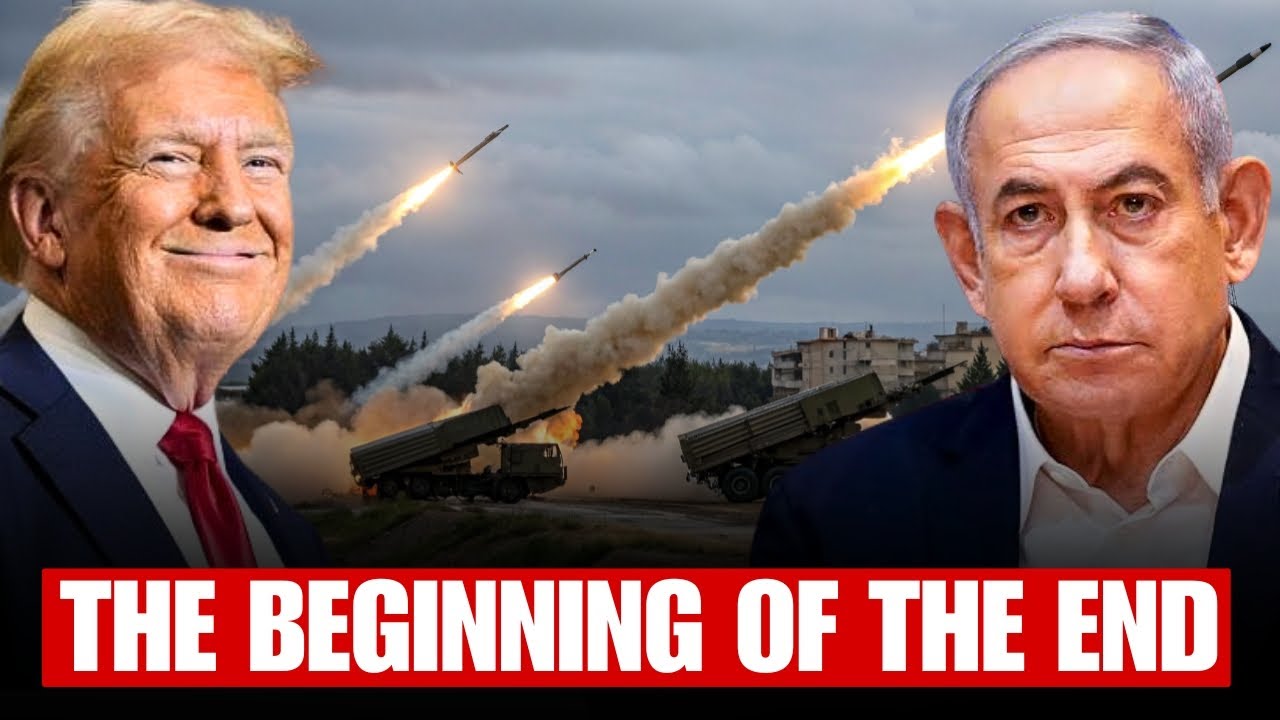
This content was created by David Oualaalou. This content was uploaded by David Oualaalou. This is a YouTube video titled "Will Trump Assist Israel in Attacking Iran? | Geopolitical Trends" (published 2024-11-14). The excerpt is a single-narrator geopolitical commentary (SPEAKER A) analyzing reported discussions between Benjamin Netanyahu and Donald Trump and assessing whether the US and Israel might move toward military action against Iran. The speaker summarizes the US–Israel strategic alliance, the effects of the US withdrawal from the JCPOA, Iran's regional influence and proxies (Hezbollah, Houthis, presence in Syria/Iraq), nuclear concerns, and the potential regional and global consequences of military conflict (retaliation, impact on the Strait of Hormuz and oil markets, and reactions from Russia, China, and the EU). The piece concludes that direct military action would be risky and that diplomacy, sanctions, and strategic deterrence are more likely, and it closes with a standard YouTube call-to-action to like and subscribe. Metadata: YOUTUBE content, thumbnail present, created_time 2024-11-14T13:43:06+00:00.
Chapters
Hello everyone and welcome to Geopolitical Trends, where truth matters. Are the United States and Israel planning to attack Iran? The recent statements by Israeli Prime Minister Benjamin Netanyahu, where he disclosed his discussions with the US President-elect Donald Trump regarding Iran, has stirred widespread debate and concern at the same time. With shared views on the Iranian, these talks between Netanyahu and Trump suggest a potentially unified front against Iran. This alignment, however, raises pressing questions. Are the United States and Israel preparing for a military confrontation with Iran? What would the implications be for the Middle East, or West Asia, that is? And how would this potential conflict impact the global geopolitical landscape? The answers lie in examining the motives of each player involved, the historical context of US-Israel-Iranian relations, and the unpredictable consequences of any military engagements in this already volatile region. So we'll start with number 1: the US-Israel alliance, a strategic bond. For decades, the United States and Israel alliance has been one of the most resilient and strategically influential relationships in international politics. This partnership has remained consistent across various administrations Regardless of differing domestic priorities, the U.S. considers Israel a critical ally in the Middle East, a region plagued by political instability and conflicting agendas. The U.S. has provided Israel with substantial military and financial support at the expense of U.S. taxpayers. In turn, Israel acts not only as eyes and ears but an anchor for US interests in the region. With Trump's election in 2016, the US-Israel relationship took on a new dimension. His administration's policies on the Middle East have included a strong emphasis on countering Iranian influence. The move of the US embassy to Jerusalem in 2018, the recognition of Israel's sovereignty over the Golan Heights, and the U.S. withdrawal from the Iran nuclear deal, known as the Joint Comprehensive Plan of Action , in 2018, all signaled a clear alignment with Israel's strategic objectives. Trump's overt support reinforced Israel's stance on Iran, positioning the U.S. and Israel in closer alignment than ever before. Netanyahu's recent remarks suggest that both countries are once again prepared to adopt a shared hardline stance towards Iran. This, however, poses the critical question: Will the alliance resort to military intervention? Iran: A Geopolitical Flashpoint. Iran's influence has grown significantly in the last few decades. Its strategic depth stretches across Iraq, Syria, and Lebanon, with proxies and allies including Hezbollah in Lebanon and more recently influence within Yemen's Houthi forces. This network of allies has allowed Iran to expand its reach, making it a formidable regional power. From Israel's perspective, Iran's influence in Lebanon and Syria constitutes a direct threat. Israel has launched numerous airstrikes in Syria to counter Iran's military presence near its borders. As Netanyahu has repeatedly stated, Iran's nuclear ambitions remain a red line for Israel. Since the U.S. withdrawal from the JCPOA in 2018, tensions have only escalated. Economic sanctions crippled Iran's economy, but they have not halted its nuclear development ambitions. According to a recent report, Iran has resumed uranium enrichment at a level close to those necessary for nuclear weapons. This development is seen by both the United States and Israel as an acceptable threat. The core question here is not merely about nuclear weapons but about Iran's rising influence and its potential to reshape the balance of power in West Asia, or the Middle East, that is. The consequences of military engagement. An open military conflict with Iran would have dramatic consequences for the entire region. Firstly, Iran has substantial military capabilities, including ballistic missiles that could target US bases and allies in the region, as well as Israel. Given its strategic positioning and alliances, an attack on Iran could result in widespread retaliations throughout the Middle East. Iraq, already struggling with instability, could become an additional battleground. Syria could see increased Iranian military presence, And Lebanon could become staging ground for Hezbollah attacks on Israel, more than what we already are seeing. Mind you, the Houthis and other Shia groups in the region would join in the fray. This domino effect would result in significant regional upheaval with grave humanitarian implications. Moreover, any military engagements would severely impact the global oil market. Of note, Iran is strategically positioned along the Strait of Hormuz, a critical chokepoint for global oil shipments. It is my belief that Iran has previously threatened to close the Strait of Hormuz in response to any military aggression, which would disrupt global oil supplies, sending shockwaves through international markets. Given the current energy dependencies, such a disruption could lead to skyrocketing oil prices, economic instability, and ripple effects across the globe. Is conflict inevitable? While the rhetoric from both Trump and Netanyahu appears hawkish, an open conflict may not be the ultimate goal. Diplomatic posturing and military buildup can serve as tools of strategic deterrence. Both the US and Israel understand the high costs associated with war, and their objective may be to pressure Iran into concessions, such as limiting its nuclear program or curbing its influence in Syria and Iraq. Good luck with that. However, the risk of miscalculations cannot be ignored. High tensions coupled with military maneuvers and provocations can lead to unintended escalations. A simple misunderstanding or a local scrimmage could spiral into a full-scale confrontation. History has shown us that proxy wars and indirect engagements often have unintended and far-reaching consequences. What about the geopolitical implications for global powers? Well, the potential for conflict extends beyond the immediate region. Middle East, that is, and involves other global powers. Russia and China, both of whom have vested interests in Iran, would likely oppose direct US or Israel military actions. Russia maintains a strategic alliance with Iran and has deployed forces in Syria to protect its interests. China, on the other hand, is a major importer of Iran's oil and has increased its economic ties with Tehran. Military action by the US and Israel could, as a result, heighten tensions between these powers and could lead to a further fracturing of international alliances. Additionally, the European Union, though it's very weak politically, has been a strong advocate of the JCPOA, arguing that diplomacy rather than confrontation is the best path forward. Any unilateral action by the US and Israel could alienate key European allies, who would likely resist supporting any military action. This potential rift among Western allies would only serve to weaken the cohesion needed to manage other global issues, such as trade disputes and international security, among others. Here is my conclusion for you: A Future of Strategic Tension. While Netanyahu and Trump's discussions point to an intensifying focus on Iran, the path forward is fraught with complexities and uncertainties. The mutual concerns of the United States and Israel over Iran's ambitions are clear, and both nations appear committed to curbing Iran's influence. However, direct military action carries risks that could spiral beyond anyone's control, impacting not only the Middle East or West Asia, that is, but the global community at large. A combination of diplomatic efforts, in my opinion, economic sanctions, and strategic deterrence may continue to be employed to counter Iran without direct conflict. Yet, as history shows, maintaining peace in a climate of escalating rhetoric and military posturing is a delicate and precarious endeavor. The world is watching, and the stakes could not be higher. The next steps taken by both countries, the United States and Israel, and allies for that matter, will determine whether the Middle East sees another devastating conflict or if cooler heads will prevail in preventing one of the most dangerous confrontations of our time. Please hit that like button if you like this video, and don't forget to subscribe. As always, remember, geopolitics impacts your daily life in more ways than one. Till next time, thank you.