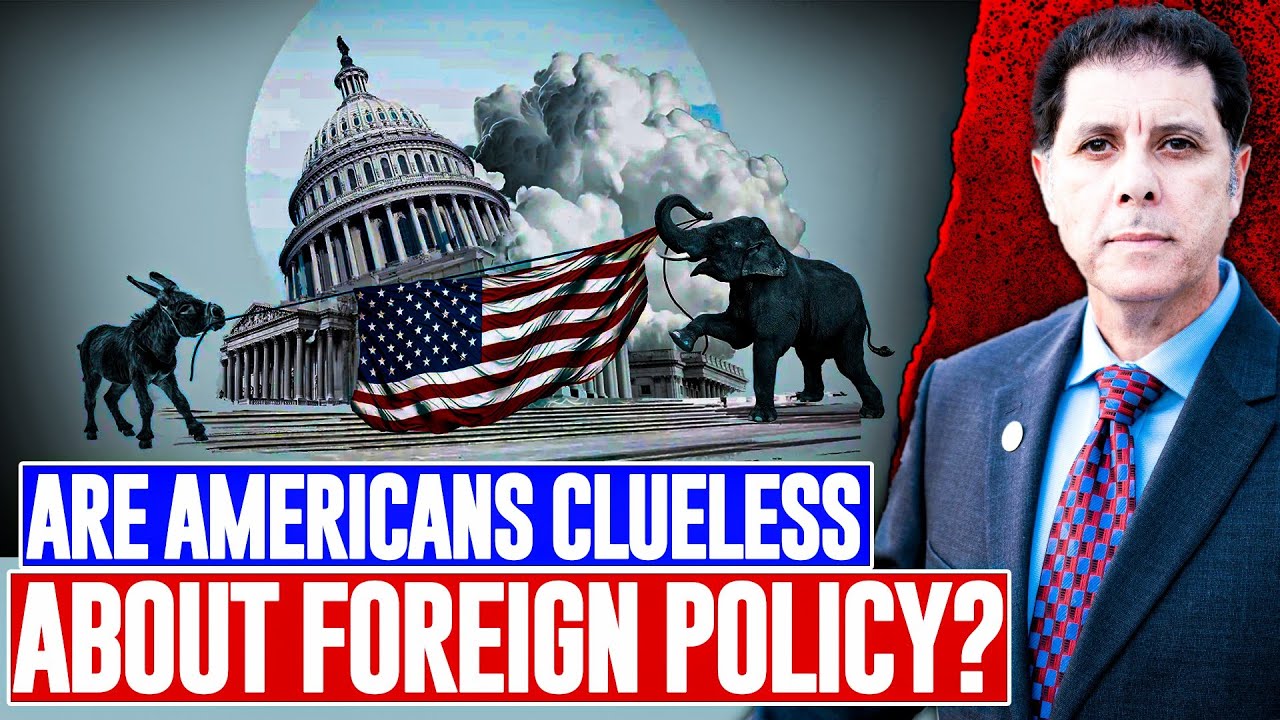
David Oualaalou analyzes how Trump's reelection could reshape U.S. foreign policy, examining flashpoints from Russia and Gaza to China and Taiwan. He argues the U.S. has lost global credibility and faces a choice between renewed leadership or isolation.
Chapters
Hello everyone and welcome to Geopolitical Trends, where truth matters. Why do American voters always ignore foreign policy when it comes down to electing a president? With Donald Trump reelected, questions now about US foreign policy have resurfaced with urgency. In 2016, amid the storm of scandal banter, and internal controversy, foreign policy seemed to take a backseat in American political discourse. Now, as Trump reclaims the White House, Americans are once again confronted with foreign policy challenges that feel distant yet carry significant implications for the nation's future. There are 4 points I'm gonna address for you. Number 1: Renew tensions and America's role abroad. While foreign policy has often ranked low in American voters' priorities, its importance cannot be overstated. The United States has a long history of engagements that only becomes a focal point when conflict strikes closer to home. Pearl Harbor, 9/11, and so forth all jolted Americans into paying attention to global issues. But as tensions simmer in the Middle East, for instance, competition rises in the South China Sea, and Russia continues its power plays, Trump faces renewed international pressure and the complex task of restoring America's global standing. Yet, the US credibility is shattered beyond belief, given the failure of the US government's embarking on failed policies and turning a blind eye on doing what's right. Gaza is a case in point. Take, for instance, Tarek Habash, a Palestinian American and political appointee in the U.S. Department of Education. Habash drew hard lines and took a stand when he became the second official to publicly resign from the administration of President Biden over its response to the war in Gaza. Russia will be another key issue presenting a major challenge. Under Trump's previous administration, US-Russia relations were marked by a combination of friction and surprising gestures of diplomacy, if we may use the term. Trump's critics argued that he was soft on Russia, while supporters defended his pragmatic stance. With tensions high and Russia showing little sign of compromise, given how we created the Ukraine conflict— and I don't blame them for that— the next term will require Trump to balance diplomacy with some form of deterrence. But let's face it, as the world has already shifted from a unipolar to a multipolar order, US deterrence is becoming more and more irrelevant. The blockade the Houthis imposed in the Red Sea is a case in point. The US and its allies are unable to lift that blockade and/or defeat the Houthis. In parallel, North Korea's unpredictable trajectory adds another layer of complexity. Kim Jong-un's testing and launching of ballistic missiles capable of carrying nuclear payloads keeps the world on the edge, raising concerns about the potential escalation in East Asia. But the escalation does not and will not come from North Korea, but rather the collective West headed by the United States. It's a fact. Trump has previously engaged in high-profile diplomacy with North Korea, and his reelection may spur new efforts to stabilize this precarious relationship. Yet the stakes remain high. One misstep could lead to a confrontation with far-reaching consequences. Number 2: The China conundrum— a rising power. Trump's policy on China remains one of the most scrutinized aspects of his foreign strategy, if there is one. Throughout his previous term, he approached China with a mix of confrontation and negotiation, leading to tense trade disputes and heightened economic competition. Now, with China increasingly asserting itself on the world stage, and rightly so, Trump faces the daunting task of managing this rivalry without destabilizing global markets or alienating allies. Yet, Trump already declared his intentions on imposing more tariffs on China. Trump also pledged to make it too costly for countries to shift away from using the US dollar, adding a new pillar to his tariff platforms. Trump needs to come to grips with two realities: China's interest in the South China Sea and its Belt and Road Initiative. Trump's rhetoric centered on curbing China's dominance, especially in technology and manufacturing, is nothing but a bravado, a narrative meant for domestic consumption here in the US. However, with China's massive investments in Asia, the Middle East, and Africa. Trump's foreign policy team, we need to be a sort of a sophisticated strategy to contain China's reach while avoiding unnecessary escalation. Yet I say it's too late for that. Another critical issue is Taiwan. While US policy has long maintained a delicate balance in its One China stance. Any shift could strain relations and disrupt East Asian stability. Trump's choices in handling Taiwan will be watched closely, with significant implications for US-China relations and regional security. Number 3: Global leadership or isolations. The Trump administration's approach to international alliances has historically leaned towards skepticism, with Trump often questioning, and rightly so, the utility of institutions like the United Nations and NATO, a relic of the past. While Trump's "America First" policy prioritizes domestic concerns—in words, not in deeds—the world stage remains interconnected. In the Middle East, for instance, shifting alliances further complicated American involvements. Saudi Arabia, Iran, and other regional players have engaged in proxy conflicts, that fuel instability, with the US historically playing a significant role in fueling those tensions in the region. Trump's decision-making in the Middle East will be pivotal, to say the least. Reducing US presence in the region may create a power vacuum, allowing countries like China and Russia to expand their influence, particularly in energy market. Yet this reality is already underway as the US's role in the region is becoming less and less important. I argued this on many occasions. Number 4: Preparing for tomorrow's challenges. A Trump reelection brings foreign policy challenges to the forefront. For American voters, these issues may feel distant, yet their impact on security, the economy, and global stability is profound. As Trump faces a world in influx due to our own making, to be honest, his administration will be tested in addressing the complexities of international relations. Balancing American interests with global responsibilities. The stakes have never been higher, and the outcome will shape the future of the US foreign policy for years to come. Alas, if we only had a cohesive foreign policy to begin with. Here is my conclusion for you, because I like to keep this short and concise.. As argued in my book, The Dynamics of Russia's Geopolitics: Remaking of the Global Order, today America is barely a shadow of its former self, of that convincing and powerful nation that emerged from World War II. Indeed, while Washington under both Republican and Democratic parties speak as it is the world's voice of wisdom, power, and all-knowing authority. America has really become the very picture of an overused, abused, and late-middle-aged empress who eagerly displays her sagging wares but does not seem to realize that she has lost her appeal, attraction, and influence, and is much more laughed at than lusted over. When President Trump, or any, speaks on foreign policy, the world hears not only inconsistencies but also meaningless bravado and absurd prating about freedom and other universal values. Yet, US foreign policy seems to have no vision, no clear objectives, and no sense of direction. I worry that these settings confirm the beginning of the end not only of the US dominance but also of Western hegemony in its broader context. If you like this video, please hit that like button and don't forget to subscribe. As always, remember, geopolitics impact your daily life in more ways than one. Till next time, thank you.