Will Trump's Trade Policies CRUSH China's Economy? My Conversation w/Jerry & Fernando!
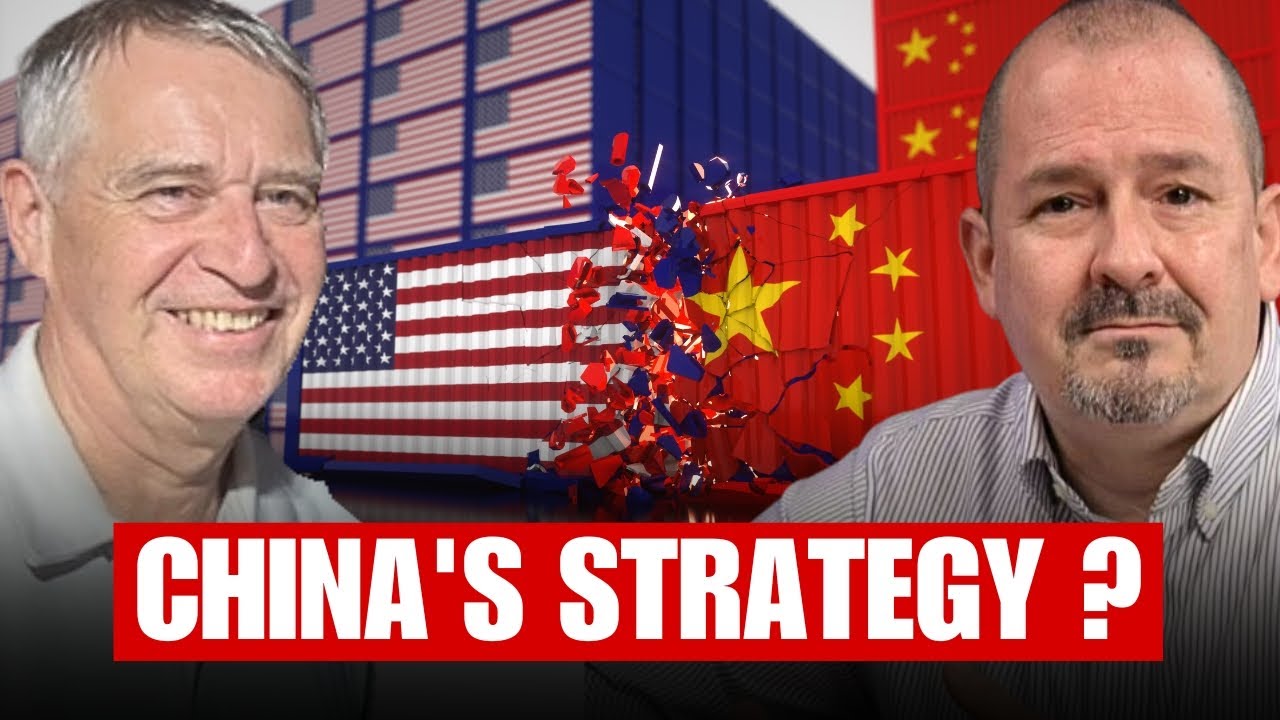
In this Geopolitical Trends episode, host David Oualaalou interviews long‑term China residents Jerry (≈20 years) and Fernando (≈24 years, entrepreneur) to assess how President‑elect Donald Trump’s anticipated trade policies could affect China and the United States. Jerry argues that even a full decoupling would only shave 0.4‑5 % off China’s annual GDP, causing a short‑term hiccup and a two‑year recovery, while the U.S. would feel a far larger price shock because of China’s deep integration into global supply chains. Fernando reviews Trump’s first‑term actions—sanctions on Huawei, the “China virus” narrative, the Xinjiang and Hong Kong campaigns—and predicts a continuation of an anti‑China agenda, noting that the U.S. is withdrawing from multilateral institutions, creating vacuums that other powers can fill. The discussion then shifts to China’s internal drivers of growth: massive infrastructure investment, rapid expansion of high‑speed rail, massive expansion of higher‑education (5‑10 million STEM graduates annually), and a state‑directed vision that has built a large middle class. They also examine the Philippines’ new maritime law and its limited impact on the South China Sea dispute, and evaluate the strategic significance of BRICS, the Belt‑and‑Road Initiative, and recent diplomatic visits (e.g., Indonesia’s Prabowo, Brazil‑China trade). Finally, both guests recount personal observations from Xinjiang, challenging mainstream media narratives of genocide and oppression, and describe the practical realities of travel, security, and local governance. The episode concludes with promotion of the guests’ new media platforms and a preview of the host’s next analysis on Saudi‑Iran military drills.
Chapters
All right, hello everybody and welcome to Geopolitical Trends, where truth matters. Excited to be with you as always, but this evening, because it's, it's 1900, 1900 hours my time here, I'm very, very excited because I have two great guests that you're gonna enjoy listening from them. So I met them personally in China, we had dinner, we We rode the boats together. It was, it was an incredible evening, so I shall treasure that for the rest of my life. But like I promised you guys, I will bring in Jerry and Fernando, and they are right here. So I'm not gonna waste any time. I'm gonna bring them into the studio here, and we're gonna get in into the conversation. Just prepare your questions for later on if you would like to ask Jerry and Fernando. So, all right, let me bring in Jerry. Fernando.
Hello guys, good morning.
Hi everybody, thank you.
All right, good to see you here. I know Fernando is your first time here in my channel, here in Geopolitical Trends. Excited to have you here and I look forward to having you again, of course. Jerry, you've been here before. We're gonna be continuing all this conversations that we've always had. So anyway, it's, it's so excited to have you here guys, especially spending time with you in China was, was incredible. What I'm going to be— I'd like to start with, because we want to get into some conversations here right away, with the changes that is now taking place on the global stage. And since you guys, both of you, each one of you spent over 20 years in China living there, your life is in China now. So where do you see these changes going? Given for us in the United States, we just saw the election of President-elect Trump, who's already promising to crack down on China. Where do you see this one? I'll start with you, Jerry.
I don't see Trump as Trump version 2.0. I see him as 1.1. It's very much— what he's putting together now is very much an anti-China cabinet. I know he's going to have a lot of domestic issues to deal with, but he's very, very focused on the challenge that he sees China poses to the United States. In terms of what changes we can expect here in China, very little, very little. It's not going to affect China very much at all. No matter what America does, causes a hiccup and then a recovery. And we've proven this with space stations, with chips, with EV cars, with solar panels, with everything. Every single challenge that the United States poses to China, China has a short-term hiccup. It always happens. We've got to readjust things, but then they recover. The big thing about China is that the economists are now working. They're doing this as not just a mental exercise. They're doing this as a policy procedure that they're planning on What's going to happen if America suddenly says, let's go, we're going to decouple from China? Now, of course, that's not going to happen. We know that's the worst-case scenario. But if that were to happen, that would affect China's GDP to the tune of about 5%, one year's growth. It will take China 2 years to recover. That's what the modeling is showing right now. All the things that I'm reading. Anything from 0.4% GDP to about 5% GDP, one year's growth. So China is going to recover. It's already diversified, quite widely diversified. It's selling more to BRICS. It's selling more to ASEAN. It's selling more in the RCEP, and it's not selling as much. Sales to exports to America have gone from 20% down to about 12%. And if they suddenly stop altogether, that is going to be a hiccup. It's going to hit the GDP. It's going to hit the economy. It's going to hit the people. But it's going to hit America a lot harder because every single thing that you have, that you're wearing, that's on the wall behind you, that you're sitting on, has some part of a Chinese supply chain in it. And that is what they really, really don't want to do. So worst case scenario, it's going to hurt America a lot more than it hurts China. It will hurt China, but it will be a short-term hurt and it will be recovery within The modeling says within 2 years.
Interesting. Fernando, how do you see it?
Well, first of all, thank you for having me on the show. It's a great honor to be introduced to your audience.
Of course.
Like Jerry says, he always says the things that destroys your thumbnail and your title is not really 2.0, it's 1.1. And perhaps we could start by revisiting some of the things that took place during Trump in his first administration. Started with receiving a phone call from Tsai Ing-wen from Taiwan and breaking protocol from 1971 on, on his election. Uh, he went on to, um, ask Canada to capture Meng Wanzhou, put sanctions onto Huawei, without actually asking Canada to capture Michael Power, who was actually dealing with North Korea and other sanctioned countries. So there's the duplicity. They went on to, well, the 2019 Hong Kong riots. All these under Trump. So this is why 1.1 rings true. Um, he went on to call it the China virus when we got COVID in 2020. Now he's calling for an investigation of Bill Gates and Fauci, which means it wasn't really the China virus, but all the damage was created, all the anti-Chi— anti-Asian hate was sparked with him. Um, he also initiated the, the China Initiative that saw Franklin Tao and Gang Cheng going to prison and going through a lot of trouble because of his agenda. He also started in 2017 the, the ramping up of the Xinjiang narrative, which is something that we want to talk about, uh, quite a lot since me and Jerry have been there several times for very, very extended periods of time. Um, And by 2020, Pompeo decided to delist ETIM, um, and he ended up with, well, tariffs. So I don't think it's going to be any nicer to China in his second time around. I think that he's going to continue doing what he has been doing because that's the way he sees he can make China, uh, China suffer and America great again. Important to notice that during his first tenure, he actually took a step back from a lot of international organizations. He proposed to defund the WHO during COVID He went back on the Paris Accord. He removed the Trans-Pacific Partnership. He actually removed himself from UNESCO and from human rights, United Human Rights, and the Iran nuclear deal. So what I see him doing this time around is nothing too different. We see him already talking about, hey, NATO, what's it going to be? How are we going to deal with you? So when he moves back from these international organizations, he creates empty spaces that can then be filled by other organizations or other entities around the world, be it Russia, be it China, India, um, whatever. So I, I see China looking at what's going to take place domestically in terms of tariffs for the Americans and how that's going to affect them, and how is international space going to readjust when he starts focusing more on internal matters in the United States. That's the short, short vision of his second presidency from my standpoint.
Interesting. And we will delve deeper into it because here's the thing. Already there are two main conversations right here in the US. One of them has to do with the tariffs, and Trump's argument now within his own circle is that you're gonna have to hit the Chinese hard, economically speaking. On the other hand, when Trump says this, an average citizen here does not understand that most of our products, like you mentioned, Jerry, most of our stuff are coming from China. They don't understand that if the US impose this kind of tariffs, price is going to jack up here. People are already having a hard time dealing with this. So my question, and for you, Jerry, here, does China need to worry, or should China worry?
Yes, China needs to worry. I think the world needs to worry. China is probably the country that needs to worry most because of the fact that it is so targeted against China. This perceived threat, and it is a perceived threat, it's not a real threat. China is no threat to the United States. It is a threat to the hegemony, and it is a threat to the economy, the elites within the economy, but it's not a threat to the United States. Now, let's remember, let's go back 50 years and work out why did China become such a threat? Because 50 years ago, it was the third or fourth poorest country in the world. So suddenly, 50 years in my lifetime, in our lifetime— Fernando is very young, of course. But in our lifetime, it has changed from being one of the poorest countries in the world to the richest country in the world in real terms. I mean, we have more money here in China than pretty much the rest of the world to spend. PPP is very, very good. It's not the richest country in the world, but it's the richest large country, and it's still an underdeveloped nation. It's still developing. You know, we go out to the west of China and we can still see evidence that this is a developing nation. It's not a fully developed nation. Because that GDP, the nominal GDP, when it's cut down into a per capita, is very low. It's a quarter, probably less than a quarter of the US per capita GDP. What happened was 50 years ago, all of the elite business people said, let's move to China and we can produce cheap crap over there and we can sell it to our gullible consumers over here. And that's exactly what they did when they moved to China. They did not reduce their prices. They may argue, and it might be a valid argument, that they kept the prices low, but they didn't reduce the prices. When they reduced their costs, they increased their profits. And they have been doing that for the last 50 years. And then they say, look what China did. It stole all our jobs, which we exported to China. It's taken all the profit from all of the things that we're making, and I've only got $200 billion in the bank. This is, this is what the elites are thinking. I've only got $200 billion in the bank and China is taking everything. So far, China has absorbed so many of the tariffs itself. It's found ways to manufacture in Thailand, in Mexico, in Vietnam, and then ship things. And it's done that at its own cost. Now, that's because solar panels are a specific industry and because chips are a specific industry. Those industries have had to find ways around the tariffs. What Trump is talking about is an across-the-board tariff. China can't absorb that. It's got to be passed on. So if your American public want to buy products from anywhere in the world that belong or start their life or even finish their life in the supply chain. Now think about every mobile phone, every computer, every— almost every piece of furniture that you're sitting on has some connection to the Chinese supply chain, and that is what they can't do. Your aircraft carrier, I just read somewhere that it has 65,000 chips made in China on an aircraft carrier. Well, you've got to get them from somewhere, and nowhere else is producing them. So you're going to tariff them, and then the Pentagon are going to come and say, oh, we need an exemption from this, and they're going to get one, as they did with Huawei. I don't know if you're aware of this. Oh, I recall. But an exception from Huawei restrictions. Huawei is not allowed anywhere because of national security risks, and yet the Pentagon, the most secure place you could imagine, can still use Huawei. Go figure that one. It just tells me that the whole thing is a farce. If Trump does this at 60%, 100%, or 20%, whatever figure he finally comes up with and says this is the tariff across the board, then only American consumers are going to suffer.
I think that there's, there's another aspect to it, what is being suggested that I read somewhere, and perhaps I'll throw to the conversation to find some validation in this information, is that he is considering reducing or eliminating income tax. So when you work placing tariffs on imported goods from China or anywhere else, but at the same time giving people more money in the pockets, then that would offset some of the higher costs that they would have to incur to buy the things that are not made abroad. But it will also kind of like incentivize entrepreneurs to start manufacturing again in the US. We all know that that would be more expensive to do, not only for the intermediate goods coming from abroad— that will be tariffs as well— but also because labor and everything is more expensive. But if people have more money in their pockets, that might actually pan out somehow. The problem is that what will they manufacture and at what cost? As I said in a private conversation with Jerry, because you, you realize that it's very difficult to find the talent, the high-level talent, to make the kind of products that are at the forefront of technology. Um, most of those people come from outside and work in American companies, or they're working here in China making them. China is graduating more STEM students than any other country around the globe. So how are you going to be at the forefront of technology and manufacturing and production when your population is so busy with making a quick buck and trying to make ends meet, and not many people are actually able to read higher than an 8th grade. I think it was 50%, if I'm not wrong. Jerry, correct me. So, so we have a problem of Well, I say we Americans have a problem of education. We are— you guys need to sort out your education so that you can actually go back to manufacture the goods that have the highest margins, which are the high-tech stuff. Um, so I think that the focus on tariffs is— could work for America But of course, it's going to be a challenge for China to offset. China's already trading more with developing nations than with developed nations. So China has been preparing for this, already moving towards being able to, being able to export and produce for other countries and offset some of that. The troubles that come ahead with the tariffs. Sorry, I just got a phone call. Um, but no, that's what I wanted to say about the, the tariffs. Um, they may be necessary for America.
Yeah, well, speaking of education, while I'm talking, I used to teach at, for, uh, your institutions here at Texas A&M. So education here in the U.S. is transactional. That's the bottom line to it. There is no incentives You know, for a professor, I was sort of challenged in a way by the president of the university for the way I was teaching students. And all the way I was teaching them is to provoke their curiosity, intellectual that is. And somehow the institution didn't like that. And I said, we're done here. I washed my hands and walked away because— so you're absolutely correct, China produces more students STEM students. Uh, one research that I looked into, uh, mentioned that it was about 5 million students a year. Would that be a fair assessment?
Yes, graduating 10 million a year. I think there are at any given time about 30 million STEM students going through university, so 5 million a year sounds about right. They'll graduate after 4, 5, 6, or more years.
Stephen, Stephen Su, H-S-U, I don't know how you pronounce that, he posted yesterday something that Because of inclusion programs, Algebra 2 was being removed as a requirement for most college students. Most colleges around the US, even high-level college students, do not have to take Algebra 2. That's just basic quadratic equations and graphs and whatnot. I mean, if you're dumbing down your education to that level, how are you going to manufacture I don't know, high precision stuff. And do you know what I'm saying? You need that resource. It's not just money and policy, is you need the human resource to be there. But when it's so easy to make money on OnlyFans, when it's so easy to just be a YouTuber and cause nuisance around Asia like some of these YouTubers, uh, why would you go through the trouble of burning your eyelashes and going to college and university and working hard and becoming the best you can be? Why?
Very, very interesting. Uh, let me move to asking each one of you a question that I believe my audience will really be interested to have your take on it. I'll start with you, Jerry. This one has to do with the, uh, progress that China has achieved in the last 30, 35 years. So you've been in China for over, well, over two decades plus, right?
20 years.
Yeah.
How can you assess— how do you see In your opinion, how that progress— how was China able to achieve that progress? What contributed?
It invests in itself. It's as simple as that. China invests in itself in more ways than one. I mean, it invests in the infrastructure. Just before we came on the show— well, let me give you an example. My wife, when she was a child, she grew up in this city in Zhongshan, and it's 70 kilometers from Guangzhou. When she went to— she had an uncle and cousin who lived in Guangzhou. When she went to visit them, it was an overnight boat. That was the way to get to Guangzhou. You took a boat and it took overnight. So we get on the boat, up the river overnight, get off in the morning. And she said, I remember we used to have a bed. It was like a bunk in a room with 6 or 7 other people, mostly strangers. And that's how they got to Guangzhou, an overnight ferry to the port in Guangzhou from the port in Shaolan, where she grew up. Shao Lan is a part of Zhongshan, the city. It's actually in the northern part of the city, so if it was coming from here, it would take an hour or so longer. And now it takes 27 minutes. You get on the fast train, it takes me 15 minutes to get to the train station, it takes 5 minutes to go through security, get my tickets checked, and then I'm sitting on the train. 27 minutes later, I get off the train in Guangzhou. Um, for when I first came here and we're going back to 2004, I arrived through Hong Kong and flew into Guangzhou, which was a very strange thing to do, and it took 2.5 hours to drive back to the school. Now, if I want to go in or out of Hong Kong, there's a 90-minute ferry, or now I can just get on that bridge. And I was recently— not recently, 2019, the last time I did this, I came from overseas through Hong Kong. I got off the plane and I set a timer. I thought, let's see how long this takes because I'm going to use this new bridge. And I came across— I got off the plane, got into a car, across the bridge, got into another car, and got home in less than 2 hours. Now, from Hong Kong— now, I don't know if you know the geography of Hong Kong. It's on the opposite side of the Pearl River, which is a very big river. 67-kilometer bridge and tunnel linking system to that, and it stops in Macau. Hong Kong Airport is on an island, and Hong Kong itself, 90% of it, is attached physically, geographically to Shenzhen. And it's Shenzhen that really seen the changes. Um, obviously every city has seen changes, great changes. And Fernando lives in Dongguan, which is attached to Shenzhen, so I'll let him tell you a bit more about that. But in terms of infrastructure, it's massive. They've invested massively in infrastructure. They've invested massively in education. There are— since I moved to this town, there are now 2 vocational universities and 2 real universities, Pharmaceutical University and another general university, Polytechnic, have opened up in the city I live in. That's now 4 universities in this city and 2 vocational colleges, and 4 million people live here. So more and more people are going. It's about 60% of all school leavers go on to some form of tertiary education now. So 60% of 18-year-olds are going to university. This is what America used to be like. This is what America could be like again if people could afford it. And university costs about 10,000 RMB a year. That's $1,500, your money.
Well, I have, I have an 18-year-old now who's going to be thinking about University. I said, how about this? How about this? How about if I take you to China, see with your own eyes where the future is? And if you want to, if you do have the drive to learn a new language, whatever, that will be universities there. I'll be happy to help with that.
There's a lot of scholarships, a lot of scholarships for master's and PhDs, but not for bachelor degree. For bachelor's degree, if your 18-year-old wants to come to China and do a bachelor degree, they're almost certainly going to need to have Chinese. Reading, writing, and speaking Chinese.
He's gonna have to learn if he wants a better future. Fernando, I'll go back just as a follow-up to what Jerry mentioned, since you live there. And by the way, guys, for those who do not know, Fernando has been in China for almost over 24 years. Is that correct?
Uh, December 28th will be 24 years. Yeah, I arrived here December 28th.
24. I would say 24. And And for you guys also who do not know, Fernando has owned so many businesses inside China, so he's somebody who understands the dynamics of how things work. And for you, Fernando, how do you see these changes that China went through, given your span of 24 years in, in the country?
I think the changes are, are visible to anyone who has spent as much time as I have here. You've seen cities grow, you've seen cities developed. I would like to mention one thing because more important than how has it changed is how did they manage to do it. And I think that the answer is a vision. China is a country that allows itself a vision because it's a, is a, is a uni-party, so to speak. There are other 8 parties, but, but the country is united in making the nation better and improving the nation. It's not competing for power. It's basically we are together. As I said to you when we were on that boat, it's like a dragon boat. You may come with your different ideas, but we're all going in this direction. And every once in a while, we might discuss which direction we take, but that's, that's what we're doing. So everybody pitches in and everybody pushes forward. Now, why do I say that that's important? Because some of the projects that I have started and accomplished and, and still working on, they take more than a decade, two decades, a generation. For example, the, the forestation projects that I visited in Shaanxi and the ones that I visited in, in Xinjiang, those are 70-year processes. This is not going to be sorted out in two, four-year terms. So you got to have a vision. I remember a very punctual example that I've shared with other people before. Here in Dongguan used to be very, very tiny, and when I got here, they were building a freeway that had 6 lanes going north and 6 lanes coming south. Beautifully garden, absolutely perfect asphalt, 20 kilometers into nothing. 20 kilometers of absolutely nothing. And I used to ask my friend who used to work in government— he's already retired— like, Why are you guys doing this? I mean, what's the point? I mean, why would you build something called Songshan Lake Avenue? I was like, well, that's the future of Dongguan. And I'm like, just coming with that Western mentality, that Colombian mentality where nothing changes. Fast forward, and that's where Huawei campus is today. And Huawei campus developed that area, Songshan Lake, and brought with it thousands and thousands of small suppliers and small companies that are little galaxies, little, little satellites, sorry, of Huawei. And that area today is one of the most highly developed areas of Dongguan. And that 12-lane freeway is now falling short a little bit. So that's why we're building a new subway. So when you think about changes, I think that those changes are enabled because of the vision, and that vision has another effect. If you allow me another 2 minutes.
Sure, sure.
The trust in government. Think about this. How did Guangdong develop since the reform and opening up? By bringing talent from the inland, from the provinces inland, into Guangdong. What was the first thing that they did? Any factory, either from Hong Kong or Taiwan, which were the first ones to jump at the opportunity of not paying taxes and all the exemptions and whatnot and cheap labor— basically, you have to build room and board. Every single factory in Guangdong offered room and board. What does that mean? It means that everyone who works for these factories is getting a salary, being as low as you might want to, that salary that stays in the pocket, that salary that they don't need to spend. Think about it like how the Army is an opportunity for people, right? Join the Army and make a career out of it, and, and we'll take care of you. It was exactly the same for every single factory that was set up here in China. So even if you made $500 a month, for example, even if you have no education, you have no university degree, no nothing, you came to work at a factory and you were paid $300, $400 a month, that's $300 that you put in your pocket for 13 months at a year. So that's $3,000, $4,000 that you had at the end of the year. Compound that to 10 years. Now you have $30,000. Now you marry with somebody who's been doing the same. Now you both have $60,000, and you have experience working in manufacturing. You have received training, which is something that this factory did. So you learned some English, or maybe you, you learned some new skills, and now your salary is not $500, your salary might be $800 or $1,000. That's the blueprint. That's the blueprint that China followed. Let's build a middle class. Let's build the infrastructure so with the little money that these factory workers at the end of a decade had could buy an apartment. But now since we have highways, since we have subways, since we have shopping malls, oh, the value of that property is going to increase. And now they get some money that they can go and buy another apartment and start growing. It was really people trusting the blueprint that the government presented for them and the willingness to. So people might say, ah, people in China have no freedom. No, I think that people in China trust the blueprint that's presented before. Fast forward 20, 30 years and you have the largest middle class in the world. That's how I explain it to people.
Very, very interesting. A good friend of mine here in Dallas, Dr. DaShan Feng, I just met with him a few days ago for coffee, and he told me one thing, and I forgot it in Chinese language. Basically, the gist of it in English is, if you want to be rich, build roads. Yeah, there's a saying in Chinese, so that makes me— at least during my time visiting China, I saw that infrastructure, man. It's, it's something beyond. I wish my country would invest into all this. So let's, uh, let's switch gears to, uh, one— I want to address one particular topic that just happened recently, and this has to do with Philippines. Philippines just passed a recent maritime law. How that's gonna now shape the relationship between Philippines and China regarding the islands? I'll start with you, Gerry.
The Philippines probably need to look back in their own history and see how long they've actually been a country and where the United Nations draws their borders, and it's around the Philippine Islands. Let's be honest, I mean, there's a lot of legislation that needs to be considered here. And a lot of misunderstanding about UNCLOS, the United Nations Convention of the Law of the Sea, which America happens to be supporting but without ever ratifying. So America doesn't care about UNCLOS, but it suddenly says, oh, look, UNCLOS says that Philippines has got this. UNCLOS does not say this at all. UNCLOS says that we'll discuss things like the waters and the passages in the waters, but it's the law of the sea and it does not discuss sovereignty. So there's that. Uh, if we go back 70 years, there was no such thing as the Philippines as a country. It was a colony of Spain. It became a colony of America. It became an occupied territory of the Japanese Imperial Army. And effectively, after the war, the Philippines really became what we now know as this collection of islands— that's the Philippines— as an independent country, uh, Independent is, is a very, um, broad word as well because it's not very independent at all. Um, the bottom line here is China has already said what they think. This is spurious and it's ridiculous and it just won't hold water. Um, it's as simple as that. It's not going to hold any water. Uh, what it is doing, what America is doing, is pushing for one last poke in the eye during the Biden administration and setting the scene for the Trump administration to come in and say Well, the Philippines are being bullied by China. Not so at all. Many people say this. The Philippines are being bullied by a bigger neighbor. This is not true. Now, if we're talking about property and people say, oh, but look at where this island is or this shoal is. It's closer to the Philippines. Yeah, but it's also close to Malaysia. It's close to Vietnam. Taiwan lays claim to the same places. How is America going to reconcile its relationship with Taiwan and its relationship with the Philippines when they're both claiming the same islands and America has to support one or the other. So really, if Taiwan claims it, then it's Chinese. We accept that because there is one China. The United Nations says so. So there's so many different things that need to be put into an order. I saw Arno Bertrand put a brilliant thread out which laid out all the different clauses of different regulations and different rules. And basically the bottom line is those shoals, historically, geographically, politically, economically, they are inside of China's territory. There used to be an 11-dash line. There's now a 9-dash line. And we'll get people argue it, argue it, argue it. But it's really going to be up to the courts. And it should be, as it is with Malaysia and China, as it is with Vietnam and China, as it is with Brunei and China. There's lots of debate, disputes going on, but we're only seeing the disputes between China and the Philippines, and only because CNN are there to show it, or the BBC is there to show it. What's really going on here? This is no different to what's happening in Xinjiang, America. It's no different to what happened in Hong Kong, America. It's no different to what happened in Tibet, America, causing problems for China because they want China to be on the back foot all the time. The bottom line, it's a nothing burger. It will become a nothing burger, but it could be the catalyst that starts a conflict that America wants. America doesn't want to go to war. It wants a proxy war. It wants someone else to go to war so we can sit back, offer support, and sell the products that are needed to maintain that war. That's what America wants, and that's what America is trying to get right now.
Interesting.
Just to follow up on it, In my eyes, is the Zelensky of Asia.
It is the perfect, perfect person to manipulate with all his legal problems in America, with the fortune that is hanging on a thread. He will do whatever he's asked to do, uh, whether it makes sense or not. Imagine just passing national laws and, and expecting them to be understood as international law. Like, we rule this, so the world needs to accept it. Like, sorry, come again? Um, it's, it's, it's sad to say that this for many years was a problem that was dealt diplomatically, and China was very patient. This was started with the Sierra Madre that was run aground, and that shoal, the Second Thomas Shoal, in 1999, if I'm not mistaken. And very quickly they say, okay, sorry, we, we will remove it. Promises broken, never removed. So they kept this back and forth diplomatically. Uh, now when Duterte was replaced by Marcos, now he started to expand it and try to build barracks and had another vessel also run aground somewhere else. So it's just deliberate. It's a deliberate attempt at, uh, muddying the waters and making things look, uh, as if there's some kind of issue. There's nothing that can be built on that shoal of any capacity, militarily or nothing. So the question that I've asked in previous videos myself is why? Why is Bonbon doing this? What is the objective? Um, the objective is just to cause trouble and to make China look bad with his water cannons and with his planes flying next to other planes, you know, like, yeah, that's, that's all they're doing. And the big risk is an incident, because when you cause an incident, then they will call for their AUKUS, the defense treaty that they have with the United States. So China is like flying away mosquitoes around their face, and like they're not really going to do anything. But if something were to happen, then that could be the catalyst. Because as Jerry said, Taiwan is not going to be the catalyst. I mean, it will be too frontal, and, and I don't think that America wants that. But the Philippines, yeah, they could afford that.
Yeah, well, for, for Taiwan, it's, it's kind of our The strategy— when I say our, I'm referring to the government, uh, the strategy is different, has nothing to do with really this issue of sovereignty, whatever. The issue now that is going on, based on my conversation with still my contacts in Washington, it has to do with the microchips. That is where things are, because the big concern here in the US is this AI moving forward, you know, who's going to be— and I did even ask my community here, I put a survey I said, who do you guys believe will be in charge of AI moving forward? Every indication suggests China. This is where the concern in the, in Washington about Taiwan has nothing to do with Taiwan itself. It has to do with the microchips and so forth. So let me go back to you, Fernando, about you recently traveled to Xinjiang, is that correct?
Yes, yes, correct.
Yeah.
If you will be kind and just share with our community here, really what you saw, because we all know what the narrative has been. We all know it turns out to be a lie. You know, I, I'm planning on visiting Xinjiang myself next year if things works out. But you've been there, you saw. Can you please just share with the community what they need to know? Truth, the facts as you saw them.
Um, I'll give you a very quick rundown on my experience with Xinjiang. Uh, back in 2021, in the middle of COVID We were hearing all these allegations, and I said to a friend of mine, Noel Lee, which Jerry also knows, and my wife, like, why don't we just go and make a few videos there? Because we know that it is possible to go there. It's not like a closed-off place. And that's what we did. We bought tickets, we landed in Urumqi, we made a video in Urumqi, we went to Kashgar, made a video in Kashgar, we went to Hotan, we made a video in Hotan. Like, if anybody wants to come here, you can. At the time, obviously Internationally, it was not possible because of COVID but, but I was trying to prove a point. So it was a very quick trip to Xinjiang, and that kind of like got a lot of things moving. Um, the second time, or the most remarkable thing that I accomplished, was that I traveled through Xinjiang last year for about 5 months, 142 days. I drove my electric car pulling a 1-ton RV trailer for more than 15,000 kilometers. That's about 10,000 miles for you guys. Visiting more than 40 locations in Xinjiang freely, and that's the important part— freely and self-funded. Because there'll be people saying, 'Ah, you're paid.' No. So what does that tell us right off the bat? Number one, I did it with an electric vehicle. Through deserts, mountains, snow-capped mountains. So the infrastructure for electric vehicles is good enough. That should blow your minds, first of all. Um, our range driving was about 200 kilometers. So every 200 kilometers on this huge region, which is about a third of Europe, can be done using an electric car, number one. Uh, you can go anywhere. There's, there's a couple of differences between the rest of China and Xinjiang. One of them is that it was an area that experienced terrorism, and as such, there's a security apparatus that operates. Um, for example, if you come to China as a tourist, you need to stay at a hotel, and the hotel will register your information. And every single night and every single stay, that goes to the police and goes into a report so they know where you've been. But if you're doing self-travel like I was doing, it was me who had to go to the police station because I wasn't staying at a hotel. So in some parts of the country, you don't really need to do that. I mean, I could go and visit Jerry and come back and not register myself with the police, right, if I stay at his place, because nobody really cares about that. But in a region like Xinjiang, which borders 8 countries, some of them troubled countries, and with a terrain that is very difficult to surveil, to, to monitor going in and out. They need to know who's there and who's not there. So it's one of the things that is different. You need to report yourself to the police if you're doing self-travel. If you're staying in a hotel, there's no difference. The hotel will do that for you. Now people ask me, what did I see? I'll tell you what I did not see. I did not see the images that we see from Gaza. I did not see a genocide. I did not see people fearful. I did not see people, um, we have never seen a refugee crisis. We've never seen buildings being blown up. We've never seen destroyed bodies of babies. None of that is taking place. You see, and this is one of the focus when I go there and I make videos and I, and I, and I try to present to people how unafraid children are. And I have a video that is absolutely beautiful. I'm sleeping in a very small place called Sarchu, uh, near Tibet, uh, 6 o'clock in the morning, and somebody set the door of my RV trailer, my caravan. I opened the door and his 4 Uyghur kids. Oh, we saw that you're traveling with your dog and your 2 cats. Can we play with them? And I'm like, sorry, what? So these kids invite themselves into my RV and start playing with my animals, and me and my wife were just waking up like, huh? And we got these kids completely unafraid, not only of strangers but of a foreigner. Um, so that tells you so many things. It tells you that there is no— and that's a hashtag that I like to use on, on X— there's no Uyghur genocide vibes. The vibes are not there. You don't, you don't see the fear in people. Um, I would like to, I would like to also say that if you want to go to Xinjiang, you got to understand that border areas, some of them do require a permit, but it's as easy as going to an office, presenting your travel document come back an hour later, pick it up, and that's it. They just want to know who's going into these areas. There's another aspect is how dangerous nature can be in Xinjiang because of the desert. There's certain areas where if you travel in, there's a place called Da Hai Dao near Hami, right at the border with Sichuan, like as you enter Xinjiang from, from the mainland, uh, from the inland. There is about 180 kilometers where there's no phone signal and it's just absolute desert. It's absolutely gorgeous and beautiful, and there's a hotel with like 20 rooms. So you need to book the hotel and you cannot camp there. There's wild animals, there's, there's sandstorms, there's all kinds of things that can go wrong. So they want to know that you're going in and they want to know that you're going out to give supplies sufficient and to make sure that you're safe. And they actually tell you, do not deviate from this path. Ah, you see how the Chinese control people? No. 2 weeks after we left, some people drove away from the path and they got stuck in the sand without sufficient water, without a phone signal. They cooked themselves to death. That kind of place can kill you. So precautions are necessary, particularly when you're a foreigner, because if it's a foreigner dying, then it becomes a diplomatic incident. So it's not— it's not China, is not the government, is not Xinjiang. It's just understanding that there are certain places where you actually need to be careful, and the government wants you to be careful about, um the border with Pakistan, the border with Afghanistan, you need a permit and you cannot get all that close to the border. But other areas, for example, I went to 4 borders in Xinjiang, uh, the borders with Russia, Orgos, um, I forgot the name of the other one up north. You can get to the border and actually look into Russia. So look, all I say to people is go to Xinjiang and see for yourselves. And all I say to people is, we are being sold a narrative about Xinjiang that's very dangerous, and it's the whole Xinjiang Disney. And this is something that I talked about earlier, um, when content creators go to Xinjiang, they're very limited in time and budget, or, or at least time. Because the distances are so big. So usually they end up going to the same places. They end up going to the Urumqi Grand Bazaar, to the Kashgar ancient city. They may go to Hotan, the night market. And, and you end up seeing the same places. So these three-letter agencies are saying, and others like in Australia, ASPI and others, all you see, that's all you can see in Xinjiang. I'll share with you my map. I'll share with you my 15,000 kilometers, 40+ locations. That is not true. You can go anywhere. Unfortunately, some of the things that you see is what people are showing, which is what their constraints allow them to show. There's also the side of media tours, but maybe we talk about that a little bit after Jerry gives his experience because his is way more interesting than mine, I think.
Sure. Well, a lot, a lot of people do not know about Xinjiang. I mean, I remember back in the day when I used to go to Afghanistan, even back then I was aware of the geo— geography of the region and why we had to do what we had to do in Afghanistan, had— and why we had to create what created in Xinjiang. It's because of the concern about the BRI at that time, because the 8 countries that surround the whole area, the neighboring countries. That was our objective, long-term thinking. You have to create an issue here to prevent. So let's hear your side of it, Jerry, before I move to the next topic I'd like us to address.
Yeah, I think what a lot of people don't realize, Xinjiang and Afghanistan share a border. This is something most Americans don't know this. America was at war in Afghanistan, and part of the borderland of Afghanistan is Xinjiang. That's something that Americans don't seem to understand. We were at war right on the border of China, and they didn't know that because they didn't realize that Xinjiang was, was such a close border. And the Eurasian Economic Union, which you just mentioned, the countries around Kazakhstan, Tajikistan, all Stan countries. The Eurasian Economic Union is huge and developing and very friendly with China, and Russia is part of it. And as recently, about a year ago, invoked a free trade agreement with Iran. So you can see why America is worried about that region. The Belt and Road goes straight across Xinjiang into the Eurasian Economic Union. So that's the geopolitical aspect of it that causes America so much concern. My experience is very different to Fernando's, but I haven't been to as many places or spent as long there. I cycled across there in 2014, myself and a foreign friend, just two foreigners, entered through a place called Xinjiang, and we cycled about 3,000 kilometers across to the border of Kazakhstan. And that was riding from the border of Macau to the border of Kazakhstan as a kind of a bicycle ride for charity. This is not motorbikes, this is pedal power. I lost 20 kilos doing it and I looked a lot thinner and better than I am now.
You still look good, you still look good, Gerry.
Yeah, so what I saw in 2014 defied the narrative and in those days I was not geopolitical at all, I was not on social media, I wasn't doing it for social media. I was just doing it for charity. We raised money for disabled association here in Zhongshan. And I didn't— I regret this, that the times that I've cycled through, I didn't have my geopolitical brain in gear. And I just simply— I was cycling. It was a cycling trip, simple as that. And it wasn't until 2020 that I started on Twitter. My account says 2015, but if you want to scroll all the way back to the very beginning, from 2015 to 2020, I had 2 posts. From 2020 or late 2019, I started posting stuff about my bike riding in China because I was bored. I'd retired in 2018, and I thought, well, what am I going to do? Let's see if I can get some interest going in this and maybe start maybe a career as a vlogger or something. I wasn't really planning very much. I just wanted to kill time. And people started telling me, but you can't go to Xinjiang. Well, you can look. Here's pictures of me. We literally camped in the desert, the places where Fernando couldn't go to because his car was a different story. We were cycling and when you're cycling, you only do 100 kilometers a day. You can't do 180, but some people can. I can't. I'm not going to try and do 180 kilometers in a day. I'm going to cycle 100 kilometers and I'm going to find a place to camp. Then I'm going to cycle another 100 kilometers and get out of this, this stretch of the desert. And we did that. We crossed the Taklimakan on bikes and we did it again in 2019 with my wife this time. So 3 of us, 2 foreigners and a Chinese lady. We flew to Urumqi and then we cycled back. So we didn't go all the way to the border this trip. So overall, I think I've got about 5,000 kilometers of cycling in Xinjiang, and I have absolutely no evidence. Now people say, but you can't have seen everything. You can't know, you're just an observer. I have a master's degree in cross-cultural change management. I understand behavioral psychology.
A little bit.
No expert, but I understand it. I was 10 years a police officer. I understand what oppression looks like. I was part of it in the United Kingdom during Margaret Thatcher's era. People were getting oppressed, and they were getting oppressed by people like me, which is part of the reason why I'm no longer a police officer in the UK. That and my age. But I left after 10 years because I was extremely uncomfortable with the way my job was developing and I'm the grandson of a coal miner and I was a police officer on the miners' strike, which if anyone knows their history will know that this was a pretty serious event in British industrial relations history. And I was on the wrong side, mentally I was on the wrong side, and in reality I was on the wrong side, historically it's been proven I was on the wrong side, but this is a different story. I do know what oppression looks like, so when you cycle around and my experience, we'd be invited into people's homes, We were given free meals. People who are oppressed don't do that. They hide from you, but they didn't. And that tells me that the narrative is wrong. Now, yeah, you're right. I couldn't have seen everything. I didn't talk to everyone. But with my background, with my experience, with my knowledge, wow, I actually do know what's going on in Xinjiang, and it is not what the Western media portrays.
I need to say something here. There is somebody commenting in the chat. A Karakulak who says the following. So Fernando was told where to go and where not to. Listen to me, no, go fuck yourself. Yeah, I would arrive to a place, okay, and I would then go to the police. I did not need to tell people where I was going. I did not need to tell people what I was doing.
I apologize to your audience for No, let me see who this—
oh no, no, I would agree with that. There was one time, one time where the police said you shouldn't go down that way, you should go this way. And we said, why? It's because there's two mountains that way and this way is flatter. It's 5 kilometers longer, but it'll get you to the same place. Well, thank you very much for that advice. And I mean, we checked on Google Maps and he was right. It was much hillier that way than it was the flat way.
Yeah, uh, Kara Kolak is a follower of my channel here, but, uh, uh, sort of they understand.
He doesn't know how things work. He doesn't know. Yeah, yeah, my experience and D's experience, but also the truth.
Also, my community are very respectful. I remember, guys, those are my guests here, so I would expect a proper way of addressing my guests. So, uh, to anybody, and you guys know me, I don't sugarcoat things. So that's, uh, that's where I will leave it for now. But, uh, but I do know Kara Kulak has been an avid supporter of the channel, uh, so it might be some, uh, misunderstanding.
It will be interesting to see what that person says, Kara Kulak, when you go to Xinjiang, if this person's a follower and trusts you. It would be an interesting aspect, and it would be nice to see an apology from people when they do find out the truth. We never get those, uh, we just get called liars.
Look, there's, there's somebody, uh, a few months ago that started hitchhiking through Xinjiang.
Yeah, yeah, I was aware, I was aware of that, of that one, Fernando. I was made aware of that individual.
Make sure to go watch his videos. And see if he's telling people where he's going. Um, as I said, apologies. Um, it's just that we are the subject of so many attacks, people putting words in our mouths and people saying that we're paid or that we're— and that gets old very quick. Um, so, and here's, here's the thing, and I think that Jerry and I was— we were talking about this, and I think that The whole Xinjiang story is done and over.
It's, it's—
you can— after you've seen Gaza, how can you call this a genocide? After millions go to Xinjiang, how can you— it's done and over. It's, it's done. That's something that lost all its power. The same with Hong Kong, with the National Security Law. So yeah, I think it's something that is going to lose relevance very, very quick.
Well, let me just tell you this, guys, before we move to the next topic. I want you to know, for you guys, Jerry and Fernando, I want you to know how respectful my community is. I just want you to know this. I, I don't— if they are, they express their opinions and so forth, but they are very respectful. I just want you to know this because I know my community. We build it together. So I'm here because of the community, and I trust their judgments also. But I want you guys to know they are very respectful. So that's, that's what I have to say about this.
Eric is going to go and see for himself, but he says he's going to go to Kazakhstan and Kyrgyzstan. Fine, that's fine. The thing about— if you want to know what's going on in China, don't ask ask people outside of China, ask people who live and are in China, and you will get the truth. Go and see for yourself, simple as that.
Yeah, and that's why I went to China personally, for a reason. It wasn't tourism. What a lot of people do not know, and the community, you guys do not know what I am working on right now regarding the China trip. So I don't talk much, but there is a reason for whatever I do. So you will find out about my trip to China soon. So just be patient. And that was the reason why I went to China, because I told the community I'm gonna go and see with my own eyes. What I saw versus what's been reported are the opposite, on two opposite ends of the spectrum. You know, when you ride the fast train, the speed train and the maglev and all that stuff, and you say to yourself, how come China was able to build this in 30, 35 years and we don't have it, given that we are so-called rich nation. When you see the streets are so clean, no potholes, when you don't worry about theft or being attacked or being whatever. I went outside at 3 o'clock in the morning, 3 o'clock in the morning. I got up at 2:30, set my alarm because I just wanted to do this impulsively. Stepped outside in the street in Guangzhou, wandered, and you know what? I was felt as safe as it can be. You won't do that in New York, you won't do that in LA, you won't do that in Chicago. And that was exactly because why? Yes, there are cameras in the street, but the cameras are for your safety. Will anybody dare to attack me at that time? Because the camera will record that stuff.
We just had a very bad experience, uh, just yesterday in Zhuhai. I'm sure you've heard about it. Uh, somebody decided to drive their car into a sports park, and 35 ladies that were dancing in the park— some of those that probably you saw, David Oualaalou, are dead already. Um, so it's the kind of thing that you, you can never let your guard down. You can never let your guard down. So the cameras recorded that. The cameras didn't anticipate that, unfortunately. Um, so the man is already in custody, and, and we'll probably not hear much about it because that's the way China handles with the situations. Yeah, China doesn't like to talk about those things, uh, the same way that if there were abuses in Xinjiang when they were fighting the, the extremism. We're not going to hear about those cases where the police were punished for their abuses. China doesn't talk about that, but that's, that's, that's a sad truth. So condolences to the families of all those who, who had this horrible thing happening to Hai.
Yesterday. All right, let's address one more particular topic here before I'll see if there are any Super Sticker questions for you guys. So, uh, I'll start with you, Jerry. I want to talk about BRICS, their recent summit in, uh, in Kazan. So, uh, where do you see— or let me rephrase it— will BRICS BRICS make a dent on the global stage moving forward?
Uh, too late for that question, David. It's happened already. BRICS is making a dent on the local stage and is being widely ignored. I, I often make the comment on my own channel that, um, we're going to see the BBC, CNN, etc., when they finally realize how important BRICS is, and they can't hide it. This is the problem with truth. It's impossible to hide for too long. Lies can be deceiving and they can deceive for a period of time, but eventually the truth comes out, and the truth is coming out about BRICS. There are now, um, I think 23— there's 10 members, 13 partners, and 30 to 40 countries discussing membership. So in the next couple of years, it's going to become an incredibly large organisation bigger than ASEAN, bigger than the European Union. It's already bigger than the G7, but the G7 is not a trading bloc. It's an economic discussion bloc. So they have different services or different ideals. Now, what's also happening with BRICS that a lot of people don't seem to realise is that it's only the developing world. It's— America can't join BRICS. The United Kingdom can't join BRICS. This is for developing nations to come together. So this is the term that's now being used, is not the Global South or the underdeveloped world or the Third World. It's now being changed into the global majority. The global majority are benefiting, already benefiting from what BRICS can do. BRICS will never— I don't think BRICS will ever create a euro-type currency for use within its group. What it will do is it will create a system whereby local currencies or any currencies can be used. And that system already exists. There's a digital part, Embridge, which is kind of BRICS, but it's not BRICS. And there's also the ability within— and China has done this with Brazil now. There are no US dollar transactions between China and Brazil right now. So this is an interesting thing that this is, and it's all connected, uh, all of these smaller countries. So for example, why would Kenya, when it deals with Sudan, need to buy US dollars to buy something from Sudan? And that's what they're saying. Why can't we have— and this CIPS system, which is a, like a SWIFT system, it's a cross-border currency exchange, is coming in and it's instant. It's free. So SWIFT is not instant. It takes several days sometimes. I, I had money transferred from Australia to here. It took 5 days. It left Australia, it took 5 days to arrive in China, and then China gave it to me and said, you know, it only arrived an hour ago. So I got a message the moment it arrived. So it's not like China kept it somewhere in the system, and this was quite a large amount of money. This is This is my superannuation. I'm only an individual, but my superannuation is now in Australia— from Australia into China. And for 5 days, several hundred thousand dollars was locked away somewhere and missing. Who had that, and what were they doing with that? Now, I'm only a tiny little part of SWIFT. We're talking about billions and billions, probably trillions of dollars a year going missing for several days while somebody works it on the short-term money markets. And that's, that's really what bothers me personally, but also bothers BRICS members. They can now do international transactions immediately. And now we've got some countries transferring money on WeChat. This is happening in Africa right now. People are placing orders. Now, it's not big yet, but it's going to become bigger. Placing orders in Africa for stuff from Guangdong and paying for it on WeChat., which means it's being used in RMB. So that's another thing that Trump has already said. Anyone not using the dollar is going to get sanctioned, tariff restricted, whatever. I think he's talking tariffs if they're not using. So Brazil and America are just about to come to loggerheads. Now, our leader, our great leader Xi Jinping, will be in Peru and Brazil this week. Peru is an interesting one because he's going to inaugurate a new port. And that port— this is really where people don't realize how important this is— that port allows products from Brazil to arrive in China 15 days earlier than they used to. Again, this is not being reported in the West. So the BBC, CNN, and all the rest are going to say China's been secretive. China has lacked transparency for many years. No, China's been telling everybody about this. They're just refusing to report it. And now they're going to have to admit that they refused to report it, and they will lie about that. They will misinform us and tell us that China was secretive, Brazil was secretive. There's nothing secretive about this. Read the State Council Information Office. The Party Secretary of Chinese Communist Party is in Cuba at the moment meeting Cuban leaders. The leader of Brazil was Brazil— sorry, Peru was here, Italy was here, Indonesia was here. We're not hearing any of this in Western media. We're hearing it in Chinese media. China is not lacking any transparency at all. It's exposing this to the world, and the world are refusing to report it. So people are living in, I would say, willful ignorance because they're not looking for the information. They're being fed information, and what they're being fed is secretive. It's lies by omission.
So, yeah, so interesting. I just read this morning that a statement from the Trump circle regarding the Monroe Doctrine, and this one pertained to the port in Peru.
Yes, it's in their backyard.
Yeah, I can only imagine. So, so, uh, Fernando, you are familiar with the visit of Prabowo of Indonesia, who received the state visit. That was a great honor. I watched the whole ceremony from the beginning to the end, even though I didn't speak Chinese, but I was able to. But for them to roll out the red carpet for Prabowo, what does it mean economically speaking? In your—
I think that you can, you can see, um how important it was when he actually called Trump to congratulate him. And Jerry made a post on X earlier saying like, wasn't much discussed in that particular call, and probably Trump didn't really know what the accomplishments had been, but they had to make the call. Listen, it's just the, the Southeast Asian region, ASEAN, all these countries understand the importance of sticking together to have a fighting chance against, well, the hegemony and the control from the West. Um, so there's a lot of cooperation, there's a lot of development taking place in Indonesia at the hands of Chinese corporations, there's a lot of investment in Indonesia. So why wouldn't he be welcome with a red carpet? Indonesia is a very fast-growing country a lot of young people, a large population, which is something that is important for China as well with this aging population. So Africa, Indonesia, youth, that's important for them. So I, I don't think that many people need to question the reason why he was so welcome, because he is important for China. So there, there's that. But I think Jerry had a little bit more insight into that as well.
Yeah, uh, Bandung, the, um, again, it's another thing that people don't realize how important it is. 70 years ago next year, Zhou Enlai went to a conference in Bandung in Indonesia. Now, I would suspect that Indonesia and China would have been planning, and this was part of the reason for him to come here, was to plan and discuss What are they going to do to celebrate this? Because what this did— and we're going back 70 years— what this did was Asia at the time was living in a very, very real and mortal fear of the domino effect of communism. And Mao was extremely strong and quite belligerent. I mean, he never attacked anyone, but he was extremely, extremely strong and forceful about how China was going to grow. And a lot of people didn't believe that at the time, but there was a lot of fear about what China could do. And this is what started the Korean War. This is what started the Vietnam War, stopping the domino effect. Well, the domino effect was never real. It was a perception that America invented. Now, think about this. If people want to become communist, why can't they? Why shouldn't they become communist? Isn't that what democracy is about? Why can't we be democratic communists? If it's what we choose, then why is it wrong? Why do we need to have a war to deliver democracy? Because that's what the people want. Do the people want war?
No.
So what happened in Bandung 70 years or 69 years ago was China, Zhou Enlai attended, and everybody expected a bombastic, belligerent, report from him, and he was extremely conciliatory, and he put forward 5 pillars for peaceful coexistence. And everyone at Bandung at the time went, thank God, we don't need a Korean War, we don't need a Vietnam War. And America said, yes, we do. They were not really involved in this. This was Asian countries who had this terrible fear of hegemony from Russia, from America, and from China, suddenly realizing China was not the threat that they were being told it was. Because the Five Pillars are very— I've got them written down here just in case I got them wrong. Mutual respect. Nothing wrong with mutual respect. Non-aggression. China still has one of the Five Pillars is non-aggression. They're not an aggressive country. This is a good one because it, it fits with the United Nations Charter: non-interference with any other country. And to this day, China has never interfered with another country. It operates inside of other countries with permission. It has military in the United Nations. It has military in Djibouti, the only place it has a base, with the permission and with the cooperation of the rest of the world. Because they were overcoming piracy there. So that's not an interference, that's a welcome addition to a security situation. Equality— sorry, equity and mutual benefits. What's wrong with mutual benefits? And then peaceful coexistence. That's the 5 pillars for peaceful coexistence with other nations that China put forward at the Bandung Conference in Indonesia And that was 69 and a half years ago. In about 6 months' time, there will be some kind of celebration to reiterate China is still adhering to those Five Pillars.
Very celebrated every year. There's this every year celebration for these Five Pillars of Peaceful Coexistence.
Yeah. Well, China has never changed its stance. It's never said, oh, we're going to eliminate the non-interference. Or we're gonna eliminate the non-aggression, or we're gonna eliminate the mutual respect. China still adheres to all of those things. And if you read anything, anything at all put out by the Chinese government, you can see these Five Pillars through it. Whenever they interact, even when they're interacting with some degree of assertion, which the Americans call aggression, for example, in Alaska, all they said in Alaska when Blinken got his dressing down, all they said was, stop interfering, stop disrespecting us, stop treating us as unequal partners. This is what it is. This is what China are doing and have done for 70 years under Mao.
How is that going to change?
How is that going to change when Rubio becomes the State Department?
Oh, that's another—
China's stance. It's going to change America. That's going to change America's Well, in fact, where are they going to meet? Yeah, let's just— what, what do the Thai say? Same, same but different.
Yeah, meet the old boss, meet the new boss as the old boss. I'm keeping an eye open of who's— of the nominations. One of the things that's going to really trigger my curiosity is who the next US ambassador to China is going to be. And that's usually— I've always— yeah, I've always— I got a word I'm not certain yet, but I got a word that the possibility of William Burns, not Nicholas Burns—
CIA, they're not related.
Yeah, they're not. A lot of people do not know, but I got a word that the possibility that William Burns might be tapped into becoming the US ambassador to China.
I was like, a lot of money on paperwork. We won't have to change Ambassador Burns on anything we've written.
Yeah, so that would be very, very interesting. So, well, it was— yeah, I'm keeping an eye open on all this because that was part of— always watched the— this kind of developments to see where things gonna go. So it's a very, very interesting conversation. I can't thank you enough, guys, for being here. I'd like to do this again some other time, whenever your schedule permits. Now I'll turn to you, Fernando. Where can my, uh, my community find you?
Well, I am, uh, moving away from my original channel. YouTube is not, uh, it's really basically put it under its thumb. So I'm starting something new. Uh, it's a YouTube channel and a website called mediawithoutmeans.org. So that's where I'm going to be putting a lot of my content. Um, and on YouTube is just going to be Media Without Means. There's also a Twitter account, there's also Instagram, TikTok, the whole Rumble already. So yeah, all these things, uh, are new. There's basically no content. This is the first time that I talk about it in public. So, um, yeah, that's where you can find me from today onwards, Media Without Means.
Yeah, guys, there is the link here on the screen. Check it out, sign sign up for it. Believe it or not, I took a look at it this morning. I checked it out. That's usually how I do things. I check things. It's because always my community depends on my judgment when I sort of, uh, uh, sort of recommend, uh, a site or whatever. So, so I highly recommend, guys, that you go to this site, take a look. If you want to support Fernando also for his work, remember, some of us here We don't have financiers behind the scenes pushing all this. So it's all your decision, but here is the link over here. So same thing for you, Jerry. Where can my people find you?
Same place. I'm just on YouTube and Twitter. Jerry's Take on China is my name, but YouTube added 799 to the end of that. Not sure why, but it gives me a unique handle apparently. So yeah, Jerry's Take on China 799, and I'm on I've got two Twitter accounts, actually. One is called Jerry's China and the other is Jerry's Take on China. Initially, the plan was one would be less political than the other, but that's very difficult to do in China. Of course, it's just not possible. Every time I move away from politics, someone comes back and says, but what about? And I have to get into the politics to respond. So, yeah, that's why I have two channels.
Well, great. And by the way, guys, I do follow Jerry on, on, on Twitter. I have to check yours, Fernando. I haven't gotten on that yet. So, so if you guys want to follow them on Twitter, that would be great, because I'm sure they post stuff there. I see Jerry's stuff there, uh, and Fernando, soon I'm gonna follow you on, on Twitter. So I can't thank you enough, guys, for really carving out time, uh, for the opportunity. Of course, of course. Uh, My objective has always been to contribute to the conversation for the community, you know, bring them the facts and the truth because that's the whole, you know, I'm not doing it, this channel for celebrity, whatever. I care less for that stuff. Heck, I left Washington because that's it. You start to ask the questions that matter. What can you do for humanity? What can you contribute? And I found this medium by which I can, if I can help people learn a little bit, but also I can't do it by myself. People like you guys are contributing to this, this mission per se. So I'm, I'm very grateful. And on behalf of the entire community, I wanna say thank you very much for, for being here. So, uh, I wanna say quickly, thank you.
Some of the same names in, in your community as our community. So it's—
yeah, they are an avid supporter and they all know your channels, guys. They follow you here. Quickly, I want to say thank you to Tom. Tom, thank you for your Super Sticker. Truly, truly appreciate you for that. So, and by the way, guys, remember to join me tomorrow at 12:15 for my analysis about the military drills between Saudi Arabia and Iran. Tanks are not what they seem to be. I wrote 2 books on each, uh, on both countries, so I spent some time in those countries, especially in Saudi Arabia. So I look forward to seeing you tomorrow. Once again, Jerry, Fernando, thank you so much for being here. Great, I appreciate you, and I look forward to catching up with you next time.
See you next time. Thank you.
All right, bye-bye. All right guys, hope you enjoyed this conversation with Jerry and Fernando. You know, those guys live, they live there, they are on the ground. So this is why I was excited to bring them on board here, because you can hear from somebody who lives there. So this is what, uh, uh, to, to me, the facts and, and are all about. Hope you enjoyed it. Uh, karakolak, I will, I'm gonna, I'm gonna go back again and read through the entire, the, uh, uh, transcripts of the chat. It's because there's one thing I will not tolerate. My guests are my guests. The respect will have to be granted to them properly. That's like somebody visiting your house. You're gonna give them the proper respect. I'm assuming you will do that. Same thing here. So, uh, if it was a misunderstanding or something, I don't know. I, I don't know yet till I read the entire transcript, which I intend to do tomorrow morning. So once again, guys, look forward to seeing you tomorrow. As always, remember, geopolitics impacts your daily life in more ways than one. Till next time, guys, bye-bye.
More from David


Beyond the Single Actor: Why the Gulf Isn't Choosing Between the US and China


Iran, Iraq's Militias, and the Houthis Are Coordinating! This Changes Everything




Who Controls the Next Decade's Resources? Latin America and Africa's Geopolitical Crossroads

The Chokepoint Trap: How Washington's Stupidity Triggered a Cascade That Now Controls the World

Trump Spooked as IRGC Unveiled dual-use SLV, Deployed Ghadir Mini-Subs & Hinted at Tactical Nukes!
