西門町 (Ximending): Stinky Tofu, Rice/Beef Noodles & More Street Food (Part 14)!
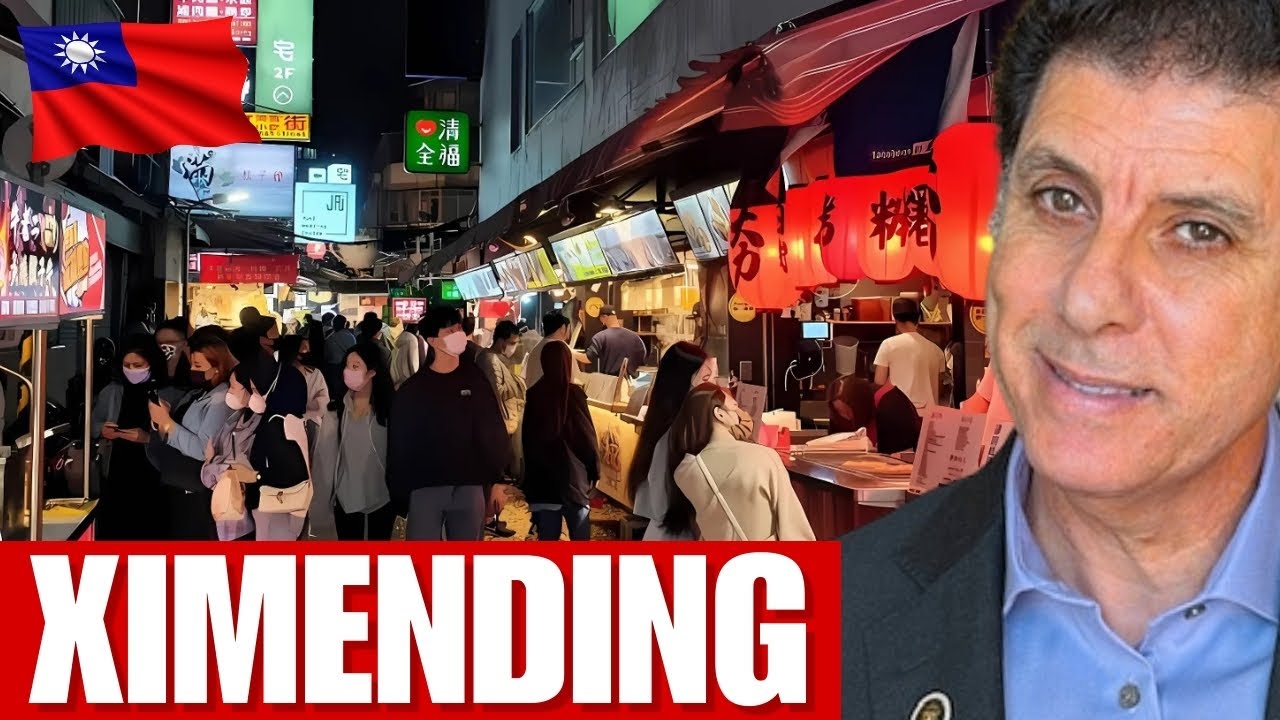
This content was created by David Oualaalou. This content was uploaded by David Oualaalou. This is a YouTube video titled "西門町 (Ximending): Stinky Tofu, Rice/Beef Noodles & More Street Food (Part 14)!" (uploaded 2024-10-19). The content appears to be a street-food / travel vlog showcasing Ximending night-market foods such as stinky tofu, rice and beef noodles. No transcript or speaker information is provided in the excerpt; language and specific participants are not specified. Thumbnail URL is included in the metadata.
Chapters
Trends, where truth matters. Excited to be with you because I am gonna take you to, in Ximending, to the food street. We're gonna walk around, I'll show you a few things here. It's because it's gonna rain, it is already raining a little bit, but I didn't want to take a risk. If I don't do this today, this evening, I won't have enough time because tomorrow I am going to do an the last livestream from Taipei. So I'm going to go to downtown and do that one over there because I'm going to be talking about the geopolitical issues surrounding Taiwan, tensions that exist between the United States and China. So for now, let's just enjoy the street foods here. So I'm going to walk you through everything. So I'm going to switch the screen. Before I'll do this, I want to say thank you to all of you for your support, your kind words, your comments, your feedback. It's really, truly, uh, it feels like one strong community and it's only growing stronger. I know there are those who are sort of trying to undermine this. There's always somebody with the negative energy. We all know how it is, but we're gonna leave that aside and focus on this. So I'm going to start moving. Uh, by the way, let me just Yeah, this is like, uh, uh, the main one of the top food street here. It's called the EMAI Street, E-M-A-I, if I'm not mispronouncing it or misspelling it. Uh, so right here in Xindemen District. So in, in, uh, this is known— I asked the, the— I'm gonna put in the title the, the name in the Chinese characters for So for now, let me switch the screen on the other side, and please just give me a thumbs up to make sure you can hear me clearly. So I'm assuming the mic is working because I can see the signs, but I don't assume. So if you will be kind and just give me a thumbs up, I will greatly appreciate it. All right, let's start our walk in right here in MS Street. So if it is packed, of course. So you're gonna see as I move forward, uh, oh, thank you very much. Let me put my, uh, reading glasses here so I can see who's commenting. Oh, uh, yeah, Matt Becky, thank you very much. Arky World, thank you very much, appreciate it. So I'm gonna walk you through here, guys. We look at a few things, uh, I am not gonna stand in line to order certain things because the lines are so long. But that's expected because that is the street food here and it's common in Taipei. This is one of the— I found out the reason why I didn't do the live yesterday, because I had to find all this out and learn a little bit. You know, when you go to a new culture, you're gonna try a few things and, and learn about some aspects of it. So what's interesting is that— and I'm gonna stand by and show you there the famous place here for rice noodles. Of course, to me it was like the first time when I saw it, I thought it was just rice noodle. It turns out to be more than that. This is like one of the famous, famous aspects here in Taipei. This place here was established in 1975. As you noticed, and I'm gonna move over here just to show you, There are no tables, there are no chairs. You just stand and eat like everybody else. It's very, very popular here. The line is, is way out on the other side. Yesterday the line was all the way half, uh, all the way to the end of the streets here. But, but this is what it is. They're just putting it in, uh, in a bowl and just serving everybody here. So, so I am not gonna stand in line because it's very, very long. So, but I just I wanted to show you here. So if you see people just standing here eating, there's no— there are no tables, there are no chairs. You just, whatever you find a place, you stand and eat, which is okay. It's, uh, that's the beauty of the street food. So you kind of— yeah, if you want a restaurant, you go to a restaurant, but this is different and a part of the culture. And, and what is the interesting here is that the influence of the type of foods. And the type of foods are from the southern part of China and Japan. So there is, like I said last time, there is a major influence of Japan that has still persist till today. You know, we can debate, uh, the, uh, the accuracy of it, but at least for me, of what I'm seeing, is there is the influence. And I'm gonna soon share with you why that is. So this one here, guys, I came into this place right here. Let me show you. This is where they, they make tea with milk and they put a brown sugar at the end. So I had to come in here yesterday and ask them because I'm seeing it was a long, long, long line for this one. Even as early as 5 o'clock, and that's just the norm here. But when I asked, they told me that is a very, very popular, uh, and I'm gonna just show you here, guys. This is what they put, uh, let me put it down here for you. Oh, sorry. This is where they pour in milk into tea and they add sugar. So, so for me, it will be too sweet. That is the reason why I didn't, uh I didn't drink it, so I won't drink it. But if you notice the line here, it's— this is popular here in Taipei. A lot of, a lot of whomever's visiting this part will stand in line here and order this one. So this is like the— Ximending is like the, the hub here for young generations. And I'm gonna take you to a place where they do performance, street performance, and so forth. But I want to walk you over by the, uh, subway station here in Metro nearby. Not the Metro itself, but I want to show you something specific to why this place has been influenced by Japan. I don't know why this person here— I'm assuming he needs help or something, but what— I, I don't know, and I don't know if it's appropriate to give money here, but this is homeless or poor person. I don't know. I do not know, except that I've seen more than one in this position here, and I don't know. Is it shame? Is it— I don't know. And I'm not— guys, we are not passing any judgments here because, you know, we don't know the circumstances for the guy. Just that's what I noticed. So, and I am not here to criticize. I want you— I want to make it clear here. I am just providing facts and I let you reach— because that's what we do in this channel here, guys. We prove— I talk facts and I let you reach your own conclusion. So, uh, but anyway, so I'm gonna be walking, uh, into one particular, uh, just close by here, and I'll back on the other side to go walk through the food stalls and so forth. So you'll see the, the variety of food and so forth. This place here, by the way, is open till about 1 AM. So opens from about 5 till 1 AM. So, uh, and once again, it is influenced here by the variety of food from southern part of China but also from Japan. So, so you got a variety of type of foods, the teas, the— whatever, whatever you can think about food-wise it's right here. And a lot of people just buy it while they stand in and enjoying, from stinky tofu to, uh, and I'm gonna see if I can try one here because I have only— I'm holding the stabilizer with one hand, and if I have to use both hands, it's going to be challenging. So here is what I wanted to show you. This is a famous place here in Taipei. It's on— it's a the colors on the ground where people stand, and it's, it's written on it, it says Taipei. But what is the history of this? What you need to understand is that this part of town here was under Japanese back in the '20s, and Japan, that's when they used to do the entertainments. It's in this part. So if you notice, it is crowded here and so forth. So I'm gonna walk back. I just wanted to share this with you. So the Japanese made this part for entertainment and the cultural center back in the '20s. This is once again the historical aspect that is known in this part of Taipei, in this district. There is another person here again sitting. I don't understand the, the, the possession of it, but I learned one thing here, guys, uh, after my conversation with Ray when I met with him in one, Joe, and he opened up my eyes about this one because he's been here for a long time. Uh, there are two things in this culture, one thing in this culture in comparison to that we have in the West. In Asian culture, they have what they call shame. For us, we have what we call guilt. They are two, two, two different, two different concepts. So, and so I don't know if this individual's on sitting in that position is— I don't know, I really don't know. But I just wanted to highlight this to you. So, so I'm gonna be walking back to, uh, uh, I walked around earlier here to find out where everything is, so when I do the live I know where I'm going. Because you don't want to be just walking aimlessly, it just doesn't work. So, and I was debating, should I wait here tomorrow, but it would not be enough time for me to do this because, remember guys, tomorrow join me for live because I am gonna be talking about the geopolitical aspects of why I am here in Taiwan. I didn't come here for tourism because to me, most likely, and I'll say it, and no offense, no, no, uh, I'm not offending any Taiwanese that's watching this. But most likely this is it for me. I will not be back here. One time is enough. And it's very, very different, very different from what I experienced in Shanghai, what I experienced in Guangzhou, what I experienced in Shenzhen, and hopefully what I will experience in Beijing and so forth. So, so it's just very, very different. And, and I leave it at that because I am not here to judge. I am here to provide the facts and lead you this side. So yeah, no worries, no worries, guys, no worries. Just I'm recording here. They want to say hi. Now where are you from? Hold on, can I show your face on the camera? You're okay with it? You're okay with your face? Okay. I always, uh, guys, like you know me, I always like to ask permission before I do it. Now what's your name, man? Uh, Kerry. Kerry. Jerry. So let me And you, Ryan? Let me shake your hand. Say hi, because we shake hands in the US. That's what I do. Now, where are you from, guys? Taiwan. Here. Where do you see things in Taiwan? Can I ask you a question? Where do you see things in Taiwan and how it's moving and all that? I'm just a tourist. It's my first time in Taiwan and I'm just visiting here just to see what it's— it's lively. It's, uh, it's very different than mainland. What I noticed. Do you understand my English or am I speaking too fast? Yeah, yeah, his English is, you know, he understands the basics, but I was under the assumption that he speaks English. But now let me ask you a quick question here. What is the most language spoken here in Taiwan, in Taipei? What do they speak? Chinese, right? What is, which one? Is it Mandarin? Is it Cantonese? Is it Fujian? Which one is it? I am confused because everybody tells me, no, they speak Fujian. Others say they speak Cantonese. And I learned back in the States that Mandarin is spoken here. Is that correct? Am I correct or am I wrong? No? Okay, they're having a hard time with my Yeah, their English is not where it needs to be. So they speak Mandarin here? Okay. How about English? Do you guys speak English here in Taiwan as a whole, as a country? No? Do you go to school? Yeah. Okay. Do you study foreign languages in school? What language do you study? Which one? English. So you guys have exposure to English as learning. Do you like it? Do you like learning English? A little bit. So, so, but that's okay. So, well, thank you very much. I appreciate you guys talking to me. So as I said, here's nice people here. I don't know them. Those are teenagers, probably 18, 17 years old, right? Somewhere around that. So they are very nice. They just, you know, like I told you guys before, When I got to Taiwan here, the same thing. Nice people, they're very friendly, no issues there. And this is an example. So thank you again, guys. Appreciate it. Bye-bye. Thank you. And, uh, this is another famous place here. Oh, by the way, guys, what is this place here? What it's known for here? What is that? Why there are so many people here? Pop Mart. What do they sell? Uh, like popcorn or something? Or— I've always seen a lot of people here. Same with that tea with milk. So, the toys. Toys. Oh, okay. I'm going to, I'm going to walk inside. Thank you very much. I'm going to walk inside, guys, just to show you. I'm not buying anything here because I don't want to step in front of the line, but I'm not going to show you here. So this is what they have in this place. I guess some small stuff you can buy and that's about it. So this is for, I think, kids or something like that. So, but it's called the Pop Mart. So you can see the line right here, it's very, very, very, very long. So anyway, let's, uh, let's keep walking. Uh, I am right here at the center of, uh, the the four directions, and I'm gonna show you. I'll stand in the center right here. This is one direction right here, and I'm gonna move to the other direction, which I will use that one. This is the other one here. This is the street I was in that I gave you about its link to the Japanese history, because again, Japan presence here in 1920 was, as I said, this was the center of entertainment, but it was also a cultural center for Japan back in 1920s. Uh, I don't know if this is police security, whatever, but anyway, it won't matter. So we're gonna keep walking, and I'm gonna walk you through a small streets where they have the food stalls and, and so forth, so you can see with your own eyes. It's very, very dynamic, very busy. It's one of the top places right here in Taipei. If you ever— Shemin Din, I believe. Yeah, and I'm going to put the name in Chinese characters because I found the translation for it, so I'll put it for you guys. And, uh, if you ever visit, so you can visit this place here. So, uh, people from different, uh, Indonesia, Malaysia, uh, Vietnam, Cambodia. Very, very variety of people are visiting here. The same thing in mainland China that I saw. So I'm gonna walk you through this street here. This is again where they have the food stalls, and I'm gonna see if I can try something. But the problem is I don't know if they speak English. Can I show you on the camera? Okay, hold on a second, guys. Do you have— do you have stinky tofu? Yes, but I want it on stick. Now I only have one hand, I can't— yeah, yeah, she's pre— she's preparing this for me, guys. Yeah. So she's gonna make me, uh, uh, can you make me one on a stick? Because, because I have my hand here holding. No? Okay, no worries. Here's the thing, guys, I have to come— I'll come back tomorrow. I'll come back tomorrow and I will have a plate, uh, uh, whatever they serve, and I'll do a short video for you guys. Okay, but anyway, I promised you I will do a video for stinky tofu and I will try it. Here is a picture of it right here, guys. Check this out. Yeah, and I'm gonna try the skewer stinky tofu tomorrow. So it's very nice. I've seen people here standing and eating here, ordering this stuff. Uh, this is the This is the squid. They have the— if you notice right there, so right here, guys, this is the squid. They serve this one here. It's a very nice place here. I walked by yesterday and I saw what they have right here. So this is interesting how they cook this meat right here. Check this out. Very impressive, very impressive. Unfortunately, I can't because I only have one hand. I can't hold both, so I'll come back tomorrow hopefully and try it. It's, uh, and it's reasonably priced. Look at that, guys, the beef steak, it's like $200 Taiwanese currency for medium and $300 Taiwanese currency for a large. So prices are reasonable here, give or take. Uh, this, I don't know what this is. Oh, this is pork sauce and sausage right here. And you noticed one of the things, guys, right here in the, the food ingredients in Taiwan is no different than southern part of China, mainly with pork, rice, tofu, and I forgot the fourth ingredients. There is a fourth ingredient that is very, very crucial. So, uh, this is a fruit stand. This lady makes the fruits here. I tried some yesterday, I was passing by, very fresh. I had apples, uh, uh, last time in, uh, in Guangzhou before I left, and it was incredible. I'm gonna buy some apples for the plane because I don't like to eat plane food. You all know how it is. It's genetically prepared and all that. So, so I'm thinking about buying some apples and just eat them on a plane. As I— if you notice, I'm going to another section of the, the streets. I have to go through this small alley here. If you notice, there's not a lot of people here till we cross over the other side. I'm going to show you the left— on my left side here, the streets right there. So, so there are people coming, but we're gonna go straight. Uh, same thing on the right side, there are just few down here, so And it's hard to tell whether all those people are Taiwanese or they are foreigners visiting here. So, so it has, uh, my, my assumption is that majority are foreigners. And the locals, you can tell the locals here, uh, the way they dress, the way more leaning more towards the West, if I may use the term. So, and again, it's their, uh It's their prerogative. They can decide whatever they want. So except that I know— I'm not laughing out of laughing, I'm laughing out of concern because I'm almost feel comfortable, which I will talk about tomorrow because today I wanted the conversation to be about street foods and so forth. But one thing I— look what they're playing here, guys. Look what their kids are playing. Not a shooting game. They playing this one here. Wow, wow! Did you win? Excuse me, did you win? Huh? Did you win? What? No, I'm, I'm losing. Oh, oh, she's losing. Oh my God. Yeah, that's how they play. Yeah, just two teenagers here hanging out and playing. So let me walk you on the other side there. As I said, uh, I will address the geopolitical aspects tomorrow, so make sure please to tune in tomorrow. Uh, probably it will be around 5 PM my time here, and I'm gonna head out to downtown Taipei. That's where I will do the live stream from, and after that, then I'm gonna be hopping on a plane and headed back to Shanghai. I miss that place, man. I really do. You know, you feel a lot, a lot, a lot of energy there. So this is another main street. So I'm gonna walk you— actually, let's go this way here. I'm gonna buy something here. I might eat it in front of you if that's okay with you guys. And just skewers are easy for me to hold. So there is one lady here that yesterday I was passing by and I tried one and it turns out to be nice. So I promised her, I gave her my word that I will come back. Look at this line here, guys. Again, I don't know what this is. Excuse me, which line are you? This one or this one? Yeah, which one? You're this one here? Okay, I'm going over there. Thank you. Okay, this is the lady that helped me out earlier. I told you I came back. Can I have one beef, please? One, please. So is that okay? You're on the camera. This is the lady that helped me out yesterday, and she makes a good beef, by the way. She also makes, uh, makes chicken right here. And there is one— what do they call this one here you made yesterday in a sandwich? What do they call that? Yeah, what do they call it? What is the name of it? You want the Chinese? That's a Chinese sandwich or something? Vietnamese. Vietnamese. Yeah, you can tell. Pardon me. So you guys can tell this is a— I remember when I was in Vietnam, I remember seeing all this. So this is how they make the— she makes the sandwich here on this, on this bun and serve everybody else. So she's gonna prepare one. I gotta pay her. Here, I have some change. I have change. Hold on, hold on, because I don't want change in my pocket. So do I have enough? Do I have enough? Yeah, she's an honest person. I just gave her all the money. She used whatever and gives me. Now you have an honest face, you know. She's wonderful lady and she helped me out yesterday. Like I said earlier, guys, check this out, the line also for— I think this is a candy. Uh, let me walk you through. Sorry, uh, and for me, I don't stand in line to, uh, order this one here, so I wanted to just walk in and show. Yeah, this looks like a candy or something. Is this candy? Yeah. What is this food here? Oh yeah, what is it? What's the name of it? Oh, this is, this is chicken here. Oh, so this one here, guys, is a Taiwanese food. This is special. Look at this one here. I don't know the name, but you can tell the line, everybody's waiting for that. So it must be very, very popular here, so it's traditional. So I just wanted to walk in here, uh, while she's preparing my skewer. When it's ready, so, and I'll get it and I'll walk around and eat, and hopefully that'll be okay so I won't drop anything. As I said, a lot of people here, you don't have to sit, you can just stand, sit on, on the bench here, whatever, and that's it, life goes on. So she's preparing mine here because I only ordered one skewer. That's it. That's all I need. I usually, back in Shanghai, I have that lady that makes me the dumpling. She makes them for me with shrimp. Instead of pork. And, uh, she always, she always— so I intend to go back there and, and visit with her and have a— yeah, she is a lady. Thank you so much, I appreciate it. So here's the skewer, guys, that's for me. So I'm gonna be nipping on it as I walk around to show you even more places. So let me just place this Excuse me. Thank you. Uh, once again, I just wanted to make sure people are not— I'm not in their face with the camera here, so that's why I raise it up a little bit more. Here is the street performer, so I'm going to take you there just for you guys to see. Right there, whatever he's doing. So check this out, guys. Wow! Anyway, I'm not gonna stand here too long. I just wanted to show you this one here, and I'm gonna keep moving. As you notice, there are a lot of people. There are foreigners here as well, so they're all watching here. And, uh, I saw some Germans here. I saw somebody from Norway. Here's that guy again. Huh? My backpack? Oh, thank you. He said my backpack is open. Thank you very much. Okay, I'm going to try this one here, guys, to see why my backpack is open. But I don't have any— I don't have anything on it. Let me just close it here because I want to make sure. Yeah. I left it open here. That was kind of him to point this to me and he said your backpack is open. So, all right, let me walk you over the other side here. Here is another place. Hey guys, once again, there are a lot of people that stand in here. I noticed, uh, some people in the streets, they need help financially. And that's one of the things makes me wonder about, uh, you know, where, where this province is headed and what will China do. It's an important question which I will detail tomorrow. Let me just move around here. So I'm coming over to the main street. You're gonna see here, then we'll walk around the other side just for you guys to see this one here. So, so this one stays active till about literally midnight, 1 in the morning. And after that, everybody kind of takes off. And that's what I was, uh, I asked about how long do people stay here. They said till about 1 AM. So, so you come over here, then that's it. You enter into the main roads here, uh, which is nothing much going on here. So because everything is on the other side, so I'm gonna walk back and go the other direction. Just for you guys to see. Pardon me, I'm eating this here quick because if not it'll get cold, and if it gets cold it doesn't taste good. Now, uh, what I noticed also is that the temperature-wise, uh, it's very— because it's an island, you know, the weather here is very, very, uh, sort of humid. Humidity is normal here. So I noticed very in the morning it's so humid. So that's, that's how, that's how it is. Pardon me. Look at this one here, guys. Do you know what this is? It looks like it's the oyster omelet. Oh, the oyster, they mix it. Wow, that explains, uh, I think these guys are the same. Oh, the same place there. Thank you very much. All right, let me walk back up the other side. This is like, uh, this one here, guys, it's oyster with eggs. So this gentleman makes them here and it's popular here. A lot of people eat oyster here. That's just part of the diet. So okay, I'm gonna walk to the other side. The street performer is done. And that's it. So once that's done, they clear up everything and move on to the next one. So like I said, guys, uh, this is part of where Taipei is known for as far as the, uh, you know, the, the, the, uh, nightlife per se with this street foods and so forth. But there is a much bigger question that needs to be asked. This is not going to last forever because— because at some point or another, the question that many are asking will have to be answered. So, and you all know what that question is. Do you know the question, guys? Can anybody type it? Short. Let me see if any of you can type that one. Let me put my glasses on, see if you guys— last time I was in Taipei, I remember not being allowed to flush toilet properly. Wow, that's surprising. Uh, when Taiwan be Reunified— great question, because that is the question that matters. And no matter what I see here, you know, of course, because my government wanted to maintain the status quo— and again, I will talk detail tomorrow— but this question is coming more and more to the fore, and it had to be answered one way or another. Okay? It's just because the reality suggests that you can't be pretending that ain't gonna happen. I mean, there are those who will say, well, no, they shouldn't, whatever. No, because when I look— the reason I came here, guys, like I said, I didn't come here for tourism. Uh, I'm gonna walk through the street here, or we can go back over There is a street performer here. The reason I came here is because I wanted to see with my own eyes what is this argument as far as— The good thing about this mic is it can isolate the other noise, so I won't be able— you guys won't be able to hear it. Just to go back to my argument here. The reason I came over here is because I needed to see with my own eyes that despite, for example, you hear about the, what they call it, Taiwan, TSMC, the chip stuff. But when I walked, I walked today outside, way outside just to see. I didn't see how this development of the chip manufacturers that Taiwan boasting about is not translated into the streets. Because you look at still some buildings, you know, like from the past, the, you know, average roads, average bridge, average whatever. And that begs the question, it really does beg the question, okay, well, where is this technological advancements, whatever. When I compare, for example, Shenzhen or Guangzhou, that I've been there, I saw. Now, if I didn't see that, it will be different conversation, but I saw how the developments in those two cities that like skyrocketed within two decades. Well, we've been hearing about the TAMS, T-A-M-C. But I don't see that translated into the developments that needed much here. So, and it becomes the question, how long can this last? Forever, you know. And that is where I see the challenge that Taiwan is gonna have to face one way or another. And tomorrow I will be detailing few things about the big picture. So, uh, okay, let me see, uh, where we are, uh, time-wise. All right, let me take a look at— oh, TSMC! Thank you so much. I always get it confused, man, because so much to think about. So, uh, TSMC, that's correct. Thank you so much, guys. Appreciate it. It just, again, when I look around here, I'm seeing the influence from China, I'm seeing the influence from Japan as far as, for example, food related here since we're talking about food. And I like when I asked those teenagers, he said, "Laiya, the language we speak here is Mandarin." Well, I did ask some I met someone else who told me different stories. He would speak Cantonese, you know. And when I visited yesterday, I noticed the elderly people sitting together, and I asked one of them off— I wasn't on the camera after I signed up. And somebody spoke a little English, was able enough to understand, to explain to me that part of the dialect is also the Fujian part. Well, when you think about how many dialects are in China, I found out they are about— does anybody know the number? If you know the number, can you type it on the chat box, please? How many dialects are in mainland China? Let me see. Uh, they speak Fujian. Yes. 200+? Okay, 10. Uh, Jia, Rampoless, 210. Countless, yeah. I was told there are 56. There are 56 dialects within China. One of them has some name by Wu. That's considered a dialect in mainland. And not everybody speaks it. You have to be from the area, I think, to, uh, to do that. So once again, here is— I'm bringing you now to, uh, I don't even see the street name here. They don't have that. But anyway, this is where young generation per se hang out. They are elderly as well. And this is the other side of the street from here, Baghdad. So, so usually it's, uh, oh, and the interesting thing, look at the roads here, guys. They cross diagonal, diagonally. That's how they cross. This is beside, beside the, the, uh, for the pedestrians, they have also the diagonal. So I'm gonna cross through here. No, it turned red, I can't. And by the way Uh, if you, if you jaywalk here, you will be fined $500, their currency. So, so that's a, that's a steep fine for locals here because that's just how, um, that's how it is. So this is basically the nightlife here, and I wanted to do this tonight because I I'm, uh, I won't have enough time for tomorrow because tomorrow I will be talking to you about the, uh, the geopolitical aspect and close that out. And, and I leave the next day. So, so I'm going to walk back and answer a few questions if you have any before I sign off. And I promised you guys I will eat stinky tofu in front of you. So, uh, no, no, no, no, no EVs here. I didn't notice, it's so loud. Uh, the mic I'm using cancels the outside noise. Otherwise, it's crazy here when it turns red and everybody's about to take off with those motorbikes and all that. It's very, very noisy here, very noisy as far as traffic. Uh, let me see another question from you guys. Uh, okay, it's, uh, dirtier here, uh, slightly different. Yes, when you saw the street— and again, I am not trying to criticize here, I'm just highlighting the difference that I noticed. For example, when you walk into streets in Shanghai versus when you walk in the streets here, simple as it is, uh, It's not that they don't care, it's just the way it is, I guess, because there are a lot of young generation here is very— I don't know, I don't know how to explain it, but I can sense the difference that exists between the mainland and here. So that's just part of how it is. Like I said at the beginning, what I noticed the most was they want to be associated, they meaning youth here, wanted to be associated with the West more so than their traditional, uh, Chinese schools instill discipline. Now you know why I wanted to teach in China. It's because I know students will be and are disciplined. One last thing too, this is a young lady just walking here. They're picturing her, but I don't want to get in front. As I told you, the youth here is a little bit, uh, Very, very wanted to be Westernized. They don't understand the cost that comes with that, but they'll find out. So, because it is sad what, you know, even our soft power per se, or our culture, used to stand for something back then. And we became so corrupted, we became so disillusioned with thinking that the rest of the the world has to think like us. That's just not right. So, and this is why our education is failing while it is succeeding in China. You know, I mean, I saw, I walked one morning in Shanghai and, uh, and I saw how the parents are taking their kids to school at 7:30 in the morning in an orderly fashion and with care and love. You can just sense how much they love this family setting because that's just part of the makeup of the Chinese society. So it, it's just the way how it is. And I kid you guys not, this is one of the reasons why I am leaning more towards teaching in China, more so because of that discipline that exists in its academia and its universities and so forth. You don't expect students in China to backtalk the professor. Why? Because I believe the parents will not tolerate that from their offspring. And second, the culture is not encouraging that. This has nothing to do with freedom of speech. It has nothing to do with, you know, sometimes we use the wrong terms. This has to do with instilling discipline into the young generations because those are going to be the next leaders. And if they don't get it now, they're not gonna get it later. That is where the difference I see. And one of the reasons why I wanted to come and teach at the university over there. People look at me like I'm losing my mind because I speak loud. You guys know I have a loud voice, but you get impassioned when you talk. And they kind of like, is this guy okay? Because I'm not talking about nonsense. Stuff. So, uh, Singapore, I heard, but Singapore is very, very expensive. So I am someone who lives within my means, so I don't pretend, uh, to have whatever when I don't have, thanks. And I like to live within my means. So if I can afford it in Singapore, yeah, by no means, but if I can't, I will not. But I heard about Singapore. I am hoping to to visit next time. Uh, yeah, I like your dress, man. So he's wearing the baggy pants and just, just a different, different, different aspects here. Yeah, the rain stopped, so it's not raining here as much. That's part of where I believe, uh, so I'm gonna walk this way and end the conversation by answering a question or two. I'll just go from there. Oh, he has balloons, I guess. How you doing? Yeah, they, they get nervous when they see, when they see a camera. I don't know why, but again, you respect, I respect them. Let me see a question here. How much is the minimum wage here? I have no idea about that stuff. I didn't even look at it. I have no idea. I don't know. All I can assume, and again, it's just assumption here, the universities in China will pay well their foreign professors. And even the local ones. That's just my assumption, guys, and please, if anybody has the information, please correct me. Another thing I noticed here, by the way, before I forget, a lot of people wearing masks here. It's just for hygiene thing, whatever, but I, I don't understand. But again, it's their culture, they can wear it if they want to. All right, question. India emerges third most powerful country, potential superpower. I will drop that word of superpower because the reality suggests otherwise. India has a lot of structural and fundamental issues that needs to be addressed before it's considered flexing its economic or military or ideological muscles around the world. Yeah. What is that one? She doesn't speak. She just— can I show you on the camera? Yeah. She just has those— those— I think it's traditional here. They're selling those ones here. So they sell things in the street here. If you're interested, people are interested in buying this one. Yeah, yeah, couldn't India deal with the reality? I agree, it's very challenging. And this is why when I hear politicians in India, from the Prime Minister down, addressing, well, we're gonna be superpower, someone needs to step forward and tell them, hey guys, let's keep the statements realistic. Because what you're saying— I'm going to walk into this street here. What they're saying is not realistic. You can't claim to be aspiring to become a superpower when you couldn't even fix the sewage, when you couldn't even build infrastructure, when you couldn't even find the jobs for your graduate students part. So. That is where the difference is. Like I told you guys last time, the— there's some group here, I guess it's some youth. Uh, my, uh, Raj, who makes my thumbnails and so forth. Hello! They want to say hi. There it goes, young people. How old are you, if I may ask? 15 years old. Thank you. Oh, thank you very much. Thank you very much. Appreciate it. He's just wishing me a good day and good visit here. So young kids, and, uh, as I said, here he is. He has a degree but he doesn't have a job because the government didn't provide all that. So that is part of where the problem, I think, in India. Till India fixes those issues, the Prime Minister Modi will have to think twice about deciding what they're going to do. So, and so when I read statements emanating from their foreign ministry as to India is going to be aspiring superpower next 5 years, 10 years, no, it's not going to work. Because let's be realistic and let's not pretend for them to live in an illusion. Till they start dealing with domestic issues, Nothing's going to change in India. I know some of you ask me if I'm going to visit India. I will at some point. If you guys want me to visit India, I will do that. But again, I am sure their government is not going to like what I'm going to be saying, and I kind of— I won't shy away, you know. If I— it's like what I'm doing here, guys. If I see something that it's not right, I'm going to disclose it to you. Simple as that. That is one of the reasons why I got up at 3 o'clock in the morning when I was still in Guangzhou to show you the hardworking Chinese people. Because those are like one of you guys put a comment, those are the backbone of the country. And at 3 o'clock in the morning, they are working because of course they have a family to feed and, and that's just part of their makeup, how it is. And you admire that, you appreciate that. Yeah. So if I get an opportunity to go to India, yes, I will do it. Why not? But so far my aim is to go to— I'm aiming at Indonesia, Malaysia, maybe Singapore. Uh, I have to look at into ASEAN countries. The reason being because the role ASEAN is going to— is playing already. And given just what I read this morning, and I keep up with what's going on with the upcoming summit of BRICS, the Business Council of BRICS met yesterday and they prepared the agenda and it's going to be presented to the head of states during the official meeting on the 22nd. So that's why I asked you guys that question. To those who do not know, I put a survey question: is BRICS turning from a slogan into deeds? And I asked your vote, yes or no. That's where the difference is, I bet. And I'm seeing the role of ASEAN, and that will be one of the areas I'm going to have to visit also down the road. So, uh, for China is different. China for me now, it's, uh, it's going to become the thinking about teaching there, but also I have to visit back within a year to go to Beijing and two other locations I have in mind. So I want to keep it till I get here. Uh, yeah, yeah, this I don't know what this means guys, but there's individuals just standing here either meditating or doing— I don't know what it is, and I can't ask them because I don't want to break their concentrations. Excuse me, do you know what this is? Are they meditating, or is that meditation, or what? I don't know. Okay, I didn't want to ask, so thank you. Yeah, I asked the lady here, she didn't know. I don't know what it is, but I don't know. So I'm not gonna be respectful of that. What I did notice today, there were some traditional flags of ancient China or something was passing through with the big drums and all that. So I don't know what it was, but that's what I noticed. Okay, let me get one more question or two, guys, before I sign off. And that is what I plan on doing. Will you have your wife with you to China also? Uh, I don't know, I don't know. She's, uh, she's a businesswoman, she's busy with her stuff. And, uh, if I am to do this, I'm gonna come for a semester but go back home. Uh, you know, I used to, when I used to travel back in back in the day when I was in Washington, you know, I would live only 3 months out of a year back home. But again, back then I was moving around a lot. So I don't know if she— she will. She would not object to it. But she's also very supportive. Whatever, if I want to— she knows what teaching means to me. She understands that and respects it. And support me for that. And I am very, very grateful to her for that. India's space industry is the moon. No, I don't see that. Question: Before the next week's Kazan BRICS Summit, would the West do a destructive action in the West? No, no, they won't. They won't. The only thing— you know, guys, I was hoping to attend as an observer. There is a way. It's just I have to have some connections to get to that because I am not officially a journalist, so I, and I don't claim the credentials for that because it's not right. But I am someone who understands the dynamics of what BRICS is all about, given the geopolitical aspects of it. And I'm not giving up on it because there will be another summit next year, and most likely I will attend it. I'll find out the procedures by which to to do that. Next question. National language for Taiwan is Mandarin, but dialects, Hakka. That is true. And that's what those teenagers told me when I asked him straightforward, which language is most spoken here? He told me Mandarin. And even I asked, do you study foreign languages in school? And he said, yeah, we do English. So Mandarin is like the official But there is that, what you call it, Fujian language, and some speak Cantonese, I think. I am not certain of this. That's based on when I asked, someone told me that some of the Cantonese are spoken, but Mandarin is the widely spoken here. Because I can hear when I go buy water, for example, and the lady will give me the change, whatever, she'll say, "Xièxiè," which is thank you. Thank you in Mandarin. So I figured they do. Did you hear about BRICS launch of BRICS Pay card? Yes, I did. And but remember, guys, they did that just to experiment to see how it's going to work. They are moving forward with the financial aspect because they're done with the SWIFT. The global geopolitical landscape has changed. The global order has changed, whether the West likes it or not. And this is why tomorrow I will be talking about the implications of the geopolitical aspects of it. Ambulance coming. Somebody got hurt, I guess, somewhere. Yeah, they're right here. They're coming. So I'll wait till they pass me here. So yeah, and this is why, guys, I have to, uh, push you into thinking, you know. You push your critical thinking into start to considering what-if scenario, especially with this location right here, you know. Because for us, guys, you know, you know what the channel is all about, you know what we do. Because we have to think in terms of— we think ahead. That's why you guys makes you guys different than others. And I'm not saying it to be Mr. Nice. I'm saying it because you've been around me long enough now. You know how to think critically. You know how to look at the issues from the much bigger picture. Because that is very, very important. There is another performer here. So, and yes, US poverty is going up. I'll, uh, I'm glad I bought this, uh, stabilizer. I'm going to be going out when I go back home. I will be going out and, uh, doing videos for you guys to show you that dark side. Oh, they came to a hole to take a homeless— not a homeless, somebody in the street, uh, uh, somebody I think. I am not sure. I, and I don't need to stand, uh, watching that one because I don't know what it is. So, so whatever that is, so we wish the person is not hurt or harmed or Yeah, yeah, yeah, something happened. So I don't know what it is, but, but that's, that's just how— Hey man, hey, excuse me. Here we go. You bet. I got some change just to help him out. You pay it forward, you pay it forward, guys. You know, we don't even know what his circumstances are or were for him to end up in the street. I just feel sad when I see that and the waste that exists now in our world and how much we're pushing for more tensions because this area here, this area here is gonna be the center of gravity for anything that's major is gonna happen between China and the US. Mike, my word on this. So yeah, and, and the failure— your, your good point— the failure in hard time, you know why? Because there was nobody out there who can give an advice, nobody with some goodness in his or her heart to say, you know, I'm going to lend a helping hand to this person, I'm going to help change the direction of this person. That's what I used to tell my students, you know, You kind of like, don't expect me to be your friend, because I am not your friend. I'm not your friend. I'm here to help you start to think bigger picture, because tomorrow you're going to be standing on your own. You better know what you're doing. And they'll get it. They'll get it towards the end of the semester. They get it. But just, that's how it is. But anyway, that is what I wanted to share with you guys. I wanted to stay longer here with you. According to IMF, uh, people per capita for Taiwan is 76, you know. Well, here is the thing, think about it, guys. The Taipei Tower, you remember that picture I sent you? Do you know that it— I think it was over 12 years ago, so, and please correct me if I'm Over 12 years ago or so, it used to be one of the tallest in the world. Do you know where it ranks today? What does it rank? Does anybody know? Can you type in, in the chat box? What is the rank of the Taipei Tower today according to some status? Let me see what you guys type in. Stinky tofu, I would have that. 10. You're close. It's 11. It ranks 11. That's what it is. Why? Because the development that exists in other parts of the world. So this is what I'm saying. If we are to say the TSMC, that is the best chip manufacturer, whatever, why is that not translated into where the infrastructure here because to me that's what it means when you are developing economically. Same thing that I saw in Guangzhou, same thing that I saw in Shenzhen, same thing that I saw in Shanghai. I went to both sides. I saw the old town that is still holding the traditional aspects of life, and I saw the new development that reflected the policies of the government towards ensuring— towards ensuring that the welfare of people is taken care of, the security and safety is taken care of, but also the economic opportunities. I don't see— I didn't see much here. And again, I'm not judging here. I'm just— my first impression. And I've been around the world. I've been around long enough to know what to look for. So, you know, I know someone put a comment to say I'm being biased, whatever. I am not, because I am not that type. And please stop those kind of comments because you're making yourself sound very stupid. Anyway, uh, let me see one more, guys, and I'll answer one more question for you. We need the boot for Comic Relief. Rich Americans can afford to move to South America somewhere. Yeah, they do. They do. You know, rich Americans are living a different life. This is why the government doesn't want— as a matter of fact, who's the one who decide on the policies? I'm going to share this with you guys. I don't disclose much, but I'm going to share this with you. There are— listen carefully— there are 38 people I repeat, 38 people that controls and manage the direction of the global order. So, you might ask yourself, how did I know that? I had a chance to read something from a billionaire in France who disclosed the list. So, but anyway— oh, it start to rain in here, so— Good timing because I'm going to stop right here, guys. Are they mostly Jews? Some of them are. Some of them are. I know it's a very specific number. I was shocked too when I heard it. And I know the billionaire has no reason for just throwing that out because it doesn't make any sense. So— You know, I'm very familiar with Bilderberg, for example, the activities and what they do and support. It's just the norm. And this is what I'm saying for you guys. You are a step ahead of an average person. When I say step ahead, intellectually speaking, you are thinking ahead already. And I am so content and happy that we are together into all this. This is not me just, you know, it's you taking part into that as well. And it's also because when I realize that level, it pushes me to do more for the community because that's how it works. If you only guys know moving a part, moving from one location to another here, it's not easy. The time, the distance, the research that has to be done and so forth. But you put all that aside. Why? Because you said, this is my commitment to my community. This is how it works. You don't complain about this one. And I don't complain. I'm not a complainer. You know, if there's an issue, I deal with it and move on. So, because that's how it ought to be. They seem to have a reserved spot in London. And then, uh, I know just I'm reading the comments amongst you guys just to see if there is a question, but I didn't see it. Yeah, it starts to rain in a little bit here. Yeah, you can tell, see, people are start to take off because the rain is, uh, I like walking in the rain, so it won't bother me. The US job data, freelancers 40%. No, there is a structural problem into that. That's just how it works. How you doing? Where are you from? You don't want to show your face? You okay? Okay. You know, I just waved to them. Where are you from? Indonesia. That's my next stop. I'm gonna go visit Indonesia one day. So, so how is Prabowo doing? He's doing good job. The reason I'm saying this, I have a lot of viewers from Indonesia, wonderful people. Here, guys, once again, is that okay if you show your face? Yeah, those individuals. What's your name, by the way? Nice meeting you. So those are from Indonesia. And as you know, guys, we do have a lot of, a lot of subscribers from Indonesia. They've been always supportive of the channel, and I'm very grateful. Especially I have to mention Boone because his ancestors are from Indonesia. So nice talking to you. So I'm hoping to visit Jakarta one day, literally. And, uh, one of my good friends, I call him friend, Carl's, uh is in Bali. So yeah, it's a wonderful guy. Thank you, guys. Say wonderful people, they just waved to me. I was walking and I don't mind talking to people here because they are friendly, whomever wants to talk. So now I forgot what I was saying earlier. Can anybody remind me? I lost my train of thought. Uh, uh, no, there are none here. I didn't see. And even if Even if I did see, I will not talk to you because there is no need, because I'm going to be hearing nonsense and I don't have tolerance for that. So if there is some informative conversation, I will do it. But to be talking nonsense, I'm not going to bother with it. So yeah, US time is over. Yeah, we are coming to the end of the hegemonic journey. It's a reality that we need to accept. That America's days are numbered. I know some do not like me saying this, but it's the truth. It's my country, guys. Remember that. Don't forget it. It's my country. It pains me to say this, but I can't shy away. I can't shy away. It's because the damn politicians need to be faced with the truth. But our laws are so corrupted. That's why they are not being held accountable. That is why. That is why. Anyway, guys, I am going to sign off. You're the lucky person, I'm going to answer his or her question. So hurry up, put your question in, guys. It's a lengthy walk. I walk about 5 miles a day minimum. And I mean it. Prabhu has asked one of professors for from? Oh yeah, the, the message went so fast. So I think the bot is traumatized computer. Yeah, yeah, I know, I've been noticing, I've been noticing. Well, community since do— okay, that's, um, all right. Okay guys, I don't see any question. One more time, one last question. Who is this brave person is gonna have a question? Okay, what is an economic zone? That depends what area— which area are you talking about? So it depends. So US-Pakistan, oh, that's, that's a mess. We're always using Pakistanis, yeah, but also we bribe their politicians. They are all corrupted. Buy some CD of Chinese classic music. Oh, now I see why there are some playing karaoke outside, all the music, and some older people sit and listen carefully. Yeah, why not? Except that I want to understand, but the sound is good. I like it. I like that one. So, all right guys, uh, let me, let me switch this one here to say bye you. I wanted to show my face here. So here we go. So finally, so I just, uh, to remind you guys to wrap this up, tomorrow I will be doing my last, uh, live stream from this location. I will be addressing the geopolitical aspects as to what Taiwan means in the bigger picture, especially when it comes down to the US-China relations, because that is a major aspect of it. Then, so just prepare your questions and I will answer them for you tomorrow. So please hit that like button. Don't forget, I would greatly appreciate it. And I look forward to seeing you tomorrow. As always, remember, geopolitics impacts your daily life in more ways than one. Till next time, guys. Bye-bye.
More from David


Beyond the Single Actor: Why the Gulf Isn't Choosing Between the US and China


Iran, Iraq's Militias, and the Houthis Are Coordinating! This Changes Everything




Who Controls the Next Decade's Resources? Latin America and Africa's Geopolitical Crossroads

The Chokepoint Trap: How Washington's Stupidity Triggered a Cascade That Now Controls the World

Trump Spooked as IRGC Unveiled dual-use SLV, Deployed Ghadir Mini-Subs & Hinted at Tactical Nukes!
