Xi's Trip to North Korea: Here’s What They Are Not Telling You
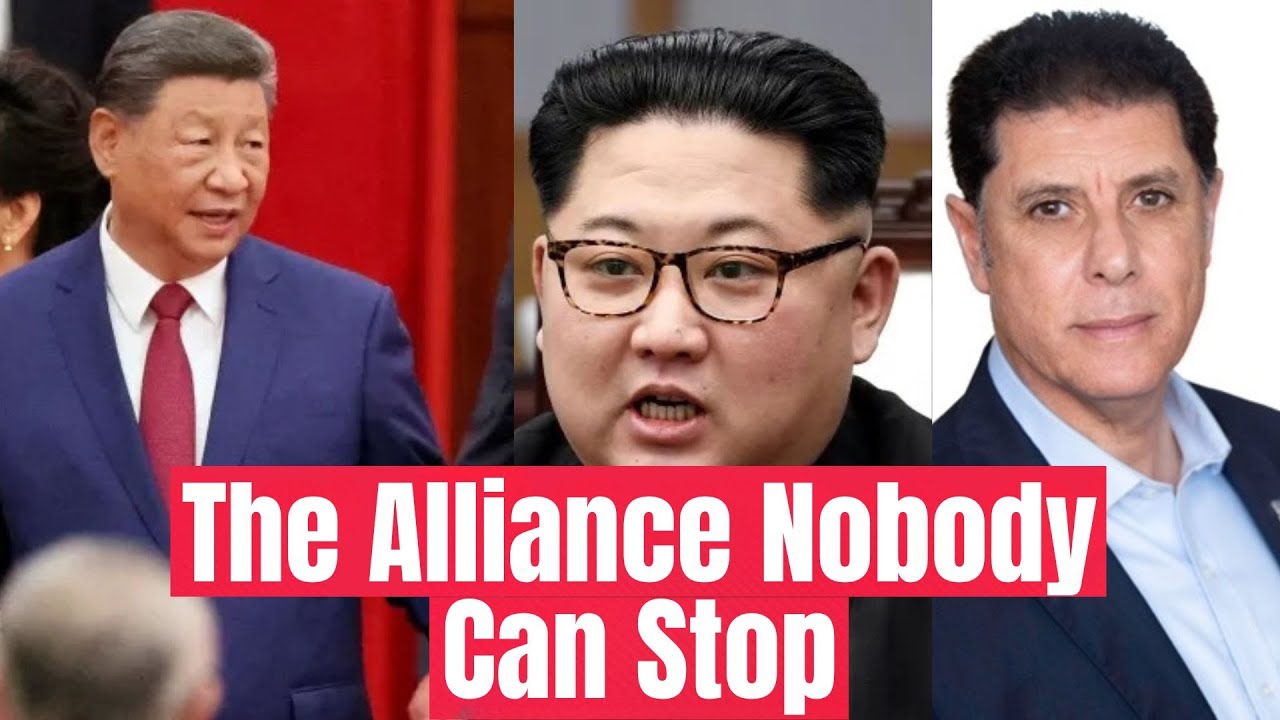
In this livestream, host David Oualaalou (Speaker A) challenges the dominant Western narrative that President Xi Jinping’s 2026 visit to Pyongyang is primarily a reaction to Russia’s growing influence over North Korea. He argues that the trip is driven by China’s desire for regional stability, economic leverage, and to reinforce its emerging role as a global power‑broker. Oualaalou outlines a “silent alliance” among China, Russia and North Korea, noting the lack of a formal treaty but a de‑facto coordination that poses a strategic challenge to the United States. He highlights the symbolic weight of the visit – the first overseas trip for Xi in 2026 and the 65th anniversary of the China‑North Korea Friendship Treaty – and uses an excerpt from his forthcoming book The Dynamics of China’s Geopolitics to explain China’s long‑term vision of the “Chinese Dream,” a revival of historic centrality in East Asia, and a non‑imperialist claim to great‑power status. The host also discusses related regional developments: Japan‑Philippines maritime border talks, China’s “special law‑enforcement” patrols in the Taiwan Strait, the apparent failure of the Quad, and the strategic importance of rare‑earth supplies. He briefly mentions Iran’s potential future inclusion in the China‑Russia‑North Korea bloc, and critiques Western media (Foreign Affairs, Foreign Policy) for portraying North Korea as a threat to China and for suggesting Xi is fearful of Russian‑North Korean rapprochement. Throughout, Oualaalou intersperses promotional segments – fundraising for his channel, a planned Asia trip, and links to his other books – and ends by asking viewers to weigh in on who holds the real power in the China‑Russia‑North Korea alliance.
Chapters
Hello everybody and welcome to Geopolitical Trends, where truth matters. For decades, many analysts in the West assumed that China owns North Korea because it paid its bills, it shielded it from the world, and treated Pyongyang like a chess piece. It could move it at will, which was a wrong assessment, by the way. Then Putin showed up and Kim Jong-un got a little closer to Russia. Now you have President Xi Jinping is flying. As a matter of fact, he is in North Korea today. He's going to be on the 8th and the 9th for a 2-day trip. He's already in North Korea for the first trip or time since about 7, 8 years, that is. Not as some sort of— some analysts in the West are saying, oh, Xi Jinping is worrying about— no, no, no, no, he's not. And this is why I wanted to do the livestream for you, because there is already what's been— and I've been reading the last 48 hours about this one here. It's the wrong perception that the West is projecting as to why President Xi Jinping is going to North Korea because he is concerned about Russia taking over. It has nothing to do with that. It has nothing to do with that. So this is why in this livestream I'm going to be providing you my own analysis about why that is. I'm going to share with you an excerpt from my current book. I am working on, on the China book, so you will be the first one to hear, uh, uh, uh, an excerpt from, from that book. So when you have the three nuclear powers, if we think about Russia, China, and North Korea, Iran is in the mix of that partnership or that alliance, if you will. But let's just think about the nuclear power ones, the three: Russia, China, and North Korea. And this, what you have, you have a very silent alliance. You know, there is no formal treaty as to that I know of. And that is so far where things stand. So you have Russia, China, and North Korea are not officially partners on paper, but right now they are acting as one. And this is, by the way, will be the most challenging one for the United States. And this is why the US now is terrified about where these developments are going. So not that they're gonna just because they are nuclear powers, they're going to do whatever. No, no, no, it's not has to do with that. It has to do with where the US concerns are. And I'm going to tackle, for example, Japan's own defense ministry now is calling, is calling it the New World Order. So Japan is now stating that term. Japan is increasing its own defense budget. You have a Quad that has showed a failure a dramatic failure with Australia, Japan, India, and the US. So the US and its allies have no playbook whatsoever for this development that is taking place. And it all comes as President Xi landed in North Korea to meet with his counterpart, Kim Jong-un. Very interesting development. I thought about it and I said, no, you need to know what's going on with this trip and the significance of it. So this is significant in my opinion on two fronts. One is geopolitical and the other one is economic. And I'm going to share with you as to why that is. So as I mentioned to those who just came in right now joining us here, President Xi Jinping has already arrived to Pyongyang. The capital of North Korea, for his trip that's going to be today and tomorrow. And the last trip President Xi Jinping made was in 2000, if I am to remember, '19. Please correct me if I'm wrong, but I do remember around that time. And that trip was at the invitation, by the way, of Kim Jong-un. And this also marks President Xi Jinping's first overseas trip in 2026. Destination usually gives you an idea about the political or the geopolitical trajectory of where that country, be it the host or the guest, where they see things moving forward. And of course, in the case of China, this comes after the recently, after the recent trips of world leaders, 5 members of the UN Security Council And I did a video, recorded one, if you can check it out. I, I did an analysis, recorded one about how Beijing now it became the center, not Washington, but Beijing rather became the center of the, uh, the new global order. And that is the significance of this particular trip. I'm gonna get the link for those who might have missed the, uh, who might have missed the, uh, the, the recorded vid. So I'm gonna share it, uh, with you in the chat box. You can check it out later on if you feel like listening to that. Now, the idea, as I said, you have Donald Trump, you have, you have Vladimir Putin, you have Pedro Sánchez of Spain, you have, uh, Starmer of UK, you have Carney of Canada, you have United Arab Emirates, Qatar, Vietnam, all of them converge into this. But this one here is different. And this is where I am going to provide you two sides of the argument, one from Western analysts, how they are reading President Xi Jinping's trip to North Korea. And I provide you my own analysis, how I challenge that assumption of those Western leaders who provide— Western analysts, I'm sorry, who provided sort of the— their assessment is slightly off, but let you be the judge of that. So here's what they are saying. What they are saying is, for example, Western analysts are describing President Xi Jinping's objective as an influence one, or influential, that is, which is true because the trip in itself is significant. However, when you think about Really what the objective is, is not about China controlling North Korea, has nothing to do with that. It has about ensuring the stability, not only of North Korea, but the region as well. And this is why to those Western analysts who are saying, oh, President Xi got rattled by the closeness or rapprochement between North Korea and Russia. No. China doesn't worry about that. So to those analysts in the West who are saying, oh, the trip for President Xi Jinping to North Korea is to reclaim North Korea as its sort of ally, whatever that— no, it has nothing to do with that. It has to do with President Xi Jinping's vision, thinking in terms of how can he, for example, influence or shape the conditions for more stable, more stability, more economic development, more predictable sort of order, if I may use the term, regional that is in that case. Because remember what you had from way back, and I'm not going to go back into history because you have to understand the history of the developments because after decades of confrontation, so Russia's re-engagement with Pyongyang must have created the conditions for exactly that. This is what the argument the Western analysts are making. And I'm not arguing otherwise as far as the North Korea helping Russia. Nobody's denying that. But to articulate this as President Xi Jinping is concerned and scared, that's why he went to North Korea, has nothing to do with basis in truth. And this is where their arguments, when they are, they Western analysts arguing that, oh, the trip of President Xi Jinping is to counter North Korea's drift towards Russia. I just don't see that. And again, that's my opinion, but I'm going to share with you both sides of the argument and you decide. Kim Jong-un— and let me put a picture for you so you can see at least, uh, where's the picture? Right here. That's Kim Jong-un and President Xi. Kim Jong-un has reached out to Russia in recent years. Yeah, nobody's denying that. So as a matter of fact, he even sent troops and conventional weapons to support Russia in its military operations in Ukraine, which by the way, just yesterday, last night, a decision was made in Europe to extend an invitation to Russia to discuss peace, but Europeans are pushing for this. Europeans are useless anyway, but suffice it to say. However, in the past year, Kim Jong-un has likewise been trying to improve his ties with China. Why is this? You have to think about the economic aspects, which I will get into in a second here. Also, you have to consider that China is North Korea's biggest trading partner and the one that provides aid. The survival, to a degree, of North Korea, it depends on the Chinese assistance because, and again, this is from the perspective of Western analyst, they are arguing that as North Korea builds closer ties with Russia, China seeks to use President Xi Jinping's trip to reassert China's influence over North Korea and safeguard its strategic interest in Northeast Asia. There are some degree of truth into that, but that's not the whole truth. That is not the whole reality of it. That's one argument. Second argument has to do with the nuclear fuel facility announcement. Why is this important? It's because the announcement was made just a day after North Korea unveiled or disclosed a new facility to produce nuclear fuel. This is a pointed reminder of the nuclear stakes involved in the region. Why is this important again? Because yesterday, yesterday, Kim Jong-un's sister made a statement, and that statement said loud and clear, nuclear program for North Korea is not negotiable. So in other words, it was a message sent to the US because North Korea has learned and is learning from what's going on with Iran. So yesterday, the statement was made by North Korea's sister one day prior to President Xi Jinping arrival. Those are not just statements in the void. No, no, no, no, no. Those are well measured. The one that I concur with the Western analysts in their assessment, it has to do with how President Xi Jinping positioning himself, meaning he and China for that matter, as global power broker, which is true. And I will— stay with me, please, because I will share with you an excerpt from my book my upcoming book about China in which I disclose similar argument. So you think about President Xi Jinping trip to North Korea, it's another opportunity. Opportunity for what? Opportunity for China headed by President Xi Jinping to sort of present himself as a geopolitical power broker, which is true. Remember, It was China that brokered a deal between Iran and Saudi Arabia. It was China that also worked on other issues behind closed doors. And this is where the role of China comes in, because China stays neutral. China doesn't dictate its terms on other countries. China doesn't force its way on other countries. Do you do whatever you want to do. Will be happy to assist, politically speaking, into resolving issues. And this is why political observers are watching how President Xi Jinping's reception in Pyongyang compared to Putin's visit. Two world leaders, they're going to play a role into the new global order. And this is, again, very, very crucially important because you have to pay attention to those kind of aspects of it. And this is again where you think about the statements of North Korea's sister statement about nuclear file is non-negotiable, the North Korean one. Because the reason why I'm mentioning this again, because you have to think about what Donald Trump, the possible Trump connection on nuclear talks. With North Korea. That is again why the North Koreans preceded Donald Trump's thinking. It's like, "Joe, don't ever think about it. We are not interested and we will not negotiate regarding our—" because they can't trust the Americans. And how could you? The American government, that is. How could you? You won't. In this case, Donald Trump now is saying he would like to meet with Kim Jong-un once again. And because when meeting Kim, Donald Trump was thinking in terms of, wait, can I do this again? And because the way I see it, or the way I think about it, is that the North Korean visit was already discussed during his summit with President Trump, meaning President Xi Jinping already discussed this. With Donald Trump. So the timing, this is where the Western analysts kind of missed the point because what they're saying in regard to this is that the timing raises speculation about whether President Xi aims to act as a mediator between Kim and Trump on a nuclear issue. My answer to you about this particular assertion from Western analysts is off. President Xi has no interest in acting as a mediator. He won't, he won't. Then there is one other element, and that element is a symbolic anniversary. Why? Because this year, 2026, marks the 65th anniversary of the signing of the China-North Korea Treaty of Friendship cooperation. This is why this visit, it's given it sort of an additional ceremonial weight. That's the important about it. So this visit is not about China trying to re-anchor its influence over a neighbor, North Korea. No, no, no, no, no. Just because North Korea has cozy up to Russia, No, has nothing to do. And even if it does, you have simultaneously the president, the Chinese president, President Xi Jinping, he is positioning himself on the global stage as an indispensable intermediary in the broader geopolitical chess game involving the US, involving Russia, involving North Korea's nuclear ambitions. Remember, only the last 5 months, like I put the link for you, for the video that I did, you know, the 5 permanent members of the UN Security Council, their leaders went to Beijing. Other European leaders went to Beijing. Vietnam went to Beijing. United Arab Emirates went to Beijing. Qatar went to Beijing. Canada went to Beijing. Just think about it. This is again, there is however one key point. That I don't believe Western analysts, some analysts, not all, but so far I didn't read it anywhere else. And it made me think because remember, I'm writing, I'm completing the book about China. So I had to think about this angle. And this one has to do with how, for example, this trip of President Xi Jinping to North Korea, because when you think about the three countries, Let me put a picture here just once again. When you think about the 3 countries— Russia, China, and North Korea— because when you combine them, what you're going to have, you're going to have a front against Japan and the US, because Japan is doing some activities, and I'm going to share with you as I move forward. Some have argued What about Iran? Iran could be part of that. As of now, it is not because Iran is preoccupied with the ongoing war. Once that war settles, it's gonna become even clearer as to where things are. And speaking of Iran, I'm gonna just waiting on a confirmation or some information regarding the missile launches that Iran launched yesterday on Sunday night. And I did a quick short video just to give you a heads up on it. I'm going to do a livestream for you tomorrow or after tomorrow. I'm waiting for the info. Now, here is what I disclosed in my upcoming book. It's called The Dynamics of China's Geopolitics: A Vision Remaking of the Global Order. That is what I wrote. Understanding China's geopolitical role requires grasping how Chinese leadership conceives of China's place in the world and what kind of international system China seeks to build with others, if they are willing to do so. This vision has evolved significantly since the era of "Hà" in quote here, to those who are familiar with Chinese history. The era of "hide brightness, cherish obscurity," in quote, that characterized the Chinese foreign policy under Deng Xiaoping, the paramount leader who initiated China's economic reform. I continue writing in this particular aspect here that under President Xi Jinping, who assumed leadership in 2012, China has articulated an increasingly explicit vision of its role. Central to this vision are several key concepts. The first is the notion of the Chinese Dream, a nationalist aspiration for national rejuvenation that recasts modern history as a humiliating century of struggle followed by a period of decline, which China is now rectifying. This provides legitimacy for China's ascendance and reframes a great power status not as an imperialism, because China was never one, but as a restoration of what was historically China's position as the central power in East Asia and beyond. That's exactly what I wrote in my upcoming book. And again, in due time, I will be sharing that with you. If the truth matters to you, hit like, subscribe, and tap that bell. No spin, no agenda, just the stories they don't want you to know. Don't watch from the sideline, be part of the movement. Your support keeps the truth alive. Thank you. Indeed, I mentioned earlier Japan. And there is something going on right now in that part of the world between two countries joining together is Japan and the Philippines. Of course, the US pushing behind the scenes. And that is why China launched a maritime operation it described as special law enforcement in waters east of Taiwan Strait. Move that came after Japan and the Philippines announced the start of a formal talks to demarcate their maritime border near the island, which is Beijing considered the part of its territory since Taiwan is part of China historically. Now take a step back and think about it. Why on earth will the Philippines and Japan get together and launch something like this? Under whose authority? And why? And this is why on Saturday I was made aware of, because I also read about it. I just wanted to wait till I included in this analysis for you that on Saturday the Chinese Ministry of Transportation mobilized maritime police forces from two locations. One is Fujian and the second one is Guangdong Province. So Fujian and Guangdong. I've been in Guangdong.— before the province to carry out the operations in Taiwan Eastern Water, deeming the move necessary. That's how Beijing is seeing it because it's a response to what Beijing has called a unilateral declaration by Tokyo and Manila regarding maritime border demarcation negotiations. That makes you just wonder. Why on earth will they do that? I got to share a picture with you. But this one here, guys, does not involve— I just want to share the picture. This one is China's aircraft carrier Liaoning participating in a military exercise in Western Pacific Ocean. That was from, from, from back then. It has nothing to do with the reason. I just wanted to share the picture to put it. And this, as I said, All this dynamics is coming at a time of the failure of the Quad. Remember India, Australia, Japan, and the US. Now it became clear how the failure, the colossal failure of that particular alliance, 'cause it's not moving anywhere. Now let's get back to the great question. And the great question that for me as an analyst, I have to ask it. Like I always say, when you try to analyze something, you have to think about the questions that not everybody is going to think about. And the question I want to ask now is, Putin, Vladimir Putin, President Putin rather, worrying about China-North Korea closeness? Or is it the other way around? President Xi is worrying about Russia-North Korea's closeness. And the reason I want to ask this question, because there are some in Western capitals are already addressing this, but addressing it from the wrong perception. This is again, because the answer is squarely, you can think about it both directions, but if they're going to be an alliance, it's a different story. However, Western analysts are saying, no, no, no, no, it's President Xi that is worrying about Russia, North Korea's closeness. Yeah. And when you ask them why, they're going to tell you, well, Putin has eclipsed President Xi as Kim's most important partner. I have to disagree with that assessment and their argument because remember, when you want— this is how it works in think tanks in the West, in some of them, not all— when you want to mislead the population, those who are interested in geopolitics and so forth. You have to present some arguments that deviate from the reality, the truth. And how you do that is by creating the resemblance of, like, for example, a crackdown or cracks in the relationship between Russia and China, because that will justify the argument they're making, even though those cracks don't exist. But we're going to go with that argument. Their argument is that the cracks in the Chinese-Russian relationship are especially evident on the Korean Peninsula, which I don't see any evidence of it. You know, there is one reality, is that China is concerned about if there is a problem, a regional problem, especially on the Korean Peninsula. And I'll tell you why in a second here. But the idea that China is deeply uneasy about Russia's expanding ties with North Korea has nothing to do with the reality. Yeah, because Moscow reached out to Pyongyang for munition, for troops. It's very limited. China, on the other hand, has economic ventures that North Korea can benefit from. You think about— some also have argued that we are concerned. We, meaning the Western analysts, are saying that the Chinese are concerned about the military technology transfer between, between Moscow and Pyongyang. Why the Chinese would be worried about that when their systems are far advanced? Once again, this is why I don't understand where are they coming from, those analysts coming from by providing. And by the way, you know where I read this? I read it in Foreign Affairs, which is right in Washington. In Washington. I'm not in Washington, of course. I'm not in the US anyway. So I'm here to tell you it has nothing to do with this, the alarm in Beijing about the transfer technology. No, there's none. It's not. Yeah, there is an exchange of information between Russia and North Korea. Nobody's denying this, but to use the term alarms the Chinese, why? Chinese have far more capable capabilities. And I was there during the May— the September parade last year, and I saw with my own eyes. Others have argued that, oh, China needs Korea. But now North Korea has options. What options? Ask the North Korean leader, will he overlook China? The answer will be no. There is no way. That will never happen. And that's the reality of it. Where you have the issue is now, is that you have U.S. Japan and South Korea security cooperation is, is kind of deepening, but not in a good way. 'Cause remember what the US will do. The US will use those countries. And this is why you have the relationship between China and Japan, which is not on a good term after what Takahashi said last time. And I did a video for you a few months ago about this. I think now things are moving into a different category, and that category has to do with the rare earth elements because they are going quiet, which means Japan is not getting any. So because if I am to categorize the relationship of Japan and Russia— I'm sorry, Japan and China— I would say they are poor. China has no interest in Japan, whatever. So And that is where you also have to think in terms— if that is the status the way it is, then where will North Korea be as far as China's perspective? What do I mean by this? What I mean by this is that North Korea's strategic value to China has risen. Because remember, North Korea is more concerned with the Korean Peninsula. And this is why, by the way, North Korea now dropped that idea of reunification with the South. They moved away from it.
Yeah, yeah.
Here is where Western analyst wants to inject some doubts in the minds of those who follow those kind of events and so forth. And you know what they're saying? And once again, this was published in a foreign policy article. What they're saying is that a nuclear-armed North Korea is a potential threat to China. You create division, you create assumptions, yeah, which has nothing to do with the reality. So this is once again why I decided to do this, to clarify this confusion as to you might end up reading some article that is printed in Western think tank and then you're gonna read some stuff that has nothing to do with the reality. So, because when you consider what Russia is doing, what is Russia doing? Russia is promoting, is actively promoting the trilateral bloc, Russia, North Korea, and China. So if Russia wants to undermine China, Why will they be promoting this? Like I said earlier, don't discount China, don't discount Iran. You know, Iran is also part of this. It's just not as active now because of the war, the ongoing war. And this is why, rather than worrying about China-North Korea relations and so forth, Moscow is actively promoting the idea of what's the word I'm looking for, institutionalizing the Euro-Asian bloc with those three, because with this one it can be built on mutual defense obligations and that will bind Moscow, Pyongyang, and Beijing. That's why I don't see how those Western analysts are saying that, you know, Putin is a threat to China because he's getting closer to North Korea. And I just don't get it. But again, they're allowed to say whatever they want to say. But think about the protocol, which says it all. What do I mean by this? I am going to take you back to the time when Donald Trump went to China. Remember that trip? Who was waiting for him? It was none other than the Chinese, uh, uh, Vice President Han Zheng. You know, I'm not saying he's a figure, but it's different story. There it is. That should give you an idea. Think about the Russian president when he went. And by the way, who hosted at the airport President Putin? Wasn't President Xi. It was the Foreign Minister Mr. Wang Yi. Just the reception in itself gives you an idea. When Putin arrived in Beijing on May 26th, Trump was met on the tarmac by the Chinese Vice President. And that's again, I'm not going to detail about this one. We already, you already know the events took place and I talked about it before. So what I want to talk about is the core asymmetry into all this. The fundamental dynamics is this. Putin, President Putin needs Kim Jong-un for two reasons, weapons and troops in Ukraine. Okay? Has nothing to do with challenging China or taking over. President Xi, on the other hand, needs something different, not for him, but rather to manage the relationship with Kim, keeping North Korea stable. That is the key that I need you to understand, because nowhere you will find this argument coming out of Western think tank, because what China's President Xi is thinking in terms of stability, in terms of preventing North Korea from falling apart, if I may, some even go as far as saying They don't want North Korea to go crazy on a nuclear aspect. No, they won't because they already have the weapon. And second, the US, they're not to threaten them. Have you ever heard the United States threatening North Korea? No, because they know what the consequences will be. That is where the difference is. So the symbolism of this visit is so important, and you have to understand this one here because they are— each one of them has something. For Kim, it's now, now or never, now or never. The— this idea of reunification with the South is gone. No more, no more, because Kim made it clear. He made it clear that, uh, the North Korea is separated from South Korea, and that is why North Korea is aiming and hoping for a re-reignition with its own borders. That is why it's important— this trip is important for Kim Jong-un, that a major power like China is coming to visit. Because North Korea wanted to become some sort of sovereign state recognized, by the way, recognized based on borders, recognized based on exchange of diplomatic representation, recognized, of course, for economic engagements. Because remember, North Korea has some natural resources. Of course, they need a lot of explorations and so forth, but they do have a lot that China can benefit from. And if China and North Korea works together, sky is the limit, as the saying goes. That is one of them. For China's interest, somehow differ from this, because once again, the primary concern For Beijing, it has to do with stability. It has to know what lies ahead moving forward, what we call predictive. You have to be predictable as to where things could go. Because if you look at China, go back to '50s, and again, I disclose this in my book, my upcoming book, and I will share that with you at some point. Regarding this particular theme here. Since the '50s, China has always been— its objective regarding the Korean Peninsula has always been some sort of unchanged. And the objectives of those were specific. We don't want war. We don't want North Korea to go rogue. We don't want North Korea to fall like Afghanistan or Yemen or some Somalia or some collapsed states. And the bigger one of them all is China doesn't want refugees flood, flood into Chinese. Because to China, if those issues happened, is going to produce some really catastrophic outcome. And not just for China, but for the whole region. That is where the difference between how Kim sees the trip and how President Xi sees the trip. So the idea of— that's why now you have Kim Jong-un abandoned, you know, doesn't care about this reunification anymore. It's not the key. It's not the objective. The objective is predictability and security and stability. That is the key. It is what I wrote for my, my excerpt from my book, and I'm going to conclude and share some clips with you before I sign off here. Once again, here is what I wrote in my upcoming book, The Dynamics of China's Geopolitics: Remaking the Global Order. And observing the ever-changing global dynamics, including the American political landscape after the election of Donald Trump as the 47th president of the United States in 2025. Similarly, China's growing diplomatic, economic, military, and technological prowess convinced me of the need to place China's global engagements within the context of the greater geopolitical chess game. Beijing must now play carefully and cautiously, as the United States will not want its grip and dominance on the global— of the global order to slip away while undermining China at every turn when possible. That's why I'm— that's the excerpt I want to share with you. This is why I am really wondering why all of a sudden Japan and Philippines launched whatever these maneuvers they were doing suddenly? Was the US dictating to those two vassal states to do so? The answer most likely is yes. So here's my conclusion for you, because I'm going to keep short here and share some clips with you before I'll sign off here. What we are witnessing right now with this trip isn't just a diplomatic— diplomacy, no. No, no, no. This is you talking about those major 3 countries: North Korea, China, and Russia. Yeah, it's 3 nuclear powers quietly redrawing the rules of the world order. Yeah, one backbone deal at a time, one backroom at a time. Yeah, yeah, because China is not controlling North Korea. Let's just clear this up. That's what some will have you believe, you know, because their argument is that, well, China controls North Korea. Now Russia has changed that. Has nothing to do with that. Has nothing to do with that. Because to Kim, Kim Jong-un now, who some might have think of him, dismissed him as an isolated and irrelevant, is now the most sought-after partner. In a very strong alliance that exists today. And just imagine you add Iran to the mix. So the balance of power in Asia now and beyond, you know, will never be the same. The US will have to come to grip with this reality. And speaking of the US, I'm gonna leave you with one question, if you will, you won't mind dropping your thoughts. In the comment below. So, and the question is this: in your opinion, if Kim Jong-un is now playing Russia and China against each other, which I don't believe, but we're just gonna go with that argument, and winning, who do you think holds the real power in this alliance? Once again, if Kim Jong-un is now playing China and Russia against each other, once again, which I don't believe, and winning, who in your opinion do you think holds the real power in this alliance? So just make sure please to drop me, to drop your comments in the comment section so we can— and I'd like to read your feedback on that. So all right, let me share some clips with you and I'm gonna sign off here. The first one I'm gonna share with you is about Marco, it's in English, so I don't need to do translation for you. Most of those are in English, and I just wanted to share them with you. And there is a reason why I'm doing this clip here. You know why. All right, let's take a listen, please. People shout at Rubio telling him he's a cuck for Israel. Take a look. You're a cuck for Israel! You're a cuck for Israel! You subscribe for more. People shout at Rubio telling him he's a— okay, second one, and this is why I brought this up first. The second one is that Marco Rubio lied. Yeah, like what's new with the American, uh, he lied when he was asked in Congress in a session whether because he was in all meetings in the White House, whether Donald Trump fall asleep or not. And Rubio said, no, he never fall asleep, he calls me at 2 o'clock in the morning. He lied, basically. And now you have the proof to see it with your own eyes. Take a look, please, or take a listen, rather. Okay, let me play it from the beginning. Trump is really asleep at a meeting in the White House.
This is insane.
This is right after Rubio told us he's never seen him asleep. Comment below and subscribe for more. Trump is really asleep at a meeting in the White House. This is insane. Yeah, that's where— that, that's— those are the representatives of the United States. The most important one here that I have has to do with Albania, and I found it very interesting that now there are demonstrations in, in, in Albania, which very very interesting dynamic. So take a listen here.
As an Albanian, I will tell you why we are rioting. We are rioting because there is no schools, there is no pension for pensioners, there is no hospital, there is no medicine, there is no parks for kids, there is no normal salary. You're telling us you want to build a 5-star resort to give jobs to Albanians. Meanwhile, the whole Albania is filled up with Philippines working for less than what you pay us. It's not their fault, they have nothing back home. You want to build a 5-star resort? How about you clean up the mess you've made for the last 15 years? We are so tired of you embarrassing us worldwide, telling CNN that there's no protest going on, it's fake news, there's no land being rented off. Meanwhile, Ivanka Trump is on an interview saying she discovered an island How convenient, 2 years ago you changed the law and in a protected area now you can build as long as it attracts tourism. And how convenient for Miss Ivanka Trump, the land in question has bunkers, tunnels, and it's in a strategic position for whatever they've got planned. Maybe my parents didn't have the strength because they were forced to go somewhere else for their future. But me, I must speak up every chance that I have. This is not going to happen on my watch, Mr. Edi Rama. You're done.
Yeah, this one has to do with protests in Albania because they are against Donald Trump building the Trump Tower, whatever they are all— and I saw from two separate sources verified in Europe about this one here. So I just wanted to share with you the other clips that I have. Those are pertaining to Iran, Haifa, Israel. I'm gonna keep those till I do the live stream for you about the missiles that Iran has launched over Israel. And of course, the IDF is saying we intercepted all of them. It's a lie. It's a lie. So I'm going to be sharing with you, uh, either I'll do it tomorrow or the day after. I have to wait on a certain information to confirm that. So, so I will do that next time. Uh, once again, I just want to truly thank you guys for being here. Truly appreciate your support, appreciate you keeping the conversation civil. I take this opportunity to say thank you to Paul Green for your PayPal donation, uh, that you, uh, in support of the channel. I'm very, very grateful. Of course, I'm still planning on going to Asia. Uh, this is where we are. We are at 48%. Should you decide to support the upcoming trip to Asia, I will be very, very grateful for that. I am going to be back home in about a week or so. Of course, I'll resume the fundraising for this, and I'll talk about that one because I do plan on going by the end of the summer. So I hope we can reach the target, the goal for this campaign here, the funding for it, so I can— because I have some other locations within Asia that I need to go to for you to know certain aspects of the truth that has not been disclosed. To those who wants to, uh, let me remove this one here. To those who wants to support the channel, uh, here's the link for it. I greatly appreciate, and I am very, very grateful to all of you for that. And the last one I want to share with you is a link to my books if you are interested into getting a copy of my, uh, my books, the Saudi book The Russia book, the American foreign policy in the Middle East, and of course the Iran book. And soon I will have— I didn't create the COVID image for the China book yet, so because I didn't finish it yet, I'm still working on it. Anyway, I hope you enjoyed this and I look forward to seeing you next time. As always, remember, geopolitics impacts your daily life in more ways than one. Till next time, bye-bye.
More from David


Beyond the Single Actor: Why the Gulf Isn't Choosing Between the US and China


Iran, Iraq's Militias, and the Houthis Are Coordinating! This Changes Everything




Who Controls the Next Decade's Resources? Latin America and Africa's Geopolitical Crossroads

The Chokepoint Trap: How Washington's Stupidity Triggered a Cascade That Now Controls the World

Trump Spooked as IRGC Unveiled dual-use SLV, Deployed Ghadir Mini-Subs & Hinted at Tactical Nukes!
