80/20 CEO: Take Command Of Your Business In 100
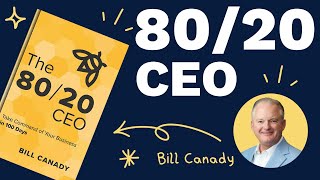
Bill Kennedy, author of 80/20 CEO, lays out the CEO's core job: set a quantitative goal, choose strategy, design structure, commit to actions. He prescribes annual strategy planning, monthly four-block meetings, weekly S&OP sessions, and daily task tracking to run a systems-driven business.
Chapters
As a business owner, as a human being, there is no standing still. You're either going forwards or backwards. And remember, you may say today is absolutely AI and perhaps it is, but I don't know. So be prepared to adjust as things become clearer off of it.
Hello and welcome. You know, I love a good system. Your business is a system, your departments are a system and each of your team members roles is a system. So today we're going to explore why one of the most important roles in business, the CEO role. And I've got our guest today. Bill Kennedy is the author of a book called 8020 CEO. He's actually the CEO of OTC Industrial Technologies which is a company that has over a billion dollars in sales and with over 2000 employees. He personally has had over 30 years experience in global business, the global business executive role in various different industries. And what I love most about Bill is that he's a systems thinker. He's developed what he calls the profitable Growth Operating system. We'll touch on that and some of the themes in his book. But before I get too far ahead of myself, Bill, I'd just like to welcome you to the call.
Well, first of all it's great to be here and like it's true, I, I do have a bit of a bigger business now. But like all of us, we started somewhere and we got ourselves at this point. So maybe we can have a little bit of wisdom today that'll help everyone.
I'm absolutely sure we will. I'm curious, do you see yourself as a systems thinker?
Yeah, you know, it's interesting. I really do. When I started out early in my career it was kind of like I'd show up and go now what am I supposed to do again? Right. Yeah, I know I should grow this thing. But to where and how and as time goes by, if you're going to run these, these organizations regardless of the size, the more you have to have a system and a process to get you there. You, you need to know where you're going, you know, otherwise you'll just wind up anywhere.
Yeah. Thinking through the, that I suppose systems mindset and with that systems lens and we think about the CEO role, I know that role changes. You kind of touched on that right at the start. It'll change at different stages of business. I'd love. Yeah. For your insight, there are a lot of the businesses that we work with, it's still that case where the business owner is the CEO. And I know that can change over time. But what are your Thoughts on as you see businesses go through some of the changes and the role of the CEO as it changes.
That's an interesting point. So there's some really wonderful things when you have founder led organizations versus kind of a hired gun, if you will. There's some, there's some wonderful things to it, but there's also some challenges that are inherent. You know, when I got my first role.
The, the challenge was I was kind of doing everything and when I was working on one thing, it was like, how did I go find the time to do the next thing? And, and if you're really going to scale not only yourself but your organization, you have to find people who help you. Right. People you can count on. And, and let's say you're, you're a one person army. You're out there going, you're still going to need some accountant, you're still going to need some legal advice, you're still going to need some help. You need to go out and, and find those folks and, and what happens is you have to tell them where you're going and how you're going to get there for them to be a real, a real, real help for you. As you scale, as you grow that business, that only becomes more so. You have to keep promoting yourself up and you have to keep finding folks to come in and help you with it. A system or a process is really going to, is how you're going to do it.
So what I'm gleaming from there, some of the responsibilities of the CEO is to set that vision and communicate that down. What, what, what do you see as the role of the CEO? And again, maybe that changes in different stages.
Yeah. So the CEO really only ever has one role that they have to go do. And the, and the further they get into their journey, the more that one role becomes important. And that is they have to set the goal. Where are we going? And typically that goal is going to be quantitative. You know, I love numbers and you know, they're fun. You can, you can measure them, you can do a lot, lot of, a lot of really interesting things with it. So, so let's say your goal is maybe I want to retire in 10 years or maybe I want to make a certain income or a certain revenue. So I want to, I want to get to 10 million, I want to get $100 million, whatever that goal is. That's your job to figure out. Now when you're first starting out, you don't have a lot of people you're working with. The second piece is also yours, which is the strategy that's going to get you to that goal. The third step is, and this is the, the most challenging one for people is what given my, my goal and my strategy, how do I organize myself? Right, that's your fourth and then the final one, you start taking actions around it. So it's a very simple four step process. The more you.
Mature in your career, the more you will only focus on, on the very first one. And you start looking for people, whether they work for you or they're outside consultants or they're David, where he can come in and give you advice. Right. You start looking for people who will come in and help you with those other three pieces.
Those. I know when you first get started in business, you kind of just making it up as you go, as we all really do. And I, I think even just having the North Star of what is the goal? I think a lot of people just get started and then they kind of forget that. And I think coming back to that, that's one of the things I think your book does so well. Laying these four stages out kind of brings people back to that moment, which is, okay, well, we first got to set the goal. And when we talk about the goal, do you have any parameters or thoughts around like what that should look like is this, like there's this personal goals and that's something that you want. But the other question is, does that end up inspiring the organization? Yes.
An interesting thing. So here's the most, here's my secret, right? Here's the, the most interesting thing I found. When you're standing here and it's day one, right, you're ready to go. Just think to the end and think you're going to try to sell this business. How do I exit this? But that's what you, how do I, how big does it have to be? How much money do I want to. Whatever inspires you, you is really where you want to go. And you say, well look, I, I want to make. It was funny. I was, I was talking to a gentleman the other day. He's got a very small business, does $9 million in, in sales, which is wonderful. And he's trying to figure out how he goes to the next level. And I said, what do you really want to do? And this guy's magnificent. He goes, I want to make $200 million. I'm like, holy cow, me too. Sign me up, right? And I said, so have you thought about how you're going to do that? And he's like, well, Kinda. Well, look, if you're gonna build a $200 million business, it's not for me to say that's a good goal or bad, but there's a lot of things you have to think about. And if you think about them on day one, the way you organize your company, the way you incorporate it, the people, the type of legal advice you get, the type of consultants, the type of just people around you, it's vastly different than if you just say, I'm running a hobby. Right. Because if you don't put the things in, you will have to go back and do it at some point and it is really hard to do it later. Right. So start with the end in mind, whatever that is. Typically the best one to do is, I'm going to sell this or give it away or whatever it is, and it will inform everything you do.
I think you touched on something there when you exit the business. Because the reality is we all will exit the business at some point, so.
None of us get out of line for sure.
So it's a lot of businesses, they don't have a planned exit, There is no succession plan, and they miss out on potentially what could be the biggest payday as a business owner.
Well, that's what we're all doing it for at some point, right? Beginning. There's a lot of passion and there's some reason we want to go do it. We just find it fun. So I have my day job, which I run these companies with, but my real passion projects these books and helping people and things. I just like doing it right. And so because I have, I have done a lot with. With leading business, I've also bought a lot of companies. I'll. I. You know, I've probably done over 70 deals in my career. Last year I bought six companies. This year I'm on pace to probably do nine or 10. And the thing that I see more than anything else is the people whose companies I buy them, they're wonderful organizations. They really didn't think through it, and they wind up destroying a lot of value that has to be done at the end. And they're always shocked by it. Right. So there's no magic to it. There's. It's not some secret formula that you have to do, but you got to have a good legal structure. You want to make sure you can control the equity you want to have. You know, the biggest thing that people do is they don't really do their books very well. And that all has to get cleaned up at some point and maybe when they did it, they were doing some things around with, with stuff around trademarks and stuff. They didn't realize it. And again, all that has to go. And it's really expensive to clean it up at the end. Right. So do it at the beginning. It gets really easy. Have that passion that you're doing. It's just as easy to be passionate with a couple of helps around you that, that I promise you will pay off in the end.
And then that second stage that you mentioned was that strategy was the second piece.
That's right. So I'll just name them again really quick. So first is your goal. What does good look like? The second one is how am I going to get there? That's your strategy. Your third one is given what my strategy is, how do I organize myself? That's the structure. Who do I need? Right. And in the third or fourth one is what are the actions?
Right.
That's your, that's your plan. That's just, I got to go do it. I got to begin.
Yeah. So with the strategy side of things, like, you've now picked your goal, and I love breaking this down. I mean, it is basically a system in a linear order here. So then for strategy, do you have any thoughts on how that comes together? Like, there's, you know, lots of pieces to this. There's picking the vision and what does this look like in 10 years? And working it down to five or three years or the next year chunk. Like, how do you approach strategy?
Yeah. So it's really, it's really interesting. So if you start with, unless let's assume you're at the very beginning and, and you're an entrepreneur in this case always, you've got some things you're good at, you maybe some things. But you've got something that you want to go. Do you have passion about it? Right. Once you actually have that, you then start and say, what do I have to do to make that realize so what I want to go do or what maybe you would do would be different than someone else.
So.
So the. So the goal and the way we're going to get there is what is our piece that makes us uniquely different? What is our gift that we have? Right. And once we've identified that which starts laying itself really self really good because we're going to focus in our core.
Yeah. So when you think of strategy, we're thinking your criteria here. Like that's part of it. Thinking about, well, what businesses are we going to move into? And then we kind of go beyond that to Organize. Then we're starting to think about the talent and who's going to or how you're going to organize that operations. How, how do you think about that?
Where am I going to find the people? I cannot do it all and I don't want to do it all. And so there's something I have that is very unique, whatever it is, in this situation. Maybe I'm very good at selling the product, maybe I invented the product, Maybe I'm the only one that can actually deliver the product, someone else. So that's where the main value is, that I'm delivering everything that is a lower value than that. I'm going to outsource that so I can do accounting. My master's degree is in accounting. I can do it. I am not doing my own accounting. I'm going to hire someone to go do that. Why? It's a commodity product. Right. Lots of people out there can do it. You can get them anywhere in the world. You can do it with your local accountant. You can even buy software who will do it. Answer your own phones, schedule your own meetings, do the copying, set your trips up, all the way up to confirming appointments, following up on appointments, reading your emails. As you make that list of everything you're going to do, you should only pick the ones for you that are the most valuable and only you can do everything else. You should move towards outsourcing. That frees up time for you to do more of what you're great at.
Yeah, and that kind of does move us down to the final step, which is this idea of actions. And if we think more specifically to do with the CEO role, and I love how you equally think in that idea of, well, what are daily, weekly, monthly, quarterly, annual type tasks? If we to use that particular framework and then we apply that to the actions of the CEO, what tasks do you actually see the CEO doing on a day to day basis?
Yeah, so what I do in my companies is very straightforward. So I set the goal and then I look at my team because we're ongoing company and I would say, all right, David, you're the president of my group, you have to tell me how you're going to go achieve that goal and you'll come up with a strategy. You and I work together, but it's your strategy and I really want you to own it. Because if you own it, you're going to go do it. Whereas if I tell you how to go do it, you're going to say, well, maybe you don't really believe me. Right. It'll be my problem, not your problem. You have to own that. We get through that. Then you say, this is how I'm organizing my company to achieve it. We, that's a, that's a however you think it should. And there's a little bit of back and forth. Then we put this all down on actions, right? And we write it down. Here's, you know, I need to hire some people, I need to get these products. I need whatever it is. We write these things out at some reasonable level. Then every month we have what's called an mbr, a monthly business review. And in that monthly business review, we do very simple meeting. It's the first one is a, is a what we call a four block. It's like what happened in the last 30 days. What do you think is going to happen in the next 30 days? Then the two lower blocks is what was your aha's and risk and what was your opportunities, right? So what went well and what didn't go well, that's what goes on. The bottom two, we go through that. You walk me through that. And then the next person that comes on is, talks about the finances, how do we hit our numbers, and then the people that come on after that, the ones that own the initiatives, the strategy, those actions that we said we were going to go do. So right now, one of our businesses is a power sport business, right? And we do about $600 million a year around the world in this business. See, the president comes on, tells me what went well, what didn't, what he's going to do about it. We look at the numbers, the next three things that we only go into, three we'll talk about. One's a sales program called the medalist program. The sales guy comes on, says, this is what's going well. The next one's an operational. That person comes on and says, we were doing this work around a factory that we have that we're investing in, and then the final piece is around talent. Do we have the right people? Do we not? We're done, we're off, and we're to the next one. That's my job. My job is to make sure we're holding true to the vision and that the people are on here. We don't expect perfection. In fact, we expect just the opposite. We expect progress. Right? I, I'm betting on a team and their strategy. I don't know if it's going well or not. I can look at the numbers, I can listen to them, and I can get a point of view from that.
Oh, hey, I know you're tuned in right now, so I'll keep this super quick. But you like awesome YouTube videos, don't you? Well, there's not really that many YouTube channels that create great content about how to systemize your small business. So I want to make sure that you catch every video that I publish. So if you haven't already, firstly give this video the thumbs up and then go ahead and subscribe to my channel. You can even hit the bell notification to make sure that you're the first to know when I publish anything. So go ahead, do it right now. I'll wait a sec and then I'll transfer you back to the video.
Yep. So that planning stage, I'm assuming that's at minimum once a year kind of cadence. For that, you'll pick out the strategy. Okay, this is for the year. And then you're, you're basically just having monthly accountability calls with those different stakeholders just to kind of go, and are we doing what we said we were going to do and are we on track?
Yeah, pretty much. Actually, we run strategy as an annual process. And the reason is just because if you do it all at once, it just says you're just trying to get it done. We want to thoughtfully go through it. So typically in the fourth quarter of the year, if you assume you run on a calendar year in the fourth quarter, we'll say, what have we learned this year? And we call that the situation assessment. What do we learn given what we've done? Then we go to the first quarter and we say, given what we learned, because we don't want to hurry through it at all. And that first meeting is really quick. We'll go, we'll say, well, we learned these things and here's our three or four takeaways. And I think I may want to do some of these. In the first quarter, we, we put that in what we call the framework. And so the framework is nothing more than an outline. So you said, well, I learned these three things. These sell good. These don't sell so good in this market. It's okay. Given that in the first quarter, we'll say, what do you intend to do about it? What do you want to do? Right. And they'll write that out almost like an outline to a book. And they'll say, here's what I'm thinking about. And they'll have to go do some work on this. Right. Maybe you can spend some money to get certain, certain reports or certain information. Then in the third quarter, or I'm sorry. In the second quarter we put together what's called the business plan. So the business plan is just saying if I do everything I wanted to do, here's what I expect to do in, in the growth, this is what the numbers will be. I expect to get this amount of revenue, I expect to spend this amount of money and make, and make this amount of profit that is in the third quarter. We agree on that. And by the time we get to the third quarter, we now have a budget and a plan for the following year. So we just simply run an annual strategy. It starts out with what happened, what are we going to do about it, what do we expect to get for it, and that's how we get our budget for the following year. It's actually a really, it sounds like it takes a long time and all that. It goes really, really fast because you're running the business at the same time.
Yeah, yeah. And then that cadence of that is at the strategy level and I know there are some pieces in there and then you've got the monthly cadence to go. Are we keeping on top of things? And then if we go down into either weekly or daily, are there activities that fall in there?
Absolutely. Right now that you're starting, depending on the size of your organization, a lot of times you'll have different people involved in these. So one of the things you may say is I want to do. I, I have a product I'm selling and I deliver it today, in a week, I want to get it to same day delivery for whatever reason. Right. The strategy says if I had same day, boy, I would really sell more products. And you do the math and you're happy about it. You're going to have to do a tremendous amount of work on your organization to figure out how you do that. Like you might have to have warehouses in different locations. You're probably going to need more inventory. You're probably going to need a shipping model that allows trucks to come in and out same day. All these things are going to be going on as they are coming on. Right. Someone's going to be, be, be working on that. And so on a weekly basis we'll run what's called, and these are a lot of acronyms, but people may have heard one is called psyop, which stands for Sales, Inventory, Operations, Planning. And so that's the group who are actually doing the do, right? The people doing the work, they get together and said, the sales guy goes, hey, this is what I think is going to happen sales wise. And the purchasing person gets in there and says, okay, I got to order this amount of products. And the operation person goes, well, they're coming in. I got to be prepared to get the stuff and make the stuff and, and, and the way it goes, right. They talk every week on that. That should go right to whatever that goal was that we decided in some cases many months ago. Yeah, it's. Look, everything's easy to the person that doesn't have to do it. But when you're sitting here looking at, it's actually really straightforward. Right? Here's my goal. We're going to make $1 million. And the plan to go do it is I'm selling this item, right? And I know I like this item because it meets those criteria. Then you and your team, if you have a team get together and say, how much am I going to sell? When am I going to sell them? And all that. And you start working on it, expect that it won't go perfect. But because you're talking about it some cases daily, some cases weekly, some cases, you start making these little minor adjustments and you will get yourself there.
Yeah. And then down at the that daily level, what things are you thinking about?
So on a daily basis, from a CEO standpoint, what I'm typically doing is I'm talking to folks. I'm making sure that we're staying true to the goal. They understand where we're going and how we're going to get there. So there's this vision, this visionary piece that I'm making sure. And I'm going to make sure we're using our processes and tools. Right. Because we need to keep it all tools like the 8020 process. Right. And then as you go underneath me, the operator, the person running that business, where they're going to make sure is that mechanically, if you will, stuff is coming in and going out. And if you look under them, they're going to have functional roles like a finance person, an operations first, engineering, sales and all that. They're going to make sure that those functions are staying on their goal. So let's take the salesperson, right? So that that president says, I know I have enough people and they're out there and they're working on the right things. The sales leader is going to say, I know my people out there working on it, because I see the call reports that are happening every day, and then that salesperson every day is making those calls and you can, you should be able to track that all the way back up. And the tools that we use, which are, you know, Again, I hate to get into a lot of terms, but, you know, they're just simple forms and you can have them very manually or very automated. Doesn't matter which way you have. It's just whatever works. You should be able to look and see. I know this is happening because I can track.
Yeah, yeah. I think you mentioned something there that caught my attention. And it's when we get down to this action level around process and you're still thinking process when we're talking about an organization with 200 or 2,000 employees. So I'm curious to know how you think about process and what as a CEO, like, what do they do to drive a system's culture? Because it's not something that happens automatically.
No, it's for sure not. Another thing. Just to think about process with a culture with 2,000 people versus two people. Your process and, and your bureaucracy that you put on has to be appropriate for the right size. Right. What a 2000 or 10,000 person organization can do.
Can handle is different than the other. And so you can't overwhelm your company with an extraordinary amount of paperwork, an extraordinary amount of tools. But what you do is always exactly the same. Right. You need to decide where you're going, how are you going to get there and then measure against it. Right. If it's just you and I doing it, I'll talk to you, maybe we'll have coffee every morning I go, hey, did you see that client? You'll go, yeah. And I go, great. Do you know if it shipped? And you'd be like, well, I'll check ups, right? So it's the same thing whether you're on a, a small company or a big company.
It.
And I would tell you it is far easier on a small company because you can avoid all the bureaucracy. Right?
Yeah.
Yeah. So, so, so don't try to take the, the, the, the, the complexity that you fill in a big one and put it on a small one. You'll drive it out of business. Right. You got to be able to hustle, you got to have wear multiple hats. And all the further you go up in the organization, the more you become, you know, focus in one thing. So today what I do in these companies is I'm really out there. I'm focused around the vision. I'm focused around, do we have the right team? Are they focused in the right area? Do they have those tools? And so I'll spend my time, I travel all the time and I. We're in about 50 countries and we have about 60 locations. Well, maybe more than that in the States. And so I'll go out, I'll go in, I'll say hi to everyone. Yeah. I get to the location, I go say, I walk around, I talk to everyone. Then we have a town hall. I talk about where we've been. So the past, I talk about where we are and where we're going. And then we do an hour of Q A. Just any question they. They want to ask. Right. And from that, I'm able to get direct feedback about how things are going internally. And then while I'm there, I also try to go see customers. Right. And this helps me keep grounded. Is. Is it working?
Right.
Because you can see the numbers. I don't care how big your company is, you know, what you sold and how you're doing on it. But it's that, that culture, those values, and what people are going to find, David, is it's not what we say, it's what we do. Right. And getting out there and getting close to people and, and understanding what they're going through makes. Makes all the difference.
And.
And that never goes away. If you ever lose that, I think the game is lost.
Yeah, it's definitely one of those essential roles for the CEO and comes back to that whole idea of 80 20, which centers around the book and something that I think business owners at every level need to be thinking about, which is what are the critical few things they need to be focusing in on. And especially it's the same with process. It's easy for, you know, extra redundancy and red tape to creep in. And if you've got really smart people, you don't want to get in the way of them doing great work. You need to just get, well, what is the essential piece? The minimum amount required to get the result. I'd love your idea because that's a huge concept that you've kind of gone all in on, this idea of 8020 and applying it to everything. So as you've done that, are there any key learnings that you've picked up?
There really are. So the smaller your organization, more you're going to be doing all four of those steps. Right? You, you're the visionary, you set the goal, the strategy, and so on. And the bigger your organization gets, the more you move yourself as a CEO back to where you're really the visionary, you're setting that goal, and you're depending on your team to have ownership for it. Right. So. So what, you know, you know what I'm thinking about and where I'M going with this all the time. Is, is. Does my team feel ownership of it? Right. I don't sit around every day and so and try to tell you what to go do. What I expect is when someone comes into me, they say, here's the situation. I reflected deeply upon this and here's what I think we should do. If you're not careful, if you make yourself as the final decision maker on everything all happens is everything gets delegated up to you and you become a bottleneck. You have to get out of it. You have to go, look, what I expect you to do is, since you're the closer than I am, is, is make these decisions and go forward with it. I want, I want to be included, I want to know what's happening. But I'm not going to be the bottleneck here. Right. And so when you have that alignment, when you're going through the process, you trust your people, you let them go through it and then you have these, these almost mnemonics that you'll do. Like I said, like we want to place big bets, but one chip at the time. Right. And what I mean by that is like we, it doesn't no good for us to go sell a dollar. We got to sell. So we need to maybe figure out what the million dollar plus ones are. But you don't want to bet the farm on one thing like let's try it, let's do a little pilot program, things like that. So my role in setting it is getting that language and that culture so that when I'm not there, the company is self managing and the people know what the expectation already is. They don't have to wonder what Bill thinks about it. They need to know they're doing the best they can in a situation.
And that we're going to be okay.
Yeah, it's definitely that skill. The transition as well, early on, like the founder, CEO, when they get started, they are doing all the things, wearing the hats, jumping in and doing what needs to be done. The step that you're talking about is one of the most challenging for a lot of the businesses I work with. It's that step to then start to find the right people, delegate some responsibility. And I don't know if you have any other additional suggestions on how to make that jump. I know, it just has to be done.
Yeah, it has to be done. And you got to be, you know, I call it suspend disbelief. Right. You got to believe. It's like you get on a roller coaster, the ride and you believe that you're going to come off of it safe, right? We're on a track, we're bolted in, things are going to be fine. But as you go through it, your body feels like it's just going to. You're going to die, right. It's going to toss you off. But because of the safety features and because of someone else has done that work, you get on there and you can let go and enjoy the ride. The same thing running a business. If you didn't set out at the beginning and say, what are the pieces I need to do? And try to put those in, what happens is you try to build the safety features in as you go and it's harder. Right?
Yeah.
So this is what I said before. Start with the end in mind and if you're unsure what to do, just look at other businesses. You know what they need. You need a good legal structure, they need supportive accountants, they need good sales people, they need whatever it is, good products. Set that up as you go, because quickly this thing is going to get bigger than you can manage by yourself. If, if you're going to be successful. And if you haven't done that, how do you bring someone else in? Right? What do you even tell them to go do? So you're like, I can't. I can't be the one that sells everything. That's a. It's where a lot of people start going. Or they, they want to be the salesperson, but they can't manage operations if you have nothing written down. If you have no processes in, what do you tell them when they get there? The first day, you're like, there's the door. Good luck. I'm going to see customers. Yeah, there's a drawer full of receipts. Please try to organize them before you leave for today. Right? So setting those things up do not take a lot of time. And if you ask yourself, you go, I just don't have time to do it. Well, if you don't have time to do it, where are you going to find the second time to go clean up the mess you made if you couldn't do it right the first time? So start out with it that way. Get your trusted people around you. We all have more than we think we do. Sometimes you just have to reach out to someone and go, hey, I need some help. You got to raise your hand. There's everything from coaches, there's people like yourself to people in your own network. And you can join things like, you know, Vistage or Rotary Club or whatever it is in your area, wherever in the world, there's other business owners going through what you can start there with.
This idea of process. And you mentioned like we have to get something in place to hand it over. One thing, you know, business owners, when I chat with them, it's how do we justify the expense to invest into process? Because sometimes process, you don't see an immediate ROI and there's a cumulative effect. Again, it's when you see a business that has process versus one that doesn't, it's night and day difference and it's obvious. But for the person who hasn't seen that, trying to build the case for why process is important. I don't know if you have any thoughts on that.
I do. You know, and it's the same problem we see with people in their health. Right. It's like those who exercise and all that daily, it may not feel like it, but over a few years you can tell someone is really taking care of themselves versus someone that hasn't. That person who hasn't many times has an opportunity to go back. It's just harder. Right. Not only do you, you got to get rid of the bad, you also got to put the good in. Right. It's the same thing in a business. So. So if you, if you look around and you start finding mentors, you start finding companies like yours that have these wonderful processes available to them. If you haven't done it, my best advice is suspend your doubts and just recognize you're going to have to go through it now. You need to find someone you trust that has a proven track record. They're going to help you get through it. Because if you have success at all without this, you're going to self limit. Right. We buy a lot of companies. I see a lot of companies that go out that just reach the highest. It's called. You ever heard of the Peter Principle?
No.
So the Peter Press, you can look it up on the Internet. I didn't come up with. It's been around forever. But the definition of it is you reach your highest level of incompetence. Yeah, right.
That line.
And so, and so whatever, you top out at whatever and everyone's different. That's as far as you're going. And at that point you're going to have to either shut it down, live with it, which probably means you're going to burn out or get someone else to come in. So now you have decision making time. If you've made these little changes as you've gone along, it'll be so much easier and you can transition, but it takes work. Right? This is, this is what you sign up for when you're a small business owner is, you know, weekends and nights you're going to be working, right? These, these ideas that there's all this free time. Well, you can work from where you want, but you're going to work. You have to spend the extra time as anyone does who's successful in investing in yourself and your business. Right. It's, I call it just pick your problems. Do you want to like have more free time? Well, that probably means your business isn't, isn't as, as, as sustainable as it could be. Do you want to have a business very sustainable with great process? That means you probably aren't coaching little league, right? You're probably not out running and enjoying and sitting on the beach. You're working. So pick that. And as you go, you will take and set up something. But it'll feel very natural. And in fact, at times you be like, I'm not even sure it's working. But then take that step back, look around at your peers and see how their businesses are running. You might be surprised at just how awesome you're doing.
Yeah. One of the other things, the job of the CEO being to spot the trends, see what's coming down the pipe, making decisions and adjustments on hey, we are this way or that way. Recently we've made the decision to become an AI first company where we start thinking and looking at for where are the automation solutions and AI can be applied. I'd love your thoughts on that. How the job, the job of the CEO to spot big trend movements and changes and then how to introduce that concept or idea or theme to then lead the organization. I don't know if you have any thoughts on that.
Yeah, absolutely. It's kind of job one of the CEO. It's the very definition, right. You're the person that set this vision. This is where we're going, right? You decided that Hill is there and times change all the time. I think it was Eisenhower that said plans are useless, but the art of planning is absolutely critical, absolutely necessary. Life changes, right? AI 10 years ago, none of us had really thought about AI other than, you know, some science fiction. And today it's in everything and you know, it will even progress more and more off of it. So as the leader, as the person who's dedicated, you have to be looking at that. That's why you have to have people around you who are going to do that daily running of the business. And people go, I can't afford it. Well, you're going to have to figure out how. At the beginning, maybe it's all you, but somehow you've got to get yourself up out of the day to day and start figuring out where this thing is going. So you better pick something you really like. Like I love reading. I love industry. I like reading all this AI stuff I'm fascinated by. If you find yourself not fascinated by whatever you pick, you probably pick the wrong thing. I'd suggest get out of that and go do something that you're willing to spend 18 hours a day looking at. Right. And then you'll pick these things and if you picked a good network and remember they don't all have to work for you. Right. You people like yourself, there's great folks out there who will come in and help. There's great folks out who are figuring out AI. I know so little about AI. My, my contribution of AI is I spend that 20 bucks a month on chat GPT. Right. And I just type things into it because I'm fascinated. But as a company we're spending tons of money around it, right? Both in our website and in our processes and tools because it's where the future is going. Are we right? Are we? I don't know. But for sure if we don't stay on top of these things, we'll get left behind because as a business owner, as a human being, there is no standing still. You're either going forwards or backwards. Right. And remember, you may say today is absolutely AI and perhaps it is, but I don't know. So be prepared to adjust as things become clear off of it.
Yeah. Awesome. Well, I know we covered quite a bit. I mean we looked at setting the goal and getting that vision really clear and then we kind of moved into the idea of strategy and organizing and starting to get the right team members and then got down to the tic tacs of taking the actions. What is the role of the CEO? Keeping the team accountable and checking in with them and even the cadence down on that level, all the way down. And I love that.
At the base of that process really takes a key part. I don't know if there's any final little bits of wisdom. We've only very gone high level with regards to the your book and I think that 8020 CEO I'll pop a link through so people can find out more about that. But is there any final things you want to cover?
Yeah, absolutely. So there's tons of tools out there. I really like the 8020 process as you said my book covers it, but there's tons of tools out there. And you want to pick some things that you think can, can, can, can work for you as a CEO, as a leader of the business. Right. There's two things that you want to make sure that people understand. One is culture, and the second one is tools. Right. So you want to make sure all your people, or absolutely understanding the tool set that you're going to be using. If you're using 8020, I think it's one of the best. Not because it tells you your strategy, it just tells you where you're making money and where you're wasting your time. And that's some of the most valuable information you can get. Now, what you do with it, well, that's kind of up to you. But you want to have the tool set that people will use. And the second one is the culture so that they, so when you're not around, they understand what you stand for, what this organization stands for, and so they know what to go do. And my example with that is like the military. If you think all the militaries around the world, what do they do? They take a young person, they give them tools, they put them in charge, they give them tools and say, you know, you got a shovel, you got a medic, you got a radio, you also have these weapons that you're going to do. Then they send them somewhere far away in the world, Right. And they don't even talk to them. And the reason that they do this is they have some mission to go do, but they have confidence that aren't going to go out and start World War iii because they know the culture where they're at. That's really what the military does. They tell you when to fight, how to fight, and how to think about and how to take care of each other. We have to do the same thing. Our organizations make sure that not only are people really good at the tools, but they also understand the processes and your culture. So they know when to use the tools. Because we don't have time to sit around and say, are people really expending on their credit card as they should, or do they treat our customers well, or do they do something they shouldn't have been doing? Make sure people understand your cultures and your tools so they know what to do next.
The culture piece, and you caught my attention with that one. So if we dig into that just a touch more, I mean, it can start off with something as high level as setting the company values. But how else do you think about culture.
Yeah. So it's interesting. So in my organization, so when I came in and I became CEO, I went to my first.
Location. They said, all right, we're going to go out for a big steak dinner. You're going to come in, we're going to meet in this conference room, we'll show you the presentation and then we're going to big steak dinner and then you'll leave. I just said, this is not who we are. Right. We're a very simple company, blue collar in our roots, right. We're hard working. We rolled our sleeves up, right? So I show up in a golf shirt or just a sleeve shirt. I go and I talk to everyone. We don't go out for steak dinners. I bring in like chick fil A or ham sandwiches or whatever. If they have a grill, I'll cook for them. Right? And then we walk around, we talk to our folks and we say hi. We spend time in fellowship with them. So you have to decide which one are you going to run? Because that culture tells people that we stay in modest hotels and we eat at modest restaurants. And it's about being a human being doing a good job versus, hey, we're, you know, we're staying in the fancy places, eating the big, you know, $100 steaks. So that's, I demonstrate that I don't have to tell anyone where they go stay. They already know if the CEO's doing it. This is what you should be doing as well. So it's what you do that people pay attention to. Right. And then beyond that, this, the probably even more important is the language that we use. Right. So you want to make sure that treat people with dignity and respect and you have to talk to them that way. If you make fun of people and make jokes, people may laugh because I'm telling you, I am not that funny and everybody laughs at my jokes. Right. So people are going to laugh and, and, and going to go with it. But you're going to be hurtful for people. So you know, how you dress and act and how you treat people is how they're going to go do it. Go out there, be present, right. And do something that, that you can be really proud of and everyone else can I'd be proud of as well.
Yeah, absolutely. Golden wisdom there. So just Bill wanted to say a huge thank you for your time today and I'll. Where's the best people if or best place for people to go to find out more? Is it the bill kennedy.com I can include a link to that.
That would be great. Yep. You can go on there. You can find out about, you know, what we're doing and the books that we have and, and the ones that are coming up. Right. So we got another book coming out called Earn the Right to Grow, which is the first One is the 80 20. It really talks about the processes and tools. The next one is kind of the the year and implementing it type thing. And it's really, really about the journey that each one goes through. So, yeah, absolutely. Go to bill county.com and you can reach out to me there if you have any questions.
Perfect. Thanks again, Bill.
Thank you so much, David. It was fantastic.
More from David






Remember me? Subscribe To My Channel For More Free Business Systems Content 📈




