Accountant Trains Team to Build AI Bots in 2 Days
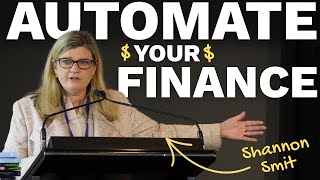
This content was created by David Jenyns. This content was uploaded by David Jenyns. This is a YouTube presentation titled "Accountant Trains Team to Build AI Bots in 2 Days" (posted/recorded 2026-01-23 UTC) in English. The main speaker is Shannon Schmidt, director of Smart Business Solutions, who describes how she and her team implemented robotic process automation (RPA) and AI across their accounting, finance and admin functions. She explains tools and approaches (Power Automate, UiPath, ChatGPT/Copilot, Xero/Jax, Excel VBA), gives concrete examples (BAS bot, mass Xero report downloads, invoice/interest automation, quoting for trades), describes a fast internal training program that turned junior staff into bot-builders, and discusses change management, productivity and cultural impacts. The excerpt includes Q&A interaction with a moderator/audience member and practical efficiency outcomes (reduced admin roles, reallocated staff time, peer-led learning).
Questions this video answers
2007
21 team members (stated)
January 2024 (stated)
Eight months (stated)
About three weeks; training began last week of November and by Christmas they had the BAS bot (stated)
Chapters
So Shannon did get a mention earlier. So I won't go too much into the details but Shannon does live near Dave, runs Smart Business Solutions, has over 17 years experience in finance and is about to help us with our finance and money and AI related systems. So please, warm welcome for Shannon Schmidt.
Great. Is that so working? Yes, we've got all of that. Thanks very much for that. So yeah, sorry I couldn't join you first thing this morning actually Kerry talked about setting up her business when she's had her first child. I also set up my business literally two weeks after I had my youngest child and he has finished year 12. This morning we had our reflections which is why I wasn't here first thing this morning. So just to give a bit about my background. So I'm an accountant. Hopefully by the end of today you will remotely love accounting as much as I do or even a little bit. I'm sure a lot of you have somewhat interest because accounting is very methodical and organized, that is systems. So people that love systems tend to love numbers. So a bit about my background. I started up Smart Business Solutions back in 2007. I used to be with one of the big city firms. I'm director of Smart Business Solutions in Mornington. We're multi service accounting, financial planning and mortgage broking. So every time I have a problem with a service provider I decide to just kind of it myself and put it into our practice. I've always been kind of drawn to technology. We've gone from, you know, setting up in the spare room at home to Now I've got 21 team members but we are very much focused on technology and the AI side of things. I've always loved technology. Not necessarily the shiny light of what's going on, but just how it can help me and always been drawn to a lot of things in systems. Probably like a lot of you in business, our industry in particular in accounting, we, we've had a lot of staffing challenges. I don't know why not so many people doing accounting anymore. It's been the last 10 years there's been 50% less accountants coming out. So if your accountant is good, treat them well because we are a rare dying breed at the moment. July was the biggest exodus of accountants from the industry because of the new red tape that came in. So treat your accountant well because I think tables have turned a little bit. You want to make sure that they're going to keep looking after you. And so we've always been focused on technology. I have always had everything quite systemized now, my background before I did this, when I was at school, I got the best systems training. I worked at McDonald's, worked at McDonald's from 14 and nine months when that was, you were allowed to get a job. But I absolutely loved systems process, became a crew trainer and I was training everyone, then became a manager. So while I was at uni. But I loved how everything had a checklist, everything had a system. And I always look at it and go, great systems create that great outcome that always. You get the burger looking the same, the fries are looking the same, and you've got that continuity. So no matter which manager was working that day, we should be actually coming with the same outcome overall. So I worked at Rosebud McDonald's, I worked at Mornington McDonald's, I helped them, I open up Rosebud when that happened. But what did that mean? I've just taken a bit of an extract from my system hub. Now, we've been System Hub users actually for like eight years or so, Dave. Ten years, something like that. Very long time. And so my systems look like kind of the McDonald's systems I have. And I've just taken an extract here of our finance, because I'm going to talk about finance, part of it. And so I've just taken a bit of an extract of our finance for our mortgage broking business. So I've broken everything down in our business, whether it's even what I call my operations. Because all businesses, I'm probably saying what Dave says a lot. All businesses have the same kind of key function areas. Our operations is producing financial statements and tax returns and advice and mortgages. So, you know, going through that, I have systemized our whole business. I have a lot of my accounting peers amazed at the fact that I recruit straight out of year 12. And I have those uni students, they're studying accounting, they're working two to three days with me. And I can very easily say that within 12 months they're performing at a level of a third year at a comparable at one of my other peers. And all my peers are always like, how do you do it? I'm like, systems, Processes. Do you know when you actually even finish your accounting degree? When I left, I used to work at Ernst and Young. So one of the big Citi firms worked all over the world and came back and I went to set up Smart Business Solutions. I call up the chartered accountants and I said to them, you know, is there some systems or process about how to produce financial statements and tax returns? Because I want to make sure when I start building up my own business. Because when you work at, like, Ernst and Young, we had a lot of systems and processes, but. But we had lots of people did all the different things. When you're running your own business, you probably all notice you're wearing the same hat across everything. And so it was interesting that the institute said, no, there's no such thing. I mean, you get your accounting degree, so you know how to do financial statements. But I'm like, yeah, but I talk with my peers and we all do things slightly differently. I want to get it so that when I'm reviewing the financials, I know my team have done all the certain steps that I need. So actually, myself and two other accounting peers, I said to them, we have to create a process for this. We have to create a process. Interestingly, we created that process. We broke it all up. We created it all, even Xero a few years later. And I said to Xero, you should see that. Xero is the accounting software. Look at this process we created. They're like, oh, my gosh, can we. Like, we'll get you to work with us. And we actually helped create some of the processes that they had in Xero that they kind of looked at ours and said, this is amazing how you've done it. I never actually did go and sell that process thing, but I probably should, maybe, because it does help on that. What I wanted to talk about today was to go through, even though I'm running an accounting firm, how does the finance function? What is the AI and the robotic process automation that we've done within our business? But also, how can you look to do that within your businesses and within your finance function and also with your other functions? And this can happen really, really quick. As far as where our journey went, I'm an accountant by background. I don't have any IT experience other than what I've learned. January 2024. I was looking and, you know, hearing a lot of things about robots. Everyone was talking about robots, and I was like, okay, what are these things? And so I actually thought, okay, I can go and I might engage a developer, or I'll look at what I can do with these robots. So the options available, I thought, we're accountants, not coders. I'll hire a developer to build the custom robots for us. Or maybe I'll rent a robot from providers who charge per hour or something like that. So renting sounded quite convenient. They do it $25 an hour is what they charge to do that. But I was a bit worried about my processes being slightly different to maybe their others. So I decided to seek an external developer and I got someone who's ISO 9000 to make sure they were, you know, they're going to be looking at confidential information. They needed to be quite qualified. So with that type of process, the developers, if you're probably wondering, well, how much do these developers cost? It was like 3200 a process and the robot was about 5000amonth. And so I wanted them to create as many processes as possible. All the processes that were not the best use of our time, I wanted them to create that. So I had these robots working on those processes and we could spend the time on the valuable things that we could do with clients. Especially when you're talking about a shortage of staff. I mean, we can't get enough stuff. I don't want my accounting team doing repetitive tasks that a robot could do. It's not the best use of their time. After eight months, these developers had only created one robot. It could do the Basses. And so to go through and process the bas, go into Xero, download the reports for us and bring all of that together, we'd do the review and then you're done. But that was eight months. Now, anytime Xero would do some upgrades, which is great because we wanted to improve the dashboard changes, we'd go back to the developers and they'd be like, sure, we'll put that on the list. We'll come back to you in a week or two. And, you know, it was very frustrating. I'd been following, as many of you probably do on LinkedIn, you follow random people, you just see stuff and you go, okay, follow. I'd been following this guy in Singapore, Darrell, and he was an accountant, building these little robots and everything. So I reached out to him and said to him, you know, I'm really interested in these robots, But I actually thought, we're not developers or coders, but maybe, maybe the work we're doing with the developers, maybe we're the problem. Maybe it's an us problem, not a them problem. So I actually chatted with Darren. I thought maybe I should go to Singapore and do his course. He actually ended up saying, well, look, I could come to Melbourne and, you know, we could do that course. So I said, great, come over, train up the whole team, and we'll be better to communicate with our developers because clearly it's an us problem, not them. Darrell actually said, no, by the end of the two days, you will be. You'll be creating robots. That's not going to happen. And so he got up in front of the team, he started saying that I could see half my team going, oh my God, but. And I said to him, no, no, no, it's only so we can talk better. But you know what? By the end of two days, they were creating robots. And that was the last week of November, last year, by Christmas, two of my accountants, the ones that love gaming, just there's a note for you. Any of your employees who are really good at gaming, they're going to be your best people at the bots, had actually created the BAS bot that took eight months of these developers. How does that work? They did it in three weeks by Christmas and actually created it. So I guess by December we had achieved the BAS bot. We'd done a few other of the bots as well, especially around the administration. And what we really saw out of that is the innovation really started to kind of go viral and that's what you want to try and get within your businesses so that it's actually contagious. People are wanting to learn and do more. So some of the examples that we did. Ryan's a uni student. He created a bot that he had a task that he used to do. He's the lowest cab off the rank. So he had to do the absolute, even below one of the admin job. It was an admin job, but he got like the lowest, lowest job. He had to go into one of our platforms, download the information of client file notes and put it up in the other one. Took him over 10 hours, week. So very boring. He was very frustrated with that. But, you know, we had to do it for compliance. And so he actually created a robot by Christmas that does that and automates it. It was interesting though, the first thing he said after he'd done it and he goes, oh, I've got it working. And he goes, but are you going to reduce my hours? Because, you know, uni students are very reliant on their three days a week working. But no, there was other exciting work for him to do. Obviously on the accounting side, we've actually been able to create. So even like downloading Xero reports, it all takes time. You go into a client zero file, create the report, do the dates, download the P and L, download the balance sheet, download all of these things. It all takes time. Now the bot goes in, boom. I can give it a list and a whole Excel and I'll get 20 clients and all of the reports that I want downloaded. All Within a minute. So those are the kind of reports we're doing on administration. We have a lot of filing, an administration task, which you all probably do. Also in your finance part of your business, there's a lot of administration side of things. So administration wise, we've been able to automate a lot of those. So it sounds kind of scary. How did we actually do that? Because if you'd asked me a year and a half ago, I would have kind of. My eyes would have been rolling backwards and not knowing what to do. But some of the tools that we've been using is Power Automate. Now if you've got Microsoft Office, when you get onto your computer, I want you to go into the search bar and go, power Automate. And you're going to find you actually have Power Automate on your computer free. So you're not going to have to pay for it. It's actually been on your computer all along. You've just never probably used it. There is also UiPath, so that's a bit more advanced and you actually have to pay for that one. Power Automate has a free version and a paid version. We're still using the free version, which is really handy. We've just worked out a way of centralizing our robots, their flows that they call it onto OneDrive so that we don't actually have to use the paid version. And my only hesitation with using the paid version, I mean, how many people are getting sick and tired of like all the softwares that you keep signing up for and you have like 5,000 softwares plus I also look at this industry and anything to do with AI is it's just moving so quickly. What's working today, maybe we're not using it next week. So the Power Automate now the free version has been working really well. The version works really well. It's just the saving that we have to save all of the flows and robots into a centralized OneDrive. Now, the Copilot and ChatGPT, how are we able to use Power Automate and UiPath now? They've been around for a long time, so these are not new platforms. But the saving for us is the Copilot and ChatGPT, because I can actually now use AI and go into it. I'm trying to create a robot flow that does X, Y, Z, tell me what flows I should do and then it tells me, and then I go, oh, it's not working at this point. What flow should I do? And then it tells me. So I go into Power Automate, change It that's the big difference that we're finding today. These platforms have been around for a very long time. I'm not a coder, never knew how to use them. And now through AI, I can actually ask it to tell me how to do it, which is just absolutely incredible. So AI has really enabled us to be developers, so to speak. And the reason why do you want to do this in your business as opposed to getting an external developer? Well, if something goes wrong and you know, we had bot chaos a few weeks ago. We walk into the office and Xero thought they'd upgrade their dashboard. Who loves the new dashboard? It's not bad. But they upgraded the dashboard that like robot chaos. But if we had used an external person, we'd be like, they'd be like, oh, wait a few weeks. We just went in, looked at, they call it flows, like the robot coding as flows, but. And there's the error because it's red, that means it's a problem. So you click on it and you're like, oh, it needs to work out where it's picking it up from somewhere different. So you move it. So it's really changed from that perspective. Another one of the one actually, I haven't got it listed. There is just actually Excel. So do many of you know that there is a secret little spot, you've never probably looked at it called the developer tab in Excel. You actually have to go into the secret spot and untick it and you get it. Who knows how to write a VBA script? Oh, there you go. There's a few. So for those of you who don't, that's okay, go into ChatGPT and go, I want to write a VBA script that does XYZ. I've got 10 columns with, you know, X number of fields and I've got the. And this is where even like in your marketing or your administration, I've got all these clients, they've got this, this and this. Please write me a VBA script that does that. When it produces it. It may as well be Chinese. I can't read it. But that's okay. I just go copy paste it into the Excel and if it works, I go, awesome. Most of the time it works. If it doesn't work, I come back and I go, you got it wrong. It's not working. There are 10 columns and you need to do this, this and this. And then, you know, usually ChatGPT apologizes and then gives me an updated VBA script. So it's interesting that actually that developer Tab has been around forever, but it's interesting that now we can. Because of Copilot and ChatGPT, we can now use this tab and actually get some real efficiencies in your business. Anything that you're doing, probably you're getting some of your financial data and then you're trying to analyze it. What are these different things? You can use these VBA scripts to analyze it and at the click of a button it'll do it. It's. It just blows my mind on how much it can be done. I wanted to. Are many of you using Xero in your accounting business? Yep. I love Xero. We were one of the very early Xero partners when Xero first landed literally in Australia and they didn't have payroll and things like that. And we've been Xero Partner of the Year and Xero Innovative Partner. We're currently on. So the beta. And so I'm giving you some little secret stuff that's coming November. Apparently it goes live, so it's live on mine. So I've had to. I couldn't do a video because I had to blot a lot of things out. But be on the lookout. It's coming live in the next few weeks and it's going to blow your mind when you see this in Xero. So it's Xero's, I guess you could call it, AI Super Agent. They've literally taken ChatGPT in your copilot and put it into your Xero file, which is incredible. So it's called jax. Just ask 0 and you can actually go in and ask it to do things for you or ask it about information. So it's going to be even a chatting thing, a classic one they showed us at the zerocon. As a heads up. They showed us you could actually ask it. Could I afford it if I buy a new car? And the car costs 30,000? And Jax went in and said, well, you're paying X amount per month so far for motor vehicle and you're paying this and you've spent a lot on repairs, so maybe it's a good idea. Or no, you can't. It's really great. You know, it's not going to go away from like the full analysis, but it's going to give you some of that. One of the key things that I really love about it. And so I've just done this. I was having a chat with my jack, so this was in mine and I just thought I'd do a few screenshots of it. So I said hey, Jacks, tell me who owes more than $10,000 in fees? So it came up, I've got a few customers that owe more than $10,000. These are their invoice numbers, these are their due dates. And it asked me, if I need to know more or want to see all customers with outstanding amounts, just let me know. So I went back and said, hey, can you update the overdue invoices and add interest at an interest rate of 5% a year compounded and draft the updated invoice for me to send so it comes back and then would you like me to proceed? And then I just went, yes. And then I quickly stopped it because otherwise it would have proceeded and it would come up with a draft. So you can actually get it to add the interest on and it'll give you the draft invoice. It will then ask you, do you want me to send that out? And you can go, yes, send it out. So it's amazing what's going to. How many times do you go into your Xerophone, you're trying to look at your debtors and looking at those. So keep your eyes open for that because you're going to be able to create invoices, update them, create quotes for your customers, search and review invoices. You know, you might actually ask it for, like you do with ChatGPT. Where's an invoice where I invoice someone to, you know, to do that concrete, you know, thing, and it'll find it like that. So just be on the lookout. That's going to be live in the next week, two weeks, something like that. I'm just going to show you Power Automate. Now, this is one of our processes, this is the bas. And I just want to show you because I remember when we first were looking at this and doing it with the external developers, I was like, what do you mean? What does a robot look like? Does it come over and it walks around or. I don't know. I was really confused on how that was going to work. So this is our BAS process and it was just to show you because I found it so super fascinating to watch the screen working and that it was just going into. And that's all the robot working. Let's see if it's going to imagine what it would look like. But it jumps into here and it's just fascinating the way that we have. It goes into zero because we're looking at. When we do your bases, just so you know, when the accountants do the BAs, they don't just go, you know, into the activity statement, click, and then they're done. We actually go into the balance sheet. Check your wages, check that this balance, check that that balances. That all takes time. So it's being able to go through and tick through all of that as well. So it's just. It looks like someone has just taken over, actually. You know, when you call your IT person and they go to fix your computer and they're taking it over, that's what your. The bot looks like. Yeah. You can do that. Yeah. Send the link out. Yeah, just gives you an idea. Because I think once I started to learn that, I started to see what was possible. I was like, oh, it can copy the name from here, paste it there and then search for something. So it's those types of things that the more you get exposed to it. So one of my favorite industries is actually the trades. I'm often, you know, truth be known, I actually wanted to be a builder. So my dad's a builder, my brother's a builder, the whole family's builders. But I wanted to be a builder. And my dad actually said back then, and I think he was probably right, he said, the industry's not ready for you. And so now I'm here. But it definitely back then, I think, yeah, there wasn't so many women in the building industry. So I've always been passionate about the industry. You know, I built my first house at 21. Okay. Blocks of land were a little cheaper back then, 40,000 in Mount Martha. But I built my first house at 21. I built our office in Main Street, Mornington. So if you're ever cruising down, that was my first commercial development and I've done quite another build. So a lot of people call me the accountant that build because I get all of the different parts I'm building because I'm. I'm actually doing a residential two townhouse residential one at the moment. So I do that as my like side hobby to keep me connected with the builds. But what it does really mean is I'm. I'm always amazed at how much there's. A lot of people don't realize how much admin and paperwork goes on in the building industry. You know, they're all day on site and then they're spending hours at night. And I saw that with my dad, saw that with my brother. And so I work with a lot of my clients and I've had a number of them have done even like this workshop because I keep bringing Daryl over. He'd never been to Australia before now he's been back five times in the past six months and getting my clients to go and listen to do these robots because the quoting process, there's a lot of whether they're using Excels and it's funny, there's a lot of building software out there, but I still find a lot of my building clients have amazing big quoting documents, huge monster documents. And so some of the automations that we've been able to help them do in pulling details together, pre filling the quotes, maybe even updating supplier pricing and then generating some of that. So it's about taking all the things that you do in your finance department, so to speak, finance and admin, which you're probably wearing that hat, as well as head of operations, head of whole business and things like that, is trying to look at anything that you're doing on a repetitive basis that if you automated it would save you time or save you money. If it's only going to save you an hour a month, probably not worry about it. But when we were looking at what we could do in our finance, it was actually trying to work out what could we save bigger volumes of time even within our finance department. So, you know, we have a finance department in a sense that used well was always me running the whole business and running the finance. It's always the way, isn't it? The accountant, the last thing they outsource to someone else to do is probably their own finance. But I've actually had my son taking over that because I've got systems, processes. This is how you do this, this is how I want it. So I want to make sure everything's recorded the same way and all of that's done. So having those systems and processes, plus I was able to automate a good chunk of things that I used to do manually in Excel, like your annual leave calculations and things like that. I now am able to automate those as well. So giving you those automations around your finance department would really help with a lot of what you're doing and trying to streamline those areas. I guess what I found also with linking it back to your systems and then linking it to AI is trying to embed that in what you're doing. So whether you're working on site as a builder or in the trades and then coming back in and looking at what you're doing or whether you're actually, whether you're on a retail shop, what else can you do that can help make it contagious within your business? And I found as a Result of doing this. We've really embedded this in our culture. So it's like a new, I guess a new language. I had some accountants and maybe there's some of them are your accountants where, you know, they're kind of just, just plod along to work, come in, leave at 5, you know, not much energy. Turns out they game on the weekend. And so these that weren't that much very weren't very enthused about things. And now my best coders and my best at kind of this innovation side of things. So the whole office is kind of bouncing because of the energy. So it's really changed, I guess the culture of what we're doing. I also think about the peer LED learning and how even when say Xero came in from a finance perspective and then when you have this AI, it's nearly created a level playing field. There used to be, you know, you have to kind of earn your stripes and work your way up the ranks. But I think the technology, there's a lot we can learn from some of these younger ones that I'm learning from them, they're learning some tech from me. You know, one of them created, one of the guys created an AI agent to be like our tax answer on how to grab different things. So we've put the tax law into it, we've put the cases into it, we've put all of the tax rulings into it and trying to come up with that so that we can pull off that. Because half the thing that is really challenging for accountants is we might know some of the tax answers but we might say, oh, we're pretty sure this is right. But then we have to go off and research and find the case law and find this to make sure that we're right and to have that ability to be able to grab something quickly. Because normally when a client rings they go, hey, so just wondering, I was wanting to do this. You know, they're not always realising that might take a while to kind of research it. So being able to grab some of that information and, and make it in an agent to not have it hallucinating and coming up with these different areas is really beneficial from our side. And so I think that people can apply that in your business. We have it also applying it in different parts of our business of pulling that information together. So you might have a quoting. I was working with one of my clients where we were trying to get on particular projects that they were doing the types of quotes quoting that they do and putting it all into one agent so that they might be able to get a draft starting point. This is where I think AI is never going to replace all of us. It's just going to help us have a better starting ground on it. But the peer led learning on it has been great. The impact from our perspective and also on financial impact. I don't know about yourselves, but productivity has been really tough. I think on trying to get some. Everyone wants more money, like more money, more money because you know, things are getting more expensive. It's really hard to go to our clients and say we want more money, more money because the team want more money. So it's been really great to try and recalibrate that productivity because I felt like productivity has really gone down a lot since COVID I think that's been really impacted from, you know, from our perspective and I've seen that on a number of businesses. So I think that's the energies back, maybe that brings it back. I also think that this is the new language of business. How many people when they first started work? So when I started at Ernst and Young, so a big accounting firm down the road, I started down here, it was over 25 years ago, there was a typist pool. Now there's probably some people in the room who don't know what a typist pool is. And yes, Kerry knows you're in it and you walk in and you know, so There was over 20 people in this room and there was like, you know, you went to the counter, glass, glass, sliding door at the counter. You went there with your dictaphone or your handwritten notes and you used to say, please write this, you know, type it up for me. You mark it up and then they do the edits. Then they'd give it back to print it up. You didn't all have emails back then, but I look at that now today, no matter what job you're doing, you probably wouldn't hire someone who couldn't type. Like it's just a non negotiable. I actually feel now the skills that we've been learning with Power Automate and using your ChatGPT and Copilot to help you kind of code. It's just weird to say that I'm actually coding. I don't actually think I'm coding. I'm just using ChatGPT and things like that. But I actually do feel that this is going to be the new language then is it 6 months, 12 months, 18 months, that this is just going to be the norm? Is this going to be the norm that we're all going to be using it. And that's probably one of the reasons why I've even looked at Power Automate and not going to the paid version. Well also it's $800 a month, so you know, kind of that influences. But also am I going to still be using this in six months time or is there something new that comes around? But I don't mind if what we're doing today is not relevant in 6 months time or 12 months time because the reality is I've changed the thinking of my team, I've changed the way I think, I've changed the way I look at things. And so if it's not say Power Automate, then it's going to be something else. But those skills that we've learned will help us going forward. So I really think that it's not. Innovation's not like kind of a side initiative and it can get very hard in the business, your day to day business. Because sometimes, you know, as business owners we're all working sometimes long hours. You have all your systems but you're still working some long hours. Having that time to have the play and innovate can be a challenge. So I've just for myself tried to make it a priority that I have actually blocking time out to be able to do it, to keep up to date, to see what's going on. And especially as a leader I need to do that. And I think what's happened now is my team have probably got a lot further advanced than I have now because they're kind of playing with it as they're working. But I think being able to actually empower them to do that, I think that's what we all need to do as leaders and have them thinking is there a better way on how we've done it? So we've really tried to embed it in there now that I'm not paying for the robots, which, the robots. So I've actually then just said to the team, I'm not trying to replace your jobs. Right, let's get these robots going. Our business has done really well over the last 12 months. And so. And you know what? Part of the reason is probably because the team have now more time to help our clients to phone them. Normally if you speak to a lot of accountants, they're usually so flat out they don't have the time. They're just doing all of their compliance hours of phoning up hours are going out on site. Okay, so we have a lot of brewery and winery clients on the peninsula. So it's very, very useful. But ours are going on site, we've got a heap of trades. So you know, one of them will be like, hey, I'm just going. And they're going to take the young accountant and they'll be like, I'm just going to go and do a road trip down Red Hill and Flinders and check out a whole heap of houses that our clients are building, you know, and just go on site and say, hey, what are you doing? Getting to know our clients better. What challenges are you having? So I think that everything can be replaced with other positives for your business. It's not just about trying to, you know, reduce the number of people that are working with you, but you do have limited amount of people that are going to be available. You know, hopefully we can change, you know, change people's passion for accounting when they can see that we've got robots working in it. I know every work experienced person that we have at the moment, I've got the next four years sorted because every work experience person that we've had is like, oh, I'm coming to be an accountant and I want to work here while I'm at uni. But they've just seen, you know, with the robots. So hopefully that's empowering people. But I think within your business it is really interesting. So, you know, I'm rewarding my team from that perspective where, you know, I'm saying, okay, if we can do these things more efficiently, the business does better and so will you. What, what other things are, you know, opportunities as well. So I just thought I'd open it to. If anyone had any questions for me about some of the, the areas we're doing in finance and rpa, robotic process automation or in AI at all.
Well, first of all, massive. Thank you. That was an insanely valuable fire hose of information, which is incredible. Thank you so much. That's awesome. I have a question, so I'm gonna jump in and I. What was it? So there's how are you able to like, maybe not you personally, but you're obviously leveraging yourself in some way because you're not doing all of this. You've got to a team who are also doing this. It sounds like you, you led this, but how did you go from like, oh, this is an idea and I'd love for you to all jump on. How did you get team buy in to then it sounds like go past escape velocity and then take it even further.
The change management was really, was really hard. I Had to kind of. I actually asked ChatGPT how should I best deal with this change management? So that was the first thing that I did do and it was interesting. So through the process, I only lost one employee who went, robots, I'm out of here. When I first I did my research to start off with and then I pulled everyone together when we were about to start using the developers and I said, look, things are changing around here. There's a lot of things in your job that are not the best use of your time and are really boring. Let's try. And so I kind of tried to switch the narrative instead of saying they're going to replace that job to try and actually say, who wants to do that work anyway? Let's get a robot to do it. But, and, but I did. I was concerned that some people would think it's going to replace their job. And so I guess when I bought everyone together, half the, half the team were very positive, half the team were like really shocked and were concerned. So I just had to kind of keep re emphasizing, well, you know how you, you know, you haven't been on site to those clients for now a while. Imagine if you could do like a road trip and you know, at 3 o' clock leave and do a road trip and visit a heap of clients. Wouldn't that be fun? Because accountants love visiting clients. Like when we have the time, we love actually seeing what you do operationally because all we do is get paper and move it around on desks and do a few clicks. So we love walking around client sites. So I did that. So I only had one employee that probably two months after we were kind of really going in this progression just went, not for me, not interested. And yeah, just didn't want to. But now everyone. I think the other way I positioned it is I wanted to say to them which all of those that are employers would relate to it. When you've got a recruitment market was one way, it's kind of turning back to our way now. I wanted to say, hey, aren't you all so lucky that I'm helping teach you on this? That doesn't come across well. So I'm like, aren't we all so lucky that we all have this opportunity to learn what's going to be at the forefront of everything that's going on? So I was talking about that. So everyone was embracing it kind of from the perspective of realizing, yeah, we are lucky this is coming and we're getting all this training before anyone's even thinking about it. So they, they did embrace it. So we only lost one and there were a few of my team members, you know, especially the older ones like myself, you know that. But few of the older ones that were a bit and now they're like botting away. And you know that that bit's pretty amazing. Some of them are even like, oh my kids can't believe that I'm talking about robots, you know. And so that's been really great to see it, but it is a hard one as well.
It sounds like you've navigated it really well. That's awesome. Could we question Mike Runner please? I'm also going to piff chocolates into the crowd for those who ask questions. Thank you for the wonderful general direction. Can everyone hear me? Thank you for the wonderful presentation. As a service based business, are you able to provide us more insight into any of the efficiencies that you've been able to gain in terms of clients per employee?
Yeah, so the probably the key ones would be administration. So losing. So in your service based business you kind of. We do jobs like. So a client signs their proposal, you know, maybe 2,500 from that, we need to grab that and work out is it one one hour of the partner and two hours of the next accountant. That was all manually calculated. You know, someone was doing that puts it into our job management system. So we know how many hours that's all automated. It wasn't a fun job for the person that was doing it. But that's all automated now. So administration has been a huge one. Anything that is kind of that repetitive task. So we went from, you know, lost. The one person I lost had been with us for ten and a half years in administration and was our head in our administration. So I was potentially like that's going to be a huge loss. It was disappointing because they were never going to lose their job because they were a great person. They could have done more client talking, you know, just whatever. We had an offshore admin of 9 years who had left just 2 months prior to us really getting into all of this. I replaced both those jobs with a trainee straight out of school, admin who's got the energy on reception. I still have another administration but replaced those two. So we got some huge efficiencies there because the rest of what they were doing is all being done by the robots. So it's just working out those kind of what's the not. I always say to the team, if you're doing something that you're not thinking and it's repetitive and it's not the best use of your time. Then we've got a whiteboard and we just keep putting bots up there. The other thing is, it's a bit probably like Dave's system champion kind of analogy. I come up with lots of ideas, a lot of others come up with ideas. Doesn't mean I'm the best at creating the bottom. So Ryan, who's the uni student, doesn't know anything about job management. Right. But he created the bot to do that job management. So you're just kind of linking. People are now putting a list and we work out how many hours a week would that save? And that's how we prioritise. And then we just get, you know, we might say, okay, Ryan, can you work on doing this, sit with that person like your systems. And because we've got everything, well systemised, he would say, look at that process first on the systems and then sit with the person to then work out how to do the bot on it. So it's not always the person that does the process the same as systems. And getting the champion that creates a system, it can be a different person. So anyone kind of work out who in your team's really good at gaming because they are seriously the best at the bots. They really. Just because it's a game. We've got accountants who have never worked a minute of overtime going. So on Sunday I was playing with the bots and I've worked out how to do a bot to do this, this and this, you know, because it's a game. So. Yeah.
Yeah, the.
You're talking about that guy from Singapore, the bot genius that came to. That's what I call him too.
Yeah, yeah, yeah. Would you be happy to disclose who he is?
Lead you in. There you go. I've got him coming back again. I feel like I'm like Darrell's pimp or something. But you can, you can scan that. But he is coming to Melbourne in December. Costs that he changes, it's 800. I literally just take all the costs and spread it out. So for me it's not like a. I'm not here to sell robots or sell. We're not going to train people how to do it because I feel like you need to learn how to do it in your business. But yeah, he charges $800 for the two day workshop. Yeah. So he's in Melbourne CBD. So he. It's just literally the cost of it. We've just spread it and I'm just spreading the love, I guess you could say. But it's just so great for businesses. And he does a lot in finance, but it's relevant for all businesses. So I've had him come three times now to Mornington for my clients and others, and half the room have been some of my accounting peers, and the other half of the room have been small business owners. Heaps of builders, maybe. That's my brothers and everyone saying, you got to go to this. So, yeah, we've had heaps in that. And even if you just learn some of that language, I just feel like that's where it's going to be. So he's.
It's very generous of you to spend $5,000 a month so that we can spend $800.
Well, that's on my sheet. You'll do that. And I've been, yeah, helping a lot of accountants do it. But I just think if we all help each other on it, it just. We all run better businesses, we have a better economy, because clearly the government's not doing that well with trying to run it. So if we can all do our part.
Exactly. Thank you so much, Shannon. That's awesome. Thank you, Shannon.
More from David






Remember me? Subscribe To My Channel For More Free Business Systems Content 📈




